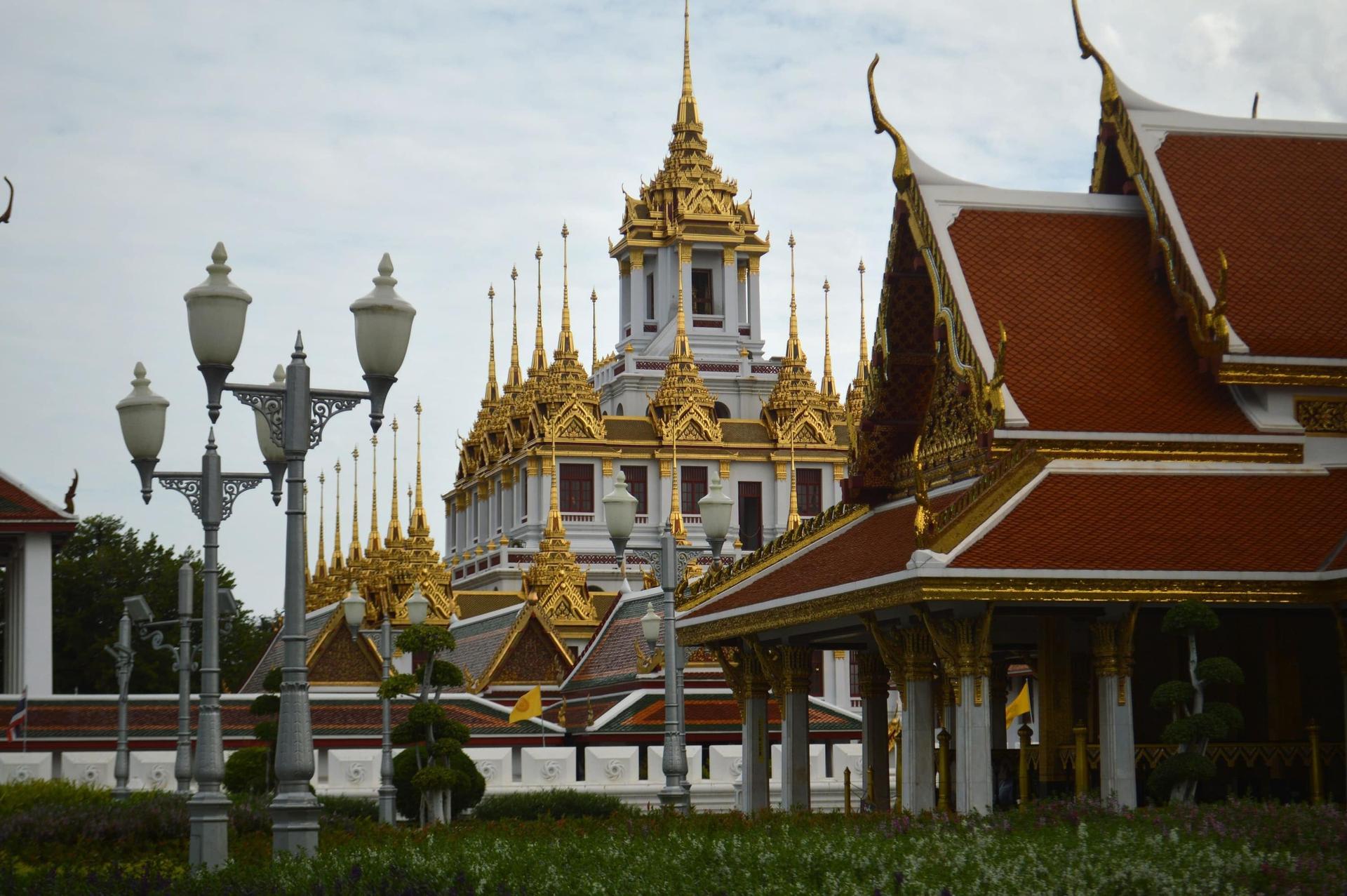
From the royal Brahmin shrine and the Giant Swing along the temple supply street, over the old moat to Wat Saket and the foot of the Golden Mount, along the city wall to Mahakan Fort, Loha Prasat and the Democracy Monument.
Start · Devasathan: The King's Brahmin Shrine
DirectionsStops
- 1
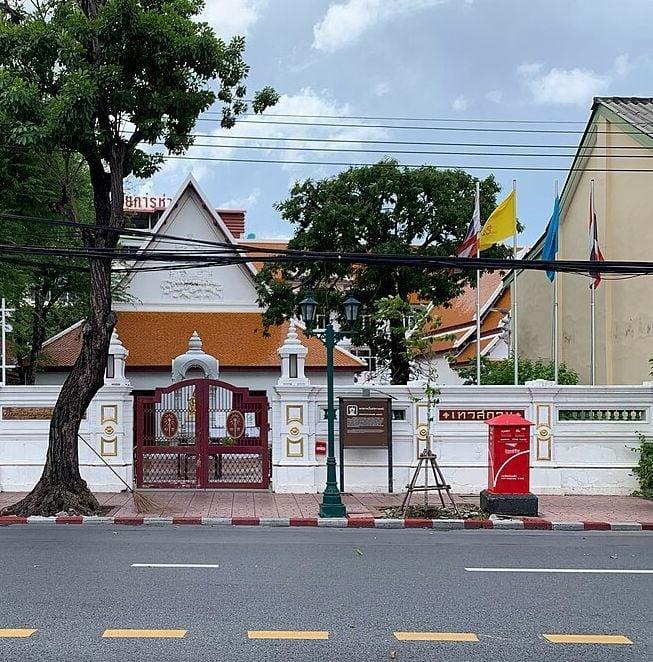
Devasathan: The King's Brahmin Shrine
A shrine kept by court Brahmins. The royal Brahmin shrine founded under King Rama I, whose priests ran the swing ceremony; seen from the fence on Dinso Road.
- 2
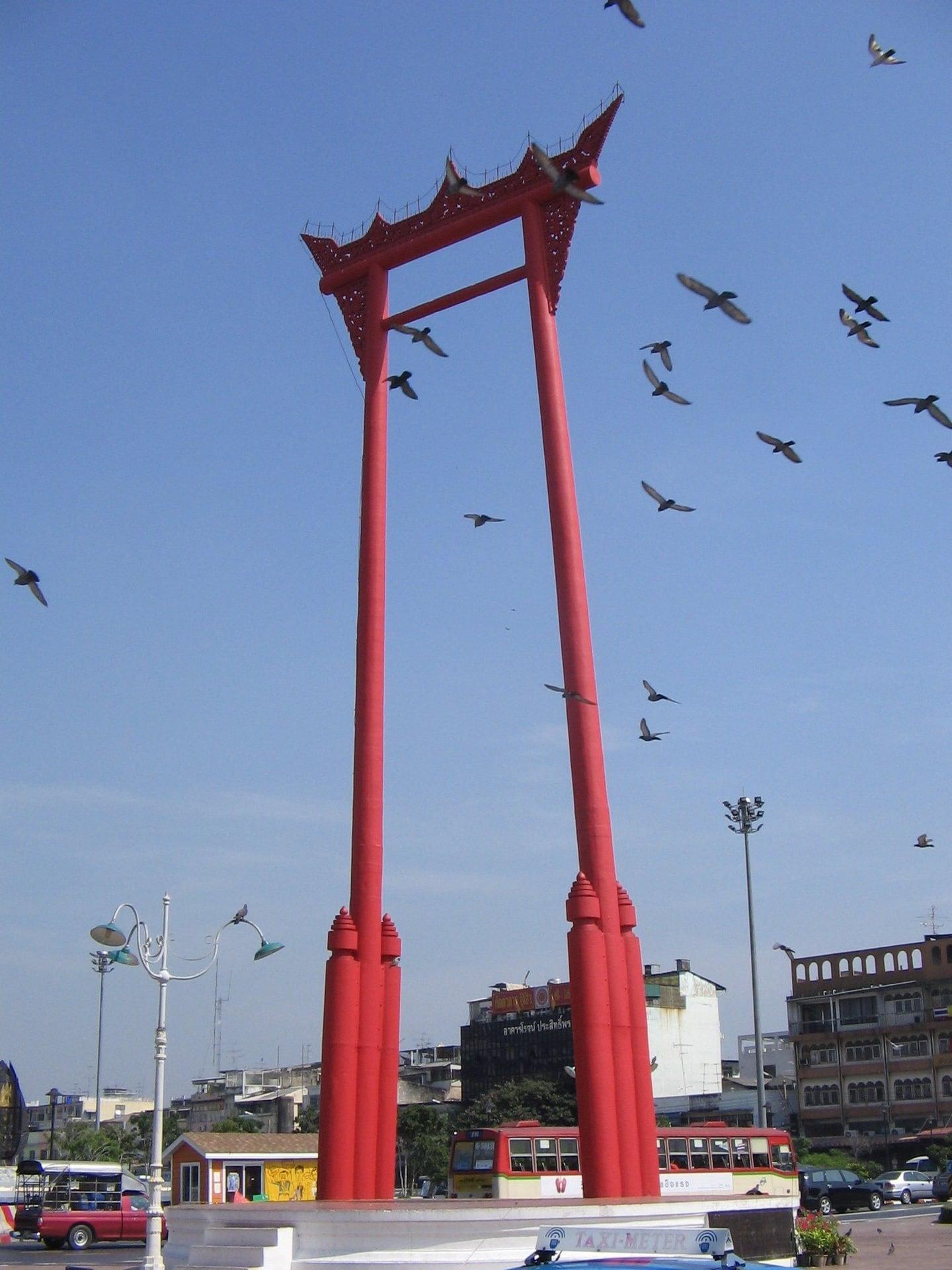
Giant Swing: The Rite of the New Year
Two red pillars over twenty meters tall. The Giant Swing, Sao Ching Cha, where swingers once reached for a purse of coins with their teeth.
- 3
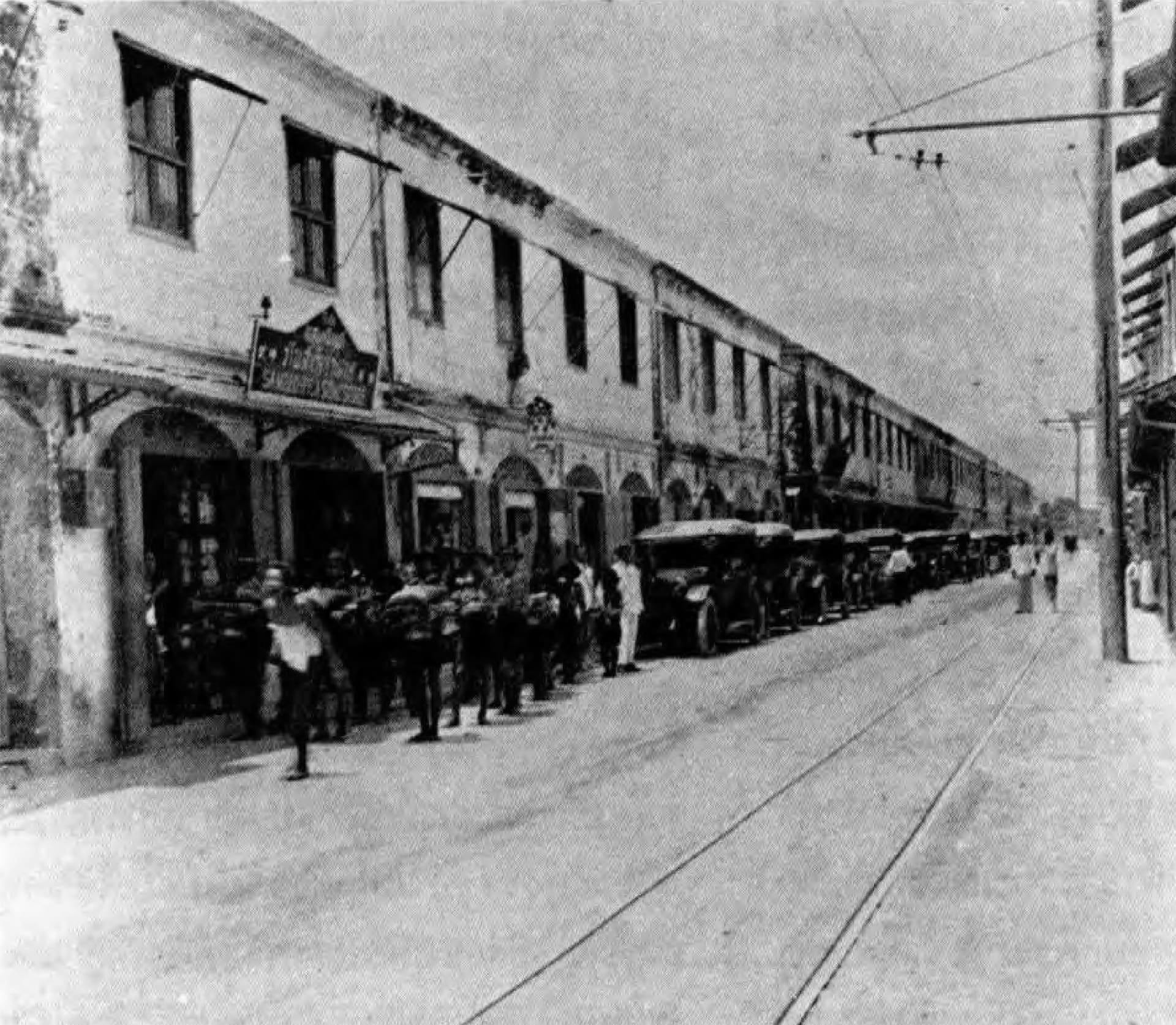
Bamrung Mueang Road: The Temple Supply Street
A street that supplies the temples. Shophouses of monks' robes, alms bowls, altar sets and Buddha images, serving temples and household shrines.
- 4
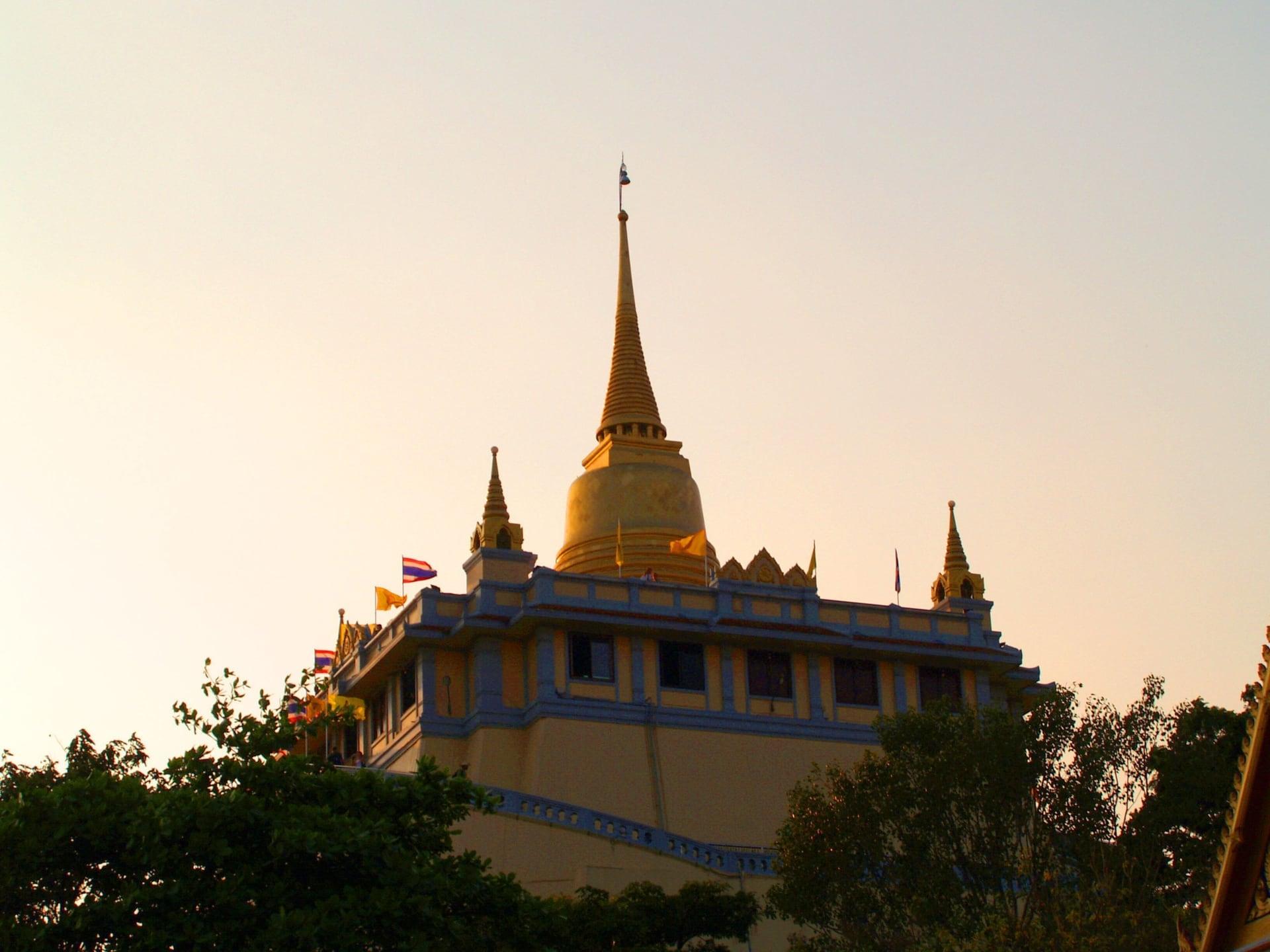
Khlong Rop Krung: The Canal Round the City
The old moat of the royal city. Khlong Rop Krung, the canal that ringed Bangkok's first city, runs north from the bridge toward the Golden Mount.
- 5
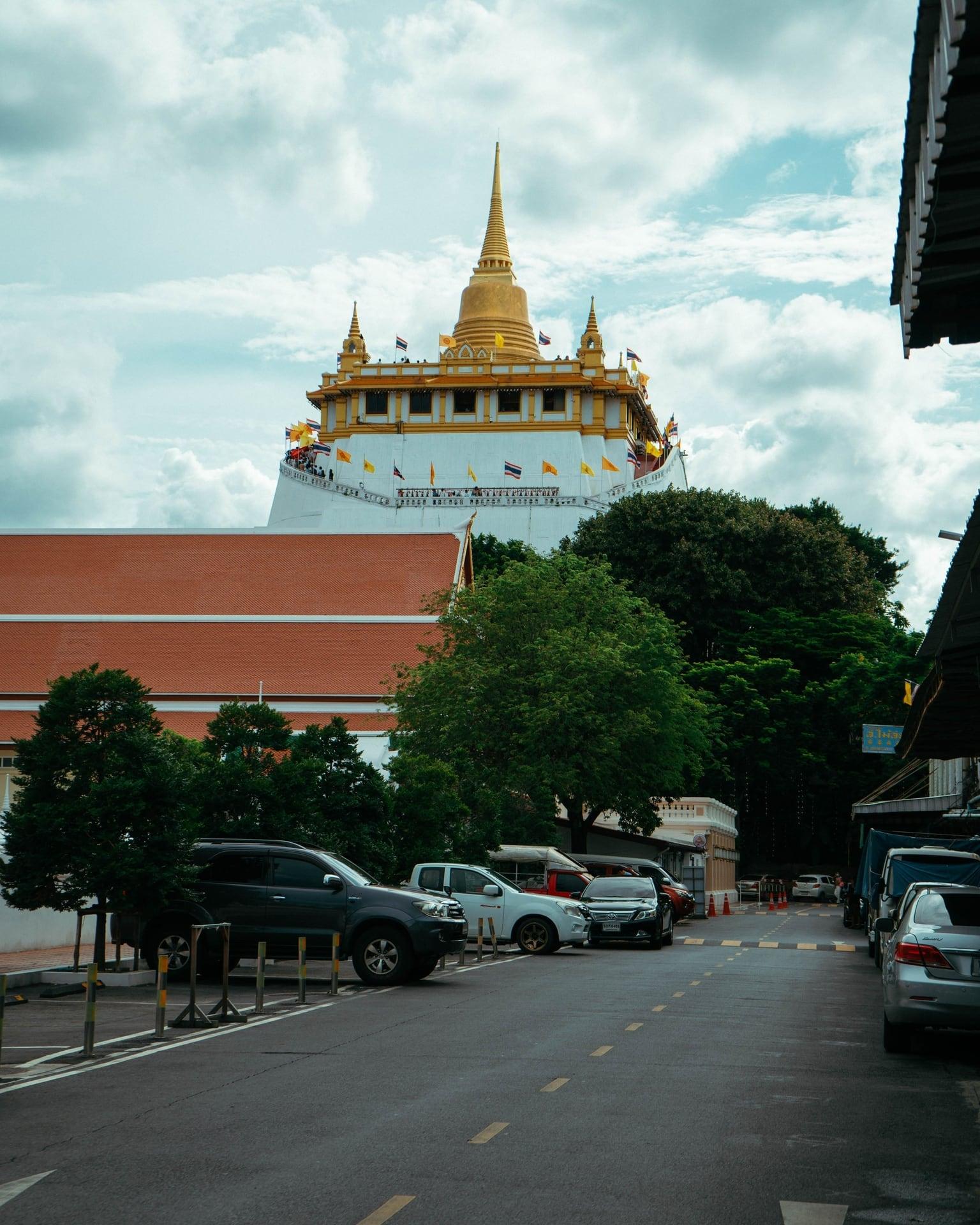
Wat Saket Gate: The Temple Before the Mount
An old temple renamed by a king. Wat Saket, already here when the capital moved in 1782, was rebuilt and renamed by Bangkok's founding king.
- 6
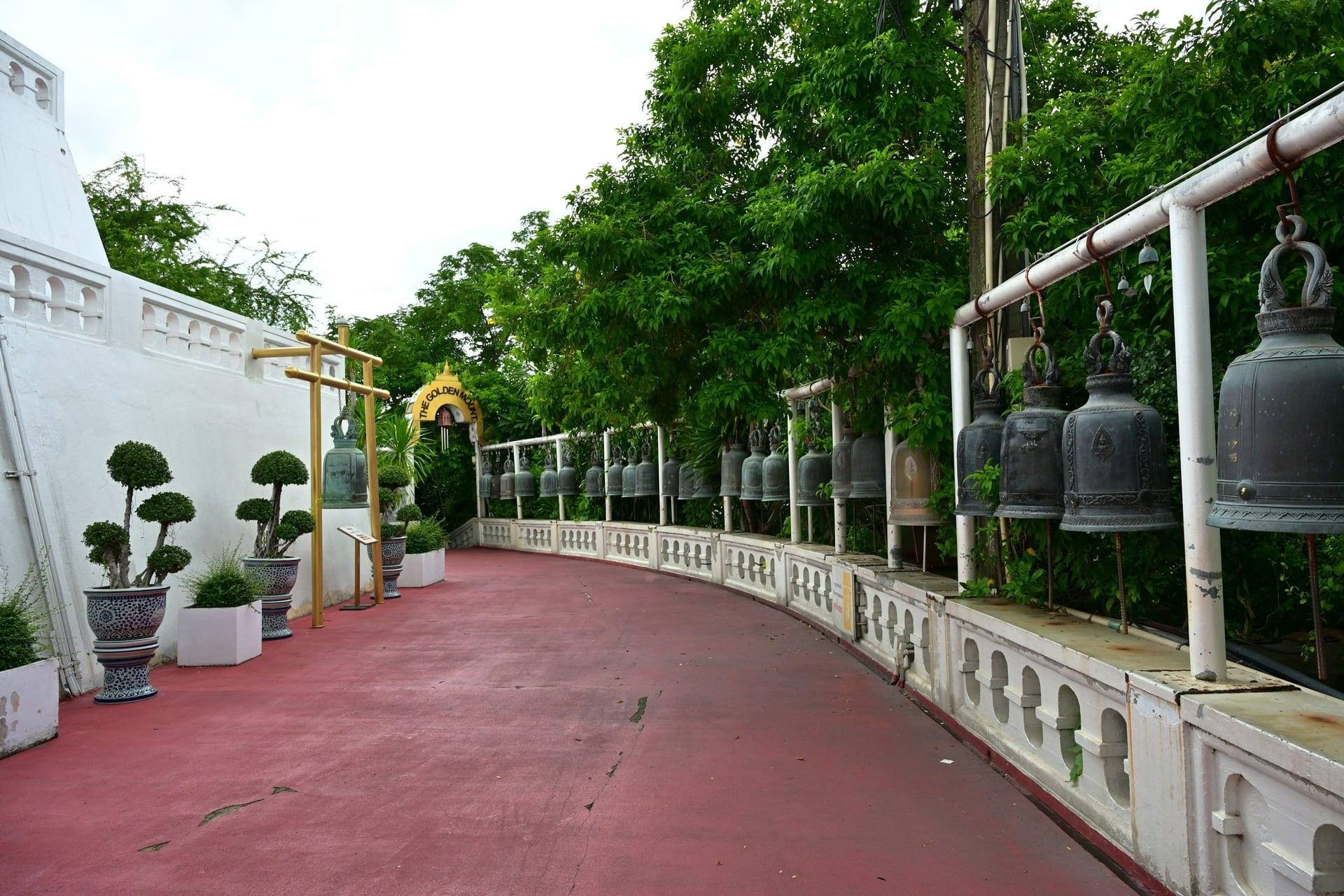
Golden Mount Stair: The Tower That Sank
A sunken tower turned into a hill. The Golden Mount, Phu Khao Thong, began as a royal tower that subsided; a later king made the ruin a mount.
- 7
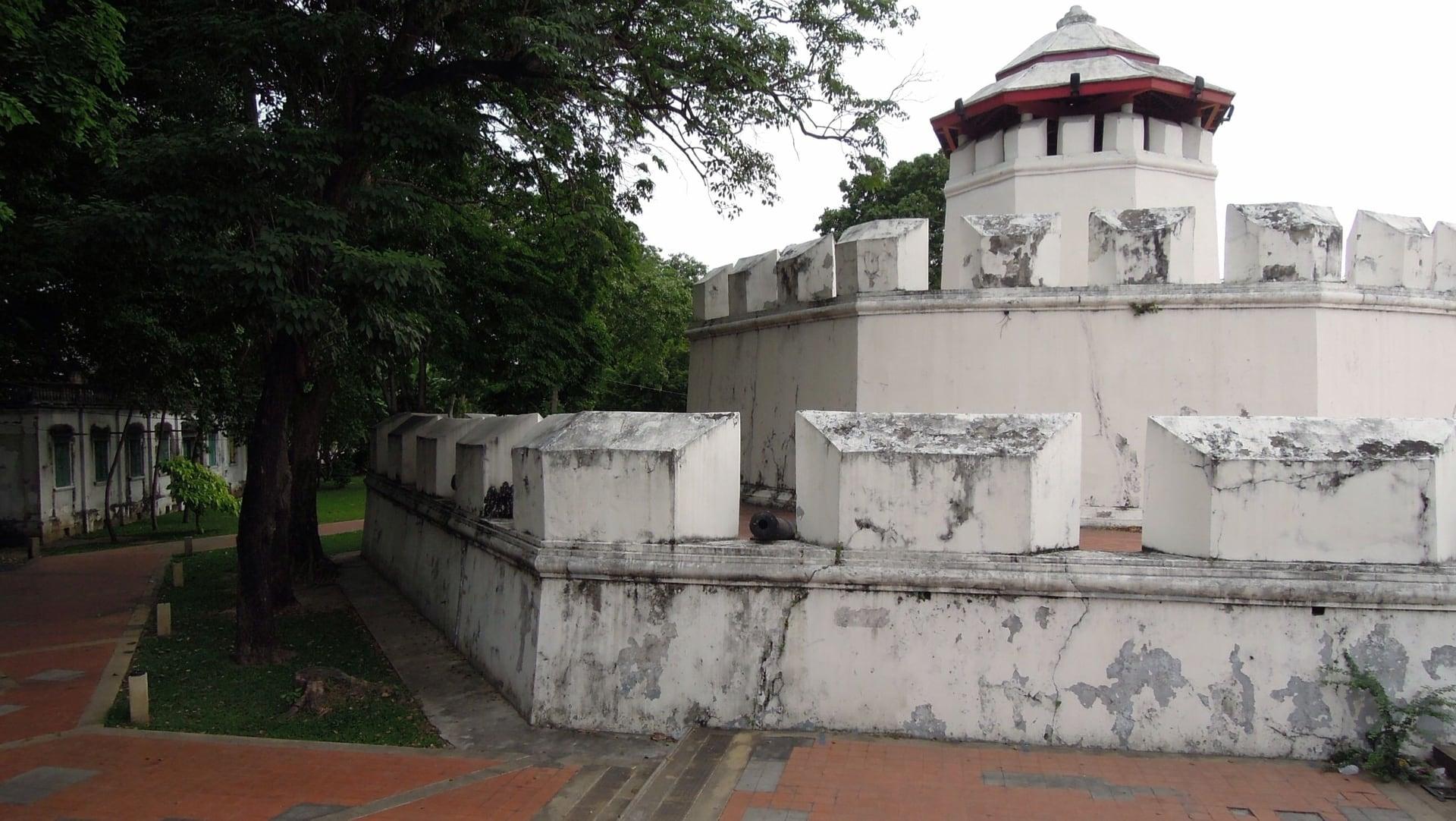
Canal and City Wall: The Edge Kept, the Houses Gone
The old city wall across the water. Whitewashed battlements along the moat, with lawns behind them where a community lived until 2018.
- 8
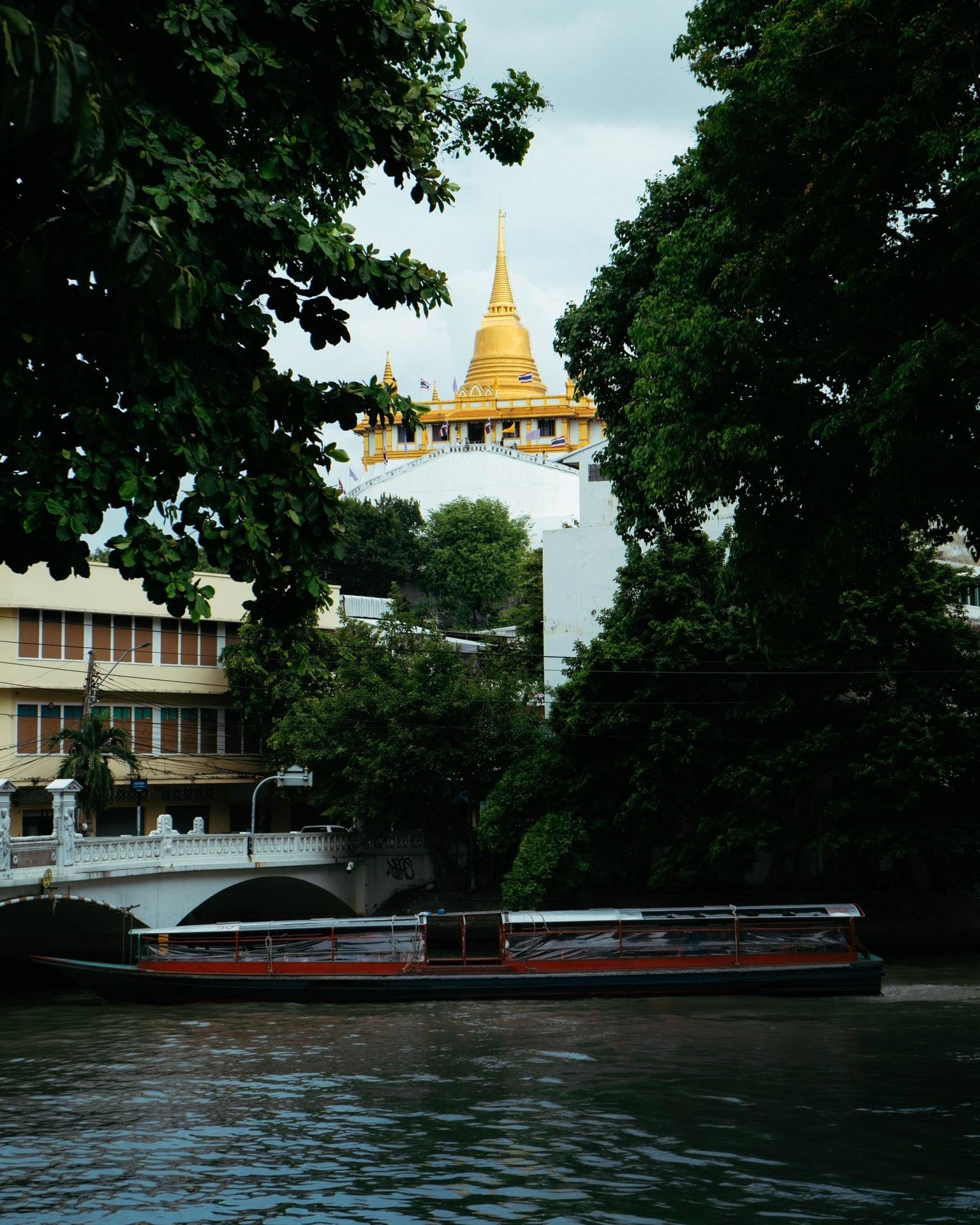
Phan Fa Pier: Where the Canal Boats Start
Two canals meet at a boat landing. The Khlong Saen Saep boats start here, carrying commuters east into the modern city.
- 9
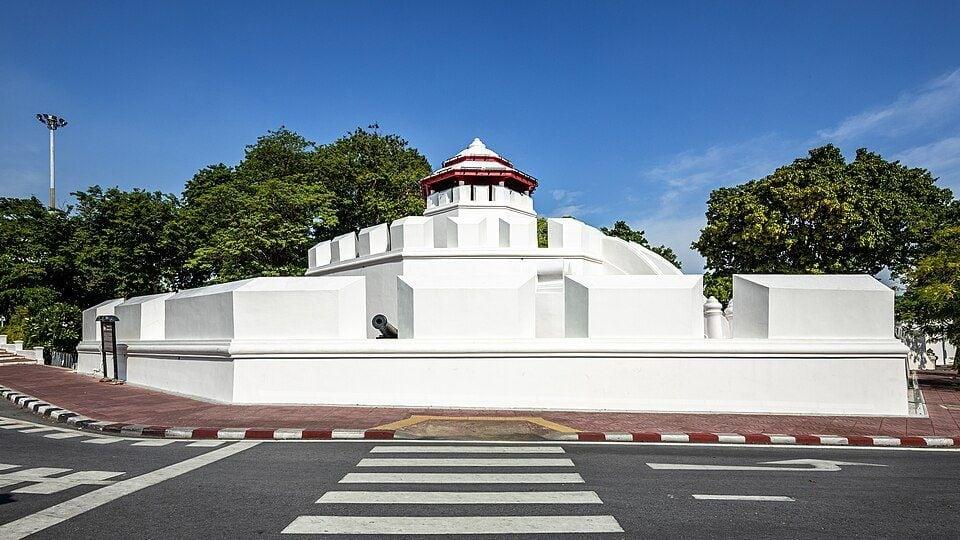
Mahakan Fort: The Wall's Last Corner
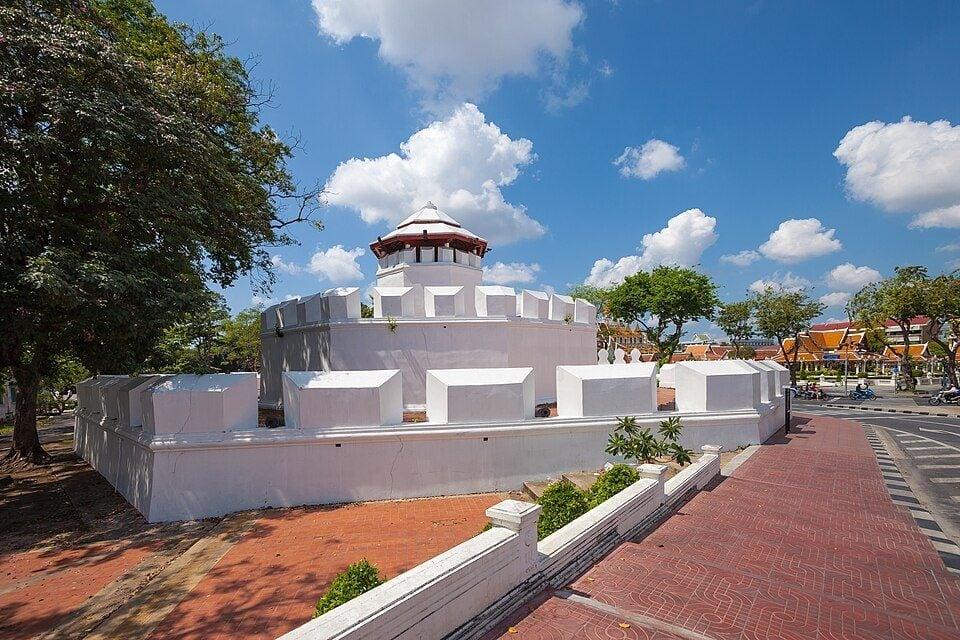
One of two surviving city forts. Mahakan Fort, white and eight-sided, guards the corner where the old wall meets the avenue.
- 10
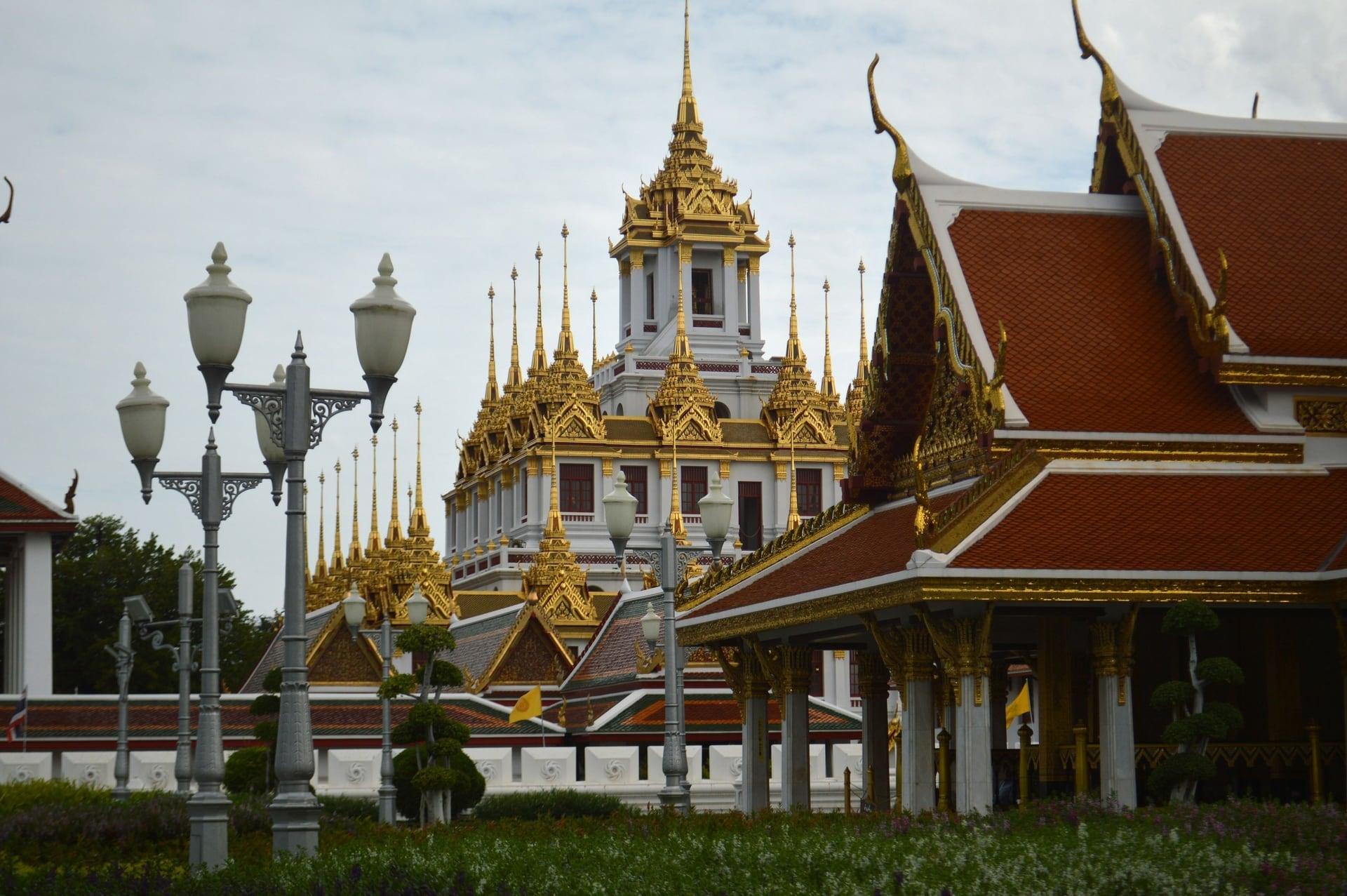
Loha Prasat: The Tower of Spires
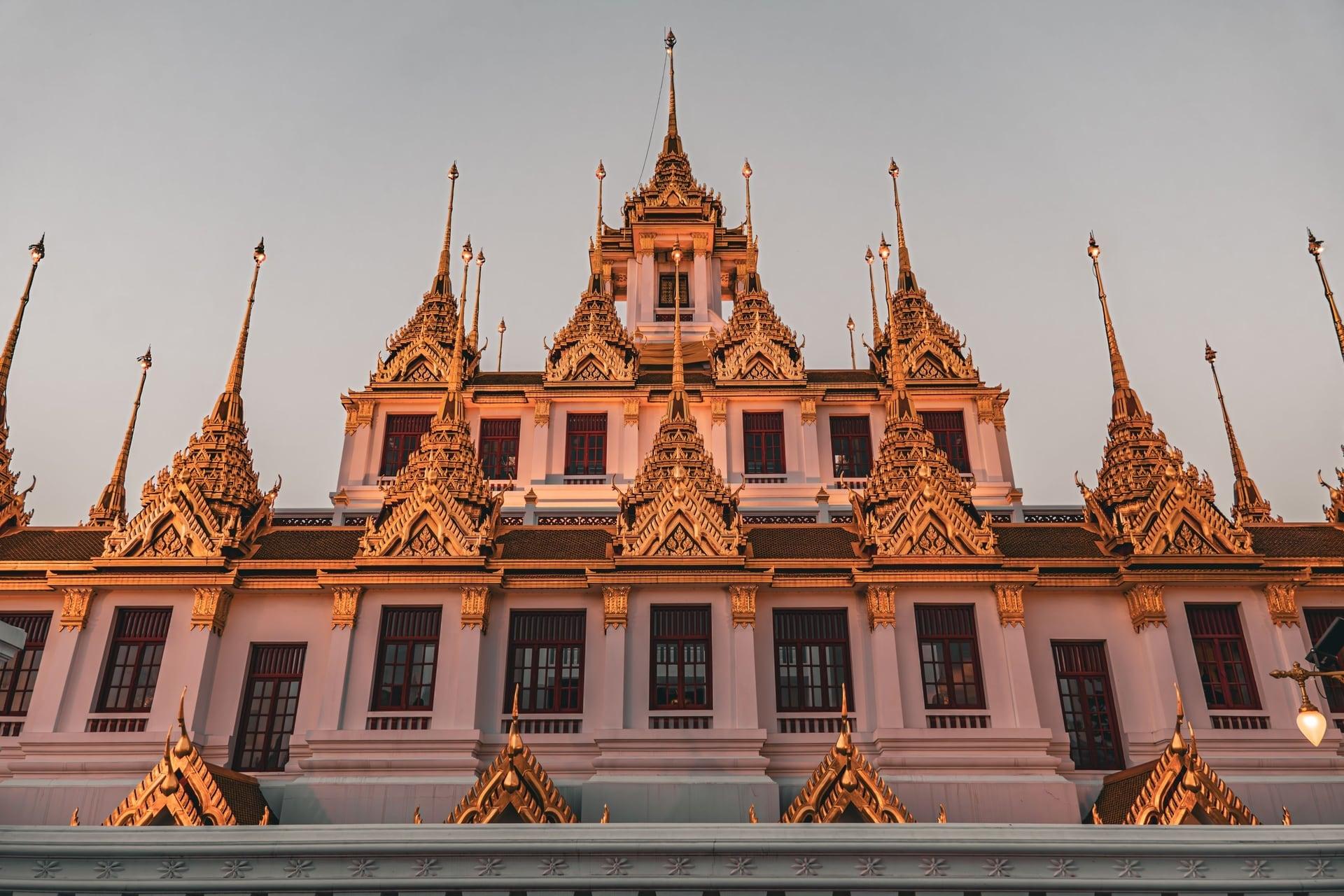
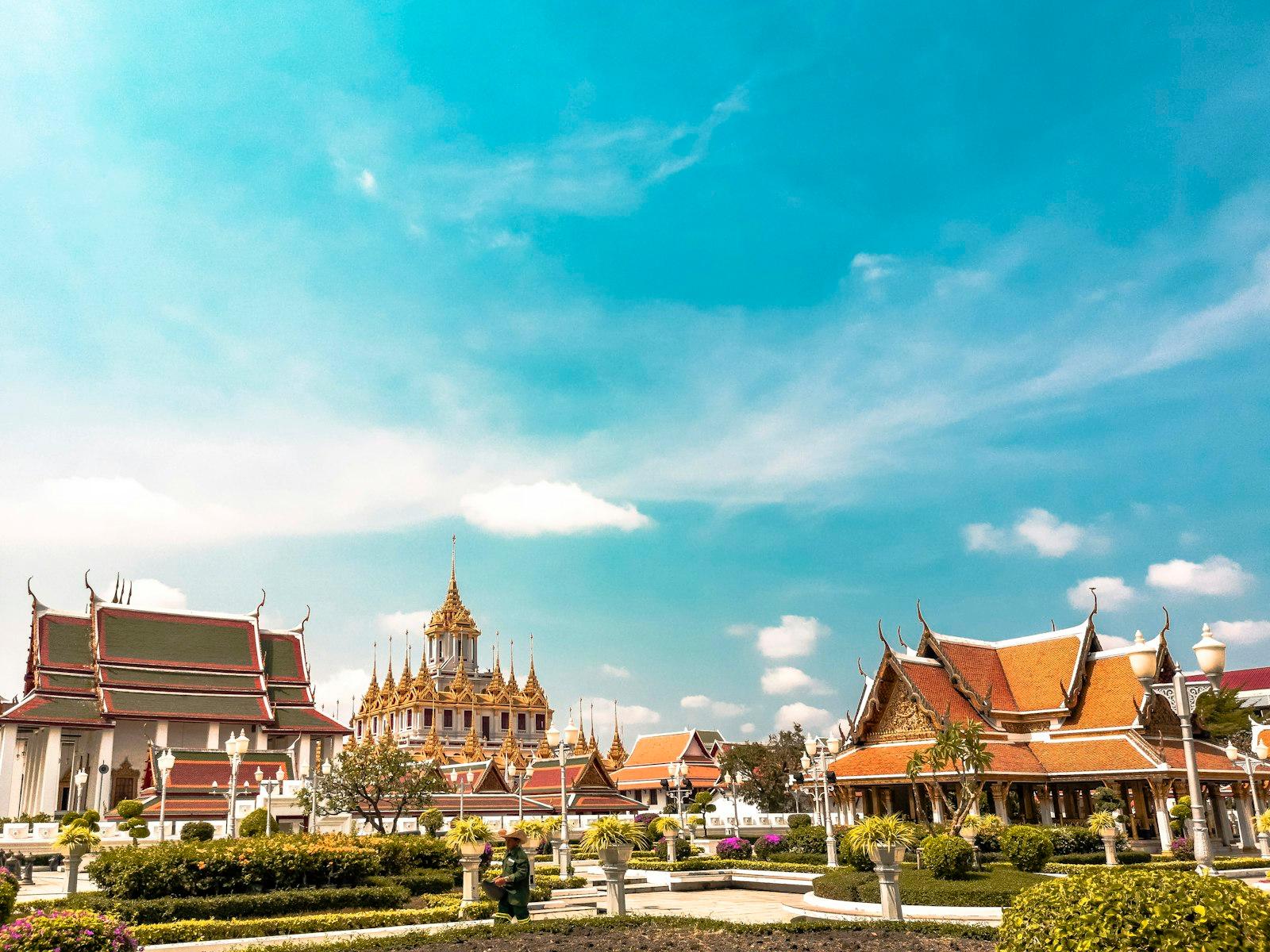
A tower of dark metal spires. Loha Prasat, begun in King Rama III's reign, rises behind the pavilion court on the avenue.
- 11
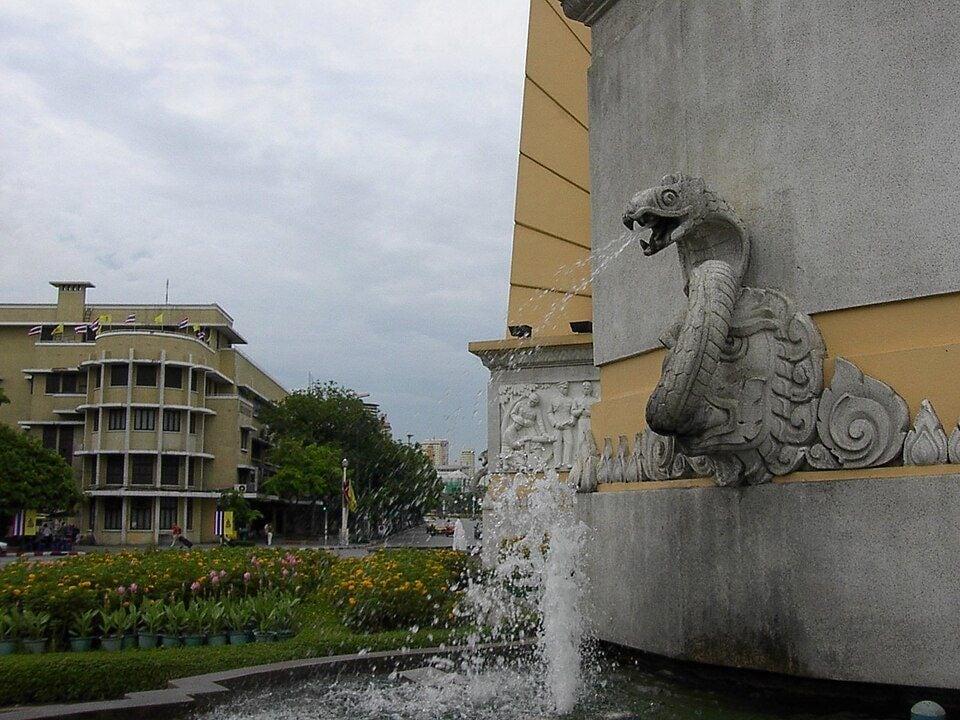
Ratchadamnoen Klang: The Avenue Remade
A royal avenue rebuilt in the 1930s. Long, low blocks with rounded corners line Ratchadamnoen Klang, remade after the 1932 change.
- 12
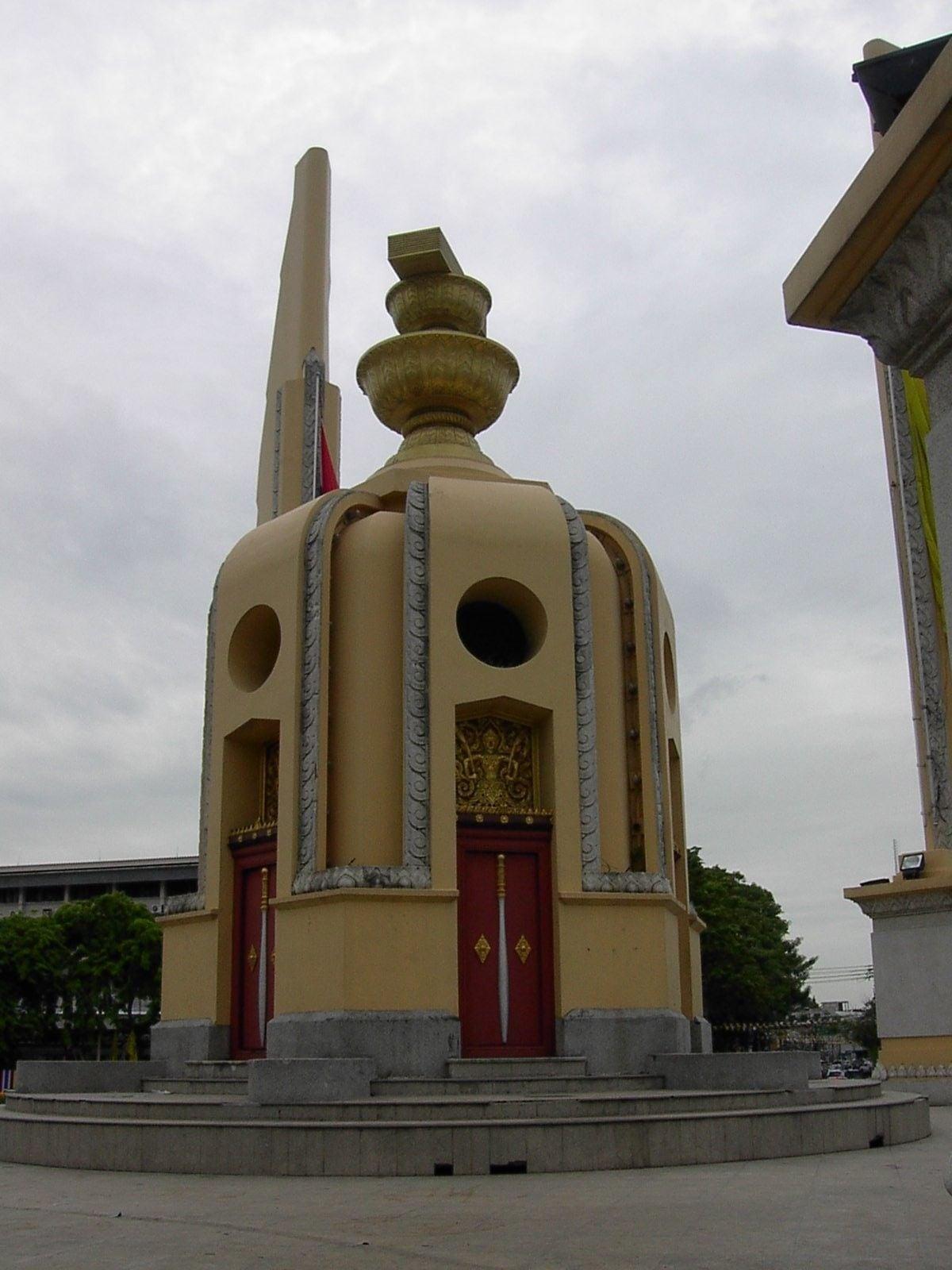
Democracy Monument: The Change of 1932
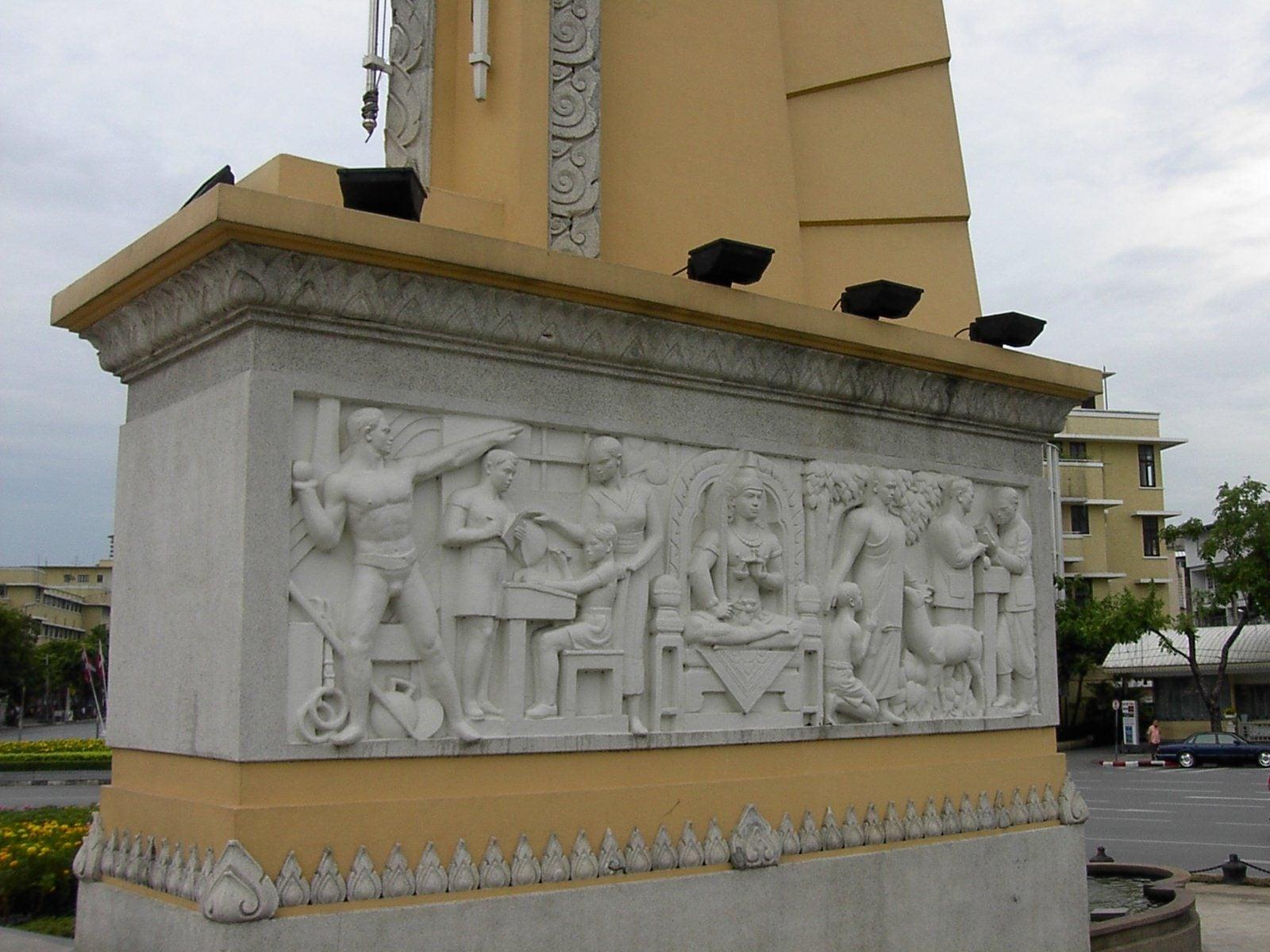
A monument to the change of 1932. Four winged pillars around a central turret commemorate the end of absolute monarchy in Siam.
Details
Best Time to Visit
Mid afternoon into dusk, in the cool, mostly dry season from November to February. Start around 15:30 to 16:00: you reach the Golden Mount's stair (stop 6) with the climb still open (the Tourism Authority of Thailand lists daily 07:00 to 19:00) and finish on the lit avenue at the Democracy Monument around sunset (about 17:48 on 11 November, 17:55 on 21 December, 18:08 on 15 January, 18:22 on 15 February, computed). Mornings are cooler but the bridges and corners have little shade at any hour; the lane around the mount is the shaded stretch. The shops on Bamrung Mueang Road (stop 3) keep daytime hours. Checked 11 November 2026.
Pro Tips
- •Start on Dinso Road's sidewalk outside the Devasathan shrine's fence, just north of the Giant Swing. From MRT Sam Yot, walk north past Rommaninat Park, about 10 minutes.
- •MRT Blue Line, Sam Yot station: the TAT says Wat Suthat and the Giant Swing are a short stroll north past Rommaninat Park (tatnews.org, 28 June 2024; exit number not verified). By taxi or tuk-tuk, ask for Sao Ching Cha. Checked 11 November 2026.
- •From our Bangkok Old Town walk: the City Pillar Shrine (Lak Mueang) is about 750 m west of the start along Bamrung Mueang Road.
- •The Golden Mount climb (stop 6) is optional and ticketed: the Tourism Authority of Thailand lists daily 07:00 to 19:00 and a 100 baht fee, paid at the foot of the stair (TAT page as archived 28 August 2025); check on the day. The way down comes out on the mount's north west side, on the shaded lane the route takes next, so you rejoin the walk without going back. Checked 11 November 2026.
- •Getting away from the Democracy Monument: taxis and buses on Ratchadamnoen Avenue; the Khlong Saen Saep canal boat from Phan Fa Lilat pier (stop 8), about 400 m back east (fares rose in March and April 2026; no official timetable found); Phra Arthit pier on the Chao Phraya river, about 900 m north west; Khao San Road about 600 m north west. Checked 11 November 2026.
- •Wat Suthat (behind the Giant Swing) and Wat Ratchanatdaram with Loha Prasat (stop 10) can be visited separately; Wat Suthat is ticketed. The Tourism Authority of Thailand lists Wat Ratchanatdaram as open daily 08:00 to 17:00, entrance fee 20 baht (page archived 30 November 2023); fees and hours vary between listings, so check at the gate. Checked 11 November 2026.
Safety & Precautions
- •Traffic drives on the left. Between stops 1 and 2 the route crosses Bamrung Mueang Road's west arm on a zebra with no signal: look right first and wait for a real gap. Between stops 9 and 10 it crosses Maha Chai Road on two zebras with an island and no signal: watch for cars turning in from the avenue. Every other road crossing on the route is at a signal: wait for it.
- •Do not cross Bamrung Mueang Road between the Maha Chai Road lights and Wat Saket: no crossing is marked there. The bowl-making lanes of Ban Bat are on the far side, and this walk does not go to them.
- •Wat Saket's gate (stop 5): its night hours are not published. If the gate is shut, walk back west along the same sidewalk to the canal and follow the canal path north to the city wall (stop 7), skipping the Golden Mount's stair (stop 6). There is no road to cross on that way round. Checked 11 November 2026.
- •The lanes inside Wat Saket (stops 5 to 7) are service roads used by temple cars: keep to the side. Between stops 7 and 8 the route crosses a small canal bridge on the road itself, with no sidewalk, for about 60 m: keep to the side.
- •Dress for a temple at Wat Saket: shoulders and knees covered. Take your shoes off before entering any temple hall, give monks room, and ask before photographing anyone.
- •Buddha images in the Bamrung Mueang shops (stop 3) are sacred objects: do not touch them or photograph them up close.
- •Motorbikes ride and park on the sidewalks, and shops put stock out on them, especially on Bamrung Mueang Road. GPS can be weaker under the shop awnings at stop 3: if it does not start, start it by hand.
- •Sun: cool-season afternoons average 32 to 34 °C (Thai Meteorological Department normals 1991 to 2020, November to February) and the bridges and corners have little shade: carry water and a hat. Haze is reported on about 16 to 21 days a month from December to February (same normals): check the air quality on the day (the Pollution Control Department's Air4Thai).
- •At Phan Fa Lilat pier (stop 8), stay on the sidewalk, not on the floating landing, unless you are taking the boat. The Democracy Monument stands in a traffic circle: do not cross to it.
- •The national anthem is played in public places at 8:00 and 18:00: if it plays near you, stand still until it ends.
- •Temple fair: Wat Saket holds its Golden Mount fair from 17 to 29 November 2026 (relic ceremonies 17 to 26 November), and an event runs at Mahakan Fort 17:00 to 22:00 on 23 to 25 November (The Nation, 31 October 2026). Expect crowds and stalls in the temple lanes (stops 5 to 7) and by the fort (stop 9), and hours that may differ. Checked 11 November 2026.
Travel advisory: Exercise Normal Precautions (Level 1).
Gallery
Related Reading
Go deeper on what you'll see, hear, and walk through.
Overview
Bangkok Travel Guide 2026: Days, Transport, Season, Safety, and Budget
8 min
Overview
One Day in Bangkok: A Walkable Itinerary from Temples to Chinatown
8 min
Thematic
Bangkok in Layers: A Capital Founded as a Copy, Still Open for Business
8 min
Thematic
Best History Walking Tours in Bangkok (2026)
2 min
Companion
Golden Mount and the Old City Wall: Walking the Edge of Bangkok's First Royal City
7 min
Deep dive
Giant Swing (Sao Ching Cha) and the Devasathan: A Brahmin New Year in a Buddhist Capital
5 min
Read the walk
The full story of Golden Mount and Giant Swing: A Tower That Became a Hill, in words. Prefer to listen? Play it narrated, from home or on location.
Introduction
Bangkok's old city has an edge you can still see: a canal that ringed it and a white wall beside the water. This walk follows that edge, and the things the city set along it. A shrine where Brahmin priests served a Buddhist court. A swing built for a new year rite. A street that supplies the temples. And a hill with a gold spire on top, which began as a royal tower that sank into the ground.
There are twelve stops over about one point eight kilometers, just over a mile, and it takes about eighty minutes, more if you climb the Golden Mount. The route is flat. The climb is optional, and it has a small fee.
Traffic drives on the left. The route crosses at signals, except for two zebra crossings: one right after the first stop, and one near the end. At both, wait for a real gap. Motorbikes use the sidewalks too, so keep your eyes up.
Even in the cool season, afternoons average about thirty three degrees, ninety one Fahrenheit, and the bridges and corners have little shade: bring water and a hat. Haze is common from December to February, so check the air quality on the day. The middle of the walk passes through Wat Saket's grounds, so dress for a temple, with shoulders and knees covered. The climb closes at seven in the evening, and the sun sets around six. Starting around half past three gives you the climb in daylight and the avenue at dusk.
The walk ends at the Democracy Monument, on Ratchadamnoen Avenue. When you arrive at the Devasathan, begin with stop one.
1. Devasathan: The King's Brahmin Shrine
This is the Devasathan, the royal Brahmin shrine. Stop on the sidewalk outside its fence, with the gate and the white shrine halls beside you.
It is a surprising thing to find at the heart of a Buddhist capital: a shrine to Hindu gods, kept by Brahmin priests for the royal court. The Thailand Foundation says King Rama the First, Phra Phutthayotfa Chulalok, had it built in seventeen eighty four, two years after he founded Bangkok. Inside are two Shivalingas, the stone emblems of the god Shiva, which the Foundation calls a rarity in Brahmin temples. And the priests who serve here, it says, come from only seven Brahmin families.
Why would a Buddhist king keep Brahmin priests? Because the great rites of the court, the coronation and the new year among them, belonged to the Brahmins.
One of those ceremonies needed something very large. Look ahead, down the street, and you can see it already: two tall red pillars joined by a beam. That is the Giant Swing, and it was built for this shrine's new year rite.
The shrine's visiting hours are not published, so the fence is as close as this walk comes. Please keep your voice low by the gate.
Follow the route to the swing. It crosses Bamrung Mueang Road on a zebra crossing with no signal. Traffic here drives on the left, so look right first, and wait for a real gap.
2. Giant Swing: The Rite of the New Year
Walk on along the temple's front and stop on its sidewalk, with the swing across the lane from you, on its oval plaza.
This is the Giant Swing, Sao Ching Cha in Thai. Two red pillars, more than twenty one meters tall, The Nation and the Thailand Foundation agree, carry a carved crossbeam high against the sky. It was built in the first years of the new capital, in the seventeen eighties, for the shrine you just left.
Here is what happened under it. At the Brahmin new year, teams of young men in serpent headdresses rode a board hung from that beam and swung out, higher and higher, reaching for a bag of coins. They had to catch it with their teeth.
It was dangerous, and it was expensive. The Thailand Foundation says the swinging was stopped in nineteen thirty four, for its risk and its cost, though the court Brahmins still hold the new year rite at the shrine. The swing stayed. The Tourism Authority of Thailand says the one you see was rebuilt in two thousand seven, of golden teak from Phrae, in the north.
Face the swing. Behind you, over the wall, rises the great roof of Wat Suthat. Wat means temple. This one is ticketed, and the walk stays outside on the sidewalk.
A swing whose swinging ended almost a century ago, kept standing in the middle of the traffic. Now you know why it is here.
Follow the route east, around the swing's plaza. It crosses four times at the signals there, so wait for the signal each time.
3. Bamrung Mueang Road: The Temple Supply Street
Walk on along the shop fronts and stop in the middle of the block.
Look into the windows as you go. Saffron monks' robes, folded in piles. Black alms bowls. Altar tables, candles, offering sets. And Buddha images in bronze and resin, small and very large.
This is Bamrung Mueang Road, and this stretch supplies the city's temples and household shrines. The Tourism Authority of Thailand says the shops near Wat Suthat stock a very comprehensive range of Buddhist religious supplies. A temple ordaining new monks needs robes and bowls. A family setting up a shrine at home needs an altar and an image. They come here.
The images in these windows are not souvenirs. They are sacred objects, made to be placed in a temple or a home shrine. Please do not photograph them up close, and do not touch them. If you look, look with care.
The bowls are worth a second glance. A monk carries one on his morning alms round, and people put food into it. You will hear more about who makes them at the next stop.
The sidewalk here is shared with stock, parked motorbikes and moving ones too: keep your eyes up as you walk.
Follow the route east. At the Maha Chai Road lights it crosses to the far side of Bamrung Mueang, then across Maha Chai Road, both with the signal, and onto the bridge.
4. Khlong Rop Krung: The Canal Round the City
As you come off the bridge, stop where the path leaves the sidewalk and turns along the water. Face along the canal, away from the road.
The water runs straight away from you, and over the roofs ahead rises a hill with a gold spire on top. That is the Golden Mount, where this walk goes next.
This is Khlong Rop Krung. Khlong means canal, and Rop Krung means round the city. It is the canal that ringed the royal city. The Siam Society history of Wat Saket says it was cut in Bangkok's first years, so that the new capital, laid out like Ayutthaya, would be surrounded by water. Further along this canal, on its far bank, stands a stretch of the old city wall, and this water was its moat. Everything you have seen so far, the shrine, the swing, the supply street, stood inside it.
From here the walk follows that edge: up past the temple and its mount, along the wall, and back into the city on its great avenue.
One place you will not walk to. On the other side of Bamrung Mueang Road, a short way off, are the lanes of Ban Bat, the bowl village. Its community has hammered monks' alms bowls by hand, and a handful of families still do. There is no crossing of that busy road there, so this walk leaves the village be. Bowls like the ones in the shop windows you just passed are what they make.
Follow the route east along this side of Bamrung Mueang to the temple gate. No road to cross.
5. Wat Saket Gate: The Temple Before the Mount
Stop at the temple's gateway from the street. Ahead are the temple halls, and above them, on its hill, the gold spire of the Golden Mount. This is Wat Saket. It is older than Bangkok. A history of the temple published in the Journal of the Siam Society in nineteen thirty says…
Full narration for this stop unlocks with the tour.
6. Golden Mount Stair: The Tower That Sank
Walk on up the lane until the stair is in front of you, and stop at its foot. Above you the mount rises in terraces, the stair winding up its side, and on top a gold chedi. A chedi is a bell-shaped Buddhist shrine that holds relics. This hill is not natural. It is a building…
Full narration for this stop unlocks with the tour.
7. Canal and City Wall: The Edge Kept, the Houses Gone
Walk on along the canal and stop opposite the white wall on the far bank. The Golden Mount is behind you now. Across the water is the old city wall: whitewashed, notched along the top with battlements, running beside the moat. This was the edge of the royal city, wall and water…
Full narration for this stop unlocks with the tour.
8. Phan Fa Pier: Where the Canal Boats Start
Over the little bridge, turn toward the big bridge ahead, and stop at the corner above the boat landing. Steps lead down to it on your side of the water. Two canals meet here. The little canal you just crossed is Khlong Mahanak, and it joins the moat you have been following.…
Full narration for this stop unlocks with the tour.
9. Mahakan Fort: The Wall's Last Corner
At the far end of the bridge, stop beside the white fort at the corner. This is Mahakan Fort. It is one of the two forts left from the old city wall. Look at its shape: eight-sided, whitewashed, with notched battlements around the top, the same pattern as the wall. And from it…
Full narration for this stop unlocks with the tour.
10. Loha Prasat: The Tower of Spires
On the far side of the crossing, walk on along the avenue and stop at the front of the walled court with its pavilion. Look past the pavilion. Behind it rises a building made of points: tier on tier of small towers, each capped with a dark metal spire, stepping up to a single…
Full narration for this stop unlocks with the tour.
11. Ratchadamnoen Klang: The Avenue Remade
Walk on along the avenue and stop among the long, low buildings that line it. This is Ratchadamnoen Klang, the middle stretch of Ratchadamnoen Avenue. The avenue was laid out as a royal road at the turn of the twentieth century; the Bangkok Post says the king of the day…
Full narration for this stop unlocks with the tour.
12. Democracy Monument: The Change of 1932
Walk on to where the sidewalk bends around the traffic circle, and stop there with the monument in view, in the middle of the circle. Do not try to cross to it. This is the Democracy Monument. Four tall wings stand around a central turret, with carved reliefs. It marks a…
Full narration for this stop unlocks with the tour.
- Devasathan — Chainwit, CC BY-SA 4.0 · source
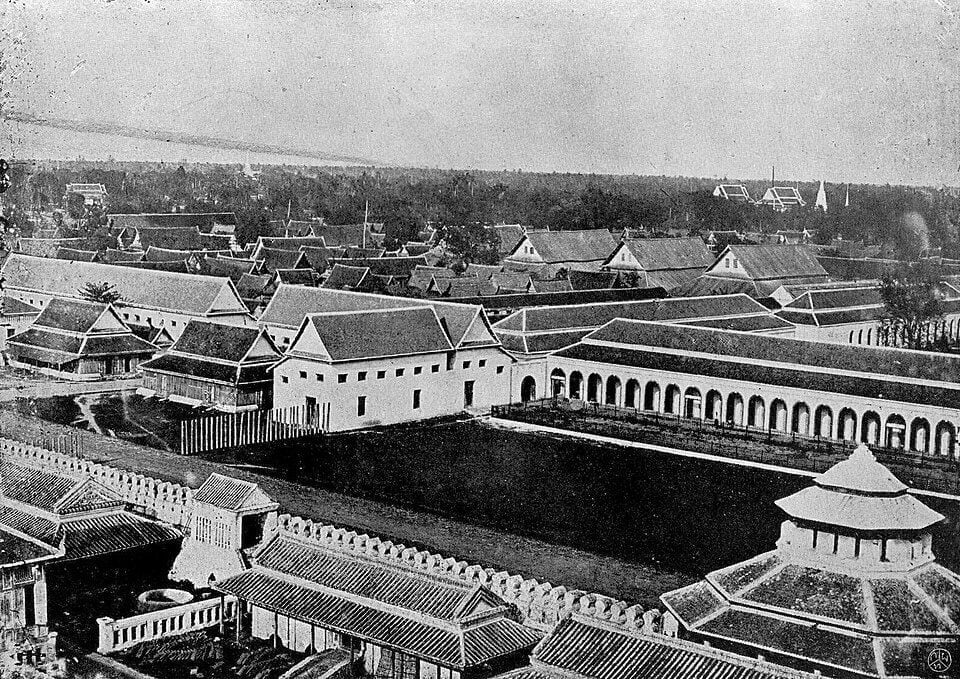
- The restored ramparts of http://bangkokforvisitors.com/golden-mount/mahakan-fort.php" rel="noreferrer nofollow">Mahakan Fort mark the entran — David McKelvey from Brisbane, Australia, CC BY 2.0 · source
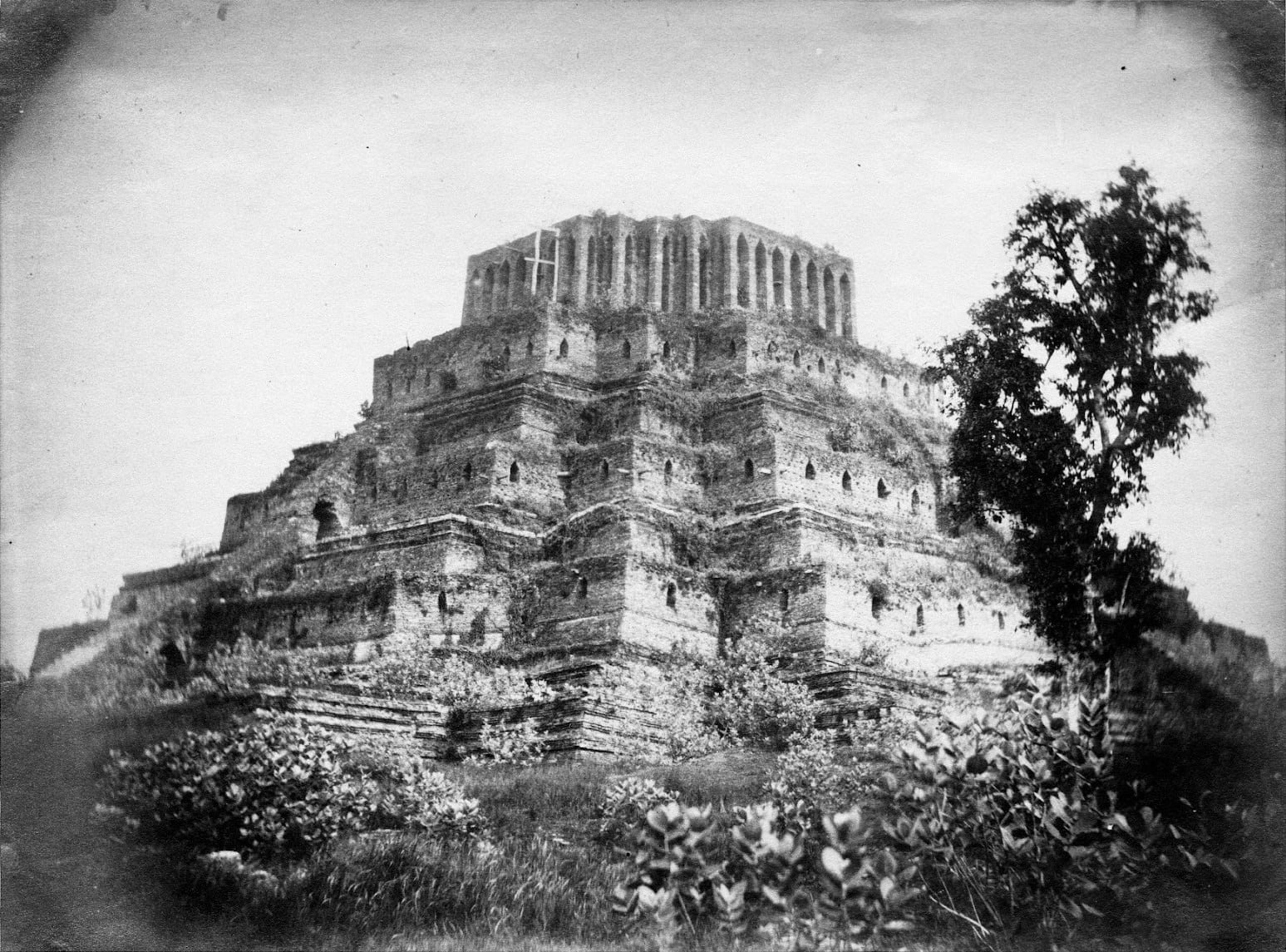
- Fort Mahakan, Bangkok. — Supanut Arunoprayote, CC BY 4.0 · source
- Fort Mahakan, Bangkok — Supanut Arunoprayote, CC BY 4.0 · source
Images may be cropped or resized. Other photos via Unsplash and Pexels.