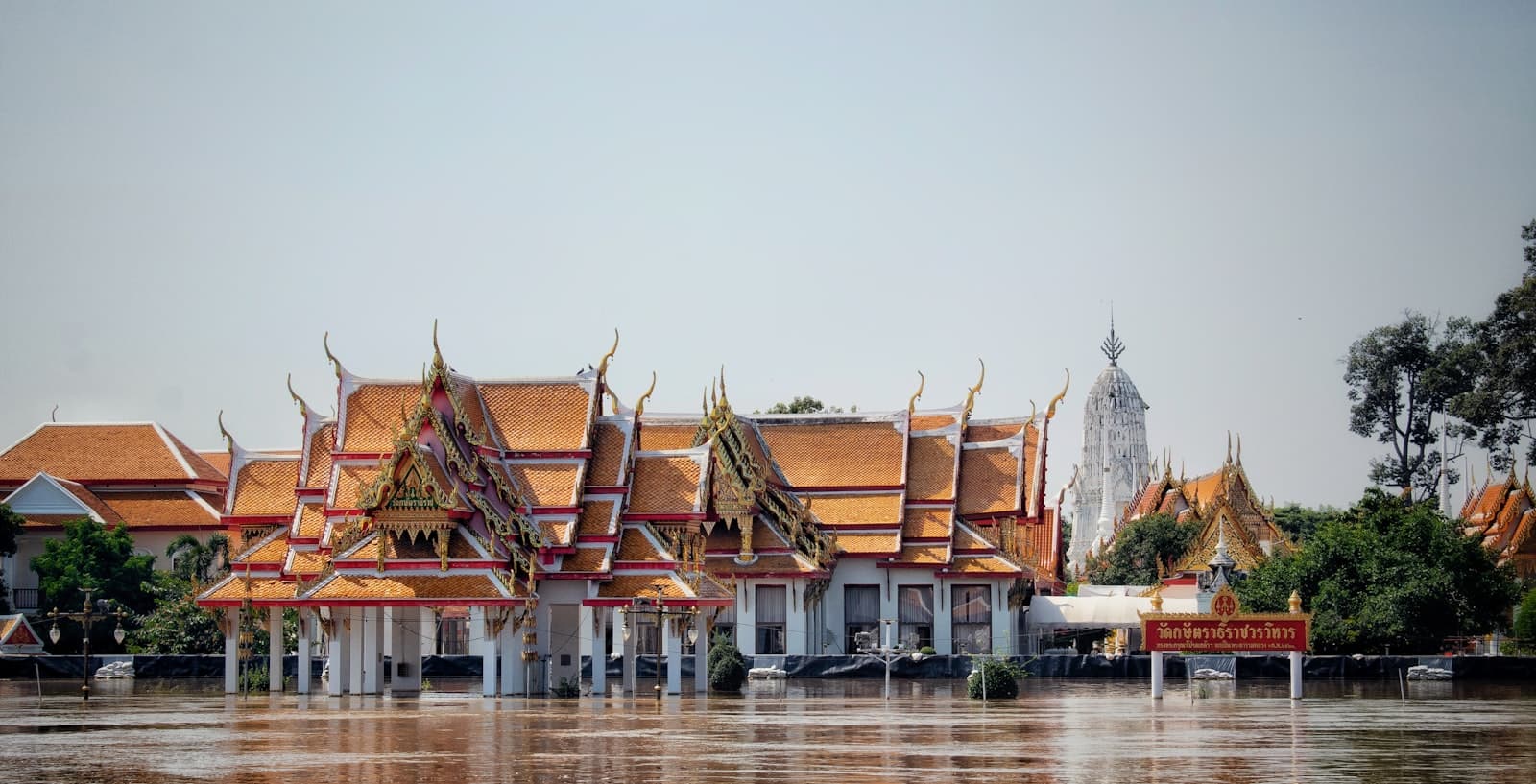
A downriver walk through the vanished foreign quarters of Ayutthaya, the cosmopolitan port where Siam kept the whole world close enough to trade with and close enough to watch.
Start · Wat Phanan Choeng: The Mariners' Buddha at the Confluence
DirectionsStops
- 1
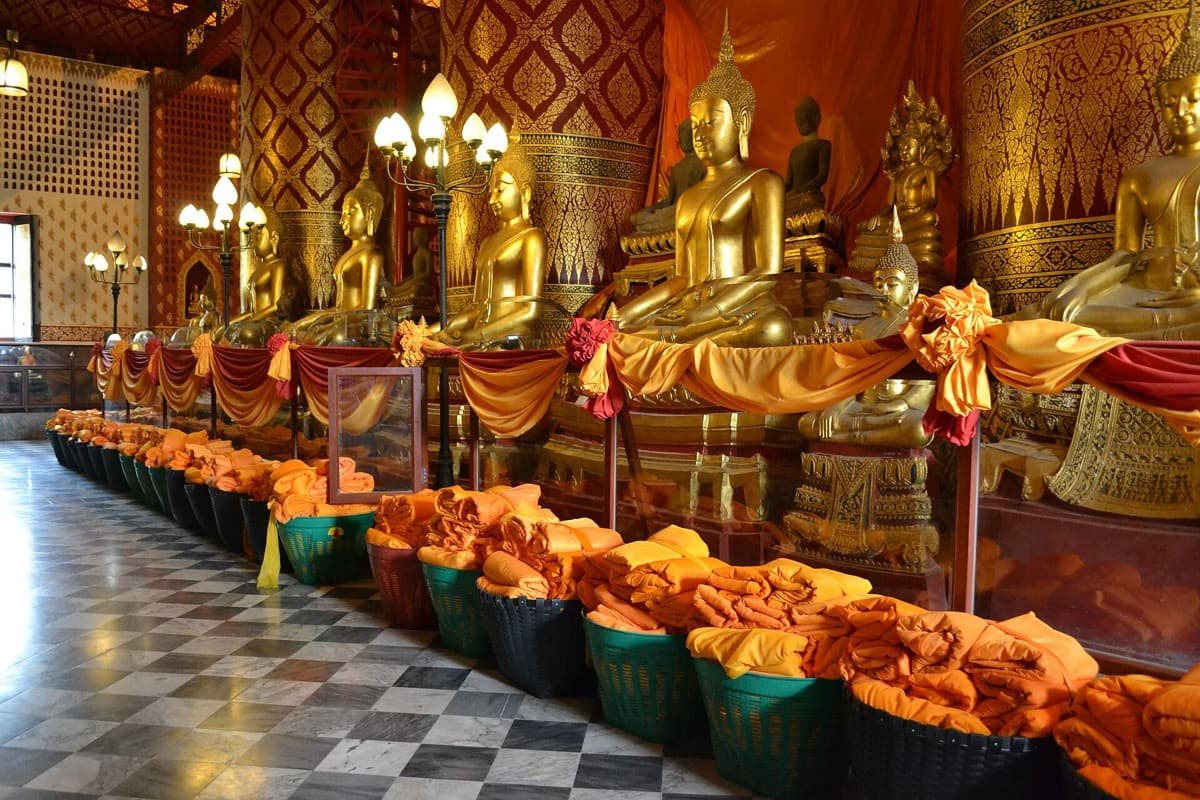
Wat Phanan Choeng: The Mariners' Buddha at the Confluence
A river temple where a colossal seated Buddha has watched over sailors and traders since before Ayutthaya itself, revered by Thai and Chinese devotees alike.
- 2
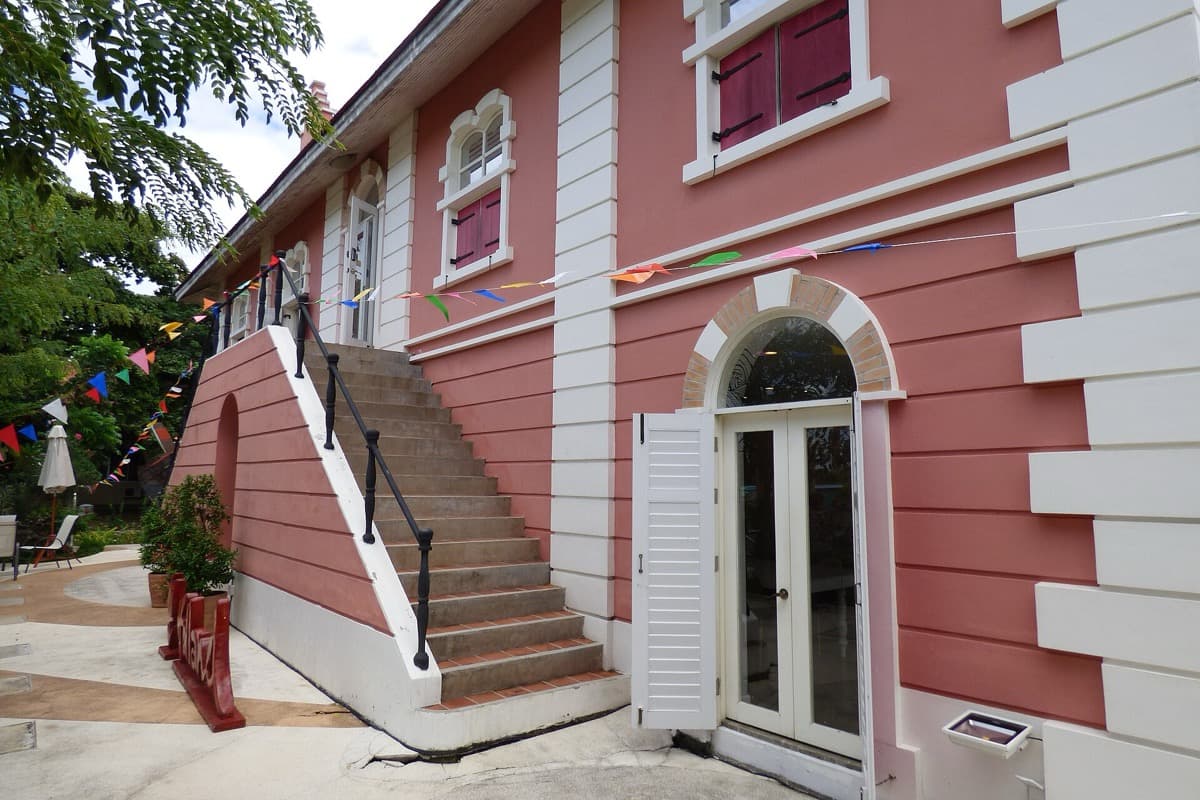
Baan Hollanda: The Dutch Lodge and the Deerskin Monopoly
The site of the Dutch East India Company's riverside trading lodge, where a European company grew rich on Siamese hides bound for Japan.
- 3
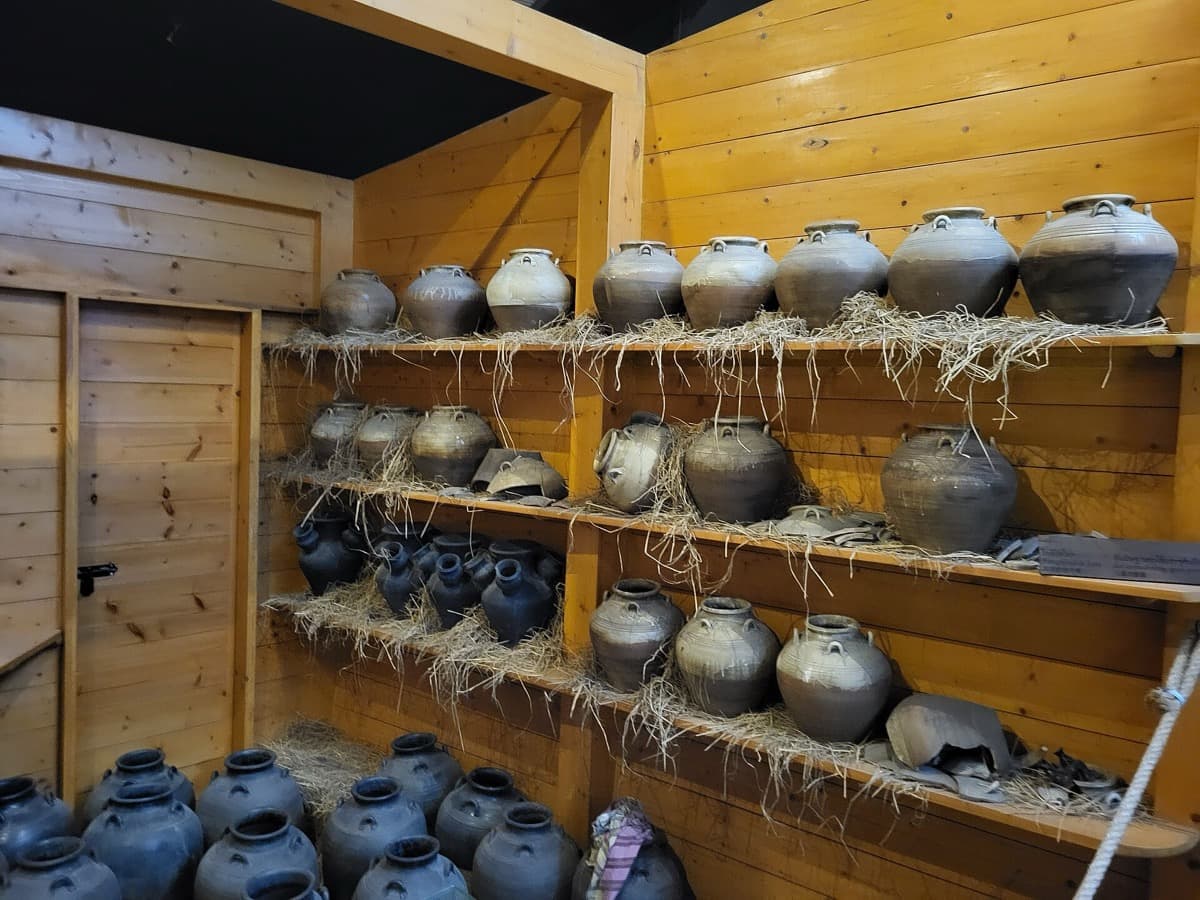
Japanese Village (Baan Yipun): The Samurai Who Governed for Siam
A memorial park on the site of Ayutthaya's Japanese enclave, home to traders, Christian refugees, and masterless samurai led by a man who rose high in the Siamese court.
- 4
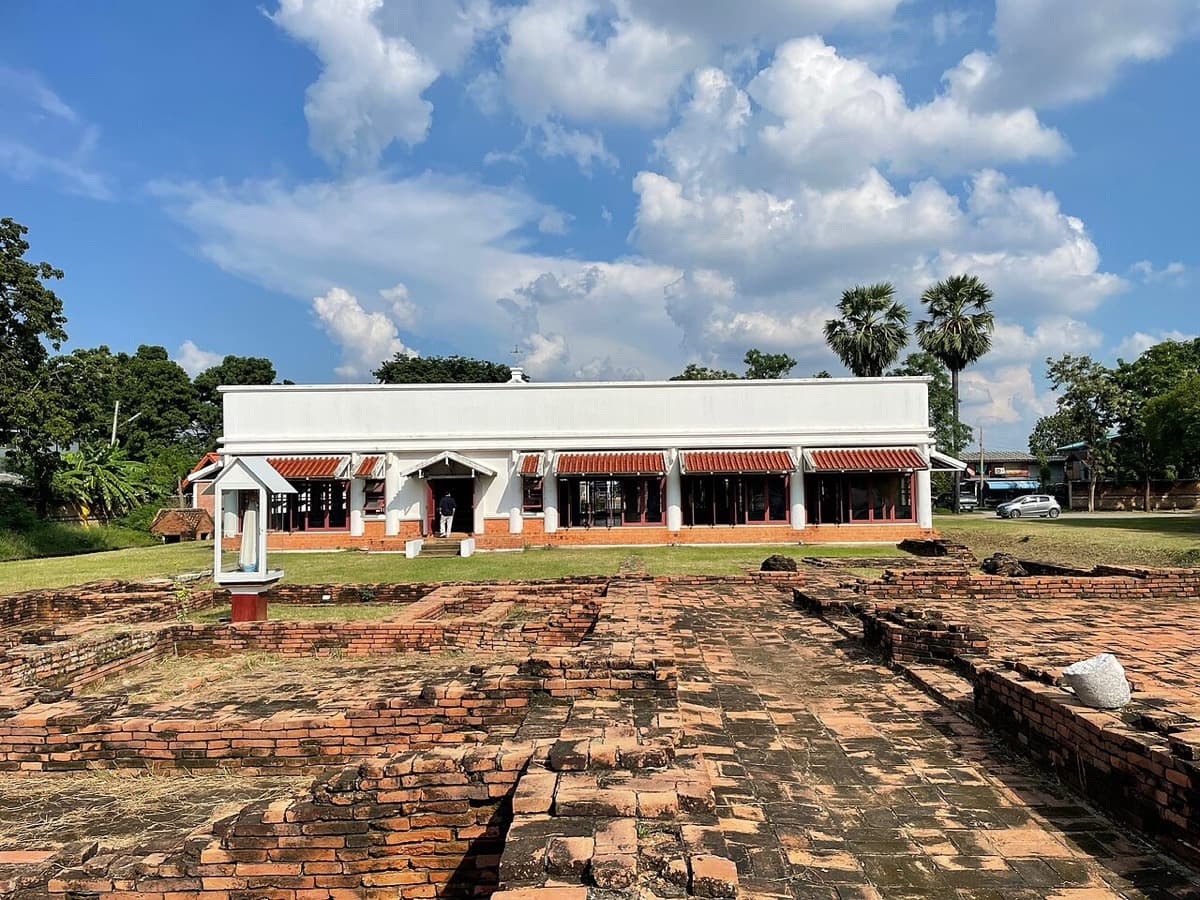
Portuguese Settlement (Baan Portuguese): The Excavated Dead of the First Western Quarter
An open excavation site on the south bank where the earliest Western settlers lived, worshipped, and were buried, their remains uncovered beneath a ruined Dominican church.
- 5
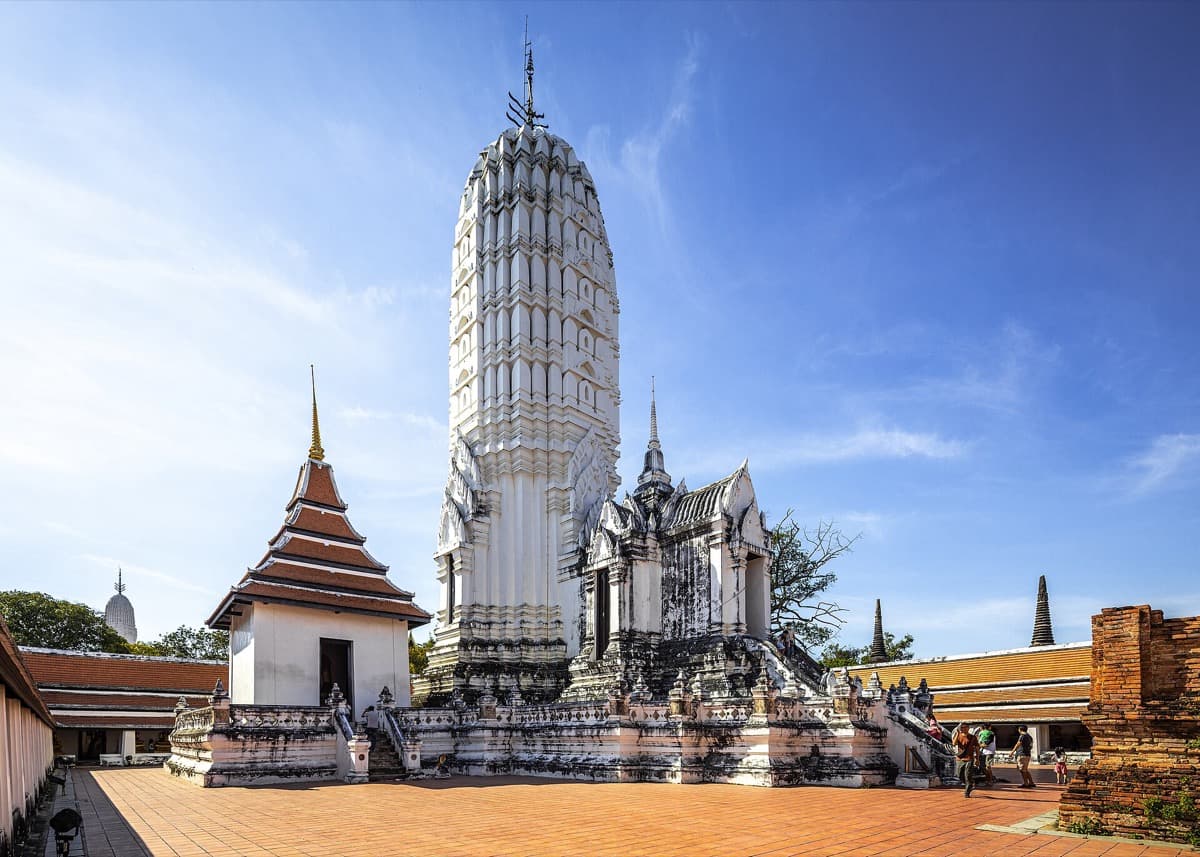
Wat Phutthaisawan: The Siamese Temple That Outlasted the Port
A working royal temple with a tall white Khmer style prang, founded by Ayutthaya's first king and one of the few structures to survive the fall of the capital.
- 6
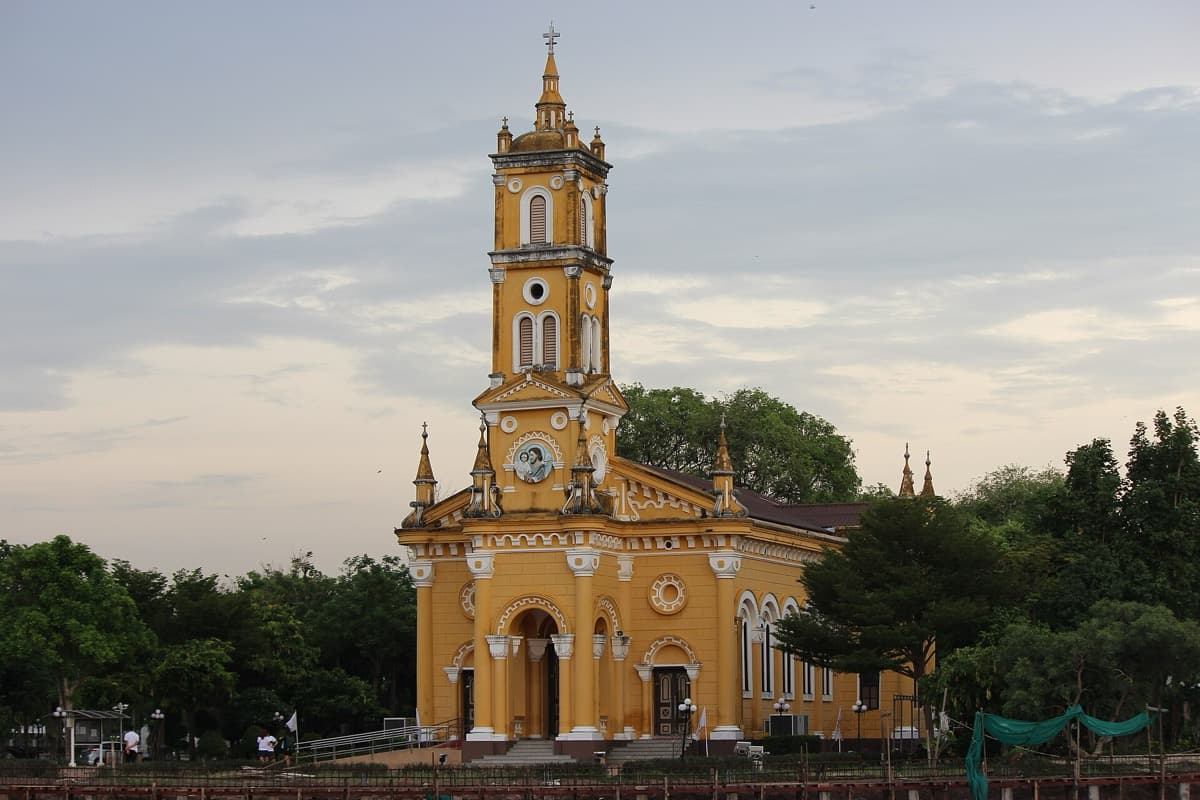
St Joseph's Church: The Foreign Institution Still Alive
A bright yellow riverside Catholic church, founded on land given by a Siamese king, and the one foreign establishment on this walk that still lives as a working parish.
Details
Best Time to Visit
Come early in the morning, ideally by eight or nine, when the riverside air is coolest and the temples have just opened. The stretch between mid morning and mid afternoon is the hottest and most humid, so an early start lets you finish the outdoor excavation sites and memorial parks before the sun is at full strength. Late afternoon light on the rivers is lovely if you would rather start after three, but note that most temples and museums close around five. Avoid the peak of the rainy season downpours, which tend to arrive in the afternoon from about June through October.
Pro Tips
- •Dress modestly for the temples: cover your shoulders and knees, and carry a light scarf or sarong you can throw on at Wat Phanan Choeng, Wat Phutthaisawan, and St Joseph's Church.
- •Slip on shoes are your friend here. You remove them before entering temple halls and the church interior, so sandals you can step out of quickly save real time.
- •Carry small baht notes and coins for entry fees and donations. Wat Phanan Choeng is twenty baht, Baan Hollanda and the Japanese village charge modest museum tickets, and the Portuguese site, Wat Phutthaisawan, and St Joseph's are free or donation based.
- •Bring more water than you think you need and a hat. Several stops, especially the Portuguese excavation and the memorial parks, are open and shadeless.
- •The rivers separate the east bank stops from the west and south bank ones, so plan a short local crossing after the Japanese village. A cross river ferry or a bridge loop connects the two sides, and it is worth pausing on the water to feel the geography the whole tour is built on.
- •Go at your own rhythm. Any single stop stands on its own, so if the heat wins or your feet give out, you can skip ahead or come back another day without losing the thread.
Safety & Precautions
- •Heat and humidity are the real hazard. Ayutthaya sits low and steamy, and heat exhaustion is easy to miss. Rest in shade, sip water constantly, and do not push through dizziness or headache.
- •Temple and shrine etiquette matters. Remove your shoes before entering any hall or the church interior, never point your feet toward a Buddha image, and lower your voice. Women should not touch monks or hand things directly to them.
- •In the rainy season, roughly June through October, afternoon downpours can be sudden and heavy, and riverbank paths get slick. Watch your footing near the water and at the open excavation site.
- •Traffic and narrow roadsides are a concern moving between quarters, and there are few footpaths in places. Walk facing traffic where you can, keep children close, and use marked crossings near the temples.
Travel advisory: Exercise Normal Precautions (Level 1).
Gallery
Related Reading
Go deeper on what you'll see, hear, and walk through.
Overview
Ayutthaya Travel Guide: Days, Transport, Season, Safety, and Costs
5 min
Overview
Best Self-Guided Walking Tours in Ayutthaya (2026)
3 min
Overview
One Day in Ayutthaya: A Walkable Itinerary from Morning to Sunset
8 min
Thematic
The Burned Capital: How Ayutthaya's Ruins Read the World That Made Them
7 min
Companion
The Excavated Dead of Ayutthaya's Portuguese Settlement
7 min
Deep dive
Wat Phanan Choeng: The Buddha the River Brought In
7 min
Read
What to Eat in Ayutthaya: River Prawns, Boat Noodles, and Roti Sai Mai
7 min
Read the walk
The full story of Foreign Quarters: The World Port, in words. Prefer to listen? Play it narrated, from home or on location.
Introduction
Picture a city that once kept the world in separate neighbourhoods, each just downriver from the palace. That was Ayutthaya, the old Siamese capital in Thailand, and for a few centuries it was one of the busy sea gates of the early modern world. Along these southern rivers the Portuguese, the Dutch, the Japanese, the Chinese, the French, and others each held their own settlement, their own church, or their own trading lodge. Deerskins, gemstones, and gunpowder changed hands here. Fortunes were made, and welcome always came with a limit.
This walk has six stops. It runs about seven kilometres, so it is best paced slowly or by bicycle and takes roughly two and a half to three hours if you linger, though it is yours to shorten or stretch as you like. You will start at a river temple full of Chinese devotion, move down the east bank past the Dutch lodge and the Japanese village, cross the water to the Christian quarter with its excavated Portuguese dead and its French church, and finish at a Siamese temple that outlasted them all. Most of these places are now grassy fields, quiet riverbanks, and memorial parks. Once they were loud, multilingual quarters, and I want to help you hear them again.
The thread to hold onto is this. The port welcomed almost everyone and profited from everyone, yet it drew each community close enough to use and to watch, and when a favoured foreigner rose too near the throne, the welcome could turn. Keep the river in view as we go. It is the one thing here older than every neighbourhood. When you arrive at Wat Phanan Choeng, begin with stop one.
1. Wat Phanan Choeng: The Mariners' Buddha at the Confluence
Stand where two rivers meet. This temple sits on the east bank, right at the southeastern corner where the Chao Phraya and the Pa Sak rivers come together, and that meeting of waters is the reason for everything that follows on this walk. The temple record holds that it was built in the year thirteen twenty-four, about twenty-seven years before Ayutthaya was officially founded. So the crossroads was already here before the capital was.
Step inside and you will understand at once why sailors loved this place. Filling almost the entire hall is a colossal gilded seated Buddha, Luang Pho To, roughly nineteen metres high, one of the largest and most revered images in all of Thailand. The scale is meant to overwhelm you, and it does.
Here is the layer that ties this temple to a world port. Thai-Chinese devotees have long called this image Sam Po Kong, and they revere it as a guardian of sailors and mariners. Tradition holds that in the year fourteen oh seven the Ming admiral Zheng He visited on his second voyage and offered gifts in a ceremony. The popular link between Sam Po Kong and Zheng He is a devotional legend rather than documented history, so hold it as legend. But the legend tells the truth about the place. This was already a Chinese river shrine, a spot where people arriving from the sea gave thanks for safe passage and prayed for the next crossing. Before the Dutch, before the Portuguese, before the Japanese samurai, there was this. A Buddha for the people the water carried in. Entry here is twenty baht. Take a moment at the water's edge before you go, and carry the river downstream with you.
2. Baan Hollanda: The Dutch Lodge and the Deerskin Monopoly
You are still on the east bank, a little south of the city island, standing where the Dutch kept house. The Dutch first formalised trade with Siam in the year sixteen oh four. Four years later, in sixteen oh eight, King Ekathotsarot granted permission to open a trading post here for the Dutch East India Company, the great chartered firm known by its initials as the VOC. In sixteen thirty-four, under King Prasat Thong, a new VOC factory and office rose on this land, given partly as a reward for Dutch naval help.
Now, why deerskins? It sounds strange until you follow the money. The VOC records and Baan Hollanda's own history tell it plainly. The Dutch became the principal Western trader in Siam, and they won a monopoly on the deerskin and hide trade. They shipped those hides, along with rayskins, tin, and sappanwood, north to Japan, where they sold at a handsome profit. So this quiet riverbank was a hinge in a trade that stretched from the forests of Siam to the markets of Japan, run by a company that answered to shareholders far away in the Netherlands.
Their lodge was a two story building inside a stockade, and the Dutch called it de logie, the red building. It stood until the Burmese sack of the year seventeen sixty-seven brought the whole port down. What you see today is Baan Hollanda, a modern information centre on the history of Dutch and Thai relations. It grew out of a royal visit and donation in two thousand four, on the four hundredth anniversary of Thai-Dutch relations, and the centre itself opened to visitors in two thousand thirteen, built on the historic site and run in cooperation with the Fine Arts Department. There is a modest ticket to go in. Inside, the exhibition does what the grass outside cannot. It puts the profit, the ships, and the people back on the riverbank.
3. Japanese Village (Baan Yipun): The Samurai Who Governed for Siam
This was Baan Yipun, the Japanese village, and it looked across the water at the Portuguese quarter you will visit next. Picture a settlement of roughly one thousand to fifteen hundred Japanese, flourishing here through the sixteen hundreds. And picture who they were, because it…
Full narration for this stop unlocks with the tour.
4. Portuguese Settlement (Baan Portuguese): The Excavated Dead of the First Western Quarter
You have crossed the river now, onto the south and west bank, into the Christian quarter. And you are standing in the oldest of the Western neighbourhoods. The Portuguese were the first Western nation in contact with Ayutthaya, dating from the reign of King Ramathibodi the…
Full narration for this stop unlocks with the tour.
5. Wat Phutthaisawan: The Siamese Temple That Outlasted the Port
After the foreign quarters, this stop resets you. Wat Phutthaisawan is a Siamese Buddhist temple, and the record holds that it was founded in the year thirteen fifty-three by King Uthong, also known as Ramathibodi the First, Ayutthaya's very first monarch and its founder. He…
Full narration for this stop unlocks with the tour.
6. St Joseph's Church: The Foreign Institution Still Alive
We close on the riverbank, at the one place on this entire walk where the foreign presence is not a ruin or a memory but a living, breathing institution. St Joseph's Church stands where the French Catholic mission was first established in Siam. The first church, a wooden one,…
Full narration for this stop unlocks with the tour.