Seville's northern old town, in layers: from the timber parasols of Las Setas over Roman houses, through Mudéjar parish churches on mosque plots, along the Alameda de Hércules on a drained lagoon, down Calle Feria and up Calle San Luis, to the Basílica de la Macarena and the twelfth-century wall.
Start · Las Setas
DirectionsStops
- 1
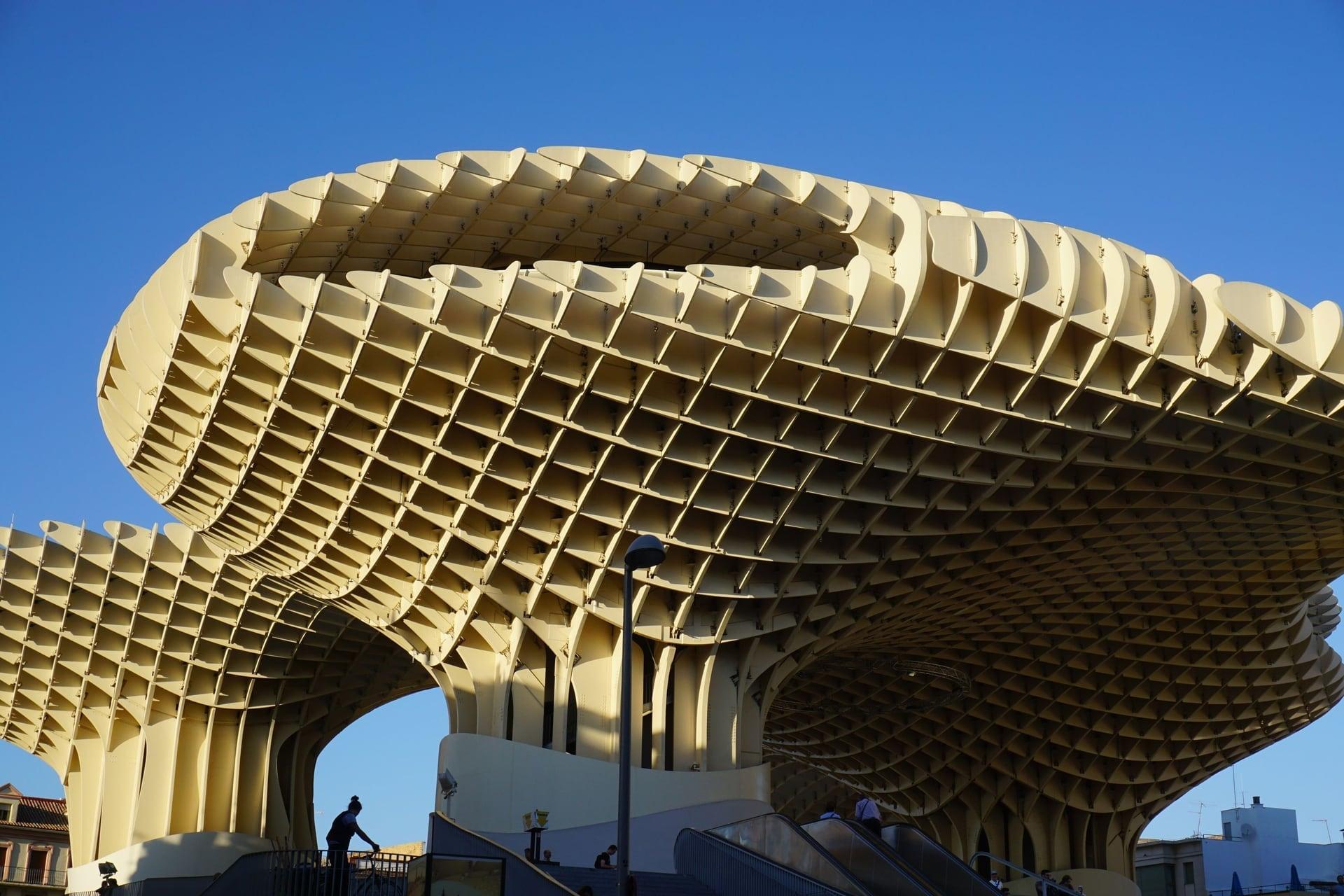
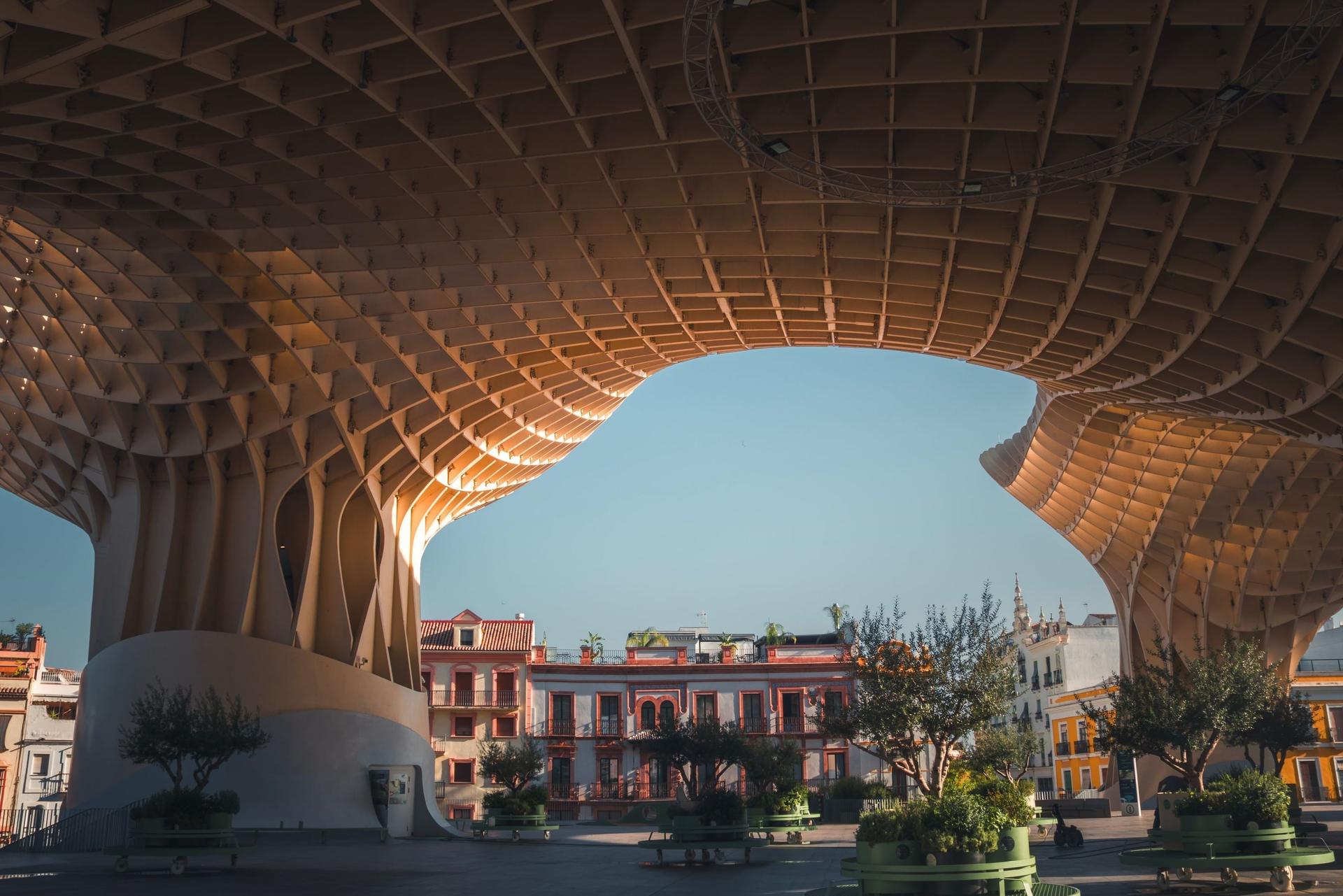
Las Setas
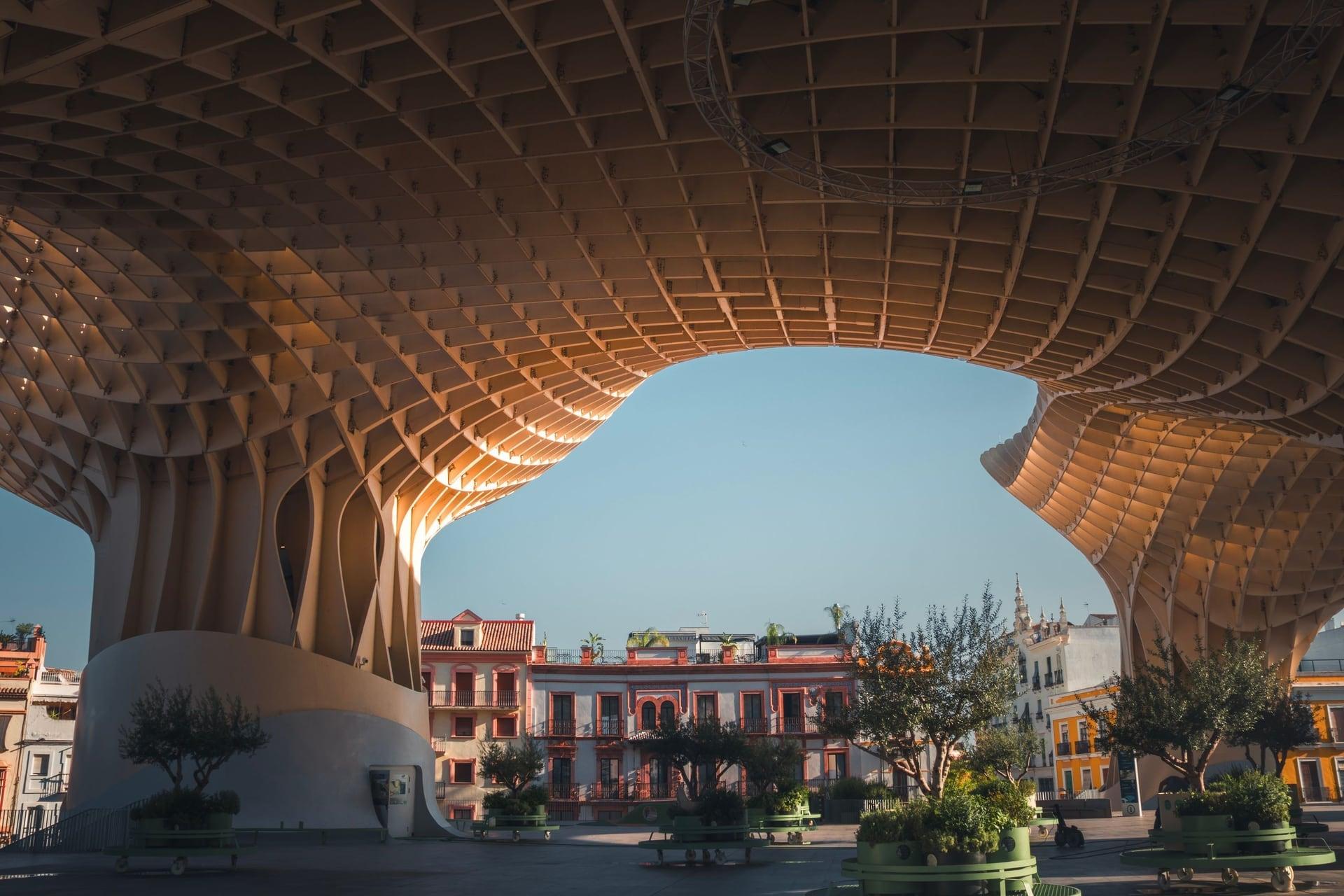
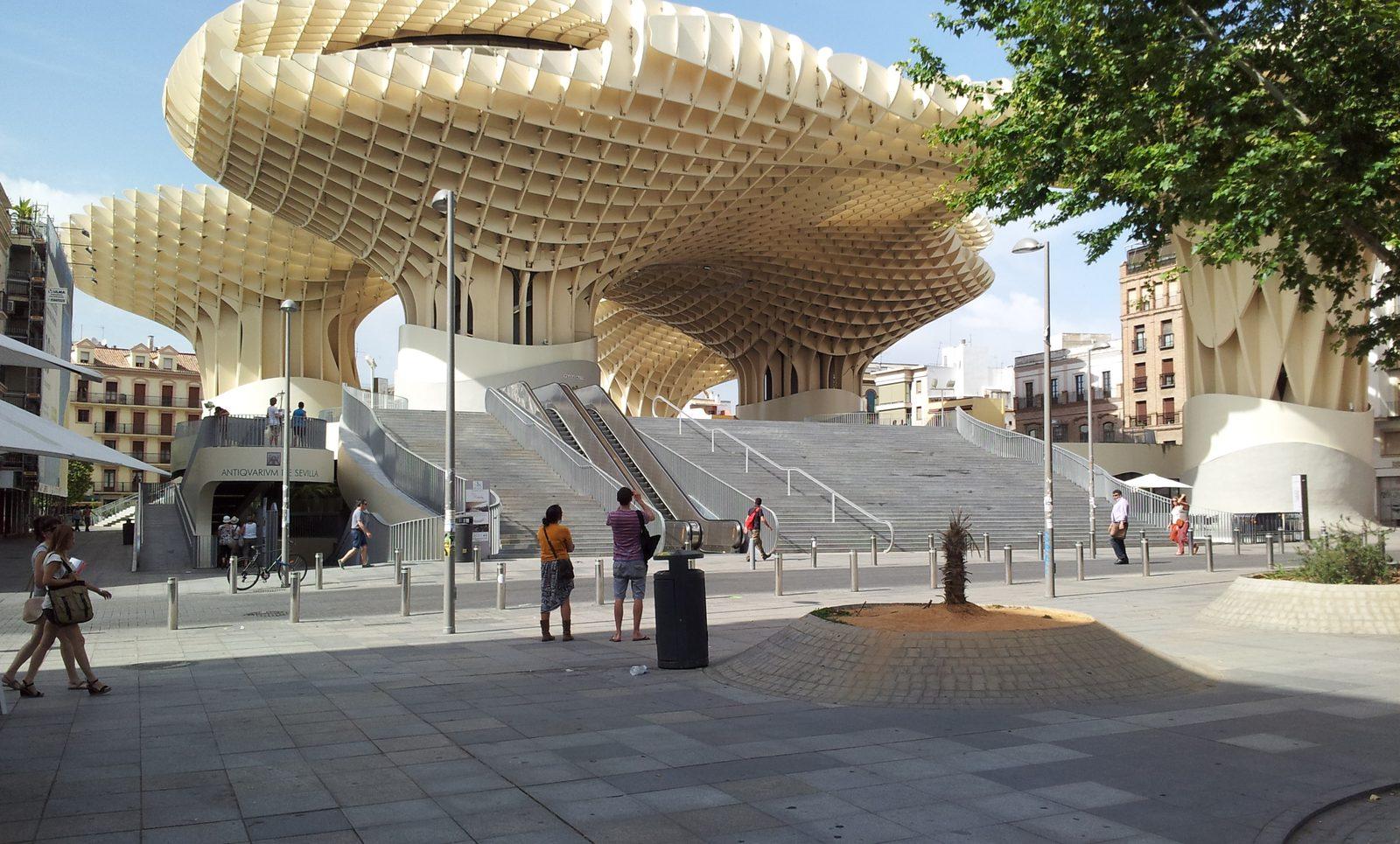
A timber roof over Roman houses. The six parasols of the Metropol Parasol on Plaza de la Encarnación, opened in 2011 over a market and a museum of Roman and Andalusi remains.
- 2
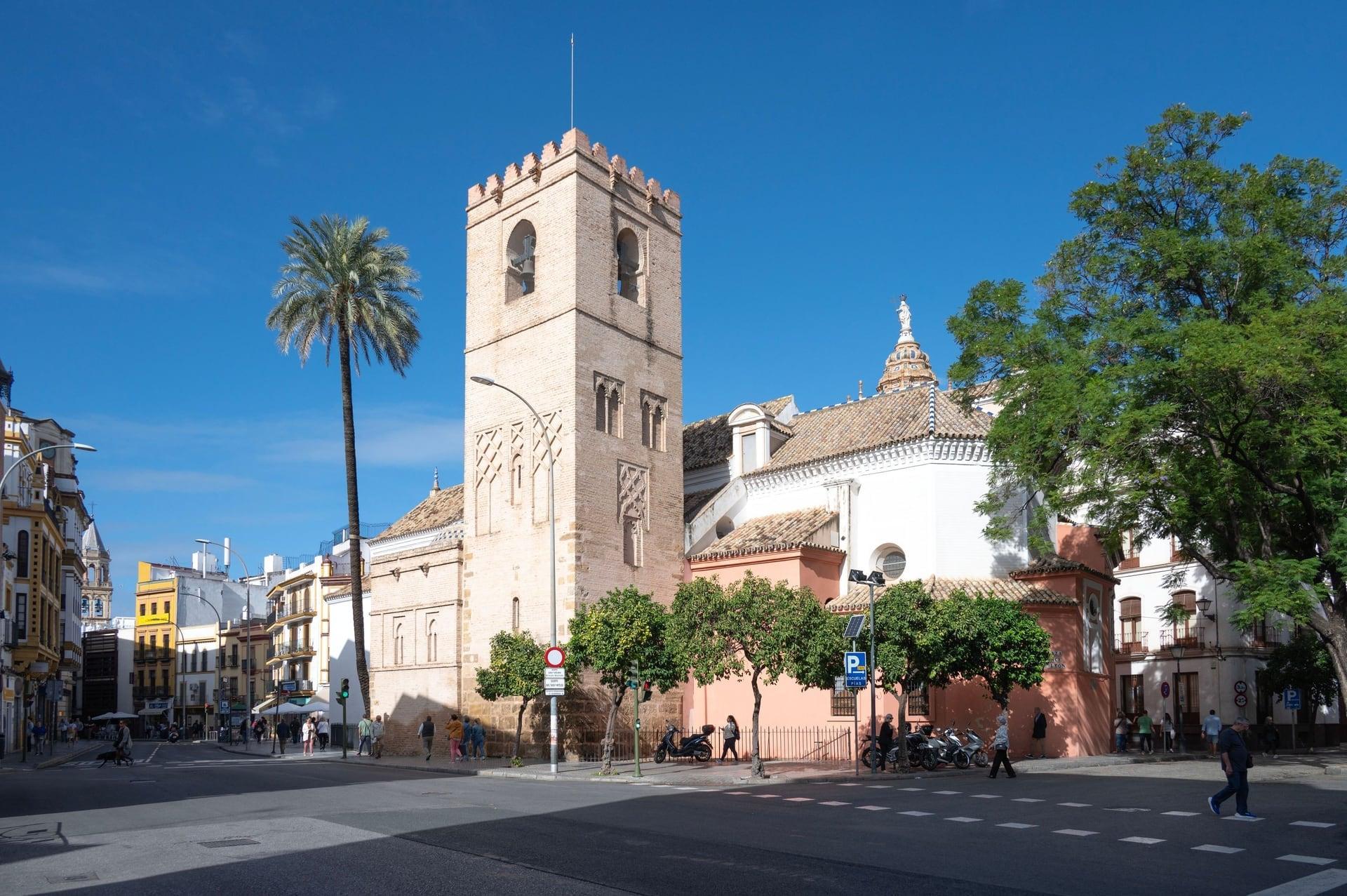
San Pedro: Where Velázquez Was Baptized
A painter's first record is here. The Mudéjar parish church of San Pedro, where Diego Velázquez was baptized in June 1599.
- 3
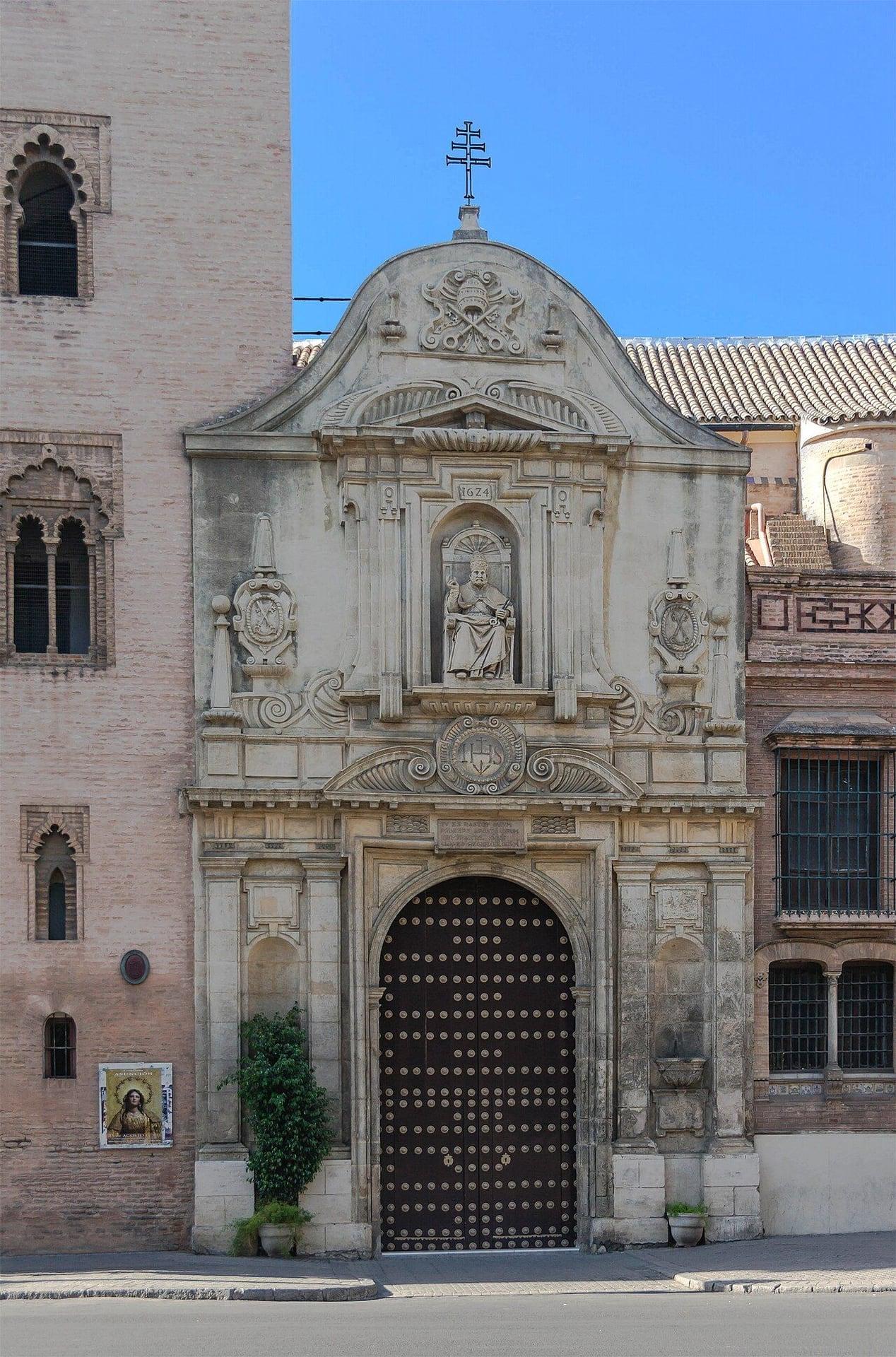
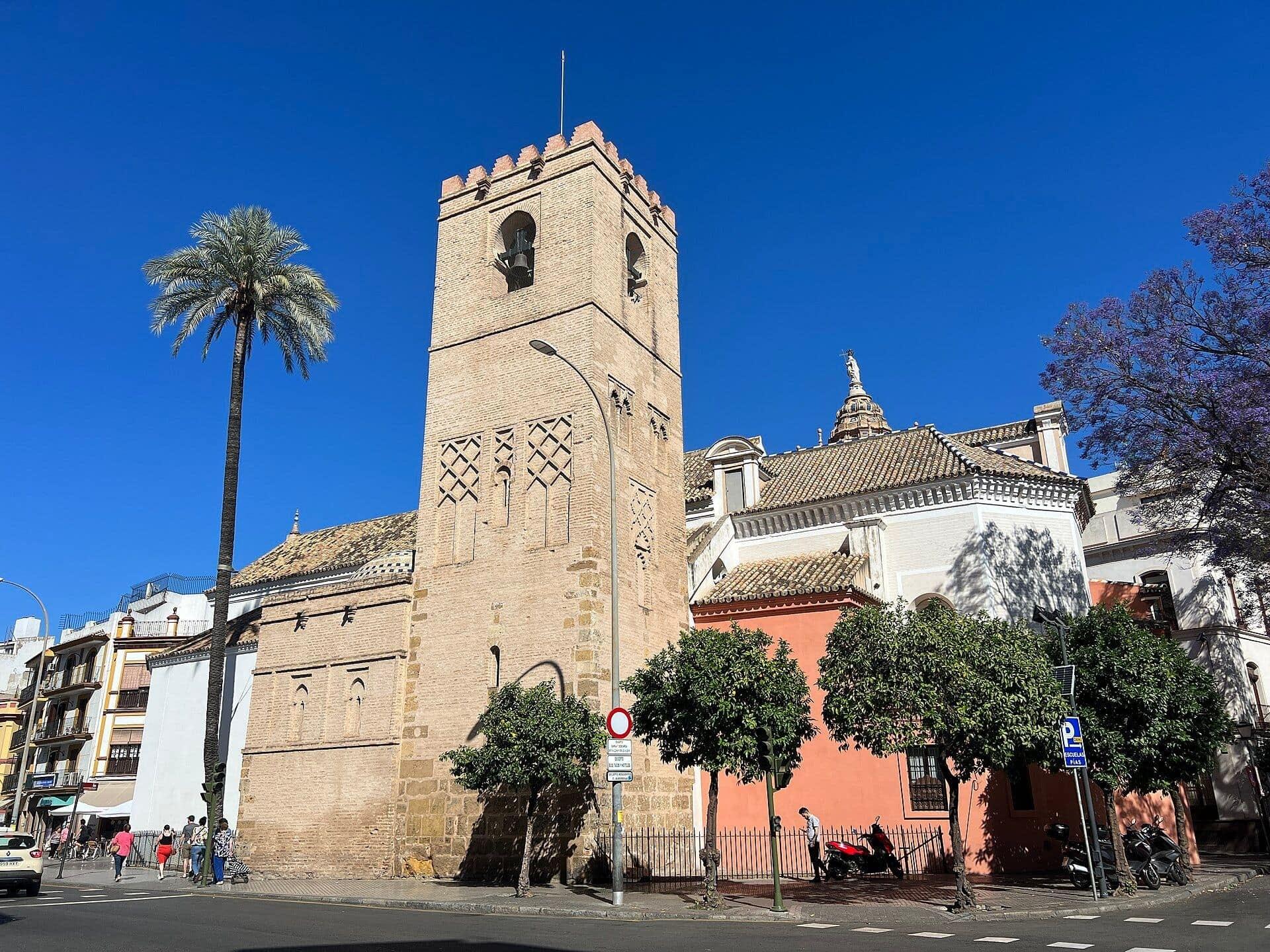
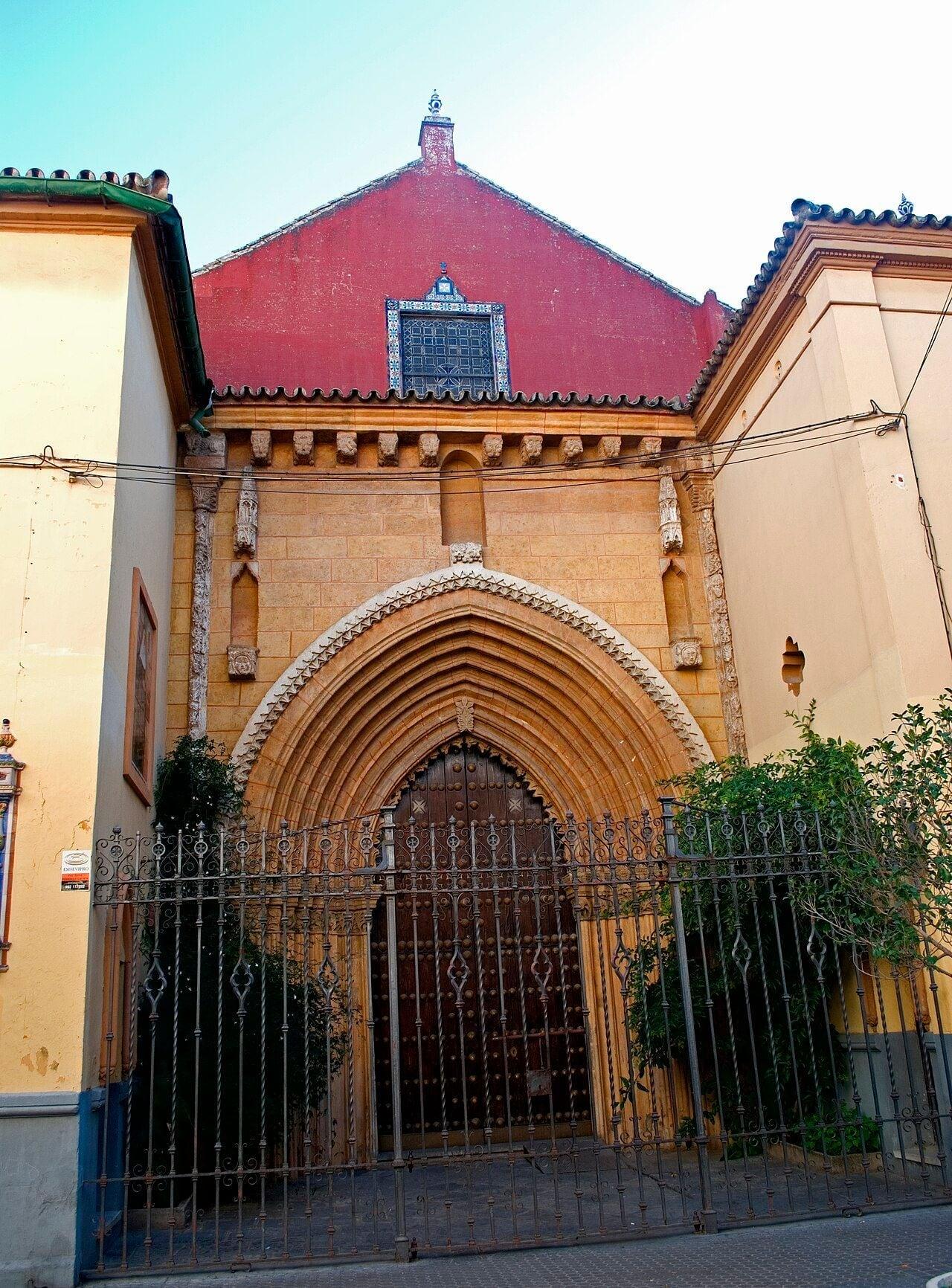
Santa Catalina: A Borrowed Doorway
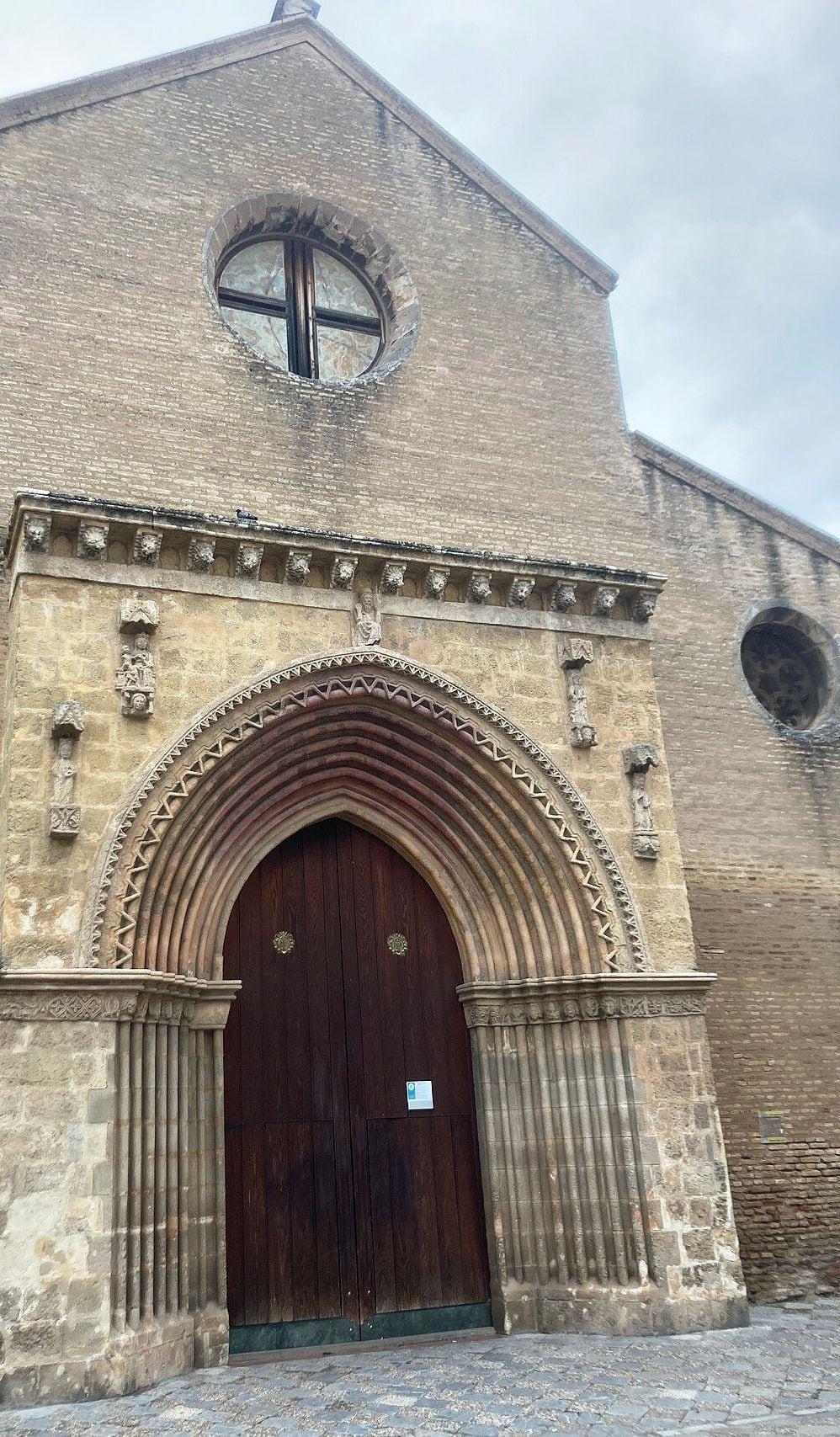
The doorway came from another church. The Mudéjar church of Santa Catalina, whose Gothic portal was moved here from Santa Lucía in 1930.
- 4
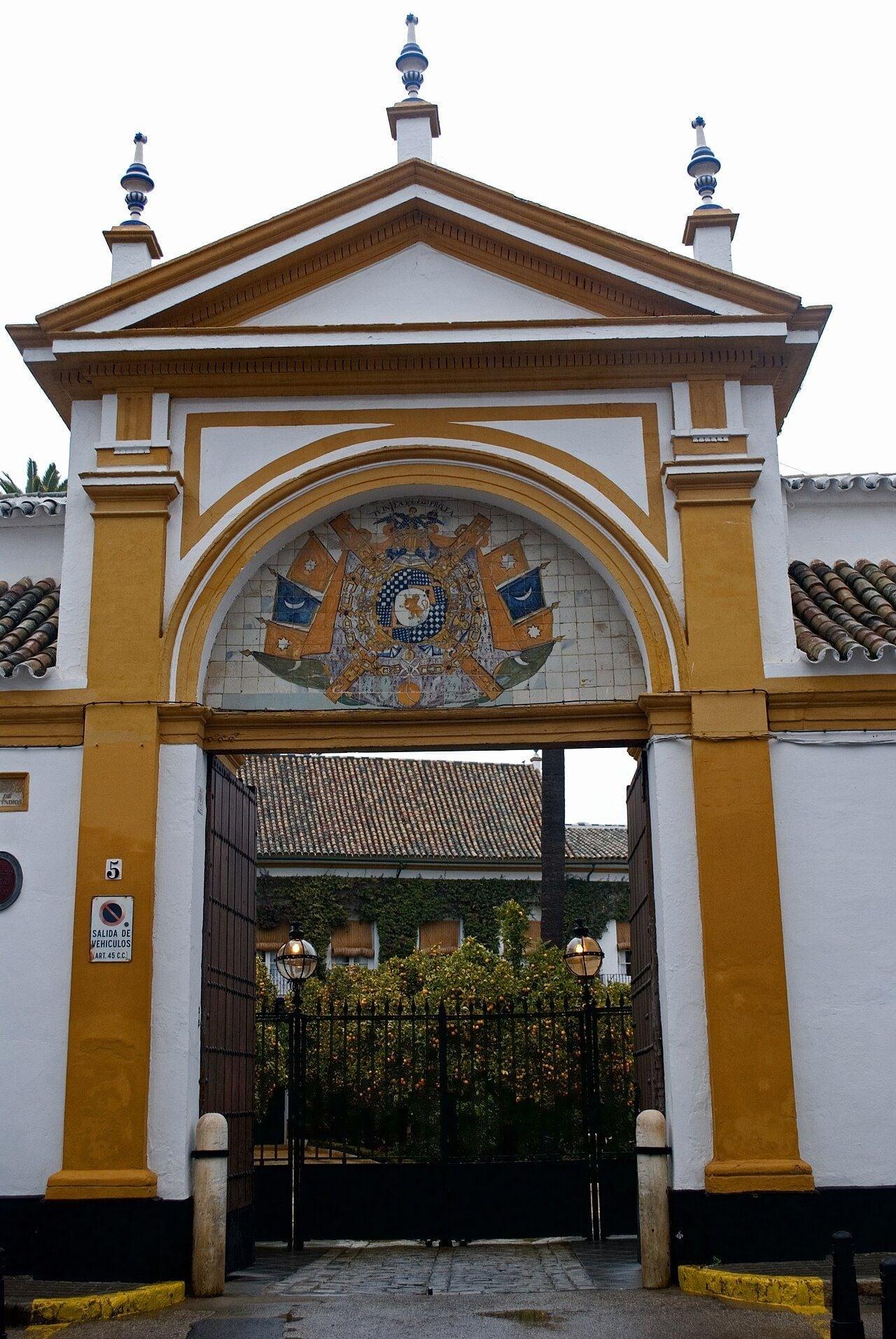
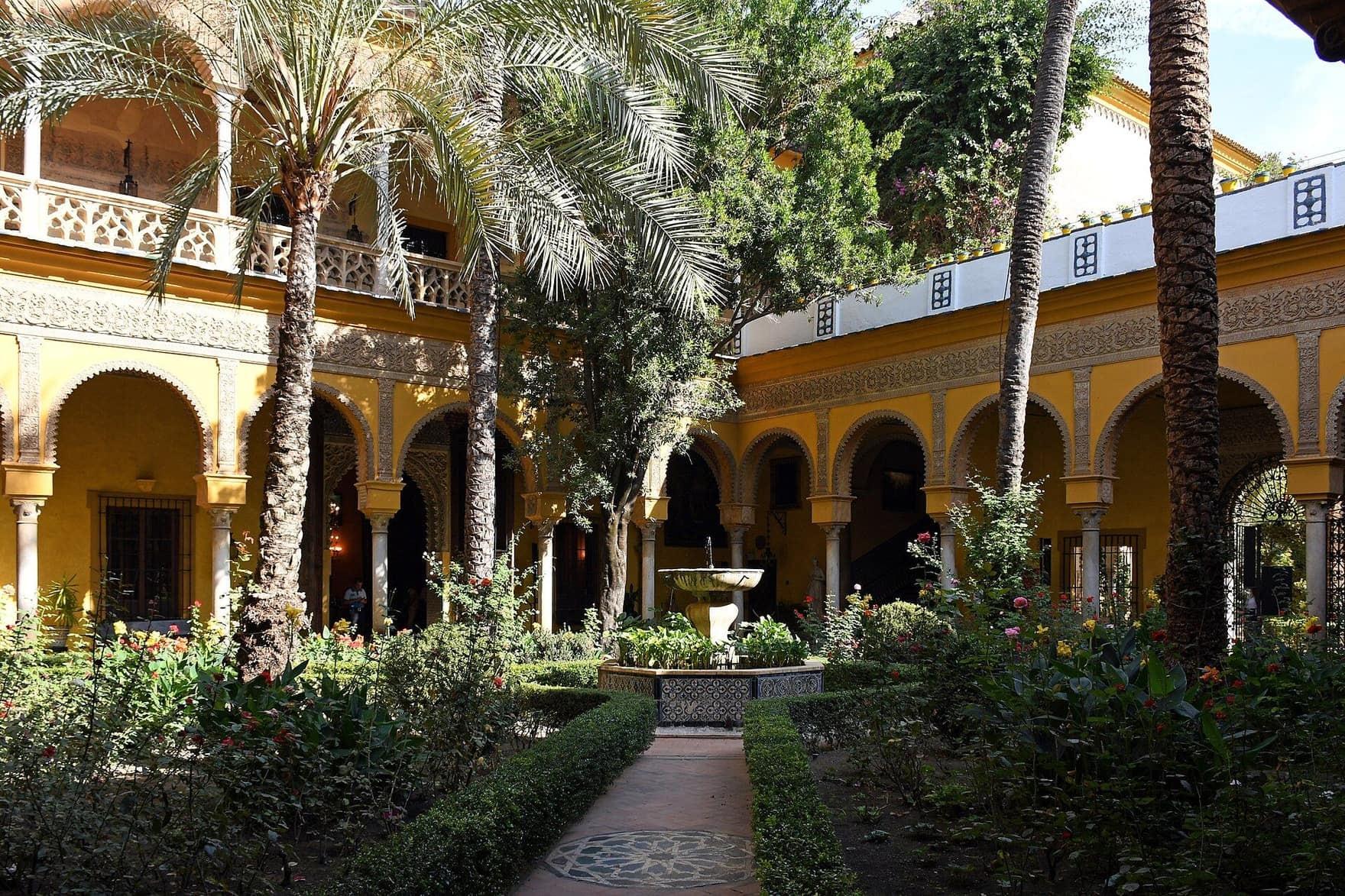
Palacio de las Dueñas
A palace hidden behind a street gate. The Duke of Alba's Seville palace, where the poet Antonio Machado was born in 1875.
- 5
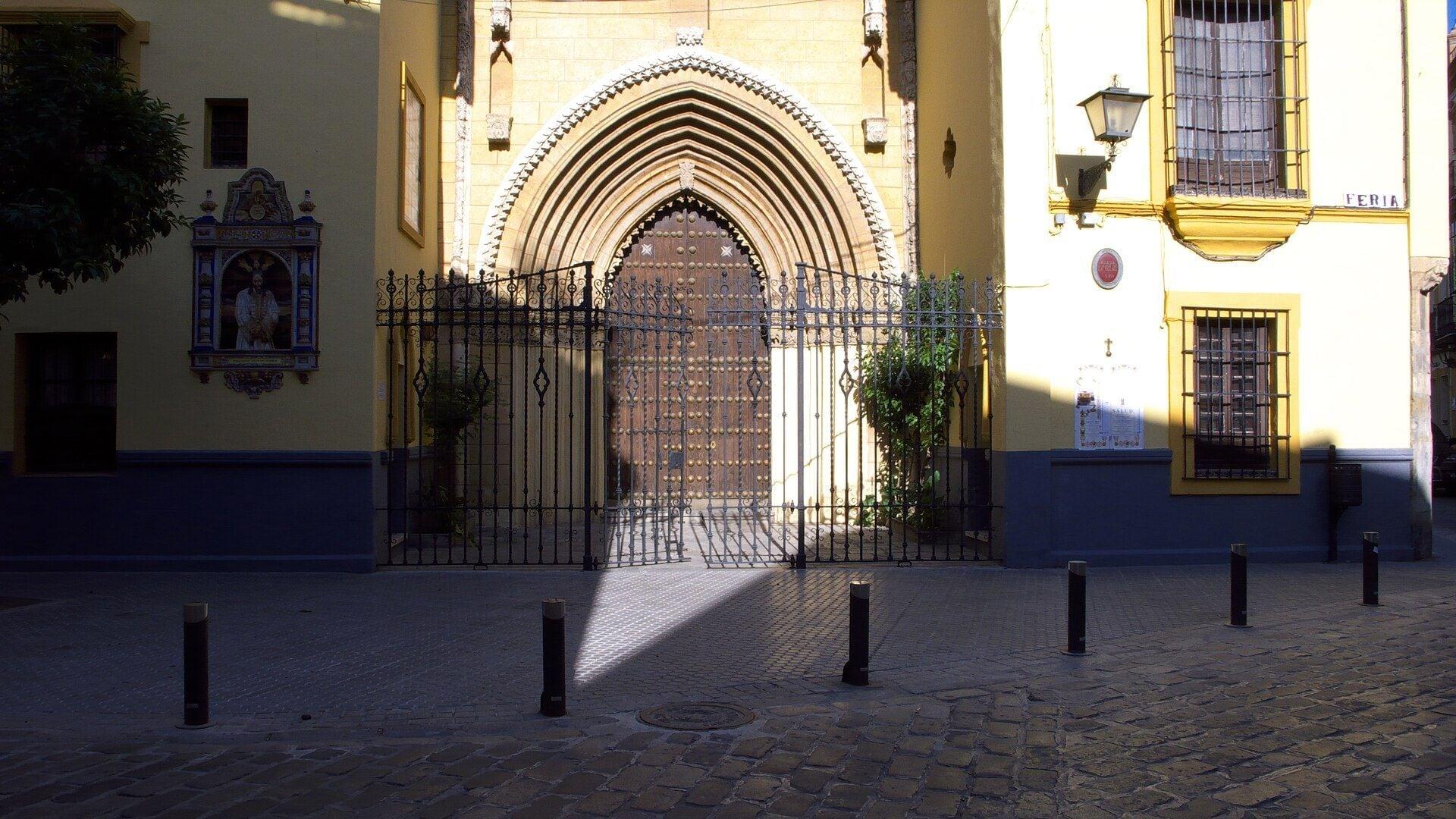
San Juan de la Palma
A mosque's minaret remembered in stone. The parish of San Juan de la Palma, where an eleventh-century inscription from a mosque was found.
- 6
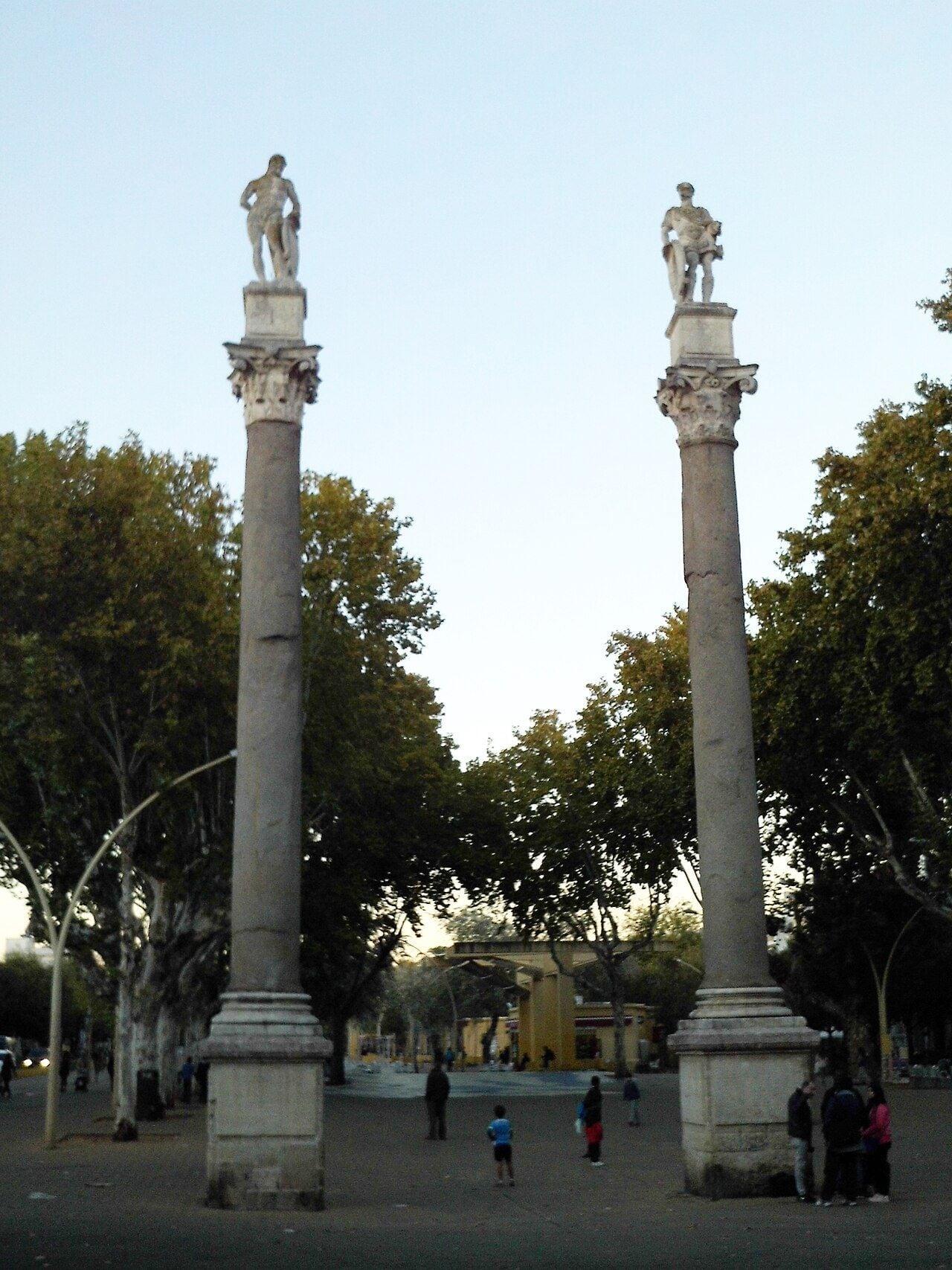
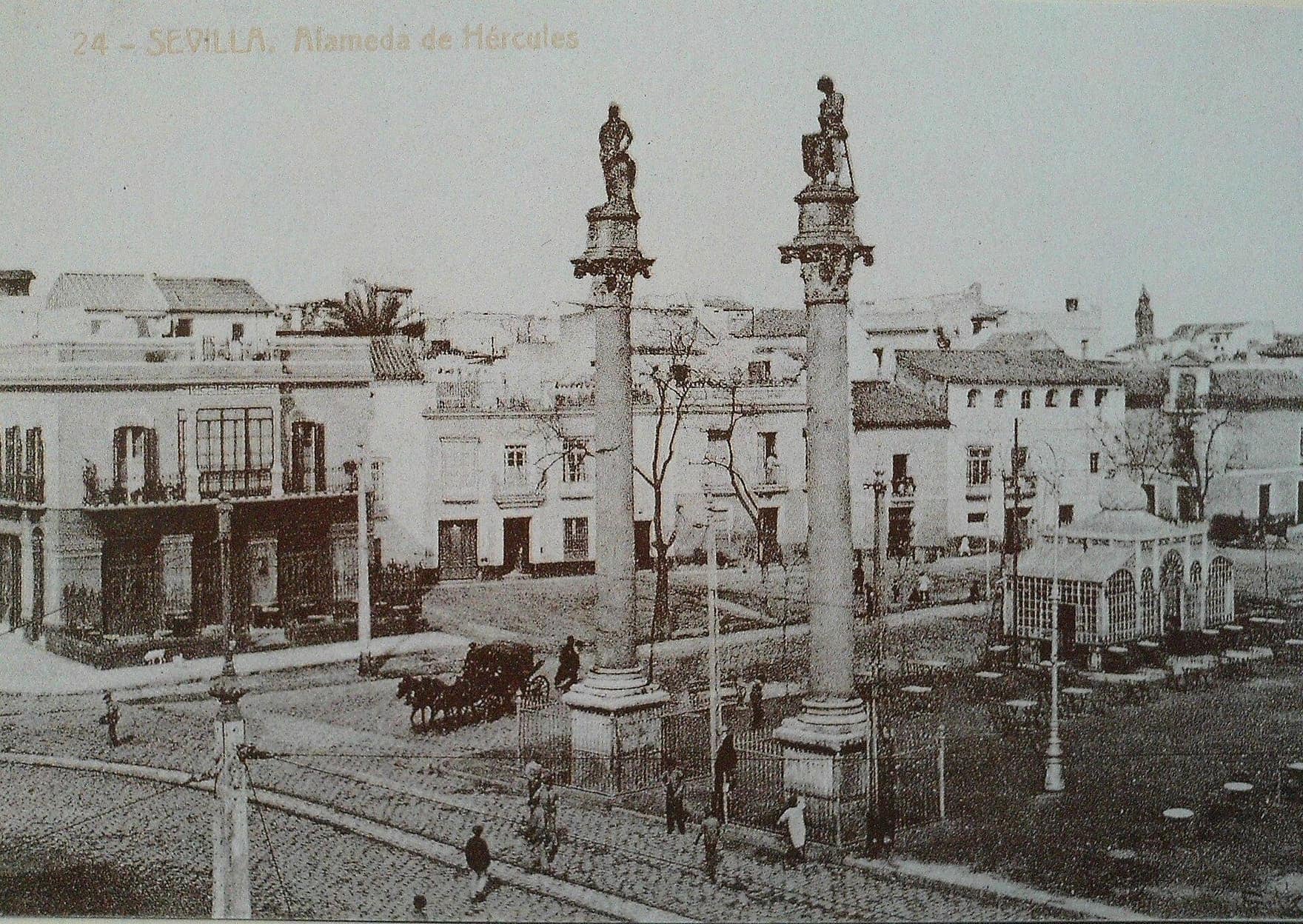
Alameda de Hércules: The Drained Lagoon
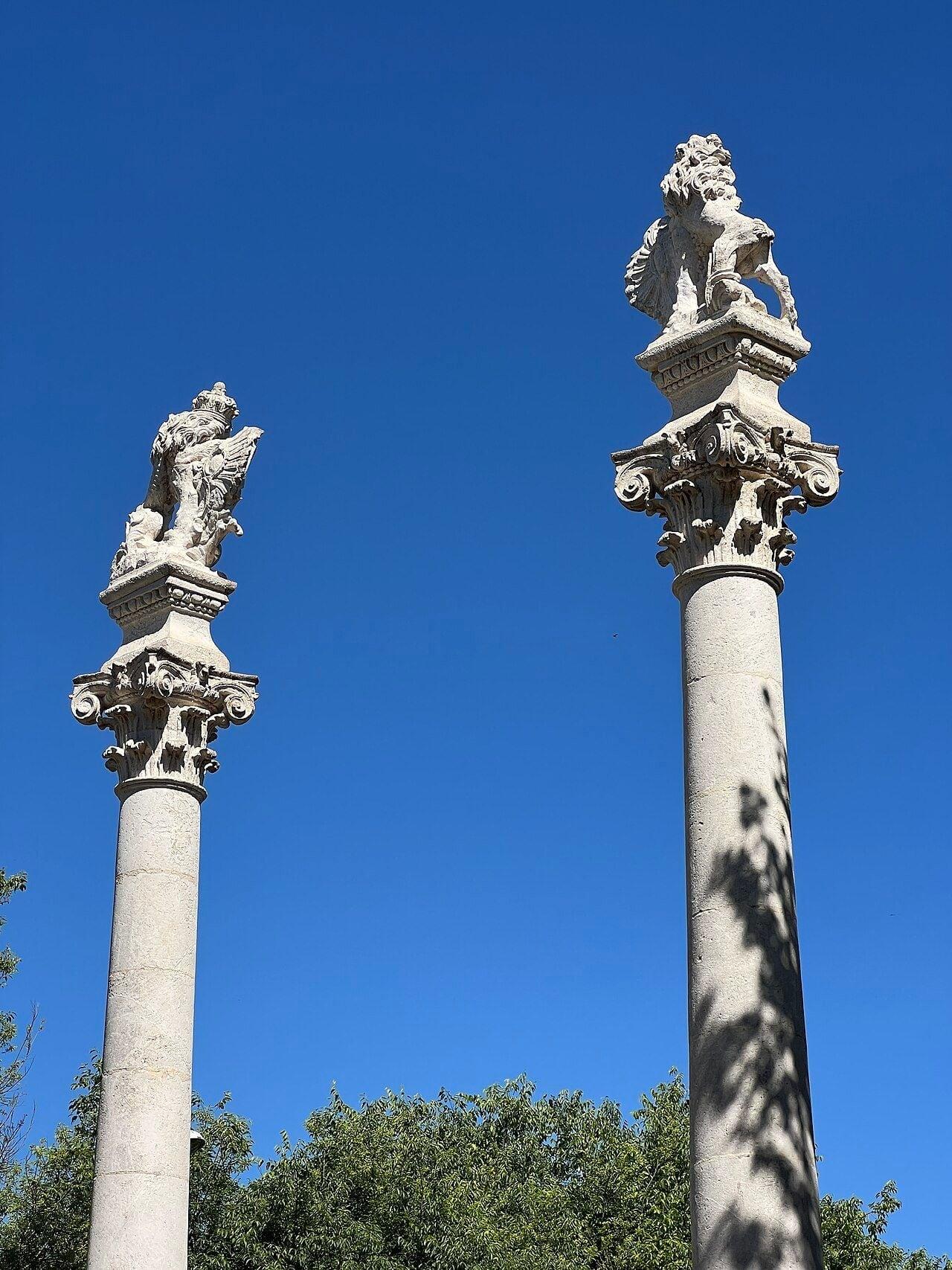
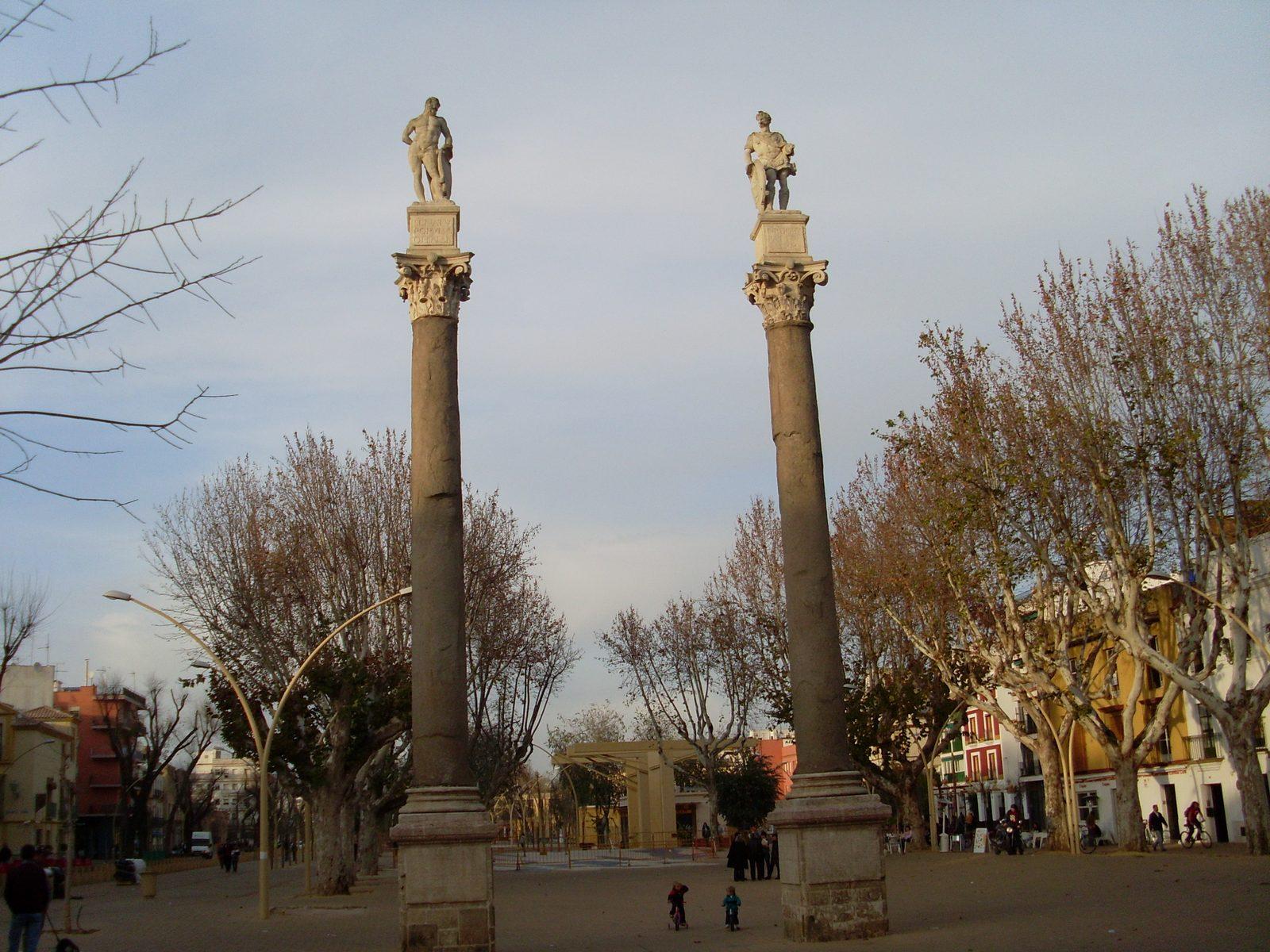
A flood hollow became a public garden. The Alameda de Hércules, laid out in 1573 and 1574, with its two Roman columns and statues.
- 7
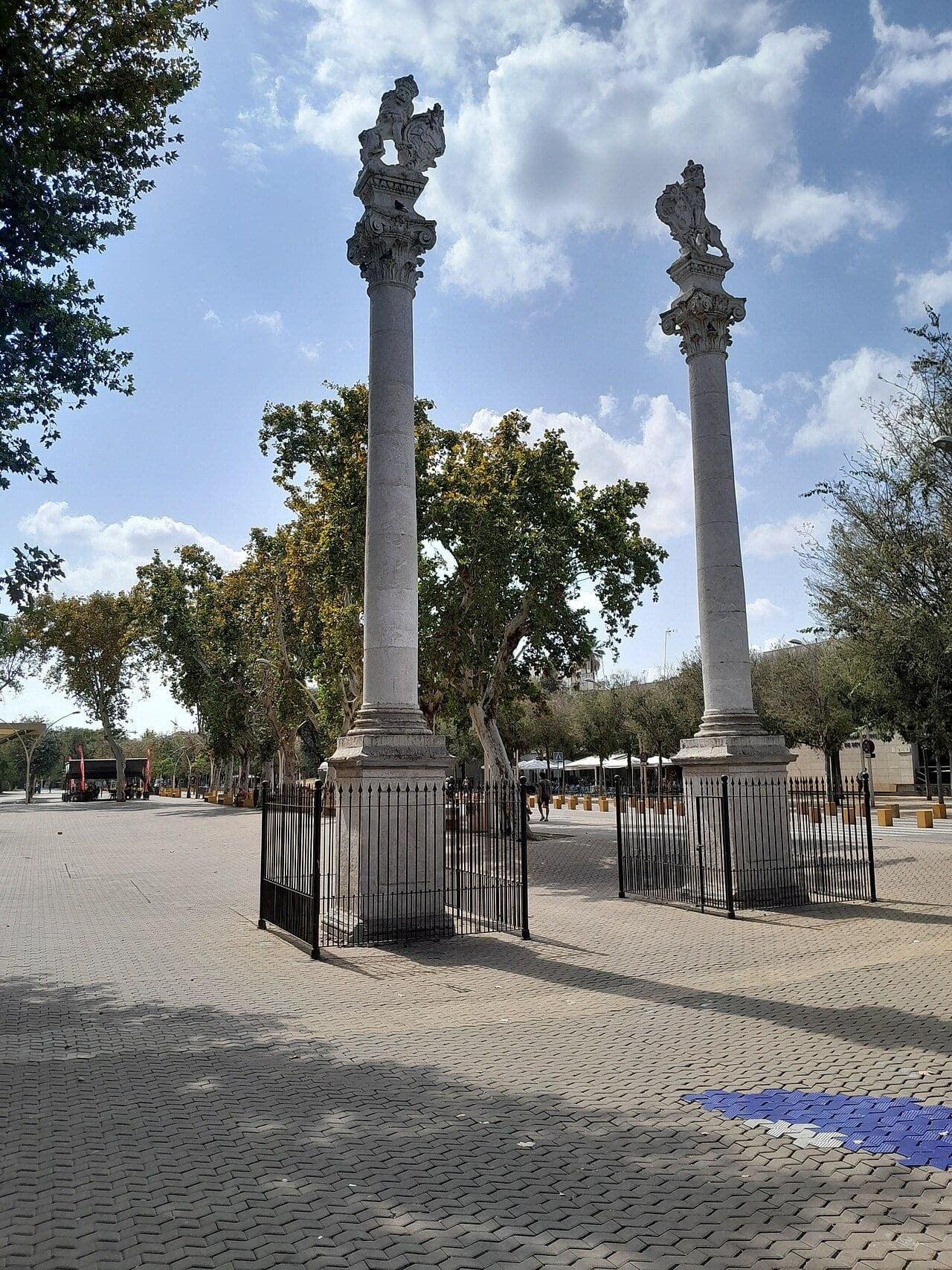
Alameda de Hércules: Lion Columns
The garden got a second pair of columns. The lion columns closing the north end of the Alameda, added in the 1760s.
- 8
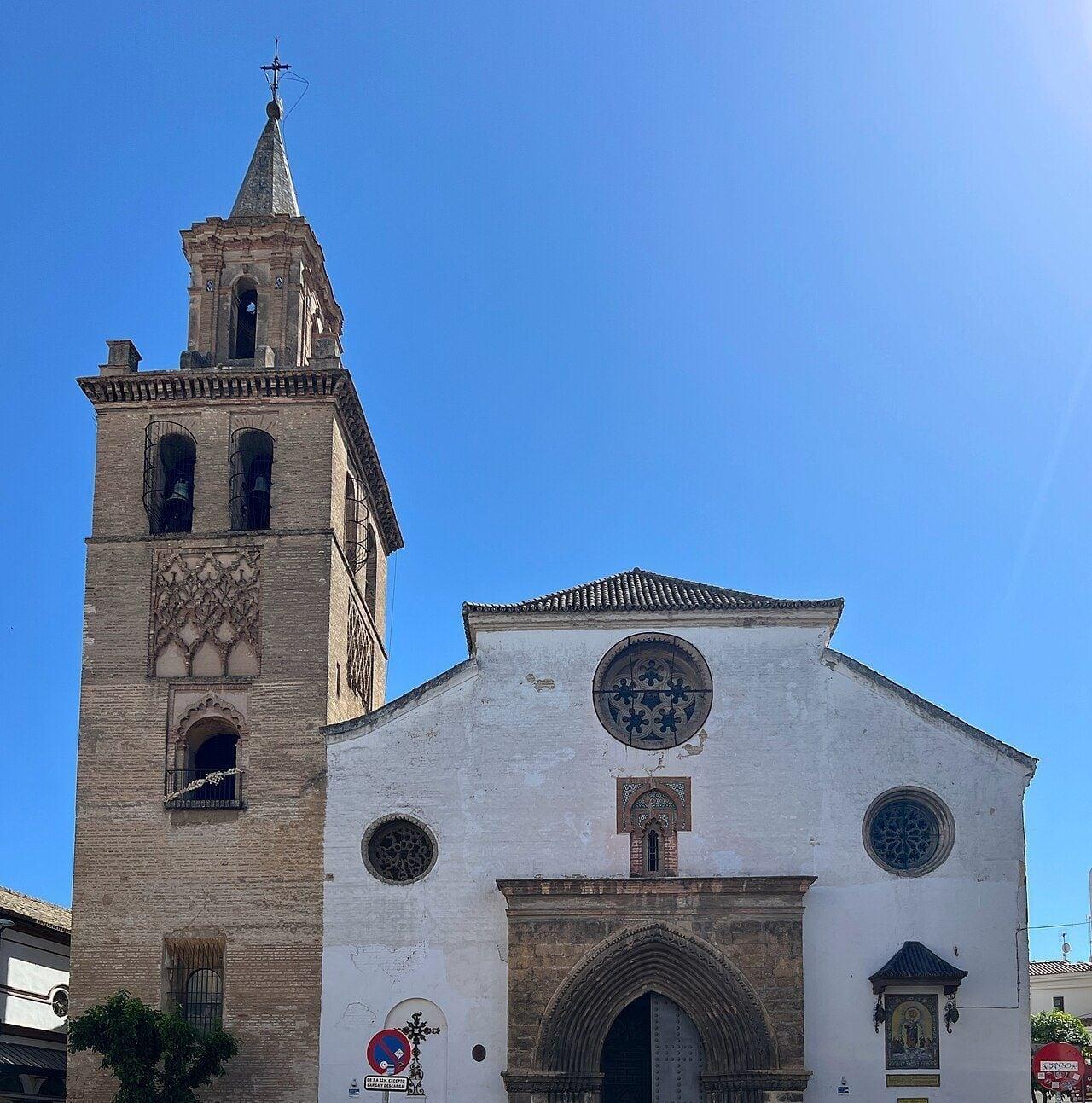
Calle Feria
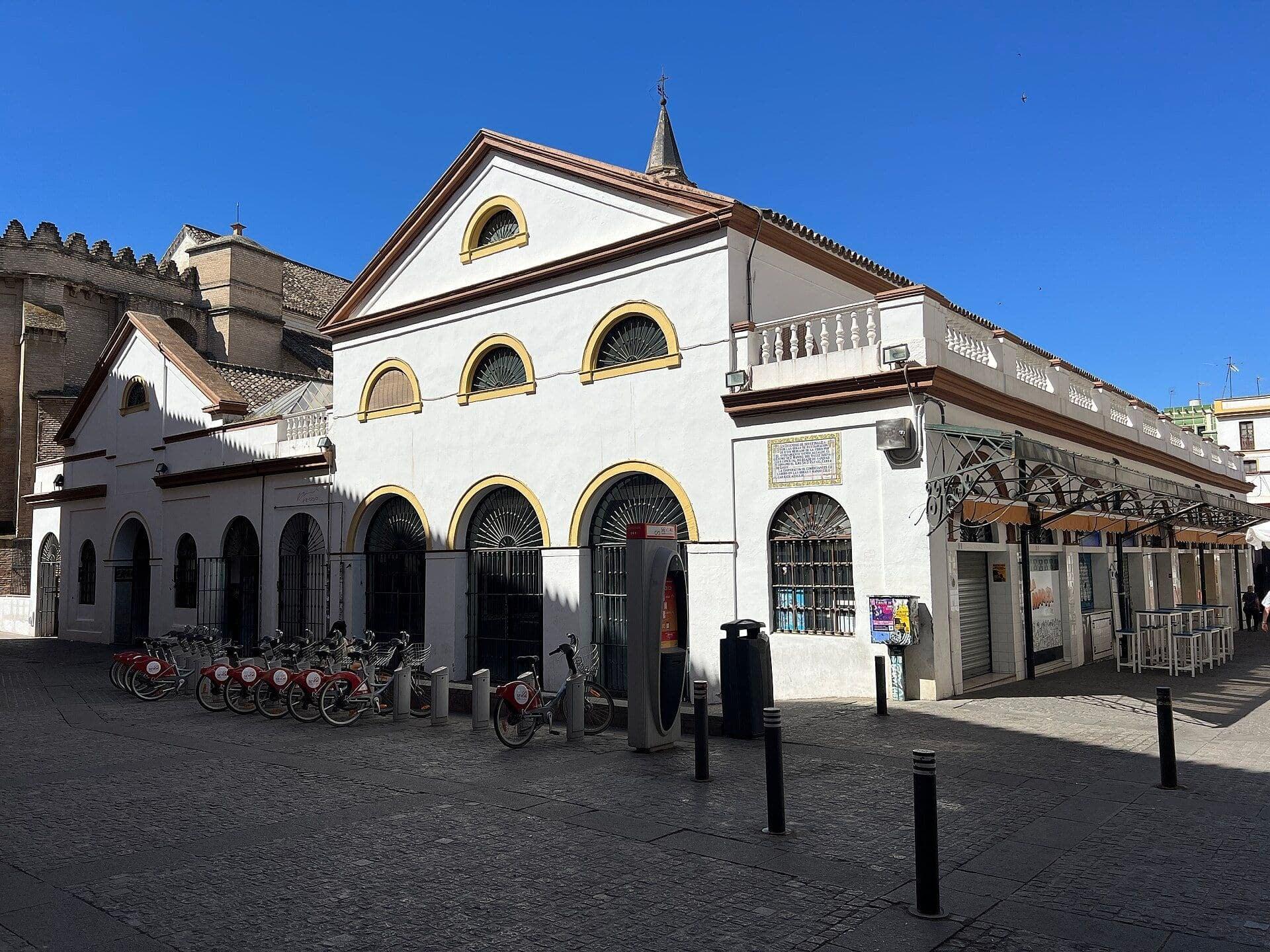
One block holds market and church. Calle Feria's covered market and the church of Omnium Sanctorum, with the Mudéjar Algaba palace around the corner.
- 9
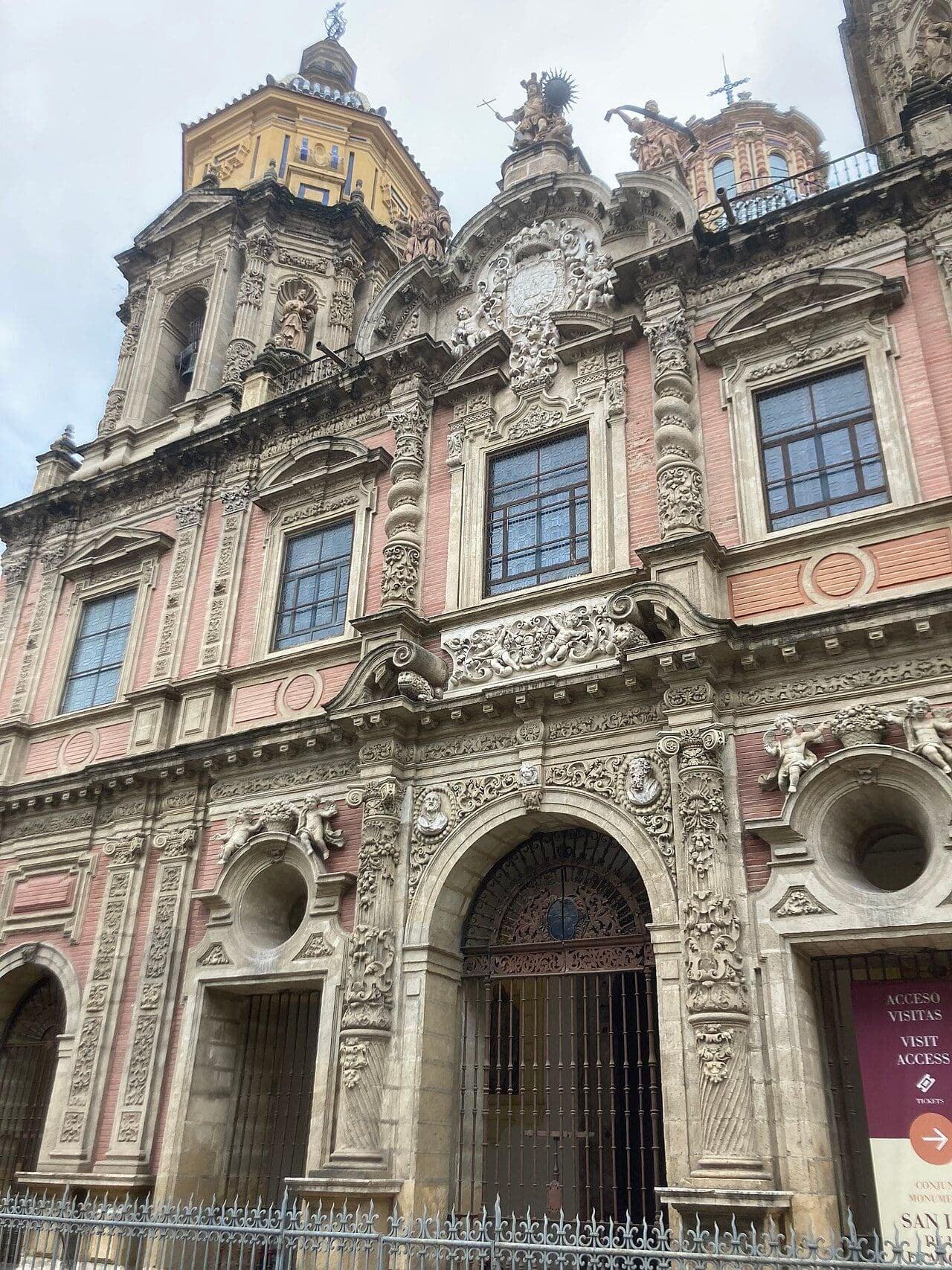
San Luis de los Franceses
Baroque theater facing a plain parish. The Jesuit church of San Luis de los Franceses down the street, with Santa Marina beside you.
- 10
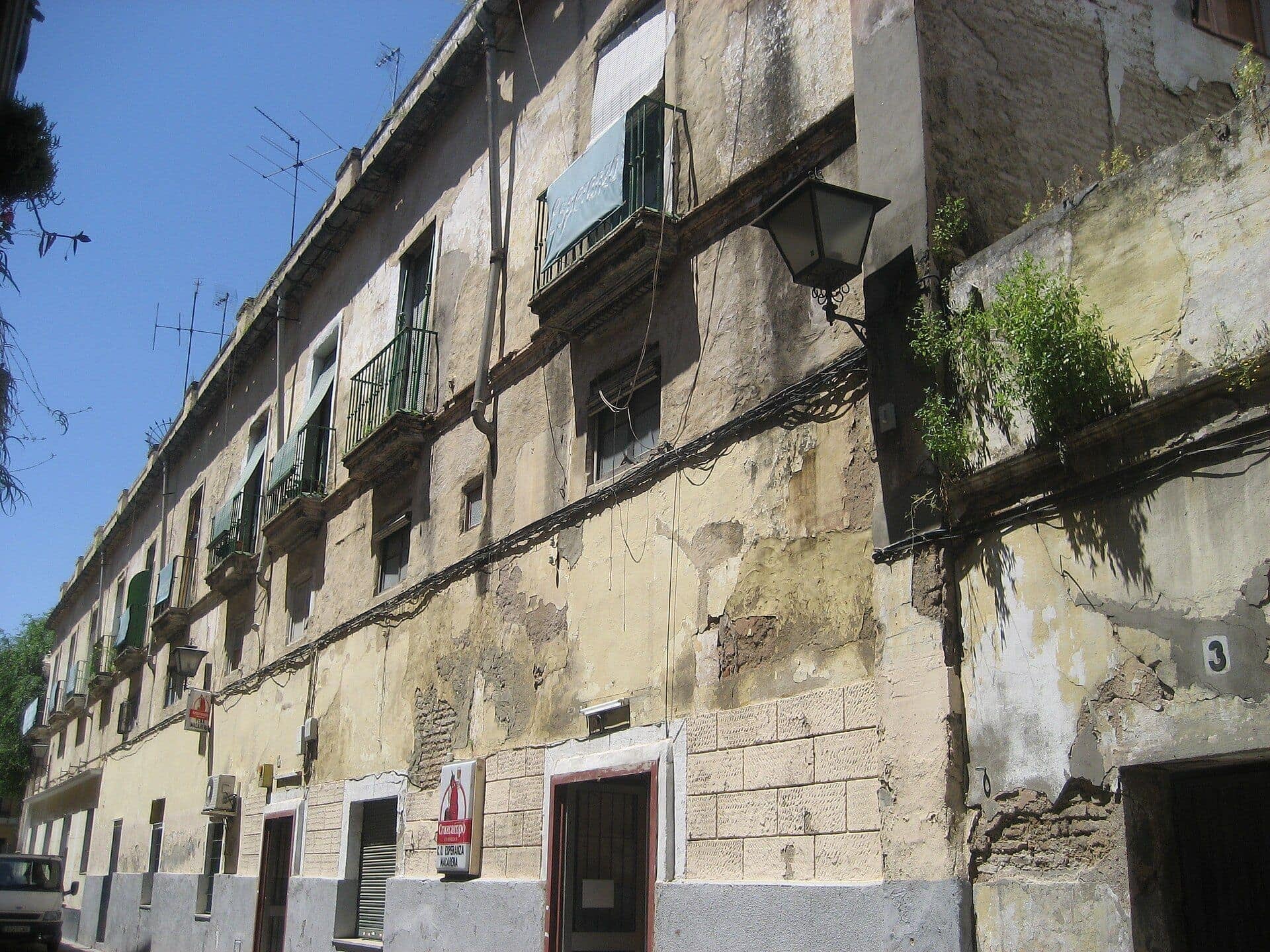
Pumarejo: The Palace the Neighbors Kept
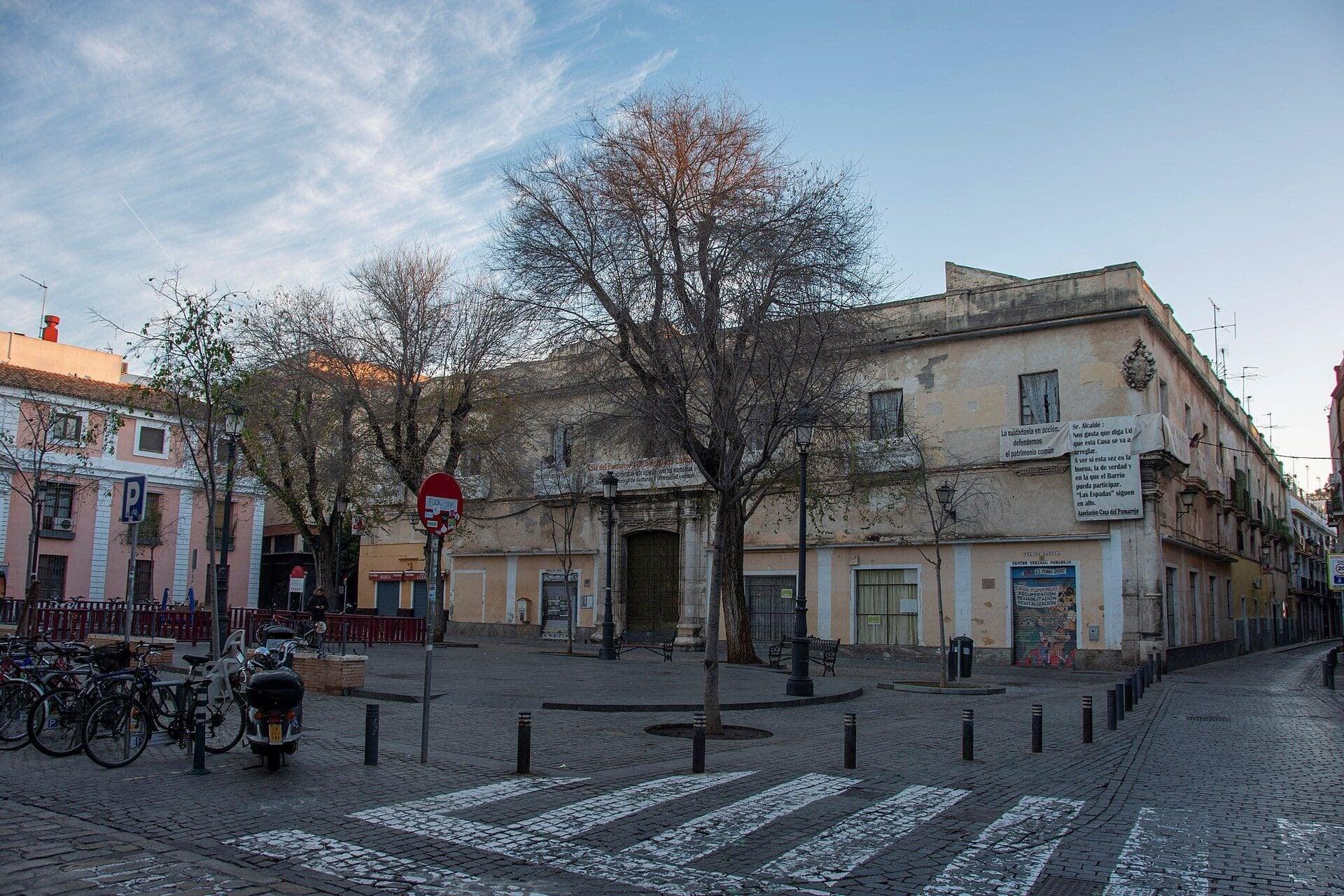
A palace saved by its tenants. The eighteenth-century Casa Palacio del Pumarejo, a tenement since 1883, protected in 2003.
- 11
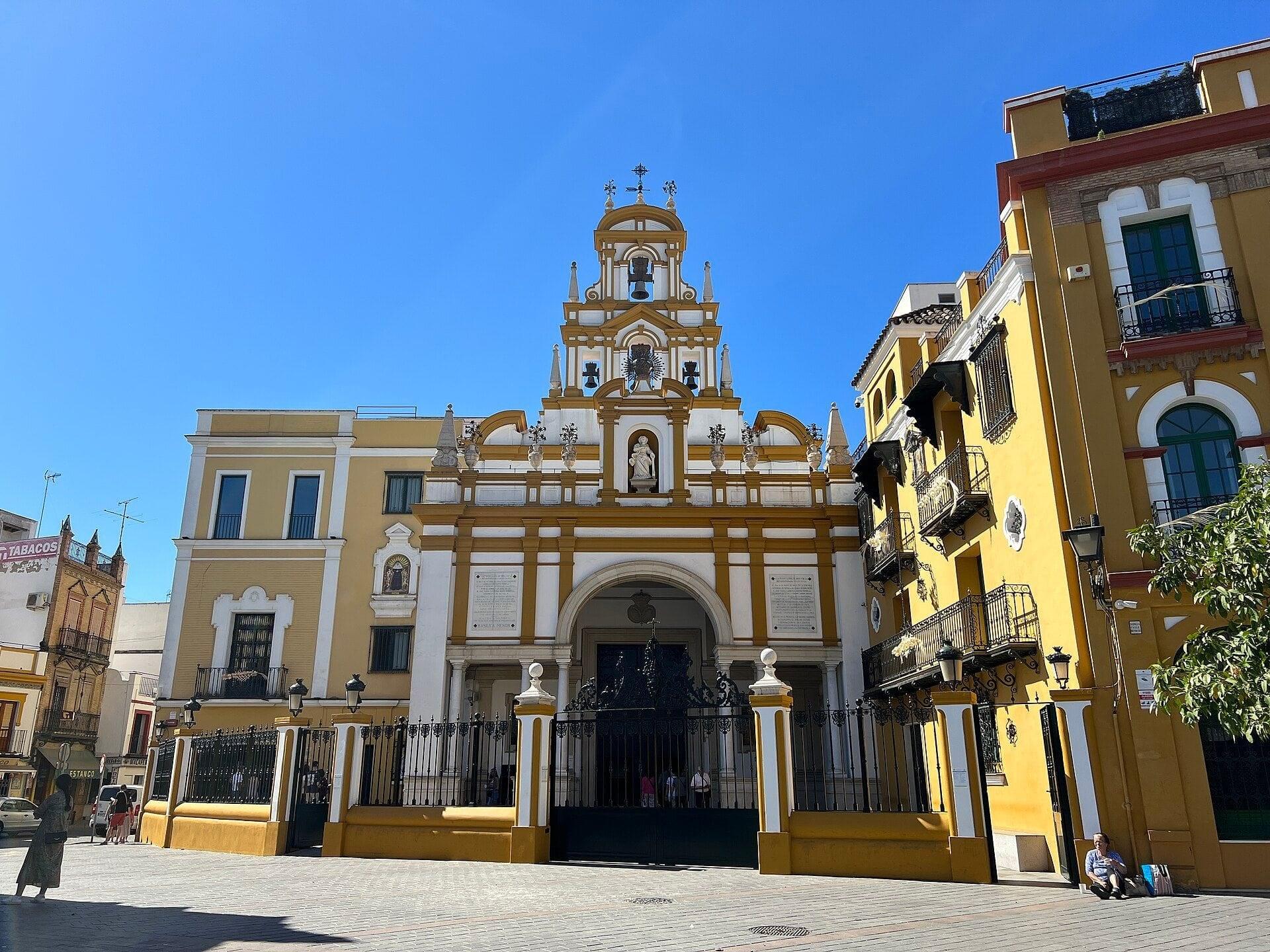
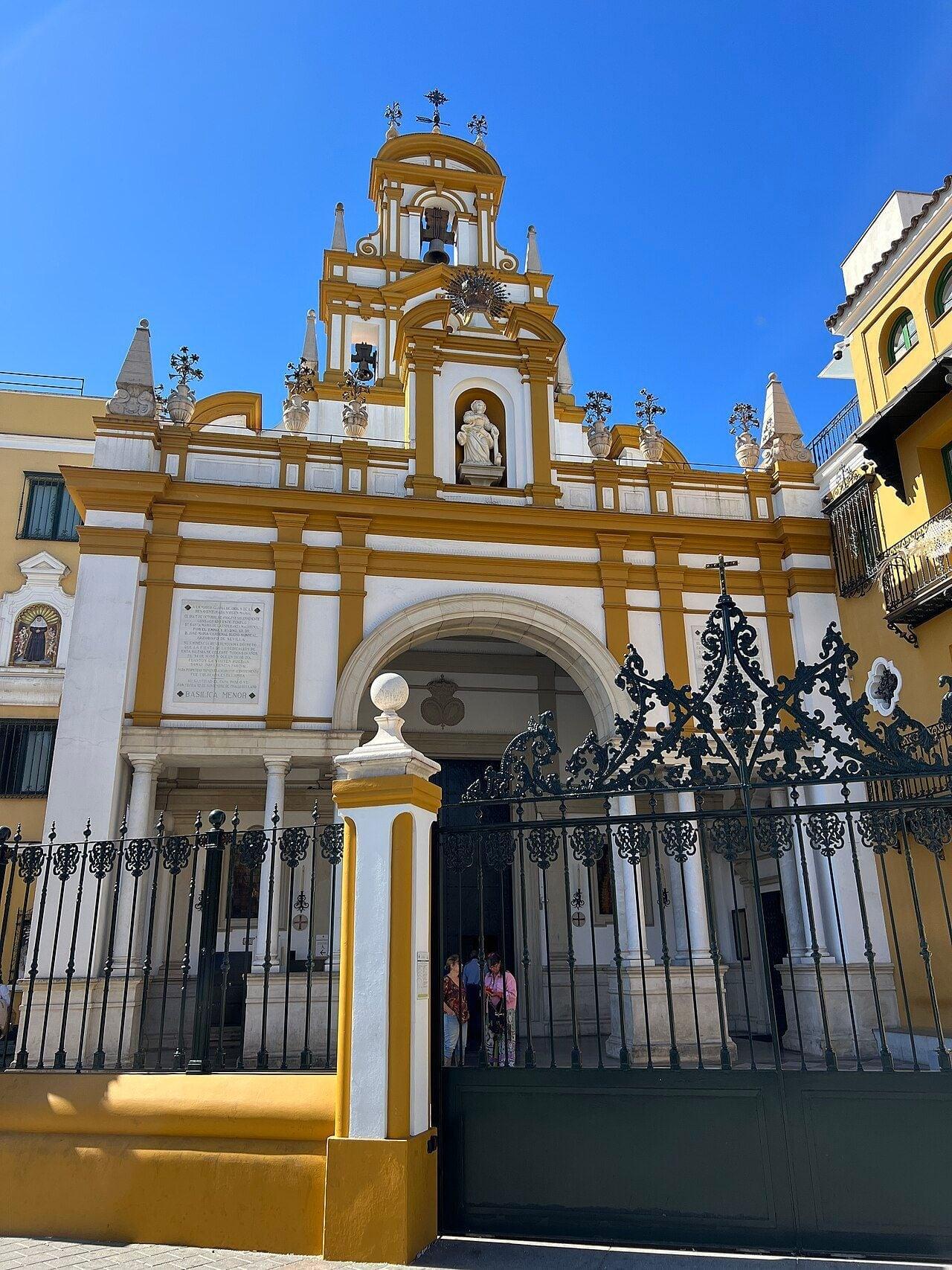
Basílica de la Macarena
Home of the Esperanza Macarena. The basilica built 1941 to 1949 beside the Macarena gate, from which the brotherhood sets out in Holy Week.
- 12
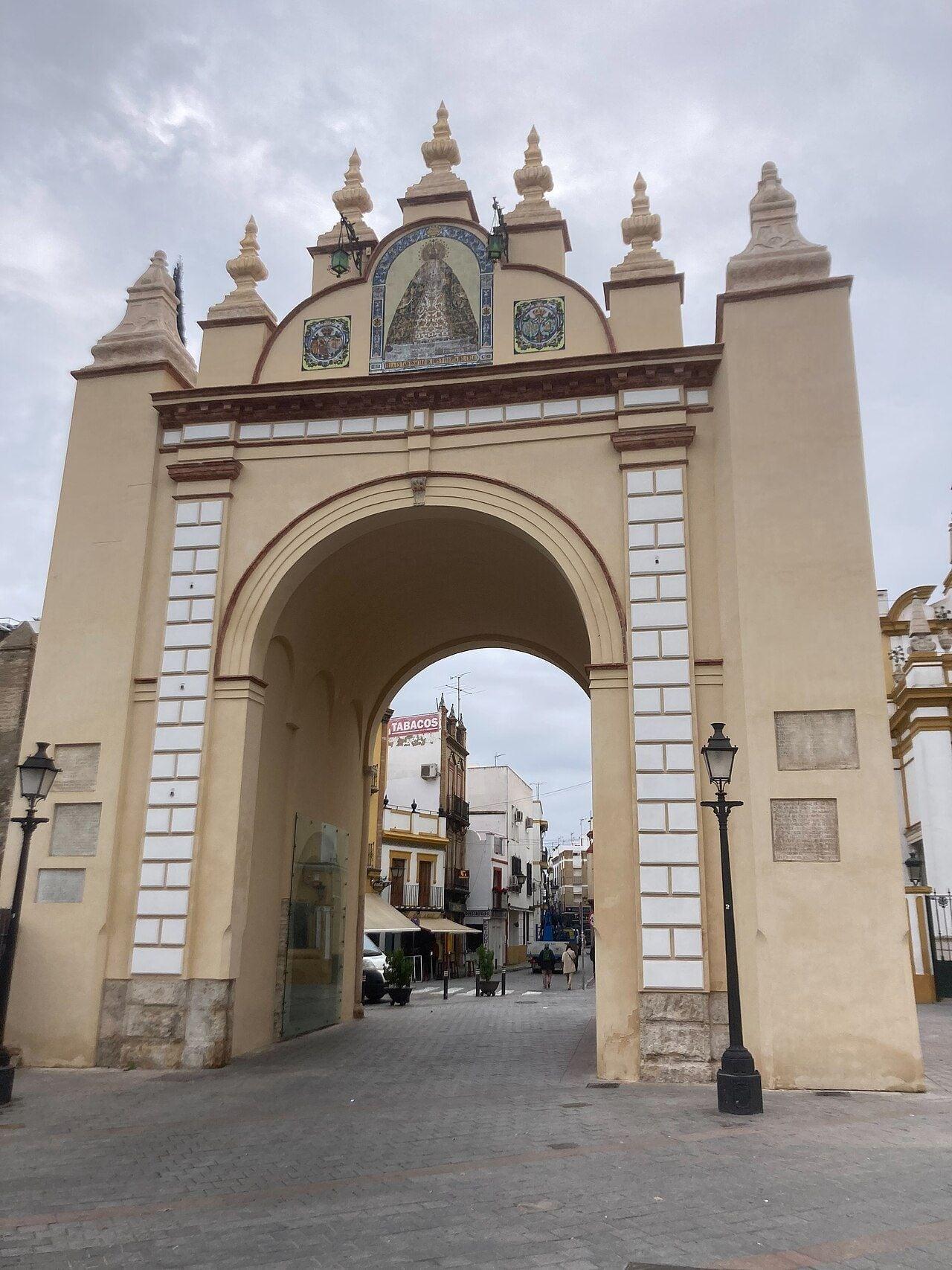
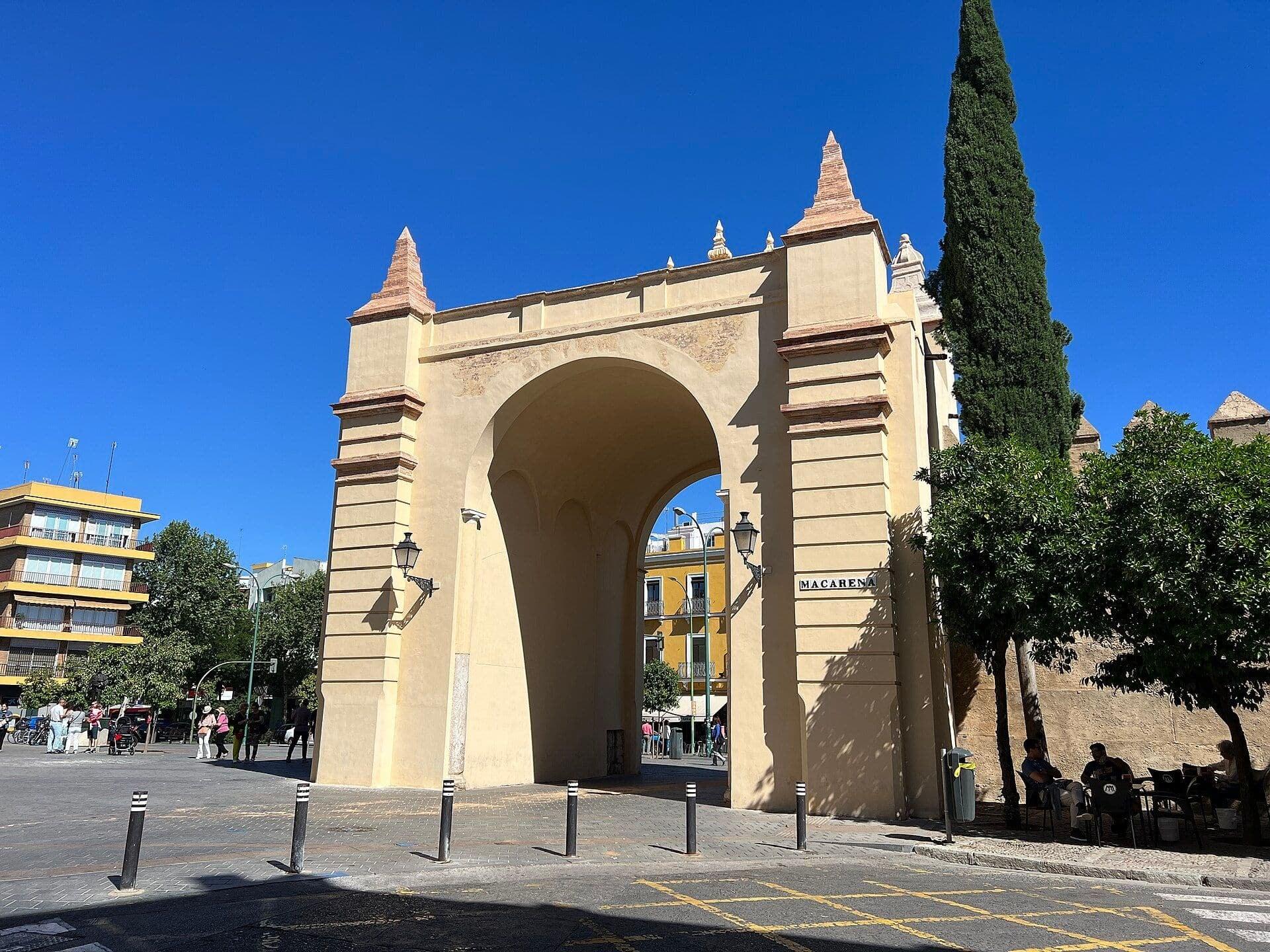
Puerta de la Macarena
A fortress gate in classical dress. The Macarena gate, an Almoravid entrance strengthened by the Almohads and refaced in 1723 and 1795.
- 13
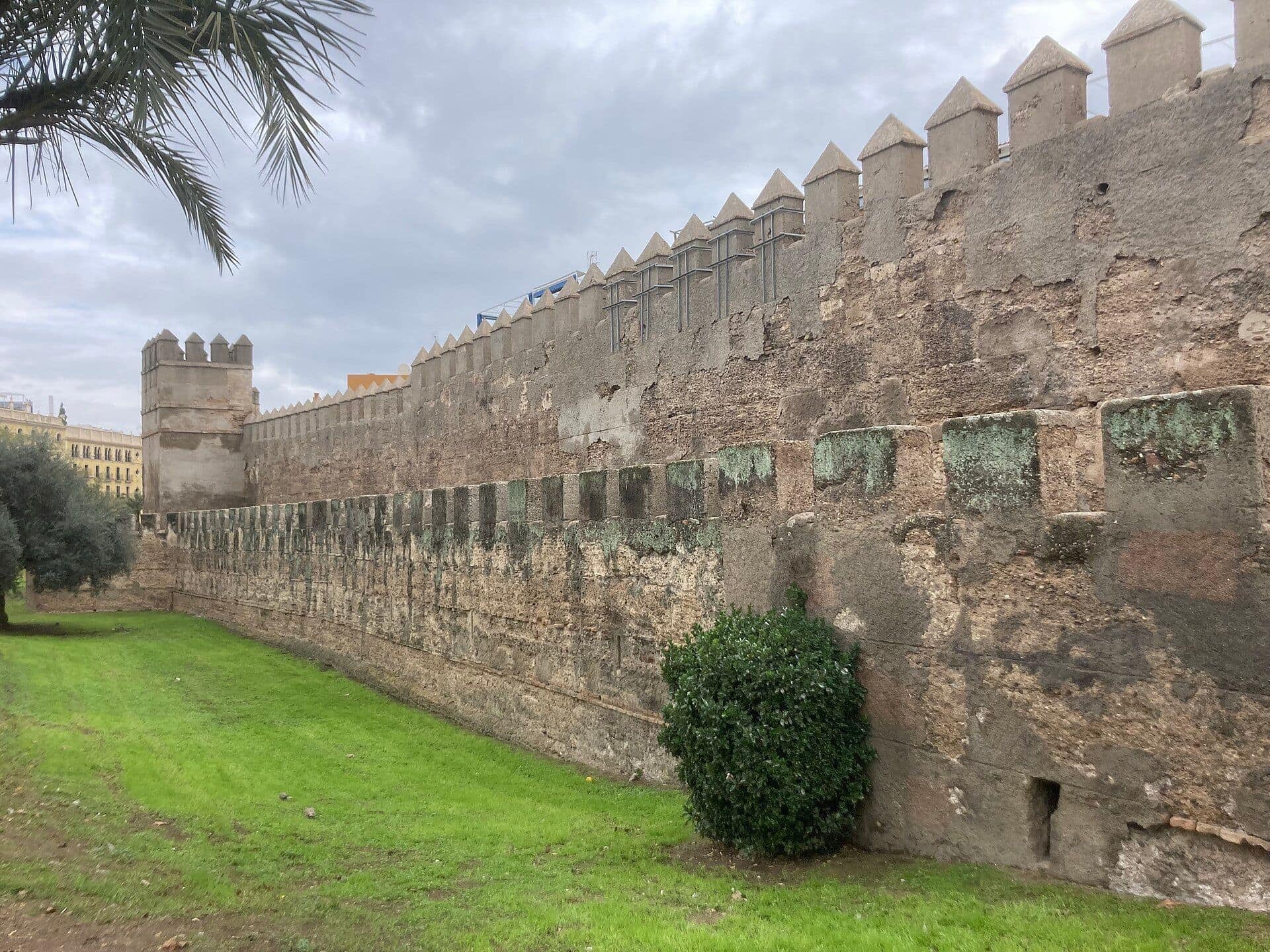
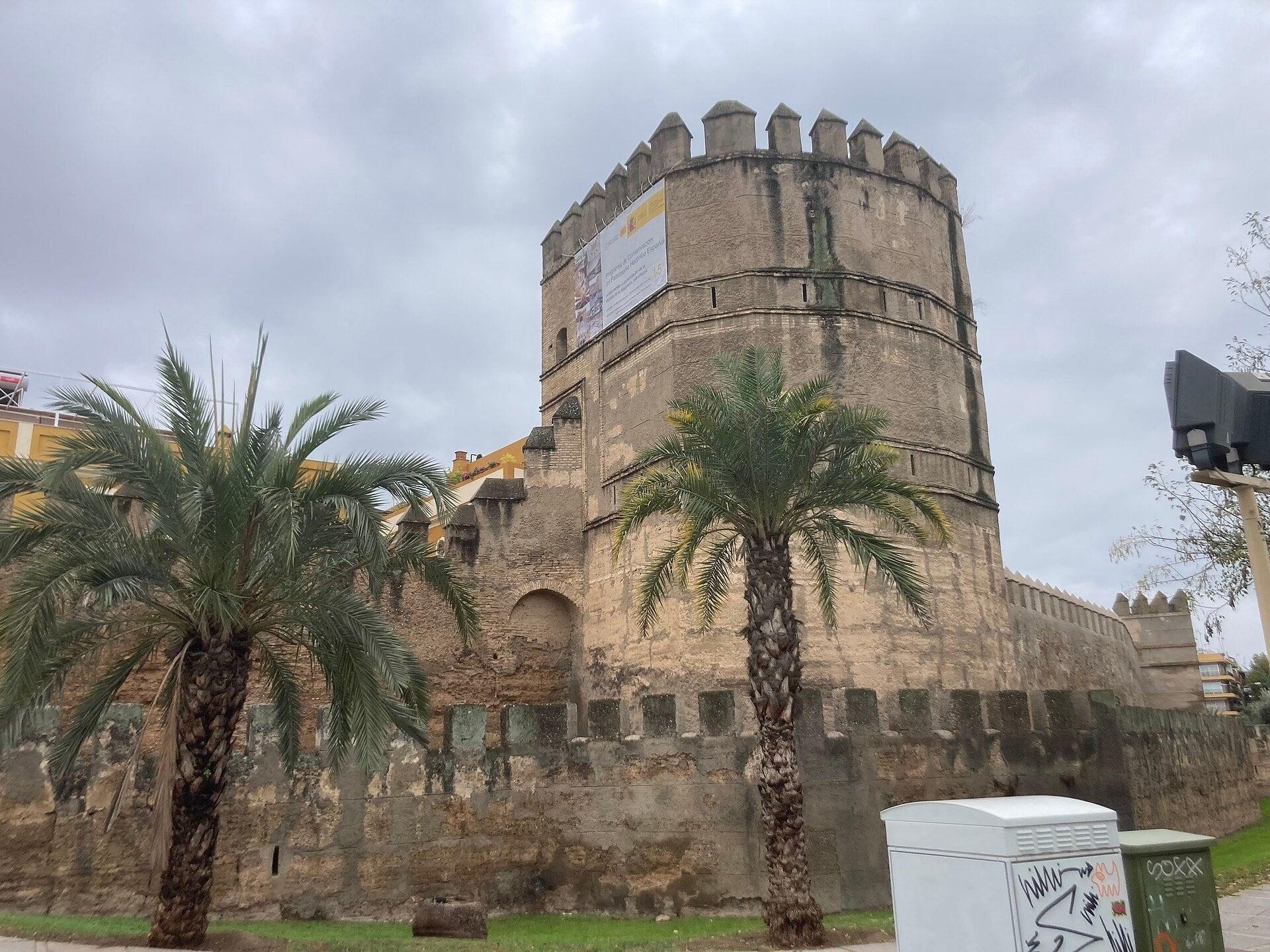
Macarena Walls
The city's medieval edge still stands. The Almoravid wall with its Almohad towers and outer wall, running east from the Macarena gate.
Details
Best Time to Visit
Weekday mornings from about 10:00, when the churches are open (they close about 14:00 to 17:00; the basilica 14:00 to 17:00) and Calle Feria's market is busy; or from about 17:00, ending at dusk on the lit ring road (sunset about 18:07 on 1 December, 18:09 on 21 December, 18:16 on 1 January, 18:47 on 1 February; computed). Thursday mornings bring El Jueves, the street market, to Calle Feria near stops 5 and 8 (about 07:00 to 15:00; not on Maundy Thursday). Mondays: the Antiquarium and San Luis de los Franceses are closed; Sundays: the Centro del Mudéjar is closed and most market stalls are shut. Winter: December highs about 17 °C, lows about 7 °C, rain in short heavy bursts (AEMET normals, Sevilla Aeropuerto). Summer: start before 10:00 or after 19:00; July highs average 36 °C. Christmas lights from Friday 27 November 2026, nightly 18:30 to about 01:00. Inmaculada, Tuesday 8 December 2026: national holiday, churches full and shops shut. By tradition the nuns of Santa Inés, beside stop 2, show their founder's body on 2 December (2026 not confirmed): expect a queue on Calle Doña María Coronel. Holy Week 2027 runs 21 to 28 March; the Macarena brotherhood leaves its basilica in the early hours of Good Friday, 26 March 2027, and the streets around stops 10 to 13 are packed. Checked 23 November 2026.
Pro Tips
- •Getting to the start: Tussam city buses stop at 'Imagen (Plaza Encarnación)', about 20 m from stop 1, and at 'Laraña (Plaza Encarnación)' about 130 m west. On foot it is about 10 minutes north of the Cathedral by Calle Cuna or Sierpes. The MetroCentro tram's Plaza Nueva stop is about 700 m south-west. Check current bus lines with Tussam. Checked 23 November 2026.
- •Getting home: the walk ends on the Ronda (ring road) by the Macarena gate. Tussam stops 'Parlamento de Andalucía, Macarena' (across the Ronda, use the signals by the gate) and 'Muñoz León (Puerta de Córdoba)' are within about 70 m. For a taxi, ask for 'el Arco de la Macarena'.
- •The walk is free and needs no ticket. Optional, not included: the Setas walkway (from EUR 16) and the Antiquarium under it (EUR 2, closed Mondays), the Palacio de las Dueñas (EUR 13), San Luis de los Franceses (EUR 4, closed Mondays, free Sunday afternoons) and the Macarena treasury museum (EUR 6). The Centro del Mudéjar in the Algaba palace near stop 8 is free (closed Sundays). Checked 23 November 2026.
- •For the full Baroque front of San Luis de los Franceses at stop 9, walk about a minute back down Calle San Luis, then return to the stop.
- •If you want the view from the top of Las Setas, sunset is the time people go up; you can come back to it after the walk.
Safety & Precautions
- •Traffic drives on the right. There is no tram on this walk. The one signalled crossing is at the San Pedro junction on the way to stop 3: wait for the green. Calle Gerona (stop 3 to 4), Calle Dueñas, Calle Feria and Calle San Luis are narrow streets that cars use at walking pace, several with no sidewalk: keep to the side.
- •Bike lane: on the last two legs, along the wall at the Macarena, a green two-way bike lane runs 2 to 3 m beside the footpath. Keep to the footpath and never step onto it; cross the ring road only at the signals by the gate.
- •Polished paving and cobbles are slippery when wet, and fallen bitter oranges on the stones in winter make them worse.
- •Pickpockets work busy squares: keep your bag closed and in front of you at Las Setas and in crowds.
- •The Basílica de la Macarena and the parish churches are places of worship: go quietly at Mass times, and never photograph people at prayer. Leave the residents of the Pumarejo, and market stallholders, out of your photos unless you ask first.
- •Street works: Metro line 3's future Macarena station is planned beside the wall at the start of Calle Muñoz León; no works had started by 23 November 2026, but look out for hoardings at the end of the walk.
Travel advisory: Exercise Increased Caution (Level 2).
Gallery
Related Reading
Go deeper on what you'll see, hear, and walk through.
Overview
One Day in Seville: A Walkable Old-Town and Triana Itinerary (2026)
6 min
Overview
Seville Monument Tickets, Hours and Closures (Checked November 2026)
6 min
Overview
Seville Travel Guide: How Many Days, Getting Around, When to Go (2026)
6 min
Thematic
Best History Walking Tours in Seville (2026)
3 min
Thematic
What to Eat in Seville: An Andalusian Food Guide (2026)
5 min
Companion
Las Setas and the Macarena: A Companion to Seville's Northern Old Town
5 min
Deep dive
Alameda de Hércules, Seville: The Lagoon That Became a Garden
3 min
Read the walk
The full story of Las Setas and the Macarena: From Roman Houses to the Wall, in words. Prefer to listen? Play it narrated, from home or on location.
Introduction
Seville's northern old town is built in layers you can read from the street. Roman and Islamic houses lie under a timber roof finished in two thousand eleven. Parish churches stand on the plots of mosques. A flood hollow was drained in the fifteen seventies to make a public garden, and at the far end the twelfth century city wall still stands.
Three people come with us. The painter Diego Velazquez was baptized in a church on the route. The poet Antonio Machado was born in a palace on the route. And the Count of Barajas, the crown's governor of Seville, drained the lagoon that became the Alameda de Hercules.
The walk is thirteen stops over about two point nine kilometers, about a mile and three quarters, and takes about eighty minutes. It is flat, from Las Setas north through the parishes of San Pedro, Santa Catalina and San Juan de la Palma, along the whole Alameda, down Calle Feria and up Calle San Luis to the Macarena and its wall.
Every stop works from the street. The walkway on top of Las Setas, the museum under it, the Palacio de las Duenas and the church of San Luis de los Franceses are ticketed inside and not part of this walk. Churches close in the early afternoon, the basilica from two until five.
The lanes are narrow and cars use some of them at walking pace: keep to the side. Winter rain comes in short, sharp bursts, the polished stone gets slippery, and fallen oranges make it worse. The walk ends on the city's ring road, with buses back to the center.
To reach the start, take a city bus to the Imagen stop on Plaza de la Encarnacion, or walk ten minutes north from the Cathedral. When you arrive at Las Setas, begin with stop one.
1. Las Setas
Rising over the square are six huge timber parasols, joined into one rippling canopy. Officially this is the Metropol Parasol. The whole city calls it Las Setas, the mushrooms. It stands on Plaza de la Encarnacion, the Incarnation Square, at the heart of the northern old town.
The design won a competition called in two thousand four, and the structure opened in two thousand eleven. The parasols stand between about twenty and twenty six meters high and cover an area of about a hundred and fifty meters by seventy five. They are built of microlaminated fir, thin sheets of wood glued into beams, sealed under a skin of polyurethane. Its operators call it the largest wooden structure in the world.
So why a wooden roof here, in a city of brick and stone? Because of what lies underneath. This square held a convent, then a market, and then for decades a parking lot. When the site was excavated, archaeologists found Roman and Andalusi houses, the remains of the Islamic city, below the street. The city kept them where they lay. They are now a museum under the square, the Antiquarium, with the market hall above them and a raised plaza above that, all in the shade of the parasols. In a Seville summer, shade is the whole point of a public square.
The museum below and the walkway along the top are ticketed and not part of this walk; the square and the market are free. Keep your bag closed and in front of you here: pickpockets work busy squares like this one.
So the walk begins with the newest landmark of the old town, standing on its oldest ground. From here we go north, past parish churches on the plots of mosques, to the wall at the city's edge.
Follow the route east along the street to the church of Saint Peter.
2. San Pedro: Where Velázquez Was Baptized
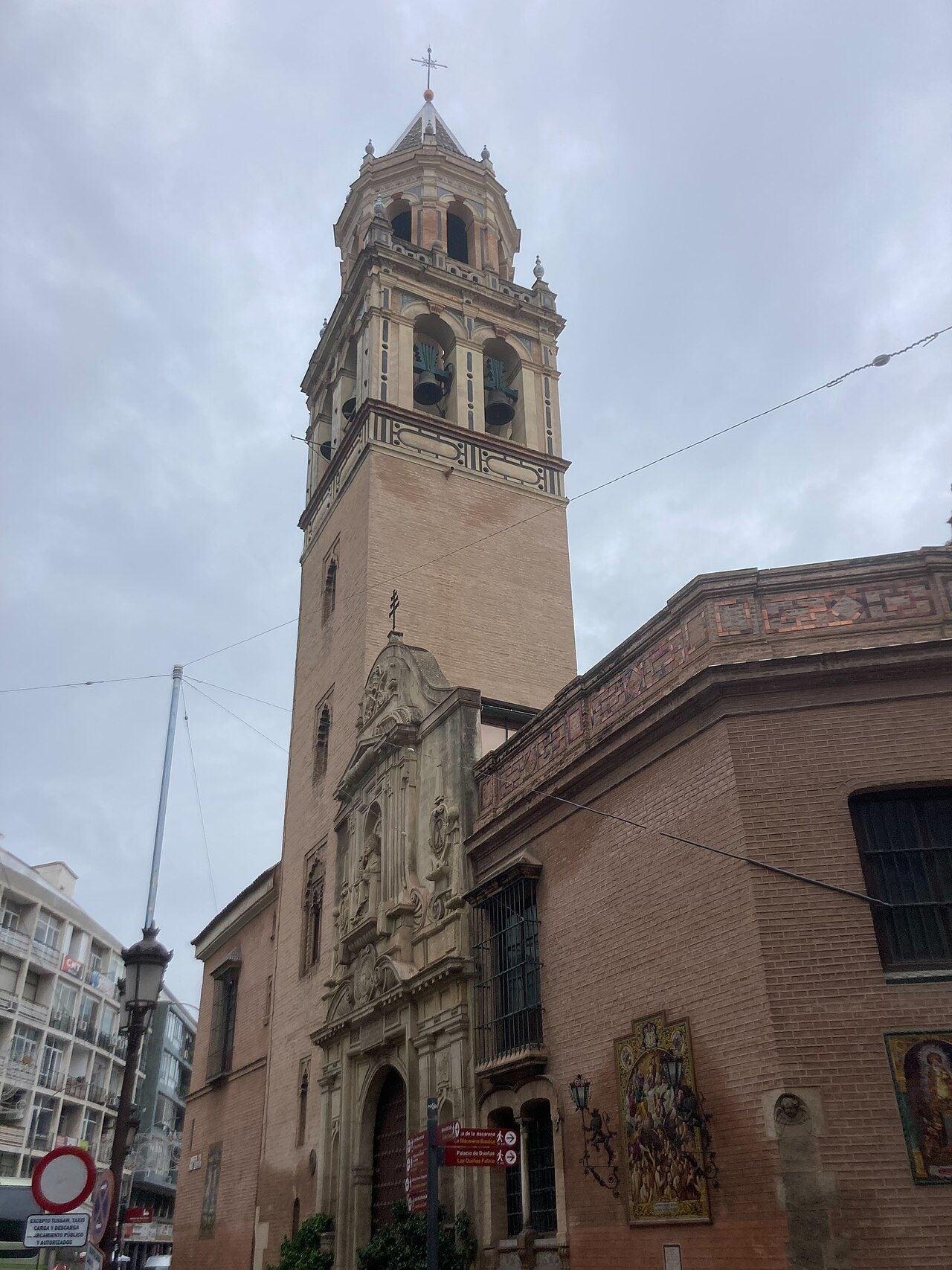
Across the little square rises the tower of the church of Saint Peter, San Pedro. It is a Mudejar church: built for Christian worship after the conquest, by builders working in the brick tradition of Islamic Seville.
Seville's old town was organized by parish. Each district took the name of its church, and each church kept the register of its baptisms. So the first record we have of the city's most famous painter is not a birth. It is a baptism. In June fifteen ninety nine, a baby named Diego was baptized in this church. His birth date is unknown; the baptism is the record. He grew up to be Diego Velazquez, the painter of Las Meninas.
The long wall running north from the corner of the square belongs to the convent of Santa Ines, Saint Agnes, a community of nuns founded in the fourteenth century. By tradition, the nuns show the body of their founder to the public each year on the second of December.
The orange trees in these squares are bitter oranges, grown for shade and scent, not for eating. In winter their fruit falls and stains the stones; step around it.
Follow the route east out of the square. At the junction, cross with the signal and wait for the green, then turn into the pedestrian street beyond.
3. Santa Catalina: A Borrowed Doorway
Close beside you is the church of Saint Catherine, Santa Catalina, with its brick tower and its carved Gothic doorway. Step back to the far side of the street to see the tower whole.
This is another Mudejar parish church, built after the Christian conquest of twelve forty eight by builders who worked in brick the way Islamic Seville had. But look again at the doorway. It was not made for this church. It came from another one, the church of Santa Lucia, and was set here in nineteen thirty, at the end of a restoration of this building. A city that runs out of use for a church does not always lose its stones. Sometimes it moves them.
The church itself was closed in two thousand four and spent years under restoration by the city and the archdiocese before it opened again. It is a working church; visits inside are not part of this walk.
Follow the route up the narrow street ahead. It is a street for cars, with no sidewalk and cobbles underfoot: keep to the side, because cars come up behind you.
4. Palacio de las Dueñas
The gateway on this narrow street, with a coat of arms in painted tile above it, is the entrance to the Palacio de las Duenas. It is the Seville palace of the Dukes of Alba, run today by the family's foundation. Beyond the gate is a forecourt, and beyond that a palace with gardens and patios: more than five hundred years of Seville's history, in the words of the city's tourism office. From the street you see almost none of it.
That is how Seville builds. Its great houses turn a plain wall to the street and keep their beauty inside, around patios full of shade and water. The heat is kept out, and so are strangers.
The palace was not only for the duke's family. Some of its dwellings were rented out to families of modest means. In July eighteen seventy five a boy was born in one of those rented homes: Antonio Machado, who became one of Spain's great poets. Decades later he opened a poem called Portrait with a line about this place: My childhood is memories of a patio in Seville.
The palace is ticketed beyond the gate and not part of this walk. The street is narrow and cars use it: step close to the wall while you listen.
Follow the route on along the street to the next square and its church.
5. San Juan de la Palma
Across the little square is the church of San Juan de la Palma, Saint John of the Palm, with its tower rising over the roofs. Many of the old town's parish churches stand where mosques stood before the Christian conquest, and this one has a proof. An inscription was found at…
Full narration for this stop unlocks with the tour.
6. Alameda de Hércules: The Drained Lagoon
Turn around to face the two tall columns at the end of the promenade, each carrying a statue. This is the Alameda de Hercules. Until the fifteen seventies this was the lowest, wettest ground inside the walls. A chronicler writing in fifteen eighty seven explains why the space…
Full narration for this stop unlocks with the tour.
7. Alameda de Hércules: Lion Columns
Ahead, closing the far end of the promenade, stands a second pair of columns, each crowned by a lion. These are nearly two hundred years younger than the Roman pair behind you. In the seventeen sixties the city's governor of the day rebuilt the water system that fed the…
Full narration for this stop unlocks with the tour.
8. Calle Feria
You are on Calle Feria, the market street of the northern town. The covered market hall is just behind you, on the same side as the church beside you on your left, with the brick tower. That church is Omnium Sanctorum, All Saints. Here the old town's pattern sits in a single…
Full narration for this stop unlocks with the tour.
9. San Luis de los Franceses
You have just turned into Calle San Luis. The church beside you on your right is Santa Marina, a Mudejar parish church. It was burned in July nineteen thirty six, like Omnium Sanctorum, and restored. Now turn around and look down the street. Rising above the houses are the twin…
Full narration for this stop unlocks with the tour.
10. Pumarejo: The Palace the Neighbors Kept
The square opens out here, and across it, on your right, stands the long front of a palace. This is the Pumarejo, and the square carries the same name. In the seventeen seventies its owner bought the house and, by the accounts that survive, had more than seventy houses around…
Full narration for this stop unlocks with the tour.
11. Basílica de la Macarena
You have come up Calle Muro and turned into the square. The church on your right is the Basilica de la Macarena, and beyond it, at the end of the square, is the old city gate. The basilica is newer than it looks. Building began in nineteen forty one and was finished in nineteen…
Full narration for this stop unlocks with the tour.
12. Puerta de la Macarena
Turn around to face the gate you have just walked past: the Puerta de la Macarena, the Macarena gate, with its arch onto the city. The wall here was built by the Almoravids, rulers of Islamic Seville, in the eleven twenties and eleven thirties. Their gate was a single entrance…
Full narration for this stop unlocks with the tour.
13. Macarena Walls
Ahead and beside you runs the wall: square towers, the tall wall between them, and in front of it a lower outer wall. The nearest tower is the Torre Blanca, the White Tower. This is the stretch that survived. Seville's wall was built by the Almoravids in the eleven twenties and…
Full narration for this stop unlocks with the tour.
- Église Santa Catalina, Séville. — Chabe01, CC BY-SA 4.0 · source
- Fachada del Palacio de las Dueñas, Sevilla — Anual, CC BY 3.0 · source
- The main patio of the Palacio de las Dueñas (Seville, Spain). — Gzzz, CC BY-SA 4.0 · source
- Portada de los pies (1420) — José Luis Filpo Cabana, CC BY-SA 4.0 · source
- Church of San Juan de la Palma, Seville — Anual, CC BY 3.0 · source
- Columnas con las estatuas de Hércules y Julio César. Alameda de Hércules. Sevilla, Andalucía, España. — CarlosVdeHabsburgo, CC BY-SA 4.0 · source
- Colonnes Nord de la alameda de Hércules, Séville. — Chabe01, CC BY-SA 4.0 · source
- Église Omnium Sanctorum, Séville. — Chabe01, CC BY-SA 4.0 · source
- Halles, calle Feria, Séville. — Chabe01, CC BY-SA 4.0 · source
- Plaza del Pumarejo en Sevilla. — Anual, CC BY-SA 4.0 · source
- Basilique Santa María Esperanza Macarena, Séville. — Chabe01, CC BY-SA 4.0 · source
- Basilique Santa María Esperanza Macarena, Séville. — Chabe01, CC BY-SA 4.0 · source
- Porte de la Macarena, Séville. — Chabe01, CC BY-SA 4.0 · source
Images may be cropped or resized. Other photos via Unsplash and Pexels.