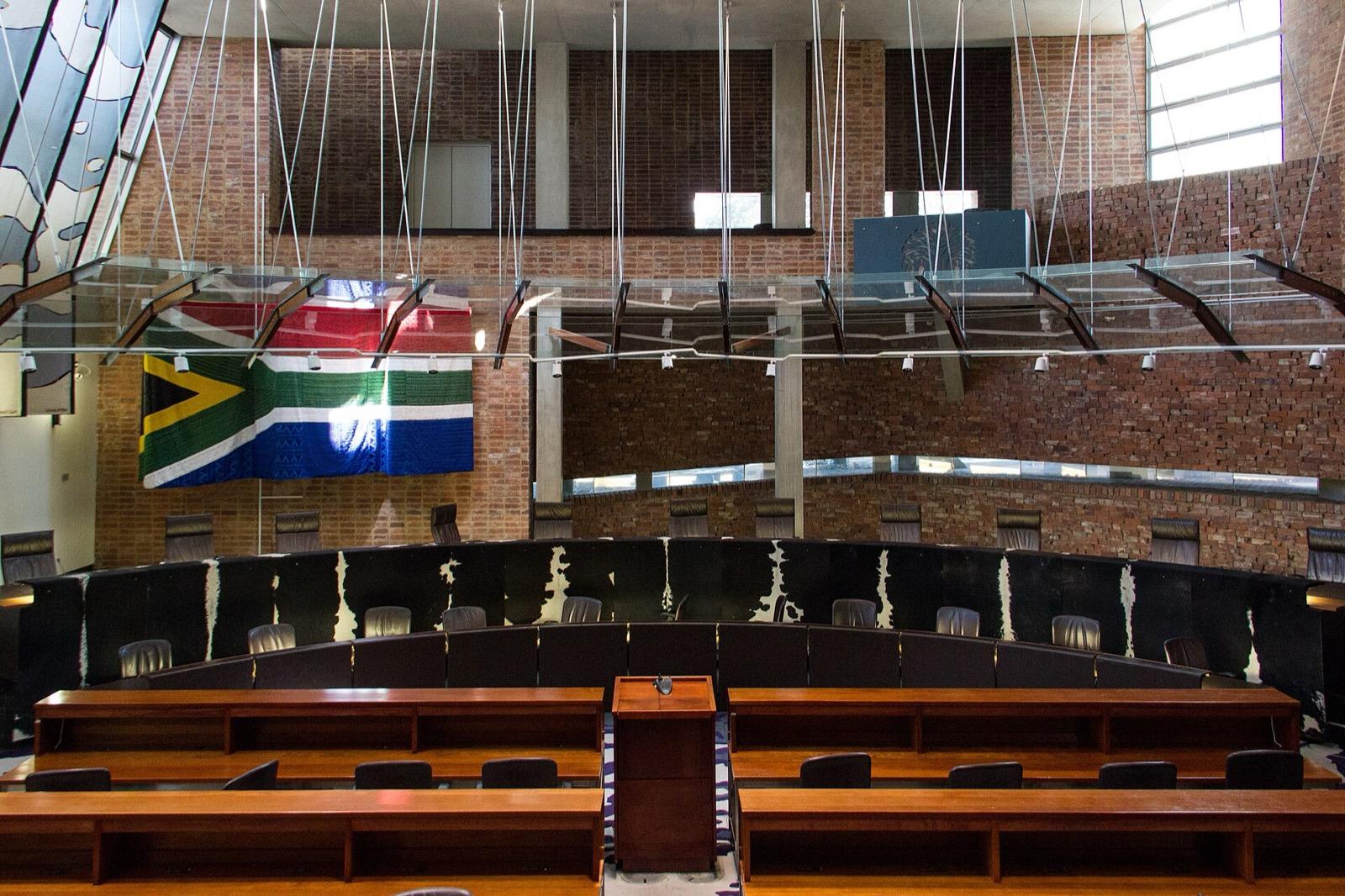
On a single Johannesburg ridge, a republic's prison became the home of the nation's highest court, built from the very bricks that once caged the powerless. This walk reads that turn, from ramparts to courtroom to the city stitching itself back together.
Start · The Old Fort Ramparts: A Republic's Wall Over Its Own Prison
DirectionsStops
- 1
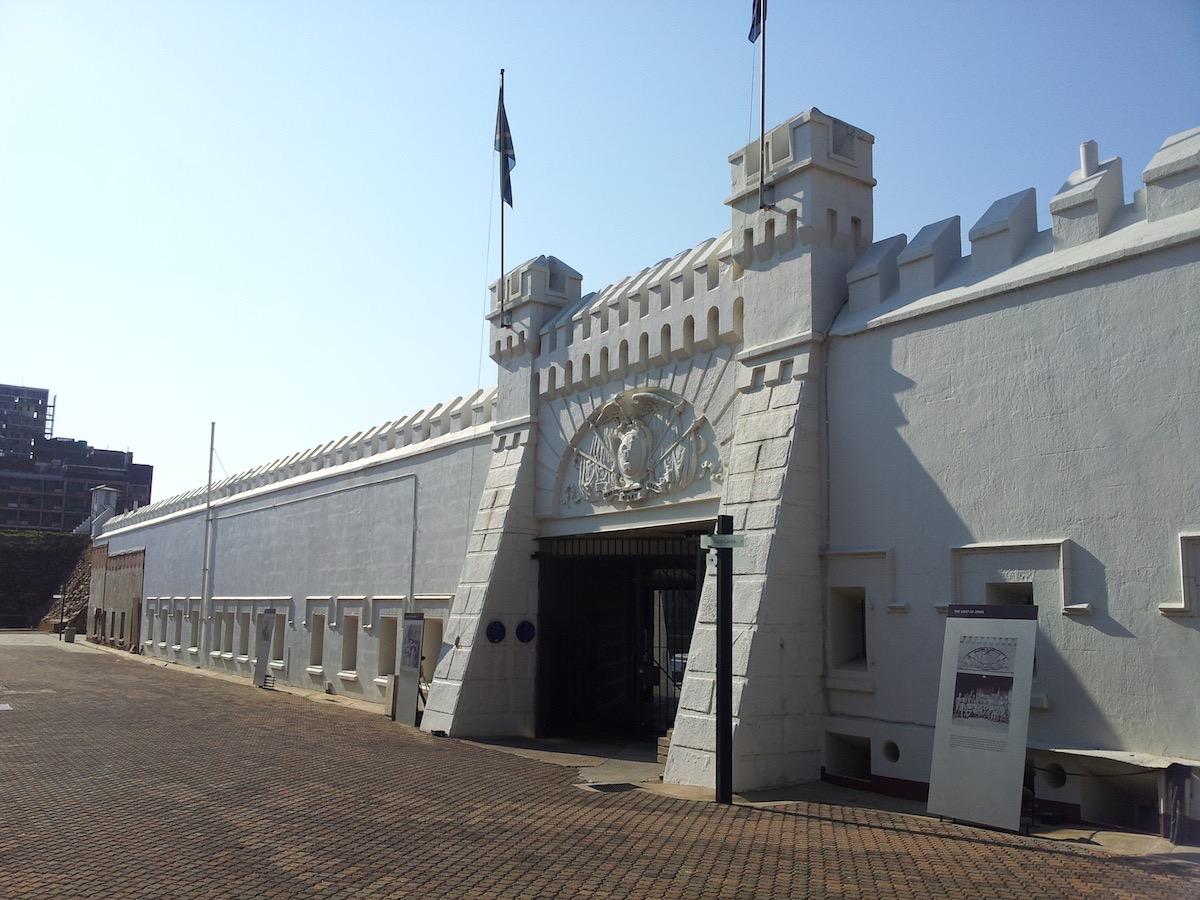
The Old Fort Ramparts: A Republic's Wall Over Its Own Prison
The grass-covered earth ramparts that a republic threw up around its own prison, giving the whole hill its shape.
- 2
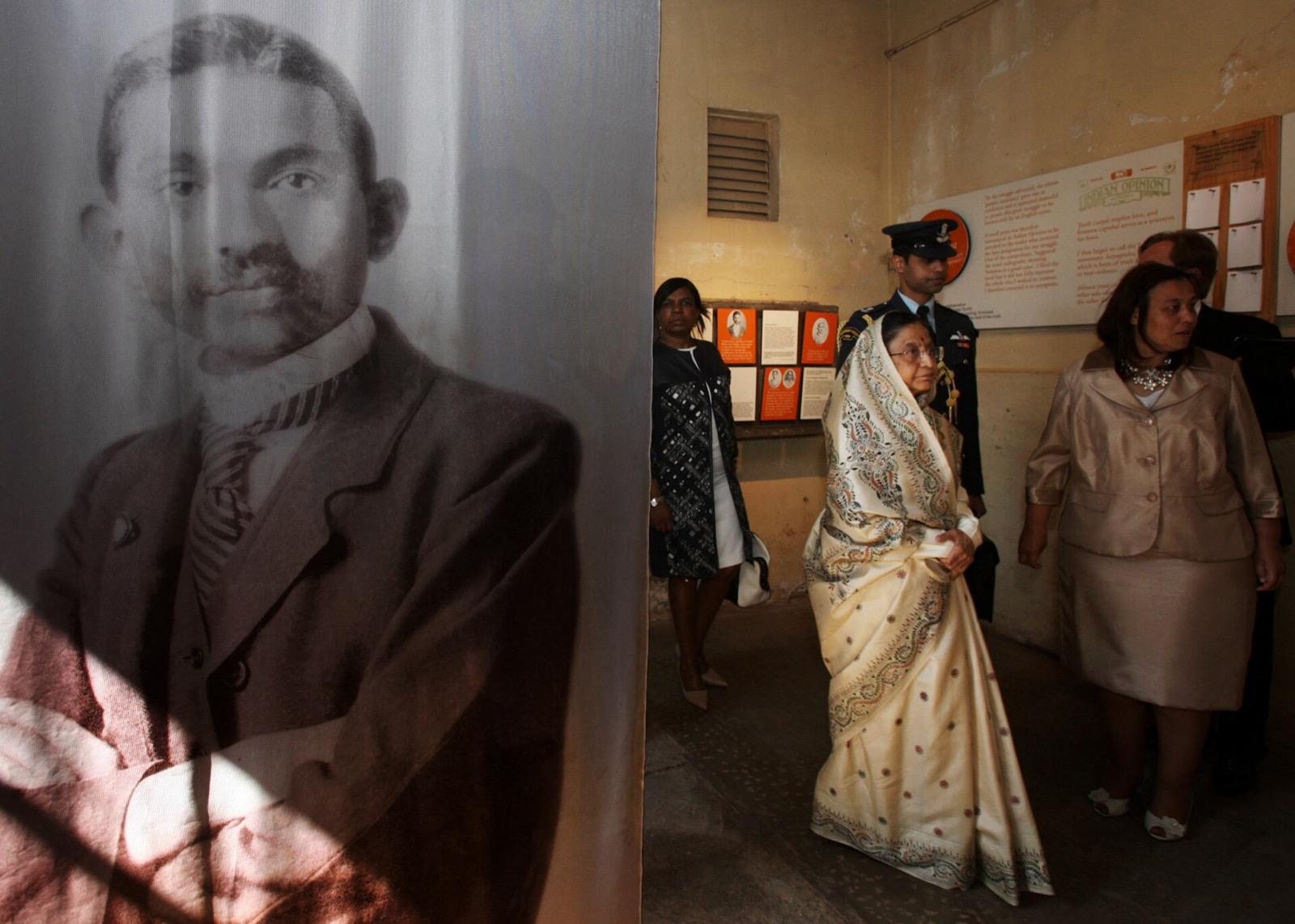
Number Four: The Machinery of Injustice, Cell by Cell
The section that caged black male prisoners, preserved now as part of Constitution Hill's human rights museum, cell by cell.
- 3
The Women's Jail: A Handsome Facade Over a Hard Place
An elegant red-brick building with a central atrium that hid a hard segregated prison for women.
- 4
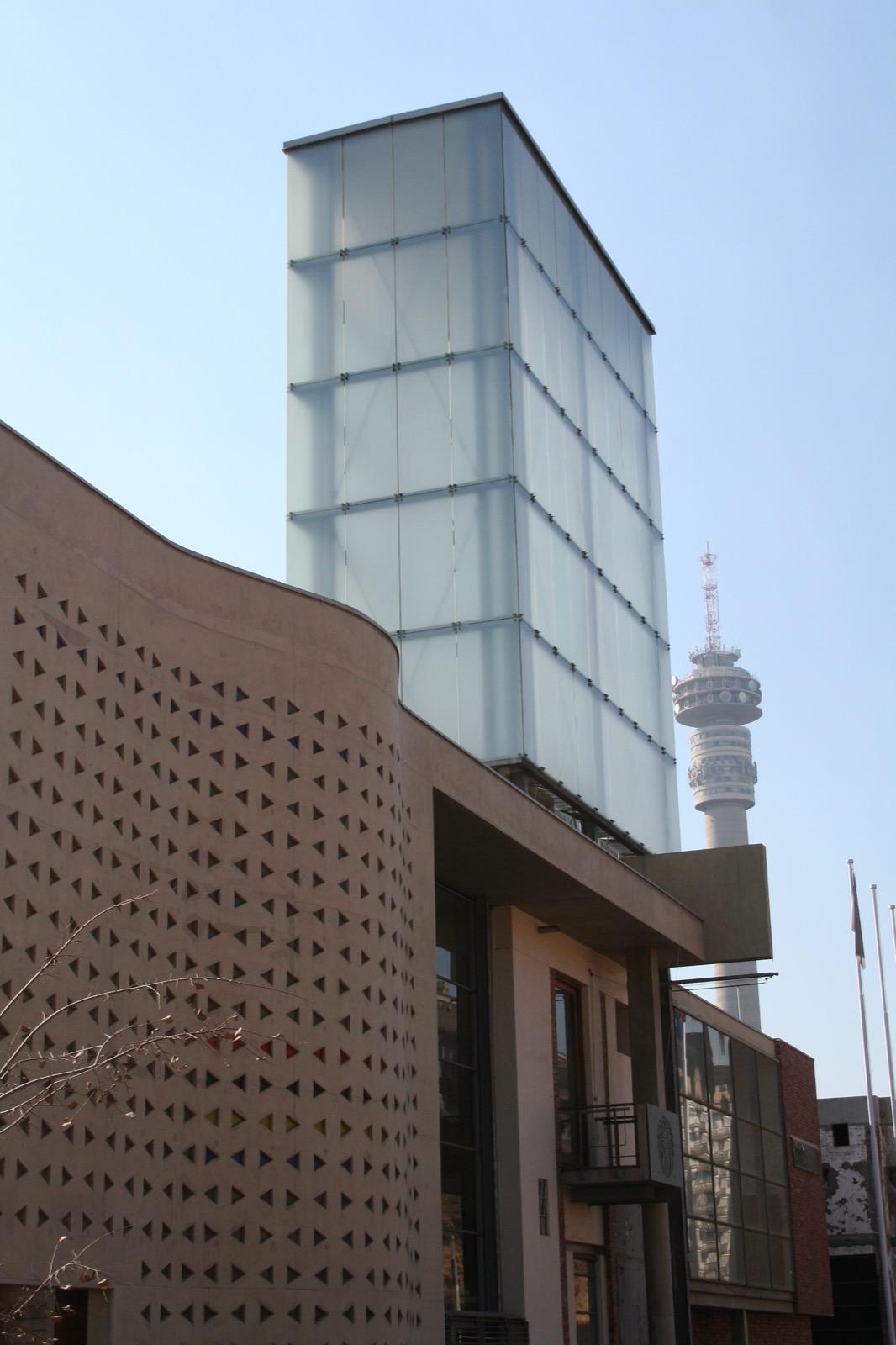
The Constitutional Court: The Highest Court, Raised From a Prison's Bricks
South Africa's highest court was built partly from the bricks of a demolished prison block. It is premised on justice beneath a tree.
- 5
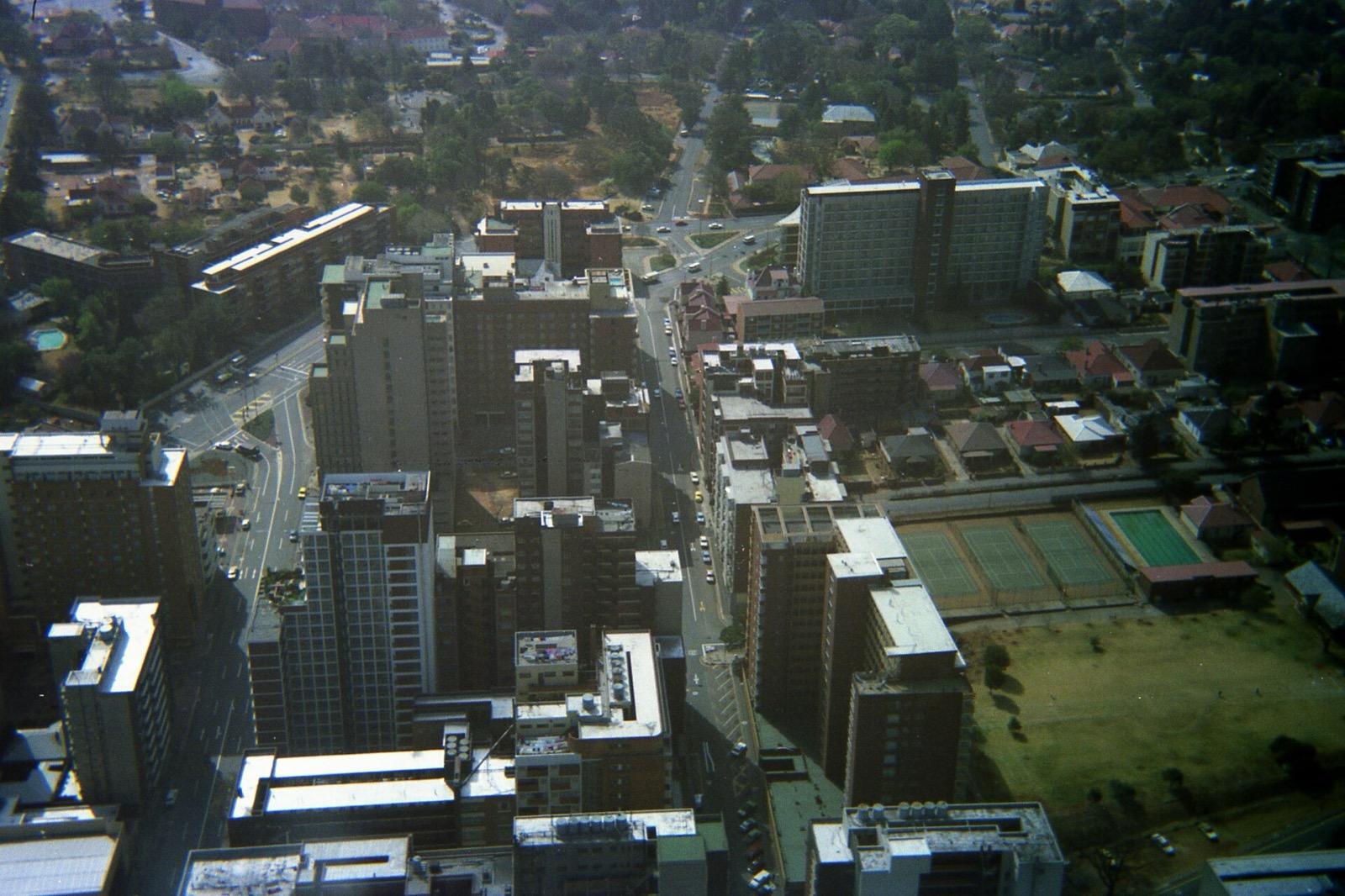
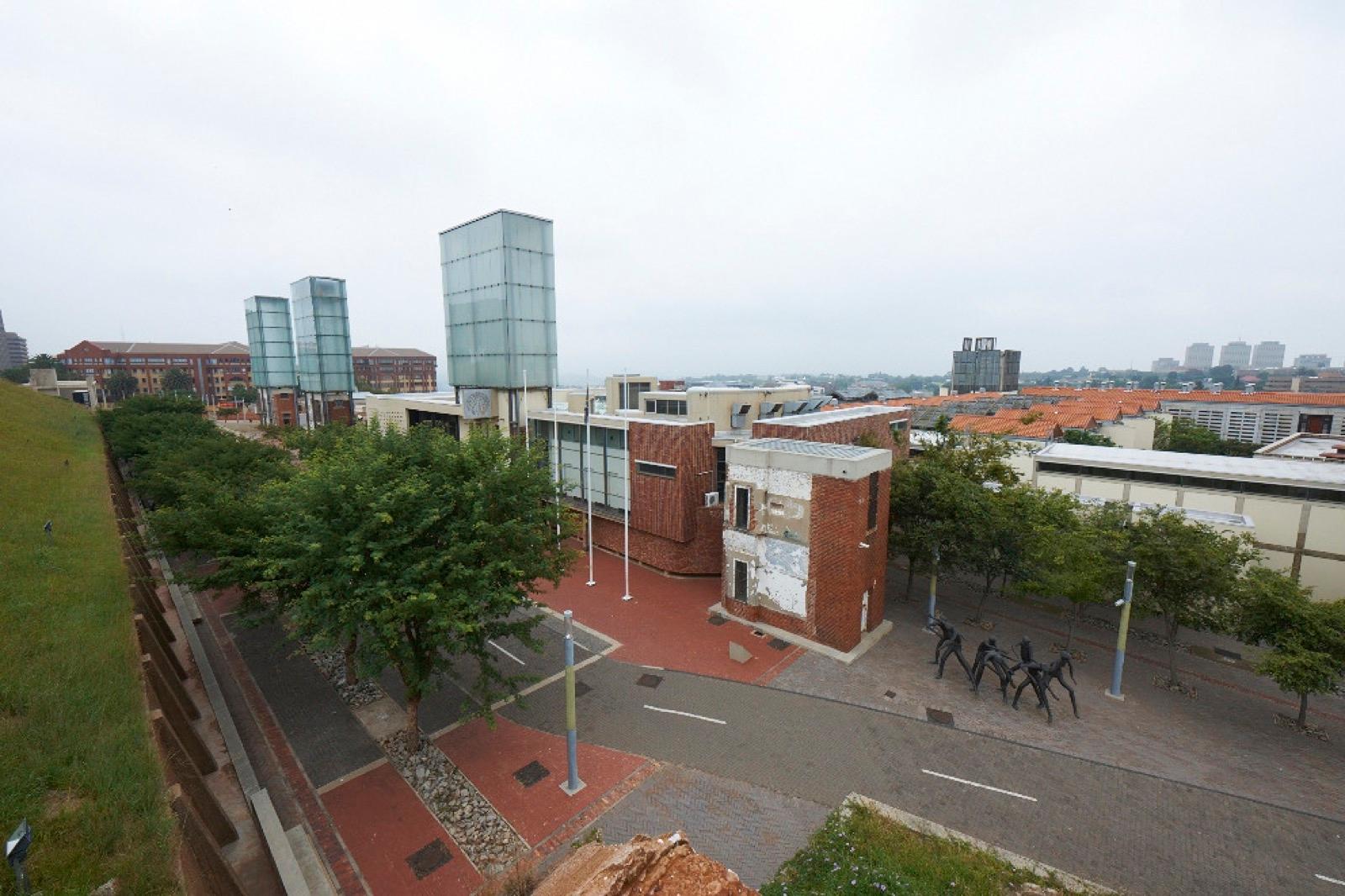
The Ramparts View: The Divided City Below
A viewpoint from the same Old Fort ramparts, looking out over the inner city and its landmark towers.
- 6
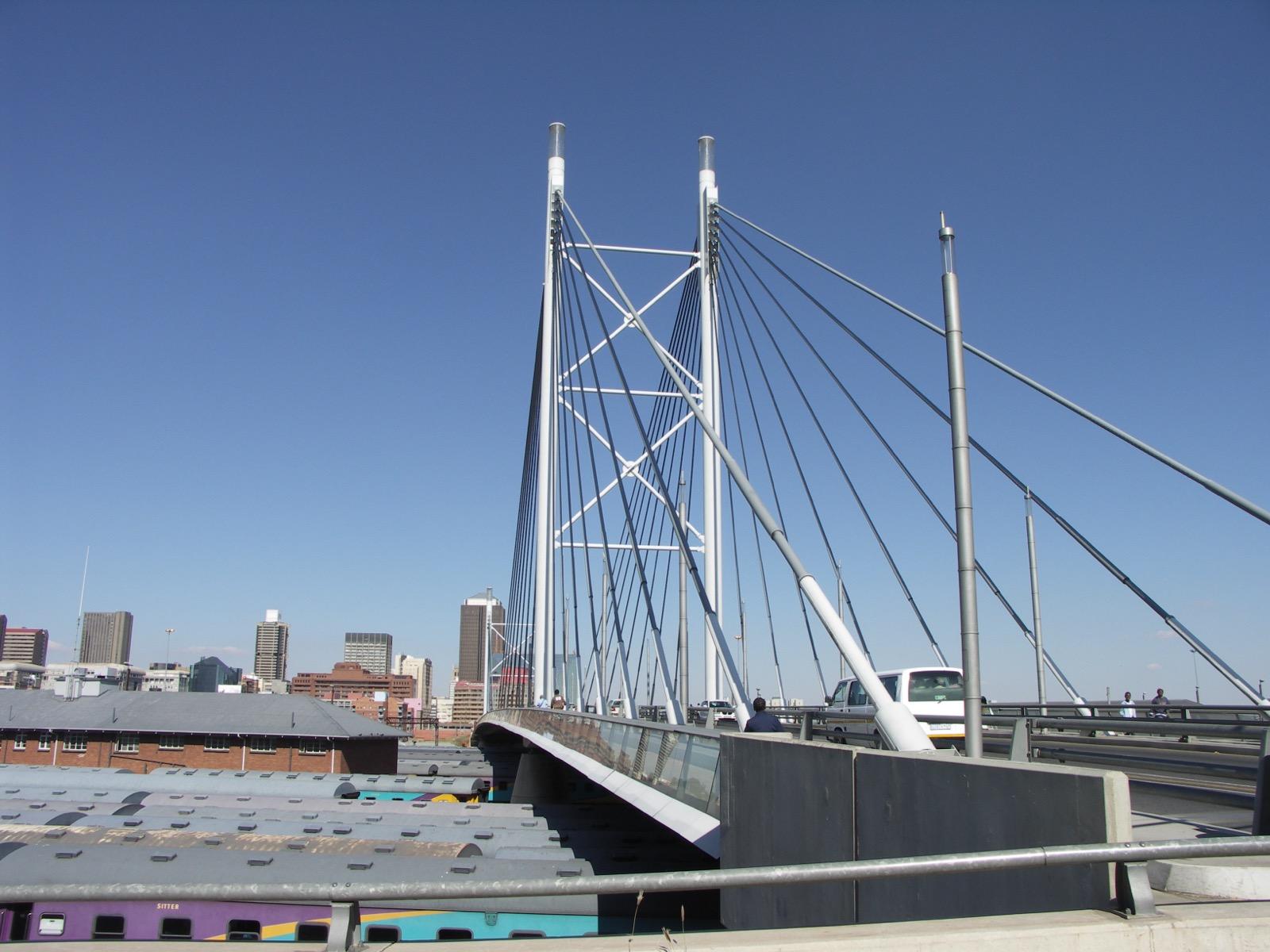
Braamfontein and the Nelson Mandela Bridge: Stitching the City Back Together
The bright student district and the white cable-stayed bridge that links the city across its railway yards.
Details
Best Time to Visit
Late morning to early afternoon is ideal, when the Constitutional Court's foyer fills with the dappled, filtered light its designers intended and the ramparts give clear views over the inner city. The precinct is open year round; Johannesburg's summer, from about November to March, brings warm days and short afternoon thunderstorms, so an earlier start keeps you ahead of the rain. Winter days, from about June to August, are dry, bright, and cool, pleasant for walking but cold in the shade of the old cells. Weekdays are quieter than weekends, and if you would like to see the court chamber itself, a day when the court is in session lets you sit in on public proceedings at your own pace.
Pro Tips
- •Buy your precinct ticket in rand at the Constitution Hill entrance; it covers the Old Fort, Number Four, the Women's Jail, and the walk up to the Constitutional Court, so you can move through all of them on your own clock without a group.
- •Give the Number Four section and the Women's Jail unhurried time. The cell graffiti and the former prisoners' testimony reward slow reading, and there is no schedule pushing you along.
- •Save the Constitutional Court for after the prisons, following the route the designers intended: up the Great African Steps from Number Four, so you arrive at the court having stood where its bricks came from.
- •At the court entrance, look closely at the tall timber doors, where the twenty-seven rights of the Bill of Rights are carved in eleven official languages plus sign language, with braille on the handles. It repays a few unhurried minutes.
- •Return to the Old Fort ramparts for the city view before you leave the precinct; from the same grass wall you started on, the towers of Hillbrow and the districts below read as one gaze.
- •If you plan to walk down to the Nelson Mandela Bridge through Braamfontein, go by daylight, keep your phone and valuables discreet, and treat it as a lively city walk across busy streets rather than a quiet stroll.
Safety & Precautions
- •These are sites of real suffering. The prison cells, the Tausa inspection displays, and the women's stories carry genuine emotional weight, so give yourself permission to take breaks, sit quietly, and move on when you need to.
- •Treat the surrounding streets with ordinary Johannesburg city-centre awareness. Keep your phone, camera, and valuables out of sight, stay on the main routes between the precinct and Braamfontein, and prefer daylight for the walk down to the bridge.
- •Carry water and sun protection. The ramparts and the open steps between buildings are exposed, and Johannesburg's high-altitude sun is strong even on cool winter days.
- •The precinct charges entry in rand and some sections have uneven historic floors, stairs, and the climb of the Great African Steps, so wear comfortable shoes and check access if you have mobility needs.
Travel advisory: Exercise Increased Caution (Level 2).
Gallery
Related Reading
Go deeper on what you'll see, hear, and walk through.
Overview
Best Self-Guided Walking Tours in Johannesburg (2026)
3 min
Overview
Johannesburg Travel Guide: How Many Days, Getting Around, Safety, and Cost
7 min
Overview
One Day in Johannesburg: A Walkable Morning-to-Evening Itinerary
7 min
Thematic
Best History Walking Tours in Johannesburg (2026)
2 min
Thematic
From City of Gold to Freedom: How to Read Johannesburg in Two Places
8 min
Companion
The Constitutional Court in Johannesburg: A Prison Rebuilt as a Nation's Highest Law
7 min
Deep dive
Number Four Prison at Constitution Hill: The Cell Block That Caged a Nation
7 min
Read
What to Eat in Johannesburg: A Local Food Guide
6 min
Read the walk
The full story of Constitution Hill: From Prison to Constitution, in words. Prefer to listen? Play it narrated, from home or on location.
Introduction
Some places hold two truths at once and refuse to let either cancel the other. Constitution Hill, in Johannesburg, South Africa, is the most concentrated example in the country. On this ridge a republic once fortified a prison, and here, when democracy came, the nation deliberately built its highest court, on the ruins of a prison block and from its very bricks, so that the highest law would stand on the ground of the worst injustice. This walk reads that turn, from ramparts to courtroom, and then looks out over the city the hill overlooks. There are six stops, and the whole route runs about three and a half kilometres, most of it a compact circuit within one precinct, with a short walk downhill at the end into the Braamfontein district. Give yourself about two hours, longer if the cells and the court hold you, as they tend to. This is yours to take at your own pace. There is no group at your shoulder, no schedule, no guide steering you, and no tip expected. You can linger in a single prison cell in your own silence, or read the Constitutional Court's chamber slowly and alone, or move on whenever you wish. The history here is sober and heavy in places, and it deserves an unhurried, dignified attention rather than a rush. The precinct is compact enough to hold in one gaze, yet it turns the whole meaning of the ground beneath you inside out. When you arrive at the Old Fort ramparts, begin with stop one.
1. The Old Fort Ramparts: A Republic's Wall Over Its Own Prison
You are standing on grass-covered earth walls that a republic built around a prison. The Old Fort is Johannesburg's original prison, put up in the early eighteen nineties to house white male prisoners. It came just a few years after gold was found on the Witwatersrand in eighteen eighty-six, when this town exploded with foreign miners the Boers called uitlanders, meaning outsiders. Between eighteen ninety-six and eighteen ninety-nine, President Paul Kruger's South African Republic, the ZAR, raised these earth ramparts around the prison, turning it into a fort. They did it after a failed British raid, the Jameson Raid of eighteen ninety-six, and against the threat of a British invasion. When the South African War came, the British captured the fort in nineteen hundred. So the shape you are walking on was made by fear of one enemy while it caged people inside for another set of reasons entirely. Later, this fort held prisoners of a different age. Nelson Mandela was imprisoned in the Old Fort twice: once in nineteen fifty-six, awaiting transfer for the Treason Trial, and again in nineteen sixty-two, after his arrest near Howick. The Old Fort's own account calls him the fort's only black prisoner. Hold that for a moment: the man who would help write the new South Africa was caged here, on the ridge where its highest court now stands. These ramparts still ring the whole hill and give the precinct its form. Everything you will walk through today sits inside a wall a nineteenth-century republic built for its own defence. Take your time on the grass before you go down among the cells.
2. Number Four: The Machinery of Injustice, Cell by Cell
A short walk within the precinct brings you to Number Four. This was the section that held black male prisoners, built in nineteen hundred and two, with an adjacent block, Number Five, for longer-term inmates. What happened here was the everyday machinery of racial injustice, recorded cell by cell. The communal cells were large, overcrowded, and disease-ridden. Food was rationed by race. Gangs controlled the wards. And there was the Tausa, a humiliating inspection in which naked prisoners were forced to jump and clap so warders could search them. This ran as a prison for a full century before Number Four closed in nineteen eighty-three. It is preserved now as part of Constitution Hill's human rights museum, and the walls still carry cell graffiti and the testimony of former inmates. Read them slowly. The men held in this complex over the years were not only those convicted of ordinary crimes, but many caught by apartheid's petty pass and permit laws, and some of the country's most consequential figures. Mohandas Gandhi was imprisoned here in January of nineteen hundred and eight for defying the pass laws, sentenced to two months and released within nineteen days. His campaign of nonviolent resistance, satyagraha, had begun at a mass meeting in Johannesburg on the eleventh of September, nineteen hundred and six. The exhibition here on him is called Gandhi: prisoner of conscience. The founder of the Pan Africanist Congress, Robert Sobukwe, was held in this complex, as was the African National Congress president Albert Luthuli. This is a place to move through with quiet, not spectacle. Give the cells the attention they ask for, and take a breath before the next stop.
3. The Women's Jail: A Handsome Facade Over a Hard Place
A short move across the precinct brings you to the Women's Jail, and here the story turns on appearances. This is an elegant-looking red-brick building, built in nineteen hundred and nine, with a handsome central atrium. The design is genuinely fine. What it hid was a hard…
Full narration for this stop unlocks with the tour.
4. The Constitutional Court: The Highest Court, Raised From a Prison's Bricks
Up the Great African Steps from Number Four you reach the turn this whole hill was built to make. This is the Constitutional Court of South Africa, its highest court, and it stands on the site of a demolished prison block, the Awaiting Trial Block, built deliberately from that…
Full narration for this stop unlocks with the tour.
5. The Ramparts View: The Divided City Below
Back onto the ramparts now, to the same grass wall where the walk began, but this time facing outward. From here the whole of inner Johannesburg opens up, and the view carries the same doubleness as the hill itself. To the east rise the towers of Hillbrow, marked by the Hillbrow…
Full narration for this stop unlocks with the tour.
6. Braamfontein and the Nelson Mandela Bridge: Stitching the City Back Together
A short walk downhill through Braamfontein brings this tour to its close, and to a bridge. The route crosses some lively city streets, so keep your wits and your valuables in ordinary city fashion, but stay on foot; this is a walk, not a drive. Braamfontein, the district just…
Full narration for this stop unlocks with the tour.