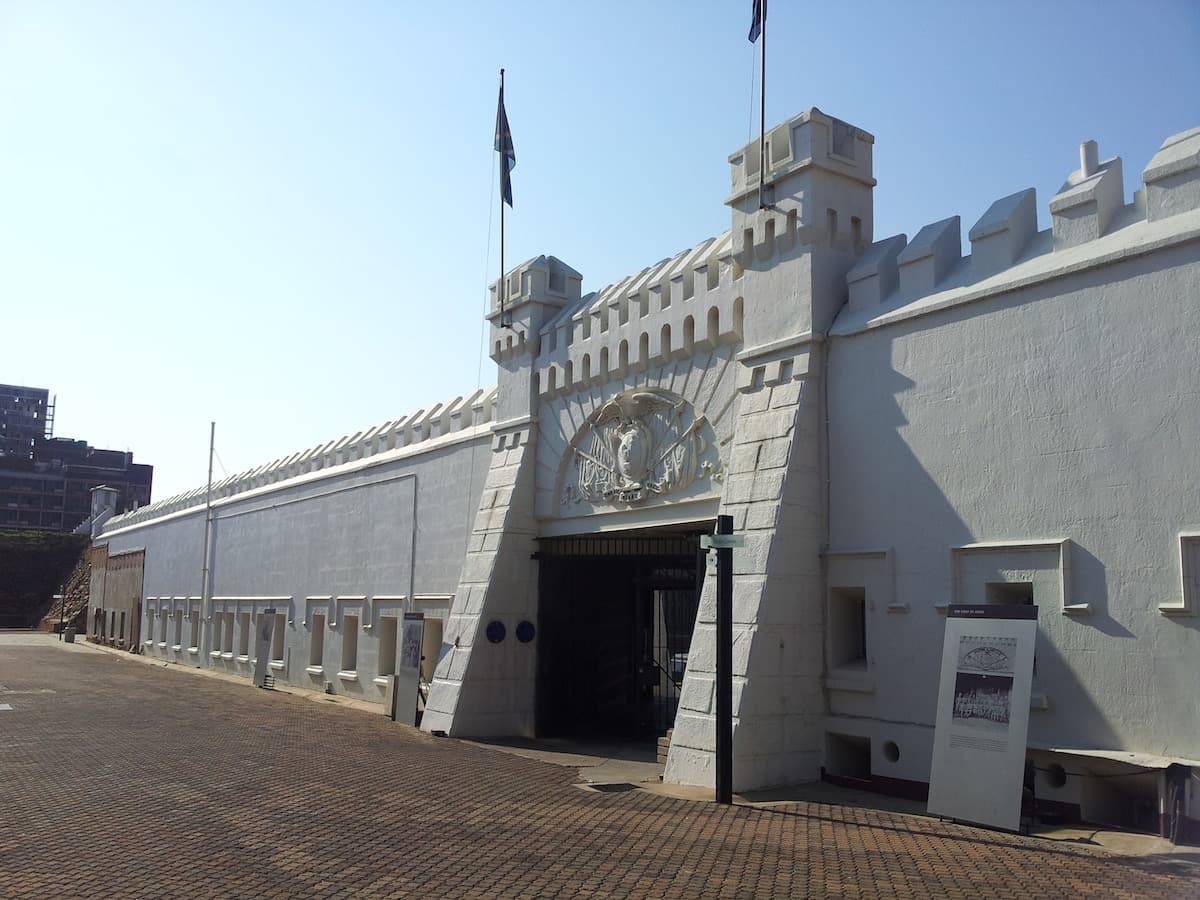
Number Four Prison at Constitution Hill in Johannesburg preserved the everyday machinery of racial injustice, cell by cell, jailing black men for a full century until it closed in 1983. Built in 1902, this cluster of communal cells and its longer-term neighbour, Number Five, held people the state deemed criminal, most of them for the offence of being black in the wrong place at the wrong time. Standing in front of it, the one thing to understand is that the suffering here was not exceptional or spectacular. It was routine, administered, and rationed. That is what makes it hard to look at, and why the site is worth your slow attention.
What Number Four actually was
The name is prosaic. Number Four was simply the section of the old Johannesburg prison complex reserved for black male prisoners, on the ridge that the Boer republic had already fortified in the 1890s. The white male prison was the Old Fort. Around it, over the decades, a segregated carceral geography grew: the Women's Jail on one side, Number Four and Number Five on the other. Within the black sections, Number Four held short-term prisoners and Number Five the longer-term inmates. The cells were communal rather than solitary, large rooms packed beyond capacity, and the record is blunt about the result. They were overcrowded and disease-ridden. Food was rationed by race, with African men given the smallest and least nutritious portions. Gangs, not warders, controlled the wards from the inside, which meant the official cruelty of the institution ran alongside an unofficial cruelty the institution tolerated.
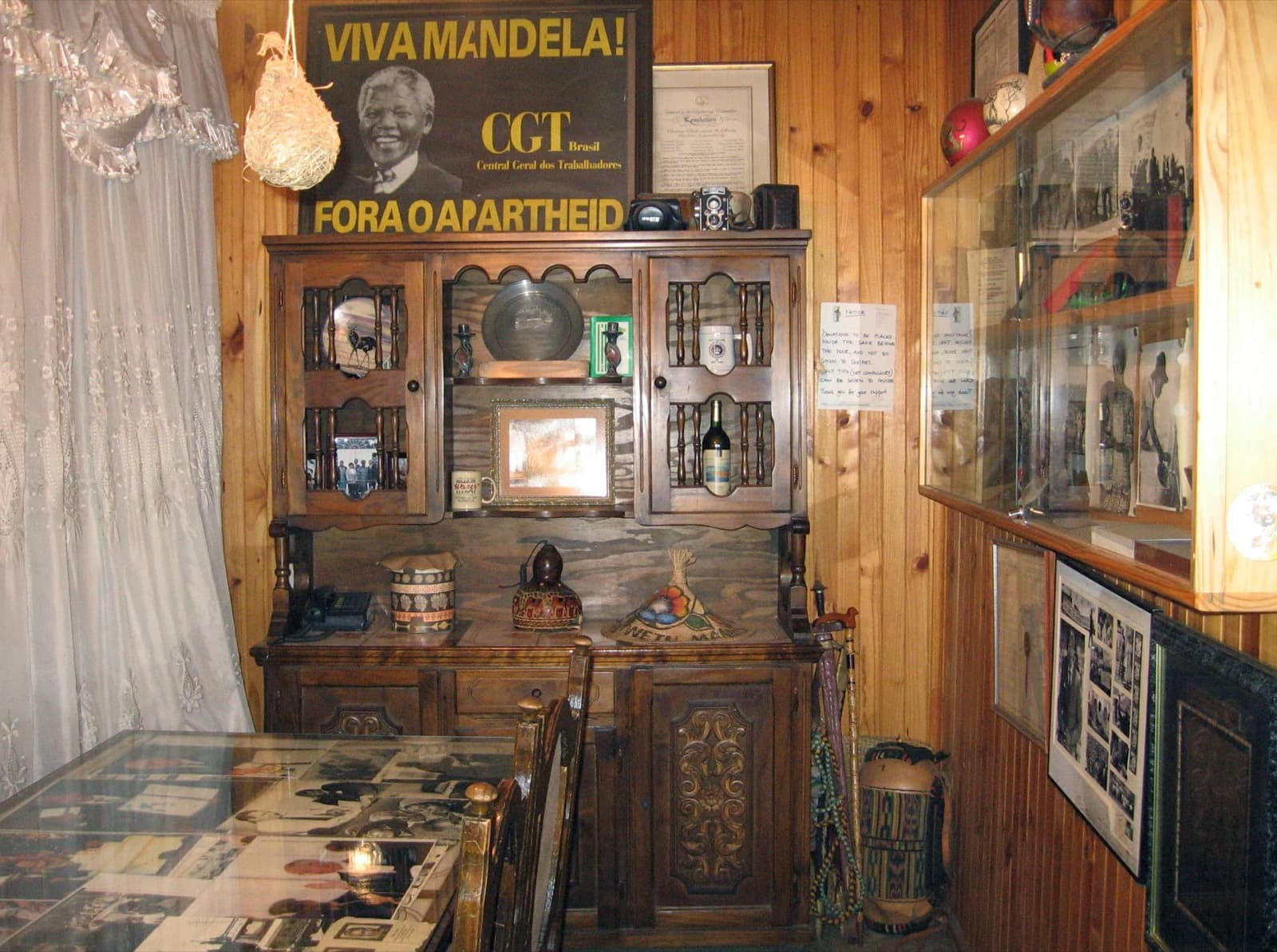
Then there was the Tausa. This was an inspection in which naked prisoners were forced to jump and clap so that warders could search their bodies. Constitution Hill preserves displays of it because it distils the whole logic of the place: the reduction of a person to a body to be searched, counted, and humiliated on command. When you walk the section today, the cell walls still carry graffiti scratched into the doors by the men held here, and the museum sets the testimony of former inmates alongside it. Read those walls slowly. They are the closest thing to the voices of people the system worked hard to render silent.
The men the pass laws swept in
Hear a stop from this walk
Braamfontein and the Nelson Mandela Bridge: Stitching the City Back Together
Number Four did not only hold those convicted of ordinary crimes. A great many of its prisoners were caught by apartheid's pass and permit laws, the bureaucratic net that criminalised movement itself. A black man without the correct document in the correct district could be arrested, and Number Four was where many of them landed. This is the detail that turns a prison into a political archive. The cells were full of people whose only offence was the ordinary act of living, working, or travelling without state permission.
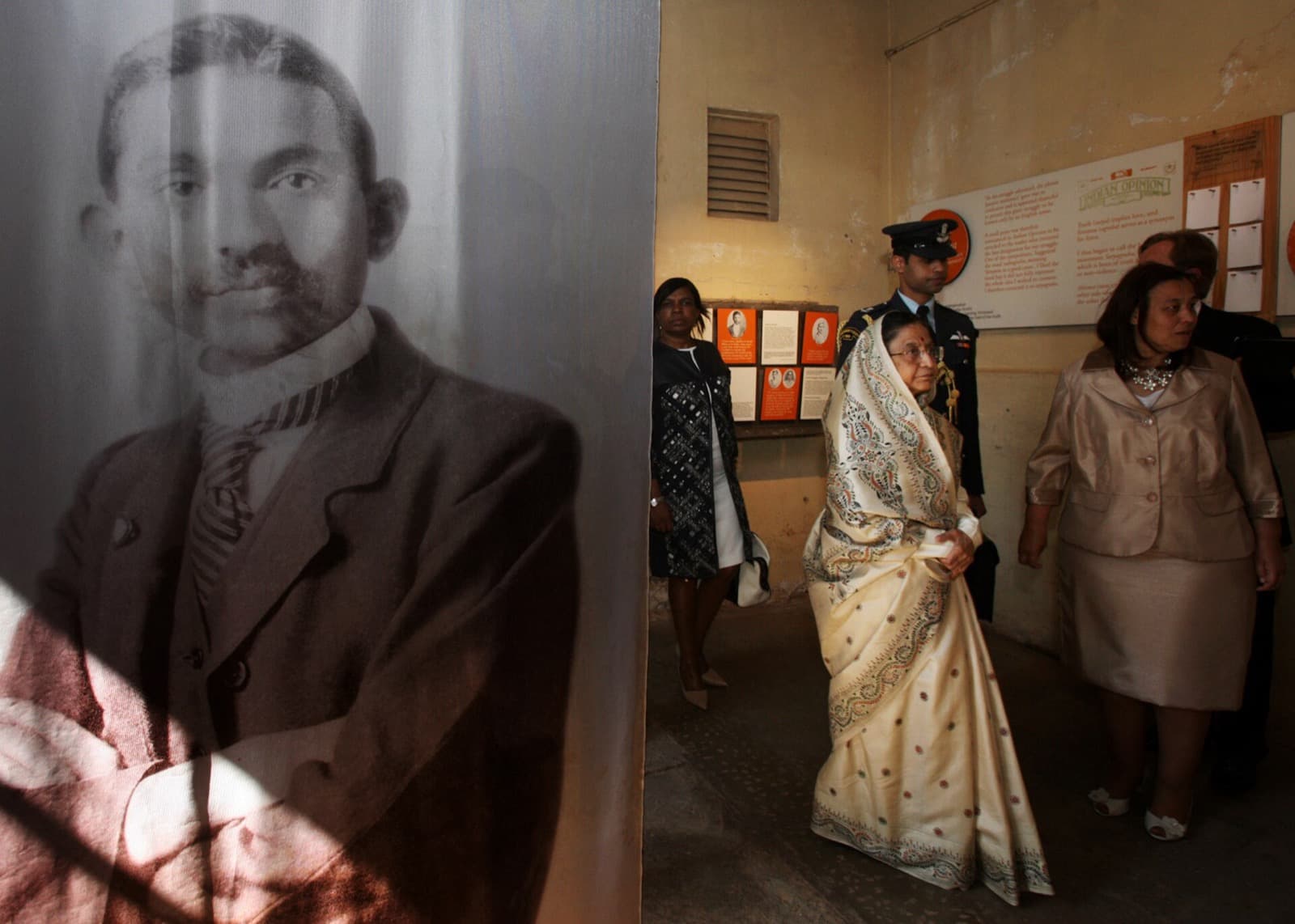
That net also caught figures who would shape the century. Mohandas Gandhi was imprisoned in this complex in January 1908 for defying the pass laws, sentenced to two months and released within nineteen days. His campaign of nonviolent resistance, satyagraha, had been launched at a mass meeting in Johannesburg on the eleventh of September, 1906, and the exhibition here on him is titled Gandhi: prisoner of conscience. Robert Sobukwe, founder of the Pan Africanist Congress, was held in the wider Old Fort and Number Four complex, as was Albert Luthuli, president of the African National Congress. To grasp the reach of this small cluster of cells, it helps to hold those three names together: a future philosopher of nonviolence who would help free India, and two leaders of the movements that would end apartheid, all passing through the same segregated prison on the same Johannesburg ridge.
A century, and then a deliberate reversal
Number Four ran as a prison for a hundred years. It opened in 1902, at the very start of the twentieth century, and it closed in 1983, near the end of apartheid's grip but before its formal collapse. That span matters. This was not a brief episode of cruelty that a later generation could dismiss as aberration. It was a durable institution, maintained across generations of warders and prisoners, a working part of the state for a century.
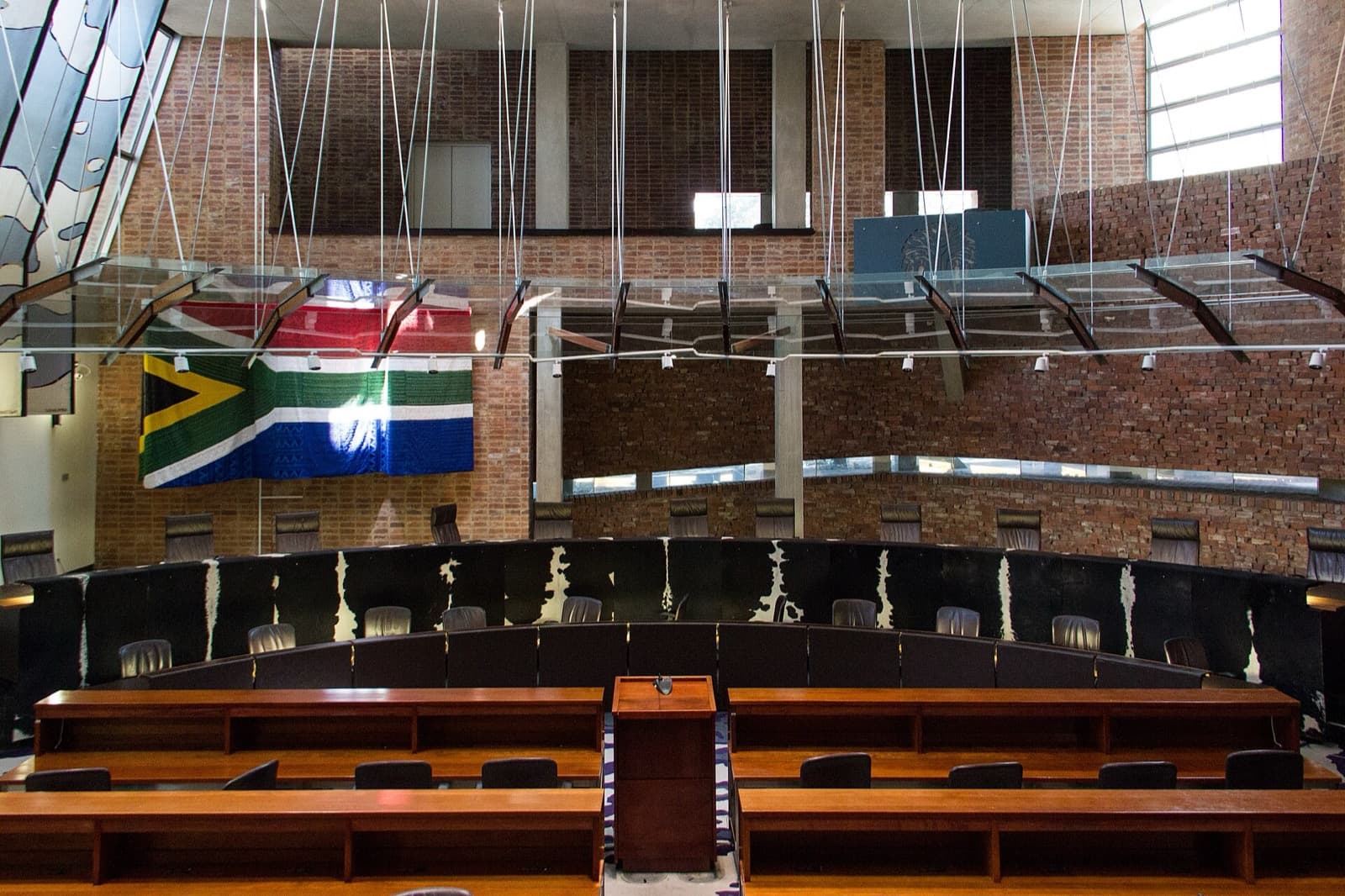
What happened next is the reason Constitution Hill exists as a precinct rather than a ruin. When democracy came, the country chose this ground, deliberately, to build its highest court. The Constitutional Court stands a short climb above Number Four, up the Great African Steps, and it was built partly from the bricks of a demolished prison block, the Awaiting Trial Block, reused in its foyer, in the wall behind the judges, and in those very steps. The bricks that walled in prisoners now build the room where the nation reads their rights. That reversal is only legible if you have stood in Number Four first. The court is meant to be reached from below, having seen what it answers.
Number Four is preserved today as part of Constitution Hill's human rights museum, and it asks a particular kind of visitor. This is a place to move through with quiet rather than spectacle. Give the cells the time they ask for, sit when you need to, and let the graffiti and the testimony do their slow work. The weight is real, and the site does not try to soften it.
Walk it in order
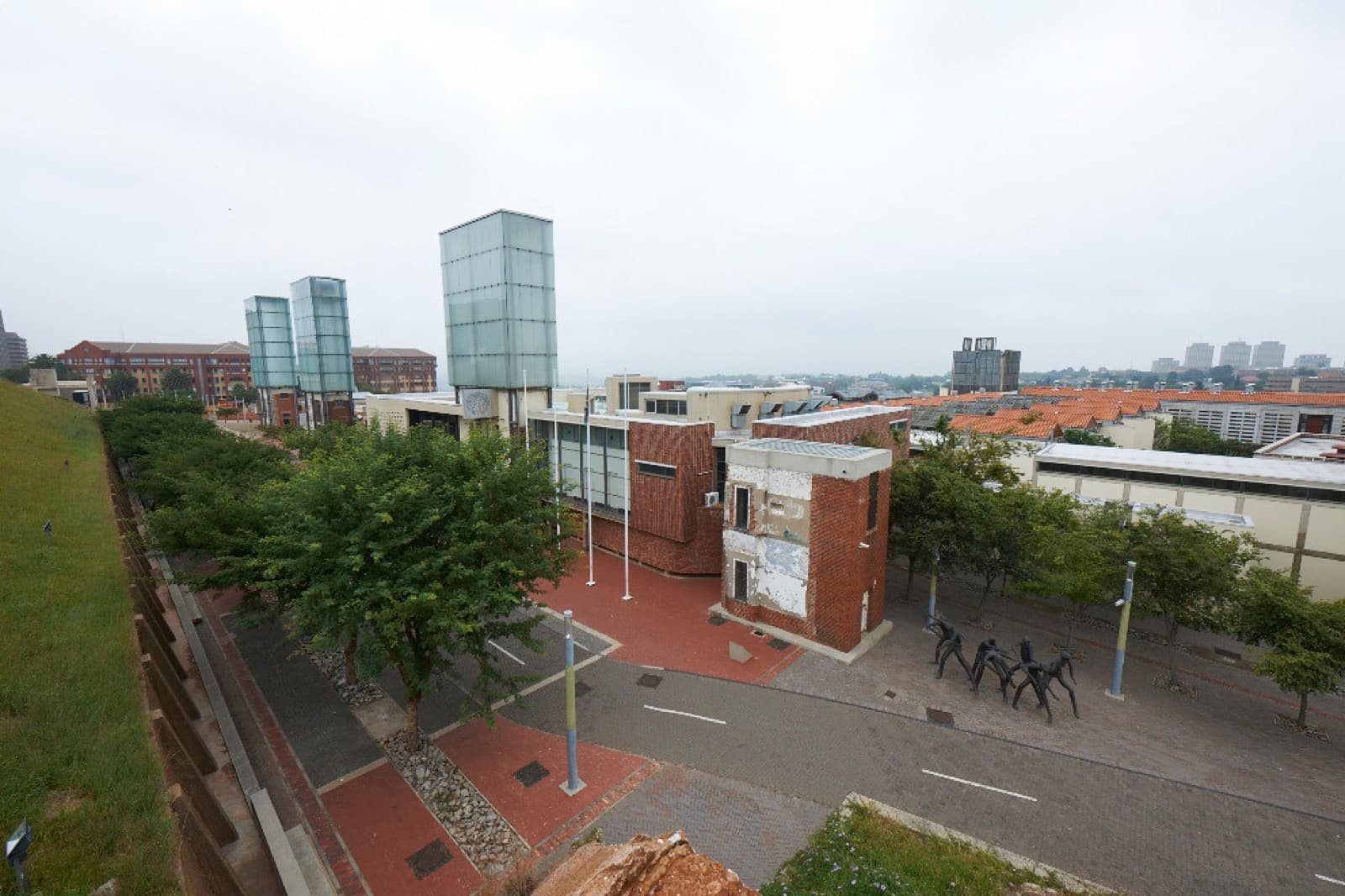
The single most useful thing to know is that Number Four is not a stop to see in isolation. Its meaning is completed by the court above it and the prisons around it. The most rewarding way to experience it is to walk the full ridge in sequence, from the Old Fort ramparts down through Number Four and the Women's Jail, then up the Great African Steps to the Constitutional Court, and finally out over the city that all of it overlooks.
Roamer's self-guided audio walk, Constitution Hill: From Prison to Constitution, takes you through Number Four and the five stops around it at your own pace, with no group at your shoulder and no schedule pushing you past a cell you want to sit with. You can find it, along with the rest of the city's routes, on the Johannesburg walking tours page, or start from the Johannesburg city page and build your day around the ridge. However you come to it, arrive at Number Four ready to read slowly. The walls were meant to be read.
Sources
- Constitution Hill, official site, Number Four page: primary account of the section's establishment in 1902 alongside Number Five, food rationed by racial group, the Tausa inspection, the graffiti scratched into cell doors, and the 1983 closure.
- Constitution Hill, official site, Awaiting Trial Block and Constitutional Court pages: the demolished block's bricks reused in the court foyer, the wall behind the judges, and the Great African Steps.
- South African History Online: Gandhi's arrest on 10 January 1908 for defying the pass laws, his two-month sentence and release within nineteen days, and the satyagraha campaign launched at a Johannesburg mass meeting on 11 September 1906.
- Constitution Hill, "Gandhi: prisoner of conscience" exhibition page, held in the old Number Four prison block.
Ready to experience it?
Constitution Hill: From Prison to Constitution
120 min · 3.4 km · easy
More from Johannesburg
Explore more at your own pace.
Johannesburg Travel Guide: How Many Days, Getting Around, Safety, and Cost
One Day in Johannesburg: A Walkable Morning-to-Evening Itinerary
From City of Gold to Freedom: How to Read Johannesburg in Two Places
The Constitutional Court in Johannesburg: A Prison Rebuilt as a Nation's Highest Law
The Hector Pieterson Memorial: The Turning Point in Soweto's Road to Freedom