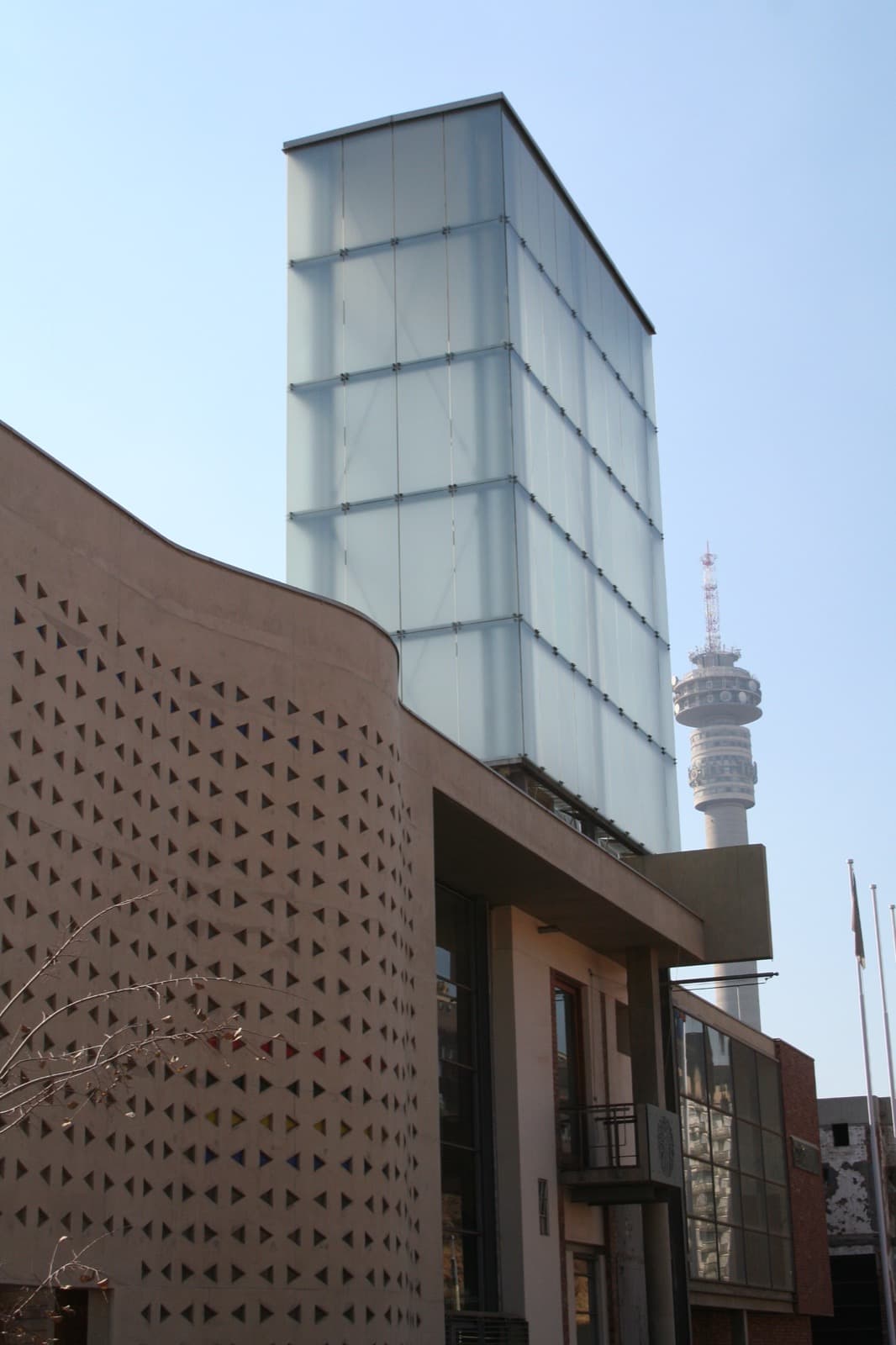
South Africa's highest court sits on the ruins of an apartheid prison, built from that prison's own bricks, so the room where rights are read stands on the ground of the worst injustice. That single turn, from cell block to courtroom, is the reason Constitution Hill in Johannesburg is worth walking slowly. The Constitutional Court is stop four of a six-stop route, and it is the hinge the whole ridge was arranged to make. To understand why it lands the way it does, you have to arrive at it the way its designers intended: after the prisons, climbing up out of them.
A hill that caged people before it judged them
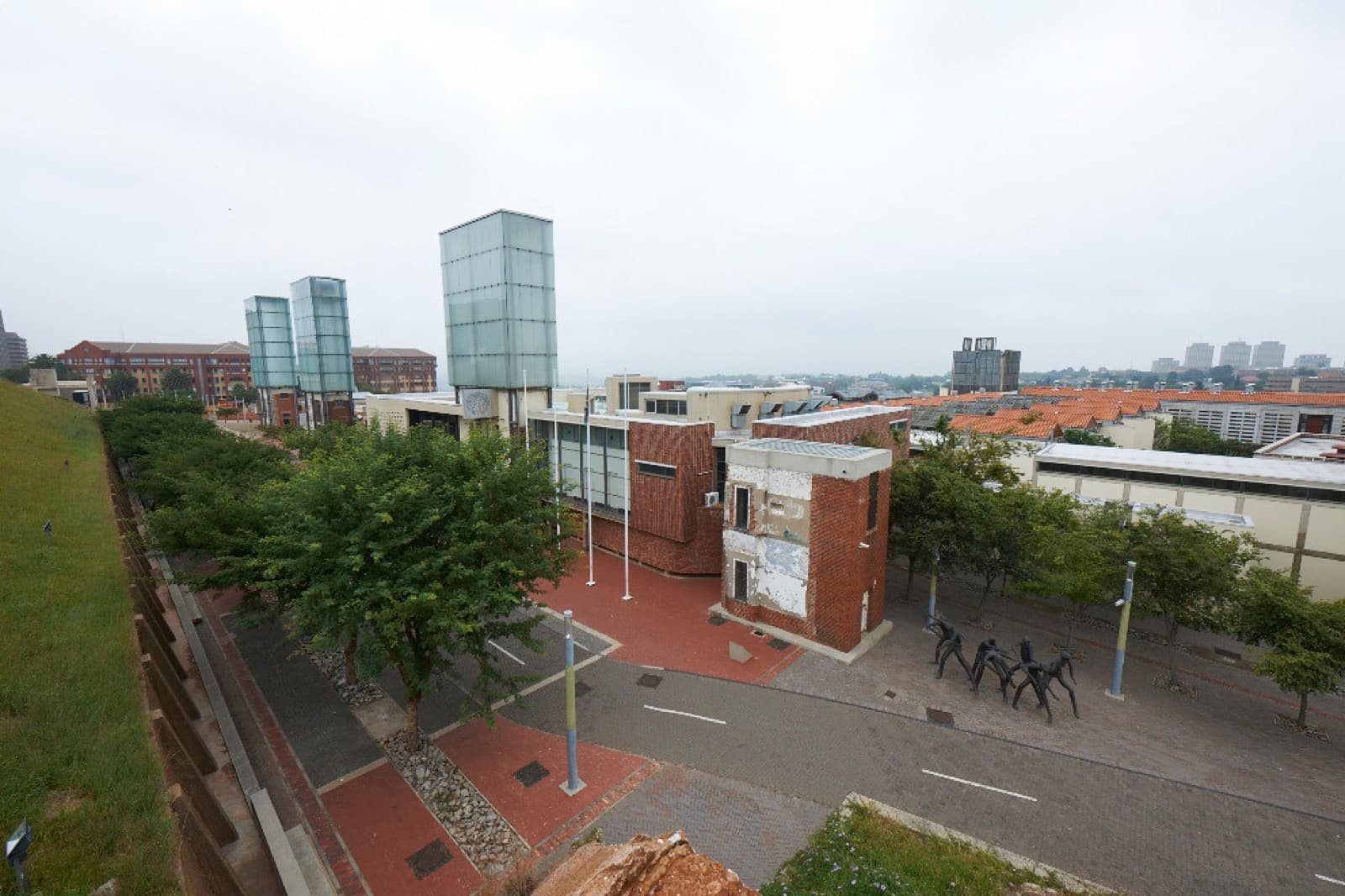
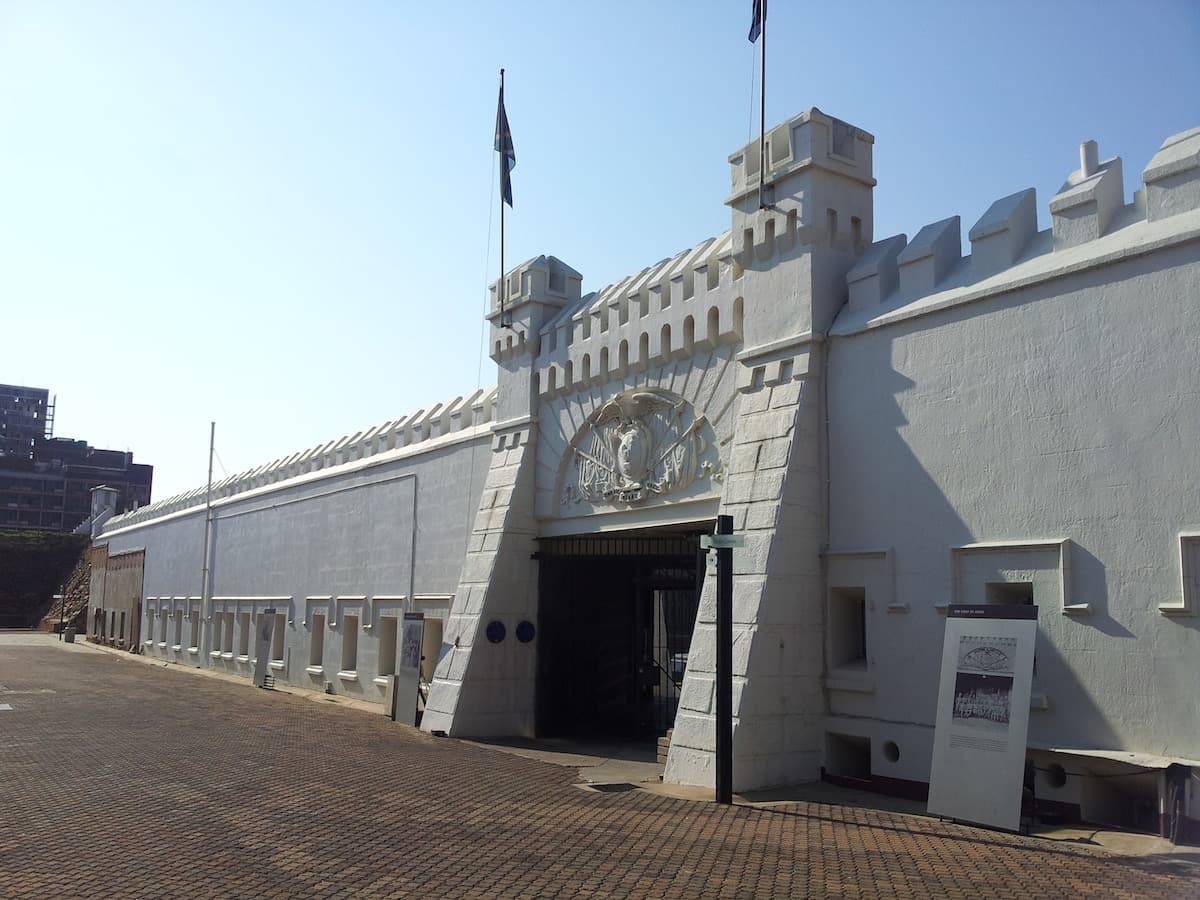
Constitution Hill is a ridge that a republic fortified and then filled with prisoners. The Old Fort began as Johannesburg's original prison in the early eighteen nineties, holding white male inmates. Between eighteen ninety-six and eighteen ninety-nine, President Paul Kruger's South African Republic raised earth ramparts around it, turning a jail into a fort against a feared British invasion after the failed Jameson Raid of eighteen ninety-six. The British captured it in nineteen hundred during the South African War. Nelson Mandela was held here twice, in nineteen fifty-six and again in nineteen sixty-two, and the fort's own account calls him its only black prisoner.
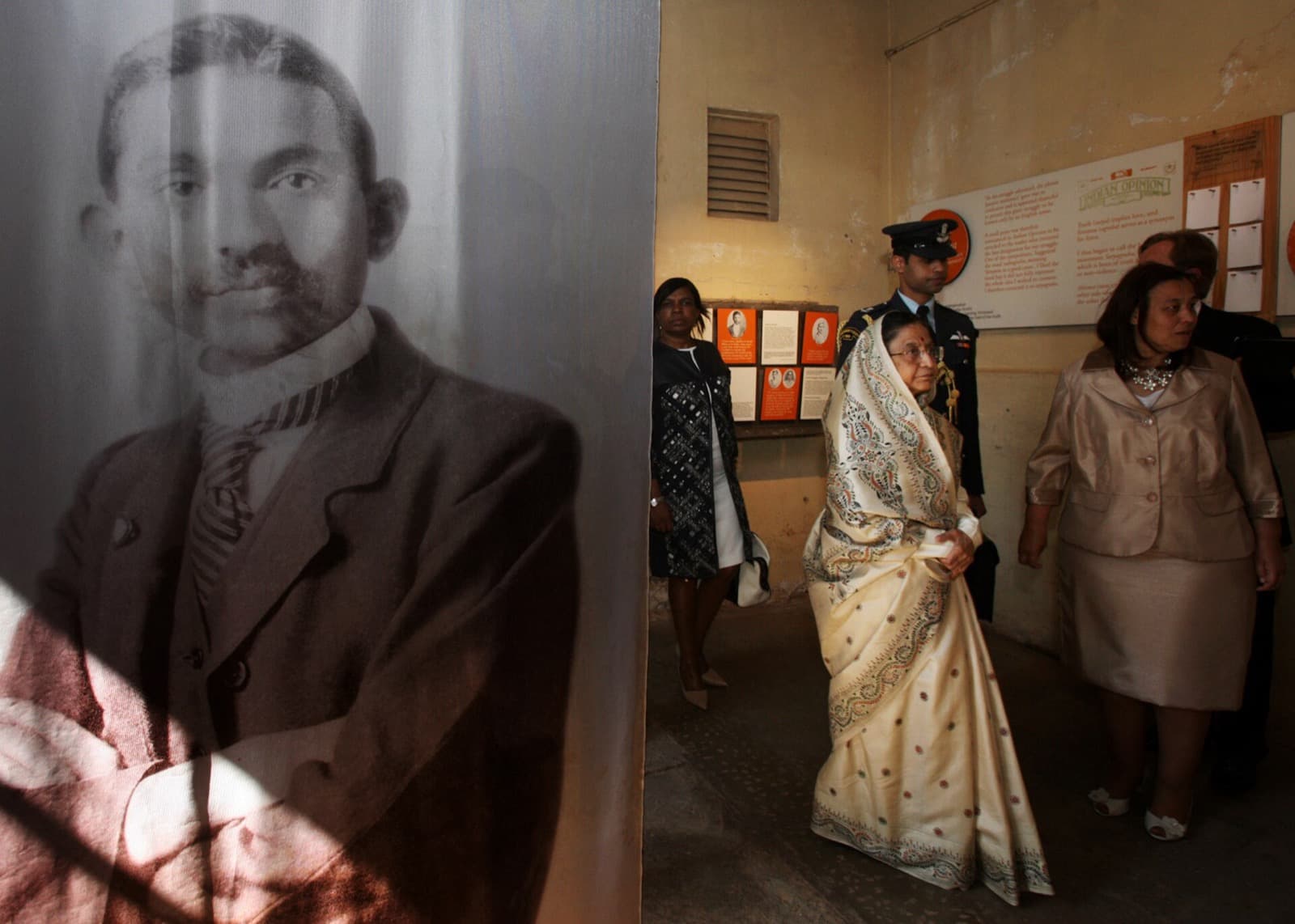
Below the ramparts sits Number Four, the section built in nineteen hundred and two for black male prisoners. What happened there was the everyday machinery of racial injustice, recorded cell by cell: overcrowded communal cells, food rationed by race, gang-controlled wards, and the Tausa, a degrading inspection in which naked prisoners were forced to jump and clap. It ran for more than eighty years before closing in nineteen eighty-three. Mohandas Gandhi was imprisoned in this complex in January of nineteen hundred and eight for defying the pass laws, released within nineteen days of a two-month sentence. His campaign of nonviolent resistance, satyagraha, had launched at a Johannesburg mass meeting on the eleventh of September, nineteen hundred and six. Pan Africanist Congress founder Robert Sobukwe and African National Congress president Albert Luthuli were held here too.
Across the precinct stands the Women's Jail, an elegant red-brick building of nineteen hundred and nine with a handsome central atrium that concealed a hard place. It was racially segregated, mixed common-law prisoners with political detainees, and provided no sanitary supplies until after nineteen seventy-six. Winnie Madikizela-Mandela, Albertina Sisulu, Fatima Meer, and Barbara Hogan were held here. Around two thousand women arrested in the pass-law protests of nineteen fifty-eight passed through this site, and after the State of Emergency of nineteen sixty many were detained without trial, some with their infants. Fatima Meer secretly painted the conditions inside, and those paintings hang at Constitution Hill today.
The turn: a court built from the prison's own bricks
Hear a stop from this walk
Braamfontein and the Nelson Mandela Bridge: Stitching the City Back Together
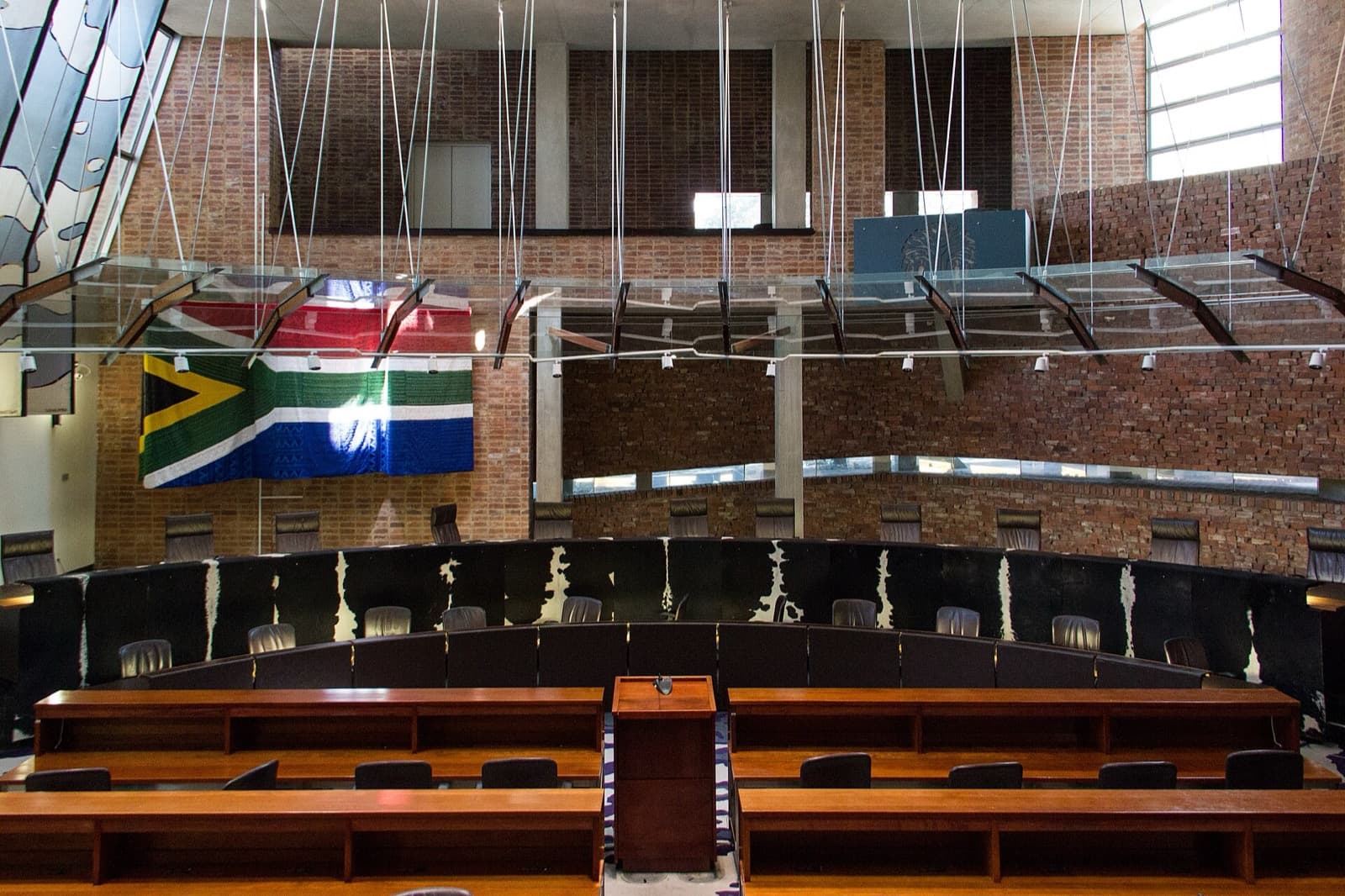
Up the Great African Steps from Number Four, the ground changes its meaning. The Constitutional Court of South Africa stands on the site of a demolished prison block, the Awaiting Trial Block, and was built deliberately from that block's own bricks. By the court's own account, those recycled bricks form a wall of the foyer, a wall of the chamber directly behind the judges' chairs, and the very steps you climb to reach it. The bricks that walled in prisoners now build the room where their rights are read. This is not a metaphor added afterward. It is the physical material of the building.
The design was chosen from a competition that drew five hundred and eighty applications and one hundred and eighty-five formal entries, decided in nineteen ninety-eight and won by two South African firms, Urban Solutions and OMM Design Workshop. The court first sat in February of two thousand and four and was formally inaugurated on the twenty-first of March that year, Human Rights Day, ten years into democracy. The whole building is premised on lekgotla, the traditional African practice of doing justice beneath a tree. In the foyer, slanting columns read as tree trunks with leaf forms above, and light falls dappled across the floor, which is why late morning to early afternoon is the moment to stand in it.
Look closely at the tall timber entrance doors. The twenty-seven rights of the Bill of Rights are carved there in eleven of South Africa's official languages plus sign language, with braille on the handles. Behind the judges, a narrow band of windows lets those inside see only the feet of people passing on the pavement outside, a built reminder that judges serve the people, not themselves. Every detail argues the same case the bricks make: this is a court that never lets itself forget what it was raised from.
What the walk asks of you
The reason to do this as a self-guided walk is that the sites demand time the way a group tour cannot give. The cell graffiti in Number Four, the testimony of former inmates, Fatima Meer's paintings, the carved doors of the court: these reward slow reading with no schedule pushing you along. You buy one precinct ticket in rand at the entrance, and it covers the Old Fort, Number Four, the Women's Jail, and the walk up to the court, so you move through all of them on your own clock.
The route runs about three and a half kilometres, most of it a compact circuit within the precinct. After the court, return to the Old Fort ramparts for the city view, where the towers of Hillbrow and the districts below read as one gaze, then walk downhill by daylight into Braamfontein. There the walk ends at the Nelson Mandela Bridge, a cable-stayed span opened by Mandela himself on the twentieth of July, two thousand and three, crossing about forty-two railway lines that once helped divide the city, lit in rainbow colours at night since twenty ten. It closes the argument: a divided city stitched back together, the bridge named for the man whose imprisonment began, in part, on the hill above it.
These are sites of real suffering, so give yourself permission to sit quietly and take breaks. If you are planning your day, this tour pairs naturally with the wider set of Johannesburg walking tours, and you can browse everything on offer in Johannesburg before you go. Walk it at your own pace, and take the full meaning of the ground with you.
Sources
- Constitution Hill official site, "The story of the Constitutional Court" and "The Awaiting Trial Block" pages. Primary source for the recycled bricks in the foyer, chamber, and Great African Steps, and the five hundred and eighty applications that produced one hundred and eighty-five formal entries.
- Constitutional Court of South Africa, Wikipedia. Corroborates the twenty-seven rights carved into the doors, the February two thousand and four first sitting, the twenty-first of March inauguration on Human Rights Day, and the windows behind the judges.
- Constitution Hill official site, "Number Four" and "The Women's Jail" pages. Prison conditions, the Tausa, the nineteen-oh-two-to-nineteen-eighty-three run of Number Four, and the named political prisoners held on the precinct.
- Nelson Mandela Bridge, South African History Online. The twentieth of July, two thousand and three opening by Nelson Mandela, the forty-two railway lines, the Dissing and Weitling design, and the rainbow lighting since twenty ten.
- Constitution Hill, Johannesburg, Wikipedia. Overview of the precinct's shift from prison to court and its UNESCO recognition among Nelson Mandela legacy sites.
Ready to experience it?
Constitution Hill: From Prison to Constitution
120 min · 3.4 km · easy
More from Johannesburg
Explore more at your own pace.
Johannesburg Travel Guide: How Many Days, Getting Around, Safety, and Cost
One Day in Johannesburg: A Walkable Morning-to-Evening Itinerary
From City of Gold to Freedom: How to Read Johannesburg in Two Places
The Hector Pieterson Memorial: The Turning Point in Soweto's Road to Freedom
Mandela House on Vilakazi Street: The Matchbox That Raised a President