Constitution Hill: From Prison to Constitution
120 min · 3.4 km · easy
One day in Johannesburg works best as two contrasting walks: a morning on Constitution Hill, where a prison became the country's highest court, and an afternoon in Soweto, where a street, a small house, and an open square carry the story of how apartheid ended. You can pair a compact ridge-top circuit near the city center with a longer, partly-driven loop through the township, and finish before dark. Both routes are covered as self-guided audio walks in the Roamer app, so you set the pace, linger where you want, and skip what you don't. Below is a realistic morning-to-evening plan, with opening hours and ticket needs checked against current sources.
The short version
Start at Constitution Hill when the gates open at 9am, and give the precinct about two hours on foot. It is a compact circuit: the Old Fort ramparts, the Number Four prison, the Women's Jail, and the Constitutional Court, all within one walled site, plus a short downhill walk into Braamfontein and across the Nelson Mandela Bridge. Break for lunch in Braamfontein or back near your base. In the early afternoon, move to Soweto (roughly 30 to 40 minutes by car from the inner city). Walk the Orlando West cluster first: Vilakazi Street, Mandela House, and the Hector Pieterson Memorial and Museum are close enough to do on foot. Then drive the longer legs to the Orlando Towers, Regina Mundi church, and Walter Sisulu Square in Kliptown. Aim to finish the Soweto loop in daylight.
This is a full but doable day. If you would rather not rush, split it: Constitution Hill and Braamfontein one day, Soweto the next. For the full self-guided route with GPS-triggered audio at each stop, see Johannesburg walking tours and the city page at /south-africa/johannesburg.
Morning: Constitution Hill (about 2 hours on foot)
Hear a stop from this walk
Braamfontein and the Nelson Mandela Bridge: Stitching the City Back Together
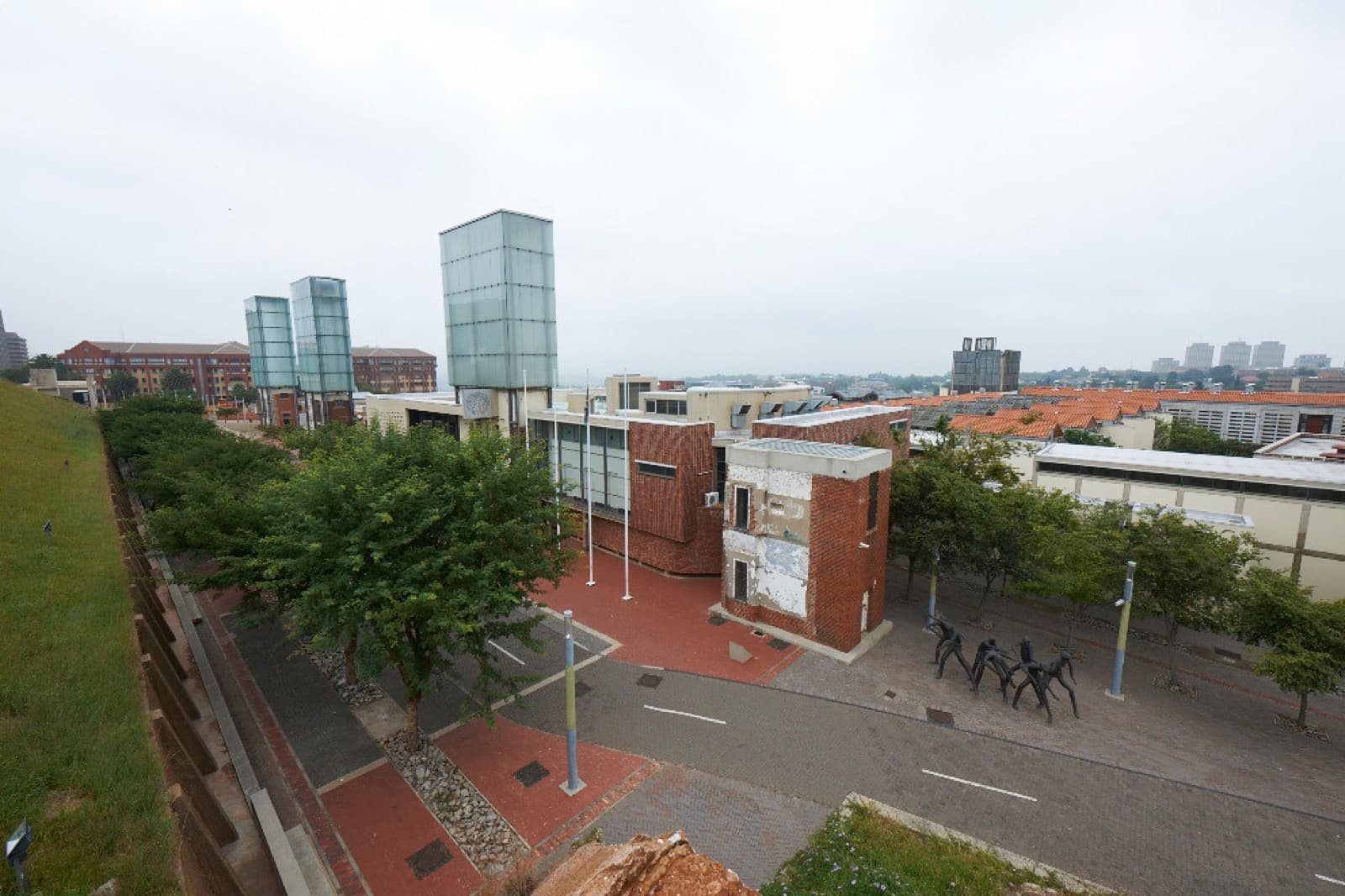
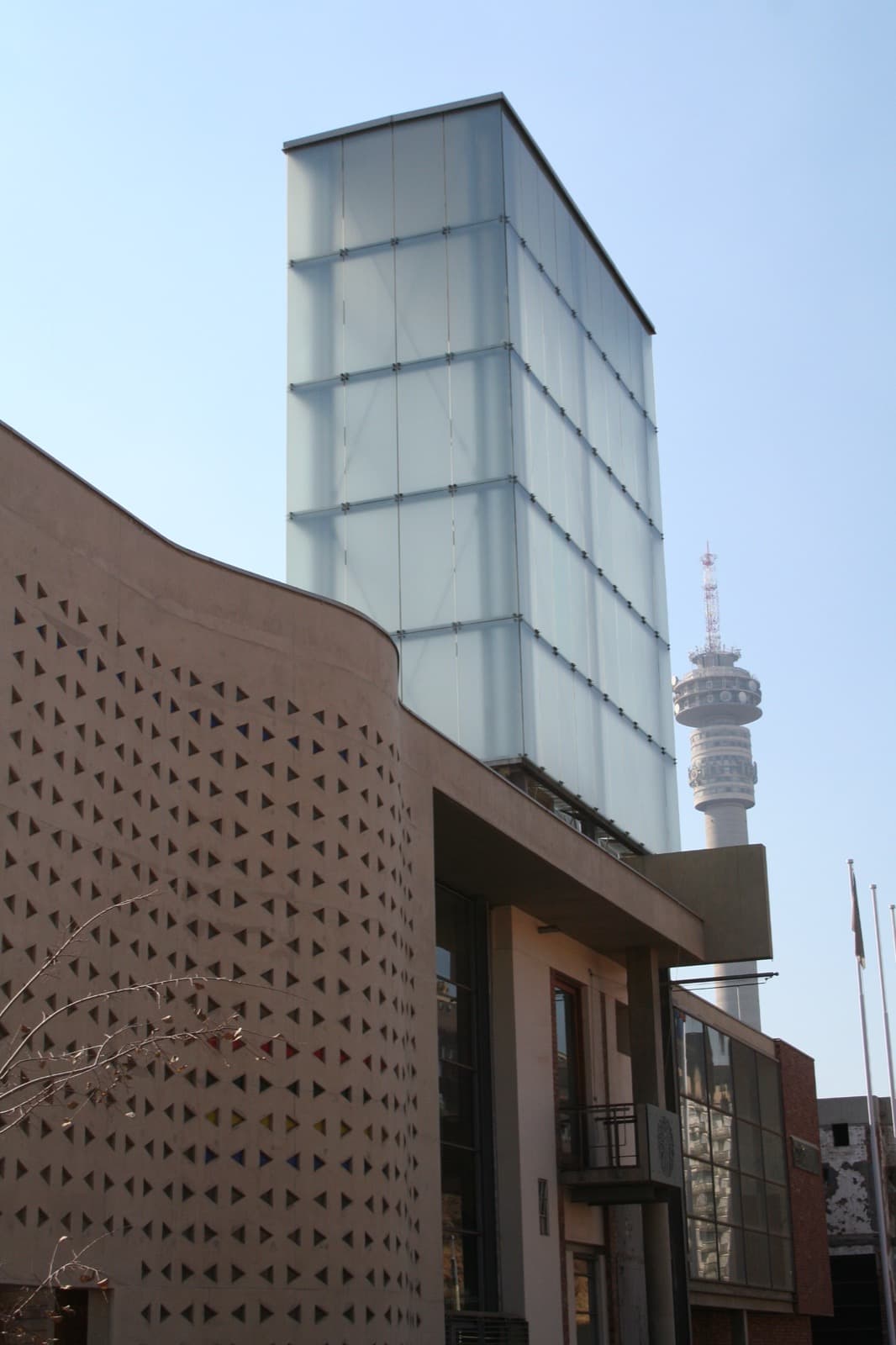
Open at 9am, Constitution Hill sits on a ridge just north of the Johannesburg CBD, on the edge of Braamfontein. The Roamer self-guided tour reads the site as one turn of history: a republic fortified a prison here in the 1890s, and when democracy came, the country built its highest court on the ruins of a prison block, using the block's own bricks.
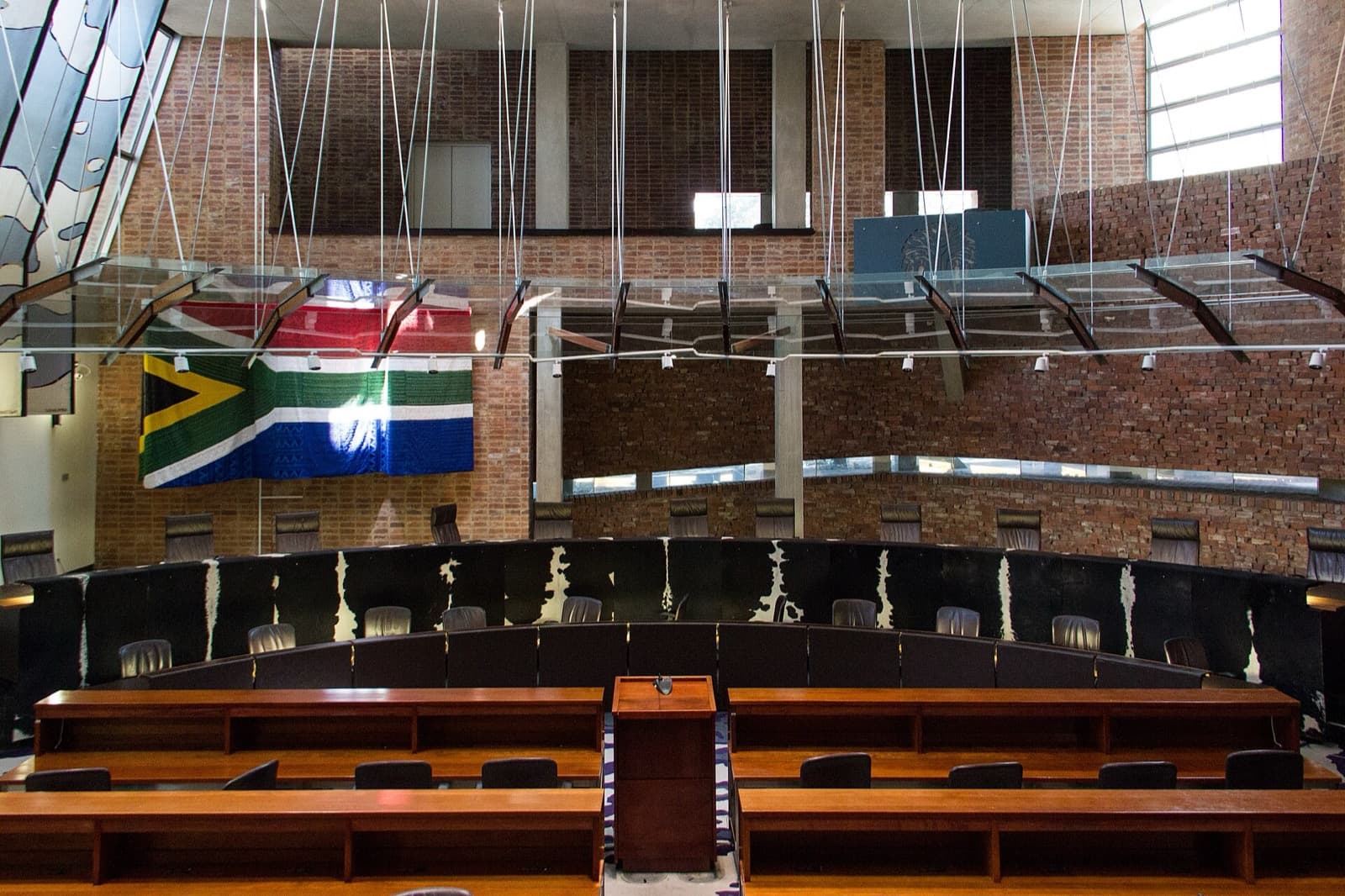
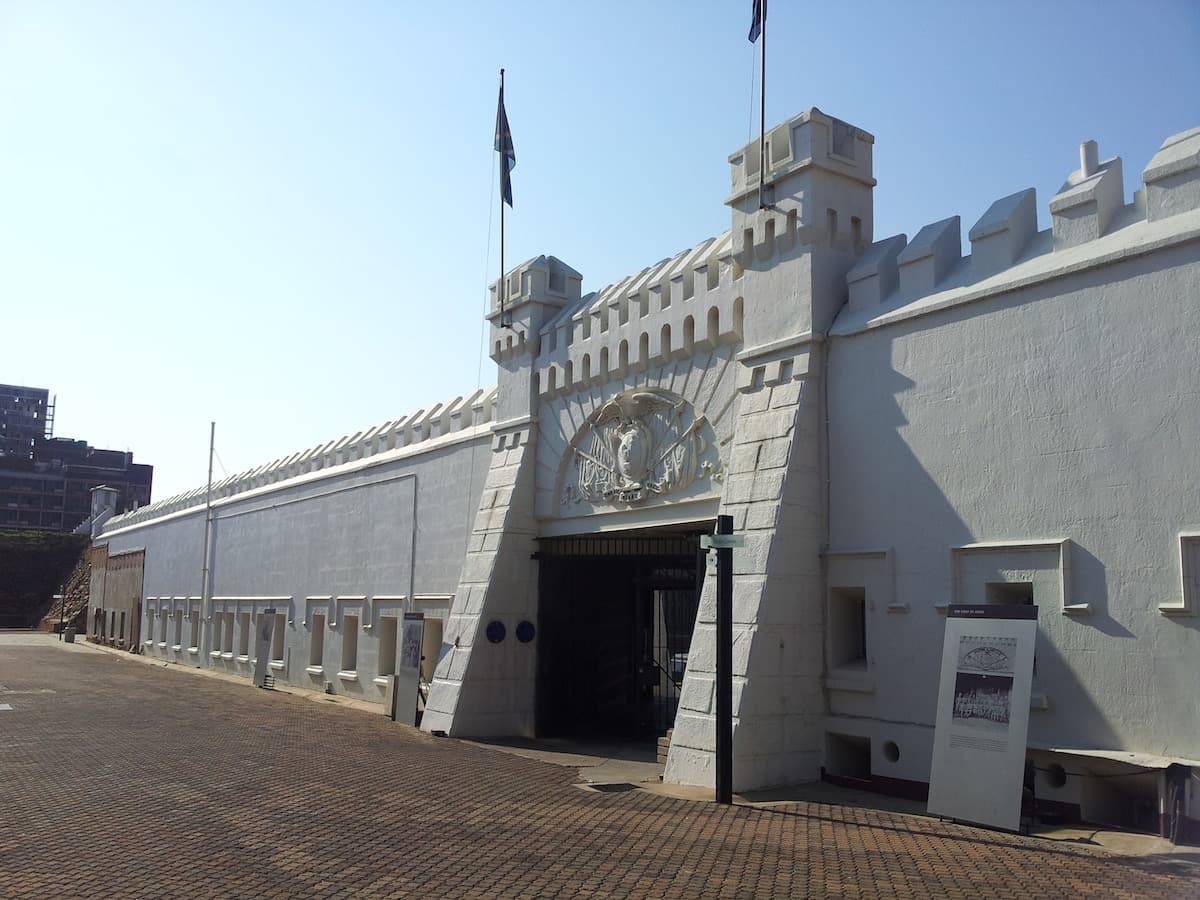
The walking is easy and almost entirely within the precinct. You cross the grass-covered earth ramparts of the Old Fort, then Number Four (the section that held black male prisoners, built in 1902), the elegant red-brick Women's Jail (1909), and the Constitutional Court itself, reached up the Great African Steps. The court's foyer and chamber walls, and those steps, were built from bricks salvaged from the demolished Awaiting Trial Block, per the Constitutional Court's own account. From the ramparts you look east to the Hillbrow Tower, completed in 1971 and reaching 269 metres to its antenna tip, and the cylindrical Ponte City nearby.
Logistics to plan around: the Visitor Centre opens at 08:45, the site closes at 17:00, and no tickets are sold after 16:00. As of 2026 the official self-led options are a one-hour Highlights ticket (about R150 for adults) or a two-hour Full Tour (about R200). Children under seven enter free, and there is a small online-booking discount. The precinct is free to enter on several national public holidays, including Youth Day on 16 June, Freedom Day on 27 April, and Heritage Day on 24 September. It closes on 25 and 26 December and 1 January, with early closing on 24 and 31 December. The precinct has visible security and cameras throughout.
Midday: Braamfontein and the Nelson Mandela Bridge
The tour ends with a short downhill walk into Braamfontein, a university and civic quarter regenerated into a scene of students, galleries, and weekend markets. It is a good, walkable place for lunch and a coffee before you head to Soweto. From here the cable-stayed Nelson Mandela Bridge crosses the railway yards toward Newtown, with a pedestrian walkway. Keep your valuables sensible and do this stretch in daylight, as you would in any large city center.
Afternoon: Soweto, Orlando West first (walkable cluster)
Soweto lies southwest of the city, roughly 30 to 40 minutes by car. The simplest way there is Uber or Bolt, which are the default for getting around Johannesburg. The Gautrain does not yet reach Soweto, and the Rea Vaya bus rapid transit does connect the township to the inner city if you prefer public transport. Local advice is to skip the minibus taxis as a visitor.
Begin in Orlando West, where the first three stops form a short walkable cluster. Vilakazi Street is widely described as the only street in the world once home to two Nobel Peace Prize laureates: Nelson Mandela, who received the prize in 1993, and Archbishop Desmond Tutu, who received it in 1984. It is a busy tourist street by day, with car guards and a visible presence, and it is the place to walk slowly, eat, and get your bearings.
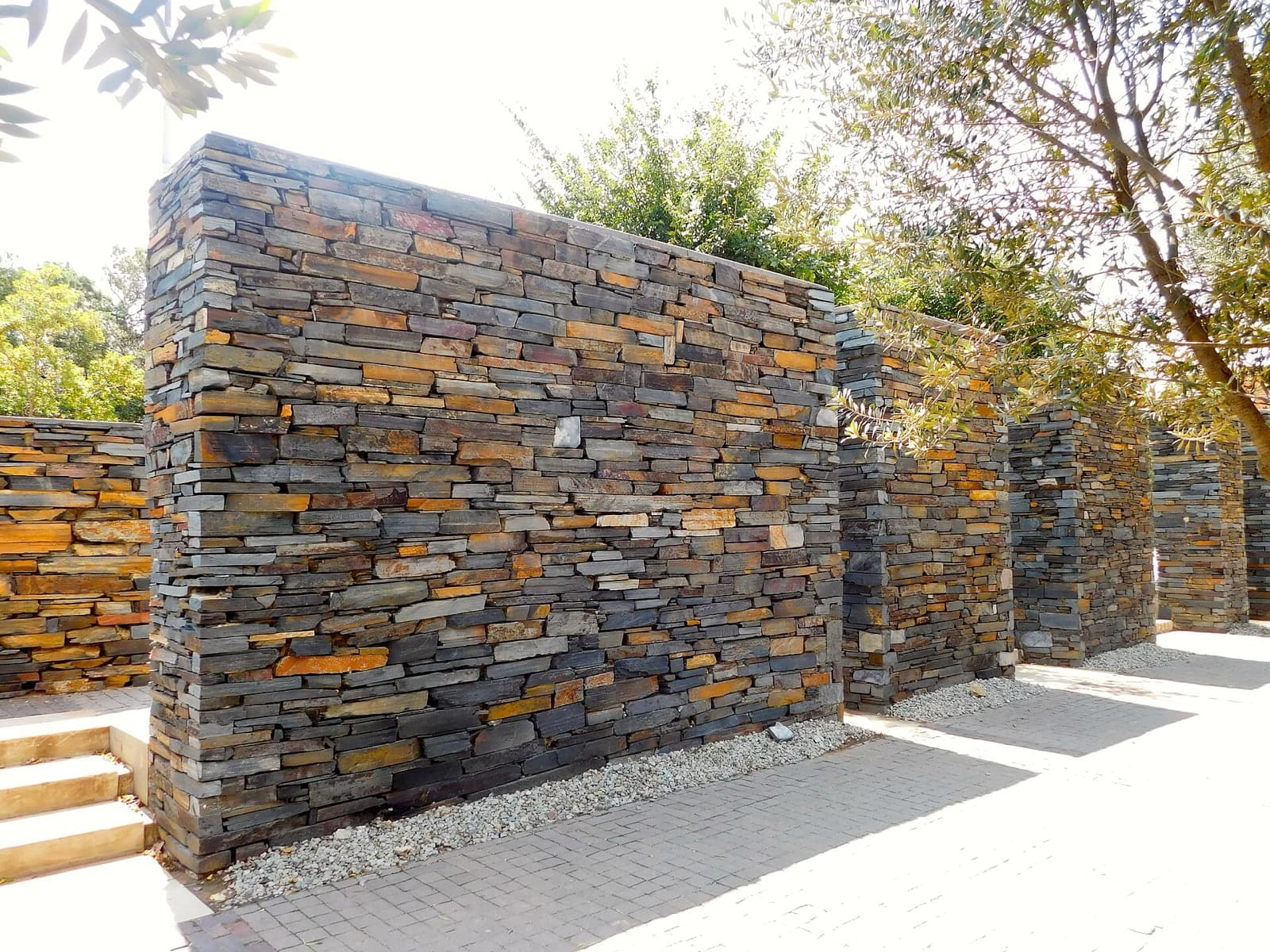
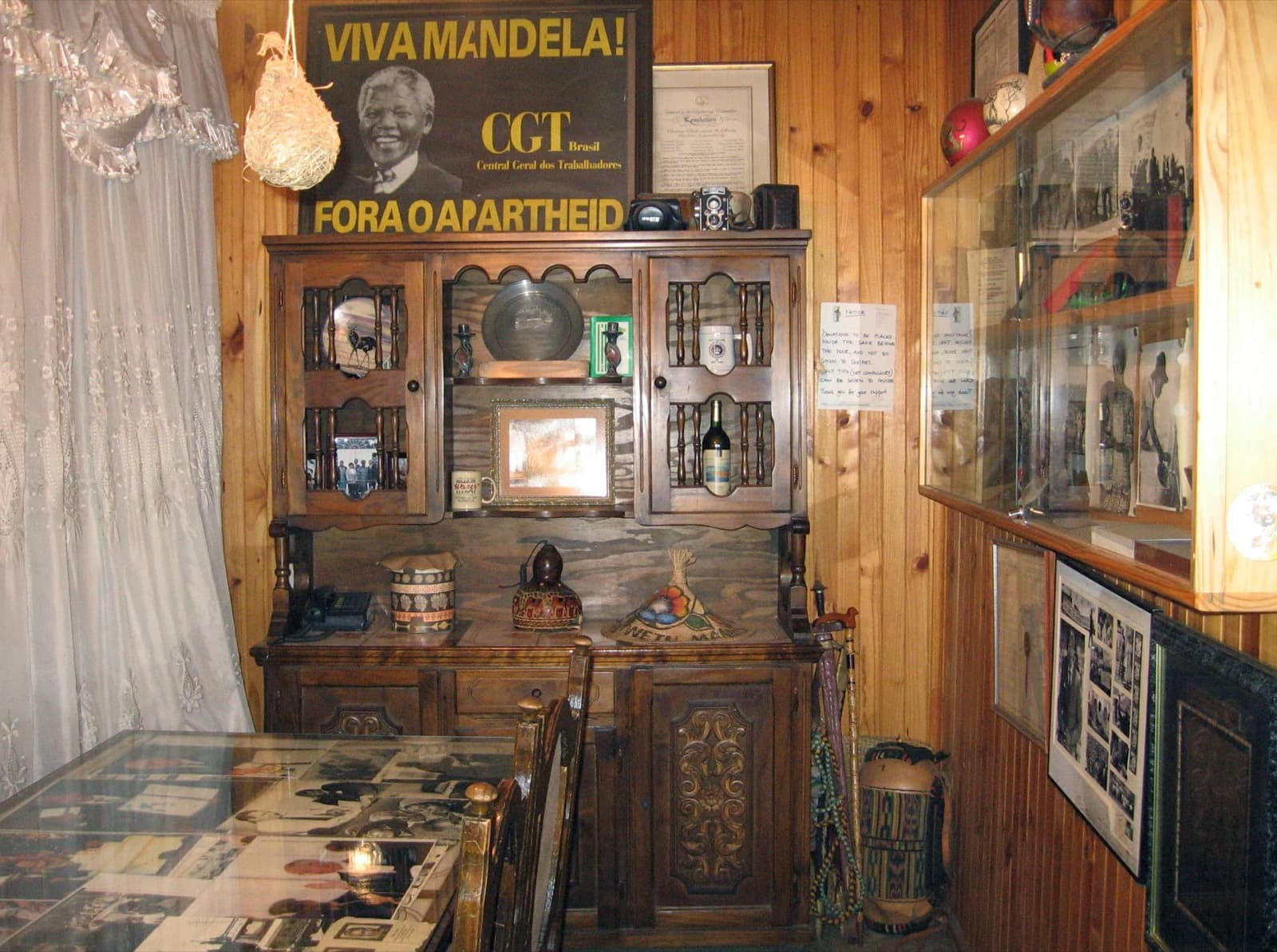
A short walk brings you to Mandela House at 8115 Vilakazi Street, the small matchbox house where Mandela lived from 1946 to 1962. The museum is open daily from 09:00 to 17:00, closed only on Good Friday and Christmas Day, and it went cashless in December 2025, so bring a card. About a hundred metres uphill stands the Hector Pieterson Memorial and Museum, the moral center of the day. On 16 June 1976, Soweto's schoolchildren marched against being taught in Afrikaans, and police opened fire; Hector Pieterson, twelve years old, was among the first killed, in the photograph Sam Nzima made famous. The museum opens Tuesday to Saturday, 10:00 to 17:00, and Sunday until 16:30, and it is closed on Mondays, so plan your day accordingly.
Late afternoon: the longer Soweto legs (by car)
The remaining stops are spread across the township, so treat them as short drives rather than walks. This is where the Roamer Soweto route deliberately switches to a mixed walk-and-drive mode, so the audio picks up again at each site. The brightly painted Orlando Towers, the cooling towers of the old Orlando Power Station, are free to view from the ground (the bungee and other activities are priced separately). Regina Mundi in the Moroka area is the largest Roman Catholic church in South Africa, seating about two thousand, open daily from 09:00 to 17:00; during apartheid it became known as the people's church because its doors stayed open when meetings were banned.
End in Kliptown at Walter Sisulu Square of Dedication, an open-air heritage precinct that is free to enter. This marks where, on 26 June 1955, the Congress of the People adopted the Freedom Charter, declaring that South Africa belongs to all who live in it. It is the natural close to the day: the ideas set down on that dusty square in 1955 run straight to the courtroom you walked through in the morning. Time the Soweto loop to finish in daylight, then head back into the city for dinner.
How to make it one clean day
If you want the whole arc without a car of your own, book a driver or use ride-hailing for the Soweto legs and keep Constitution Hill and Braamfontein on foot. Download the two self-guided routes before you go so the audio plays at each GPS stop without hunting for signal. The full walking-tour set, with maps and stop-by-stop narration, is at Johannesburg walking tours, and you can start either route from /south-africa/johannesburg.
Sources
Frequently asked questions
- What are Constitution Hill's opening hours and ticket prices in 2026?
- Constitution Hill is open 9am to 5pm daily, with the Visitor Centre opening at 08:45 and no tickets sold after 16:00. As of 2026 the official self-led options are a one-hour Highlights ticket at about R150 for adults or a two-hour Full Tour at about R200, with children under seven free and a small online-booking discount. It closes on 25 and 26 December and 1 January, and entry is free on several national public holidays.
- How do you get from Johannesburg to Soweto?
- Uber and Bolt are the default and simplest way, taking roughly 30 to 40 minutes by car from the inner city. The Gautrain does not currently serve Soweto, though the Rea Vaya bus rapid transit connects the township to central Johannesburg. Local advice is for visitors to avoid the minibus taxis.
- Can you visit Constitution Hill and Soweto in one day?
- Yes, but it is a full day. Spend about two hours on foot at Constitution Hill in the morning, break for lunch in Braamfontein, then move to Soweto for the early afternoon, walking the Orlando West cluster and driving the longer legs to Kliptown. Aim to finish the Soweto loop in daylight. If you prefer a slower pace, split it across two days.
- Is it safe to walk in Soweto and central Johannesburg?
- Vilakazi Street and the Orlando West cluster are generally safe by day, with car guards and a visible presence, and Constitution Hill has security and cameras throughout its precinct. Keep your valuables sensible, stay in busy areas, and do city-center stretches like the Nelson Mandela Bridge in daylight. For the spread-out Soweto stops, use a car or ride-hailing rather than walking between them.
- What are the opening hours for Mandela House and the Hector Pieterson Museum?
- Mandela House at 8115 Vilakazi Street is open daily from 09:00 to 17:00, closed only on Good Friday and Christmas Day, and it has been cashless since December 2025, so bring a card. The Hector Pieterson Memorial and Museum opens Tuesday to Saturday from 10:00 to 17:00 and Sunday until 16:30, and it is closed on Mondays.
- Why does the Soweto tour switch between walking and driving?
- The first three stops in Orlando West (Vilakazi Street, Mandela House, and the Hector Pieterson Memorial) form a short walkable cluster. The remaining sites, the Orlando Towers, Regina Mundi, and Walter Sisulu Square in Kliptown, are spread across the township, so they are best reached by short drives. The Roamer self-guided route uses a mixed walk-and-drive mode and resumes the audio at each site.
Ready to experience it?
Constitution Hill: From Prison to Constitution
120 min · 3.4 km · easy
More from Johannesburg
Explore more at your own pace.
Johannesburg Travel Guide: How Many Days, Getting Around, Safety, and Cost
From City of Gold to Freedom: How to Read Johannesburg in Two Places
The Constitutional Court in Johannesburg: A Prison Rebuilt as a Nation's Highest Law
The Hector Pieterson Memorial: The Turning Point in Soweto's Road to Freedom
Mandela House on Vilakazi Street: The Matchbox That Raised a President