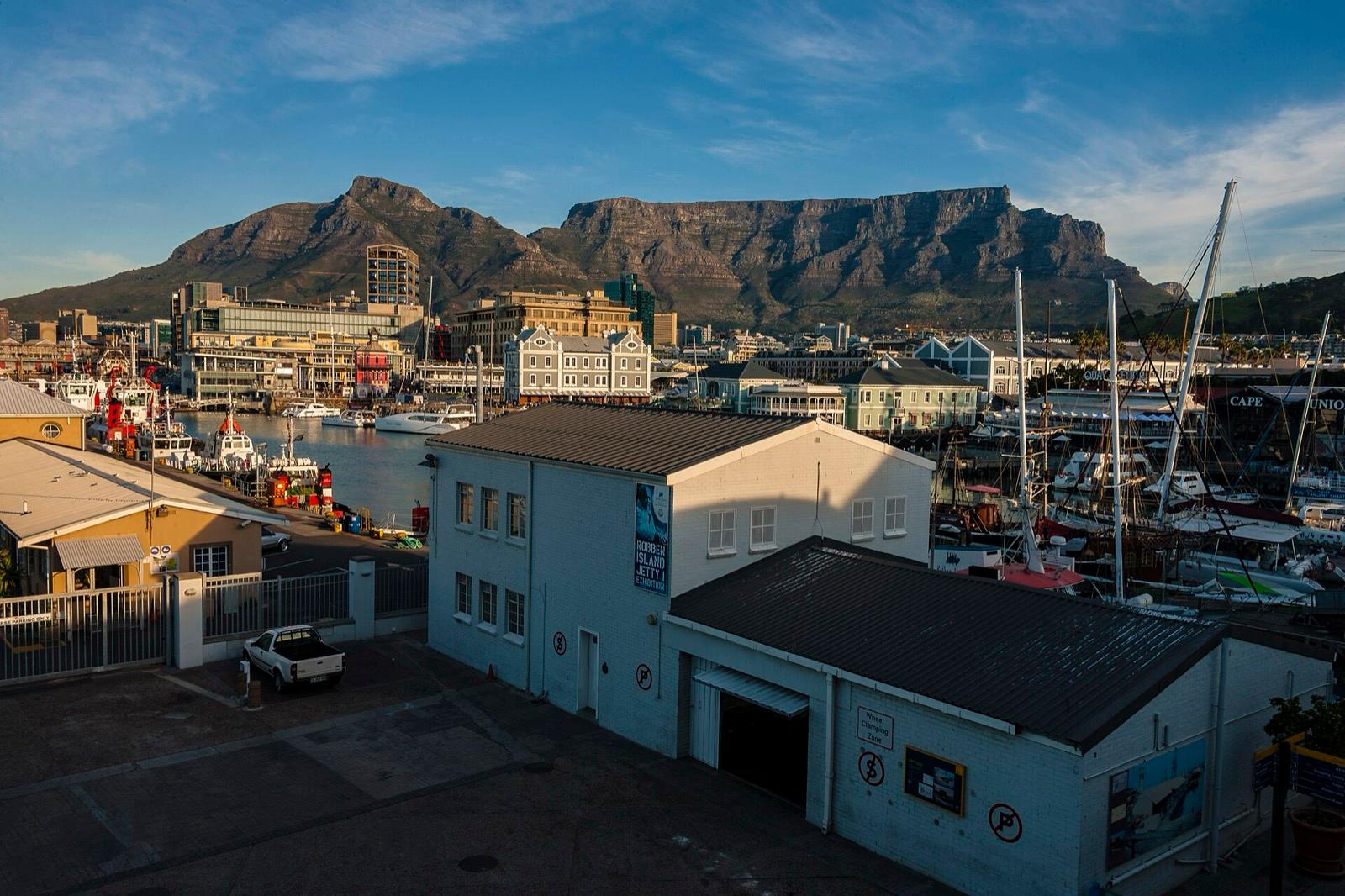
Beneath South Africa's most-visited shopping and dining precinct lies a real, still-operating Victorian harbour, the gateway to a prison island, all framed by the flat wall of Table Mountain.
Start · The Clock Tower: The Little Red Tower That Watched the Ships
DirectionsStops
- 1
The Clock Tower: The Little Red Tower That Watched the Ships
A small red Gothic-Revival tower built in eighteen eighty-two as the Port Captain's Office, standing beside the swing bridge at the entrance to the Alfred Basin.
- 2
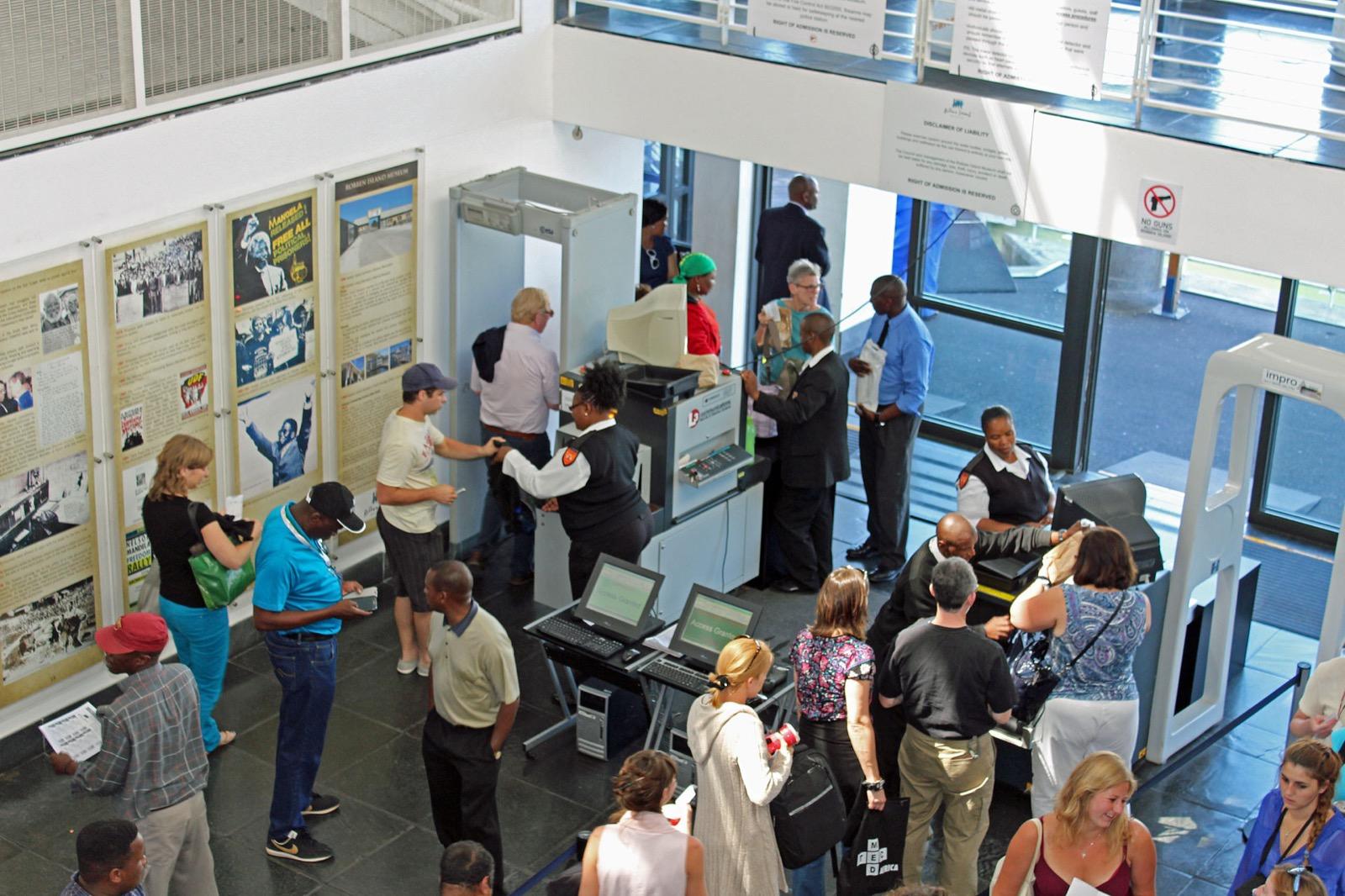
The Nelson Mandela Gateway to Robben Island: Where the Boats Leave for the Island of Prisoners
The glass ferry terminal and museum, opened by Nelson Mandela in two thousand and one, from whose quay the boats cross to Robben Island.
- 3
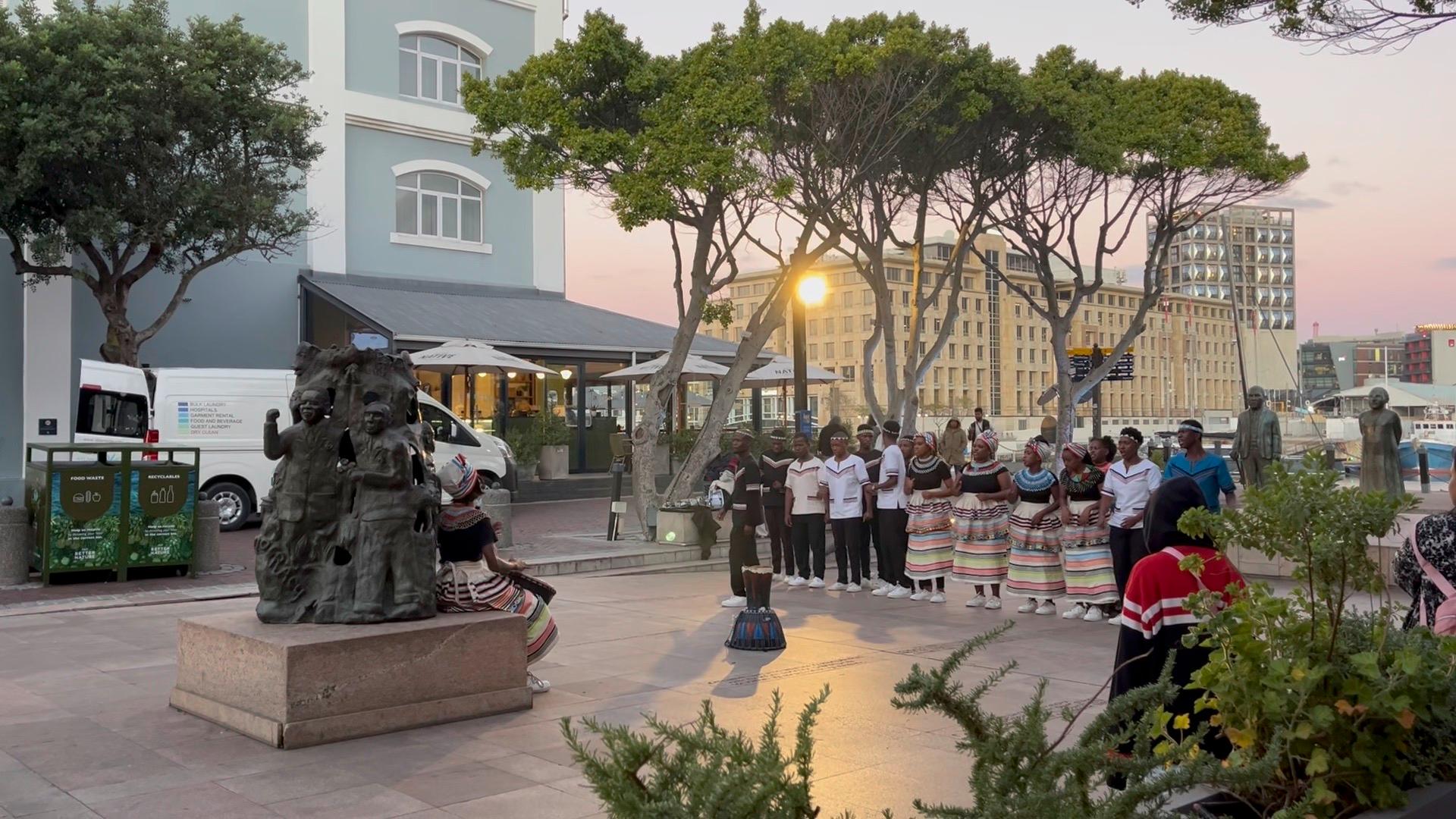
Nobel Square: The Four Peacemakers Cast in Bronze by the Water
A public square with four bronze statues of South Africa's Nobel Peace Prize laureates, standing slightly larger than life with their backs to Table Mountain.
- 4
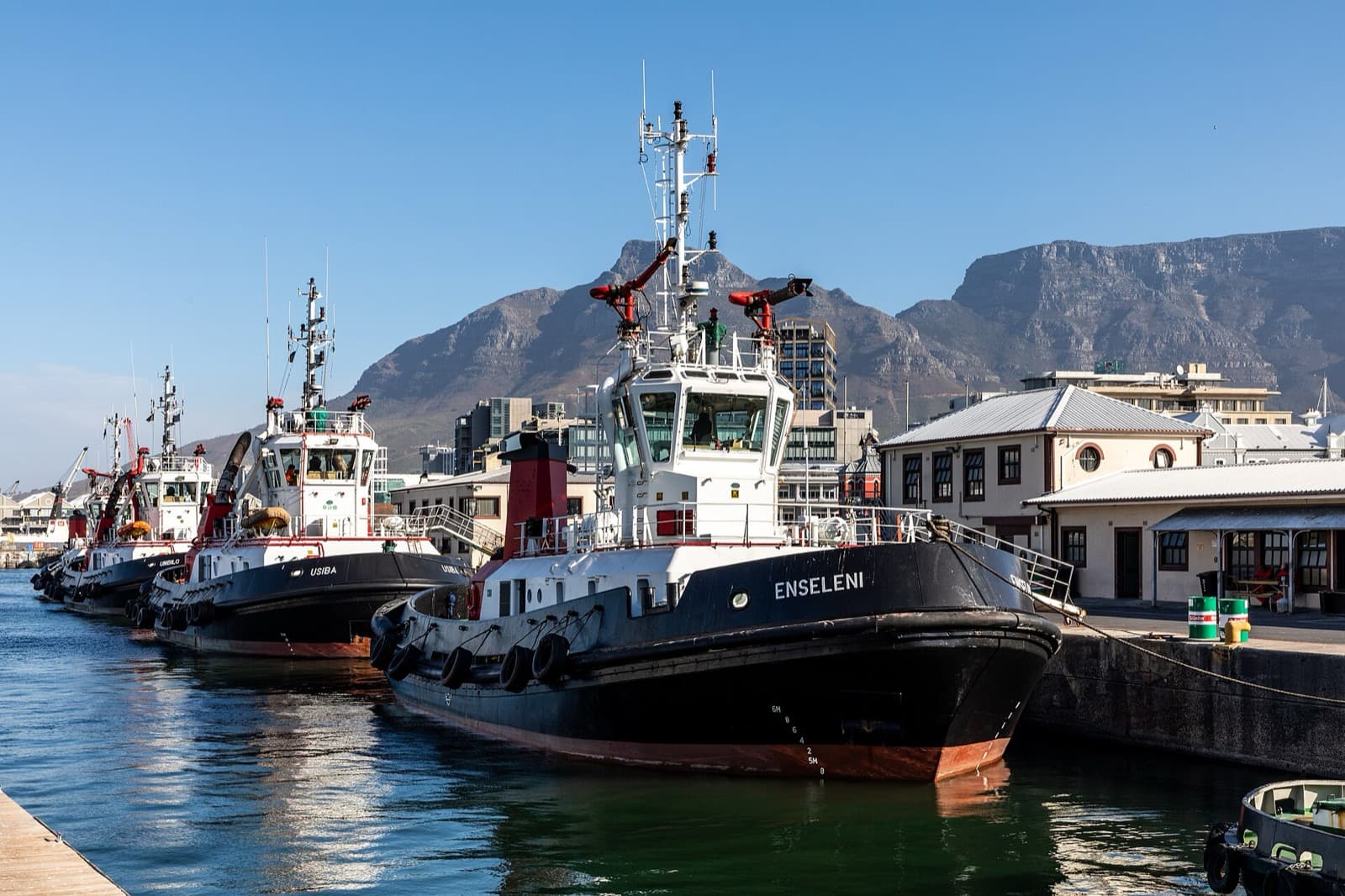
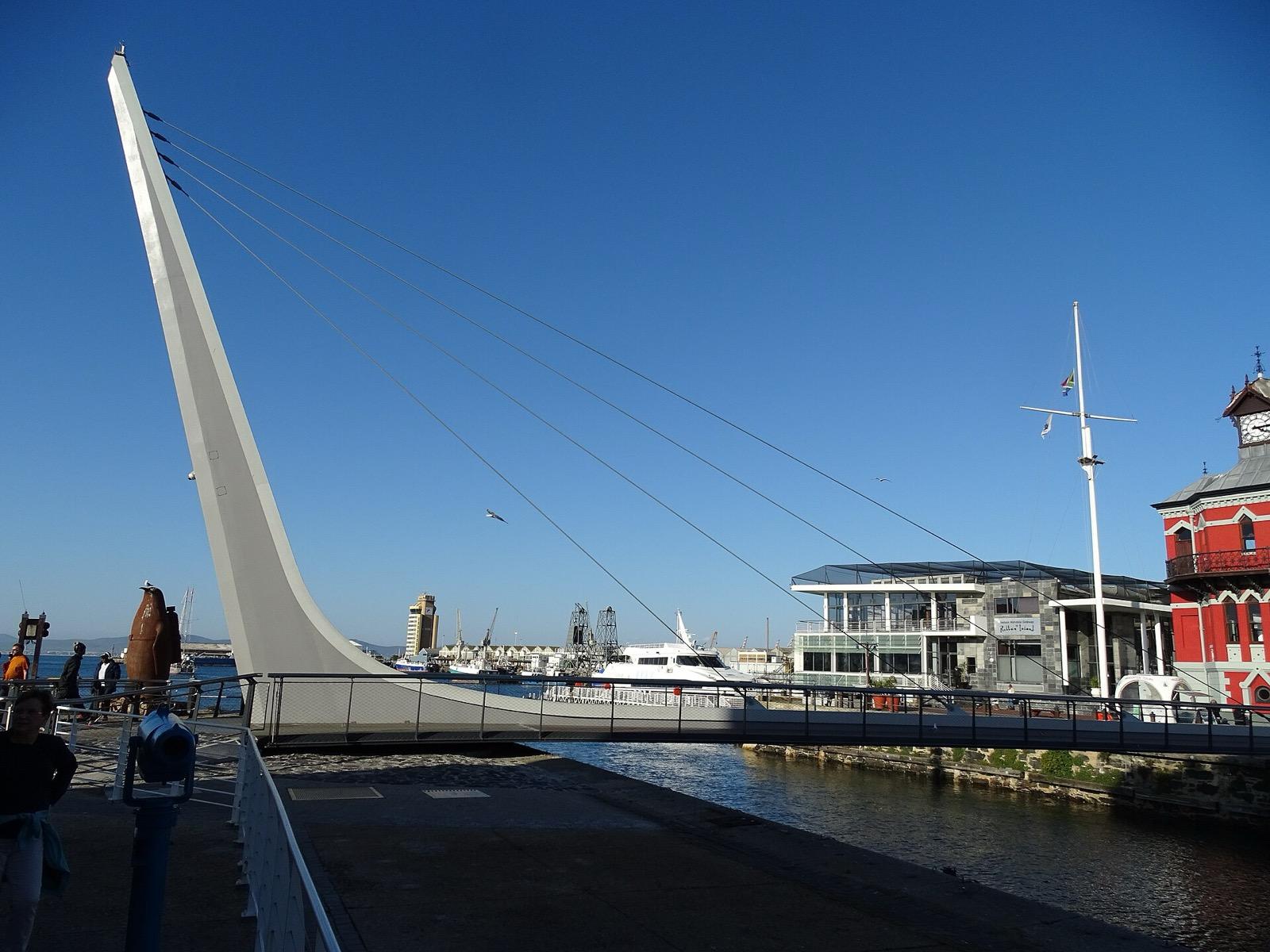
The Working Harbour and the Swing Bridge: The Tugs and Seals That Share the Quay
The living heart of the port around the Alfred Basin, its bascule swing bridge, the Robinson Dry Dock, and the Cape fur seals that often haul out on the quays.
- 5
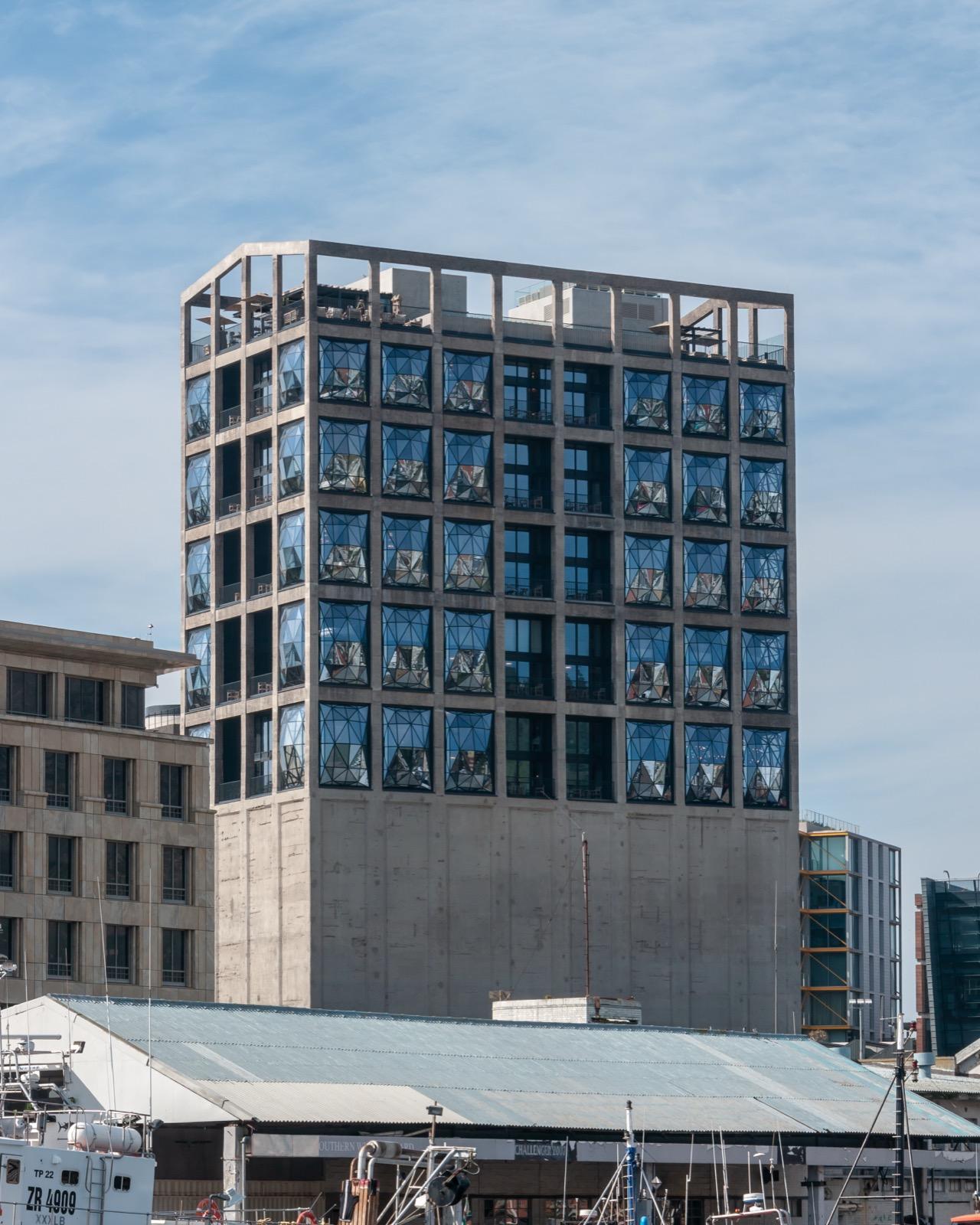
Zeitz MOCAA: The Grain Silo Hollowed Into a Cathedral of African Art
A former grain silo of the nineteen twenties, carved into a dramatic atrium and reopened in two thousand and seventeen as a major museum of contemporary African art.
- 6
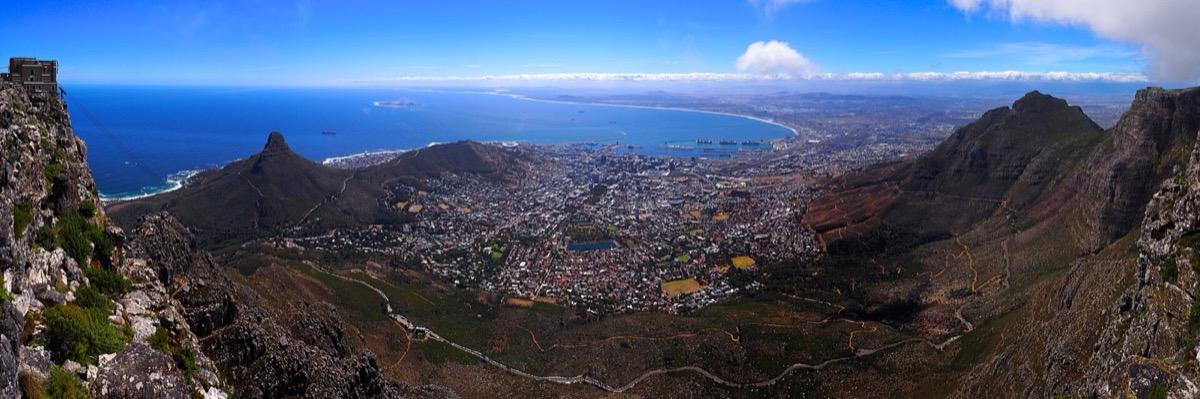
The Table Mountain View: The Harbour, the City and the Flat-Topped Mountain in One Frame
An open waterfront viewpoint where the classic Cape Town composition lines up: the harbour, the city bowl, and the full flat wall of Table Mountain.
Details
Best Time to Visit
Late afternoon into the golden hour is ideal, when the light turns warm on the red Clock Tower and Table Mountain, the working port is busy, and the crowds thin a little. Mornings are calmer and cooler with clearer mountain views before cloud gathers. The V&A Waterfront is a year-round destination, but Cape Town's summer, from about November to March, brings the strongest sun and the notorious southeaster wind, so an early start beats both the heat and the afternoon gusts.
Pro Tips
- •Keep the water on one side and the city and mountain behind you, and the loop is almost impossible to lose, so put your phone away and read the harbour instead.
- •The stops are short and self-contained, so skip any that do not hold you and linger longer at the Robben Island quay or the Nobel statues, which reward slow attention.
- •You do not need to board the Robben Island ferry to feel the weight of the Nelson Mandela Gateway, but if you do want the island tour, book its ticketed, fixed-time crossing separately and in advance.
- •Zeitz MOCAA is worth going inside for the carved silo atrium alone, but the exterior tells the reuse story too, so decide by your budget and time; museum entry is charged in rand.
- •Look for Cape fur seals hauled out along the Alfred Basin quays near the swing bridge; they are a common but not guaranteed sight, so treat a sighting as a bonus.
- •Watch the swing bridge: when it lifts to let a boat through you may wait a few minutes to cross, which is a fine moment to simply watch the port at work.
Safety & Precautions
- •Cape Town's sun is strong and the harbour offers little shade, so wear sunscreen and a hat and carry water, especially in summer.
- •The southeaster wind can be fierce on the open quays and near the water, so bring a windbreaker and secure hats and loose items.
- •This is a busy, well-patrolled tourist precinct, but ordinary city street-awareness still applies, so keep phones, cameras, and valuables discreet, particularly in crowds and at the ferry terminal.
- •Several sites here charge entry in rand, including the Robben Island ferry and Zeitz MOCAA, and the Nelson Mandela Gateway and Robben Island carry real emotional weight, so give yourself time and quiet for them.
Travel advisory: Exercise Increased Caution (Level 2).
Gallery
Related Reading
Go deeper on what you'll see, hear, and walk through.
Overview
Best Self-Guided Walking Tours in Cape Town (2026)
4 min
Overview
Cape Town Travel Guide: Days, Transport, Seasons, Safety, and Budget
7 min
Overview
One Day in Cape Town: A Walkable Morning-to-Evening Itinerary
7 min
Thematic
Best Culture Walking Tours in Cape Town (2026)
2 min
Thematic
Cape Town in Three Layers: The Garden, the Painted Hill, and the Harbour That Still Works
8 min
Companion
Cape Town's Working Harbour: The Living Port Beneath the V&A Waterfront
6 min
Deep dive
Nelson Mandela Gateway: The Cape Town Quay Where Boats Leave for the Prison Island
6 min
Read
What to Eat in Cape Town: Cape Malay Food and Where to Find It
8 min
Read the walk
The full story of V&A Waterfront: The Harbour That Still Works, in words. Prefer to listen? Play it narrated, from home or on location.
Introduction
The Victoria and Alfred Waterfront in Cape Town, South Africa, is the country's most-visited destination, drawing around twenty-four million people a year. Most of them come for the shopping and the dining, and most of them miss the thing underneath: this is a real, working harbour, still operating, built around two Victorian basins named for Queen Victoria and her second son, Prince Alfred. This walk holds those two truths together, the polished surface and the labouring port beneath it.
Over six stops and roughly two kilometres, taking about ninety minutes at an easy pace, you will read the harbour like a text. You will pass the little red Gothic tower that once watched the ships, the sober quay where the ferries leave for Robben Island, a square of four peacemakers cast in bronze, the still-turning dry dock where seals often share the water with the tugs, a grain silo reborn as a great museum of African art, and finally the whole scene composed under the flat top of Table Mountain.
This is your walk, on your own clock. There is no group at your shoulder, no ferry timetable to catch, no guide steering you, and no one expecting a tip. Linger at the Robben Island quay in your own quiet, or move straight on. Sit as long as you like among the Nobel statues. The stops are short and each one stands on its own, so skip any that do not hold you. Keep the water on one side and the mountain behind the city, and you will not get lost. When you arrive at the Clock Tower, begin with stop one.
1. The Clock Tower: The Little Red Tower That Watched the Ships
Start with the little red tower, because it is the oldest thing you can see from here and the reason the rest of the harbour exists. It was built in eighteen eighty-two as the Port Captain's Office, at the entrance to the Alfred Basin, and it is done in the Victorian Gothic Revival style, with pointed Gothic windows and walls painted a deep red carefully matched to scrapings of the original paint from the eighteen hundreds.
The tower was a working instrument, not decoration. On the ground floor sat a tidal gauge that measured the level of the tide, so the captain knew when ships could safely enter and leave. On the second floor was a mirror room, its angled mirrors giving the Port Captain a single overall view of everything moving in the harbour without his having to turn his head. And the clock itself, high in the tower, was imported all the way from Edinburgh, in Scotland.
South African History Online records that the Clock Tower was declared a National Monument on the fourth of August, nineteen seventy-eight. Over the years the little building developed a slight lean, since stabilized, and it has been restored to serve the precinct that now carries its name.
Standing here, it is easy to read the tower as one more pretty backdrop for photographs. Try instead to see it as the harbour saw it: the eye of the port, watching the tide and the ships. That is the layer this whole walk is about, the working harbour beneath the shops. The Nelson Mandela Gateway is right beside you, a very short walk across near the swing bridge, and that is where the tone of the day changes.
2. The Nelson Mandela Gateway to Robben Island: Where the Boats Leave for the Island of Prisoners
A few steps from the Clock Tower the mood turns sober, and it should. This glass, triple-storey building is the Nelson Mandela Gateway to Robben Island, the passenger ferry terminal and museum for the crossing to the island out in the bay. It was officially opened by Nelson Mandela himself, on the first of December, two thousand and one. Inside are exhibition areas, an auditorium, and a museum shop, and from the quay the ferries leave daily for the roughly thirty-minute crossing.
Robben Island is a place of hard memory. It was inscribed as a UNESCO World Heritage Site in nineteen ninety-nine, and UNESCO frames it as bearing witness to the triumph of the human spirit, of freedom and democracy over oppression. Nelson Mandela was imprisoned for over twenty-seven years, eighteen of them here on Robben Island, from nineteen sixty-four to nineteen eighty-two. The Rivonia Trial ended on the twelfth of June, nineteen sixty-four, with life sentences, and Mandela arrived on the island the very next day. He was later moved to the mainland, and was released in February nineteen ninety. He was not alone on that island: Robert Sobukwe, the founding leader of the Pan Africanist Congress, was also held there, and the Robben Island Museum, established in nineteen ninety-seven, has been guided in part by former political prisoners who returned to tell what happened.
The ferry runs on a fixed timetable, with a group, and you do not have to board it to feel the weight of this spot. This is the gift of walking at your own pace: you can simply stand at the departure quay in your own quiet, look out toward the low grey line of the island, and hold the thought for as long as you need. Then, when you are ready, move on.
3. Nobel Square: The Four Peacemakers Cast in Bronze by the Water
After the weight of the quay, this open square offers something like reconciliation. It is Nobel Square, and it honours South Africa's four Nobel Peace Prize laureates with four bronze statues, standing slightly larger than life-size in a gentle semicircle, their backs turned to…
Full narration for this stop unlocks with the tour.
4. The Working Harbour and the Swing Bridge: The Tugs and Seals That Share the Quay
This is the heart of the walk, the living harbour itself. Around you are the Victoria and Alfred Basins, built between eighteen sixty and nineteen twenty. Prince Alfred, the second son of Queen Victoria, tipped the first load of stone for the breakwater on the seventeenth of…
Full narration for this stop unlocks with the tour.
5. Zeitz MOCAA: The Grain Silo Hollowed Into a Cathedral of African Art
Ahead rises a building that was, for most of its life, purely industrial: a grain silo, built between nineteen twenty-one and nineteen twenty-four. It stood about fifty-seven metres tall and was once the tallest building in South Africa, a plain concrete tower where the…
Full narration for this stop unlocks with the tour.
6. The Table Mountain View: The Harbour, the City and the Flat-Topped Mountain in One Frame
End the walk by turning away from the buildings and letting the whole scene compose itself. From this side of the basin, the classic Cape Town view lines up in a single frame: the working harbour in the foreground, the city bowl behind it, and rising over all of it the long,…
Full narration for this stop unlocks with the tour.