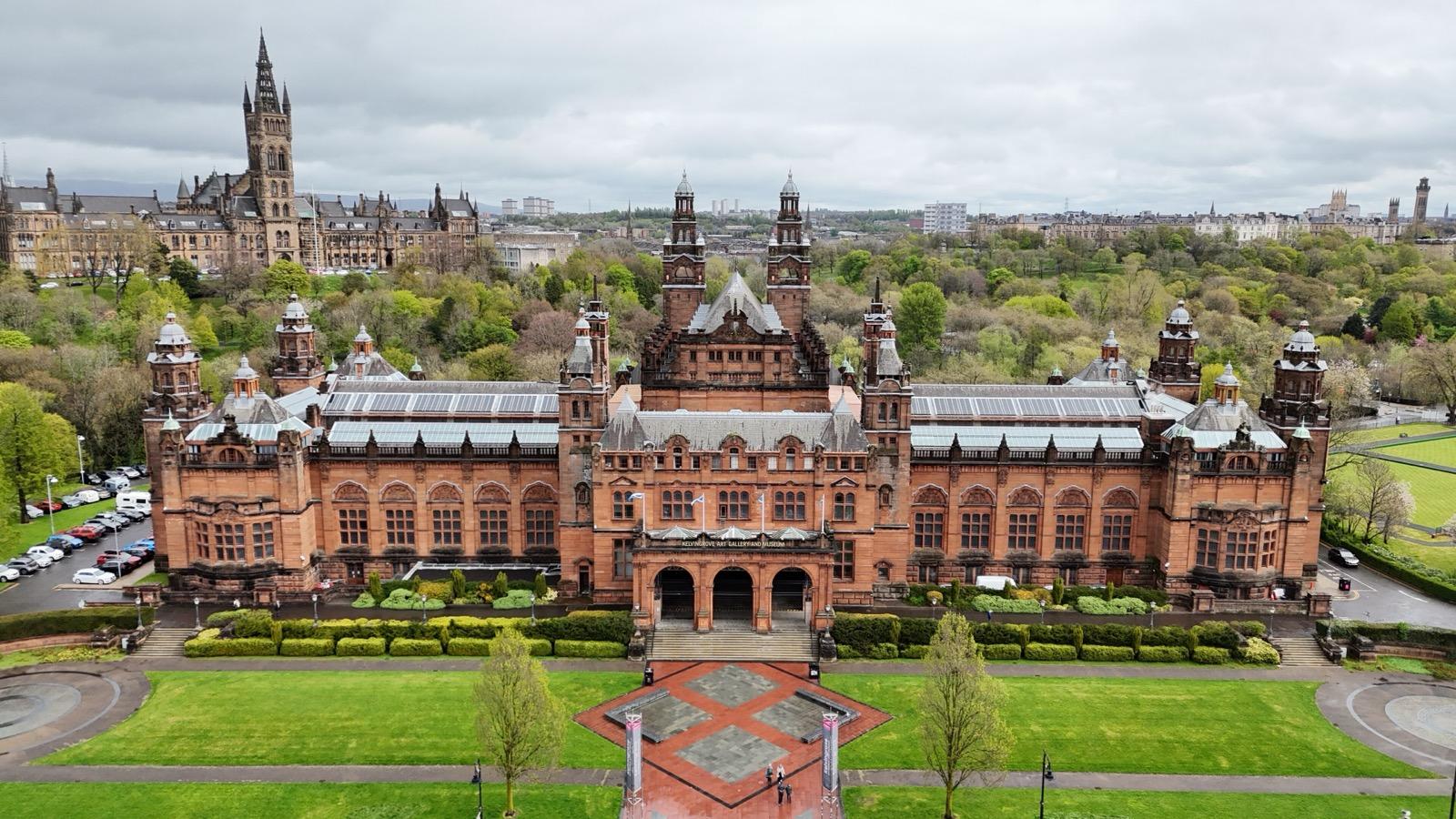
A red sandstone palace of art, a wooded river valley, a Gothic university older than Columbus's voyage, cobbled student lanes, and a great domed glasshouse: this is Victorian Glasgow at study and at leisure, all free to wander at your own pace.
Start · Kelvingrove Art Gallery and Museum: The City's Treasure House
DirectionsStops
- 1
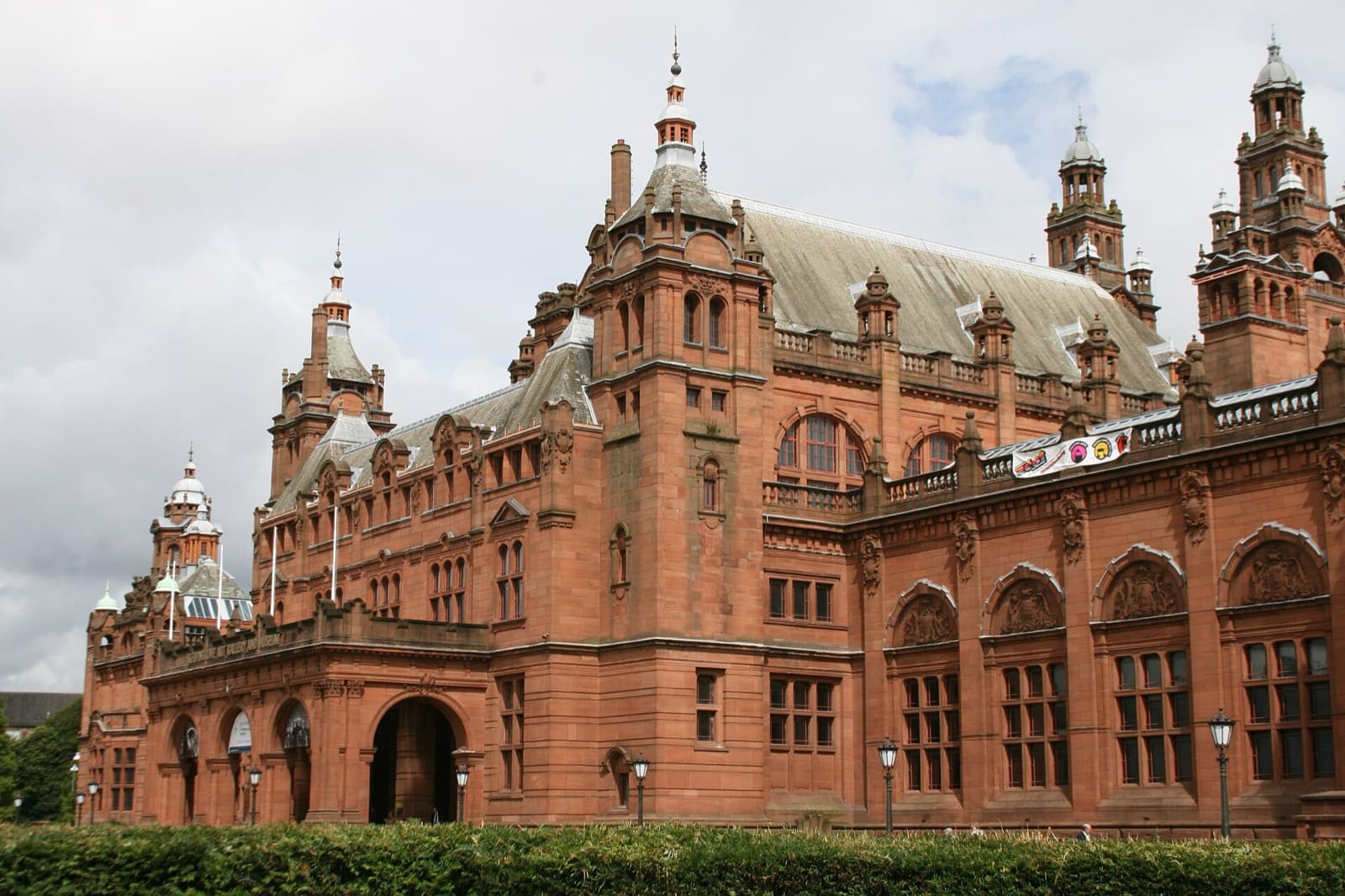
Kelvingrove Art Gallery and Museum: The City's Treasure House
The red sandstone palace of art that a whole city treats as its attic and its treasure house, free to all who wander in.
- 2
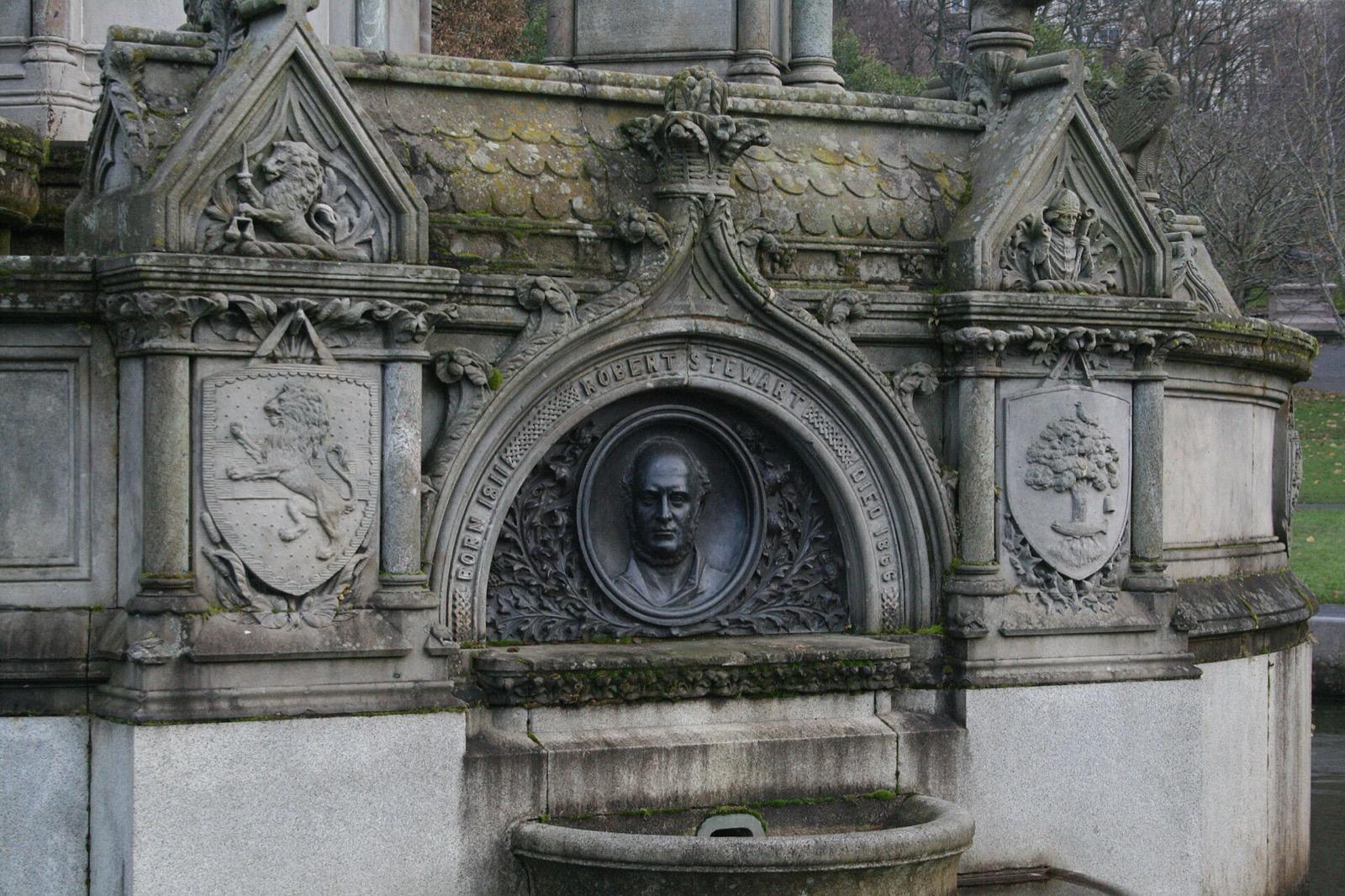
Kelvingrove Park and the River Kelvin: The Green Victorian Valley
A wooded Victorian valley along the little river Kelvin, crowned by a fountain that celebrates the day Glasgow finally got clean water.
- 3
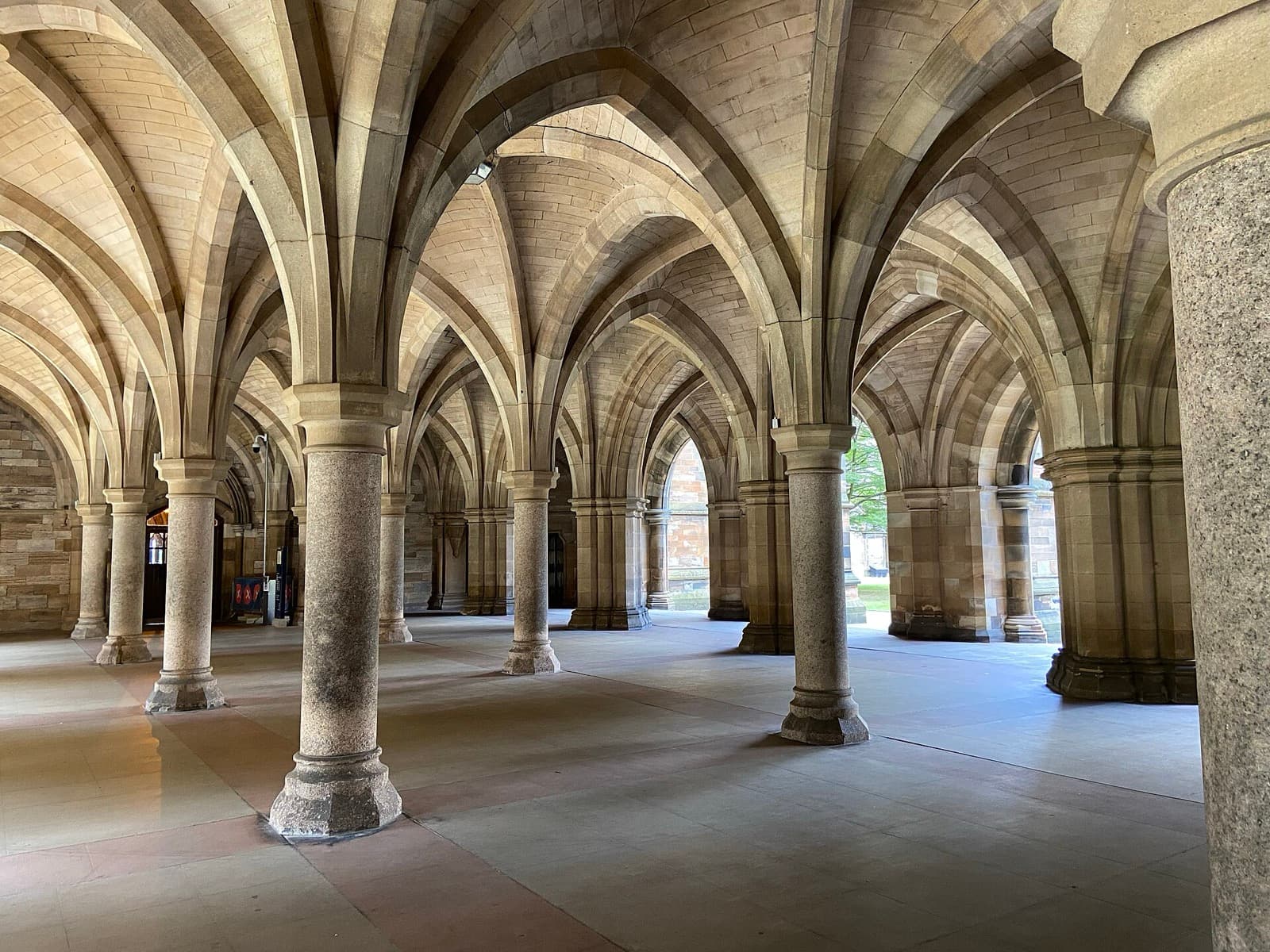
The University of Glasgow: The Gothic Tower on Gilmorehill
A soaring Gothic tower and vaulted cloisters crowning a university older than Columbus's voyage, whose Victorian confidence rested partly on money it now publicly reckons with.
- 4
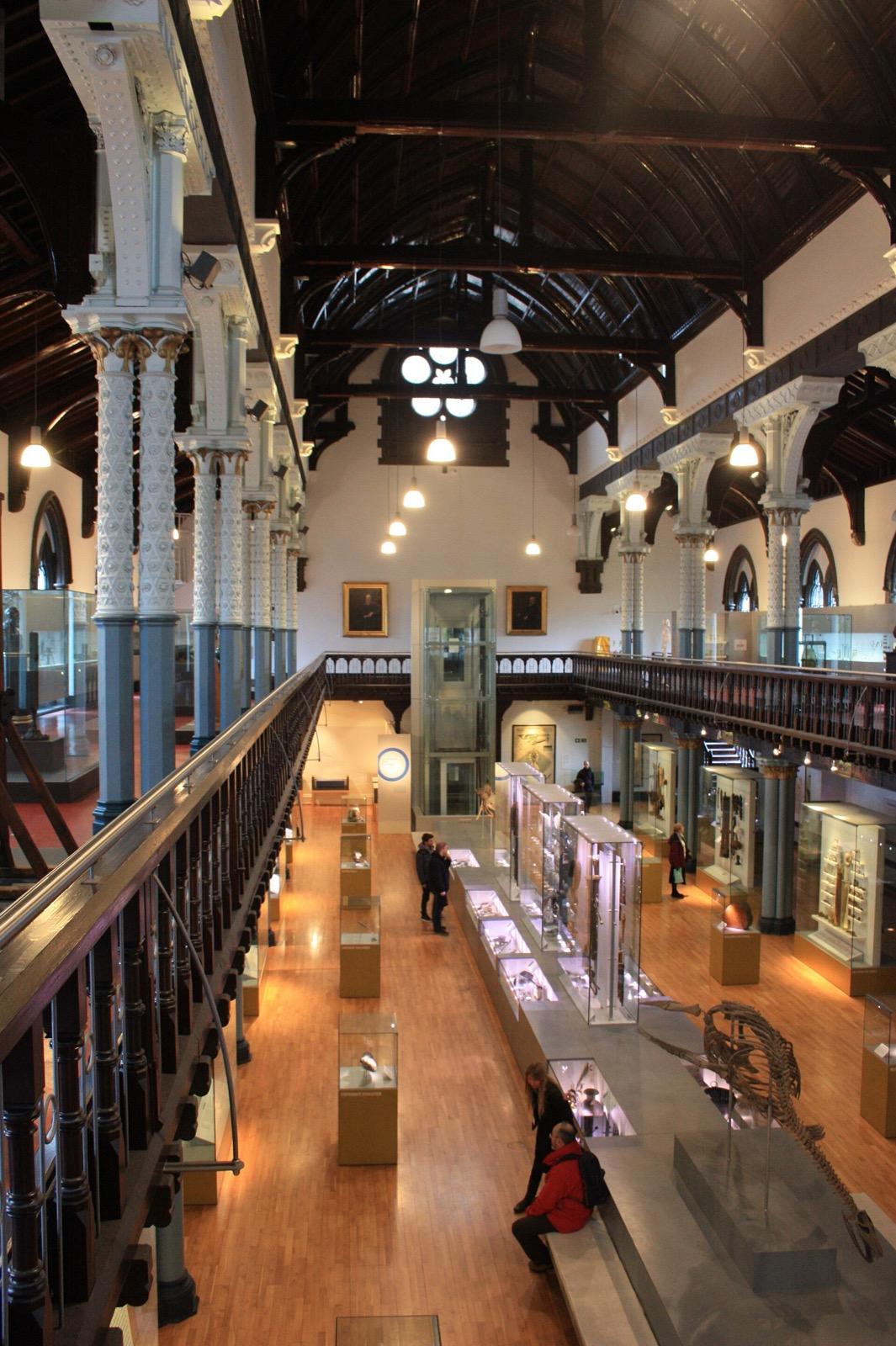
The Hunterian Museum: Scotland's Oldest Public Museum
Scotland's oldest public museum, grown from a single eighteenth-century anatomist's cabinet of curiosities into galleries of Roman Scotland, coins, and Whistler.
- 5
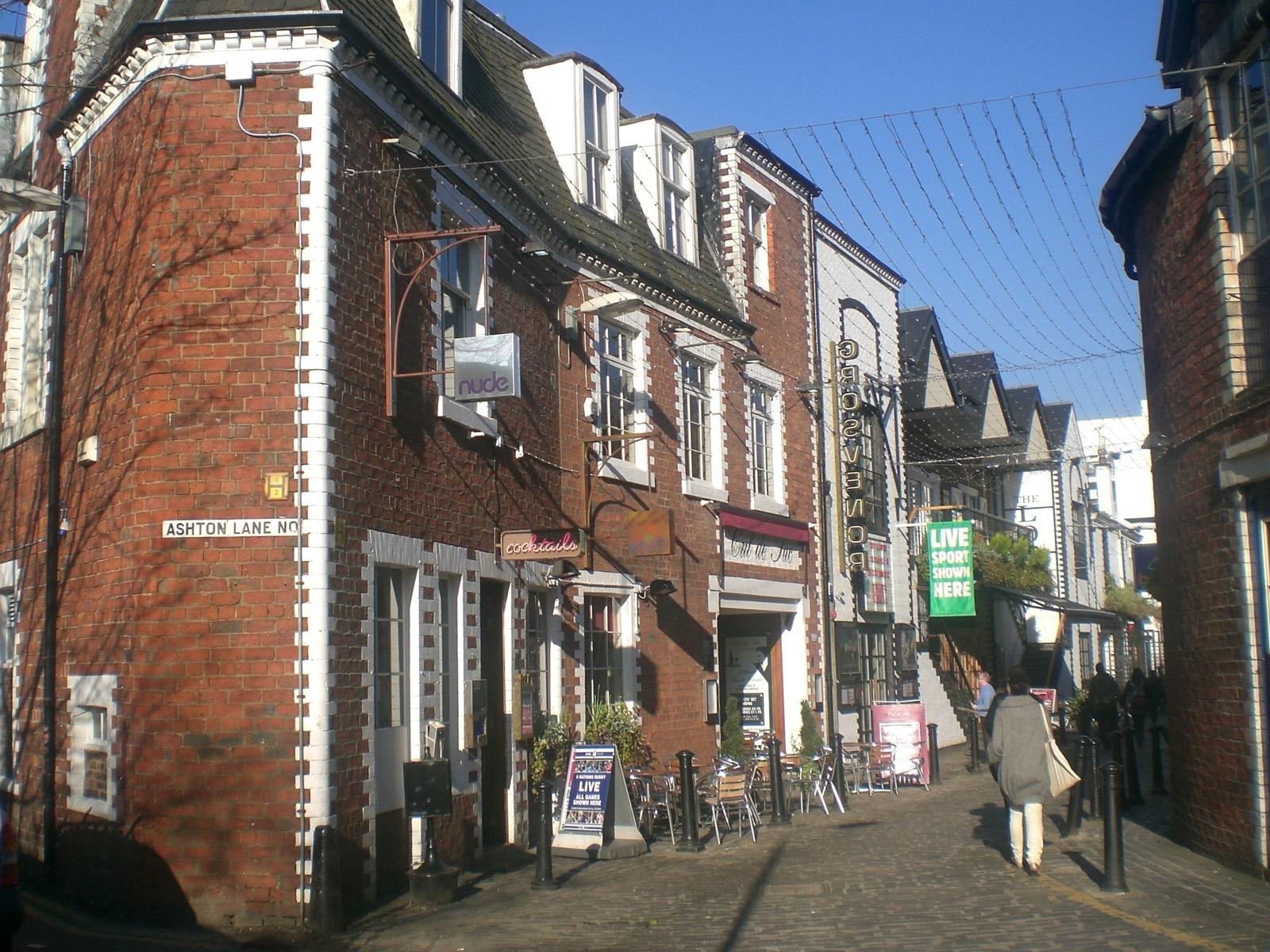
Ashton Lane and Byres Road: The Cobbled Student Heart
A cobbled back lane strung with lights off the West End's lively main artery, where the student district does its living around a beloved little old cinema.
- 6
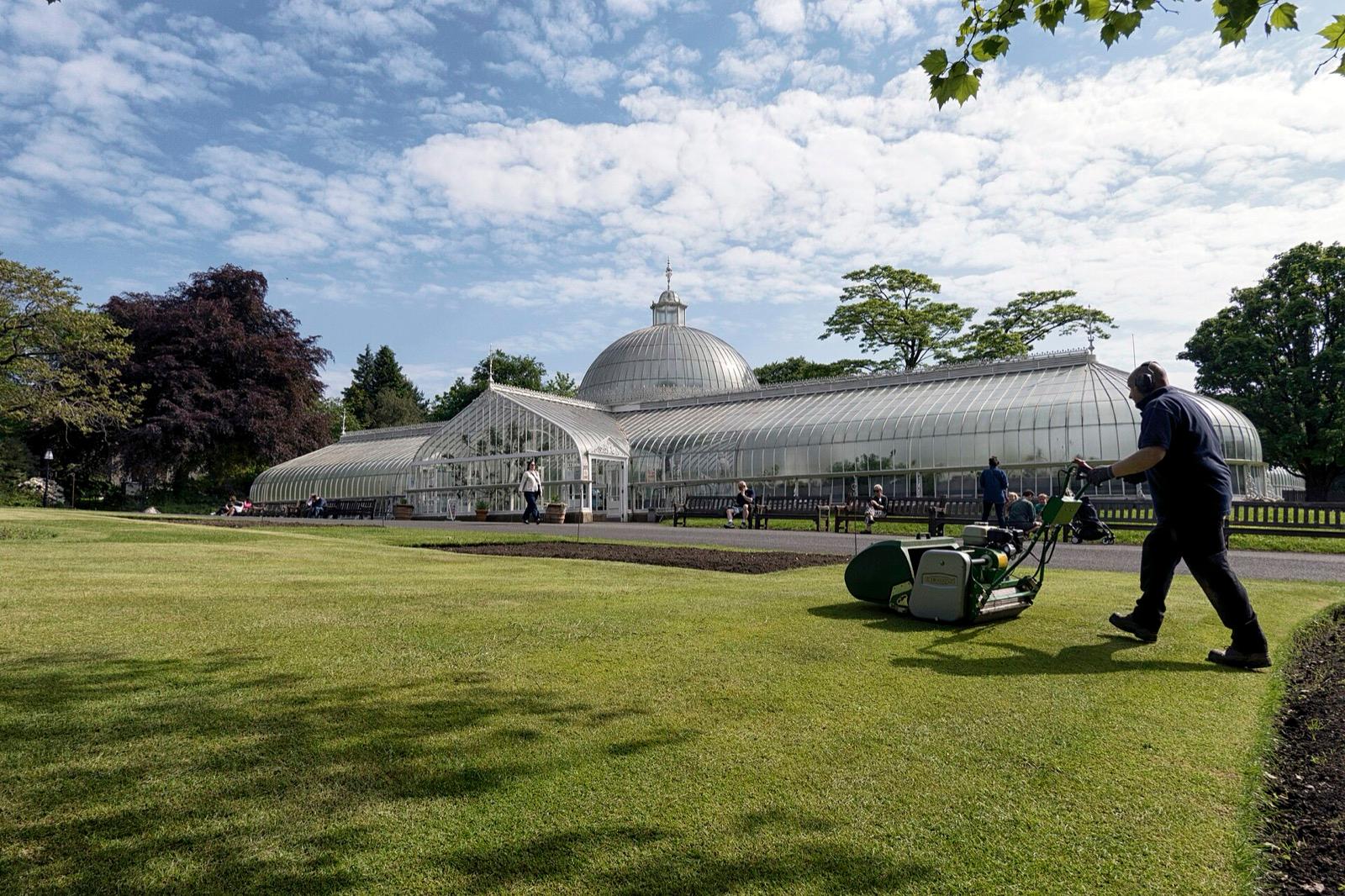
The Botanic Gardens and the Kibble Palace: The Great Glasshouse
A great domed Victorian glasshouse of curved cast iron and glass, sheltering tree ferns and marble statues at the top of the West End.
- 7
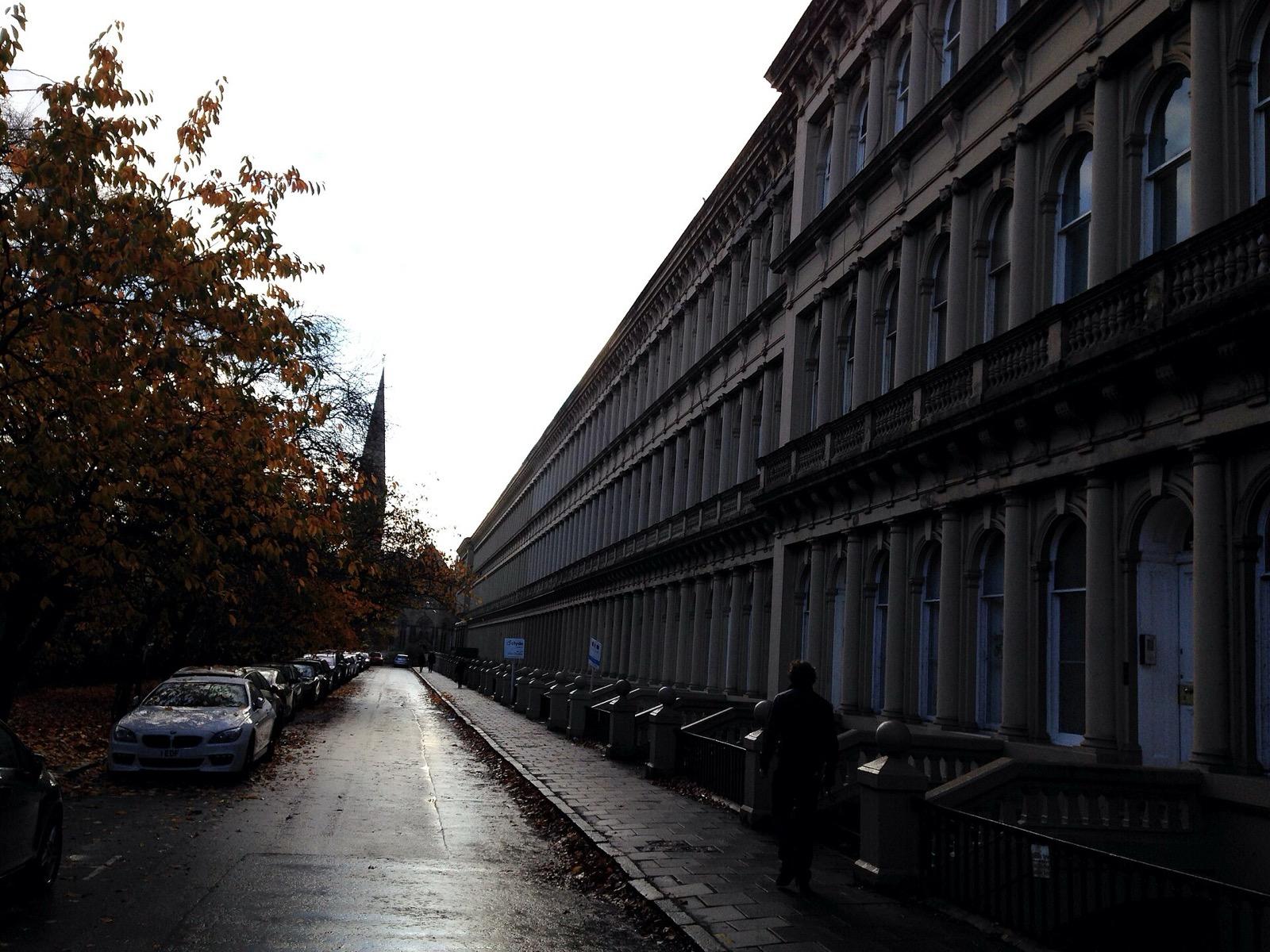
Great Western Road and the Terraces: Where the City Came to Breathe
A long straight Victorian boulevard lined with pale grand terraces, driven out into open country where prosperous Glasgow came to escape the smoky centre.
Details
Best Time to Visit
Late morning to mid-afternoon is ideal, giving you time to move through Kelvingrove and the Hunterian at leisure and still reach the Botanic Gardens before the glasshouses close. Aim to be in the great central hall of the art gallery for one of the free daily organ recitals, and try to arrive at the university's Cloisters when the light is angling low through the vaulting. Spring and summer show the park and gardens at their greenest, but the fern-house and the museums make this a rewarding walk in any west-coast weather.
Pro Tips
- •Start at Kelvingrove itself and check the day's free organ recital time on arrival; timing your visit around it lets you hear the eighteen ninety-nine Lewis and Company organ fill the great central hall.
- •The whole spine of this walk is free to enter: the art gallery, the university grounds and Cloisters, the Hunterian, and the Botanic Gardens all cost nothing, so you can dip in and out without watching a clock or a ticket.
- •Give yourself the climb up to Gilmorehill on purpose rather than rushing it; the tower and the vaulted Cloisters are the emotional centre of the West End and reward a slow ten minutes.
- •Ashton Lane and Byres Road are best felt as a living scene rather than a checklist, so pause for a coffee among the cobbles and festoon lights and simply watch the student district do its living.
- •Save the Kibble Palace for when you want stillness; the humid fern-house with its marble statues under curved glass is the calmest room on the route and a fine place to sit.
- •Finish along Great Western Road so the pale grand terraces send you off; walking the boulevard in the softer late light shows off the classical facades at their best.
Safety & Precautions
- •West-coast weather changes fast, so carry a waterproof even on a bright morning; rain can arrive and pass within an hour here.
- •There is one real climb from the park up to the university on Gilmorehill, and some park paths near the river can be uneven or slick after rain, so wear comfortable shoes with grip.
- •Kelvingrove Park, Ashton Lane, and the Botanic Gardens are all free and open, but keep valuables discreet in busy spots and mind ordinary city street-awareness, especially after dark around the student lanes.
- •The museums and gardens keep their own opening and closing hours and the glasshouses shut earlier than the grounds, so check times before you set out if you want to see the interiors rather than just the exteriors.
Travel advisory: Exercise Increased Caution (Level 2).
Gallery
Related Reading
Go deeper on what you'll see, hear, and walk through.
Overview
Best Self-Guided Walking Tours in Glasgow (2026)
3 min
Overview
Glasgow Travel Guide: How Many Days, Getting Around, and When to Visit
7 min
Overview
One Day in Glasgow: A Walkable Morning-to-Evening Itinerary
6 min
Thematic
Glasgow: Beauty Built on Complicated Money
7 min
Companion
The Gothic Tower on Gilmorehill: Reading Glasgow's West End from the University Cloisters
6 min
Deep dive
Kelvingrove Art Gallery and Museum: The Palace of Art Glasgow Gave to Everyone
6 min
Read
What to Eat in Glasgow: Local Dishes and How to Order Them
7 min
Read the walk
The full story of West End: Kelvingrove & the University, in words. Prefer to listen? Play it narrated, from home or on location.
Introduction
There is a corner of Glasgow, Scotland, where the Victorian city stopped working for a moment and started thinking. The West End is where the smoky, money-making town went to study and to breathe: a district of red sandstone, wooded parkland, a Gothic university on a hill, cobbled lanes full of students, and glasshouses full of ferns. This walk reads that story across seven stops, over roughly three and a half kilometres, in about two hours if you keep moving, and far longer if you let yourself linger, which is rather the point. The serene beauty here was paid for by an imperial and industrial fortune that carried real moral weight, and the University of Glasgow itself now publicly reckons with money that came from Atlantic slavery. This walk holds the loveliness and the reckoning together, without romanticizing either. It is a solo wanderer's route by design. The great sites here, the art gallery and the university, are heavily group-toured, yet the West End rewards the unhurried: you can stand in a vaulted cloister or a humid fern-house on no one's schedule but your own, no lanyard, no coach timetable, no tip expected. A good Glasgow guide is warm company, but this is your pace, your quiet map, your afternoon. The going is level to gently rolling, with one honest climb up to the university. When you arrive at Kelvingrove Art Gallery and Museum, begin with stop one.
1. Kelvingrove Art Gallery and Museum: The City's Treasure House
Begin with the building itself, because Glasgow does. This is Kelvingrove, the red sandstone palace of art that a whole city treats as its attic and its treasure house. It opened in nineteen oh one, designed by John Simpson and E. J. Milner Allen in a warm Spanish Baroque, its outer walls cut from Locharbriggs red sandstone that glows on a bright day. It was the Palace of Fine Arts for the nineteen oh one Glasgow International Exhibition, and its construction was financed partly by the proceeds of an earlier exhibition held right here in the park in eighteen eighty-eight. Entry is free, and after its reopening in two thousand and six it became one of the most visited free museums in Britain. What is inside refuses to sit still. There is Salvador Dali's Christ of Saint John of the Cross, a preserved Spitfire hung above the life gallery, natural history, armour, and that great pipe organ that sounds through the central hall in free daily recitals. You may hear the story that the museum was built back to front, and that its heartbroken architect leapt from a tower in despair. It is a good tale, and it is only a tale. The museum itself debunks it; the grand entrance was always meant to face into the park. Take your time here. The group tours move through in a set loop, but nothing stops you doubling back to a painting or sitting under the organ for a whole recital. This is the confident Victorian city spending its fortune on beauty and then handing it to everyone, free, forever.
2. Kelvingrove Park and the River Kelvin: The Green Victorian Valley
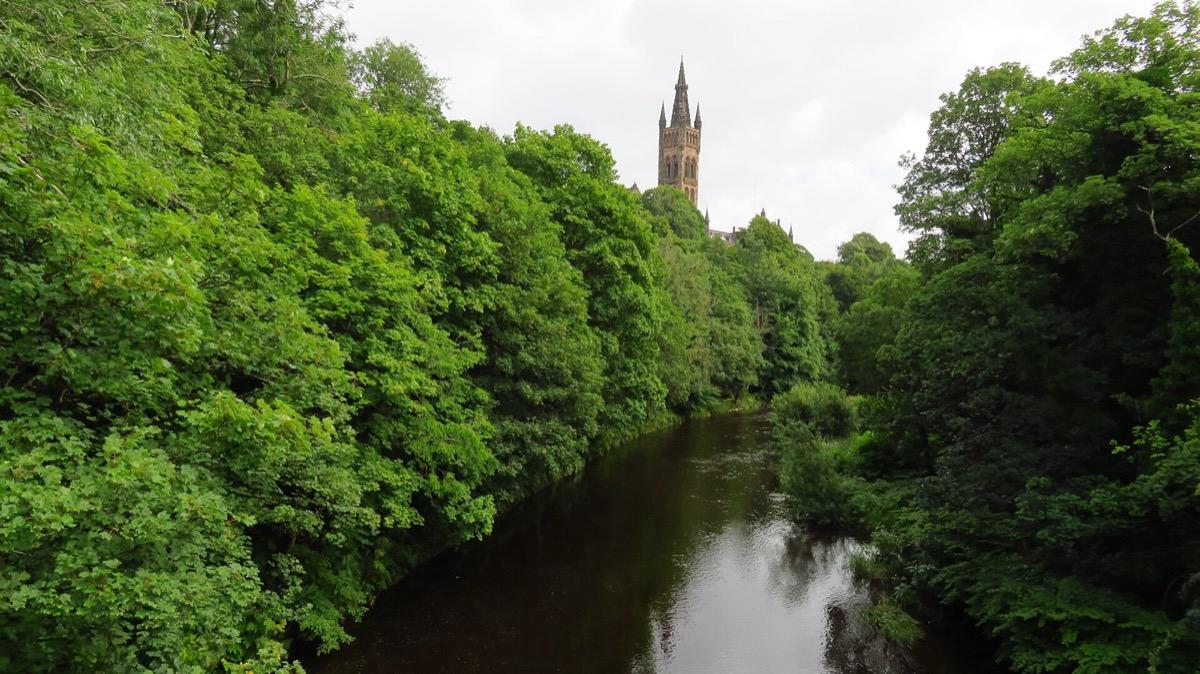
Step out of the palace and into its garden, because the museum sits in a park that is every bit as deliberate. Kelvingrove Park was established in eighteen fifty-two, when it was called simply the West End Park, one of Glasgow's grand Victorian public grounds laid out along the little river Kelvin. The Kelvin threads through here on its short way down to the Clyde, and if you are lucky you will spot a heron standing patient in the shallows, or a kingfisher's flash of blue. The park was laid out from the eighteen fifties by the architect Charles Wilson and the surveyor Thomas Kyle, with Sir Joseph Paxton, of Crystal Palace fame, among those who had a hand in it. The centrepiece is the Stewart Memorial Fountain, designed by James Sellars in eighteen seventy-two, a confection of granite, sandstone, marble, and bronze. It commemorates Lord Provost Robert Stewart, the man who secured Glasgow's fresh water supply from Loch Katrine, and its imagery nods to the Trossachs and to Sir Walter Scott's poem The Lady of the Lake. That is worth pausing on. A great city here chose to spend real money and real craft not on a general or a king, but on the arrival of clean water, the quiet Victorian revolution that saved more lives than any battle. Around these edges the city staged three international exhibitions, in eighteen eighty-eight, in nineteen oh one, and in nineteen eleven. Today it is simply a valley to breathe in, at whatever pace you please.
3. The University of Glasgow: The Gothic Tower on Gilmorehill
Now the one real climb of the walk, up to Gilmorehill, where a great Gothic tower rises above the trees. This is the University of Glasgow, founded in fourteen fifty-one by a papal bull of Pope Nicholas the Fifth, at the request of King James the Second of Scotland. It is the fourth-oldest university in the English-speaking world, older than Columbus's voyage across the Atlantic. It moved up here to Gilmorehill in eighteen seventy, and its soaring main building, designed by Sir George Gilbert Scott, opened in full Gothic Revival splendour in that year. The tower's spire was completed between eighteen eighty-seven and eighteen ninety-one, to the design of his son John Oldrid Scott, and climbs to about eighty-five metres, visible for miles. Between its two quadrangles runs the vaulted undercroft called the Cloisters, and it is among the loveliest spaces in the whole city. Stand in it a while; the group tours pass through, but the stone will keep its hush for you. The names that studied and taught here shape the modern world: Adam Smith the economist, and William Thomson, Lord Kelvin, the physicist whose title shares its name with the very river below. And here the walk must be honest. The West End's Victorian confidence rested partly on an imperial economy that included the profits of enslaved labour. By the university's own account, published in its slavery report in twenty eighteen, it became the first British university to acknowledge historic money of that kind and to set up a programme of reparative justice. The beauty and the reckoning stand together, and both are true.
4. The Hunterian Museum: Scotland's Oldest Public Museum
Tucked inside the great Gothic building you have just admired is a quieter marvel. This is the Hunterian, Scotland's oldest public museum, which opened in eighteen oh seven. It grew from the cabinet of one man, the anatomist and physician William Hunter, who lived from seventeen…
Full narration for this stop unlocks with the tour.
5. Ashton Lane and Byres Road: The Cobbled Student Heart
Come down off the hill and into the living present, because the West End is not only a museum. Byres Road is the lively main artery of the district, and running off it is Ashton Lane, a narrow cobbled back lane strung with festoon lights that has become the emblem of the West…
Full narration for this stop unlocks with the tour.
6. The Botanic Gardens and the Kibble Palace: The Great Glasshouse
At the top of Byres Road, where it meets Great Western Road, the West End opens into the Glasgow Botanic Gardens, which moved to this site in eighteen forty-two, and which cost you nothing to enter. Its centrepiece is one of the loveliest built things in the city, the Kibble…
Full narration for this stop unlocks with the tour.
7. Great Western Road and the Terraces: Where the City Came to Breathe
End the walk on the boulevard, because this is where prosperous Victorian Glasgow came to breathe. Up until the eighteen forties, the West End was open countryside. The driving-out of Great Western Road, together with the arrival of the Botanic Gardens in those same early…
Full narration for this stop unlocks with the tour.