Walk the Baixa and Chiado to read the streets themselves as an argument: after the great earthquake, Lisbon rebuilt its downtown as a single rational machine, order engineered out of rubble.
Start · Praça do Comércio: The Ceremonial Face
DirectionsStops
- 1
Praça do Comércio: The Ceremonial Face
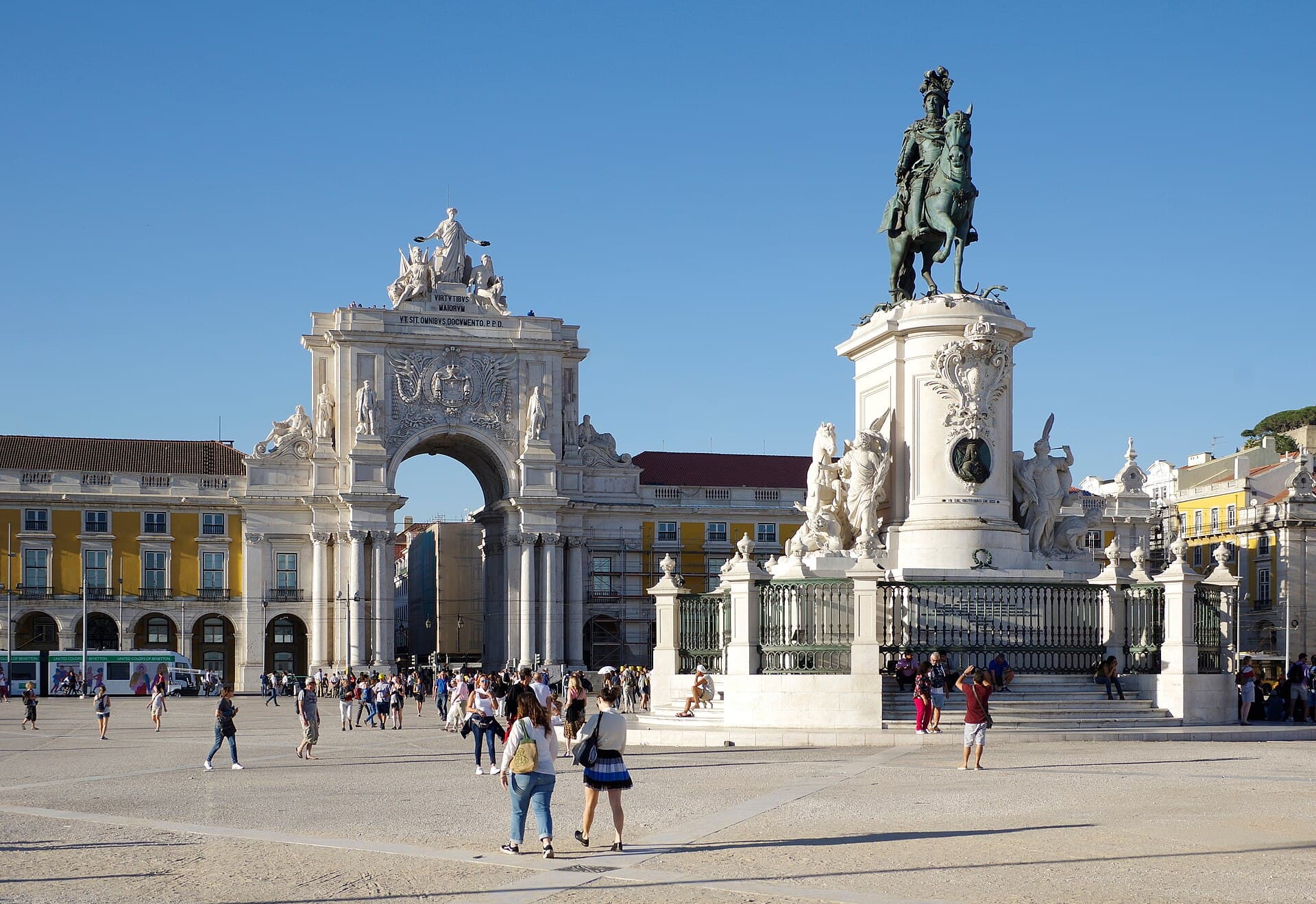
The great riverfront praca is the ceremonial front door of the rebuilt city. A praca is a square, and this one was built where the royal palace once stood.
- 2
Arco da Rua Augusta: The Monument to Recovery
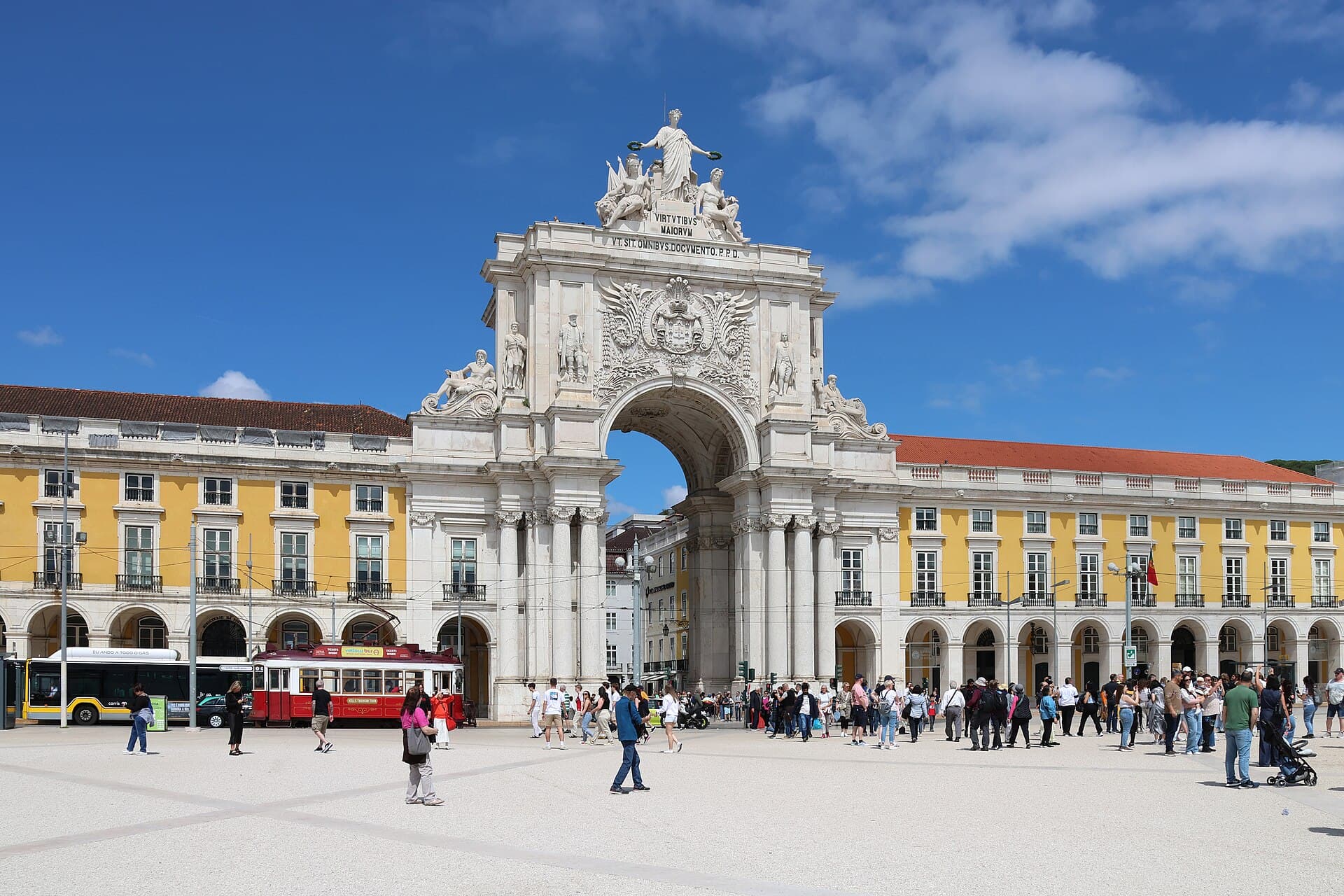
A monumental stone triumphal arch closing the north side of the square, built to celebrate the city's recovery from the earthquake.
- 3
Rua Augusta and the Pombaline Grid: The Hidden Cage
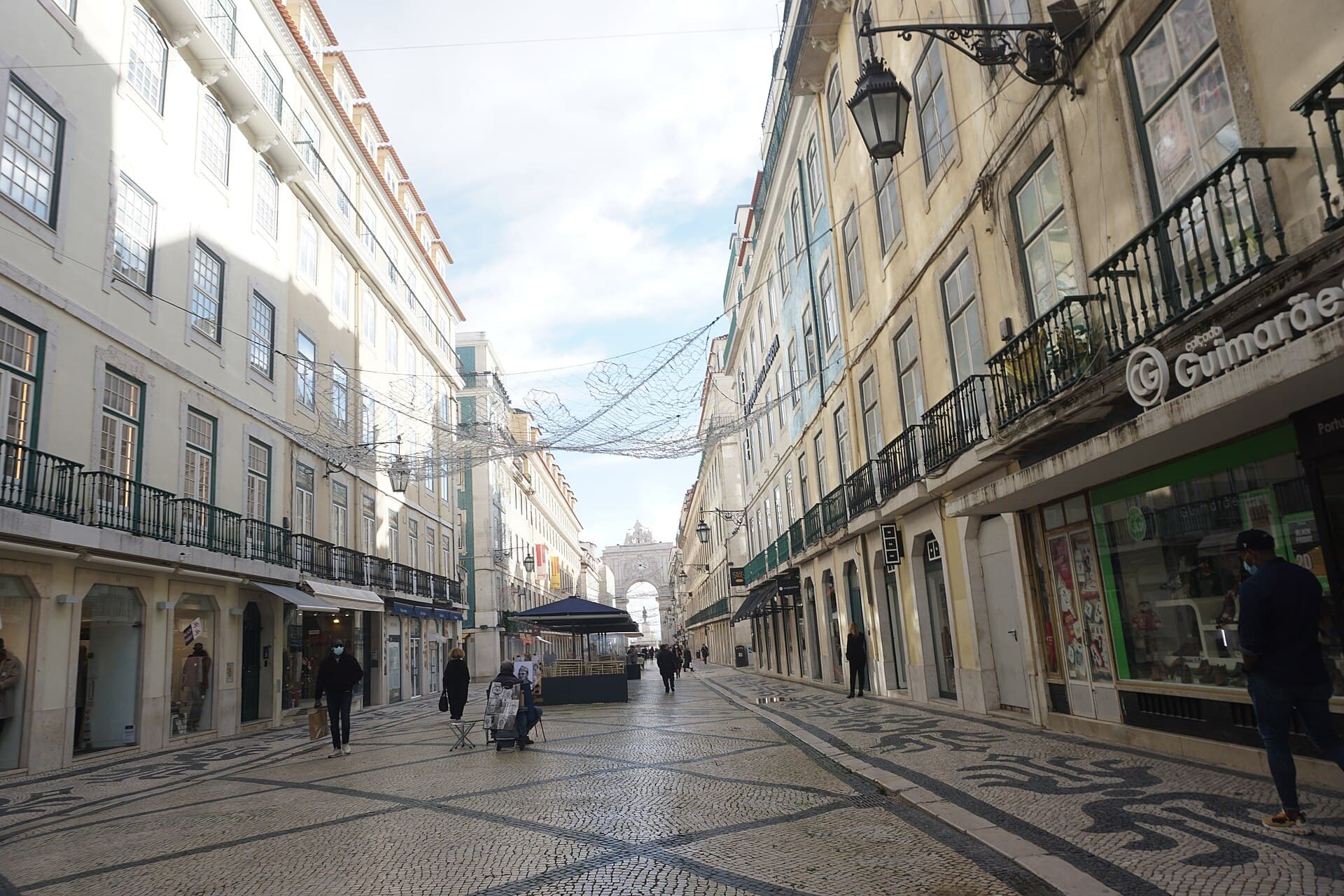
The main pedestrian axis of the rebuilt downtown, where the tour's central idea goes underground into a hidden anti-seismic timber cage.
- 4
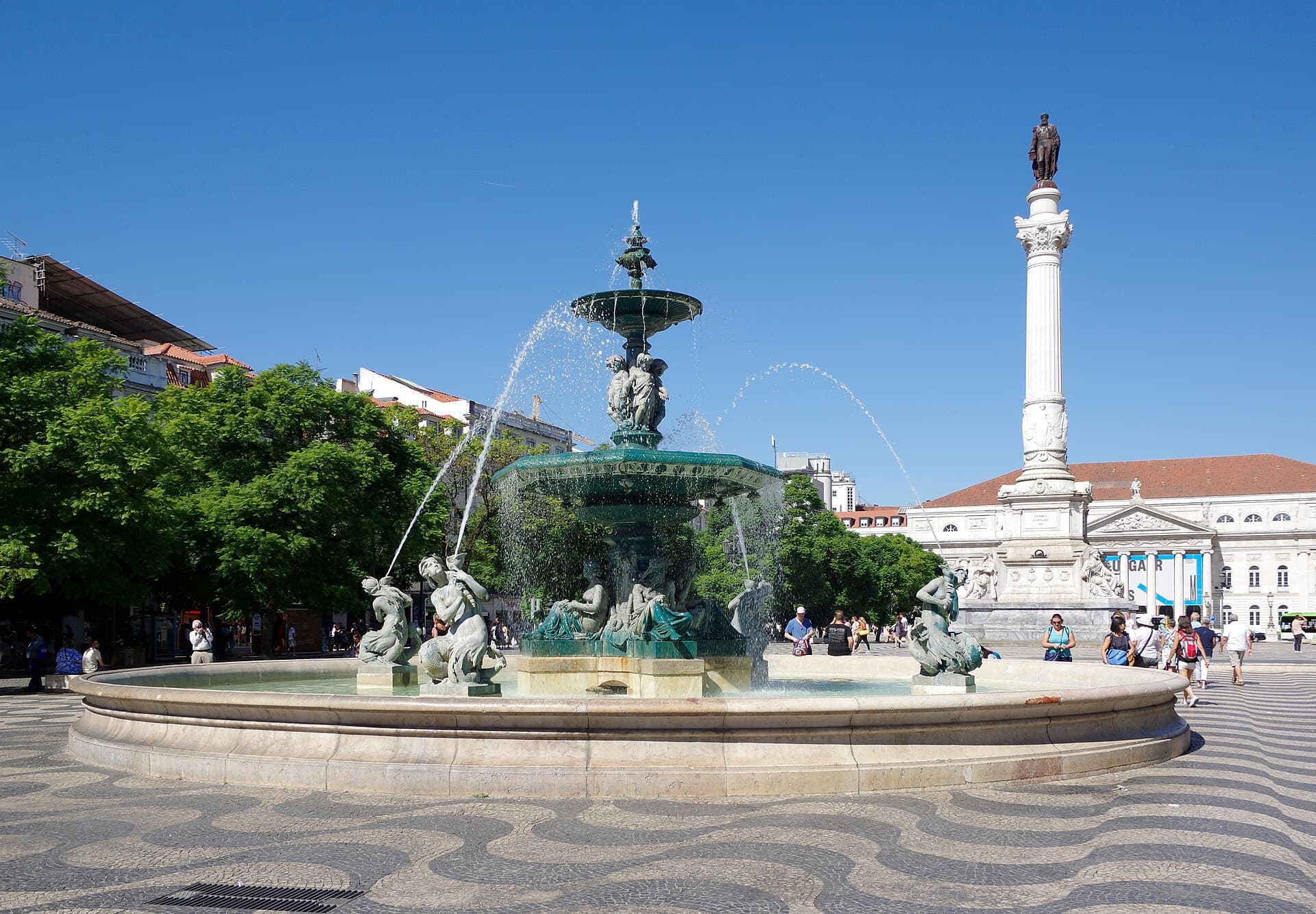
Praça do Rossio: The Older Heart and Its Ghosts
The historic civic square with its famous wave-pattern pavement and a darker memory of the Inquisition beneath its confident order.
- 5
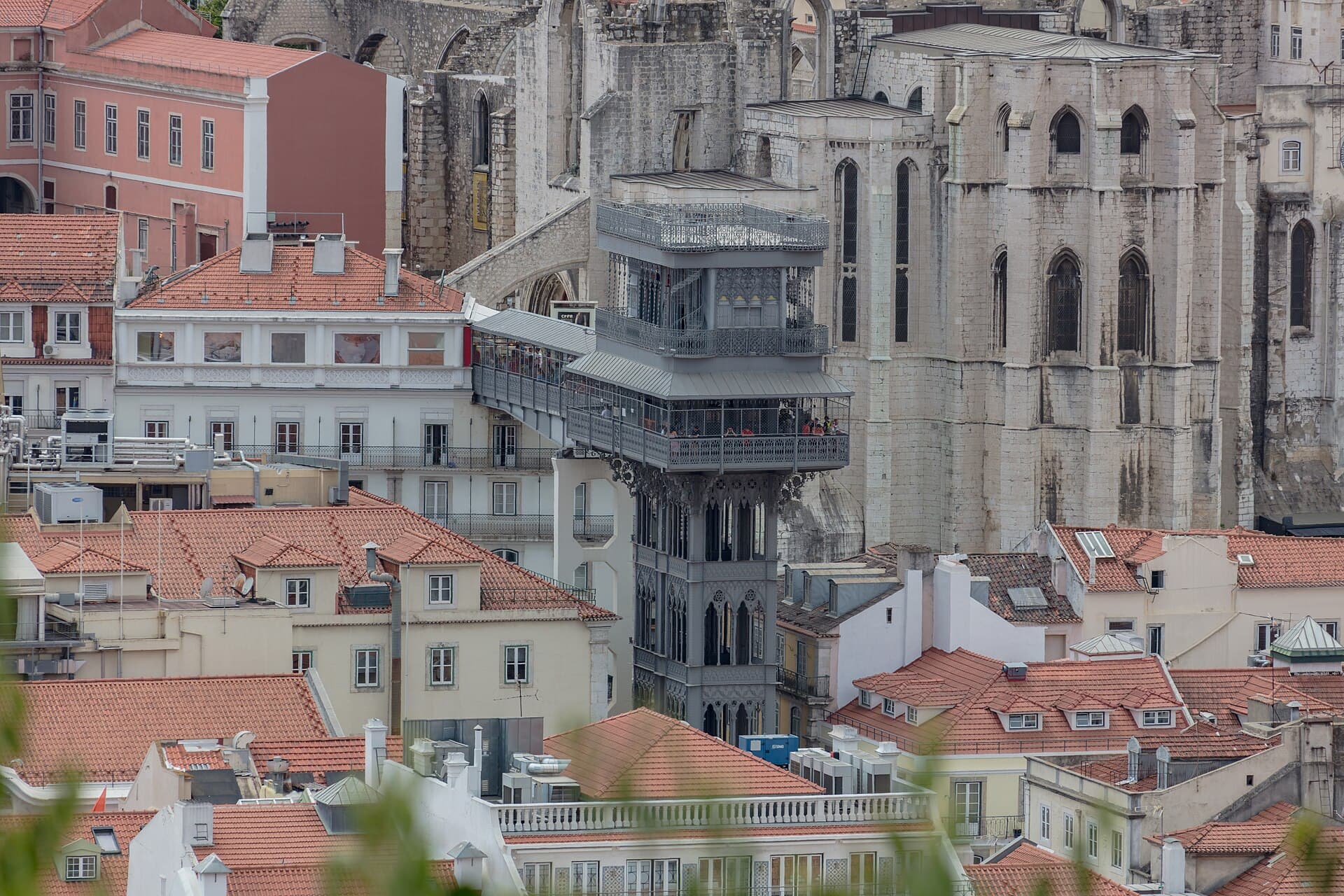
Elevador de Santa Justa: The Flat City Reaching Up
A wrought-iron vertical street lift that lets the flat, rational downtown climb to the hills above.
- 6
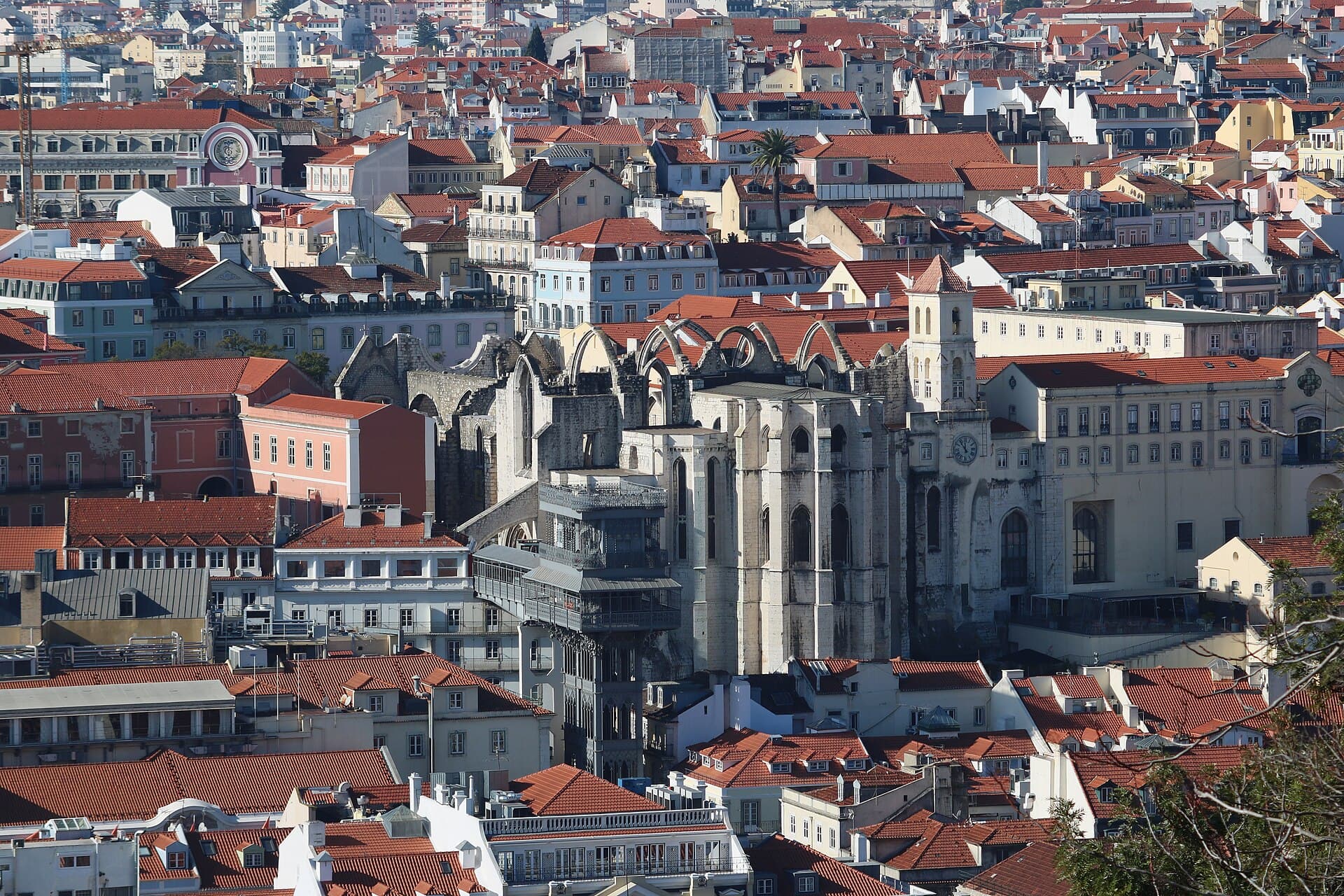
Convento do Carmo: The Wound Left Open
The roofless Gothic nave of a Carmelite convent, the great earthquake's most visible scar, preserved rather than restored.
- 7
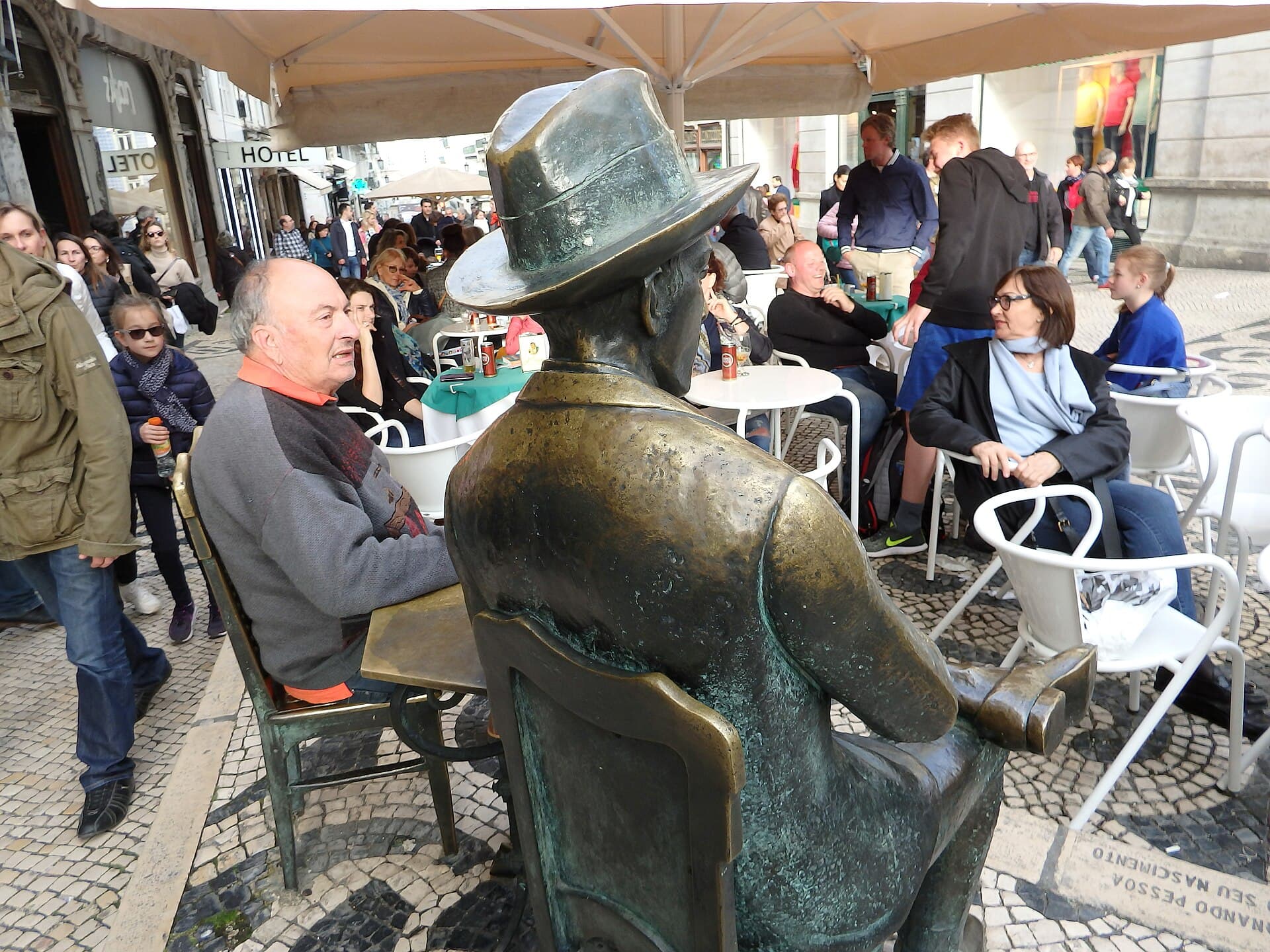
Chiado and the Statue of Fernando Pessoa: Building, Ruin, Rebuilding
Lisbon's literary quarter was rebuilt again after a modern fire. Here a bronze poet sits beside a heritage cafe and closes the theme.
Details
Best Time to Visit
Early morning or late afternoon on a weekday. The Baixa grid is largely flat and pleasant any time, but softer light suits the riverfront square and the open Carmo ruins, and you will avoid both the midday sun and the heaviest crowds along Rua Augusta. If you plan to ride the Santa Justa lift or enter the Carmo museum, arrive early, since both draw long queues by late morning.
Pro Tips
- •The route is mostly flat through the Baixa with one real climb near the end toward Carmo and Chiado, so save a little energy for the ascent or use the Santa Justa lift.
- •The rooftop terrace of the Arco da Rua Augusta gives you the clearest view of the Pombaline grid laid out below, if you want to see the geometry from above.
- •Look for the small brass plaques and building details along Rua Augusta that mark the standardized facades, and remember the real engineering is hidden inside the walls.
- •The Carmo ruins house an archaeological museum with a separate admission ticket, so budget a little time and a few euros if you want to go beyond the open nave.
- •Cafe queues and ticket lines are shorter early, so front-load the ticketed stops, the lift and the Carmo museum, before mid-morning.
- •Carry a refillable water bottle and small change; the walk is short but the ticketed sites and the calcada pavement reward an unhurried pace.
Safety & Precautions
- •Lisbon's calcada pavement, the polished black-and-white stone underfoot, becomes genuinely slippery when wet or worn smooth, so wear shoes with grip and take extra care on the Rossio waves and the Chiado slopes.
- •The climb toward Carmo and Chiado is steep in places; pace yourself, and be aware that summer heat can make the exposed square and open ruins tiring in the middle of the day.
- •The Carmo site and any active churches ask for quiet and modest dress, so keep voices low and shoulders covered when entering.
- •The Baixa mixes pedestrians with trams and traffic on some cross streets and narrow lanes, so watch for tram tracks and vehicles when crossing, especially near Rossio and the lift.
Travel advisory: Exercise Normal Precautions (Level 1).
Gallery
Related Reading
Go deeper on what you'll see, hear, and walk through.
Overview
Best Self-Guided Walking Tours in Lisbon (2026)
3 min
Overview
Lisbon Travel Guide: Days, Transport, Timing, Safety, Budget
8 min
Overview
One Day in Lisbon: A Walkable Morning-to-Evening Itinerary
7 min
Thematic
Lisbon Rebuilt by Reason: Three Answers to Catastrophe
7 min
Companion
The Hidden Cage Under Rua Augusta: How Lisbon Engineered Its Downtown to Shake and Not Fall
6 min
Deep dive
The Santa Justa Lift: How Iron Solved the One Problem Lisbon's Grid Could Not
6 min
Read
What to Eat in Lisbon: The Dishes, Their Origins, and How to Order Like a Local
7 min
Read the walk
The full story of Baixa and Chiado: The City Reason Rebuilt, in words. Prefer to listen? Play it narrated, from home or on location.
Introduction
On the first of November, seventeen fifty-five, an earthquake, a tsunami, and days of fire erased much of the center of Lisbon, capital of Portugal, killing tens of thousands. What rose from that rubble is the reason for this walk. Instead of patching the medieval city back together, King Jose the First's chief minister, the man we now call the Marques de Pombal, rebuilt ruined downtown as a single rational instrument: a rigid grid, standardized facades, and a hidden timber cage engineered to survive the next quake. Historians describe the result as one of the first deliberately earthquake-resistant, largely prefabricated cityscapes in Europe, the Enlightenment poured into stone. This is a paradox worth sitting with. The same disaster that shattered a royal capital also handed one man a clean grid on which to test a radically modern idea, that a city could be engineered against nature. So we will hold two feelings at once: the cold, confident order of the streets below, and the wound left open on the hill above. There are seven stops on this route. Plan on roughly ninety minutes to two hours if you linger, over a walk of a little under two kilometres, mostly flat, with one climb near the end. Go at your own pace. Every stop is short, and you can skip any that does not pull you in. When you arrive at Praca do Comercio, the great riverfront square, begin with stop one.
1. Praça do Comércio: The Ceremonial Face
Stand with the river Tejo at your back and take in the scale of this praca, this square. For centuries this was the Terreiro do Paco, the Palace Yard, because right here stood the Ribeira Palace, the royal residence begun in fourteen ninety-eight under King Manuel the First. The court moved in around fifteen oh two, and over the generations it filled with treasure, including a royal library of roughly seventy thousand volumes and hundreds of works of art. On the first of November, seventeen fifty-five, the earthquake, the wave off this very river, and the fire took all of it. The palace was never rebuilt. Here is where the paradox begins. Rather than mourn the loss with another palace, the reconstruction under the Marques de Pombal turned this space outward to the water and renamed it Praca do Comercio, the Square of Commerce. The message was blunt: the future of Lisbon would be trade, not the closed world of the court. The architect Eugenio dos Santos laid it out as a broad rectangle, open on the river side, framed by matching arcaded buildings for government ministries. At the center rides the bronze equestrian statue of King Jose the First, made by Joaquim Machado de Castro, the foremost Portuguese sculptor of the age, and inaugurated in seventeen seventy-five. Look at the base. The horse tramples serpents, a tidy allegory of order crushing chaos, which is more or less the whole thesis of this walk carved into metal. A catastrophe became the occasion for a coldly optimistic city, and this square is its front door.
2. Arco da Rua Augusta: The Monument to Recovery
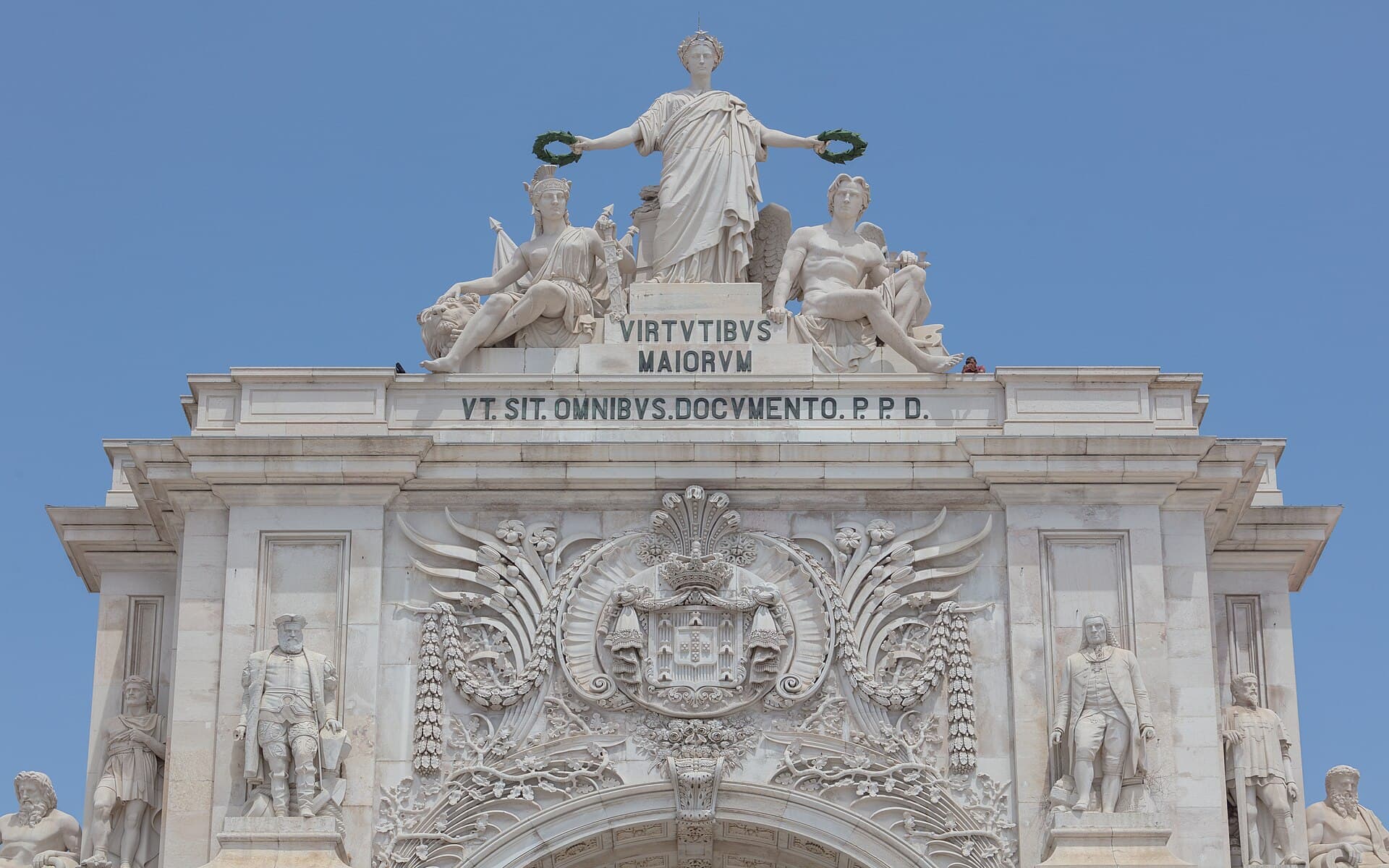
Turn to face away from the river and look up at the great triumphal arch that closes the north side of the square. This is the Arco da Rua Augusta, and its whole purpose is to commemorate the reconstruction of Lisbon after the earthquake of seventeen fifty-five. Now, a word about its age, because the honest story is more interesting than the tidy one. The idea of an arch here dates back to Pombal's plan, but this stone version took a very long time to finish. The structure was completed in eighteen seventy-three and officially inaugurated on the ninth of August, eighteen seventy-five. So the monument to recovery took well over a century to arrive, a fitting pace for a project as patient as rebuilding a capital. Look at who stands on it. The four column statues, carved by the Portuguese sculptor Victor Bastos, are Nuno Alvares Pereira, a medieval military hero; the Marques de Pombal himself, the architect of all this order; Vasco da Gama, the navigator; and Viriatus, the ancient Lusitanian leader who resisted Rome. It is a compact argument about Portuguese identity, defiance, discovery, and rational government all in one facade. Crowning the top is an allegorical group by the French sculptor Celestin Anatole Calmels, showing Glory rewarding Valor and Genius. Below, two reclining figures personify the country's two great rivers, the Tejo, which flows past here, and the Douro up north. There is a rooftop terrace open to visitors now, if you want the grid laid out below you. But even from the ground, notice how the arch frames the street beyond. That straight line is where our story goes underground.
3. Rua Augusta and the Pombaline Grid: The Hidden Cage
You are now walking the spine of the Baixa Pombalina, the rationalist grid rebuilt downtown after the earthquake. This is where the whole thesis of the walk lives, and it is mostly invisible. Look around at the streets first. They run in a strict grid, engineered by military planners: Manuel da Maia, Eugenio dos Santos, and Carlos Mardel. The roads and pavements were fixed at about forty feet wide, roughly twelve metres, running from the river square all the way to Rossio inland. The facades are deliberately calm and repetitive, standardized, with restrained decoration. That uniformity is not a lack of imagination. It is the point. Now for what you cannot see. Inside these walls sits the gaiola pombalina, which translates literally as the cage. It is a three-dimensional wooden truss, vertical posts, horizontal beams, and diagonal braces that cross into Saint Andrew's crosses, embedded in the walls, floors, and roofs, then packed with masonry. When the ground shakes, the timber lets the building flex and absorb the horizontal energy instead of shattering. The design philosophy, put simply, is that the building should shake but not fall. Scholars describe this as among the genesis of seismic engineering in Europe. And it was built fast, using early prefabricated methods, with components largely manufactured outside the city and assembled here on site, a kind of eighteenth-century kit of parts. The reconstruction poured Enlightenment reason directly into the bones of a city. Every calm, identical facade around you is the visible skin of a hidden machine designed to outlast the next catastrophe.
4. Praça do Rossio: The Older Heart and Its Ghosts
You have reached Rossio, officially Praca de Dom Pedro the Fourth, the old civic heart of Lisbon at the inland edge of the Pombaline grid. Look down first. The black-and-white paving underfoot is calcada portuguesa, and this pattern of rolling waves has a name, Mar Largo, the…
Full narration for this stop unlocks with the tour.
5. Elevador de Santa Justa: The Flat City Reaching Up
Here is the moment the flat, rational city reaches up to touch the hills. The Elevador de Santa Justa is a wrought-iron vertical street lift, forty-five metres high across seven storeys, connecting the low Baixa to the higher ground of Carmo and Chiado above. Its ironwork is…
Full narration for this stop unlocks with the tour.
6. Convento do Carmo: The Wound Left Open
Step into the roofless nave of the Convento do Carmo, and let the sky do the talking. This Gothic Carmelite church and convent was founded in thirteen eighty-nine by the Constable Dom Nuno Alvares Pereira, a celebrated medieval military commander, with its church largely…
Full narration for this stop unlocks with the tour.
7. Chiado and the Statue of Fernando Pessoa: Building, Ruin, Rebuilding
You end in Chiado, the literary and shopping quarter that climbs above the Baixa along Rua Garrett, and the whole theme of this walk comes full circle here. On the twenty-fifth of August, nineteen eighty-eight, a major fire began at the Grandella department store and spread…
Full narration for this stop unlocks with the tour.