Oudegracht Wharves: The Streets Below the Street
90 min · 3.3 km · easy
If you want to eat like a local in Utrecht, aim for three things the city actually made its own: the Domtorentje, a Dom Tower shaped dark chocolate; Bergman's Botersprits, a piped butter cookie baked to a recipe from 1888; and Vockingworst, a pale liver sausage that Utrechters eat thin on bread with mustard. Around those sit the wider Dutch table you will meet at the market and the canal terraces: raw herring, bitterballen, stamppot, poffertjes, appeltaart, and farm cheese from the surrounding province. This is a compact eating city. The oldest specialties cluster within a few streets of the Dom Tower, and the best places to try them are the Zadelstraat bakeries, the Vredenburg market, and the wharf-level cafe terraces along the Oudegracht.
Read this as a companion who wants you to order confidently, know where each dish comes from, and spend your walking day well. If you want to build a route around it, pair the food with our Utrecht walking tours and the city page at /netherlands/utrecht.
The three things Utrecht itself invented
Domtorentjes are the clearest local claim. The Theo Blom bakery on the Zadelstraat has made them since 1922. Each one is a large dark chocolate bonbon with a soft, creamy chocolate filling, pressed with a relief of the Dom Tower on top, so you are literally eating the city's landmark in miniature. They are sold loose or in small boxes at the bakery counter. Buy two or three, not a slab: they are rich, and they travel badly in a warm pocket.
Bergman's Botersprits, the Utrechtse Spritsen, is the cookie to bring home. Sprits is an old Dutch piped butter cookie, but the Utrecht version follows a recipe from the baker Pieter Bergman dated 1888. The dough is piped in long ridged bars and sliced right after baking, which gives it a short, crumbly, heavily buttery bite. Theo Blom still pipes them, and the bakery keeps the connection to the original Bergman method. If you only try one baked good in Utrecht, this is the honest one.
Vockingworst is the savory local specialty and the one tourists miss. It is a liver sausage made to a Vocking family recipe from 1891. Real Vocking is greyish rather than pink, because it is made without artificial coloring or preservatives, and locals eat it in thin slices on bread with a smear of mustard. Order it at a specialty butcher or delicatessen and ask for it sliced thin. It is a spreadable, mild, slightly sweet liver flavor, closer to a fine pate than to a firm salami.
The wider Dutch table you will actually order
Hear a stop from this walk
Weerdsluis: where the city met the river
Beyond the three signatures, Utrecht serves the standard Dutch canon well, and knowing how to order it is half the pleasure.
Haring (raw herring) is the classic street snack. The prized version is Hollandse Nieuwe, the new-season catch that arrives from around June, prepared traditionally and required to hit at least sixteen percent fat. You can eat it the theatrical way, holding it by the tail and lowering it into your mouth, or the calmer way, in a soft white bun (a broodje haring) with chopped raw onion and slices of pickle. The onion is not decoration: its sharpness cuts the buttery fish. Buy it from a fish stall, not a sit-down menu, and eat it standing up.
Bitterballen are the pub order. They are small, crisp, deep-fried balls of thick meat ragout, served hot with sharp mustard, and they are the natural companion to a beer during the Dutch late-afternoon drink called the borrel. Order a plate to share on a canal terrace.
Stamppot is winter comfort food: mashed potato blended with a vegetable, usually kale (boerenkool), sauerkraut (zuurkool), or carrot and onion (hutspot), served with a smoked sausage called rookworst. It is filling, cheap, and seasonal, so you will find it more readily from autumn through early spring.
Poffertjes are small, puffy pancakes dusted with powdered sugar and finished with butter, sold at pancake houses and festival stalls. Appeltaart, the deep Dutch apple pie packed with cinnamon-spiced apple and raisins, is the standard cafe order with coffee. Both are best treated as an afternoon pause, not a dessert after a big meal.
Where to eat it: market, bakery, and the wharves
The Vredenburg market is the single best place to graze. It runs on Wednesday, Friday, and Saturday, with Saturday the largest and most varied day, and cheese and bread are its strengths. The province of Utrecht is dairy country, so this is where you buy young and aged Gouda-style farm cheese, sometimes flavored with cumin or herbs, plus fresh bread, roasted nuts, fruit, and a herring stall. Bring cash as a backup and eat as you walk.
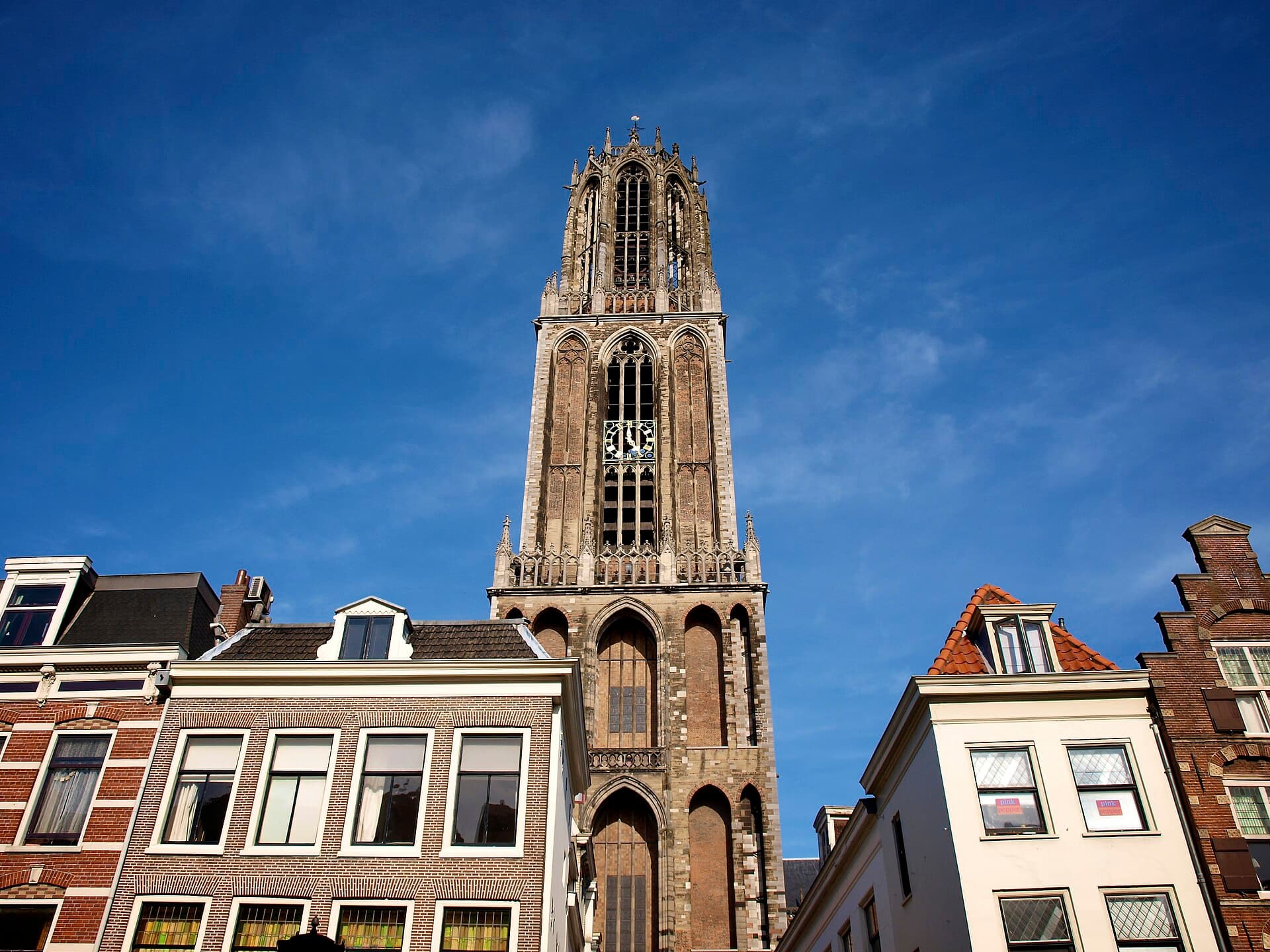
The Zadelstraat, a short street running toward the Dom Tower, is the sweet-and-specialty spine. Theo Blom at number 23 covers both the Domtorentjes and the Bergman spritsen, so you can do your edible souvenirs in one stop. This street sits right on the route of our Dom and Roman history walk, which ends near the same square.
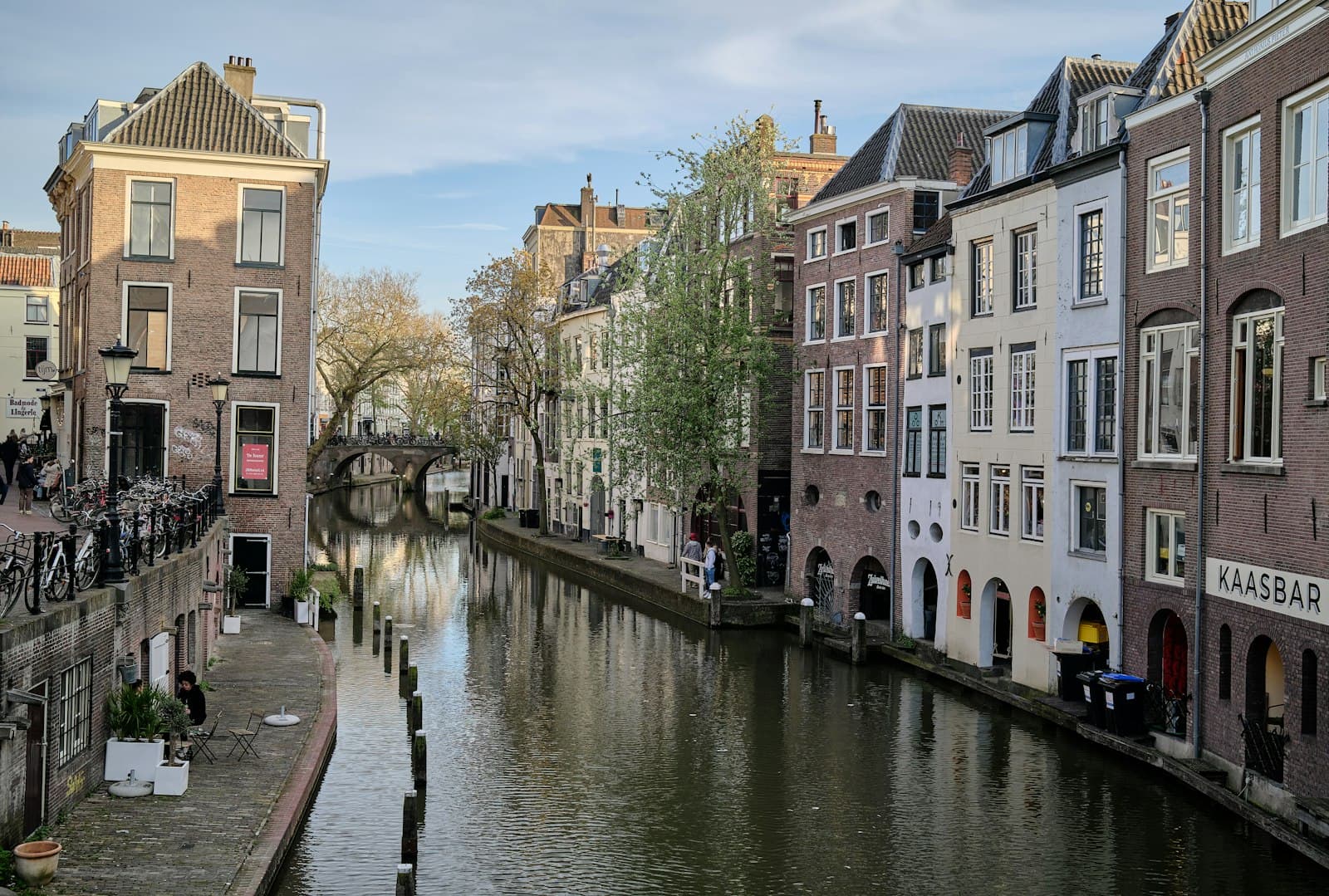
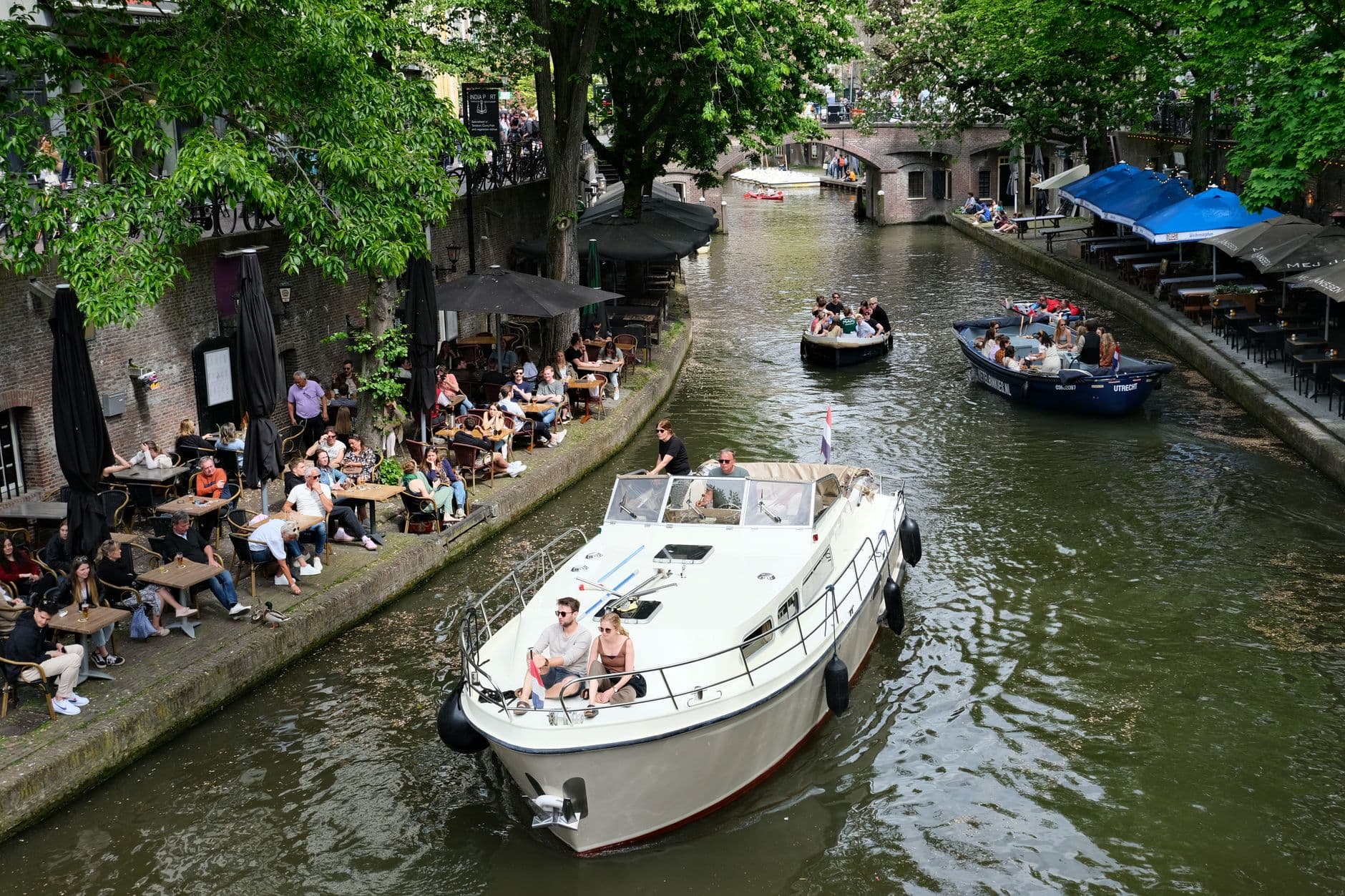
The Oudegracht wharf terraces are Utrecht's signature way to sit and eat. The canal has a lower street, the werf, dug below road level, and old vaulted cellars (werfkelders) that once took goods straight off the boats now hold cafes and restaurants whose terraces sit right at the water. This is the setting for a borrel with bitterballen or a long coffee and appeltaart. The wharves are the spine of our canal and cellars walk, so a food stop and the walk are the same geography.
If you want a stronger local drink, Utrecht also has a distilling tradition: the Staffhorst family has produced jenever (Dutch gin's ancestor) since 1861, starting from a distillery on the Oudegracht. A small glass of jenever is the traditional borrel pour alongside those bitterballen.
How to order like a local
- Say the dish name plainly. "Een broodje haring" is a herring roll; "met uitjes" adds onion. Most vendors switch to English instantly, so a two-word attempt is plenty.
- Herring is a stand-and-eat snack, not a restaurant course. Buy it at a fish stall.
- For bitterballen, the ritual is the late-afternoon borrel: order them with a beer between roughly four and six, on a terrace.
- Coffee culture is real and unhurried. Ordering "koffie" and an appeltaart buys you a table for as long as you like; nobody rushes you off.
- Cheese at the market is meant to be tasted before you buy. Point, ask for a taste (proeven), then choose young (jong) or aged (oud).
- For edible gifts, the spritsen keep for days and survive a suitcase; the Domtorentjes and fresh herring do not, so eat those the same day.
Fitting food to a walking day
Utrecht rewards a slow eating rhythm because everything is close. A practical plan: graze the Vredenburg market in the morning if it is a Wednesday, Friday, or Saturday, pick up Domtorentjes and spritsen on the Zadelstraat near the Dom Tower, then take a wharf terrace on the Oudegracht for herring, bitterballen, or coffee and pie in the afternoon. That sequence overlaps almost exactly with the Utrecht walking tours: the Dom and Roman route runs past the Zadelstraat bakeries, and the wharf and cellars route puts you on the canal terraces where the borrel happens. Start from /netherlands/utrecht to pick a walk, then let the food stops fall along the line you are already walking.
Sources
Frequently asked questions
- What food is Utrecht known for?
- Utrecht is known for three local specialties: Domtorentjes, dark chocolate bonbons shaped with a Dom Tower relief that the Theo Blom bakery has made since 1922; Bergman's Botersprits, a piped butter cookie following Pieter Bergman's 1888 recipe; and Vockingworst, a pale liver sausage from a Vocking family recipe dating to 1891. Alongside these, Utrecht serves the standard Dutch table of herring, bitterballen, stamppot, and farm cheese.
- What is a Domtorentje and where can I buy one?
- A Domtorentje is a large dark chocolate bonbon with a creamy chocolate filling, pressed with a relief of Utrecht's Dom Tower on top. The Theo Blom bakery on the Zadelstraat has made them since 1922 and sells them loose or in small boxes. They are rich, so a few are plenty, and they are best eaten the same day rather than carried far in warm weather.
- When can I eat Hollandse Nieuwe herring in Utrecht?
- Hollandse Nieuwe, the prized new-season raw herring, arrives from around June. To qualify it must be prepared traditionally and contain at least sixteen percent fat. You eat it from a fish stall, either held by the tail and lowered into your mouth or served in a soft bun with chopped raw onion and pickle, which balances the buttery fish.
- Which days is the Vredenburg market open in Utrecht?
- The Vredenburg market runs on Wednesday, Friday, and Saturday, with Saturday the largest and most varied day. Cheese and bread are its strengths, and because the province of Utrecht is dairy country you will find young and aged farm cheeses alongside fresh bread, nuts, fruit, and a herring stall. Bring cash as a backup.
- What are bitterballen and how do locals eat them?
- Bitterballen are small, crisp, deep-fried balls of thick meat ragout served hot with sharp mustard. Locals order them during the borrel, the late-afternoon Dutch drink, usually with a beer between roughly four and six in the evening. In Utrecht the natural setting is a wharf-level terrace along the Oudegracht canal.
- What is Vockingworst and how should I order it?
- Vockingworst is an Utrecht liver sausage made to a Vocking family recipe from 1891. It is greyish rather than pink because it uses no artificial coloring or preservatives, and its flavor is mild and slightly sweet, closer to a fine pate. Order it at a specialty butcher or delicatessen, ask for thin slices, and eat it on bread with mustard.
Ready to experience it?
Oudegracht Wharves: The Streets Below the Street
90 min · 3.3 km · easy
More from Utrecht
Explore more at your own pace.
One Day in Utrecht: A Walkable Morning-to-Evening Itinerary
Utrecht: The City That Keeps Its Story Below the Surface
The Dom Church of Utrecht and the Storm That Split It From Its Tower
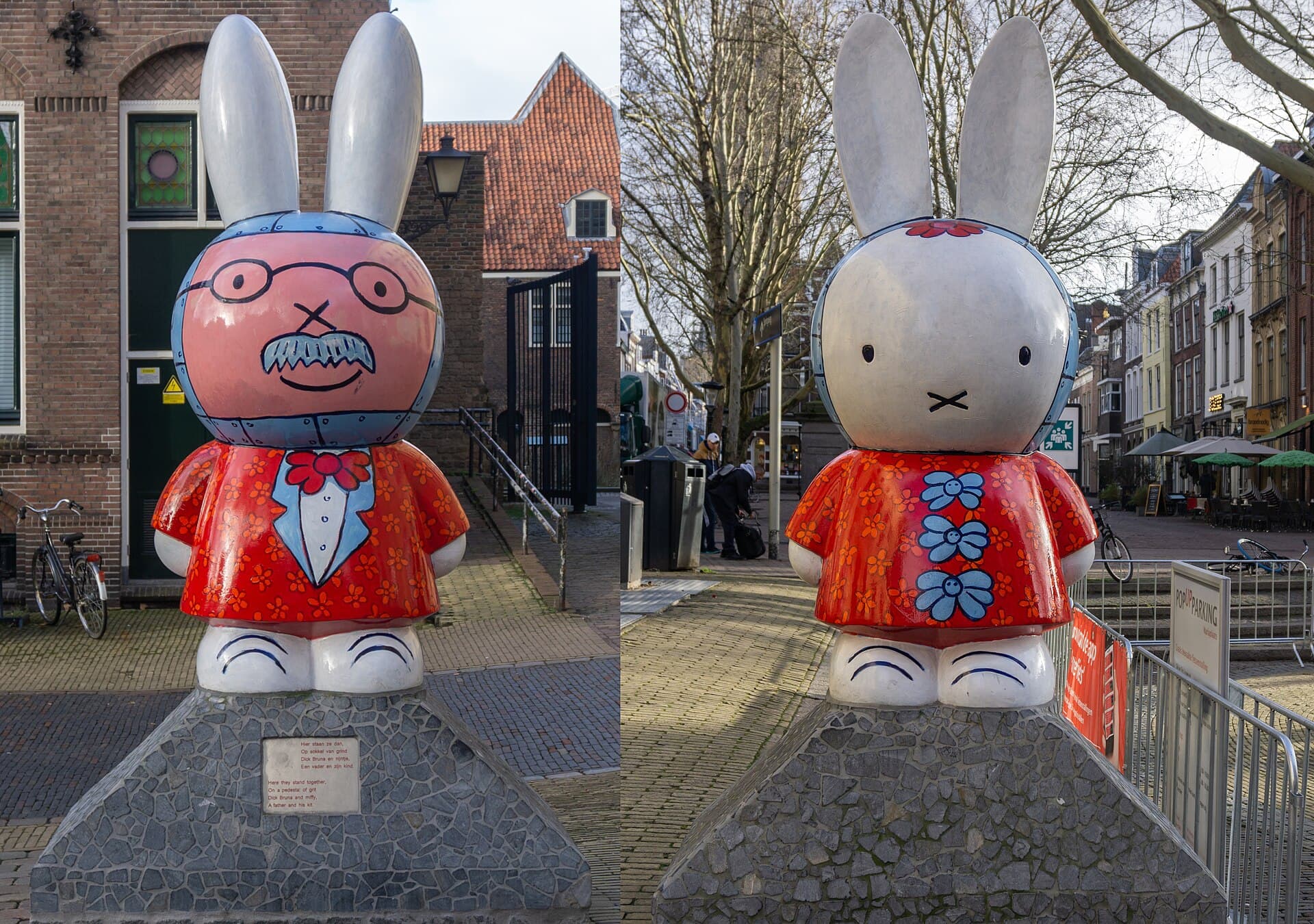
Nijntje Pleintje: Utrecht's Little Bronze Rabbit and the Man Who Drew Her
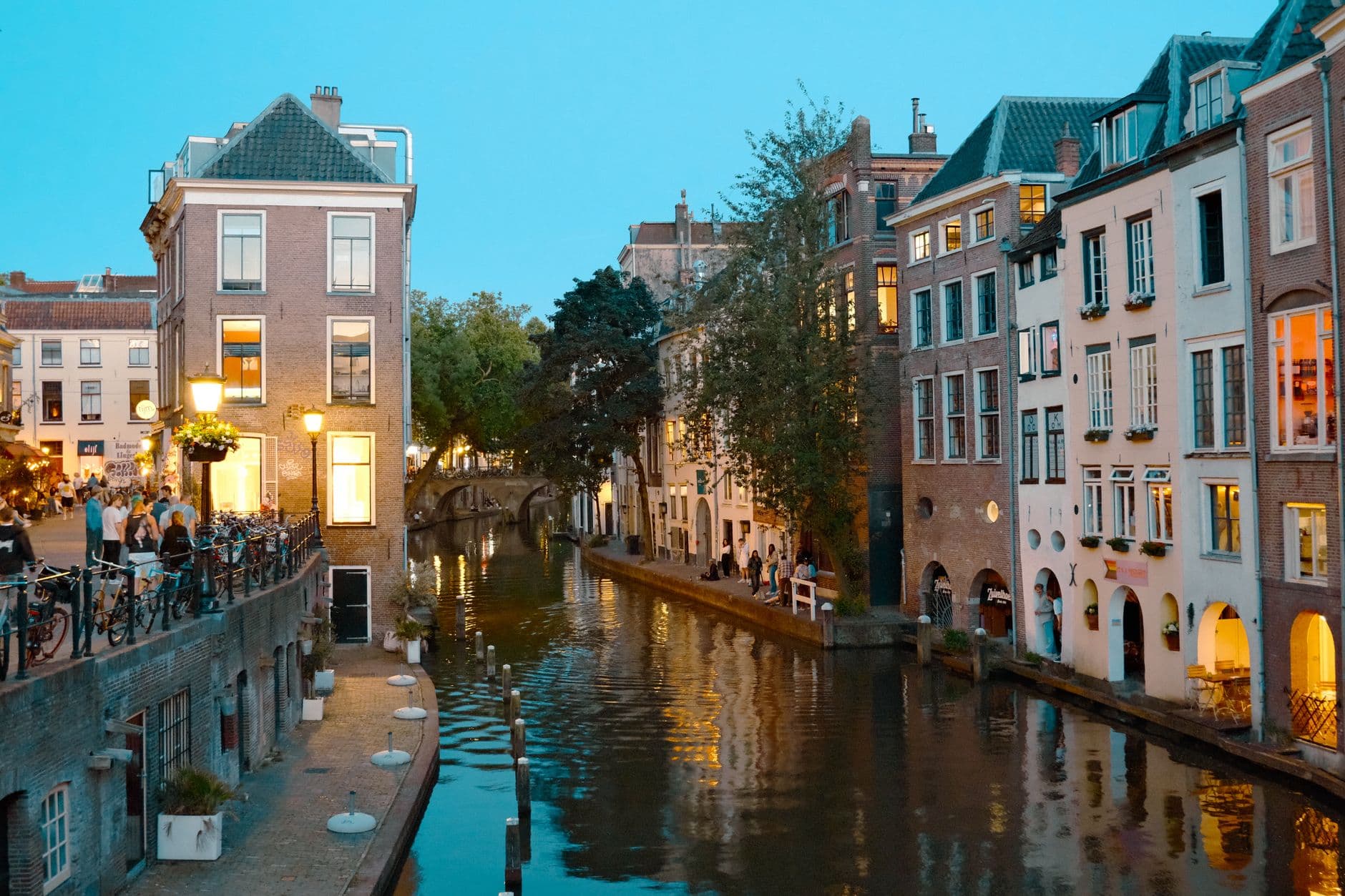
The Oudegracht: Why Utrecht's Canal Runs Below the Street