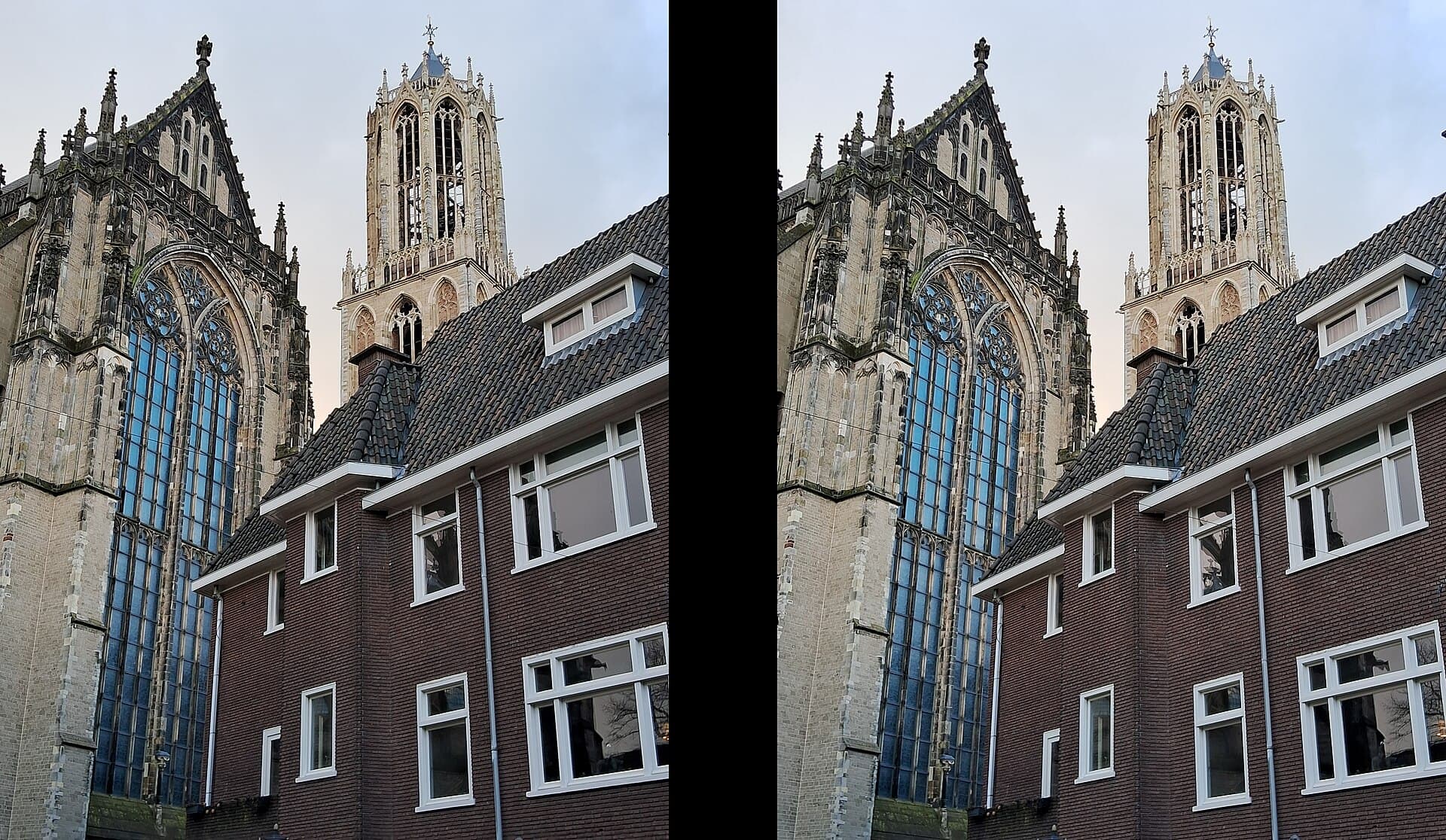
The Dom Church of Utrecht, the Domkerk, is a cathedral missing its middle. On the first of August in the year sixteen seventy-four, a violent storm crossed the province and collapsed the unfinished nave, the long central hall that once joined the church to its tower. That nave was never rebuilt. What remains is the choir and the transept on one side of an open square, the freestanding Dom Tower on the other, and empty air where the building used to continue. The gap is not a plaza a planner drew. It is a wound that was left open. Read the Dom Church correctly and you can read the whole hill it sits on: a Roman river crossing, a medieval bishopric, and a storm that rearranged the skyline in an afternoon.
A cathedral that survives as a fragment
The Domkerk is dedicated to Saint Martin of Tours, and its Gothic rebuilding began in the year twelve fifty-four. It is the only pre-Reformation cathedral in the Netherlands, and it was once the largest church in the country. Those two facts sit oddly next to what you actually see, because the largest church in the land now shows you only its far end. Stand in front of it and you are looking at the crossing and the choir of a great cathedral whose central hall is gone.
The city's early weight shows in who was buried here. Conrad the Second, Holy Roman Emperor, died in Utrecht in the year one thousand thirty-nine, and Henry the Fifth in eleven twenty-five. The heart and bowels of each were interred in this cathedral. This was not a provincial parish church. It was the seat of the medieval bishopric and one of the great Gothic churches of the Low Countries, tied directly to the emperors who ruled the wider world.
What the storm actually was
Hear a stop from this walk
Pieterskerk and the church-cross
The temptation is to say a tornado struck Utrecht in sixteen seventy-four. In Dutch the event was remembered as Het Schrickelik Tempeest, the Terrible Tempest, and popular memory called it a tornado, or a waterhoos, a waterspout. It killed more than a thousand people across the Netherlands. But precision matters here, because historians are careful with it. A modern reconstruction published in the Copernicus natural hazards journal argues the damage most likely came from straight-line derecho winds rather than a single tornado. A derecho is a violent, long-lived, wide-spreading windstorm.
The reconstruction also explains why the nave in particular fell. It was still unfinished, and it was poorly supported. It lacked flying buttresses, and it carried its roof on a wooden structure rather than a stone vault. So the honest version is this: call it a violent storm, and know that scholars debate whether it was tornado or straight-line winds. Either way, the vulnerable nave came down, and the tower and choir stayed up. That is the paradox in front of you. The most famous view in Utrecht, the tower framed across the empty Domplein, exists only because the middle of the building is missing.
The tower that lost its church
Cross the square and look up at the Domtoren. It rises one hundred and twelve metres and is the tallest church tower in the Netherlands. It was built over roughly six decades, from about thirteen twenty-one to thirteen eighty-two, to the design of an architect recorded as John of Hainaut, and it was meant to crown the cathedral of Saint Martin. Climbing it means four hundred and sixty-five steps, and on a clear day the view reaches as far as both Amsterdam and Rotterdam.
The strange thing is what the tower is not attached to. A bell tower belongs to a church. It rises out of the same structure, part of the same silhouette. This one rises out of nothing. There is air where the church should meet it, and the two have never been reconnected since the nave fell. Everything about the tower says it was meant to anchor a whole cathedral, and everything about the square says that cathedral is no longer whole.
The hill beneath everything
The reason a cathedral rose here at all runs deeper than the pavement. Utrecht began as a Roman fort called Traiectum, Latin for river crossing, or ford. It was founded around the year forty-seven under the Emperor Claudius, on the southern bank of the Rhine, on the frontier the Romans called the limes. The final stone fort held around five hundred troops and had a headquarters building with underfloor heating. Look down on the Domplein and you may find stainless steel ridges tracing the fort walls across the square. On some evenings a faint colored mist rises from them. The Roman stones themselves lie roughly four to five metres below, in an undercroft called DOMunder. The Lower Germanic Limes, this site included, became a UNESCO World Heritage Site in the year twenty twenty-one.
So the Dom Church is one layer in a stack. A military crossing became a bishopric, the bishopric raised a cathedral and the tallest tower in the country, and a storm removed the connecting piece and left the layers legible. That is what makes this a walk rather than a single stop. The full route reads all of it, and you can follow the whole story of Utrecht walking tours from this one hill.
Walking the church quarter that closed the gap
The tour does not end at the church. It moves outward through the quiet precinct that grew around the cathedral. Step through the gate beside the Domkerk and the square drops away into the Pandhof, the cloister garden, laid out roughly between thirteen ninety and fourteen forty and still planted with the herbs, medicinal, and dye plants once grown in the bishops' gardens. Its central fountain, showing the fourteenth-century canon Hugo Wstinc bent over his writing, was actually made in the year nineteen fifteen.
A corner of the Domplein carries the Academiegebouw, the main building of Utrecht University, begun around eighteen ninety-one. Built into it is the medieval Great Chapter House of the fourteen sixties, where the Union of Utrecht was signed on the twenty-third of January in the year fifteen seventy-nine, a document remembered as a foundation of the Dutch Republic, though it did not create a centralized nation on its own. Utrecht University was founded in sixteen thirty-six and inherited both the chapter house and the cloister.
East of the Dom stands the Romanesque Pieterskerk, consecrated on the first of May in the year ten forty-eight, its nave pillars each carved from a single piece of red sandstone, one corner of a debated ring of churches said to form a cross around the cathedral. The walk closes at Flora's Hof off Servetstraat, on the footprint of the bishops' palace demolished in the year eighteen hundred and three, where you turn and look up to see the tower framed in one clean view.
Everything on this route is level, close together, and free to enter. When you stand between the tower and the church, ready to walk it, begin in Utrecht.
Sources
- St. Martin's Cathedral, Utrecht (Wikipedia): the cathedral's dedication, its twelve fifty-four Gothic rebuilding, its status as the only pre-Reformation cathedral in the Netherlands, and the imperial burials.
- 1674 derecho (Wikipedia): the first of August sixteen seventy-four storm, the Copernicus natural hazards journal reconstruction, and the derecho-versus-tornado debate.
- Dom Tower of Utrecht (Wikipedia): the one hundred and twelve metre height, the thirteen twenty-one to thirteen eighty-two construction, John of Hainaut, and the four hundred and sixty-five steps.
- Traiectum (Utrecht) and Frontiers of the Roman Empire, The Lower German Limes (Wikipedia and UNESCO): the Roman fort, its founding under Claudius, and the twenty twenty-one World Heritage inscription.
- Union of Utrecht (Wikipedia): the fifteen seventy-nine signing in the chapter house and its place in the emergence of the Dutch Republic.
Ready to experience it?
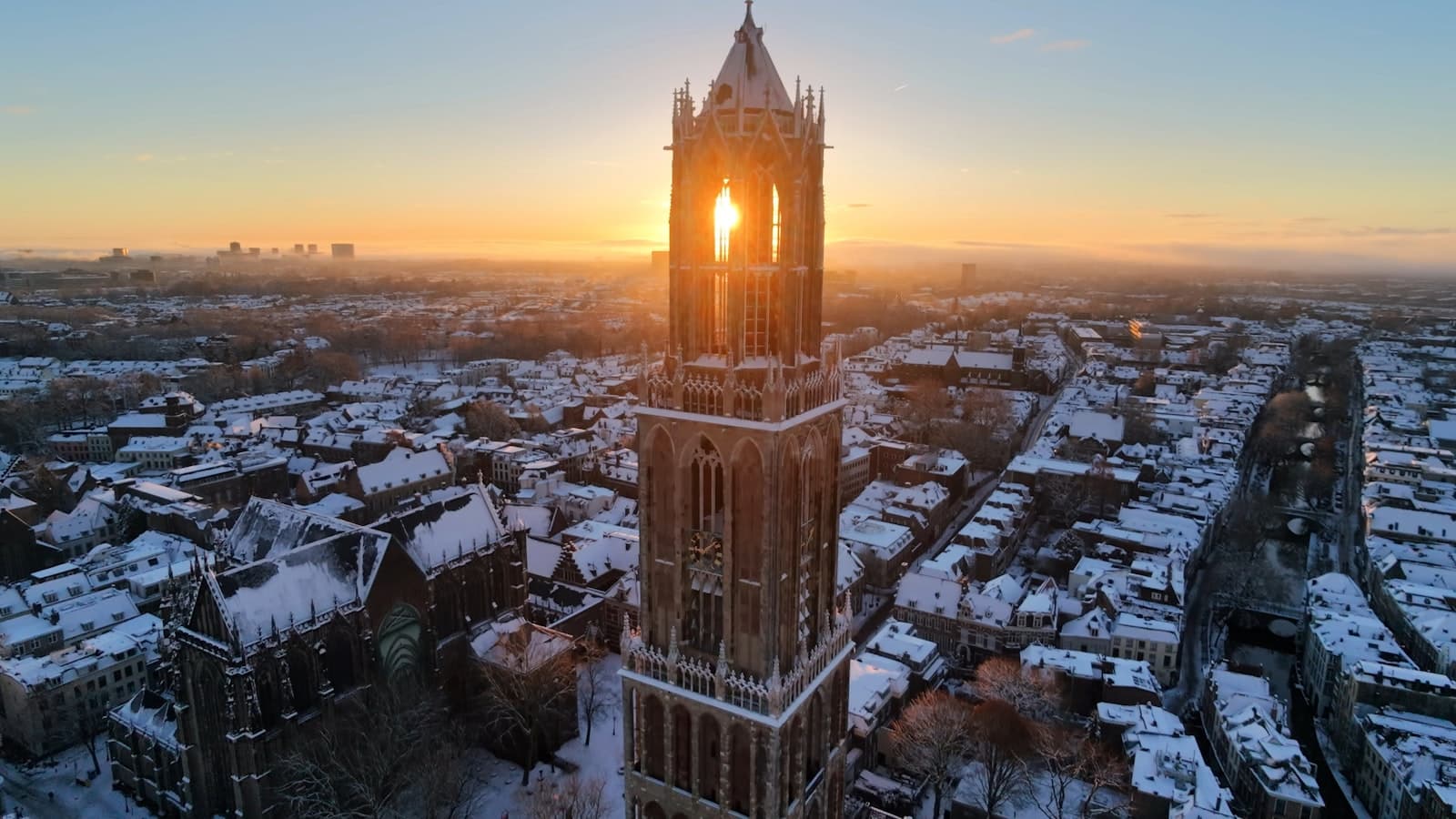
Domtoren and Domplein: The Tower and the Church a Storm Took
85 min · 1.2 km · easy
More from Utrecht
Explore more at your own pace.
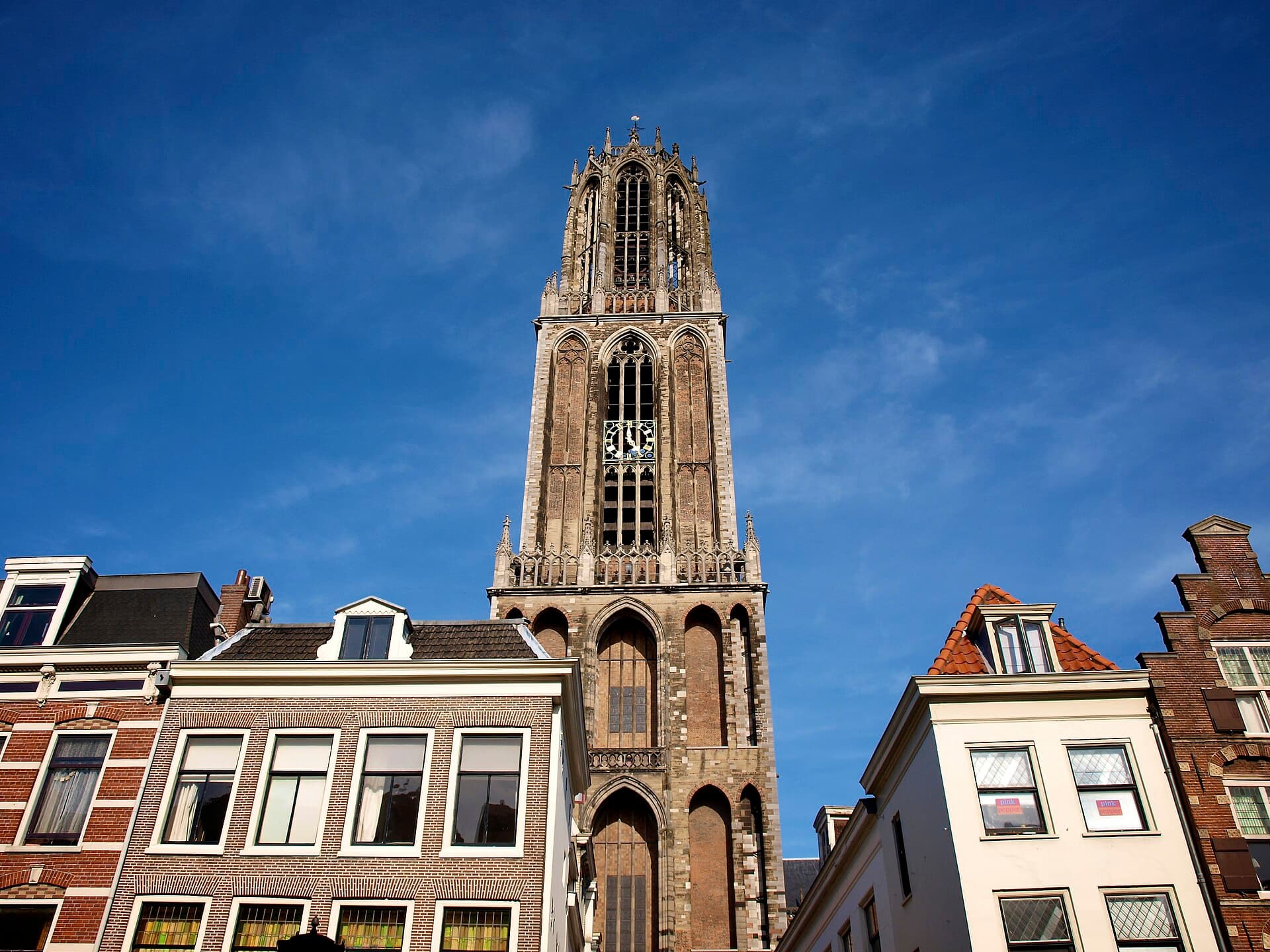
One Day in Utrecht: A Walkable Morning-to-Evening Itinerary
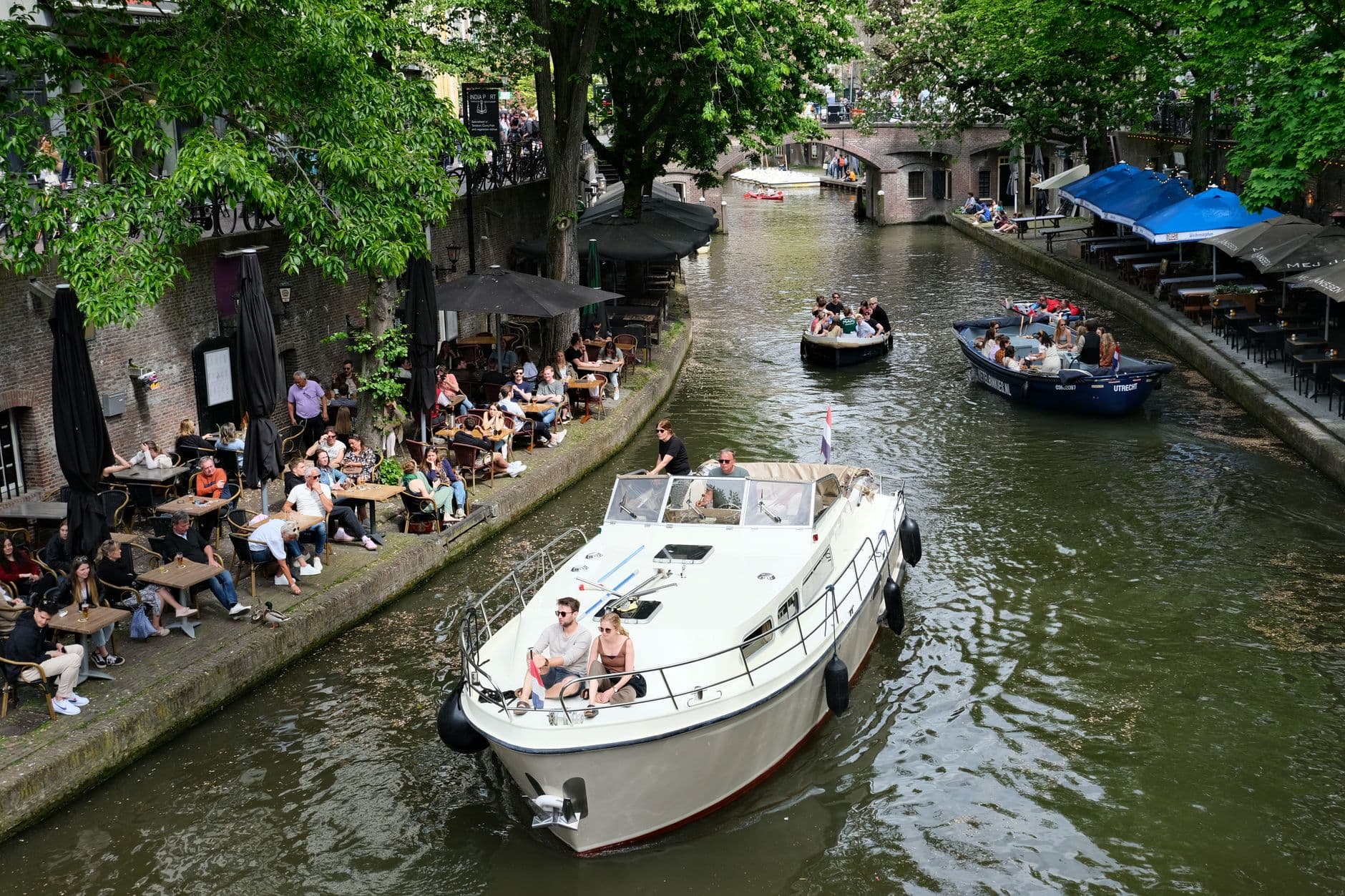
Utrecht: The City That Keeps Its Story Below the Surface
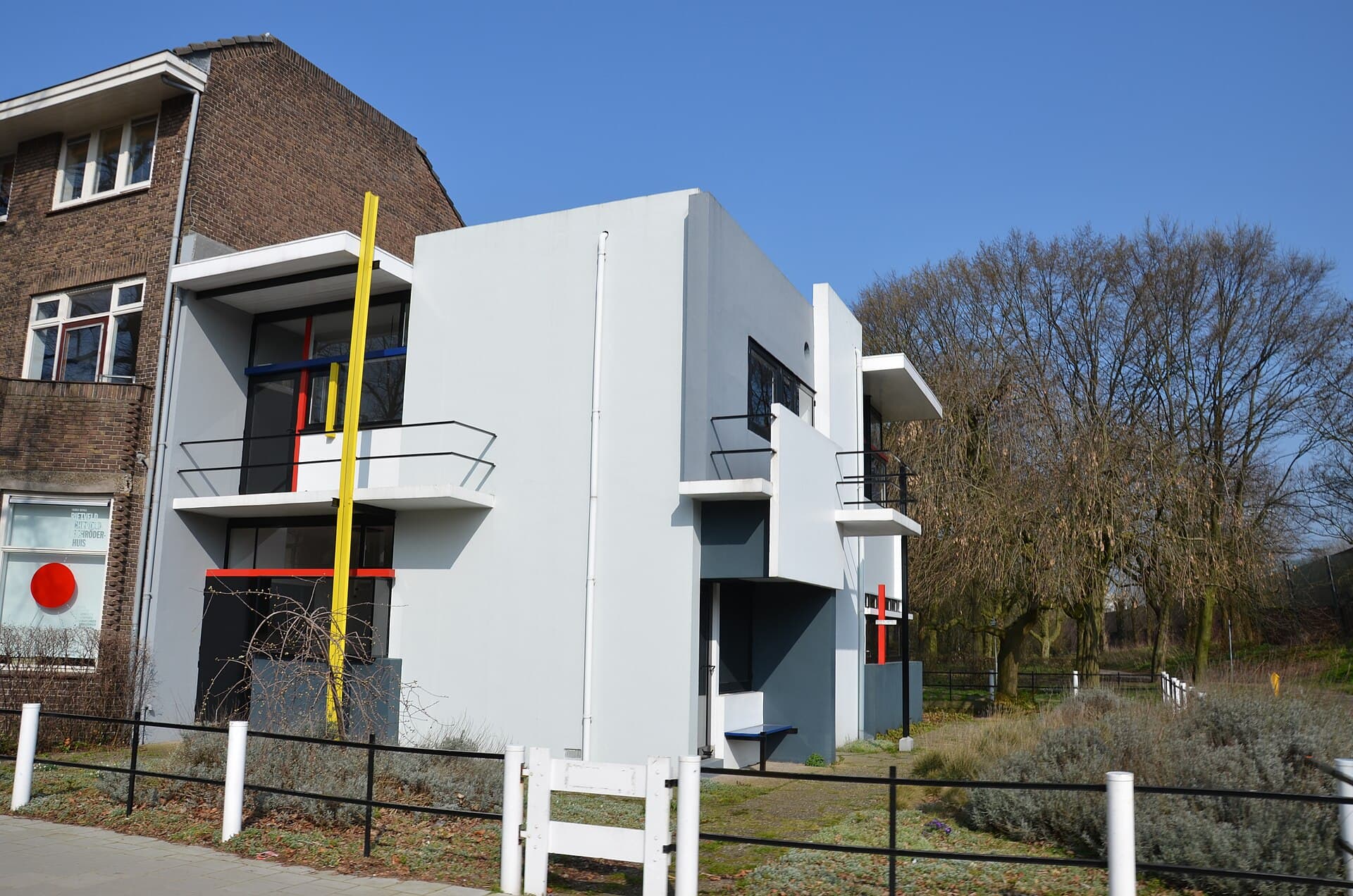
The Rietveld Schröder House: Utrecht's Manifesto You Can Stand Inside
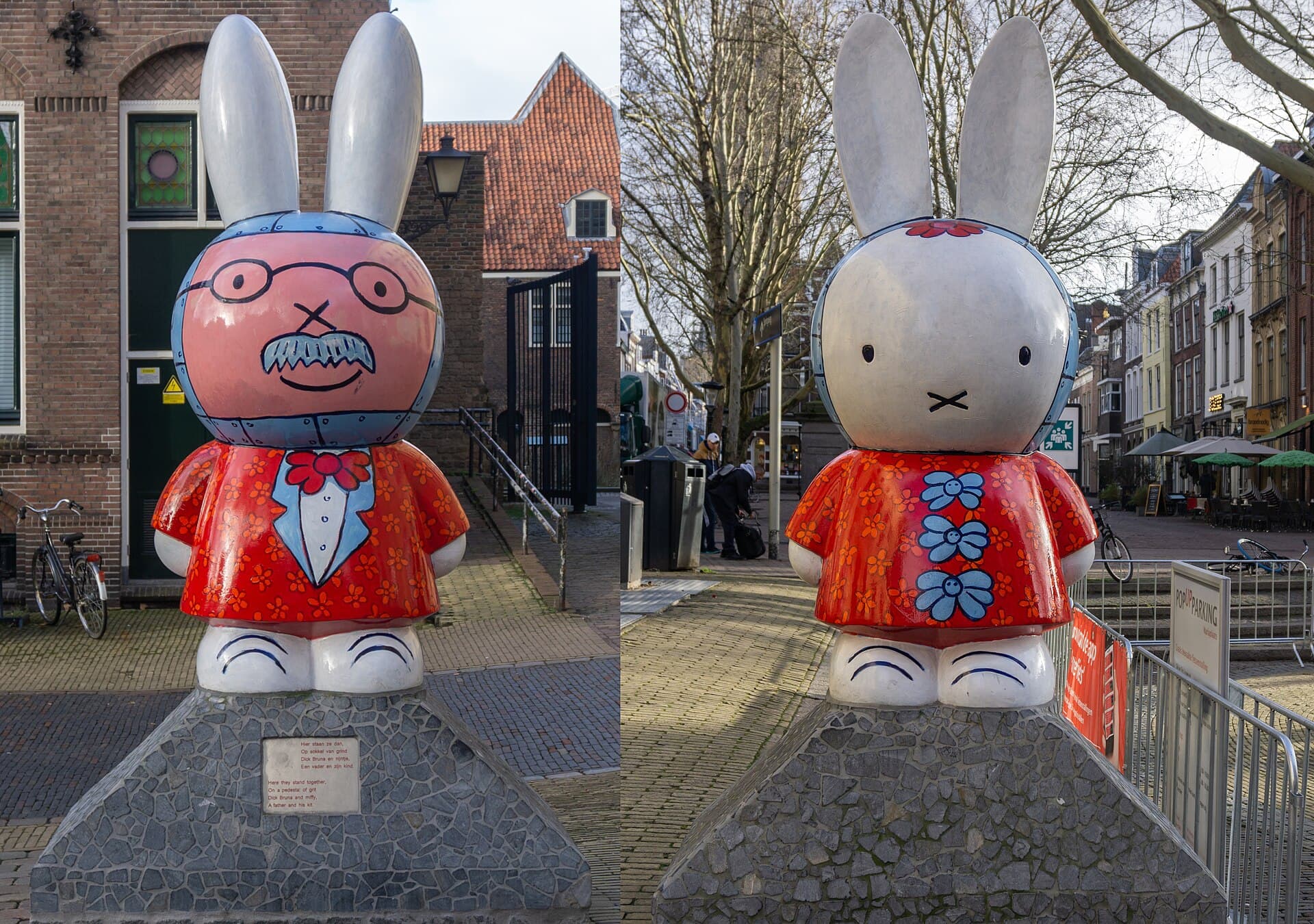
Nijntje Pleintje: Utrecht's Little Bronze Rabbit and the Man Who Drew Her
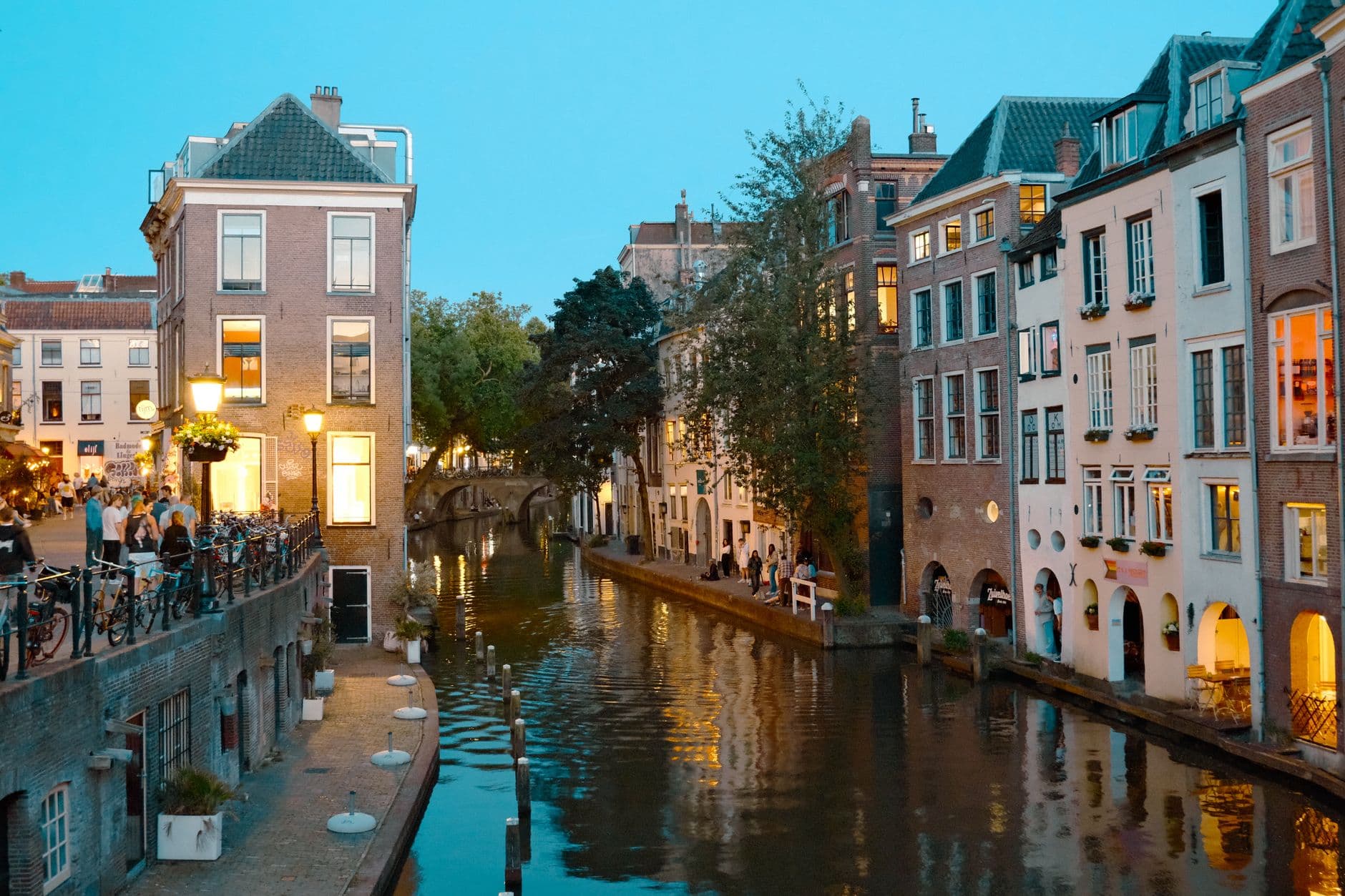
The Oudegracht: Why Utrecht's Canal Runs Below the Street