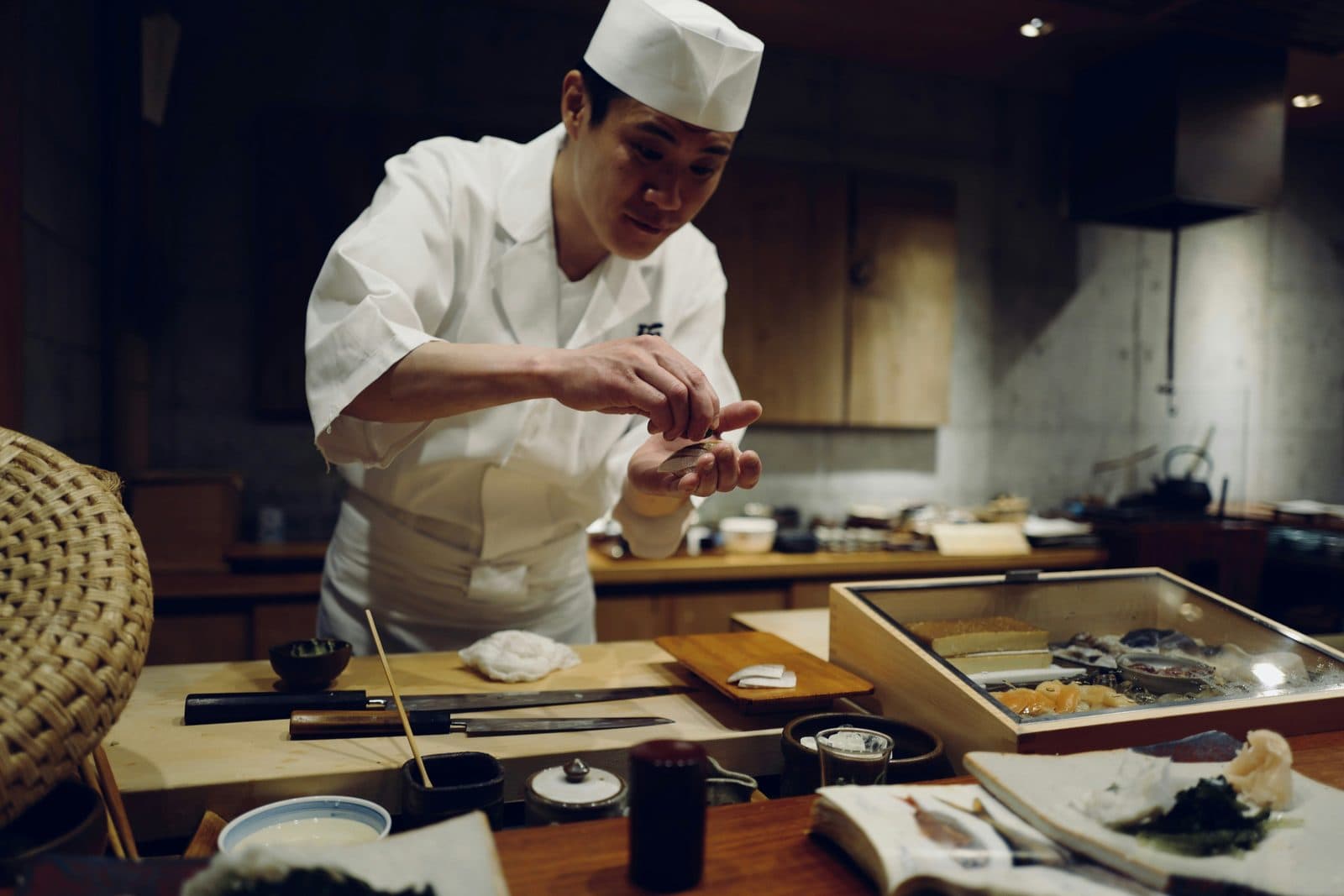
Kanazawa food draws on the Sea of Japan and the old Maeda court. Signature dishes include kaisen-don, a bowl of vinegared rice under the day catch; nodoguro, buttery blackthroat seaperch; winter snow crab and sweet shrimp; and jibuni, a flour-coated duck stew central to Kaga cuisine. Gold-leaf ice cream and wagashi sweets round it out.
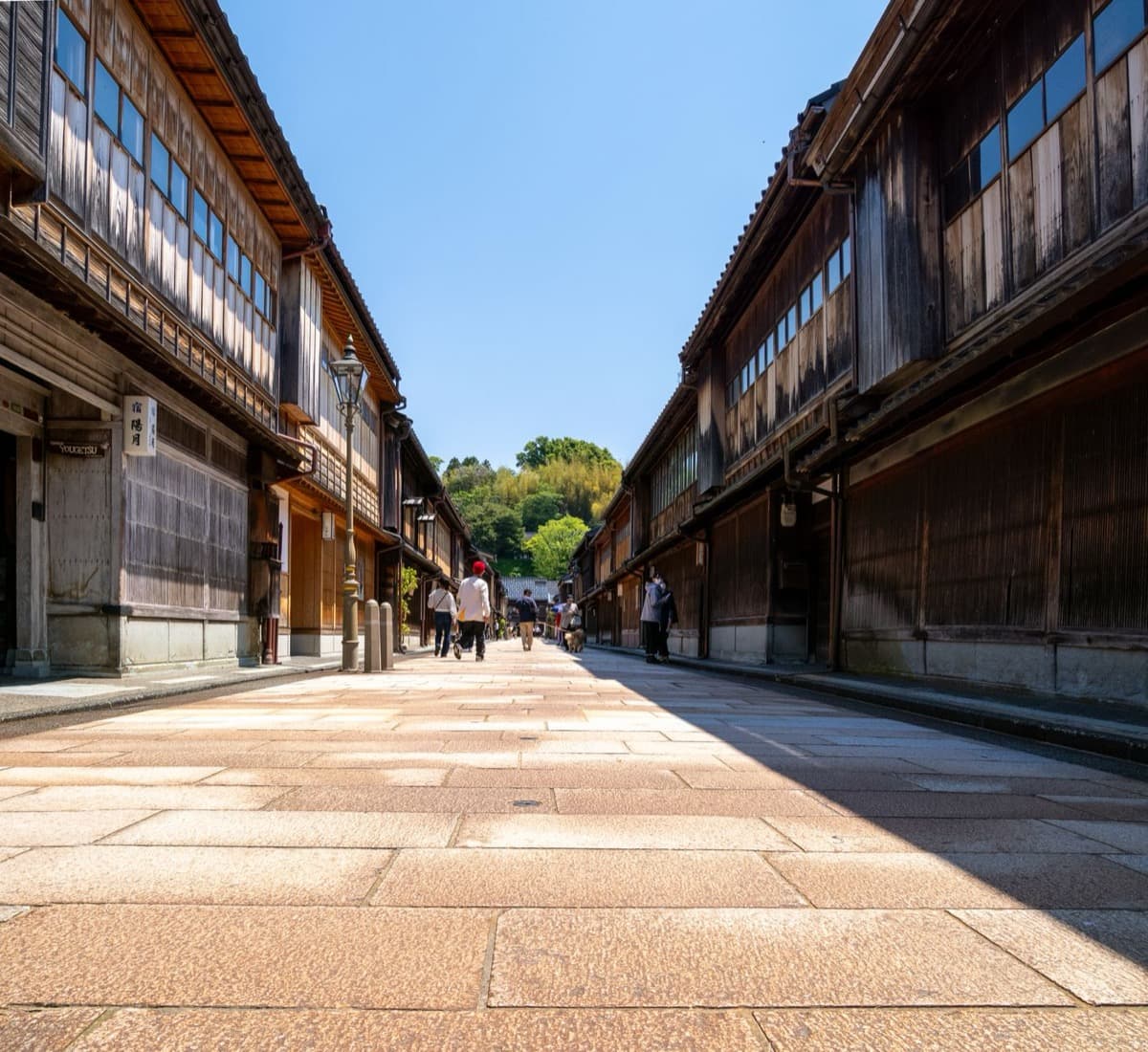
Higashi Chaya: The Gold City
75 min · 1.5 km · easy
Kanazawa food comes from two places at once: the sea and the court. The cold, rich Sea of Japan on its doorstep gives the city some of the finest seafood in the country, while three centuries of Maeda wealth, spent on the tea ceremony, on refinement, and on arts rather than armies, produced a cuisine of unusual polish for a city this size. Eat well here and you are tasting both the day catch and an inherited habit of luxury, right down to the gold leaf on your ice cream. This guide covers the dishes worth seeking out and where the food culture lives, and it pairs naturally with a slow walk on one of our Kanazawa self-guided tours.
The dishes to seek out
Kaisen-don. The essential Kanazawa meal: a bowl of vinegared rice buried under the day catch, sweet shrimp, yellowtail, tuna, salmon roe, and more, straight off the Sea of Japan. It is the simplest, freshest way to taste why this coast is a seafood destination, and Omicho Market is where to eat it.
Nodoguro. Blackthroat seaperch, a prized cold-water fish with tender white flesh and a rich, buttery fat that melts on the tongue. It is a splurge, often served grilled with salt, and it is one of the treats that seafood lovers travel to Kanazawa for.
Snow crab and sweet shrimp. In winter the Sea of Japan gives up its famous snow crab, the seasonal star of every stall and restaurant, alongside amaebi (sweet shrimp) eaten raw. If you come in the cold months, this is the reason.
Jibuni. Kanazawa signature dish and the heart of Kaga cuisine: flour-coated duck simmered with wheat gluten, mushrooms, and vegetables in a thick, glossy soy-and-dashi broth, finished with a touch of wasabi. Warming, refined, and unmistakably local.
Kaga cuisine. The traditional court cooking of the old Kaga domain, shaped by Maeda wealth and the tea ceremony the family championed, means seasonal, beautifully plated multi-course meals. It is Kanazawa answer to Kyoto kaiseki, built on the same idea that a dish should be as lovely to look at as to eat.
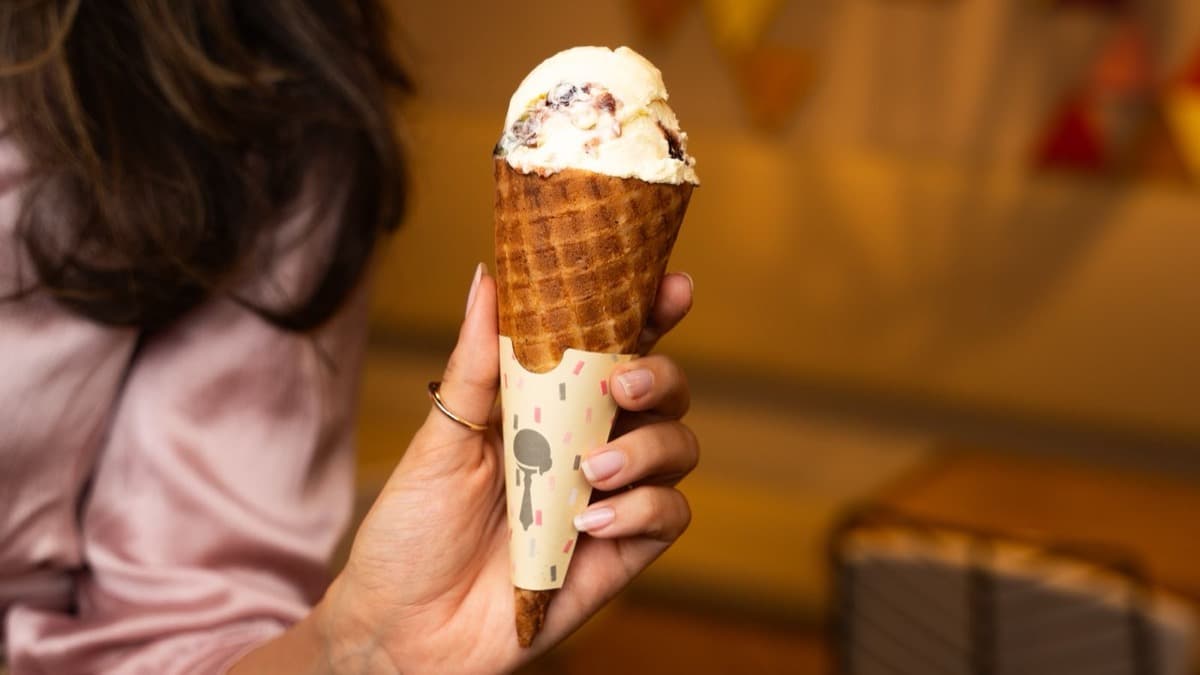
Gold-leaf ice cream. A soft-serve cone crowned with a full sheet of edible gold leaf, a playful tribute to the fact that Kanazawa produces about 99 percent of all the gold leaf made in Japan. The gold is tasteless, the effect is pure delight, and it is the city most photographed snack. The craft behind it is a story of its own, told in Kanazawa gold leaf.
Wagashi. Kanazawa is one of Japan three great centers of traditional sweets, another legacy of the tea-ceremony culture the Maeda lords nurtured. These delicate, seasonal confections, shaped and coloured to the time of year, are made to balance the bitterness of matcha, and the city has some of the country most celebrated wagashi houses.
Where the food culture lives
Hear a stop from this walk
Shima Teahouse: The Evening Preserved
Omicho Market, for the sea. A covered market known as Kanazawa kitchen (Kanazawa no Daidokoro) for over 300 years, with more than 100 stalls of fish, shellfish, produce, and prepared food. It is the single best place to eat the coast: order a kaisen-don, graze grilled scallops and oysters, and in winter chase the snow crab. This is the lunch stop in our one day in Kanazawa route.
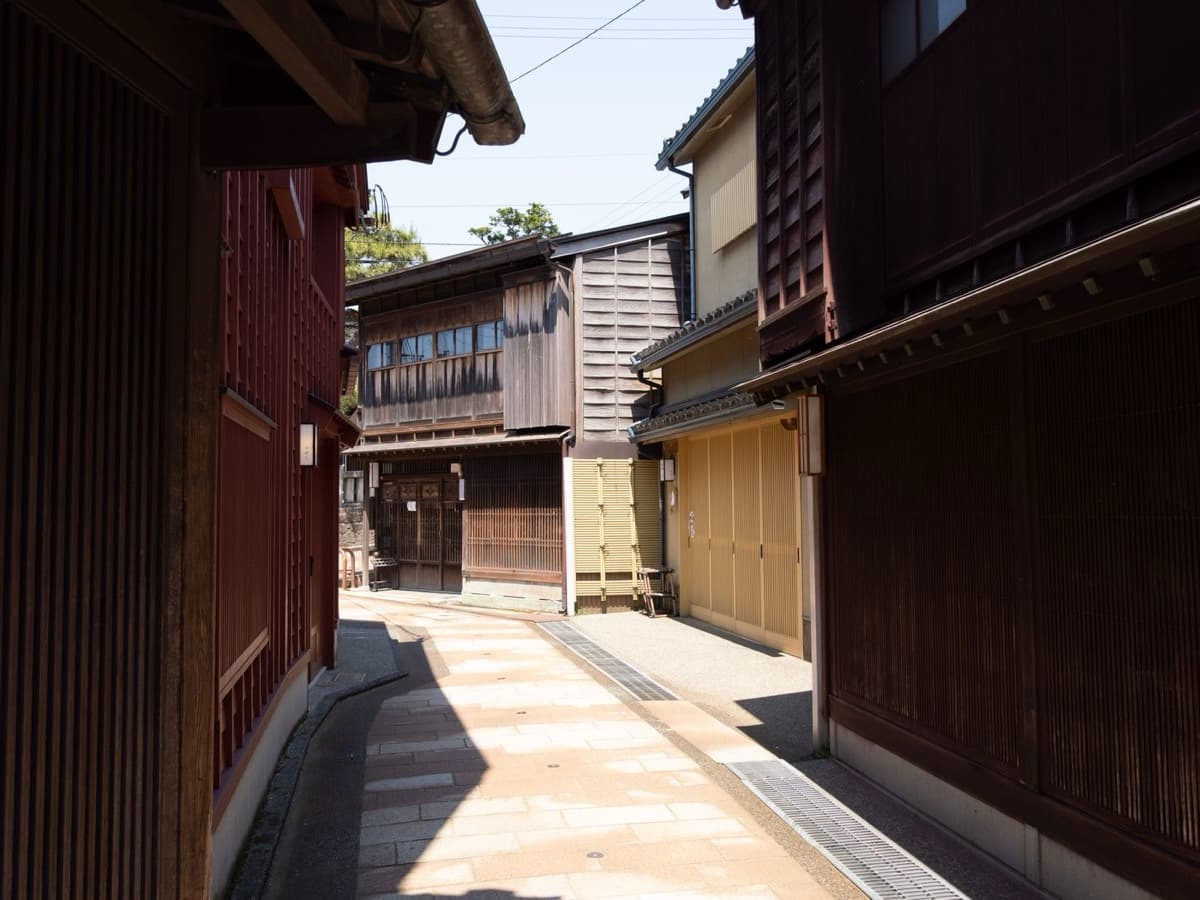
Higashi Chaya, for gold and sweets. The old teahouse quarter by the Asano River is where refinement is on display, gold-leaf soft serve, gold-decorated crafts, and tea houses. Read more about the Higashi Chaya district, then walk it with the Higashi Chaya and the Gold City tour, which follows the town wealth as it turned from rice into gold, lacquer, and song.
Nagamachi and the craft quarter, for Kaga cuisine. The samurai district and the workshops around it hold the world that produced Kanazawa refined court cooking. The Nagamachi and the Craft City tour reads three centuries of Maeda patronage, the same patronage that shaped both the crafts and the cuisine.
The tea houses, for wagashi and matcha. Kanazawa deep tea-ceremony culture means an unusual density of tea rooms and confectioners. A bowl of matcha with a seasonal wagashi sweet, in Kenrokuen or a preserved teahouse, is the most direct taste of the Maeda inheritance that runs through all Kanazawa food.
Eat as you walk
The best way to work through this list is on foot, one district at a time. Pair a morning at Kenrokuen with a matcha-and-wagashi break, an early lunch of kaisen-don at Omicho Market, an afternoon in Higashi Chaya with a gold-leaf cone, and an evening of jibuni and Kaga cuisine. Route your day with the one day in Kanazawa itinerary, plan the practical side with the Kanazawa travel guide, and choose your route from the best walking tours in Kanazawa or browse all Kanazawa tours.
Every Roamer tour is free to start: the introduction and first stop play in full, and every later stop plays a short preview before an optional purchase ($4.99 per tour, or a 7-day pass at $12.99 and a 30-day pass at $19.99). Tours are GPS-triggered, available in English and Spanish, work on iPhone, Android, or any mobile browser, and can be downloaded in advance for offline listening. No group, no start time, no tip: just you, the city, and the food, at your own pace.
Frequently asked questions
- What food is Kanazawa famous for?
- Kanazawa is famous for outstanding seafood from the Sea of Japan and for the refined Kaga cuisine of the old Maeda court. The headline dishes are kaisen-don (a bowl of vinegared rice piled with the day catch), nodoguro (buttery blackthroat seaperch), winter snow crab and sweet shrimp, and jibuni (a simmered-duck stew that is the city signature dish). Kanazawa is also known for gold-leaf ice cream, since it produces about 99 percent of Japan gold leaf, and for wagashi, delicate seasonal sweets.
- What should you eat in Kanazawa?
- Start with kaisen-don, a rice bowl buried under the day catch, and if you visit in winter add snow crab and sweet shrimp (amaebi). Try nodoguro, the prized blackthroat seaperch, usually grilled with salt, and jibuni, the flour-coated duck stew that is the city signature dish. Round it out with Kaga cuisine, a gold-leaf ice cream cone, and a wagashi sweet with a bowl of matcha.
- Where should you eat in Kanazawa?
- Omicho Market, known as Kanazawa kitchen for over 300 years, is the place for seafood: order a kaisen-don, graze grilled scallops and oysters, and chase the winter snow crab. The Higashi Chaya teahouse quarter is where to find gold-leaf ice cream and sweets, the Nagamachi samurai district surrounds the world of Kaga cuisine, and the tea houses near Kenrokuen are best for matcha and wagashi.
- Is Kanazawa known for seafood?
- Yes. The cold, rich Sea of Japan on the city doorstep gives Kanazawa some of the finest seafood in the country. Omicho Market is the heart of it, where you can eat kaisen-don, sweet shrimp, yellowtail, grilled scallops and oysters, and, in the cold months, the famous snow crab. Nodoguro, the buttery blackthroat seaperch, is the splurge that seafood lovers travel here for.
Ready to experience it?
Higashi Chaya: The Gold City
75 min · 1.5 km · easy
More from Kanazawa
Explore more at your own pace.
Kanazawa Travel Guide: How Many Days, Getting There, When to Go (2026)
One Day in Kanazawa: A Walkable Castle-Town Itinerary (2026)
21st Century Museum: The Glass Circle That Made Kanazawa a Modern-Art City
Higashi Chaya: The Kanazawa Geisha District the War Never Touched
Kanazawa Gold Leaf: The Craft That Makes 99 Percent of Japan's Kinpaku