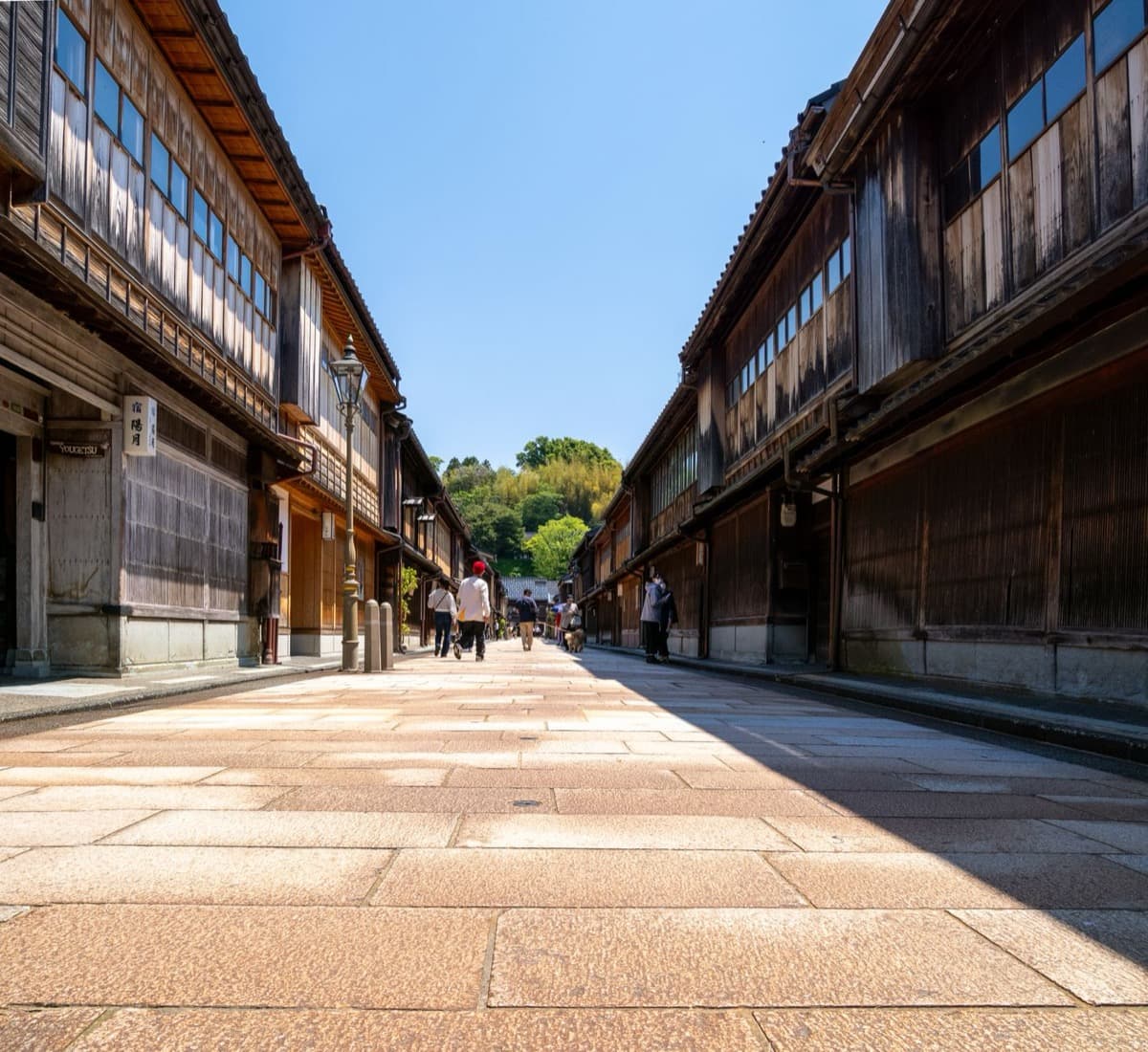
Kanazawa grew rich on rice, not conquest, and spent its fortune on beauty to stay safe. This walk through the golden teahouse quarters along the Asano river follows that wealth as it turns into lacquer, gold leaf, and song.
Start · Higashi Chaya District: The Golden Face
DirectionsStops
- 1
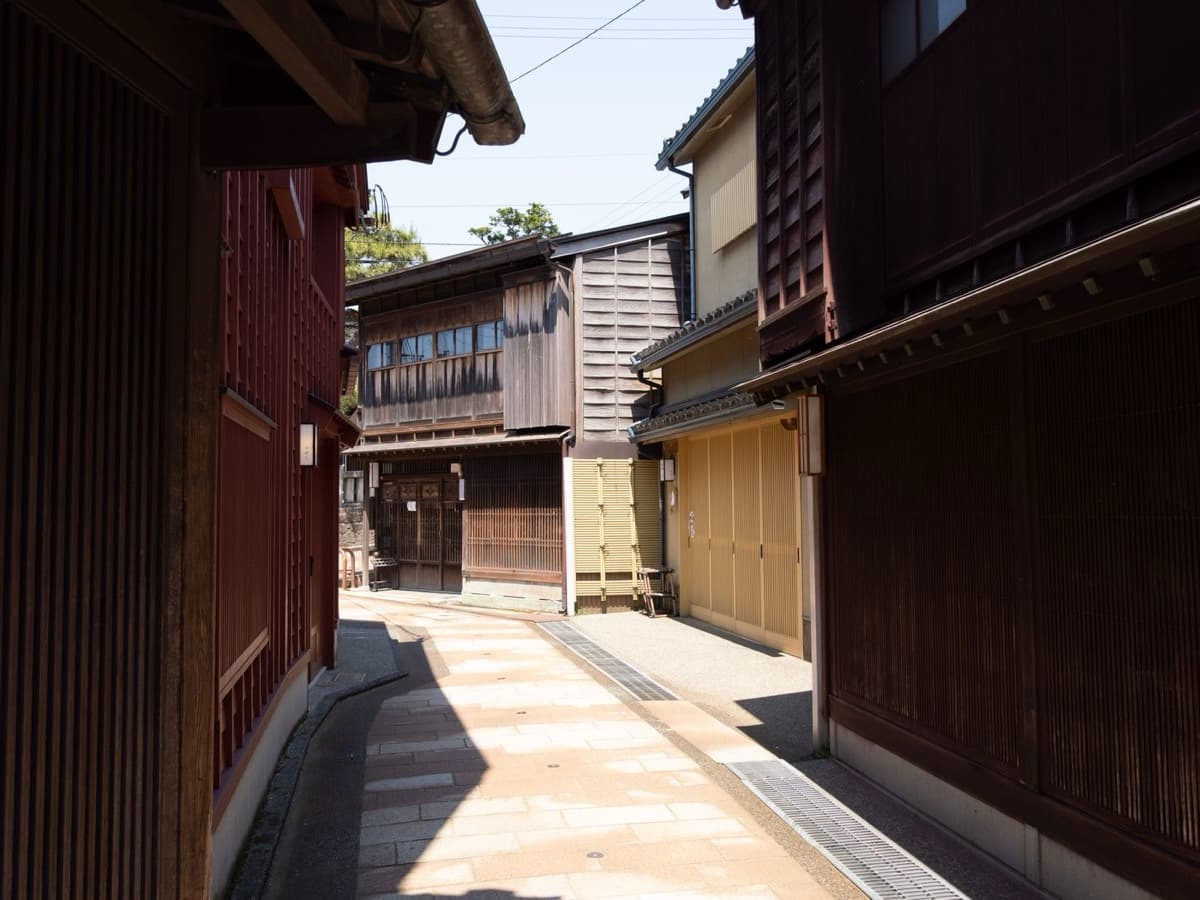
Higashi Chaya District: The Golden Face
The largest and most famous of Kanazawa's three teahouse districts, a whole preserved pleasure quarter laid out in eighteen twenty.
- 2
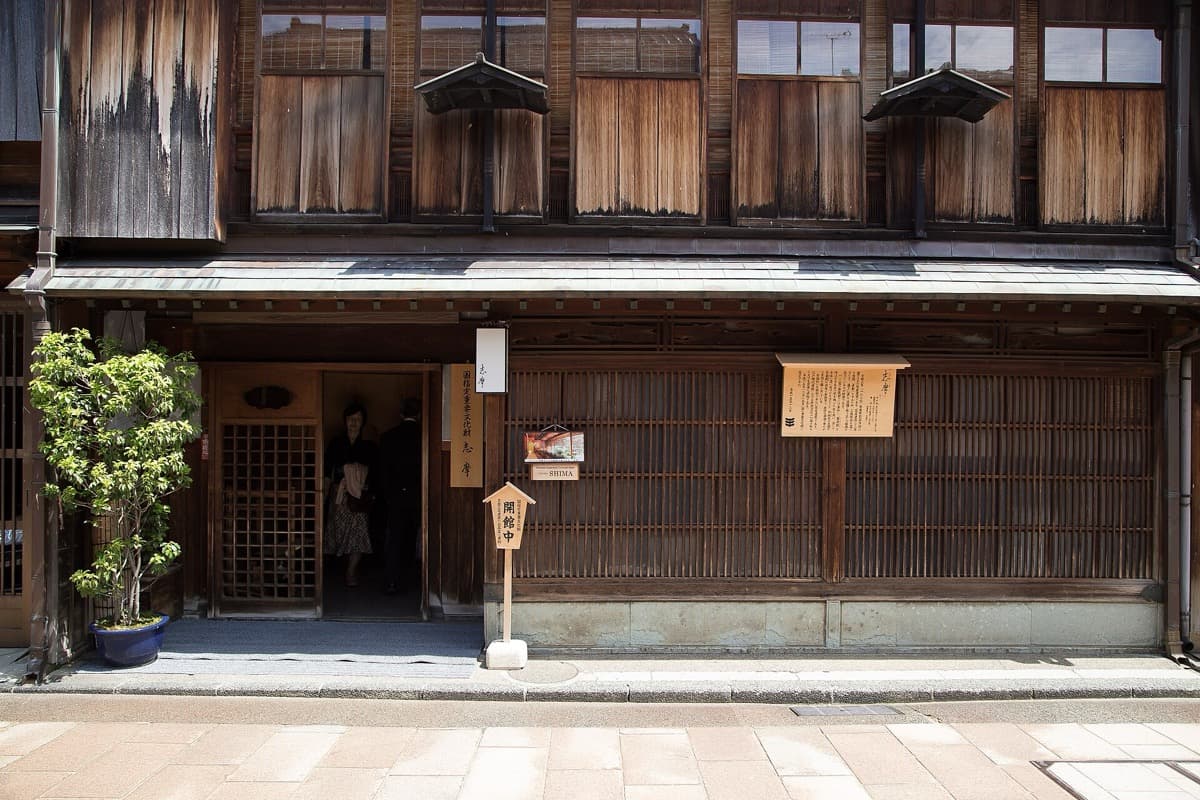
Shima Teahouse: The Evening Preserved
An eighteen twenty teahouse kept as a museum and Important Cultural Property, its layout barely altered in more than two centuries.
- 3
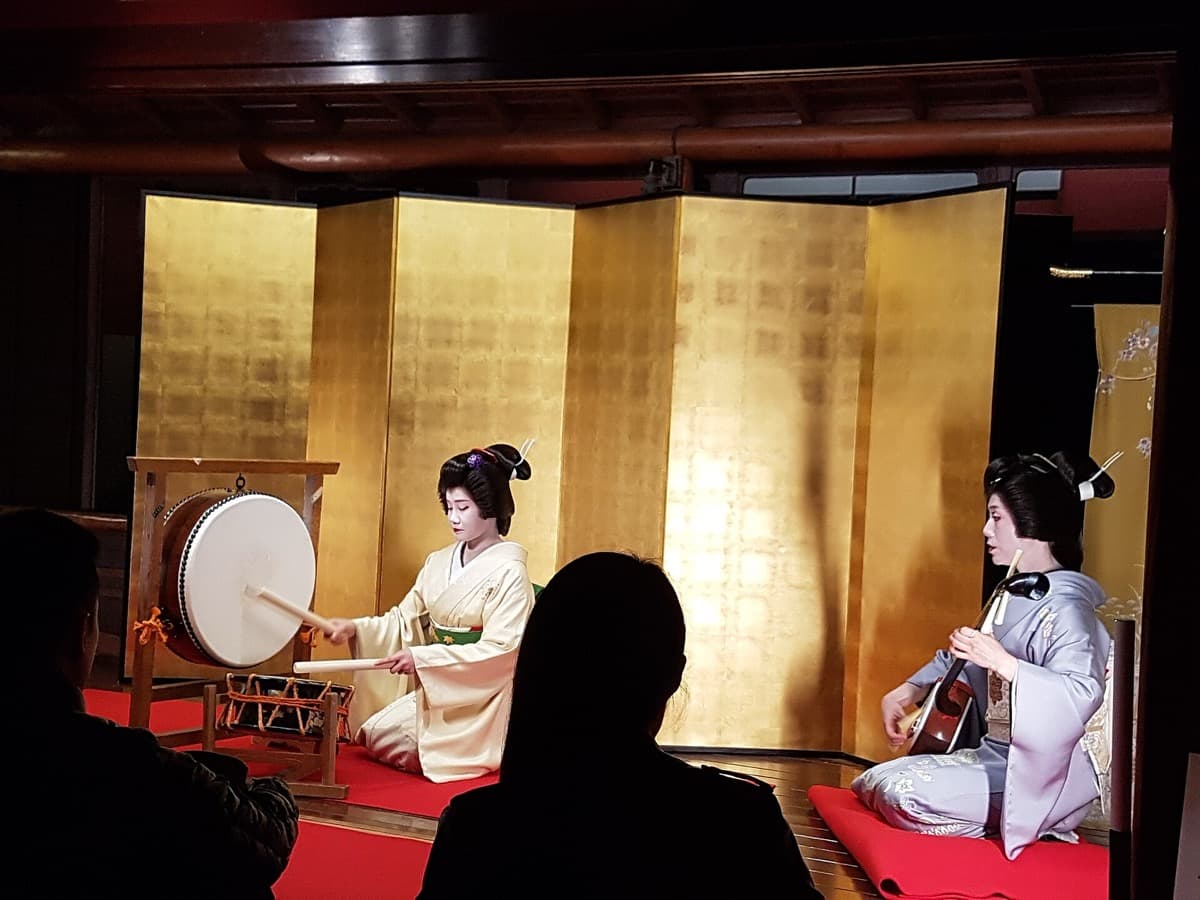
Kaikaro Teahouse: The Evening Still Breathing
The largest teahouse building in the district, also from eighteen twenty, but still operating as a house of entertainment.
- 4

Kanazawa Gold Leaf: Wealth Made Literal
The craft at the heart of the story, where Kanazawa produces about ninety nine percent of all the gold leaf made in Japan.
- 5
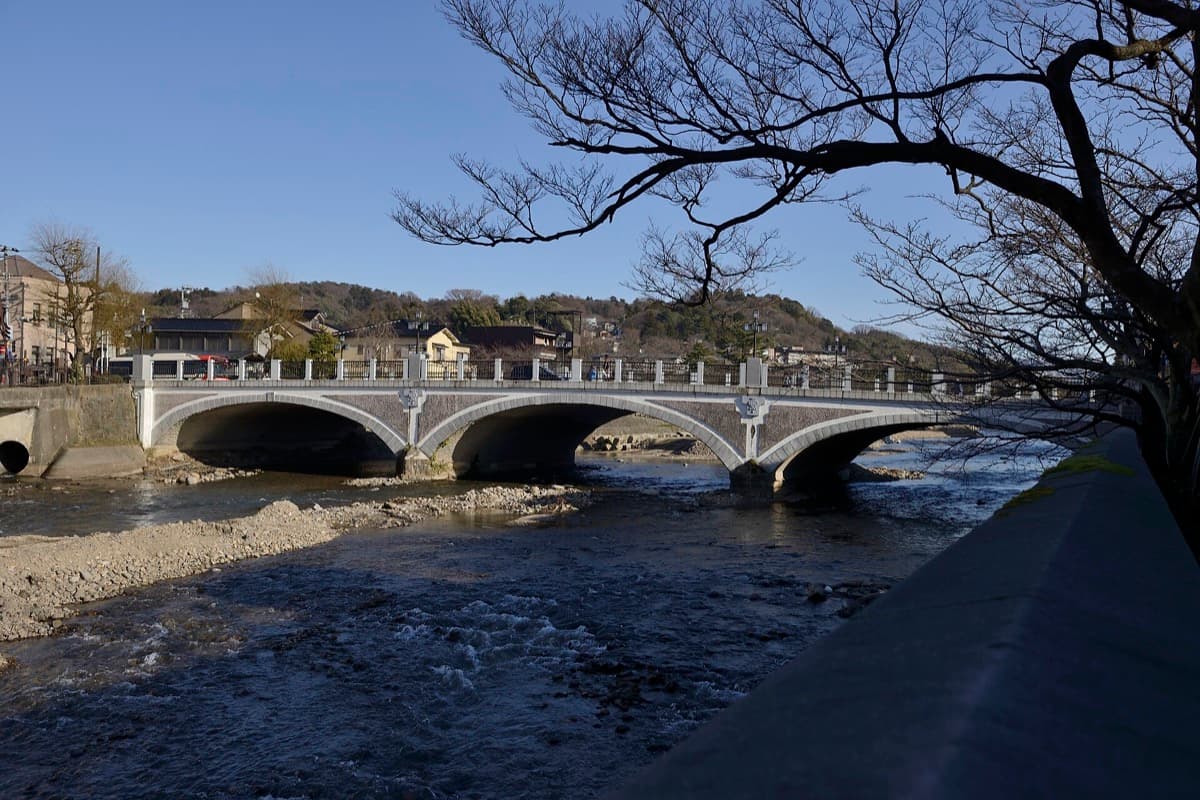
Asano River and the Umenohashi: The Quiet Seam
The gentle river that divides the teahouse quarters from the old town, crossed by the slender wooden plum bridge.
- 6
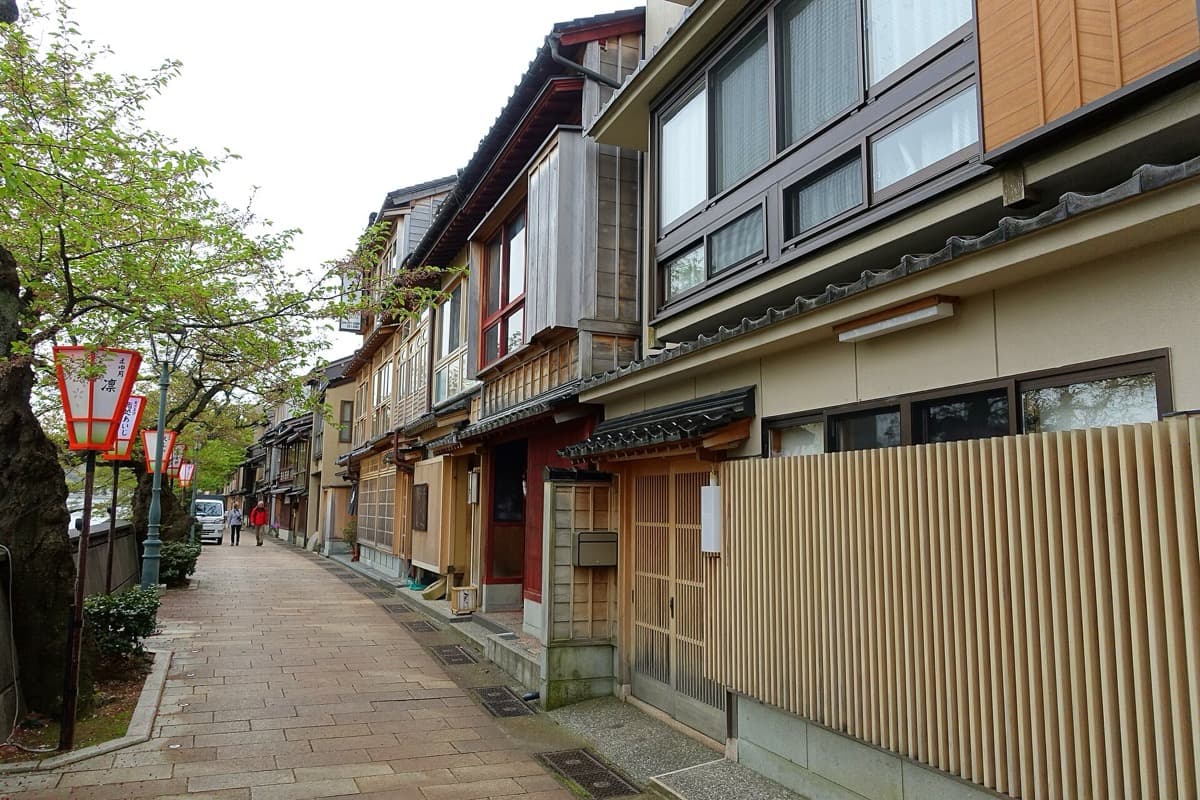
Kazuemachi Chaya District: Wealth Turned Inward
The third and quietest teahouse district, its houses backing onto the Asano along steep, hushed lanes.
Details
Best Time to Visit
Late March to early April brings cherry blossom along the Asano, the most photogenic season by far. Morning light, before mid day, keeps the narrow districts calm and the lattice fronts uncrowded. Early evening is quietest in Kazuemachi, when the lamps begin to glow. If you want the streets to yourself, avoid the busiest mid day hours in Higashi Chaya.
Pro Tips
- •Start in Higashi Chaya early in the morning, before the crowds and the shop queues build.
- •The gold leaf shops sell small, genuinely local souvenirs, from lacquerware to flecks of leaf for your tea, if you want a keepsake tied to the craft.
- •Inside Shima, sit for a bowl of matcha overlooking the inner garden. It costs a little extra but lets you experience a guest room rather than just pass through.
- •Wear shoes you can slip on and off easily, since entering the historic teahouses means removing them.
- •Cross at the Umenohashi footbridge rather than the main road bridge for the calmest approach to Kazuemachi.
- •Give yourself time to simply sit on the steps by the river in Kazuemachi. The district rewards slowing down more than ticking off sights.
Safety & Precautions
- •These are living, working geisha districts where people reside and perform. Keep your voice down, do not block doorways, and never chase or photograph geiko without clear permission.
- •Kanazawa is one of the rainiest cities in Japan and sees real snow in winter, so carry an umbrella year round and watch your footing on wet or icy lanes.
- •The stone steps down to the Asano in Kazuemachi are steep and can be slick after rain. Take them slowly and use the handrails where they exist.
- •Comfortable, sturdy shoes matter. The route runs about one and a half kilometres over uneven historic paving with several changes of level.
Travel advisory: Exercise Normal Precautions (Level 1).
Gallery
Related Reading
Go deeper on what you'll see, hear, and walk through.
Overview
Best Self-Guided Walking Tours in Kanazawa (2026)
3 min
Overview
Kanazawa Travel Guide: How Many Days, Getting There, When to Go (2026)
5 min
Overview
One Day in Kanazawa: A Walkable Castle-Town Itinerary (2026)
6 min
Thematic
Best Culture Walking Tours in Kanazawa (2026)
2 min
Thematic
What to Eat in Kanazawa: A Food Guide (2026)
5 min
Deep dive
Higashi Chaya: The Kanazawa Geisha District the War Never Touched
4 min
Deep dive
Kanazawa Gold Leaf: The Craft That Makes 99 Percent of Japan's Kinpaku
6 min
Read the walk
The full story of Higashi Chaya: The Gold City, in words. Prefer to listen? Play it narrated, from home or on location.
Introduction
Picture a city that measured its power in rice. Kanazawa, on the coast of central Japan, was the seat of the Kaga domain, and the Maeda family who ruled it held more than one million koku of assessed rice, the largest domain in all of Tokugawa Japan. Only the shogun himself controlled more. That kind of wealth could look like a threat, so the Maeda spent it where it would reassure rather than alarm: on lacquer, on silk, on gold leaf, on song. The teahouse quarters along the Asano river are the physical proof.
This route links six stops across about one and a half kilometres, an easy walk of roughly seventy five to ninety minutes if you linger. You will move from spectacle to intimacy: the largest and most golden teahouse district, a teahouse frozen as a museum, its living neighbor still lighting its lamps, the gold leaf craft the money grew into, the river that divides pleasure quarter from old town, and finally the quietest district of all, tucked against the water.
Take it at your own pace. Every stop stands on its own, so you can pause, skip, double back, or simply sit by the river for a while. There is no group to keep up with and no schedule but yours. Remember that some of these houses are still working geisha districts where people live and perform, so tread lightly and photograph with care.
When you arrive at the Higashi Chaya main street, begin with stop one.
1. Higashi Chaya District: The Golden Face
You are standing in the largest of Kanazawa's three teahouse districts, and the most famous. The word for teahouse here is chaya, and this quarter was laid out in eighteen twenty, when the domain gathered scattered teahouses from the center of the city and consolidated them into designated districts set apart from everyday life. What survives is remarkably whole: two storey wooden houses in a tight row, their fronts screened by a fine wooden lattice called kimusuko, the slats so slender and close set that people inside could look out while the street could not look in. The performance rooms sat upstairs, where the local geisha, known here as geiko, entertained with music and dance.
Look at the color and the proportion. The facades lean slightly, the wood has gone the deep brown of age, and the whole street reads as a single composition rather than a collection of buildings. That coherence is why, in two thousand one, this district was designated a National Important Preservation District for Groups of Traditional Buildings, a protection reserved for places that keep a whole historic fabric intact, not just a single monument.
Think of this street as the loud, golden face of the story. The Maeda wealth needed somewhere to be seen, and refinement was safer to display than power. Today many of these houses hold cafes and craft shops, and gold leaf glints in the windows, but a few remain working teahouses. As you walk, let the spectacle wash over you first. The quieter, more inward version of all this is waiting across the river, and the walk will bring you there.
2. Shima Teahouse: The Evening Preserved
This teahouse was built in the same year the district was founded, eighteen twenty, and it has been changed so little in more than two hundred years that stepping inside feels like walking into a working evening that never ended. It is now a museum, and it carries the designation of an Important Cultural Property, but nothing here has been prettied up for display. The layout is the lesson.
Downstairs you find the practical machinery of hospitality: the owner's living quarters, a small room where the geiko dressed and prepared, and an inner garden that brings light and quiet into the heart of the house. Upstairs is where the wealth was staged. The guest rooms open onto one another, and the walls glow with bengara, a deep iron oxide red, against pillars polished to a lacquered shine. Fittings of cloisonne enamel catch the light in small bright points.
Notice that there is no grand hall, no throne, no display of force. The whole architecture is tuned to intimacy: a few guests, a few performers, music and conversation in a room the size of a generous parlor. This is what the Kaga fortune bought, not a bigger army but a more perfect evening. Visit Kanazawa, the city's tourism service, describes Shima as preserving the layout of a teahouse just as it operated, and that is exactly the value of standing here.
Entry is five hundred yen for adults and three hundred yen for those aged sixteen and under, and for a little more you can take a bowl of matcha overlooking the garden. Whether or not you go in, hold this picture of staged refinement in mind, because the house next door plays the same music, only live.
3. Kaikaro Teahouse: The Evening Still Breathing
If Shima is the evening preserved, this is the evening still happening. Kaikaro was also established in eighteen twenty, and it is the largest teahouse building in the district, but the crucial difference is that it never closed. By day it works as a cafe, serving green tea and…
Full narration for this stop unlocks with the tour.
4. Kanazawa Gold Leaf: Wealth Made Literal
Here is the craft that all this glitter grew into. Kanazawa produces about ninety nine percent of all the gold leaf made in Japan, a near total hold on one of the most delicate crafts in the country. The local name is kinpaku, and the process is almost unbelievable when you hear…
Full narration for this stop unlocks with the tour.
5. Asano River and the Umenohashi: The Quiet Seam
The register drops here, at the water. The Asano river is the seam of this walk, the gentle divide between the teahouse quarters and the old town. You are near the Umenohashi, the plum bridge, a slender wooden footbridge. The larger arched road bridge just downstream is the…
Full narration for this stop unlocks with the tour.
6. Kazuemachi Chaya District: Wealth Turned Inward
This is where the walk goes quiet. Kazuemachi is the third of Kanazawa's teahouse districts, and the most discreet, a hushed lane of houses that back directly onto the Asano, linked by narrow alleys and steep stone steps down to the water. Where Higashi is broad and golden and…
Full narration for this stop unlocks with the tour.