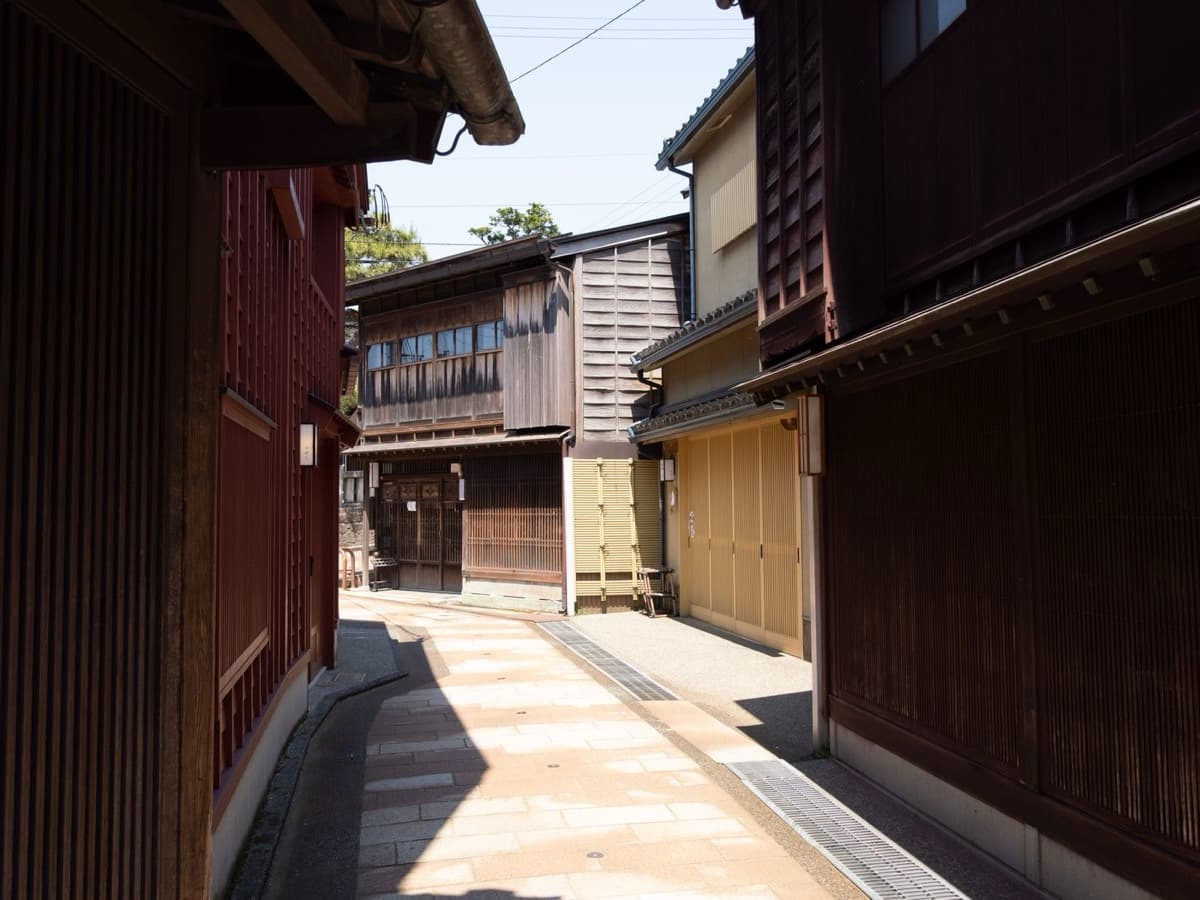
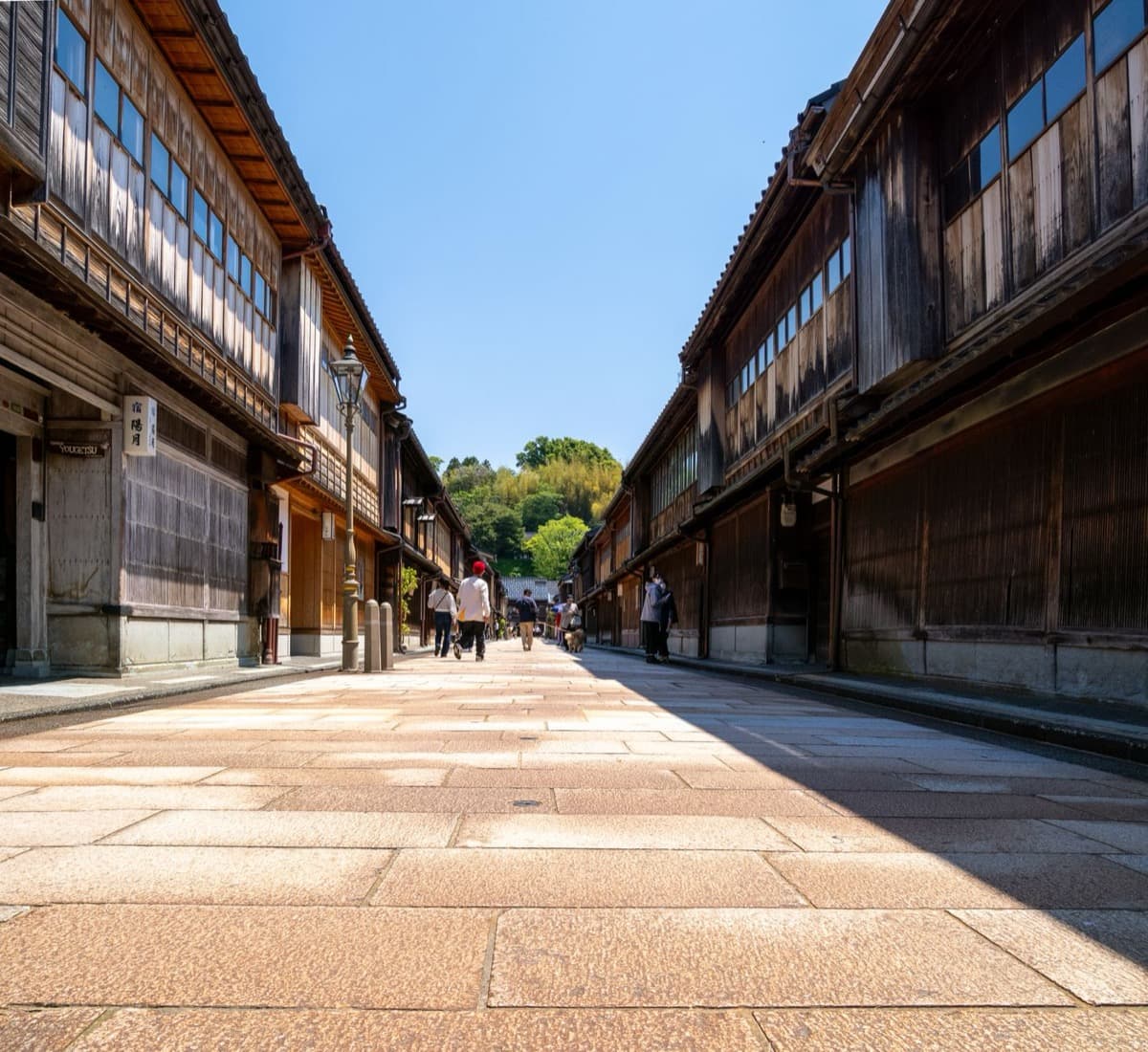
Higashi Chaya looks like a stage set of old Japan: a district of two-storey wooden teahouses, their ground floors screened by fine wooden lattice, their upper rooms where geisha once entertained. The astonishing thing is that it is not a recreation. This is a genuine early-nineteenth-century geisha quarter that survived, largely intact, because Kanazawa escaped the fires and the wartime bombing that erased so much of old Japan. Read Higashi Chaya as a survivor, not a reproduction, and it becomes the clearest window into the pleasure quarters of the Edo period anywhere in the country.
A district built in one move
The quarter has a precise origin. In 1820 the geisha houses that had been scattered across central Kanazawa were gathered and moved into a small number of designated districts away from the city center, and Higashi Chaya, the eastern teahouse district, is the largest and finest of them. So it was not a neighborhood that grew haphazardly, but a licensed entertainment district created deliberately, its teahouses, the chaya, built together in a single architectural language.
That language is worth learning to read. A chaya is marked by the beautiful fine wooden lattice, called kimusuko, screening the front of its ground floor, with the tatami guest rooms on the upper storey where the entertainment took place. During the Edo period, ordinary buildings were forbidden to rise to two storeys, so the two-storey teahouses stood out then as they stand out now, a privileged form reserved for this refined trade. Walk the main street and you are reading a townscape built to a single set of rules two centuries ago.
Why it survived when so much did not
Hear a stop from this walk
Shima Teahouse: The Evening Preserved
The reason Higashi Chaya matters so much is the reason it still exists. Across Japan, the old wooden cities were destroyed twice over, by the great fires that periodically swept them and by the bombing of the Second World War. Kanazawa was spared both. It was not a major military target and it escaped the ravages of fire and war that flattened other cities, so its old districts came through when comparable quarters elsewhere were lost. That good fortune is why Higashi Chaya could be designated an Important Preservation District for Groups of Historic Buildings, and why it is now regarded as one of the best-preserved geisha neighborhoods in Japan. When you walk it, you are not walking a rebuild. You are walking a rare thing: old Japan that was never destroyed.
Teahouses, gold, and the living city
The district is not a museum frozen behind glass. Two of its chaya, the Shima Teahouse and the Kaikaro Teahouse, are open to the public, and stepping inside reveals the intimate, refined rooms where the geisha arts were practiced. Other buildings along the street now hold cafes and craft shops, so the quarter lives on rather than merely being preserved.
Higashi Chaya also connects to the craft that made Kanazawa rich. The city produces almost all of Japan's gold leaf, and the district is a place to see it, including a shop with a tea room entirely covered in gold. That gold is the thread Roamer's Higashi Chaya and the Gold City tour follows, reading the teahouses alongside the gold-leaf craft that gilds the city. The whole of Kanazawa is a story of wealth and refinement that survived intact, from these teahouses to the great garden of Kenrokuen.
Reading it in place
Walk the main street of Higashi Chaya slowly and learn to see the kimusuko lattice, remembering that these two-storey teahouses were a privileged form in an age when ordinary buildings could not rise so high. Step inside the Shima or Kaikaro teahouse to see the intimate upper rooms. Seek out the gold-leaf shops for the craft that made the city. Above all, hold the fact that this quarter is a survivor: real old Japan, spared the fire and the bombing. Early morning gives you the empty, silent street at its most evocative.
The district anchors Roamer's Higashi Chaya and the Gold City. To plan a day, see one day in Kanazawa, and for the full set of routes, browse Kanazawa walking tours.
Sources
- Japan-guide, Visit Kanazawa, and JNTO: the Higashi Chaya district dating from the Edo period, the 1820 gathering of scattered geisha houses into designated districts, the two-storey wooden chaya with kimusuko lattice fronts and upper guest rooms, the Edo-period prohibition on ordinary two-storey buildings, Kanazawa being spared the fire and war that destroyed other cities, the designation as an Important Preservation District, the Shima and Kaikaro teahouses open to the public, and the gold-leaf shops including a gold-covered tea room.
- Roamer tour transcript, Higashi Chaya and the Gold City (kanazawa-higashi-chaya), fact-audited: the golden face of the preserved teahouse district.
Ready to experience it?
Higashi Chaya: The Gold City
75 min · 1.5 km · easy
More from Kanazawa
Explore more at your own pace.
Kanazawa Travel Guide: How Many Days, Getting There, When to Go (2026)
One Day in Kanazawa: A Walkable Castle-Town Itinerary (2026)
What to Eat in Kanazawa: A Food Guide (2026)

21st Century Museum: The Glass Circle That Made Kanazawa a Modern-Art City

Kanazawa Gold Leaf: The Craft That Makes 99 Percent of Japan's Kinpaku