Ortigia: The Island That Built on What Was Already There
100 min · 2.7 km · easy
Ortigia keeps building on what was already there: a temple that became a cathedral, sea walls that became terraces, a roofless church that was probably a synagogue. It also cleared a great deal away, in the 1800s and the 1930s. Both habits are visible from the pavement. The small island at the heart of Syracuse has been a Greek colony, a Roman prize, a Spanish fortress and a baroque town, and instead of replacing each layer it usually gave the old thing a second job. Roamer's walk reads the island through that habit, over twelve stops and about 2.7 kilometres, in roughly an hour and forty minutes at an easy pace.
An island that was not always an island
The walk begins at the Ponte Umbertino, where a bronze Archimedes stands on a scrap of land beside the bridge. The water under you is the clue to the whole place. Thucydides, writing around 400 BC, already described Ortigia as no longer surrounded by water: it was tied to the shore. The Spanish, fortifying it in the sixteenth century under Charles the Fifth, cut channels and made it an island again. From about 1865 the landward walls came down and the ditches were filled. The channel you cross and the little islet are what was kept.
That pattern repeats on almost every stop. Something was built for one purpose, the purpose ended, and the island found another use or knocked it down.
Second jobs
Hear a stop from this walk
Via Minerva: The Temple Built Into the Cathedral
The Temple of Apollo, just over the bridge, is the oldest example. The Comune di Siracusa calls it the most ancient Doric temple in Sicily, from the early sixth century BC. Look at its columns: fat single blocks of stone, packed so tightly that the gaps are barely wider than a column. Cut into the top step of the east front is a long inscription naming Kleomenes as the man who made it for Apollo. Afterwards the building served as a Byzantine church, by long tradition a mosque, a Norman church and from 1562 a Spanish barracks. Only in the 1930s and 1940s was the rest cleared away.
Further in, the island's second jobs get smaller and stranger. San Giovannello lost its roof and upper front in the earthquake of 1693 and was never roofed again; it reopened for worship in 2015 under open sky. The city describes it as the synagogue of the Giudecca, the Jewish quarter emptied after the expulsion edict of 1492, and a notary's document of 1496 calls it exactly that. Scholars still argue about the order of its lives.
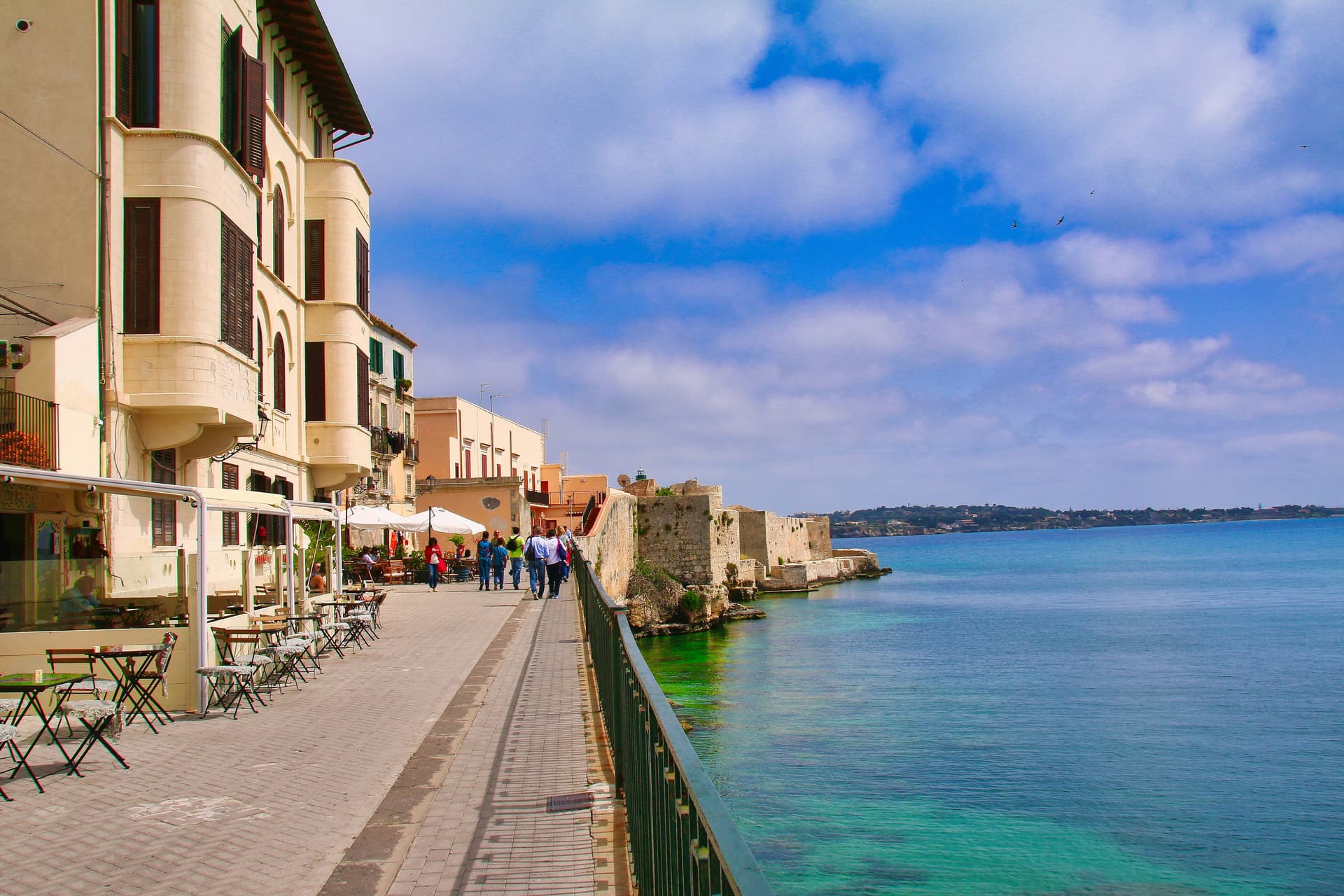
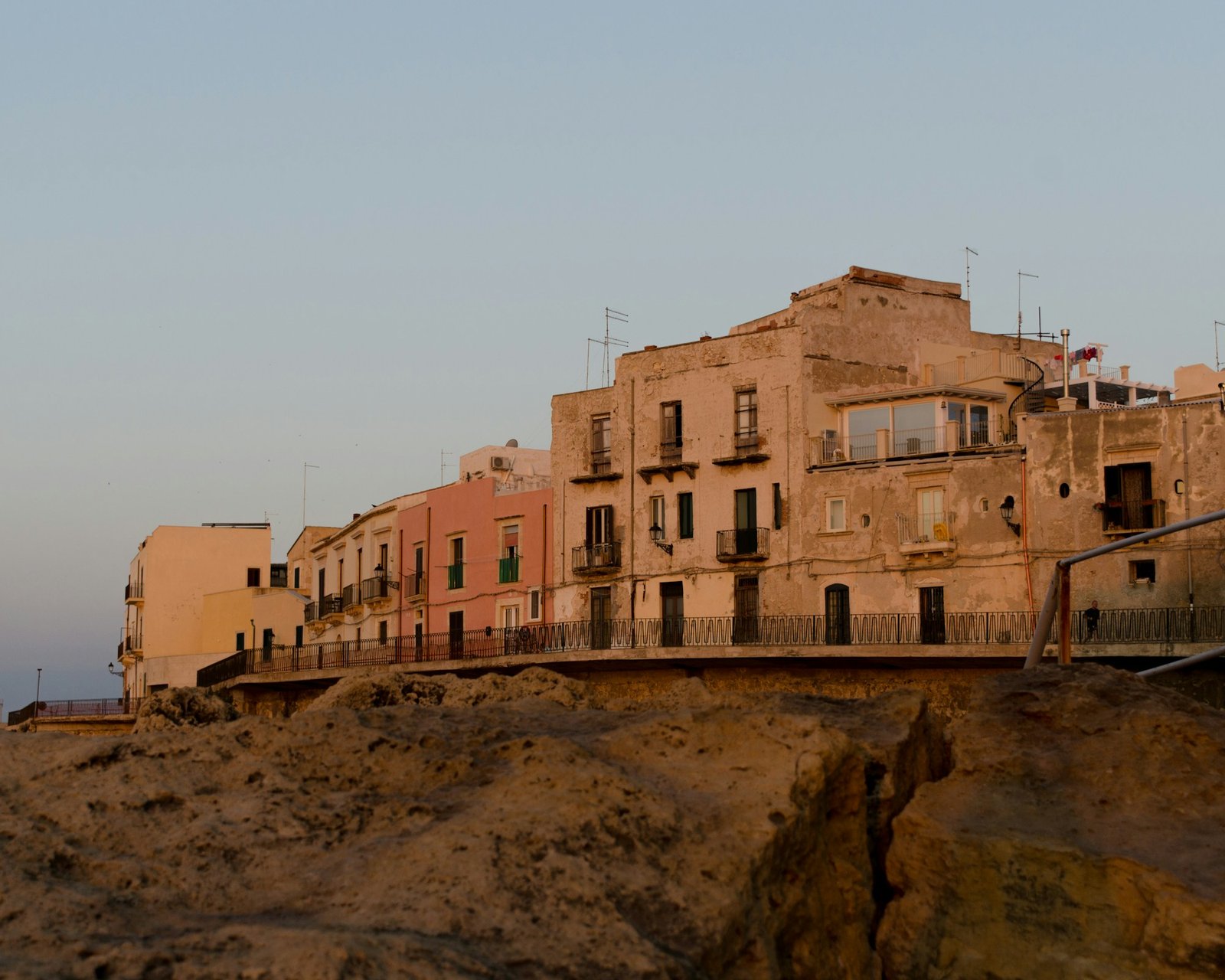
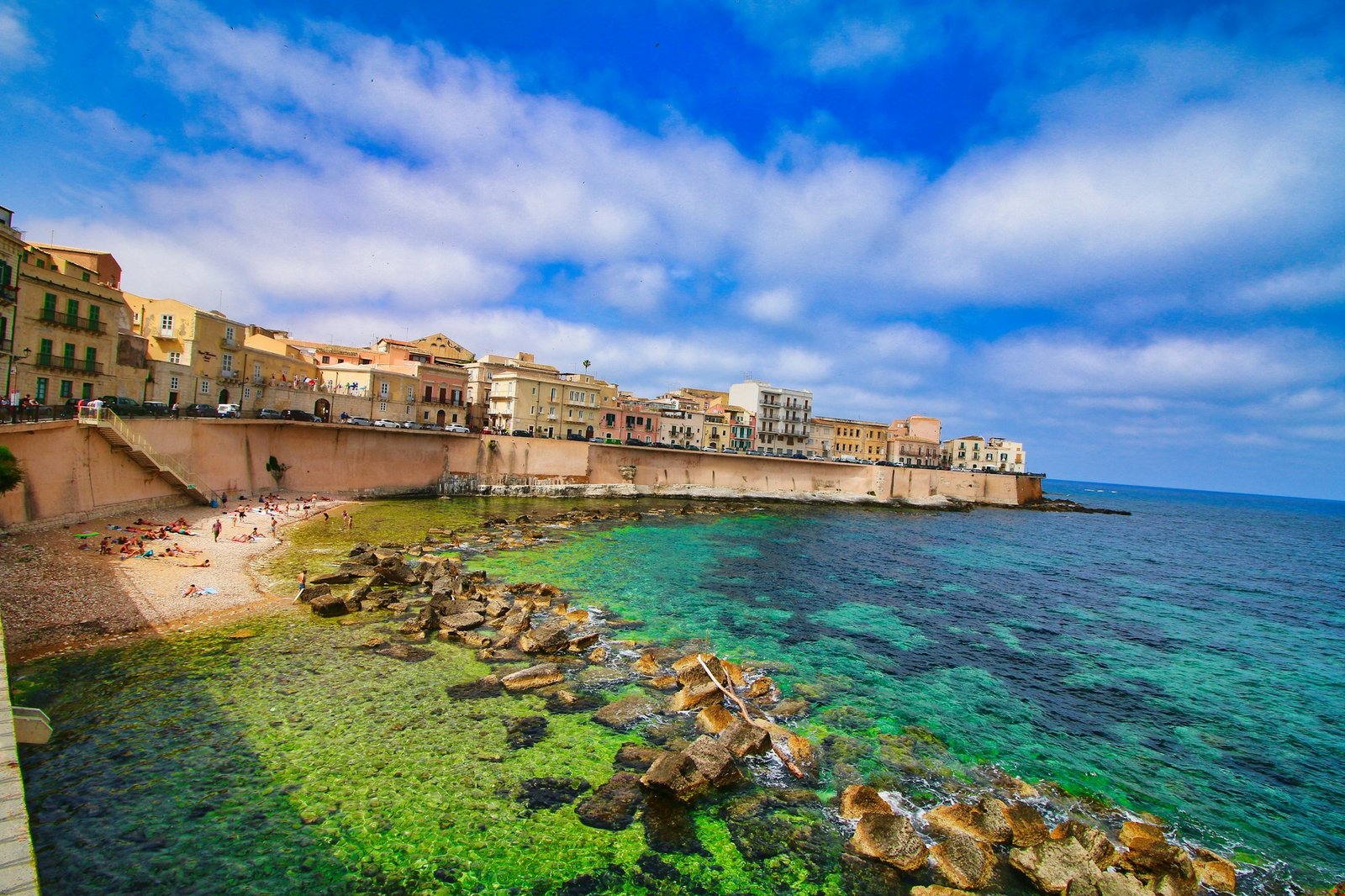
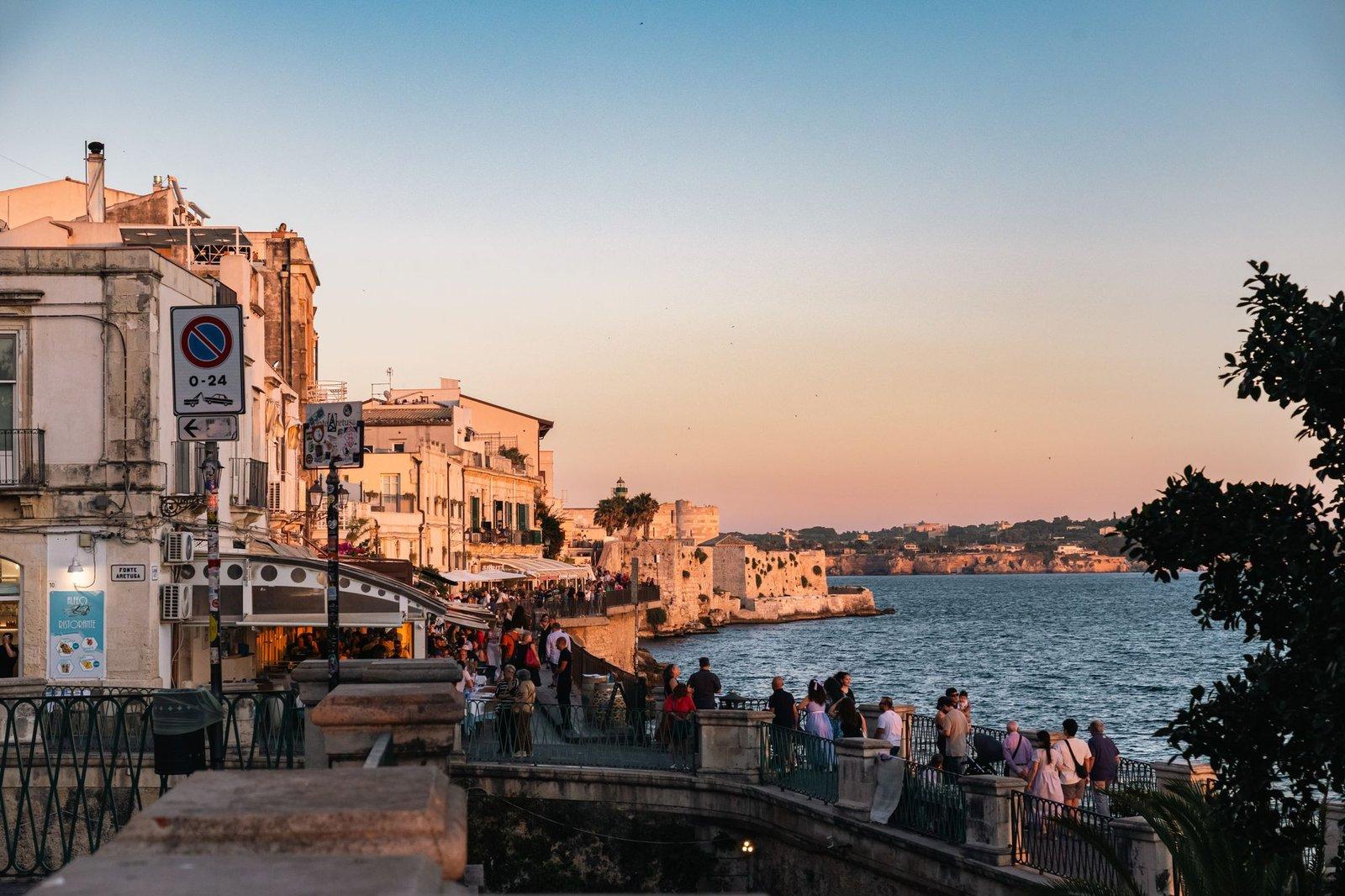
Then come the sea walls. On the landward side the Spanish bastions were demolished, but on the seaward side they were kept, and their tops became terraces. At the Belvedere della Turba a wall built to keep enemies out is now a place where people sit and swim. At Fonte Aretusa the semicircular basin, laid out between 1843 and 1847, sits on the foundations of a demolished bastion. Cicero described a spring here in 70 BC, huge and full of fish, protected from the waves by a massive stone wall. The water is ancient. The frame around it is nineteenth century in date and Spanish in its bones.
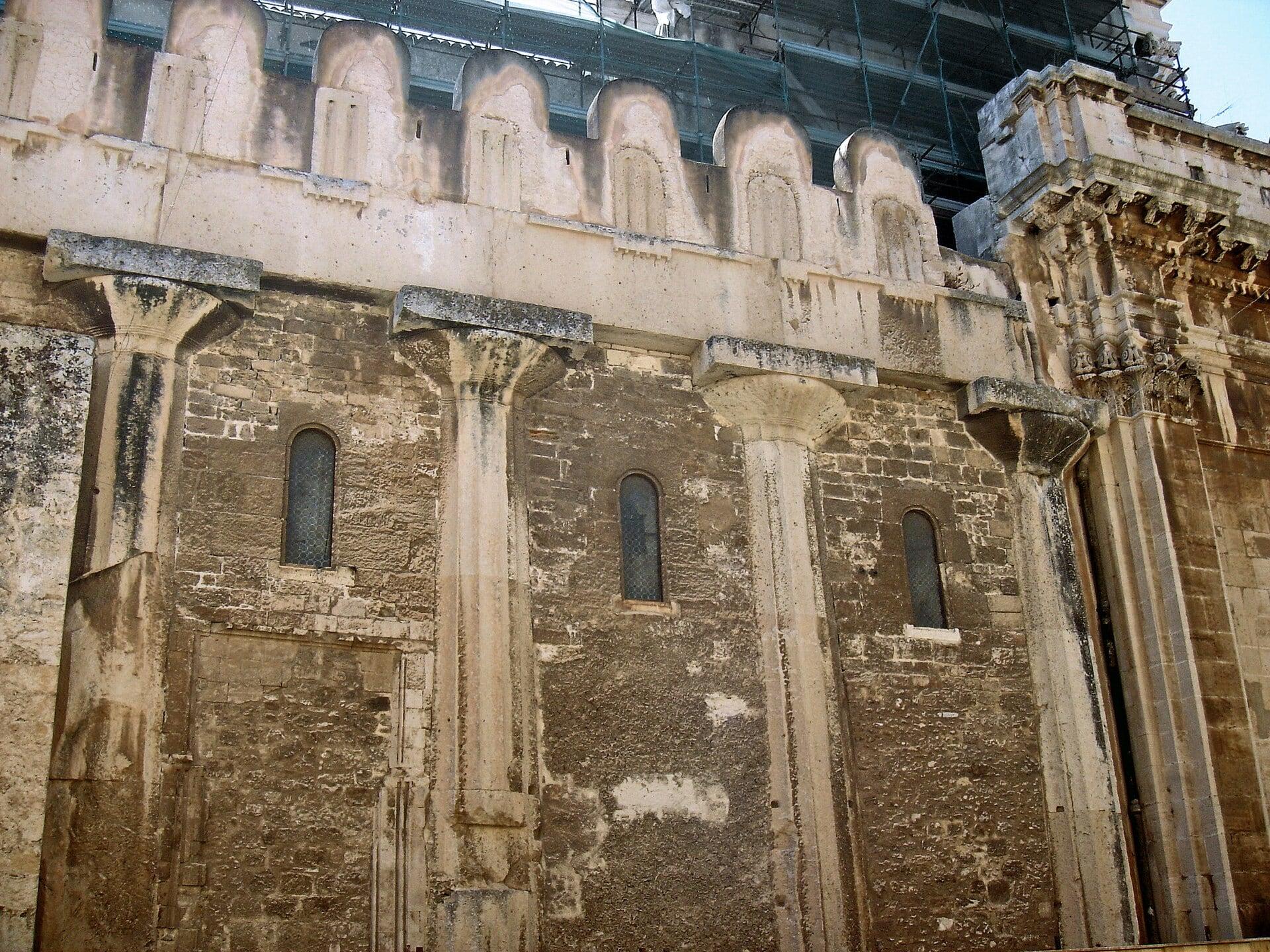
The finest second job is saved for last. The cathedral of Syracuse is a Greek temple of Athena from the first half of the fifth century BC, converted into a church around the sixth or seventh century. The builders walled up the gaps between the outer columns and cut arches through the inner walls. The archdiocese notes that the original Doric columns are still visible along the north side, on Via Minerva, which is where the walk ends.
What was cleared
The other half of the thesis is easy to miss, because absence does not announce itself. Piazza Archimede was made from 1872 by pulling down religious buildings, then finished in the 1930s when old streets were cleared to cut Corso Matteotti, completed in 1936. The Temple of Apollo you see is a 1930s and 1940s clearance as much as a Greek survival. The fountain at the centre of the square looks like carved stone but is reinforced concrete, made from 1906, and its rusting steel keeps shedding pieces.
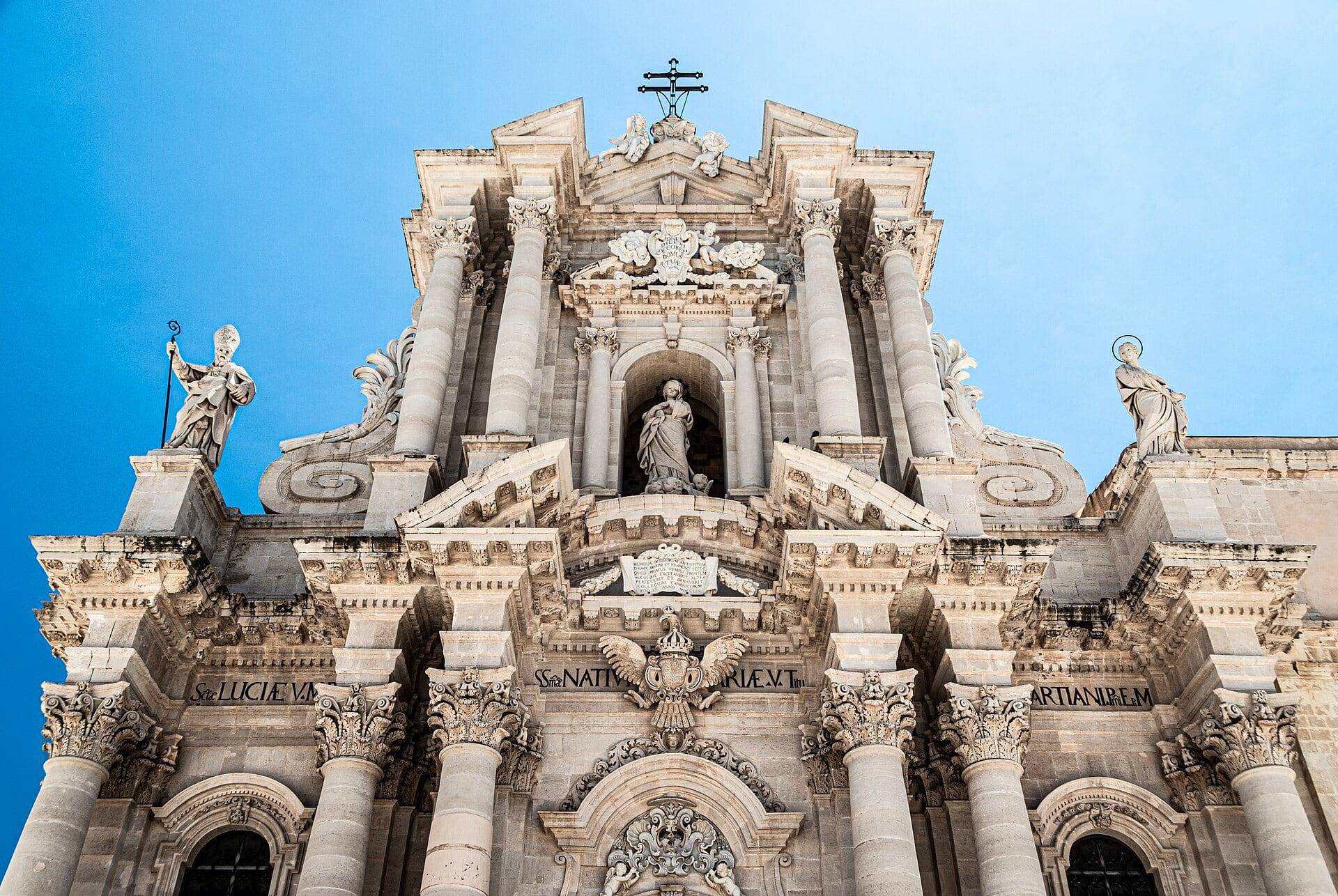
Even the cathedral front is a replacement. The 1693 earthquake brought down the old facade, and the baroque one went up between 1728 and 1753. Under the square, thin metal lines in the paving trace buildings dug up in the 1990s, one of them from the late eighth or early seventh century BC.
Walking it
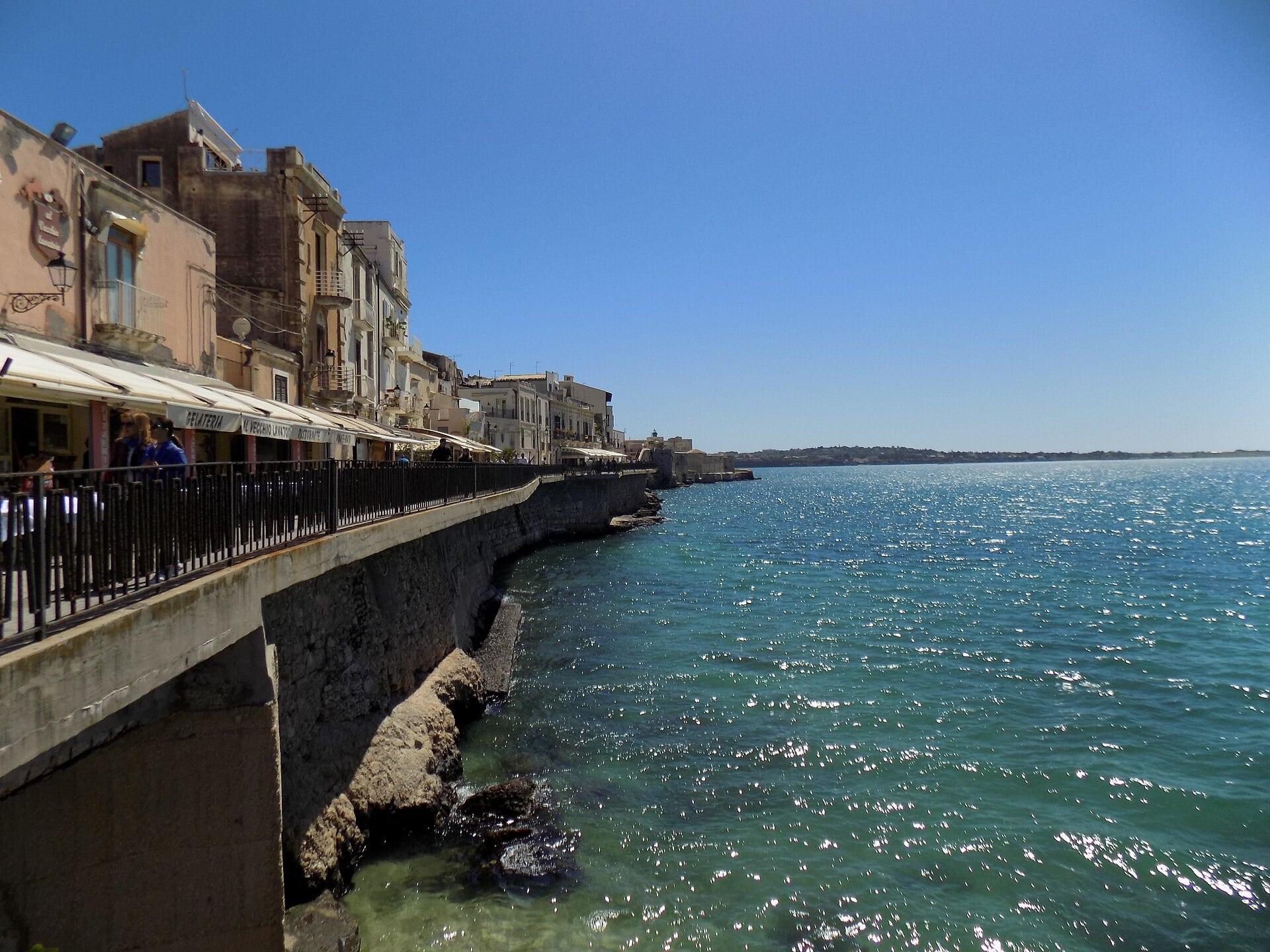
Most of the walk works from the street, at any hour you like. The paid sights, the castle, the spring walkway, the cathedral interior and the ritual bath under the Giudecca, are optional and can be added or skipped as you go. The longest stretch runs along the sea wall from the Belvedere to Castello Maniace, the castle Frederick the Second built at the island's tip between 1232 and 1240. From there the route turns back along the Great Harbour, where Thucydides set the last sea battle of the Athenian siege in 413 BC.
If you have more time, the Neapolis walk on the mainland is the other half of the story: the hill where Syracuse quarried its stone, and where, the city's records say, Spanish builders took the blocks they used for Ortigia's walls.
The island is the subject of Ortigia: The Island That Built on What Was Already There, twelve stops from the Ponte Umbertino to Via Minerva. See all routes on the Syracuse page.
Sources
- Comune di Siracusa, Tempio di Apollo: the early sixth century date, oldest Doric temple in Sicily, monolithic columns, the Kleomenes inscription, the church, mosque, Norman church and barracks phases, the clearance.
- Arcidiocesi di Siracusa, Chiesa Cattedrale: the Doric temple of Athena with 36 columns, conversion into a church, columns visible on the north side along Via Minerva, the earthquakes of 1542 and 1693 and the baroque facade.
- Cicero, Against Verres 2.4, translated at attalus.org: the spring of Arethusa (section 118), the four districts of Syracuse and the temple of Minerva on the island (sections 118 to 124).
- Comune di Siracusa, Ara di Ierone: sixteenth century Spanish reuse of Neapolis blocks for the fortifications of Ortigia.
- Roamer's audited tour research for the walk (municipal heritage pages, the Ministry of Culture catalogue, Thucydides and Cicero in translation): all other dates and figures above.
Ready to experience it?
Ortigia: The Island That Built on What Was Already There
100 min · 2.7 km · easy
More from Syracuse
Explore more at your own pace.
Best Self-Guided Walking Tours in Syracuse (2026)
Neapolis Archaeological Park: How Syracuse Cut a City Out of a Quarry Hill
Ear of Dionysius: The Syracuse Quarry Cave Whose Legend Has a Date
Greek Theatre of Syracuse: Seats Cut From the Hill and a King's Name in the Stone
The Great Harbour of Syracuse: The Sea Battle an Army Watched From the Shore