Old Town: Castle to the Holy Rude
90 min · 1.3 km · moderate
Stirling was long called the brooch that clasps the Highlands and the Lowlands together, and whoever held it held Scotland. The reason is geography you can read from a single rock. A royal castle guards the lowest bridging point of the River Forth, the old gateway between the Lowlands and the Highlands, so the town that grew up on the crag below it commanded the waist of the country. Hold this castle and its old town, then walk the fields where William Wallace and Robert the Bruce fought, and you read Scotland's contested heart at your own pace. Two Roamer walking tours split that story cleanly: one climbs the royal burgh from the castle to the medieval kirk, the other crosses the dispersed battlefields where the Wars of Independence turned twice in a generation.
The rock that decided a nation
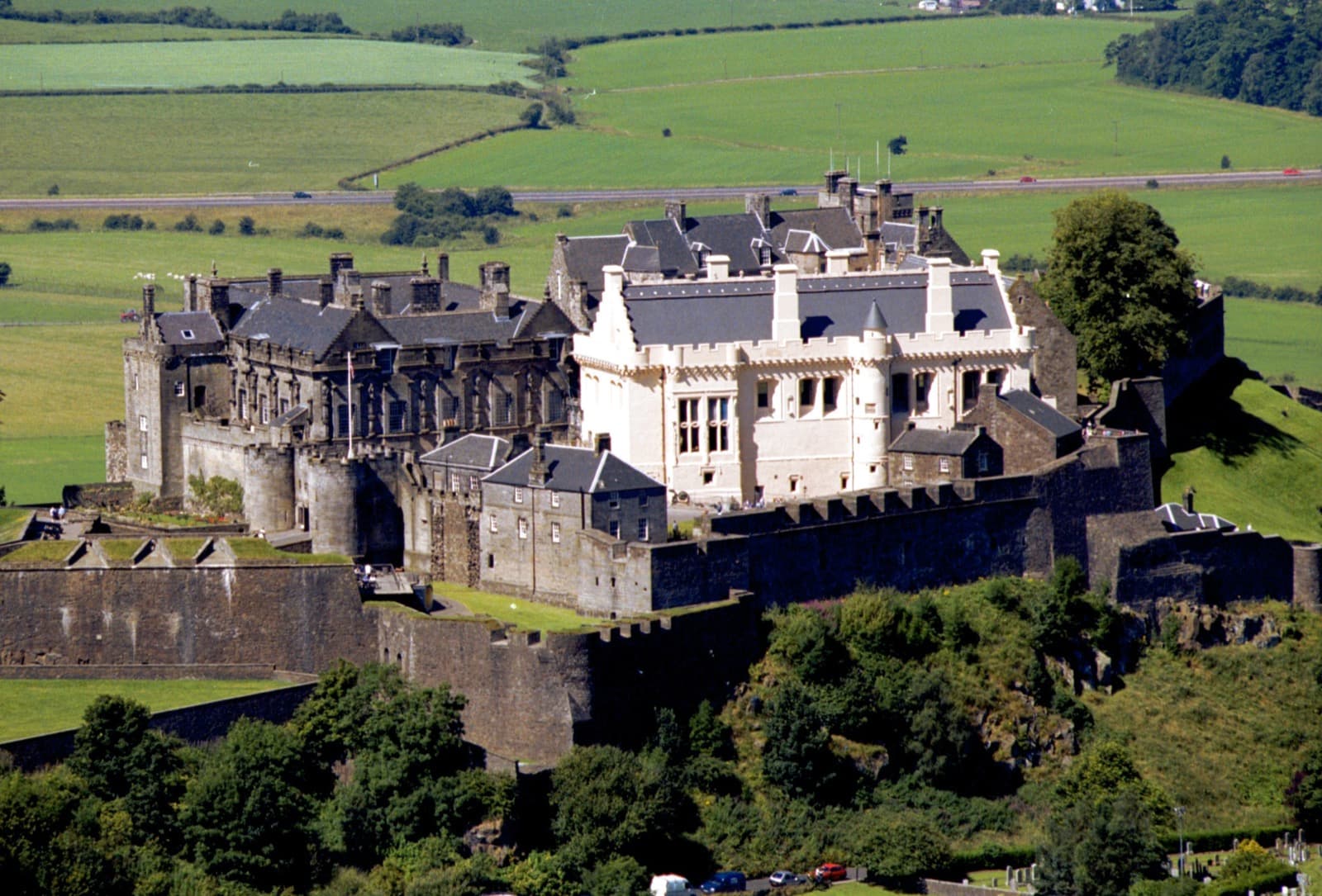
The castle stands on a quartz-dolerite crag, part of the Stirling Sill, molten rock intruded around three hundred and fifty million years ago and later shaped by glaciers into a classic crag and tail. The tail is the very ridge the Old Town descends. That is not scenic detail. For more than three hundred years this was the lowest place the Forth could be bridged, which made the crossing worth an army. The old saying that whoever holds Stirling holds Scotland is grounded in that plain fact of the map.
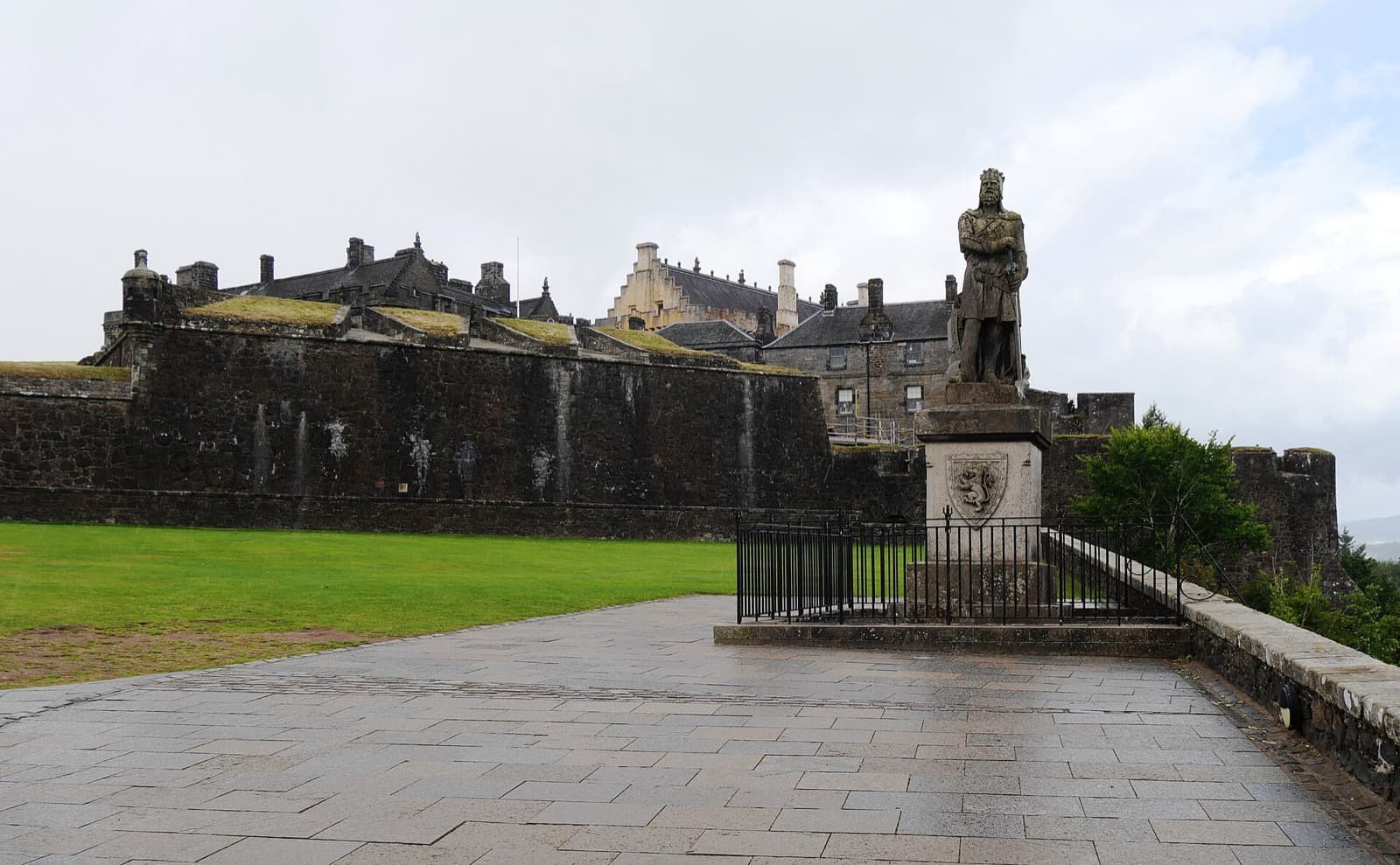
You can see the whole argument from the castle esplanade. A stone statue of Robert the Bruce, carved by Andrew Currie in eighteen seventy-six, faces south on purpose, toward the field of Bannockburn where Bruce won in thirteen fourteen. Turn north and the ground opens over Stirling Bridge and the winding Forth to Abbey Craig, crowned by the National Wallace Monument, with the Highland hills beyond. Near that craig, in twelve ninety-seven, Wallace and Andrew Moray won the Battle of Stirling Bridge. One promenade holds both battles in a single sweep, the castle at your back guarding the gateway, the plain of the Forth stretching away.
A royal burgh built around a court
Hear a stop from this walk
Stirling Castle: The Fortress on the Crag
Because kings needed this rock, they lived on it, and the Old Town: Castle to the Holy Rude tour reads the burgh they made. Most of what you see at the castle was built between fourteen ninety and sixteen hundred, and it holds two of the finest buildings of the Scottish Renaissance: the Great Hall of James the Fourth, completed by about fifteen oh three, and the Royal Palace begun in the fifteen thirties for James the Fifth. Inside the palace, Historic Environment Scotland notes, are the Stirling Heads, carved oak portrait roundels from the king's presence chamber; of about fifty-six originals, thirty-eight survive. Kings and queens were made here. Mary Queen of Scots was crowned as an infant in the chapel royal on the ninth of September, fifteen forty-three.
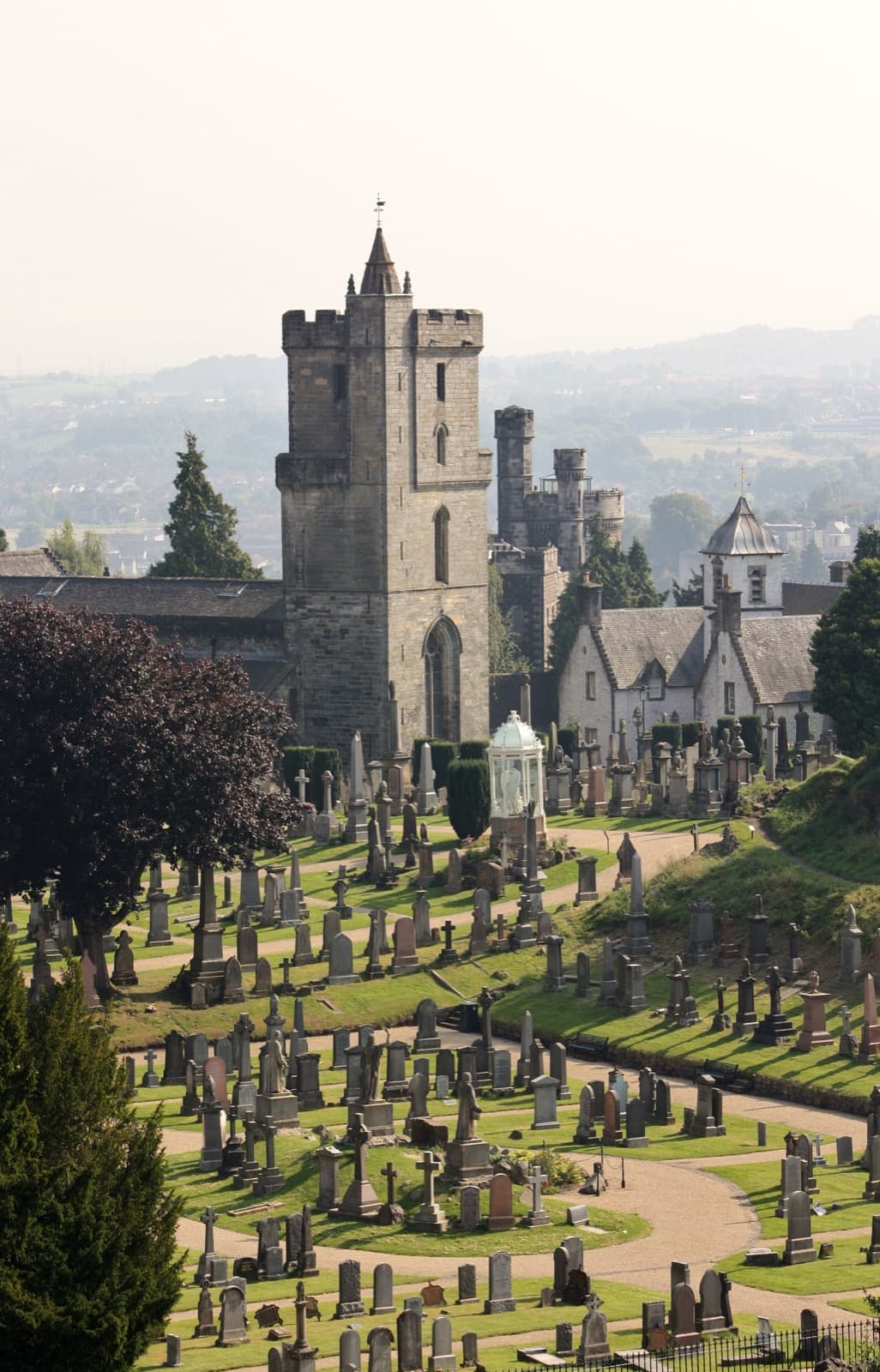
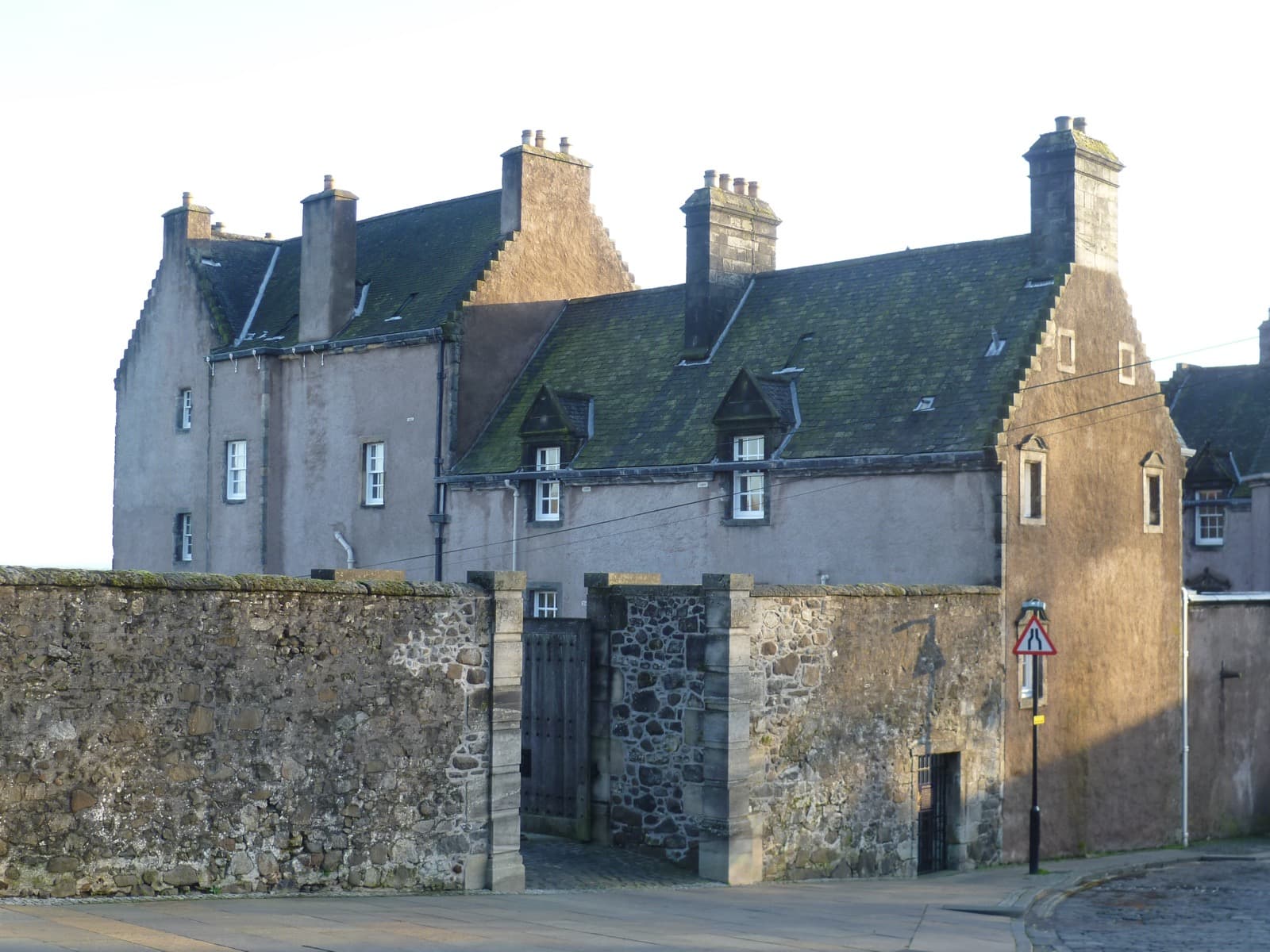
The burgh drops down the ridge from that court. Just below the gate on Castle Wynd stands Argyll's Lodging, which the Royal Commission on Ancient and Historical Monuments has called the most important surviving town-house of its period in Scotland, remodelled about sixteen twenty-nine for the first Earl of Stirling and expanded in sixteen sixty-six by Archibald Campbell, the ninth Earl of Argyll. Lower still, the Church of the Holy Rude, meaning Holy Cross, was founded in eleven twenty-nine in the reign of David the First and rebuilt after a fire in fourteen oh five, making it the second oldest building in the town after the castle. In this kirk, on the twenty-ninth of July, fifteen sixty-seven, the infant James the Sixth, just thirteen months old, was crowned King of Scots after his mother Mary Queen of Scots was forced to abdicate. Adam Bothwell performed the ceremony and John Knox preached the sermon. It is one of only three churches still in use in Britain to have hosted a coronation, alongside Westminster Abbey and Gloucester Cathedral.
The court drew the people who served it. At the head of Broad Street, the old marketplace, rises Mar's Wark, the ruined facade of a Renaissance mansion built about fifteen seventy to fifteen seventy-two by John Erskine, Earl of Mar, keeper of the castle and briefly Regent of Scotland for the infant James the Sixth. Beside the Holy Rude sits Cowane's Hospital, an almshouse founded in sixteen thirty-seven with a bequest of forty thousand merks from the merchant John Cowane, who lived from fifteen seventy to sixteen thirty-three, to shelter twelve decayed guild brethren of the town's Merchant Guildry. And on St John Street the Victorian Old Town Jail of eighteen forty-seven stands beside Stirling's burgh walls, the best preserved town defences in Scotland, thrown up in a rush in fifteen forty-seven to forty-eight during the Rough Wooing, when England came with an army to force the infant Mary into marriage with Prince Edward. Castle, court, kirk, market, charity, and fighting walls: the whole society that a strategic rock required, stacked down one ridge.
The fields where the war was fought to hold it
The Wallace & Bannockburn: The Wars of Independence tour leaves the ridge for the ground below, and it is honest about the difference between record and legend. The sites are too far apart to walk between, so it is a dispersed loop of roughly twelve kilometres, moving by short drives or local buses.
It opens at Stirling Old Bridge, a stone crossing of about fifteen hundred that replaced the wooden bridge on which the battle of twelve ninety-seven was fought, that earlier bridge standing a little way upstream from where the stone one now sits. On the eleventh of September, twelve ninety-seven, Wallace and Andrew Moray held the Scottish side against an English army under John de Warenne, Earl of Surrey, and the treasurer Hugh de Cressingham. The English had to file across a bridge broad enough for only two horsemen abreast; the Scots waited until half had crossed, then attacked and trapped them against a boggy loop of the river. Cressingham was killed. Moray was mortally wounded and died of his wounds within weeks, a fact easy to forget in a story that later belonged almost entirely to Wallace.
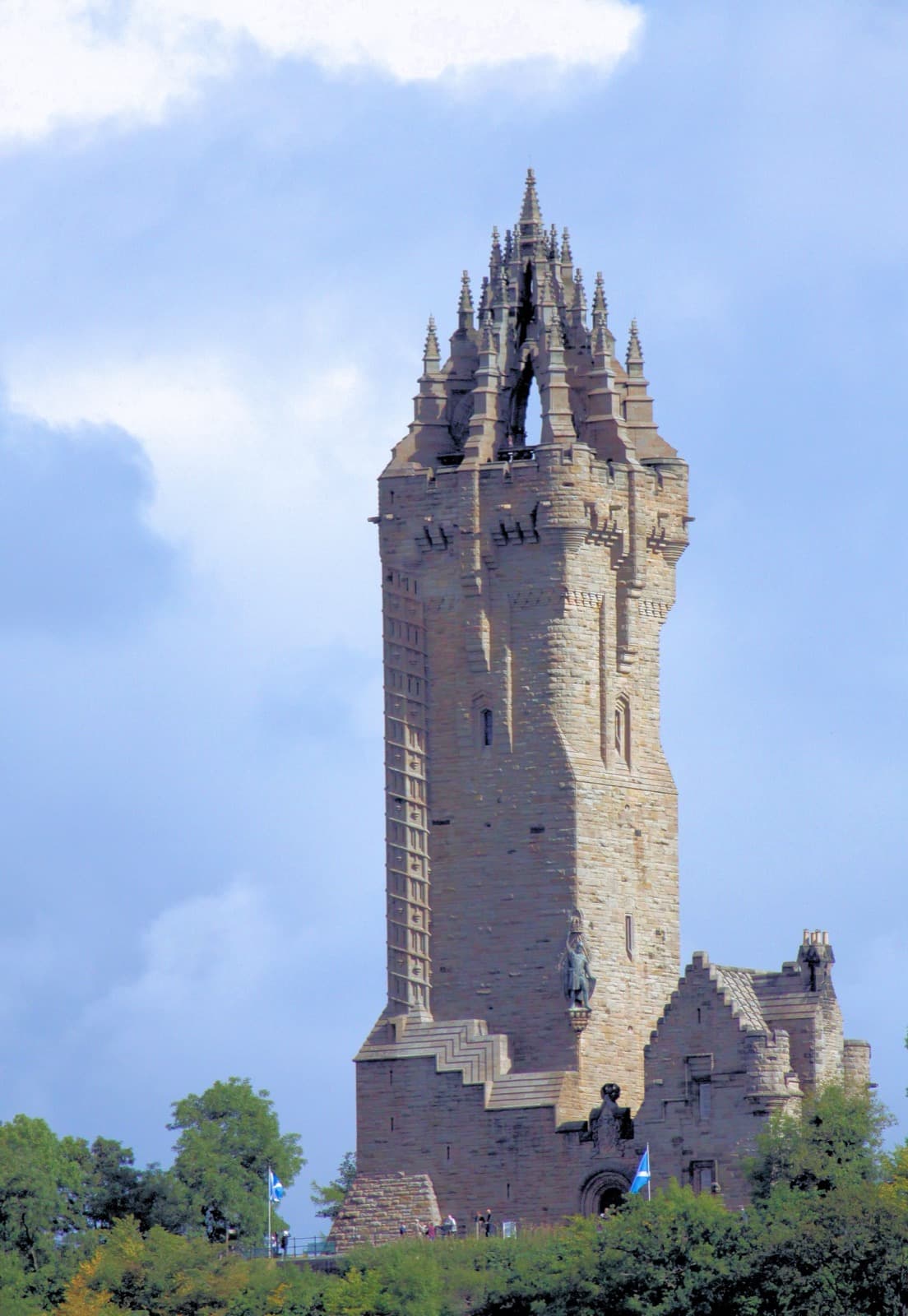
From there the loop climbs Abbey Craig to the National Wallace Monument, a sixty-seven metre Victorian Gothic tower designed by John Thomas Rochead, its foundation stone laid in eighteen sixty-one, opened in eighteen sixty-nine, paid for largely by public subscription. This is where history rises into legend, and the tour says so. The monument displays the so-called Wallace Sword, but historians dispute it ever belonged to Wallace; its association traces only to about eighteen oh three, and Doctor David Caldwell, a former president of the Society of Antiquaries of Scotland, said it had nothing to do with him. Between the two battles the loop pauses at Cambuskenneth Abbey, an Augustinian house founded around eleven forty by David the First, where a parliament met in thirteen twenty-six to confirm the succession, and where James the Third, killed at Sauchieburn in fourteen eighty-eight, lies buried under a tomb restored with Queen Victoria's funding in eighteen sixty-five.
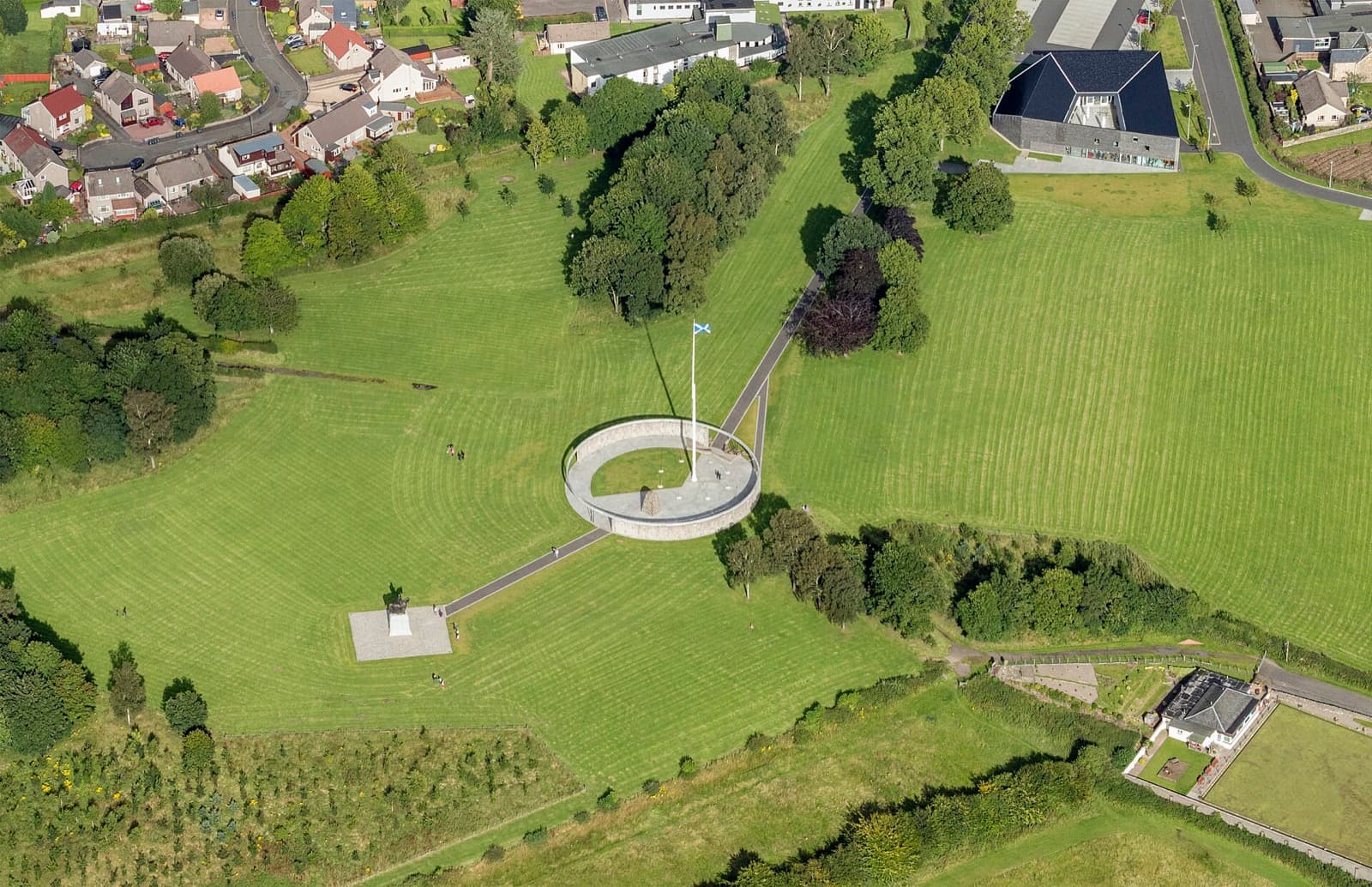
The loop ends south of the town at Bannockburn, where over the twenty-third and twenty-fourth of June, thirteen fourteen, Robert the Bruce defeated the much larger army of Edward the Second. The monuments here are modern: the Rotunda of nineteen sixty-two and the bronze equestrian Bruce by Charles d'Orville Pilkington Jackson, unveiled in nineteen sixty-four, its head modelled on measurements taken from Bruce's own skull, found at Dunfermline Abbey in eighteen eighteen. The National Trust for Scotland's visitor centre closes the loop by doing the honest thing: it uses research and a digital recreation to show what is known and what is genuinely uncertain, including the fact that the exact site of the battle is still debated, and it sets the historical Bruce and Wallace apart from their Braveheart legend.
Read the rock, then the fields
This is why Stirling repays a self-guided walk. The strategic pivot that made the castle worth a war is not an abstraction; it is a rock you climb, a view you stand in, and two battlefields you can reach in an afternoon. Take the royal burgh in the morning at your own clock, then the fields in the afternoon, and you will have read Scotland's contested heart from the geography up. For more routes through the burgh and its battlefields, see Stirling walking tours.
Sources
- Historic Environment Scotland, Stirling Castle, the Stirling Heads, Argyll's Lodging, Mar's Wark, and Stirling Old Bridge (statutory guardianship and scheduled monument records).
- Church of the Holy Rude, Stirling, parish history of the eleven twenty-nine foundation and the fifteen sixty-seven coronation of James the Sixth.
- The National Wallace Monument, Abbey Craig, history of the eighteen sixty-one to eighteen sixty-nine tower and the disputed Wallace Sword.
- National Trust for Scotland, Battle of Bannockburn visitor centre, on the thirteen fourteen battle and the debated location of the field.
- Society of Antiquaries of Scotland, commentary of Dr David Caldwell on the authenticity of the Wallace Sword.
Frequently asked questions
- Why was Stirling so strategically important in Scottish history?
- Stirling Castle guards the lowest bridging point of the River Forth, the old gateway between the Lowlands and the Highlands. For more than three hundred years this was the lowest place the Forth could be bridged, which made the crossing worth an army. This geography gave rise to the saying that whoever holds Stirling holds Scotland.
- Which two battles of the Wars of Independence were fought near Stirling?
- William Wallace and Andrew Moray won the Battle of Stirling Bridge on the eleventh of September, twelve ninety-seven, near Abbey Craig. Robert the Bruce won the decisive Battle of Bannockburn over the twenty-third and twenty-fourth of June, thirteen fourteen, south of the town. Both fields are visible from or reachable near Stirling Castle.
- Which king was crowned as a baby in Stirling?
- The infant James the Sixth, just thirteen months old, was crowned King of Scots in the Church of the Holy Rude on the twenty-ninth of July, fifteen sixty-seven, after his mother Mary Queen of Scots was forced to abdicate. Adam Bothwell performed the ceremony and John Knox preached the sermon. The Holy Rude is one of only three churches still in use in Britain to have hosted a coronation.
- Is the Wallace Sword at the National Wallace Monument genuinely Wallace's?
- Its authenticity is disputed by historians. The sword's association with Wallace traces only to about eighteen oh three, and Dr David Caldwell, a former president of the Society of Antiquaries of Scotland, said it had nothing to do with him. The blade also appears to have been forged from more than one piece.
- Can you walk between Stirling's battlefield sites?
- No, the main Wars of Independence sites are too far apart to walk between. The route linking Stirling Old Bridge, the National Wallace Monument, Cambuskenneth Abbey and Bannockburn is a dispersed loop of roughly twelve kilometres, covered by short drives or local buses with walking at each site.
Ready to experience it?
Old Town: Castle to the Holy Rude
90 min · 1.3 km · moderate
More from Stirling
Explore more at your own pace.
One Day in Stirling: A Walkable Castle-to-Battlefield Itinerary
Stirling Travel Guide: Days, Transport, Fees, and Safety
Stirling Castle and the Walk Down a Royal Burgh
The Wallace Monument and the Ground Two Battles Were Fought to Hold
Bannockburn Battlefield and Monuments: The Field Where Bruce Broke an English Army