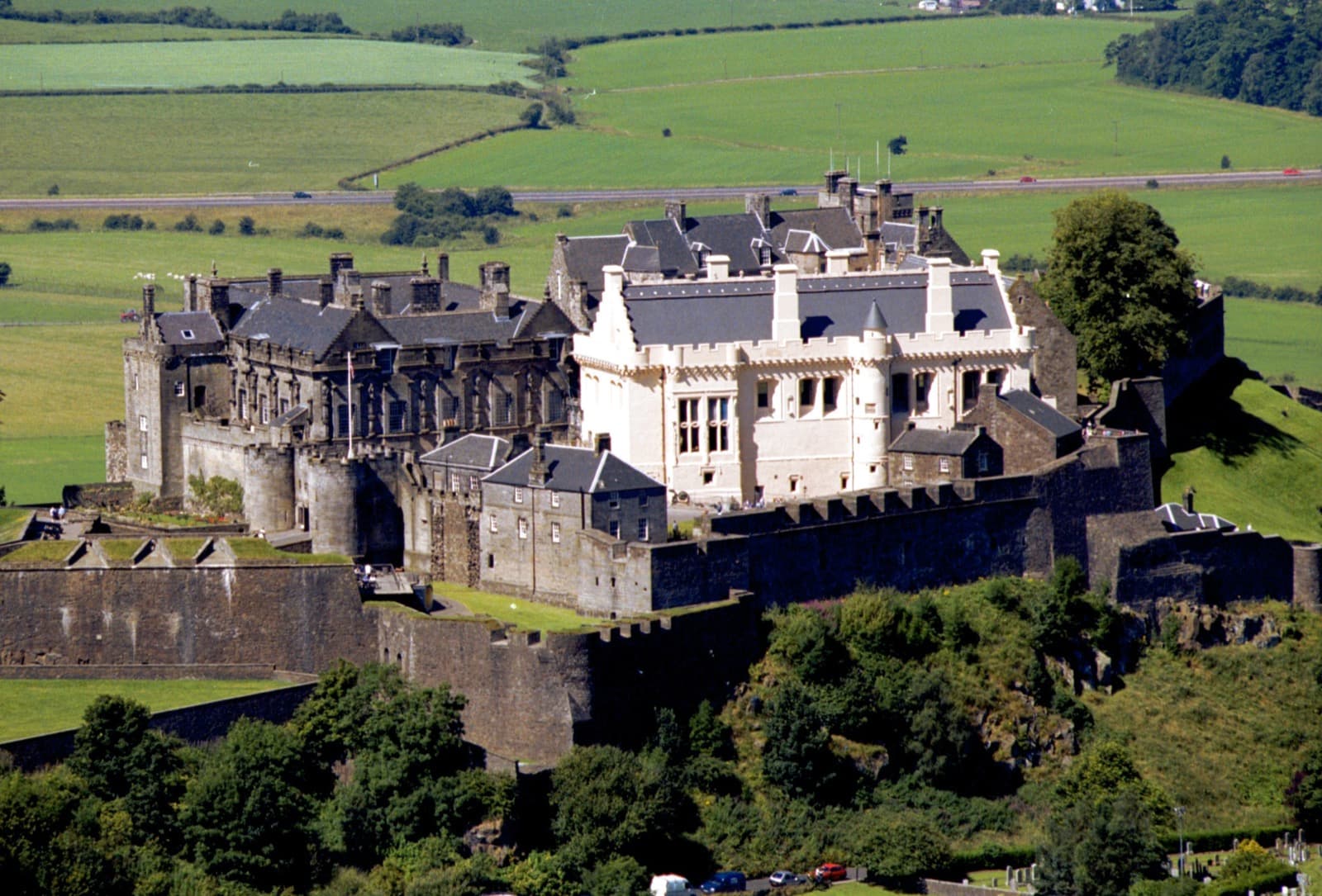
Stirling Castle guards the narrow waist of Scotland from a volcanic crag, and the royal burgh that falls away from its gate reads the whole national story on one steep ridge. This is why people have long said that whoever holds Stirling holds Scotland. The castle sits above the lowest place the River Forth could be bridged, the old gateway between the Lowlands and the Highlands, and the medieval streets beneath it drop downhill past a Renaissance townhouse, a regent's carved mansion, a Victorian jail, and the medieval kirk where a baby was crowned King of Scots. Begin at the icon, and the rest of the walk unfolds below you.
The fortress that made a nation's geography
The rock you stand on before the castle gate is not ordinary ground. It is a quartz-dolerite crag, part of the Stirling Sill, molten rock that intruded around three hundred and fifty million years ago and was later shaped by glaciers into a classic crag and tail. The hard volcanic head resisted the ice; the softer rock behind it was scraped into a long tail, and that tail is the very ridge the Old Town runs down. Geology drew the map before any king did.
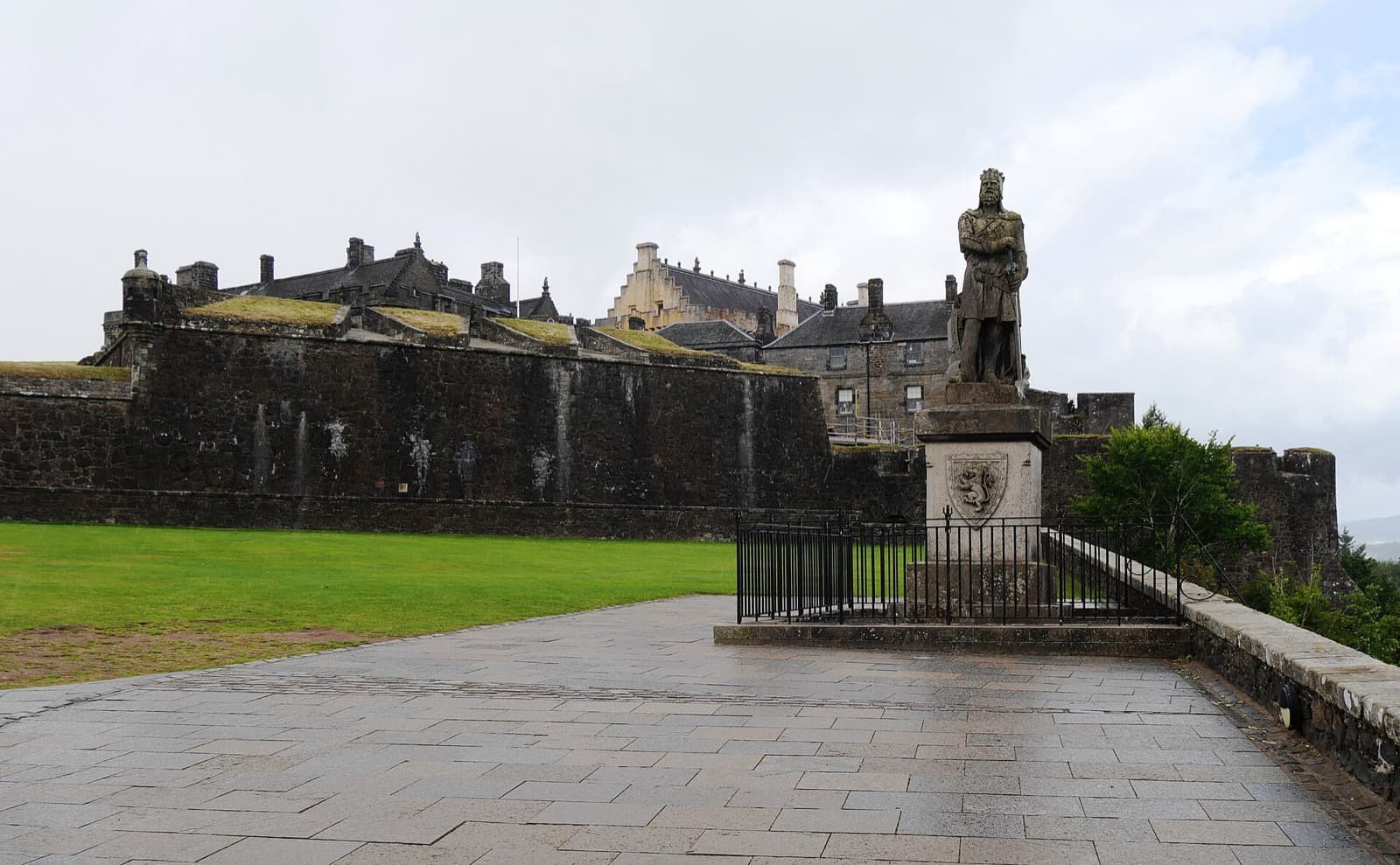
A castle has stood here since at least the early twelfth century, though most of what you see was built between 1490 and 1600. This was a royal residence, and it holds two of the finest works of the Scottish Renaissance. The Great Hall of James the Fourth was completed by about 1503. The Royal Palace was begun in the 1530s for James the Fifth and largely finished by the late 1540s. Inside the palace hang the Stirling Heads, carved oak portrait roundels from the king's presence chamber ceiling. Historic Environment Scotland notes that of about fifty-six originals, thirty-eight survive.
Kings and queens were made here in the literal sense. Mary Queen of Scots was crowned as an infant in the chapel royal on the ninth of September, 1543, and spent part of her childhood within these walls. Her son, James the Sixth, was baptised at the castle in December 1566 and raised here under the Earl of Mar and the tutor George Buchanan. Take the icon at your own clock. The castle charges entry, but the esplanade and the descent are yours whenever you are ready, and that is the argument of this whole walk: the marquee heritage here is heavily group-packaged, with timed slots and coach day-trips on a fixed timetable, yet you set the pace.
The long view, and the truth behind the myth
Hear a stop from this walk
Stirling Castle: The Fortress on the Crag
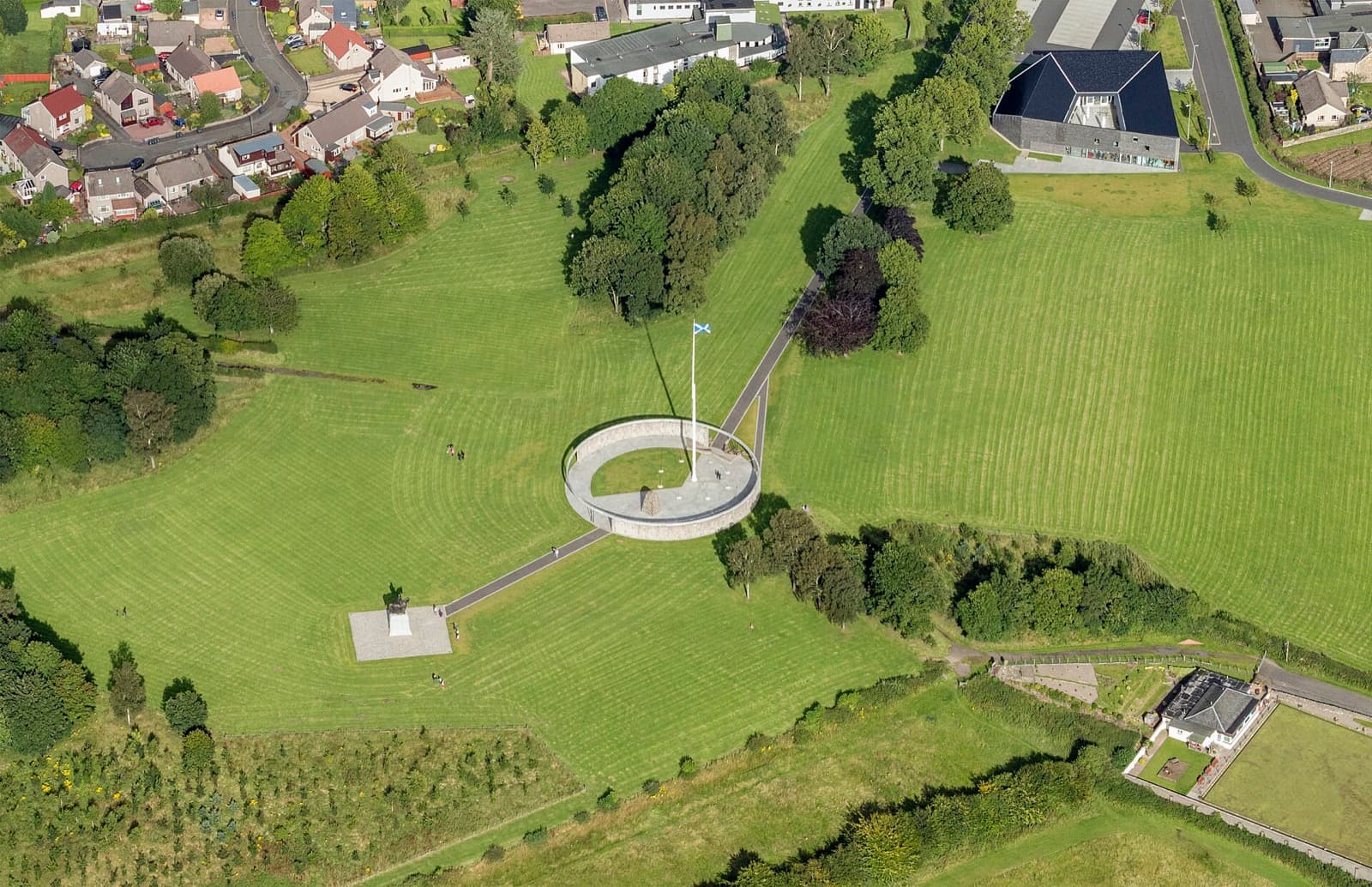
Step out onto the esplanade, the terraced promenade laid before the castle in the nineteenth century, and a stone figure fixes the strategic map for you. This is Robert the Bruce, carved by the sculptor Andrew Currie in 1876. He wears chain mail, his hand on the pommel of his sword, and he faces south, deliberately, toward the site of the Battle of Bannockburn, fought in 1314, which Bruce won.
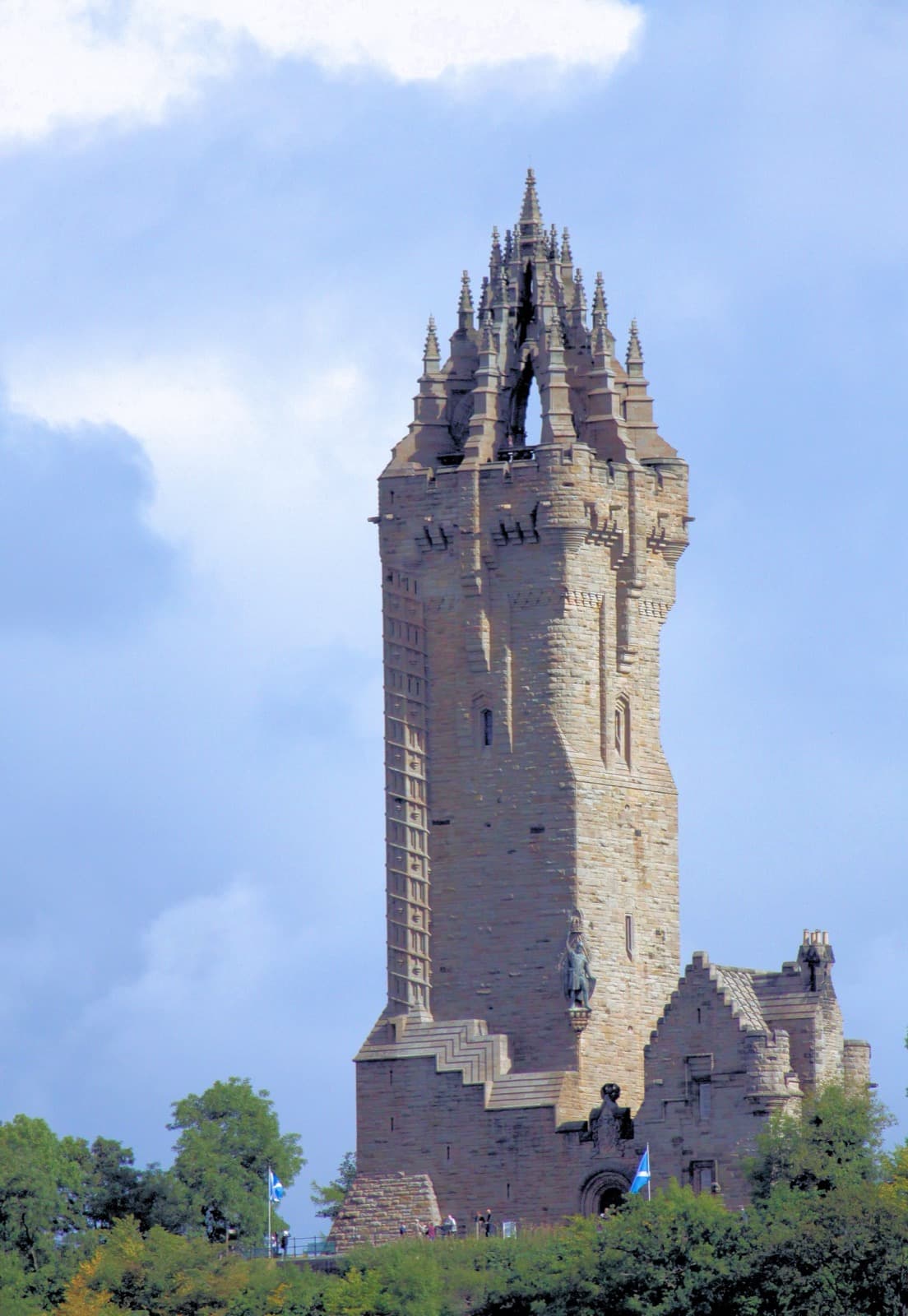
From here you have one of the widest views in Scotland. To the north the ground opens over Stirling Bridge and the winding Forth to Abbey Craig, crowned by the National Wallace Monument, with the Highland hills beyond. Near that craig, in 1297, the historical William Wallace and Andrew Moray won the Battle of Stirling Bridge. It is worth being clear: the Wallace of the record is not the Wallace of the film Braveheart. The documented victory of 1297 and Bruce's victory at Bannockburn in 1314 belong to the Wars of Scottish Independence, not to the myth. Stand a while and read the gateway laid out below you. Then turn downhill.
Down the wynd into the burgh
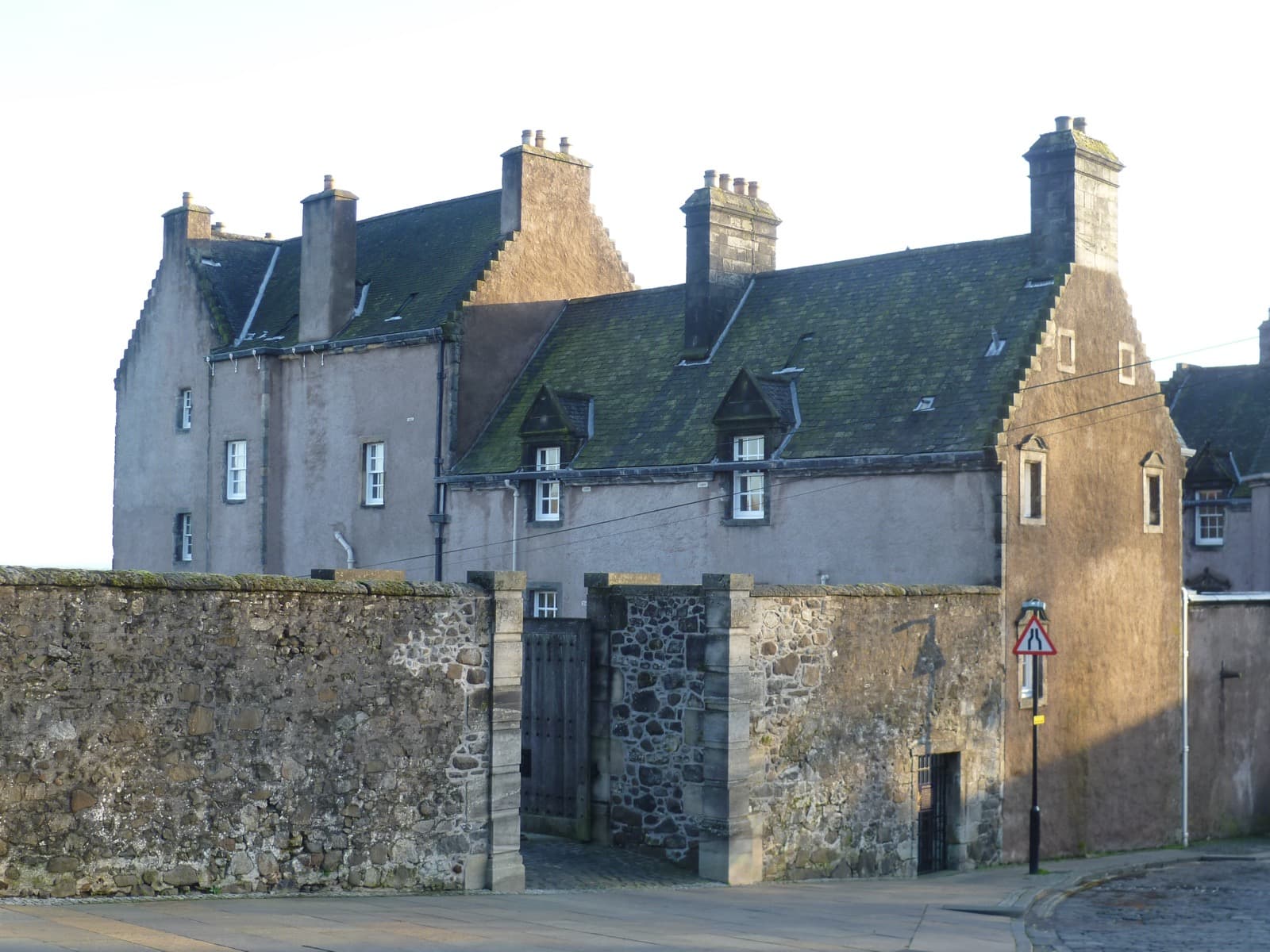
A little below the gate, on Castle Wynd, stands Argyll's Lodging, a grand seventeenth-century townhouse the Royal Commission on Ancient and Historical Monuments has called the most important surviving town-house of its period in Scotland. Remodelled about 1629 for Sir William Alexander, first Earl of Stirling, it was later bought and expanded in 1666 by Archibald Campbell, the ninth Earl of Argyll, whose family gives it its name. Look for the French Renaissance touches: conical-roofed corner turrets and an enclosed courtyard. From about 1800 to 1964 it served as a military hospital before becoming a museum. The exterior is free to admire; the interior is included with a castle ticket.
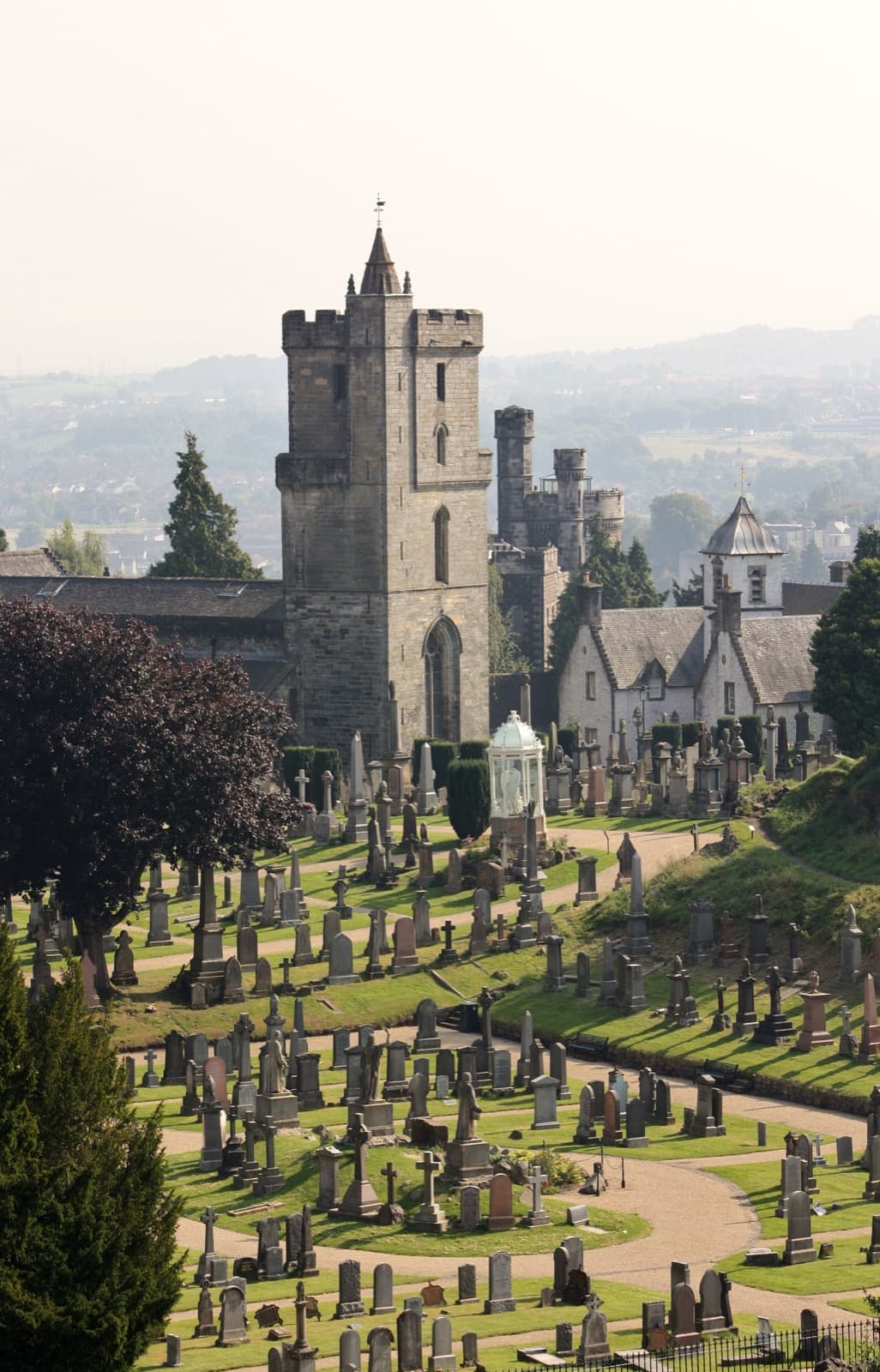
Further down waits the kirk of the Holy Rude, Holy Rude meaning Holy Cross. Founded in 1129 in the reign of David the First, rebuilt after a fire in 1405, it is the second oldest building in Stirling after the castle, and its open medieval oak-timber roof still survives. Here one of the most extraordinary ceremonies in Scottish history took place. On the twenty-ninth of July, 1567, the infant James the Sixth, just thirteen months old, was crowned King of Scots. Adam Bothwell, Bishop of Orkney, performed the ceremony, and John Knox preached the sermon. Hear it soberly: that baby was crowned only because his mother, Mary Queen of Scots, had been forced to abdicate amid the turmoil of the Reformation. The Holy Rude is one of only three churches still in use in Britain to have hosted a coronation, alongside Westminster Abbey and Gloucester Cathedral. It remains an active parish, so keep your voice low.
The regent, the jail, and the merchant's charity
At the head of Broad Street rises Mar's Wark, a wark being simply a work or building. This ornate, roofless facade is all that survives of a Renaissance townhouse built about 1570 to 1572 by John Erskine, Earl of Mar, hereditary keeper of the castle and, briefly, Regent of Scotland in the name of the infant James the Sixth. Below it runs Broad Street, the old marketplace, with its mercat cross topped by a sitting unicorn known locally as the Puggy.
Down on St John Street stands the Old Town Jail, a Victorian county prison built in 1847 by the architect Thomas Brown, replacing the Tolbooth that had been condemned as the worst prison in Britain. Around this part of the crag run Stirling's town walls, the best preserved town defences in Scotland, thrown up in a rush in 1547 to 1548. The reason is a hard one. This was the Rough Wooing, England's campaign after the death of Henry the Eighth to force the infant Mary Queen of Scots to marry Prince Edward. When persuasion failed, England came with an army. Name it plainly: this was an invasion, not romance.
The walk closes beside the kirk at Cowane's Hospital, a handsome almshouse founded in 1637 with a bequest of forty thousand merks from the merchant John Cowane, who lived from 1570 to 1633, to shelter twelve decayed guild brethren. Designed by the royal master-mason John Mylne, its Dutch influence shows in the crow-step gables. A nearby bastion of the town wall opens a wide view over the carse, the flat plain of the Forth, to the Ochil Hills and Abbey Craig. Stand there and take in the whole gateway one last time.
To walk the full descent at your own pace, with the audio guiding each stop, browse Stirling walking tours or start from the Stirling city page.
Sources
- Historic Environment Scotland, Stirling Castle history: the fabric dates, the Royal Palace, and the surviving Stirling Heads.
- Wikipedia, Coronation of James VI: the 1567 ceremony, Adam Bothwell, and John Knox.
- Wikipedia, Church of the Holy Rude: the 1129 founding and the coronation record.
- Wikipedia, Statue of Robert the Bruce, Stirling Castle: Andrew Currie and the 1876 carving.
- Wikipedia, Rough Wooing and Mar's Wark: the town walls of 1547 to 1548 and the regent's mansion.
Ready to experience it?
Old Town: Castle to the Holy Rude
90 min · 1.3 km · moderate
More from Stirling
Explore more at your own pace.
One Day in Stirling: A Walkable Castle-to-Battlefield Itinerary
Stirling Travel Guide: Days, Transport, Fees, and Safety
Stirling: The Rock That Held Scotland
The Wallace Monument and the Ground Two Battles Were Fought to Hold
Bannockburn Battlefield and Monuments: The Field Where Bruce Broke an English Army