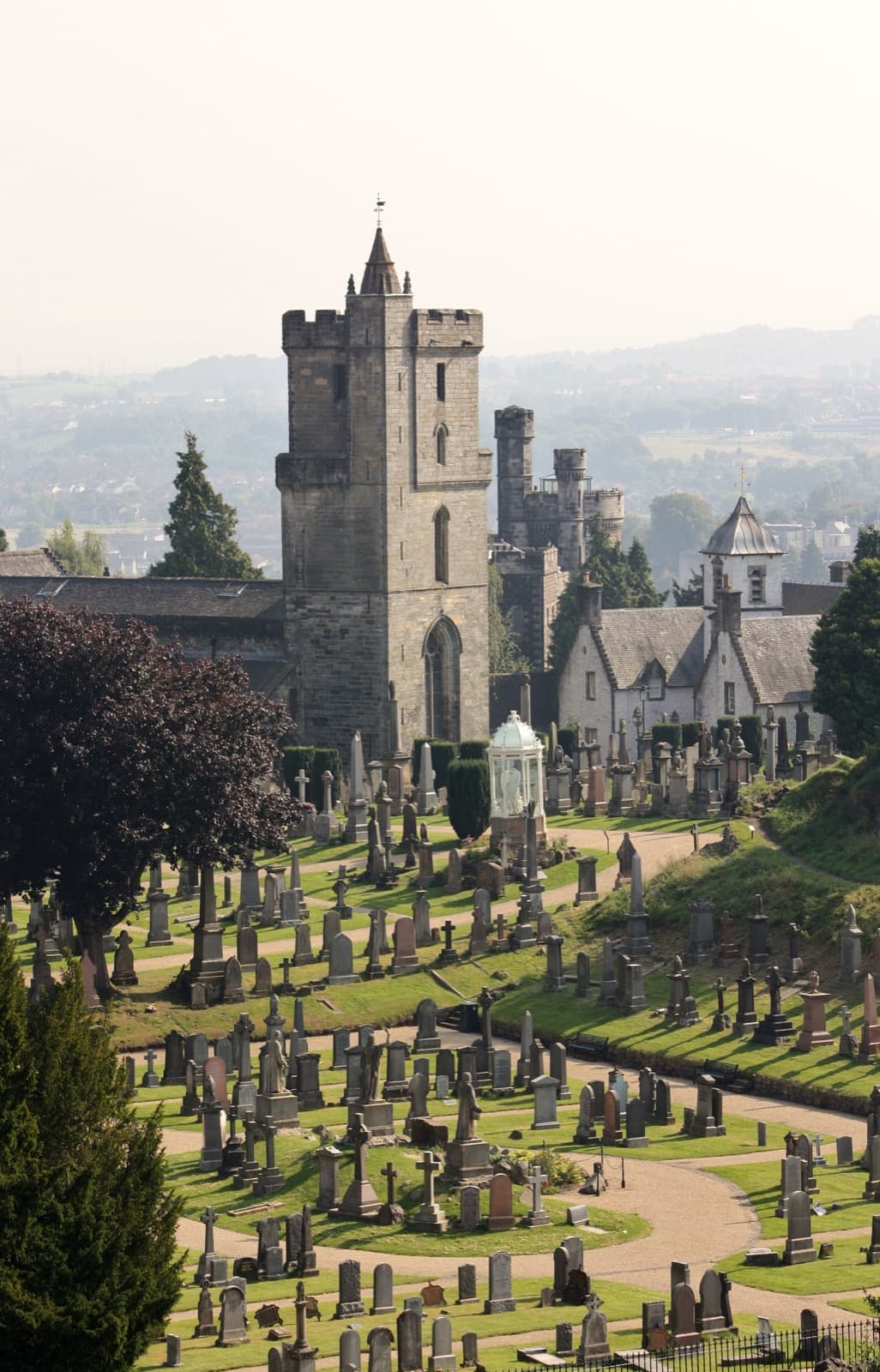
The Church of the Holy Rude is the medieval kirk where Scotland crowned a baby king. On the twenty-ninth of July, 1567, the infant James the Sixth, just thirteen months old and the son of Mary Queen of Scots, was crowned King of Scots inside this parish church on Stirling's steep ridge. That single ceremony makes the building one of only three churches still in use in Britain to have hosted a coronation, alongside Westminster Abbey and Gloucester Cathedral. Stand in front of it and the one thing to understand is this: the crowning of that child was not a fairytale. It was the act of a divided kingdom, and the walls around you watched it happen.
What the building is
Holy Rude simply means Holy Cross, from the old Scots word for cross. This is Stirling's medieval parish kirk, and after the castle it is the second oldest building in the town. It was founded in 1129, in the reign of David the First, one of Scotland's great church-building kings. The early structure did not survive. A fire in 1405 destroyed much of it, and the new nave you see was begun by 1414. The result is a working medieval church that has stayed a church for the better part of nine centuries, never converted, never abandoned.
Look up when you are inside. The open medieval oak-timber roof still survives overhead, one of the rare things in Scotland that a visitor can honestly call original. It was concealed for generations and then re-exposed during a restoration in 1940. That timber ceiling is roughly the same one that would have looked down on the congregation in the sixteenth century, and it is worth a slow minute of attention. Roofs of this age were usually lost to fire, collapse, or Victorian "improvement." This one was not.
The coronation of a thirteen-month-old
Hear a stop from this walk
Stirling Castle: The Fortress on the Crag
The event that puts Holy Rude in every history of Scotland took place on that July day in 1567. The child crowned here was James the Sixth, later James the First of England, but on that morning he was an infant carried into a church he could not have understood. Adam Bothwell, Bishop of Orkney, performed the ceremony. John Knox, the towering figure of the Scottish Reformation, preached the sermon.
It is worth hearing why this happened, because the reason is grim rather than romantic. James was crowned only because his mother, Mary Queen of Scots, had been forced to abdicate in 1567, in the turmoil of the Reformation that was tearing the country's religious and political order apart. Crowning a baby is not a celebration of continuity. It is what a kingdom does when the adults have fought each other to a standstill and need a symbol to rule in place of a person. The men in this church were not marking a happy succession. They were managing a crisis, and they used a child to do it. To stand in the nave and picture the scene honestly is to picture a country at war with itself, papering over the wound with a coronation.
That is the register the Holy Rude rewards. It is not a monument to triumph. It is a place where you can feel how close medieval and Reformation Scotland ran to chaos, and how ordinary a building could be pressed into carrying the weight of a nation.
Standing in front of it
The Church of the Holy Rude sits partway down Stirling's Old Town ridge, below the castle and above the old marketplace, so it belongs to a walk rather than a single stop. The kirkyard around it is a working burial ground, and an active parish still worships here, which is the whole point of that "still in use" distinction. This is not a ruin or a museum piece. Services continue; graves are tended; the church keeps seasonal visitor hours, so if you want to see the interior and that medieval roof, it is worth checking ahead rather than assuming the door is open. Keep your voice low in the yard. People are buried here, and people still pray here.
The thing to carry with you as you look at it: three churches in all of Britain that are still in use have crowned a monarch, and two of them are cathedrals of national fame. The third is this modest parish kirk on a Scottish crag, which crowned a king who could not yet walk. That is the measure of how central Stirling once was to who ruled Scotland. Whoever held Stirling, it was long said, held Scotland, because the castle guarded the lowest bridging point of the River Forth, the waist of the country between Lowlands and Highlands. The kirk sits in the shadow of that castle, and the 1567 coronation is the clearest proof that when Scotland needed a place to make a king, it came here.
Walk the ridge it belongs to
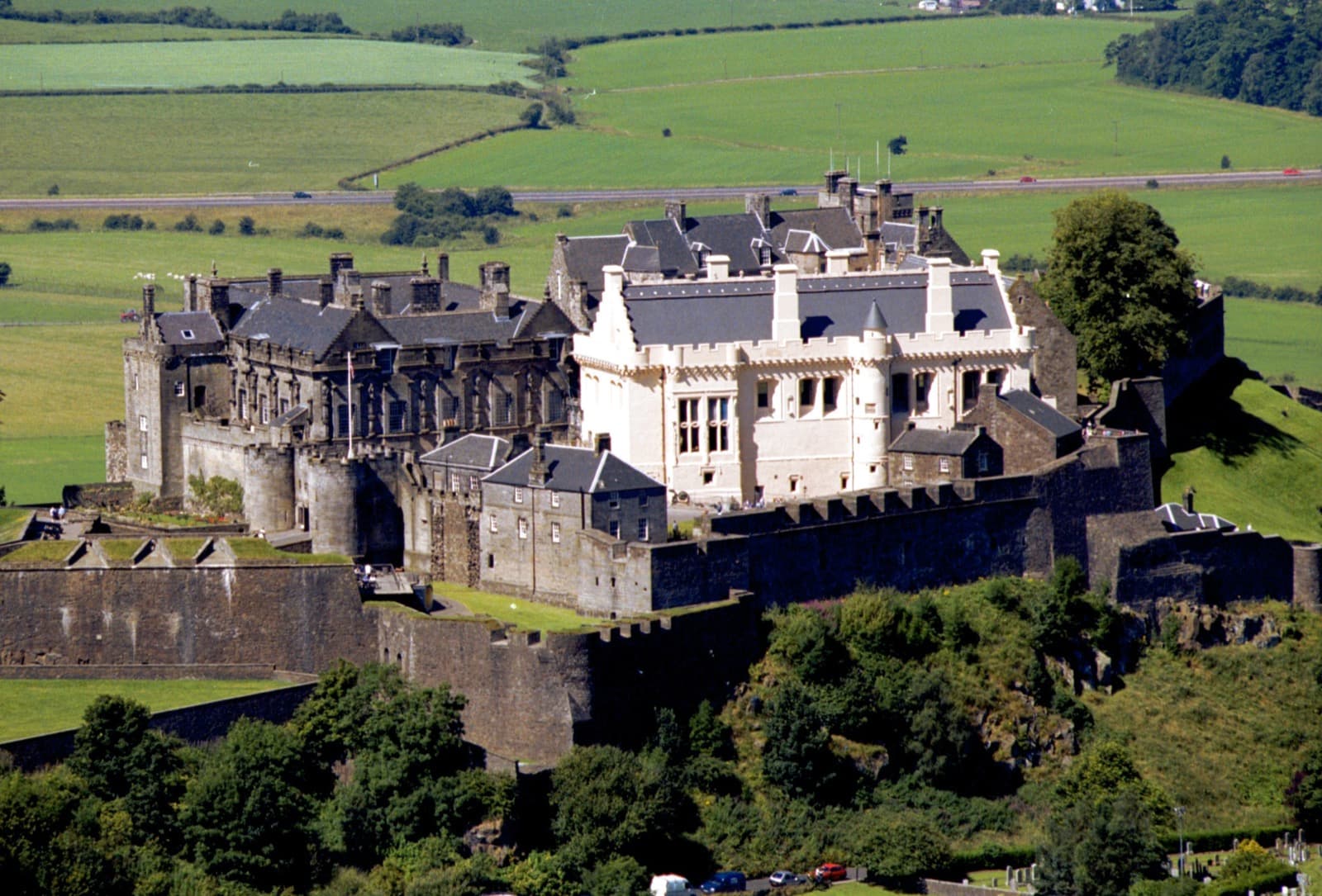
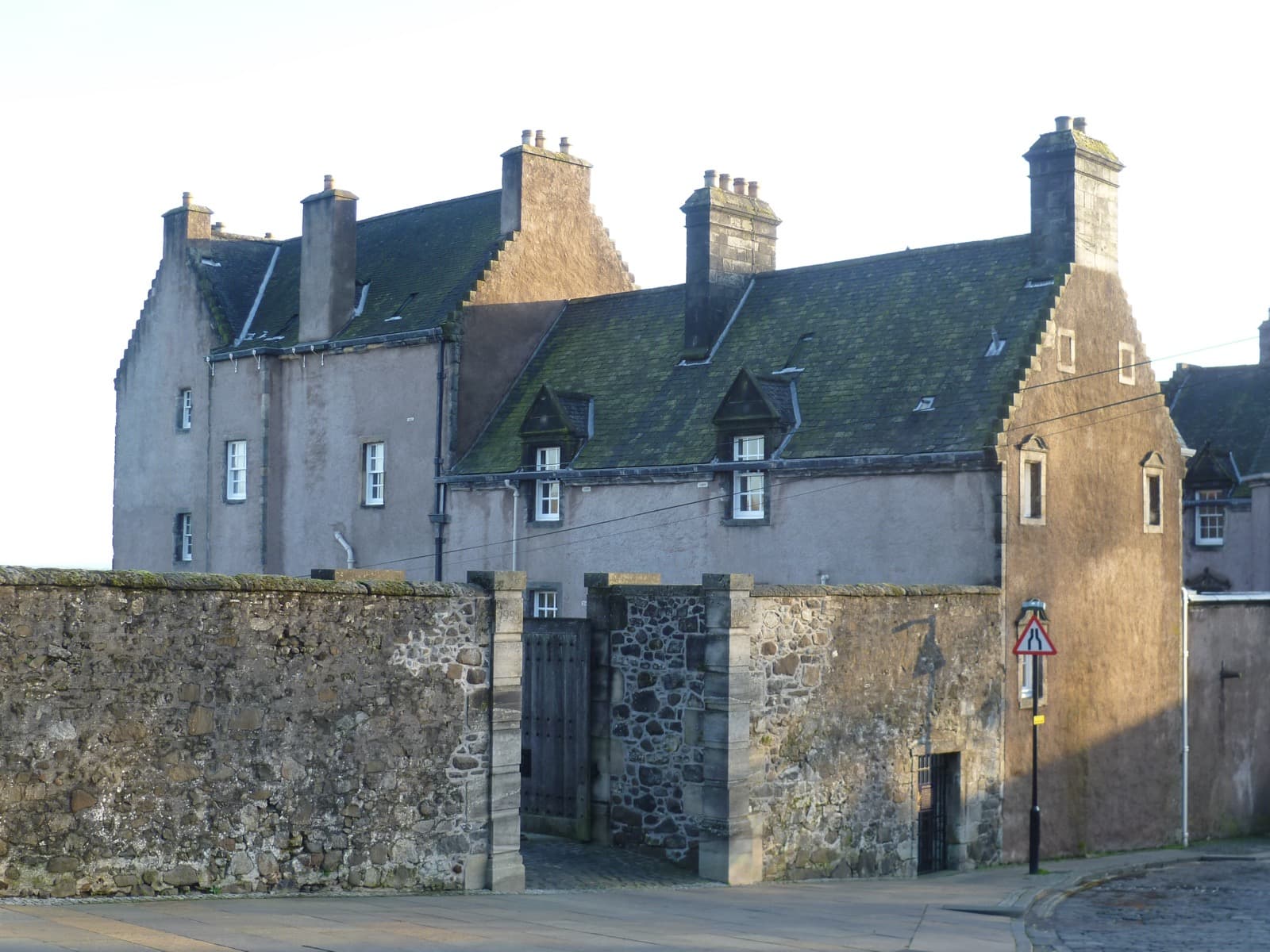
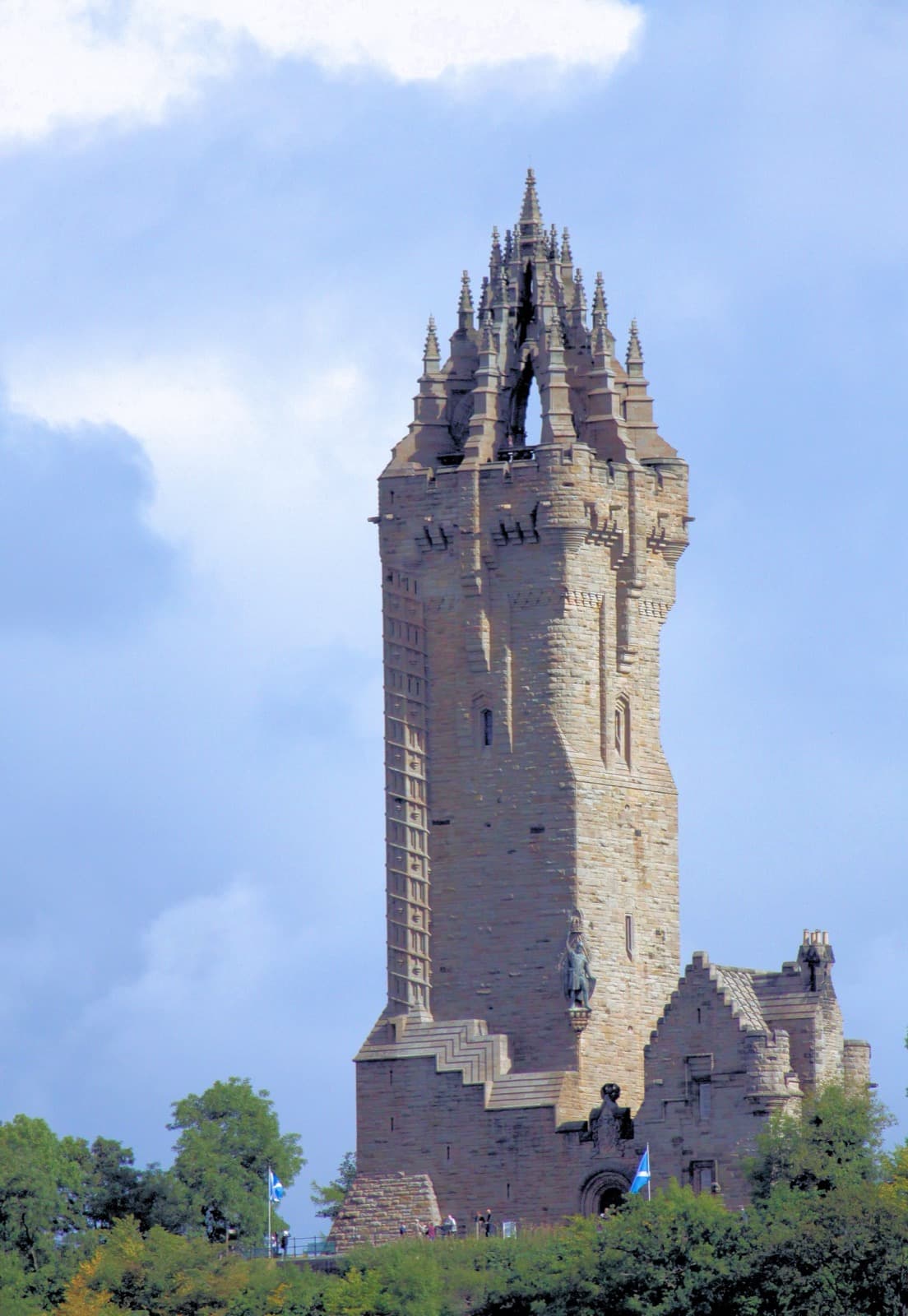
The Holy Rude reads best in sequence, descending the royal burgh from the castle gate through the medieval town to the kirk and the merchant's almshouse beside it. That descent is exactly what the self-guided stirling-old-town-castle tour follows: it starts on the castle esplanade at the top of the volcanic crag, drops past Argyll's Lodging, and brings you to the Church of the Holy Rude at the heart of the walk, with the Wallace Monument and the Highland hills on the horizon the whole way down. You set your own pace, linger in the kirkyard as long as the quiet holds you, and there is no group waiting on you and no tip expected.
If you want to plan the wider route first, start with the guide to Stirling walking tours, which lays out how the castle, the kirk, and the old burgh fit together. Then walk the ridge itself. The Holy Rude has stood on it since 1129, and the baby king it crowned is the reason Stirling still tells the story of who ruled Scotland.
Sources
- Church of the Holy Rude, Wikipedia: founding date of 1129, the 1405 fire, the 1414 nave, and the surviving medieval oak roof re-exposed in 1940.
- Coronation of James VI, Wikipedia: the 29 July 1567 ceremony, the infant king's age, and the roles of Adam Bothwell and John Knox.
- Historic Environment Scotland, Stirling Castle history: the strategic role of Stirling as the guarded crossing of the Forth and its centrality to Scottish kingship.
- Church of the Holy Rude visitor information: the church remaining an active parish with a working kirkyard and seasonal opening hours.
Ready to experience it?
Old Town: Castle to the Holy Rude
90 min · 1.3 km · moderate
More from Stirling
Explore more at your own pace.
One Day in Stirling: A Walkable Castle-to-Battlefield Itinerary
Stirling Travel Guide: Days, Transport, Fees, and Safety
Stirling: The Rock That Held Scotland
Stirling Castle and the Walk Down a Royal Burgh
The Wallace Monument and the Ground Two Battles Were Fought to Hold