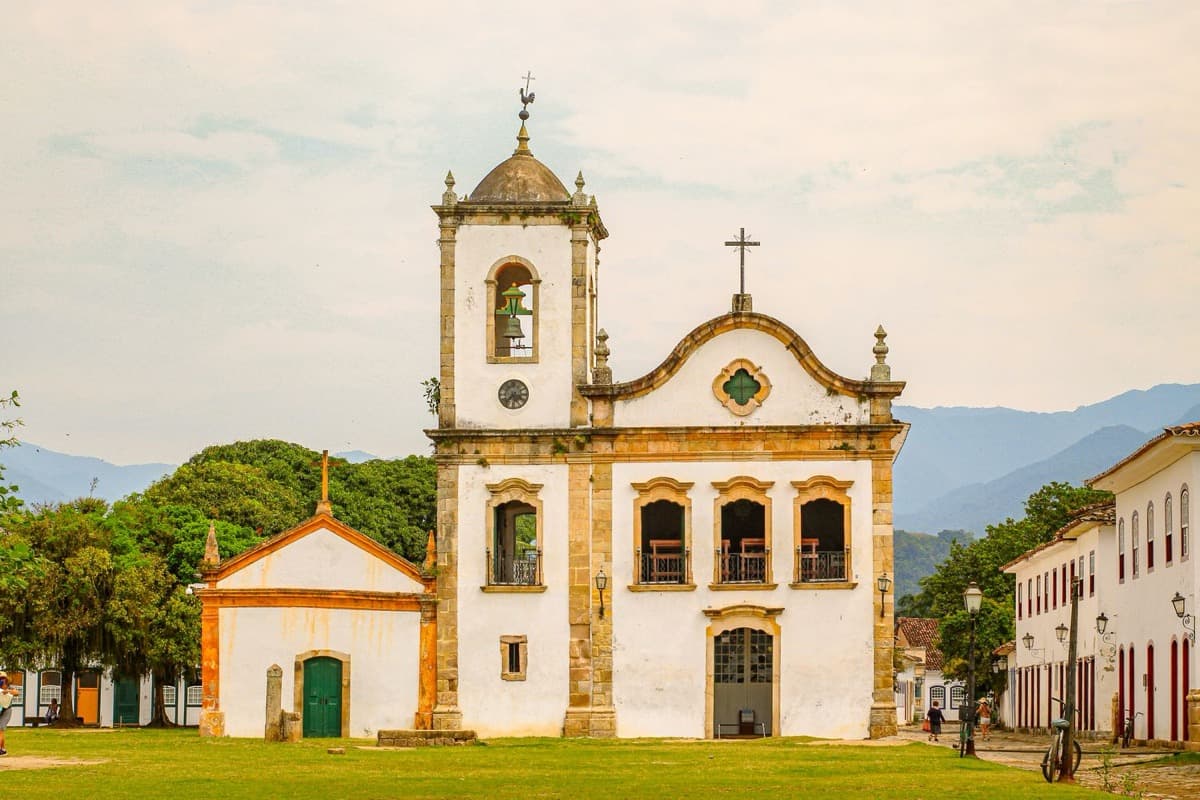
The white church on the Paraty waterfront that appears in nearly every photograph of the town is the Igreja de Santa Rita de Cássia, the oldest surviving church in Paraty, and it was built in 1722 by a brotherhood of freed pardos who were barred from the main parish. That is the fact worth holding as you look at it. The building most people treat as the face of the whole town was raised by the very people the town excluded. It stands right at the edge of the water beside the old pier, its plain towers framing the bay, and its story is the clearest way to read what colonial Paraty actually was underneath the whitewash.
A church for the people shut out of the main one
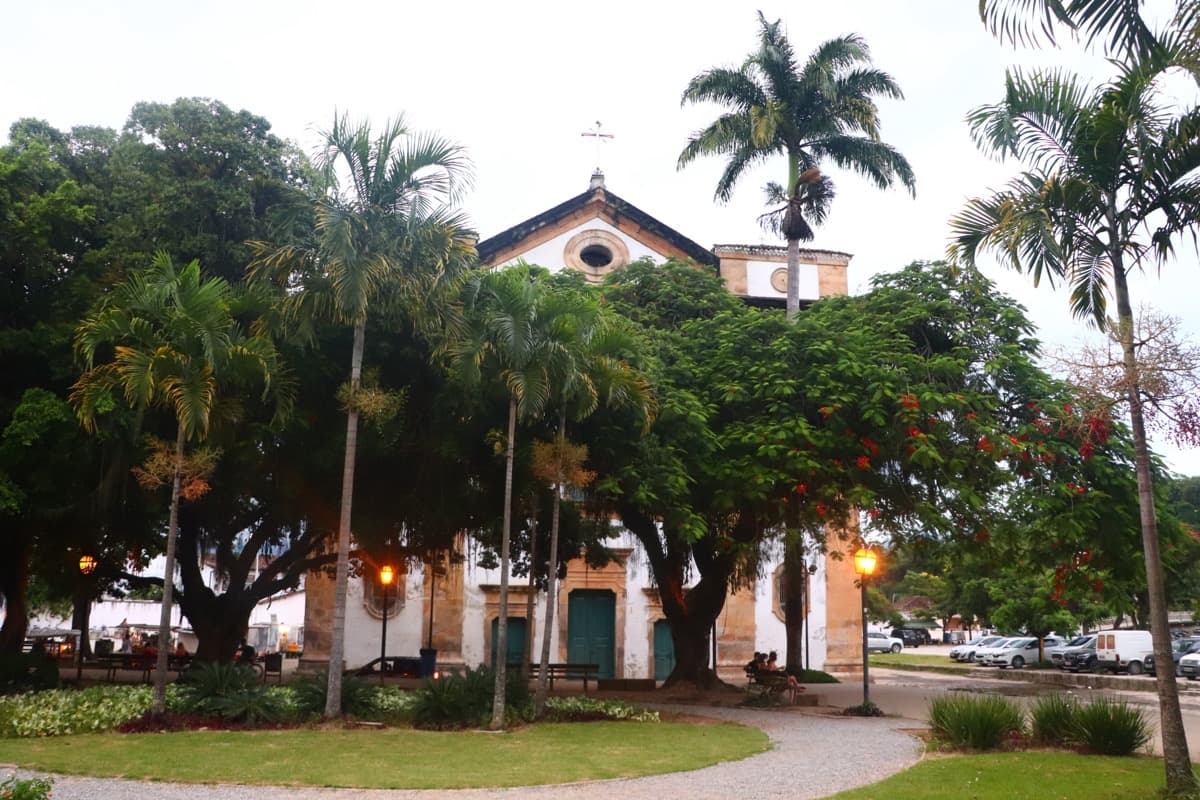
Colonial Paraty in the early eighteenth century was a slave society, and it did not build one church for everyone. It built several, and which door you were allowed through depended on the color of your skin and your rank. The principal parish church, the Igreja Matriz de Nossa Senhora dos Remédios on the central square, served the free white population. If your skin was dark, or you were enslaved, you did not enter there.
So the free, mixed race community made their own. On June 30, 1722, they founded the Irmandade de Santa Rita dos Pardos Libertos, the Brotherhood of Saint Rita of the Freed Pardos, and raised this church at the water's edge. The word pardo in colonial Brazil described people of mixed ancestry, and libertos means freed. These were people who occupied a middle position in the caste order: not enslaved, but not admitted to the parish of the free and the white either. Shut out of one building, they built another. The church became the property of their brotherhood. The vicar at its founding was Padre Manoel Braz Cordeiro, and the church was first dedicated to the Christ Child, Saint Rita, and Saint Quitéria.
That founding date matters for more than the story of exclusion. The current parish church on the square is a later structure, finished only in the nineteenth century, which makes Santa Rita the oldest surviving religious building in Paraty, older than the grand parish that turned its congregation away.
Reading the building
Hear a stop from this walk
Igreja de Santa Rita de Cassia: The Freed Pardos' Church
From the outside, the facade is spare and Jesuit influenced, restrained rather than showy. It reads as a modest colonial church, and for its first century that is exactly what it was: the place of worship for a community that had been denied the town's richest altars. If the doors are open, step inside, because the interior turns Baroque, with polychrome carving on the main altar. The contrast between the plain front and the carved interior is part of what makes the building worth slow attention. The people who were kept out of the elite church made a place that was genuinely theirs, and they made it beautiful.
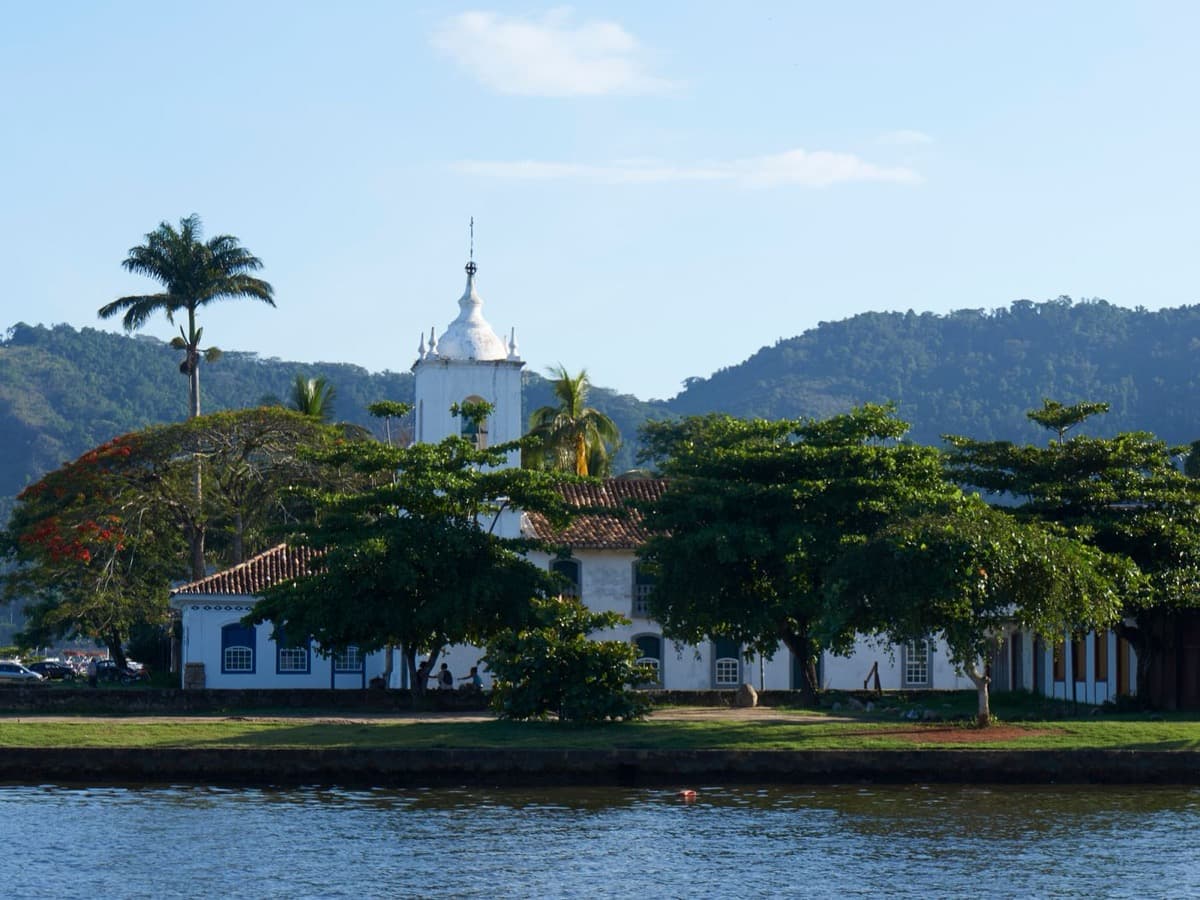
The setting is why this particular church, and not the grander parish, became the emblem of Paraty. It sits directly on the waterfront beside the old pier, and its pale towers close nearly every view of the town from the bay. When a photograph is meant to say "this is Paraty," it is almost always saying it with Santa Rita. There is a quiet irony in that. The building the free pardos raised because they were excluded is now the single image the whole town shows the world.
From brotherhood church to museum of sacred art
The church did not stay frozen as a colonial artifact. Brazil's national heritage institute, IPHAN, listed it for protection in 1952, one of the formal steps that helped preserve Paraty's historic center intact. Then, since the 1970s, Santa Rita has held the Museu de Arte Sacra of Paraty, the town's museum of sacred art. What makes that collection worth the small entry fee is its source: it draws on the town's colonial brotherhoods, the freed pardos of Santa Rita, the Black and enslaved brotherhood of the Rosary church, and the wider religious life of the town. The building that once belonged to one excluded community now gathers the sacred objects of the whole caste order under one roof.
Entry to look at the church is free. The sacred art museum inside charges a small fee, so carry a little cash if you want to go in. Because the museum keeps more limited hours than the church itself, late morning is the safest time to catch it open.
Why this stop anchors the whole town
Santa Rita is not an isolated curiosity. It is the second rung of a ladder you can walk in stone. The parish church of the free and white sits on the central square. This waterfront church of the freed pardos comes next. The plain church of the Black and enslaved brotherhood, dedicated to Our Lady of the Rosary and Saint Benedict, sits further out. A fashionable chapel founded in 1800 by aristocratic women, Nossa Senhora das Dores, was added last by the people already at the top. Four congregations, four separate front doors, sorted by color and rank, all still standing and all still lovely.
Once you have seen Santa Rita, you have the key to the pattern. The loveliness of Paraty is real, and so is the architecture of segregation underneath it. Both truths can be held at once, and the waterfront church is where they meet most plainly: exclusion built it, and beauty came out of it anyway. The self-guided walk through all four churches, and the fort above the bay where their scattered towers finally read as one plan, is on the Paraty tours page for Paraty. Stand where the tide meets the stones at Santa Rita first. It tells you what the whole town is about.
Sources
- Igreja de Santa Rita de Cássia (Paraty), Portuguese Wikipedia. Founding date, brotherhood, vicar, original dedication, and IPHAN listing for the town's oldest surviving religious building.
- Igreja Santa Rita dos Pardos Libertos, Lonely Planet Brazil. The waterfront church of the freed pardo brotherhood as a Paraty landmark.
- Paraty and Ilha Grande, Culture and Biodiversity, UNESCO World Heritage Centre. Context for the intact colonial historic center inscribed in 2019.
- Igreja de Nossa Senhora dos Remédios (Matriz), Paraty Turismo. The parish church of the free white population that anchors the town's caste order.
Brazil eSIM· 10% off with ROAMER10
Ready to experience it?
Historic Center: Four Churches, Four Castes
85 min · 2.3 km · easy
More from Paraty
Explore more at your own pace.
One Day in Paraty: A Walkable Colonial-Port Itinerary (2026)
Paraty Travel Guide: How Many Days, Getting There, When to Go (2026)
What to Eat in Paraty: A Caicara and Cachaca Food Guide (2026)
Forte Defensor Perpetuo: The Fort Built to Guard Paraty's Gold
How Cachaça Made Paraty Rich, Then Became the Town's Own Name