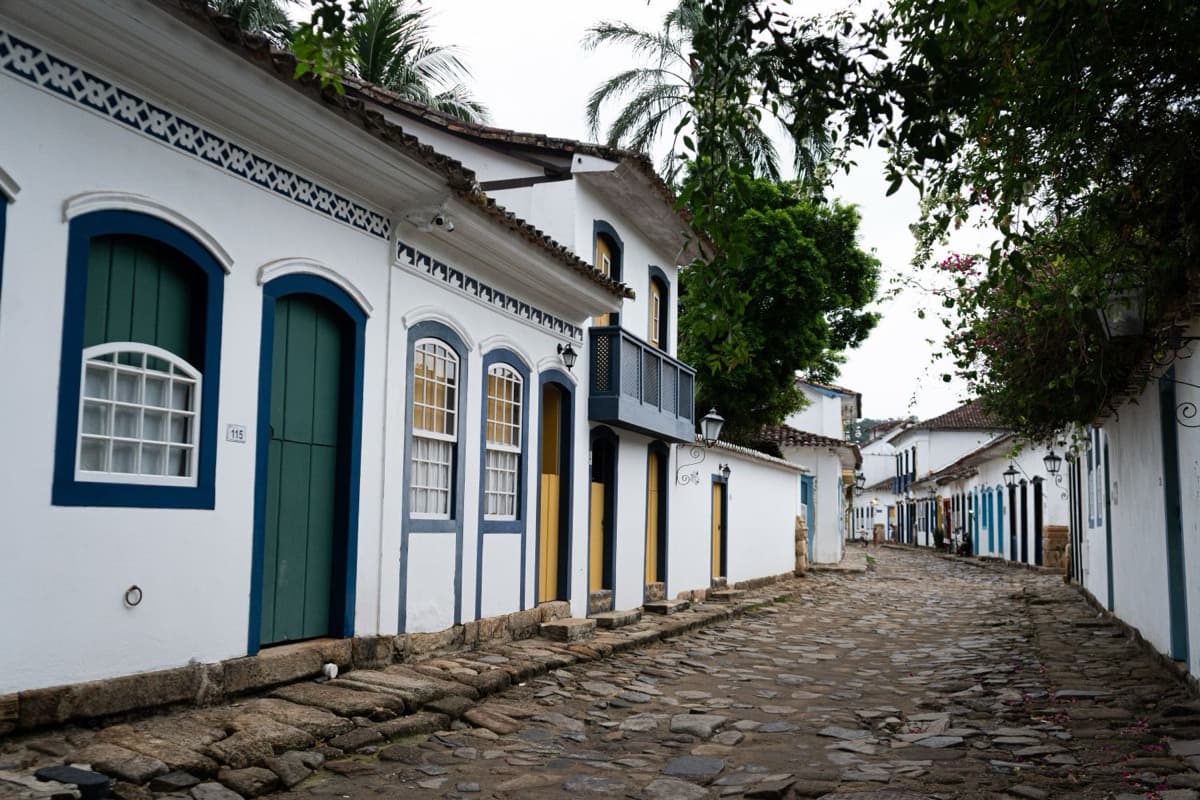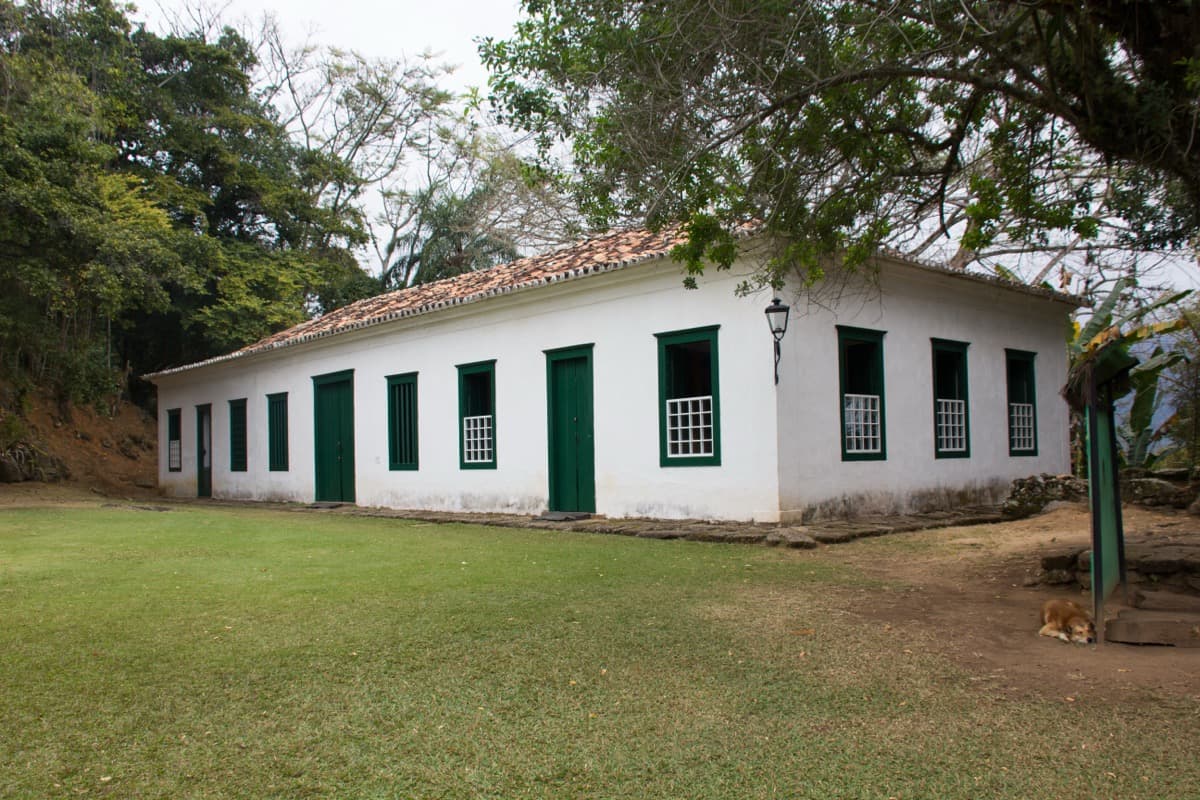
Paraty feels like the gentlest of towns, all calm water and cobbled lanes, so it is easy to forget it was once a place worth defending with cannon. On a hill above the harbor stands the Forte Defensor Perpetuo, a fort built in 1703 to guard the gold that shipped out of Paraty's port from pirates. Read it as the armed endpoint of the gold trade, the muzzle at the mouth of the treasure route, and the whole reason for Paraty's existence comes into focus. This quiet town was, for a time, one of the most strategically valuable points on the Brazilian coast.
Why a small town needed a fort
Paraty's importance came from a road. It was the coastal terminus of the Estrada Real, the Royal Road, down which gold from the mines of Minas Gerais was carried to the sea to be shipped to Portugal. That made the little port a chokepoint for a river of treasure, and treasure attracts predators. Construction of the fort began in 1703, driven by colonial authorities worried about invasions and pirate attacks on the gold, and on the sugar the region also produced. The site chosen was the Morro do Forte, a hill from which defenders could watch the sea and spot hostile ships approaching the harbor. The fort's job was simple and vital: keep the pirates off the gold as it left Paraty.
That is the key to the town. Paraty was not built for beauty. It was built as the seaward gate of a gold road, and the fort is the gate's lock.
Ruin, rebuild, and a new name
Hear a stop from this walk
Forte Defensor Perpetuo
The fort's fortunes followed the town's. When the gold declined and Paraty's importance faded, the fort fell into ruin. It was rebuilt in 1822, and it took its current name in honor of Dom Pedro the First, the emperor who carried the title Defensor Perpetuo do Brasil, Perpetual Defender of Brazil, at the moment of Brazilian independence. So the name itself is a fossil of history: a colonial gold-defense fort renamed for the emperor of the newly independent nation. The rebuilt fort was garrisoned with soldiers and ammunition in the following decades, then disarmed in 1856, its defensive purpose finally spent as the age of the gold road ended.
Among the pieces preserved there are period cannons, including British-made guns of a type used at sea and on land through the eighteenth and nineteenth centuries, capable of firing a heavy iron ball a considerable distance. They are the physical proof of what the fort was for.
A museum and the best view of Paraty
Since 1984 the fort has housed a museum that preserves the memory of the town, displaying regional handicrafts, a flour house, and rural kitchen and household objects, so the visit is as much about everyday Paraty as about warfare. But the strongest reason to climb here is the vantage. From the fort's hill you look back over the whole historic town, the grid of white houses, the ridge of church towers, the harbor and the bay, laid out as a single plan. From up here you can see why the fort sat where it did, watching the sea, and you can read the town it was built to protect in one sweep. It is the natural end point of a walk through Paraty, the place where the town's purpose finally becomes visible from above.
Reading it in place
Climb to the Forte Defensor Perpetuo at the end of a walk through the town, ideally toward late afternoon for the light over the bay. Look at the cannons and remember they were pointed at pirates hunting gold. Step into the museum for the everyday life of old Paraty. Then turn to the view and let it teach: the water, the harbor, the town, and the sea route the gold once took, all in one frame. Wear shoes with grip for the climb.
The fort is the climax of Roamer's The Gold Trail Port, which follows the gold from the old dock through the town to this defensive height. For the wider story, see the Paraty culture walking tours overview and, to plan the day, one day in Paraty.
Sources
- Paraty heritage and tourism sources (paraty.com.br, Eu Amo Paraty, HPIP, museum listings): the fort's construction begun in 1703 to defend the gold and sugar of Paraty from invasions and pirate attacks, the strategic hilltop site on the Morro do Forte overlooking the sea, the role of Paraty as the coastal terminus of the Estrada Real gold road, the fall into ruin and rebuild in 1822 with the name honoring Dom Pedro the First as Defensor Perpetuo do Brasil, the disarmament in 1856, the preserved British-made period cannons, and the museum opened in 1984 with regional handicrafts and rural objects.
- Roamer tour transcript, The Gold Trail Port (paraty-historic-center-gold-port), fact-audited: the Forte Defensor Perpetuo as the defensive endpoint of the gold trade above the town.
Brazil eSIM· 10% off with ROAMER10
Ready to experience it?
Historic Center: The Gold Trail Port
90 min · 2.7 km · easy
More from Paraty
Explore more at your own pace.
One Day in Paraty: A Walkable Colonial-Port Itinerary (2026)
Paraty Travel Guide: How Many Days, Getting There, When to Go (2026)

What to Eat in Paraty: A Caicara and Cachaca Food Guide (2026)

How Cachaça Made Paraty Rich, Then Became the Town's Own Name
Igreja Matriz de Nossa Senhora dos Remedios: The Church at the Center of Paraty's Caste Map