For roughly a century of Brazilian life, if you walked into a bar almost anywhere in the country and asked for a dose of paraty, you were not asking for a place. You were asking for a drink. The town of Paraty, on the coast of Rio de Janeiro state, produced so much sugarcane spirit, and produced it so well, that its own name became a Brazilian synonym for cachaça. The spirit floated out on the same tide that still rises through the streets on the highest full moons. This is the story of how a town became a drink, and what remains of that trade today.
The spirit that made a town rich
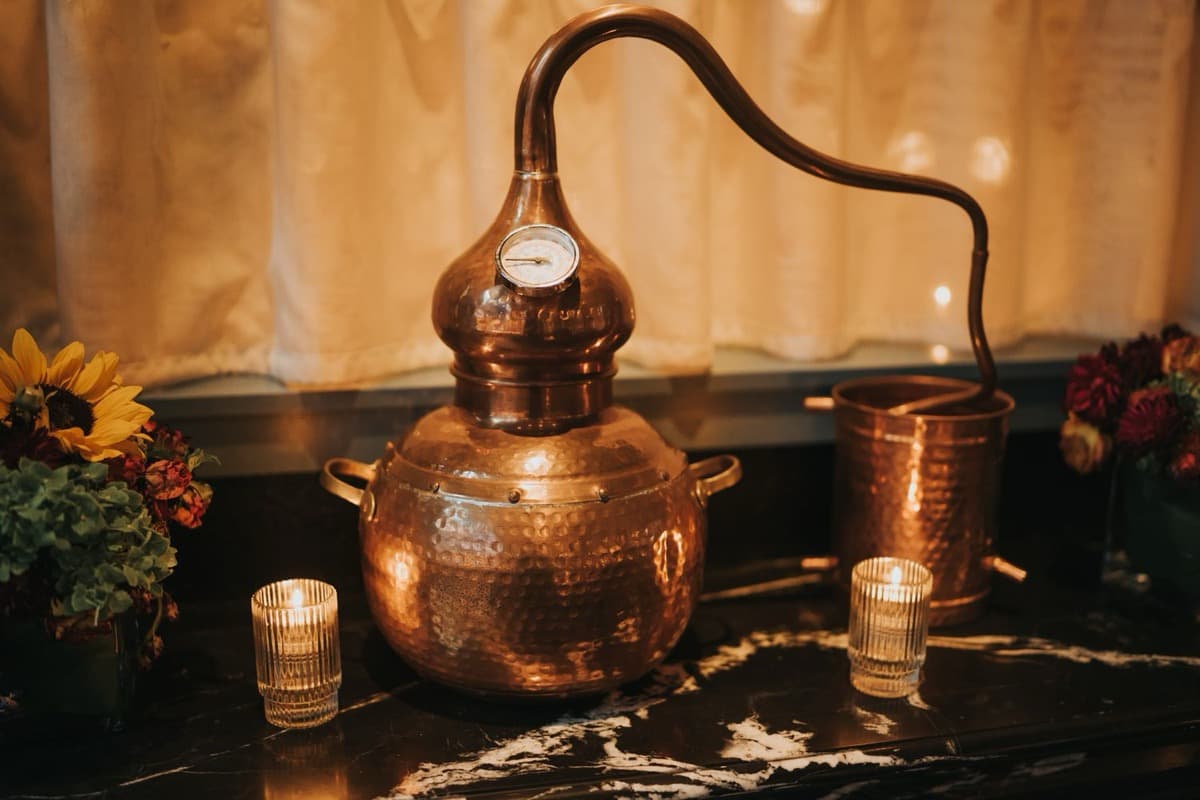
Cachaça is the spirit of Brazil, distilled from fermented sugarcane juice. From the sixteen hundreds onward, the hills around Paraty filled with the machinery of that trade: the sugar mills, called engenhos, and the copper stills, the alambiques, that turned crushed cane into liquor. The scent of cane being boiled and distilled would have hung over the town almost constantly.
The scale is worth pausing on. Around eighteen twenty, at the height of the sugarcane economy, the region had reached more than two hundred fifty sugar mills. The distilleries were fewer than the mills but still remarkable in number: local histories record more than one hundred fifty alambiques operating around that same period. That is an enormous concentration of production for a small colonial port, and it made the town one of the most important spirit-producing centers in the Portuguese Americas. The barrels rolled down to the pier, the Cais de Paraty, and were loaded onto wooden schooners bound for Rio de Janeiro and the wider world.
When the place became the product
Hear a stop from this walk
The Tide-Washed Streets: A Town Built to Be Flooded
Volume alone did not make Paraty famous. Reputation did. The cachaça distilled here was prized enough that its origin became a selling point, and then the origin swallowed the product entirely. For generations, up until roughly the middle of the twentieth century, "parati" was simply a word for cachaça in Brazilian speech, regardless of where the bottle had actually been filled. To order a paraty was to order a shot of sugarcane spirit, whatever its source.
It is a rare thing for a place name to become a common noun for a drink. It happens only when the association is total, the way champagne once meant any sparkling wine to much of the world. For Paraty, the honor came with a cost. Once the name meant the drink everywhere, cheaper cachaça from anywhere could borrow the reputation. The place had made the product so successfully that the product no longer needed the place.
Two names in one word
There is a twist worth keeping straight, because it is easy to get wrong. The name Paraty does not come from the drink. It comes from the local Tupi language and refers to a fish, a mullet, that was once abundant in these waters. The word points to a river thick with fish rather than a barrel of spirit. The town carries two identities folded into a single word: an old fish and a famous liquor. Both of them, in their way, come out of the same water. The fish gave the place its name, and the spirit gave that name a second life across the whole country.
What remains today
Paraty's cachaça economy is a shadow of its colonial scale, and that decline is part of what makes the surviving stills worth seeking out. Only about seven working alambiques remain in the municipality today. Some open their doors to visitors, and tasting from a copper still where the process has changed little in generations is the closest thing to standing inside the town's old economy.
The reputation, meanwhile, has been formalized and protected. Paraty cachaça now carries a Geographical Indication, an official mark of provenance that legally ties the name to the place. Brazil's patent office granted it in two thousand seven, and it was the first Geographical Indication ever awarded to a cachaça in the country, a fitting distinction for the town whose name once meant the drink itself. The mark does the reverse of what happened in the twentieth century. Instead of the name floating free to describe any spirit, it now anchors the label back to this specific coast.
Why it matters on the ground
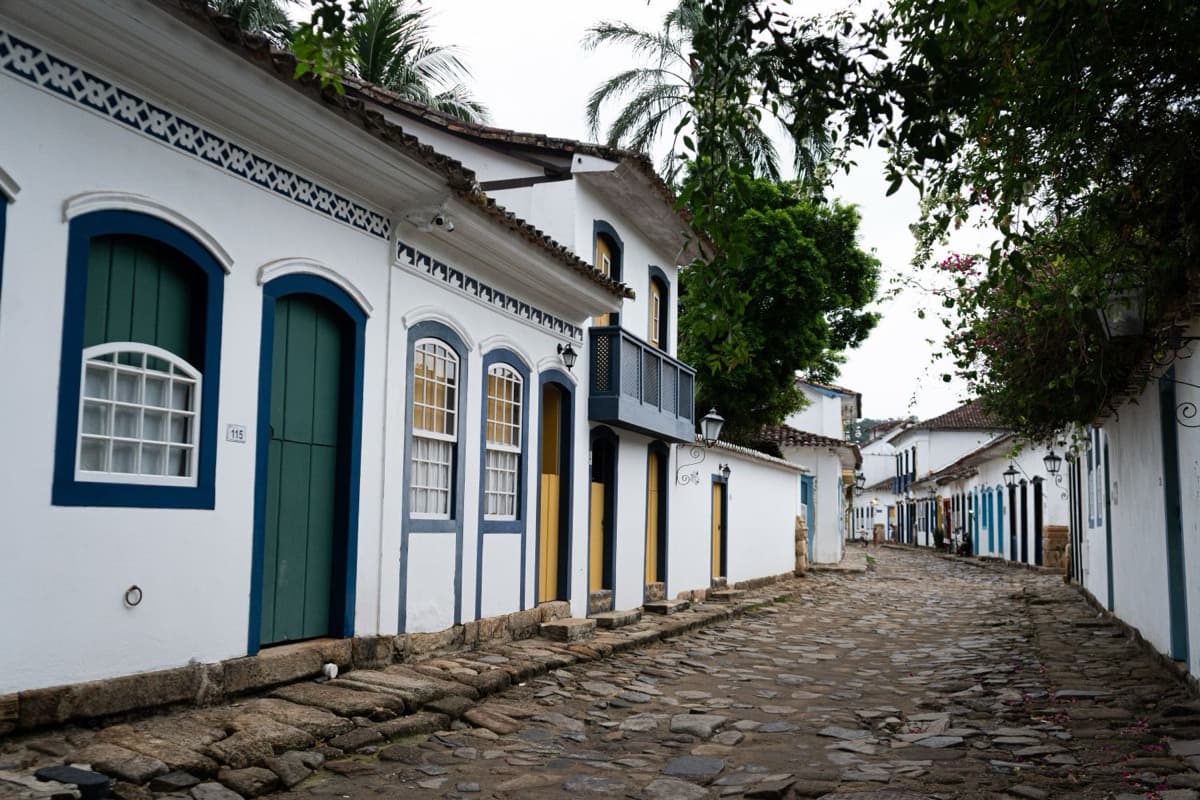
Standing in the old center, it is hard to picture the industrial hum of hundreds of mills and stills working at once. The historic core is quiet now, closed to most cars, its whitewashed walls and undulating cobblestones looking every bit the preserved colonial town. But the spirit trade is not decoration here. It is the reason the town exists at the scale it does, the reason the pier was busy, the reason wealthy merchants built the churches and the low horizontal houses that survive.
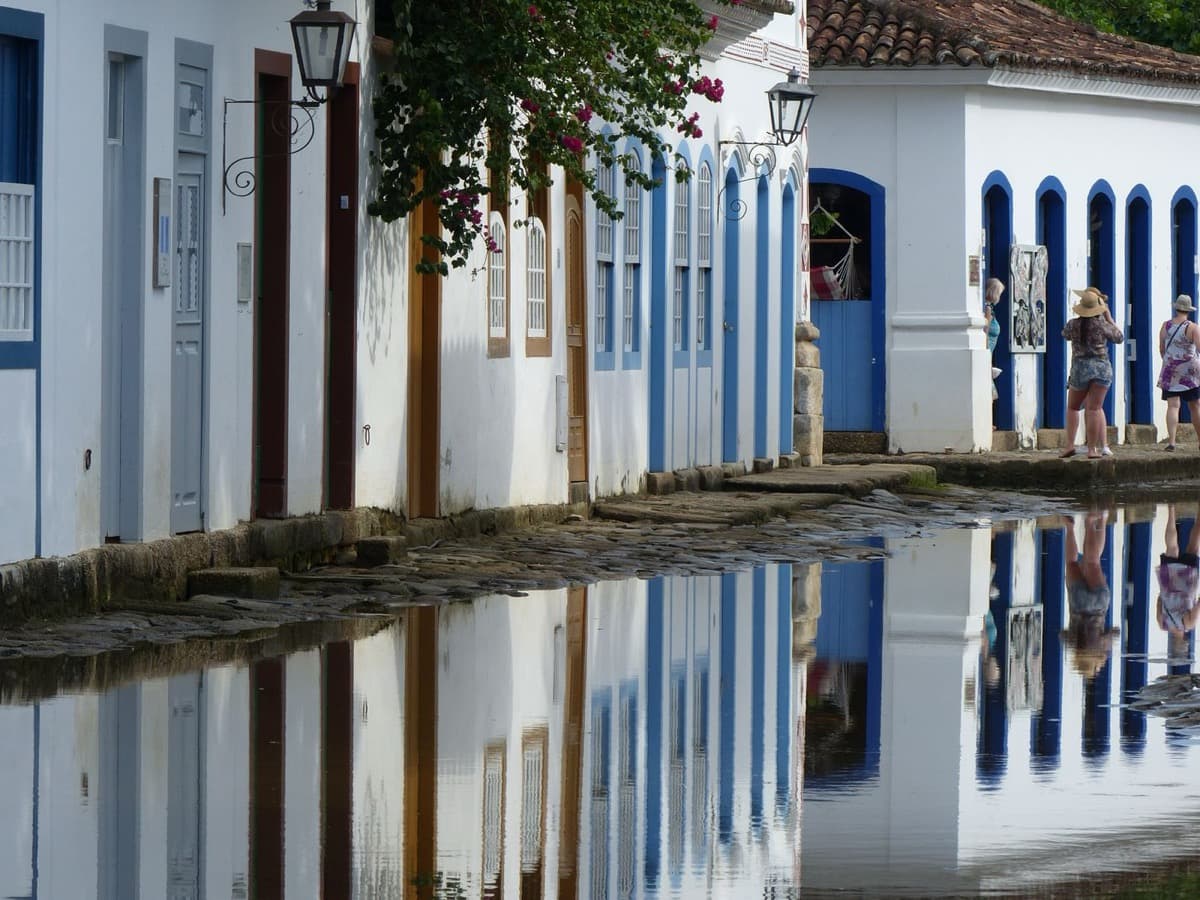
And the connection to the sea is literal. The barrels of cachaça left on the same tide that, on the highest full moons, still slips through openings in the seawalls and washes the streets clean. The water that carried the town's fortune out is the water that scrubs its stones today. To understand Paraty is to understand that its most famous export, its name, and its strangest physical feature all flow out of one thing: the tide.
The self-guided walk through Paraty follows exactly that logic, from the working waterfront where the spirit shipped out, along the tide-washed streets, to the cachaça heritage that gave the town a second name, and up to the fort that watched over all of it. If you want to walk the trade rather than just read about it, that route is the way in. You can find it, and the rest of the town's tours, on the Paraty city page.
Sources
- Cachaça de Paraty, Mapa da Cachaça: the only region holding both an Indication of Origin (two thousand seven) and a Denomination of Origin, confirming "parati" as a longtime synonym for quality cachaça and the two thousand seven mark as the first ever granted to a cachaça in Brazil.
- A História da Cachaça de Paraty, paraty.com.br: the more than two hundred fifty sugar mills at the peak, the surviving count of about seven stills today, and the name serving as a synonym for the drink until the mid-twentieth century.
- Paraty, Wikipedia: the Tupi origin of the name, from a mullet fish abundant in the local rivers, and the town's colonial cachaça and gold-route trade.
- Cachaça de Paraty é o primeiro destilado brasileiro a ganhar indicação geográfica, Agência Sebrae: confirmation that Paraty cachaça was the first Brazilian spirit to receive a Geographical Indication, granted in two thousand seven.
Brazil eSIM· 10% off with ROAMER10
Ready to experience it?
Historic Center: Cachaca, Sea, and the Tide-Washed Streets
75 min · 1.7 km · easy
More from Paraty
Explore more at your own pace.
One Day in Paraty: A Walkable Colonial-Port Itinerary (2026)
Paraty Travel Guide: How Many Days, Getting There, When to Go (2026)
What to Eat in Paraty: A Caicara and Cachaca Food Guide (2026)
Forte Defensor Perpetuo: The Fort Built to Guard Paraty's Gold
Igreja Matriz de Nossa Senhora dos Remedios: The Church at the Center of Paraty's Caste Map