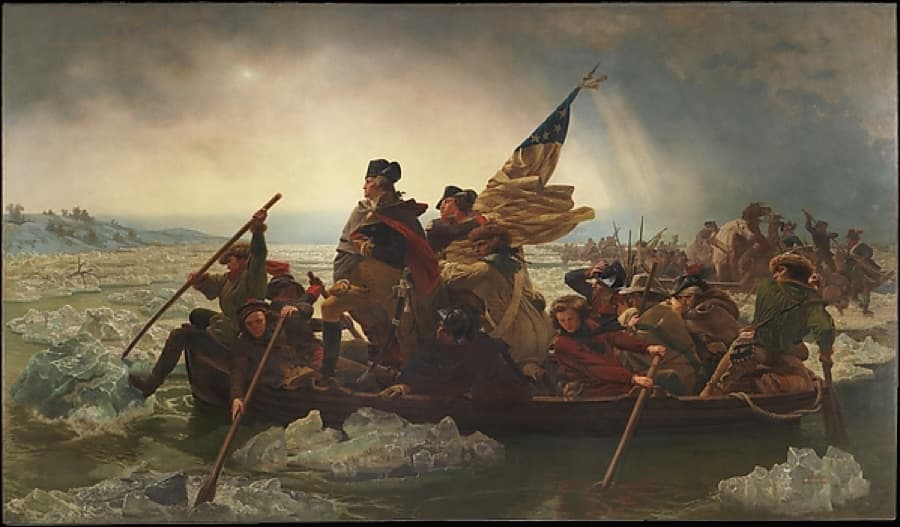
Washington Crossing the Delaware is on Floor 2 of The Met Fifth Avenue, in Gallery 760 of the American Wing, as of October 2026. Emanuel Leutze painted it in Düsseldorf in 1851. The canvas is about 3.8 metres high and 6.5 metres wide, and it is his full-size second version: the first was destroyed in a bombing raid on Bremen in 1942.
Washington Crossing the Delaware hangs on Floor 2 of The Metropolitan Museum of Art, in Gallery 760 of the American Wing, the room of giant pictures. That is where the museum's open data placed it on 22 October 2026. The museum moves and lends works, so check the painting's page on its website before you go.
Bigger than you think
The canvas is about 3.8 metres high and 6.5 metres wide, the largest picture in the room, and it was meant to overwhelm. Stand well back first. It hangs in a copy of its original frame, crowned by a carved eagle, rebuilt from a photograph taken by Mathew Brady.
The night it shows
Hear a stop from this walk
African Burial Ground: The Ground Under the City
On Christmas night of 1776, George Washington led his army across the icy Delaware River to surprise Hessian troops at Trenton, New Jersey. Leutze, a German-American painter, made this picture in Düsseldorf about seventy-five years later. He had conceived the subject during the European revolutions of 1848.
What to look for
Start with the boat. Its crew stands for the whole new nation. Look for a man in a Scottish bonnet, and for a Black oarsman rowing near the front.
Now look for the mistakes. The flag is the Stars and Stripes, which was not adopted until June 1777, six months after the crossing. The boats are far too light for the loads they carry. The museum's own audio commentary lists more: the crossing runs in the wrong direction, the ice is oversized, and there are no horses or artillery. None of that troubled Leutze. He was painting heroism, not a report.
Why this is the second version
Leutze's first version was damaged by fire in his studio, restored, and bought by the Kunsthalle Bremen. It was destroyed in a British bombing raid on 5 September 1942. The canvas in New York is his full-size second version, begun in 1850 and shown in New York in October 1851. It was given to the museum in 1897 by John Stewart Kennedy.
What else is in Gallery 760
In the 1850s and 1860s, American painters made canvases like these to be shown on their own, as events, with an entrance fee. Frederic Church's Heart of the Andes drew paying visitors in 1859: twenty-five cents each, and they were advised to bring opera glasses for the detail. Church's own name is carved into the bark of a tree at the left. Albert Bierstadt's The Rocky Mountains, Lander's Peak answered it four years later with the American West, a Shoshone encampment in the foreground, and sold in 1865 for 25,000 dollars. Between the giants, look for Martin Johnson Heade's tiny hummingbird among passionflowers, and Hiram Powers's marble California, a figure of the gold rush gripping a thorny branch: all that glitters is not gold.
How this fits the Roamer guide
Washington Crossing the Delaware is a stop on "The Met in an Hour" in Roamer's independent audio guide to The Met. Open Gallery 760 and play its story, or start a route: The Met guide. For the rest of the museum, wing by wing, read what to see at The Met.
Cover image: The Met's Open Access program (CC0).
Ready to experience it?
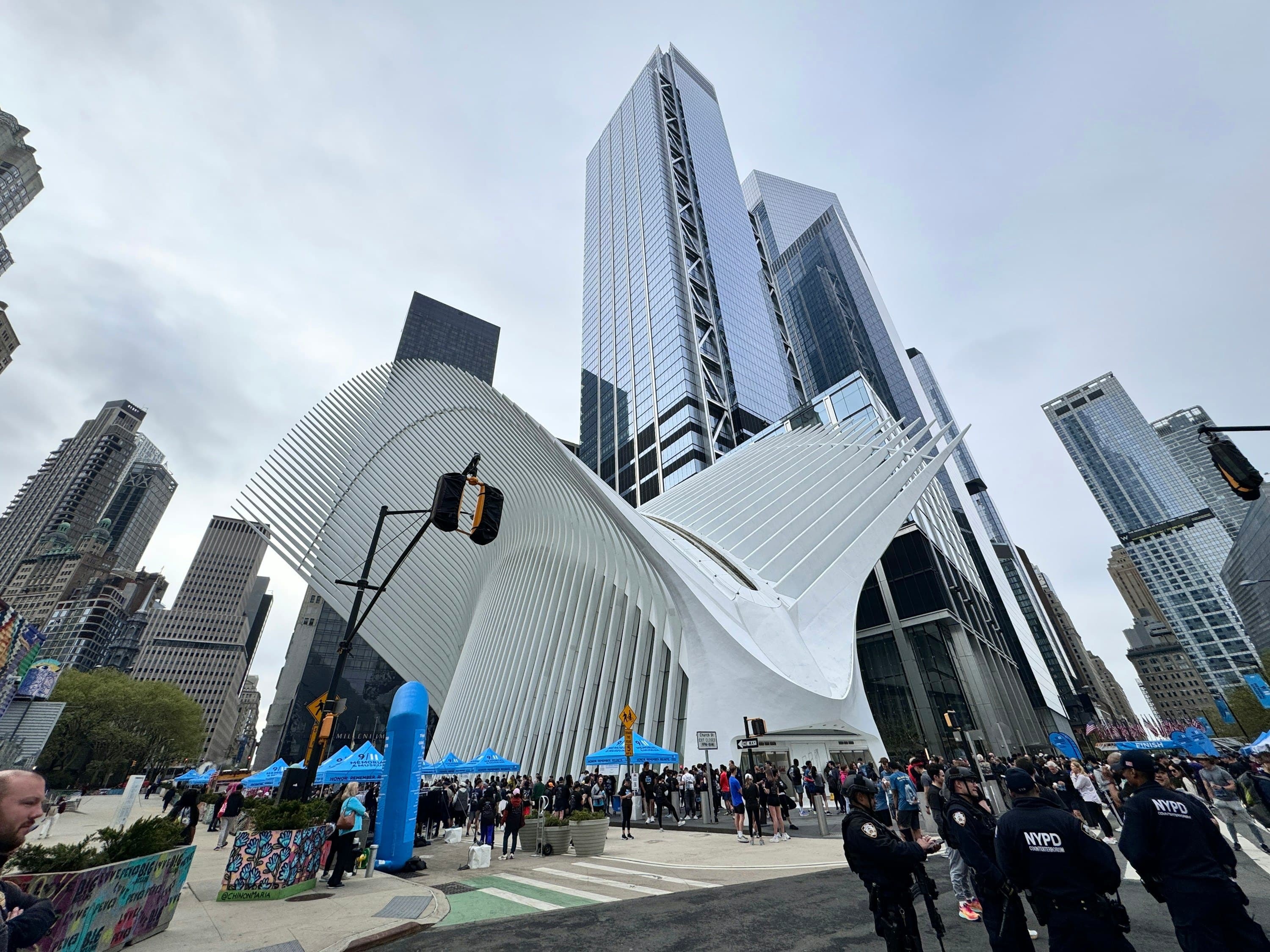
Lower Manhattan: Wall Street to the World Trade Center
110 min · 3.5 km · easy
More from New York
Explore more at your own pace.
MoMA: What to See, Floor by Floor, and Where the Famous Paintings Hang

Monet's Water Lilies at MoMA: The Room, the Fire and the Pond
The Met: What to See, Wing by Wing, and Where the Famous Works Are
The Starry Night at MoMA: Where It Hangs and What to Look For
The Temple of Dendur at The Met: Where It Is and What to Look For