Walk Lower Manhattan from Battery Park and the Charging Bull past Wall Street, the Federal Reserve and Trinity Church to the 9/11 Memorial, the Woolworth Building and the African Burial Ground.
Start · Battery Park: The Fort That Was an Island
DirectionsStops
- 1
Battery Park: The Fort That Was an Island
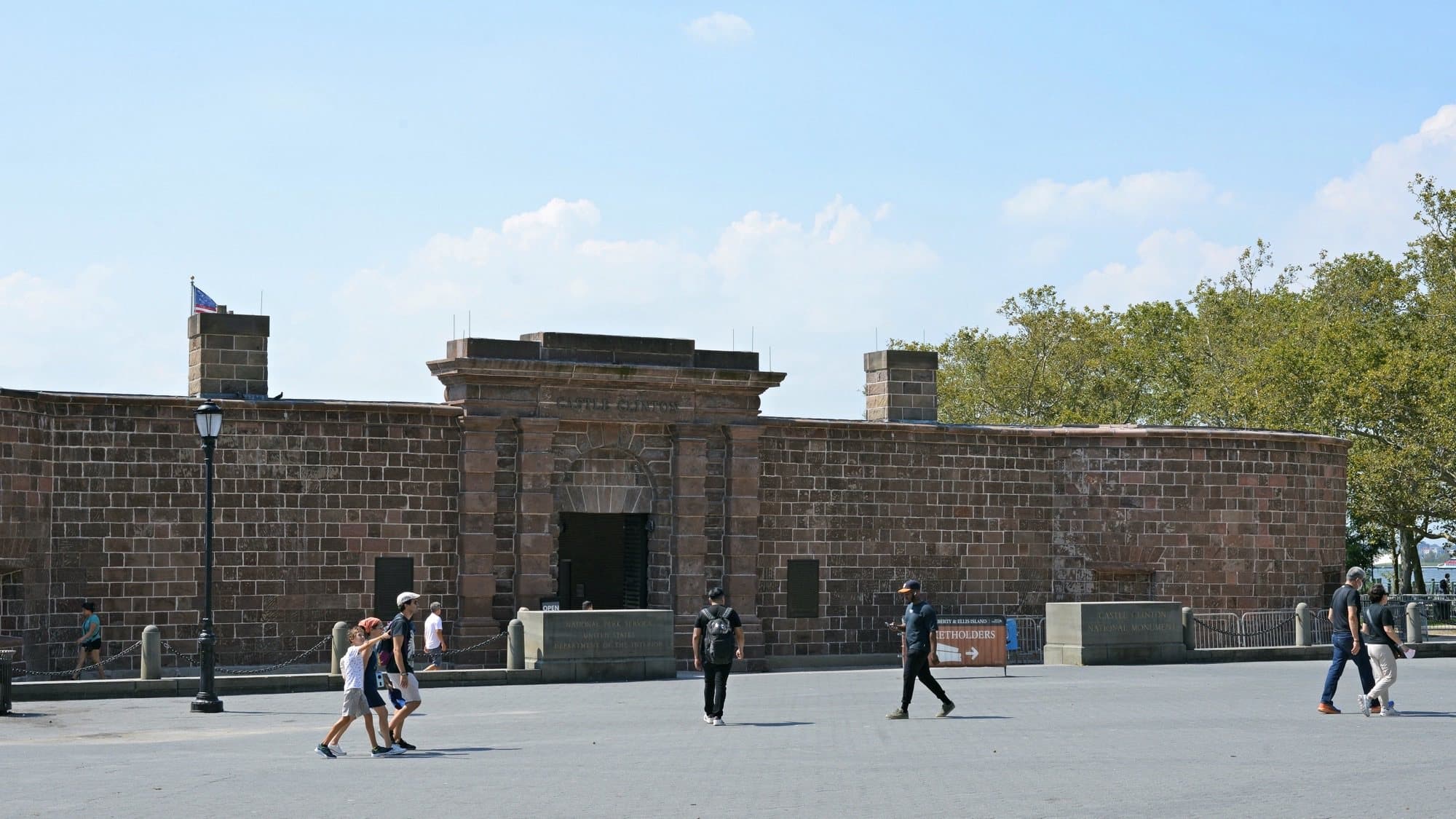
A round stone fort built offshore now stands deep inside a park. It became a concert hall, an immigrant depot and an aquarium before the Statue of Liberty ferry office moved in.
- 2
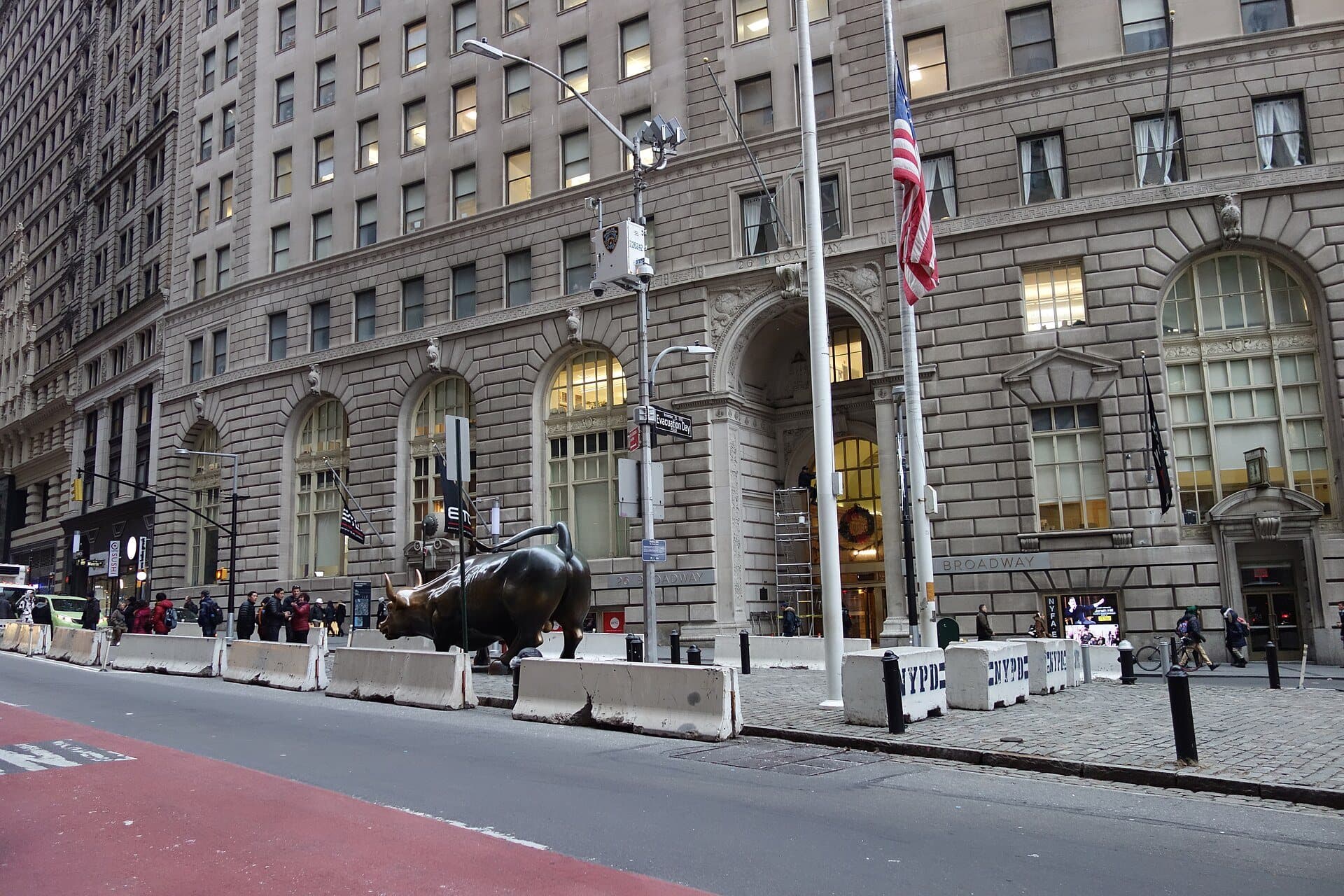
Bowling Green: The Bull and the Custom House
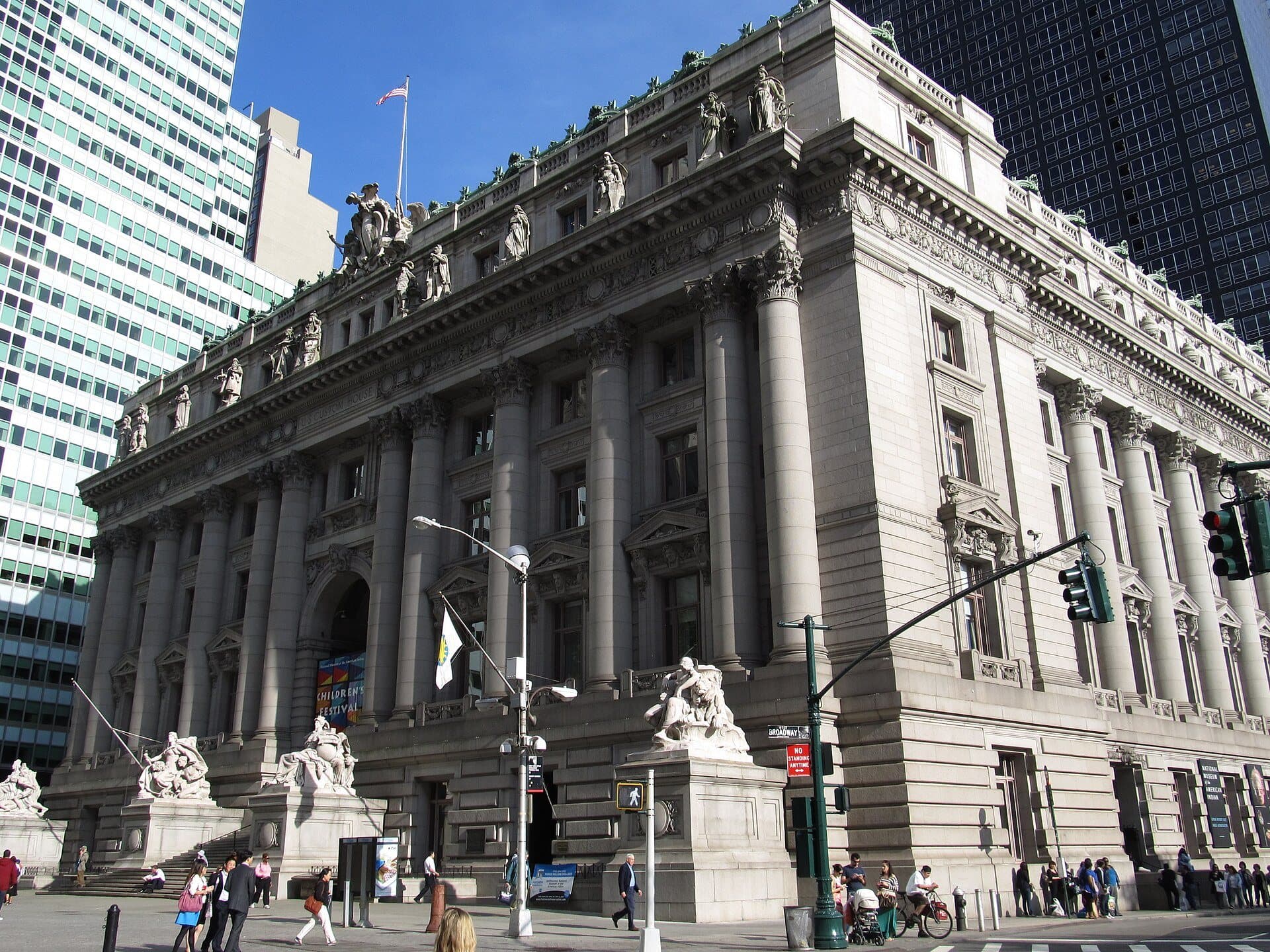
The Charging Bull stands at the tip of the city's oldest park. At its far end, a customs house wears the head of Mercury on every column.
- 3
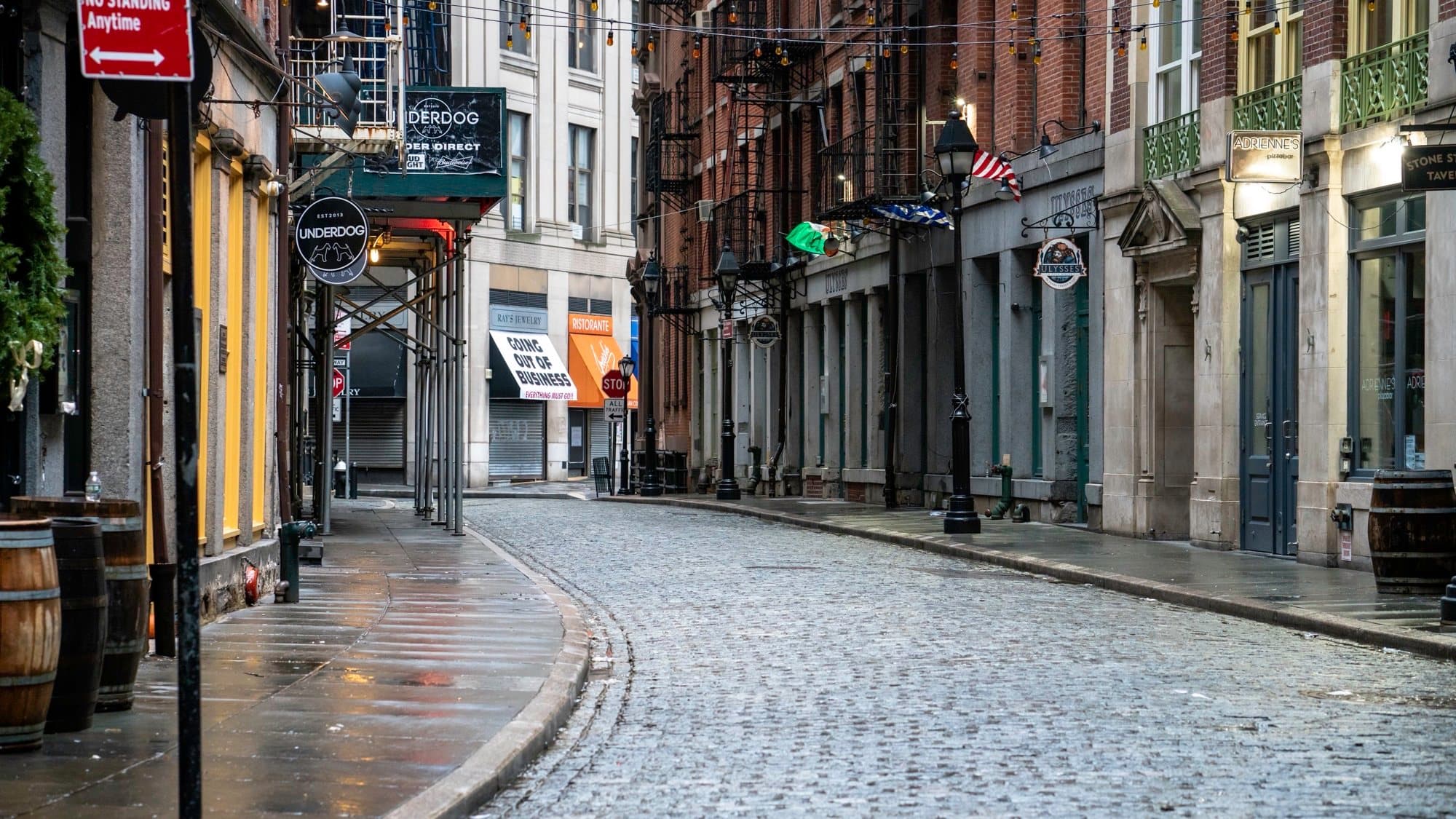
Fraunces Tavern and Stone Street: A Tavern Rebuilt to Look Old
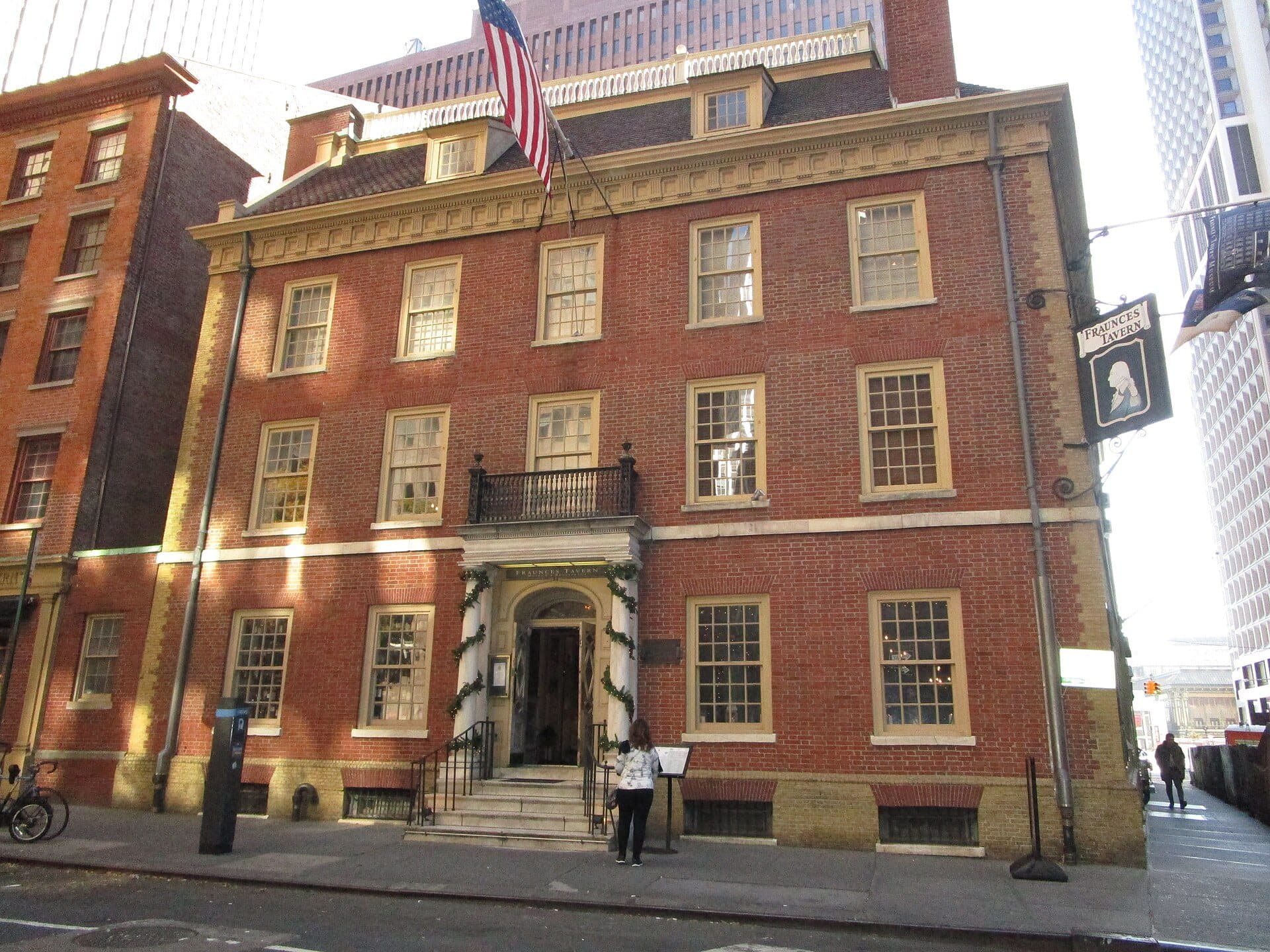
Washington said farewell to his officers in this tavern. It was rebuilt in 1907 with bricks shipped from Holland, beside the lane that became the city's first paved street.
- 4
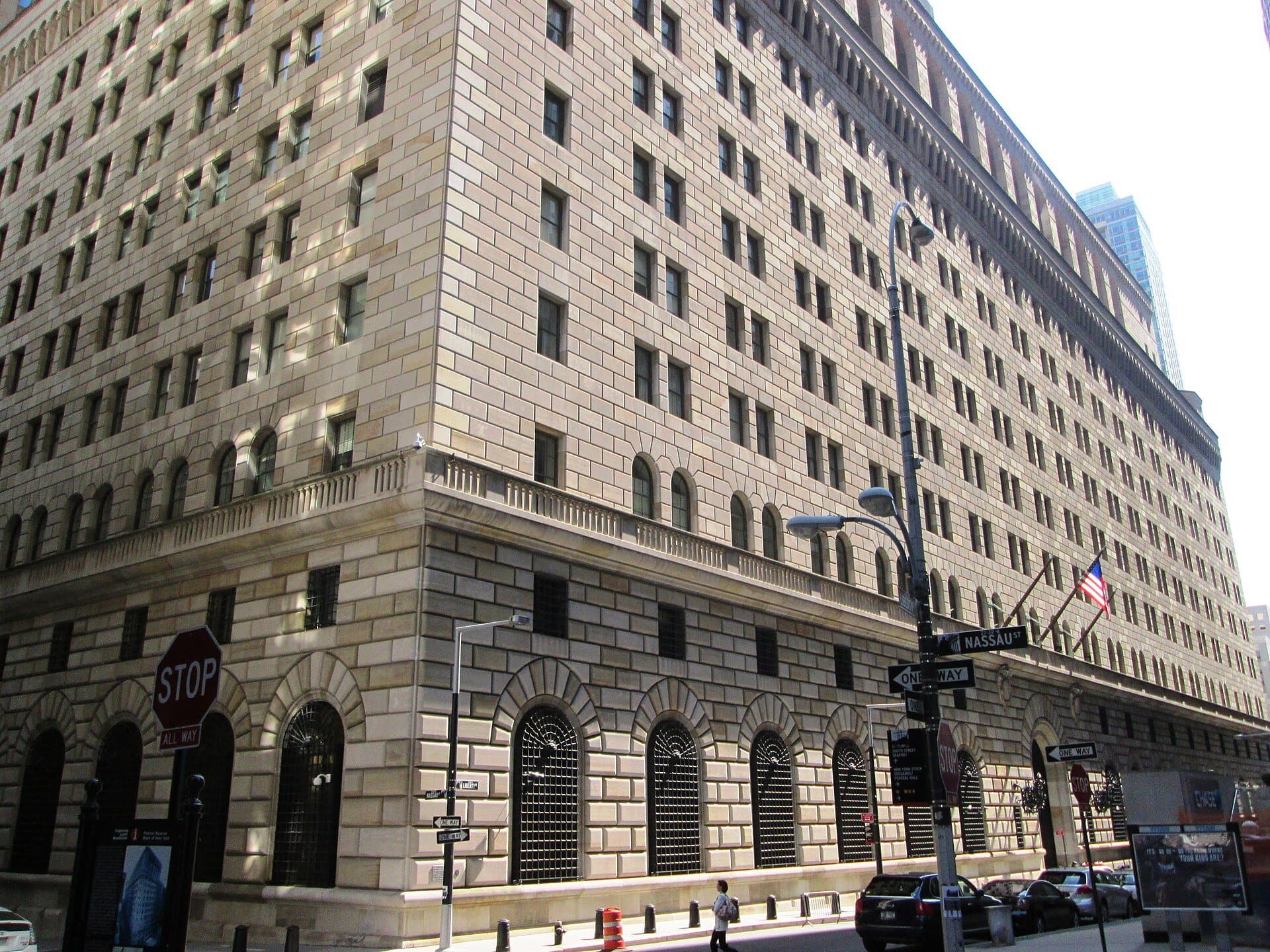
Federal Reserve: The Gold Under Liberty Street
About half a million gold bars lie beneath this bank. Its building was made to look like a Florentine palace, facing a plain glass tower.
- 5
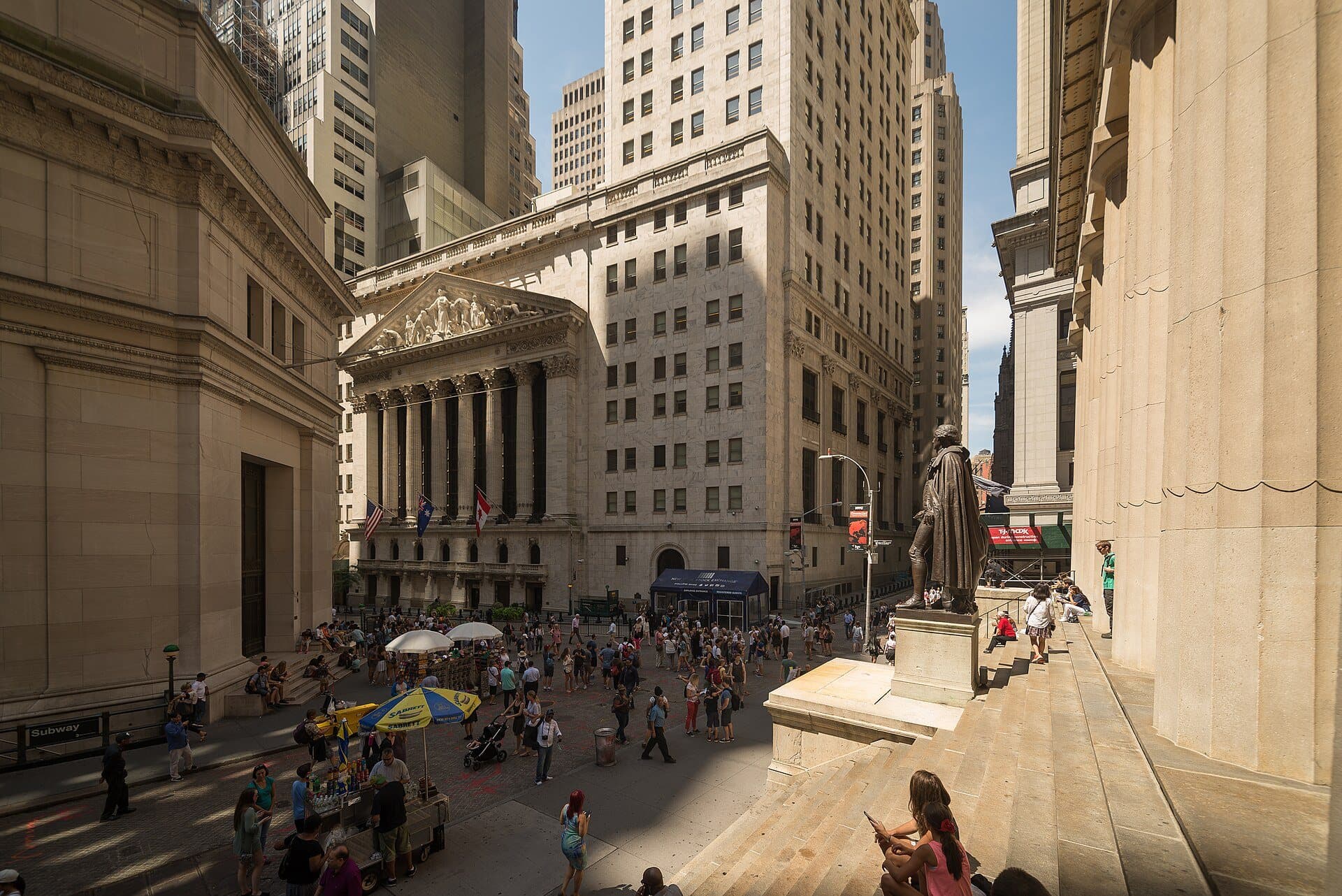
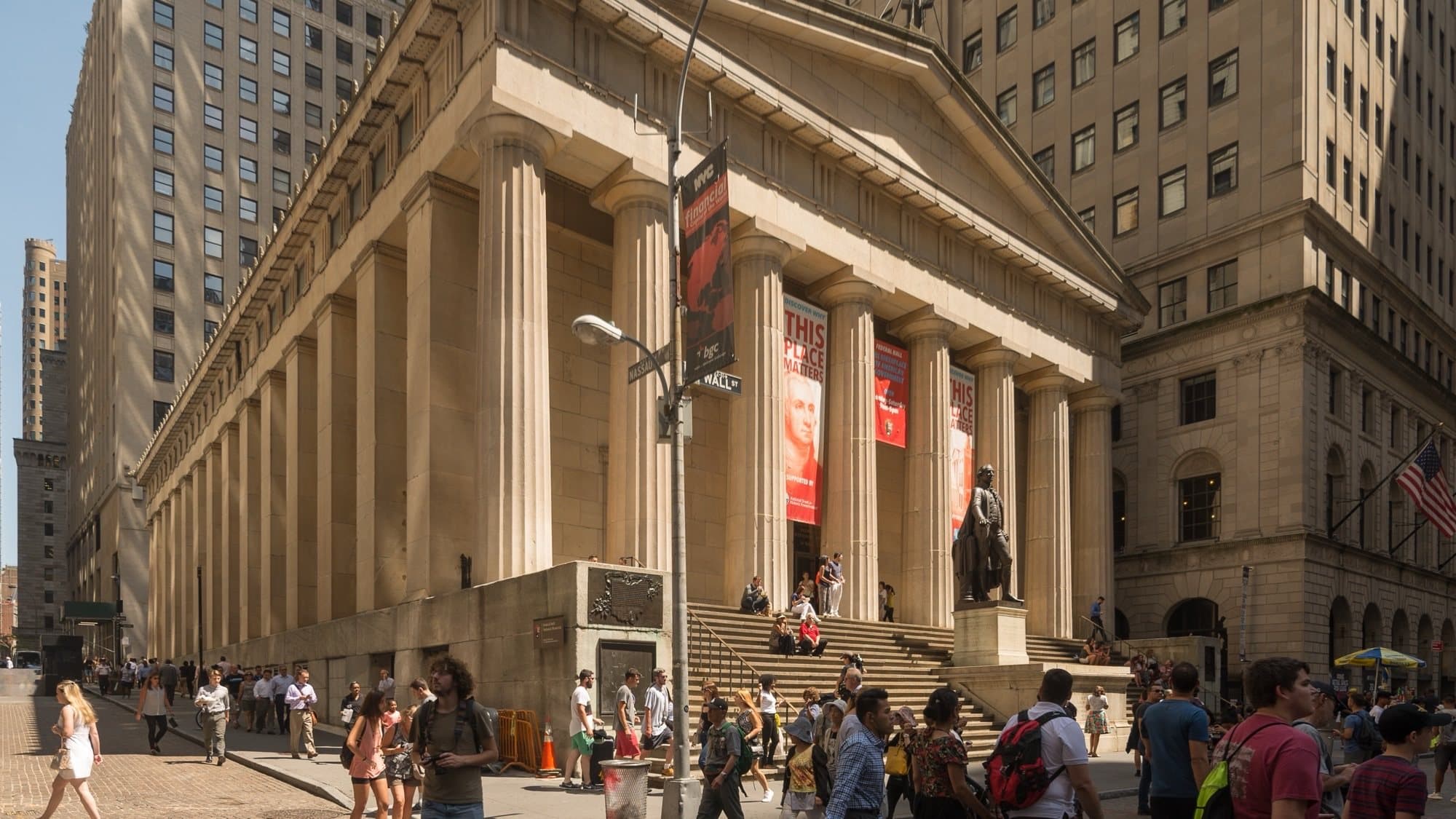
Wall Street: Federal Hall and the Stock Exchange
George Washington took the first presidential oath on this corner. A Greek temple, a Roman portico and a Venetian bell tower stand within sight of each other.
- 6
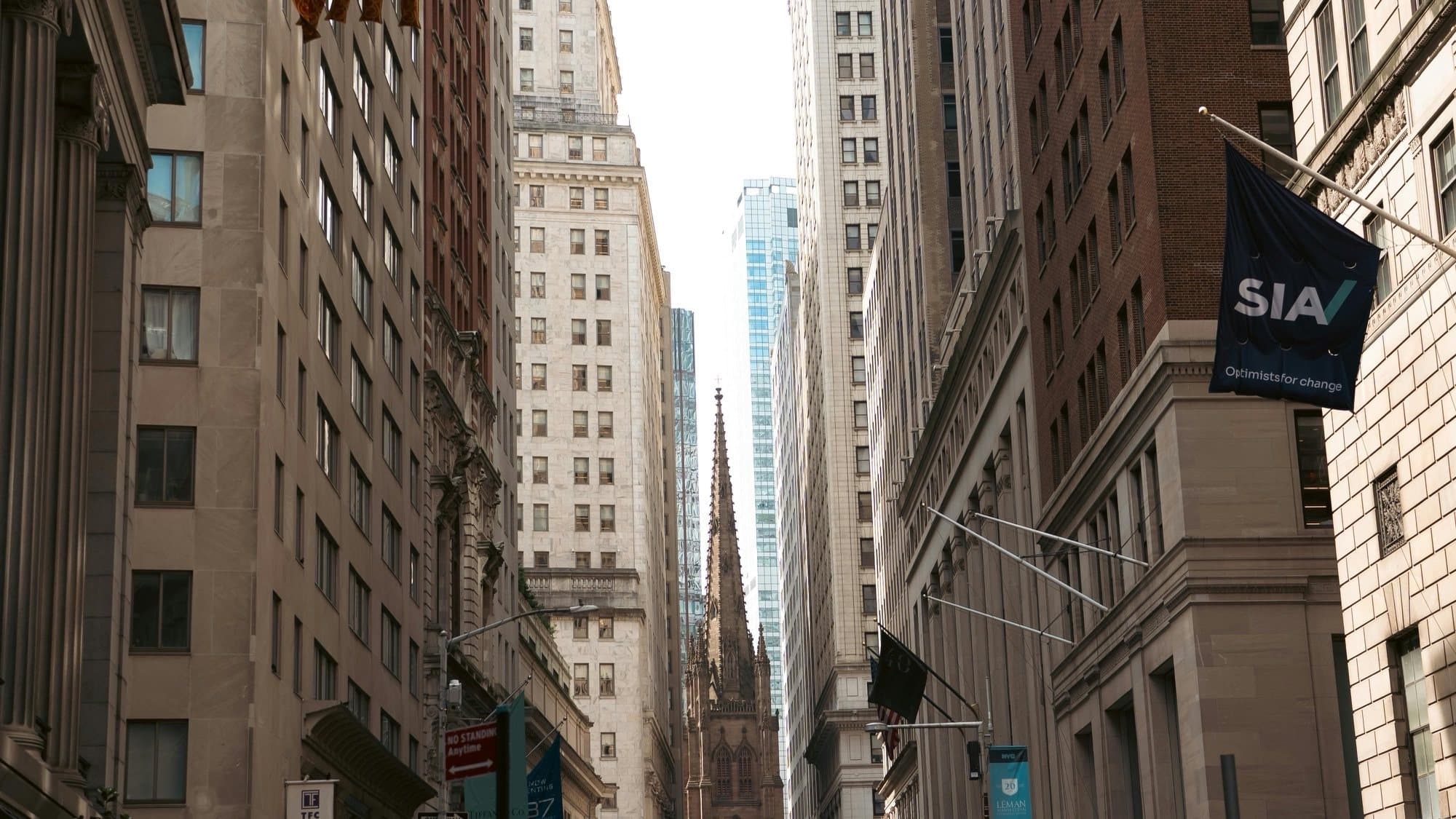
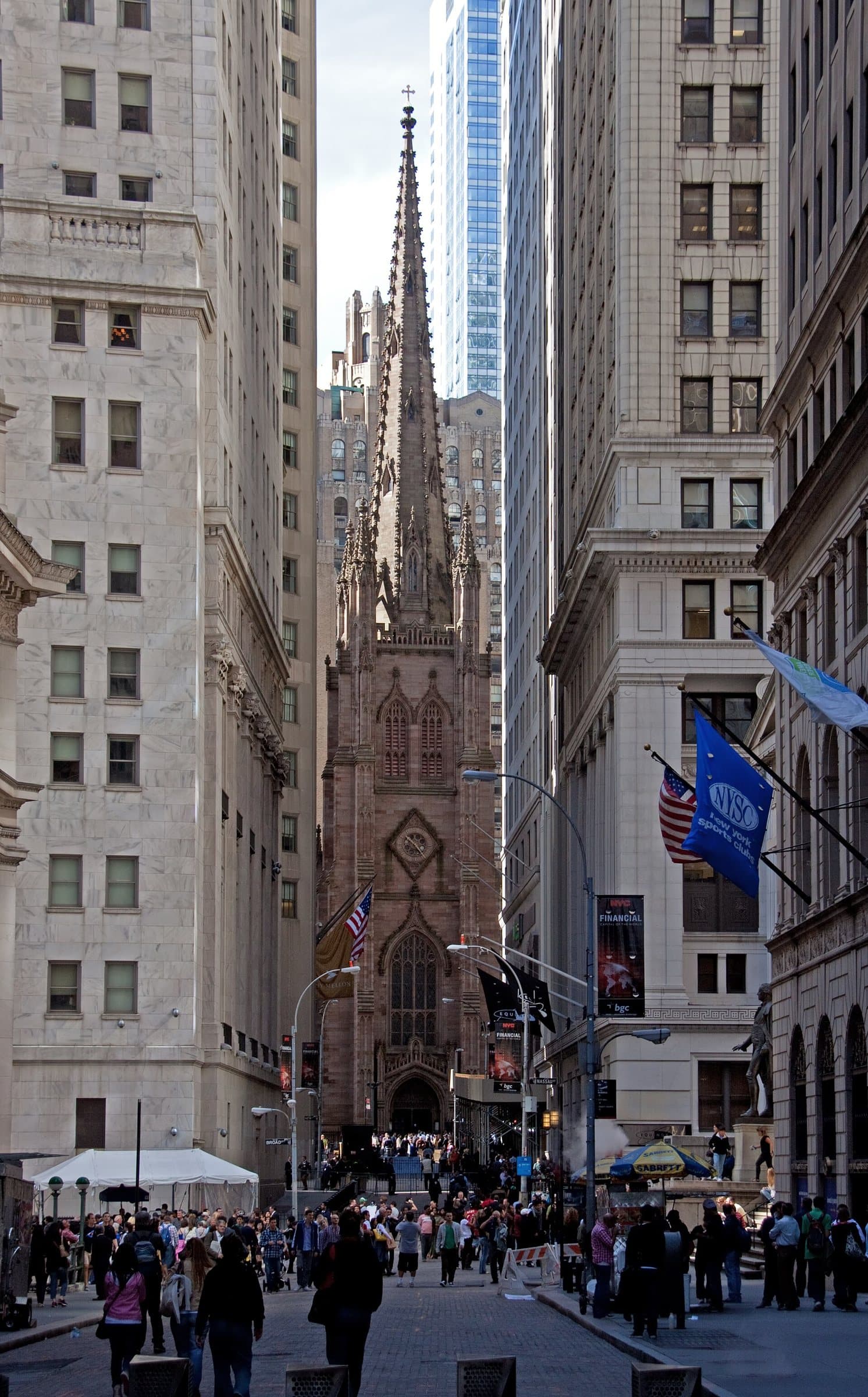
Trinity Church: The Church at the Head of Wall Street
A brownstone church closes the view down Wall Street, and Alexander Hamilton lies in its churchyard. Its land grant of 1705 now funds a six billion dollar endowment.
- 7
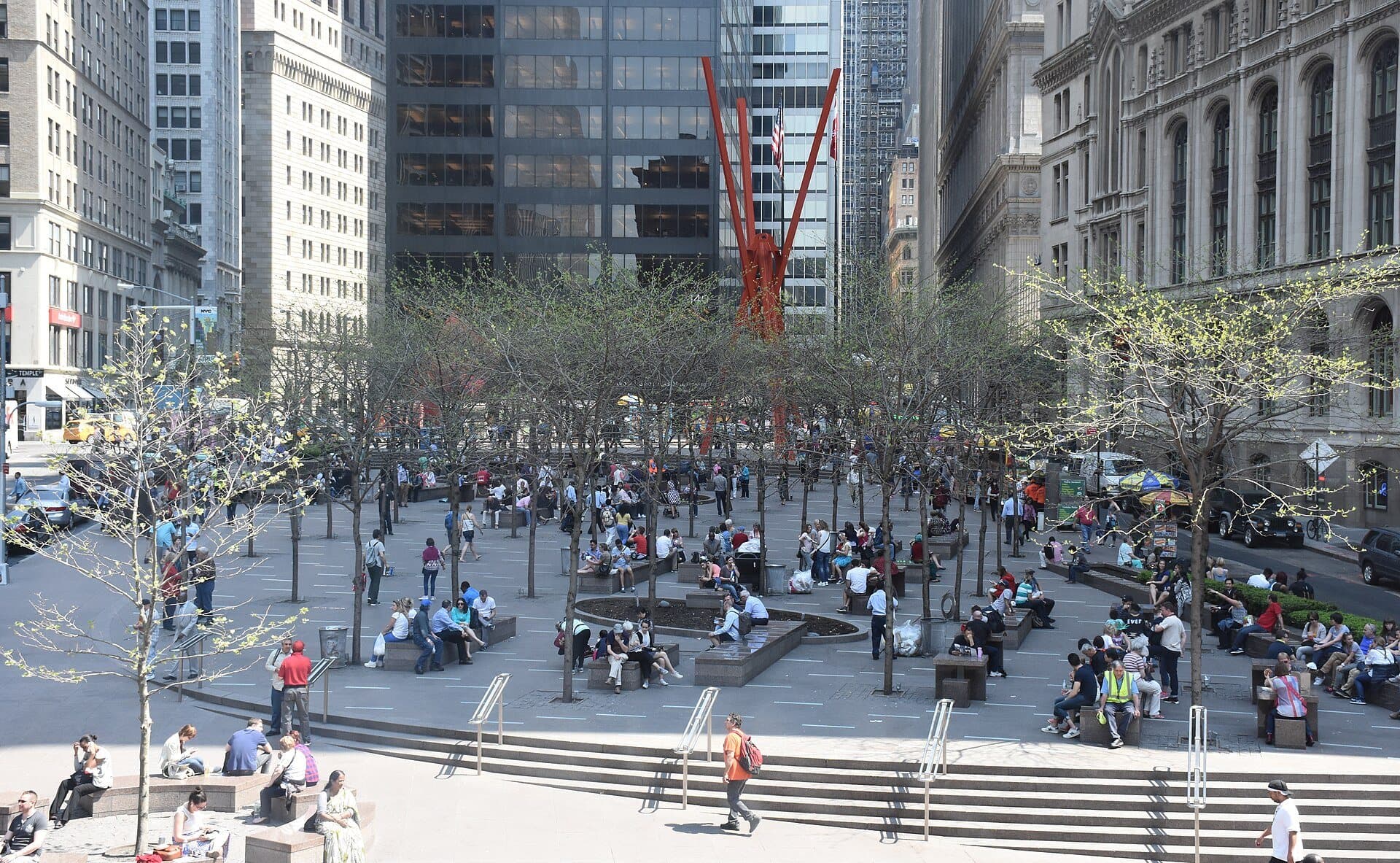
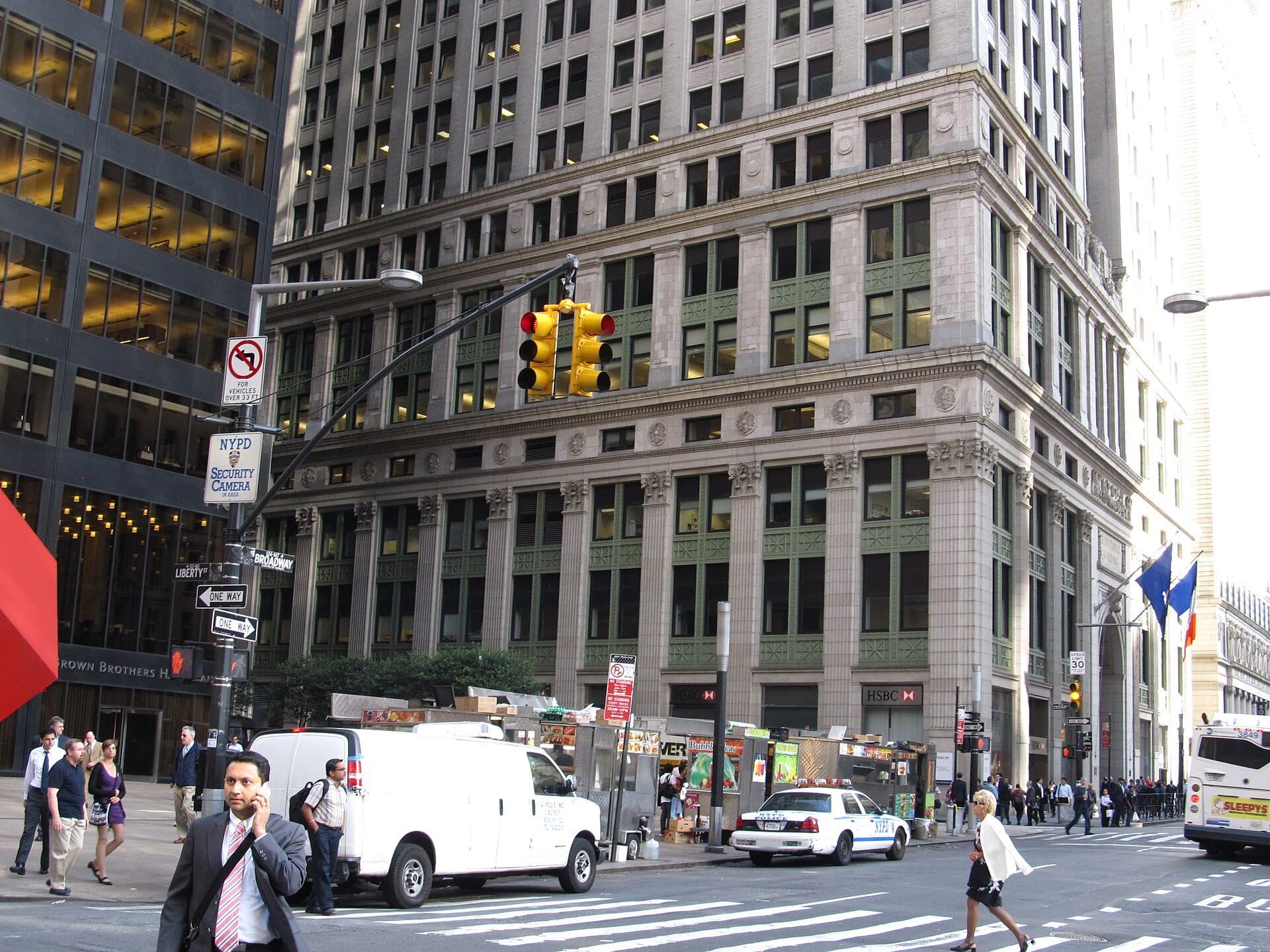
Zuccotti Park: The Building That Made the Zoning Law
Across Broadway rises the office block whose shadow changed New York's skyline. Its noon shadow led to the country's first comprehensive zoning law in 1916.
- 8
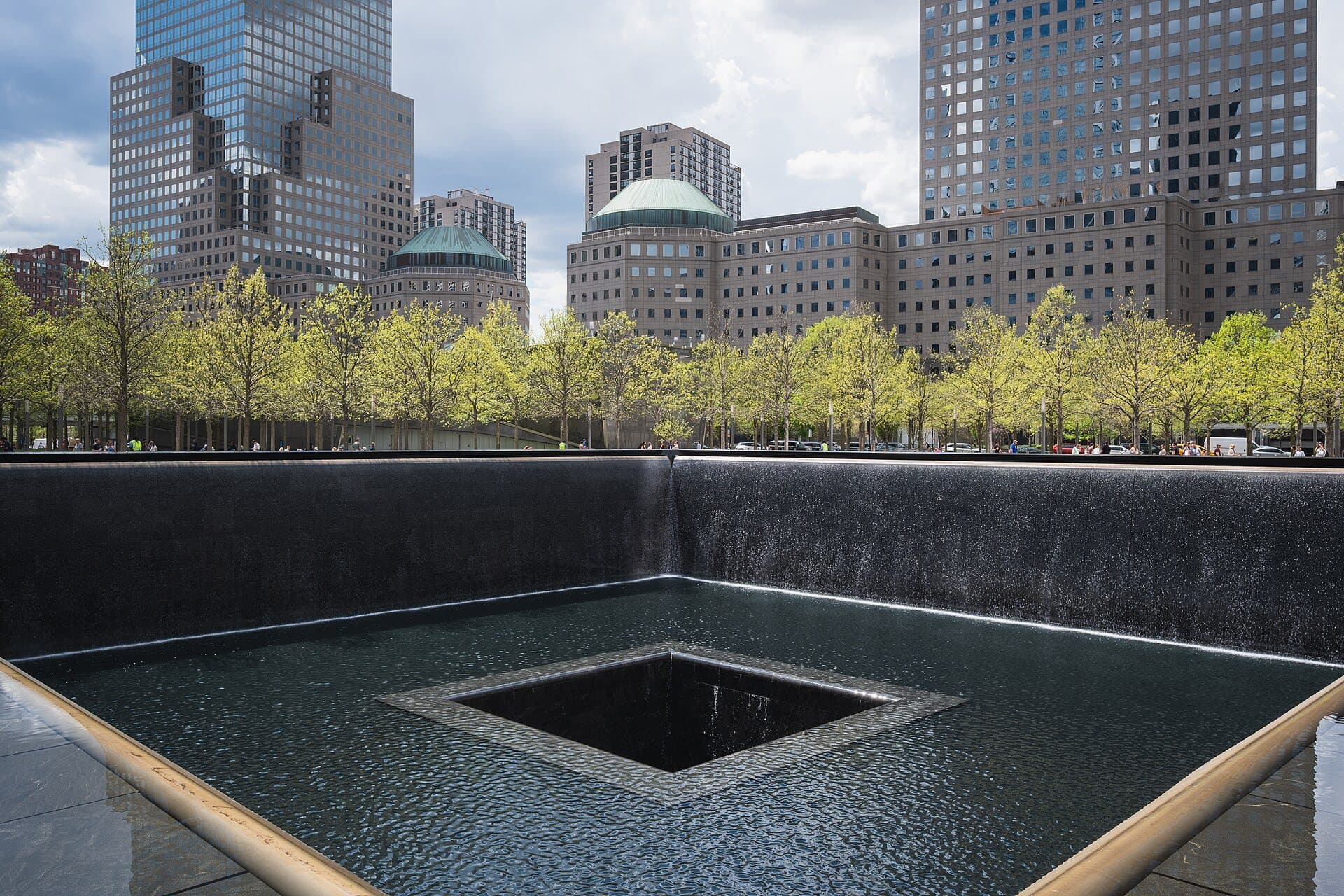
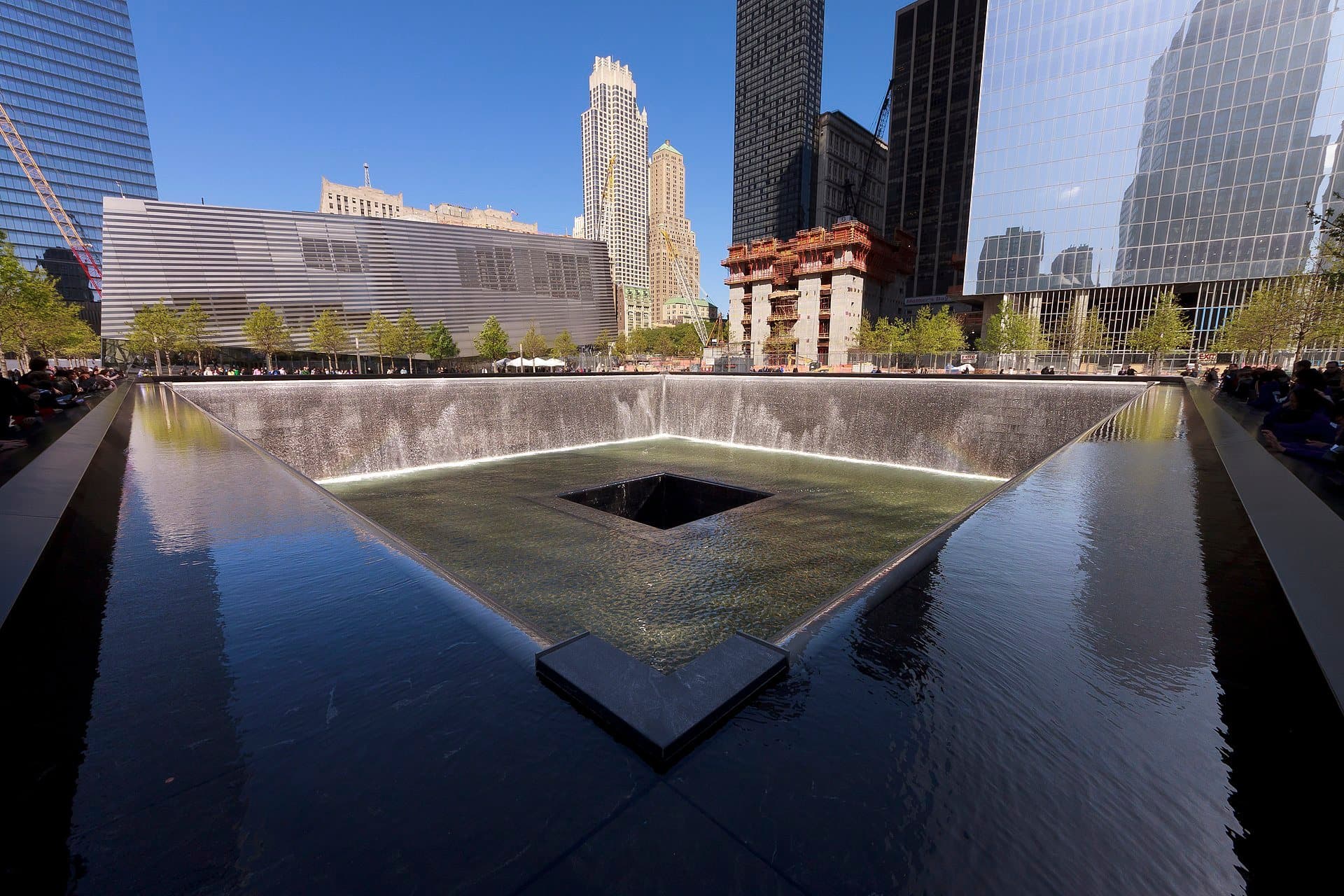
9/11 Memorial: The Twin Pools
Two pools fill the footprints of the Twin Towers, edged in bronze names. The plaza is free; the museum beside it is ticketed.
- 9
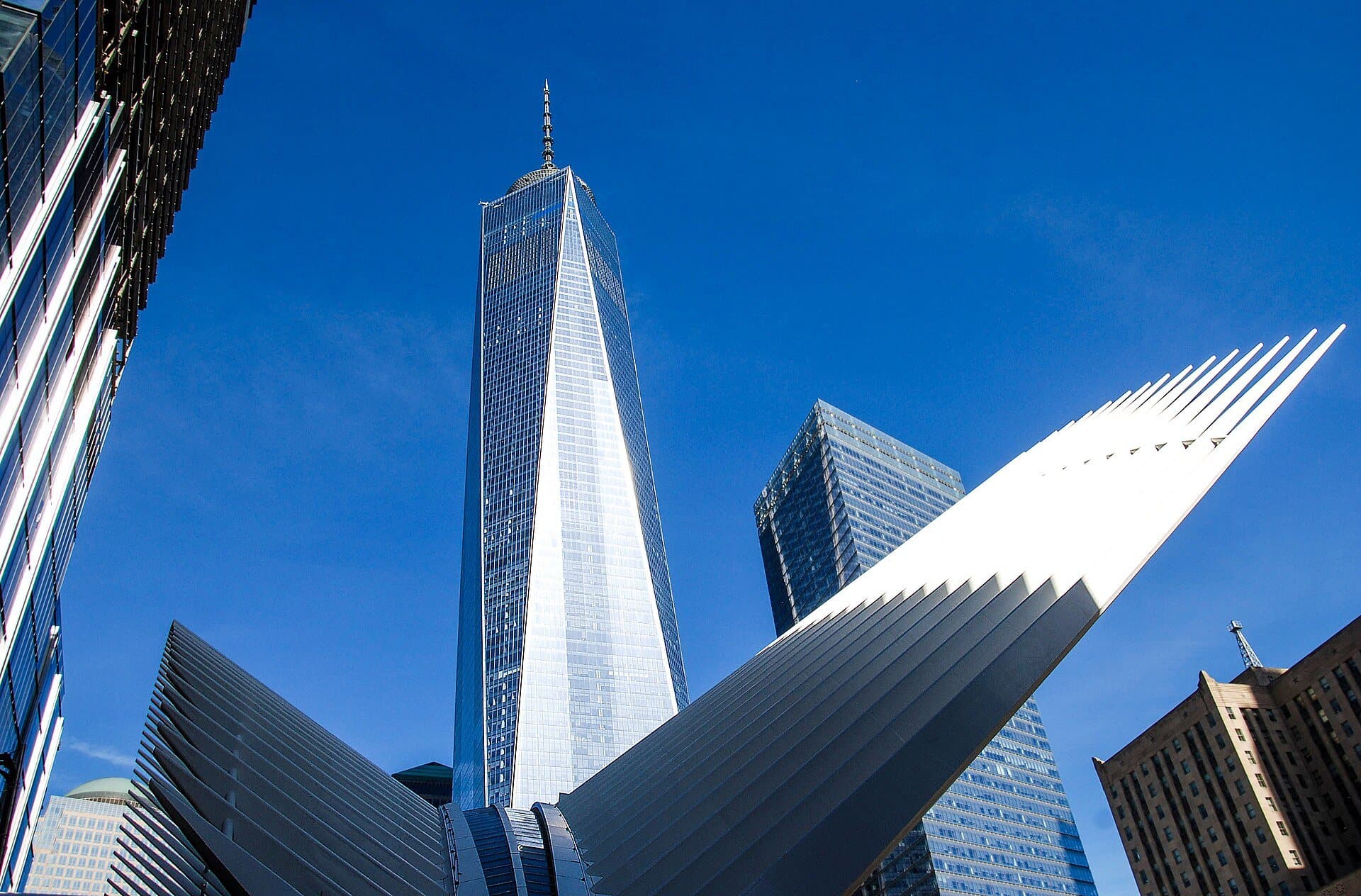
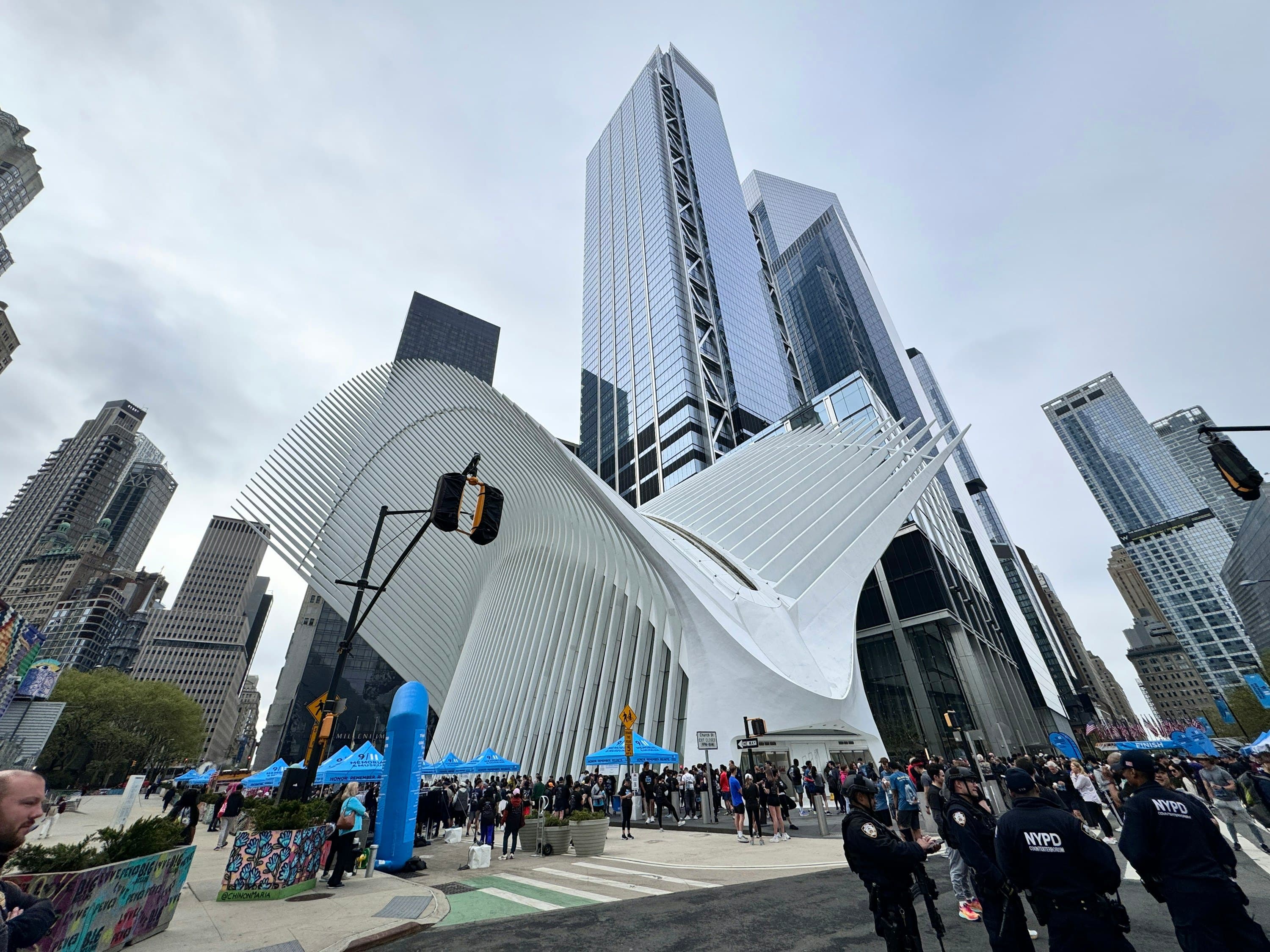
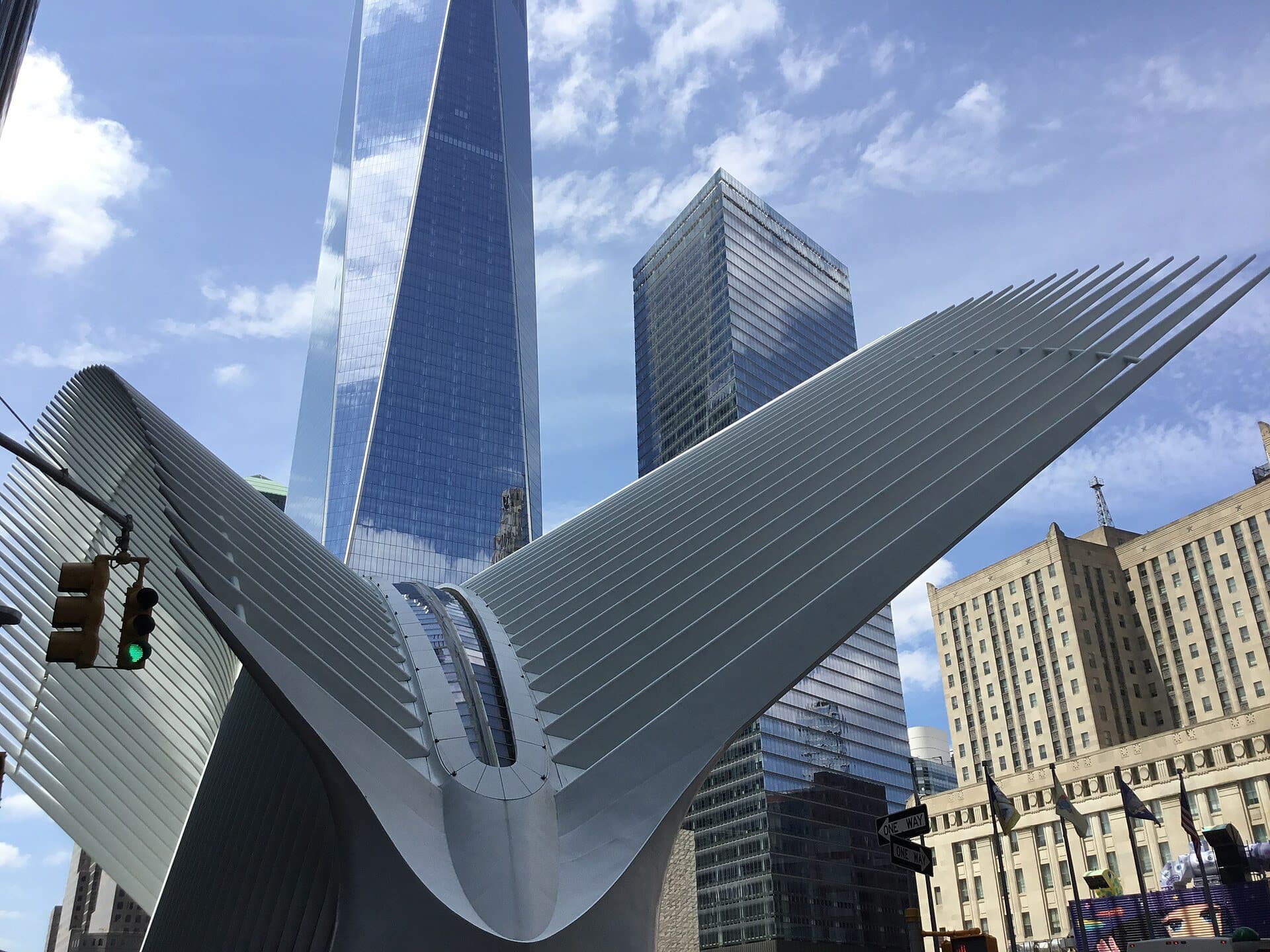
Oculus and One World Trade Center: Wings and a Tower
A white station hall spreads its steel ribs like wings, beside the Western Hemisphere's tallest building.
- 10
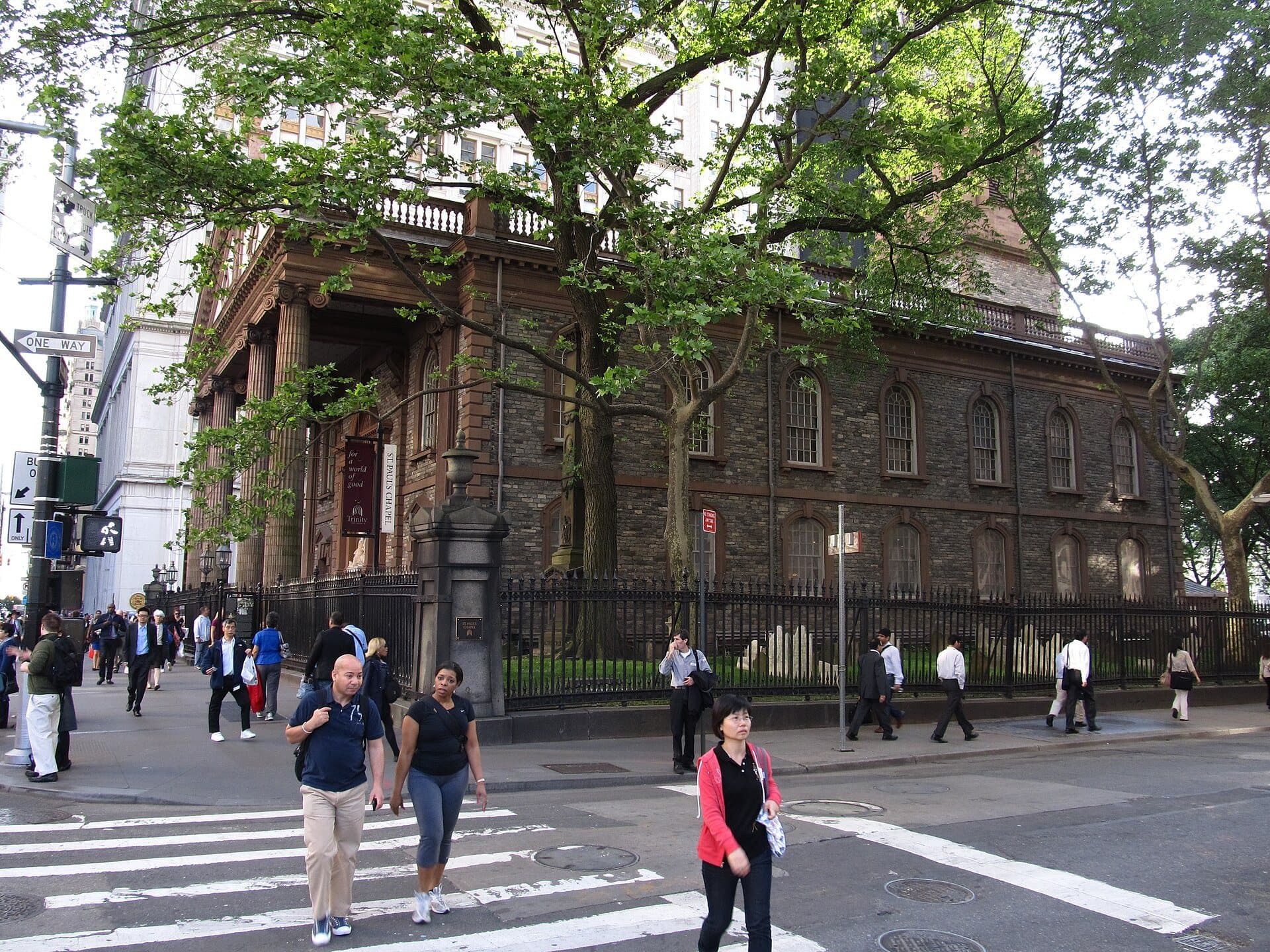
St Paul's Chapel: The Chapel That Stood
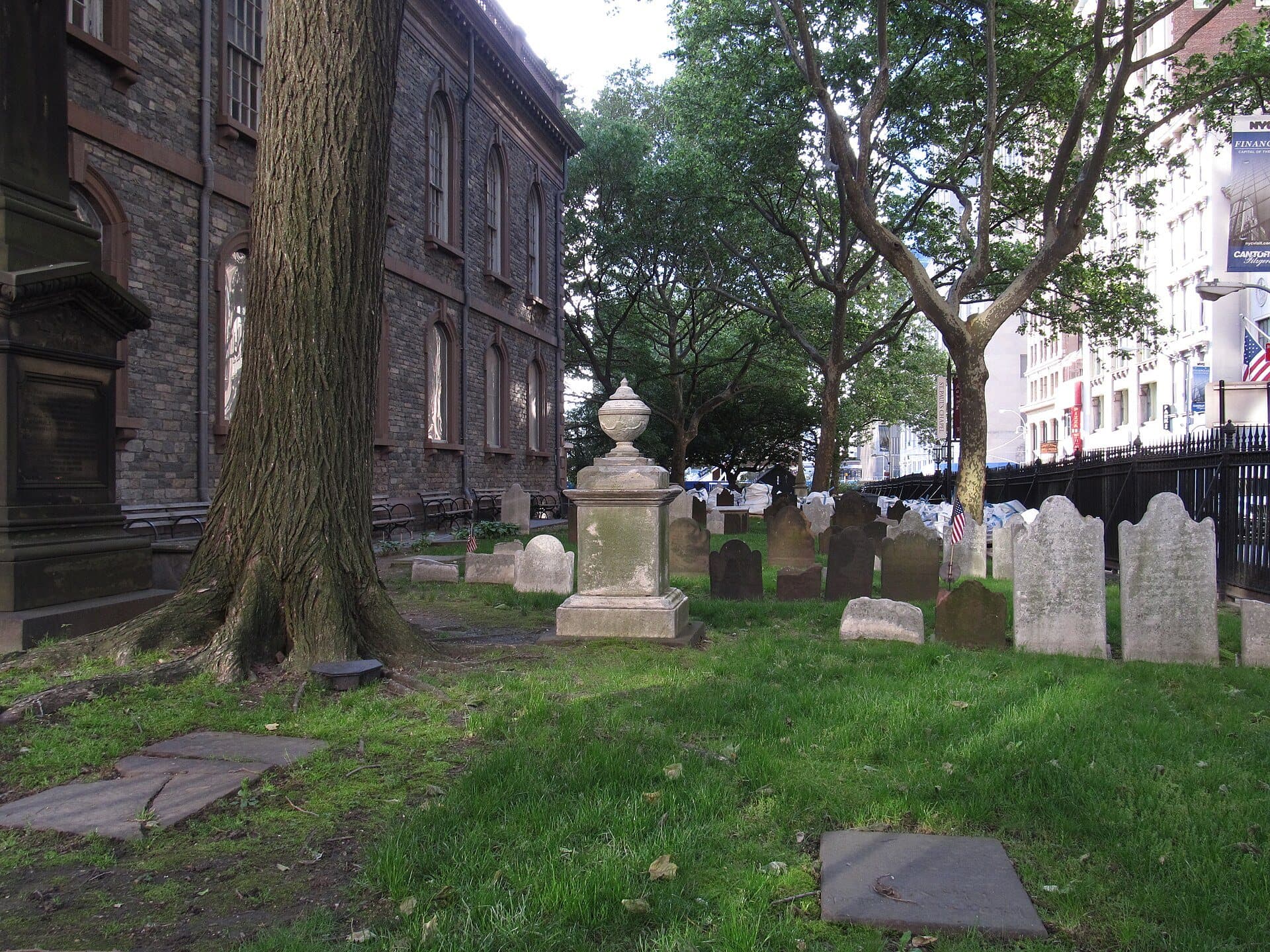
This chapel survived the fire of 1776 and the attacks of 2001. George Washington came here to worship after his oath.
- 11
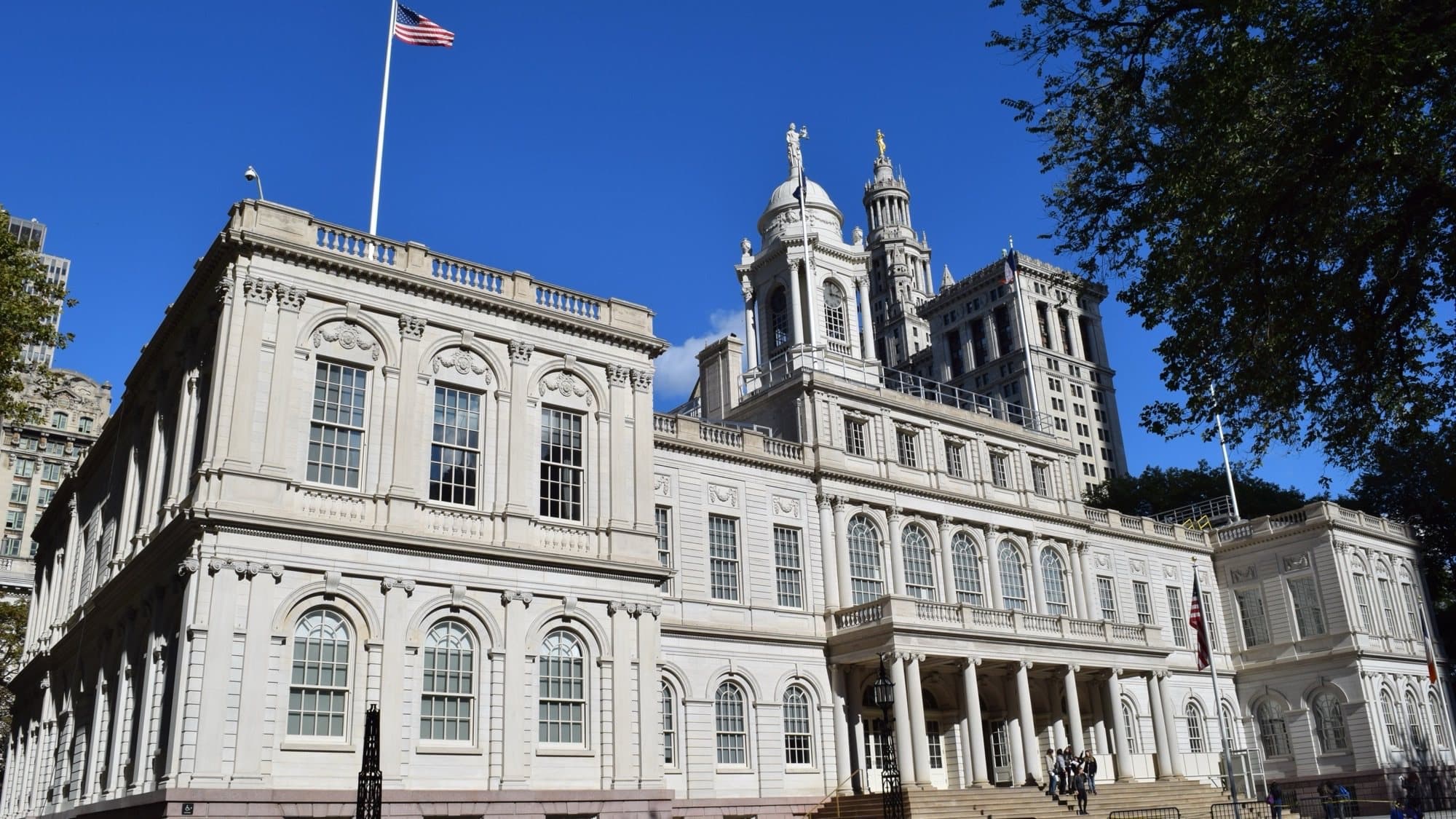
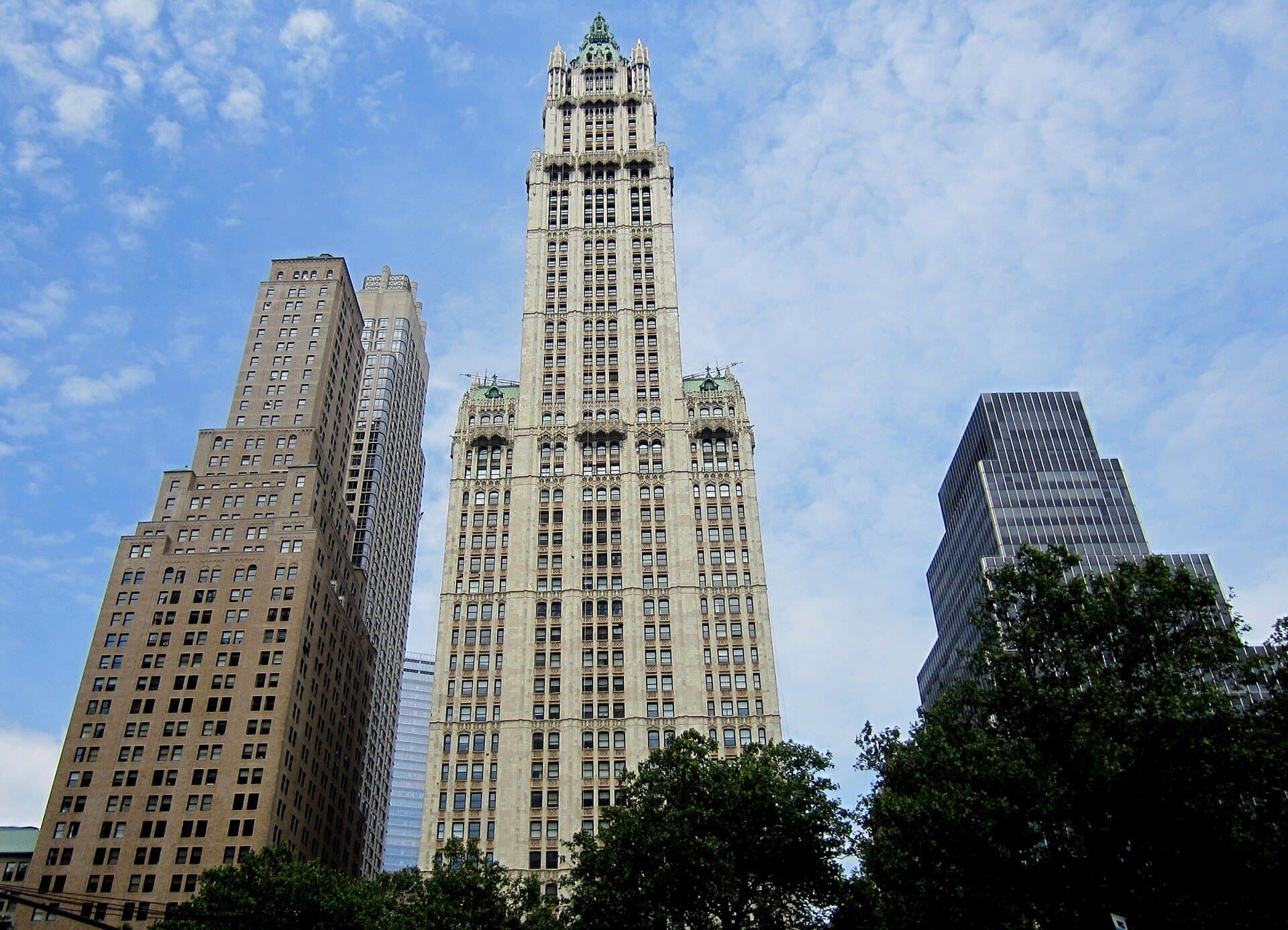
Woolworth Building: The Cathedral of Commerce
A five-and-ten-cent fortune built the world's tallest building in 1913. Its architect also designed the Custom House at Bowling Green.
- 12
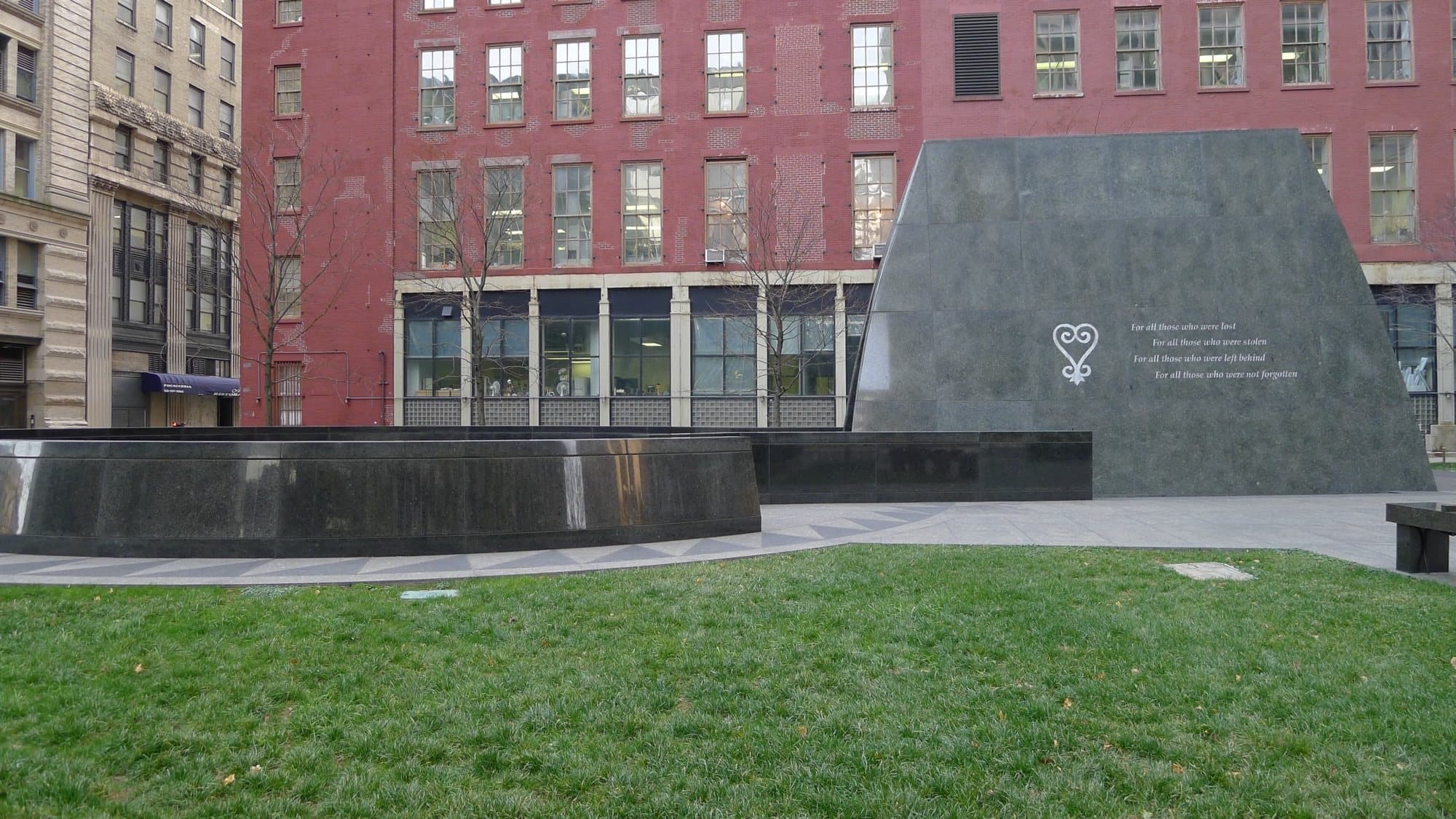
African Burial Ground: The Ground Under the City
Enslaved and free Africans buried their dead here until 1795. Builders found the burial ground in 1991, and a memorial now marks it.
Details
Best Time to Visit
A Wednesday, Thursday or Friday, starting around 11:30 am: Federal Hall is open on weekdays only, the African Burial Ground memorial is open Wednesday to Sunday, the 9/11 Museum is closed most Tuesdays, and Fraunces Tavern Museum opens at noon, about when you reach it from an 11:30 start.
Pro Tips
- •To catch everything open, walk Wednesday to Friday: Federal Hall is open Monday to Friday 9 am to 5 pm, and the African Burial Ground memorial Wednesday to Sunday 10 am to 4 pm (checked 30 September 2026).
- •Pick one ticketed stop rather than all of them. The 9/11 Museum is the big one; Fraunces Tavern Museum and the National Museum of the American Indian are smaller, and the American Indian museum is free.
- •The 9/11 Museum offers free admission on Mondays from 5:30 pm to 7 pm, with tickets released online at 7 am that day (checked 30 September 2026).
- •Castle Clinton, at the first stop, is free and open daily 7:45 am to 5 pm (checked 30 September 2026). Statue of Liberty ferry tickets are sold inside.
- •Trinity Church, St Paul's Chapel and the African Burial Ground visitor center have security checks, so allow a few extra minutes if you go in.
Safety & Precautions
- •In autumn 2026 sidewalk sheds are permitted at the Custom House, 14 and 40 Wall Street, the Equitable Building and the Woolworth Building, so their lowest floors may be hidden and the pavement narrowed (city permits checked 30 September 2026).
- •The Federal Reserve Bank is not open to the public; its school museum visits are currently suspended (checked 30 September 2026).
- •The African Burial Ground memorial is closed on Mondays and Tuesdays; on those days the final stop is seen from the Duane Street pavement.
- •Trinity Church has announced early closings in early October 2026, including a full closure on Wednesday 7 October (checked 30 September 2026).
- •Stone Street is paved in uneven stone setts and lined with restaurant tables; Broadway, Church Street and Broad Street are busy: use the marked crossings, and the signals where there are some. The route climbs a short flight of steps onto the plaza at William and Cedar Streets.
- •The 9/11 Memorial is a place of mourning: keep voices low around the pools.
Travel advisory: Exercise Normal Precautions (Level 1).
Gallery
Related Reading
Go deeper on what you'll see, hear, and walk through.
Overview
Best Self-Guided Walking Tours in New York (2026)
4 min
Overview
How to See New York: A City Built in Layers
7 min
Overview
New York Travel Guide: How Many Days, Getting Around, When to Go
6 min
Overview
One Day in New York: A Walkable Itinerary That Actually Works
6 min
Thematic
Best History Walking Tours in New York (2026)
2 min
Thematic
What to Eat in New York: A Food Guide
5 min
Companion
The First City: The Layers Under Lower Manhattan
5 min
Companion
The Wedding-Cake Code: How One Building's Shadow Wrote the Skyline
5 min
Deep dive
Bowling Green: New York's Oldest Park, a Melted King and a Bull Nobody Ordered
5 min
Deep dive
The Equitable Building: The Shadow That Wrote a Law
5 min
Read
Are Self-Guided Walking Tours Worth It?
3 min
Read
Best Audio Tour Apps (2026)
6 min
Read
Best Free Walking Tour Apps (2026)
3 min
Read
Best Offline Walking Tour Apps: Audio Tours That Work Without Wifi (2026)
5 min
Read
Best Self-Guided Tour Apps (2026)
5 min
Read
Best Self-Guided Walking Tour Apps (2026)
5 min

Read
Boston vs New York: Which Should You Visit?
4 min
Read
Cheapest Self-Guided Tour Apps (2026)
4 min
Read
GPS Audio Tour Apps: How They Work and the Best Ones (2026)
6 min
Read
How Do Audio Walking Tours Work?
2 min
Read
How Much Do Walking Tours Cost?
3 min
Read
Roamer vs GetYourGuide: The Self-Guided Difference
3 min
Read
Roamer vs izi.TRAVEL: Free Breadth vs Curated Walks
3 min
Read
Roamer vs Rick Steves Audio Europe
3 min
Read
Roamer vs Shaka Guide: Walking vs Driving Tours
3 min
Read
Roamer vs Viator: Which Is Better for Walking Tours?
4 min
Read
Roamer vs VoiceMap: Which Self-Guided Tour App Is Better?
3 min
Read
Self-Guided vs Guided Walking Tours: Which Is Right for You?
4 min
Read
Self-Guided Walking Tour Tips: How to Get the Most Out of One
2 min
Read
Viator vs GetYourGuide: Which Should You Book With?
5 min
Read
What Is a Self-Guided Walking Tour?
3 min
Read the walk
The full story of Lower Manhattan: Wall Street to the World Trade Center, in words. Prefer to listen? Play it narrated, from home or on location.
Introduction
New York, in the United States, began at the southern tip of Manhattan Island, and so did its money. Lower Manhattan is where a Dutch trading post grew into a port, and where the new country swore in its first president.
Over twelve stops and about three and a half kilometres, this walk runs north from Battery Park, past a customs house built like a palace, an old tavern, a vault of gold, the Stock Exchange and Trinity Church, to the building that gave New York its first zoning law. Then it slows down at the nine eleven Memorial, passes the Oculus and Saint Paul's Chapel, crosses City Hall Park and ends at the African Burial Ground. It takes a little under two hours at an easy pace, longer if you go inside; the nine eleven Museum and a few other places are ticketed.
Three people keep coming back. George Washington, who took the first presidential oath on Wall Street. Alexander Hamilton, the first Secretary of the Treasury. And the architect Cass Gilbert, who designed a building near the start of this walk and another near the end.
Along the way, ask two questions of every building. What is it dressed as? Banks and offices here borrowed the look of temples, palaces and cathedrals, because columns look as if they will still be there tomorrow. And who paid for it, and who did the work?
1. Battery Park: The Fort That Was an Island
Welcome to Lower Manhattan, and to Battery Park, at the very bottom of the island. Walk on to the low, round fort of red-brown stone and stop beside its thick walls. It is free to walk through.
This is Castle Clinton, and the first thing to know about it is where the water used to be. It was built between eighteen oh eight and eighteen eleven on a man-made island about ninety metres off the shore, joined to Manhattan by a wooden bridge. Now see how far the harbour is from its walls. In eighteen fifty-five landfill joined the fort to the mainland, and the park grew out around it. The ground between these walls and the water was made by people.
The fort carried twenty-eight cannons, each able to throw a thirty-two pound ball about two and a half kilometres. It never had a reason to fire on an enemy, so the round building found other work. First it became Castle Garden, a place for concerts and opera. Then, from August eighteen fifty-five, it was what the Park Service calls the country's first official immigrant processing centre. The Park Service counts more than eight million people who entered the United States here before it closed in eighteen ninety: two out of every three immigrants of that time. After that it held the city's aquarium, until nineteen forty-one. It was nearly torn down, and saved. Today the ferry tickets for the Statue of Liberty are sold inside.
From the water's edge beyond the fort, the statue stands out in the harbour, about three kilometres away, with Ellis Island and Governors Island across the water.
A port lives on what ships bring in, and on what they pay to land it. Keep that in mind at the next stop.
Follow the route through the park. Next, a bronze bull, New York's oldest park, and a palace built to collect those payments.
2. Bowling Green: The Bull and the Custom House
Walk on to the northern tip of Bowling Green, the small oval park, and stop by the bronze bull.
This is the Charging Bull, three and a half tons of bronze that nobody ordered. One night in December nineteen eighty-nine its sculptor, who paid for it himself, left it outside the Stock Exchange. The city impounded it; days later it was given this spot.
Bowling Green is New York's oldest park, rented out in seventeen thirty-three for a peppercorn a year. The black iron fence around it went up in seventeen seventy-one to protect a gilded statue of King George the Third. On the ninth of July seventeen seventy-six, after the Declaration of Independence was first read in New York, a crowd pulled the king down, and he was melted into ammunition. During the Revolution, patriots also broke the crowns, or iron balls, off the fence posts for ammunition; the post tops are plain today.
Now look down the green to the granite building with columns at its far end. That is the Custom House, home today to the National Museum of the American Indian, which is free. The details are on this stop's card.
It was a tax office, where duties on goods landed in the harbour were paid. But look at how it is dressed. On the carved top of every column, forty-four in all, is the head of Mercury, the Roman god of commerce: look for him as you pass. At the base sit four stone women for four continents, if no sidewalk shed hides them. A tax office, dressed as a palace of trade.
The architect was Cass Gilbert. He comes back near the end. The building's official name honours Alexander Hamilton, who lies at Trinity Church.
Follow the route down the east side of the green and past the Custom House, across the street from it. Next, a tavern rebuilt to look old.
3. Fraunces Tavern and Stone Street: A Tavern Rebuilt to Look Old
Walk on across Broad Street and stop opposite the three-storey brick tavern with dormer windows in its roof.
This is Fraunces Tavern. Upstairs is a small museum of the Revolution, ticketed and worth it if you have time. The details are on this stop's card.
Look at the brick. The face on Pearl Street is red. Round the corner, on Broad Street, it turns yellow. A patriotic society, the Sons of the Revolution, bought the building in nineteen oh four and in nineteen oh seven rebuilt it to look as it did in Washington's day. About fifteen thousand bricks were shipped over from Holland. Today the Broad Street side is yellow Dutch brick, and the Pearl Street side red English brick. Another costume: this time, a costume of age.
The story it was dressed for is real. A tavern opened here in seventeen sixty-two. On the fourth of December seventeen eighty-three, George Washington said farewell to his officers in its Long Room. Then the young country moved in: from seventeen eighty-five to seventeen eighty-eight, the offices of Foreign Affairs, of War, and of the Board of Treasury worked in this building.
Next on the route is Stone Street, which the Dutch called High Street. Its short stretch on the far side of Broad Street, toward Bowling Green, was Brewer Street, and in sixteen fifty-eight it became the first paved street in New Amsterdam. Who paid? The residents, who agreed to an extra tax for it. Who did the work? The Park Service records that it was laid by enslaved Africans. That first surface now lies about two metres below today's street.
After the great fire of December eighteen thirty-five levelled most of Lower Manhattan south of Wall Street, the granite-fronted brick buildings along Stone Street rose in its place.
Follow the route along Stone Street. Next, a bank built over a vault of gold.
4. Federal Reserve: The Gold Under Liberty Street
Walk on along Liberty Street and stop at the edge of the open plaza, across the street from the enormous building of heavy, rough stone with iron grilles over its windows.
This is the Federal Reserve Bank of New York. It is not open to the public, so this stop is told from the pavement.
Look at the stone: deep grooves round every block, colours mixed from a limestone and a sandstone, small windows set deep behind wrought iron. At the public entrance hang two iron lanterns that the bank says are almost identical to the lanterns of the Strozzi Palace in Florence. It was built to look like a Florentine banker's palace, and the city's Landmarks Commission called it fortress-like. When it was finished in nineteen twenty-four, the bank says, it was the largest bank building in the world.
About twenty-four metres below the street and fifteen below sea level, on the bedrock, is a gold vault. As of twenty twenty-four it held about five hundred and seven thousand bars, more than six thousand tonnes. None of it belongs to a person or a company: only central banks, governments and international organisations may keep gold here. Remember the gold. Until nineteen twenty, the government kept its own under a building you will see at the next stop.
Now the plaza on this side of the street, and the tall, plain slab of dark metal and glass that rises from it. That is One Chase Manhattan Plaza, finished in the early nineteen sixties: sixty storeys, nothing borrowed from a temple or a palace. A critic of the time praised it for rejecting what he called wedding-cake skyscrapers. Hold on to those two words. You will see one at Trinity Church, and, at the stop after that, the building that made the city build them.
Follow the route to Wall Street. Next, a temple, a stock exchange and a president's oath.
5. Wall Street: Federal Hall and the Stock Exchange
Walk on to the corner where Broad Street meets Wall Street, below the wide steps of the columned temple with a bronze statue in front, and stop there. The statue is George Washington. On the thirtieth of April seventeen eighty-nine he took the oath as the first President of the…
Full narration for this stop unlocks with the tour.
6. Trinity Church: The Church at the Head of Wall Street
Walk on up Wall Street to the corner of Broadway, and stop there, with the dark brownstone church and its tall spire straight ahead across Broadway. This is Trinity Church, closing the view down Wall Street. It is free to visit; the details are on this stop's card. This is the…
Full narration for this stop unlocks with the tour.
7. Zuccotti Park: The Building That Made the Zoning Law
Walk on into the plaza of honey locust trees with the tall red steel sculpture, and stop at its edge by Broadway. This is Zuccotti Park. Look across Broadway at the huge pale block you just walked past, the one that rises straight from the street to its roof. No steps, no…
Full narration for this stop unlocks with the tour.
8. 9/11 Memorial: The Twin Pools
Walk on into the memorial plaza, under the rows of oak trees, and stop beside the first pool you reach, a few steps from its bronze edge. This is the nine eleven Memorial, and the plaza is free. The Museum, in the angled glass pavilion between the pools, is ticketed and worth…
Full narration for this stop unlocks with the tour.
9. Oculus and One World Trade Center: Wings and a Tower
Walk on toward the white building whose steel ribs rise on both sides like a pair of wings, and stop on the plaza at its end. This is the Oculus, the great hall of the World Trade Center transportation hub, and it is free to walk into. It replaced the Path train station that…
Full narration for this stop unlocks with the tour.
10. St Paul's Chapel: The Chapel That Stood
Walk on along Fulton Street to the old churchyard behind the iron railings, and stop where you can see the chapel across the gravestones. This is Saint Paul's Chapel, free to visit, with a security check. The details are on this stop's card. It opened in seventeen sixty-six as…
Full narration for this stop unlocks with the tour.
11. Woolworth Building: The Cathedral of Commerce
Walk on into City Hall Park, to the paved plaza around the fountain, and stop where you can see the whole cream-coloured tower across Broadway, the one you just passed. This is the Woolworth Building. Its lobby can be seen only on an official guided tour, booked ahead. The…
Full narration for this stop unlocks with the tour.
12. African Burial Ground: The Ground Under the City
Walk on along Duane Street and stop at the memorial's fence, by the long, polished granite wall that faces the street, with lines carved into it. This is the African Burial Ground National Monument. The memorial is free, and it is closed on Mondays and Tuesdays. The details are…
Full narration for this stop unlocks with the tour.