Bowling Green is small: an oval of grass at the foot of Broadway, ringed by a black iron fence, with Arturo Di Modica's bronze Charging Bull at its north tip and the columned front of the old Custom House closing its south end. Most people stop for the bull, take the photograph and walk on. The green behind it is older than the country.
The city's oldest park
NYC Parks calls Bowling Green New York City's oldest park. It was first designated a park in 1733, when the city offered it for rent at the cost of one peppercorn a year to three neighbours, John Chambers, Peter Bayard and Peter Jay, who were to improve it with grass, trees and a fence. Before that it had been open ground at the edge of the old Dutch town, near where Fort Amsterdam stood from 1626.
This is also, according to tradition, where Peter Minuit's purchase of Manhattan from the Lenape took place in 1626, for goods valued at about sixty guilders. Tradition is the right word. There is no marker for it in the park, and the place and the terms are both matters of legend. What is certain is that the Lenape trail north from this tip of the island became Broadway, the street you are looking up.
A king melted into bullets
Hear a stop from this walk
African Burial Ground: The Ground Under the City
In 1770 the city put up a gilded lead statue of King George III on horseback in the middle of the green. The Landmarks Preservation Commission records that it was unveiled on the sixteenth of August, 1770, and that the iron fence was erected in 1771 to protect it.
On the ninth of July, 1776, after the first public reading in New York of the Declaration of Independence, an angry crowd pulled the statue down. NYC Parks says it was dragged up Broadway, sent to Connecticut, melted down and recast as ammunition.
The fence survived, but not untouched. The small ornaments that capped its posts, described variously as royal crowns or iron balls, were broken off by patriots and used for ammunition, according to the commission. The fence was repaired in 1786 and raised two feet in 1791. In 1914 it was taken down for subway construction and carted to Central Park, then found and restored in 1919. Look at the tops of the posts: they are plain now.
The palace of trade
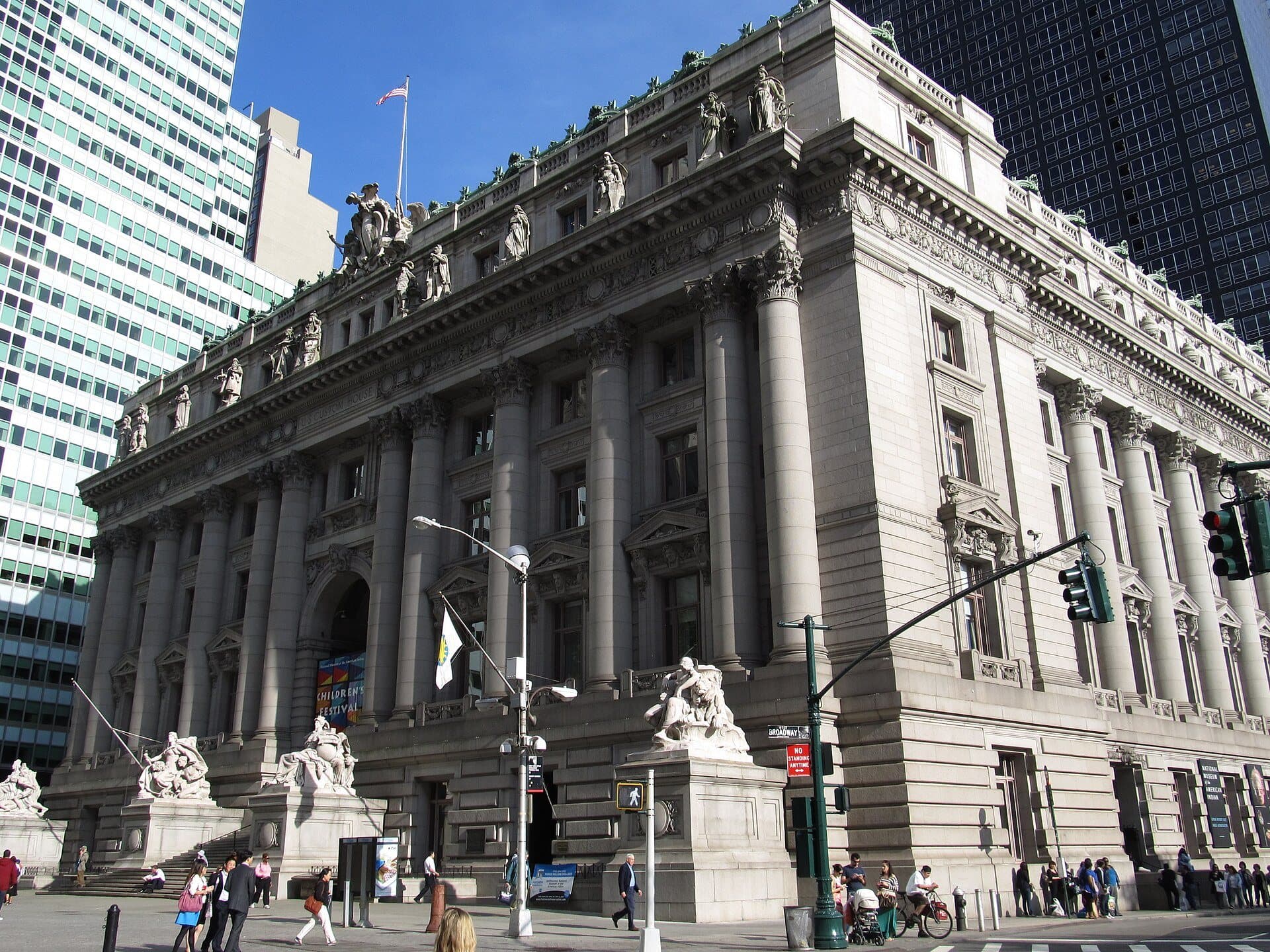
The south end of the green is closed by the Alexander Hamilton U.S. Custom House, begun in 1901 and completed in 1907 to designs by Cass Gilbert, who later designed the Woolworth Building. It stands near where the Dutch fort stood. The commission's report reads like an inventory of a palace: four sculptured groups, heroic in size, representing the Four Continents, by Daniel Chester French; twelve standing statues above the columns representing the commercial centres of the ancient and modern worlds; and a head of Mercury, god of commerce, on each of the capitals of the forty-four columns. It was built to collect customs duties, and dressed to look like trade itself.
Today it houses the Smithsonian's National Museum of the American Indian, which is free to enter.
The bull nobody ordered
The bull is the newest thing here. Arturo Di Modica made the three-and-a-half-ton bronze at his own expense and, one night in December 1989, dropped it off without permission in front of the New York Stock Exchange. The city removed it the next morning. Within days, after a public outcry, it was given a new home at the north end of Bowling Green, where NYC Parks says it has been on display since December 1989.
It is now the most crowded spot in the park. That is the joke at the heart of the place: the most recent object draws the crowd, and the oldest things, the oval itself and the fence, are the ones people lean on while they wait.
What to look at
Stand at the north end, behind the bull, and look south down the green. The oval of grass is the 1733 park. The black iron posts around it are the fence of 1771, with their crowns long gone. Beyond them, the Custom House shows its columns and statues; a sidewalk shed may hide the seated figures at street level in autumn 2026, but the upper statues and the Mercury capitals stay in view.
Bowling Green is stop two of the Lower Manhattan walk, which starts at Battery Park and runs north through Wall Street and the World Trade Center site to the African Burial Ground. Cass Gilbert, whose Custom House you are looking at, comes back near the end of the walk at the Woolworth Building. For the wider story of the island's first city, read Lower Manhattan: the first city.
Ready to experience it?
Lower Manhattan: Wall Street to the World Trade Center
110 min · 3.5 km · easy
More from New York
Explore more at your own pace.
New York Travel Guide: How Many Days, Getting Around, When to Go
One Day in New York: A Walkable Itinerary That Actually Works
MoMA: What to See, Floor by Floor, and Where the Famous Paintings Hang

Monet's Water Lilies at MoMA: The Room, the Fire and the Pond
The Starry Night at MoMA: Where It Hangs and What to Look For