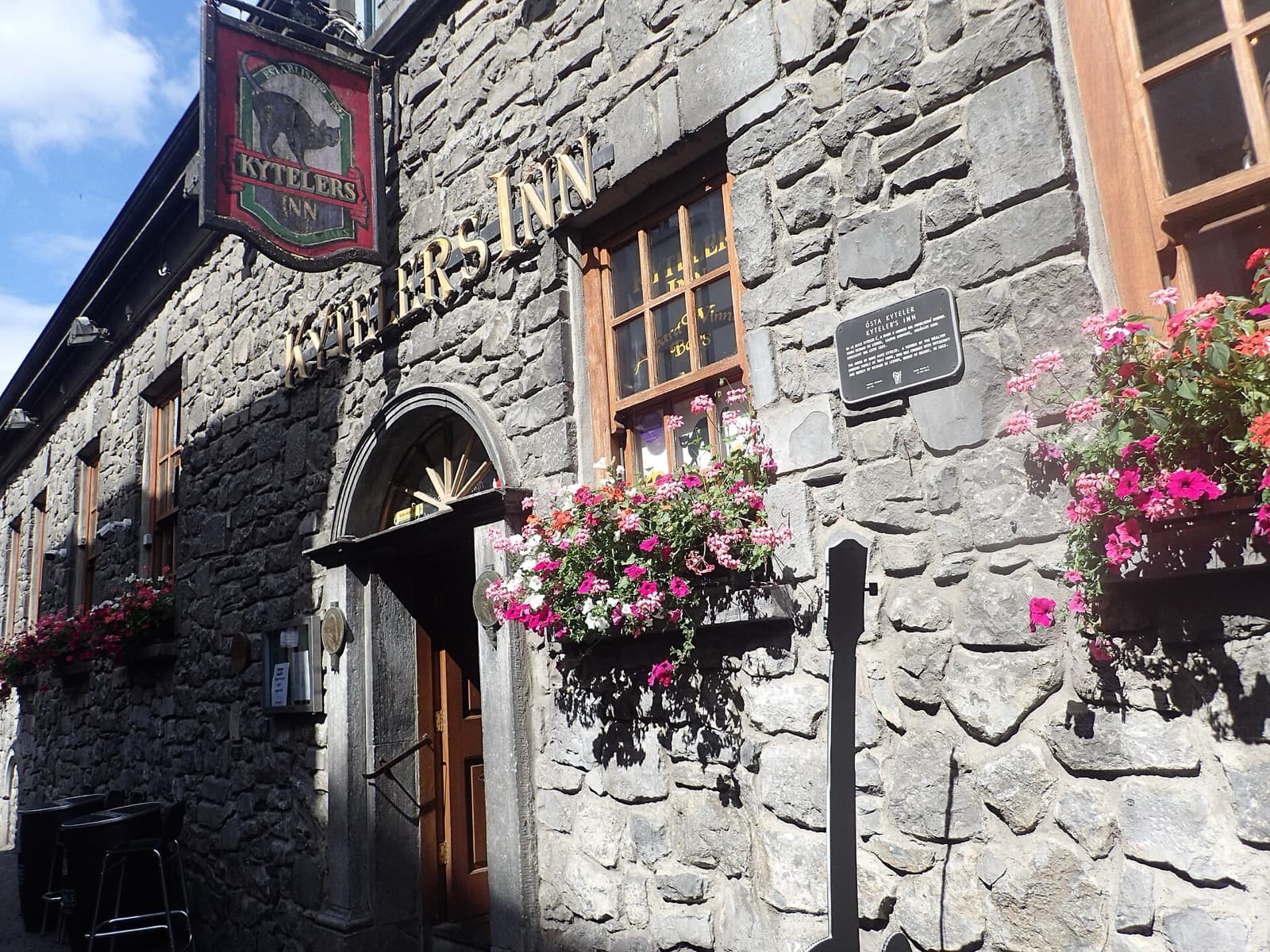
On Saint Kieran's Street in Kilkenny stands the site of Kyteler's Hall, parts of it dating to the thirteenth and fourteenth centuries, and it marks the spot where a wealthy moneylender charged with witchcraft in 1324 escaped and her servant Petronilla de Meath was burned at the stake in her place. That single fact, a rich woman accused and a poor woman killed, is the way into the other Kilkenny: not the ceremonial Medieval Mile that climbs from the castle to Saint Canice's Cathedral, but the working and suffering city threaded down its narrow medieval lanes, the ones locals call slips.
Most tourism copy gets the Kyteler story badly wrong, and it is worth telling plainly. Dame Alice Kyteler was born around 1260, a wealthy moneylender married four times, in turn to William Outlaw, Adam le Blund of Callan, Richard de Valle, and John le Poer. In 1324 she was accused of witchcraft and heresy before Richard de Ledrede, the English-born Franciscan Bishop of Ossory. Alice was wealthy and well-connected, and she used that. She fled, most likely to England or to Flanders, and there is no later record of her at all. She simply vanishes from history a free woman.
The person who paid was her maidservant. Petronilla de Meath, a young woman of around twenty-four, was tortured, flogged through six parishes, and burnt at the stake in Kilkenny on the third of November, 1324. Academic scholarship records it as the first known case in Ireland, and in the British Isles, of death by fire for heresy. The Franciscan chronicler John Clyn noted at the time that it was unprecedented, writing that before her no one had ever suffered the death penalty for heresy in Ireland. Hold that for a moment before you walk on. This is not a ghost-tour thrill or a costumed spectacle. It is the real judicial killing of a poor woman who died for her employer's charge, and Petronilla deserves to be remembered as a person rather than a legend.
Why one stop opens the whole city
The reason Kyteler's Inn works as a doorway is that its injustice is not an isolated horror. It is the sharpest example of a pattern that runs through the entire walk: the gap between the Kilkenny of merchants and monuments and the Kilkenny of servants, prisoners, and the poor. Once you have stood outside Kyteler's and understood who actually burned, every later stop reads differently.
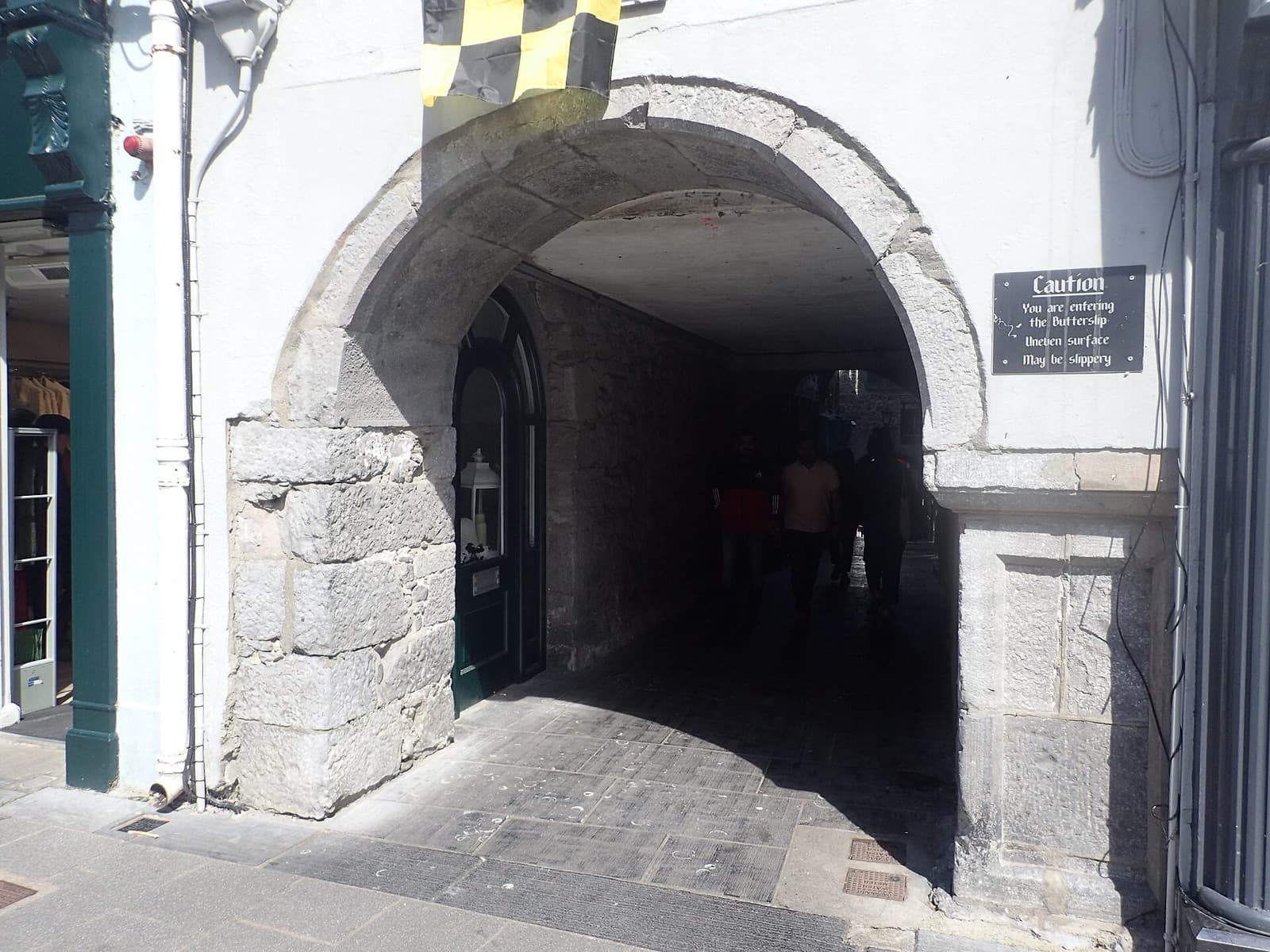
Begin just before it, at the mouth of the Butter Slip. This is a dark, stepped lane built in 1616, running under two connected houses between High Street and Saint Kieran's Street, which was once known as Low Lane. Butter vendors sold their wares in the cool shade here on market days, out of the sun that would spoil their goods. The slips are the hidden grain of the medieval town, the tight service lanes where traders and servants moved away from the grander streets above. Kyteler's site sits right where that everyday city and its darker history meet.
The walk then turns to charity and confinement in the same few streets. On Rose Inn Street, the Shee Alms House is one of the few surviving Tudor almshouses in Ireland, founded in 1582 by Sir Richard Shee, a Kilkenny merchant and Deputy Treasurer of Ireland, as the Hospital of Jesus to shelter twelve poor persons. It is the charitable face of the same mercantile city that produced wealthy moneylenders. On Parliament Street stands Grace's Castle, a Norman townhouse-castle built by William le Gras before 1210, leased to the State in 1566, and recorded as the County Gaol by 1691. The family stronghold became the county prison, then a courthouse around 1792, and it is still the Kilkenny courthouse today. For centuries this one site has been about the accused and the confined, which is exactly the shadow-story Petronilla belongs to.
The capital, the ale, and the lantern
Hear a stop from this walk
The Butter Slip: Down the Lane of the Butter Sellers
Parliament Street carries its history in its name. For a few extraordinary years in the 1640s, this river city was the effective capital of Catholic Ireland. After the rebellion of 1641, a Confederate Catholic government formed here, and the Medieval Mile Museum records that its first General Assembly met in October 1642 by the entrance to the Market Yard on this street. The Confederation of Kilkenny governed roughly two-thirds of Ireland, formed two houses of Lords and Commons, and struck its own coinage that carried no royal image. Then Oliver Cromwell landed in Ireland in August 1649, and the Siege of Kilkenny ran from the twenty-second to the twenty-eighth of March, 1650, ending the city's brief time as a capital.
Down by the river Nore, the ruin of Saint Francis Abbey braids two long stories together. It is a Franciscan friary founded between 1231 and 1234 by Richard Marshal, third Earl of Pembroke, and Heritage Ireland records that from the fourteenth century its friars brewed ale. A commercial brewery later stood on these grounds from 1710 until 2013, three centuries of brewing that carried the city's name into the world. The walk closes on the gentlest note, at Saint John's Priory, an Augustinian house founded in 1211 on land granted by William Marshal, first Earl of Pembroke. It was nicknamed the Lantern of Ireland for its abundance of windows, and its Lady Chapel, completed around 1290, is still in use as a Church of Ireland church. From John's Bridge, the marquee city stands lit across the water.
This is a compact route, roughly two hours over about two kilometres of gently rising streets, stepped lanes, and riverbank. Because it is self-guided, you set the pace: linger at Petronilla's story as long as it holds you, and pass quickly through the rest. Wear shoes with good grip, since the slips are stone-stepped and can be slick after rain, and treat both the Kyteler story and the working churches with quiet respect.
If you want the full picture of the city before you set out, the Kilkenny walking tours guide lays out how this route sits beside the grander Medieval Mile, and the Kilkenny city page gathers everything on offer. Start at the entrance to the Butter Slip on High Street, then walk down to Kyteler's, and let one servant's death reorganise how you read the whole medieval town.
Sources
- Petronilla de Meath, Wikipedia: the 1324 trial, torture, and burning, and the record of the first known death by fire for heresy in the British Isles.
- Alice Kyteler, Wikipedia: her four marriages, the charge before Bishop Richard de Ledrede of Ossory, and her escape.
- Shee Alms House, Wikipedia: Sir Richard Shee's 1582 foundation of the Hospital of Jesus to shelter twelve poor persons.
- The Confederation of Kilkenny, Medieval Mile Museum: the first General Assembly of October 1642 and Kilkenny's role as the capital of Catholic Ireland.
- St. Francis Abbey, Wikipedia, and Heritage Ireland: the Franciscan foundation, the friars' brewing from the fourteenth century, and centuries of ale on the grounds.
Ready to experience it?
Kilkenny Slips: The Witch, the Ale, and the Confederation
100 min · 1.9 km · moderate
More from Kilkenny
Explore more at your own pace.
Kilkenny Travel Guide: Days, Transport, Best Time, Safety, and Budget
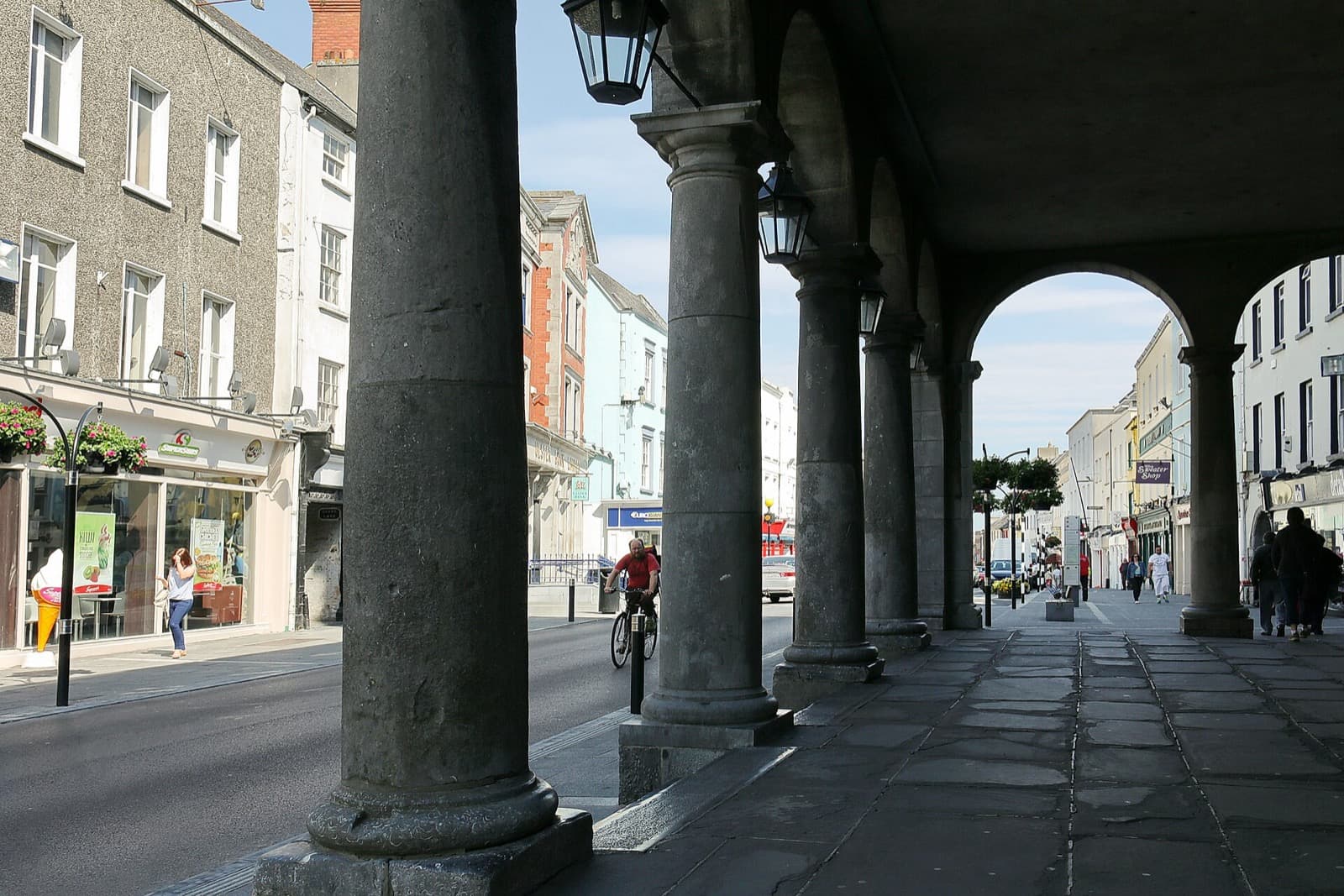
One Day in Kilkenny: A Walkable Medieval Mile, Morning to Evening
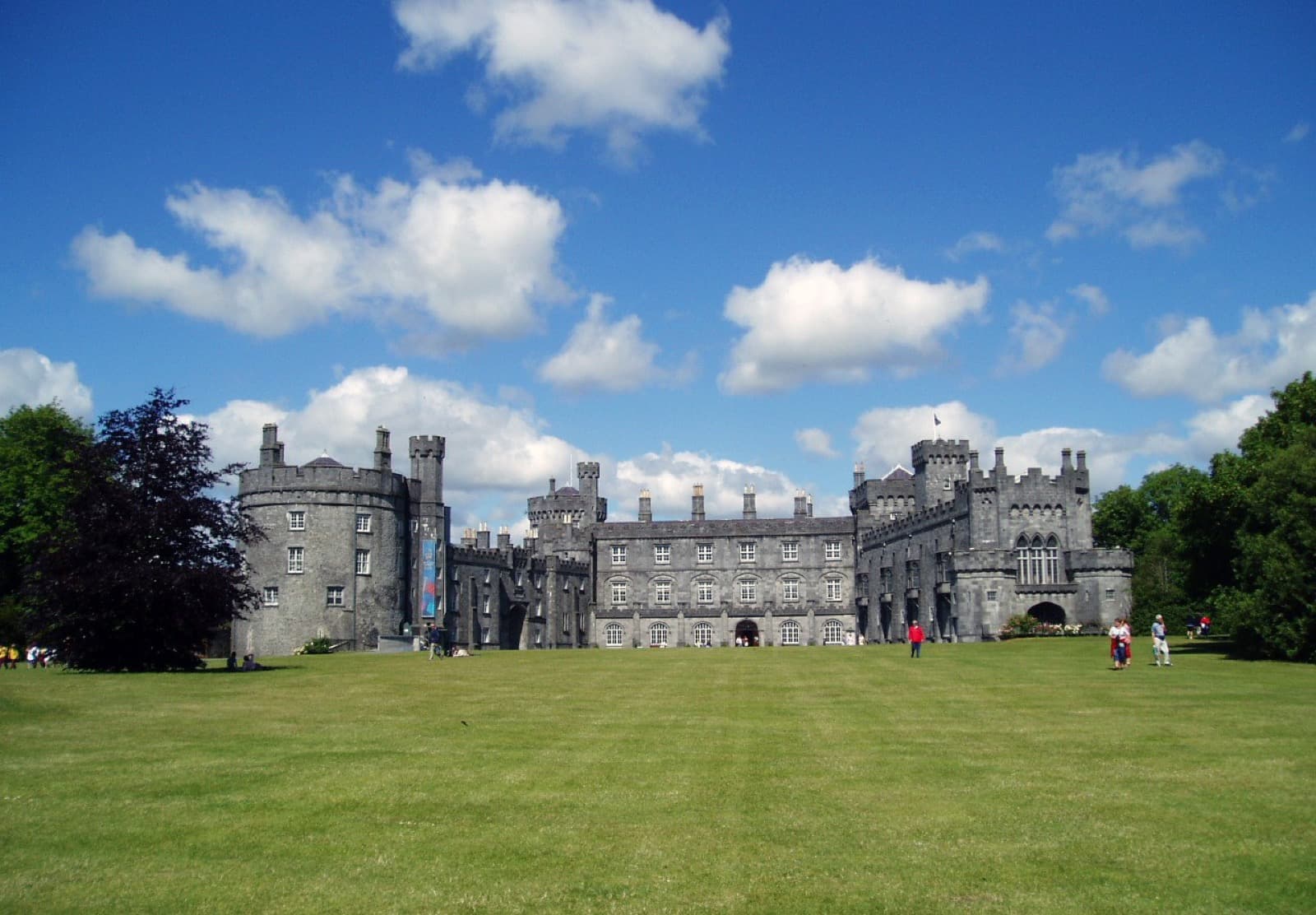
Kilkenny: Ireland's Medieval Capital in a Single Mile
Kilkenny Castle and the Medieval Mile: One River Crossing, One Family, Six Hundred Years
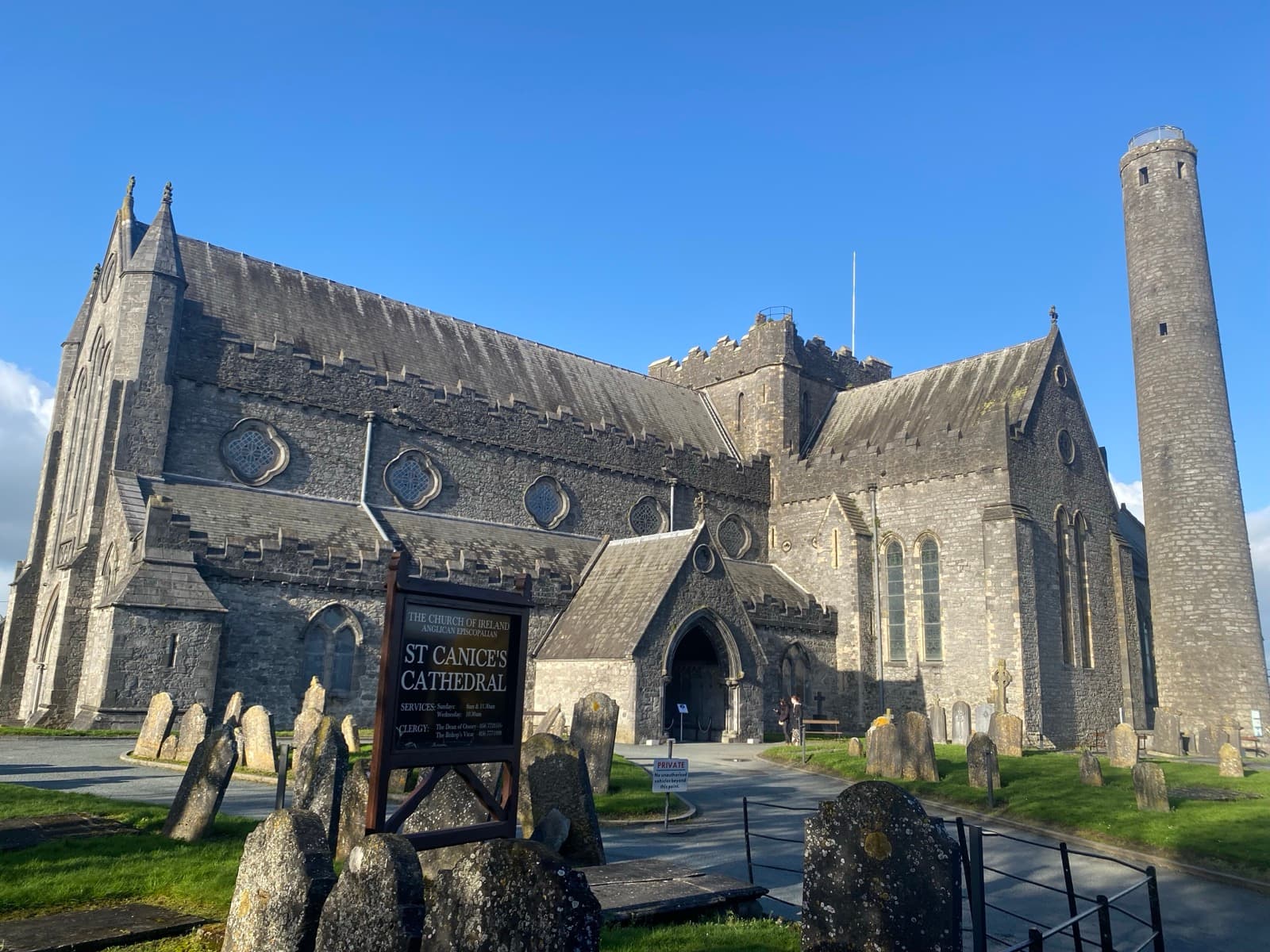
St Canice's Cathedral and Round Tower: The Hilltop Church That Named Kilkenny