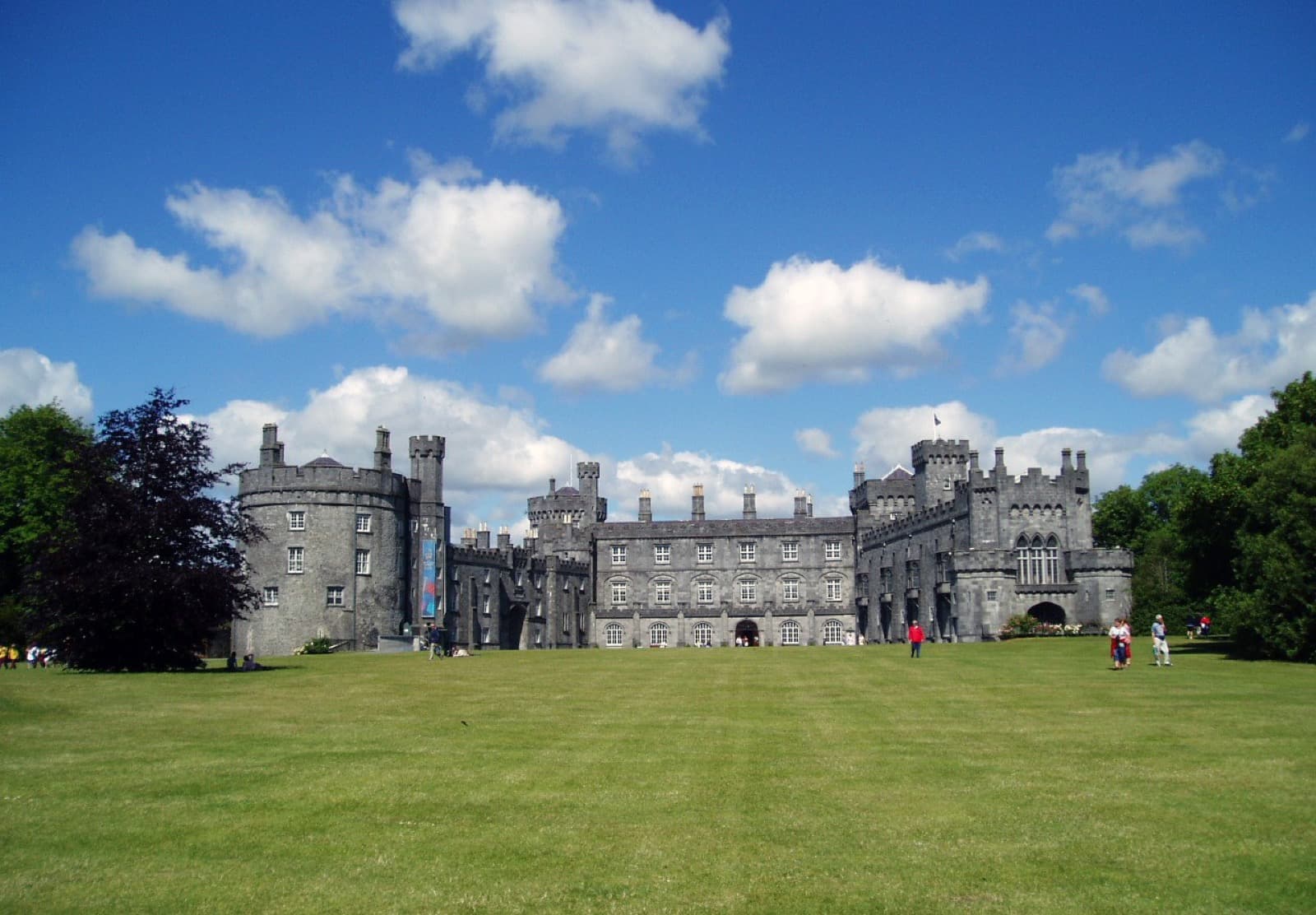
Kilkenny Castle held a single family over one river crossing for roughly six hundred years, and that fact is the opening argument of the whole Medieval Mile. Stand at the front gates on the Parade and you are not just looking at a castle. You are looking at the anchor of a compact uphill walk that reads a thousand years of Irish town history end to end, from the Butler stronghold on the river Nore up the hill to the cathedral that gave the city its name. The castle is where the tour begins because it is where the argument begins: hold this crossing, and you hold Kilkenny.
One crossing, one family
The terrace above the Nore has commanded this crossing since the twelfth century. The first castle here was wooden, raised by the Anglo-Norman lord Richard de Clare, the man known as Strongbow. The stone castle that followed owed its major development to William Marshal, who married Strongbow's daughter Isabel in eleven eighty-nine and pushed the building forward. That great square castle, with a large round tower at each of its four corners, was completed about twelve sixty. Three of those four original towers still stand today.
In thirteen ninety-one the castle was bought by James Butler, and from that moment the Butler family, Earls and later Dukes of Ormond, held it for roughly six centuries. It is worth pausing on that span. One family, one river crossing, from the end of the fourteenth century all the way into the twentieth. Very few places in Ireland let you stand on a single spot and take in that kind of continuity.
The hold ended in an unexpectedly generous way. In nineteen sixty-seven, Arthur Butler, the sixth Marquess of Ormonde, sold the castle for fifty pounds to a local restoration committee. Fifty pounds was, in effect, a gift to the people of Kilkenny. Today the Office of Public Works manages the site, keeping the grounds and the parkland along the Nore open to walk for free, while the formal rooms are shown on paid entry for only a few euro. You decide at the gate whether to go inside or simply wander the terrace above the water. Nobody is keeping you to a schedule.
Why the castle is a doorway, not a destination
Hear a stop from this walk
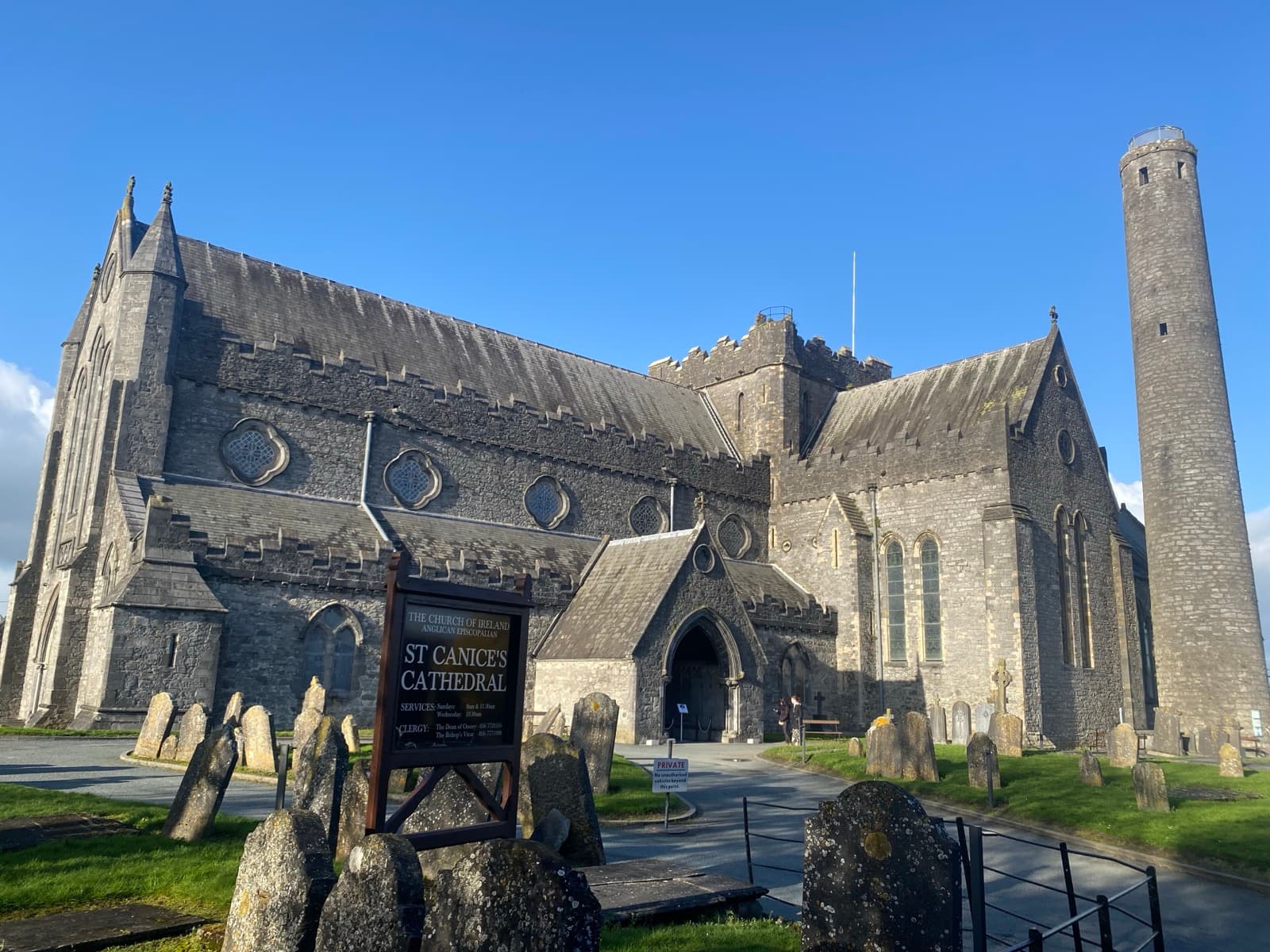
Saint Canice's Cathedral and the Round Tower: The Thousand-Year Church That Named the City
Most visitors treat a castle as the whole outing. On the Medieval Mile it is the first sentence of a longer story, and the rest of that story climbs gently uphill from the castle gates. The route runs seven stops over about two kilometres, and most people take two to two and a half hours, longer if they linger inside the rooms, the museums, and the cathedral.
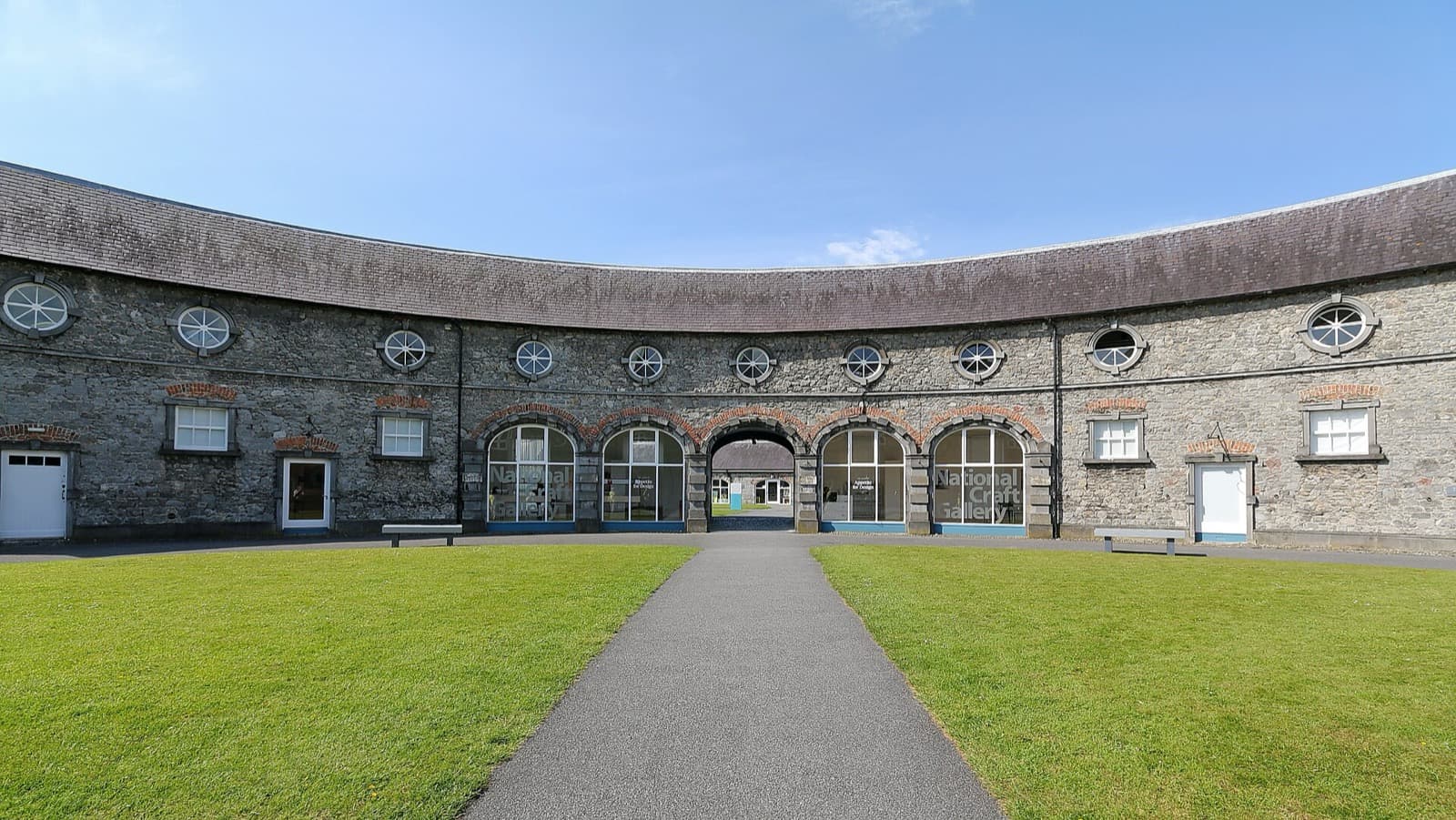
Cross the Parade, the broad ceremonial avenue laid out so that anyone approaching the Butlers arrived along a grand approach rather than a common lane, and you reach the castle's own crescent stableyard. Commissioned about seventeen ninety by the Duke of Ormonde for the estate's horses and carriages, it is one of Ireland's finest examples of Georgian service architecture, with circular windows and a copper-domed tower. Its second life matters as much as its first. In nineteen sixty-three the yard became home to the Kilkenny Design Workshops, described as the world's first government-supported national design initiative, and today it houses the National Design and Craft Gallery. The stables that once served the castle now serve makers.
The town the castle guarded
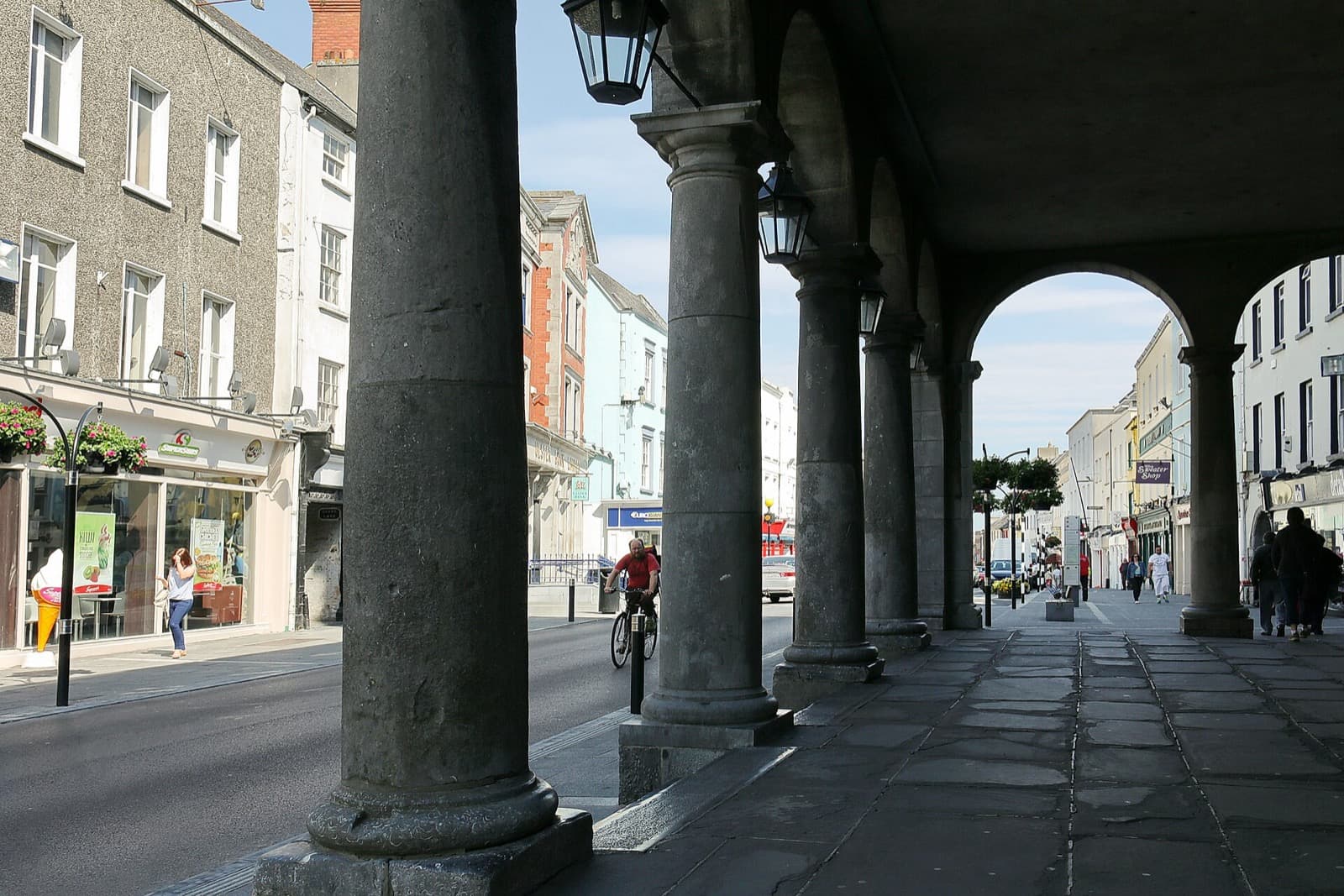
Climb toward the High Street and the story shifts from the lord to the townspeople who lived under him. The Tholsel, the arcaded old town hall and toll-house, was built in seventeen sixty-one on a civic site used since medieval times. This is where Kilkenny governed itself, held its markets under the open arcade, and guarded its charters. Among the city's records is the Liber Primus Kilkenniensis, the town's earliest surviving book, running from twelve thirty-one to fifteen thirty-eight and opening with an early thirteenth-century charter of William Marshal, first Earl of Pembroke, the same Marshal whose marriage built the castle. The charters were the town's independence made physical.
A little further stands Rothe House, a Tudor merchant complex built by John Rothe Fitz-Piers between fifteen ninety-four and sixteen ten. It is not one house but three, arranged around three cobbled courtyards, and it is described as Ireland's only surviving complete burgage plot, the full depth of a medieval town lot from street to garden. Rothe imported wool, silk, and wine and served as mayor. His house is frozen on the eve of the wars of the sixteen hundreds, when Kilkenny became the seat of the Confederation of Ireland and the city surrendered to Oliver Cromwell in sixteen fifty after a siege.
Just off the High Street, Saint Mary's, the citizens' parish church founded in twelve oh two, now holds the Medieval Mile Museum and one of Ireland's finest collections of medieval and Tudor carved tombs, including memorials of the Rothe, Archer, and Shee families. The living town of merchants turned into carved stone.
The church that named the city
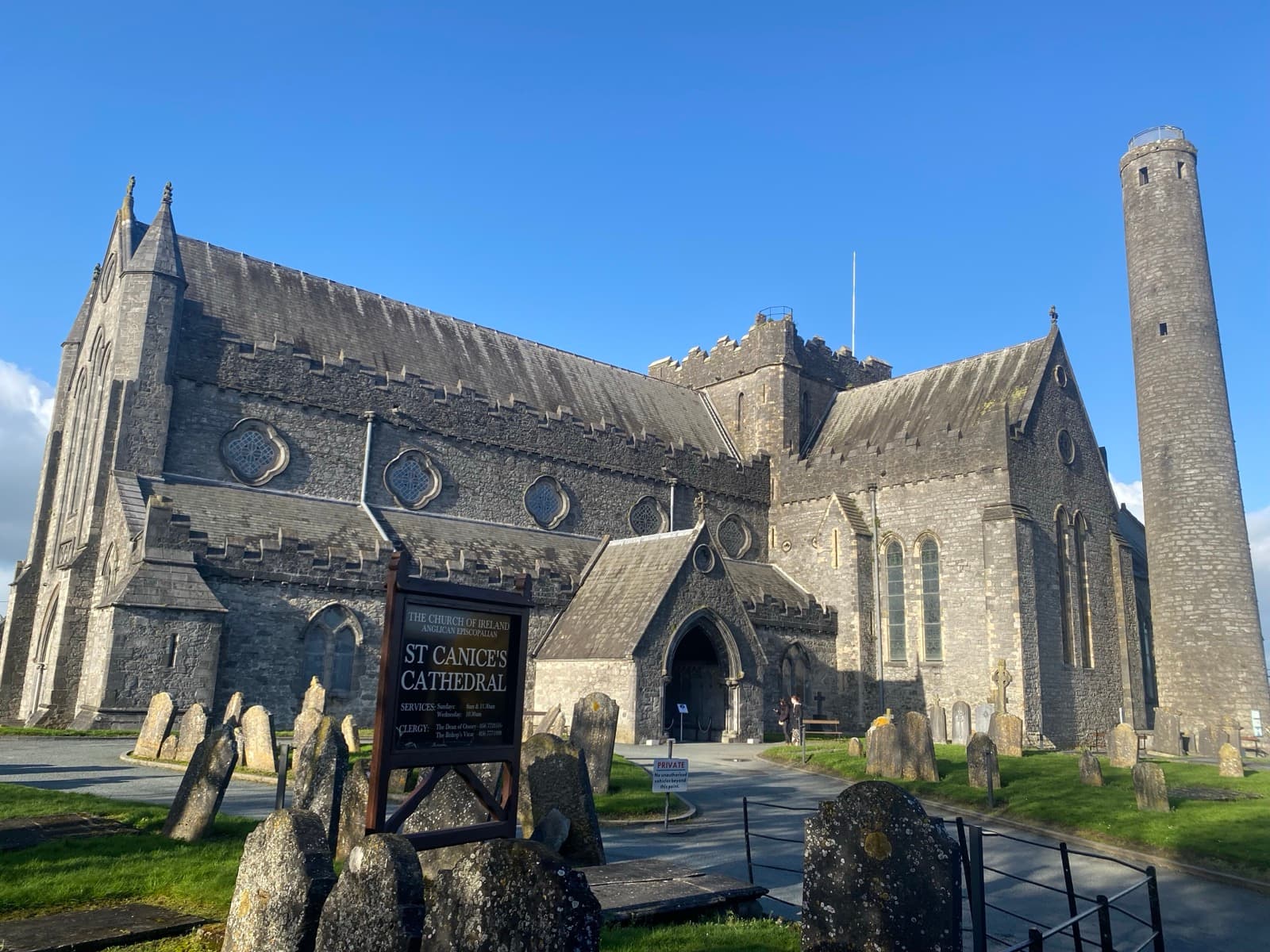
The Mile finishes where the story truly starts. On Abbey Street the Black Abbey, a Dominican priory founded in twelve twenty-five and named for the black cloaks its friars wore, survived suppression, a stint as a courthouse, and eventual restoration. Then, at the summit, Saint Canice's Cathedral, a Gothic church built roughly between twelve oh two and twelve eighty-five, stands on the site of the sixth-century monastery of Saint Canice. Canice, who lived from about five hundred and fifteen to six hundred, gave the city its name: the Irish Cill Chainnigh means simply the church of Canice.
Beside the cathedral stands a round tower about thirty metres high, dated to around the ninth century. It is the oldest standing structure in the city, older than the cathedral and older than the castle where you began. By the cathedral's own account it is one of only two round towers in Ireland that visitors can still climb, up one hundred and twenty-one steps.
That is the arc: the Butler castle on the Nore, the merchants and their charters, the citizens' church and its tombs, the friars suppressed and returned, and finally the sixth-century church that named the whole city. You can read it all at your own pace, lingering where it grabs you and passing lightly by what does not, with no group at your shoulder. If you want the fuller picture of the city first, browse the other Kilkenny walking tours or start from the Kilkenny city page, then let the castle gates be your stop one.
Sources
- Kilkenny Castle, Wikipedia: history of the de Clare, Marshal, and Butler ownership and the nineteen sixty-seven sale.
- Kilkenny Castle, Office of Public Works official site: current management, free grounds, and paid room access.
- Rothe House and Garden official site: the three-house merchant complex and Kilkenny Archaeological Society ownership.
- St Canice's Cathedral official site: the round tower climb, step count, and climbable-tower claim.
- The Tholsel, Kilkenny, Wikipedia and Kilkenny Archaeological Society: the civic building and the Liber Primus Kilkenniensis.
Ready to experience it?
The Medieval Mile: Castle to Cathedral
120 min · 2.3 km · moderate
More from Kilkenny
Explore more at your own pace.
Kilkenny Travel Guide: Days, Transport, Best Time, Safety, and Budget
One Day in Kilkenny: A Walkable Medieval Mile, Morning to Evening
Kilkenny: Ireland's Medieval Capital in a Single Mile
Kyteler's Inn and the Servant Who Burned in Kilkenny's Place
St Canice's Cathedral and Round Tower: The Hilltop Church That Named Kilkenny