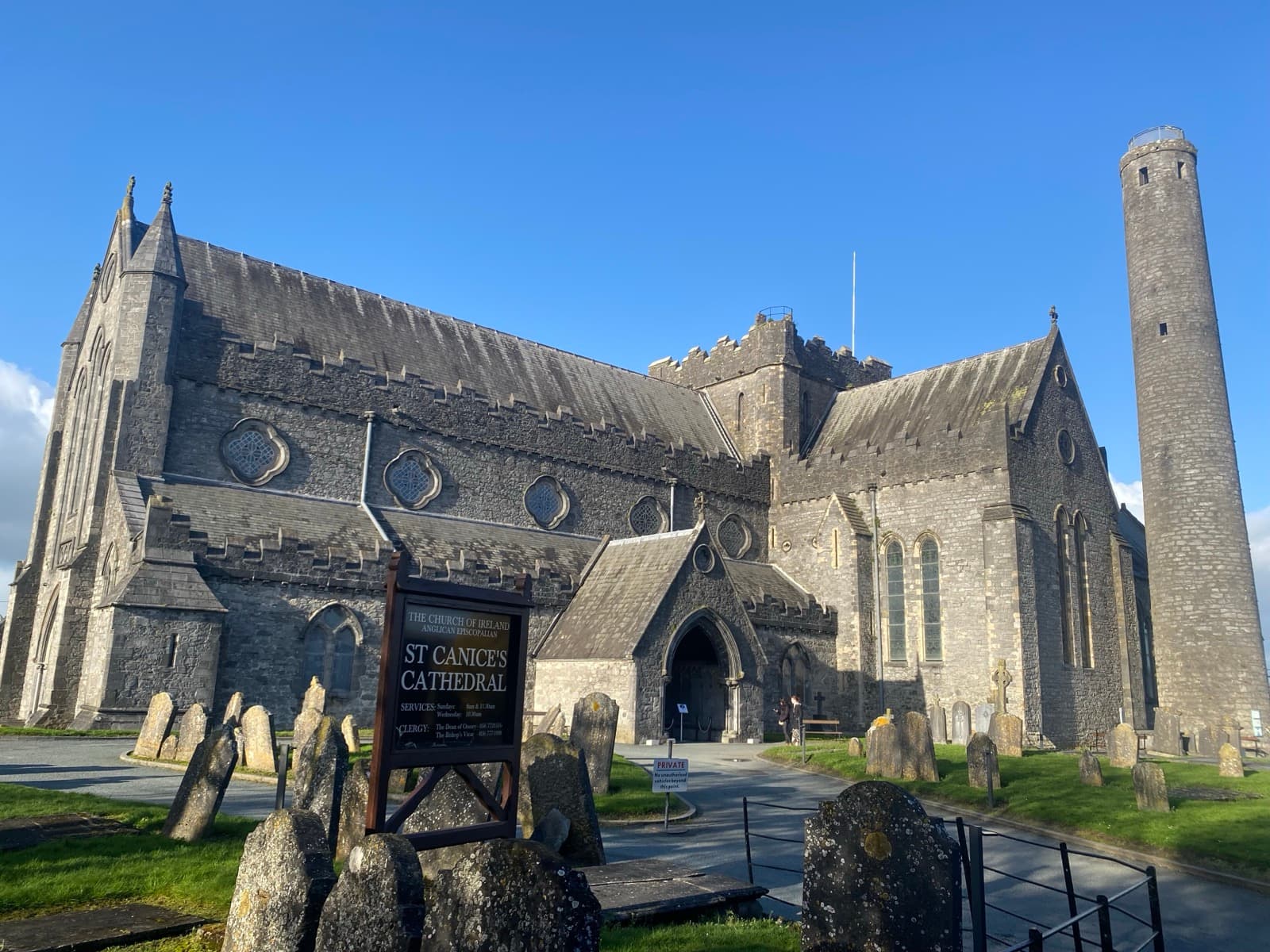
Read a thousand years of Ireland's finest medieval city end to end, from the Butler castle on the river Nore up the hill to the cathedral of Saint Canice and its ancient round tower, all at your own pace.
Start · Kilkenny Castle: The Butlers' Six Hundred Years Over the Nore
DirectionsStops
- 1
Kilkenny Castle: The Butlers' Six Hundred Years Over the Nore
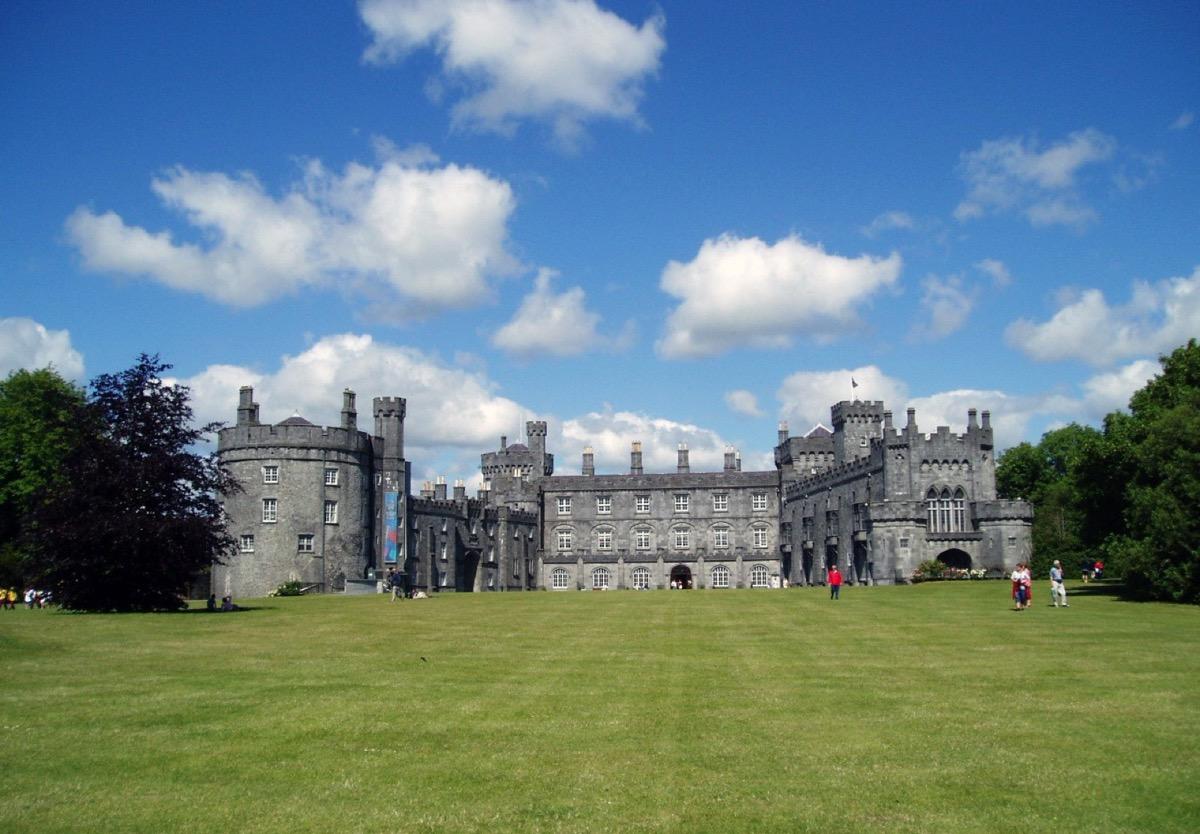
The great castle on its terrace above the river Nore, held by a single family for roughly six centuries before it passed to the people of Kilkenny.
- 2
The Parade and the Castle Stables: A Grand Approach and a Home of Irish Craft
The broad ceremonial street before the castle gates and the crescent Georgian stableyard opposite, now a home of Irish design and craft.
- 3
The Tholsel and High Street: Where the City Kept Its Charters and Rang Its Hours
The arcaded old town hall and toll-house on the spine of the Medieval Mile, where Kilkenny governed itself and guarded its charters.
- 4
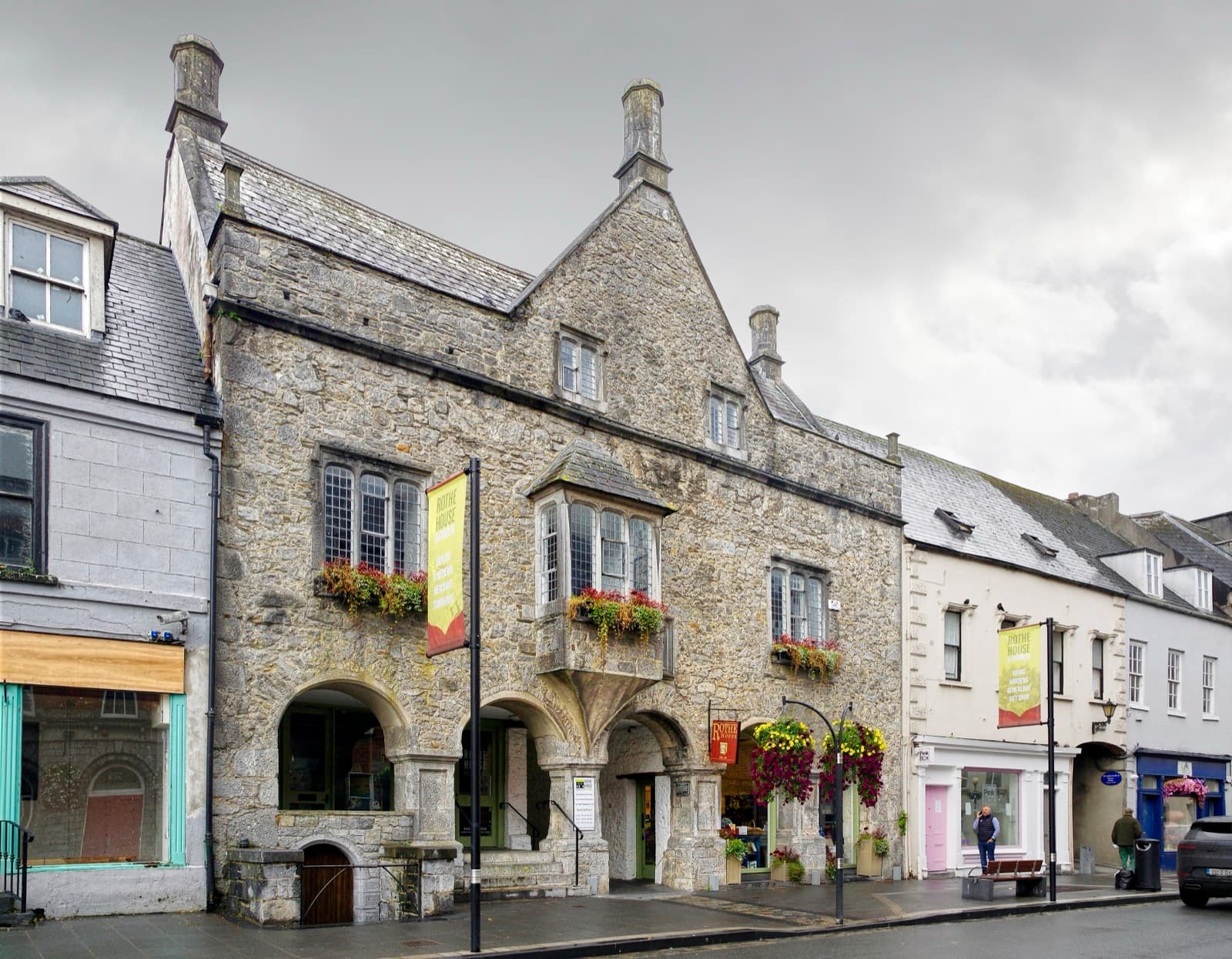
Rothe House: A Tudor Merchant's Three Homes, Frozen on the Edge of War
A rare Tudor merchant townhouse of three linked homes around cobbled courtyards, showing how a wealthy Kilkenny family lived on the eve of the wars of the sixteen hundreds.
- 5
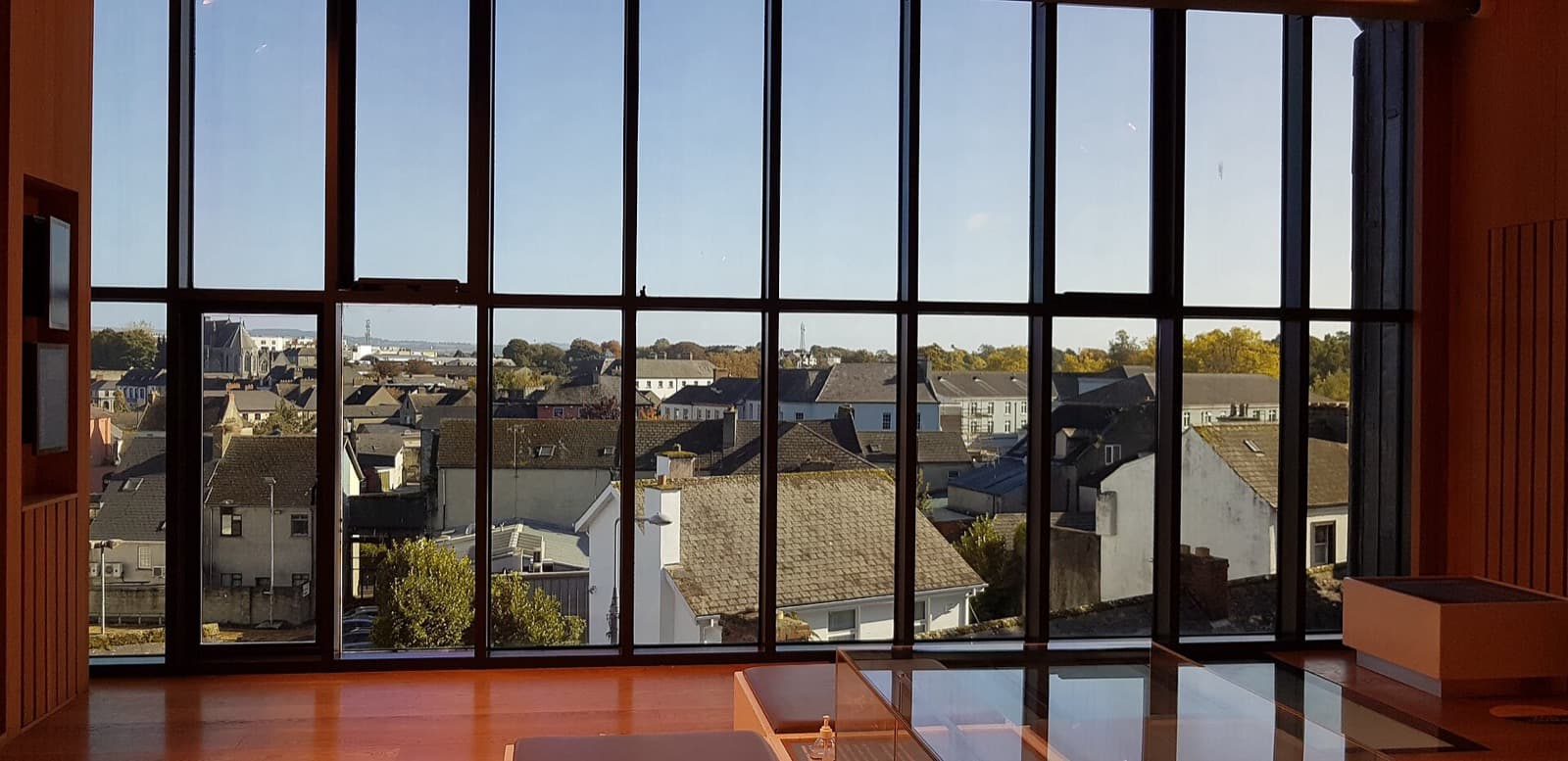
Saint Mary's Medieval Mile Museum: The Citizens' Church and Its Carved Tombs
The medieval parish church of the Norman town, now a museum holding the city's civic treasures and one of Ireland's finest collections of carved tomb monuments.
- 6
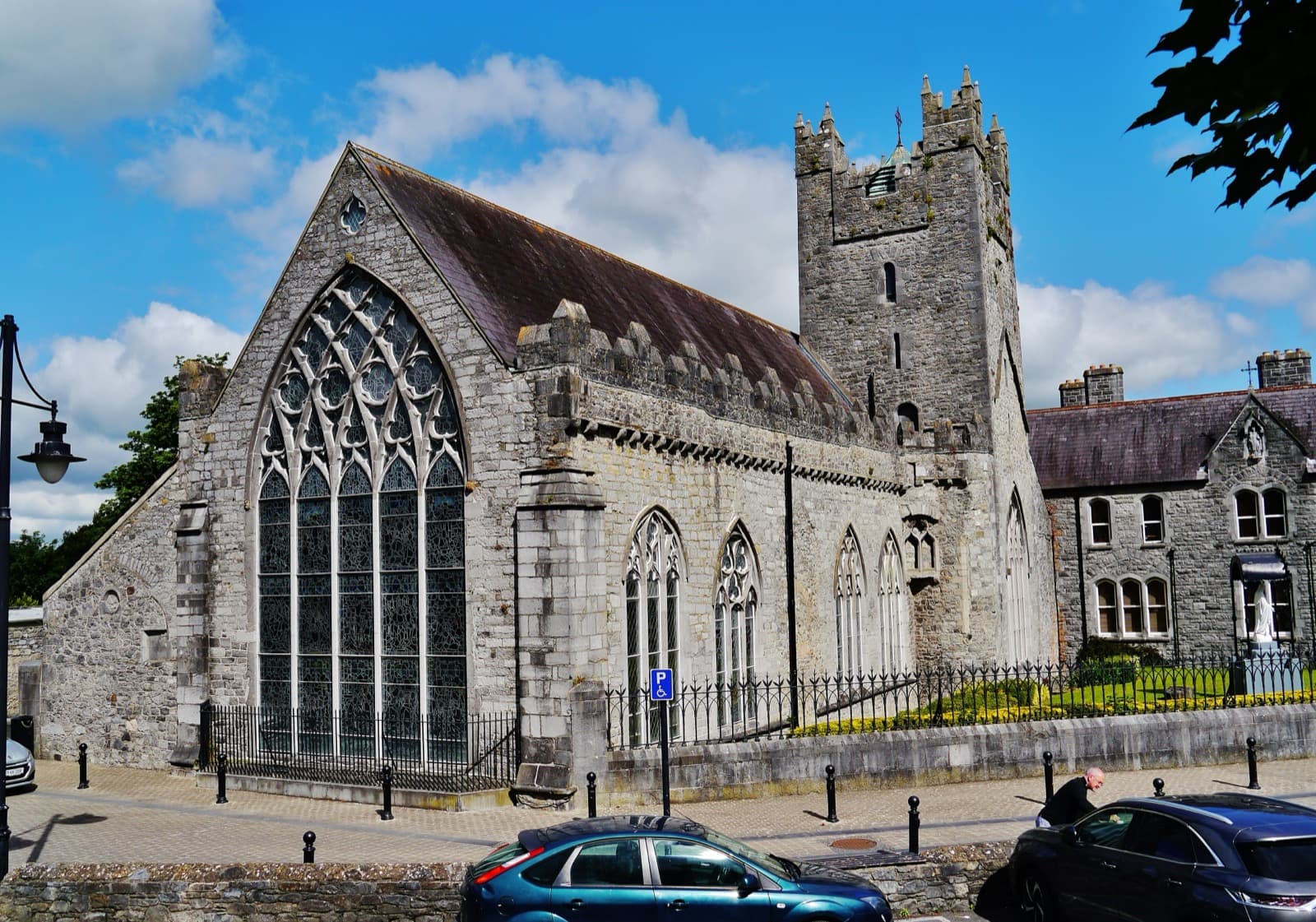
The Black Abbey: The Friary Suppressed, Made a Courthouse, and Given Back
A medieval Dominican priory named for the friars' black cloaks, suppressed at the Reformation, used as a courthouse, and eventually restored to religious life.
- 7
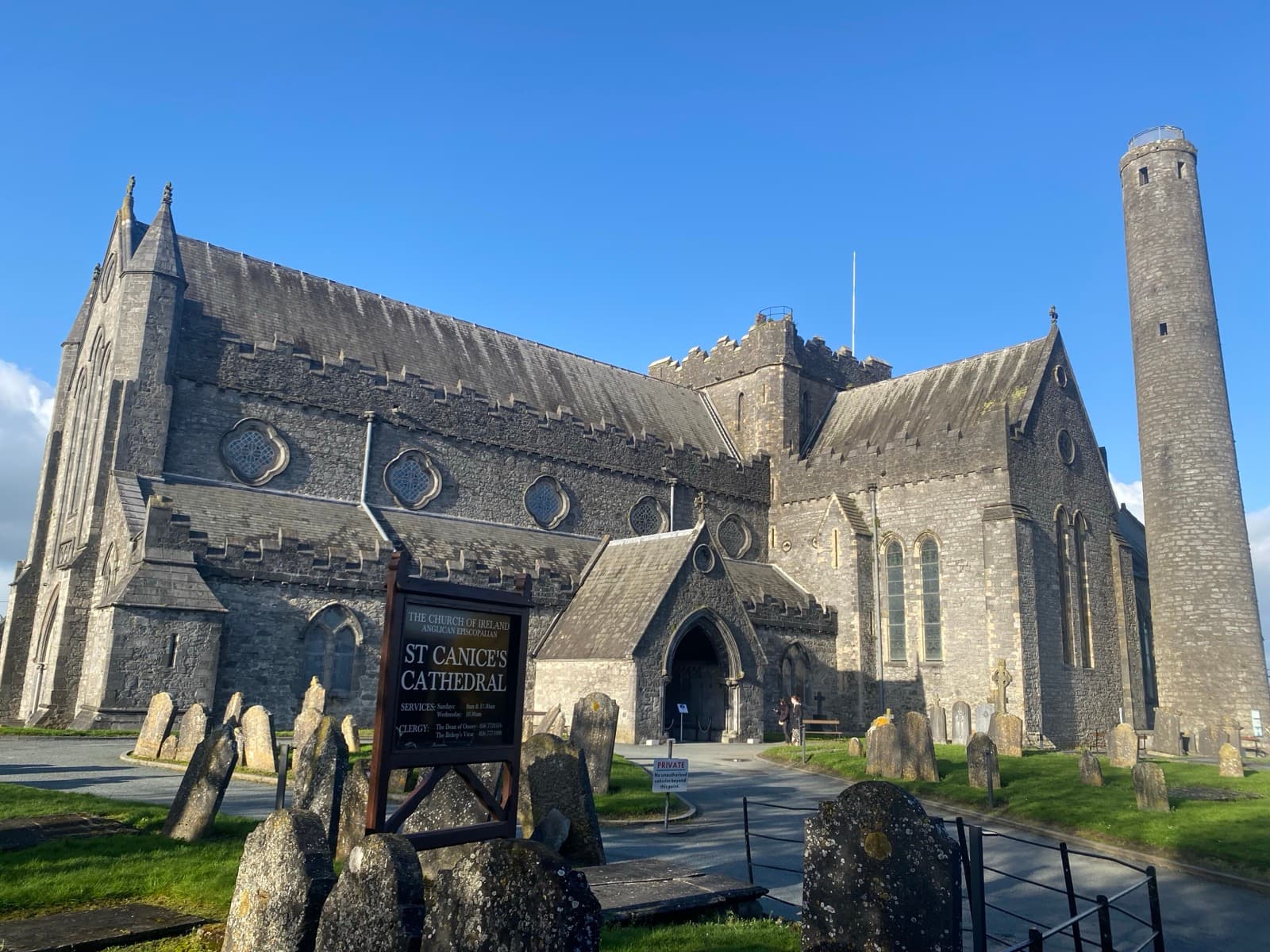
Saint Canice's Cathedral and the Round Tower: The Thousand-Year Church That Named the City
The hilltop cathedral built on the site of Saint Canice's sixth-century monastery, beside a ninth-century round tower, the oldest standing structure and the church that gave Kilkenny its name.
Details
Best Time to Visit
Late spring through early autumn, roughly May to September, gives the mildest weather and the longest daylight for the uphill walk, though Kilkenny is compact and rewarding year-round. Weekday mornings are quietest, before coach day-trippers and the guided walking groups fill the High Street and the castle grounds. Aim to reach Saint Canice's and the Black Abbey outside service times so you can move quietly through the interiors, and start early enough to leave the cathedral and round tower unrushed at the top of the hill.
Pro Tips
- •Do the Mile uphill as designed, from the castle to the cathedral, so the climb is gradual and the hilltop cathedral is your finish rather than a slog at the start.
- •The castle grounds and parkland along the river Nore are free to walk even if you skip the paid rooms, so build in time to wander the terrace above the water.
- •Carry a few euro in cash or a card: the castle rooms, Rothe House, the Medieval Mile Museum, and the round tower climb each charge a small entry fee, while the Black Abbey and the church exteriors are free.
- •If you want to climb Saint Canice's round tower, note it is one of only two climbable round towers in Ireland and involves one hundred and twenty-one steps on narrow internal ladders, so check access and allow extra time.
- •The narrow medieval lanes, known locally as slips, are the atmospheric shortcuts between streets, but several include steep steps, so take them slowly and use the main streets if steps are difficult for you.
- •You set the pace on this route, so linger where it grabs you, in the courtyards of Rothe House or the nave of Saint Canice's, and pass lightly by anything that does not, without a group or a schedule to keep.
Safety & Precautions
- •The Medieval Mile rises gently from castle to cathedral and several of the connecting slips include steep, uneven steps, so wear sturdy shoes and take the stepped lanes carefully, especially in wet weather.
- •Saint Canice's Cathedral and the Black Abbey are active places of worship, so keep your voice low, be respectful during any services, and treat the carved tombs and the displayed remains in the Medieval Mile Museum with quiet dignity rather than as spectacle.
- •Irish weather is changeable at any time of year, so carry a waterproof and expect rain, and note that the round tower climb and some open sections may close in bad conditions.
- •Keep valuables discreet on the busier stretches of the High Street and around the castle grounds, and remember that the castle rooms, museums, and the round tower climb charge entry in euro.
Travel advisory: Exercise Normal Precautions (Level 1).
Gallery
Related Reading
Go deeper on what you'll see, hear, and walk through.
Overview
Best Self-Guided Walking Tours in Kilkenny (2026)
3 min
Overview
Kilkenny Travel Guide: Days, Transport, Best Time, Safety, and Budget
7 min
Overview
One Day in Kilkenny: A Walkable Medieval Mile, Morning to Evening
7 min
Thematic
Best History Walking Tours in Kilkenny (2026)
2 min
Thematic
Kilkenny: Ireland's Medieval Capital in a Single Mile
7 min
Companion
Kilkenny Castle and the Medieval Mile: One River Crossing, One Family, Six Hundred Years
6 min
Deep dive
St Canice's Cathedral and Round Tower: The Hilltop Church That Named Kilkenny
7 min
Read
What to Eat in Kilkenny: Red Ale, Lamb Stew, Farmhouse Cheese, and River Trout
7 min
Read the walk
The full story of The Medieval Mile: Castle to Cathedral, in words. Prefer to listen? Play it narrated, from home or on location.
Introduction
Kilkenny holds a whole medieval world inside a single walkable mile, and this tour reads it from one end to the other. In this compact city in the southeast of Ireland, a church of Saint Canice and a castle of the Anglo-Norman Butlers grew together above the river Nore, and for roughly six centuries the Butler family, Earls and later Dukes of Ormond, held the place as their own. In the sixteen forties Kilkenny even became the seat of the Confederation of Ireland, briefly the effective capital of the country. This route runs seven stops over about two kilometres, and most people take about two to two and a half hours, longer if you linger inside the castle rooms, the museums, and the cathedral. The way is a continuous walk on foot, gently uphill from the castle terrace to the cathedral hilltop, on pavement and old lanes, with some steps along the medieval slips. That is the whole point of doing it this way: your pace, your route, your quiet map, no group at your shoulder and no schedule pressing you along. Linger in the nave of Saint Canice's or the cobbled courtyards of Rothe House as long as you please, then move on when you are ready. From the lordly castle, up the High Street past the arcaded old town hall and a Tudor merchant's house, by a citizens' church and the friars' Black Abbey, to the cathedral that named the city. When you arrive at the front gates of Kilkenny Castle on the Parade, begin with stop one.
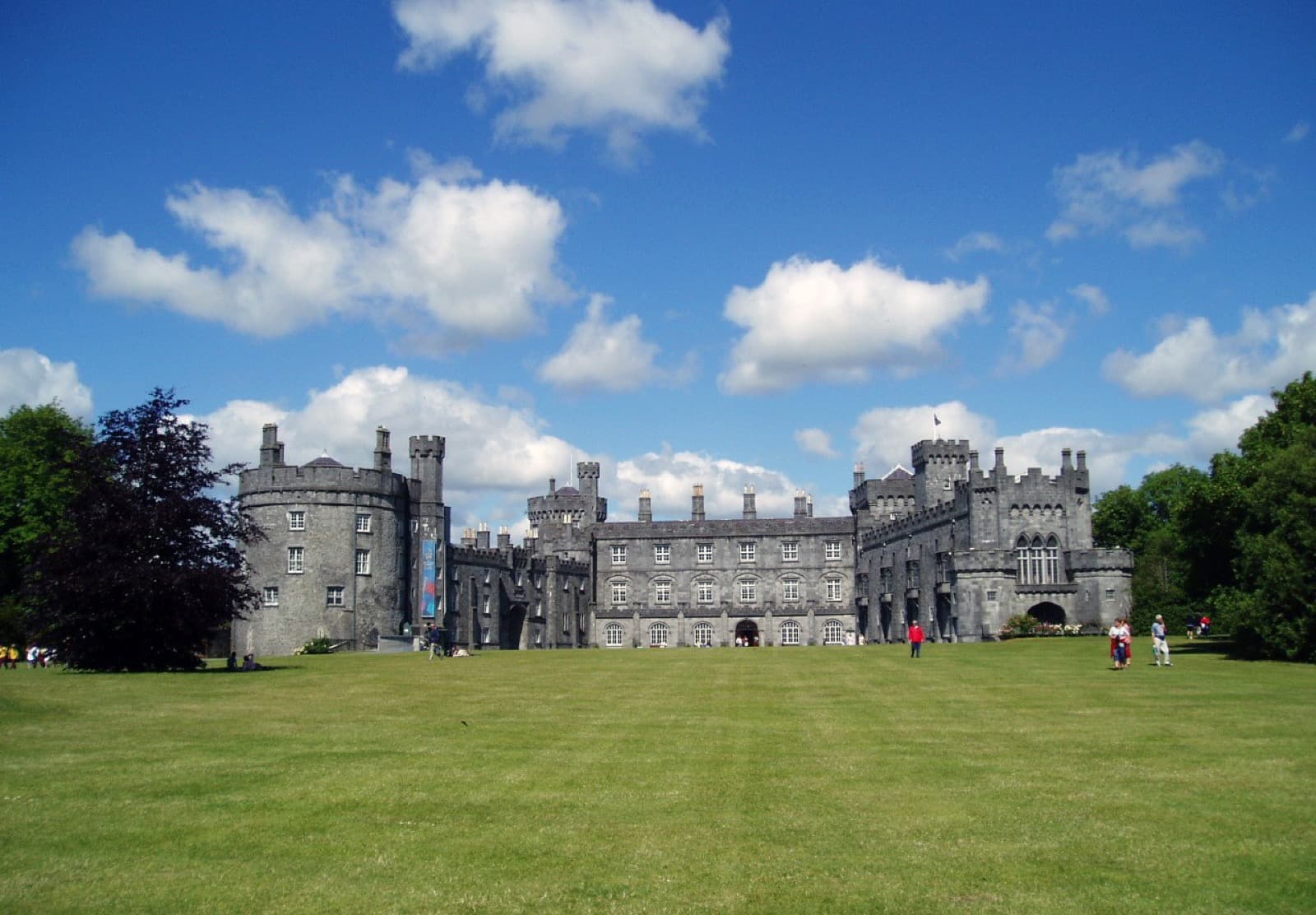
1. Kilkenny Castle: The Butlers' Six Hundred Years Over the Nore
Above the river Nore, on a terrace that has commanded this crossing since the twelfth century, stands the castle that anchors the whole Medieval Mile. The first castle here was a wooden one, raised by the Anglo-Norman lord Richard de Clare, known as Strongbow. The stone castle that grew after him owed its major development to William Marshal, who married Strongbow's daughter Isabel in eleven eighty-nine and drove the building forward. That great stone castle, square in plan with a large round tower at each corner, was completed about twelve sixty. In thirteen ninety-one the castle was bought by James Butler, and from then the Butler family, the Earls and later Dukes of Ormond, held it for roughly six hundred years. Think about that span: one family over one river crossing, from the end of the fourteenth century all the way to the twentieth. Three of the four original round towers still stand today. The Butler hold finally ended in nineteen sixty-seven, when Arthur Butler, the sixth Marquess of Ormonde, sold the castle for fifty pounds to a local restoration committee, in effect handing it to the people of Kilkenny. The Office of Public Works, which manages the castle today, keeps the grounds and parkland open to walk for free, while the formal rooms are shown on paid entry, only a few euro. You set the pace here. Wander the parkland along the Nore, then decide for yourself whether to go inside. There is no group to keep up with and no timed slot to catch. When you are ready, the Medieval Mile climbs on from the castle gates, and stop two waits just across the way.
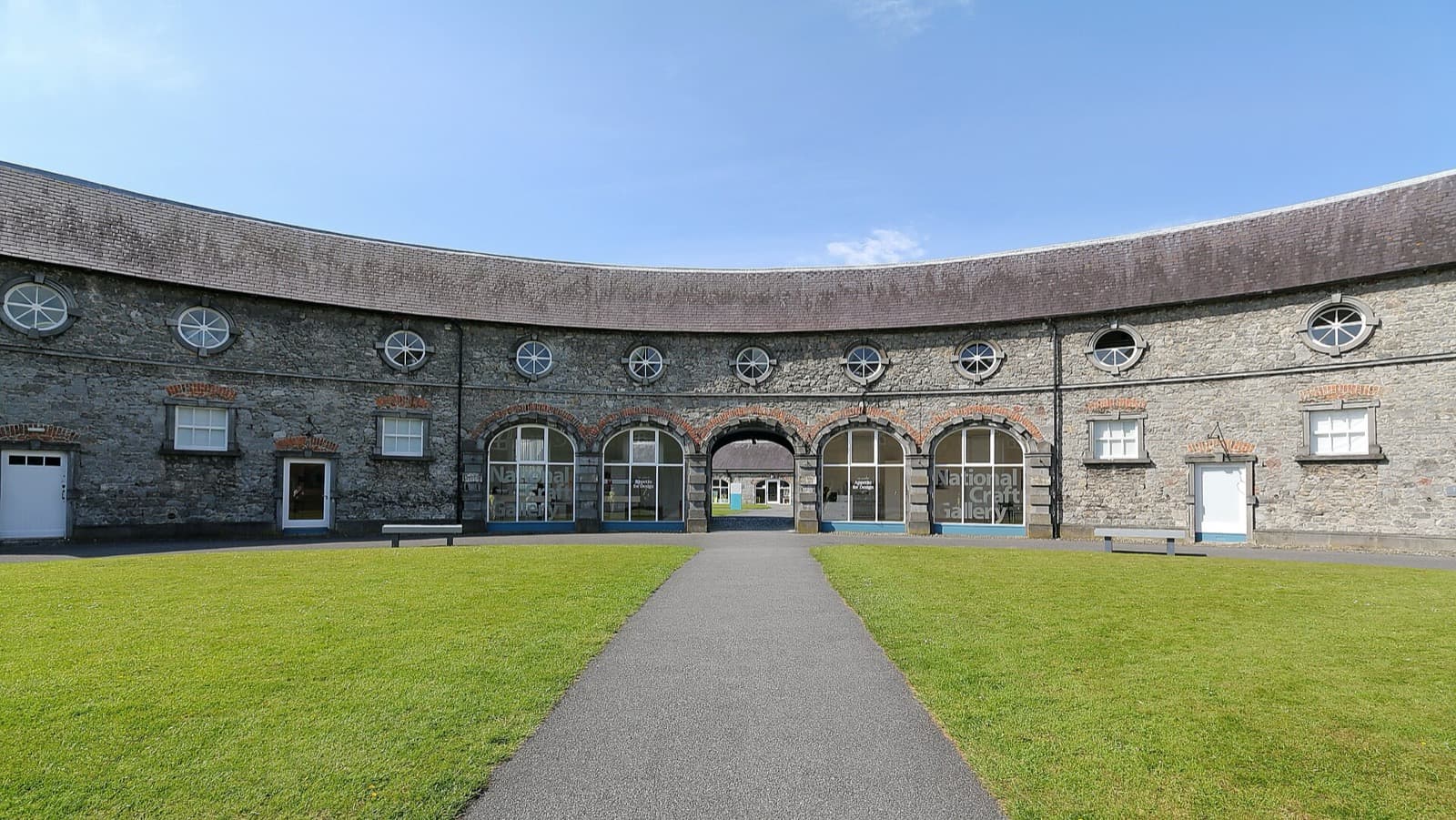
2. The Parade and the Castle Stables: A Grand Approach and a Home of Irish Craft
The broad, formal street stretching out before the castle gates is the Parade, laid out as a ceremonial approach so that anyone coming to the Butlers' seat arrived along a grand avenue rather than a common lane. Directly opposite the castle stands its former stableyard, and it is worth a slow look. This is a crescent-shaped stone stableyard with coach houses, commissioned about seventeen ninety by the Duke of Ormonde to house the castle's horses, carriages, and grooms. Notice the distinctive circular windows and the copper-domed tower: this is one of Ireland's finest surviving examples of Georgian service architecture, the working half of a great estate built with as much care as the house it served. The story did not end when the horses left. In nineteen sixty-three this yard became home to the Kilkenny Design Workshops, described as the world's first government-supported national design initiative, which ran until nineteen eighty-eight. Today the Castle Yard is home to the National Design and Craft Gallery, run by the Design and Crafts Council Ireland, and the whole place carries forward Kilkenny's long identity as a centre of Irish craft and design. So this single spot holds two chapters at once: the grand approach to a lordly castle, and the stables that became a home for makers. Take your time crossing between them. There is no schedule here, no guide waving you onward, just the width of the Parade and the curve of the old stables to read at whatever pace suits you. When you are ready, the Medieval Mile turns up toward the High Street, and stop three.
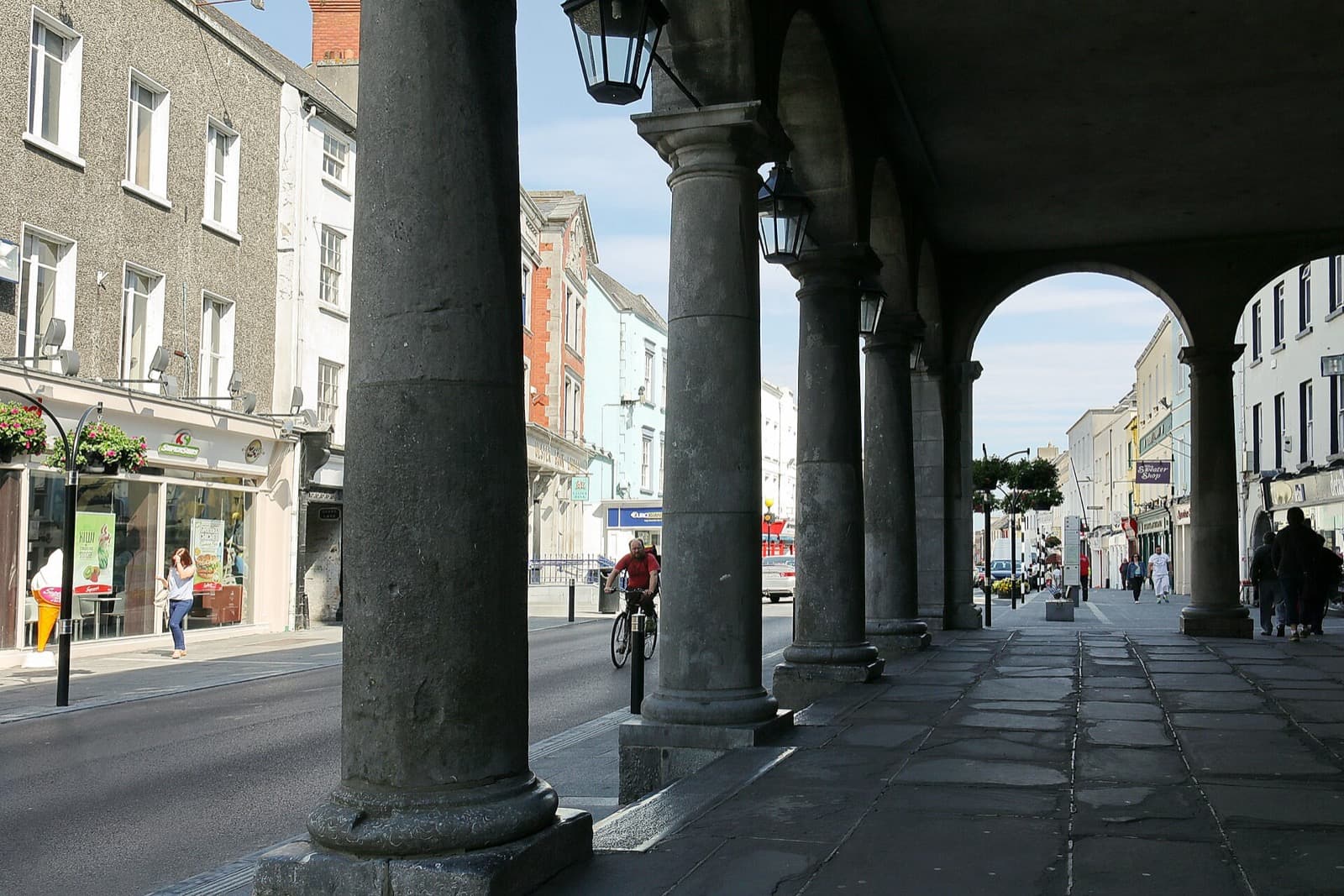
3. The Tholsel and High Street: Where the City Kept Its Charters and Rang Its Hours
You are now on the High Street, the spine of the Medieval Mile, and the building straddling the pavement with an open arcade is the Tholsel, the old town hall and toll-house. It was built in seventeen sixty-one, commissioned by the borough council under Alderman William Colles, on the site of earlier tholsels: a Renaissance-style one had stood here from fifteen seventy-nine, and medieval ones before that. This is where Kilkenny governed itself. Neoclassical and five bays wide, it carries an open ground-floor arcade over the pavement, where markets were once held, an assembly room above, and an octagonal, copper-clad clock cupola on top. Over the centuries it served as toll house, customs house, courthouse, and guildhall, and today it holds the city's municipal archives. Among the civic records historically tied to the city is the Liber Primus Kilkenniensis, the town's earliest surviving book, its proceedings running from twelve thirty-one to fifteen thirty-eight; it opens with an early thirteenth-century charter of William Marshal, first Earl of Pembroke, granting the burgesses their liberties. Consider what such records meant to a medieval and early-modern city: this is where a town proved, in writing, that it had the right to govern itself, to hold markets, to keep its own liberties. The charters were the city's independence made physical, and the clock above rang the hours for everyone below. Stand under the arcade for a moment and take that in. This is a place you can simply pause at, on your own clock, with no group crowding the pavement and no one hurrying you toward the next thing. When you are ready, keep going up the High Street and toward Parliament Street, and stop four.
4. Rothe House: A Tudor Merchant's Three Homes, Frozen on the Edge of War
On Parliament Street stands one of the finest survivals of Tudor Ireland: Rothe House, a merchant townhouse complex built by John Rothe Fitz-Piers between fifteen ninety-four and sixteen ten. It is not one house but three, built in fifteen ninety-four, sixteen oh four, and…
Full narration for this stop unlocks with the tour.
5. Saint Mary's Medieval Mile Museum: The Citizens' Church and Its Carved Tombs
Just off the High Street stands Saint Mary's, once the parish church of the medieval Norman High Town. It was founded in twelve oh two, supported by the merchants of the town, and its tower was added in thirteen forty-three. This was the citizens' church, the place where the…
Full narration for this stop unlocks with the tour.
6. The Black Abbey: The Friary Suppressed, Made a Courthouse, and Given Back
On Abbey Street stands the Black Abbey, a Dominican priory founded in twelve twenty-five by William Marshal the younger, second Earl of Pembroke. It was one of the first Dominican houses in Ireland, dedicated to the Holy and Undivided Trinity, and it sat just outside the…
Full narration for this stop unlocks with the tour.
7. Saint Canice's Cathedral and the Round Tower: The Thousand-Year Church That Named the City
At the top of the hill the Medieval Mile reaches its origin: Saint Canice's Cathedral. This Church of Ireland cathedral was built roughly between twelve oh two and twelve eighty-five, a great Gothic church raised over more than eighty years. But the site is far older. It stands…
Full narration for this stop unlocks with the tour.