The images most people carry of the end of the Vietnam War are images of chaos: a helicopter on a rooftop, a ladder crowded with people, a city coming apart. So the first thing to understand about walking Saigon's last day is a fact that runs against that memory. On the morning of April 30, 1975, the city changed hands in a matter of hours, and it did not burn. Saigon survived almost whole. That is the counter-intuitive truth at the center of this walk, and it is not a footnote. It is the reason the walk is possible at all. The palace where the war ended, the museum that holds its evidence, the plazas people crossed on their way to work, and the hotels where the world's press filed the news are all still standing, because the ending they witnessed was, in the end, remarkably quiet.
This is a walk to take calmly and without triumph, honoring the dead of every side. The register the audio keeps is deliberately plain, and this companion keeps it too. What follows is not a verdict on the war. It is an account of where its last morning actually happened, and why so much of it is still legible on the ground.
The gate, and the hour
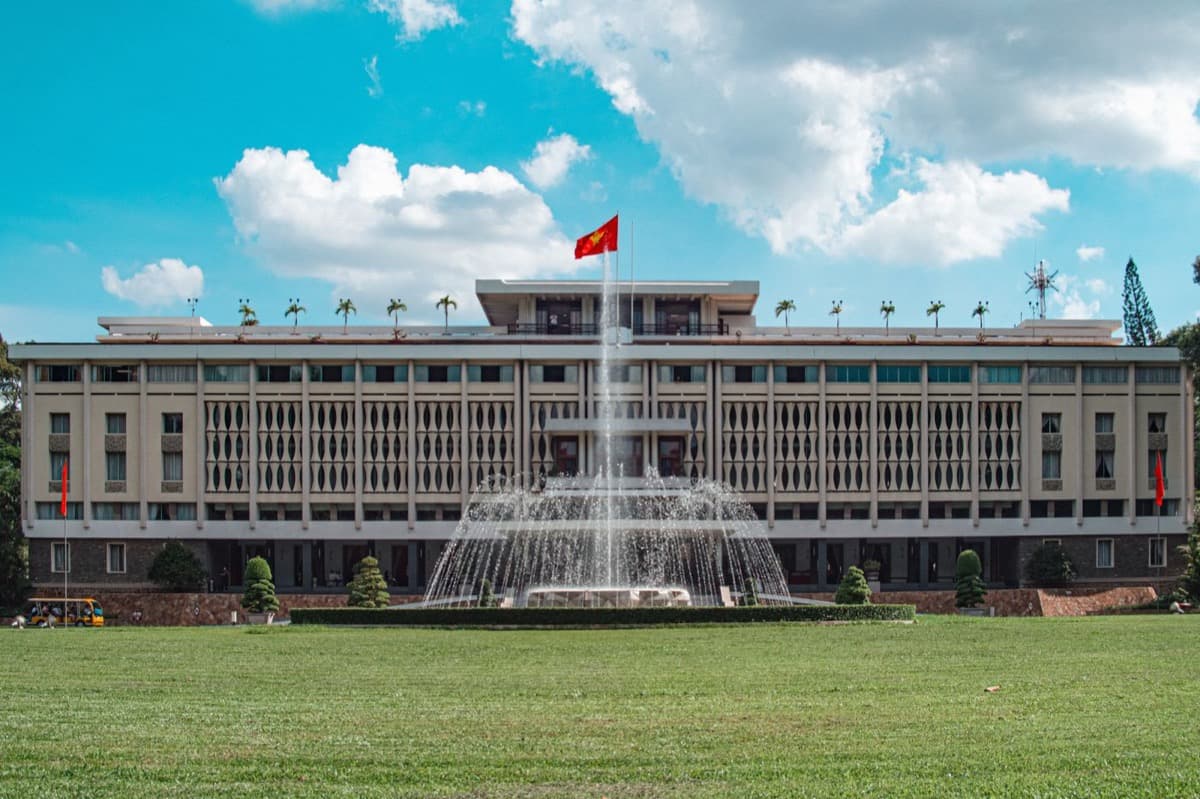
Begin at the Independence Palace, also called the Reunification Palace, a modernist building designed by the Vietnamese architect Ngo Viet Thu, who had won the Grand Prix de Rome in 1955. It was built between 1962 and 1966 as the home and office of the president of the Republic of Vietnam, the country the world called South Vietnam. At about a quarter to eleven on the morning of April 30, 1975, a tank of the North Vietnamese army broke through the palace gate, and with that the war was over.
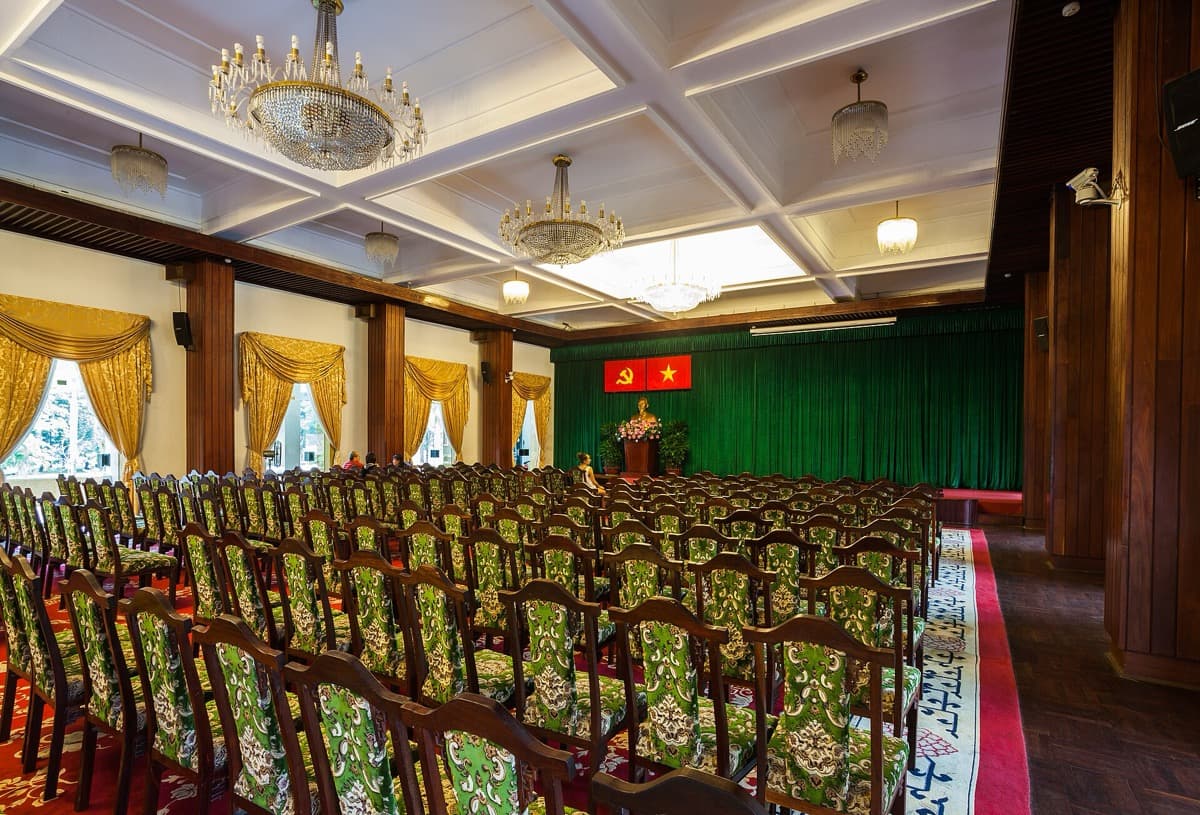
What makes this building rare is that it was kept almost exactly as it was that morning: the war command rooms, the rooftop helipad, the 1960s furnishings, all preserved. The last president, Duong Van Minh, who had held office only since April 28, waited inside and then surrendered. Walking those plain, dated rooms carries the weight better than any monument could. The single object at the heart of that morning, the tank, has a story worth telling on its own, and you can read it in The Last Morning: What Happened at Independence Palace.
The evidence, and the honesty of walking it
Hear a stop from this walk
Former US Embassy Site: The Empty Roof
A short walk northwest is the War Remnants Museum, which opened on September 4, 1975, only months after the war ended. Its name has changed with the times, from an openly propagandistic title in 1975 to the neutral War Remnants Museum in 1995, the same year the United States and Vietnam normalized relations. The museum documents the human cost of the war and does not soften it: halls on Agent Orange and the chemical defoliants and their effects, on the My Lai massacre, and reproductions of the tiger cage cells, with captured American aircraft and armor in the courtyard.
It is fair to say the museum tells the war largely from one country's point of view. It is also fair to let the objects speak for the losses that every side carried home. Roughly two-thirds of its visitors come from outside Vietnam, which means people from many nations, including the one whose aircraft sit in the yard, walk these halls each day. Give the stop at least an hour, step out to the courtyard when you need air, and do not rush it. The walk is honest partly because it refuses to look away here.
A deliberate breath
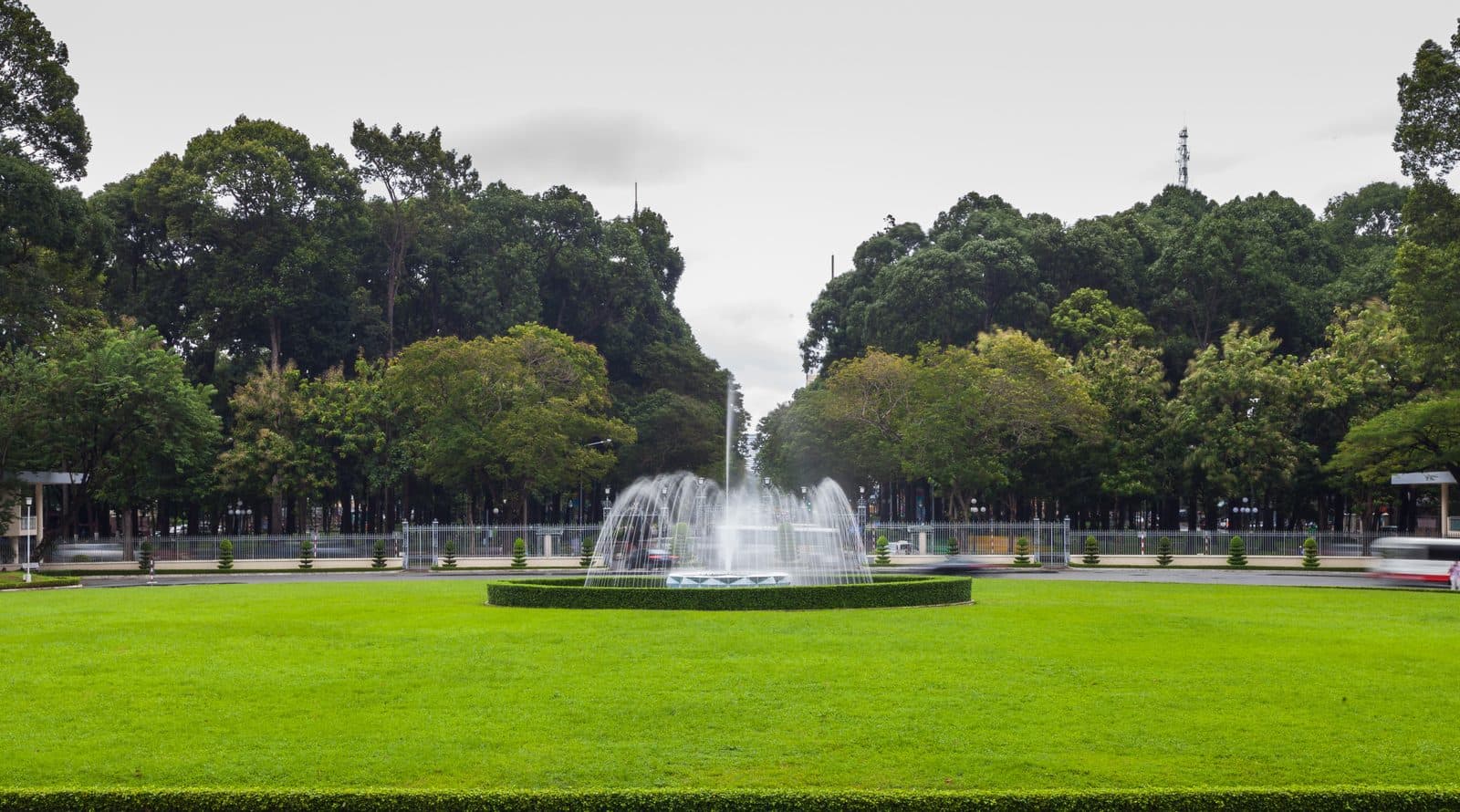
After the museum, the walk uses Turtle Lake, Ho Con Rua, as a genuine rest, and the choice is more than practical. This modernist fountain plaza in District Three was unveiled in 1969, designed by the architect Nguyen Ky, on a spot that has been reworked for over a century: a French water tower in the 1870s, a small lake and monument in the 1920s, and finally this late-1960s plaza. It is an ordinary landmark from the last years of the old republic, the kind of corner people passed on their way to work in the Saigon of that era. Today students and young couples gather on its steps in the evening. You are standing in a piece of the everyday city that outlived the government that built it, which is, quietly, the theme of the entire walk.
The empty roof, and the myth worth correcting
Next is the site of the former United States Embassy, whose chancery stood here from 1967 to 1975. Two moments made it famous. During the Tet Offensive, before dawn on January 31, 1968, a small commando team attacked the compound. The assault failed in military terms, but the sight of fighters inside the embassy grounds shocked American opinion and helped turn the public against the war. The second moment was the end. On April 29 and 30, 1975, this was a center of Operation Frequent Wind, the helicopter evacuation of the city, which carried roughly seven thousand people out by air, the largest helicopter evacuation in history. The last embassy helicopter lifted off at about 7:53 in the morning of the thirtieth.
Here is the myth worth correcting, and it belongs to this walk the way the Eiffel myth belongs to the post office. The famous photograph of civilians climbing a ladder to a helicopter, taken by Hubert van Es, was not shot on the embassy roof at all. It was made at a nearby apartment building at 22 Gia Long Street. The chancery was demolished in 1998, and a United States Consulate General stands on the grounds today. The point that reorganizes the whole memory is this: the famous helicopter departed the day before the tanks arrived. The war did not end here in fire. It ended in an eerie quiet.
The calm witness, and where the news was filed
The walk passes the Notre-Dame Cathedral square, a fixed point that stood through French colonial rule, through the years of the republic, through the morning the tanks came, and through everything after. The building did not take a side. It simply kept standing, which is its own kind of testimony, and it is the same cathedral that stands at the head of the colonial walk described in Empire in Stone.
It ends where the news of the ending was written. The Hotel Continental, opened in 1880 and the oldest hotel in the city, held the Time and Newsweek bureaus during the war, which means much of what the world read about Saigon was written a few steps from its terrace. A short walk away, the Rex Hotel, converted in the late 1950s from a 1927 car dealership, hosted the United States military command's daily press briefings on its rooftop, mocked by reporters as the Five O'Clock Follies for the gap between the official war and the one they saw in the field. This is where the world watched a republic fall and told the story to everyone else.
What the walk finally says
One Vietnam ended that April morning and another began. The walk does not celebrate that and does not mourn it. It simply shows you that the city survived to hold the memory, and asks you to walk it plainly. For the wider frame of how this downtown fits together, across empire, commerce, and war, start with How to See Saigon. The same streets carry three centuries at once. The last day of the war is only the layer that is quietest, and the easiest to walk past without noticing it is there.
Ready to experience it?
Reunification Palace: The Last Day
140 min · 5 km · moderate
More from Ho Chi Minh City
Explore more at your own pace.
Ho Chi Minh City Travel Guide: How Many Days, Getting Around, When to Go (2026)
One Day in Ho Chi Minh City: A Walkable Saigon Itinerary (2026)

What to Eat in Ho Chi Minh City: A Saigon Food Guide (2026)
Empire in Stone: How Saigon Kept the Buildings and Changed Their Meaning
The City Beside the City: Reading Cho Lon's Assembly Halls