Old Quarter: The Thirty-Six Streets
90 min · 2.4 km · easy
Hanoi is small enough to mislead you. The lake at its center, Hoan Kiem, is a fifteen-minute walk end to end. The Old Quarter above it is a few dozen narrow streets. The French boulevards below it fan out over a district you could cross in half an hour. On a map the historic core looks like one modest, walkable town, and a visitor with a single afternoon can be forgiven for treating it as a museum where everything sits in the same wing.
It is not one town. It is a thousand years of capital stacked on a single stretch of ground, and the trick to reading it is to stop looking for one Hanoi and start reading the layers. In the year 1010 the emperor Ly Thai To moved his capital to this bend of the Red River and named it Thang Long, the ascending dragon. For most of the millennium that followed this was the seat of Vietnamese power. The city marked its thousandth birthday with ten days of ceremony in October 2010. And yet, for long stretches of the twentieth century, most of that thousand years lay out of sight, buried under parks and government buildings, its palaces literally underground.
That is the single idea that unlocks the city. Hanoi kept being built on top of itself, and the most important layer is almost always the one you cannot see. Once you notice it, you cannot stop.
Three walks, one thousand-year ground
Roamer's three Hanoi tours are not three different cities. They are three ways of reading the same ground, and each one cuts the layers at a different angle.
The first angle is vertical, and it goes down. The Buried Capital climbs the imperial strata of Thang Long in order, oldest first, from an eleventh-century temple that made scholars to the square where a new nation was declared. Its pivot is an accident: in 2002, workers digging near a new National Assembly building struck buried palace foundations layered through the Ly, Tran, Le, and Nguyen dynasties. The lost capital had been under the parkland the whole time. UNESCO inscribed the citadel's central sector as a World Heritage Site in 2010. This is the deepest layer, and the one modern Hanoi very nearly forgot it was sitting on.
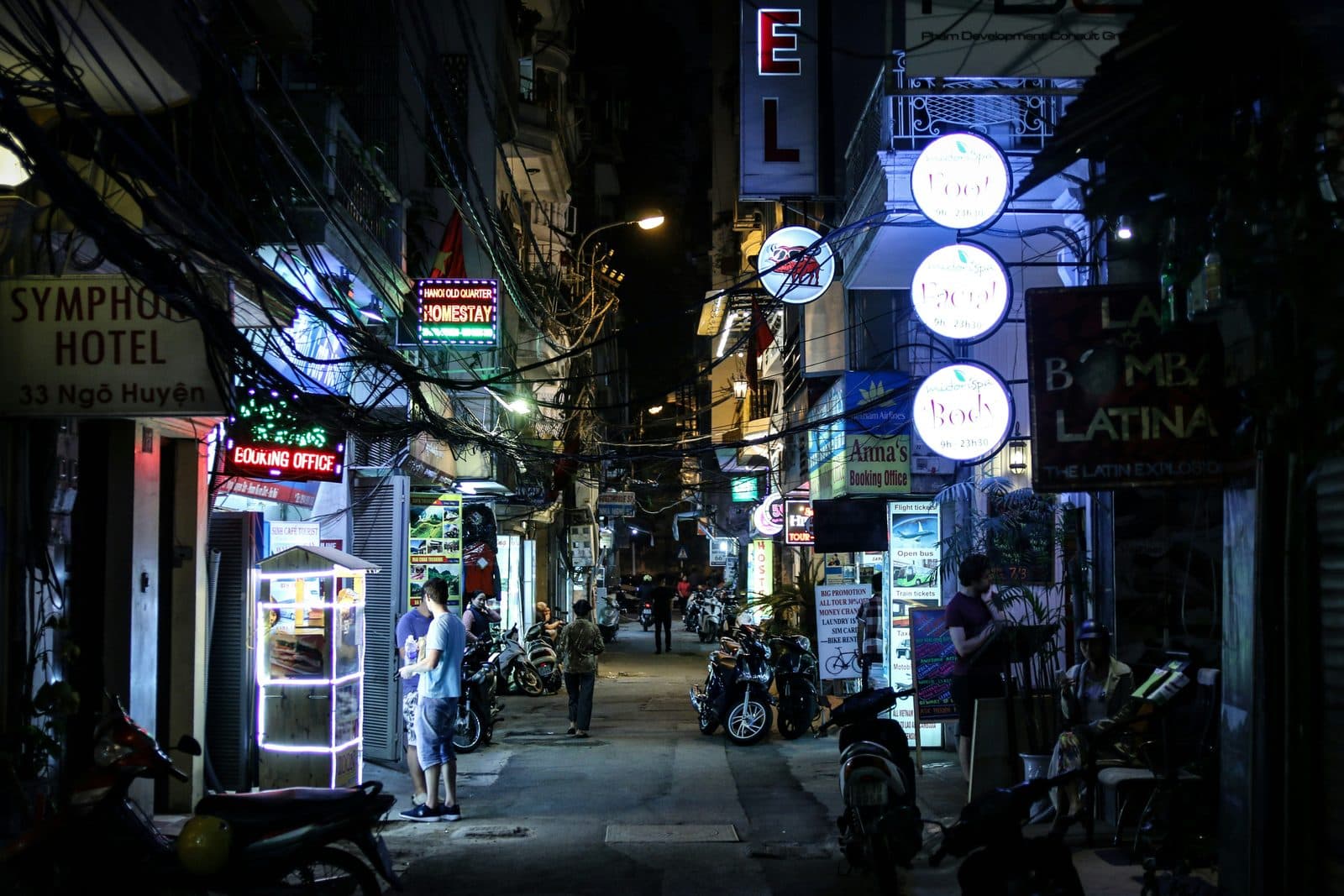
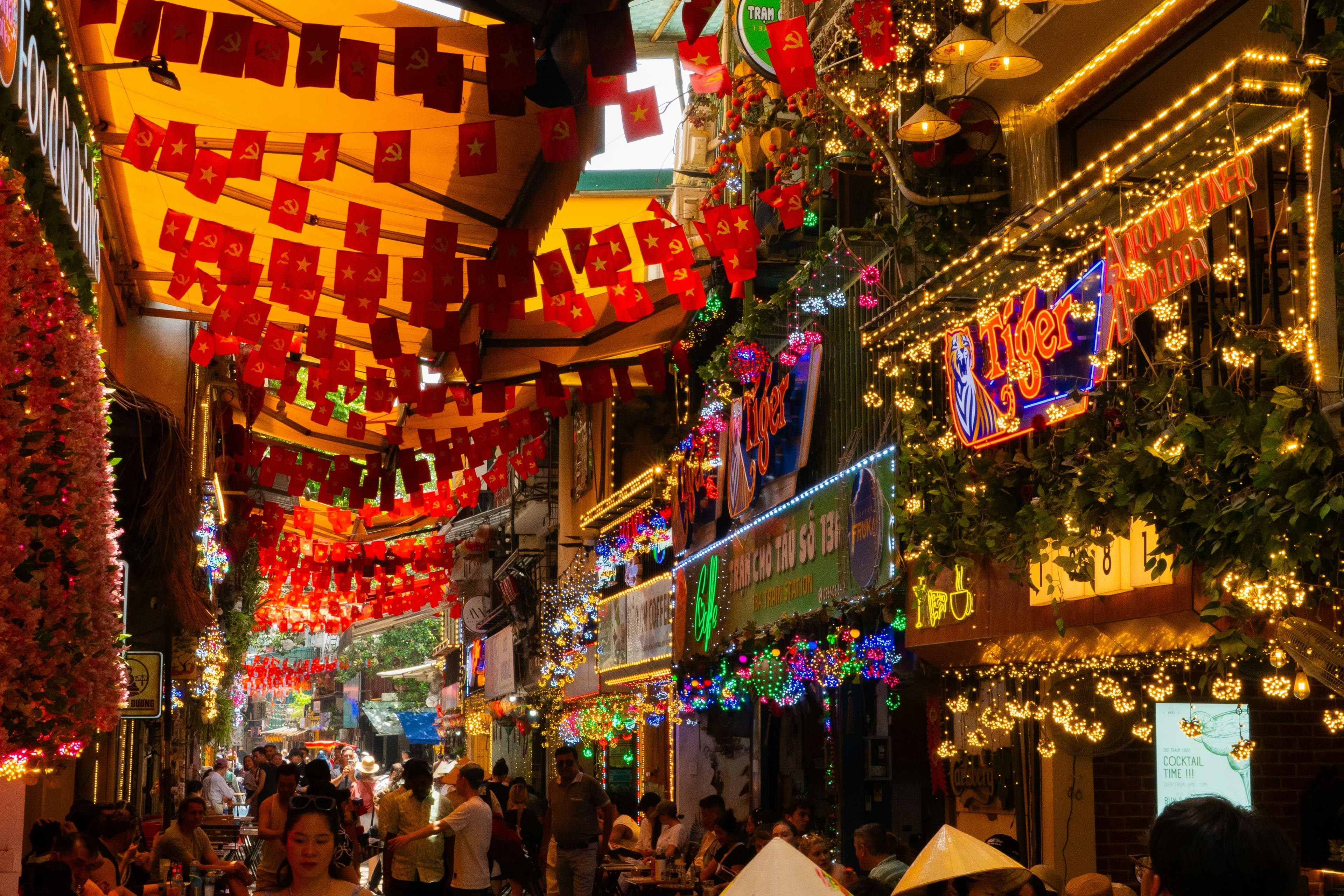
The second angle is horizontal, and it reads like a text. The Thirty-Six Streets walks the Old Quarter, the medieval merchant grid north of the lake, where the streets are named for what they once sold. Hang Bac is Silver Street. Hang Ma is the Street of Votive Papers. Hang means goods, and each Hang street was once a single guild working one product, a craft village transplanted whole into the city. The code is centuries old and still partly legible in the signage overhead. This is the layer that never stopped trading.
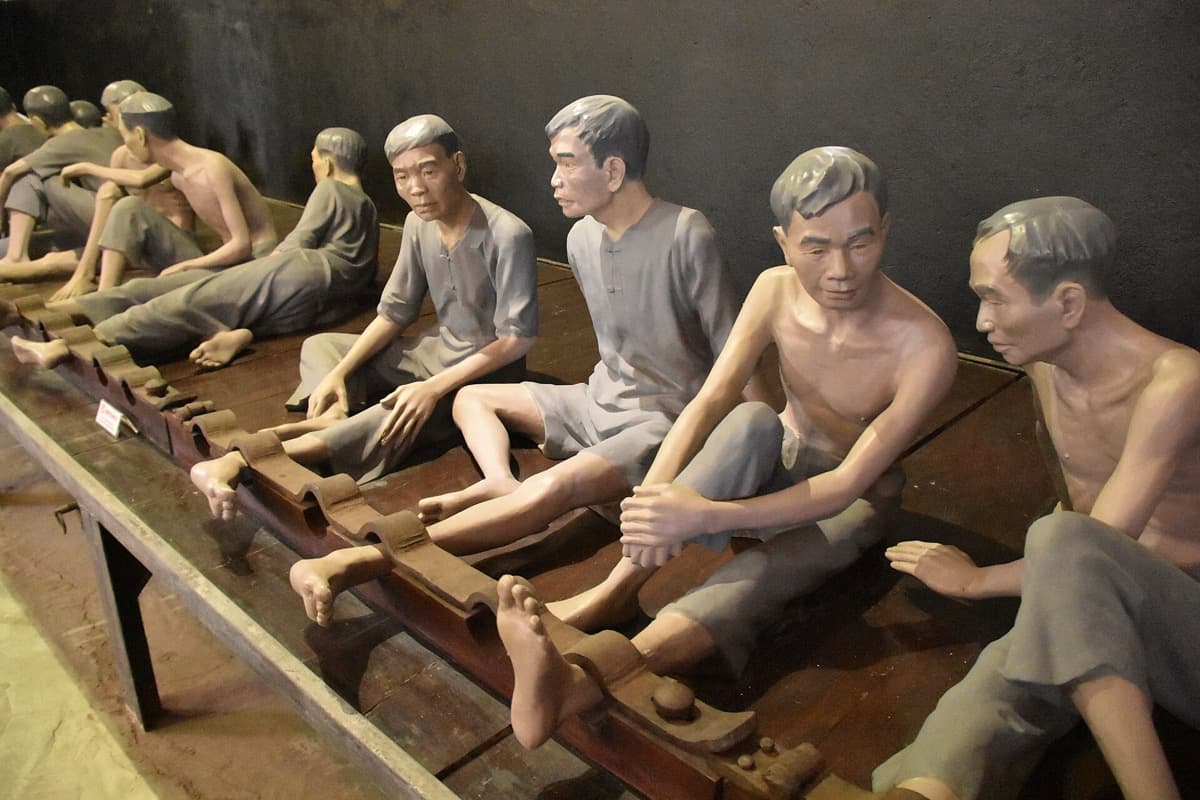
The third angle is an overlay, and it holds a paradox. The Paris of the East reads the French colonial quarter south and east of the lake as stone raised to overawe a colonized city, then seized within a single lifetime to stage its independence. A neo-Gothic cathedral, a colonial prison, an opera house modeled on the Palais Garnier, a bridge over the Red River. Each was built to project permanence, and each was answered by the people it was built to impress. This is the layer that changed meaning without a single wall being moved.
The lake is the hinge
Hear a stop from this walk
O Quan Chuong: The Last Gate of the Rampart
The three walks are not scattered. They pivot on two fixed points, and holding those points in mind is the fastest way to orient yourself in the city.
Hoan Kiem Lake is the hinge. It sits on the boundary between the merchant quarter to its north and the French-built districts to its south, which is exactly why two of the three tours touch it. The Old Quarter walk begins on its shore, at the red bridge to Ngoc Son Temple, and the French Quarter walk unfolds just below and around it. Stand at the lake and you are standing on the seam between medieval commerce and colonial ambition.
The imperial citadel is the other fixed point, a couple of kilometres west. This is the origin the other two layers grew around: the seat from which power radiated before there was a guild street or a boulevard. It is worth being precise about the relationship, because the two walls get confused constantly. The Old Quarter's surviving gate, O Quan Chuong, is not a citadel gate. It is the last surviving cua o, a gate in the earthen rampart that ringed the merchant city, one of a set the record counts variously at twenty-one, sixteen, fifteen or five depending on the document. The citadel had its own, grander gates, and two of them still stand: Chinh Bac Mon and Doan Mon, both on the citadel walk. One wall was built around a market, the other around a king. The French demolished most of the old citadel in the nineteenth century, which is the same act of erasure the colonial quarter answers. Everything connects back to that thousand-year center.
How to read the seams
The pleasure of Hanoi is in the seams, the places where one layer is visibly written over another, and every one of the tours turns on a documented example rather than a vague mood.
At the citadel, the throne hall of the Later Le emperors is gone, demolished in 1886. What survives is a carved stone dragon staircase climbing to open air, recognized as a National Treasure in December 2020. The ceremony is gone, the walls are gone, the dragons remain. At St Joseph's Cathedral, consecrated on Christmas Eve 1886, the twin towers deliberately echo Notre-Dame de Paris, and they stand on the cleared ground of a Buddhist pagoda whose tower had collapsed in 1542. At the Hanoi Opera House, completed in 1911 to display French culture, a crowd of roughly two hundred thousand filled the square on August 19, 1945, and launched the August Revolution from the stage empire had built. Ho Chi Minh, who read the Declaration of Independence at Ba Dinh Square two weeks later on September 2, 1945, would die on that same calendar date in 1969.
None of these are decorations. They are the argument of the city made physical. A capital that kept building on top of itself leaves seams, and Hanoi shows them more openly than almost any city its size.
Which walk first
If you have one morning, take the Old Quarter. It is the shortest, the liveliest, and the best crash course in how to read a Hanoi street, and it teaches the palimpsest idea on streets that are still open for business. If you can choose the hour, choose a Friday, Saturday or Sunday evening instead: since 1 July 2026 a low-emission zone closes the Old Quarter core to all road vehicles, electric ones included, from seven until midnight on those three nights, enforced at checkpoints, so the grid is quiet under your feet. The trade-off is that the ticketed heritage interiors shut at half past five. If you care about power and its afterlife, take the citadel walk, and do it south to north so the chronology lands. If you came for architecture and irony, take the French quarter, and save the walk to Long Bien Bridge for last, because a French-built bridge still carrying Vietnamese commuters over the Red River is the whole thousand-year story in one iron spine.
Walk any of them knowing what you are actually looking at. Not a museum where everything shares a wing, but a manuscript written over, and over, and over again, with every earlier draft still faintly showing through.
Frequently asked questions
- How many self-guided walking tours does Roamer have in Hanoi?
- 3 tours: hanoi-french-quarter, hanoi-old-quarter, hanoi-imperial-citadel-thang-long. Every tour is free to preview.
- How much do the Hanoi tours cost?
- Free to preview, then $4.99 per tour for lifetime access. A 30-day pass covering every tour in every city is $19.99, and a 7-day pass is $12.99.
- Do the Hanoi tours work offline?
- Yes. Download a tour in the Roamer app before you go and it plays with no signal, which is ideal when travelling without mobile data.
Ready to experience it?
Old Quarter: The Thirty-Six Streets
90 min · 2.4 km · easy
More from Hanoi
Explore more at your own pace.
Hanoi Travel Guide: How Many Days, Getting Around, When to Go (2026)
One Day in Hanoi: A Walkable Old-Quarter-to-Lake Itinerary (2026)
What to Eat in Hanoi: A Food Guide (2026)
The Seized Stage: How Hanoi Turned Colonial Stone Against the Empire That Built It
The Thirty-Six Streets: How to Read Hanoi's Old Quarter Like a Ledger