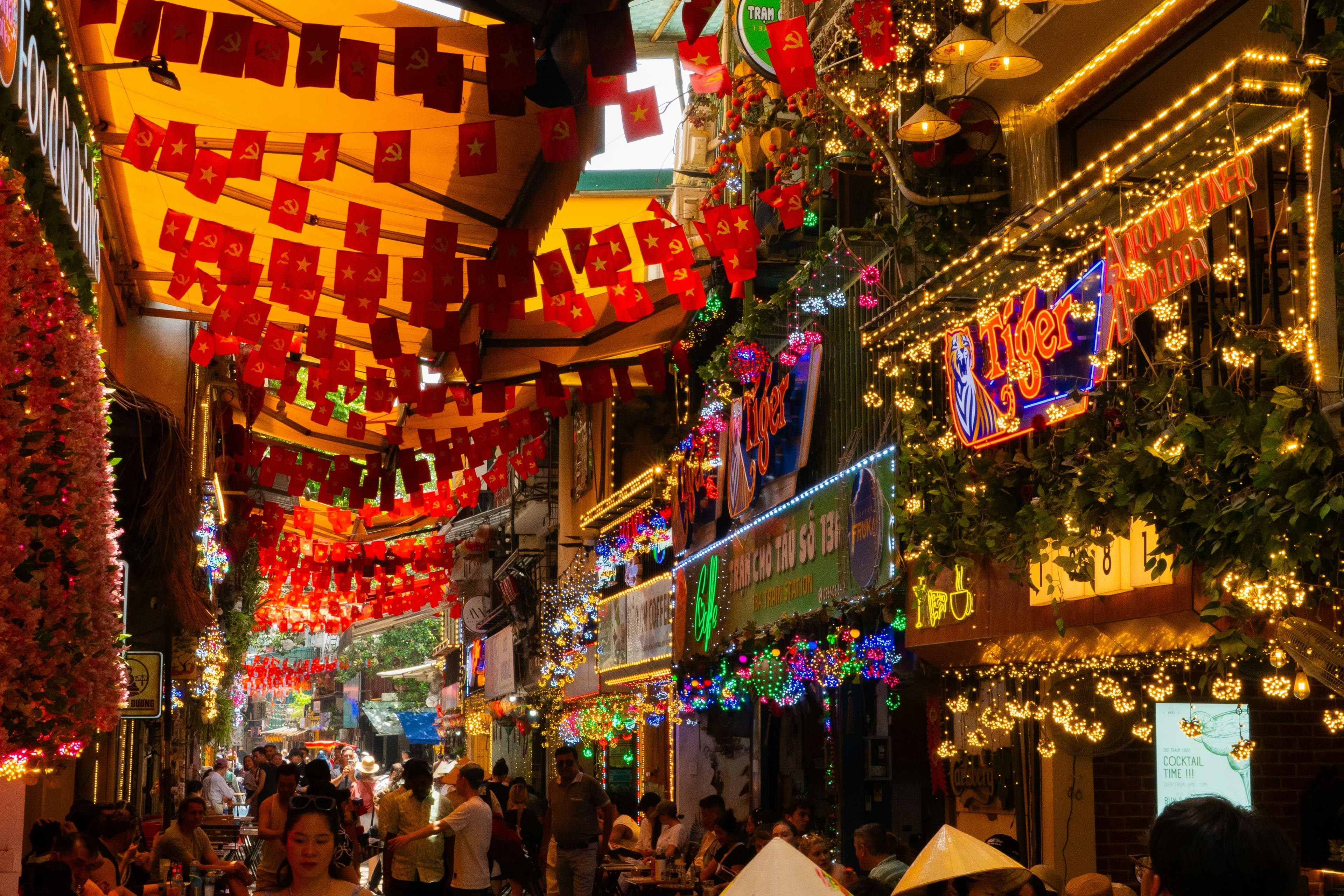
Old Quarter: The Thirty-Six Streets
90 min · 2.4 km · easy
Hanoi makes a chaotic first impression and then turns out to be one of the easier capitals to enjoy. Its historic core is compact and made for walking, its transit is really just ride-hailing plus your own legs, and its one intimidating skill, crossing the wall of motorbikes, is learnable inside an hour. This guide answers the practical questions travelers actually search, answer first, then the detail.
How many days do you need in Hanoi?
Short answer: two to three days for most people.
- 1 day covers the walkable historic core: the Old Quarter, Hoan Kiem Lake, the French Quarter, and the Temple of Literature. Follow our focused one day in Hanoi route.
- 2 days adds the Imperial Citadel of Thang Long, a museum or two, and a slower pace, so nothing feels rushed.
- 3 or more days gives you an overnight on Halong Bay, or a run out to Ninh Binh or Sapa, using Hanoi as a base for the north.
The common mistake is treating Hanoi purely as a one-day stopover on the way to the coast. The city itself is a thousand-year capital built on top of itself, and it rewards a second day of unhurried walking. If you want the idea that unlocks it, read how to see Hanoi.
Getting around Hanoi
Hear a stop from this walk
O Quan Chuong: The Last Gate of the Rampart
The historic core is a joy on foot. The Old Quarter, Hoan Kiem Lake, and the French Quarter sit within a short walk of each other, which is exactly how our self-guided Hanoi tours are built. For anything further, you have simple options:
- Ride-hailing. Use Grab or Be, Vietnam's leading apps. The fare is fixed before you get in and the route is tracked, so there is no haggling and no meter surprise. This is the easiest way to reach the Temple of Literature or the Citadel.
- Taxis. If you flag one, stick to reputable metered brands like Mai Linh or Taxi Group, and confirm the meter is running.
- Crossing the street. This is the real skill. Hanoi's motorbike traffic looks like chaos but has a rhythm. Walk at a slow, steady, predictable pace and let the bikes flow around you. Do not stop suddenly or sprint. Make eye contact with oncoming riders, and if in doubt, cross alongside a local. This is technique, not official guidance, and it is what locals do.
Do not rent a motorbike unless you genuinely know what you are doing. Hanoi traffic is unforgiving, and there is no need for it inside the walkable core.
The weekend vehicle-free hours
The single most useful thing to know about walking central Hanoi in 2026 is that the Old Quarter core is now legally closed to traffic on weekend evenings. Under a low-emission zone that began on 1 July 2026, all road vehicles, electric ones included, are banned inside the core from 7pm to midnight on Friday, Saturday and Sunday, and it is enforced physically, with checkpoints at the street entrances where riders are made to dismount and push. The boundary is drawn by Trang Tien, Hang Khay, Le Thai To, Hang Dao, Hang Ngang, Hang Buom, Ma May, Hang Bac, Hang Mam, Nguyen Huu Huan, Ly Thai To and Ngo Quyen, which is roughly the walking-street and night-market area.
Practically: those are the hours to walk the guild streets, the hours when a Grab cannot reach your hotel door inside the zone (there are designated pick-up points on Ba Trieu, Tran Nhat Duat, Tran Quang Khai and Tran Khanh Du), and the hours the ticketed heritage interiors are shut. This first phase is scheduled to run to 31 December 2026, and the weekend walking-street hours it sits on top of get suspended for national events at short notice, so treat both as very likely rather than guaranteed.
Best time to visit Hanoi
The showcase window is autumn, roughly September to November, with October often the single nicest month: mild temperatures, clearer skies, and comfortable weather for long walks around the lake and through the guild streets. Spring, around March to April, is also pleasant.
The season to avoid if you can is deep summer. June to August is hot and very humid, with highs around 32 to 35°C that feel hotter, and heavy afternoon downpours, August being the wettest month. Winter, December to February, is cool, often grey, and can be genuinely chilly, but it is quiet and low-season.
Is Hanoi safe?
Yes. Hanoi is a safe city for visitors, including solo and female travelers, and violent crime against tourists is rare. The realistic risks are petty and easy to manage:
- Pickpocketing and bag-snatching in crowds, sometimes by thieves on motorbikes. Keep your phone and bag on the inside, away from the road.
- Overcharging and a few set scams, including the fruit-basket or donut photo scam and rigged card games with an over-friendly stranger. Agree prices before you buy, and decline gambling invitations from people you just met.
- The traffic itself is the bigger daily hazard. Give the motorbikes your full attention every time you cross.
None of this should put you off. Treat it the way you would petty crime in Paris or Bangkok, and you will be fine.
Hanoi on a budget
Hanoi is friendlier to a tight budget than almost any capital. Much of what makes it special costs little or nothing:
- Free to walk: the Old Quarter, the Hoan Kiem lakeshore, and the French boulevards. The ticketed sites are cheap: Ngoc Son Temple 50,000 VND, the Temple of Literature 70,000 VND, and the Old Quarter heritage houses and temples that now charge, including 87 Ma May, Bach Ma and Dinh Kim Ngan, 20,000 VND each by e-ticket. Those Old Quarter sites shut from noon to 1:30pm, which catches out a lot of late-morning walkers.
- Eat cheap and well: a bowl of pho, a bun cha lunch, a banh mi, and a glass of bia hoi all cost very little. See what to eat in Hanoi for what to order.
- Cheap rides: Grab and Be fares are low, and inside the core you can walk anyway.
- Skip the guide fee: Roamer self-guided audio tours are free to start, so you get expert narration without a booked start time, a group, or a tip.
Cash and the Vietnamese dong
Vietnam is still largely a cash economy for street food, markets, small cafes, and taxis, so carry Vietnamese dong (VND). Cards work at hotels and mid-range restaurants, but not at a pho stall. The dong runs to large numbers, notes in the tens and hundreds of thousands, and several denominations look alike, so count your change carefully and keep smaller notes for small purchases. Withdraw from bank ATMs rather than changing large sums at the airport.
Halong Bay and beyond
The classic add-on is Halong Bay, about 130 km east, roughly 2.5 hours each way by expressway. A day trip is possible but long, around 12 to 13 hours door to door for only a few hours on the water, so most travelers do an overnight cruise instead, which lets you see the karst seascape at dawn and dusk. Treat it as a separate excursion and budget the extra night, rather than folding it into a packed city day. Ninh Binh and Sapa are the other popular runs from Hanoi.
Start planning your walk
Ready to route your days? Read our one day in Hanoi itinerary, browse the best self-guided walking tours in Hanoi, or see all Hanoi tours. Every tour is free to start: the introduction and first stop play in full, and every later stop plays a short preview before an optional purchase. Tours can also be downloaded in advance for offline listening.
Frequently asked questions
- How many days do you need in Hanoi?
- Two to three days is the sweet spot for most travelers. One focused day covers the walkable historic core, the Old Quarter, Hoan Kiem Lake, the French Quarter, and the Temple of Literature. A second day adds the Imperial Citadel, museums, and a slower pace, and a third gives you an overnight cruise on Halong Bay, about 2.5 hours away, which is the classic add-on. Many people use Hanoi as a base for the north, so budget extra nights if you plan to reach Halong Bay, Ninh Binh, or Sapa.
- Is Hanoi walkable, and how do you get around?
- The historic core is very walkable: the Old Quarter, Hoan Kiem Lake, and the French Quarter sit within a fifteen-to-twenty-minute walk of each other, which is exactly how our self-guided tours are built. For anything further, use the Grab or Be ride-hailing apps, where the fare is fixed in advance and the route is tracked, so you avoid taxi haggling. Reputable metered taxi brands like Mai Linh and Taxi Group are fine too. The one skill to learn is crossing the street: walk at a slow, steady, predictable pace and let the motorbikes flow around you rather than stopping or darting. If in doubt, cross alongside a local. One exception is worth planning around: since 1 July 2026 a low-emission zone bans all road vehicles, electric ones included, inside the Old Quarter core from 7pm to midnight on Friday, Saturday and Sunday, so on those evenings the historic streets are genuinely traffic-free.
- What is the best time of year to visit Hanoi?
- Autumn, roughly September to November, is the best window: mild temperatures, clearer skies, and comfortable walking weather, with October often the single nicest month. Spring (March to April) is also pleasant. Avoid deep summer if you can, because June to August is hot and very humid, with highs around 32 to 35°C that feel hotter, plus heavy afternoon downpours, August being the wettest month. Winter (December to February) is cool, grey, and quiet, and can be genuinely chilly.
- Is Hanoi safe for tourists?
- Yes. Hanoi is a safe city and violent crime against tourists is rare, including for solo and female travelers. The realistic risks are petty: pickpocketing and bag-snatching in crowds, occasional overcharging, and a handful of well-known scams like the fruit-basket photo and rigged card games with a friendly stranger. Keep your phone and bag close, especially near the road where thieves on motorbikes operate, agree prices before you buy, and decline gambling invitations. The bigger daily hazard is simply the traffic, so give the motorbikes your full attention when you cross.
- How can you see Hanoi on a budget?
- Hanoi is one of the cheaper capital cities in the world for travelers. Much of the best of it is free or nearly free: walking the Old Quarter, circling Hoan Kiem Lake, and strolling the French boulevards cost nothing. The paid sites are cheap in absolute terms: Ngoc Son Temple is 50,000 VND, the Temple of Literature 70,000 VND, and the Old Quarter heritage houses and temples that now charge, such as 87 Ma May, Bach Ma and Dinh Kim Ngan, are 20,000 VND each by e-ticket. Street food is famously cheap, a bowl of pho or a bun cha lunch costs very little, and a glass of bia hoi is pocket change. Ride-hailing is inexpensive, and self-guided audio tours are free to start on Roamer, so you can add expert narration without hiring a guide.
- How much cash should I carry, and how does the Vietnamese dong work?
- Vietnam is still largely a cash economy for street food, markets, small cafes, and taxis, so carry Vietnamese dong (VND). Cards work at hotels, mid-range restaurants, and some shops, but not at a pho stall. The dong runs to large numbers, notes come in the tens and hundreds of thousands, and several denominations look alike, so count your change carefully and keep smaller notes handy for small purchases. Withdraw dong from bank ATMs rather than changing large sums at the airport, and confirm the app fare before a Grab ride so there is no confusion.
- Can you visit Halong Bay from Hanoi?
- Yes, and it is the classic add-on. Halong Bay is about 130 km east of Hanoi, roughly 2.5 hours each way by expressway. A day trip is possible but long, around 12 to 13 hours door to door for only a few hours on the water, so most travelers do an overnight cruise, a one-night or two-night boat trip, which is far more relaxed and lets you see the karst seascape at dawn and dusk. Either way it is a separate excursion from your Hanoi city days, so plan the extra night rather than trying to fold it into a packed itinerary.
Ready to experience it?
Old Quarter: The Thirty-Six Streets
90 min · 2.4 km · easy
More from Hanoi
Explore more at your own pace.
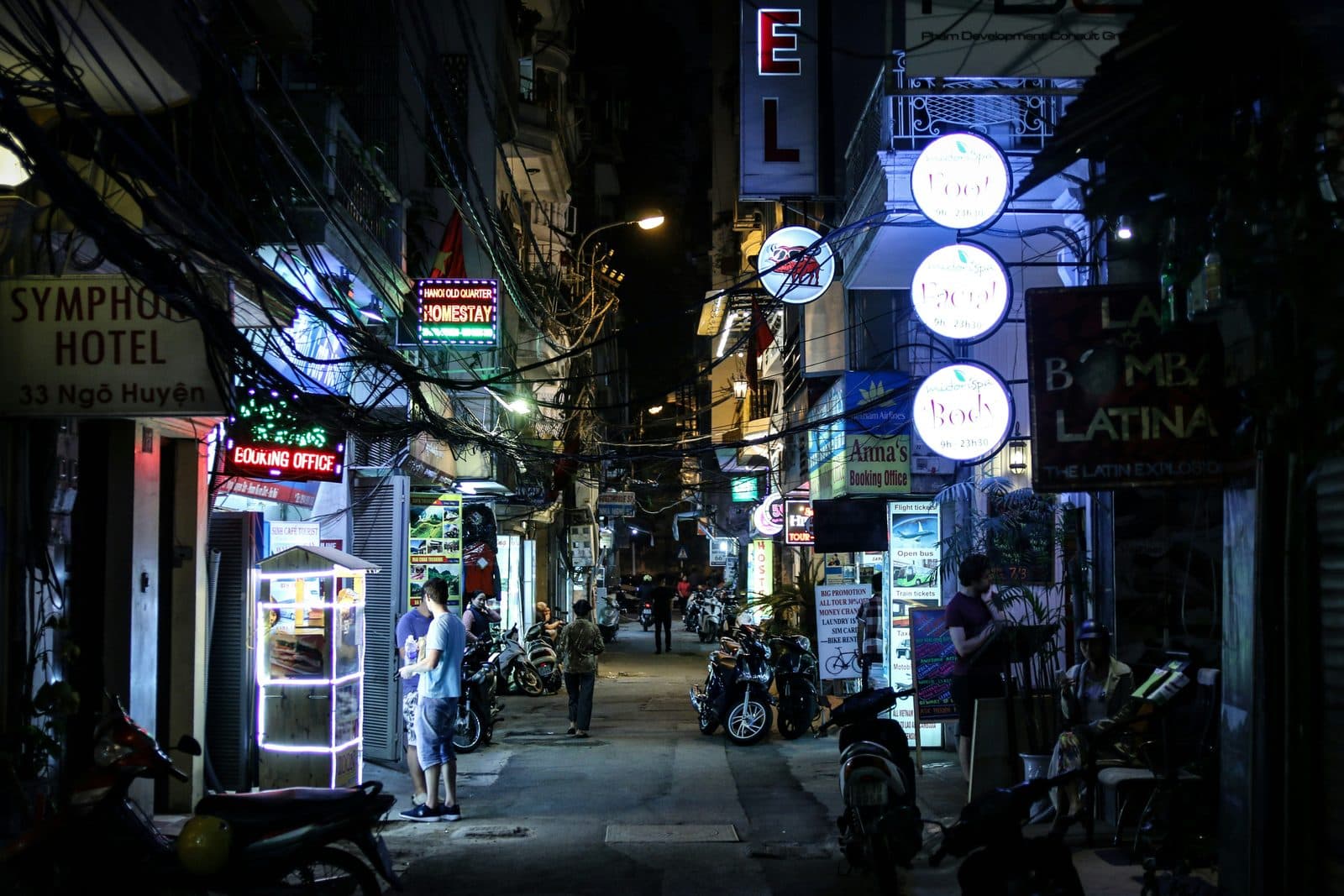
How to See Hanoi: A Capital Built on Top of Itself

One Day in Hanoi: A Walkable Old-Quarter-to-Lake Itinerary (2026)

What to Eat in Hanoi: A Food Guide (2026)

The Seized Stage: How Hanoi Turned Colonial Stone Against the Empire That Built It

The Thirty-Six Streets: How to Read Hanoi's Old Quarter Like a Ledger