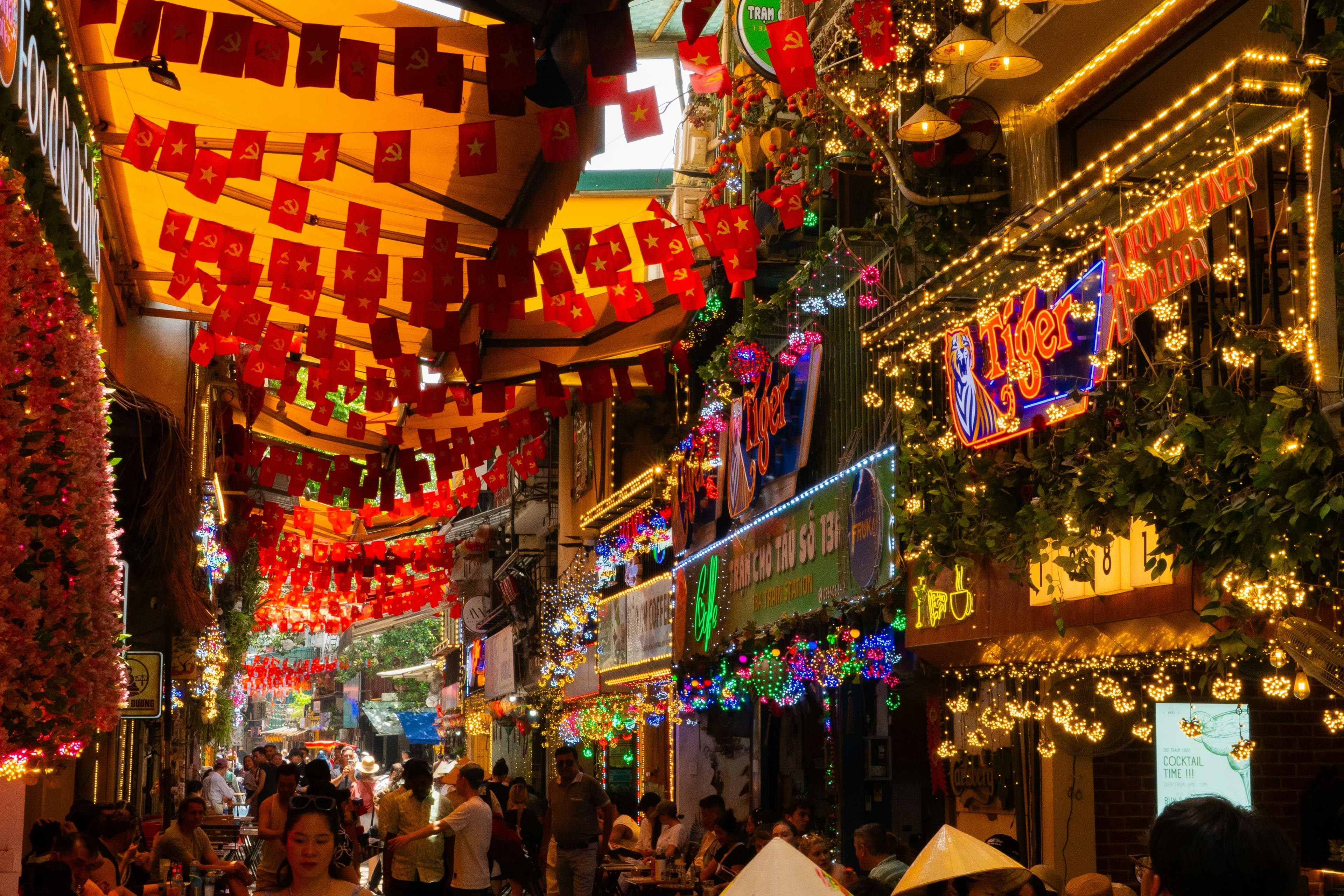
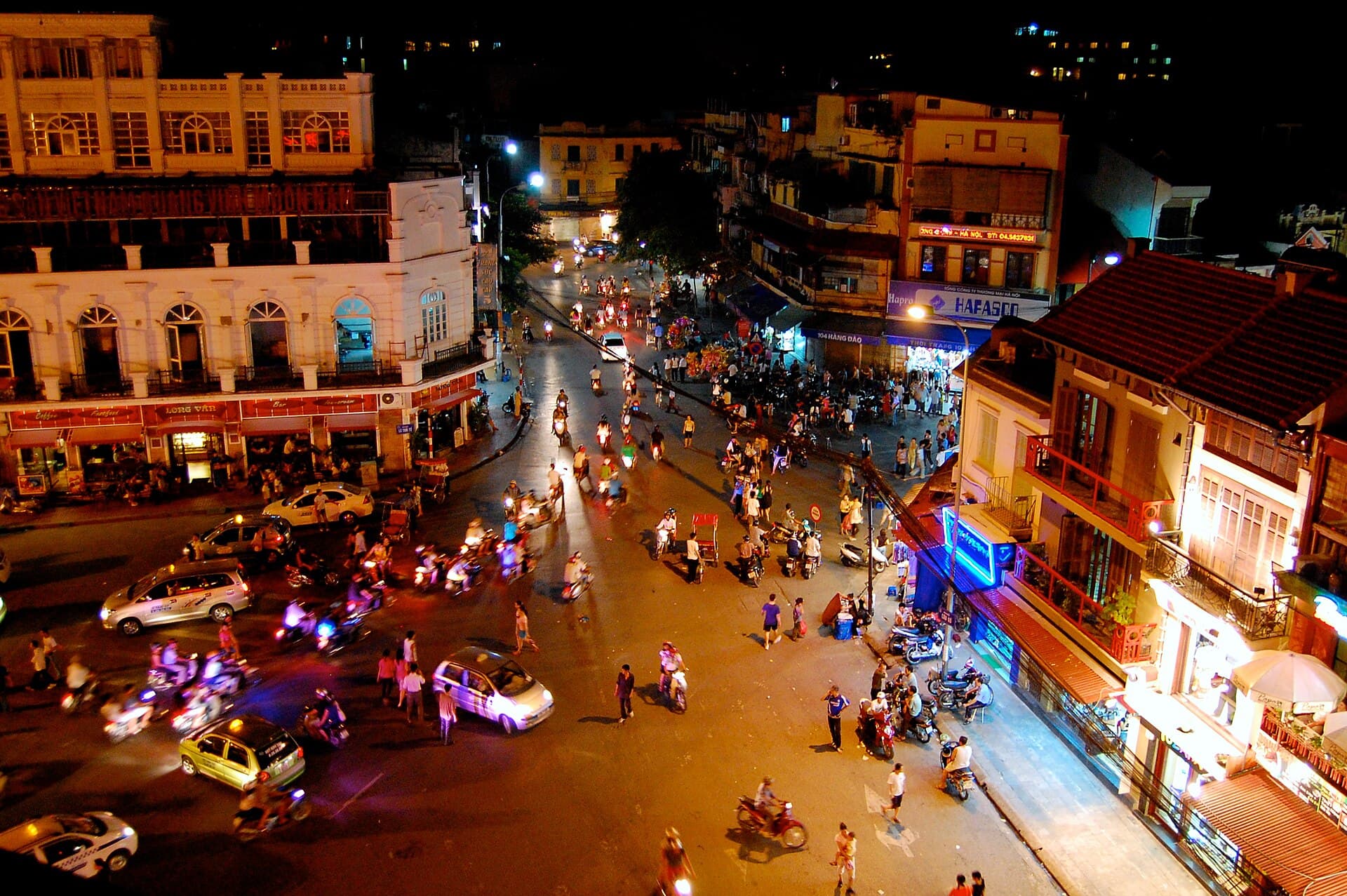
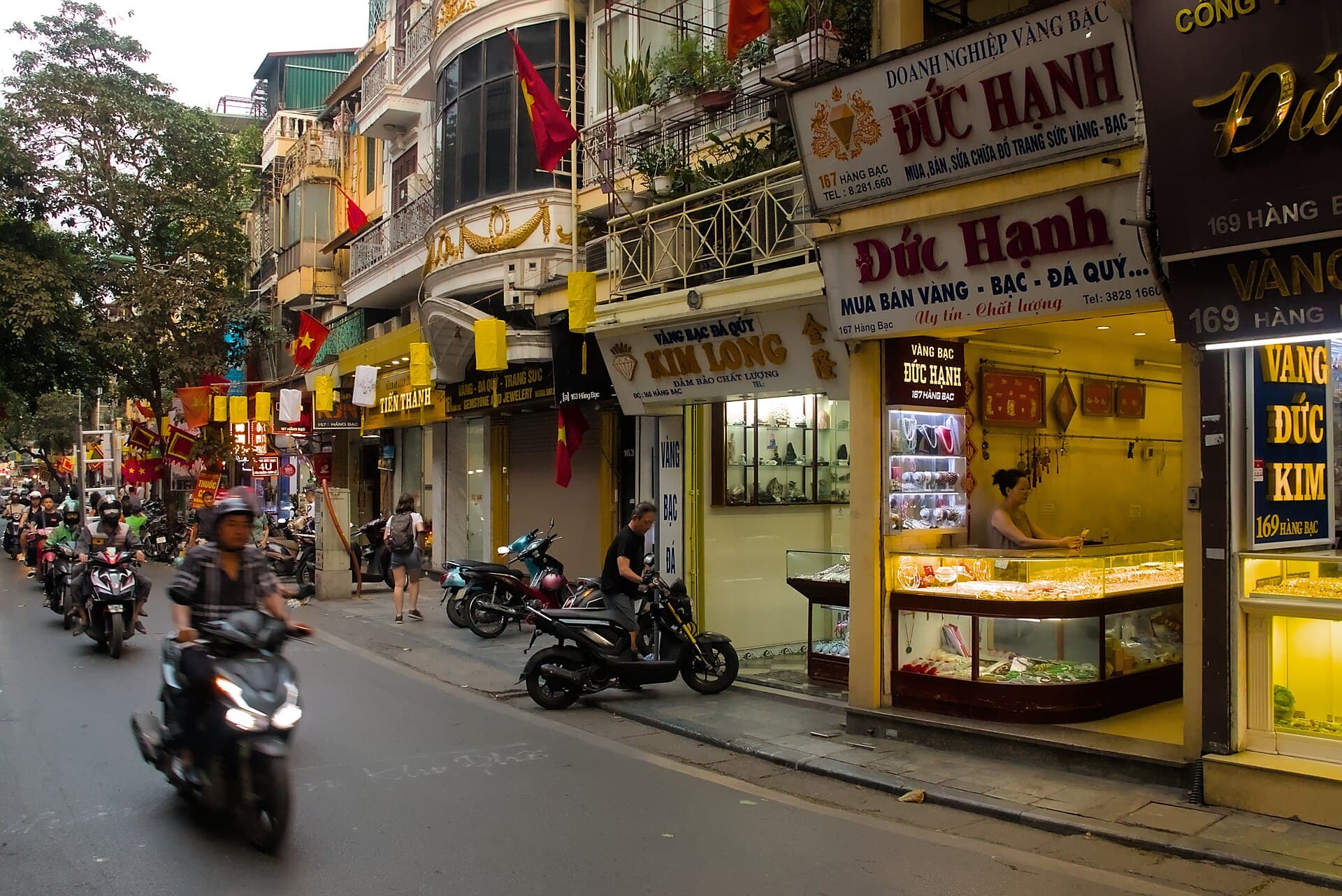
Hanoi's Old Quarter still sorts itself by trade, and the street signs are the index. Ten stops north from the lake through the merchant grid, ending at the dinner table where a country was declared.
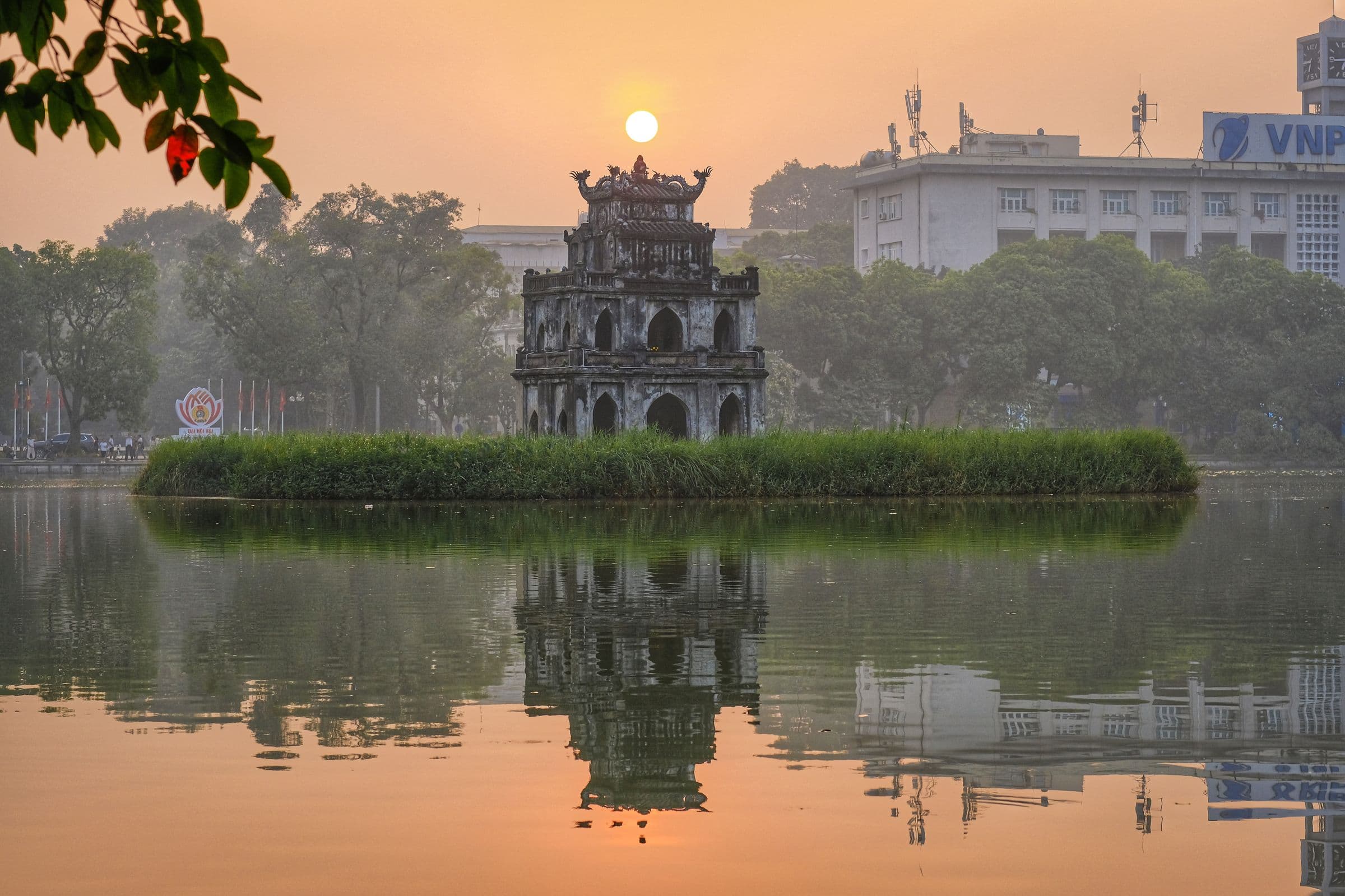
Start · Hoan Kiem Lake and Ngoc Son Temple: The Lake of the Returned Sword
DirectionsStops
- 1
Hoan Kiem Lake and Ngoc Son Temple: The Lake of the Returned Sword
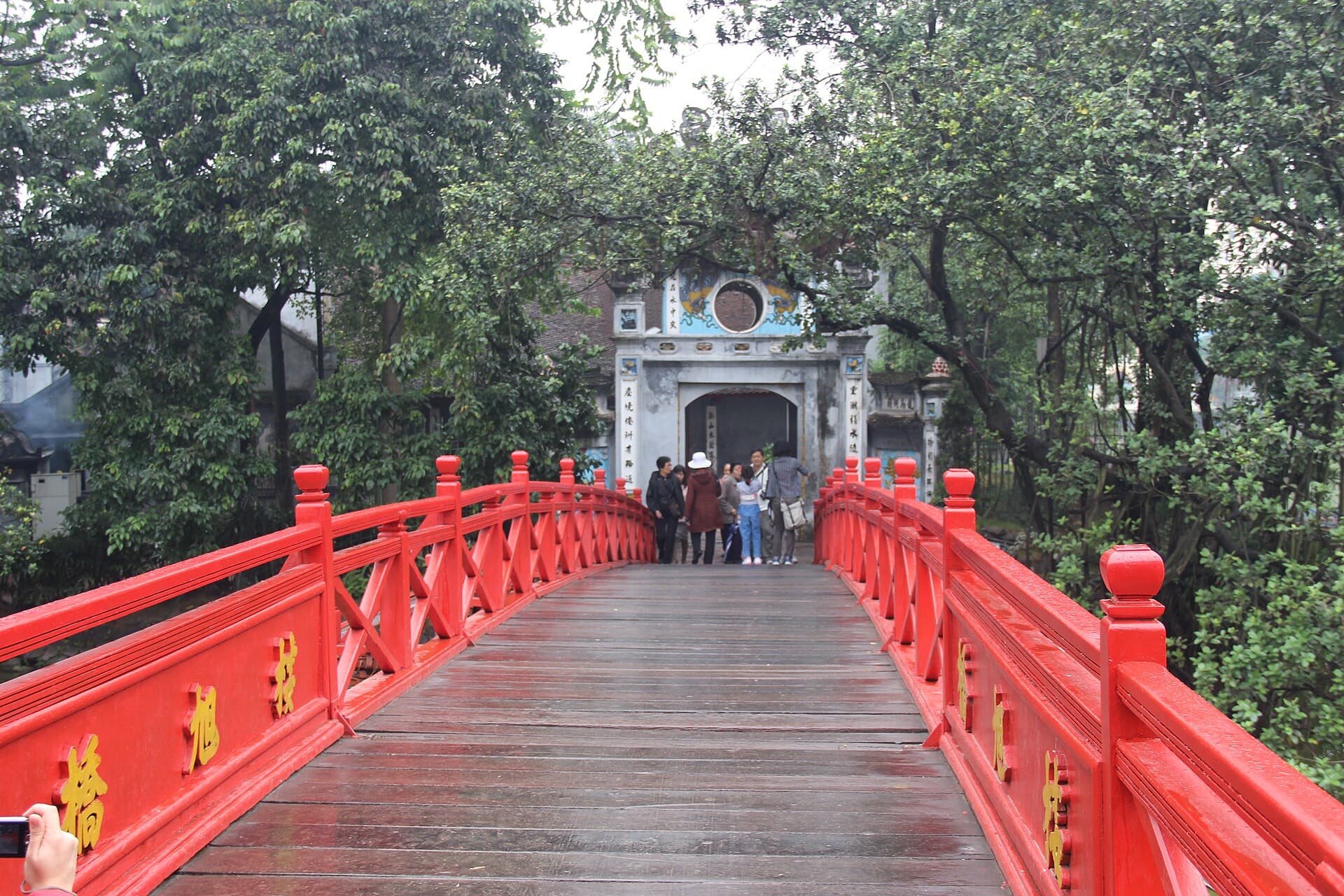
The lake at the heart of Hanoi, where a legend about a borrowed sword has an actual body in a glass case.
- 2
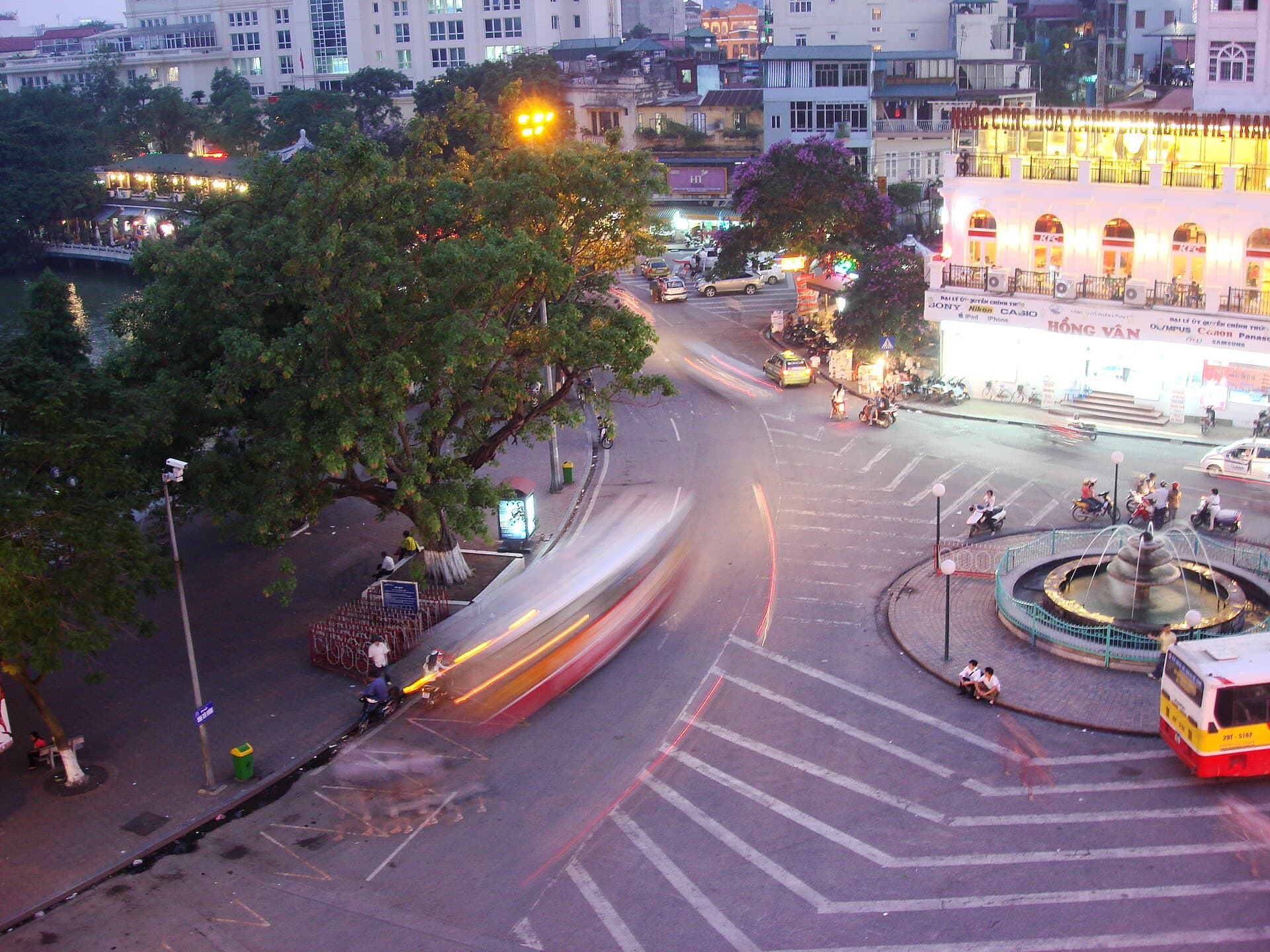
Dong Kinh Nghia Thuc Square: Where the Grid Begins
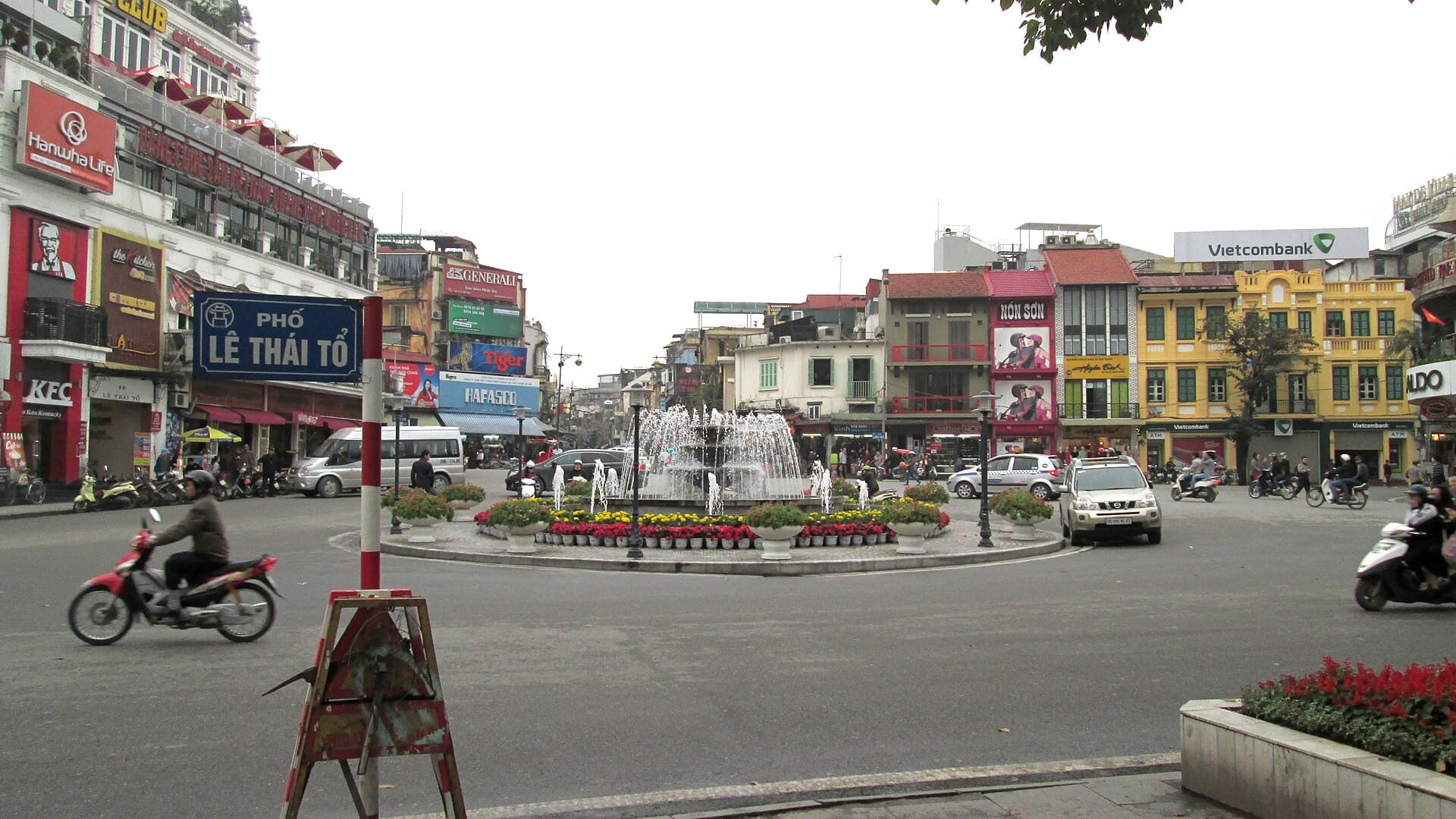
The square at the lake's north tip, named after a school that taught people to read, at the mouth of a quarter you also have to learn to read.
- 3
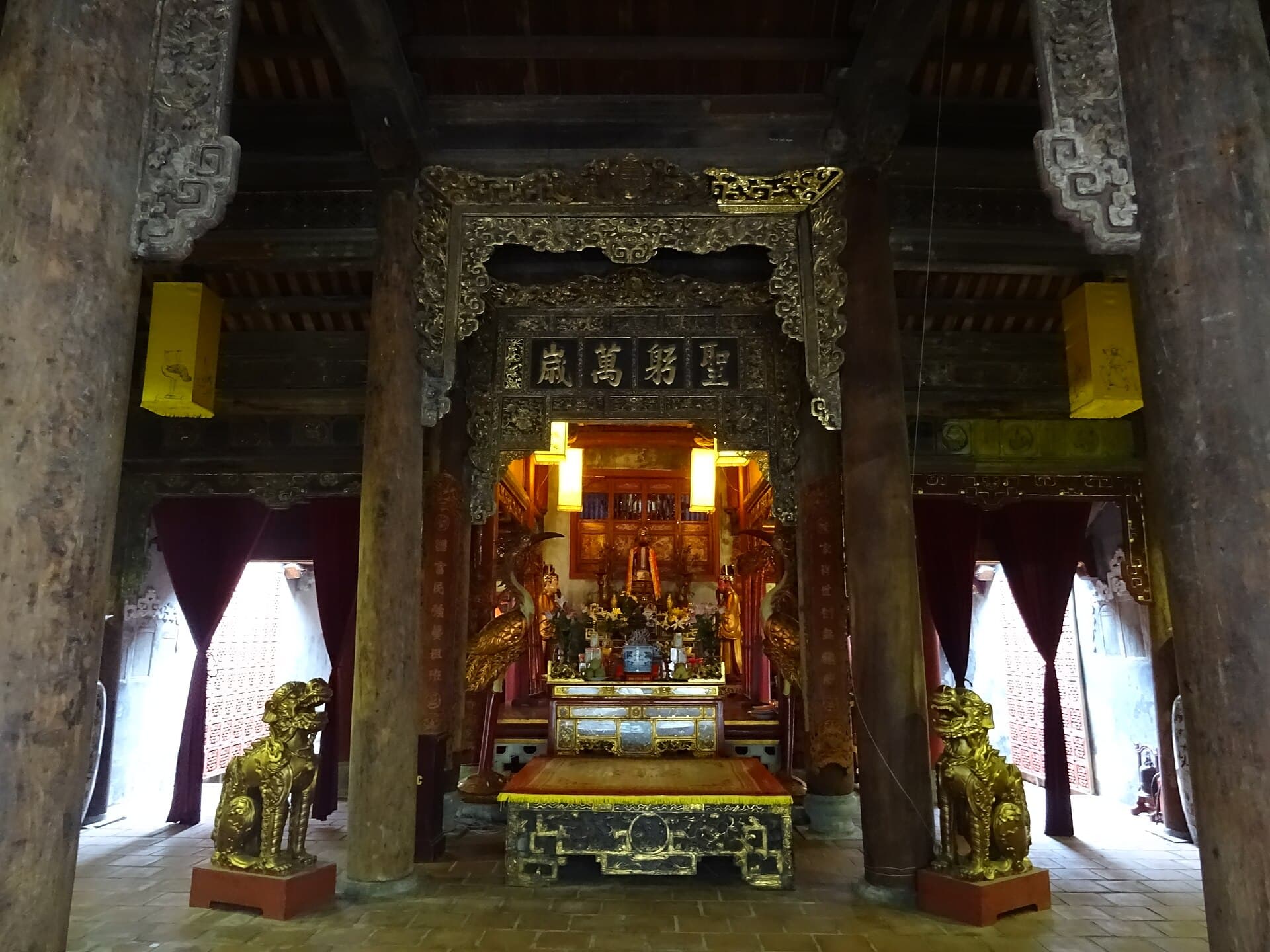
Dinh Kim Ngan: The Ancestor of Every Trade
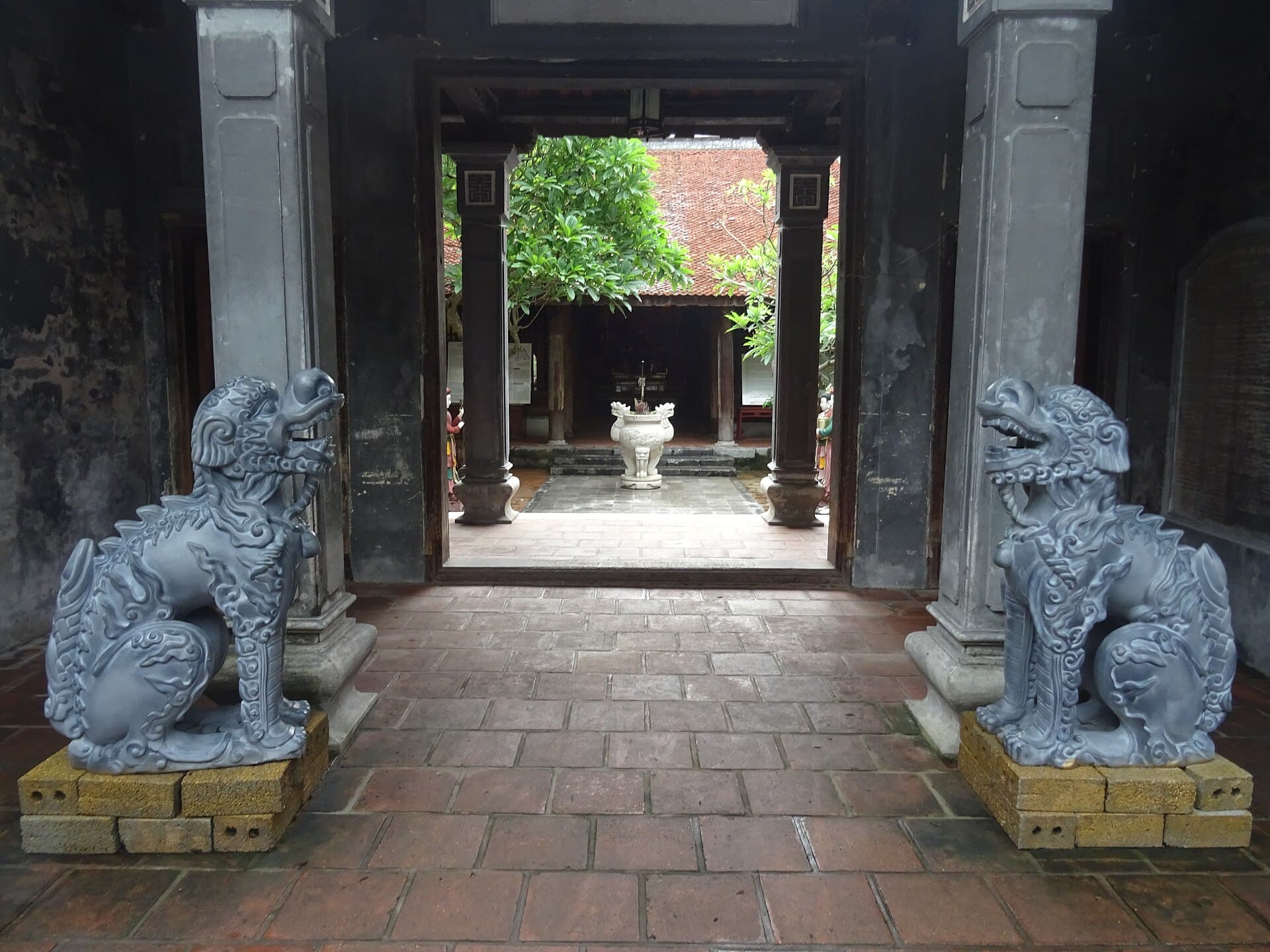
The silversmiths' guild house on Hang Bac, whose dedication tells you what the richest trade on the grid thought of itself.
- 4
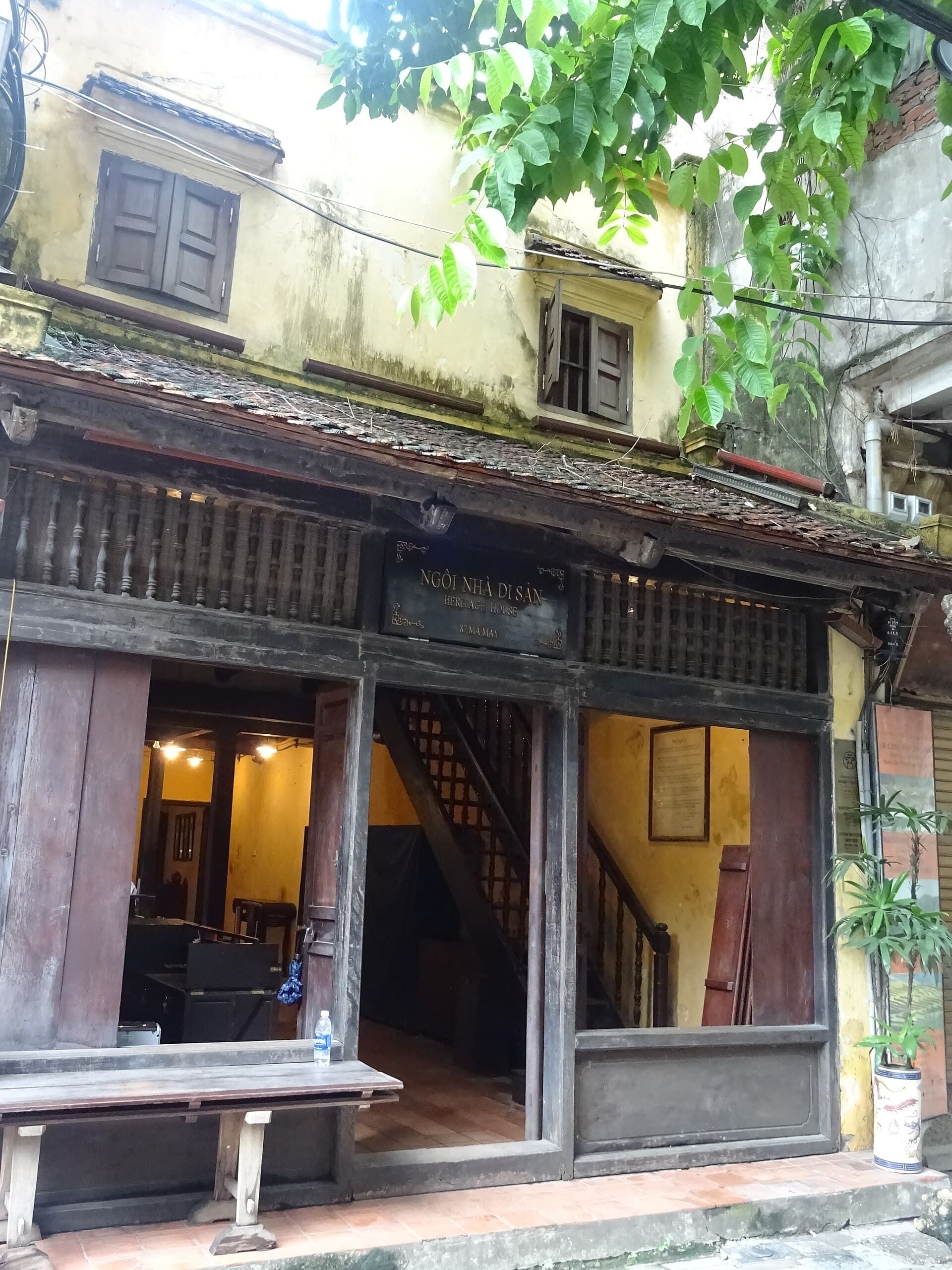
87 Ma May: The Shape of a Trading House
A restored merchant house five metres wide and twenty-eight deep, the physical unit every single-trade street was built from.
- 5
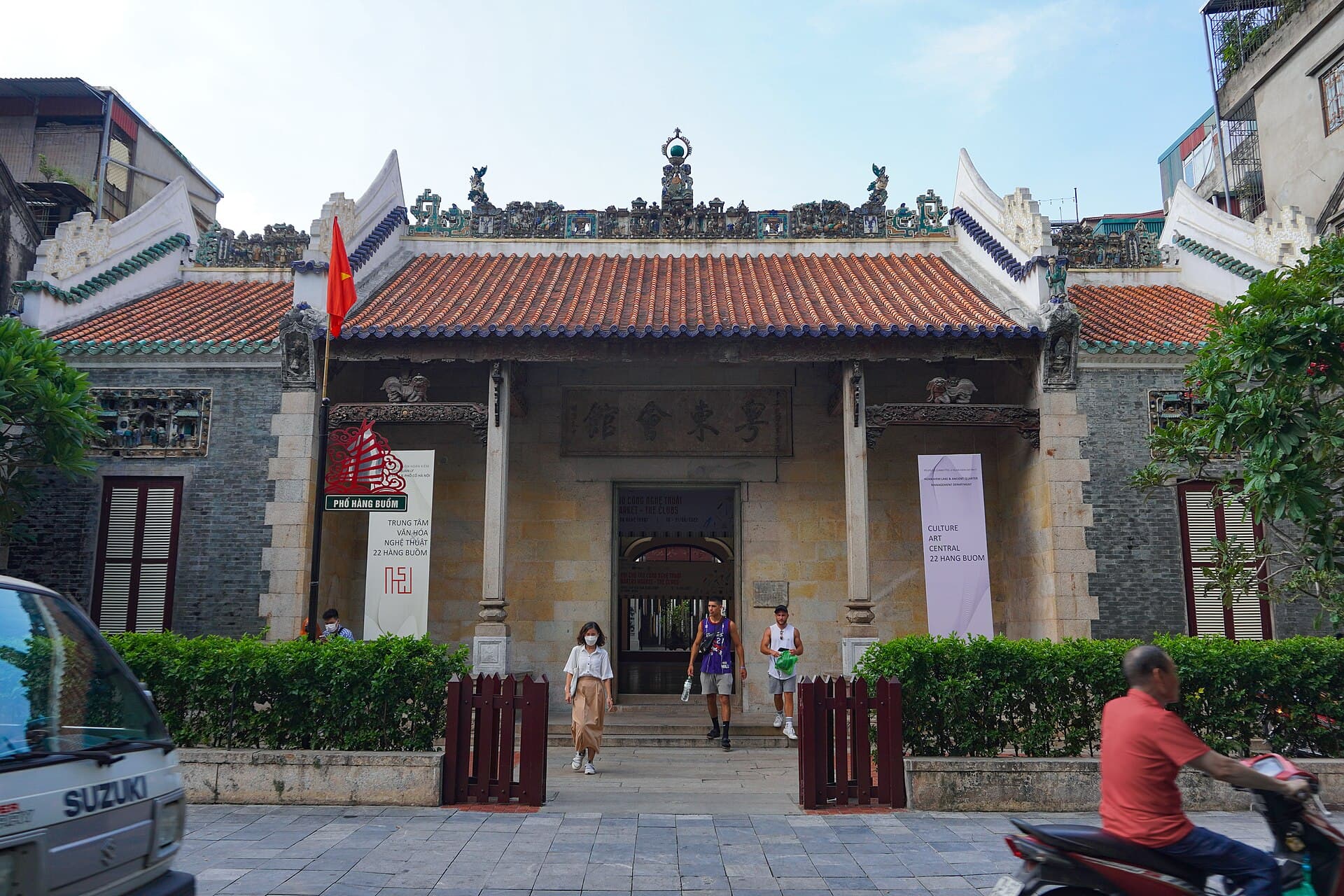
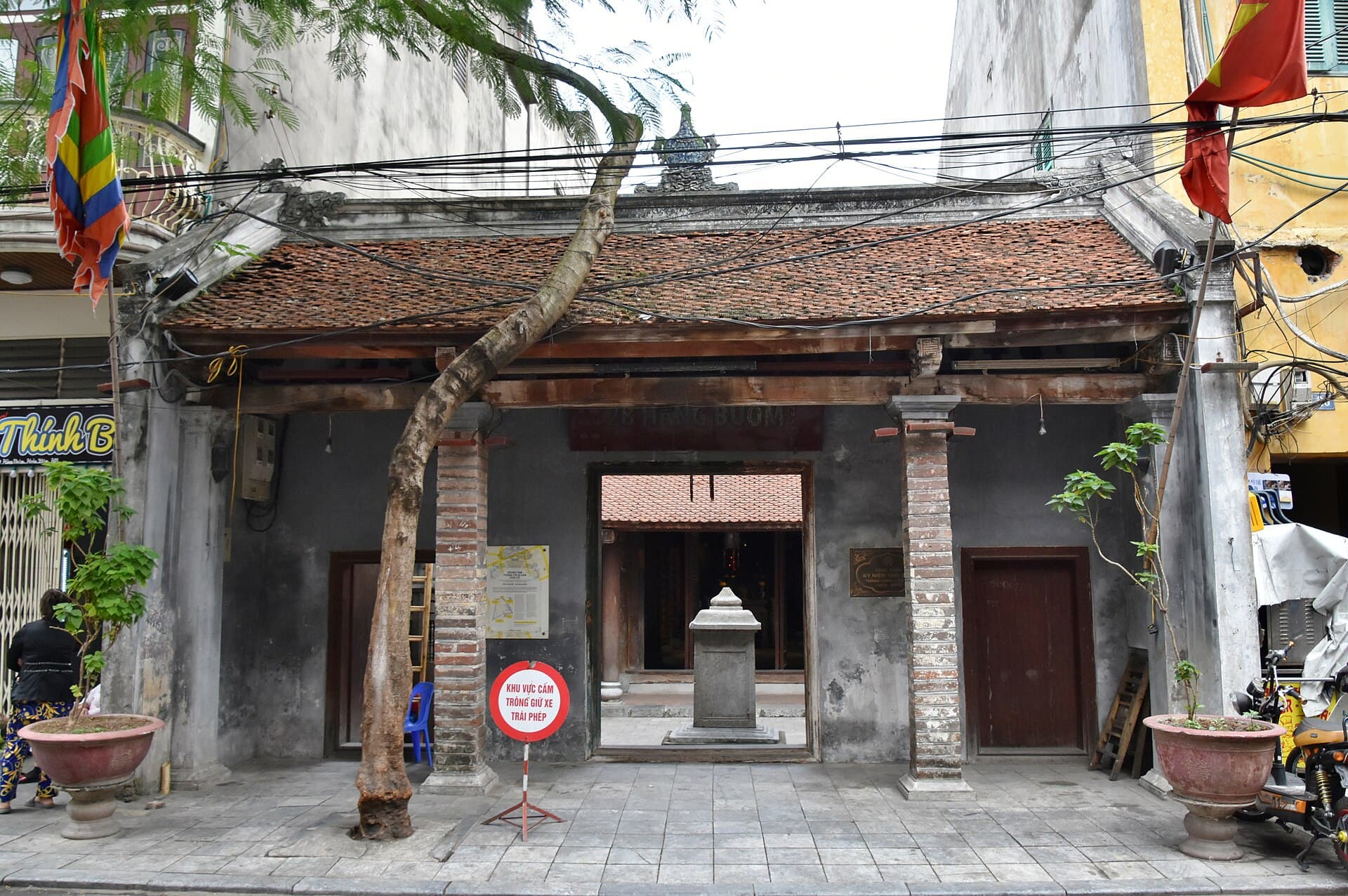
Hang Buom: The Merchants Who Came From Further
The Cantonese assembly hall at 22 Hang Buom, where a second merchant nation ran its own courts inside the grid.
- 6
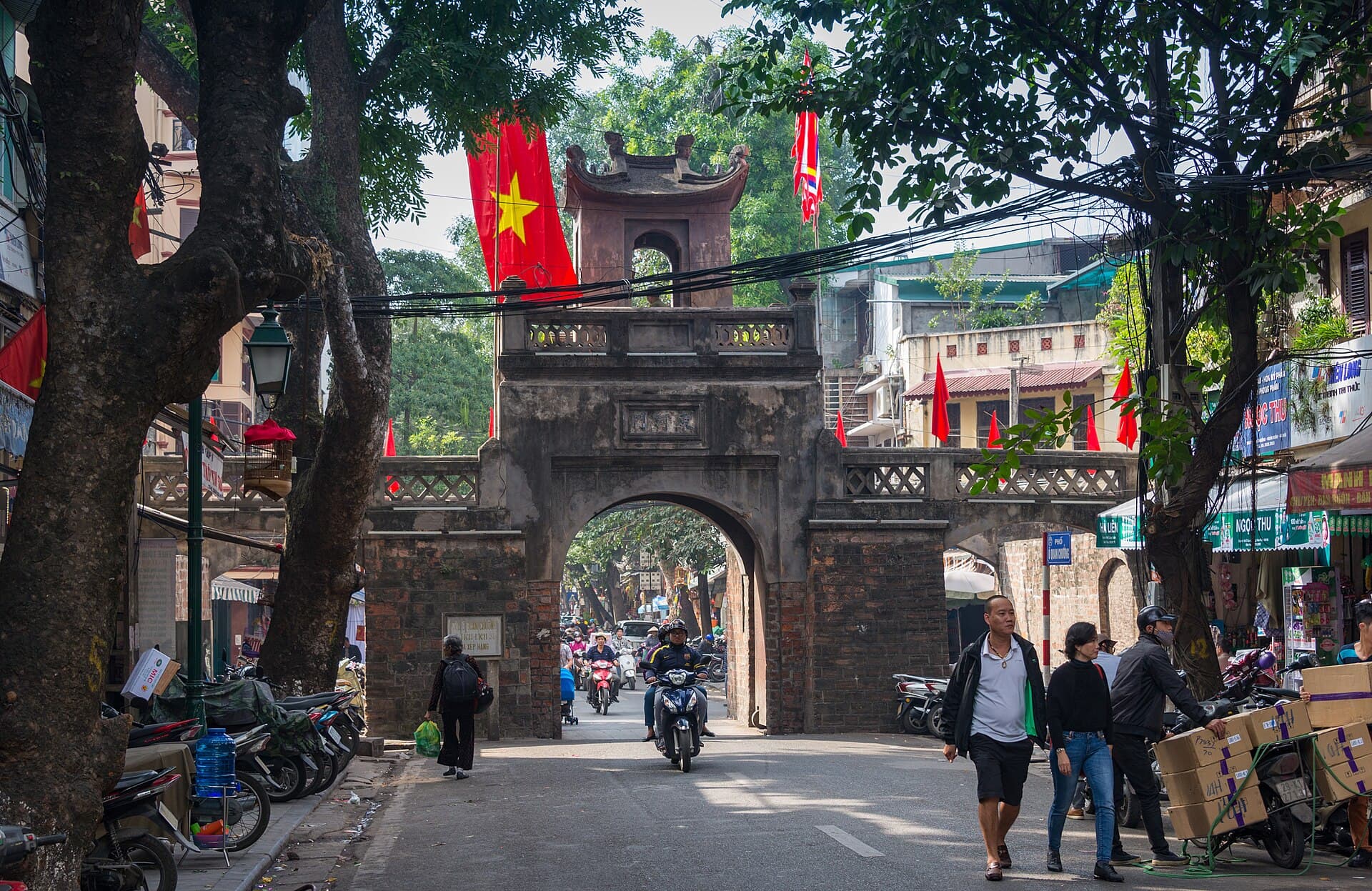
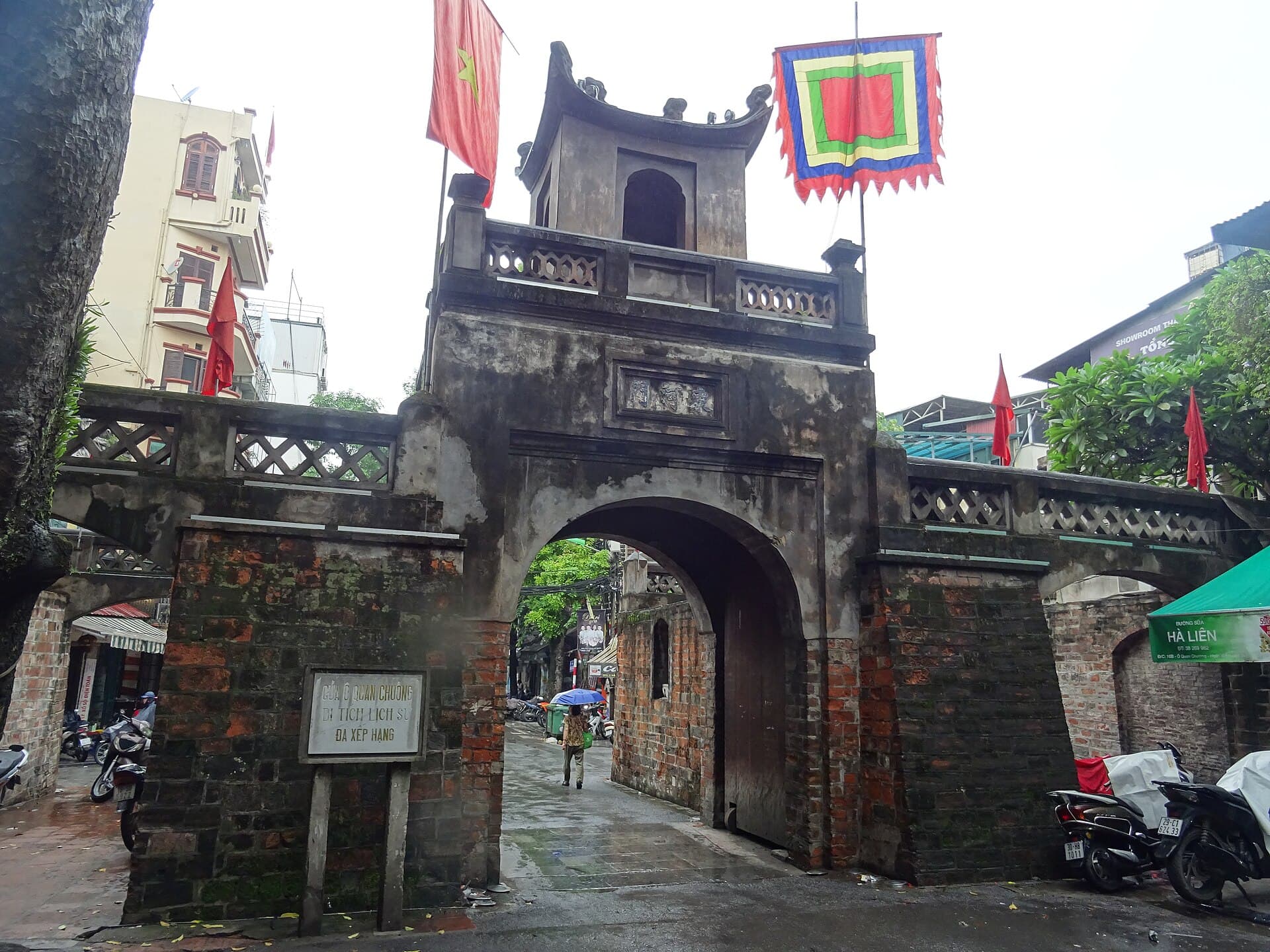
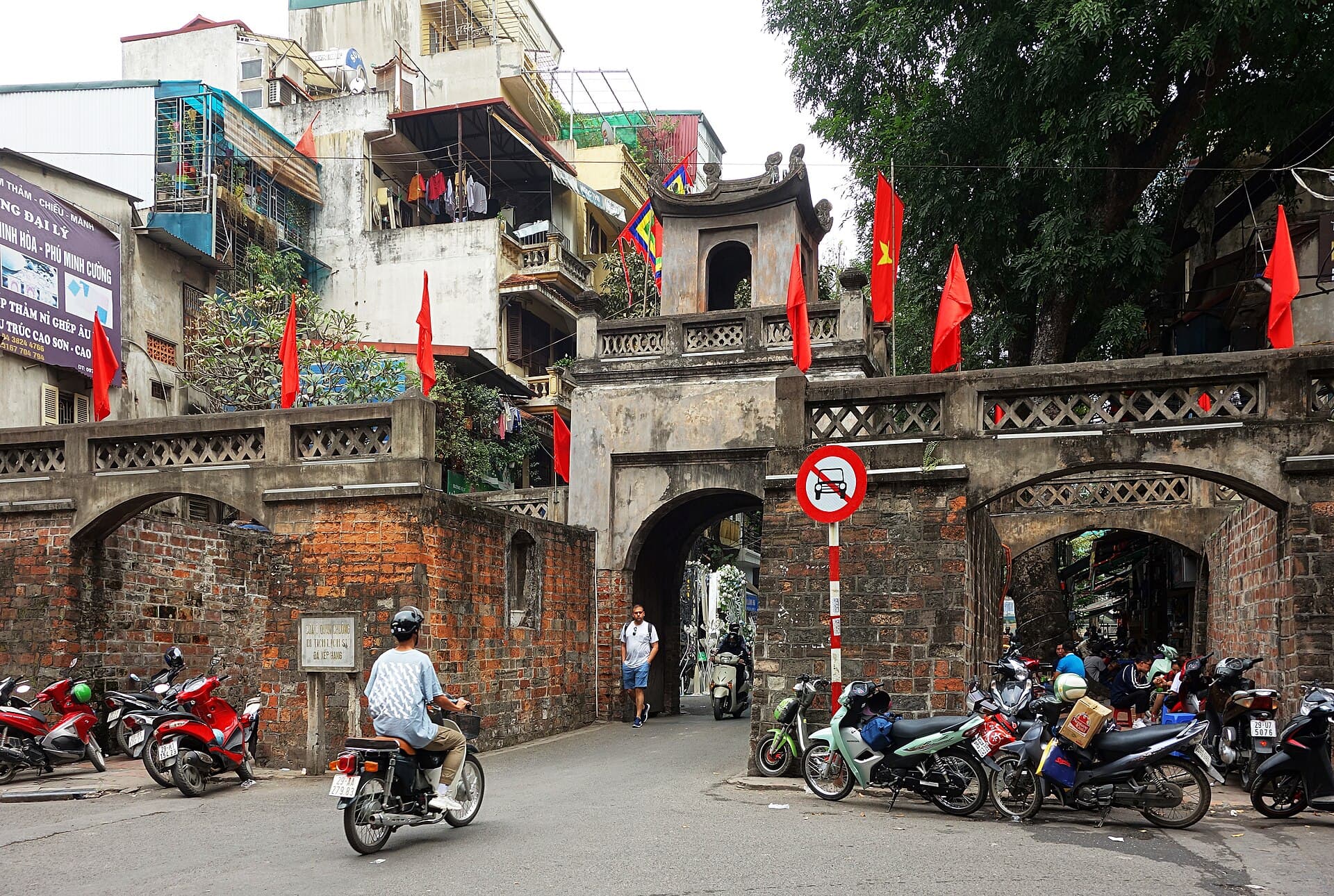
O Quan Chuong: The Last Gate of the Rampart
The last surviving gate of the old city rampart, with an order to its own guards still set in the wall.
- 7
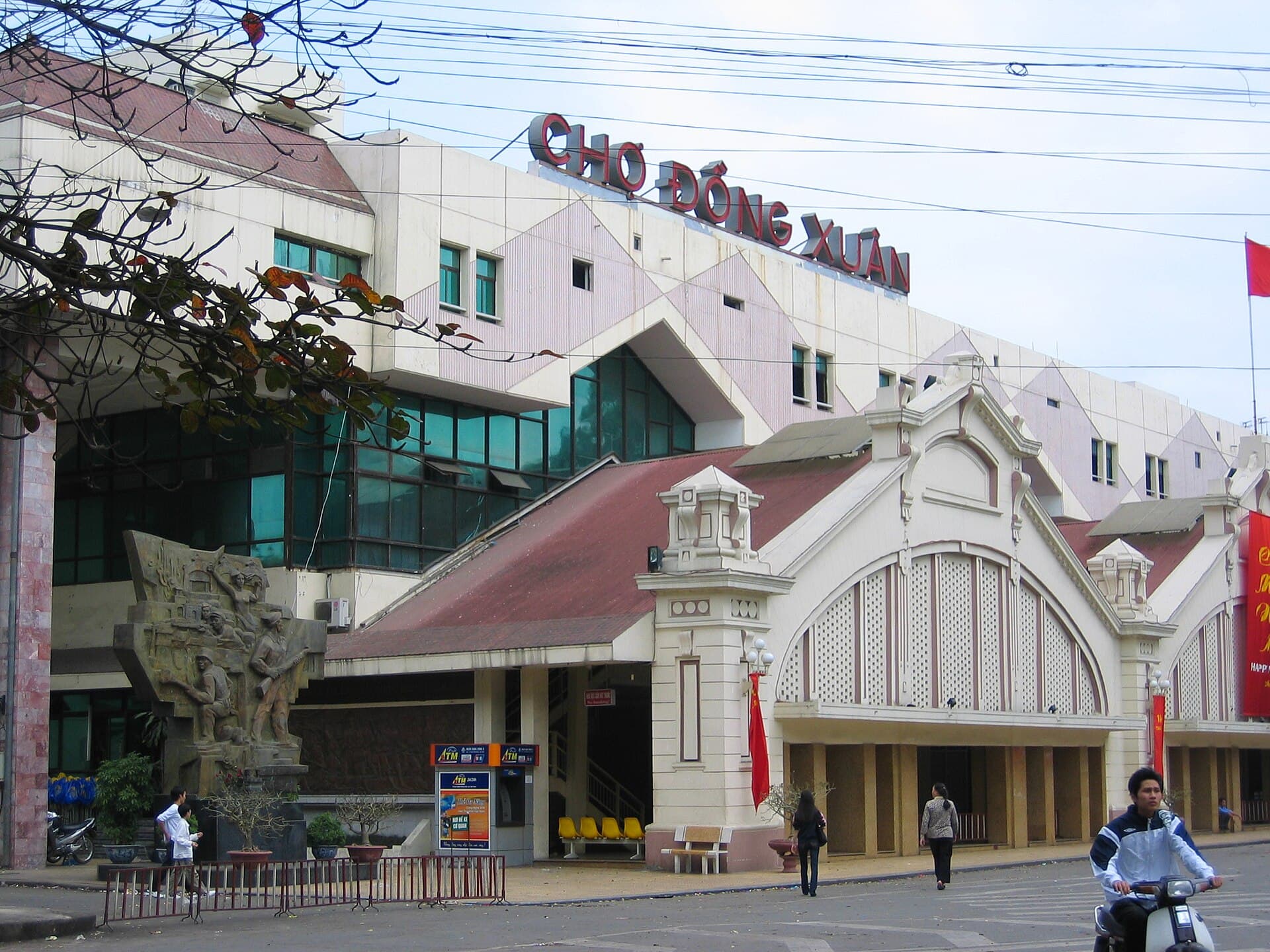
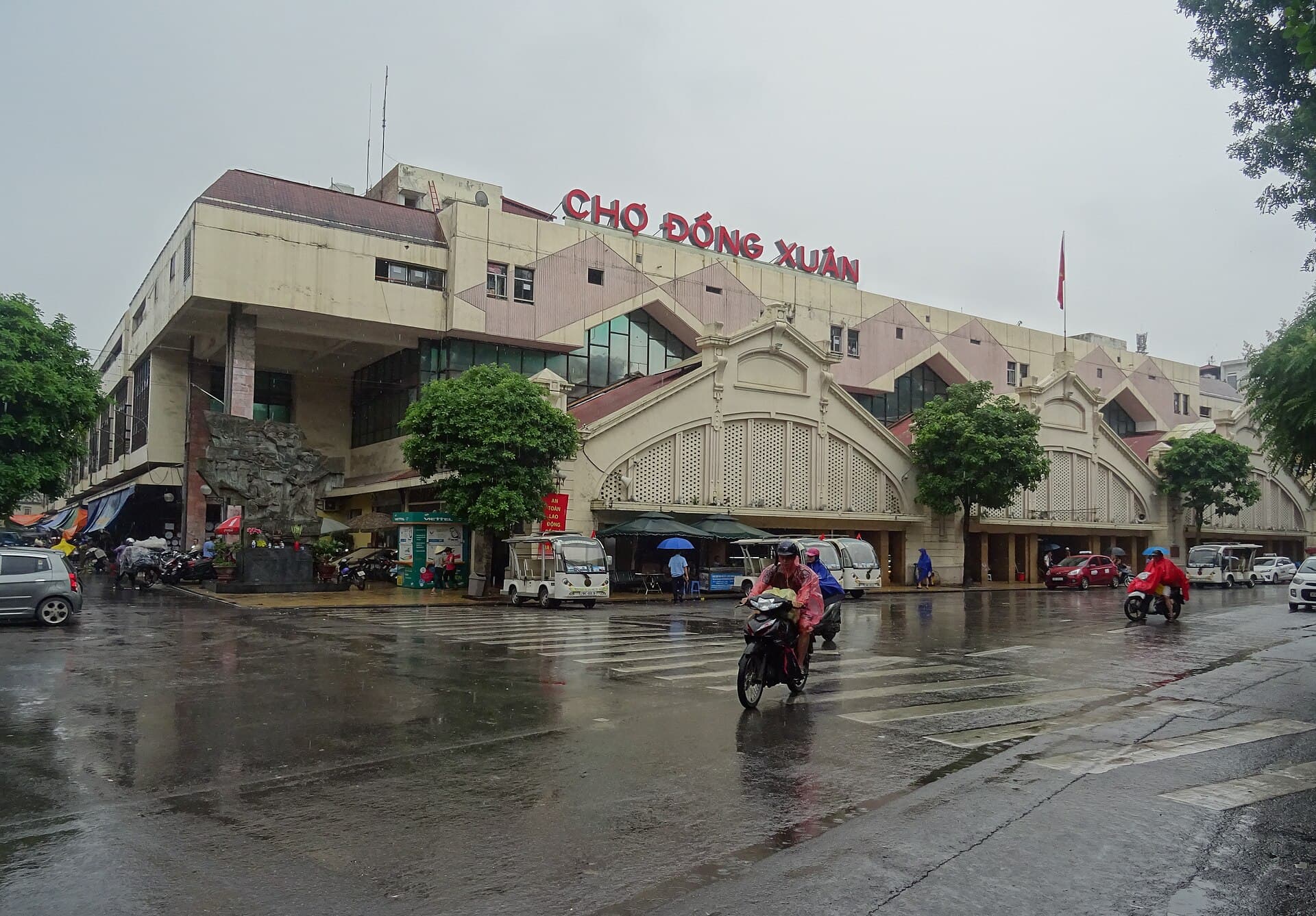
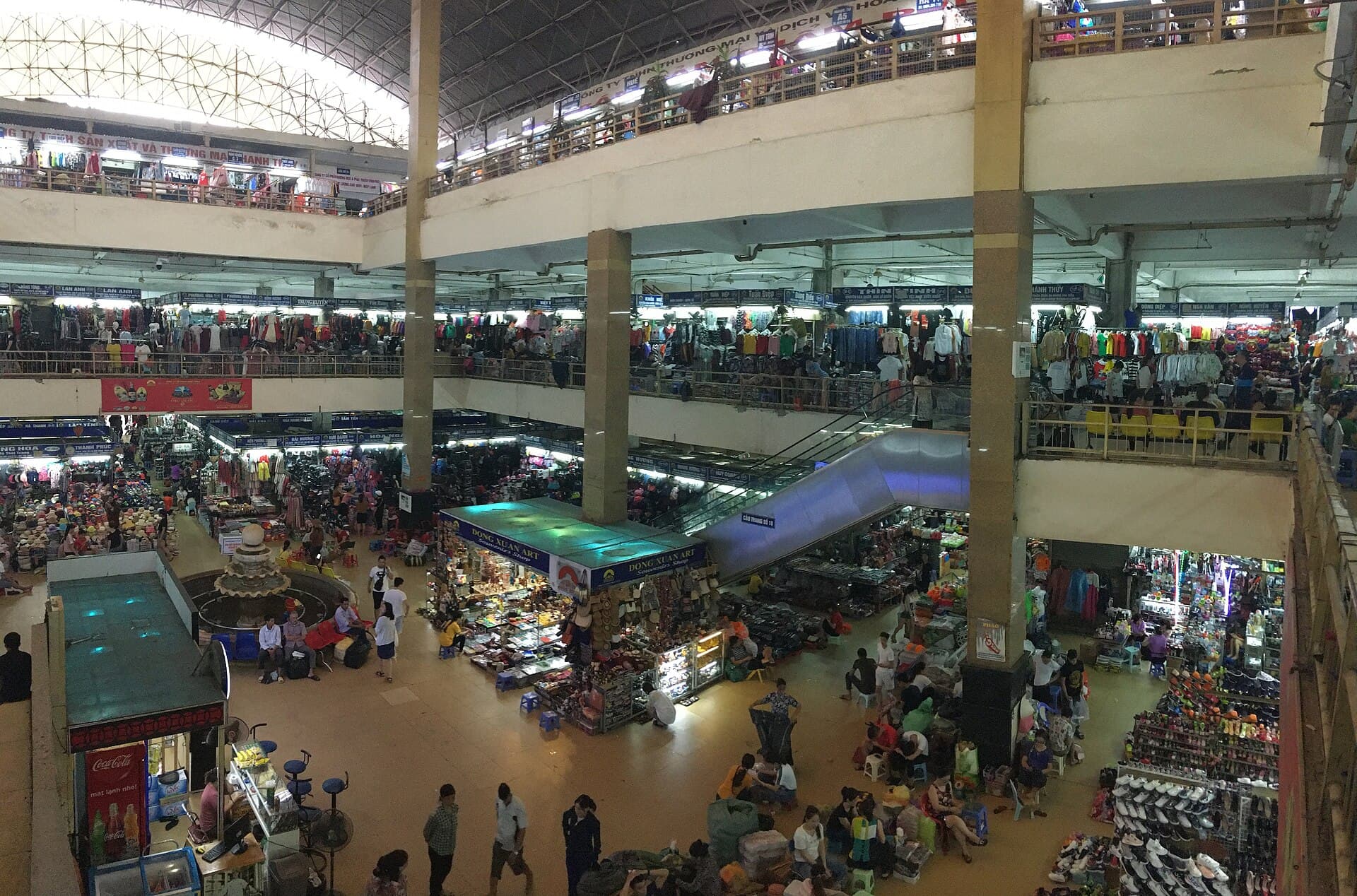
Dong Xuan Market: Count the Arches
The biggest covered market in Hanoi, where the guild logic was finally consolidated under one roof, and where you should count.
- 8
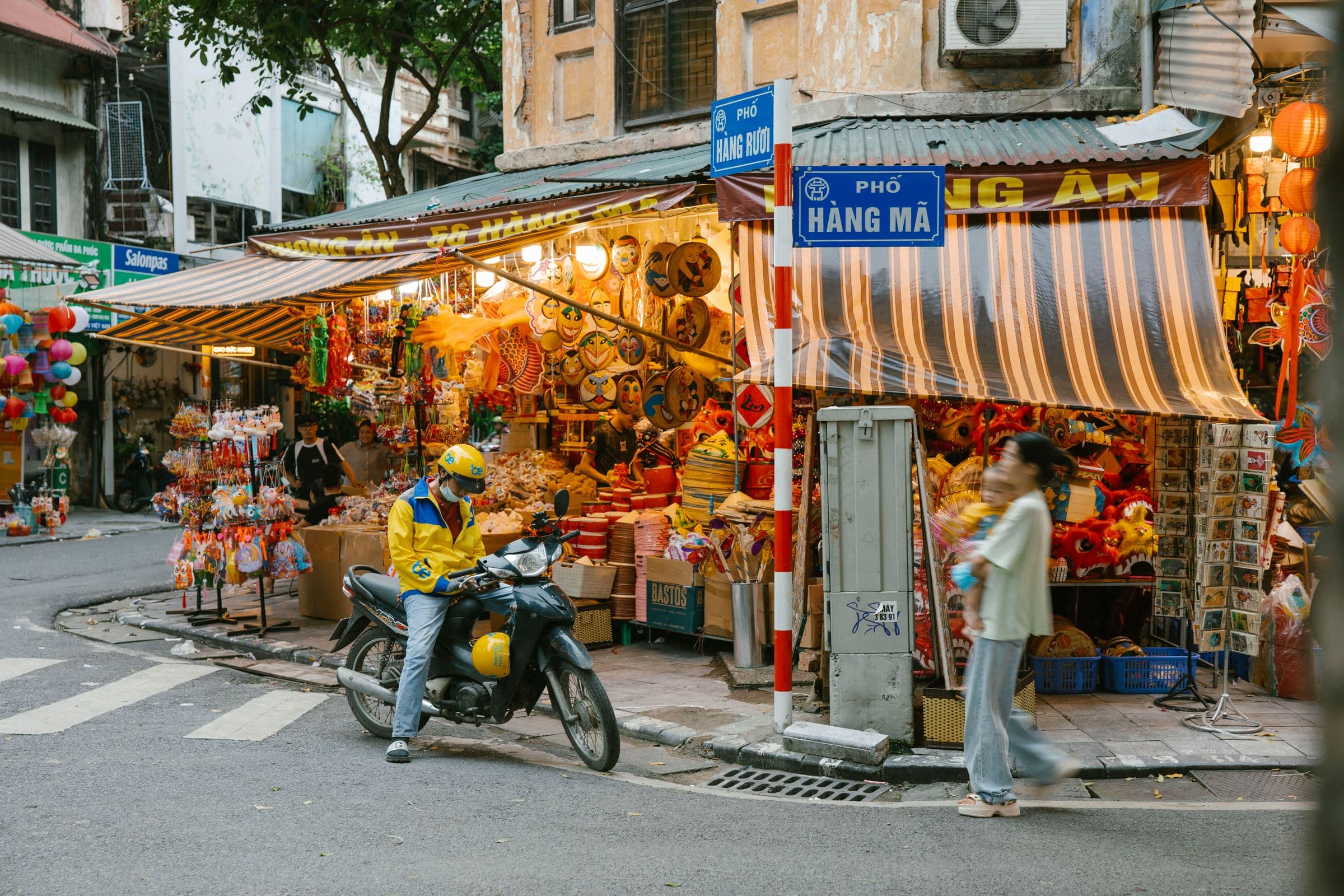
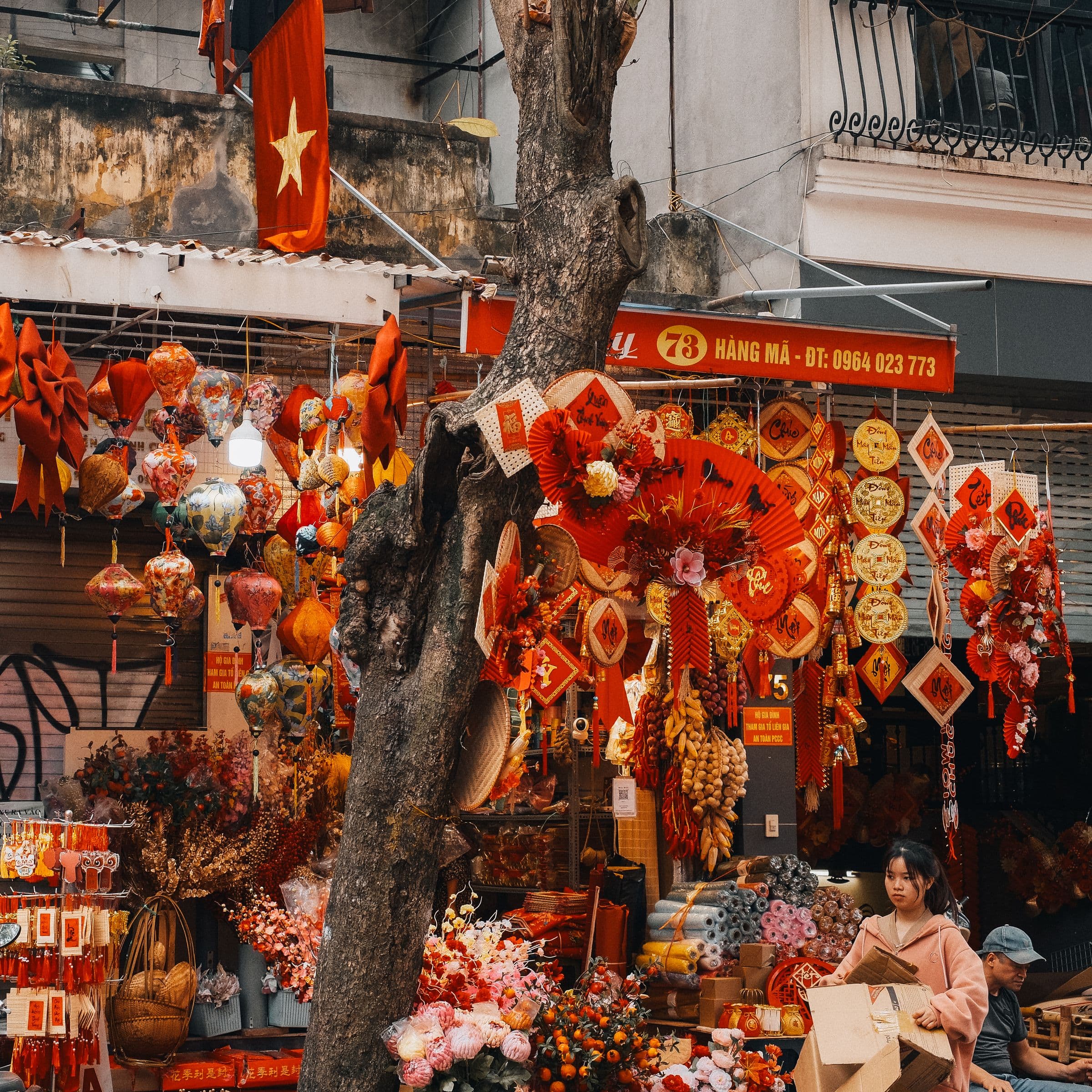
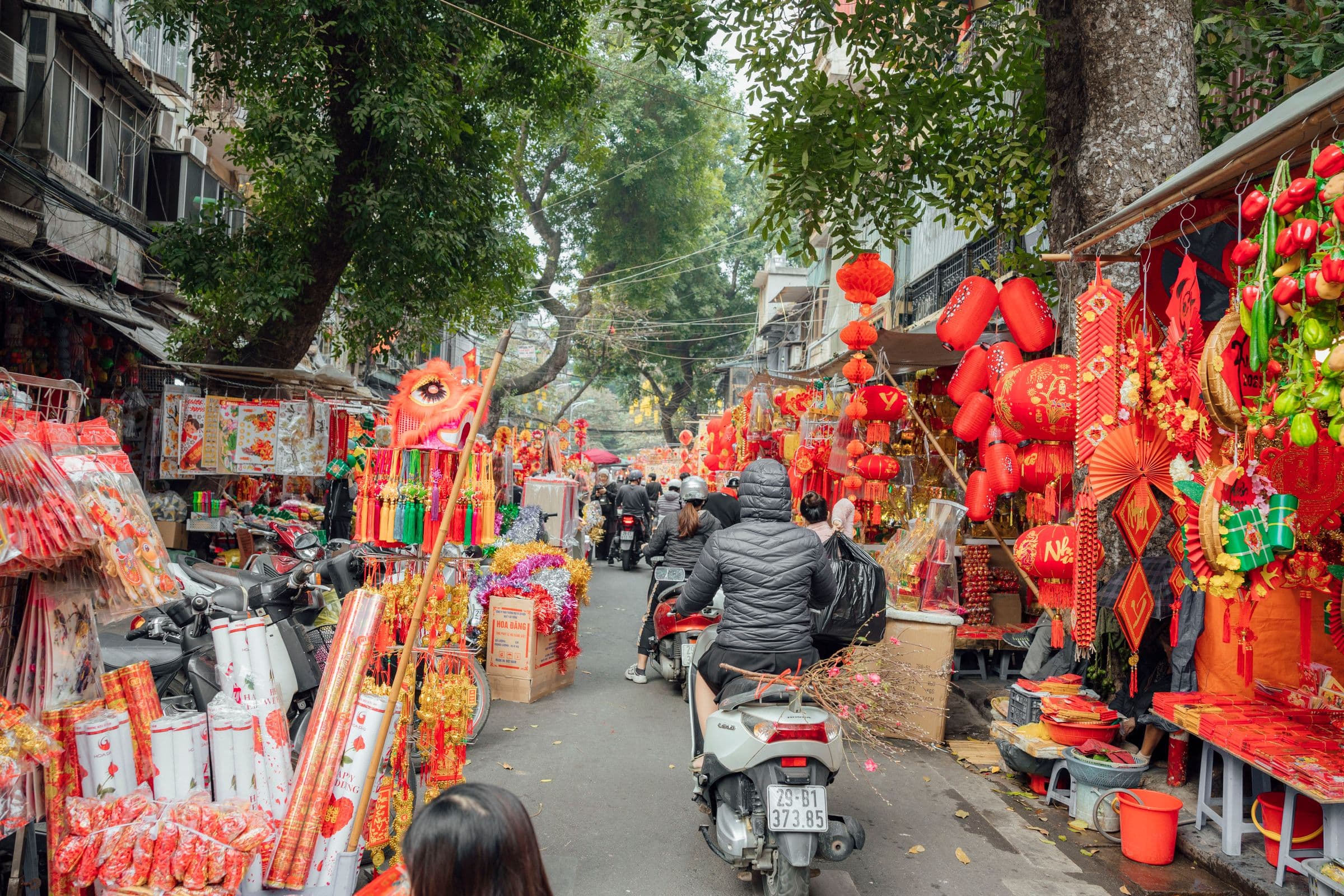
Hang Ma: The Street That Kept Its Trade
The street of paper burned for the dead, and an honest look at what it actually sells today.
- 9
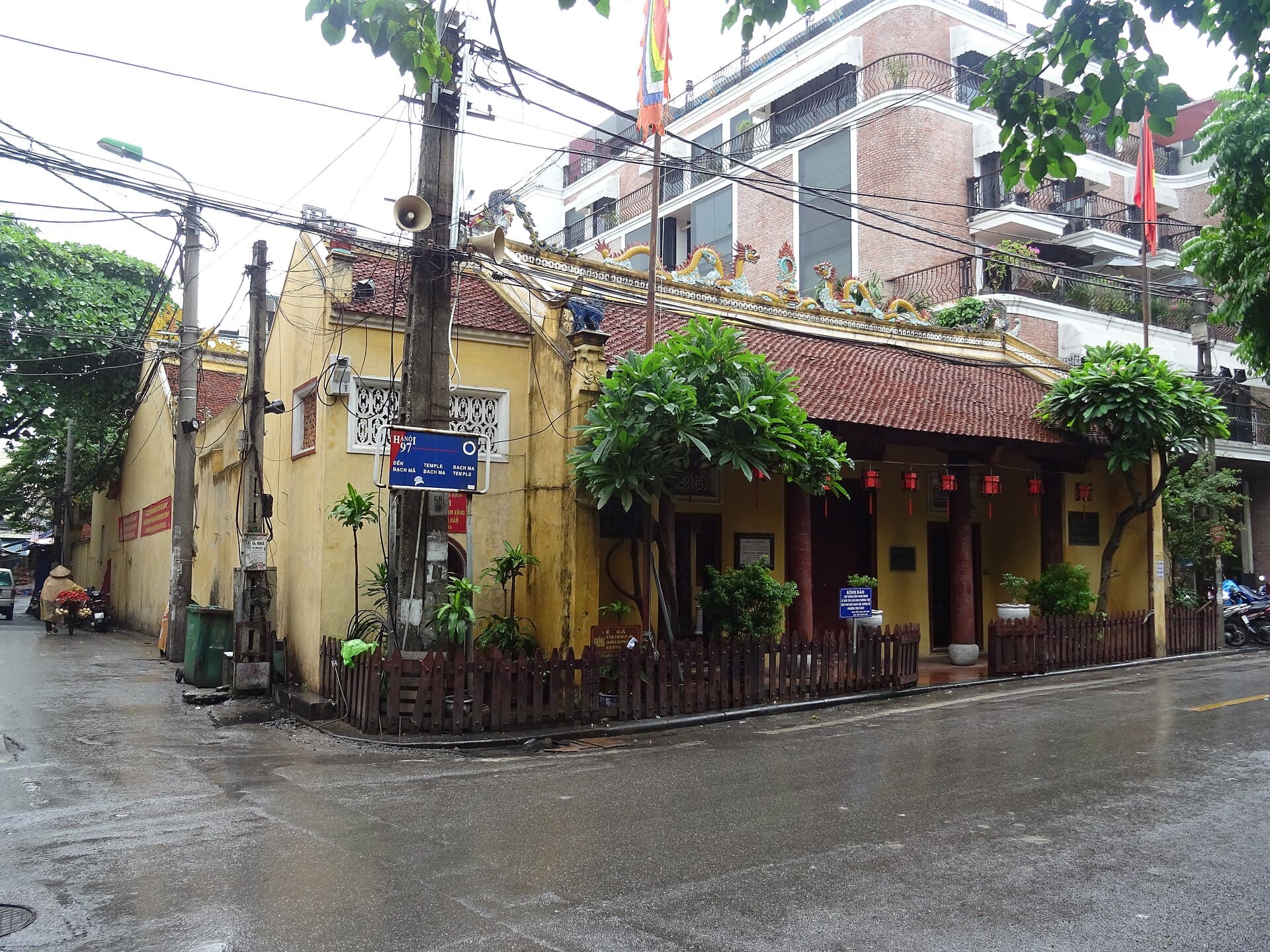
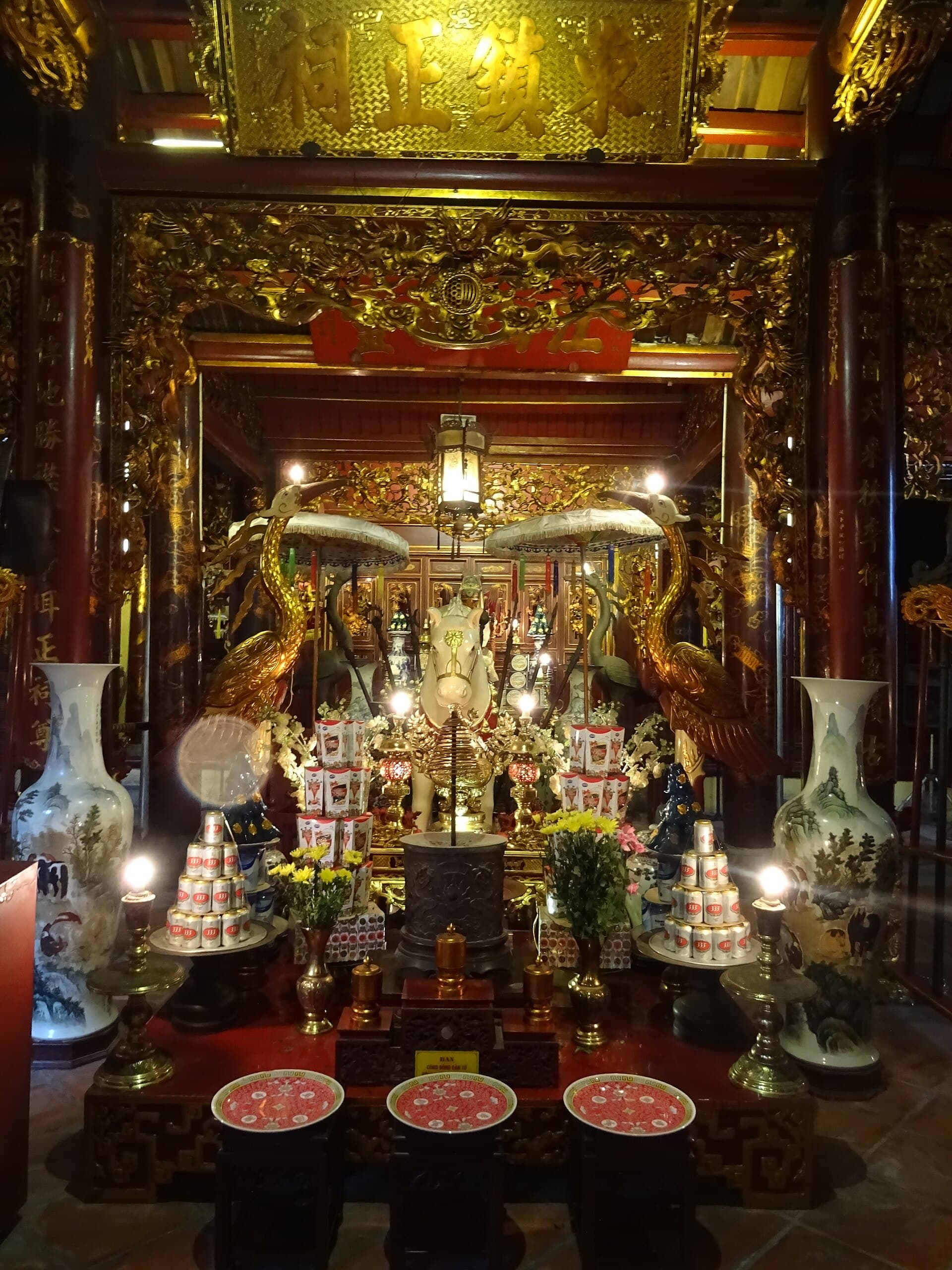
Bach Ma Temple: The Horse That Drew the Line
The oldest temple in the quarter, guardian of the city's eastern approach, built on a legend about where a wall should go.
- 10
48 Hang Ngang: The Dinner Table
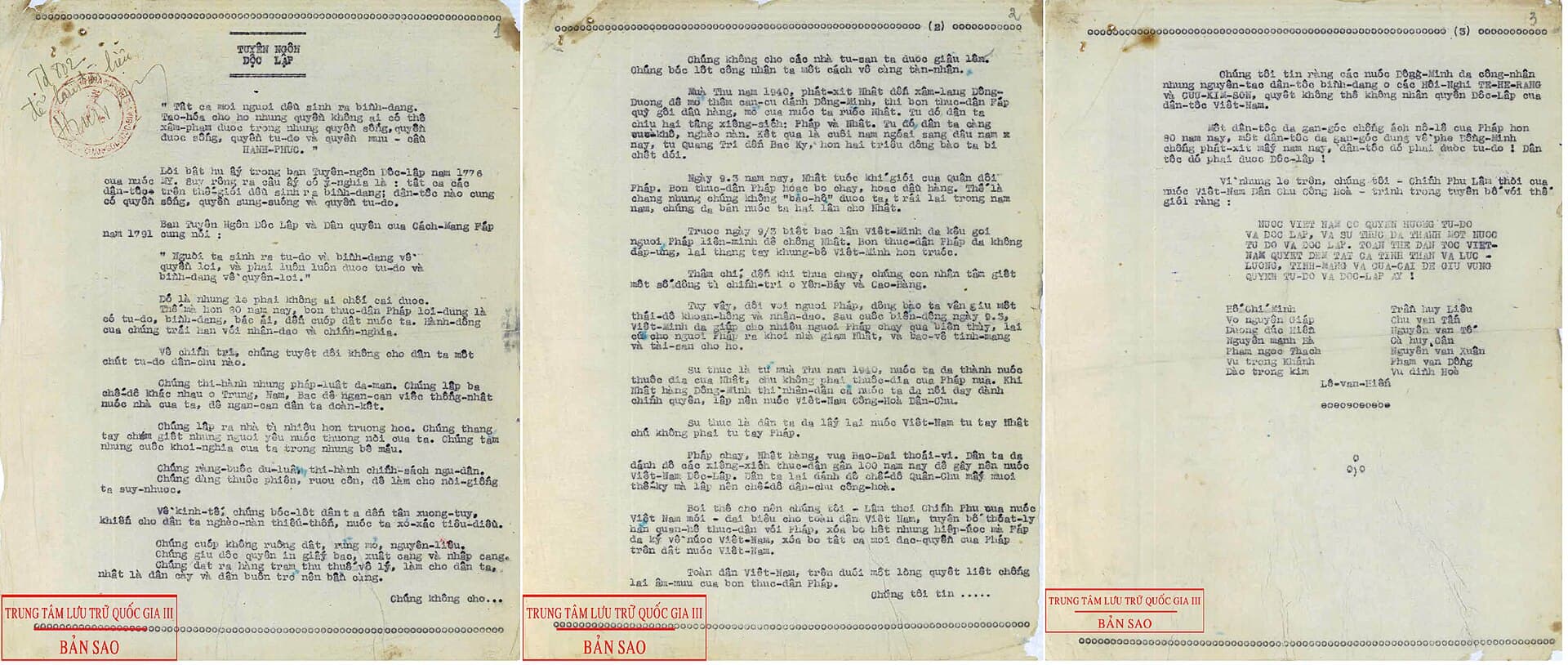
A silk merchant's house where Vietnam's Declaration of Independence was written, at the family dining table on the floor above the shop.
Details
Best Time to Visit
Mornings before about 10:00 are cooler and the guild streets are loading rather than selling, which is the version of this walk with the fewest people in it. Late afternoon gives the best light on the gate and the market facade. Since 1 July 2026 a low emission zone bans every road vehicle, electric ones included, from the southern core of the Old Quarter between 19:00 and midnight on Friday, Saturday and Sunday, and the streets further north close to traffic on the same nights as walking streets. A weekend evening is the quietest this walk ever gets. The ticketed heritage houses reopen 19:00 to about 21:00 on those evenings, so you lose nothing indoors except 48 Hang Ngang, which is closed all weekend.
Pro Tips
- •Four sites on this walk charge 20,000 VND by e-ticket: Dinh Kim Ngan, 87 Ma May, 22 Hang Buom and Bach Ma Temple. All are open every day, 08:00 to 12:00 and 13:30 to 17:30, with an extra evening slot from about 19:00 to 21:00 at weekends. They were free until December 2025, so older guides will tell you otherwise. Every stop on this walk is narrated from the street, so none of them is required.
- •48 Hang Ngang is free but open 08:00 to 17:00 Monday to Friday only. If seeing the room where the Declaration was written matters to you, walk this on a weekday.
- •Ngoc Son Temple is 50,000 VND, open 07:00 to 19:00 Monday to Thursday and 07:00 to 22:00 Friday to Sunday. The lakeside view of The Huc bridge, which is the shot everyone wants, costs nothing.
- •The block immediately east of the lake, between Dinh Tien Hoang and Ly Thai To, is a hoarded 2.14 hectare building site, the East Hoan Kiem square and park project. The lakeside promenade itself is still walkable, but the shore south of the bridge is hoarding for the next few hundred metres.
- •At the end, Hang Ngang runs into Hang Dao and straight back to the square and the lake, about 250 metres. Number 38 Hang Dao is Dinh Dong Lac, a seventeenth-century silk-market communal house that is now a lacquer and silk showroom with the worship hall kept upstairs. It is open 08:30 to 20:00 and there is no ticket desk.
- •Dong Xuan night market runs along Hang Dao, Hang Ngang, Hang Duong and Dong Xuan on Friday, Saturday and Sunday evenings, which pairs naturally with a late-afternoon start.
Safety & Precautions
- •Old Quarter traffic is constant and does not stop for pedestrians. Only the Friday to Sunday evening window clears it, and only on the streets inside the scheme. Cross at a steady, predictable pace and let riders steer around you rather than stopping dead in the road.
- •Pavements are often narrow and partly taken up by parked motorbikes and stacked goods, so you will sometimes be walking in the road. A city clearance campaign has been running since December 2025 and these streets were among the first targeted, so it is better than it was. Keep close to the kerb line and keep one earbud out.
- •All ten stops are narrated from the street. Nothing on this walk requires you to buy a ticket or go indoors, and GPS arrival does not work reliably inside the buildings anyway.
- •48 Hang Ngang is closed Saturday and Sunday, which is the one collision with the best-time advice above. The stop is written to be heard from the pavement.
- •Temples and communal houses on this route are active places of worship. Cover shoulders and knees, keep your voice down, and do not photograph people at prayer.
Travel advisory: Exercise Normal Precautions (Level 1).
Gallery
Related Reading
Go deeper on what you'll see, hear, and walk through.
Overview
Best Self-Guided Walking Tours in Hanoi (2026)
3 min
Overview
Hanoi Travel Guide: How Many Days, Getting Around, When to Go (2026)
7 min
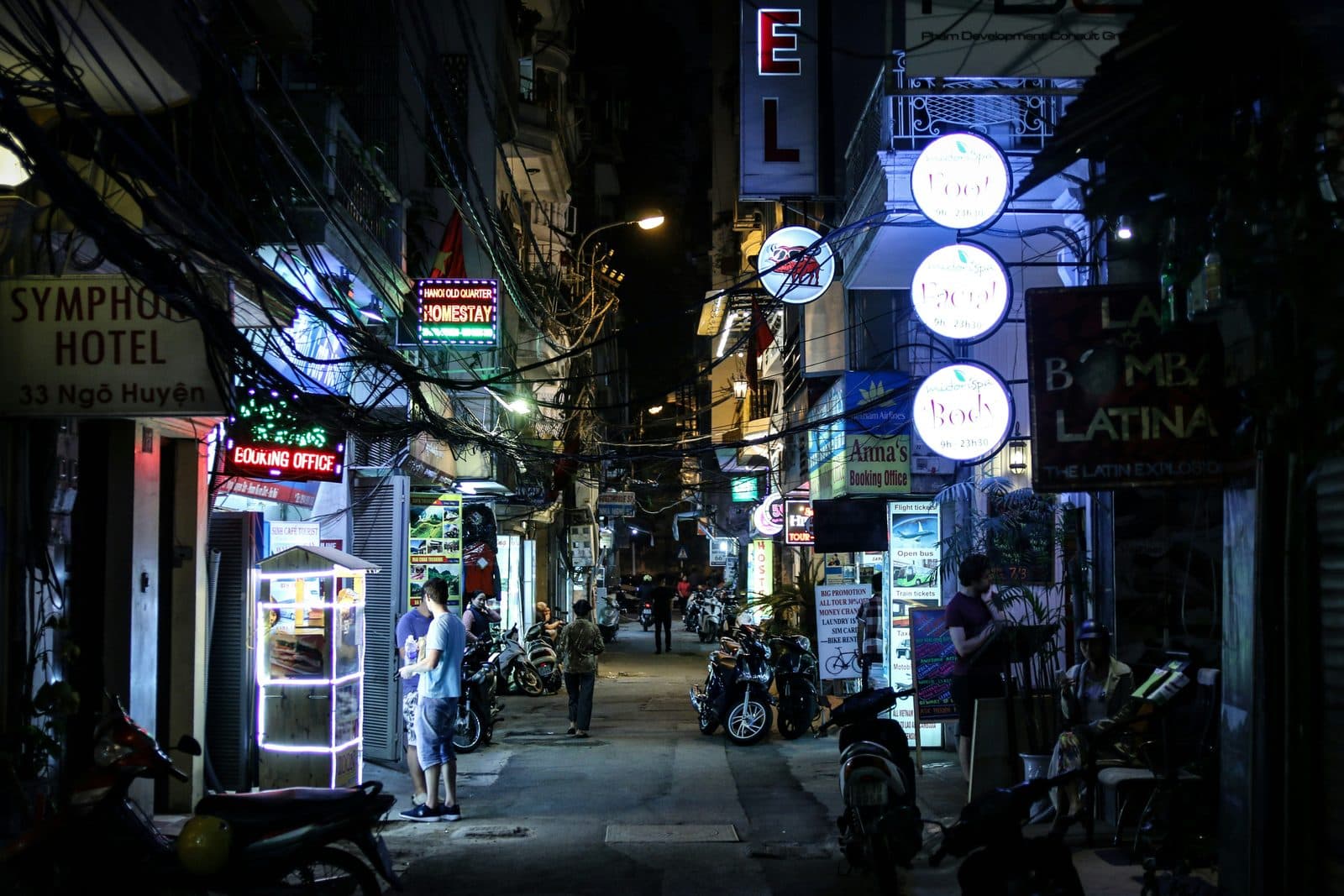
Overview
How to See Hanoi: A Capital Built on Top of Itself
7 min
Overview
One Day in Hanoi: A Walkable Old-Quarter-to-Lake Itinerary (2026)
7 min
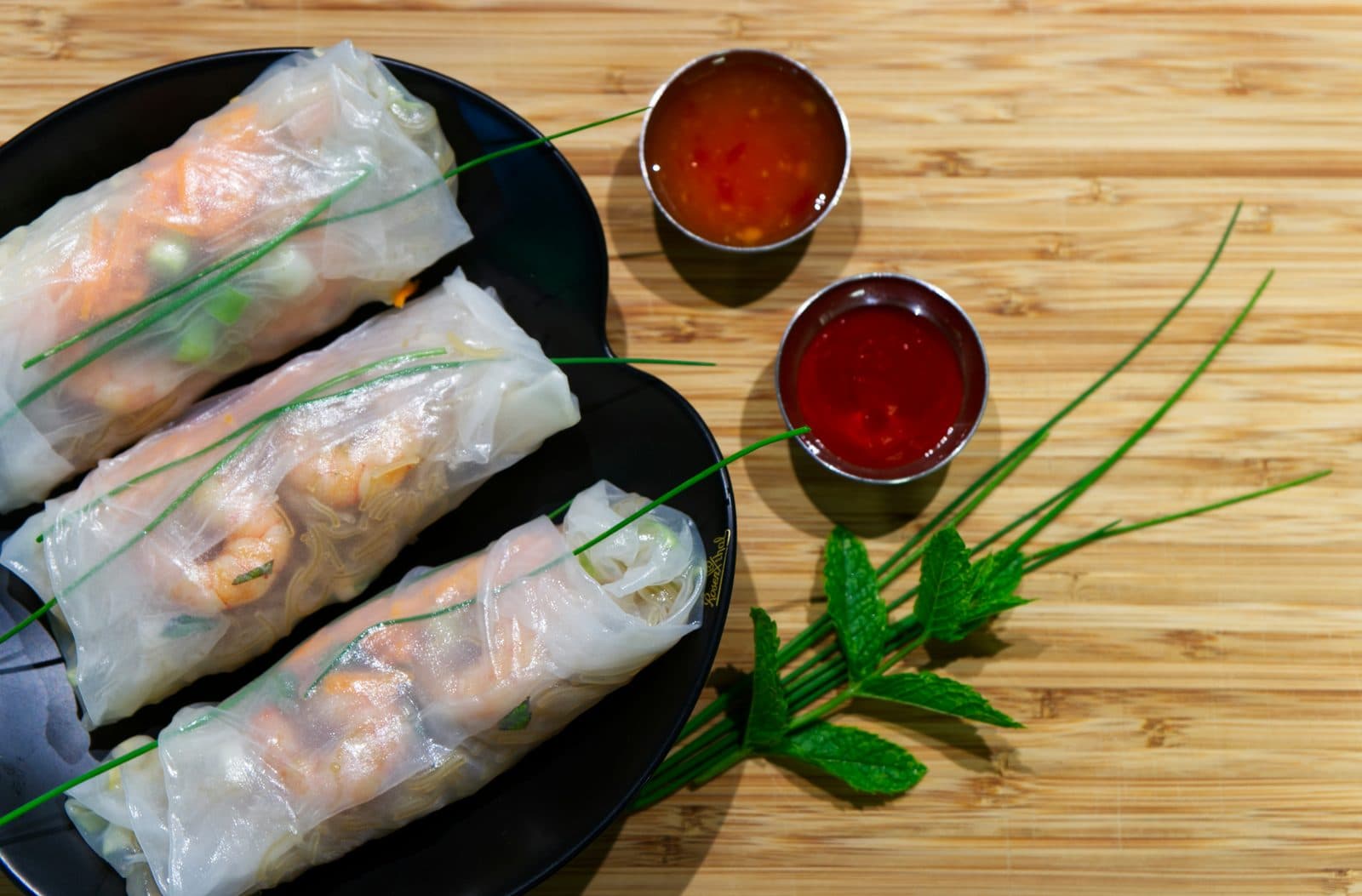
Thematic
What to Eat in Hanoi: A Food Guide (2026)
5 min
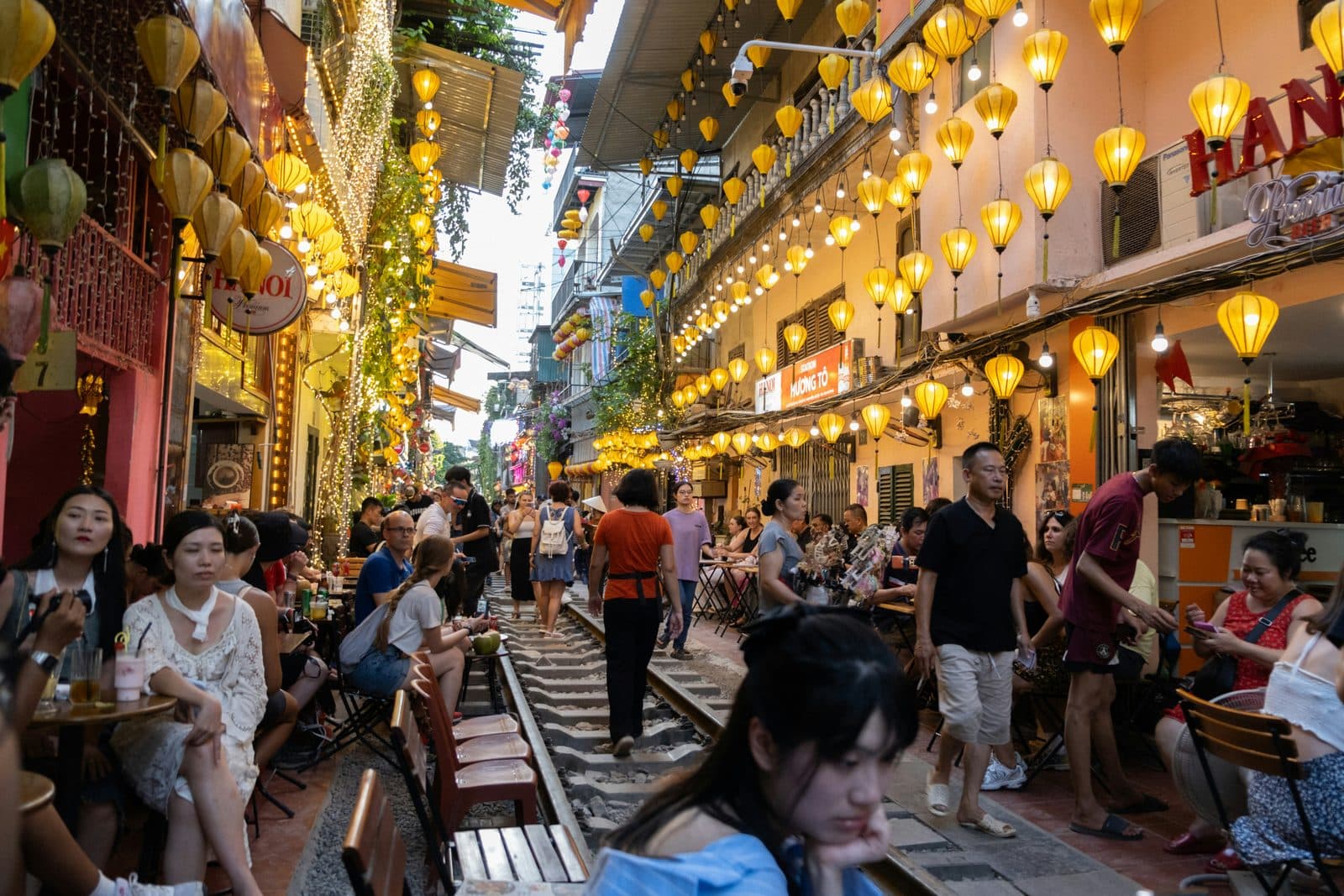
Companion
The Thirty-Six Streets: How to Read Hanoi's Old Quarter Like a Ledger
13 min
Read the walk
The full story of Old Quarter: The Thirty-Six Streets, in words. Prefer to listen? Play it narrated, from home or on location.
Introduction
One thing before we start, because the title of this walk is a trap. The famous thirty-six are not thirty-six streets. Under the Le dynasty this city was administered in thirty-six phuong, wards, and the number is exact arithmetic: eighteen wards in one district, eighteen in the other. Most of them were trade communities, and you can still read their names on the map, because the wards became the streets. The phrase entered the language through Thach Lam's book Hanoi Thirty-Six Pho Phuong, and by the time he wrote it more than fifty streets here began with Hang.
So do not count streets as you walk. Count trades. This is a self-guided walk through the oldest commercial quarter of Hanoi, the capital of Vietnam, and it covers ten stops across about two point four kilometres, roughly an hour and a half at your own unhurried pace. You set the rhythm. Stop when a doorway catches you, skip anything that does not.
The word holding it together is Hang, which means goods. Traders came in from the craft villages that ringed the city, clustered by trade near the eastern edge of the imperial capital, and named their streets after what they sold. Silver, votive paper, sails, salt. We begin at the lake, learn the grammar street by street, and finish at a house where the code produced something nobody planned. When you reach Hoan Kiem Lake, begin with stop one.
1. Hoan Kiem Lake and Ngoc Son Temple: The Lake of the Returned Sword
Welcome to Hanoi. You are standing on the east shore of Hoan Kiem, which means the Lake of the Returned Sword, and the story in that name is the story the whole city tells about itself.
In the oldest telling it was not the emperor who found the blade. A companion of Le Loi named Le Than pulled it from the water in his fishing net, and it carried two characters: Thuan Thien, in accord with Heaven. Le Loi had a sword forged from it and drove the Ming armies out of Vietnam. Later, boating on this water, he met a great golden turtle that took the sword back in its mouth and went under. The lake has had a run of names: Luc Thuy, Green Water, because it stayed green all year; Thuy Quan, when the navy drilled on it. Out in the middle you can see Thap Rua, the Turtle Tower, on its island.
Now the part that stops people. The last giant soft-shell turtle in this lake died in January twenty sixteen. She was preserved, and since twenty nineteen she has been on display inside Ngoc Son Temple, across the red bridge. The legend has a body, in a case, fifty metres from the water it came out of.
Look up before you go. The stone tower beside you is Thap But, the Pen Tower, raised in the eighteen sixties by the scholar Nguyen Van Sieu, and the characters up its shaft read Ta Thanh Thien: write on the blue sky. At its foot is Dai Nghien, an ink slab cut from one stone. A giant brush and a giant inkwell, aimed at the clouds.
The bridge past them is The Huc, and the temple beyond it is nineteenth century, far younger than the tale it seems to belong to. The lakeside path and the view are free. Walk round to the lake's north tip when you are ready, and mind the hoardings on the eastern side, which are a building site now.
2. Dong Kinh Nghia Thuc Square: Where the Grid Begins
This open ground at the lake's north tip is Dong Kinh Nghia Thuc square, the hinge of the city. South of you the lake, and the wide French-built avenues beyond it. North of you the streets narrow and start selling things.
It was called Vuon Dua once, the Coconut Garden, and the palms are not a pretty detail. This was a killing ground. The French beheaded Vietnamese resistance leaders here in the open and hung the heads on those trees so the city would see them: a scholar, Ta Van Dinh, in eighteen seventy-three; in eighteen eighty-seven, Nguyen Cao, a poet and top exam graduate who had taken up arms. Only afterwards did they lay out a square and name it Place Negrier.
Then in the summer of nineteen forty-five Hanoi got its first Vietnamese mayor, Tran Van Lai. He had about a month in the job and spent it stripping the French names off the city. In July he gave this square the name it still carries.
The Dong Kinh Nghia Thuc was a school, and it taught for free. It opened in March nineteen oh seven, led by Luong Van Can and Nguyen Quyen, and it taught quoc ngu, the romanised script that is now simply how Vietnamese is written, alongside history, maths, science, French and Chinese. A modern education in the students' own language, which was exactly what the French had not provided.
And it happened right here. It opened upstairs at number four Hang Dao, a few steps up the street, and spread into number ten next door, which still carries the marker. The French shut it inside a year.
So the square at the mouth of a neighbourhood written in code is named for a school that taught people to read. The street running north is Hang Dao, the silk street, named for the peach-red they dyed it. You come back down it at the end. For now go east along Cau Go, then turn up Dinh Liet, the quieter lane, for Hang Bac.
3. Dinh Kim Ngan: The Ancestor of Every Trade
You are on Hang Bac, Silver Street, and the gateway on your left at numbers forty-two and forty-four is Dinh Kim Ngan, the communal house the silversmiths built for themselves.
The trade arrived here by order. In fourteen sixty-one, under Le Thanh Tong, a court minister named Luu Xuan Tin was authorised to open a royal workshop in the capital. He came from a silversmithing village called Chau Khe, and he staffed the workshop with his own neighbours, who came to the city and stayed. What they cast was not coins. It was silver ingots for the crown, and the casting works stood a little further along at number fifty-eight. Those settlers raised two communal houses to their craft ancestor. Only this one survives.
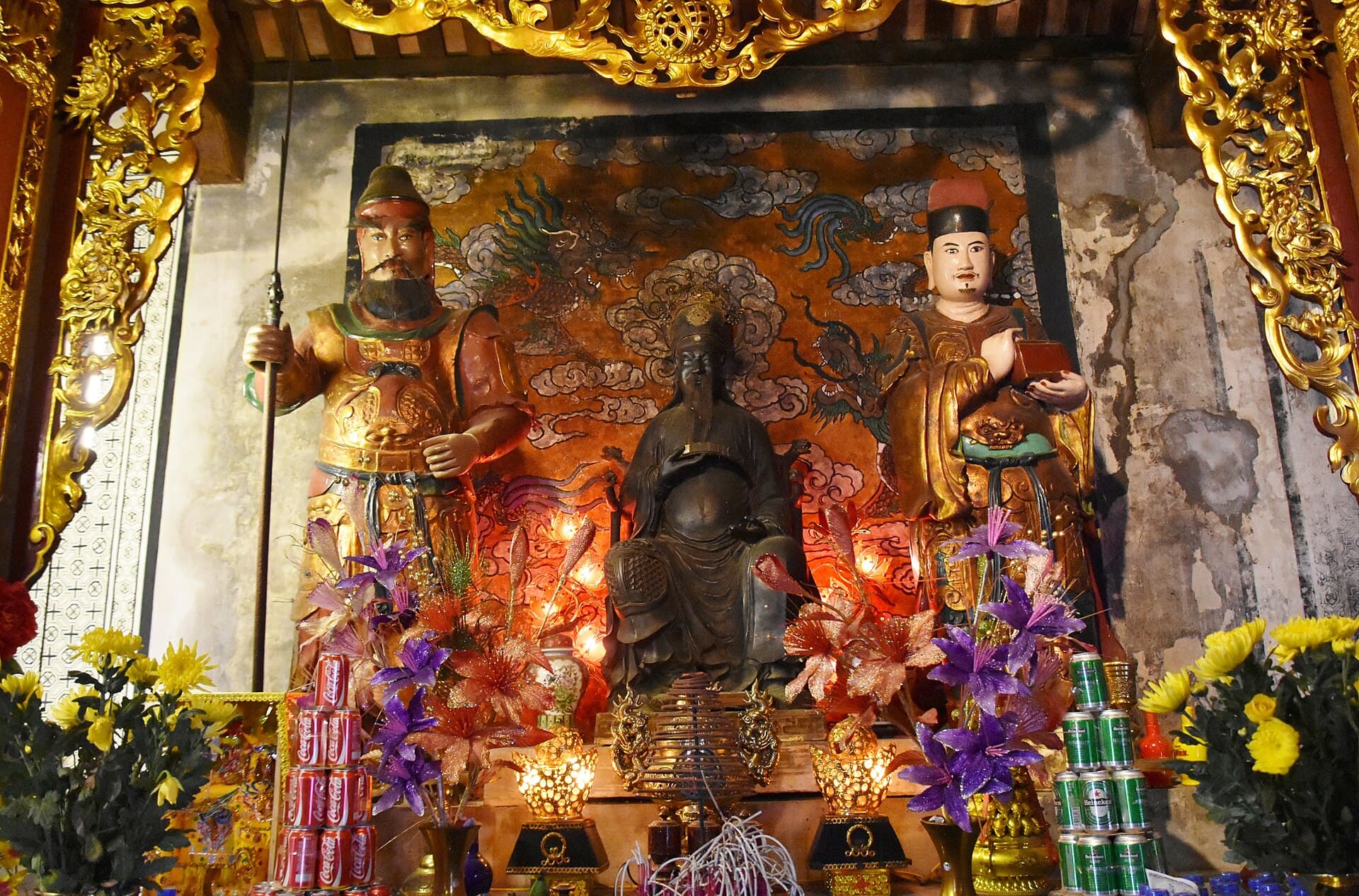
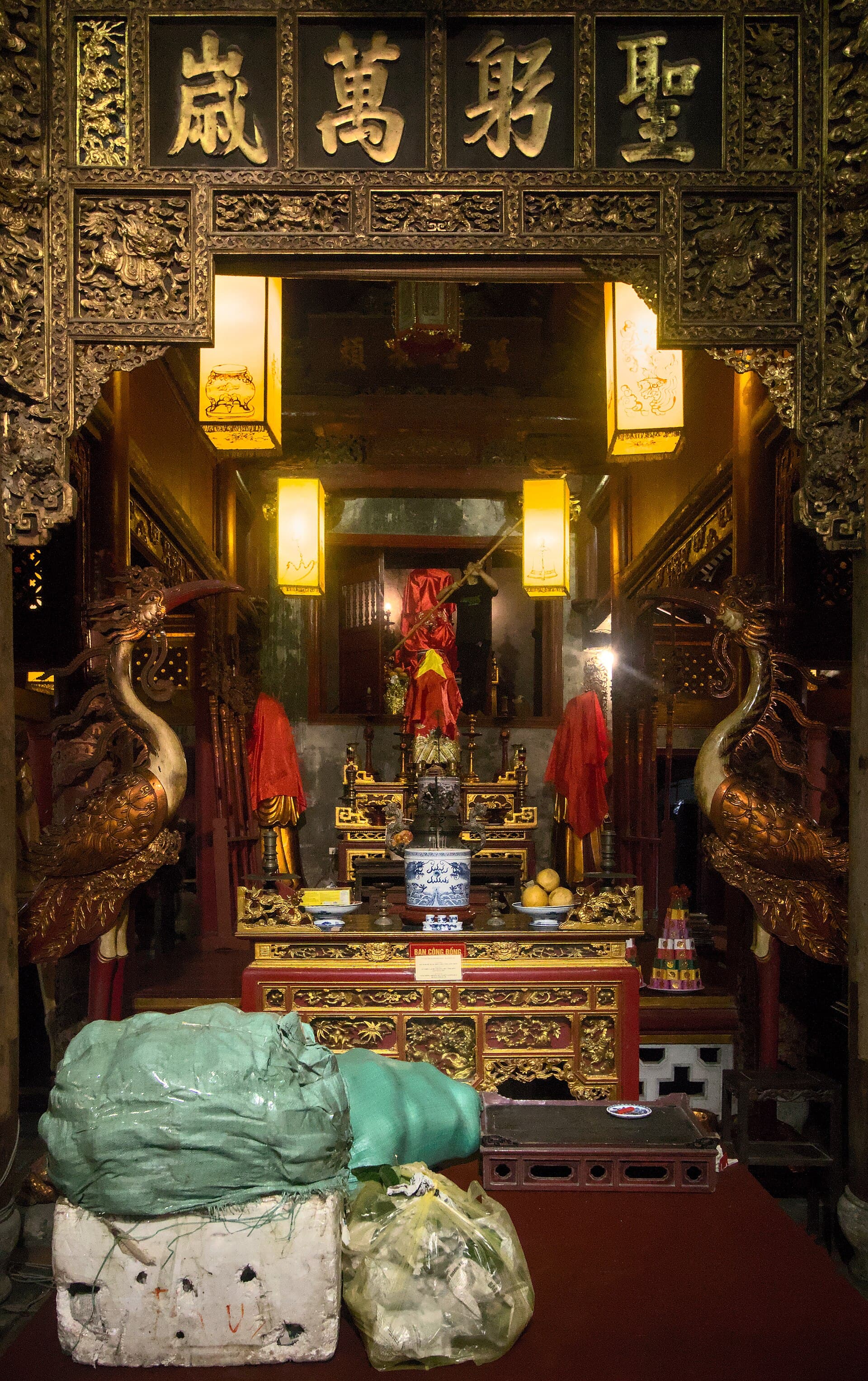
Here is the detail worth walking in for. Dinh Kim Ngan is not dedicated to the patron of metalworking. It is dedicated to Hien Vien, venerated as ong To Bach Nghe, the ancestor of all hundred crafts, the one who gave rise to every trade. The richest guild in the quarter did not build a shrine to silver. It built one to the whole idea of having a trade. That is the argument of this walk, carved into a doorway, by the people who were living inside it.
Behind the gate is a courtyard, a front hall and a rear sanctuary, about five hundred and seventy-five square metres on a tube plot, which makes it one of the largest communal houses left in the quarter.
And the trade outlasted the state that summoned it. In the early eighteen hundreds the Nguyen court packed the ingot works off to Hue. The silversmiths stayed, turned to jewellery and money-changing, and are still working the metal along this street. Carry on to Ma May.
4. 87 Ma May: The Shape of a Trading House
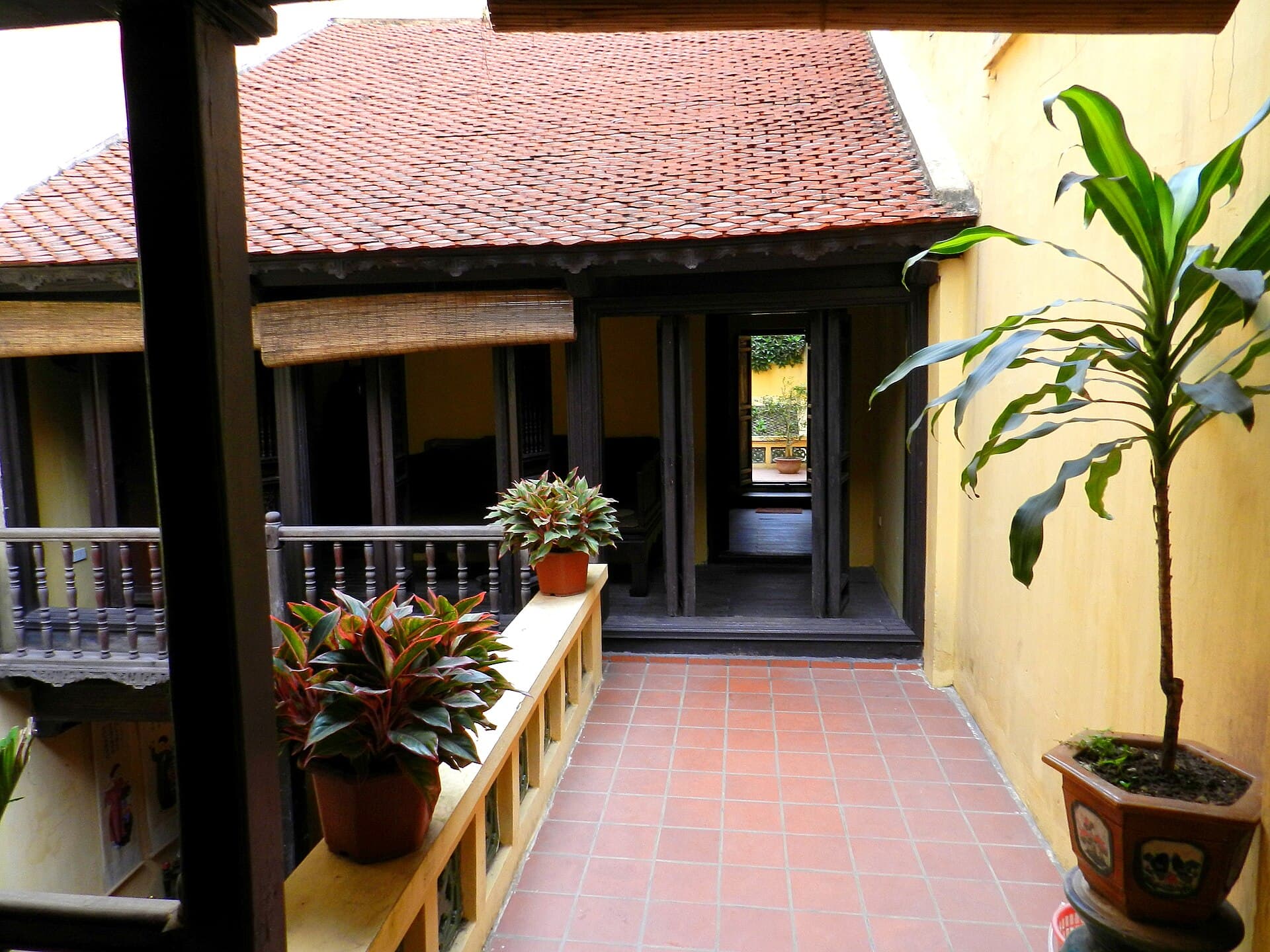
Number eighty-seven Ma May is on your right, and it is the building block of everything you have been walking through. This is a tube house, nha ong. From the street it looks modest, about five metres wide. It runs twenty-eight metres straight back, widening slightly to six…
Full narration for this stop unlocks with the tour.
5. Hang Buom: The Merchants Who Came From Further
Hang Buom means Sail Street, and the name is literal. The people here bought sedge off the river boats and wove it into mats and into sails. Then, in the eighteen hundreds, a second merchant community took the street over. The building on your right at number twenty-two is the…
Full narration for this stop unlocks with the tour.
6. O Quan Chuong: The Last Gate of the Rampart
The gate ahead is O Quan Chuong, and it is usually described wrongly. This is not a citadel gate. The citadel was a different and grander thing two kilometres west, and it still has gates of its own. This is a cua o: a gate in the earthen rampart that ringed the merchant city…
Full narration for this stop unlocks with the tour.
7. Dong Xuan Market: Count the Arches
Dong Xuan is ahead of you, the largest covered market in Hanoi, and this is where the medieval logic of one trade per street ran into the industrial age. First, count the arches on the facade. There are three. There were five. The market was built by order of the French…
Full narration for this stop unlocks with the tour.
8. Hang Ma: The Street That Kept Its Trade
Hang Ma means the street of votive papers, and it is the one everybody photographs, so let me be straight with you about what you are looking at. Most of what is hanging over your head is festival stock. Lanterns, masks, lion heads, red for the Lunar New Year, and in December…
Full narration for this stop unlocks with the tour.
9. Bach Ma Temple: The Horse That Drew the Line
Number seventy-six Hang Buom, on your left, is Den Bach Ma, the White Horse Temple, and it is the oldest sacred site in the Old Quarter. The guild house on Hang Bac was one trade protecting itself. This is the whole eastern quarter's guardian. Inside, the temple honours Long…
Full narration for this stop unlocks with the tour.
10. 48 Hang Ngang: The Dinner Table
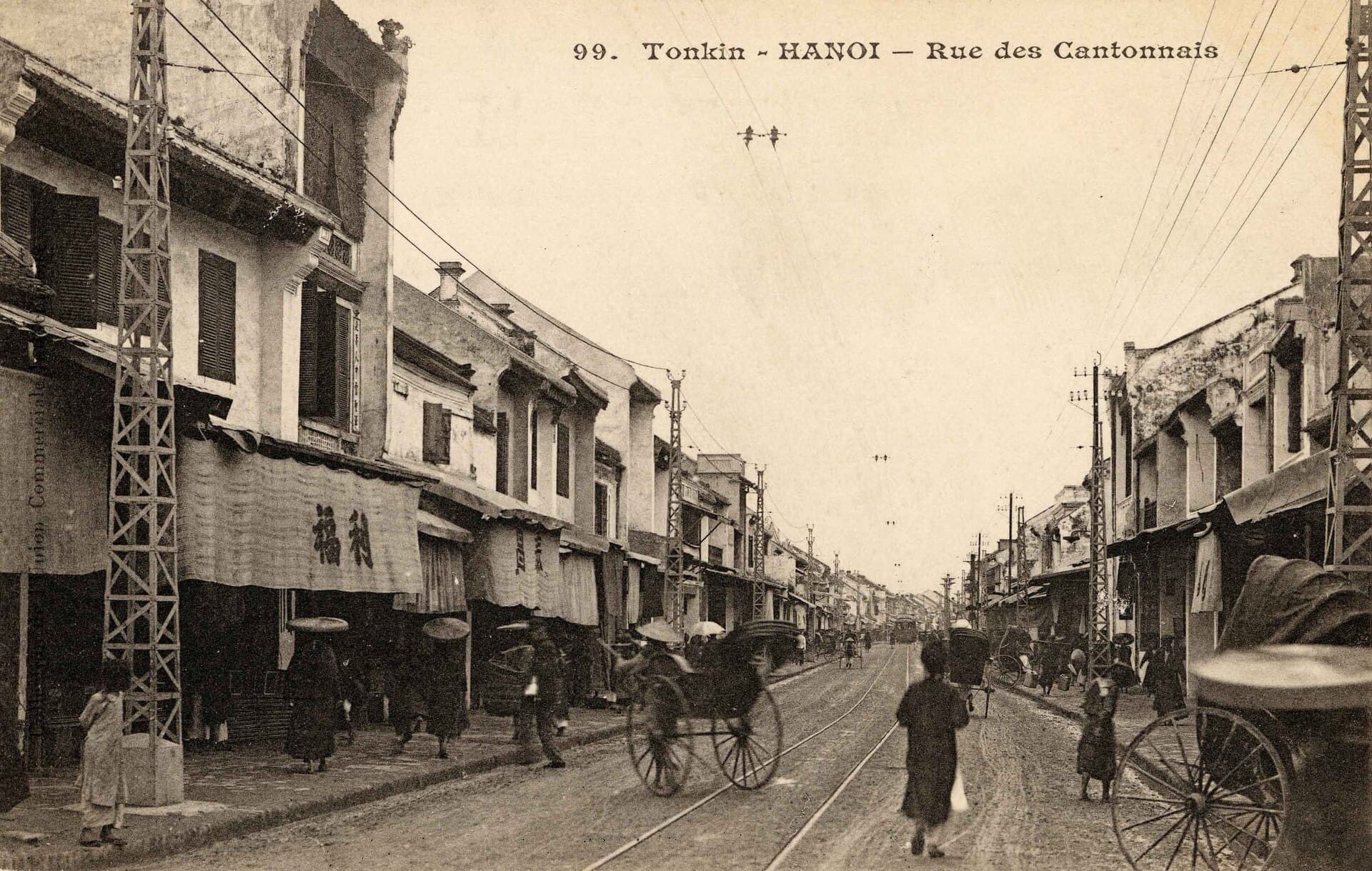
Number forty-eight Hang Ngang is just ahead of you on the right, and it looks like every other shophouse on this street, which is the point. The street first. The French called it Rue des Cantonnais, because the merchants whose hall you stood outside on Hang Buom lived along…
Full narration for this stop unlocks with the tour.