The European Solidarity Centre is the resolution of a sentence that a Gdansk waterfront walk spends two hours reading aloud. That sentence begins down on the Motlawa quay, where a medieval Baltic port made this city rich, and its subject is trade: a giant crane, a street of amber, an island of granaries. Then the route turns north into the industrial shipyard, and the predicate becomes freedom. The rust-orange museum beside Gate Number Two, where a strike in August nineteen eighty produced Solidarity, is where that sentence lands. Read the Centre first and you understand the whole walk. Walk the whole route and the Centre stops being a museum and becomes an ending you have earned.
A Building Shaped Like a Ship
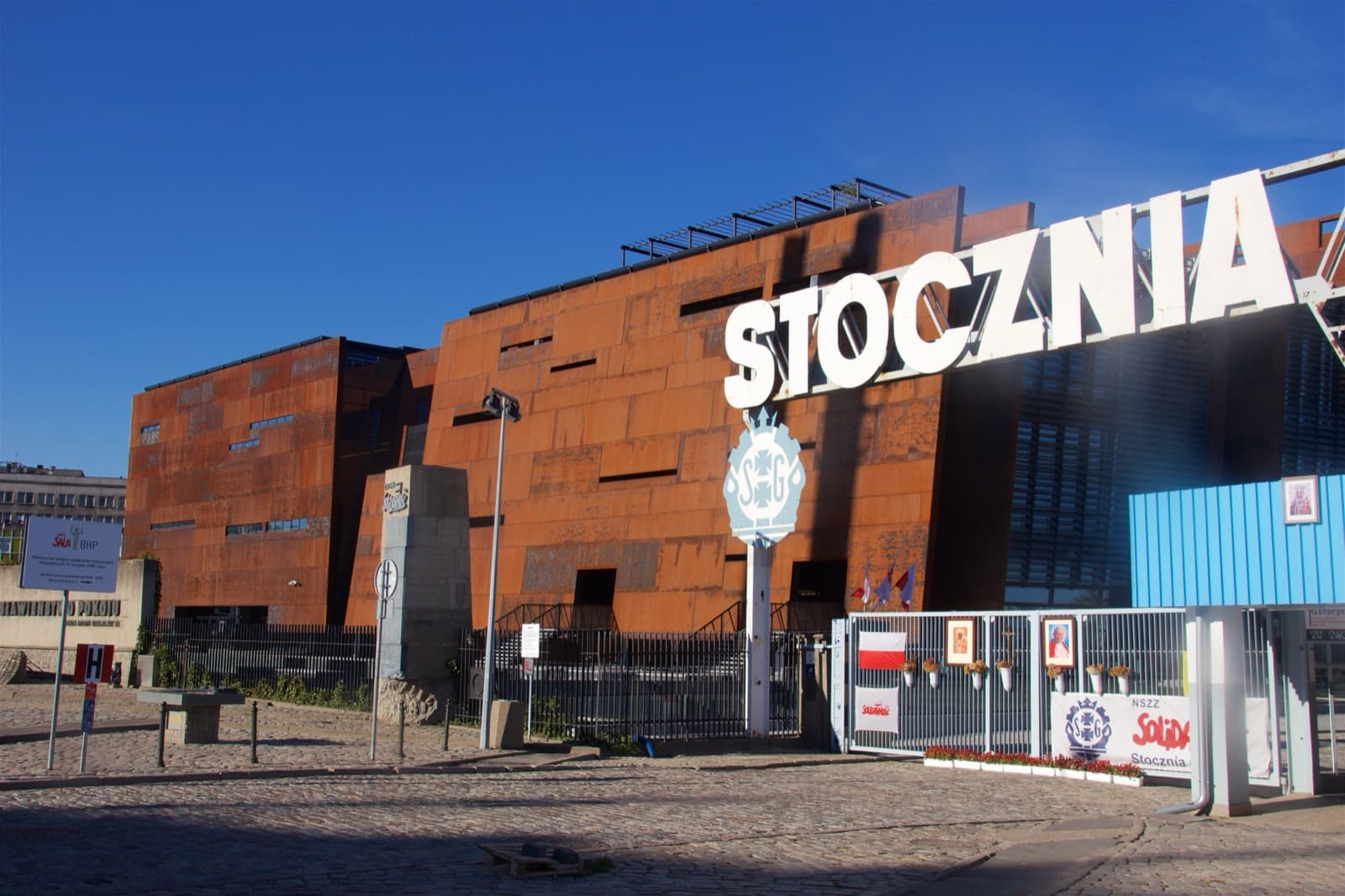
The Centre, in Polish Europejskie Centrum Solidarnosci, opened on the thirty-first of August twenty fourteen, chosen deliberately as the anniversary of the signing of the Gdansk Agreement. Lech Walesa, the electrician who led the strike that started everything, was there for the opening. The walls are made of weathering steel, that deep rust-orange metal that oxidizes into a protective skin, and they were designed to evoke the hulls of the ships built at this shipyard. You do not walk up to a marble temple to democracy. You walk up to something that looks like it was cut from a vessel, because that is the point. The people who made history here made ships.
Inside is a museum and archive devoted to Solidarity, the union and civil-resistance movement founded in the strike of August nineteen eighty. By the Centre's own account, ten million Poles joined the Solidarity trade union under the nineteen eighty agreements, the only free mass social organization in the communist bloc. That number does the heavy lifting. In a state where the party claimed to speak for the workers, ten million workers organized themselves and said otherwise. Then came the reversal the Centre does not soften. Martial law was introduced in Poland on the thirteenth of December nineteen eighty-one, with mass arrests and the banning of the union. The story could have ended there, in a jail cell. It did not. The Centre describes Poland's bloodless transition of nineteen eighty-nine as helping bring down the Berlin Wall and the dictatorships across Central and Eastern Europe.
That is why the anchor stop is a good way to understand the argument of the entire route before you walk it. The Centre is where the movement keeps its own account, and it frames the last line of the walk: down at the river, trade; up here, freedom.
The Trade That Came First
Hear a stop from this walk
The Green Gate and the Long Bridge Waterfront
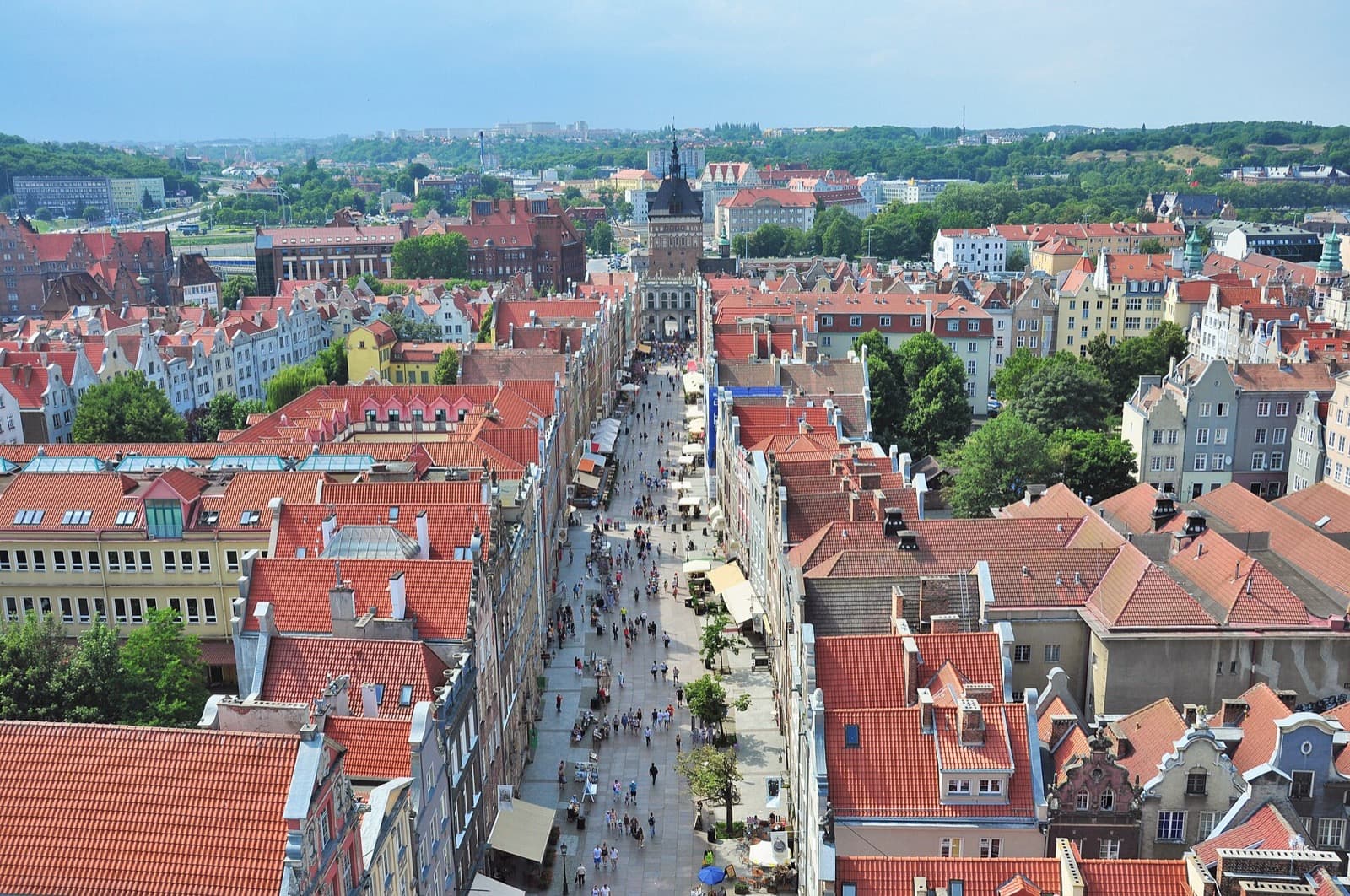
To feel the ending, you have to walk the beginning, and the beginning is beautiful. The tour opens at the Green Gate, the formal river gate built in the fifteen sixties by the architects Regnier of Amsterdam and Hans Kramer, in a Flemish Renaissance style. It was meant as a lodging for visiting Polish monarchs, though they rarely stayed. Behind it runs the Long Bridge waterfront, which sounds ornamental and was in fact the working quay of the port, the place where the Baltic trade came ashore and made Gdansk one of the great ports of northern Europe.
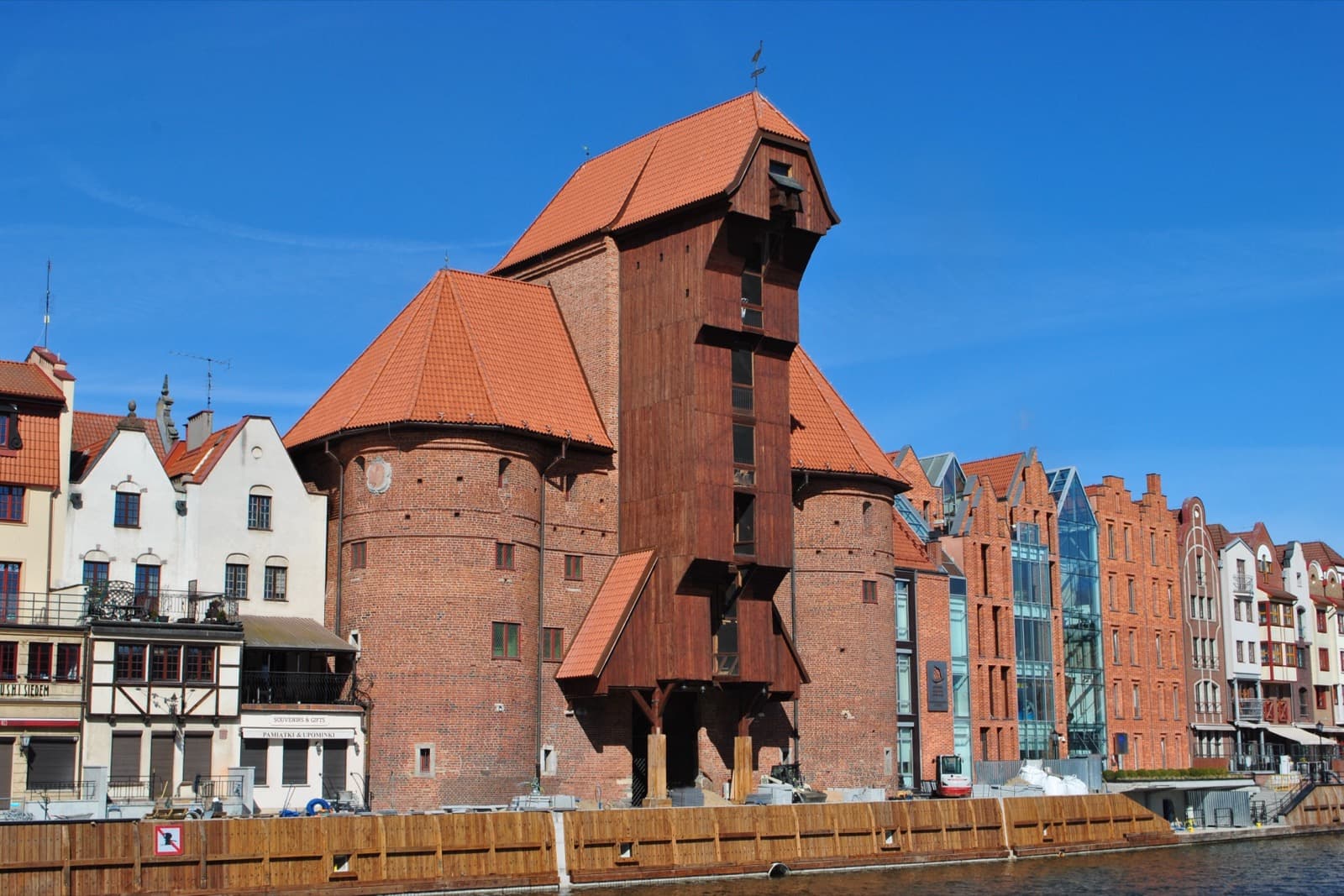
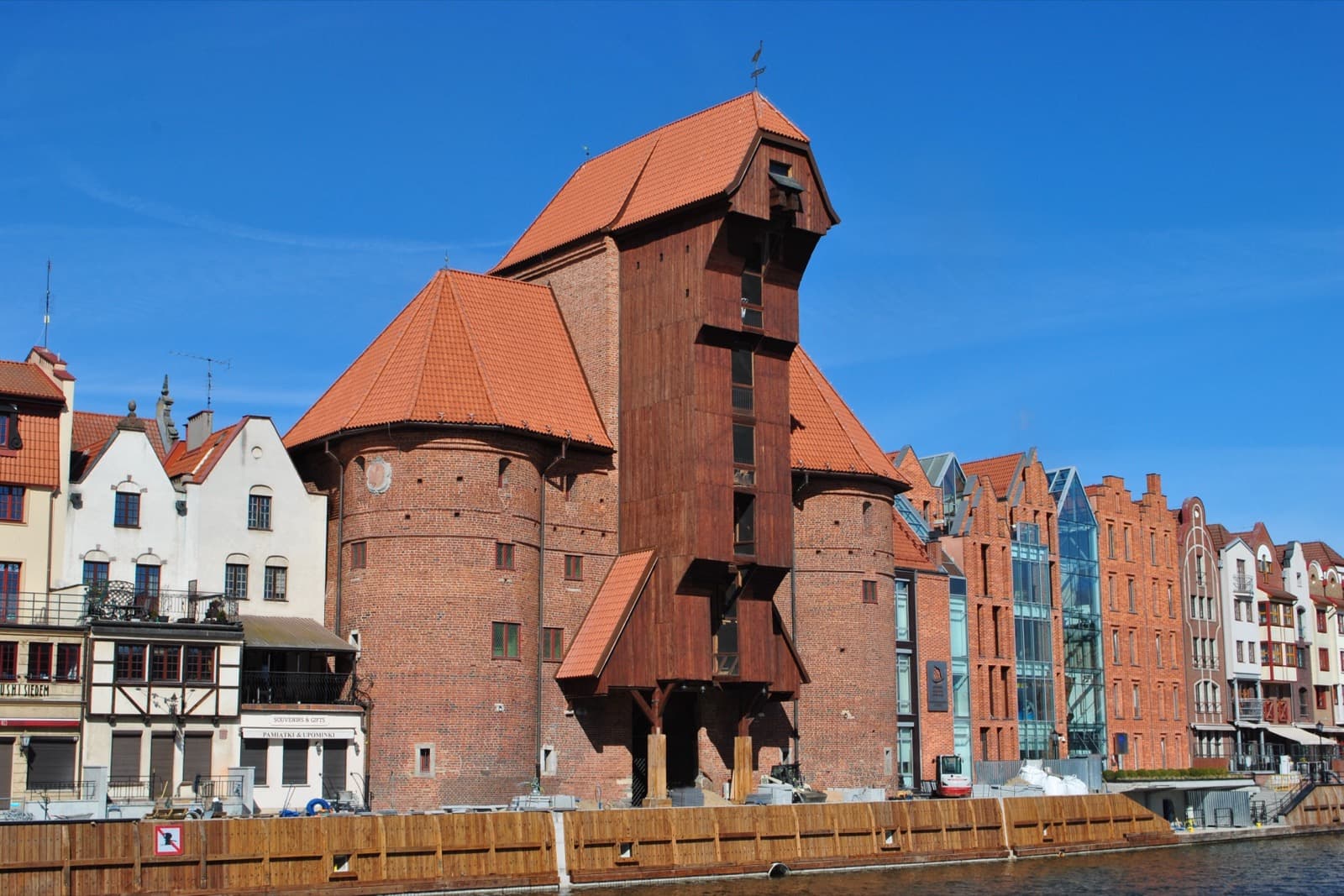
A short walk north brings you to the Crane, in Polish the Zuraw, one of the enduring symbols of the city. The structure you see was built between fourteen forty-two and fourteen forty-four, with its brick western facade completed in fourteen eighty-three, and in its day it was the largest port crane in medieval Europe. The detail that stays with you is how it worked. Men climbed inside great wooden treadwheels and walked, the way a hamster turns a wheel, and their steps turned a shaft that could lift up to about two tons. Machines that men powered with their own legs built the fortune of this port. Hold that image, because the walk will hand it back to you changed: at the shipyard, men powered history with their bodies again, this time by refusing to work.
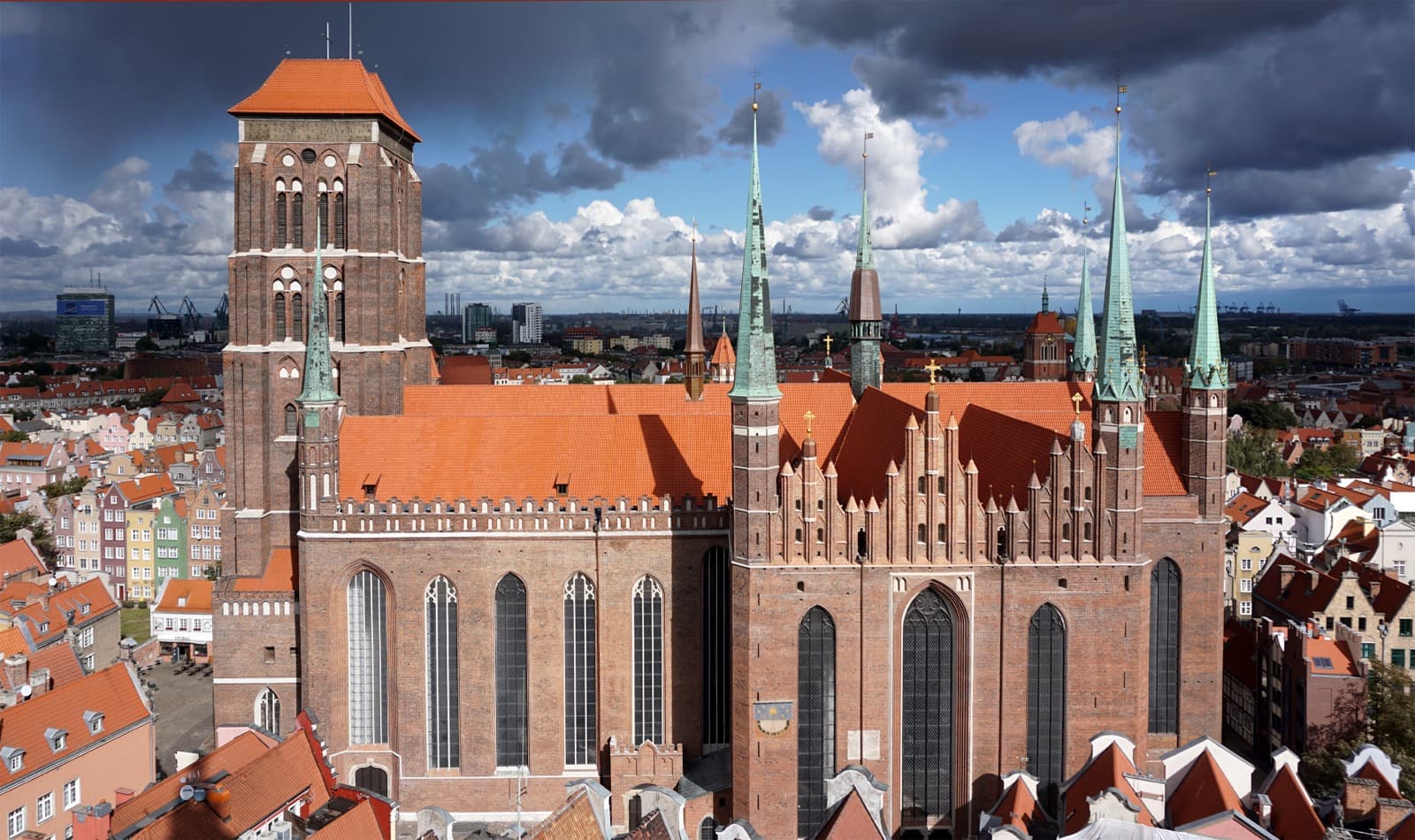
Then Mariacka Street, in Polish Ulica Mariacka, which many call the most beautiful street in Gdansk. It is lined with raised stone terraces called przedproza and carved rain-spouts shaped like gargoyles, nicknamed Rzygacze, the spewers, because they spit rainwater over the street in a downpour. This was long the street of goldsmiths and amber craftsmen, still nicknamed the Amber Street. At its head stands St Mary's Church, one of the largest brick churches in the world, begun in thirteen seventy-nine and completed in fifteen oh two. Across the water sits Granary Island, in Polish Wyspa Spichrzow, only about twenty-four hectares, which at its peak held about three hundred granaries. Poland's harvests came down the Vistula and were stored here before shipping out over the Baltic. This modest island was the engine room of the city's wealth.
The Turn North
Almost everything you have looked at was destroyed in nineteen forty-five, in the siege at the close of the Second World War, and carefully rebuilt afterward. That fact is the hinge of the walk. The city you admire is a reconstruction, which is its own quiet statement about what people decide to preserve and why.
The route then makes a deliberately longer walk north, out of the mercantile old town into the industrial city, to the Gdansk Shipyard, in Polish Stocznia Gdanska, once the Lenin Shipyard, founded in nineteen forty-six. Here stands Gate Number Two, an ordinary industrial gate until August nineteen eighty, when a strike led by Lech Walesa produced Solidarnosc, the first free, mass, independent trade union anywhere in the Soviet bloc. The strike was settled by the August nineteen eighty Gdansk Agreement. Striking workers pinned flowers and religious images to the bars, and it remains a place of pilgrimage.
Just outside the gate, on Solidarity Square, three enormous steel crosses rise together. This is the Monument to the Fallen Shipyard Workers of nineteen seventy, each cross forty-two metres high and weighing about thirty-six tonnes, unveiled on the sixteenth of December nineteen eighty as a condition the workers won in the Gdansk Agreement. It is described as the first monument to victims of communist oppression ever erected in a communist country. It remembers workers killed when the authorities put down the coastal protests of December nineteen seventy. The accounts differ honestly: the memorial records forty-two or more dead, while the European Solidarity Centre's own account states police killed forty-five on the coast. The three crosses stand for the fallen, not a literal count.
And then the Centre, where the union tells the rest. This is the walk's moral center, and it rewards standing quietly rather than rushing. You can browse the full route and plan your day through Gdansk walking tours, or start from the Gdansk city page. Give the northern stops an unhurried hour. There is no coach timetable here and no group at your shoulder. The pace, like the freedom the Centre commemorates, is yours.
Sources
- European Solidarity Centre, official site and permanent exhibition (ecs.gda.pl): the Centre's own account of the union, the ten-million membership, the nineteen eighty agreements, the martial law of December nineteen eighty-one, and the nineteen eighty-nine transition.
- Gdansk Crane, National Maritime Museum in Gdansk (nmm.pl): construction dates, the two-tonne treadwheel lift, and the crane's wartime destruction and rebuilding.
- Gate No. 2 of the Gdansk Shipyard and the Gdansk Agreement, Wikipedia: the August nineteen eighty strike, Lech Walesa, and the negotiated settlement.
- Monument to the Fallen Shipyard Workers of 1970, Wikipedia: the three forty-two-metre crosses, the sixteenth of December nineteen eighty unveiling, and the differing casualty accounts for December nineteen seventy.
- Green Gate and St Mary's Church, Wikipedia and In Your Pocket Gdansk: the waterfront's mercantile history, the gate's architects, and the church's construction dates.
Ready to experience it?
Waterfront: The Crane, the Shipyards, and Solidarity
110 min · 3.9 km · moderate
More from Gdansk
Explore more at your own pace.
Gdansk Travel Guide: Days Needed, Getting Around, Safety, and Budget
One Day in Gdansk: A Walkable Morning-to-Evening Itinerary
Gdansk: The Hanseatic Port Where Solidarity Was Born
Neptune's Fountain and the Long Market: The Heart of Gdansk's Royal Way
St Mary's Church in Gdansk: The Brick Giant That Was Protestant for Four Centuries