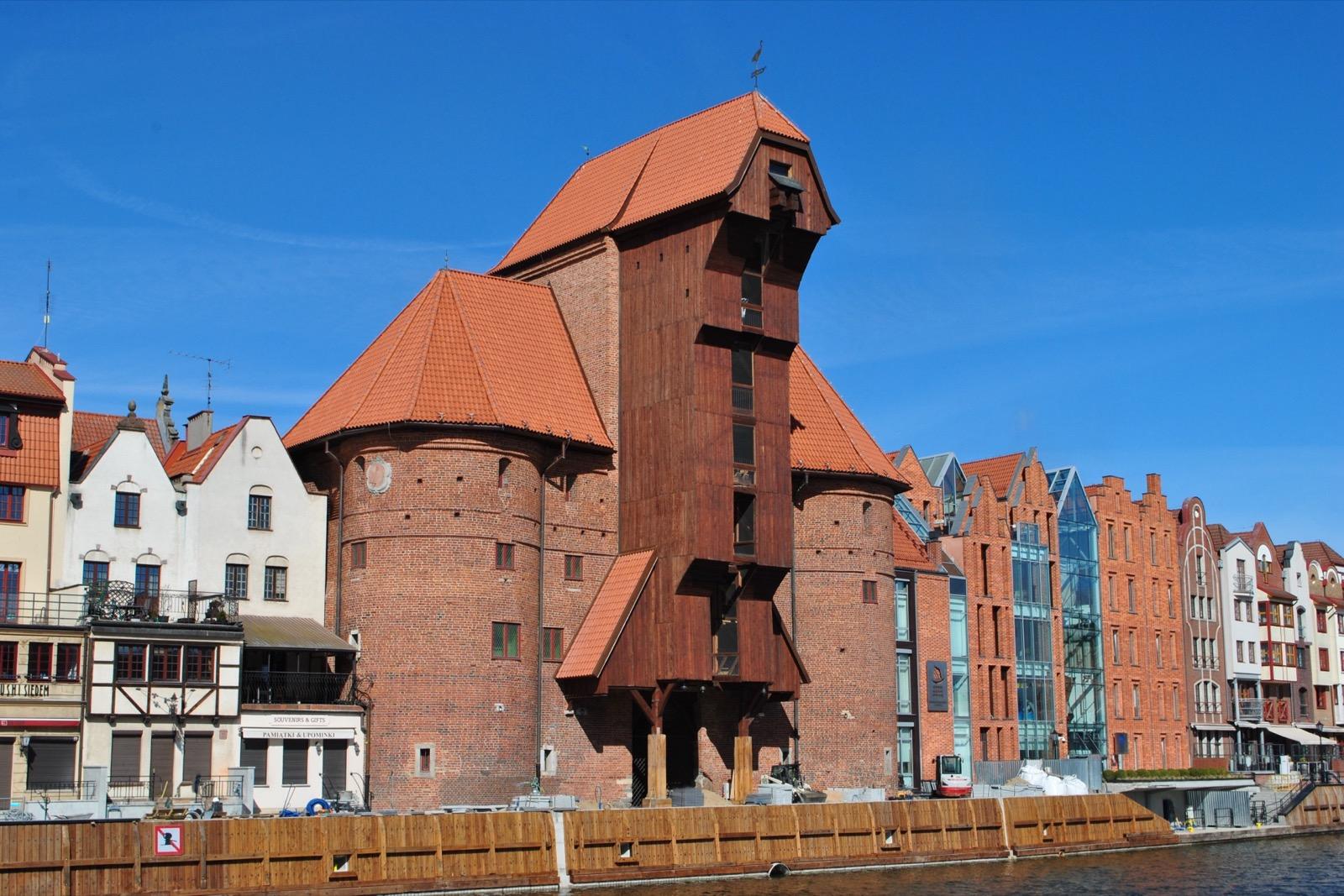
A riverside walk that reads Gdansk like a sentence whose subject is trade and whose predicate, up north, becomes freedom: from the medieval Baltic port and its giant Crane to the shipyard gate where Solidarity was born.
Start · The Green Gate and the Long Bridge Waterfront
DirectionsStops
- 1
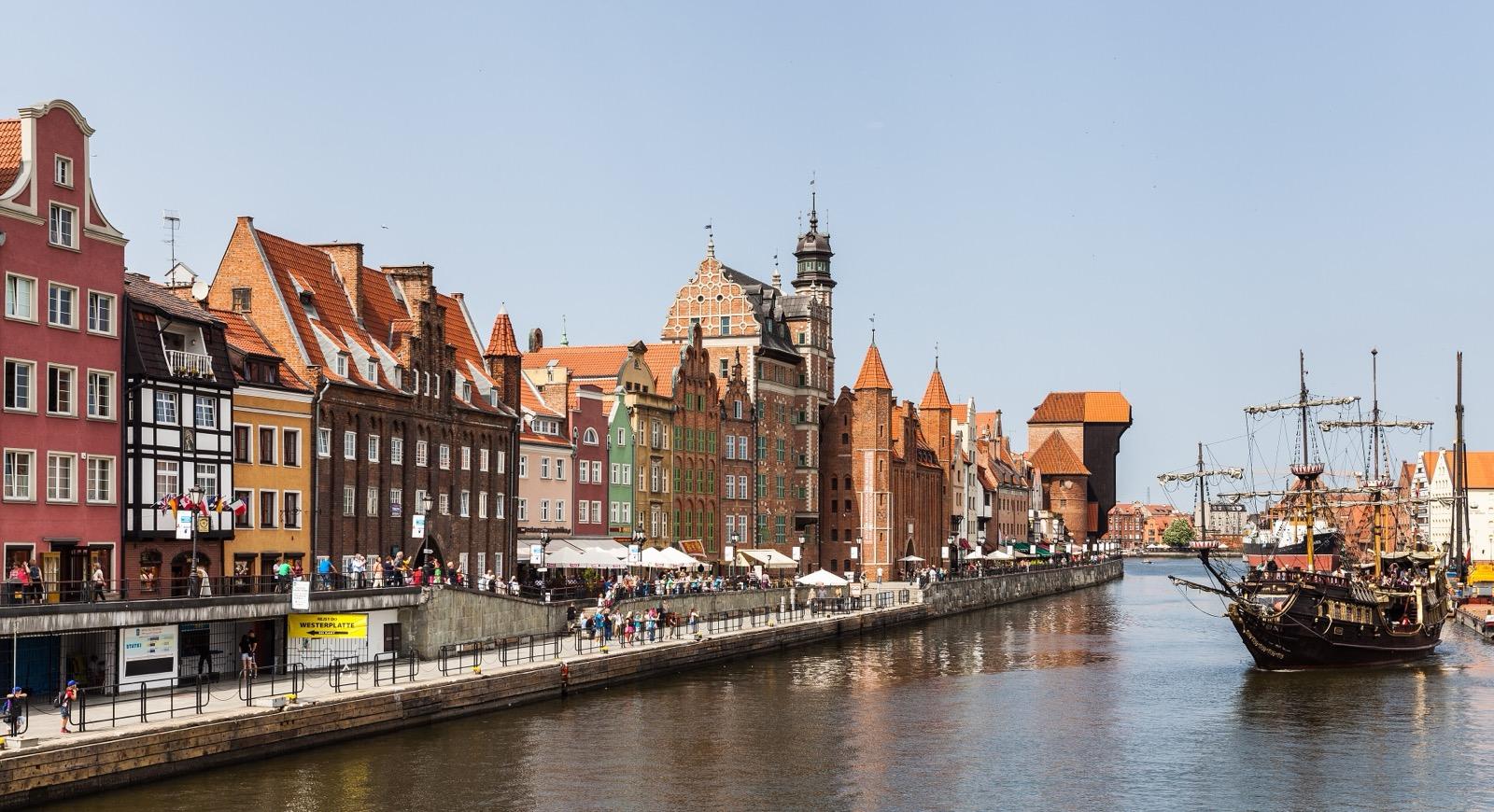
The Green Gate and the Long Bridge Waterfront
The formal river gate and the working quay where the Baltic trade came ashore.
- 2
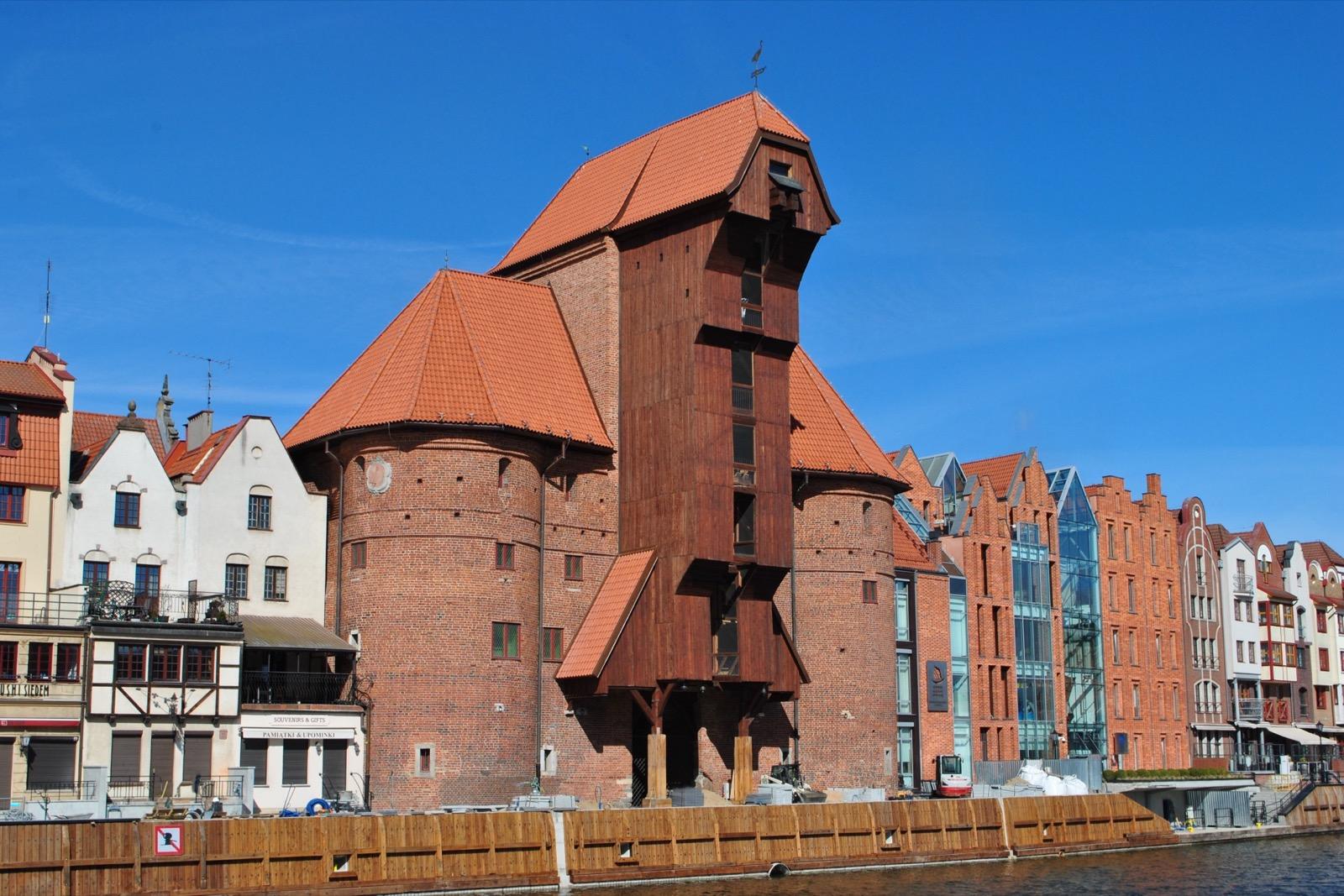
The Gdansk Crane: The Machine Men Powered With Their Legs
The largest port crane of medieval Europe, worked by men walking inside great wooden treadwheels.
- 3
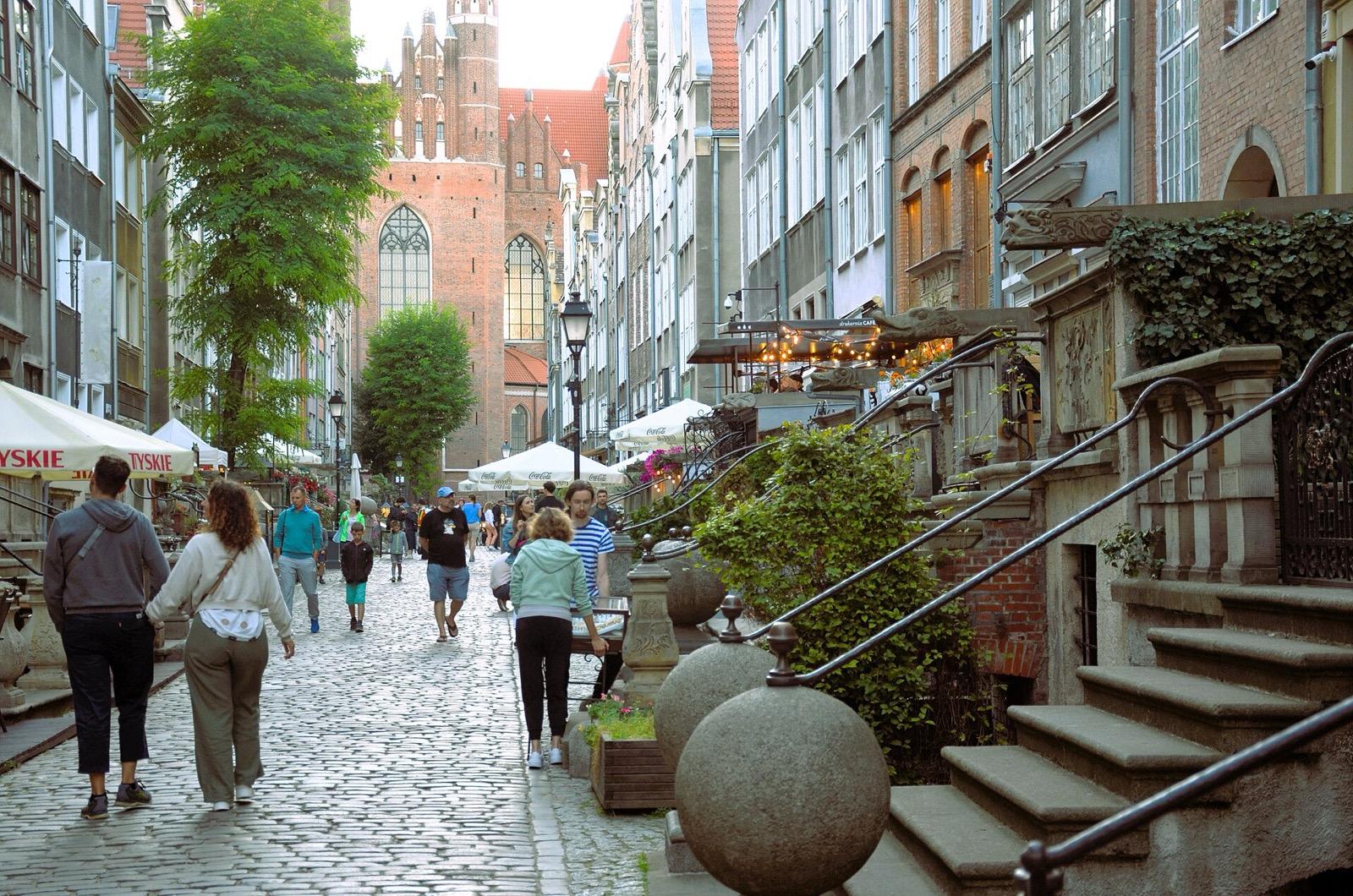
Mariacka Street: The Amber Street and Its Stone Porches
This is Gdansk's most beautiful street. It is famous for its raised stone terraces, carved rain-spouts, and amber tradition.
- 4
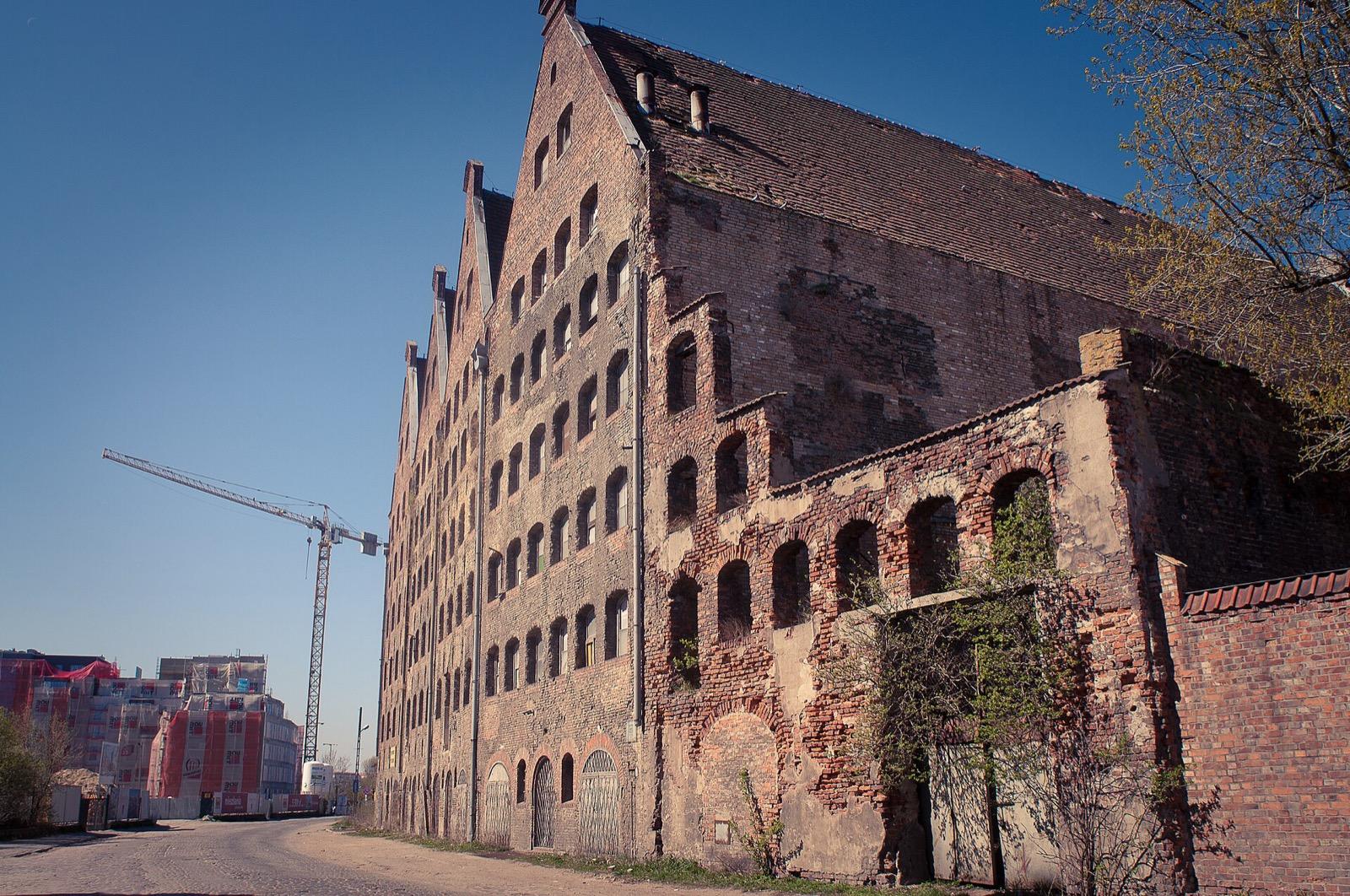
Granary Island: The Island That Fed the Port's Fortunes
The island opposite the quay where hundreds of granaries once stored the grain that made Gdansk rich.
- 5
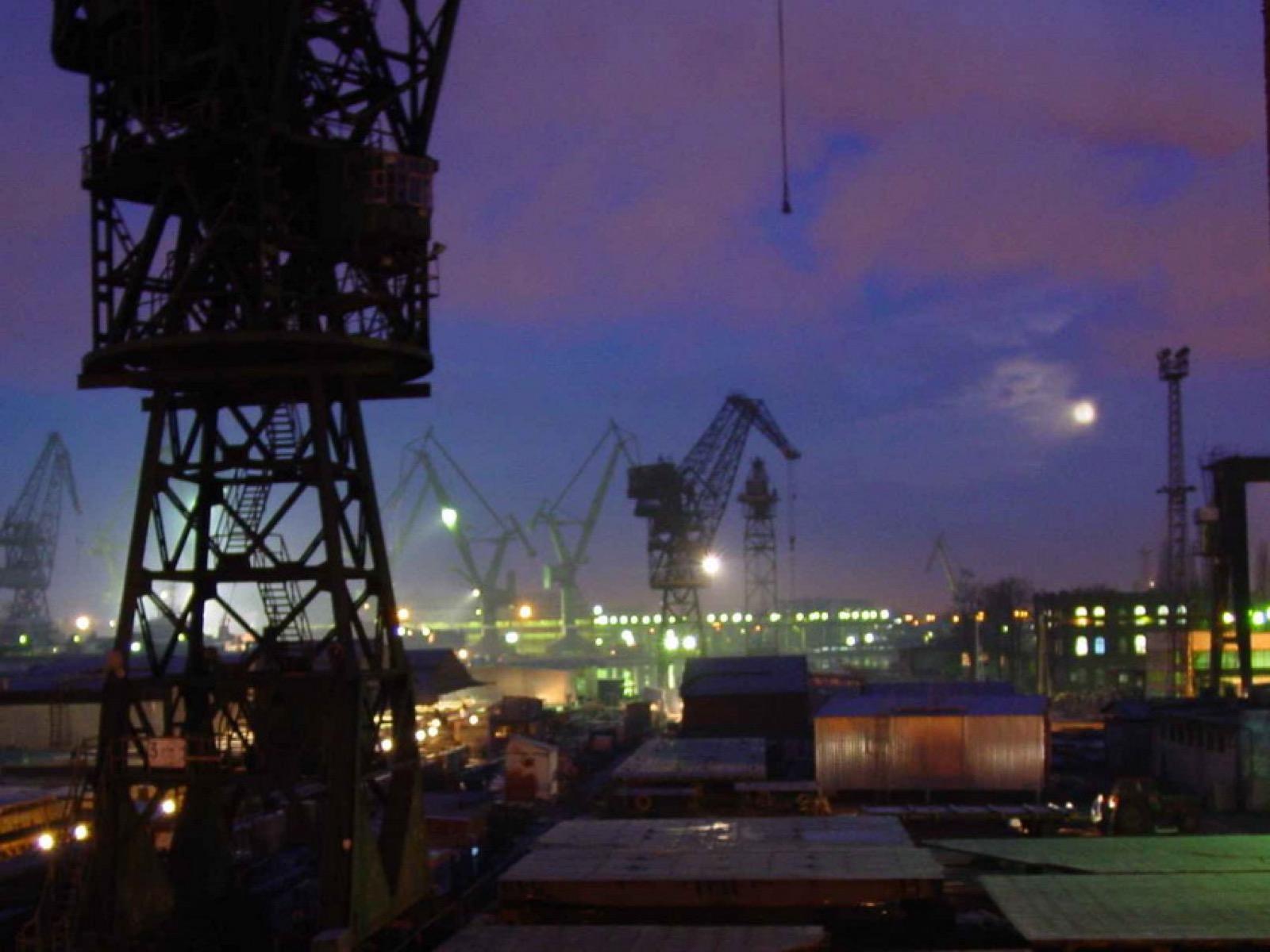
The Gdansk Shipyard and Gate Number Two
After a deliberate walk north, the shipyard gate where the August nineteen eighty strike gave birth to Solidarity.
- 6
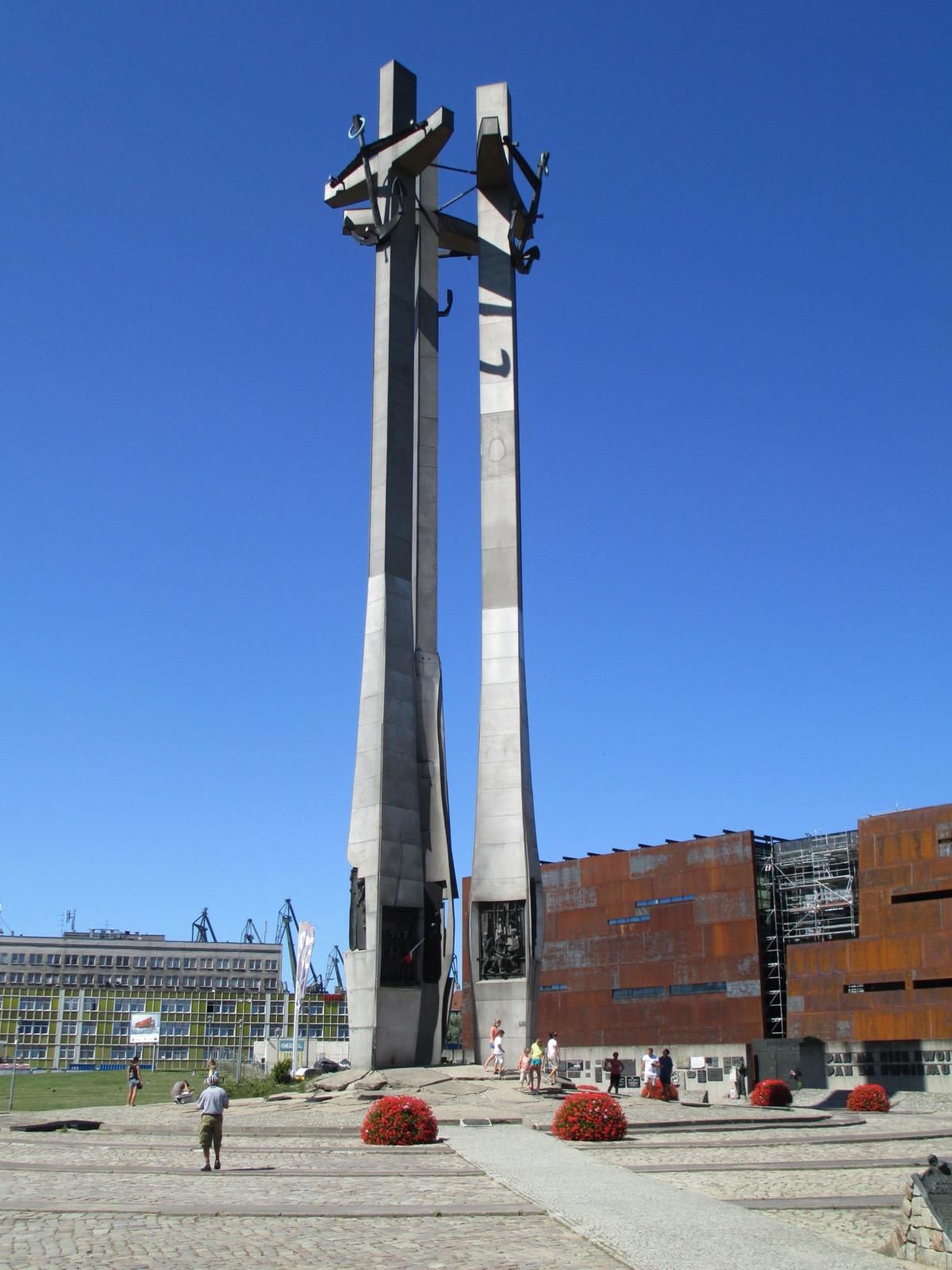
The Monument to the Fallen Shipyard Workers: Three Crosses
Three towering steel crosses raised for the fallen workers. They were killed when the state suppressed the December nineteen seventy protests.
- 7
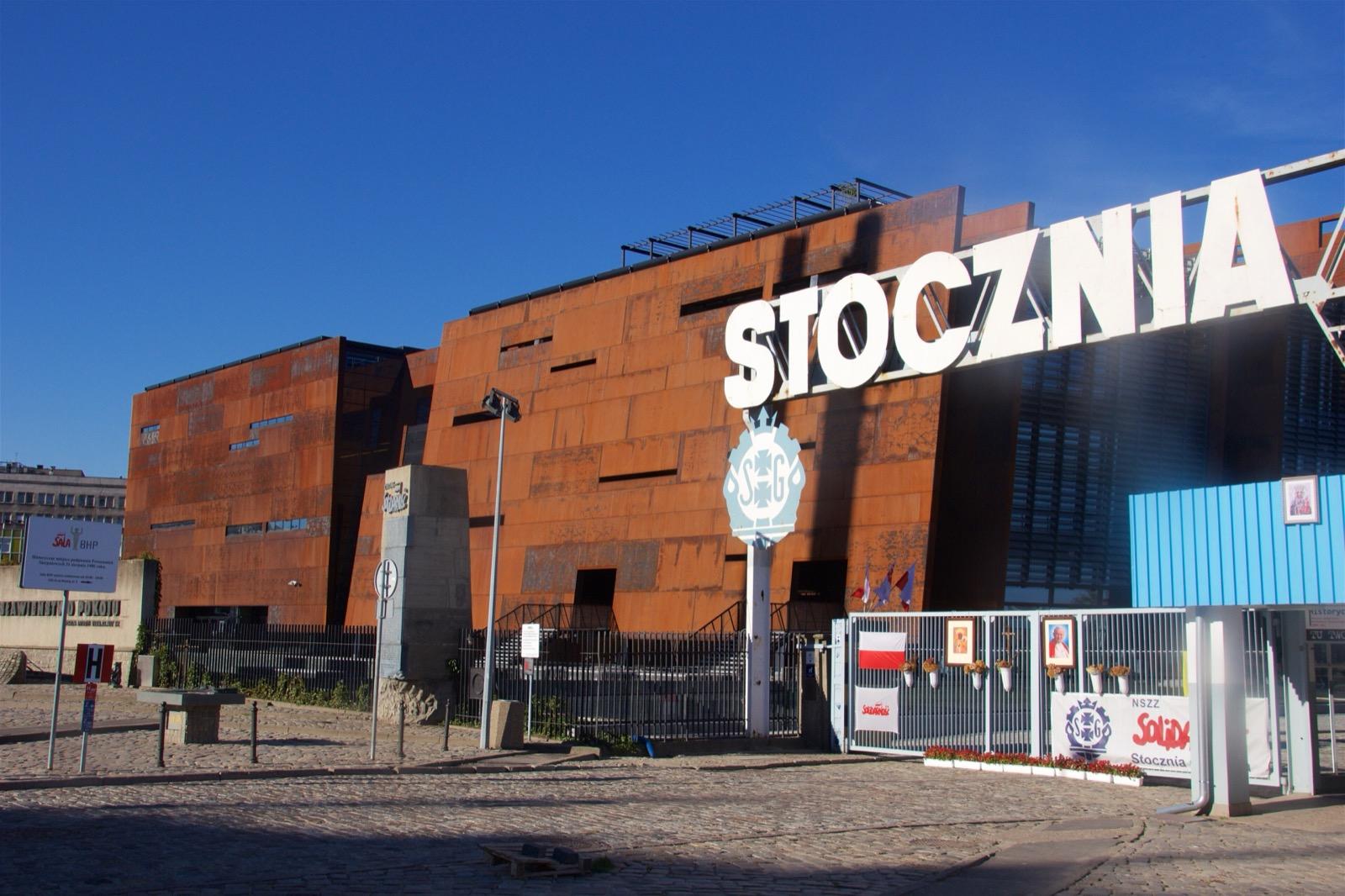
The European Solidarity Centre: Where the Union Tells Its Own Story
The rusted-steel museum beside the shipyard gate. Here the movement that helped free half a continent recounts its own history.
Details
Best Time to Visit
Late spring through early autumn gives the mildest Baltic weather and the longest daylight for the walk north, though the waterfront is atmospheric in any season. Aim for morning or late afternoon to catch soft light on the Crane and the amber street and to reach the shipyard sites when the crowds thin. The European Solidarity Centre's exhibition is worth arriving with time to spare, so start early enough to give the northern stops an unhurried hour.
Pro Tips
- •The walk is roughly three and a half kilometres and the northern half is a deliberately longer leg from the riverfront up to the shipyard, so wear comfortable shoes and keep your map handy for that stretch.
- •Amber and goldsmith windows line Mariacka Street; browse the tradition freely and at your own pace, with no group hurrying you toward the next stop.
- •The Green Gate, the Crane interior, and the European Solidarity Centre's exhibition are ticketed, charged in Polish zloty, so carry a card or some cash if you want to go inside.
- •Give the shipyard monument and the Solidarity Centre real time; they are the moral heart of the route and reward standing quietly rather than rushing through.
- •Baltic wind comes straight off the river even on bright days, so bring a layer you can add on the exposed quay and the open shipyard square.
- •There is no coach timetable and no tip expected on this walk, so linger over the amber terraces or the granary view as long as you like and move on when you are ready.
Safety & Precautions
- •The walk north from the Motlawa waterfront to the shipyard is a genuine distance on foot; pace yourself, carry water, and treat it as an intentional transect through the working city rather than a quick hop.
- •Baltic weather off the river can shift quickly and the wind can be sharp on the open quay and the shipyard square, so dress in layers and be ready for sudden showers.
- •The shipyard monument and the Solidarity sites carry real emotional weight; they mark workers the state killed and a hard chapter of Polish history, so approach them with sobriety and dignity rather than as spectacle.
- •Keep valuables discreet in crowds and on public transport, mind the uneven historic paving and the raised stone terraces along Mariacka Street, and remember that some museums along the route charge entry in zloty.
Travel advisory: Exercise Normal Precautions (Level 1).
Gallery
Related Reading
Go deeper on what you'll see, hear, and walk through.
Overview
Best Self-Guided Walking Tours in Gdansk (2026)
3 min
Overview
Gdansk Travel Guide: Days Needed, Getting Around, Safety, and Budget
8 min
Overview
One Day in Gdansk: A Walkable Morning-to-Evening Itinerary
8 min
Thematic
Best History Walking Tours in Gdansk (2026)
2 min
Thematic
Gdansk: The Hanseatic Port Where Solidarity Was Born
9 min
Companion
The European Solidarity Centre: Where a Shipyard Gate Reads Like the End of a Sentence
7 min
Deep dive
The Gdansk Crane (Zuraw): The Medieval Machine Men Powered With Their Legs
6 min
Read
What to Eat in Gdansk: Herring, Pierogi, and Gold-Flecked Goldwasser
7 min
Read the walk
The full story of Waterfront: The Crane, the Shipyards, and Solidarity, in words. Prefer to listen? Play it narrated, from home or on location.
Introduction
This is a walk along the water in Gdansk, Poland, that tells two stories a short distance apart. Down on the Motlawa quay, a medieval Baltic port made this city rich, and its machinery and jewels still line the riverbank: a giant crane, a street of amber, an island of granaries. Then, on a deliberately longer walk north, the route leaves the mercantile old town for the industrial shipyard, where a strike in August nineteen eighty produced Solidarity, the first free trade union in the Soviet bloc. The seven stops cover roughly four kilometres, and most walkers spend about two hours, though the whole point is that the clock is yours. There is no coach timetable here, no group at your shoulder, and no tip expected. You can linger over the amber terraces as long as you like, then stand at the shipyard gate on your own quiet schedule. The tour moves on purpose from beauty and commerce into memory and courage, so give the northern stops the sobriety they deserve. Baltic weather can shift fast, and wind comes straight off the river, so a layer helps. Keep your map handy for the long northern leg, which is an intentional transect through the working city rather than a detour. Along the way you will pass water gates, gabled facades, and the rusted-steel museum where the union tells its own account. When you arrive at the Green Gate at the eastern end of the Long Market, begin with stop one.
1. The Green Gate and the Long Bridge Waterfront
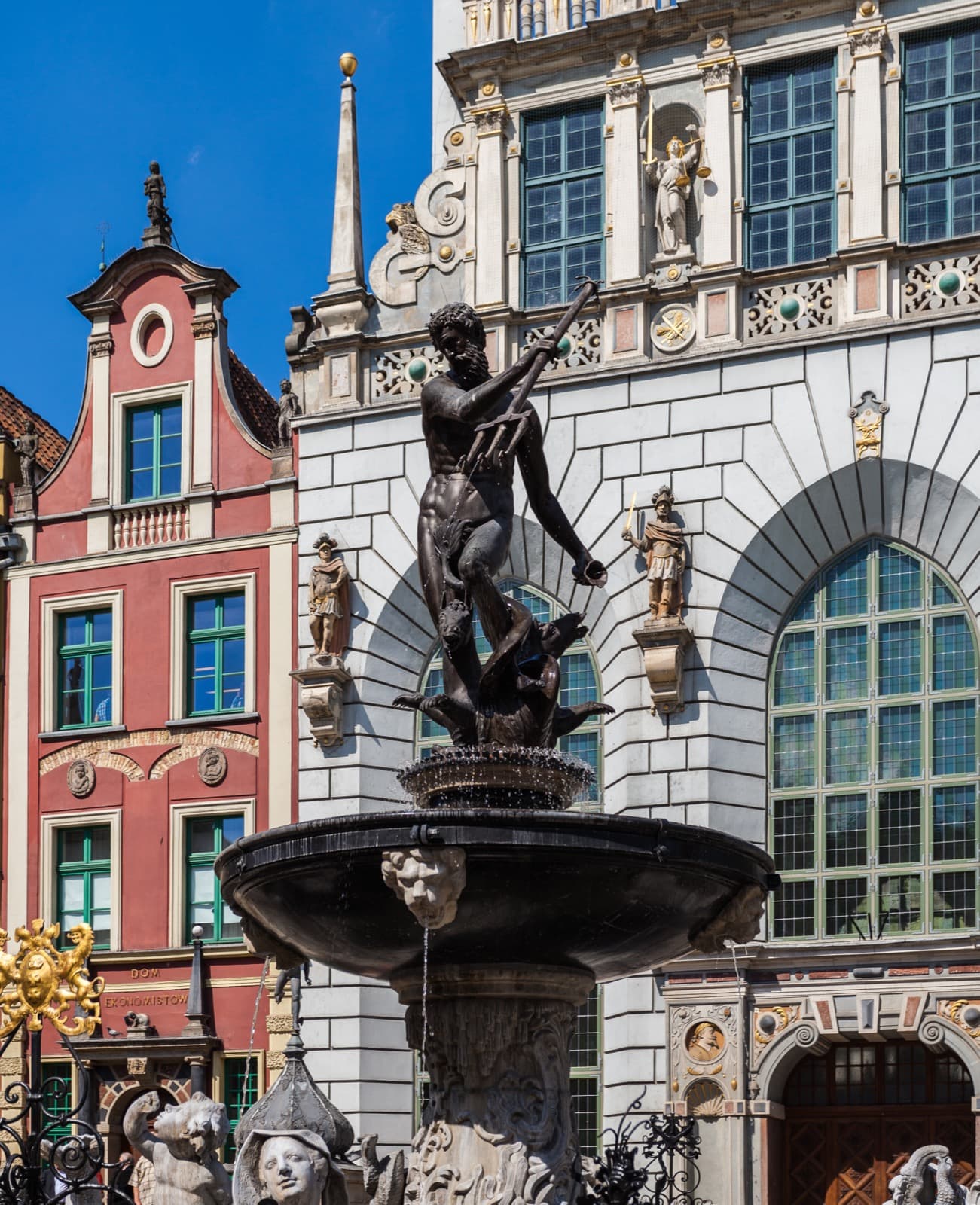
You are standing where the Long Market meets the Motlawa River, at the Green Gate, known in Polish as Brama Zielona. It was built in the fifteen sixties by the architects Regnier of Amsterdam and Hans Kramer, in a Flemish Renaissance style, and it was meant as a formal residence for visiting Polish monarchs. In practice it was rarely used that way. Today it is a branch of the National Museum in Gdansk. Behind the gate runs the Long Bridge waterfront, in Polish the Dlugie Pobrzeze, the main promenade on the west bank of the river. Do not let the pretty name mislead you. This was the working quay of the port. From the fourteenth century, separate wooden platforms of different heights let cargo pass to and from ships, and by the seventeenth century they had merged into one continuous embankment. The whole area was rebuilt after the Second World War. Along this bank you will find the historic water gates that funneled goods into the city, and directly across the water lies Granary Island, where the grain was stored. This is the opening beat of the walk: the old working quay where the Baltic trade came ashore and made Gdansk one of the great ports of northern Europe. Take a moment to read the river as the city itself did, as a road paved with water. Everything that follows, the crane, the amber, the granaries, and even the shipyard far to the north, is a chapter of what this quay began. One note worth keeping straight: the Main Town of Gdansk is beautifully restored, but it is not a UNESCO World Heritage Site, whatever some guidebooks suggest.
2. The Gdansk Crane: The Machine Men Powered With Their Legs
Ahead of you rises the Crane, in Polish the Zuraw, one of the enduring symbols of Gdansk. A gate on this spot was first mentioned in thirteen sixty-seven, but after a fire the structure you see was built between fourteen forty-two and fourteen forty-four, with its brick western facade completed in fourteen eighty-three. In its day it was the largest port crane in medieval Europe. Two heavy brick towers flank a wooden crane mechanism, and here is the detail that stays with you. The crane was powered by men. Workers climbed inside great wooden treadwheels and walked, the way a hamster turns a wheel, and their steps turned a common shaft that raised the load. It could lift up to about two tons, and it did two jobs: loading and unloading cargo, and raising the masts of ships or lifting their sterns for repair. The whole structure stands about thirty metres high, four floors above small basements, and it is the only surviving twin-tower gate in the city. The wooden crane was destroyed in nineteen forty-five, during the siege at the end of the Second World War, along with much of the medieval waterfront around it. It was restored between nineteen fifty-six and nineteen fifty-nine, and the lifting mechanism was reinstalled in the nineteen sixties. Today it belongs to the National Maritime Museum, and it reopened after a renovation in the spring of twenty twenty-four. Stand with it a while. Machines that men powered with their own legs built the fortune of this port, and this is the last great one left standing.
3. Mariacka Street: The Amber Street and Its Stone Porches
Turn into Mariacka Street, in Polish Ulica Mariacka, which many people call the most beautiful street in Gdansk. It runs from St Mary's Church down to the Mariacka water gate on the river, and it was probably laid out in the fourteenth century. Two things make it unforgettable. The first is what stands in front of the houses: raised stone terraces called przedproza, edged with ornamental ironwork and, best of all, carved stone rain-spouts shaped like gargoyles. Locals call them Rzygacze, which politely translates as the spewers, because in a downpour they spit rainwater out over the street. The second is amber. This was long the street of goldsmiths and amber craftsmen, and it is still nicknamed the Amber Street, its windows glowing with the fossil resin the Baltic has washed ashore for millennia. I would anchor you to the tradition rather than any single shop. The amber trade is part of what made this port wealthy, and the craft has never left this lane. At the top of the street stands St Mary's Church, in Polish Kosciol Mariacki, which is one of the largest brick churches in the world. The present church was begun in thirteen seventy-nine and completed in fifteen oh two. Like the rest of the old town, Mariacka Street was largely destroyed in the Second World War and carefully reconstructed afterward, terraces and gargoyles and all. Walk it slowly. This is where the port's wealth turned into ornament, into carved stone and worked gold, and you can take it at exactly the pace you please, with no group hurrying you toward the next stop.
4. Granary Island: The Island That Fed the Port's Fortunes
Look across the water to Granary Island, in Polish Wyspa Spichrzow. It sits in the Motlawa directly opposite this waterfront, hemmed in by the old river on one side and the New Motlawa on the other, a channel dug in fifteen seventy-six that gave the island its present shape.…
Full narration for this stop unlocks with the tour.
5. The Gdansk Shipyard and Gate Number Two
You have made the long walk north on purpose, out of the mercantile old town and into the industrial city, on foot and at your own pace. This is the historic Gdansk Shipyard, in Polish Stocznia Gdanska, once known as the Lenin Shipyard, founded in nineteen forty-six on older…
Full narration for this stop unlocks with the tour.
6. The Monument to the Fallen Shipyard Workers: Three Crosses
On Solidarity Square, just outside Gate Number Two, three enormous steel crosses rise together into the sky. This is the Monument to the Fallen Shipyard Workers of nineteen seventy, in Polish Pomnik Poleglych Stoczniowcow. Each cross stands forty-two metres high, over forty…
Full narration for this stop unlocks with the tour.
7. The European Solidarity Centre: Where the Union Tells Its Own Story
The walk ends at the European Solidarity Centre, in Polish Europejskie Centrum Solidarnosci, standing beside the shipyard gate and the monument on Solidarity Square. It opened on the thirty-first of August twenty fourteen, on the anniversary of the signing of the Gdansk…
Full narration for this stop unlocks with the tour.