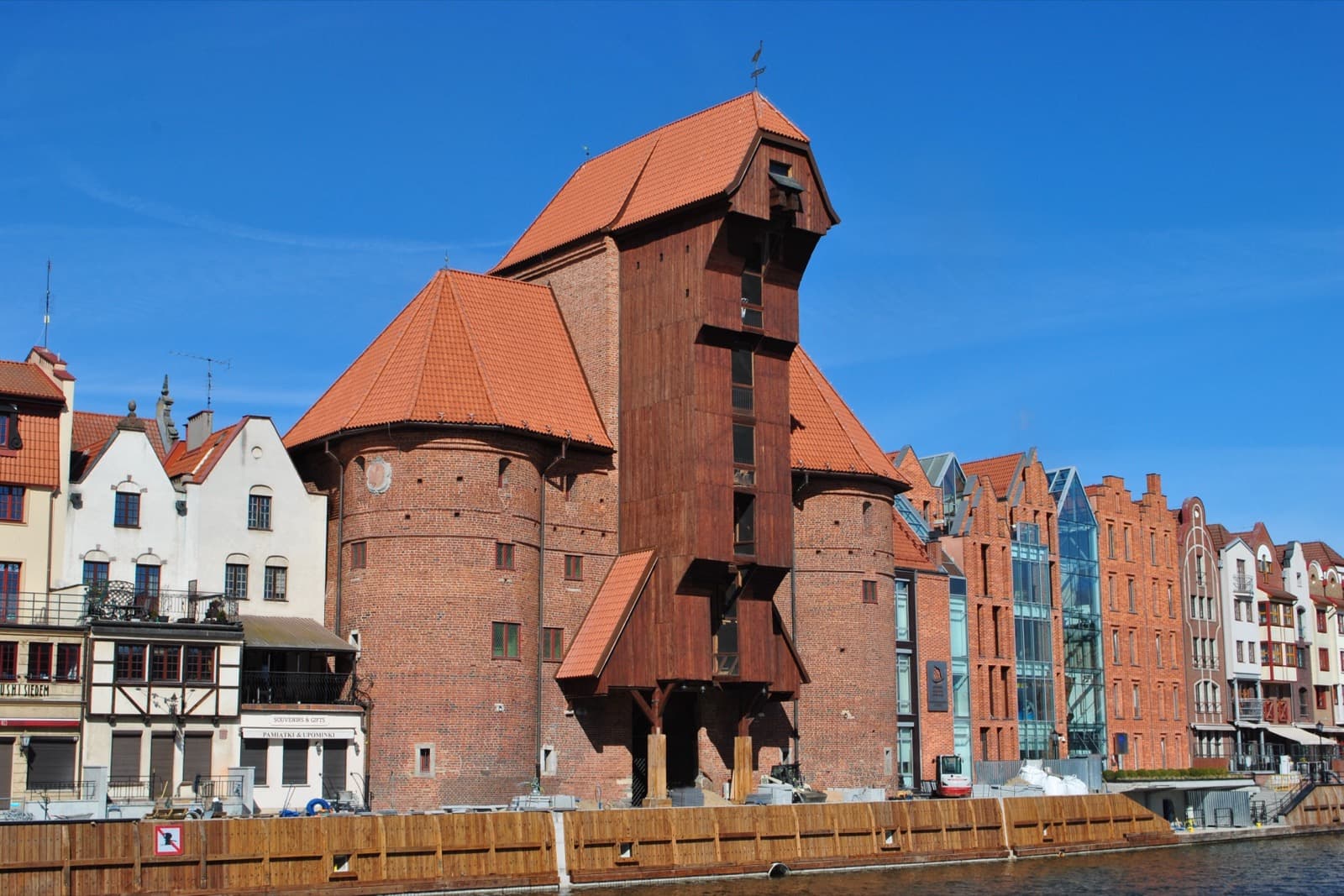
The Gdansk Crane (Zuraw) was the largest port crane in medieval Europe, both a water gate in the town's defensive wall and a working cargo hoist. Powered by men walking inside great wooden treadwheels, it lifted loads up to about two tons, stepped ships' masts, and raised ship sterns. The present structure was raised between 1442 and 1444.
Standing on the Motlawa quay in Gdansk, you are looking at a machine that men powered with their own legs. The Gdansk Crane, called the Zuraw in Polish, was the largest port crane in medieval Europe, and its lifting power came not from water, wind, or animals but from workers who climbed inside great wooden treadwheels and walked. Their steps turned a common shaft, the shaft raised the load, and that load could weigh up to about two tons. Two heavy brick towers flank the wooden crane mechanism between them, and once you know what those towers hid, the whole building reorganizes itself in your mind. This is the one thing to carry away from the stop: the fortune of a great Baltic port was hoisted into the air on human muscle.
What you are actually looking at
The structure reads as a single object, but it did two jobs at once. It was a water gate, part of the defensive wall that sealed the town from the river, and it was a working cargo hoist. That dual purpose is why it looks the way it does. The twin brick towers are fortification. The tall wooden housing slung between them is the machine. A gate on this spot was first mentioned in thirteen sixty-seven, but the building you see is not that first gate. After a fire, the present structure was raised between fourteen forty-two and fourteen forty-four, and the brick western facade was finished in fourteen eighty-three.
The whole thing stands about thirty metres high, four floors rising above small basements. It is the only surviving twin-tower gate in Gdansk, the last of a type that once studded the waterfront. When you stand back far enough to take in both towers and the dark wooden belly between them, you are seeing a shape that no longer exists anywhere else in the city.
The treadwheels, and why they matter
Hear a stop from this walk
The Green Gate and the Long Bridge Waterfront
The detail that stays with people is the power source. Inside the wooden housing were large treadwheels, and men walked inside them the way a hamster turns a wheel. Their walking rotated a common shaft, and the shaft wound the rope that lifted the cargo. There was no other engine. Every ton that came ashore here, and every ton loaded outbound, moved because human beings put one foot in front of the other inside a wheel they could not see out of.
That is a demanding way to move weight, which is why the crane earned its keep on the biggest jobs. It did two kinds of work. The first was ordinary port labor: loading and unloading the cargo that made Gdansk rich. The second was heavier and more specialized. The crane was used to step the masts of ships, raising and setting the tall timbers that sailing vessels needed, and to lift the sterns of ships clear of the water for repair. Picture the strain of that second task. To lift the back of a ship, the men inside the wheels had to walk against a load that would fight them the entire way. Roughly two tons was the ceiling, and reaching it took coordinated legs, not levers alone.
This kind of treadwheel machinery was not unique to Gdansk. It was a common medieval technology, found on cathedral construction sites and in harbors across Europe. What is unusual here is the scale at which it was built and the fact that it survived at all. Most treadwheel cranes were dismantled, rotted, or burned centuries ago. This one was preserved as a monument, which is why you can still stand in front of the real thing rather than a drawing of one.
Destroyed, then rebuilt
The crane you see is authentic in form but not untouched. In nineteen forty-five, during the siege that ended the Second World War on this coast, the wooden crane was destroyed along with much of the medieval waterfront around it. Gdansk was left in ruins, and the quay that had defined the city for six centuries was largely rubble.
The restoration came in stages. The structure was rebuilt between nineteen fifty-six and nineteen fifty-nine, and the lifting mechanism itself, the treadwheels and shaft that are the whole point of the building, was reinstalled in the nineteen sixties. Today the crane belongs to the National Maritime Museum, and after a renovation it reopened in the spring of twenty twenty-four. So when you look at it, hold two facts at once. The silhouette is genuinely medieval in design, faithful to the fourteen-forties structure. The fabric in front of you is a careful postwar reconstruction of a building the twentieth century erased and then chose to bring back.
Why this stop anchors the whole waterfront
The crane is the hinge of the Gdansk waterfront story. Everything downstream of it on the quay, the amber terraces of Mariacka Street, the granaries that once packed Granary Island across the river, the gabled merchant houses, exists because trade came ashore here first and had to be lifted from the ships. The crane is the physical proof of how that trade actually worked. Before insurance ledgers and guild seals, before the wealth turned into carved stone and worked gold, there was this: a wheel, a rope, and men walking.
That is also why it belongs on a walk that ends far to the north at the shipyard gate where Solidarity was born. The Gdansk Crane and the shipyard cranes are separated by five centuries and a world of politics, but both are about the same thing, work done at the water's edge that shaped the city and, in the shipyard's case, half a continent. The medieval crane is where that long conversation between Gdansk and its labor begins.
Stand with it a while. Read the towers as walls and the wood between them as an engine. Then let the rest of the route unfold from here. The Gdansk Crane is stop two on the Gdansk walking tours waterfront route, a self-guided walk you take at your own pace, with no coach timetable and no group at your shoulder. You can find it, and the wider city, on the Gdansk page, and then walk the Motlawa quay from the working port to the shipyard gate on your own clock.
Sources
- Gdansk Crane, Wikipedia. Construction dates, treadwheel mechanism, roughly two-ton lifting capacity, height, and postwar restoration timeline.
- History of the Crane, National Maritime Museum in Gdansk (nmm.pl). Institutional account of the crane's operation, its twin-tower gate role, and its reopening after renovation.
- The Crane, Zabytek.pl (Polish national heritage register). Confirmation of the fourteen eighty-three brick western facade and the only-surviving-twin-tower-gate status.
Ready to experience it?
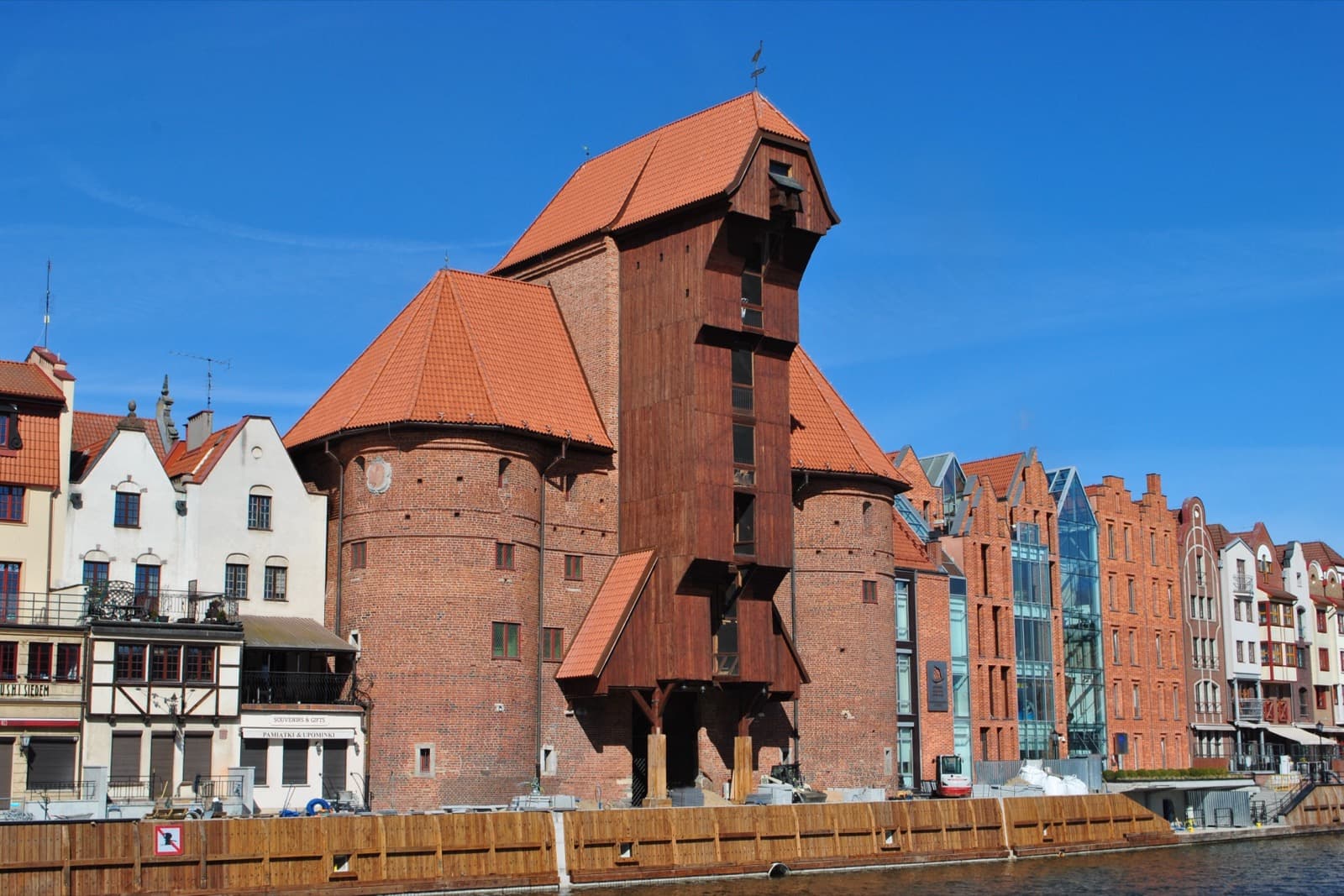
Waterfront: The Crane, the Shipyards, and Solidarity
110 min · 3.9 km · moderate
More from Gdansk
Explore more at your own pace.
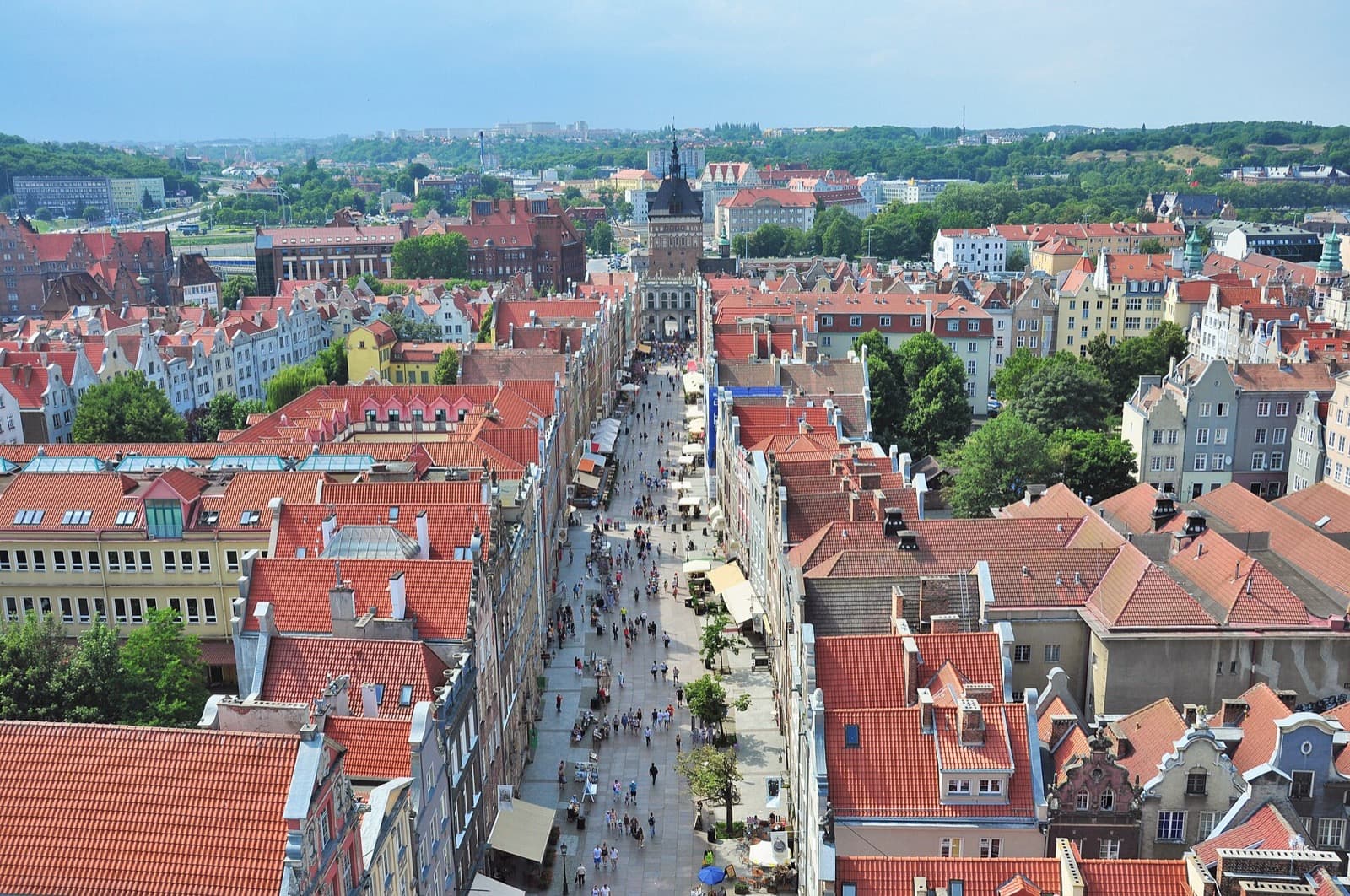
Gdansk Travel Guide: Days Needed, Getting Around, Safety, and Budget
One Day in Gdansk: A Walkable Morning-to-Evening Itinerary
Gdansk: The Hanseatic Port Where Solidarity Was Born
Neptune's Fountain and the Long Market: The Heart of Gdansk's Royal Way
The European Solidarity Centre: Where a Shipyard Gate Reads Like the End of a Sentence