Vermeer's Delft: The Painter of Impossible Light
85 min · 2.4 km · easy
Delft is a small canal town that carried an outsized history: Johannes Vermeer painted his impossible light on its water, William of Orange was shot dead on a convent staircase and became a nation's martyr in the Nieuwe Kerk, and when catastrophe and imported porcelain reshaped the town, its potters made a blue-and-white ware a whole continent copied. Read together, those three stories are one story. A place so ordinary it was almost overlooked kept producing things far larger than itself: a painter, a founding tomb, and a craft. The town stayed intact while its output scattered across the world, and that gap between the small town and the enormous things it made is the through-line of every walk you can take here.
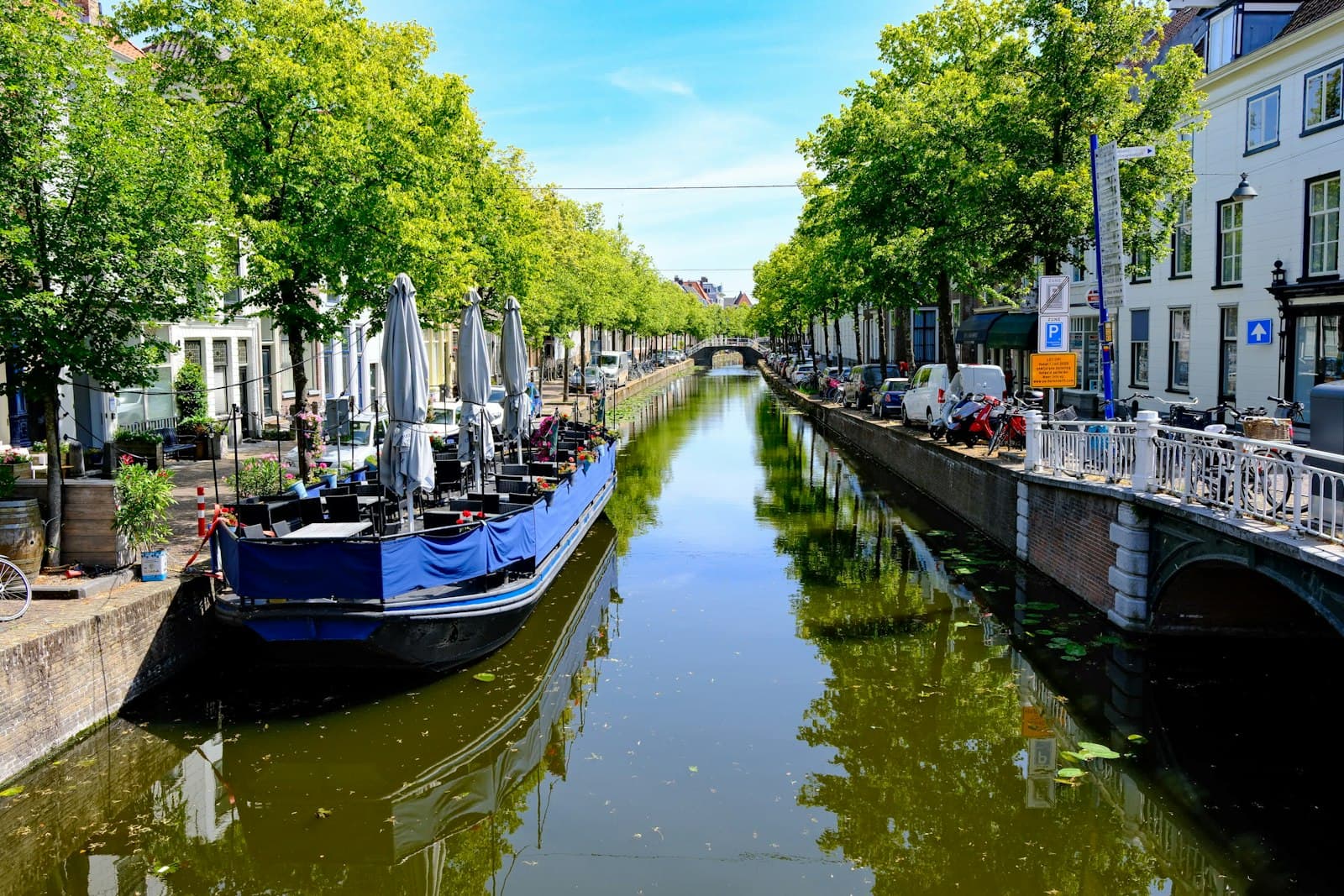
Start with the water, because Delft is literally a place that was dug. The name comes from the Dutch verb delven, to dig, and the town grew around a drainage channel, the Oude Delft, cut in the eleventh century to reclaim the marshy peat. That grid of canals did two things at once. It funded the town, and it composed it. On the Blue and White Empire walk you begin on the Koornmarkt, where Golden Age merchant fortunes built the tall canal-side mansions that still stand on the Oude Delft as national monuments. That wealth came first, before the pottery, before the fame. And the same still, silvery northern light that lay on those canals is what shaped the town's painters. On the Painter of Impossible Light walk, the canals are not scenery but raw material: the Delft school turned away from grand historical scenes toward quiet interiors, courtyards, and city streets, and Vermeer's glowing daylight, a woman by a window, a wall dissolving into brightness, rose from water like this.
A painter the town made and then nearly lost
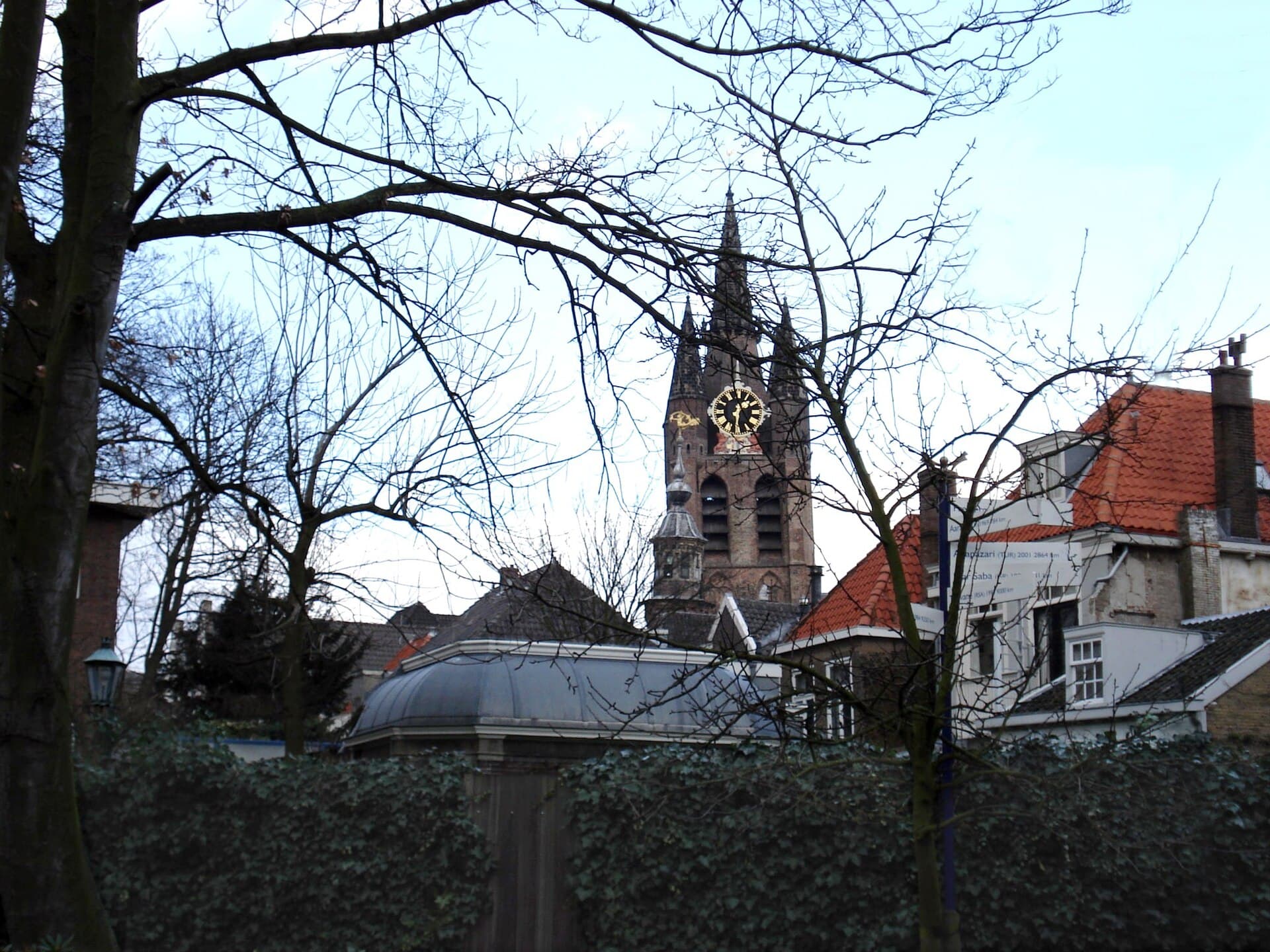
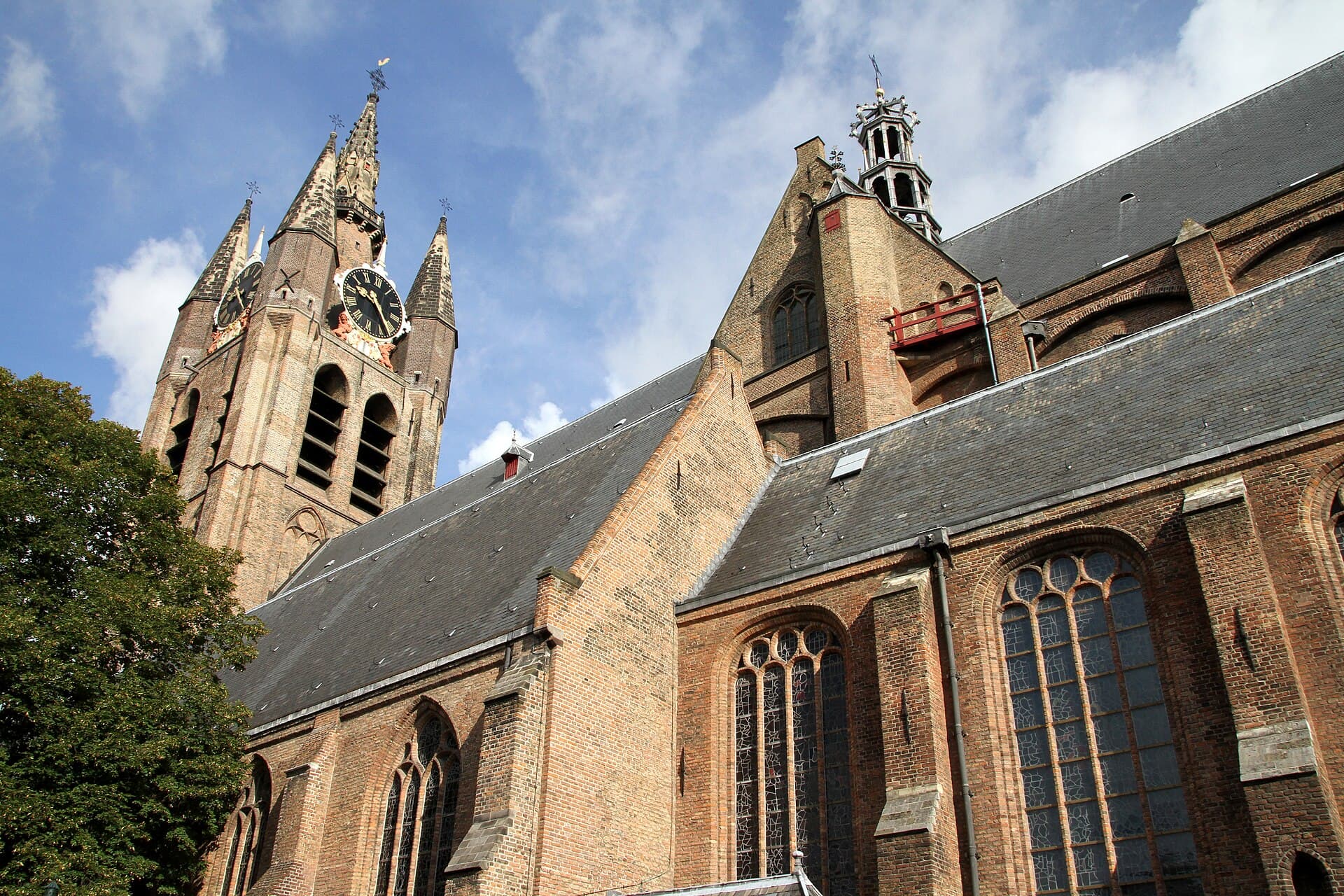
Vermeer's whole life fit inside this town. He was baptized in the Nieuwe Kerk on the Markt on the thirty-first of October, sixteen thirty-two, grew up in his father's inn on that same square, joined the Guild of Saint Luke as a master painter in sixteen fifty-three, and was buried in the leaning Oude Kerk on the fifteenth of December, sixteen seventy-five, the day he died, at the age of forty-three. He left his widow in debt. He painted perhaps three dozen canvases and was then largely forgotten for roughly two centuries. The rescue came from France: the critic Theophile Thore-Burger first saw the View of Delft in The Hague in eighteen forty-two, and in eighteen sixty-six published a catalogue that set off an international fascination that never faded. He over-attributed wildly, and scholars have since narrowed the accepted corpus to about thirty-four works.
Here is the paradox the town holds whole. Vermeer is everywhere in Delft and nowhere at once. The Vermeer Centrum Delft, built behind the reconstructed facade of the old guild building, shows full-size reproductions of every known work, because not one original remains in the town. His paintings were scattered at an Amsterdam auction in sixteen ninety-six and now hang in the Mauritshuis, the Rijksmuseum, the Frick Collection, and museums around the world. Around sixteen sixty to sixteen sixty-one Vermeer stepped outside for once and painted his city itself, looking north across the harbour pool called the Kolk from the quay now named the Hooikade. That is the View of Delft, which Marcel Proust, after seeing it in nineteen oh two, called the most beautiful painting in the world. The exact window he worked from is still debated. The town keeps his story, the world keeps his paintings.
A shot on the stairs that founded a country
Hear a stop from this walk
Hooikade: The View of Delft Viewpoint
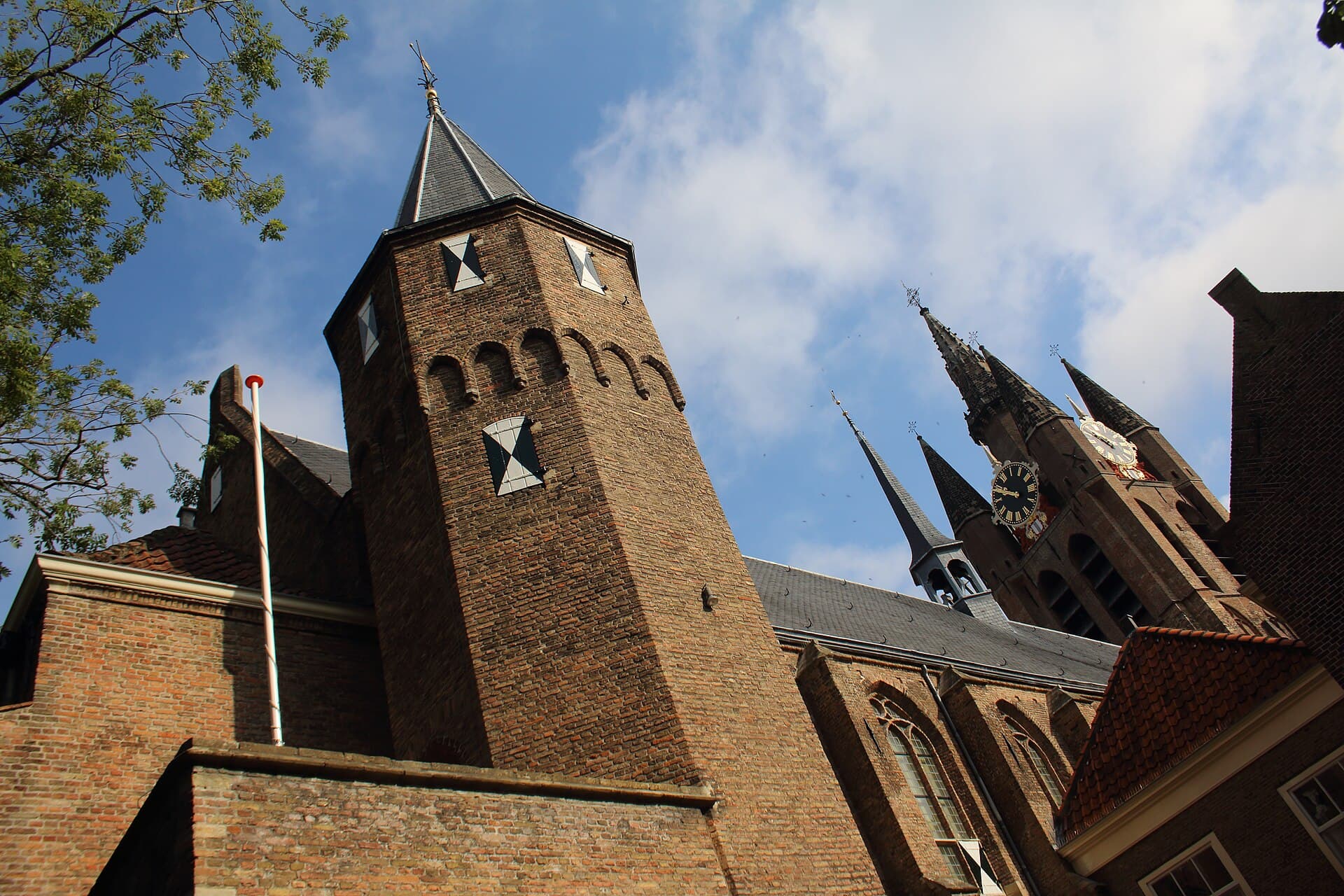
Some countries point to a battlefield as their birthplace. The Netherlands can point to a stairwell in Delft. William of Orange, leader of the revolt against the King of Spain, made his headquarters in a former convent, the Prinsenhof, from fifteen seventy-two. On the tenth of July, fifteen eighty-four, Balthasar Gerards shot him dead on the staircase, drawn by the bounty King Philip the Second had placed on William's life. The bullet holes are still preserved in the wall. The Shot That Made a Nation walk follows the crime to its consequence. Gerards was held in the prison beneath Het Steen, the tower at the core of the town hall that dates to around thirteen hundred and is the oldest surviving structure in Delft, only a few hundred metres from where he fired.
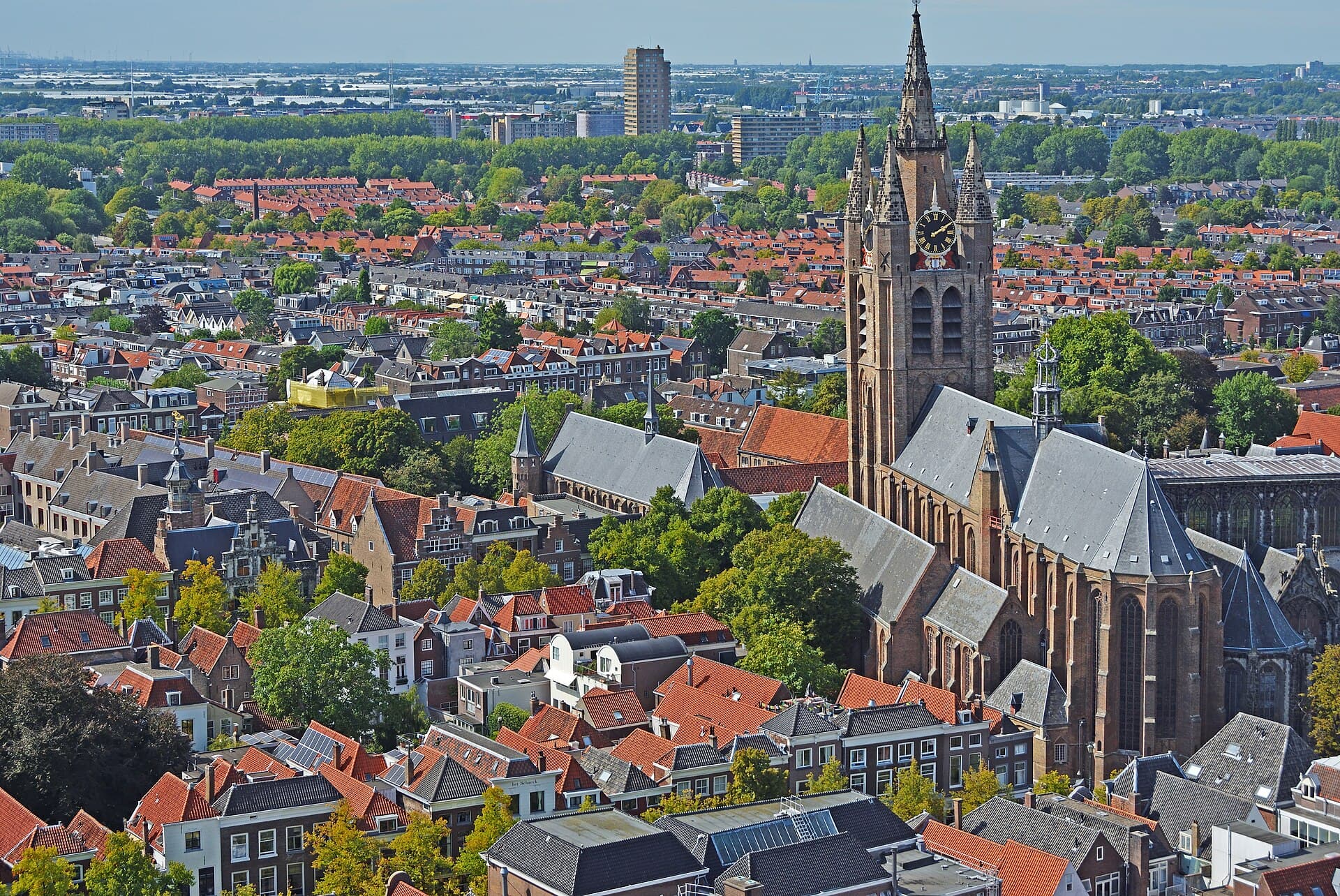
The killing did not close the story, it opened it. William was buried in the Nieuwe Kerk, whose tower rises to one hundred eight point seven five metres, the second tallest church tower in the country after Utrecht's Domtoren. An ornate mausoleum designed by Hendrick de Keyser, begun in sixteen fourteen and finished by his son Pieter in sixteen twenty-three, rose over his grave. A man hunted with a price on his head was given a monument fit for a king. Beneath the church lies the royal crypt of the House of Orange-Nassau, the burial vault of the Dutch royal family ever since fifteen eighty-four, most recently Queen Juliana and Prince Bernhard in two thousand four. During a twenty twenty-one expansion, archaeologists announced the remains of about two hundred people. The shot meant to end a rebellion instead began a dynasty. The Dutch tradition that calls William the Father of the Fatherland is a memory the nation built afterward, not a title he held in life, and the honest walk says so plainly.
Catastrophe and imitation turned into an empire of blue
The third story is how a trading town survived losing its livelihood. For centuries Delft was a beer town, brewing and textiles its major trades, both dependent on clean canal water. When the beer trade collapsed late in the sixteen hundreds, from falling quality, lost markets, competition from Rotterdam, and pollution from its own textile industry, the town recruited immigrant potters, many of them Flemish, who moved into the abandoned brewery buildings and used the same water. Same buildings, new craft. That pivot is the hinge of the whole town.
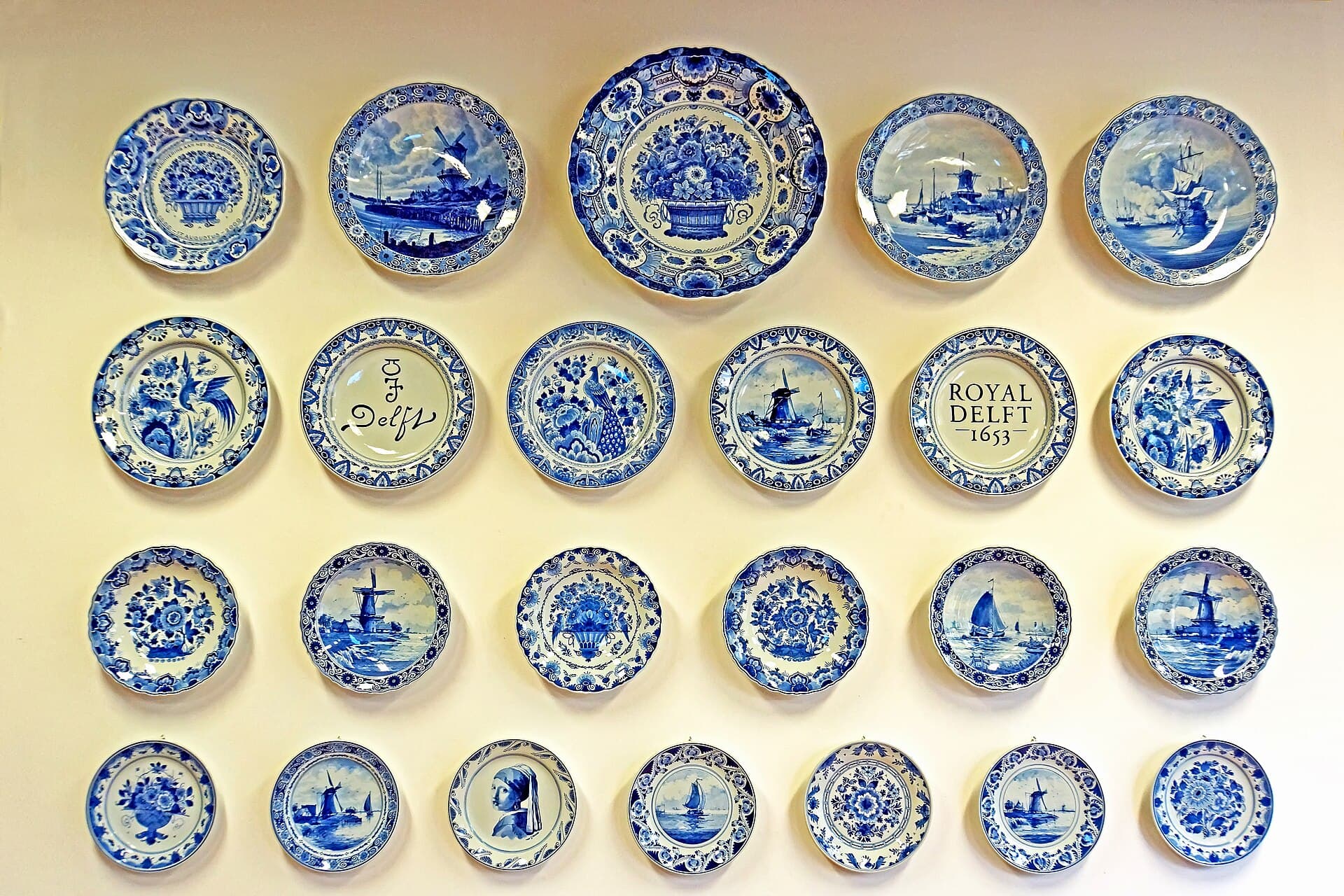
What they made was an act of deliberate imitation. The Dutch East India Company, founded in sixteen oh two and run through six regional chambers including Delft's own, imported millions of pieces of Chinese blue-and-white porcelain. When the Wanli Emperor died in sixteen twenty and supply to Europe was disrupted, Delft's potters filled the gap with tin-glazed earthenware, a faience made to resemble the far costlier porcelain. Delft Blue is not porcelain at all. At its peak, from about sixteen forty to seventeen forty, the town had around thirty potteries. The wealth that flowed through the East India House carried a darker history too: the VOC and its employees traded in enslaved people, and the beauty of what Delft made cannot be separated from the machinery that made it possible.
Then came the catastrophe that binds all three stories together. On the twelfth of October, sixteen fifty-four, the national gunpowder magazine, roughly forty tonnes of powder stored in a former convent, exploded and leveled the central part of the town. It was reportedly heard as far as Texel, more than a hundred kilometres north. More than a hundred people were killed. Among the dead was the painter Carel Fabritius, a gifted pupil of Rembrandt and an early figure of the Delft school, and nearly all his works were destroyed with him. The rebuilding after sixteen fifty-four overlapped almost exactly with the great pottery boom: the town that dug itself out of the crater was the same town that made Delft Blue famous. That craft outlasted every rival. De Porceleyne Fles, now Royal Delft, was founded in sixteen fifty-three and is the last of the roughly thirty-two original potteries still firing, more than three hundred and sixty years on. The blue is still hand-painted here.
Three walks, one town, one pattern. A small canal city that made a painter, a nation, and a craft, and then watched all three grow far beyond it. Plan your visit from the Delft walking tours hub, and let the same water carry you through every version of the story.
Sources
- Museum Prinsenhof Delft, history of the Prinsenhof, William of Orange's assassination, and the Delft Thunderclap of 1654 (prinsenhof-delft.nl)
- Mauritshuis, The Hague, curatorial page on Vermeer's View of Delft (mauritshuis.nl)
- Essential Vermeer, biography of Johannes Vermeer and history of Delft (essentialvermeer.com)
- Royal Delft (De Porceleyne Fles), company history of Delftware and the surviving pottery (royaldelft.com)
- Nieuwe Kerk Delft, the tomb of William of Orange and the royal crypt of the House of Orange-Nassau (oudeennieuwekerkdelft.nl)
Frequently asked questions
- Why is Delft so historically important for such a small town?
- Delft produced three things far larger than itself. Johannes Vermeer, one of the greatest painters who ever lived, spent his whole life here and painted his View of Delft from the town. William of Orange made Delft the seat of the Dutch Revolt and was assassinated here in 1584, becoming the martyr around whom the Netherlands formed. And Delft's potters created the blue-and-white Delftware that Europe copied for generations.
- Can you see original Vermeer paintings in Delft?
- No. Not a single original Vermeer remains in Delft. His works were scattered at an Amsterdam auction in 1696 and now hang in the Mauritshuis in The Hague, the Rijksmuseum in Amsterdam, the Frick Collection in New York, and museums worldwide. The Vermeer Centrum Delft displays full-size reproductions of every known work, arranged chronologically.
- Where was William of Orange assassinated?
- William of Orange was shot dead on the staircase of the Prinsenhof, a former Saint Agatha convent that served as his residence and command post from 1572. Balthasar Gerards fired the shot on the tenth of July, 1584. The bullet holes are still preserved in the stairwell wall behind glass. The Prinsenhof museum is closed for a major renovation expected to run to around 2027.
- Is Delft Blue real porcelain?
- No. Delft Blue, or Delfts blauw, is tin-glazed earthenware, a form of faience, not true porcelain. It was created deliberately as a cheaper imitation of the Chinese blue-and-white porcelain the Dutch East India Company imported in huge quantities. When Chinese supply to Europe was disrupted after the Wanli Emperor died in 1620, Delft's potters filled the gap.
- What was the Delft Thunderclap of 1654?
- On the twelfth of October, 1654, Delft's national gunpowder magazine, holding roughly forty tonnes of powder, exploded and leveled the central part of the town. It was reportedly heard as far as Texel, over a hundred kilometres north. More than a hundred people were killed, including the painter Carel Fabritius, a pupil of Rembrandt whose works were almost entirely destroyed. The rebuilding overlapped with Delft's great pottery boom.
Ready to experience it?
Vermeer's Delft: The Painter of Impossible Light
85 min · 2.4 km · easy
More from Delft
Explore more at your own pace.
Delft Travel Guide: Days, Transport, Safety, and Costs
Royal Delft and the Real Story Behind Delft Blue
The Prinsenhof in Delft: Where a Single Shot Founded a Nation
Nieuwe Kerk, Delft: The Church That Turned a Rebel Into a Dynasty
The Oostpoort: Reading Delft's Last City Gate