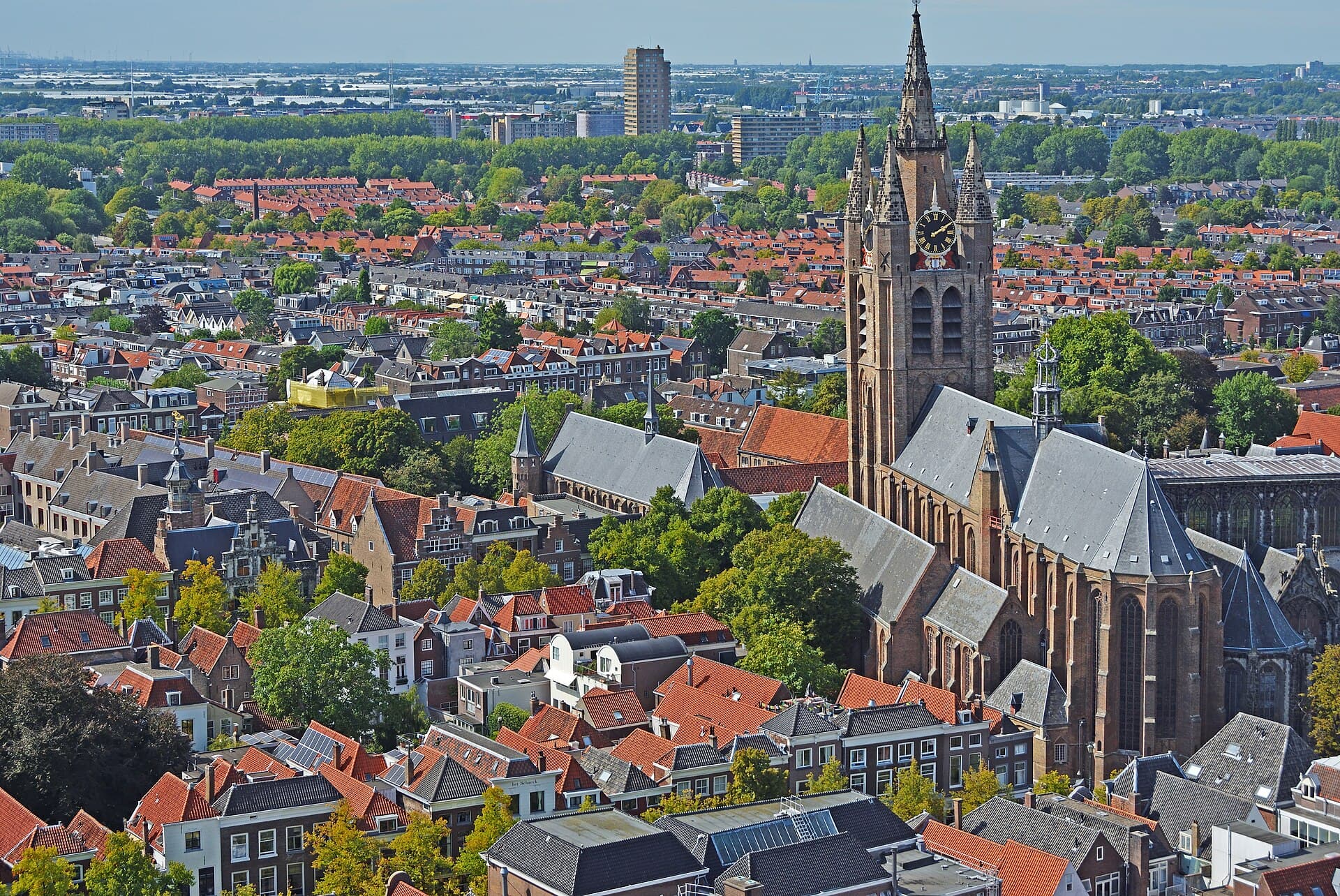
The Nieuwe Kerk in Delft holds the tomb of a man who was shot dead as a rebel and buried here in 1584, and that grave became the founding monument of a royal dynasty that is still laid to rest beneath the church. If you stand at the eastern end of the Markt and understand only one thing about this Gothic church, understand that: it turned a murdered outlaw into a founder, and it did so by giving him a monument fit for a king. Everything else the building offers, its height, its architects, its five centuries of construction, arranges itself around that single fact.
A church built across five centuries
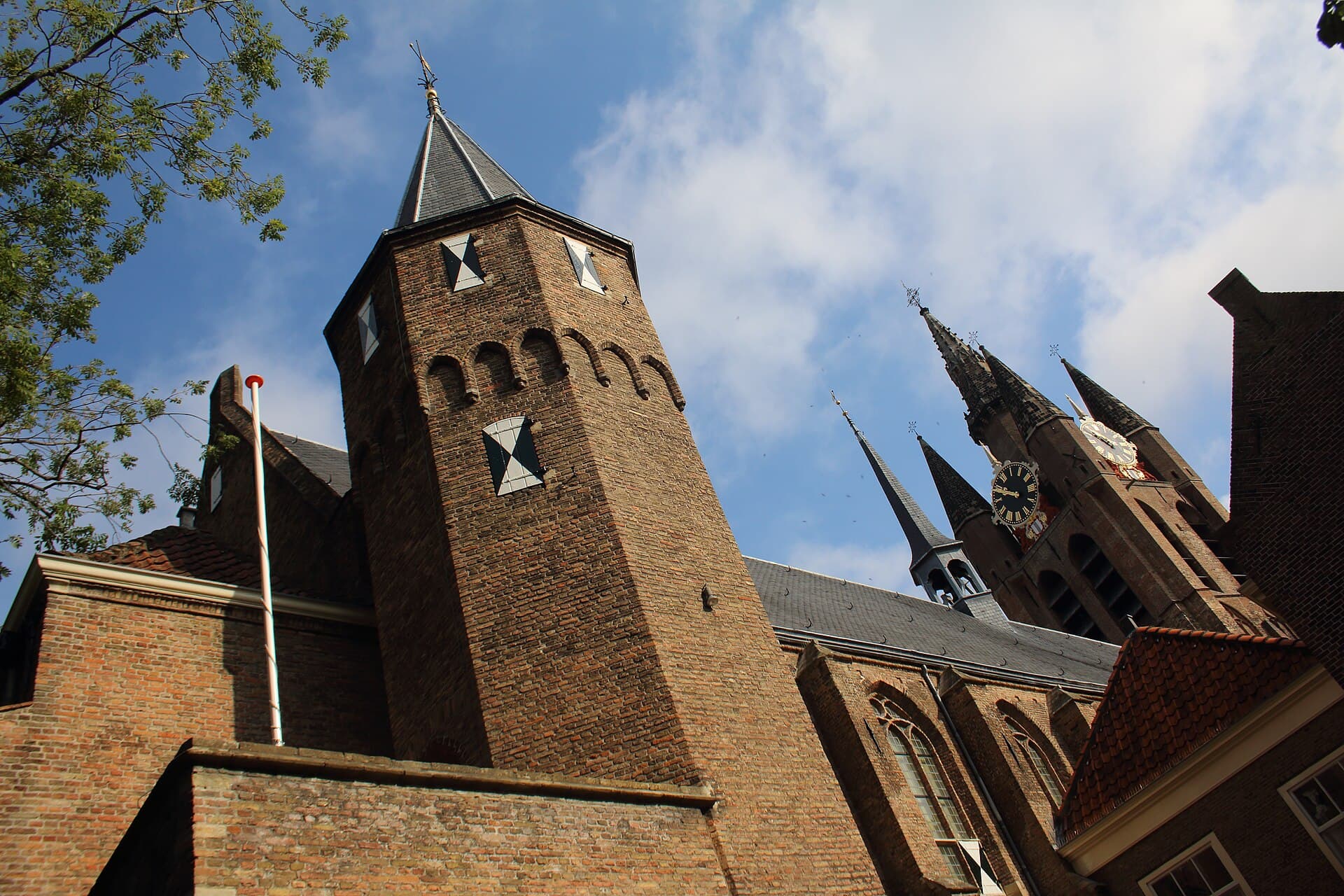
The Nieuwe Kerk was raised between 1400 and 1496 by the master builder Jacob van der Borch, who also worked on the great cathedral tower in Utrecht. That span of nearly a hundred years is worth holding onto, because this church was never finished in one gesture. It kept growing and changing long after its first stones were set. The tower you see today rises to 108.75 metres, which makes it the second tallest church tower in the Netherlands, behind only the Domtoren in Utrecht at roughly 112 metres. The spire that gives the tower its present silhouette is not medieval at all. It was completed in 1872 by the architect Pierre Cuypers, so the profile against the Delft sky is younger than the United States.
That layering of dates is the first honest thing to notice standing in front of the church. A visitor tends to read an old building as a single old moment. The Nieuwe Kerk resists that. Its body is late medieval, its crown is nineteenth century, and the thing that made it famous sits between those two in the seventeenth. It is a building assembled by many hands across a long argument about how a nation should remember itself.
The tomb at the centre
Hear a stop from this walk
The Stadhuis and the Prisoner in the Steen
You come here for the tomb. When William of Orange, the leader of the revolt against Spanish rule, was assassinated at the Prinsenhof in 1584, he was laid to rest in this church. Over the following decades a mausoleum rose over his grave. According to the church, this monument, the praalgraf, was designed by Hendrick de Keyser, the same architect responsible for Delft's town hall across the square. Work began during the Twelve Years' Truce, and the monument was completed in 1623 by his son Pieter de Keyser, after Hendrick died in 1621. So even the tomb, like the church around it, was finished by a second generation. The man who designed the monument did not live to see it done.
Stand before it and think about the distance that monument travels. William died with a price on his head, hunted by an assassin who believed that killing the leader would kill the rebellion. Balthasar Gerards, the killer, was a Catholic supporter of Spain, drawn by the bounty King Philip the Second had placed on William's life. He fired on a staircase at the Prinsenhof, a few hundred metres from where you now stand, and William died of his wounds. By the logic of the plot, William should have vanished into an unmarked grave, an outlaw who lost. Instead the Dutch built him an ornate monument in their finest church. The tomb is the point where a rebel's death was rewritten as a founder's birth. That is the one thing to carry out of the building.
The jurist Hugo de Groot, known in Latin as Hugo Grotius, is also buried in this same church. His statue stands out on the Markt, and the fact that the Delft-born father of international law shares this floor with the founder of the Dutch state tells you how much national memory the Nieuwe Kerk has been asked to hold.
What lies beneath
The tomb only hints at the larger thing under your feet. Beneath the Nieuwe Kerk is the royal crypt of the House of Orange-Nassau, the burial vault of the Dutch royal family. It has been their resting place ever since William was interred here in 1584. The older vault holds eleven people, among them William himself, Maurice of Nassau, who carried the war forward and was buried in 1625, and Frederick Henry, Prince of Orange, buried in 1647. A newer vault holds many more. Its most recent occupants are Queen Juliana and Prince Bernhard, both laid to rest in 2004.
The scale below is larger than the polished vault suggests. In September 2021, archaeologists working during an expansion of the burial chamber announced that they had found the remains of roughly two hundred people. The crypt is closed to the public. You view it only through the church above, which is fitting, because it was never meant to be a spectacle. It is a working royal tomb, not an exhibit.
That is the arc the Nieuwe Kerk completes. A shot on a staircase in 1584 was meant to end everything. Instead it began a line. The rebel became a martyr, the martyr became a founder, and the founder's grave became the tomb where the Dutch monarchy has been buried for more than four centuries without a break. Delft, a small canal city, became the place where the nation's kings and queens are still laid to rest.
Walk it in order
The tomb makes far more sense when you reach it the way the history unfolded: the murder scene first, the man, the war, the assassin's prison, and only then the church that holds the consequence. The delft-prinsenhof-william-orange tour walks that exact sequence over about three-quarters of a kilometre of level ground, ending inside the Nieuwe Kerk. Buy the combined Oude Kerk and Nieuwe Kerk ticket, add the tower climb if your legs allow, and check the day's final admission so the tomb does not close on you. For the other routes through the city, see Delft walking tours and the Delft city page.
Sources
- Nieuwe Kerk (Delft), Wikipedia: construction dates, tower height, and architects van der Borch and Cuypers.
- Tomb of William of Orange, Oude en Nieuwe Kerk Delft (official): the praalgraf attribution to Hendrick and Pieter de Keyser and its completion in 1623.
- Nieuwe Kerk, Delft, Royal House of the Netherlands (official): the House of Orange-Nassau crypt, its occupants, and the 2004 burials of Queen Juliana and Prince Bernhard.
- Catacombs at Delft's Nieuwe Kerk Excavated, Archaeology Magazine (2021): the discovery of the remains of roughly two hundred people during the burial-chamber expansion.
- William the Silent, Wikipedia: William's leadership of the revolt, his 1584 assassination, and his interment in Delft.
Ready to experience it?
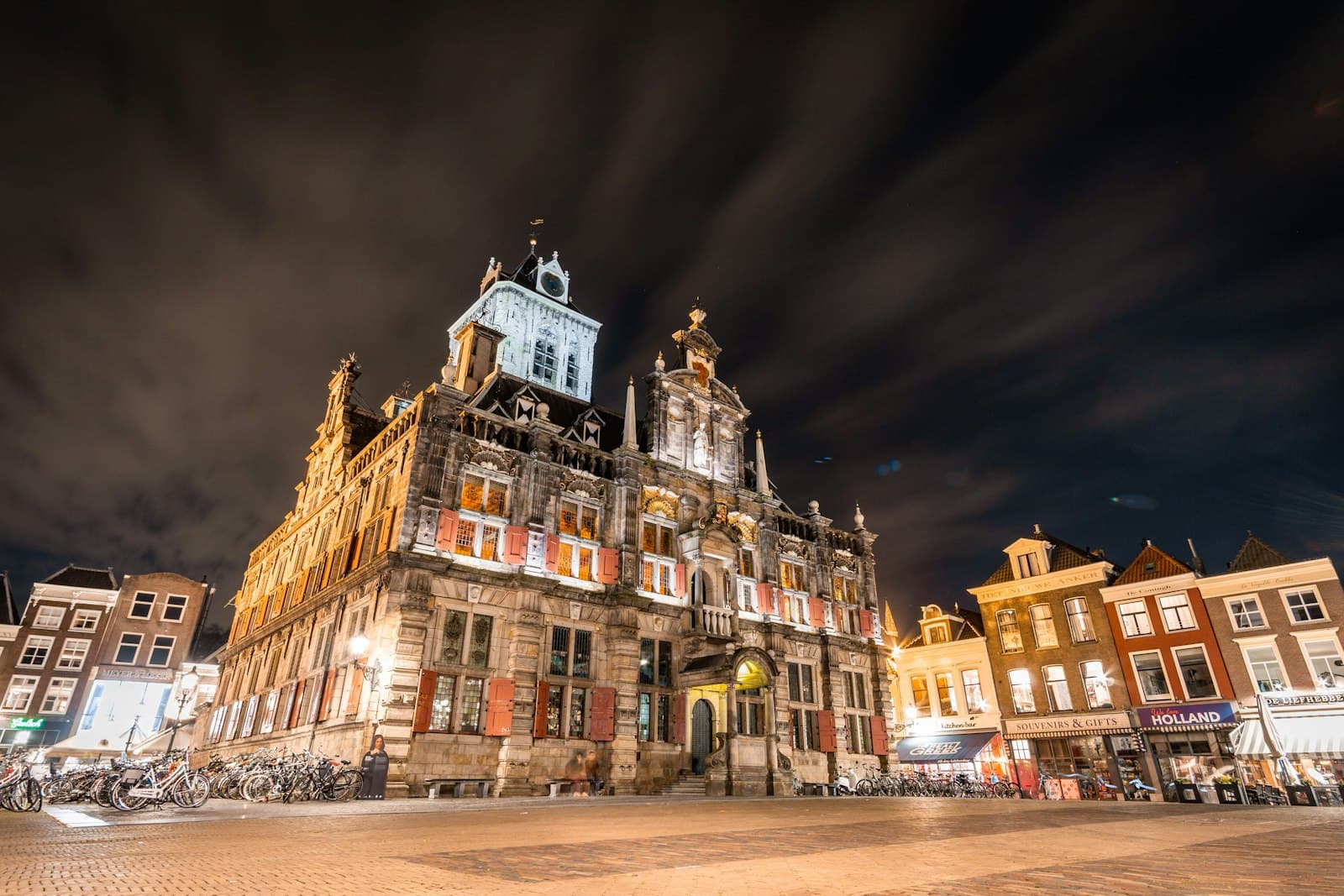
Prinsenhof: The Shot That Made a Nation
80 min · 0.8 km · easy
More from Delft
Explore more at your own pace.
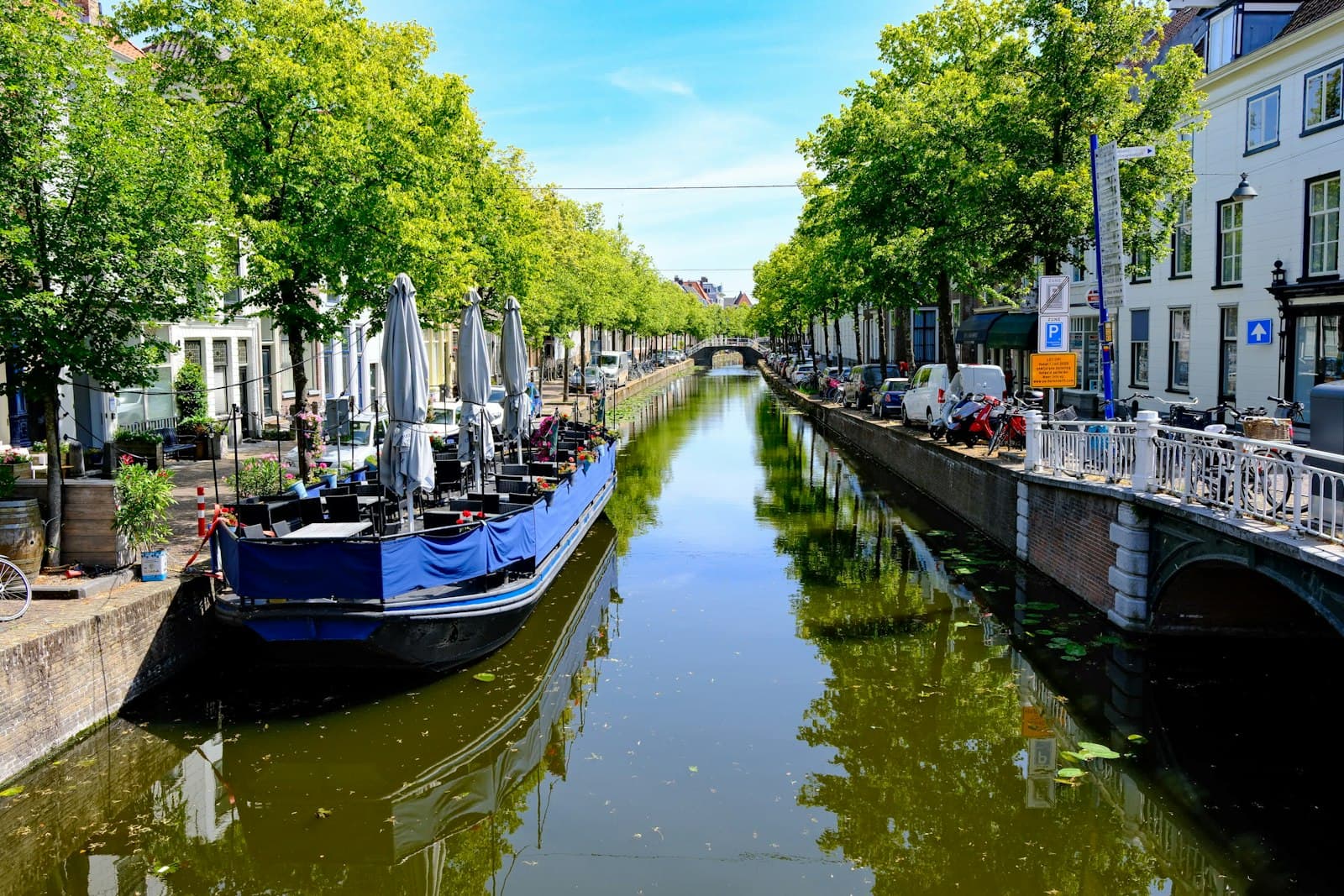
Delft Travel Guide: Days, Transport, Safety, and Costs
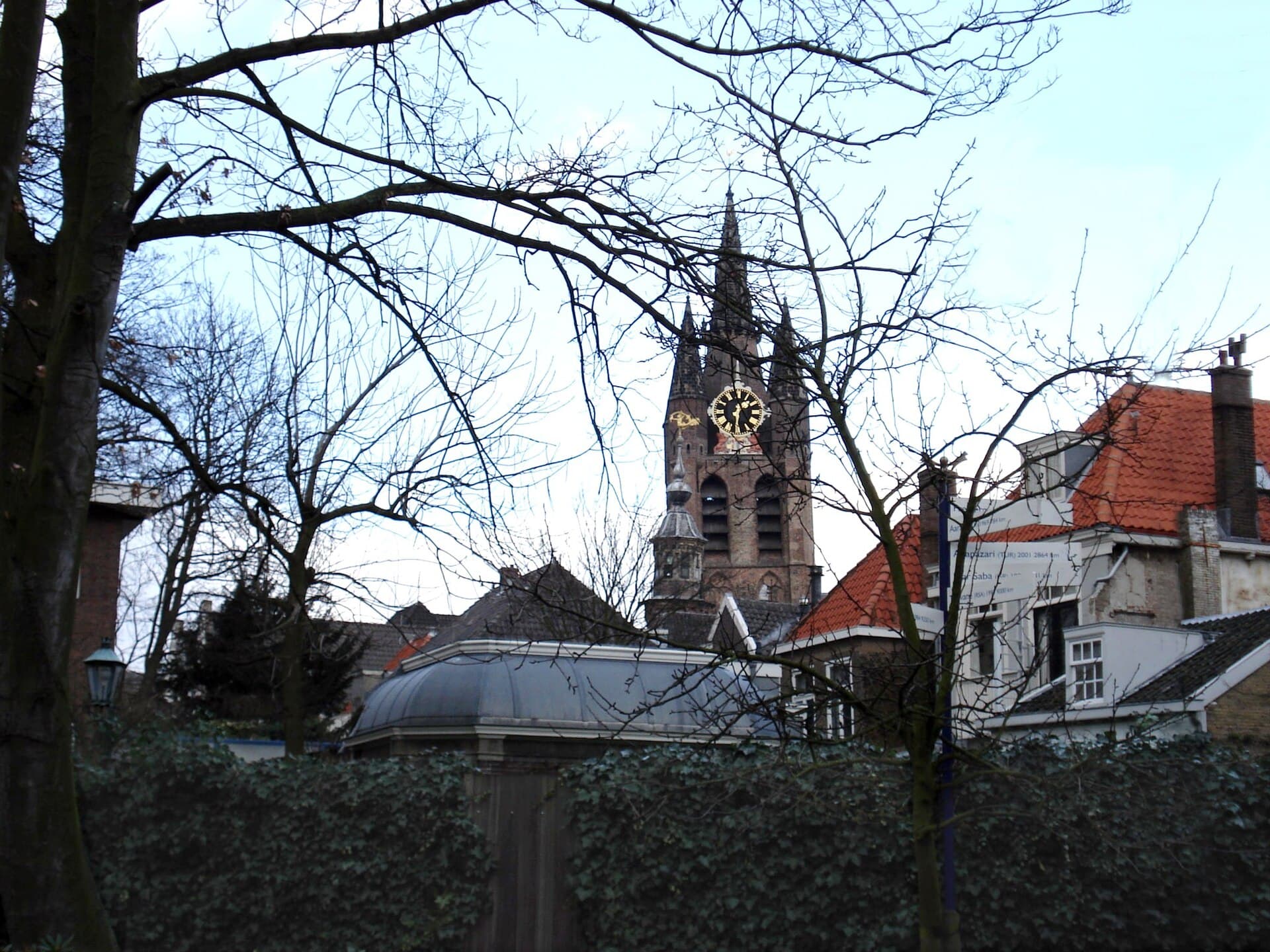
The Small Town That Made Big History: Delft's Light, Its Martyr, and Its Blue
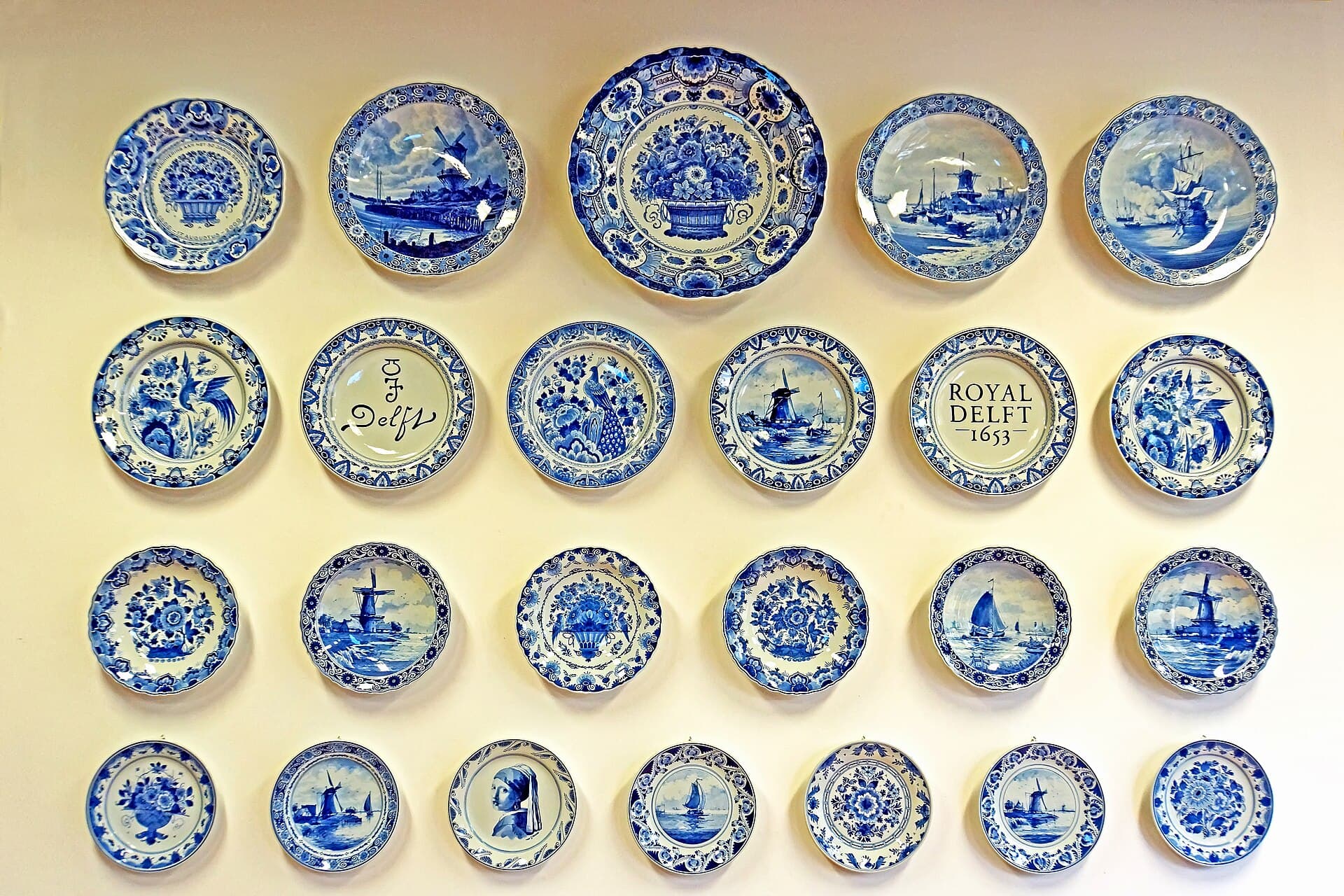
Royal Delft and the Real Story Behind Delft Blue
The Prinsenhof in Delft: Where a Single Shot Founded a Nation
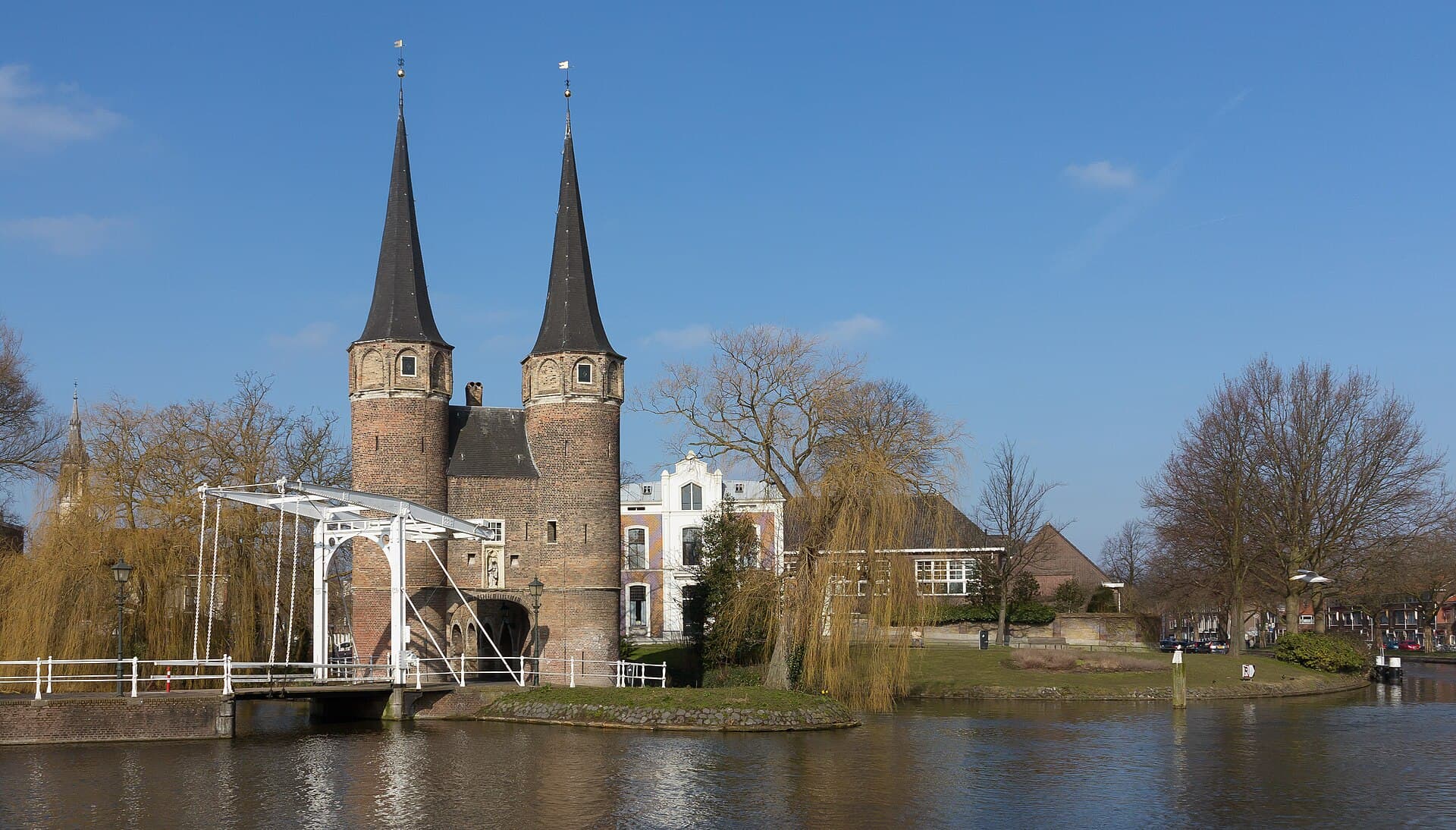
The Oostpoort: Reading Delft's Last City Gate