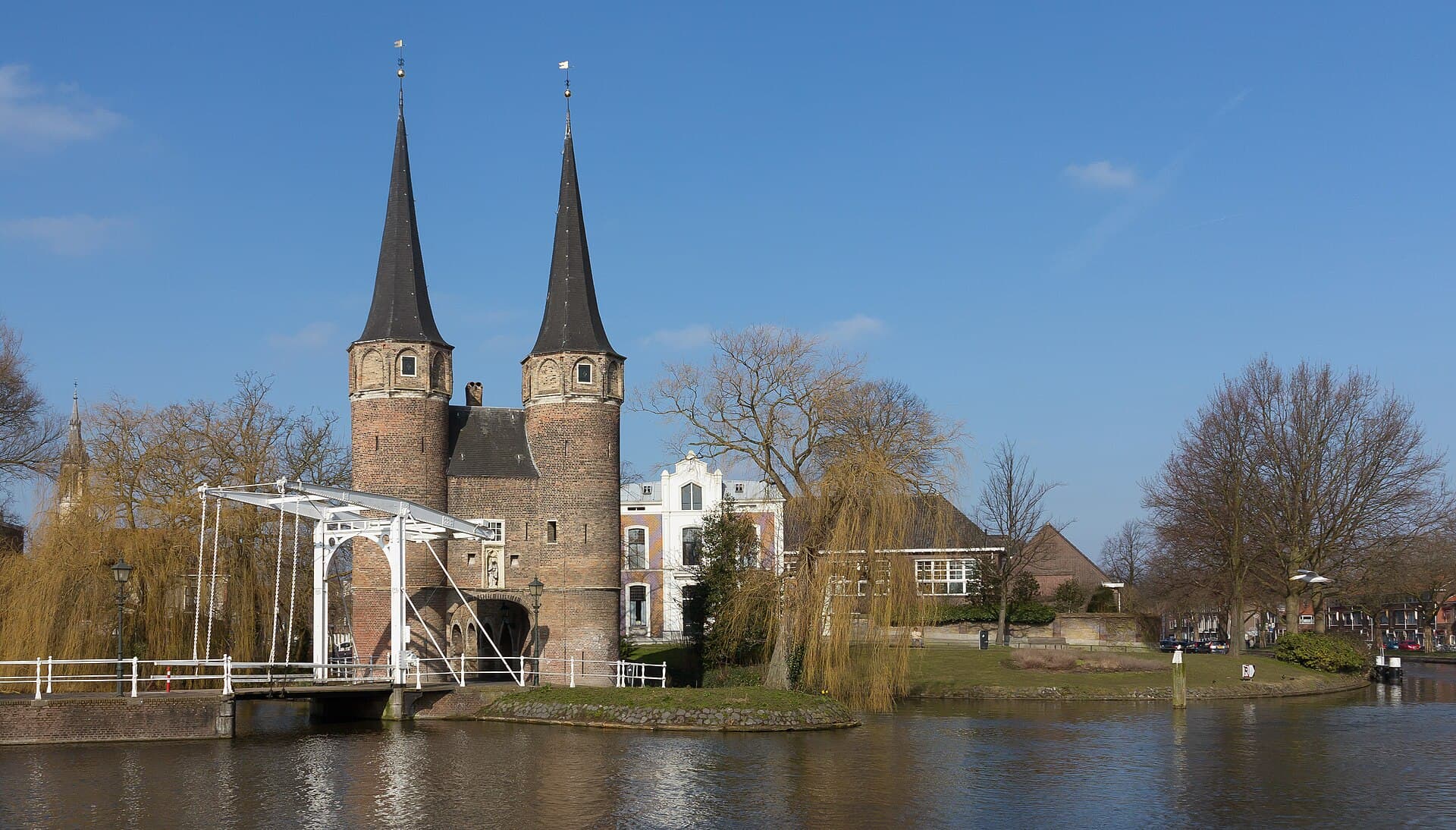
The Oostpoort is the only surviving medieval city gate of Delft, and that single fact carries more weight than its slender brick towers first suggest. Delft once had several city gates set into its defensive walls. Every other one was demolished. This eastern gate endured, and part of the reason it endured is almost anticlimactic: it simply carried less traffic than the busier gates, so when the town began clearing its old fortifications, no one felt the pressing need to knock it down. What you are looking at, when you stand before the two towers straddling the water, is a structure that survived by being quiet.
What you are actually looking at
The Oostpoort was built around the year 1400 in the northern European architectural style known as Brick Gothic. That name describes exactly what it is: Gothic proportions and pointed forms rendered not in carved stone but in warm red brick, the material the flat, quarry-poor Low Countries had in abundance. Brick Gothic runs from the Baltic coast through the northern Netherlands, and Delft's gate is a clean example of it, all Gothic lines and masonry rather than sculpture.
The silhouette you see today, though, is not quite the one a fifteenth-century traveler would have met. Around 1510, more than a century after the gate was first built, the two towers gained an extra octagonal floor and the tall, pointed spires that give the structure its reaching, almost delicate profile. So the gate is really two moments layered on top of each other: a squat, defensive base from around 1400, and a taller, more ornamental crown added a hundred years later. If the spires look almost too elegant for a piece of city defense, that is because they came second, when the pure military need had already softened.
Look at where the gate sits. It does not just span a road. The Oostpoort is really two gates in one: a land gate and a water gate, joined by remains of the old city wall, with the canal water passing beneath and a drawbridge over it. It straddles the water and guards a canal entrance into the town. That detail is easy to walk past, but it tells you something specific about Delft. Here, defense and trade both moved by boat. A city gate on a canal is a checkpoint for cargo as much as for people, a place where the town could watch what came in and out by water. In a settlement whose very name comes from the Dutch verb for digging, this water-straddling gate is not an accident of layout. It is the logic of the whole place made visible in brick.
The one thing to understand standing here
Hear a stop from this walk
Royal Delft: Where the Blue Is Still Fired
Here is the idea worth holding as you look up at the towers. This gate is the last witness. Everything else on this walk is either water, or a rebuilt facade, or an open square where something used to be. The Oostpoort is the one built object that stood through the entire story and is still standing now.
It was already old when Delft's merchant fortunes rose along the canals. It watched the breweries empty out and the immigrant potters move into their abandoned buildings, taking over the same water the brewers had prized. It stood while the town's national gunpowder magazine detonated in 1654, the disaster locals called the Delft Thunderclap, which flattened the northeastern quarter of the town. It was here while Delft Blue, the tin-glazed earthenware that made the town famous, traveled out into the world by ship and cart. And it survived the 1840s, when the old walls came down and its sibling gates were demolished. Everything that gives Delft its identity happened within sight of this gate, and this gate is the only one of its kind left to have seen it.
There is a small correction worth making while you are here, because visitors ask it constantly. This is not the gate in Vermeer's View of Delft. That famous painting shows the town's waterfront and two of its gates, the Rotterdam and Schiedam gates, and both of those were demolished long ago, in the 1830s. The Oostpoort is on the opposite side of town and does not appear in the picture at all. So the gate most people associate with painted, immortal Delft is gone, and the gate that actually survived is one most people have never seen reproduced. There is a quiet justice in that. The image outlived one gate; the brick outlived another.
Today the Oostpoort is a private residence and gallery, so it is a building to appreciate from the outside. Stand back on the far side of the canal, where the two spires and their reflection line up in the water, and give it a slow minute. This is the frame the whole town keeps returning to: brick, water, and light arranged as if on purpose.
Walk the full arc
The Oostpoort is the sixth stop on Roamer's self-guided audio walk through Delft, and it lands where it does for a reason. By the time you reach it, you have already stood on the merchant canals where the Golden Age money lived, seen the stretch where beer gave way to pottery, passed the East India House with its honest reckoning of the trade that flowed through it, and crossed the square left empty by the 1654 explosion. The gate is the point where all of that resolves into a single surviving object, just before the walk finishes at the last working pottery still firing the blue.
Reading about the gate is one thing. Standing beneath its spires with the full story in your ears, understanding exactly what this one quiet survivor watched, is another. If you want to make the walk, browse the Delft walking tours or start from the Delft city page and take the stops at your own pace. Every stop is short and skippable, the canal edges have no railings, and the light on the water is best in the late morning. The Oostpoort will be waiting where it has waited for six centuries, on the east side, over the water.
Sources
- Eastern Gate (Delft), Wikipedia. Overview of the Oostpoort's construction around 1400, its Brick Gothic style, the circa-1510 addition of the octagonal floor and spires, and its status as Delft's only surviving city gate, kept while the others were demolished in the 1840s because it carried less traffic.
- Oostpoort, SpottingHistory. History of the gate, its survival after the demolition of Delft's walls, and its current use as an art gallery and private residence.
- A Timeline of the City of Delft: 1100-1836, Essential Vermeer. Context for Delft's canal-based development, the land-and-water gate structure, and the broader history the gate witnessed.
- De Delftse Donderslag, Essential Vermeer. Account of the 12 October 1654 gunpowder explosion that flattened the town's northeastern quarter, referenced as part of the arc the Oostpoort survived.
Ready to experience it?

Delftware and the Golden Age: Blue and White Empire
130 min · 4.4 km · moderate
More from Delft
Explore more at your own pace.
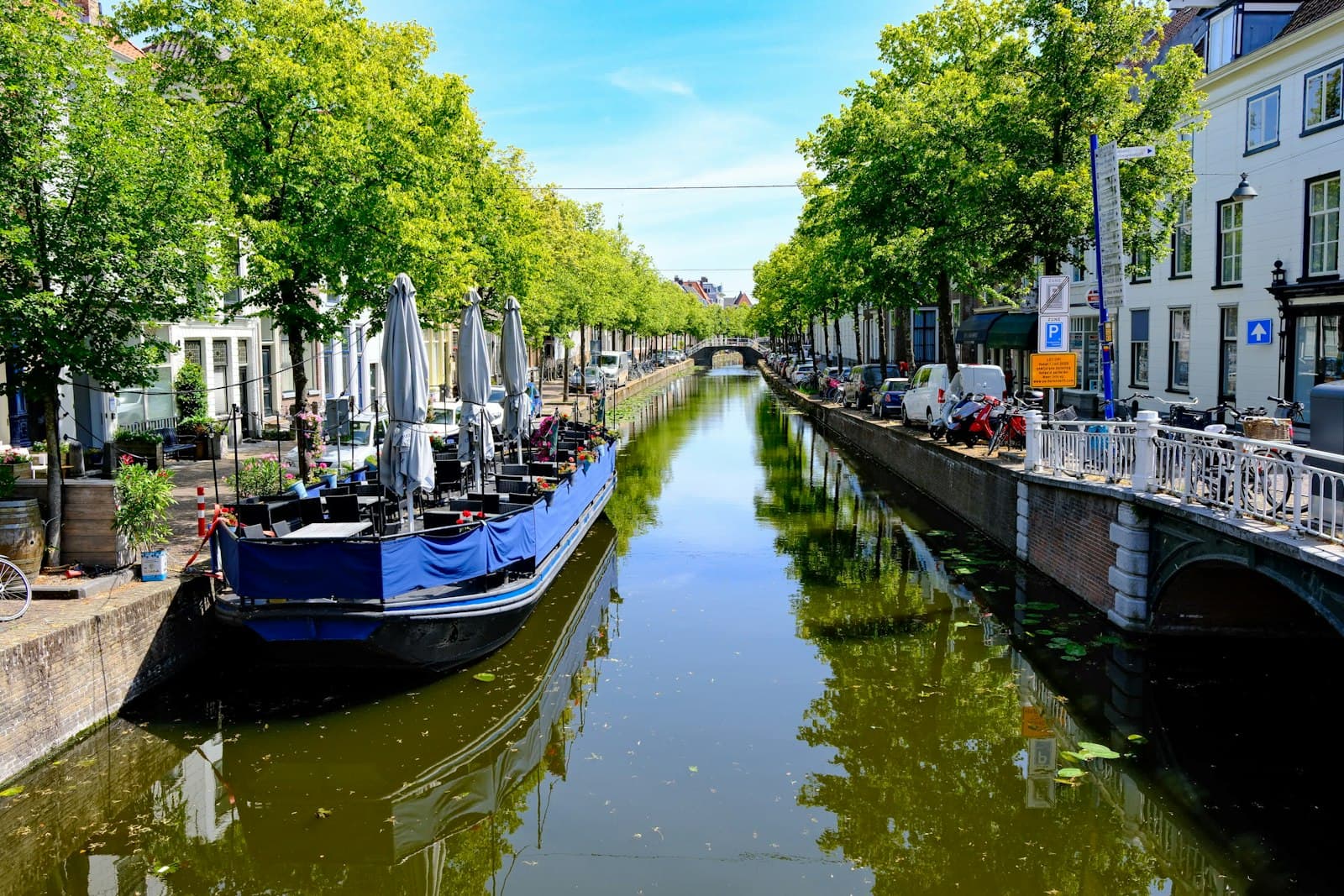
Delft Travel Guide: Days, Transport, Safety, and Costs
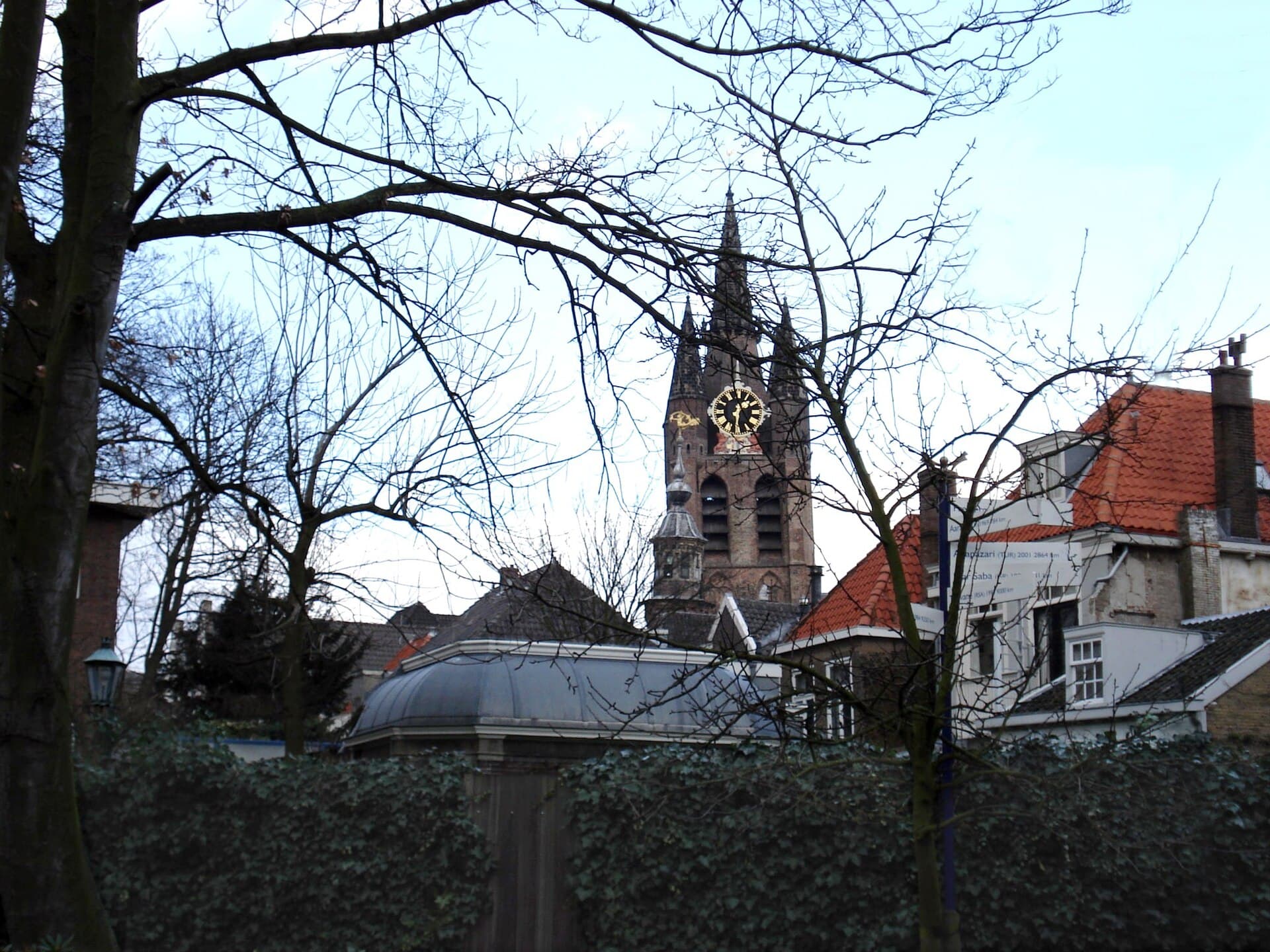
The Small Town That Made Big History: Delft's Light, Its Martyr, and Its Blue
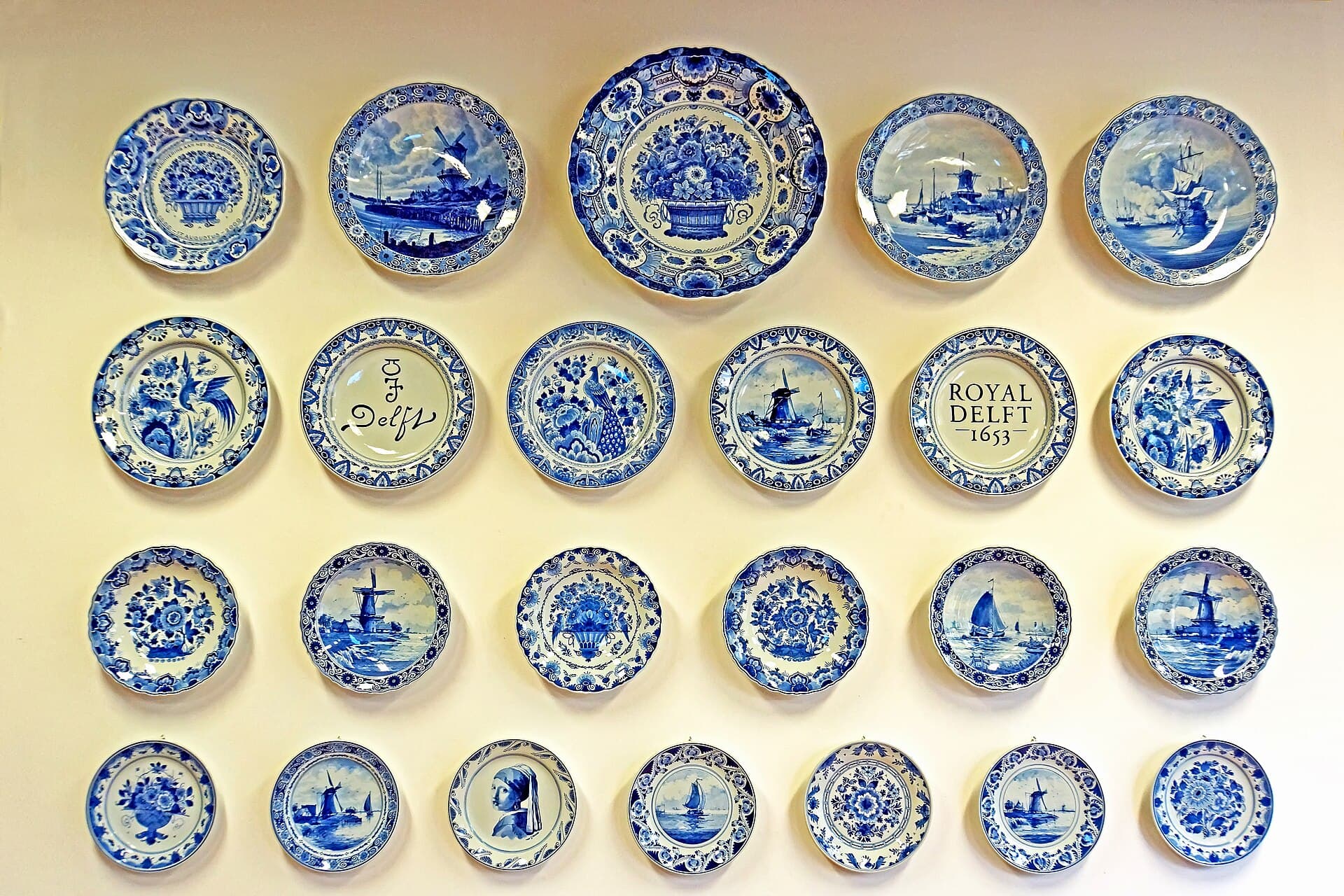
Royal Delft and the Real Story Behind Delft Blue
The Prinsenhof in Delft: Where a Single Shot Founded a Nation
Nieuwe Kerk, Delft: The Church That Turned a Rebel Into a Dynasty