In Delft, the staircase inside the Prinsenhof where William of Orange was assassinated in 1584 turned a hunted rebel into the founding martyr of the Netherlands. A single shot fired on the steps of a former convent did not end the revolt against Spain, as the killer intended. It created the man around whom a republic gathered, and it began the royal line whose tomb still lies a few hundred metres away. This walk reads that sequence in order: the crime, the man, and the mausoleum. It starts at the Prinsenhof because that is where the wound was made.
An ordinary brick building that changed everything
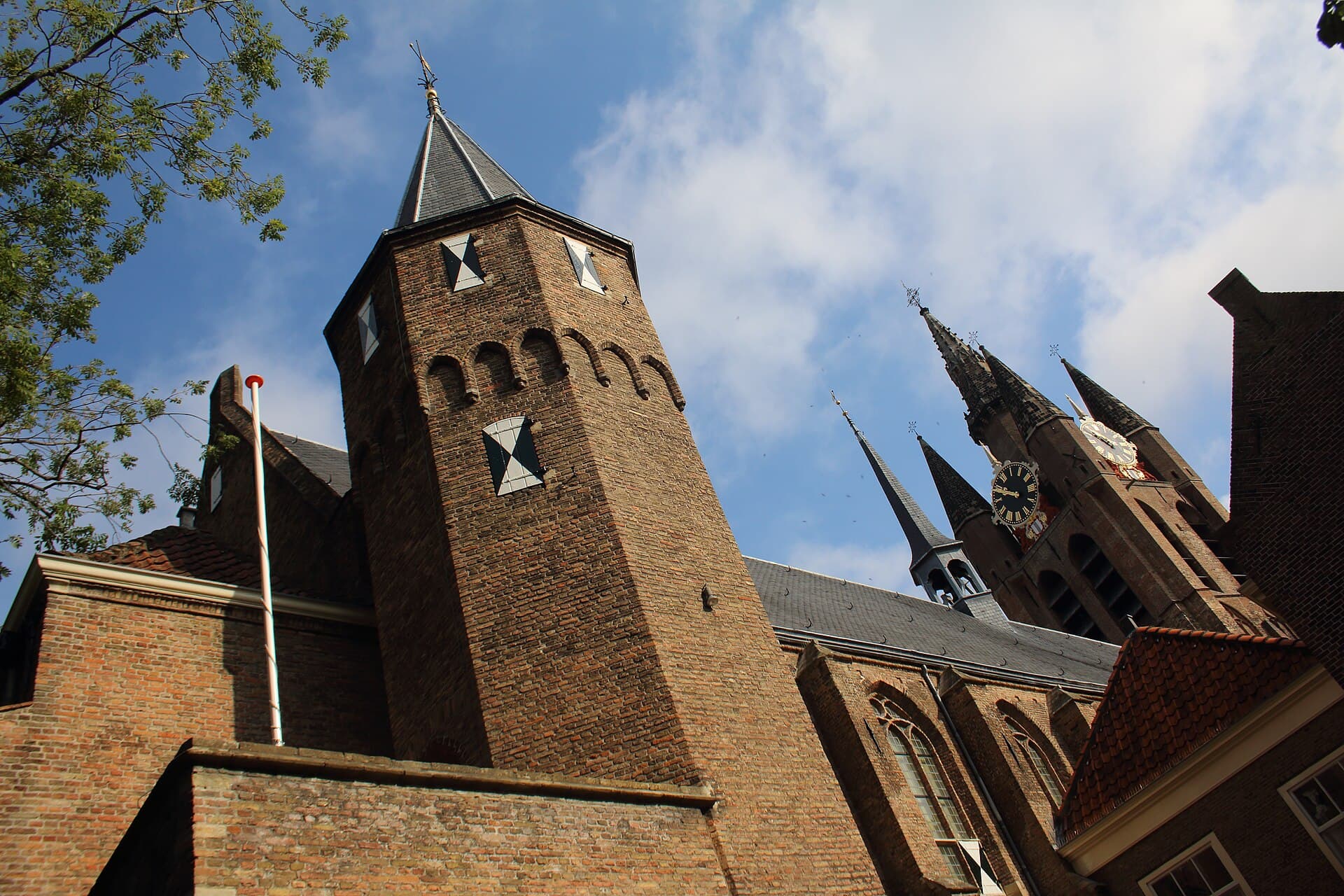
The Prinsenhof was built as the Sint-Agathaklooster, a convent dedicated to Saint Agatha, long before any prince set foot in it. When William of Orange needed a base for his uprising against the King of Spain, he took these rooms as his residence and court, living and working here from 1572 until his death. That decision made Delft the effective seat of the Dutch Revolt. A quiet canal city became a command centre.
On the tenth of July, 1584, a man named Balthasar Gerards was waiting on the stairs. He was a Catholic supporter of Spain, drawn by the bounty that King Philip the Second had placed on William's life. As William moved on the staircase, Gerards fired, and William died of his wounds. The bullet holes are still preserved in the stairwell wall, kept behind glass, so that visitors can stand before the exact spot where a nation's founding wound was made.
One practical note before you plan your day. The Museum Prinsenhof Delft is closed for a major renovation that began in early 2025, with reopening planned for around 2027. So treat this first stop as heritage you view from the outside, not a door to walk through. What matters here is not the interior but the fact of the place: one staircase, one shot, and the leader of an entire uprising gone. Gerards was captured almost at once. What he could not have known is that his act would not close the story. It would open it.
The man and the myth in the garden square
Hear a stop from this walk
The Stadhuis and the Prisoner in the Steen
A few steps away, on the Sint-Agathaplein, stands a bronze figure of Willem van Oranje. This is the man the Netherlands remembers as the Father of the Fatherland, and it is worth being honest about both halves of that title. He was born on the twenty-fourth of April, 1533, at Dillenburg Castle, and he died here in Delft at the age of fifty-one. He led the revolt of the Low Countries against Philip the Second, the conflict that became the Eighty Years' War. In Dutch he carries two names, Willem van Oranje and Willem de Zwijger, William the Silent.
The epithet Father of the Fatherland, in Dutch Vader des Vaderlands, is a national tradition rather than a title he held in life. It is how the country chose to remember him afterward, built on the documented fact that he led the early revolt and paid for it with his life. The statue you see is modern, made by the sculptor Auke Hettema and unveiled by Queen Beatrix in 2003, funded through a private bequest. The gap between the man who died on a staircase and the founding father a country needed him to be is the real subject of this whole route.
Widening the lens on the Markt
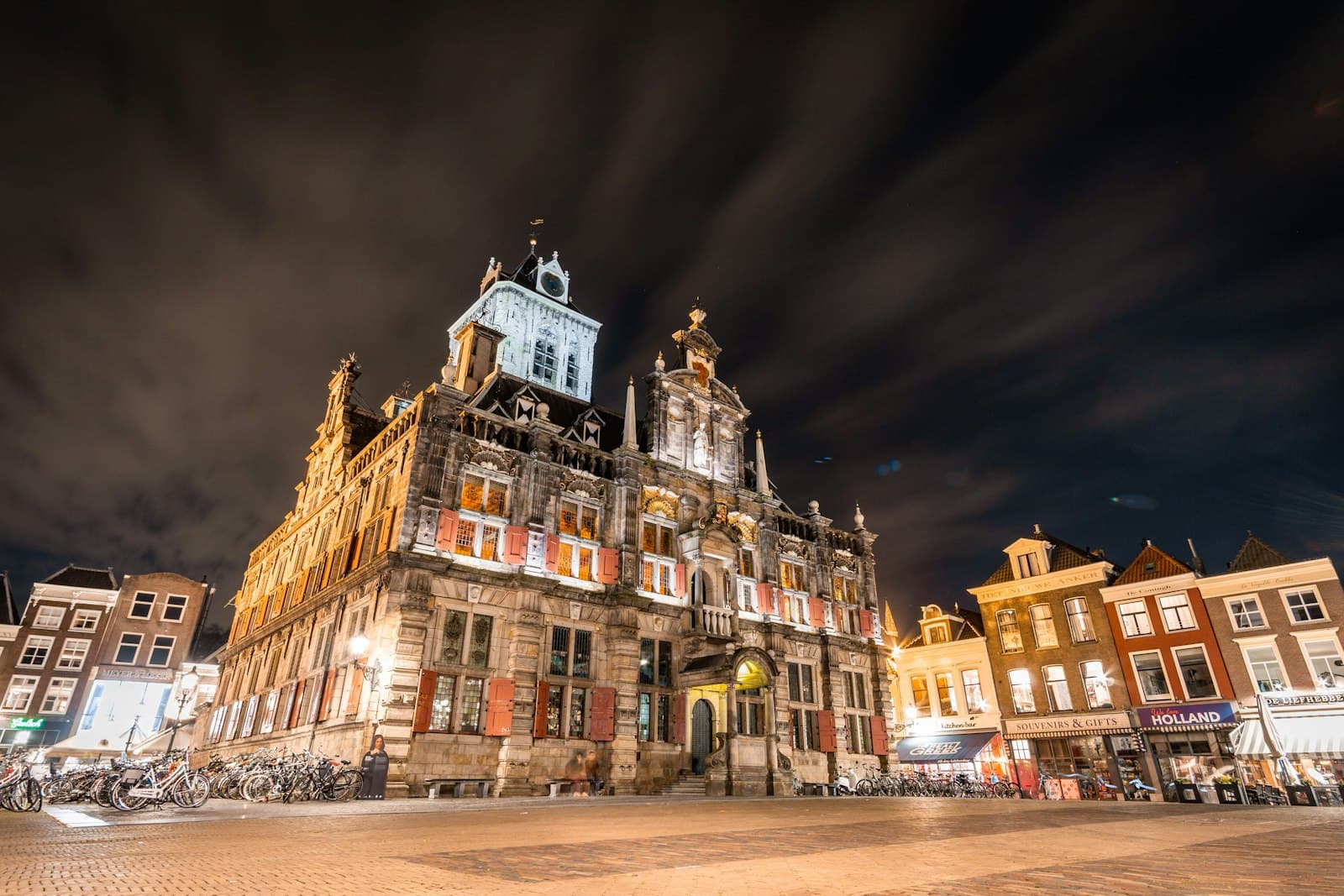
From the intimate square the walk opens onto the Markt, Delft's grand market square, with the Nieuwe Kerk closing one end and the town hall the other. This is the place to widen the story from one man to the war he started. The Eighty Years' War, also called the Dutch Revolt, ran roughly from 1568 to 1648. It was the uprising of the Low Countries against Habsburg Spain, driven by a tangle of causes: religion in the age of the Reformation, heavy taxation, the crown's push to centralize power, and the old rights of Dutch cities and nobles. The war outlived William by decades and finally ended in 1648 with the Peace of Munster, which recognized Dutch independence.
Memory likes to tidy things, so here is a correction the square invites. The statue at the centre of the Markt is not William. It is Hugo de Groot, known in Latin as Hugo Grotius, the Delft-born jurist, unveiled in 1886. William's statue is the one you left behind at the Prinsenhof.
Where the loop closes
Turn to the Stadhuis, the town hall facing the church across the length of the Markt. The building is largely the work of the architect Hendrick de Keyser, who rebuilt it between 1618 and 1620 in the Dutch Renaissance style after fire destroyed the old hall. Look for the darker stone tower rising at its core. That is Het Steen, built around the year 1300, the oldest surviving structure in Delft. It held the city prison and a torture chamber below.
This is where the crime closes its loop. Balthasar Gerards, who fired the shot at the Prinsenhof, was held in the prison beneath this very tower before his sentencing and execution. The staircase where the shot was fired and the stone cell where the assassin waited sit within a few hundred metres of each other.
The martyr's tomb and a dynasty
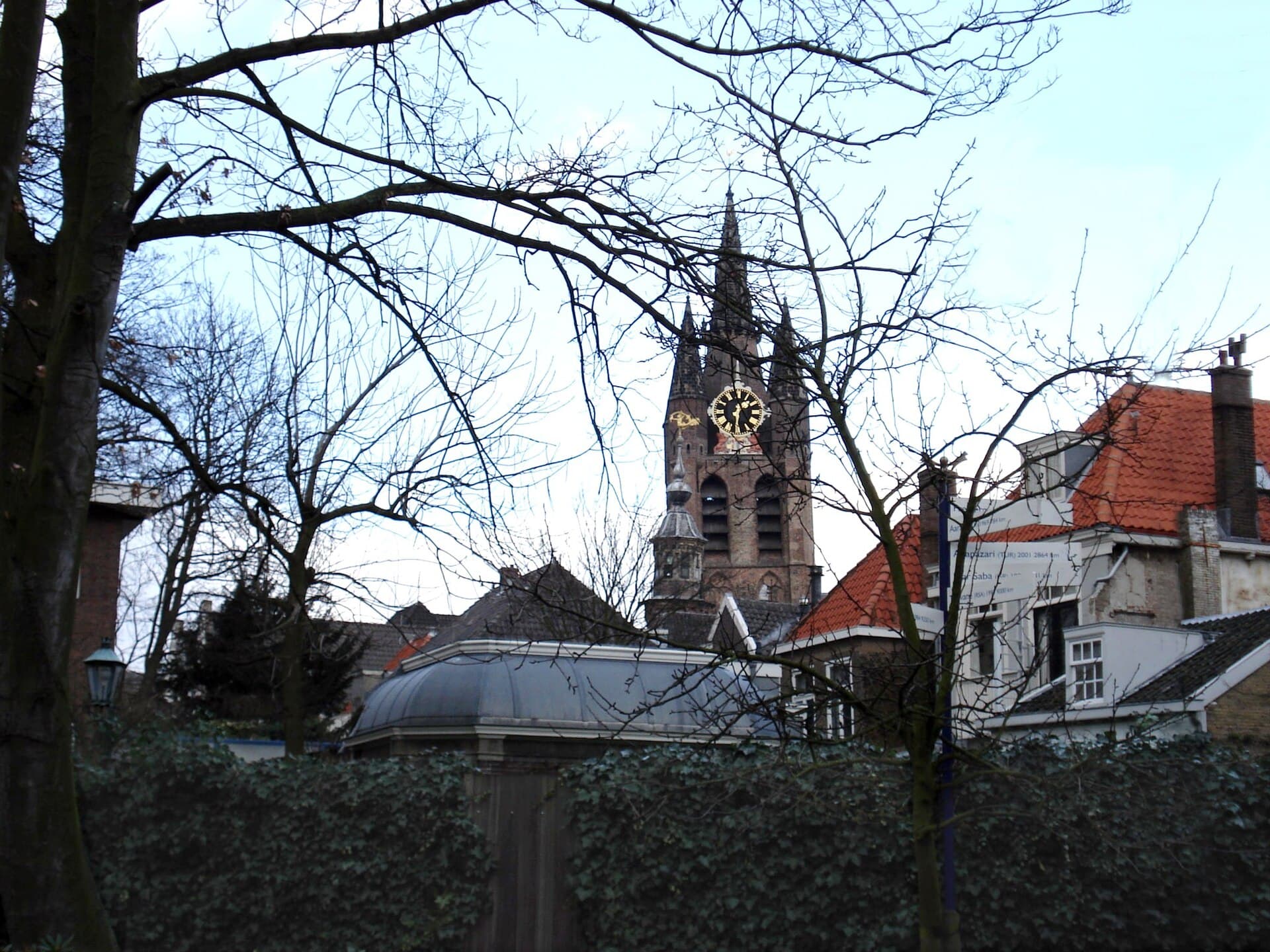
The walk ends inside the Nieuwe Kerk, the Gothic church that anchors the eastern end of the Markt. It was built between 1400 and 1496 by the master builder Jacob van der Borch, and its tower, at one hundred eight point seven five metres, is the second tallest church tower in the Netherlands, just behind Utrecht's Domtoren. When William was killed, he was laid to rest here, and a mausoleum designed by Hendrick de Keyser rose over his grave, begun in 1614 and completed in 1623 by his son Pieter de Keyser.
Beneath the church lies the royal crypt of the House of Orange-Nassau, the burial vault of the Dutch royal family ever since William was interred in 1584. The older vault holds eleven people; the most recent burials, Queen Juliana and Prince Bernhard, took place in 2004. During a 2021 expansion, archaeologists announced the discovery of the remains of about two hundred people. The crypt is closed to the public, viewed only through the church above.
That is where the story rests. A man shot on a plain staircase, buried as a rebel, whose grave became the founding tomb of a royal dynasty. The full loop is only about one and a half kilometres on level ground, easy to walk in an unhurried afternoon. Browse the whole set of Delft walking tours, or start planning your visit to Delft, then walk the route from the Prinsenhof to the crypt and let the geography do its work.
Sources
- Museum Prinsenhof Delft, Renovation and Refurbishing (official): confirms the closure timeline and the assassination site.
- Balthasar Gérard, Wikipedia: the assassin, the bounty from Philip the Second, and the 1584 killing.
- William the Silent, Wikipedia: William's dates, the Wilhelmus, and the Father of the Fatherland tradition.
- Nieuwe Kerk (Delft), Wikipedia: the church's construction, tower height, and the de Keyser mausoleum.
- Royal House of the Netherlands, Nieuwe Kerk Delft (official): the Orange-Nassau crypt and its burials.
Ready to experience it?
Prinsenhof: The Shot That Made a Nation
80 min · 0.8 km · easy
More from Delft
Explore more at your own pace.
Delft Travel Guide: Days, Transport, Safety, and Costs
The Small Town That Made Big History: Delft's Light, Its Martyr, and Its Blue
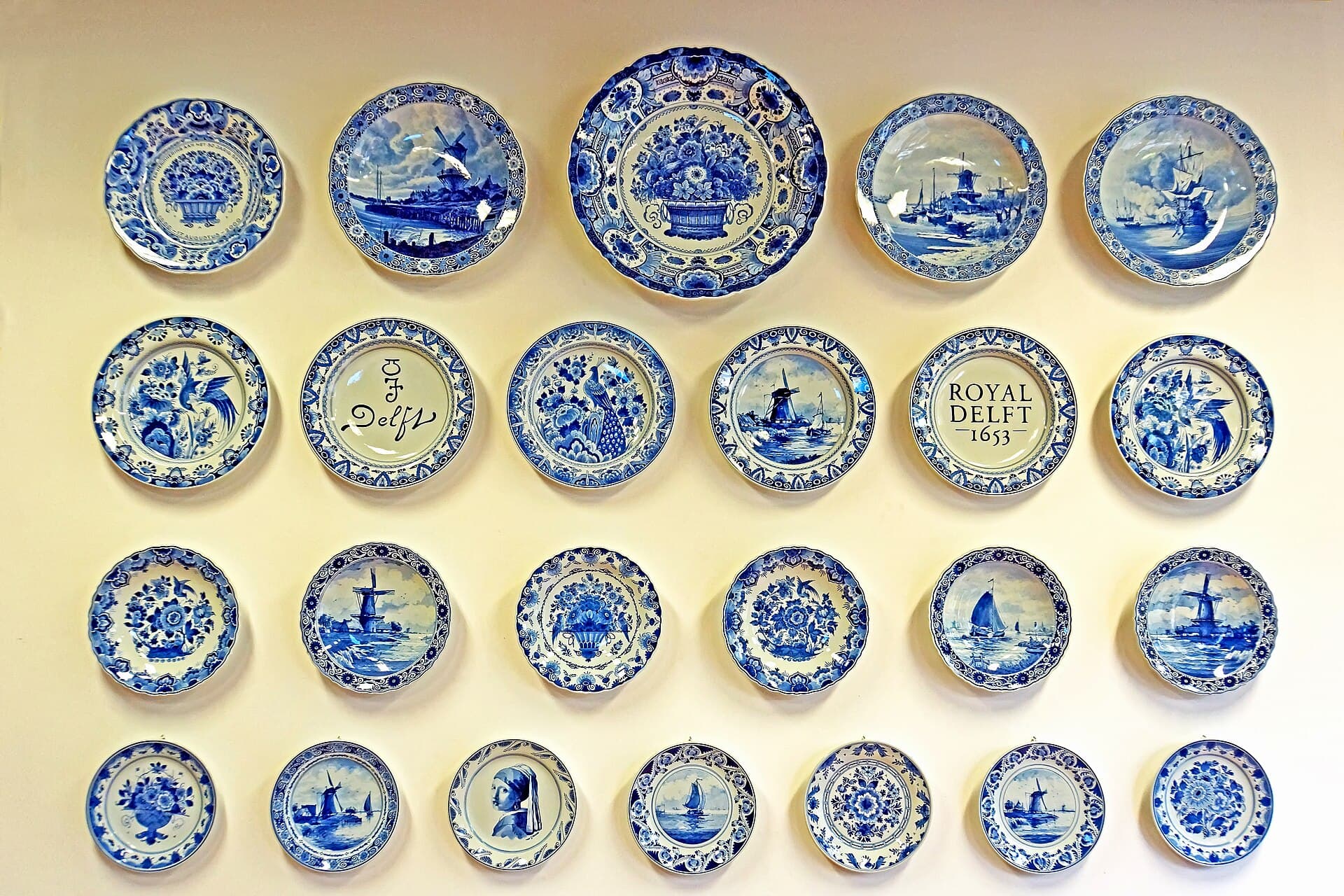
Royal Delft and the Real Story Behind Delft Blue
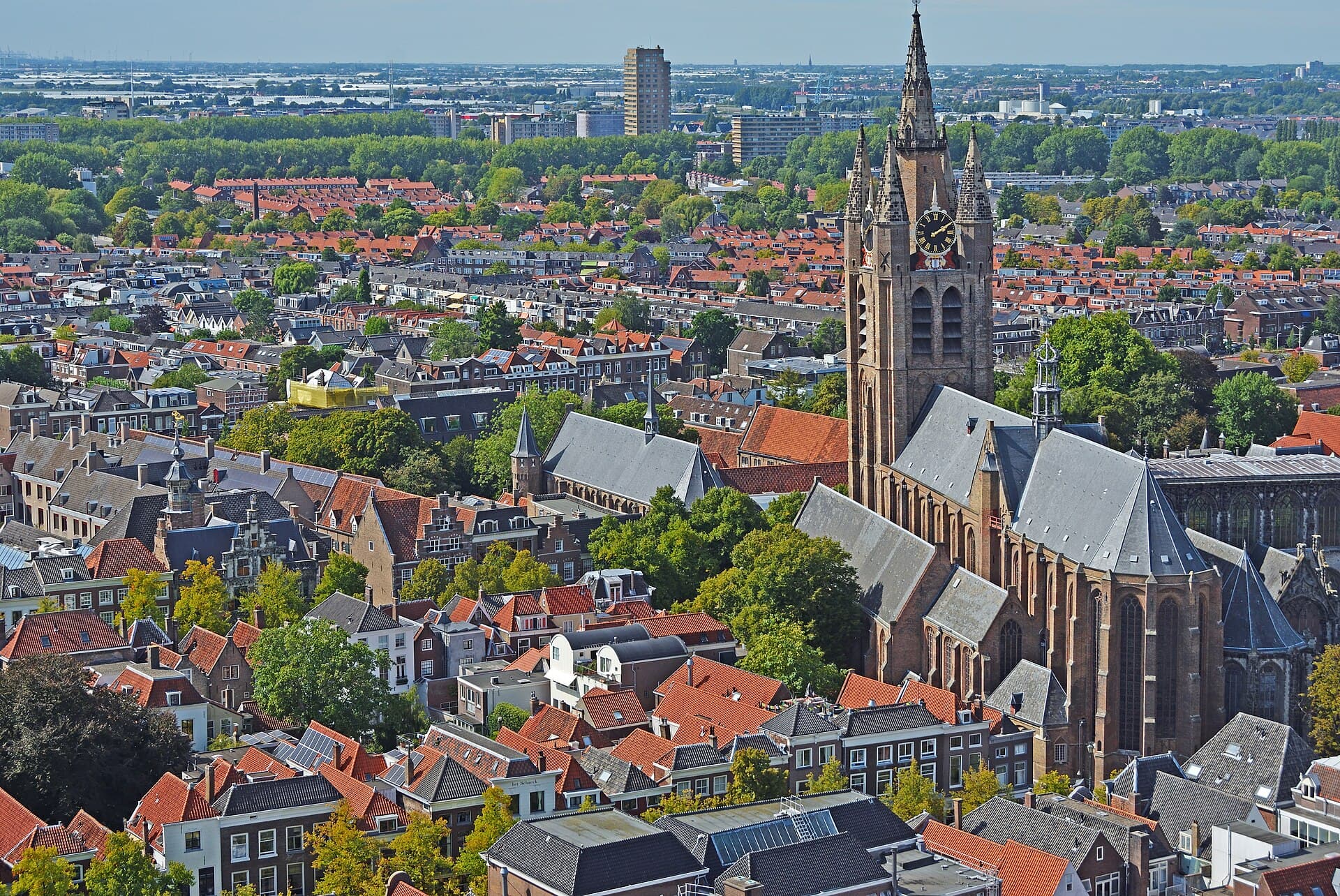
Nieuwe Kerk, Delft: The Church That Turned a Rebel Into a Dynasty
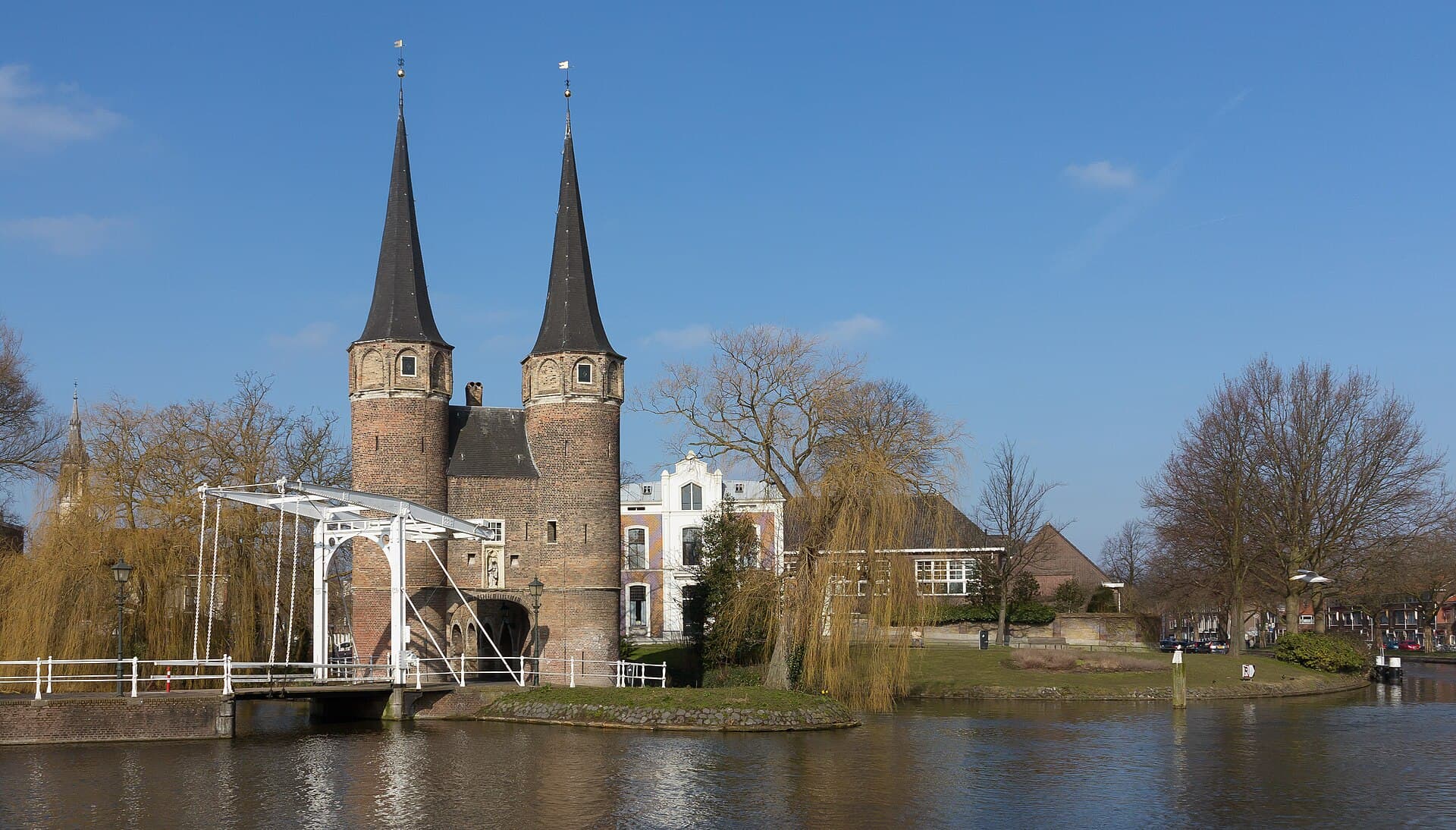
The Oostpoort: Reading Delft's Last City Gate