Inglewood is Calgary's oldest neighbourhood, and today it is the city's maker district: independent shops, galleries, breweries, roasters, record stores, and small studios strung along a low-rise main street. Those two facts are connected, and the connection is the whole point. Inglewood is a maker district because it is old, and it is intact because Calgary's money kept moving on without it.
Saved by being bypassed
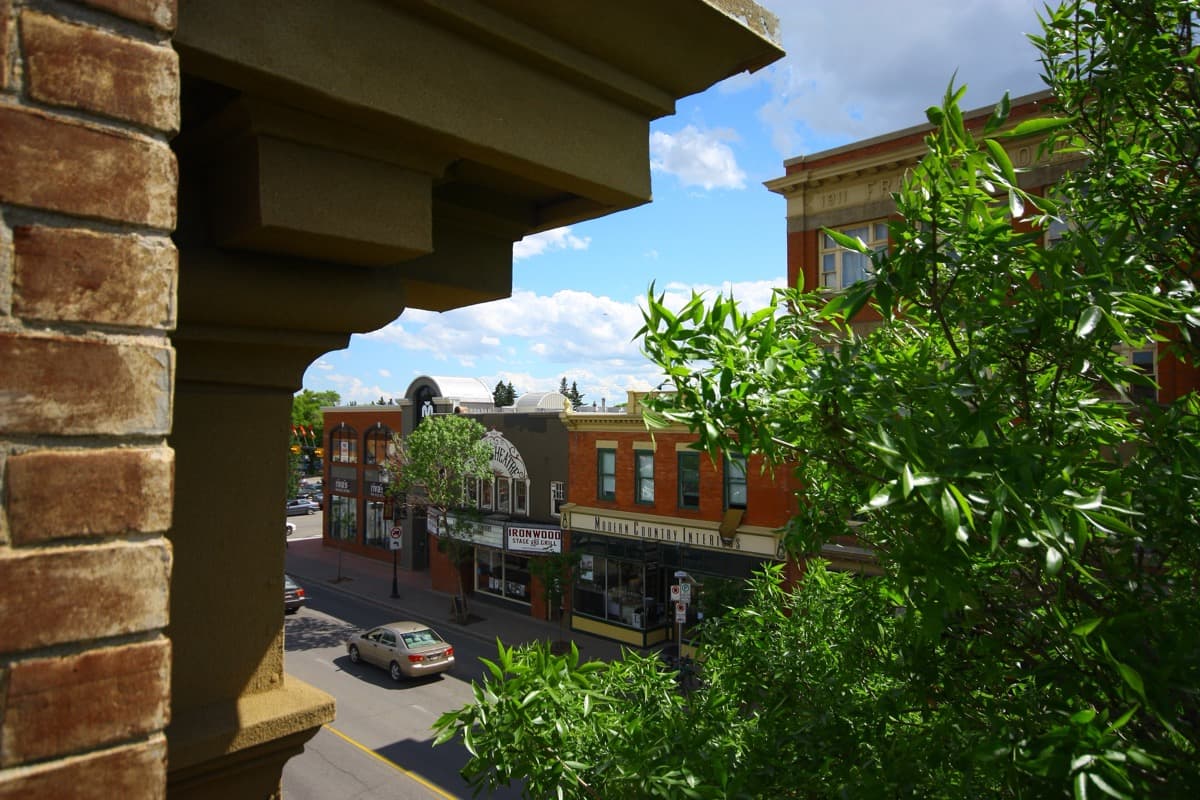
The spine of Inglewood is 9th Avenue SE, once known as Atlantic Avenue and, in the early days, Whiskey Row. It was probably the first main street Calgary ever had. As the city boomed through the twentieth century, the commercial centre of gravity moved downtown and then out to the suburbs, and Inglewood stopped being where the action was. Nobody had a strong enough reason to knock down its old brick storefronts and build something taller. So they stayed.
The result is close to the only stretch of Calgary that still looks the way the whole city once did: modest two- and three-storey heritage blocks at a human scale, right on the sidewalk. It was, in effect, forgotten on purpose, and that neglect is what preserved it. The Inglewood and Confluence tour treats that as the neighbourhood's founding fact.
Why old streets become maker streets
Hear a stop from this walk
Calgary Central Library (2018)
Here is the part that is not an accident. Intact old low-rise buildings are exactly the kind of space that makers and independents can afford and want to be in. Rents in an overlooked heritage block are lower than in a new tower. The units are small and characterful, which suits a roaster, a bookshop, a ceramics studio, a small brewery. And a walkable, continuous street of storefronts is a place people stroll, which independent retail needs to survive. The same qualities that made Inglewood easy to ignore made it perfect to occupy once the culture turned toward the local and the handmade.
So the street that was bypassed became the street everyone now goes to precisely because it was bypassed. The heritage row that survived by neglect is the maker district's raw material.
What to see on foot
Along the walk you pass the old commercial blocks of Whiskey Row, the Garry Theatre, and the corner where Studio Bell and the King Eddy, a historic blues hotel now part of the National Music Centre, sit at the edge of the district. A few hundred metres west is The Confluence, the founding site at the Bow and Elbow where Fort Calgary stood in 1875, tying the maker district back to the exact ground the city grew from. For that history, and for how the two sides of the river remember Calgary's origin differently, see the Inglewood and Confluence walk and the wider Calgary narrative.
The neighbourhood is best explored on the Inglewood tour, free to start, at your own pace.
Ready to experience it?
Inglewood: The Street That Was Forgotten on Purpose
96 min · 4.9 km · easy
More from Calgary
Explore more at your own pace.
Calgary: The City the Oil Price Built and Rebuilt
Inglewood and the Confluence: Two Sides of One River, Two Kinds of Memory

The +15: How Calgary Built a Second City Fifteen Feet Up
The Balance Sheet Skyline: Reading Calgary's Towers as an Oil-Price Chart
The Bridge Calgary Argued About: Crossing Between Two Calgarys