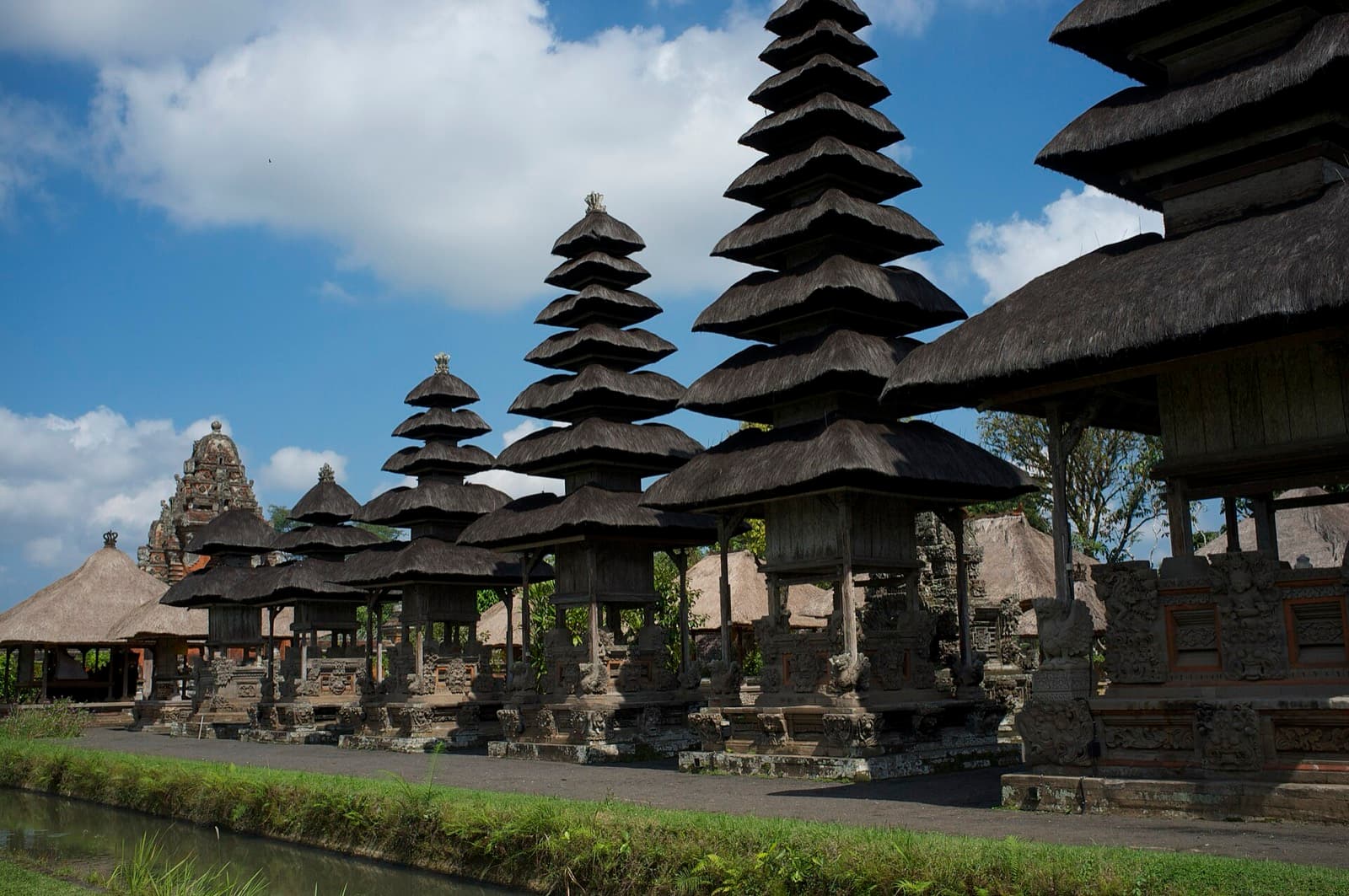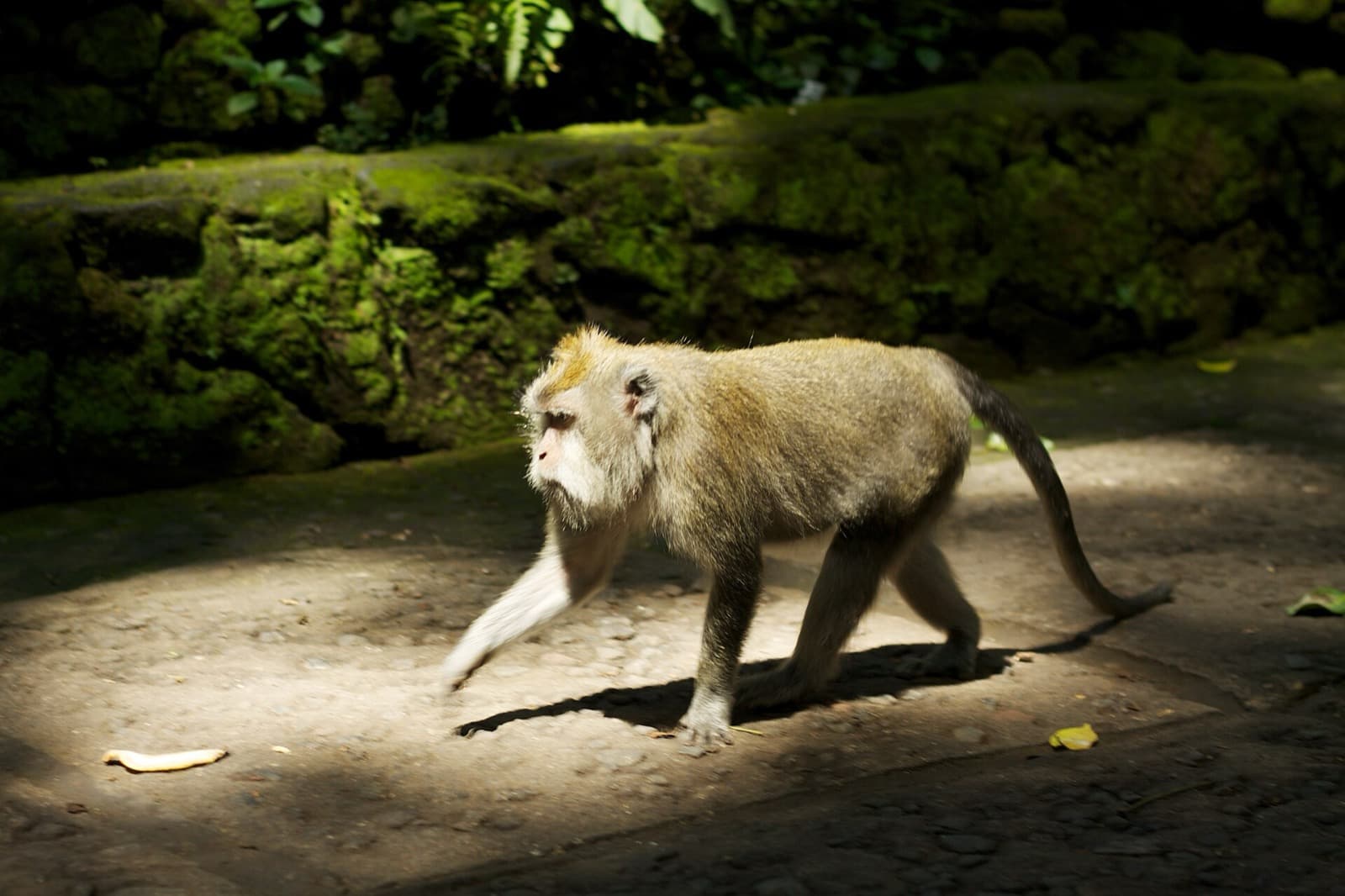
Stand at the forest gate on Jalan Wenara Wana and the first thing to understand is that you are not entering a zoo. The Sacred Monkey Forest in Ubud, Bali, is a working temple that happens to have wild residents, roughly ten hectares of dense jungle owned and managed by the village community of Padangtegal, run on a Hindu principle called tri hita karana. That phrase, harmony among people, nature and the divine, is the whole key to the place. The macaques, the moss-dark shrines and the towering trees are not separate attractions arranged for visitors. They are understood as one living whole, and the village has kept it that way for centuries.
A forest that is a temple, not an attraction
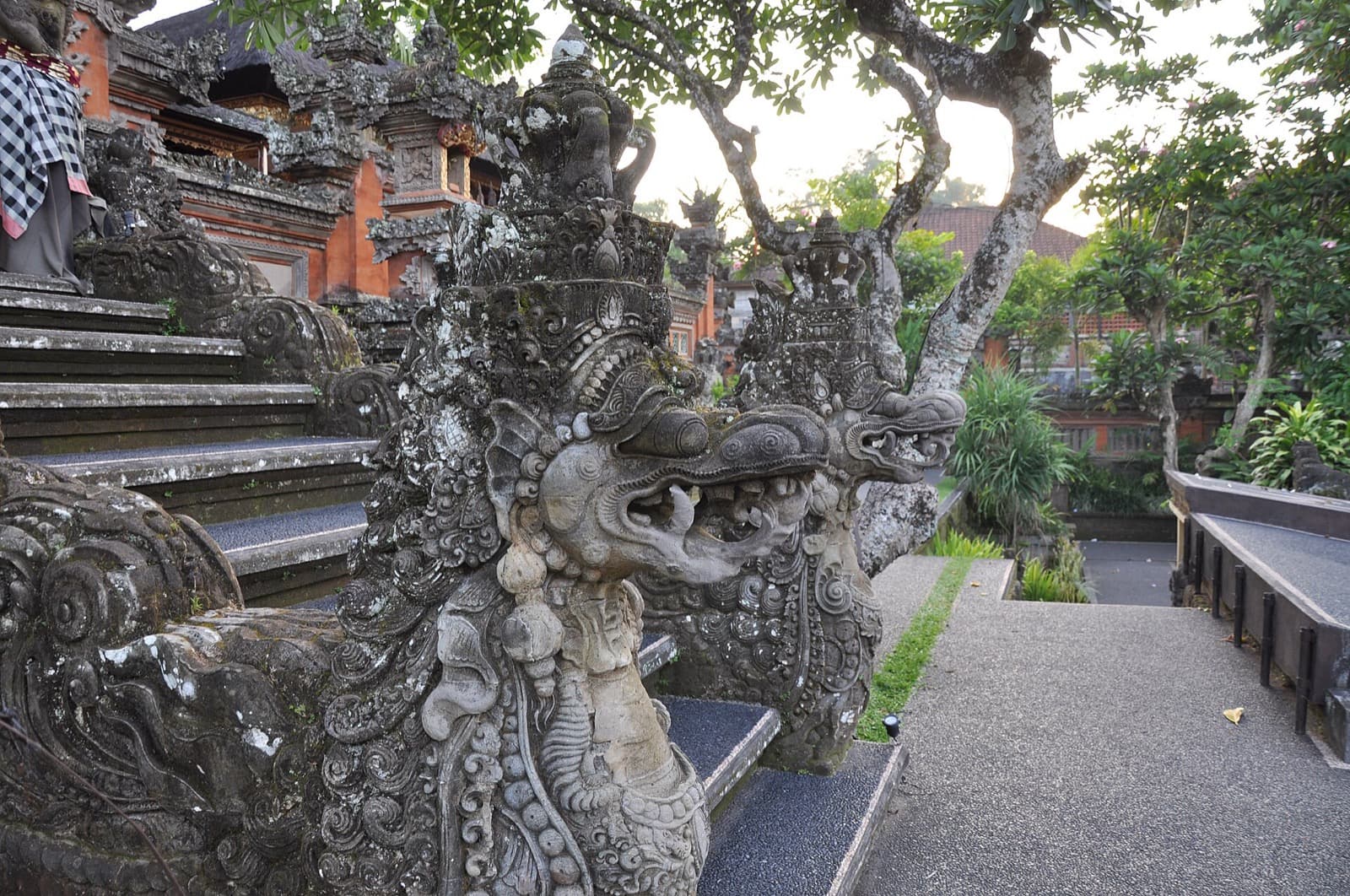
The Balinese name says it plainly: Mandala Suci Wenara Wana, the sacred sanctuary of the monkey forest. Inside the tree cover stand three temples dated to around the year 1350, the middle of the fourteenth century, when this ground was already regarded as sacred. Each sits at a compass point that means something in Balinese cosmology. The temple of the dead, Pura Dalem Agung Padangtegal, holds the southwest corner. A holy-spring bathing temple occupies the northwest, and a cremation temple stands in the northeast. Between them, mossy carved figures rise beside the stairways, streams cut through steep ravines, and old stone bridges span the gaps.
This layout is the thing a visitor most often misses. The macaques get all the photographs, but the forest is organized around worship. Tri hita karana names three relationships a person must keep in balance: with the divine, with other people, and with the natural world. A place like this one is the doctrine made physical. The trees are protected because harming nature breaks the balance. The temples are tended because the divine relationship has to be honored. And the animals are left largely to themselves because they, too, are part of the whole. When the sanctuary describes its mission, it does so in exactly these terms rather than in the language of a wildlife park.
The macaques, read honestly
Hear a stop from this walk
The Ubud Palace: The Royal House That Still Dances
The forest's famous residents are Balinese long-tailed macaques, scientifically Macaca fascicularis, the same species known elsewhere as the crab-eating macaque. Their numbers have grown steadily. A count in 2011 found around six hundred; more recent figures put the population well over a thousand, living in several territorial groups spread across the forest, each holding its own patch of ground with its own hierarchy and its own habits.
Here is the part worth internalizing before you walk in. These animals are wild, they are fast, and they are completely unbothered by you. They have learned that human bags and pockets contain interesting things, and they will take what they can reach: glasses, hats, water bottles, phones, and above all food or loose plastic. This is not aggression in the way a first-time visitor fears. It is opportunism, refined over generations of contact. The practical rules follow directly. Empty your hands and pockets before you enter. Do not feed them, which the sanctuary discourages because it changes their behavior toward people. Do not corner them or try to pose with one on your shoulder, and give any mother with an infant a wide berth, because a protective mother is the one animal here with a real reason to warn you off.
If you hold that posture, calm, hands free, no eye-contact challenge, the encounter becomes what it should be: watching an intelligent social animal go about its day at close range, on its own terms, in its own forest.
Where art and death meet at the gate
The single stop inside the forest that rewards slow attention is the temple of the dead in the southwestern corner, Pura Dalem Agung Padangtegal. A pura dalem is a temple of the dead, tied in Balinese Hindu belief to Shiva as the force of dissolution and renewal. By tradition it sits at the threshold between the seen and unseen worlds, and that threshold is carved directly into the gates. Here you find images of Rangda, the widow-witch demon-queen of Balinese story, locked in an eternal struggle with Barong, the benevolent lion-spirit. A temple of the dead like this one is where the sacred masks of both are traditionally kept and brought out for purification rites.
Read this as cosmology and legend, not history. The carving is not meant to frighten a tourist. It is meant to mark a boundary and hold it. And it tells you something about Ubud that the whole town has been leading up to. The deepest questions of the faith, death, dissolution, the unseen, are answered here not with a blank wall but with sculpture, with the same carving impulse that fills the market stalls and the water temple back up the road. This is a working temple within a sacred forest, so the temple etiquette applies: a sarong and sash for the courtyard, modest dress, and non-Hindu visitors may stand on the grounds but should not expect to enter the inner sanctum.
What to know before you go
Entry is ticketed and includes access to the courtyards of the temples. The fee rose in 2026, and an adult international visitor now pays in the region of a hundred and thirty thousand rupiah, with a lower rate for Indonesian nationals, so check the current price at the gate or on the sanctuary's own site before you plan around it. The forest keeps daytime hours, roughly nine in the morning to six in the evening, with last entry earlier than closing. Wear real shoes; the stone steps are uneven and the ravine paths turn slick after rain, which arrives fast in Ubud. Come earlier in the day if you can, before the tour vans mass at the gate, and let yourself move at a walking pace rather than a photo-stop pace. The forest reveals itself slowly: the shift from bright street to green canopy, the sound of running water, the sudden stone face of a shrine appearing between trunks, a troop crossing a bridge ahead of you without a glance in your direction.
That unhurried attention is exactly the point, and it is why the Monkey Forest works best as the climax of a longer walk through Ubud's royal core rather than a quick drop-in. The palace that still hosts dance after dark, the market that carried the town's name to the world, the lotus temple to the goddess of art, and the rice-field ridge all build toward this forest, and each reads differently once you understand that Ubud fused art and faith into ordinary life. You can reach the sanctuary on the bali-ubud-palace-monkey-forest self-guided audio tour, which times your arrival, hands you the etiquette before the gate, and lets you keep your own clock the whole way. For the full set of routes through the town and the island, see our guide to Bali walking tours.
Sources
- Ubud Monkey Forest, Wikipedia: overview of the sanctuary's size, temples, macaque population and management by the Padangtegal community.
- History, Mission & Conservation, Monkey Forest Ubud official site: the sanctuary's own account of tri hita karana, the three temples dated to around 1350, and its conservation mission.
- Long-Tailed Macaque, Monkey Forest Ubud: species identification (Macaca fascicularis) and the territorial group structure of the resident macaques.
- Pura Dalem Agung Padangtegal, Wikipedia: the temple of the dead, its association with Shiva, and the Rangda carvings at its gates.
- Roamer tour transcript, "Ubud: The Town That Turned Art Into a Way of Life": fact-audited narration for the Sacred Monkey Forest and Pura Dalem Agung stops.
Ready to experience it?
Ubud: The Town That Turned Art Into a Way of Life
150 min · 4.9 km · moderate
More from Bali
Explore more at your own pace.
Bali Travel Guide 2026: Days, Transport, Season, Cost, and Safety
One Day in Bali: A Walkable Ubud-to-Tanah Lot Itinerary
Bali: The Island Where Art and Water Became Devotion
Tanah Lot's Tidal Causeway: The Temple That Faces Water Instead of Blessing It
Ubud Palace: The Royal House That Still Dances After Dark