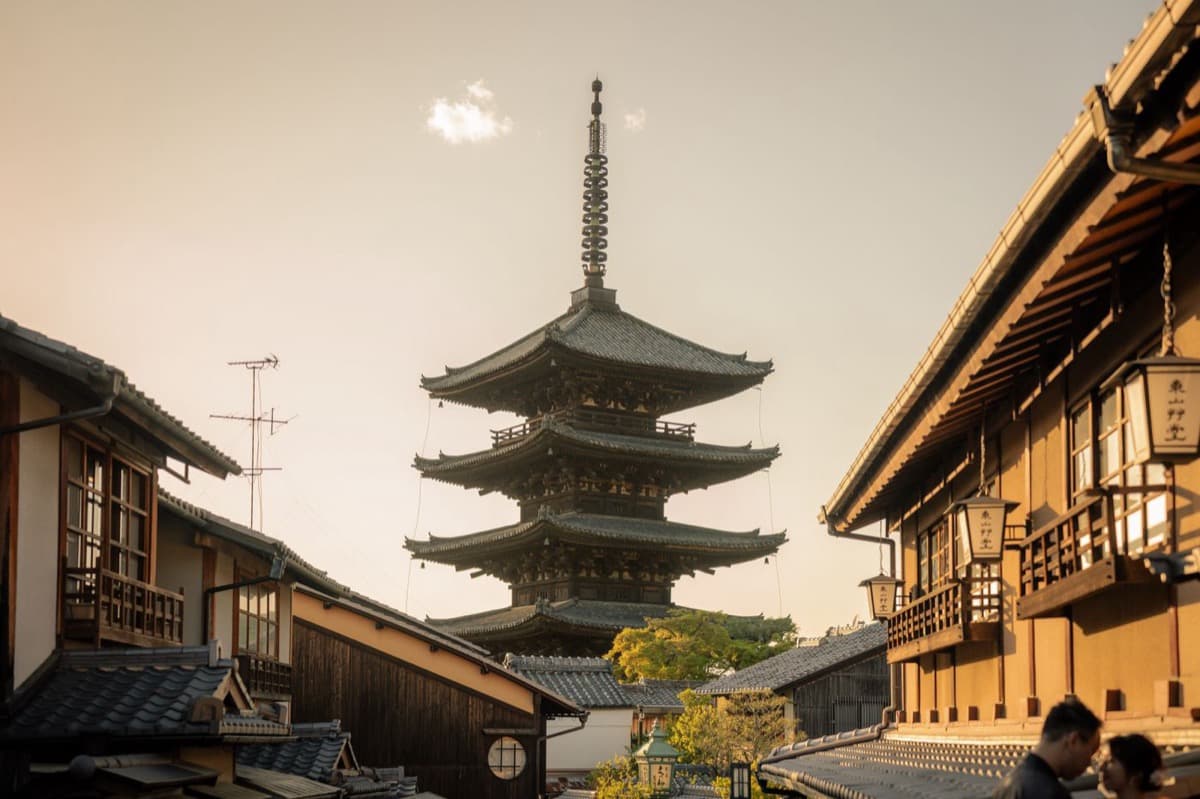
Higashiyama looks like a slice of old Kyoto that survived by luck. Walk it slowly and you find the opposite: an antiquity rebuilt after fire, protected by law, and in one famous lane, largely invented in the last century.
Start · Kiyomizu-dera: The Stage That Burned
DirectionsStops
- 1
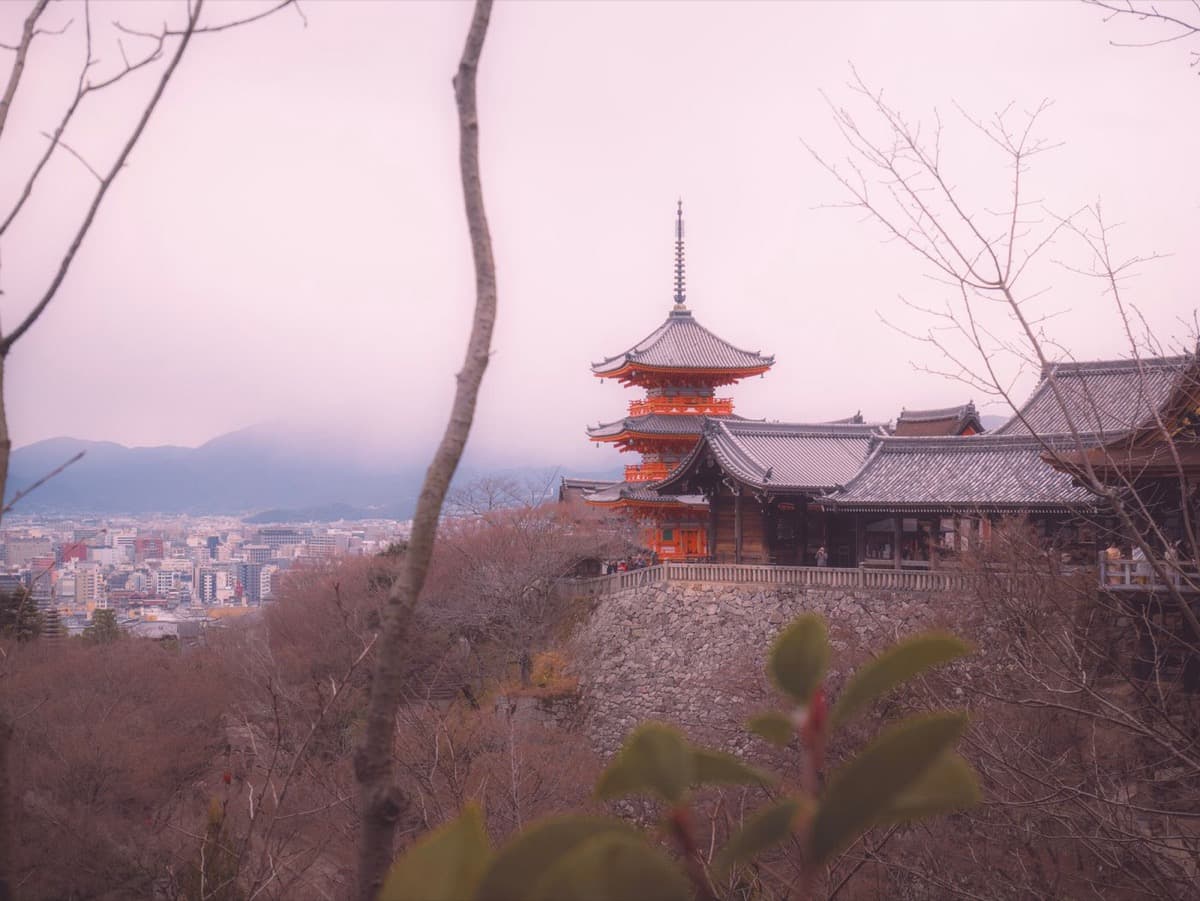
Kiyomizu-dera: The Stage That Burned
The icon everyone photographs is a seventeenth-century reconstruction, cantilevered over the valley on more than a hundred pillars and not a single nail.
- 2
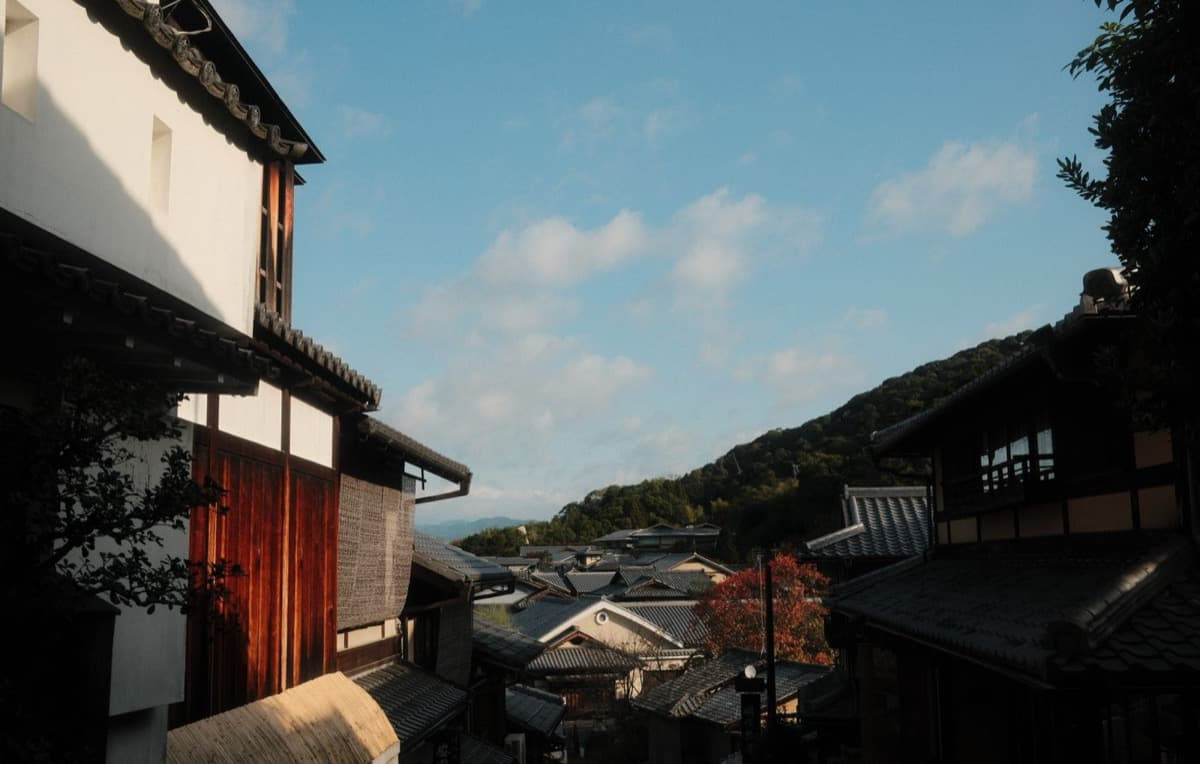
Sannenzaka and Ninenzaka: The Legally Old Lanes
These stepped stone lanes have looked timeless since the nineteen seventies, when a national law made looking timeless mandatory.
- 3
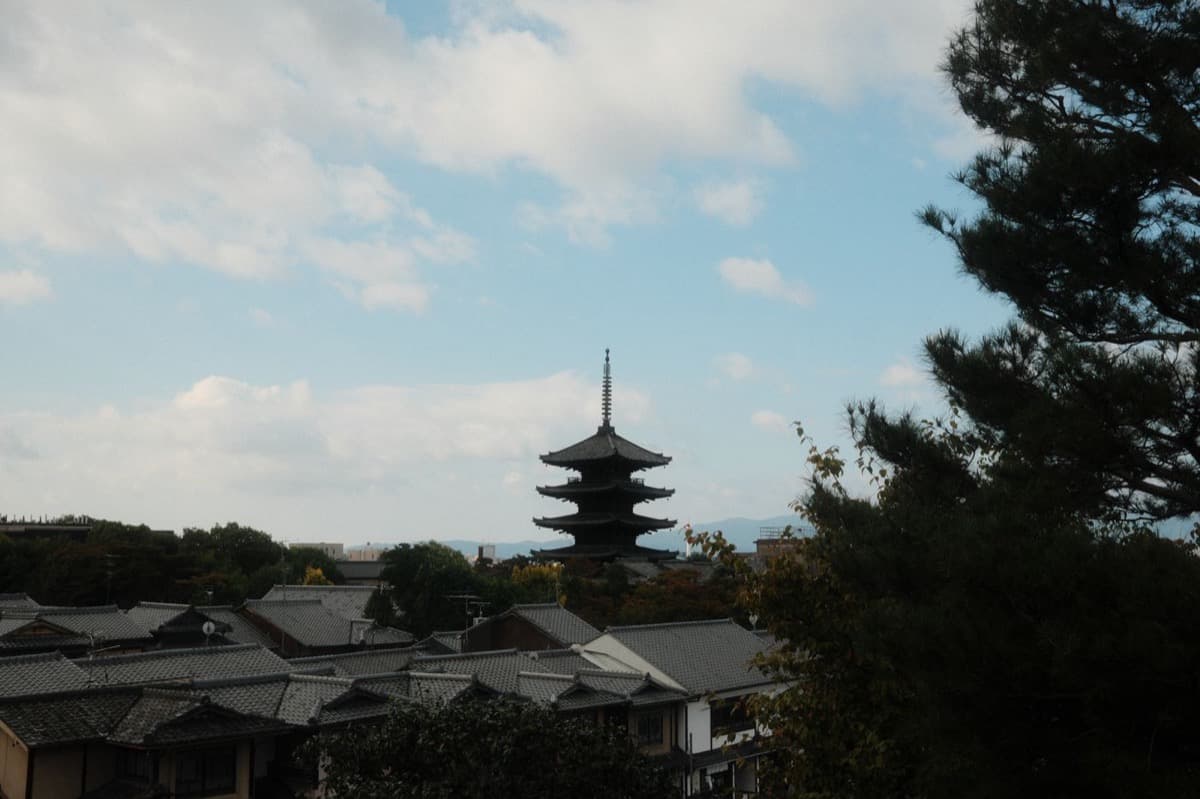
Yasaka Pagoda: Four Times Burned
The last tower of a vanished temple, rebuilt in the fourteen hundreds after fire kept claiming the ones before it.
- 4
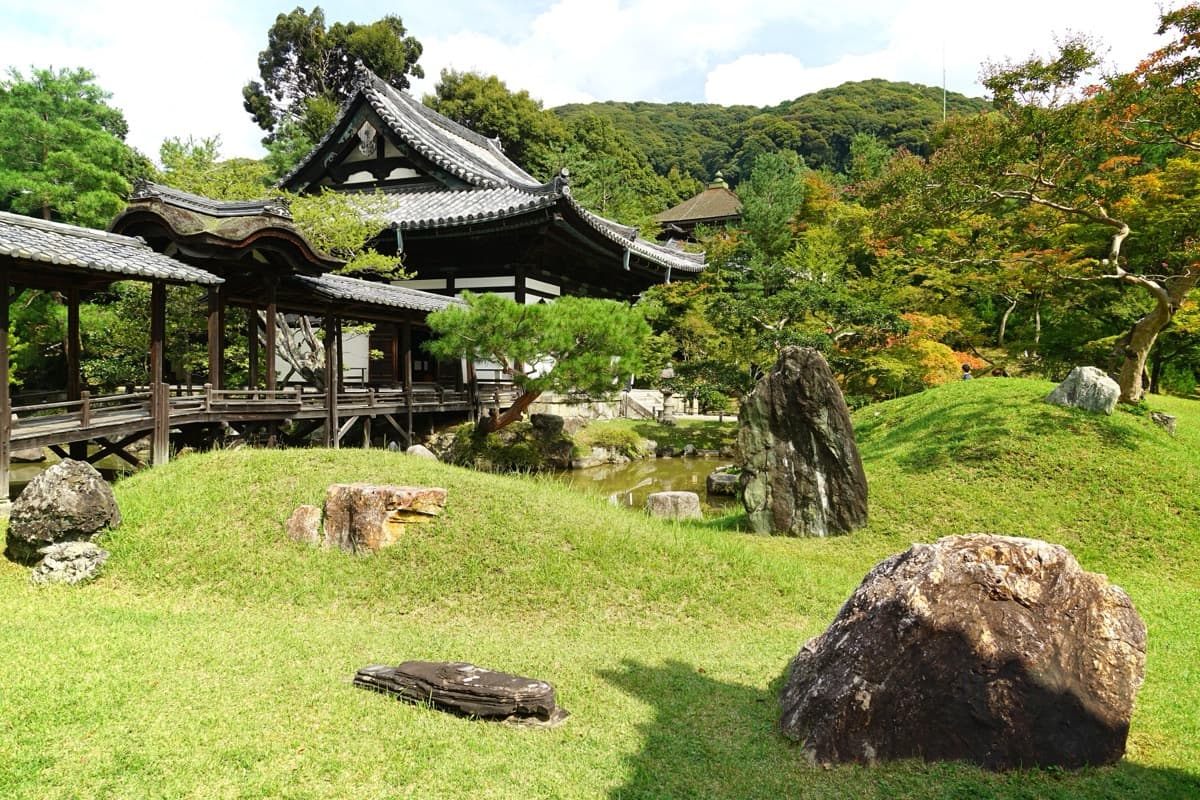
Kodai-ji: A Widow's Memorial
A Zen temple founded by a widow to keep her husband's memory alive, paid for by the rival who outlived them both.
- 5
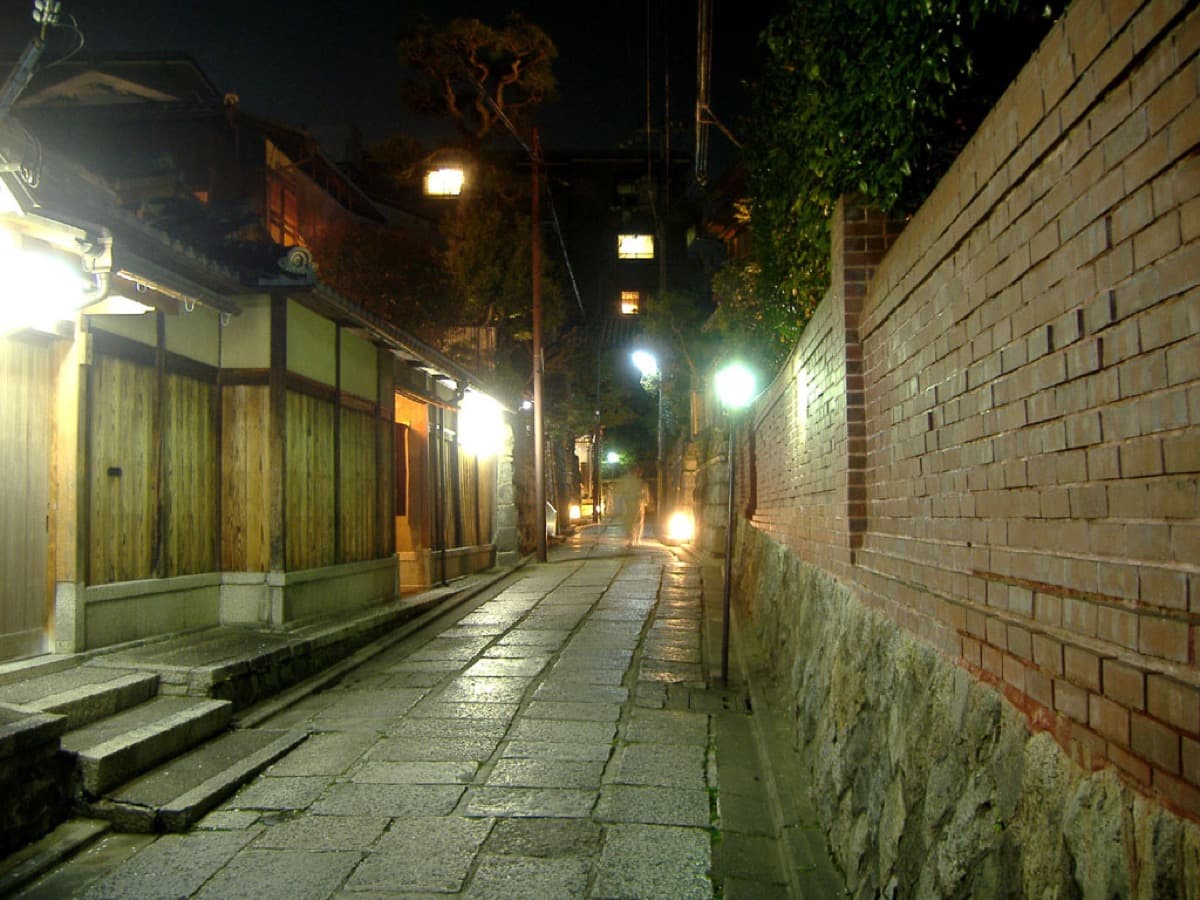
Ishibei-koji: The Youngest Old Lane
The most ancient-looking corner of Kyoto is quietly one of the newest, a stone lane largely laid in the early twentieth century.
- 6
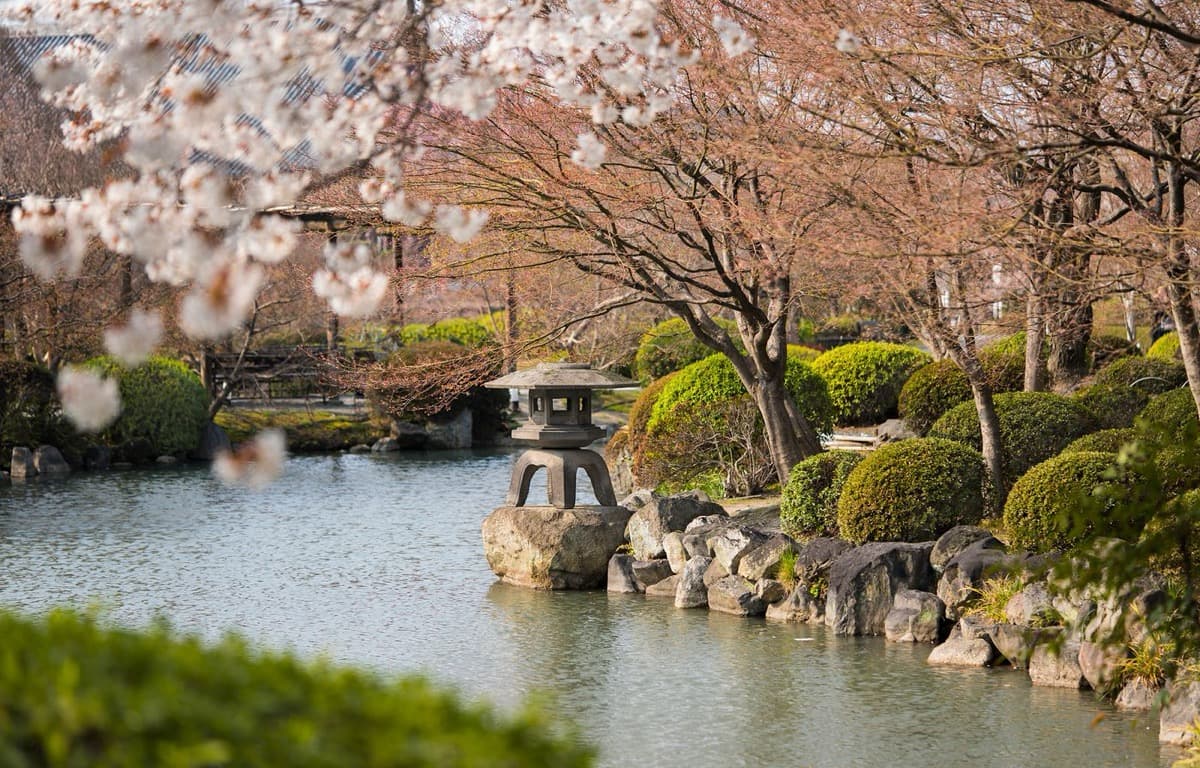
Maruyama Park: Designed to Look Natural
The green heart of Higashiyama is not wild at all, but a public park designed in the eighteen eighties whose famous cherry tree is a replacement.
- 7
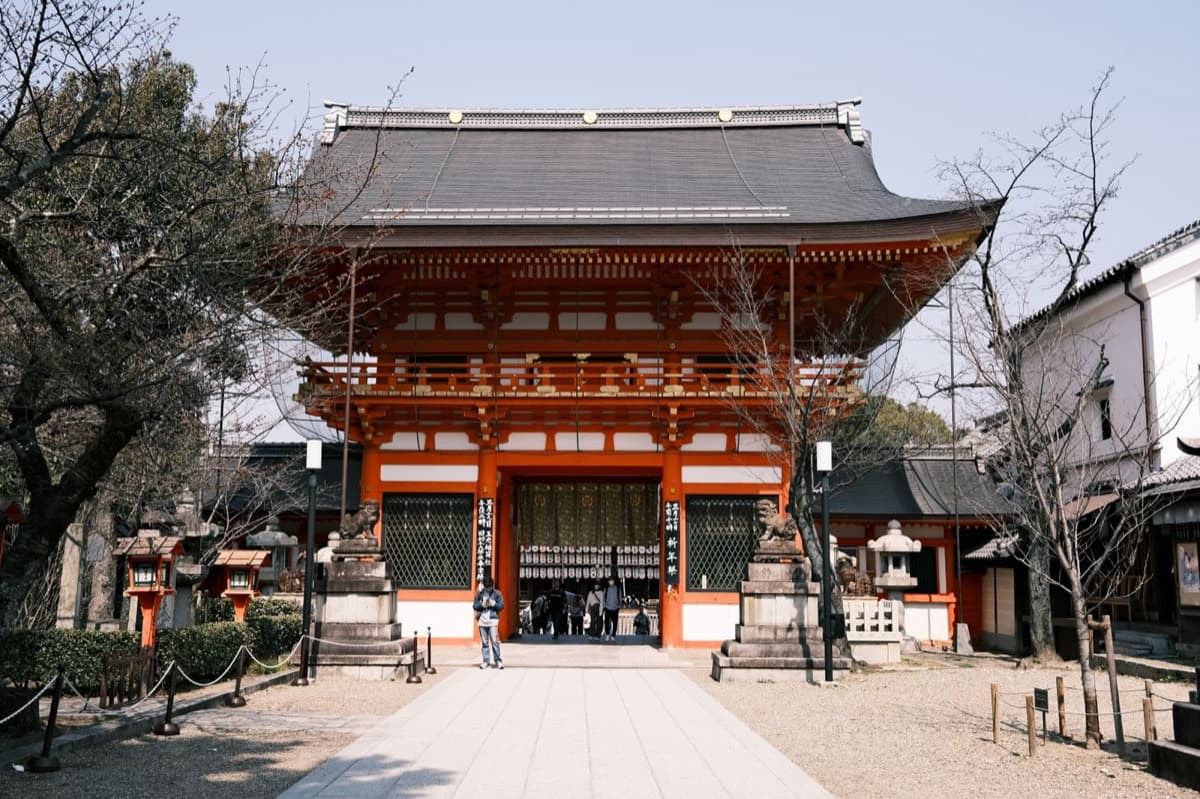
Yasaka Shrine: Engineered Against Plague
The living gateway into Gion, home to a beloved summer festival that began as an emergency ritual against disease.
Details
Best Time to Visit
Early morning, from soon after sunrise until about nine, is the finest window. The stone lanes are nearly empty, the light rakes across the wooden facades, and you can stand at the pagoda sightline without a crowd. Late afternoon into dusk is the second-best choice, when day-trippers thin out and lanterns begin to glow toward Gion. Spring cherry-blossom season and the autumn foliage weeks are the most beautiful and by far the most crowded, so aim for the earliest hour you can manage. Summer is hot and humid, and midday in high season packs the slopes shoulder to shoulder.
Pro Tips
- •Start at the top of the hill near Kiyomizu-dera and let gravity carry you downhill toward Yasaka Shrine and Gion, so the walk is mostly descending stone steps rather than climbing them.
- •Go early. Arriving soon after sunrise gives you the stepped lanes and the pagoda view almost to yourself, and completely changes the atmosphere from the midday crush.
- •Carry some cash and an IC transit card. Small teahouses, shrine offerings, and older shops may not take foreign cards, and the IC card speeds you onto buses and trains afterward.
- •Wear shoes with grip. Sannenzaka and Ninenzaka are worn stone steps that get slick in rain, and local superstition aside, a stumble here is a real risk.
- •Check temple hours before you go. Kiyomizu-dera and Kodai-ji charge admission and close in the late afternoon or early evening, while the lanes, Maruyama Park, and Yasaka Shrine stay free and open much later.
- •Save the interior climb of the Yasaka Pagoda for a weekend if it matters to you, since the inside is only opened on some days when staff permit, and the exterior view is free at any time.
Safety & Precautions
- •In and around Gion you may see working geiko and maiko heading to appointments. Do not chase, block, or photograph them without clear consent. Photography is restricted on some private Gion lanes, so watch for posted signs.
- •Summer in Kyoto is genuinely hot and humid. Carry water, use the shaded temple grounds and the park to rest, and pace yourself, especially in the midday hours.
- •The lanes are worn stone with steps and slopes that turn slippery when wet. Move carefully in rain, and take extra care if you are carrying a child or heavy bags.
- •During cherry-blossom and autumn-foliage season the slopes become extremely crowded and narrow choke points form on the stepped lanes. Keep to one side, mind your footing in the press of people, and consider visiting at dawn to avoid the worst of it.
Travel advisory: Exercise Normal Precautions (Level 1).
Gallery
Related Reading
Go deeper on what you'll see, hear, and walk through.
Overview
Best Self-Guided Walking Tours in Kyoto (2026)
3 min
Overview
Kyoto Travel Guide: How Many Days, Getting Around, When to Go (2026)
4 min
Overview
One Day in Kyoto: A Walkable South-East Itinerary (2026)
5 min
Thematic
What to Eat in Kyoto: A Food Guide (2026)
4 min
Deep dive
Kiyomizu-dera's Wooden Stage: The Icon of Ancient Kyoto That Was Rebuilt in 1633
6 min
Deep dive
The Yasaka Pagoda: The Five-Storey Tower That Anchors Kyoto's Most Photographed Lane
4 min
Read
Are Self-Guided Walking Tours Worth It?
3 min
Read
Best Audio Tour Apps (2026)
6 min
Read
Best Free Walking Tour Apps (2026)
3 min
Read
Best Offline Walking Tour Apps: Audio Tours That Work Without Wifi (2026)
5 min
Read
Best Self-Guided Walking Tour Apps (2026)
5 min
Read
Best Walking Tour Apps (2026)
6 min
Read
GPS Audio Tour Apps: How They Work and the Best Ones (2026)
6 min
Read
How Do Audio Walking Tours Work?
2 min
Read
How Much Do Walking Tours Cost?
3 min

Read
Kyoto vs Tokyo: Which Should You Visit?
4 min
Read
Roamer vs GetYourGuide: The Self-Guided Difference
3 min
Read
Roamer vs izi.TRAVEL: Free Breadth vs Curated Walks
3 min
Read
Roamer vs Rick Steves Audio Europe
3 min
Read
Roamer vs Shaka Guide: Walking vs Driving Tours
3 min
Read
Roamer vs Viator: Which Is Better for Walking Tours?
4 min
Read
Roamer vs VoiceMap: Which Self-Guided Tour App Is Better?
3 min
Read
Self-Guided vs Guided Walking Tours: Which Is Right for You?
4 min
Read
Self-Guided Walking Tour Tips: How to Get the Most Out of One
2 min
Read
Viator vs GetYourGuide: Which Should You Book With?
5 min
Read
What Is a Self-Guided Walking Tour?
3 min
Read the walk
The full story of Higashiyama: The Engineered Hillside, in words. Prefer to listen? Play it narrated, from home or on location.
Introduction
Higashiyama means the eastern mountains, and this is the strip of Kyoto that clings to their base. It is the picture everyone carries home: stone lanes, wooden shopfronts, a pagoda above the rooftops, temple gates opening onto gardens. It feels fragile and ancient, as if it slipped past the centuries while the rest of the city modernized around it. That is the story the eye tells you, and it is not the true one. Almost nothing here is original. The great temple stage was rebuilt after a fire. The pagoda burned and was raised again more than once. The perfect lanes are a legally protected district, the power lines buried and the shopfronts kept to rule. Even the most photogenic cobbled alley was mostly laid in the early nineteen hundreds. What looks like survival is something more deliberate, and to me more moving: continuity as an act of will, one generation after another choosing to build the past back up. This is Kyoto, in Japan's old imperial heart, and the route is yours at your own pace. Every stop stands on its own, so linger, skip, or double back with no wrong order. Over seven stops and about ninety minutes you will trace roughly two and a half kilometres downhill through the eastern hills. When you arrive at Kiyomizu-dera, begin with stop one.
1. Kiyomizu-dera: The Stage That Burned
You are standing at the great wooden stage of Kiyomizu-dera, looking out over the treetops of the Otowa valley. The temple dates its founding to seven seventy-eight, and it is old in that sense, an anchor of the eastern hills for well over a thousand years. But the platform beneath your feet is not that old. The main hall you are standing in was rebuilt in sixteen thirty-three, after a fire destroyed the earlier one in sixteen twenty-nine. The reconstruction was helped by a donation from the third Tokugawa shogun, Tokugawa Iemitsu. So the very first thing you photograph on this hillside, the definition of ancient Kyoto, is a seventeenth-century rebuild. Look at how it is made. The stage is built in the kakezukuri style, cantilevered out over the slope and held up by one hundred and thirty-nine wooden pillars locked together with crossbeams and no nails at all. It stands about thirteen meters above the hillside. In the Edo period people took that height literally. There was a belief that if you jumped from this stage and survived, your wish would be granted. Records count two hundred and thirty-four jumps, and roughly eighty-five percent of the jumpers lived, cushioned by the trees below. The gamble left its mark on the language: to this day, to take a bold plunge in Japanese is to jump off the Kiyomizu stage. Below the hall, three thin channels of the Otowa waterfall fall into a pond, and visitors drink from one for a wish of their own. Kiyomizu-dera was inscribed as part of the Historic Monuments of Ancient Kyoto on the World Heritage list in nineteen ninety-four. Take your time here. Then carry the small surprise downhill with you: what feels most permanent was the most rebuilt.
2. Sannenzaka and Ninenzaka: The Legally Old Lanes
You are standing on a stepped stone lane lined with low wooden townhouses, the kind of street that makes people whisper about how nothing here has changed in centuries. It is a lovely thought, and it is exactly backwards. This is Sannenzaka, the three-year slope, and its neighbor Ninenzaka, the two-year slope. The slope you are on runs about one hundred meters, edged with traditional Kyo-machiya townhouses that now hold shops and teahouses. The reason they all agree so beautifully, the reason there are no jarring signs or tangles of overhead cable, is not luck. It is law. According to Japan's Agency for Cultural Affairs, these lanes were selected as part of an Important Preservation District for Groups of Traditional Buildings on September fourth, nineteen seventy-six. The protected area covers about eight point two hectares, and it was among the very first such districts named anywhere in the country. Inside those boundaries the power lines were removed and buried, and the shopfronts are regulated to keep the shrine-and-temple townscape intact. The old look is maintained, deliberately, by rule. Even the name carries a warning wrapped in play. Superstition says that if you stumble on these slopes you will suffer two or three years of misfortune, a folk joke on the two-year and three-year names. An older reading ties the slope instead to safe childbirth, connected to the Kannon worshipped at the temple above. Either way, pause and notice what is really happening around you. This is not a street that time forgot. It is a street the modern state chose to hold still, so that you could stand here half a century later and feel like you had walked into the past. The feeling is genuine. The mechanism behind it is paperwork.
3. Yasaka Pagoda: Four Times Burned
This five-storey pagoda rises above the lane ahead of you, framed between the rooftops in what may be the most photographed sightline in Kyoto. It is called Yasaka-no-To, and it stands about forty-six meters tall, one of the great wooden pagodas of Japan and a designated Important Cultural Property. It looks eternal. Its history is the opposite of eternal. This tower is the last surviving structure of a temple called Hokan-ji, and everything else around it is gone. The pagoda itself burned and was rebuilt more than once across the medieval centuries. The structure you are looking at now dates to fourteen forty, raised under Ashikaga Yoshinori, the sixth shogun of the Muromachi government. An earlier reconstruction, in eleven ninety-one, was funded by the warrior lord Minamoto no Yoritomo. Tradition attributes the very first pagoda here to Prince Shotoku, and archaeological evidence does point to a foundation in the seventh century, though the exact date is disputed and best held loosely. What is firmly documented is the rhythm: build, burn, rebuild, again and again, until the version that finally endured is the one from fourteen forty. Think about that as you look up. A pagoda is often read as a symbol of permanence, a still point above a changing city. This one is really a record of persistence through fire. Each time the flames took it, someone with power and money decided it was worth raising again, and paid to do it. On some days, usually weekends when staff allow, you can step inside and climb to the first and second floors to see the massive central pillar. Whether or not the door is open, the lesson is the same. The oldest-looking spire on the skyline is a survivor of repeated destruction, standing today because generation after generation refused to let it stay gone.
4. Kodai-ji: A Widow's Memorial
This temple gate opens onto a garden founded by a widow. Kodai-ji is a Zen temple of the Rinzai school, and it was established in sixteen oh-six by a woman remembered by the court name Kita-no-Mandokoro, popularly known as Nene. She was the widow of Toyotomi Hideyoshi, the…
Full narration for this stop unlocks with the tour.
5. Ishibei-koji: The Youngest Old Lane
You have stepped into a narrow stone lane that curves out of sight, walled with weathered wooden facades, hushed and dim even at midday. Ishibei-koji is often called one of the most atmospheric streets in all of Kyoto, and standing here you understand why. It runs only about two…
Full narration for this stop unlocks with the tour.
6. Maruyama Park: Designed to Look Natural
You are entering a broad public park, the open green lung where the temple slopes finally relax into lawns, ponds, and winding paths. It feels like the natural landscape that was always here, the untouched hillside the temples were built against. It is nothing of the kind.…
Full narration for this stop unlocks with the tour.
7. Yasaka Shrine: Engineered Against Plague
You are standing at a shrine gate where the old hillside meets the streets of Gion. Yasaka Shrine sits at the eastern end of Shijo-dori, the fourth avenue, and its bright vermilion gate is the threshold between the temple slopes behind you and the lantern-lit lanes of Gion…
Full narration for this stop unlocks with the tour.