From Piazza Colonna past the Trevi Fountain, Borromini's tower and the sinking-boat fountain, up the Spanish Steps and through the Pincio gardens to the terrace and Piazza del Popolo.
Start · Piazza Colonna: A Column That Reads Upward
DirectionsStops
- 1
Piazza Colonna: A Column That Reads Upward
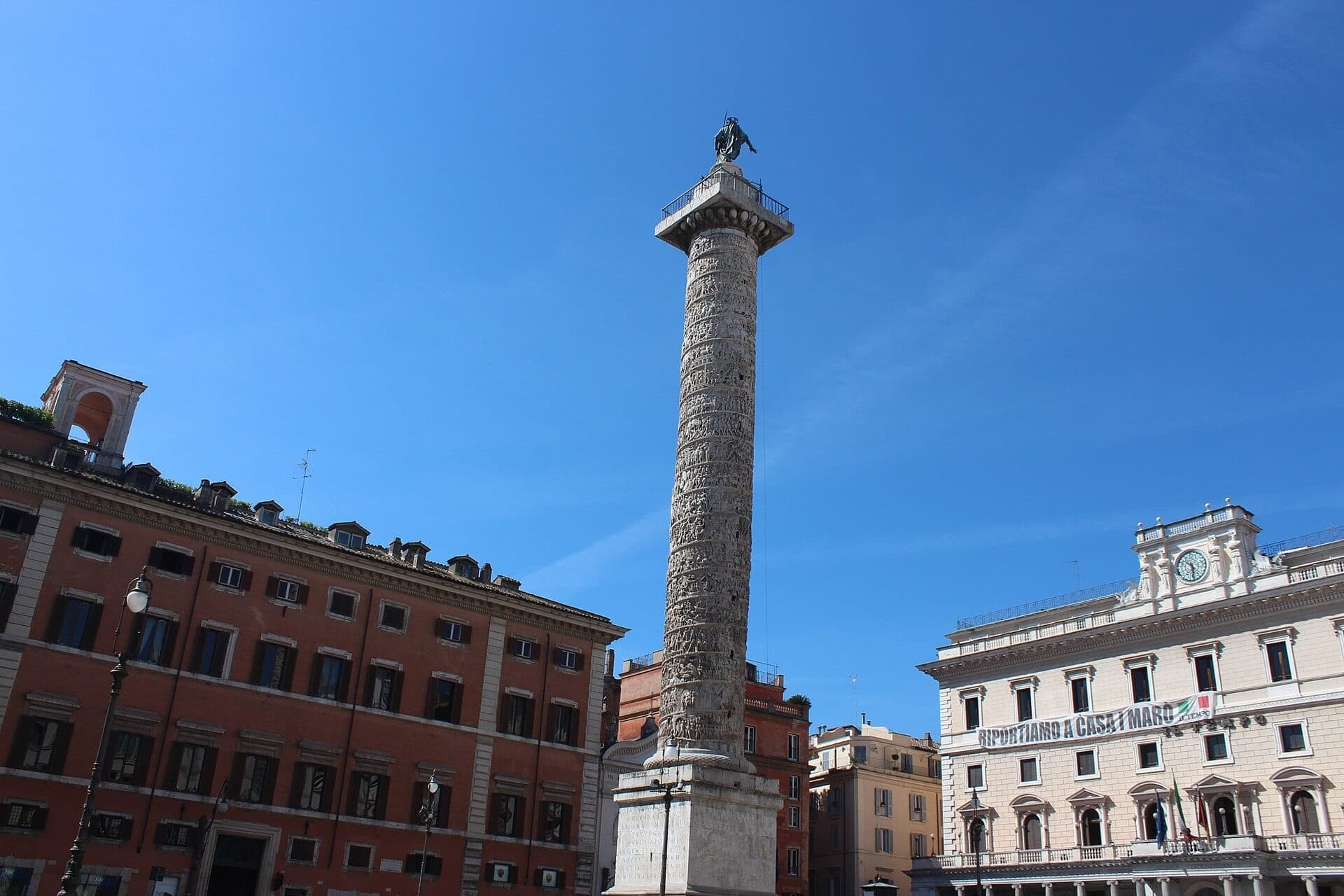
A marble column for Marcus Aurelius, now topped by Saint Paul, on the square of Italy's government.
- 2
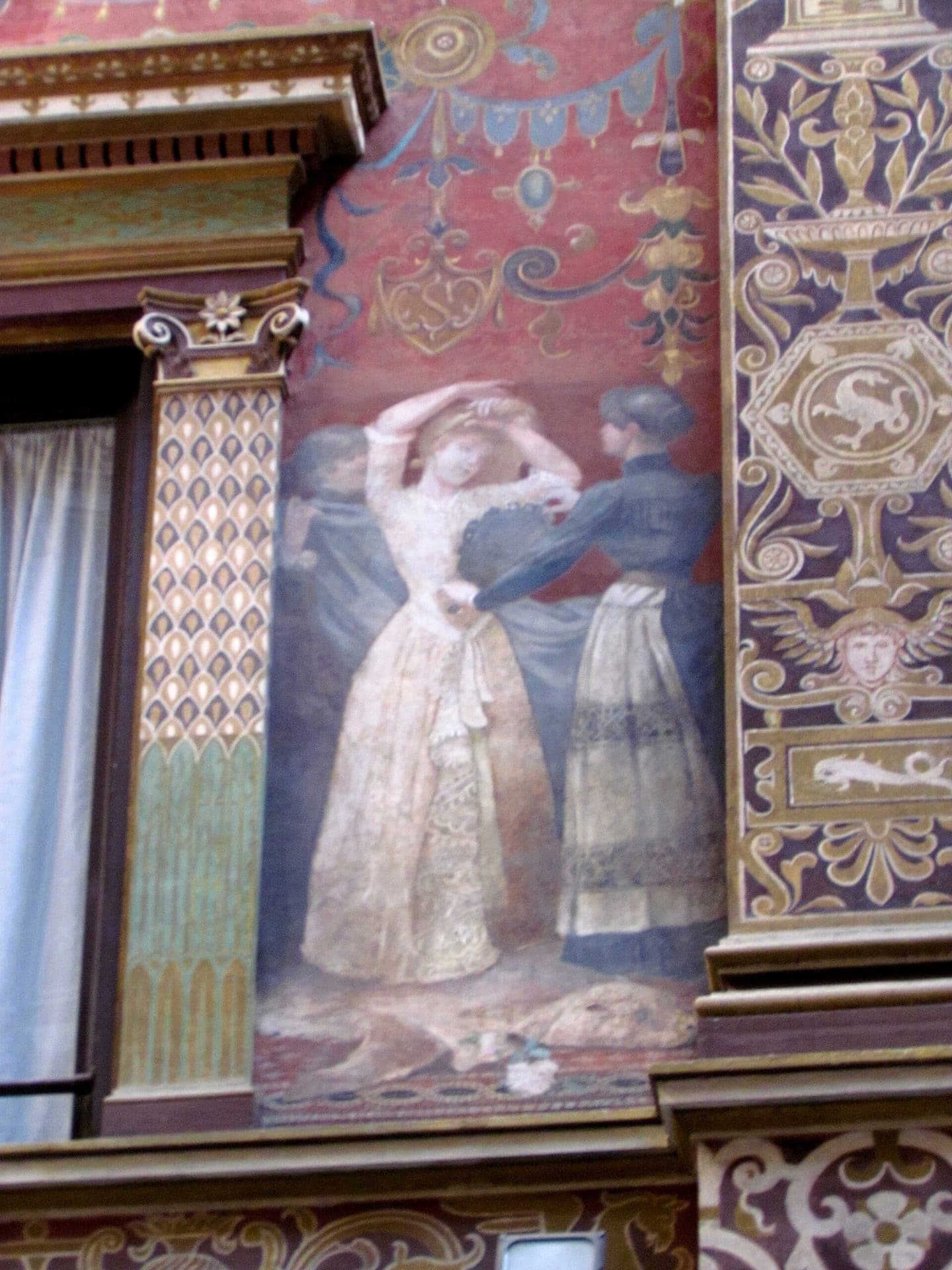
Galleria Sciarra: A Painted Courtyard
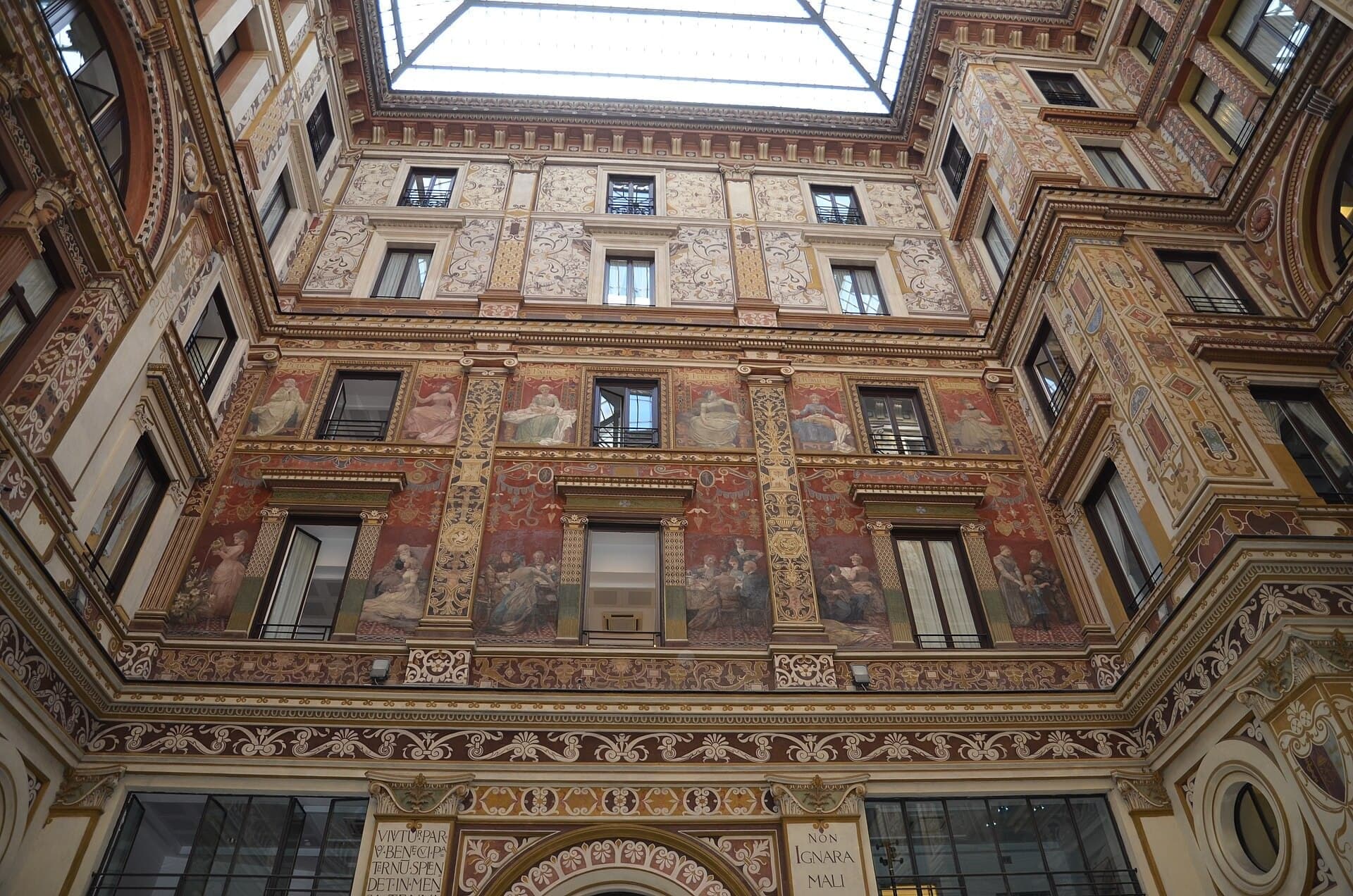
A hidden courtyard under iron and glass, painted in the 1880s with a hymn to women as wives and mothers.
- 3
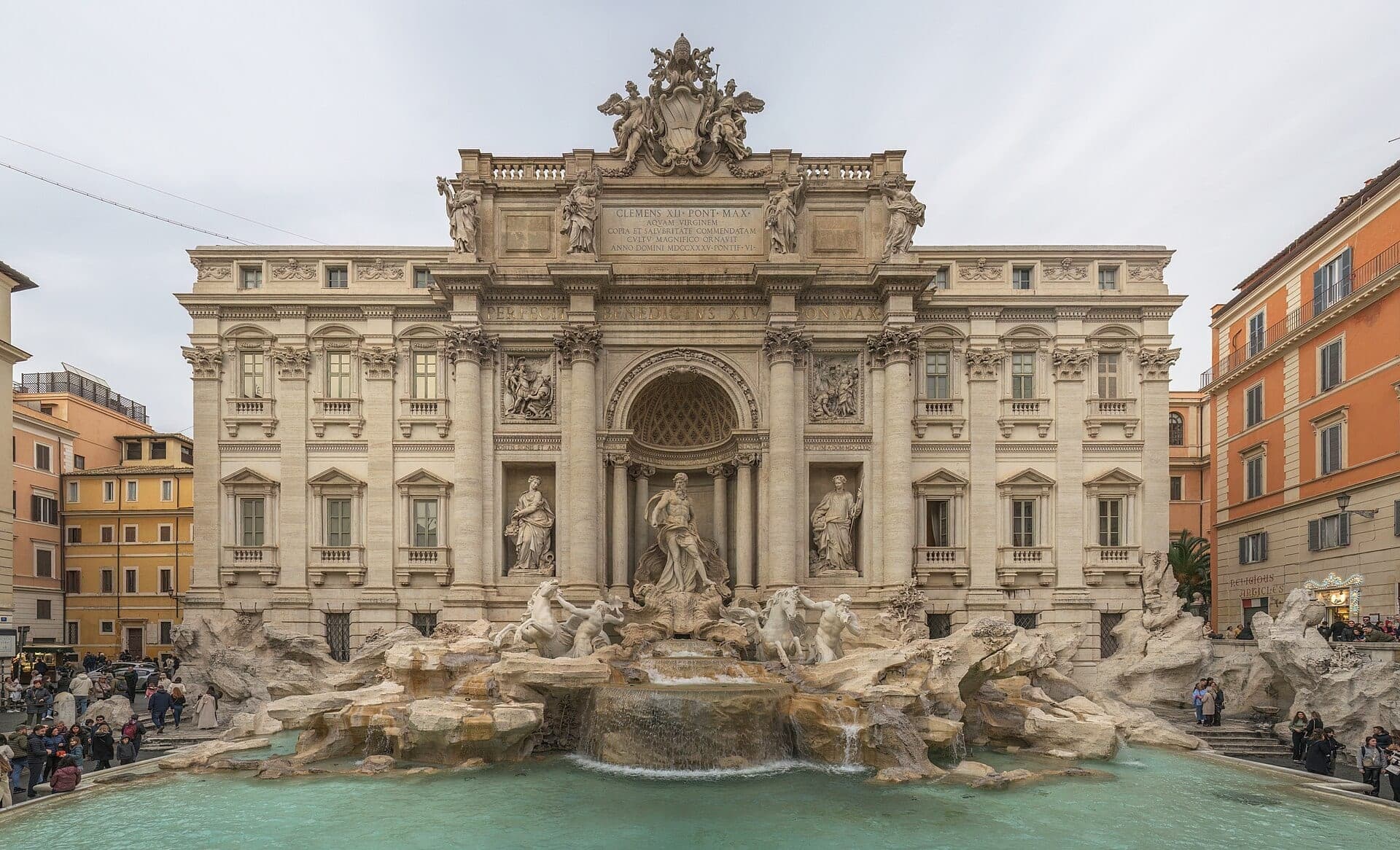
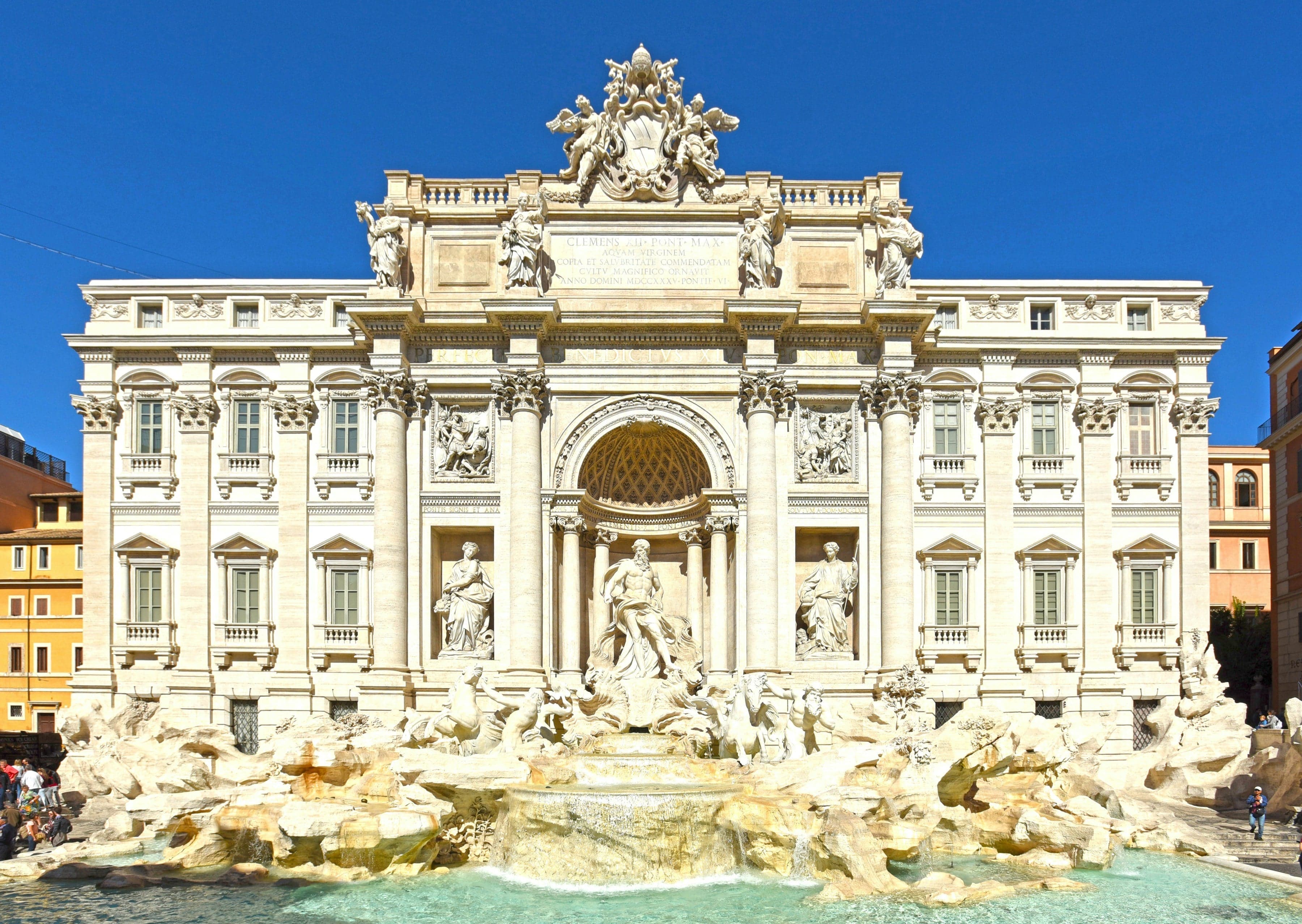
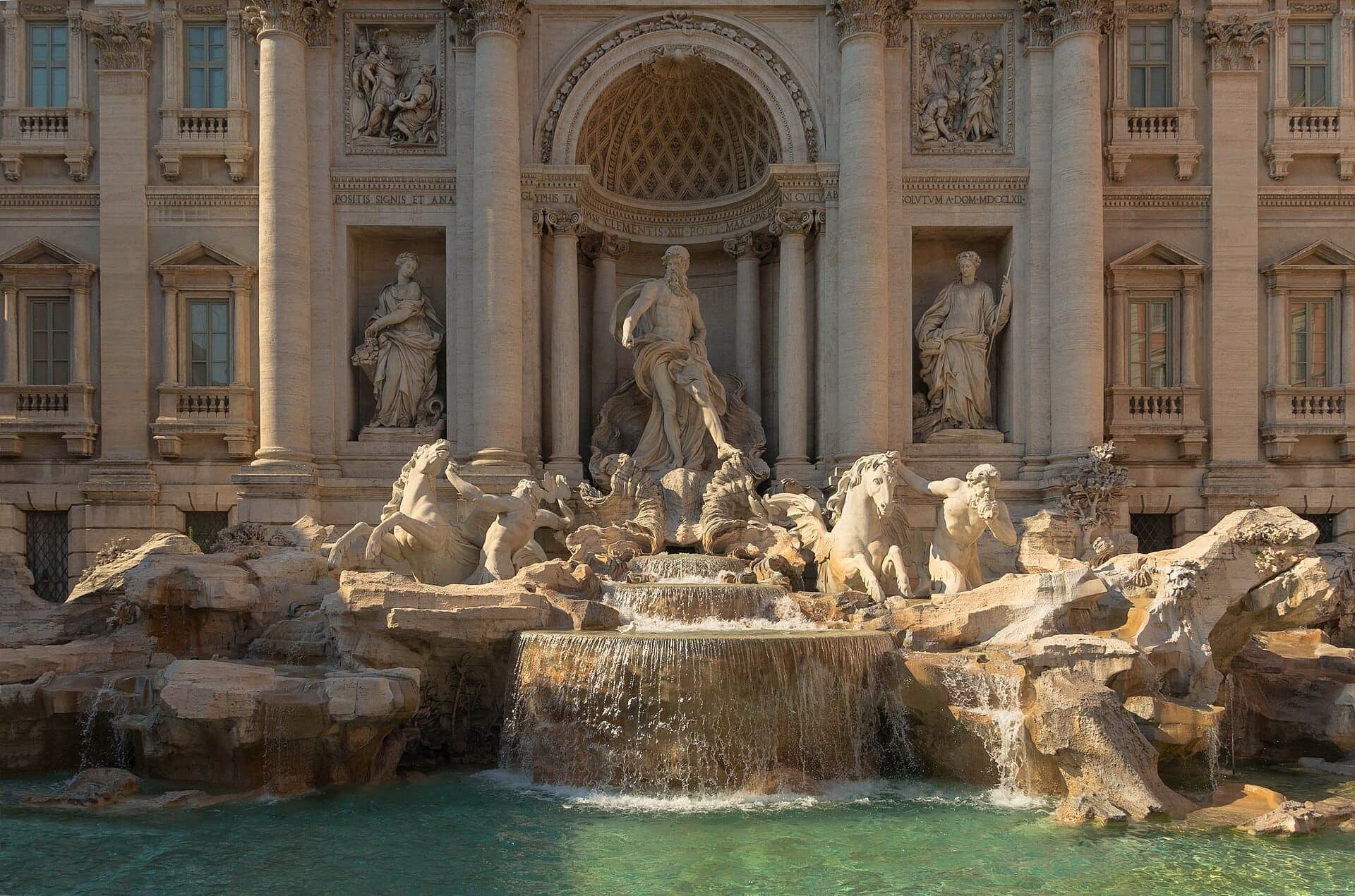
Trevi Fountain: Where the Aqueduct Shows Off
The show end of a 19 BC aqueduct, a palace front turned into a cliff of water around the god Ocean.
- 4
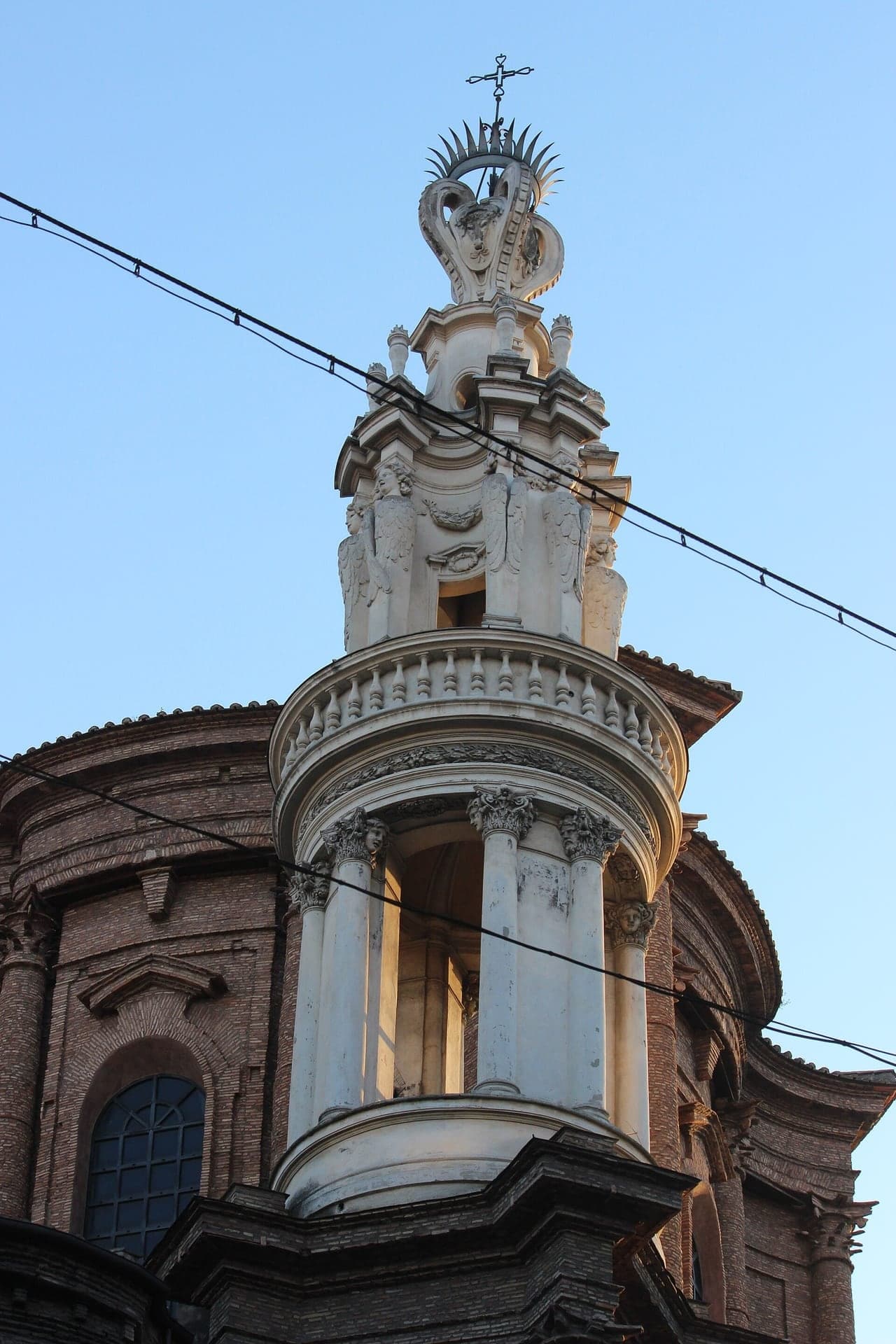
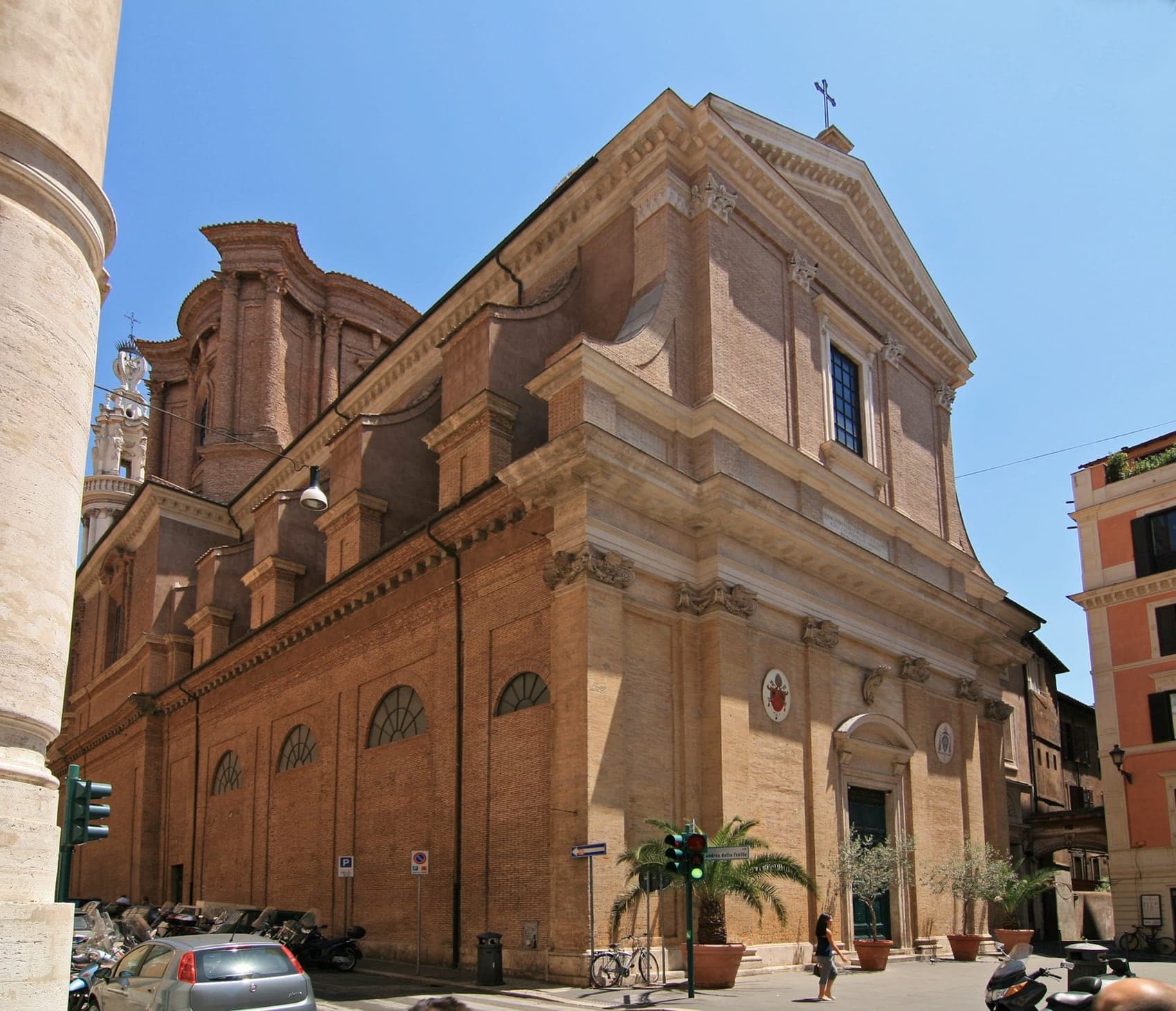
Sant'Andrea delle Fratte: The Dancer
Borromini's brick drum and marble tower, curving in and out above a church of the thickets.
- 5
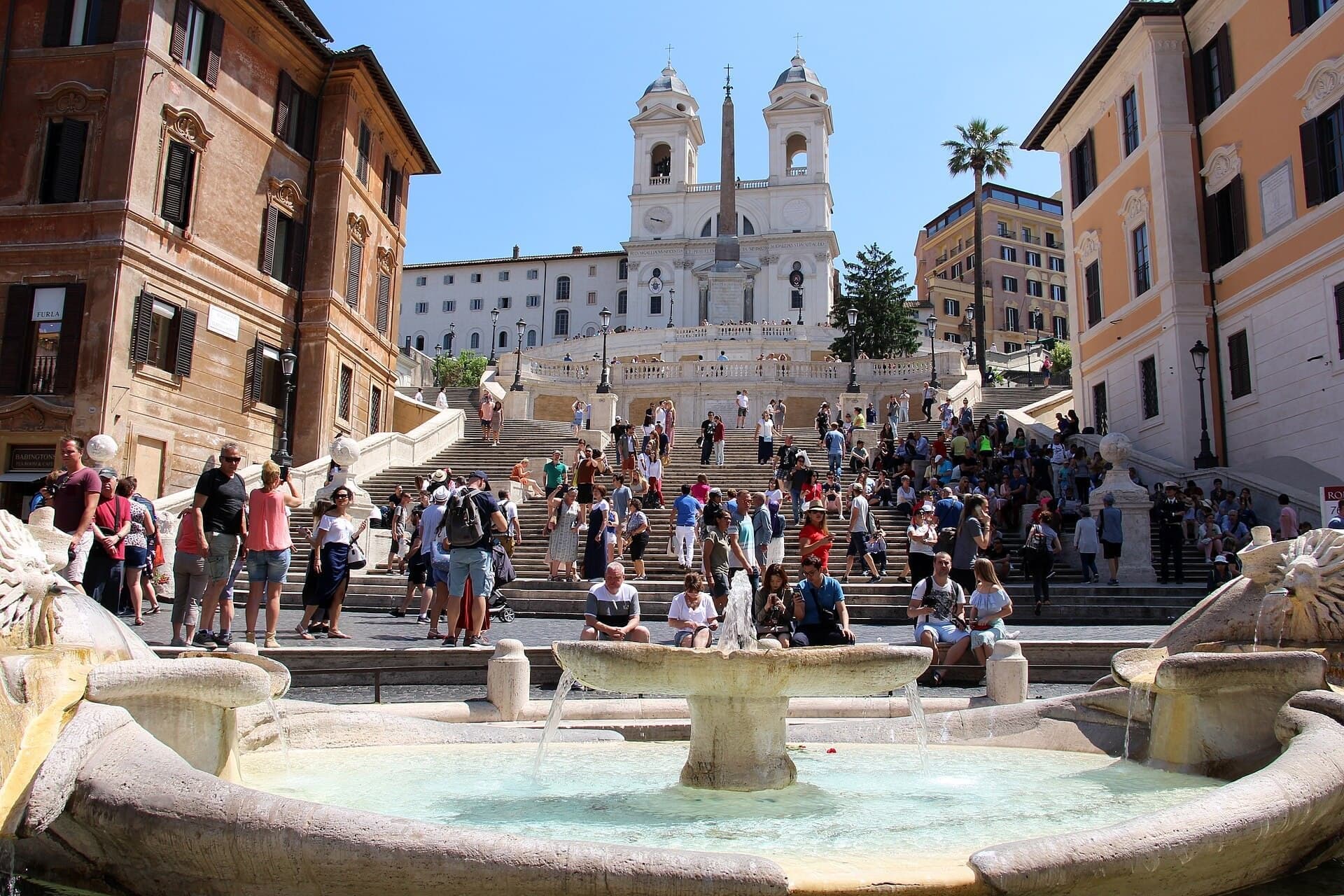
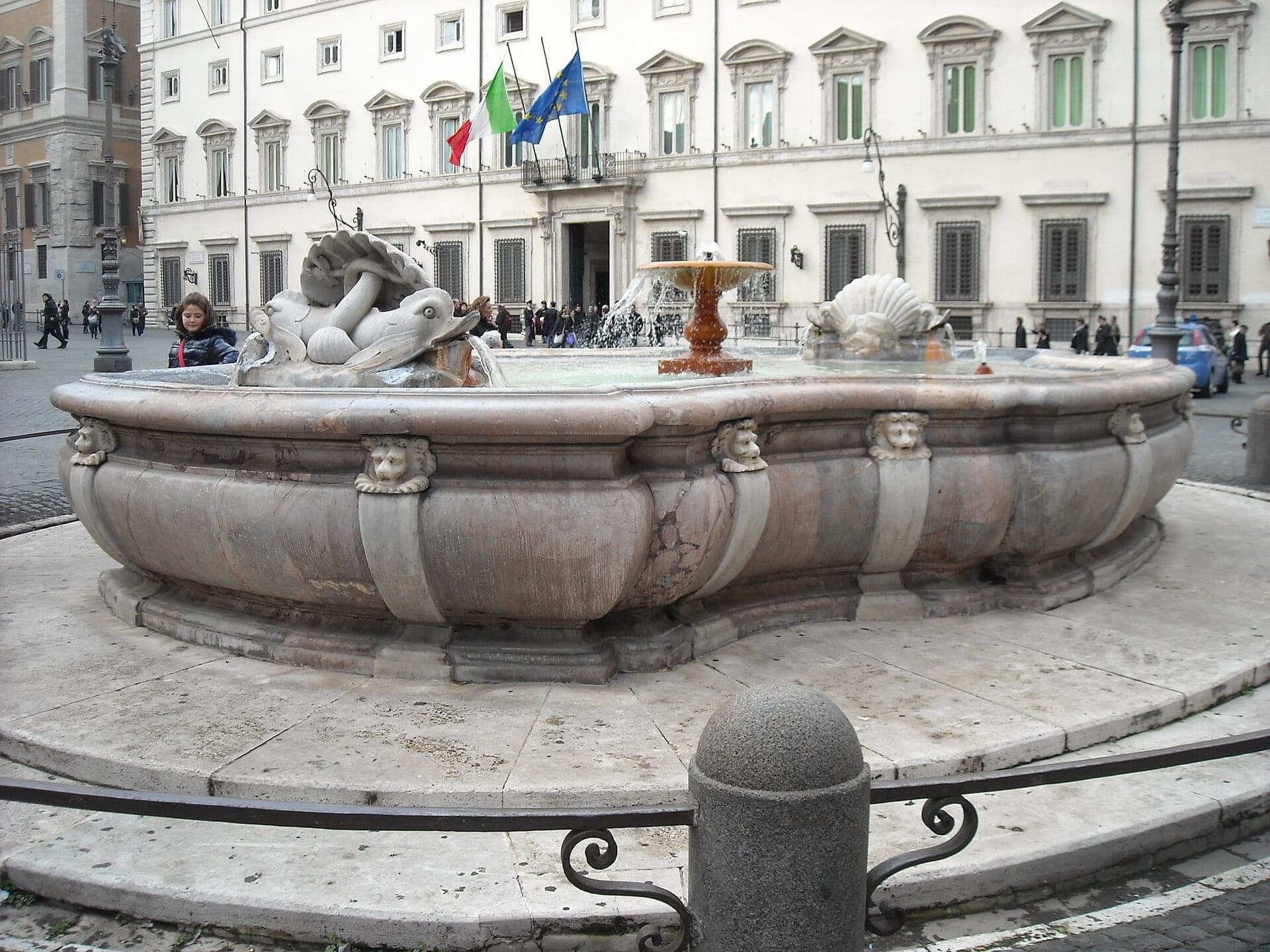
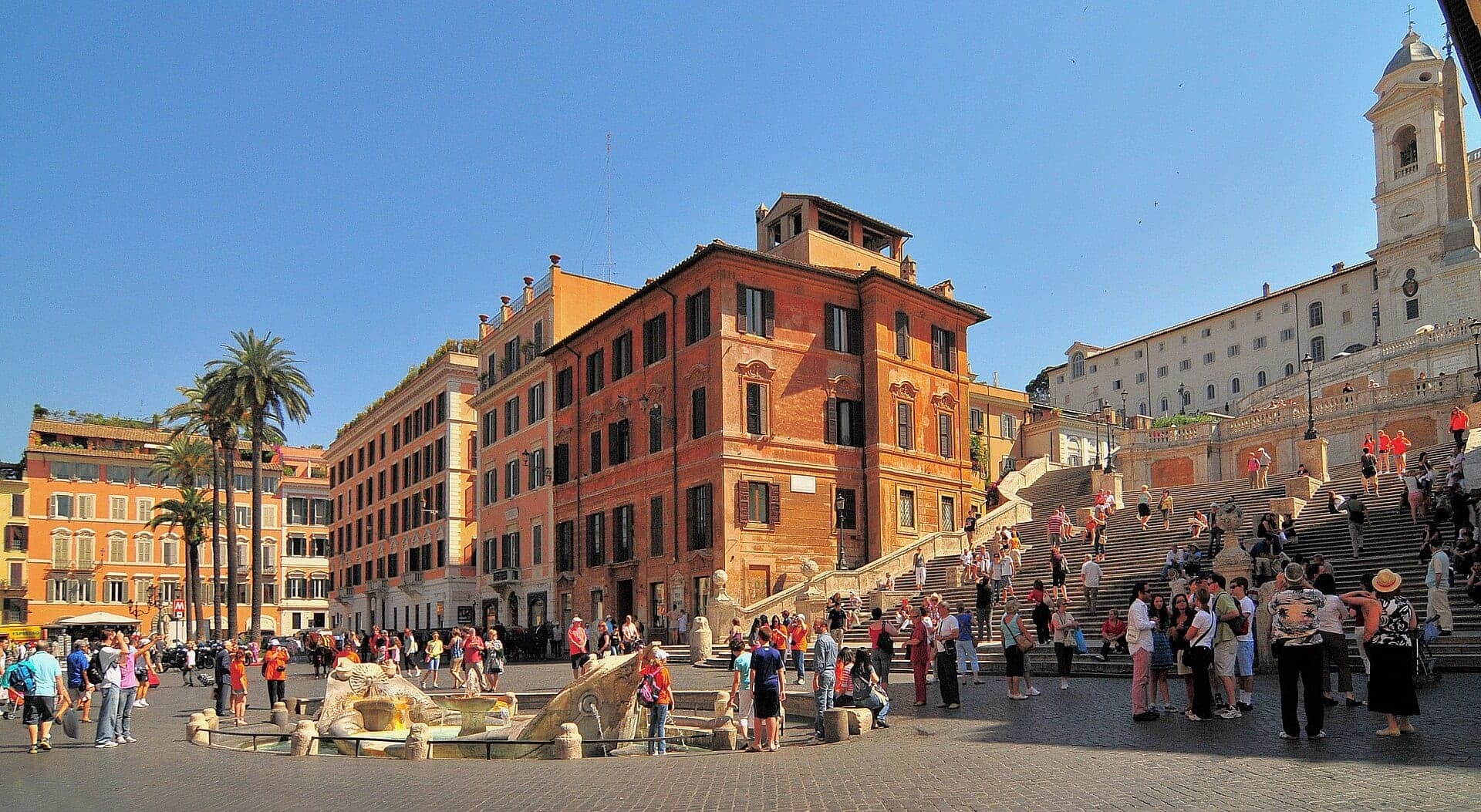
Piazza di Spagna: The Sinking Boat
A fountain shaped like a sinking boat, because the ancient aqueduct's pressure was too low.
- 6
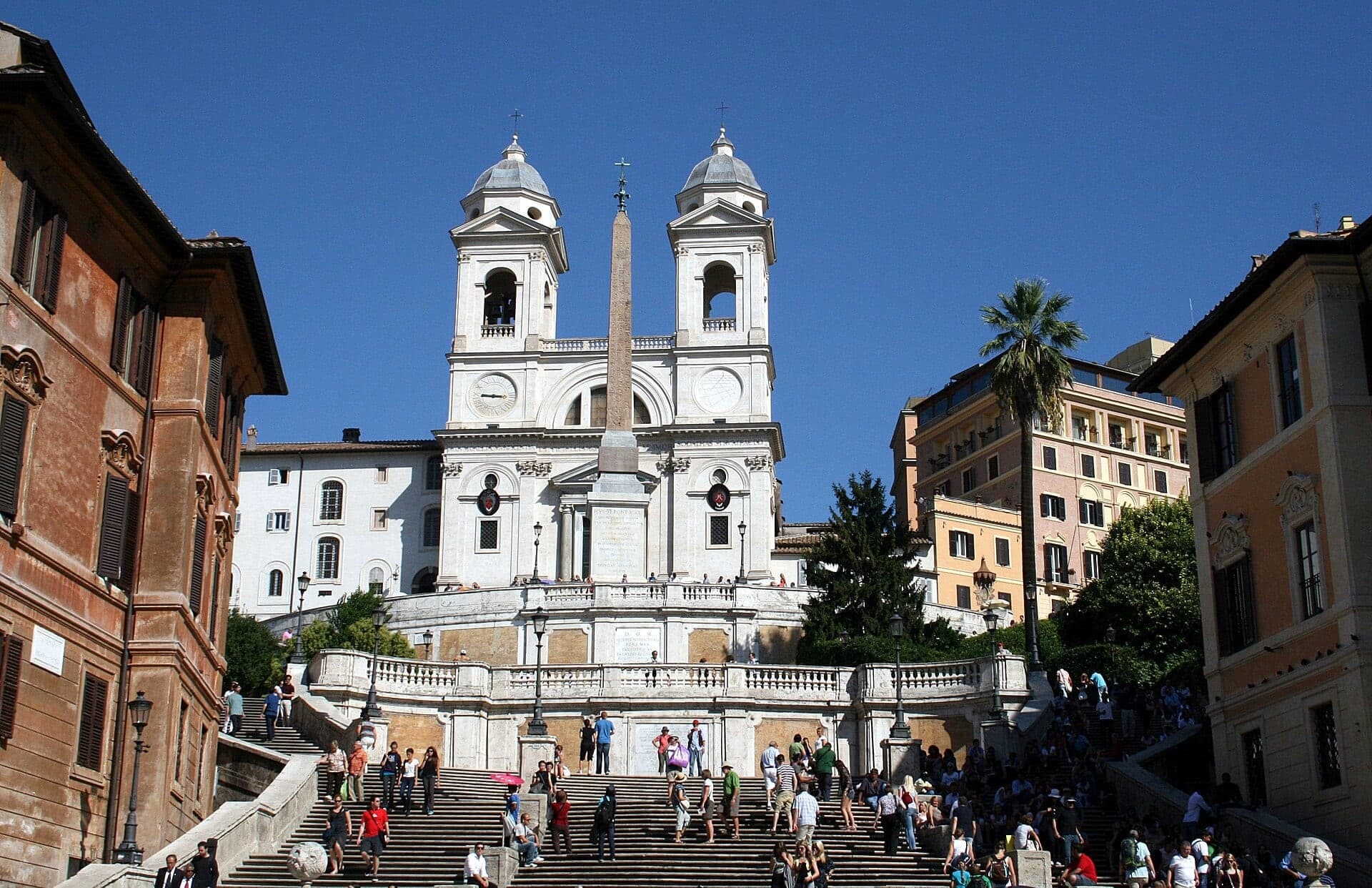
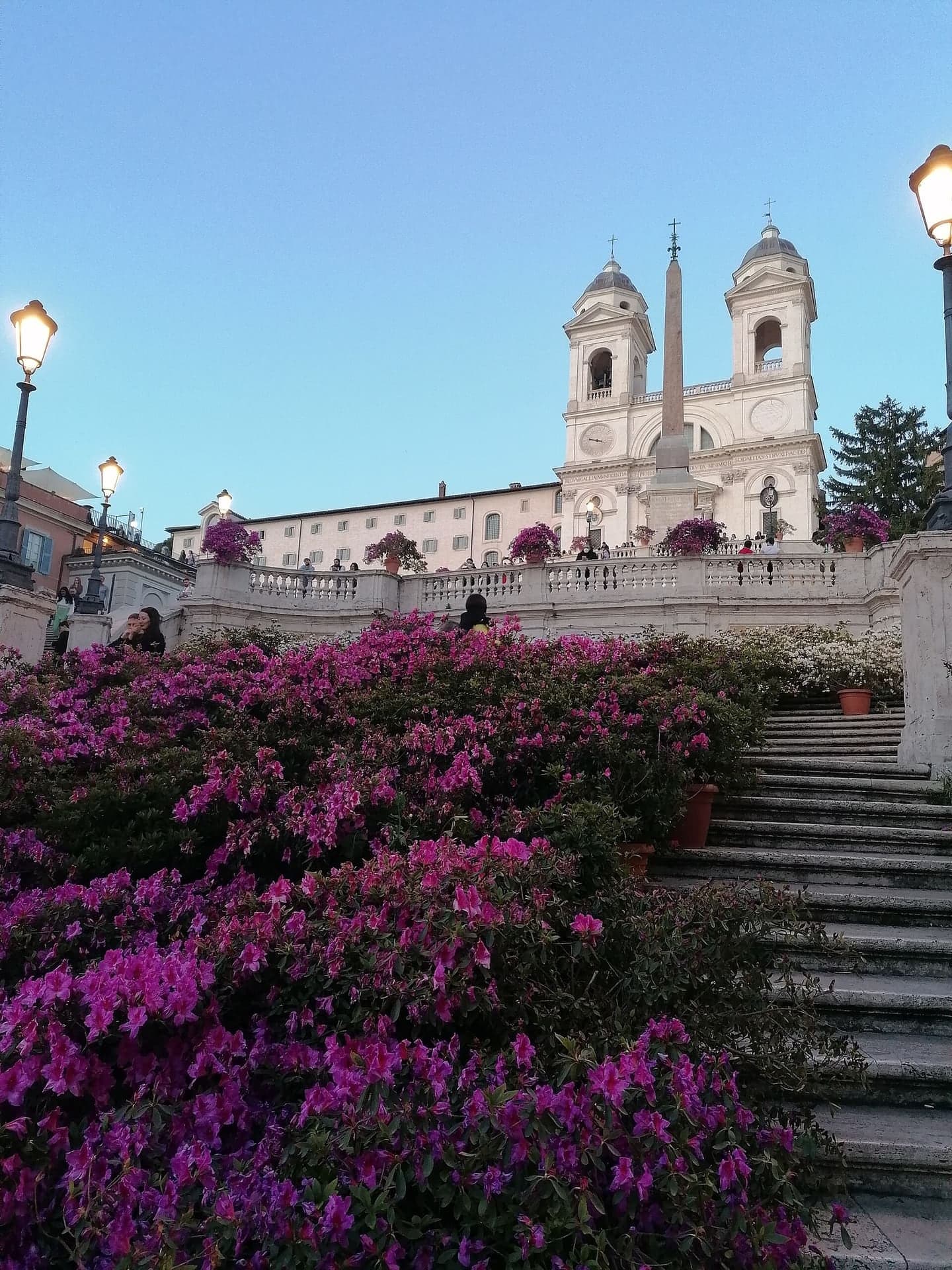
Spanish Steps and Trinità dei Monti
Eleven flights that split and rejoin, crowned by a French church and an obelisk.
- 7
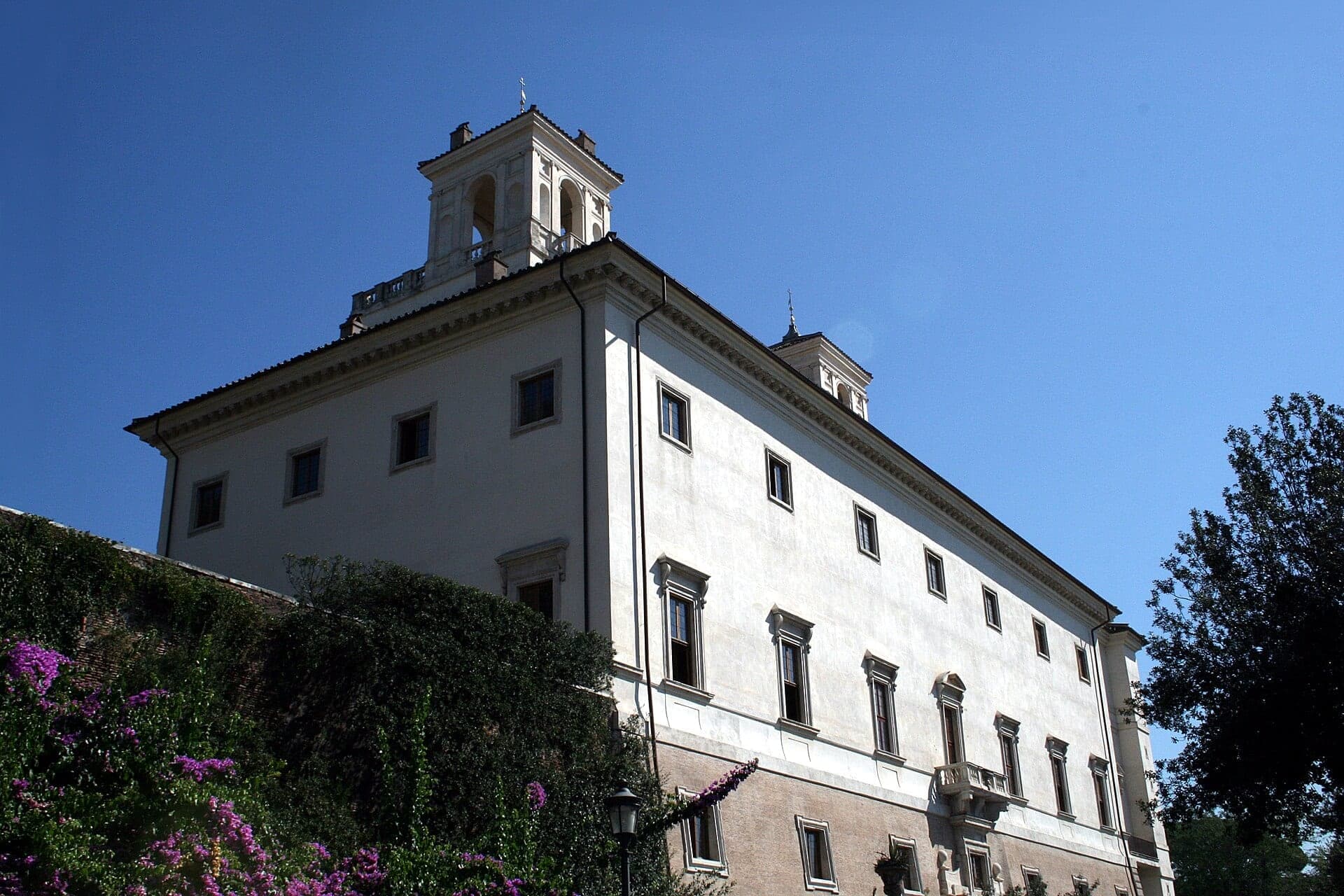
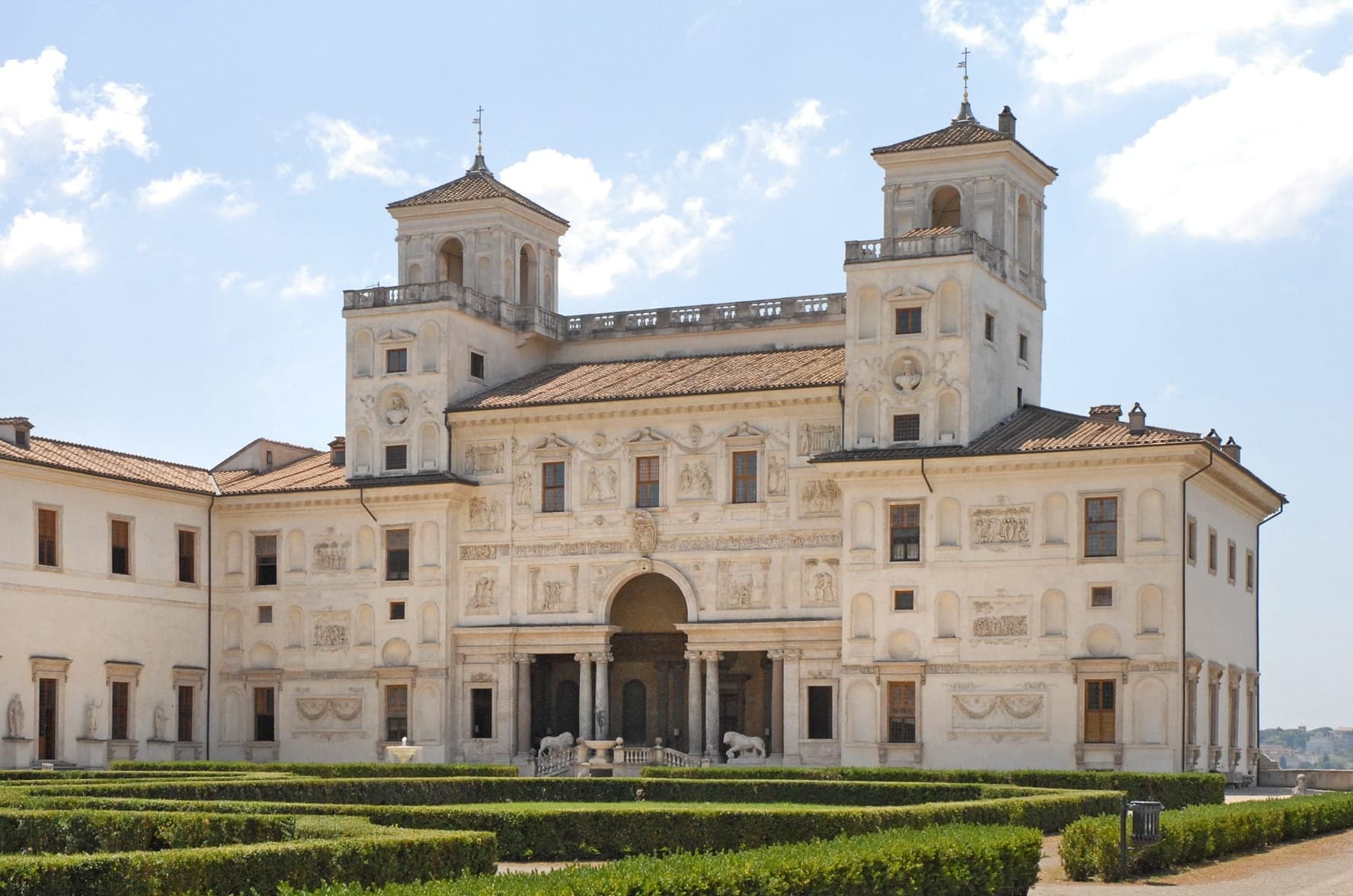
Villa Medici: The French Academy
The hilltop villa of a Medici cardinal, home of the French Academy in Rome since 1803, its famous garden front hidden behind.
- 8
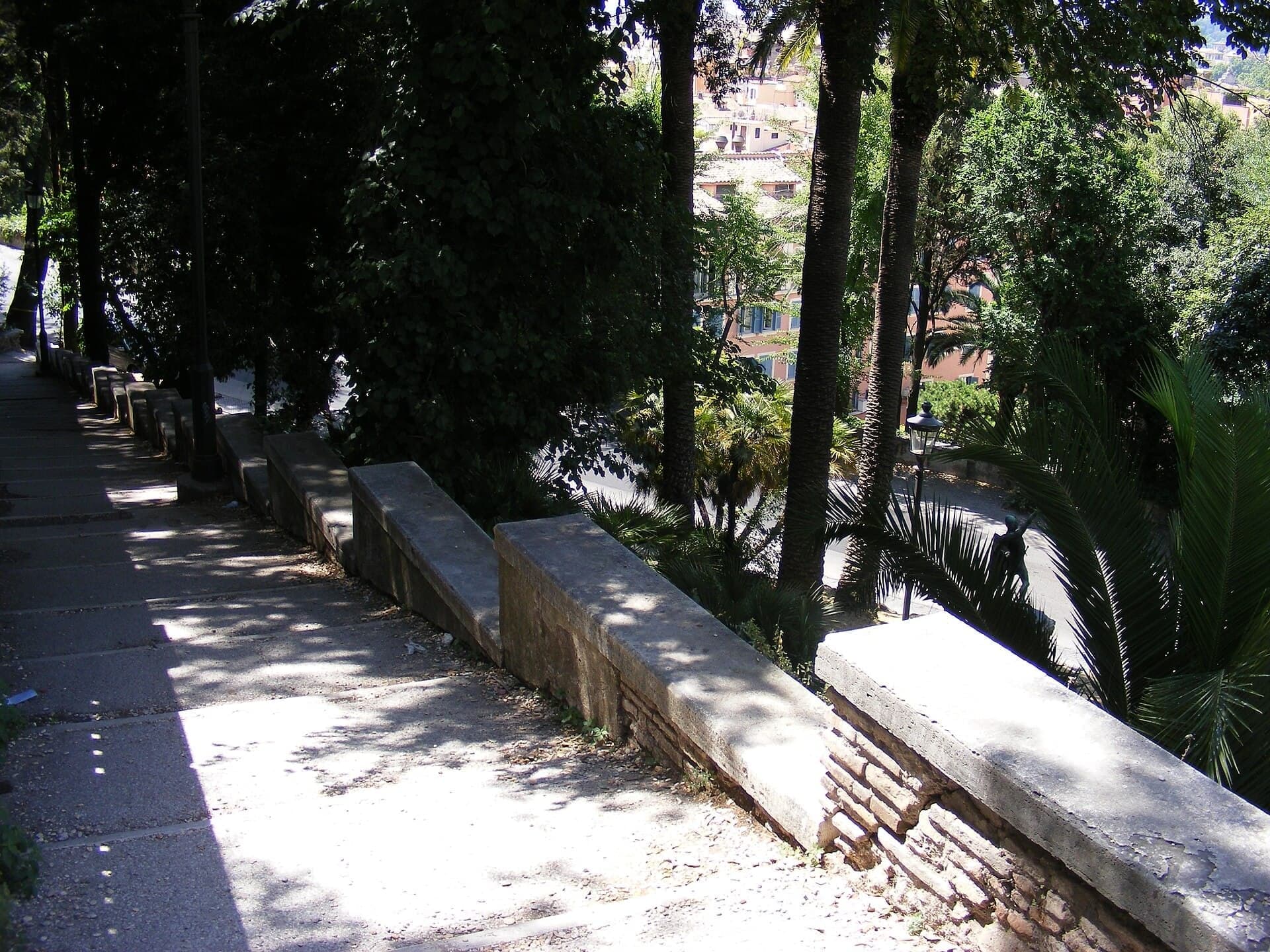
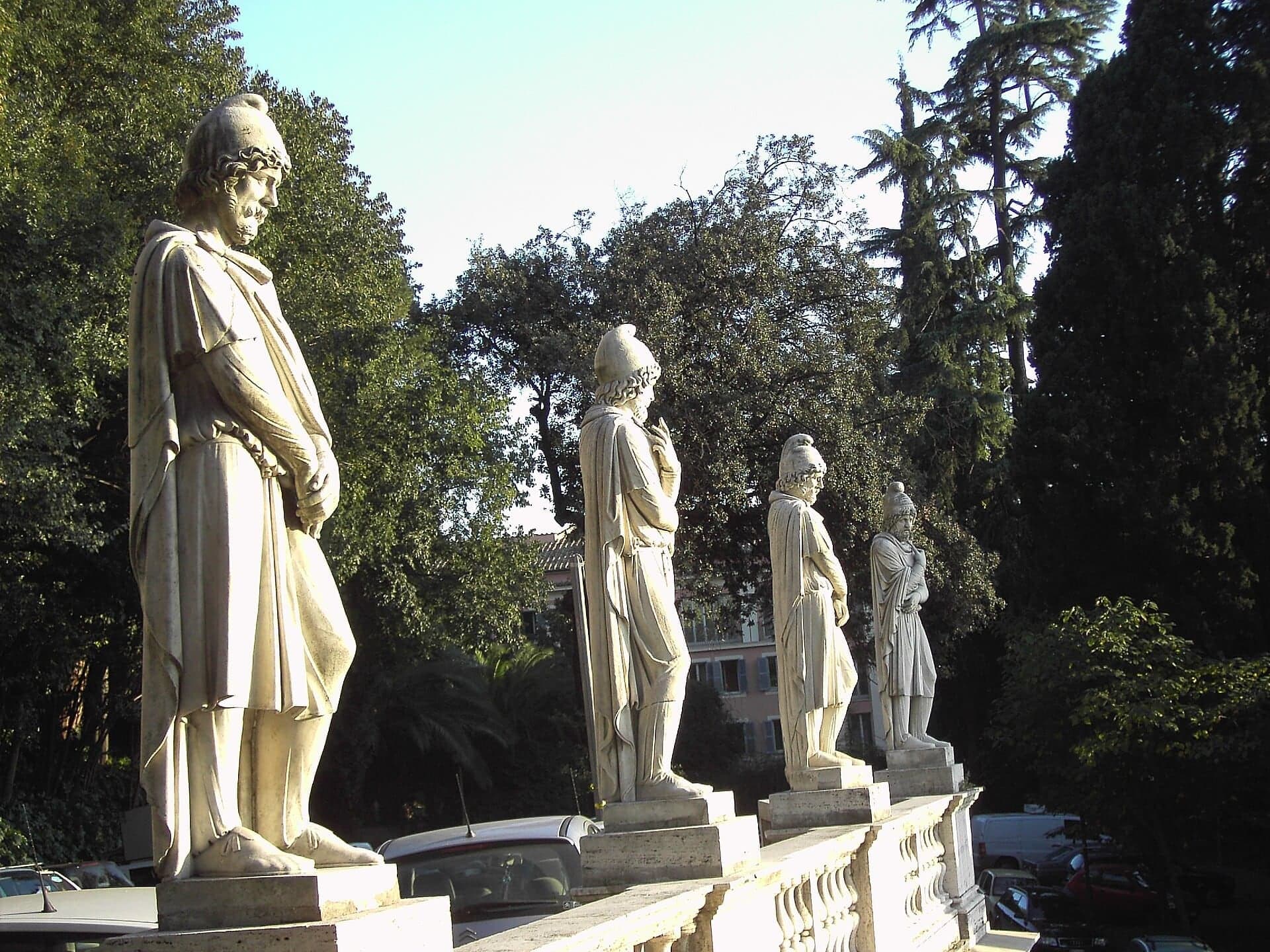
Pincio: Valadier's Garden Hill
A public garden on the hill, designed by Giuseppe Valadier for carriages, with wide avenues, ramps and marble busts.
- 9
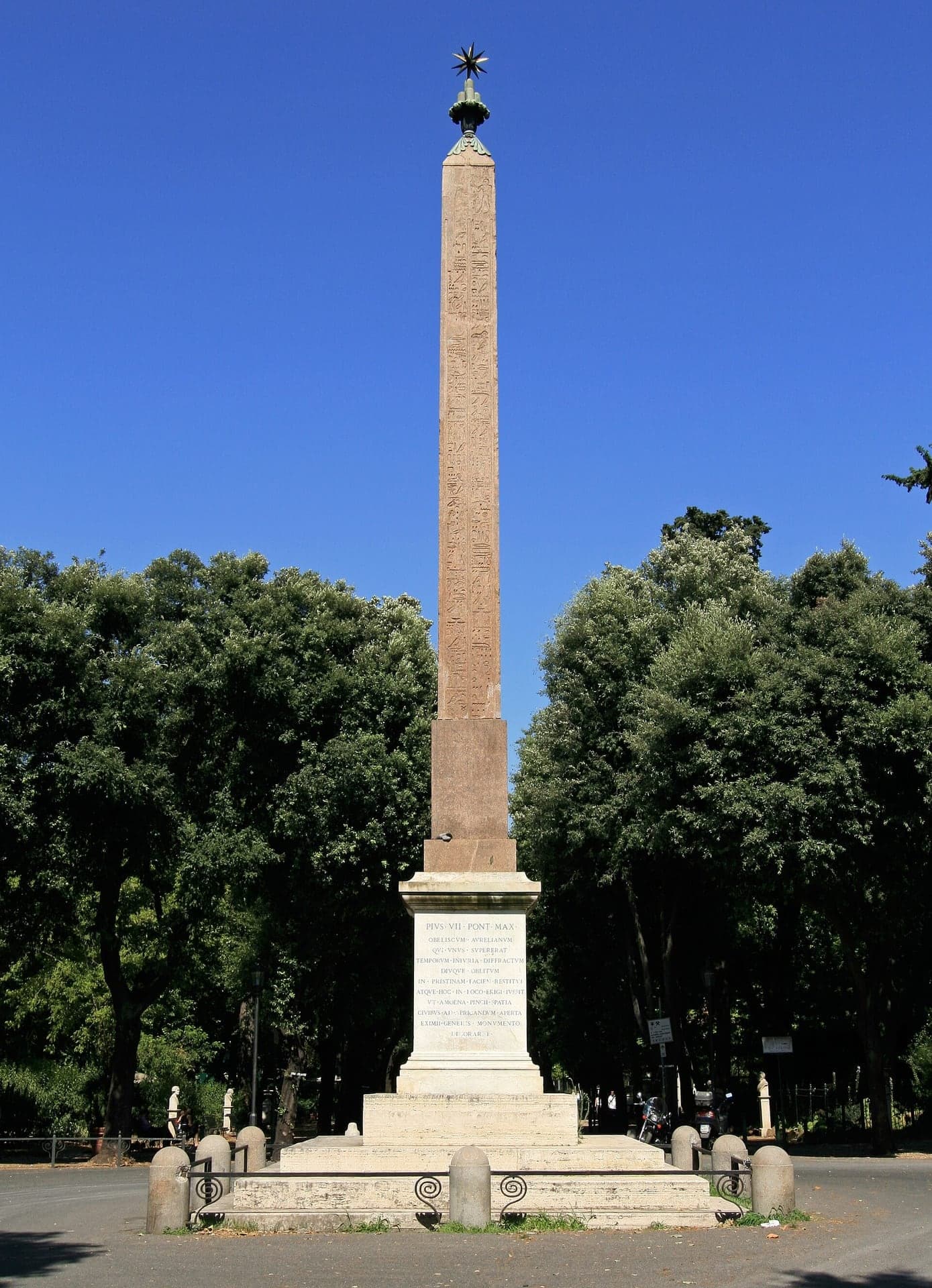
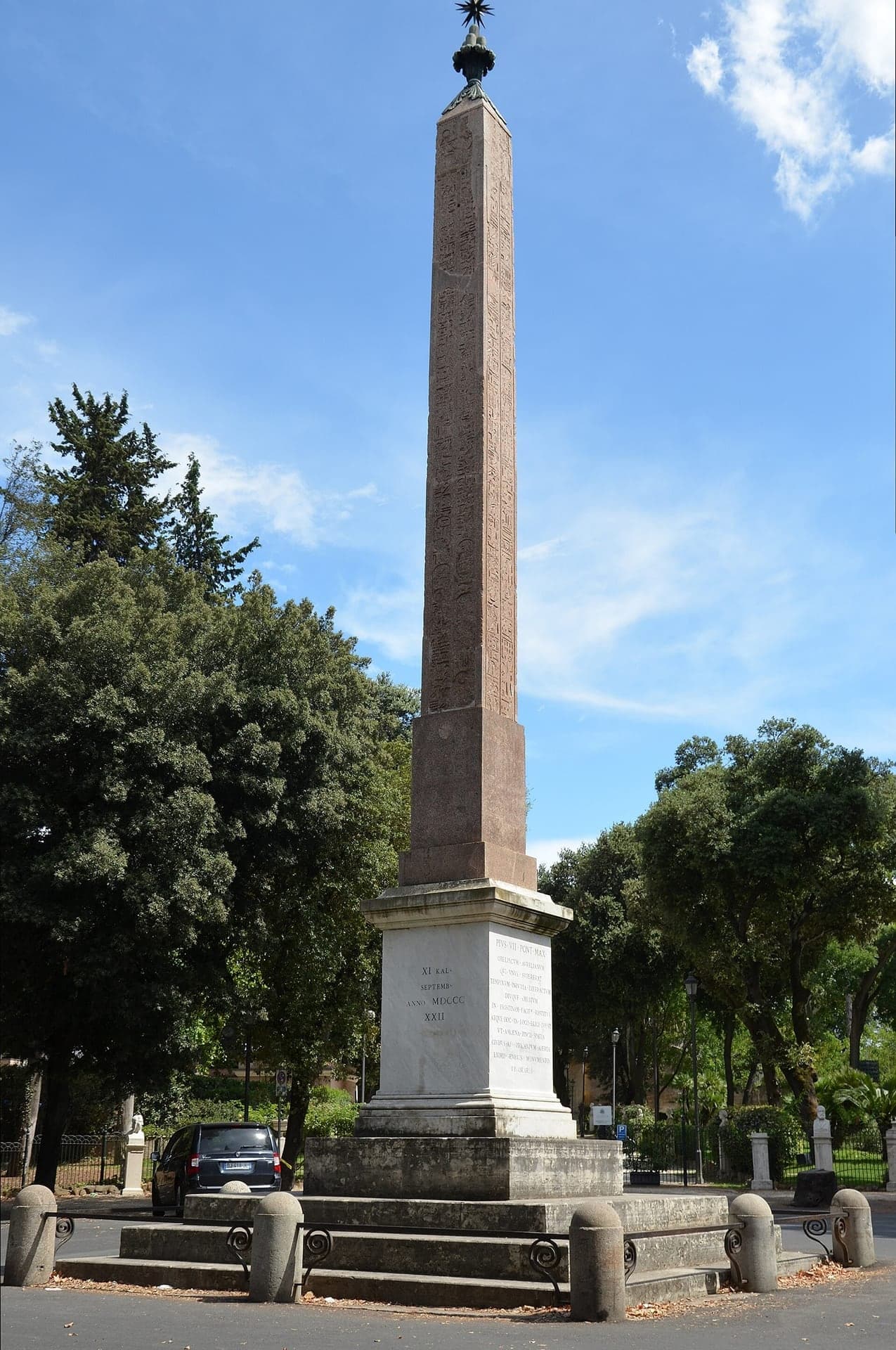
Obelisk of Antinous: A Wandering Stone
A pink granite obelisk for Antinous, broken, moved and stored for centuries before it was raised here in 1822.
- 10
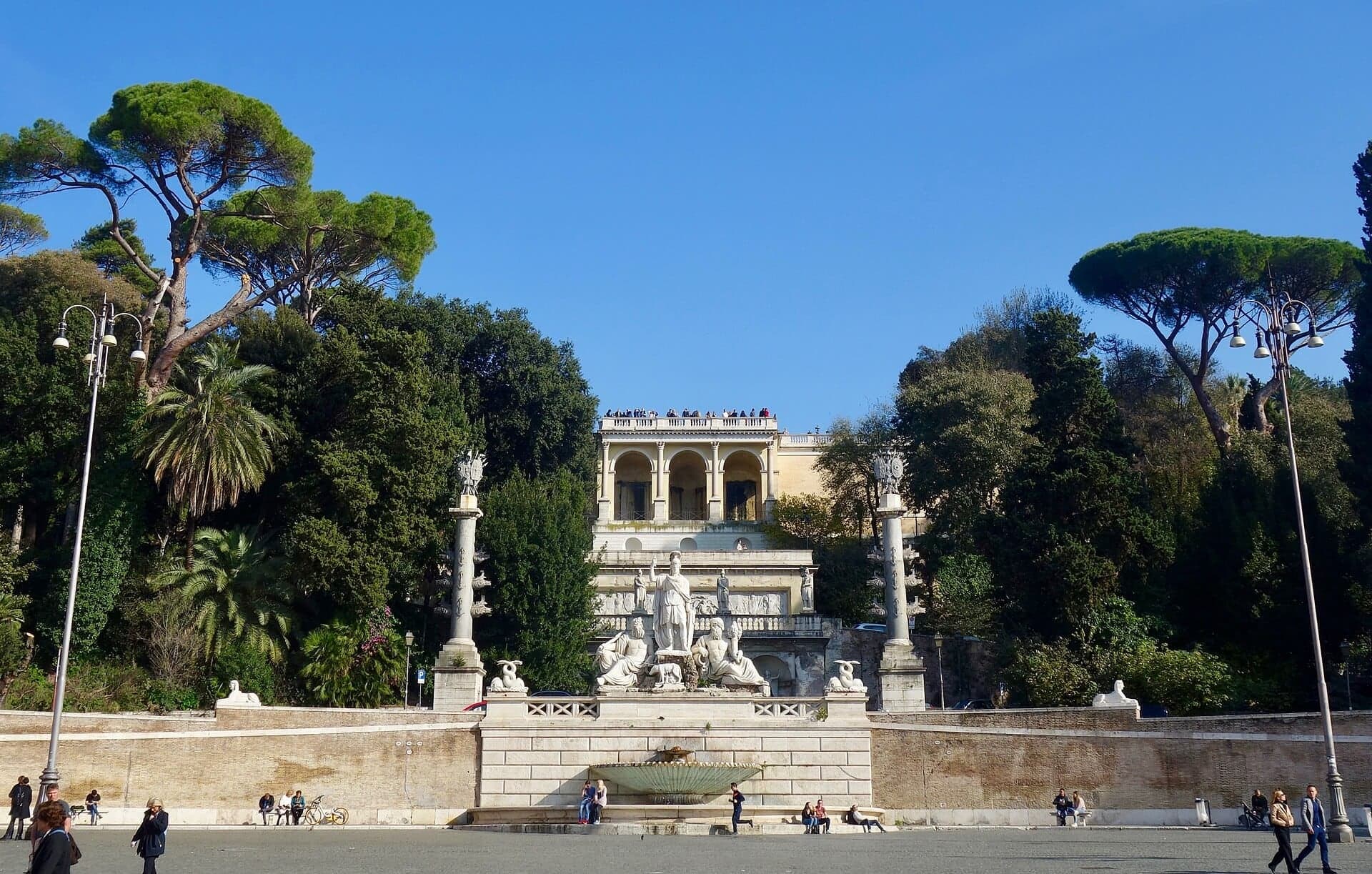
Pincio Terrace: Where the Water Came In
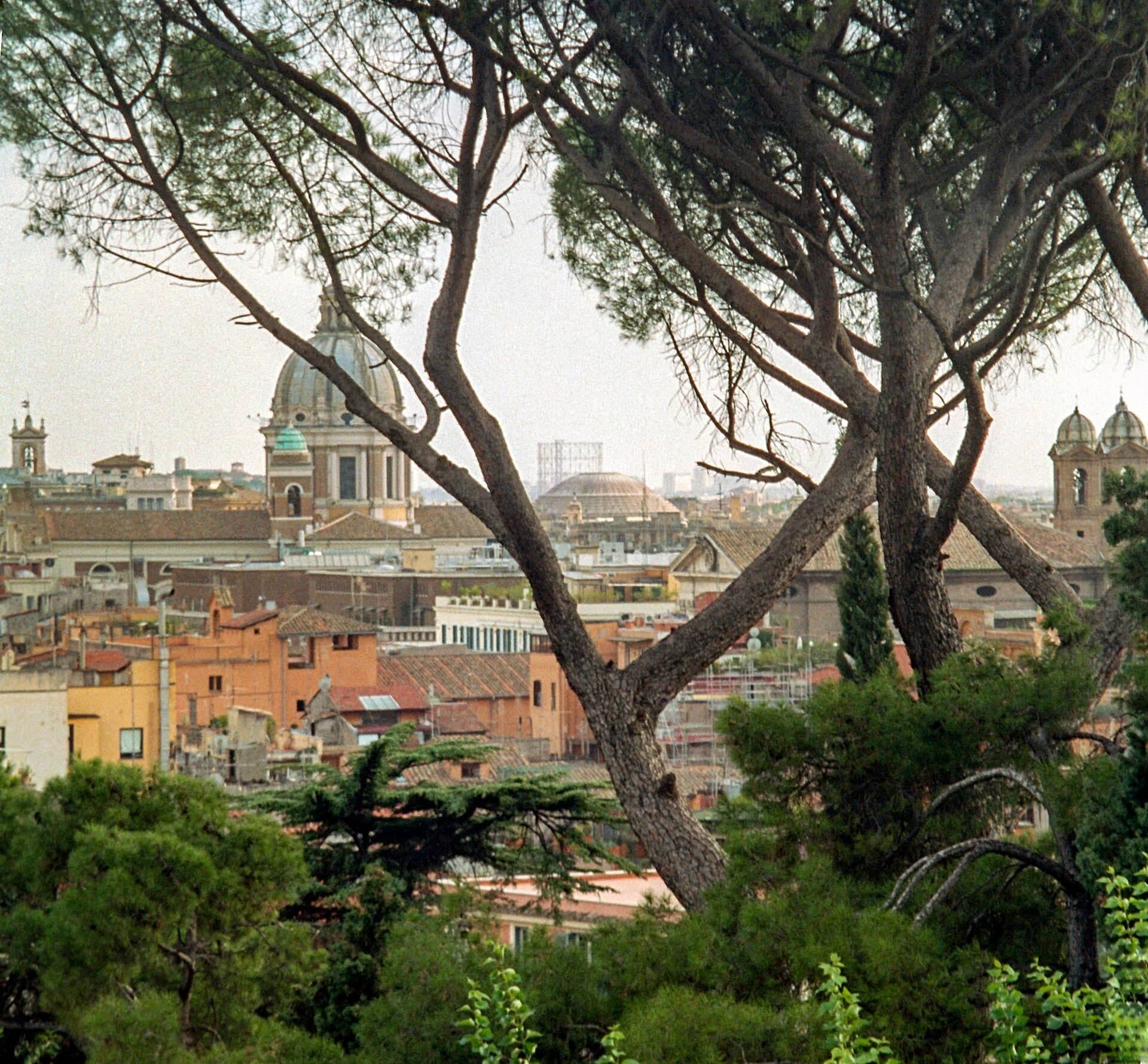
A balcony over Piazza del Popolo, at the hill where the Acqua Vergine entered the ancient city.
- 11
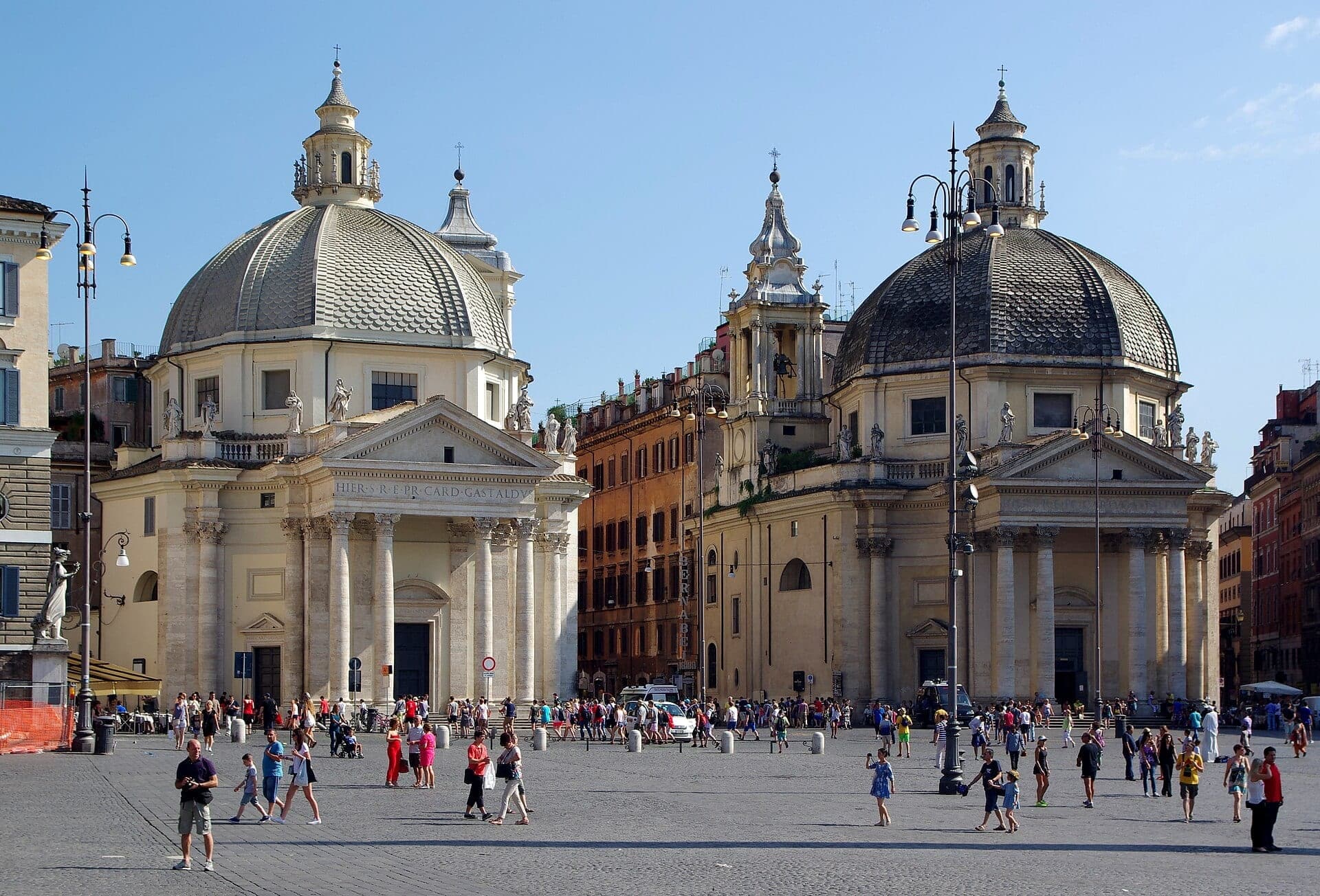
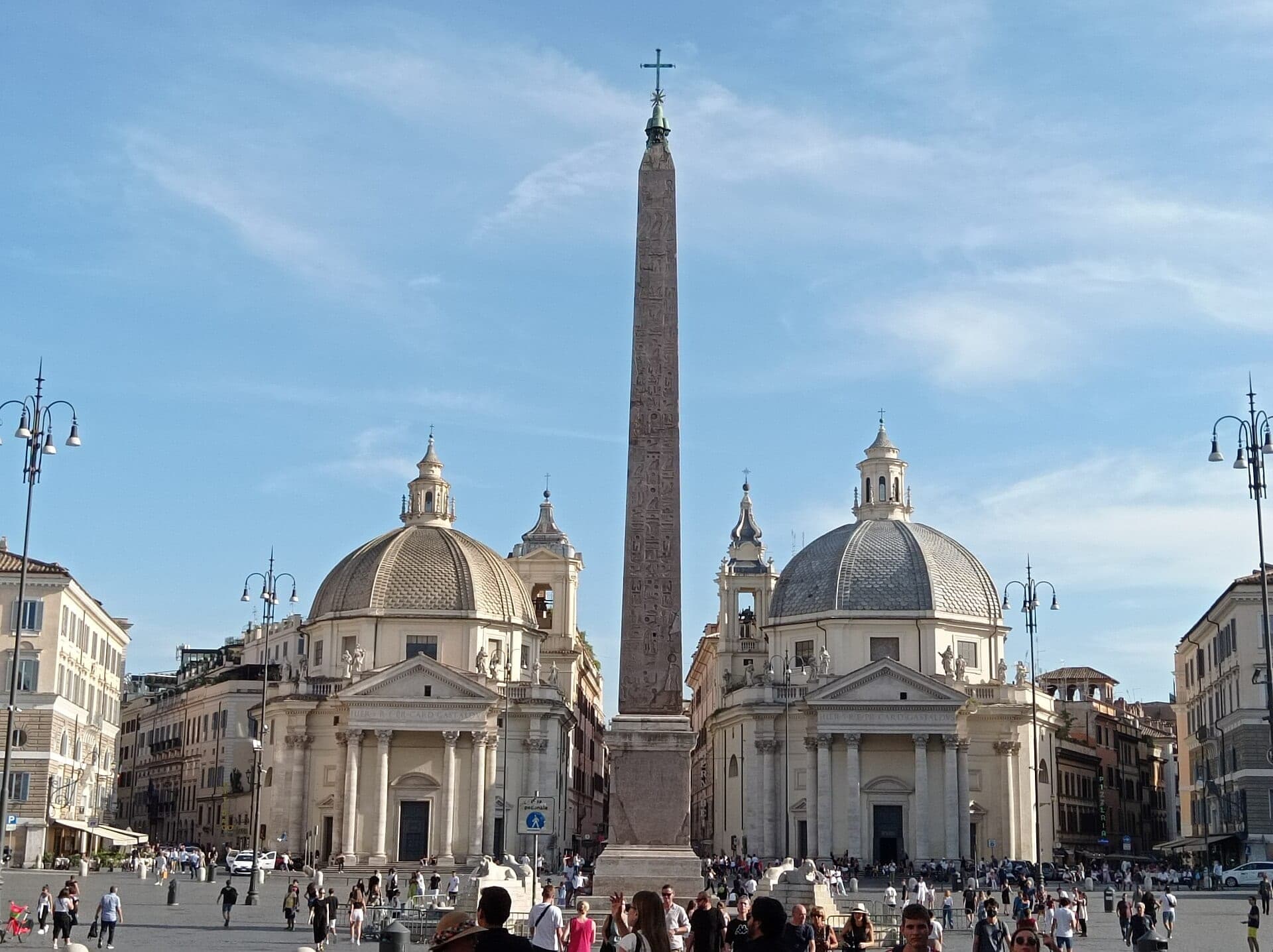
Piazza del Popolo: Twins That Are Not
A great oval round an Egyptian obelisk, two churches that only look like twins, and a city gate dressed by Bernini for a queen.
Details
Best Time to Visit
A weekday afternoon, timed to reach the Pincio terrace before sunset: Rome's tourism office recommends the terrace towards sunset, and the Villa Borghese gates close after dusk (in September and October between 7pm and 9pm, by Turismo Roma's Villa Borghese page). The Galleria Sciarra courtyard is usually open only on weekdays in office hours; no official hours are published. The Trevi inner perimeter opens at 9am (11.30am on Mondays and Fridays) and the fountain is crowded at every hour. In spring, from about mid April to mid May, the Spanish Steps carry azaleas.
Pro Tips
- •Getting to the start: Piazza Colonna is on Via del Corso. The nearest Metro stations are Spagna and Barberini, both on line A, each about ten minutes' walk; many buses stop on the Corso at Largo Chigi, beside the square. From Piazza di Sant'Ignazio, where our Historic Center walk ends, it is about five minutes on foot. Checked 8 October 2026.
- •Trevi Fountain (stop 3): the view from the square is free at all times. The inner perimeter, down by the water, costs 2 EUR for non-residents since 2 February 2026; ticket office and entrance in Via della Stamperia, exit in Via dei Crociferi; Monday and Friday 11.30am to 10pm, other days 9am to 10pm, last entry 9pm. Pay online or by card on site. Checked 8 October 2026 at fontanaditrevi.roma.it.
- •Step-free: to avoid the Spanish Steps, go up by the streets, Via Sistina or Via Gregoriana, to the top of the Steps. A lift from Spagna Metro station is mapped to the top landing; its hours are not published, so check on site. Coming down from the Pincio, the carriage road, Viale Gabriele D'Annunzio, winds down to Piazza del Popolo without steps. Sampietrini cobbles cover most of the route.
- •Villa Medici (stop 7): the gardens and historic rooms are seen only on a guided visit of about 90 minutes, 18 EUR or 15 EUR reduced, Wednesday to Monday, closed Tuesdays. Book at villamedici.it. Checked 8 October 2026.
- •The Accademia di San Luca, passed just after the Trevi Fountain, opens its gallery Tuesday to Friday 3pm to 7pm and Saturday 10am to 7pm, with a ticket; inside is a spiral ramp by Borromini. Checked 8 October 2026 at accademiasanluca.it.
- •Arches of the Acqua Vergine survive in Via del Nazareno, which the route walks just after crossing Via del Tritone between stops 3 and 4, and in Via del Bufalo, the next street west.
- •The walk ends at Flaminio Metro (line A), beside the Porta del Popolo. Line A also serves Spagna, for the start of the walk, and runs toward the Vatican.
Safety & Precautions
- •The Trevi Fountain (stop 3) is one of the most crowded places in Rome. Keep bags closed and in front of you, and say no to people offering roses or bracelets. Do not sit on the basin's edge, eat or drink there, or throw anything but a coin: the official rules carry fines.
- •The route walks along the edge of the Trevi square, not into the basin area, and up Via della Stamperia, where the ticket queue forms; keep to the side and do not cut through the line.
- •Via del Tritone, between stops 3 and 4, is a busy road crossed on zebra crossings with no traffic lights: two carriageways, one at a time, and cars do not always give way. The nearest lights are about 150 metres east.
- •Leaving Piazza Colonna, the route crosses Via del Corso and side streets on zebra crossings without lights; buses and taxis run here.
- •Sitting on the Spanish Steps, and on the fountains, is banned under a city regulation of 2019 and is fined.
- •Between the Steps and the Pincio (stops 6 to 8) the route crosses the road at the top of the Steps on a zebra without lights, then follows Viale della Trinità dei Monti, a quiet one-way road: keep to the pavement.
- •The Pincio gardens (stops 8 to 10) close after dusk; sources disagree on the exact time. If the gates are shut, go back down the Spanish Steps and walk Via del Babuino straight to Piazza del Popolo.
- •The way down from the Pincio terrace to Piazza del Popolo is several flights of stairs with no lift; the step-free alternative is the carriage road, Viale Gabriele D'Annunzio. Near its foot the route walks about fifty metres on that road's carriageway, then crosses the square's road twice on zebras without lights.
- •The Galleria Sciarra (stop 2) is a private courtyard in a residential and office building: step in quietly, only when the gate is open, and do not go beyond the passage.
- •Piazza Colonna faces the office of Italy's prime minister; police can close parts of the square at short notice. Follow their directions.
Travel advisory: Exercise Increased Caution (Level 2).
Gallery
Related Reading
Go deeper on what you'll see, hear, and walk through.
Overview
Best Self-Guided Walking Tours in Rome (2026)
4 min
Overview
One Day in Rome on Foot: A Walkable Morning-to-Evening Itinerary
7 min
Overview
Rome Travel Guide 2026: How Many Days, Getting Around, Costs, and Safety
7 min
Thematic
Best Architecture Walking Tours in Rome (2026)
2 min
Thematic
Rome Keeps Nothing New: The City Built by Reusing Itself
6 min
Companion
The Water Behind the Trevi Fountain: Following the Acqua Vergine to the Pincio
5 min
Read
What to Eat in Rome: A Local's Guide to the City's Signature Dishes
7 min
Read the walk
The full story of Trevi Fountain and Spanish Steps: Upstream to the Pincio, in words. Prefer to listen? Play it narrated, from home or on location.
Introduction
Rome, the capital of Italy, still has fountains fed by an aqueduct built in nineteen B C. It is the Acqua Vergine, the Virgin water, ordered by Agrippa, and Rome's tourism office calls it the only ancient aqueduct still in use.
This walk follows that water upstream: from Trevi, where the aqueduct puts on its show, past the boat-shaped fountain its weak pressure shaped at the foot of the Spanish Steps, and up through the Pincio, the garden hill where the water once came into the city.
Three people come back along the way. Agrippa, who built the aqueduct. Gian Lorenzo Bernini, who probably helped his father with the boat fountain and dressed the city gate at the end. And Giuseppe Valadier, the architect of the Pincio and the square below.
The close-up area at the Trevi Fountain is ticketed, and the view from the lane is free. Villa Medici's gardens are seen only on a booked visit.
The walk is eleven stops over just under two and a half kilometres, about a mile and a half, and takes about an hour and a half. The big climb is the Spanish Steps, about twenty metres, with a step-free way round, and the way down from the Pincio is by stairs or a winding road. It begins on Piazza Colonna, about five minutes from Piazza di Sant'Ignazio, where our Historic Center walk ends, and finishes in Piazza del Popolo.
1. Piazza Colonna: A Column That Reads Upward
Welcome to Piazza Colonna, the square of the column. Walk on to the pavement at the edge of the square, and look at the column itself: a shaft of white marble wrapped in carving from bottom to top.
It was raised for the emperor Marcus Aurelius, after his death, between about one hundred and eighty and one hundred and ninety-three A D. The column is about thirty metres tall, a hundred Roman feet, on a base about twelve metres high, and it is built of twenty-eight drums of marble from Luna, the quarries known today as Carrara.
Now the carving. It is one long strip that winds round the column in a spiral, like a ribbon, and it reads from the bottom up. It tells the emperor's wars against Germanic peoples and against the Sarmatians, with a winged Victory between the two. The story starts with the lowest band, high above you, where soldiers cross the Danube on a bridge of boats. The emperor is shown almost always facing out, to stress his majesty, and the figures are cut deep, so their shadows still read from the street.
In fifteen eighty-nine a pope had the column restored. A bronze Saint Paul replaced the emperor who had once stood on top, the carvings on the base were lost, and the inscription on the base today credits the column to the wrong emperor. Keep that year in mind: the same pope is waiting at the end of the walk.
The guarded palace on the square is Palazzo Chigi, since nineteen sixty-one the office of Italy's prime minister.
The street beside you, Via del Corso, runs to Piazza del Popolo, where this walk ends. We take the long way, with the water.
Follow the route across the Corso. The zebra crossings here have no lights, and buses and taxis come fast, so wait for a clear gap. Next is a painted courtyard.
2. Galleria Sciarra: A Painted Courtyard
Walk on into the narrow street and stop at the entrance of a covered passage. This is the Galleria Sciarra. It is a private courtyard: on weekdays, in office hours, passers-by can usually step quietly inside the entrance; in the evening and at weekends the gate is usually shut, and then the street is as far as you go.
If it is open, look up. Under a roof of iron and glass, carried on slim cast-iron columns, the walls are painted from top to bottom in bands of figures. They were painted between eighteen eighty-five and eighteen eighty-eight in encaustic, a technique that mixes the pigment into wax.
After Rome became the capital of Italy in eighteen seventy-one, this block was rebuilt for a prince of the Sciarra family, a member of parliament and a newspaper publisher. The paintings are a hymn to women as wives and mothers, in the ideas of the day. High up stand the Virtues, women named the Modest, the Sober, the Strong, the Patient, the Faithful. Lower down are scenes of family life: tending the garden, conversation, the family meal, music, a wedding, the care of children. The princess's initials are worked in among them.
In the nineteen seventies the whole building was emptied out and rebuilt inside with reinforced concrete, and the painted decoration was carefully kept. So the old courtyard is a painted skin on a newer frame.
Follow the route back to the lane and on, toward the sound of water and a crowd.
3. Trevi Fountain: Where the Aqueduct Shows Off
Walk on to the end of the lane, where it opens into the square, and stop there, at the edge of the crowd. This is the Trevi Fountain. Since the second of February twenty twenty-six, visitors who are not Rome residents pay two euros to go down to its inner area, by the water. The view from here is free. The details are on this stop's card.
A palace front, Palazzo Poli, has become the back wall of a fountain. Its lower part melts into a carved cliff, and water pours down it into a wide basin. In the central arch the god Ocean rides a chariot shaped like a shell, pulled by two horses, one wild and one calm, each held back by a triton.
Above them are two carved panels, and they tell the aqueduct's story. In one, a young woman points Roman soldiers to a spring. In the other, Agrippa orders the aqueduct to be built. That was in nineteen B C. The spring is at Salone, outside Rome, and the Acqua Vergine still brings its water here. Rome's tourism office calls Trevi the aqueduct's display end.
A pope held a competition for it, and it was built from seventeen thirty-two to seventeen sixty-two. The custom is one coin, to come back to Rome.
Follow the route along the edge of the square, not down to the water, and up the lane where the ticket queue forms. Up there, the Accademia di San Luca has had its palace since nineteen thirty-four, when its old home fell to Via dei Fori Imperiali, the avenue beside the Forum. Then comes a busy road, Via del Tritone, with zebra crossings and no lights: cross one carriageway at a time, in a real gap. Just across it, in Via del Nazareno, the route passes a surviving arch of the aqueduct itself, beside the street on your left.
4. Sant'Andrea delle Fratte: The Dancer
Walk on up the street and stop where the church stands beside you. This is Sant'Andrea delle Fratte, Saint Andrew of the thickets. Its first recorded name, from the eleven hundreds, is Saint Andrew among the gardens.
Look up, above the church, for its tower and dome. If the street hides them from here, they come into view as you walk on. Look for two materials side by side. The drum, the round wall built to carry the dome, is plain brick. The bell tower is white marble.
Both are the work of Francesco Borromini, who took over the building in sixteen fifty-three and designed the apse, the rounded back end, with the tower and the drum. The dome was left unfinished when he died.
His surfaces bend. The tower rises from a square base, its walls curving in and out, to a round stage of columns where carved cherubs hold the emblems of Saint Andrew. The brick drum is braced with buttresses set crosswise, in the X of Saint Andrew's cross. Romans nicknamed the tower the dancer.
The front of the church is not his: another architect built it, in the early sixteen hundreds. Look on the crown of the doorway, and up on the tower, for a buffalo's head. It is the coat of arms of the del Bufalo family, whose marquis paid for the rebuilding.
Follow the route on through one-way streets, crossing the side streets with care, to a square at the foot of a famous staircase.
5. Piazza di Spagna: The Sinking Boat
Walk on into the square and stop at the mouth of the long straight street, Via dei Condotti, with a low fountain right beside you. This is Piazza di Spagna. Across the square the Spanish Steps climb to a church with two bell towers. Two rules first. Sitting on the Steps, or on…
Full narration for this stop unlocks with the tour.
6. Spanish Steps and Trinità dei Monti
Climb to the top and stop on the landing at the balustrade, off the steps and short of the little road in front of the church. Now turn round, with the church behind you, for the view. These are the Spanish Steps, built in the early seventeen twenties, commissioned by a French…
Full narration for this stop unlocks with the tour.
7. Villa Medici: The French Academy
Walk on along the road, past a round stone fountain basin on the view side, and stop on the pavement opposite the long villa front, on the side of the road away from the view. This is Villa Medici, and the hill stays French: since eighteen oh three it has been the home of the…
Full narration for this stop unlocks with the tour.
8. Pincio: Valadier's Garden Hill
Walk on up the ramp and stop where it reaches the park, beside the viewpoint railing. This is the Pincio, a public garden on the hill and the western edge of the Villa Borghese park. It is open in daylight and into the evening; the gates close after dusk. Giuseppe Valadier…
Full narration for this stop unlocks with the tour.
9. Obelisk of Antinous: A Wandering Stone
Walk on into the small round square and stop where the obelisk stands ahead of you, in pink granite, with a star on top. This is the Obelisk of Antinous. Antinous was a young Greek, loved by the emperor Hadrian. He drowned in the Nile, and the emperor made him a god, with…
Full narration for this stop unlocks with the tour.
10. Pincio Terrace: Where the Water Came In
Walk on to the balustrade at the terrace's edge and stop there, with the big oval square spread out below you. This is the Pincio terrace. Rome's tourism office recommends the view in the late afternoon, toward sunset. Below is Piazza del Popolo: an oval around a tall Egyptian…
Full narration for this stop unlocks with the tour.
11. Piazza del Popolo: Twins That Are Not
Walk on into the square and stop on the paving, with the hill behind you and the obelisk off to your right. This is Piazza del Popolo, and the end of the walk. Start with the obelisk, about twenty-four metres tall. Rome's tourism office says it was brought to Rome to celebrate…
Full narration for this stop unlocks with the tour.
- The Column of Marcus Aurelius stands in the center of Piazza Colonna. It is a Roman victory column with a spiral relief, built in honour of — Rodney, CC BY-SA 2.0 · source
- GALLERIA SCIARRA - ROMA — Philosofia from Rome, Italy, CC BY 2.0 · source
- Bildinhalt: Gemälde im 1. Stock des Innenhofs der Galleria Sciarra Aufnahmeort: Rom, Italien — Photograph: Frank C. Müller, Baden-Baden, CC BY-SA 3.0 · source
- Borromini campanario Fratte 01.JPG — Miguel Hermoso Cuesta, CC BY-SA 4.0 · source
- Campo Marzio - Piazza di Spagna Piazza di Spagna, at the bottom of the Spanish Steps, is one of the most famous squares in Rome. It owes its — Fred Romero from Paris, France, CC BY 2.0 · source
- The famous Spanish Steps, Trinita dei Monte and the Fontana della Barcaccia. Some of the most famous locations in central Rome. The so-calle — Mike McBey, CC BY 2.0 · source
- The monumental staircase (Scalinata di Trinità dei Monti) and the Church of the Trinity of the Mountains in Rome (Italy). — Jean-Pol GRANDMONT, CC BY 4.0 · source
- Infiorata sulla scalinata di Santa Trinità dei Monti a Roma — Horcrux, CC BY-SA 4.0 · source
- Façade extérieure de la villa Médicis donnant sur la Viale della Trinita dei Monti à Rome (Italie). — Jean-Pol GRANDMONT, CC BY 4.0 · source
- L'Académie de France, créée par Louis XIV en 1666, a été transférée à la ville Médicis en 1804, par Napoléon. La villa a été restructurée en — Jean-Pierre Dalbéra from Paris, France, CC BY 2.0 · source
- Pincio serpentine road, half way. — User:Mattes, CC BY-SA 4.0 · source
- Obelisk on the Pincian Hill, Rome — Carole Raddato, CC BY-SA 2.0 · source
- Rome, Italy — Sonse, CC BY 2.0 · source
- Spojrzenie na Rzym z tarasów Pincio — Jerzy Strzelecki, CC BY-SA 3.0 · source
- The "twin" churches of Santa Maria di Montesanto (left) and Santa Maria dei Miracoli (right), seen from Piazza del Popolo — Jakub Hałun, CC BY-SA 4.0 · source
- Santa Maria dei Miracoli y Santa Maria in Montesanto (Roma) — Canaan, CC BY-SA 4.0 · source
Images may be cropped or resized. Other photos via Unsplash and Pexels.