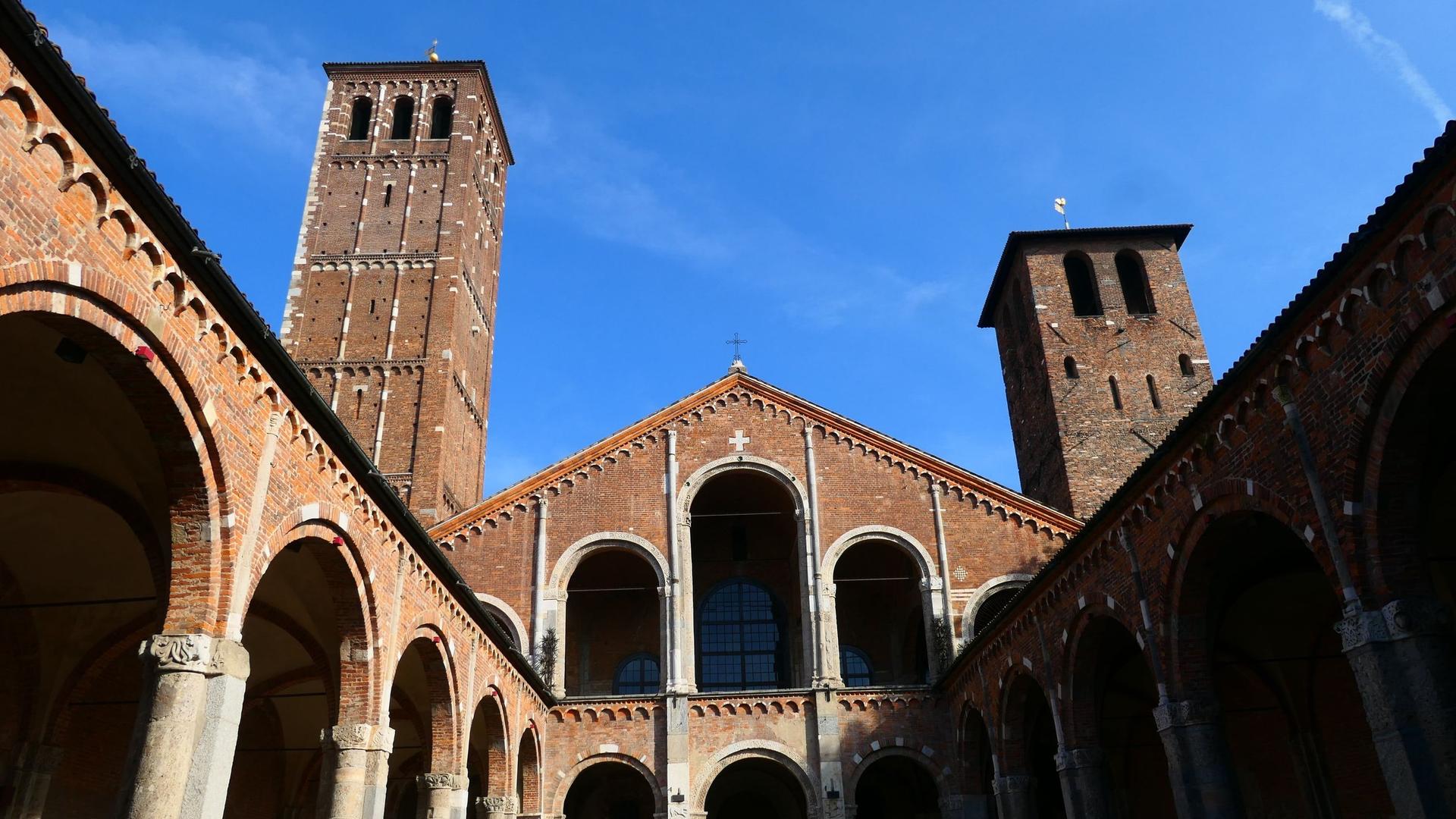
Milan's west side from the outside in: Santa Maria delle Grazie and the Last Supper's refectory door, the Sforza tribune, Corso Magenta's palaces and buried canal, Roman Milan's palace and circus tower, the Cattolica, the Tempio della Vittoria, Sant'Ambrogio and its medieval gate.
Start · Piazza Santa Maria delle Grazie
DirectionsStops
- 1
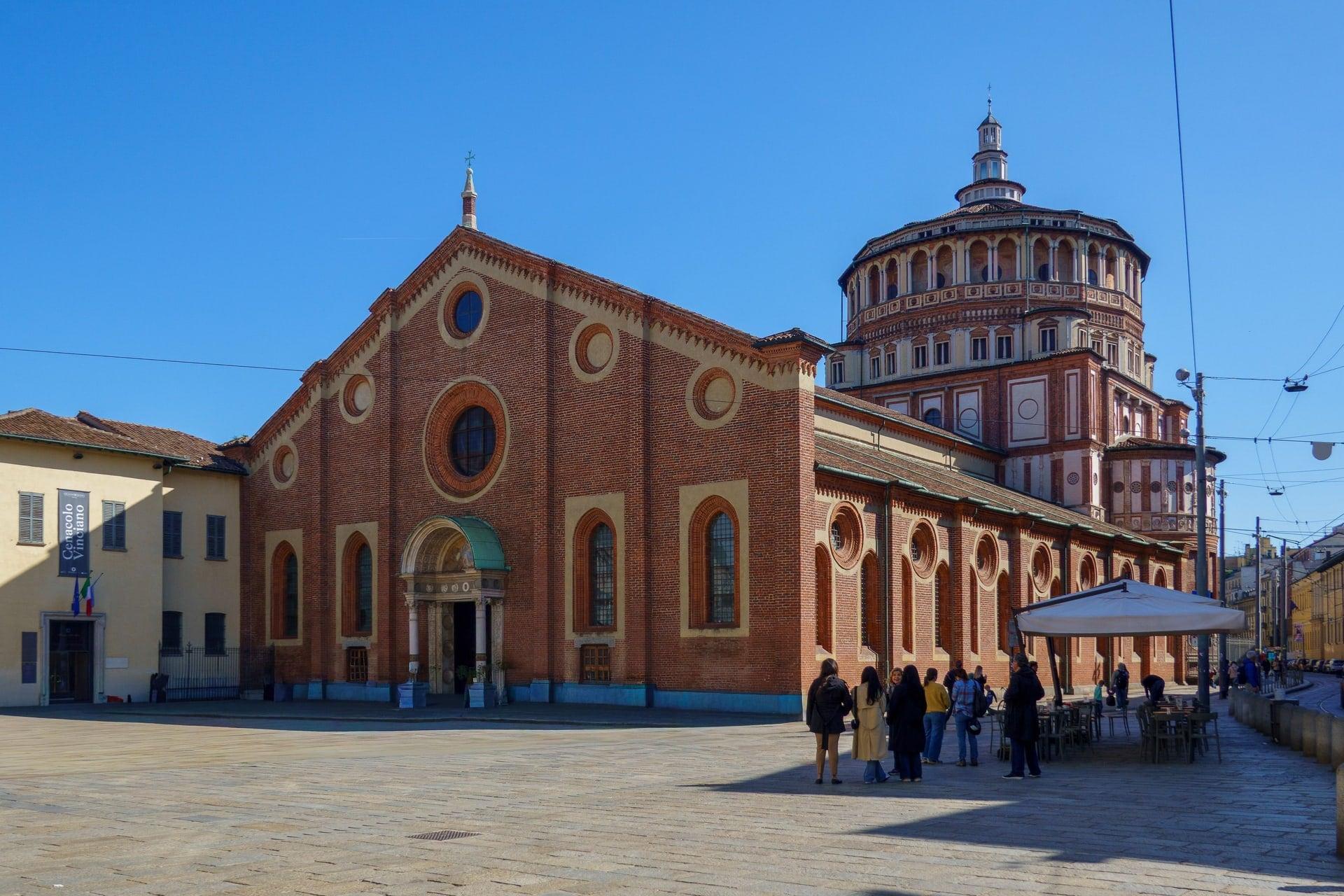
Piazza Santa Maria delle Grazie
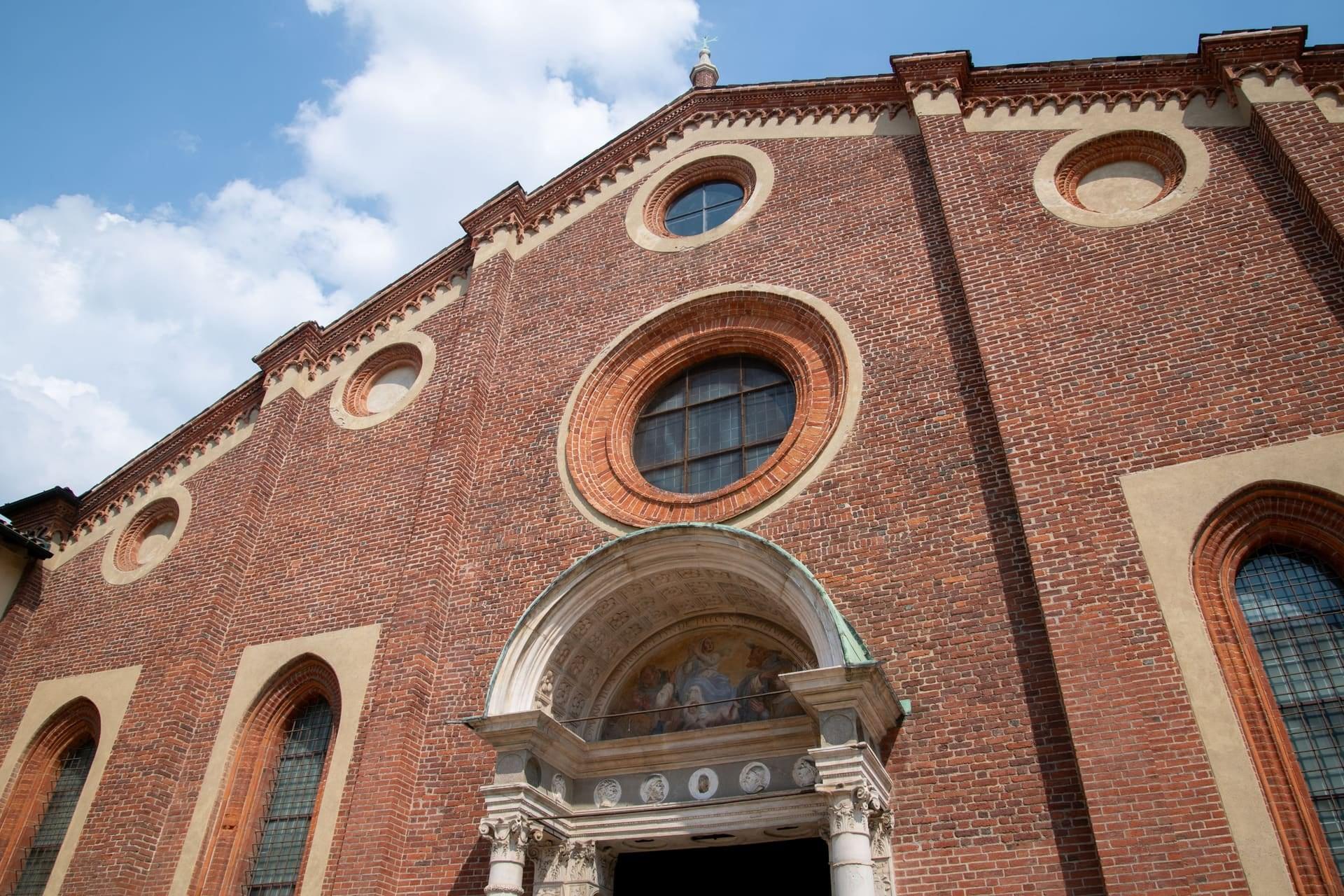
A friars' church outside the walls. The brick front of Santa Maria delle Grazie, begun in 1463, and the door to the refectory that holds Leonardo's Last Supper.
- 2
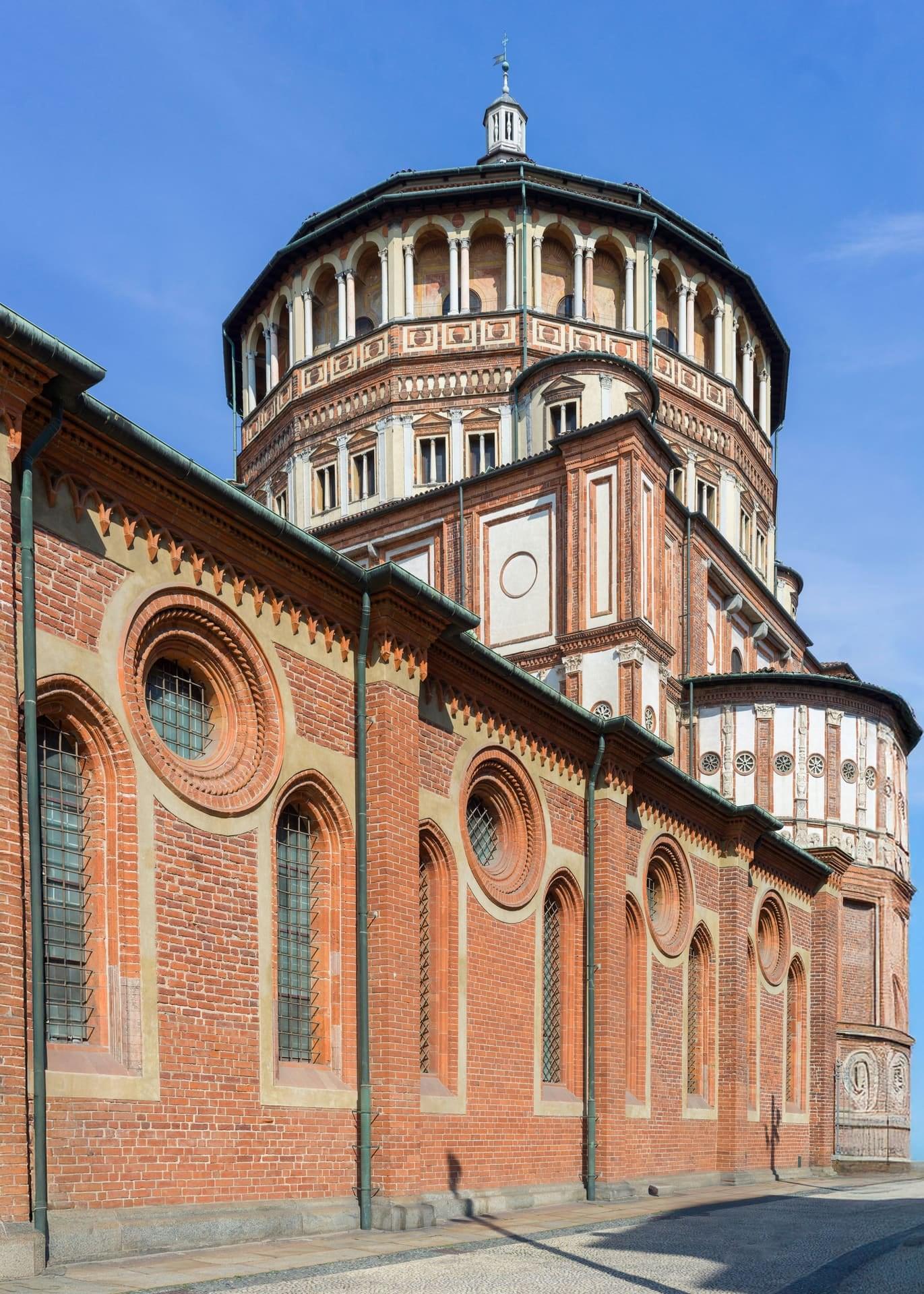
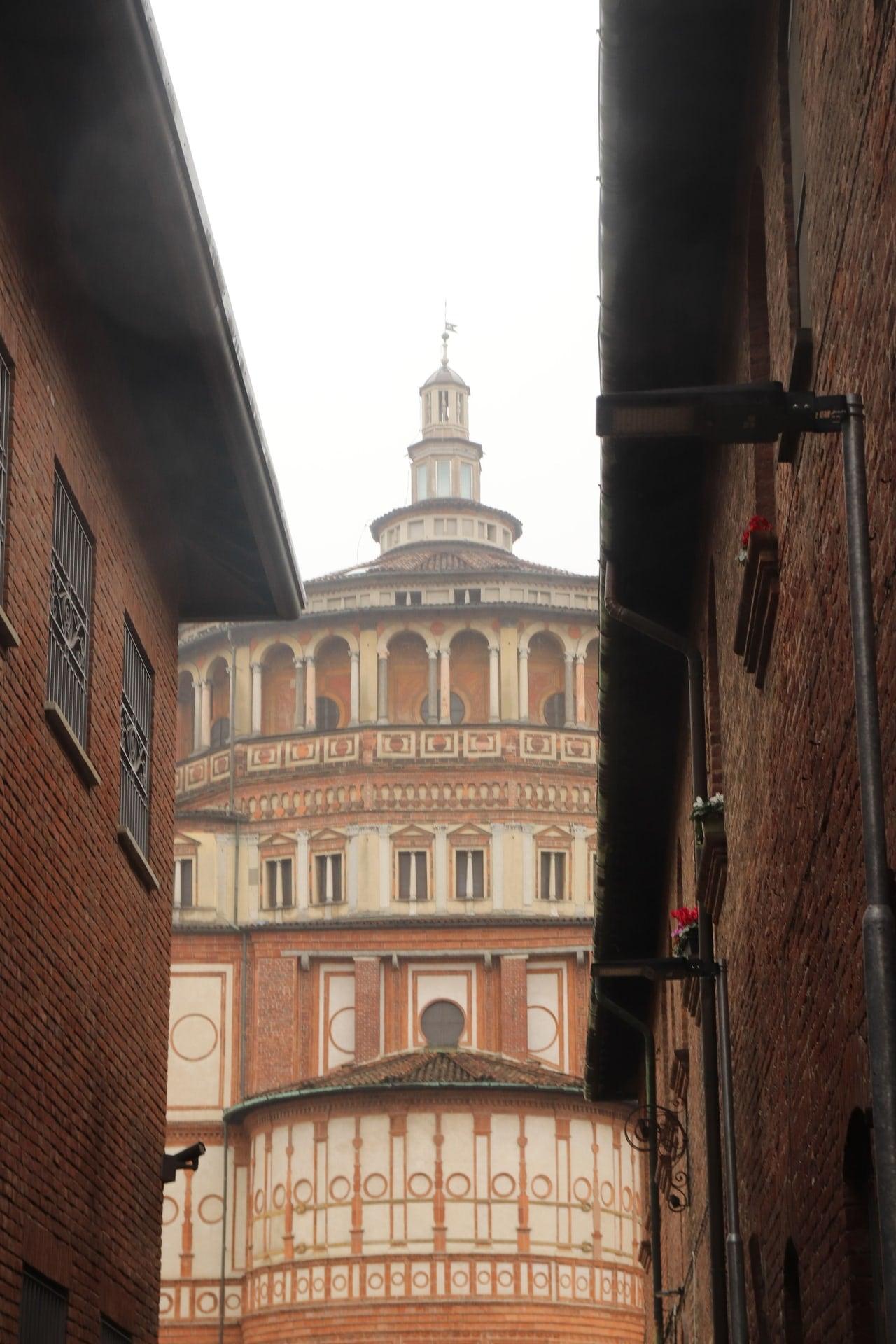
Grazie Tribune
A duke's tomb and a painter's vines. The domed tribune across Corso Magenta, begun in 1492 as the Sforza mausoleum, and the closed Casa degli Atellani behind you.
- 3
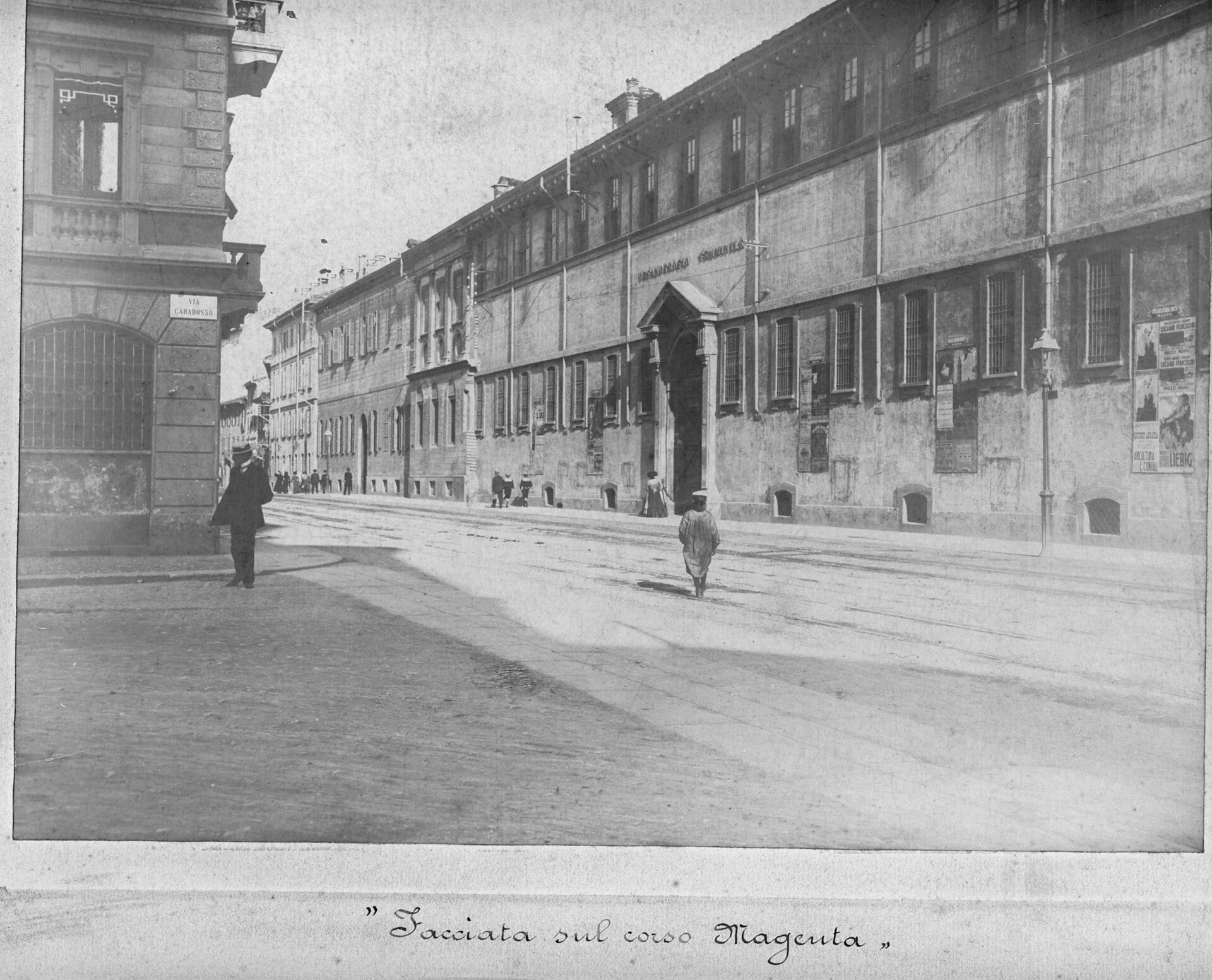
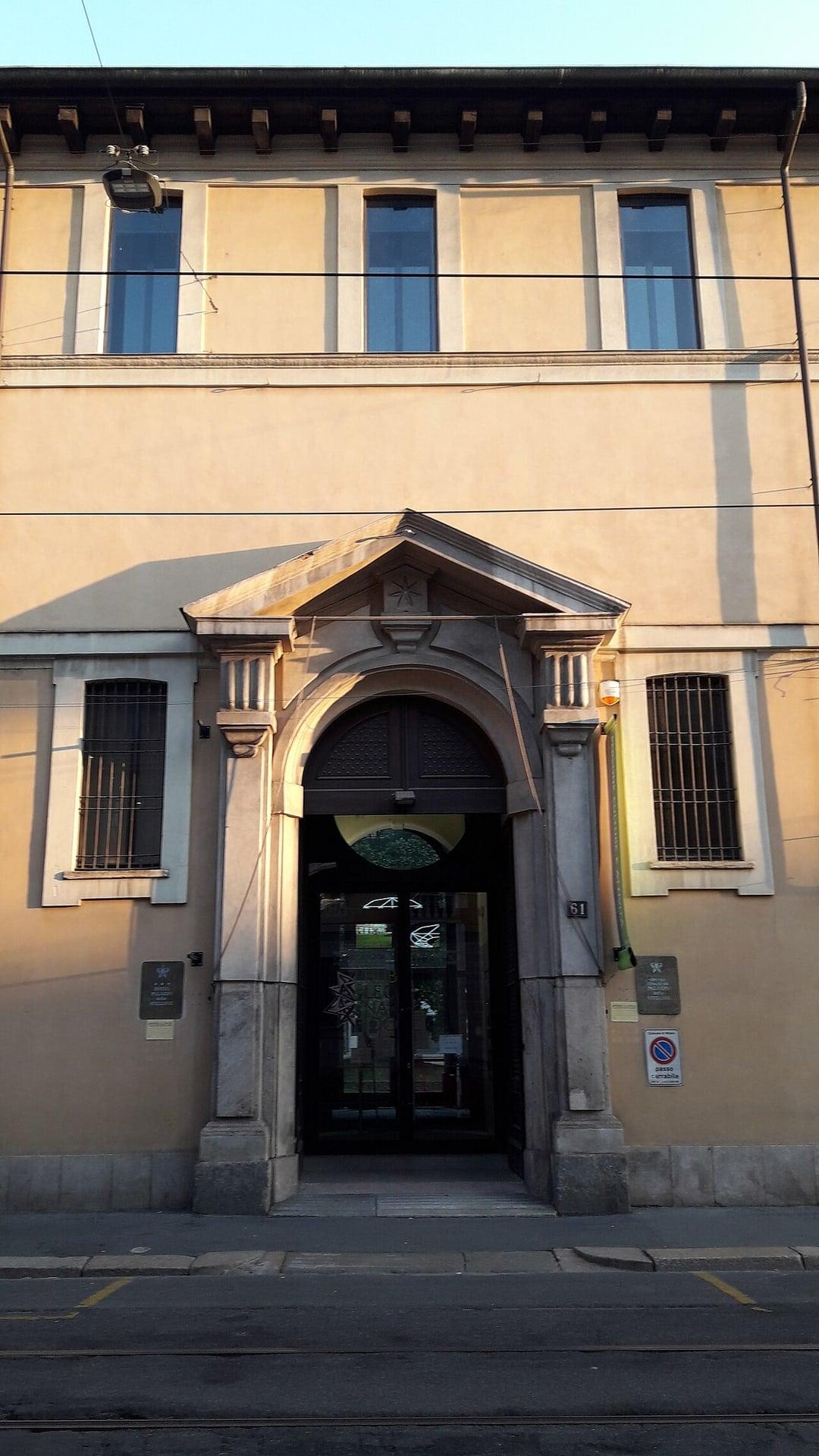
Palazzo delle Stelline
Where the city kept its poor and orphans. A nunnery closed after the plague of 1576, a beggars' hospital from 1578, then for centuries the girls' orphanage of the Stelline.
- 4
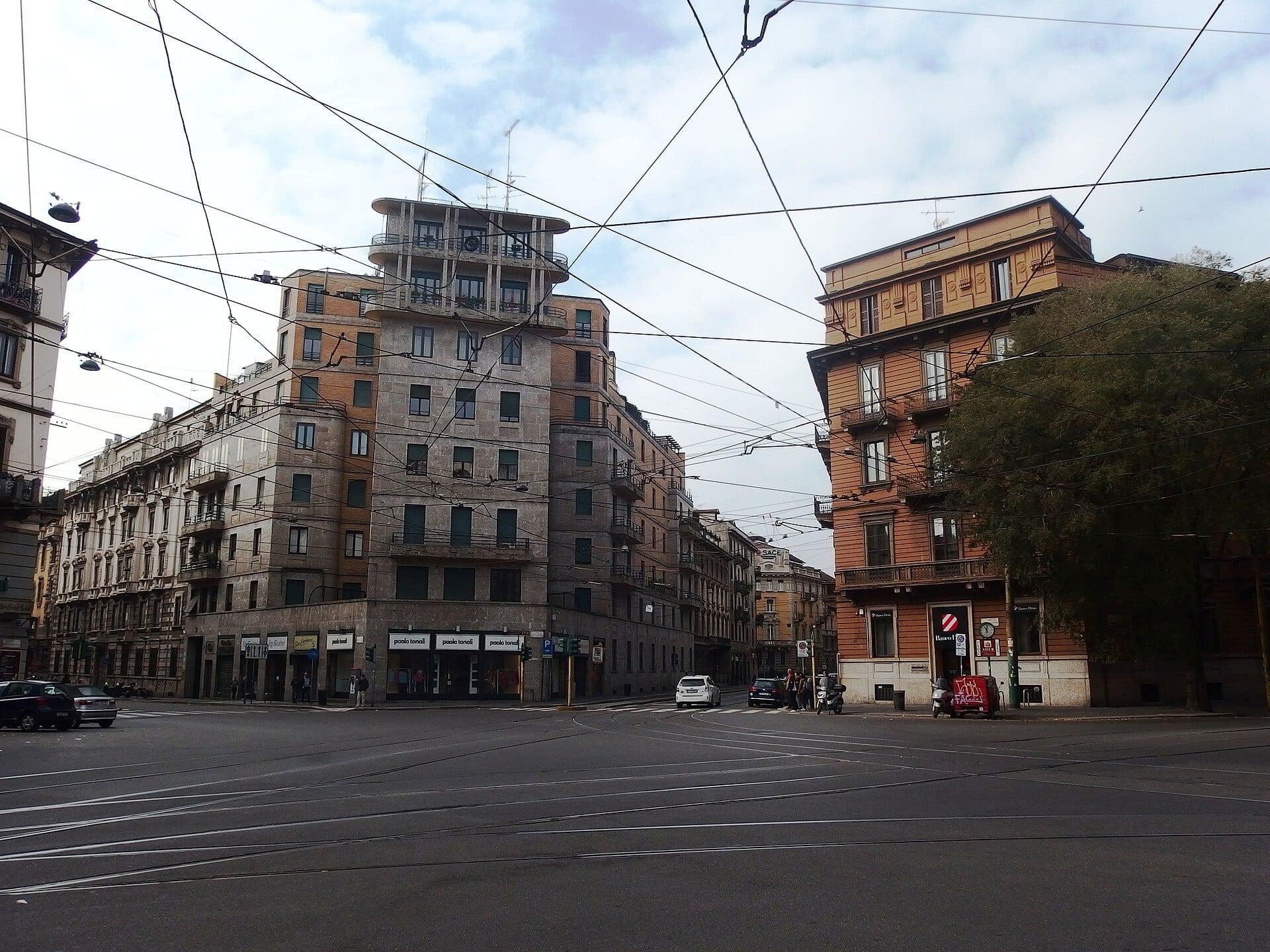
Largo d'Ancona
The city's edge was a canal here. Via Carducci, the line of the Naviglio di San Gerolamo, buried in the 1890s, where the Porta Vercellina bridge carried this road into medieval Milan.
- 5
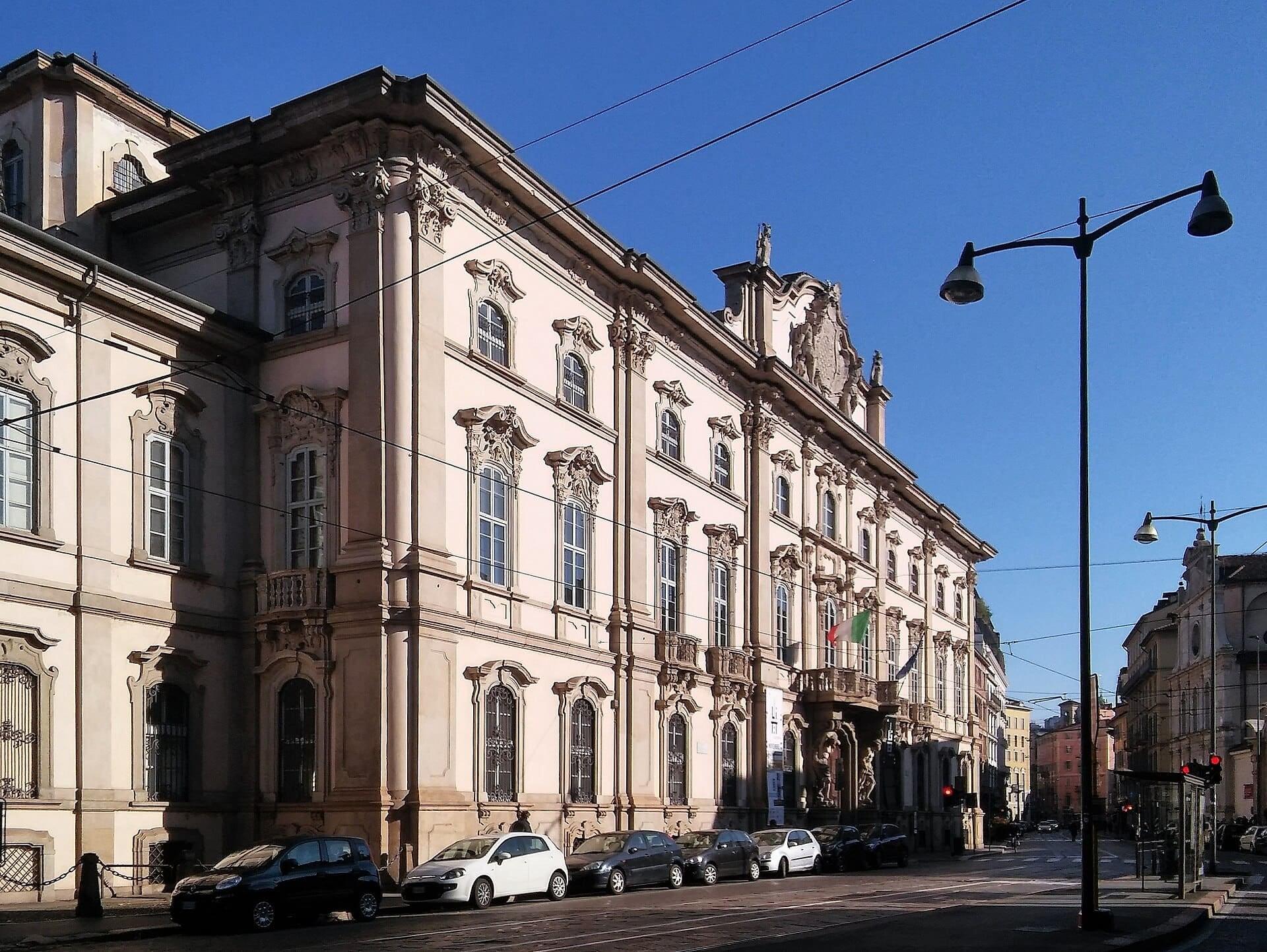
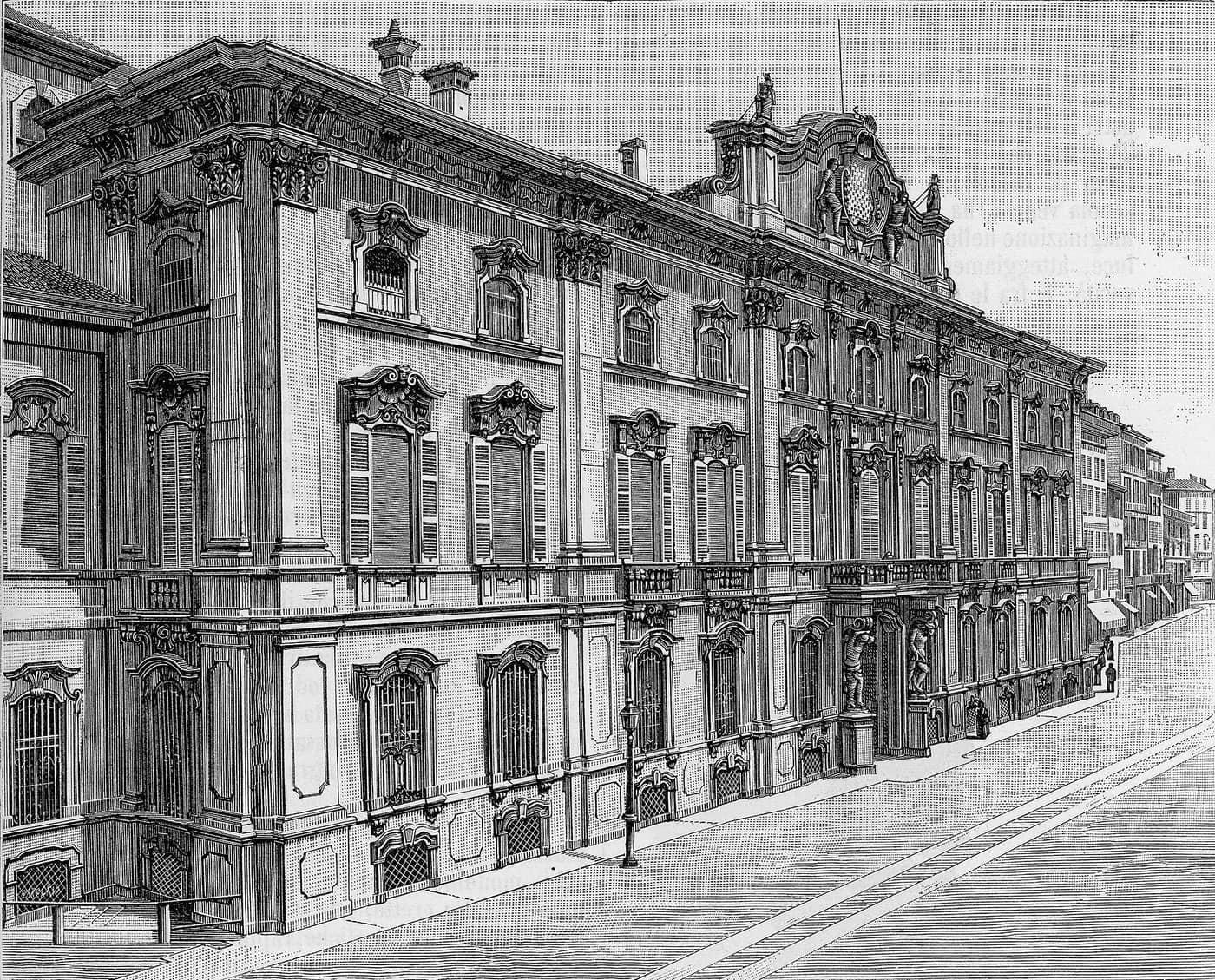
Palazzo Litta
An old house with a newer face. A palace built in the 1640s for a count and given its present front in the 1750s; its chapel became the Teatro Litta.
- 6
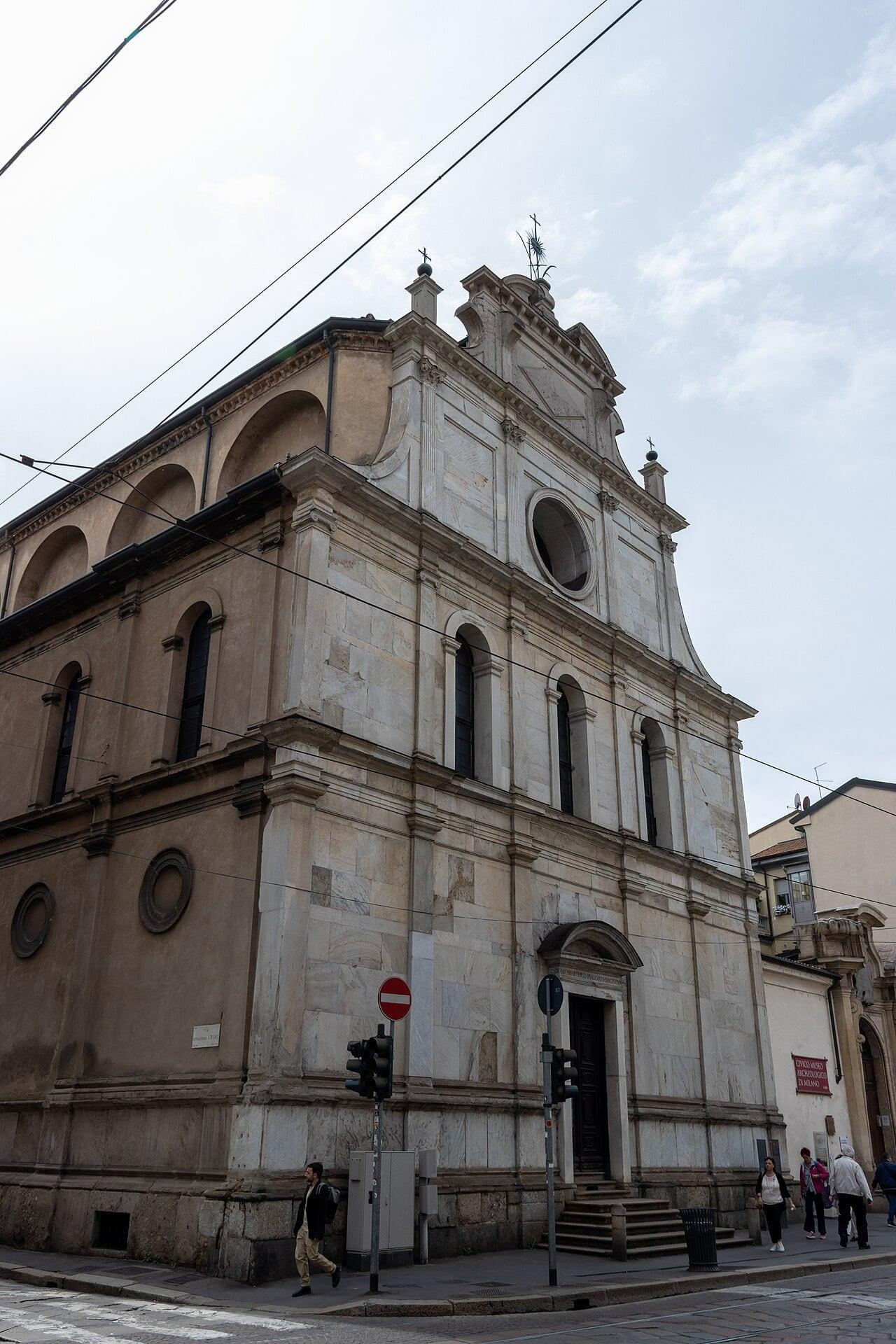
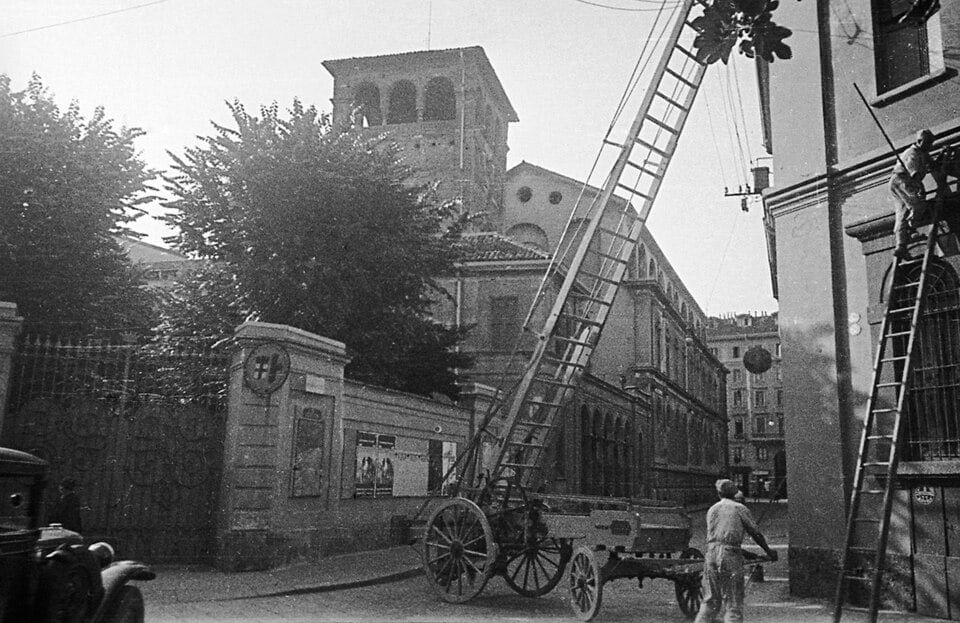
San Maurizio
A plain front hiding a divided church. San Maurizio al Monastero Maggiore, begun in 1503 for enclosed Benedictine nuns, with a second campaign of frescoes from 1522.
- 7
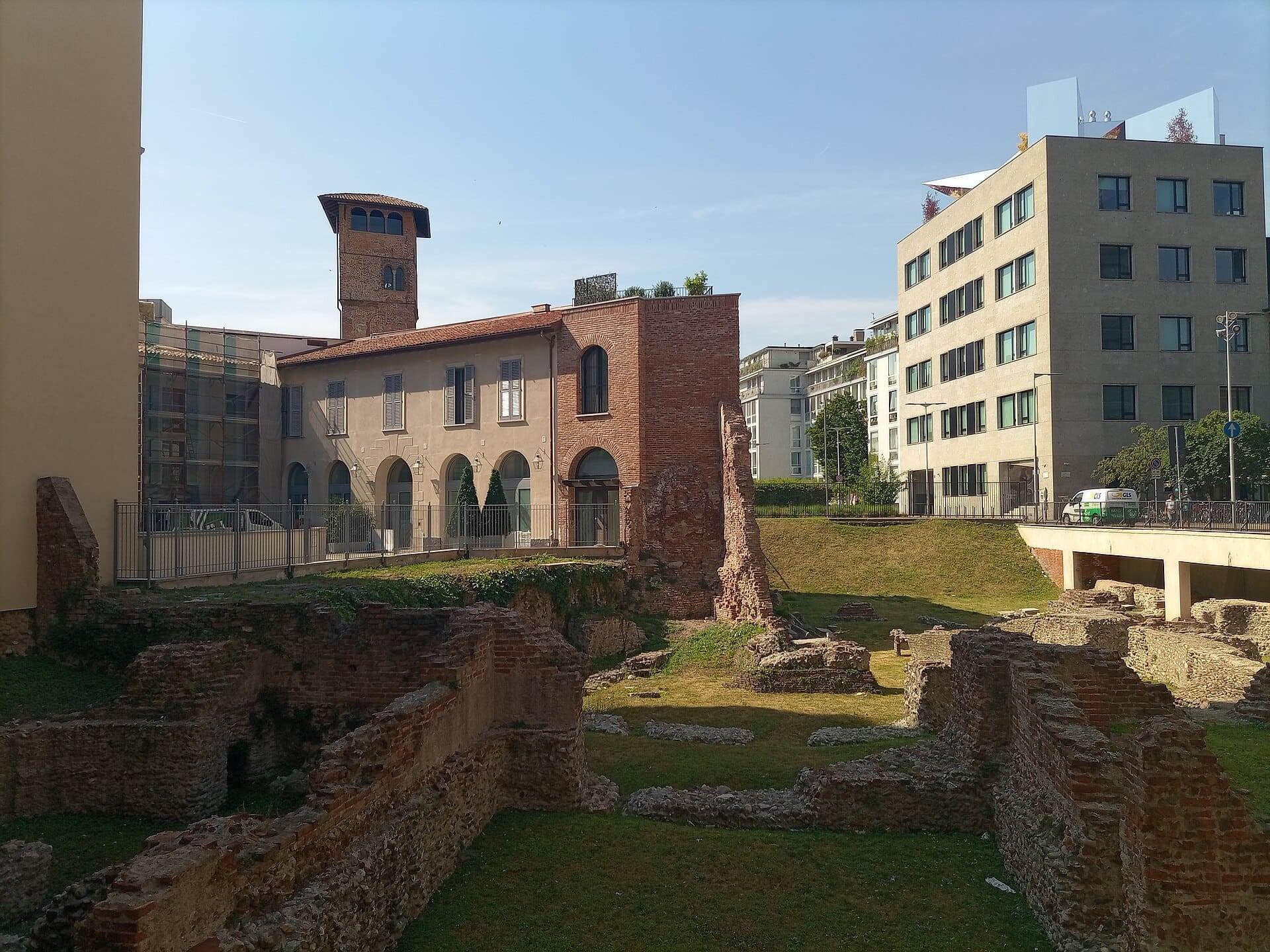
Via Brisa: Imperial Palace
Roman emperors lived in this lane. Open-air remains of the late Roman imperial palace in a quiet lane, just inside the site of the Roman Porta Vercellina.
- 8
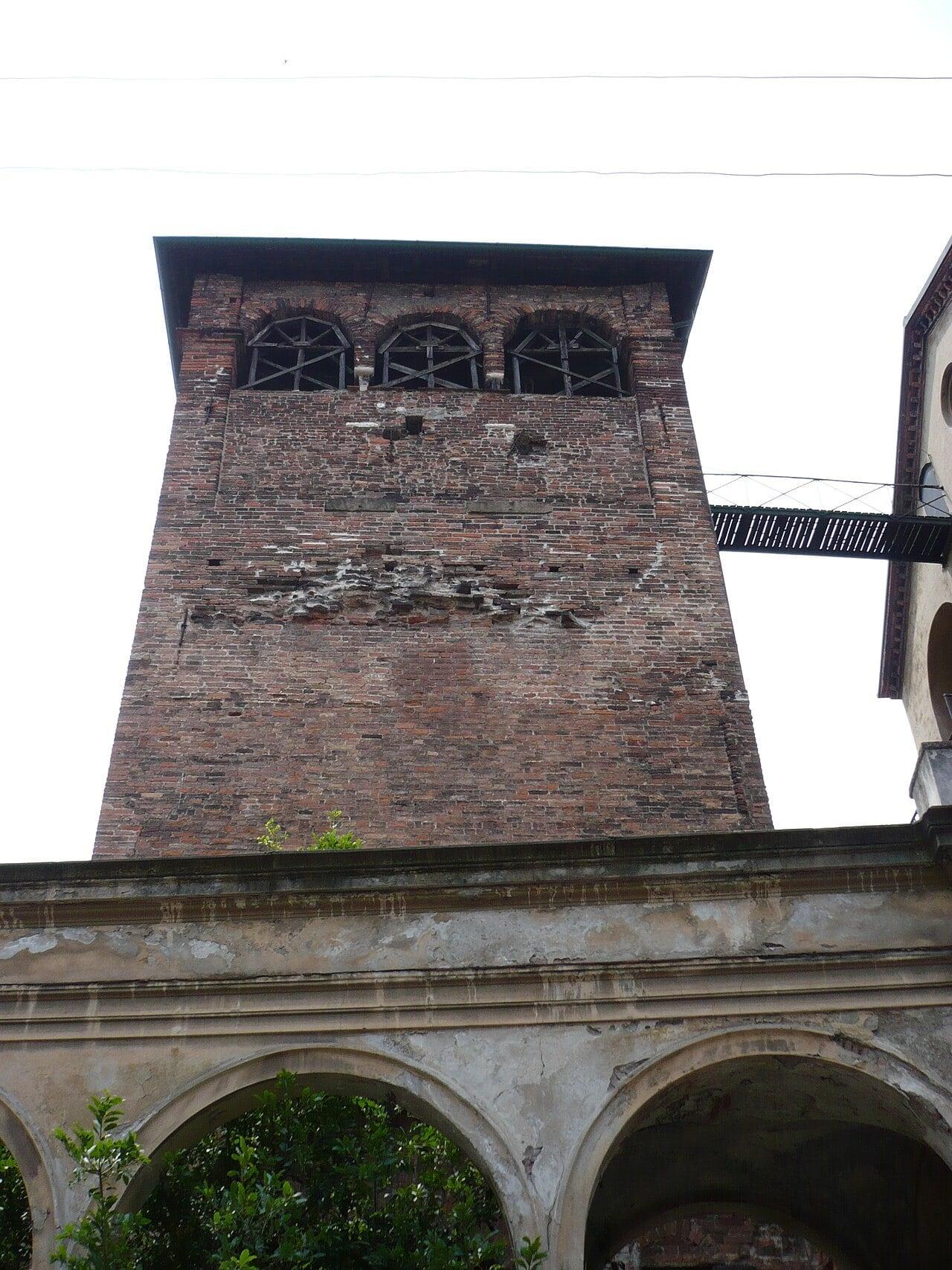
Via Luini: Circus Tower
A racetrack tower that became a belfry. San Maurizio's square bell tower, a tower of Roman Milan's chariot circus by the museum's account, seen up Via Luini.
- 9
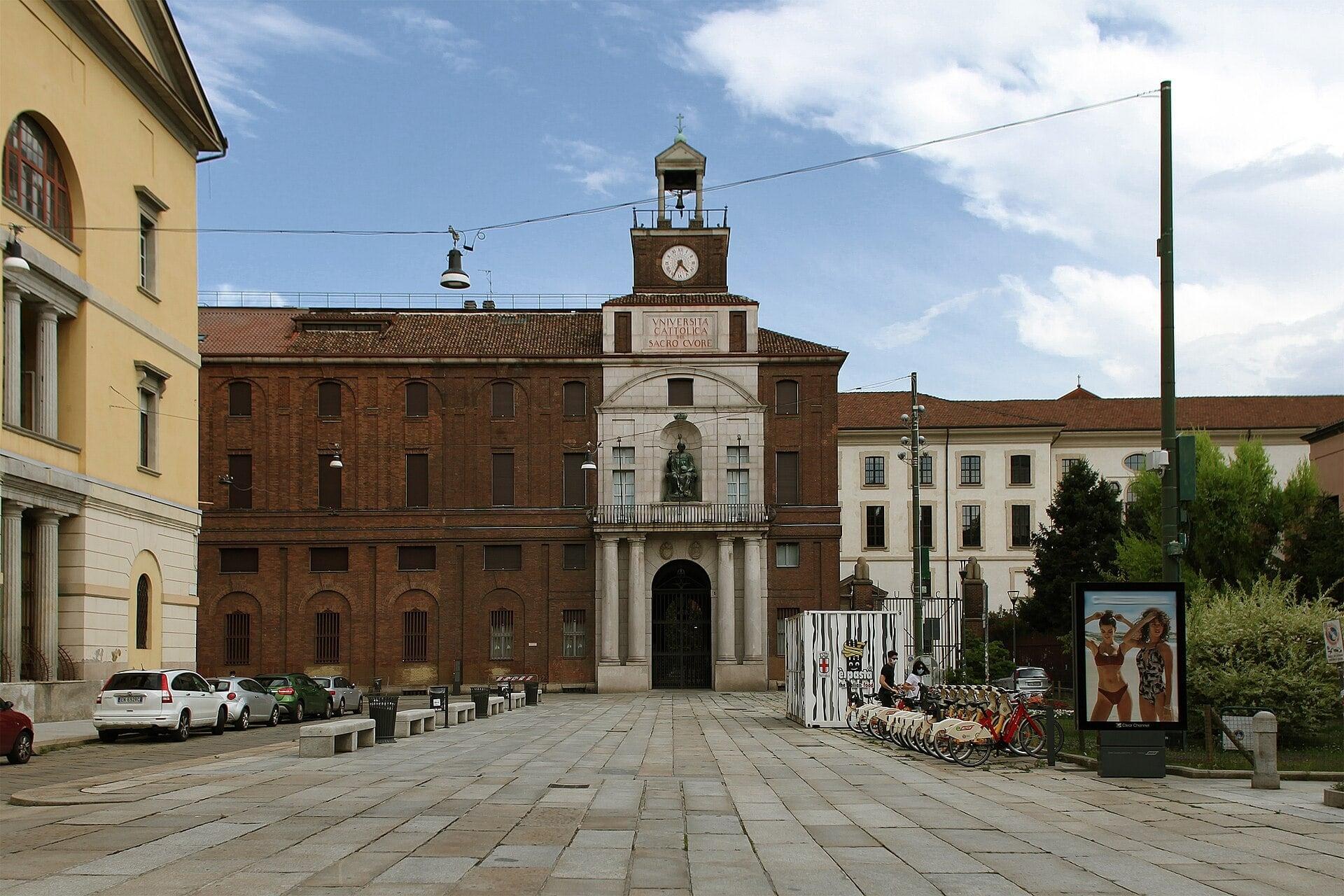
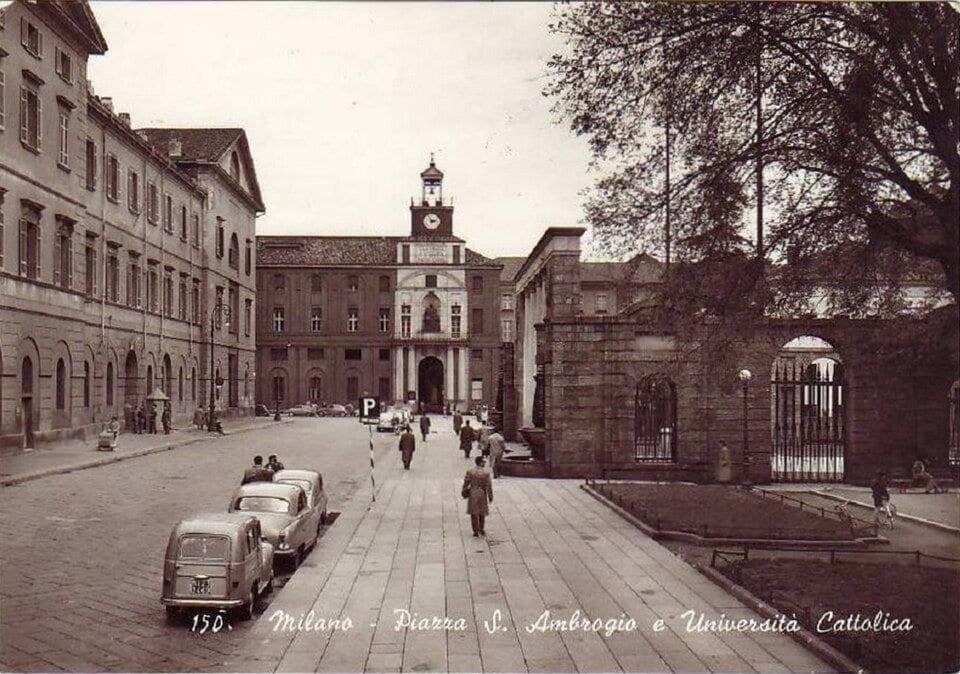
Università Cattolica
A monastery that became a university. The Catholic University in the former monastery of Sant'Ambrogio, rebuilt in the 1490s for Ludovico's brother.
- 10
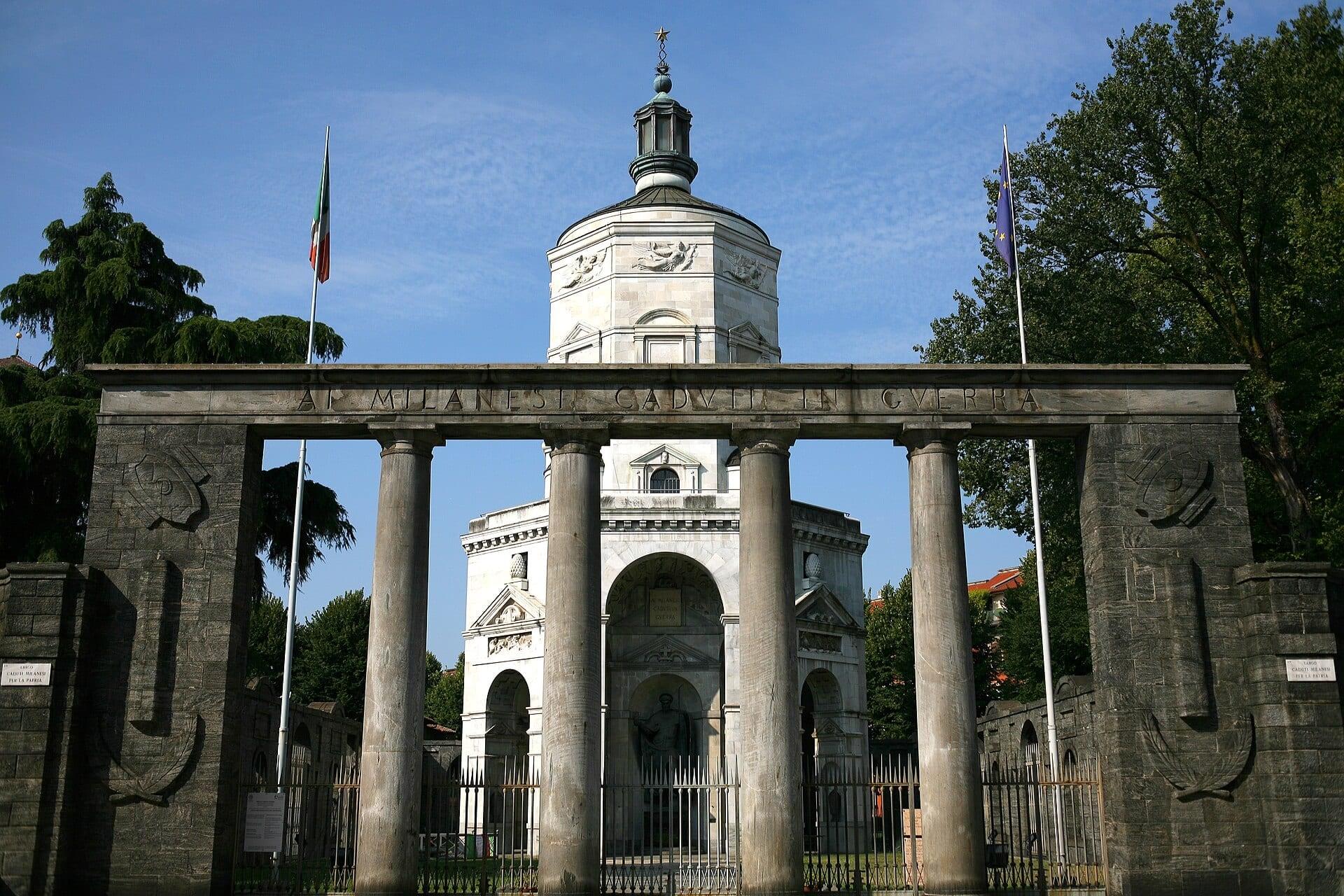
Tempio della Vittoria
A war memorial beside the city's saint. The octagonal war memorial of 1927 to 1930, in the old cemetery quarter of Sant'Ambrogio.
- 11
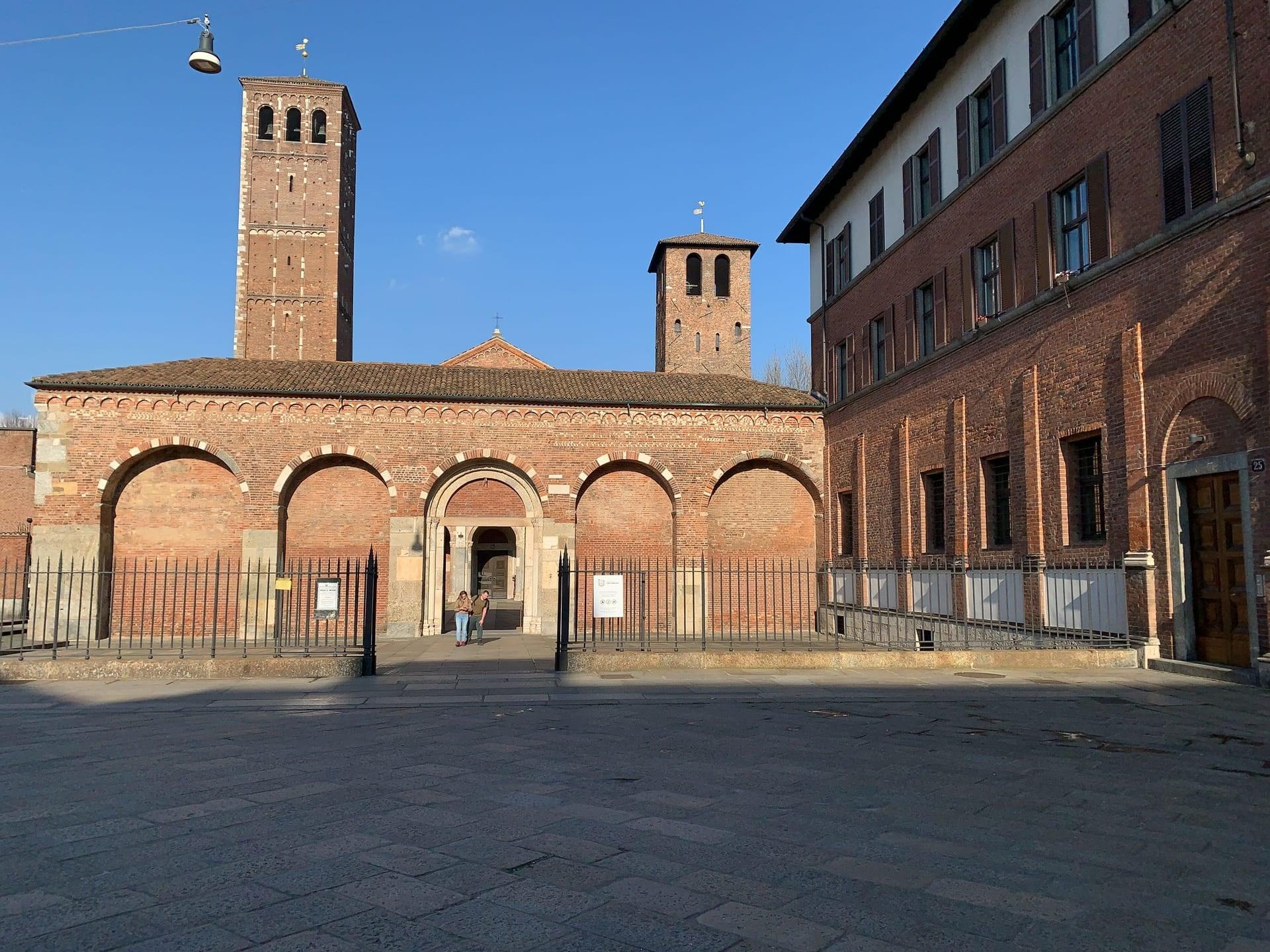
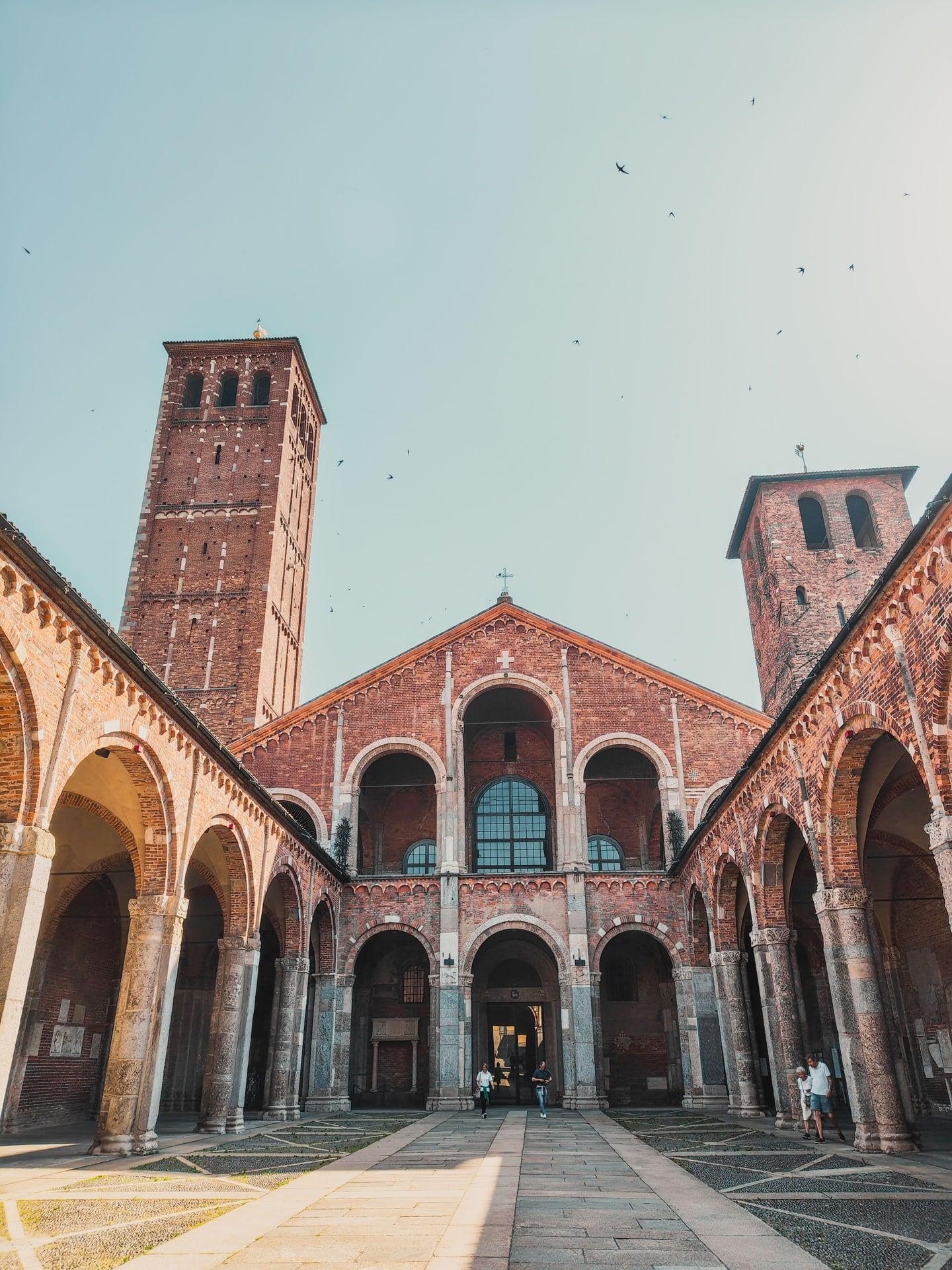
Sant'Ambrogio
The saint's church on the cemetery. The atrium gate of the Basilica di Sant'Ambrogio, begun in 379 by Ambrose outside the walls, with its two quarrelling towers.
- 12
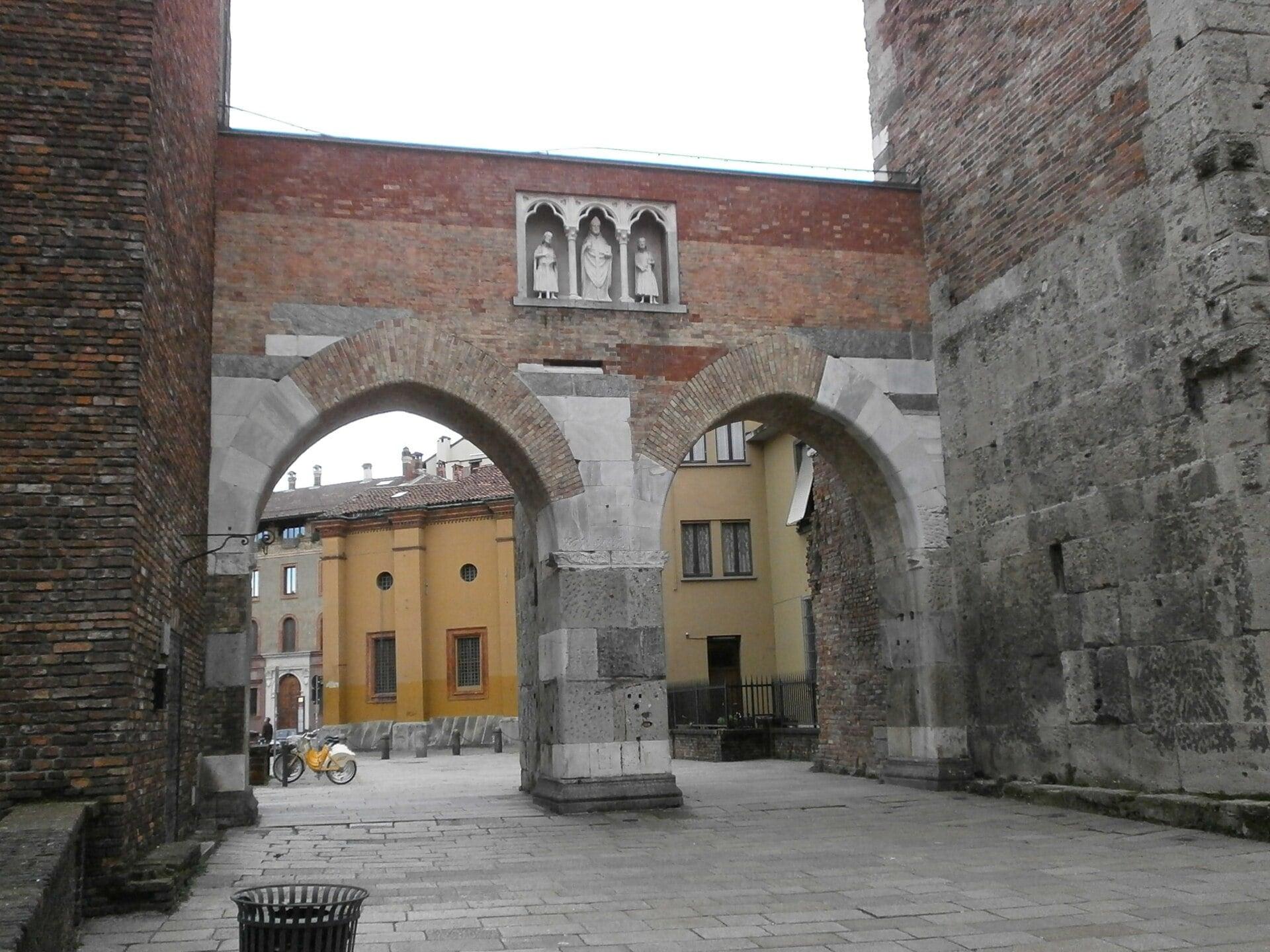
Pusterla di Sant'Ambrogio
The medieval wall that took in the saint. A 12th-century postern on the canal ring, pulled down in 1549 and largely rebuilt in 1937 to 1939, with its shrine of three saints.
Details
Best Time to Visit
Any day, morning to dusk: every stop is on a public street or square, so the walk works on Mondays and outside church hours (the Last Supper museum is closed on Mondays, 1 January and 25 December). Last Supper slot holders: walk it before or after your slot; arrive at the museum 30 minutes early. Sant'Ambrogio's visit hours are Monday to Saturday 10:00 to 12:00 and 14:30 to 18:00, Sunday 15:00 to 17:00; San Maurizio is usually open Tuesday to Sunday. Sunset about 16:41 on 1 December, 16:42 on 21 December, 16:50 on 1 January. Winter is cold and often foggy or damp; summer is hot, so walk early or late. Events: Monday 7 December 2026 is the feast of Saint Ambrose, a city holiday, with services and crowds at the basilica (stop 11); the Oh Bej! Oh Bej! fair is held around the Castello in early December (2026 dates not confirmed when checked), not on this walk. Checked 24 November 2026.
Pro Tips
- •Getting to the start: tram 16 to the Santa Maria delle Grazie stop on Corso Magenta, or metro M1 Conciliazione or M1/M2 Cadorna and about 6 to 8 minutes on foot. Checked 24 November 2026.
- •The walk ends on Via De Amicis just past the Pusterla: metro M2 (green) and M4 (blue) at Sant'Ambrogio, entrances in the piazza by the gate.
- •The Last Supper is not included and cannot be bought at the door: book a timed slot on the official site, cenacolovinciano.org (EUR 15, EUR 2 for 18 to 25, free under 18; at most 5 tickets online per person per calendar year; extra tickets released online on Wednesdays at 12:00). Slots usually sell out weeks ahead. Checked 24 November 2026.
- •Sant'Ambrogio is free (stop 11), and San Maurizio is free and usually open Tuesday to Sunday (stop 6): both are worth stepping into if no service is under way.
- •At stop 3, look down: three brass stumbling stones by Corso Magenta 55 remember Alberto Segre and his parents, deported in 1944.
- •Next: the Navigli walk begins at the medieval Porta Ticinese, about ten minutes on down Via De Amicis.
Safety & Precautions
- •Leg 1 to 2 crosses Corso Magenta and its two tram tracks at a zebra without lights: trams run both ways and do not stop for the zebra. Look both ways. Traffic keeps right.
- •Tram rails set in the stone setts of Corso Magenta (stops 1 to 6) are a trip hazard and slippery when wet; in winter fog and damp make the setts slick too.
- •Via Carducci (leg 4 to 5) and Via De Amicis (the end) have painted cycle lanes: watch for bikes and e-scooters. Cross Via Carducci, Via Nirone and Via Luini at the lights.
- •Via Brisa (stop 7) is a narrow lane with residents' cars: keep to the pavement.
- •Santa Maria delle Grazie, San Maurizio and Sant'Ambrogio are places of worship: let services go on undisturbed and keep voices down.
- •Piazza Sant'Ambrogio and the metro entrances by the Pusterla are busy at rush hour and on 7 December.
Travel advisory: Exercise Increased Caution (Level 2).
Gallery
Related Reading
Go deeper on what you'll see, hear, and walk through.
Overview
Milan Travel Guide: Days, Transport, Timing, Safety, and Cost
7 min
Overview
One Day in Milan: A Walkable Itinerary From Canals to Towers
5 min
Thematic
Milan Works: A City Rebuilt Around Water, Industry, and Ambition
5 min
Companion
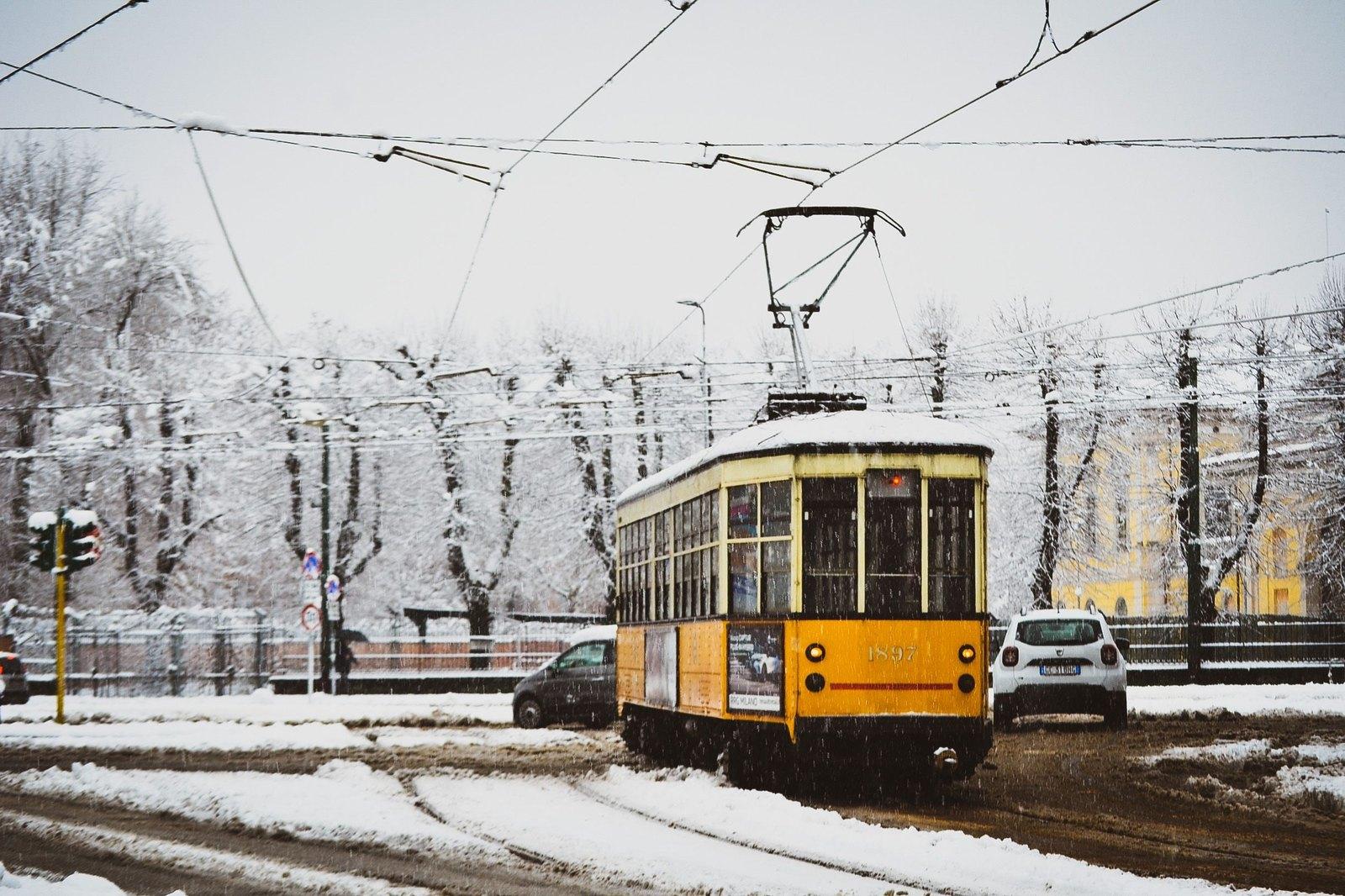
Last Supper and Sant'Ambrogio: A Companion to the Walk From Leonardo to Roman Milan
5 min
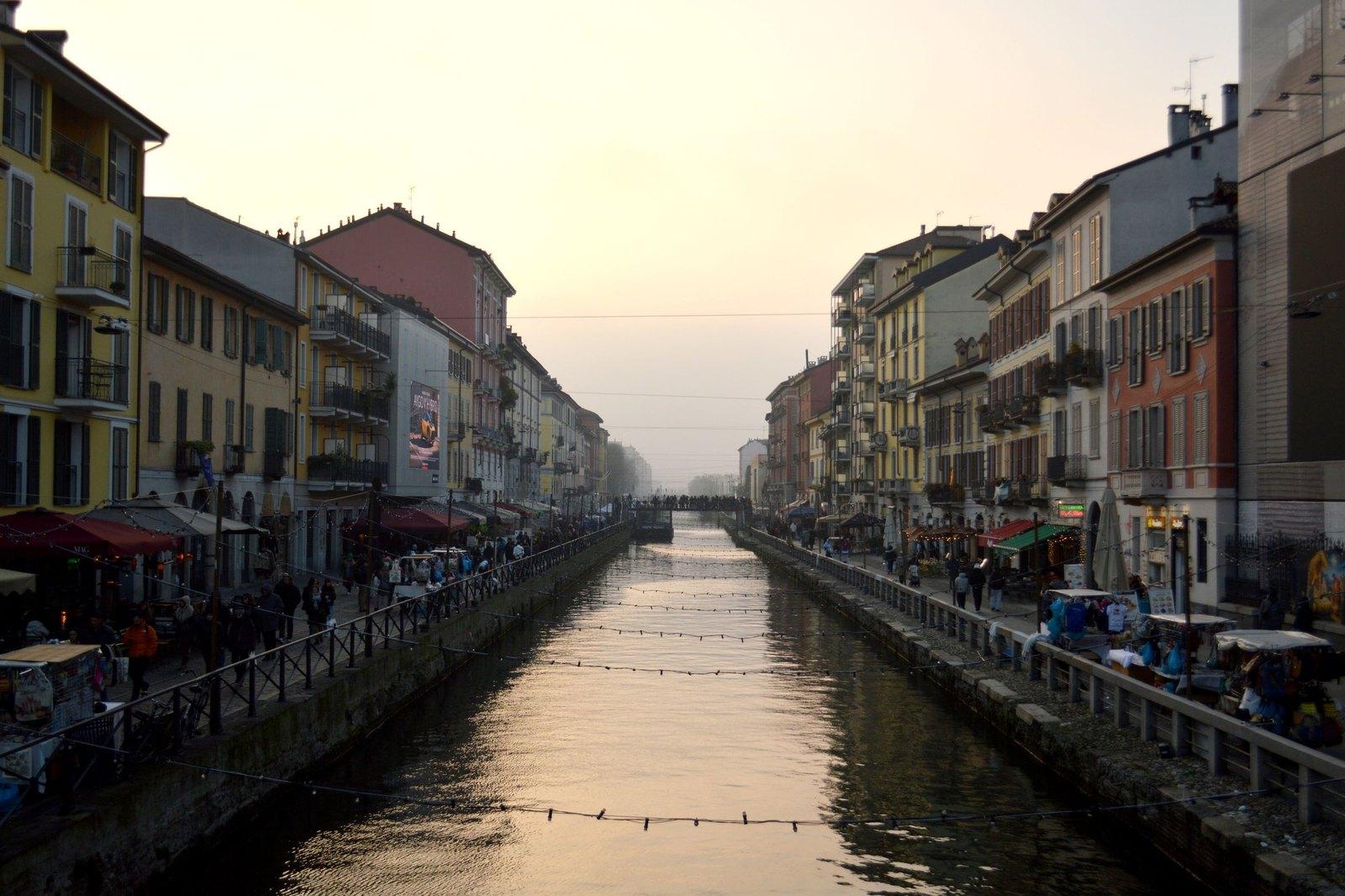
Companion
Navigli and Porta Ticinese: A Companion to the Road Down to the Water
5 min
Deep dive
Santa Maria delle Grazie: Why Leonardo's Last Supper Survives on a Milan Wall
4 min
Read the walk
The full story of Last Supper and Sant'Ambrogio: Leonardo and Roman Milan, in words. Prefer to listen? Play it narrated, from home or on location.
Introduction
Milan kept building its holiest places outside its own walls, and the walls kept moving out to take them in. This walk follows that idea from a friars' church in what was once a suburb, along a buried canal and through the site of a Roman gate, past the ruins of an emperors' palace and a chariot racing tower, to the basilica of Milan's patron saint and the medieval gate beside it.
It starts at Santa Maria delle Grazie, home of Leonardo da Vinci's Last Supper, so be clear about one thing before you set off. The painting can be seen only with a timed ticket booked in advance, usually weeks ahead, and the museum is closed on Mondays. A visit is not included in this walk, and the walk is built to be worth it without going in. Every stop is on a public street or square.
There are twelve stops over about one point nine kilometers, a little over a mile, and it takes about eighty minutes. It is flat, with no steps. Sant'Ambrogio is free to enter in its opening hours; the university's cloisters are not open to the walk.
On the first legs you walk beside the trams on Corso Magenta and cross their tracks once, at a zebra crossing without lights. Trams run in both directions there and do not stop for the crossing, so check both ways. Later you cross a street with a painted cycle lane, so watch for bikes too. In winter Milan is often cold and foggy, and the stone setts and the tram rails set into them turn slippery.
To reach the start, take tram sixteen to the Santa Maria delle Grazie stop, or take the metro to Conciliazione on line one or Cadorna on lines one and two, then walk six to eight minutes.
When you arrive at Piazza Santa Maria delle Grazie, begin with stop one.
1. Piazza Santa Maria delle Grazie
In front of you is the brick front of Santa Maria delle Grazie, with its gabled roofline, a round window and a small porch over the door. The door to the left, in the old convent wing, is the entrance to the refectory, the friars' dining hall. On its end wall is Leonardo da Vinci's Last Supper.
Here is the plain truth about that room. Every visit is booked in advance, babies included, in fifteen minute slots of up to forty people, and nothing is sold at the door. Slots usually sell out weeks ahead, and the museum is closed on Mondays. The museum says the strict numbers are there to protect the painting. This walk does not include a visit, and it does not need one: everything it shows you is out here, on the street.
And out here is where the story starts. In fourteen sixty a commander of the Sforza dukes' army gave the Dominican friars a plot of land here, outside the city of the time. Building began in fourteen sixty three. The convent was ready, at least in its essentials, by fourteen sixty nine, and the church by fourteen eighty two. A field beyond the walls became, within a generation, the court church of the duke of Milan. UNESCO lists the church, the convent and the painting together.
That is the idea of this walk. Milan built its holiest places outside its walls, and then the walls moved out to take them in. The domed east end of this church is around the side; that comes next.
The church itself is free. Step in if the door is open and no service is under way.
Follow the route across Corso Magenta to the far pavement. Cross at the zebra beside the church and look both ways: trams run in both directions there and do not stop for the crossing.
2. Grazie Tribune
Across the tracks, the east end of the church rises in a great block of brick, crowned by a many sided drum ringed with a little gallery of columns. This is the tribune, and it was meant to be a tomb.
In the early fourteen nineties the duke of Milan, Ludovico Sforza, known as il Moro, decided to rebuild the end of this church as his family's court church and burial place. The first stone was laid on the twenty ninth of March, fourteen ninety two, to a design by the Sforza family's own architect. UNESCO describes the result as a wonderful drum shaped dome surrounded by columns. The work stopped around fourteen ninety eight, with the tomb of the duke's young wife, the duchess, who had died in childbirth the year before.
Now look back along your own side of the street, to the house you have just passed. That is the Casa degli Atellani. Behind its wall is a vineyard, replanted in twenty fifteen as the heir of the one the duke gave to Leonardo, by most accounts in fourteen ninety eight, around the time the painting across the road was finished. House and vineyard have been closed to visitors since October twenty twenty three.
So here are two sides of one duke's ambition, facing each other across a street: a tomb for his dynasty, and wages in vines for his painter. In fourteen ninety nine the duke fell from power and Leonardo left Milan. Neither project went any further.
Follow the route east along this pavement, with the trams running beside you.
3. Palazzo delle Stelline
On your right runs the long, plain front of the Palazzo delle Stelline. Before you look up, look down. Set into the pavement near here, by number fifty five, are three small brass stones. They are stumbling stones, laid across Europe in front of the last homes of people deported under Nazi and Fascist persecution. These three carry the names of Alberto Segre and his parents. They were arrested as Jews, deported to Auschwitz in nineteen forty four, and killed there.
Now the building. A convent of Benedictine nuns, Santa Maria della Stella, Saint Mary of the Star, stood here on the road out of town. After the plague of fifteen seventy six the archbishop of Milan closed it, and on the seventh of January fifteen seventy eight he opened a hospital for the city's poor beggars in its place. Later it became an orphanage, and for centuries it took in girls. They were known by the old convent's name, the Stelline, the little stars, and they were the counterparts of Milan's orphan boys, the Martinitt.
Put the first three stops together. A friars' church, a nunnery, a poorhouse, an orphanage. This stretch of road lay outside the medieval city, and the suburb was where Milan put its convents and its charities: the things it wanted close, but not inside.
At the next corner was the city's edge, and you can still find it, if you know what to look for.
Follow the route on east along the corso, across the mouth of a narrow side street.
4. Largo d'Ancona
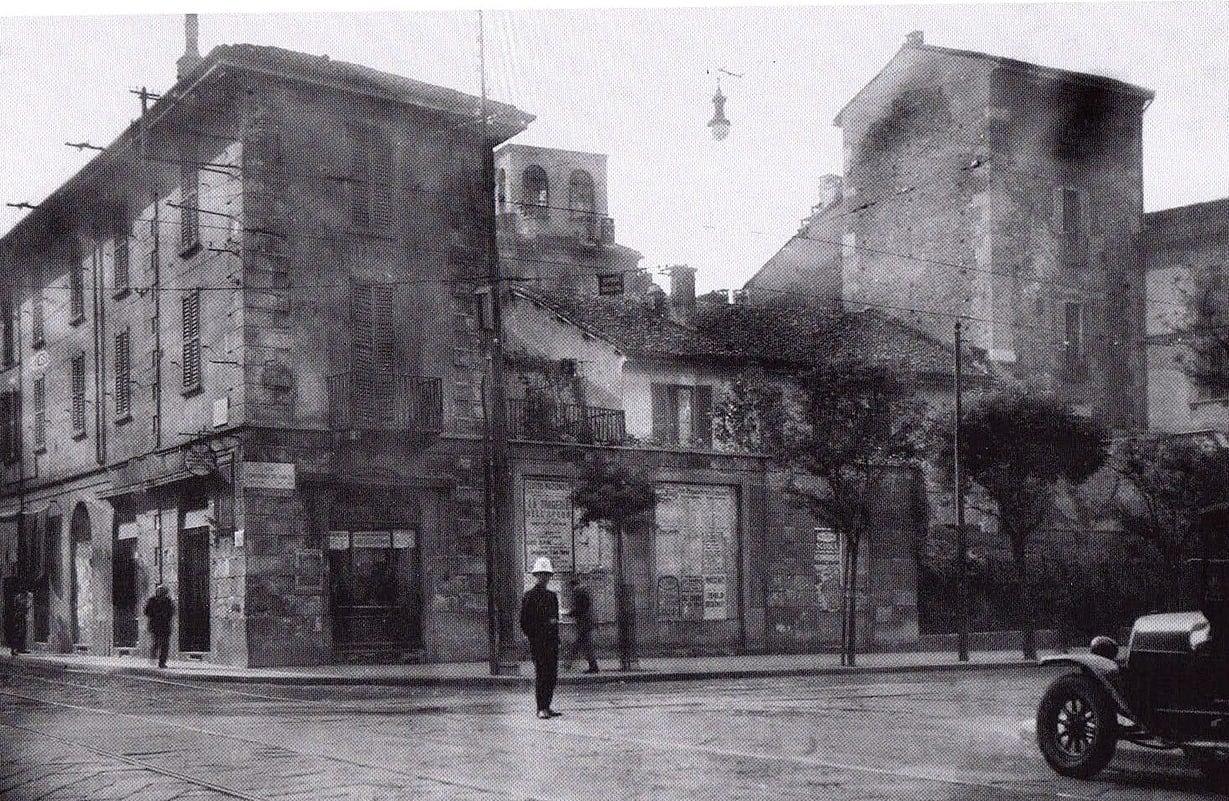
Here the corso opens into a small square, Largo d'Ancona, where the trams swing through. Find the wide, straight street running away south: Via Carducci. Until the eighteen nineties a canal ran down it, with the street along its bank: the Naviglio di San Gerolamo, part of the water that ringed the medieval city. Right here a bridge crossed it, the Porta Vercellina bridge, carrying this road into Milan.
A photograph of eighteen eighty five, kept in the region's heritage records, looks along the canal toward this corner, with the bridge in the background. Another shows it busy with people where it met Corso Magenta.
The canal was filled in between eighteen ninety two and eighteen ninety five, a generation before the rest of Milan's inner canals went underground. Nothing of it shows today, no parapet and no steps. But this corner is the line. Behind you is the suburb of convents and charities; ahead is the medieval city. On this road, the city's gate was a bridge.
To the north, Via Carducci leads to the Castello, the Sforza castle, which has a walk of its own.
Follow the route across Via Carducci at the lights and around the edge of the square. The street has a painted cycle lane, so watch for bikes as well as cars.
5. Palazzo Litta
Across the tracks stands Palazzo Litta, a long front with two lower wings and a taller central block that steps forward to meet the street. It looks like one design. It is a century apart. The house behind it was built between sixteen forty two and sixteen forty eight for a…
Full narration for this stop unlocks with the tour.
6. San Maurizio
On your right is a plain stone front that gives almost nothing away. It belongs to San Maurizio, the church of the Monastero Maggiore, the Greater Monastery, a house of enclosed Benedictine nuns. The church was begun in fifteen oh three as a single long hall. Inside, a wall…
Full narration for this stop unlocks with the tour.
7. Via Brisa: Imperial Palace
On your left, below the level of the street and behind the fence, are low walls of brick and stone in a sunken plot of grass, some of them curving into rounded rooms. These are the remains of an imperial palace. You have just crossed a threshold. The crossroads at the top of…
Full narration for this stop unlocks with the tour.
8. Via Luini: Circus Tower
Look up the street ahead and to the right, over the low building on the far side of Via Luini. The square brick tower rising above it is San Maurizio's bell tower, and the city's Archaeological Museum says it belonged to the Roman racetrack for chariots. The circus of Roman…
Full narration for this stop unlocks with the tour.
9. Università Cattolica
Ahead is the entrance of the Universita Cattolica, Milan's Catholic University. Its home is not a campus but a monastery. Benedictine monks settled beside the basilica of Sant'Ambrogio in seven eighty four. By the late fourteen hundreds the abbey was in decline, and in fourteen…
Full narration for this stop unlocks with the tour.
10. Tempio della Vittoria
The white, eight sided building with a bronze figure on top is the Tempio della Vittoria, the Temple of Victory. It is a war memorial. Its inscription dedicates it to the Milanese who died in war, and it was built between nineteen twenty seven and nineteen thirty to an…
Full narration for this stop unlocks with the tour.
11. Sant'Ambrogio
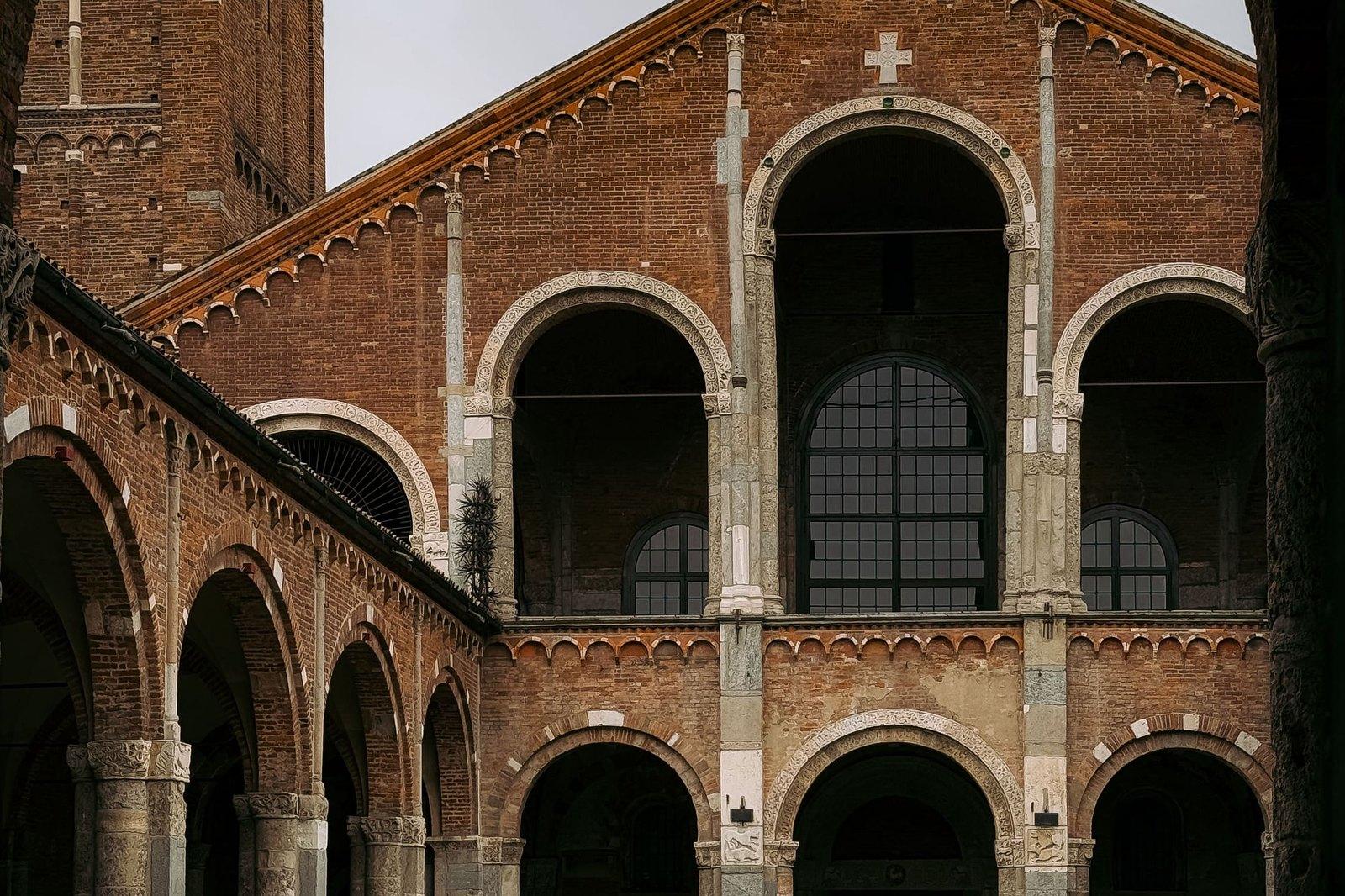
Ahead is a brick front with a great central arch: the gate into the atrium of Sant'Ambrogio, the basilica of Milan's patron saint. Rising behind it on the left is the taller of its two bell towers. Ambrose was an official of the Roman empire when the people of Milan chose him…
Full narration for this stop unlocks with the tour.
12. Pusterla di Sant'Ambrogio
Turn around to face the gate you have just walked through: two brick towers of different heights, two arches, and above them a shrine with statues of three saints, Ambrose with the two martyrs he found. This is the Pusterla di Sant'Ambrogio, a postern, a lesser gate, in the…
Full narration for this stop unlocks with the tour.
- Palazzo delle Stelline, portale, agosto 2021 (Milano).jpg | Milà, agost de 2021. — Pere prlpz, CC BY-SA 4.0 · source
- Milano - largo Paolo D’Ancona.jpg | Milano, largo Paolo D’Ancona — Palickap, CC BY-SA 4.0 · source
- 20171119 Palazzo Litta, lato.jpg | Facciata di palazzo Litta vista dal corso — Melancholia~itwiki, CC BY-SA 4.0 · source
- At Milan 2026 211.jpg | — Photograph by Mike Peel (www.mikepeel.net)., CC BY-SA 4.0 · source
- Milano - Palazzo imperiale romano di Milano - 2023-09-28 07-57-53 001.jpg | Palazzo imperiale romano di Milano — Ottantafame, CC BY-SA 4.0 · source
- Ingresso della Università Cattolica di Milano visto da piazza Sant'Ambrogio.jpg | Ingresso della Università Cattolica di Milano visto da pia — Paolobon140, CC BY-SA 4.0 · source
- Tempio della Vittoria a Milano, veduta del monumento.jpg | Tempio della Vittoria a Milano, veduta del monumento — Paolobon140, CC BY-SA 4.0 · source
- Pusterla di Sant'Ambrogio - Milan - facciata esterna - 01.JPG | Pusterla di Sant'Ambrogio - Milan - facciata esterna — Stefano Stabile, CC BY-SA 3.0 · source
Images may be cropped or resized. Other photos via Unsplash and Pexels.