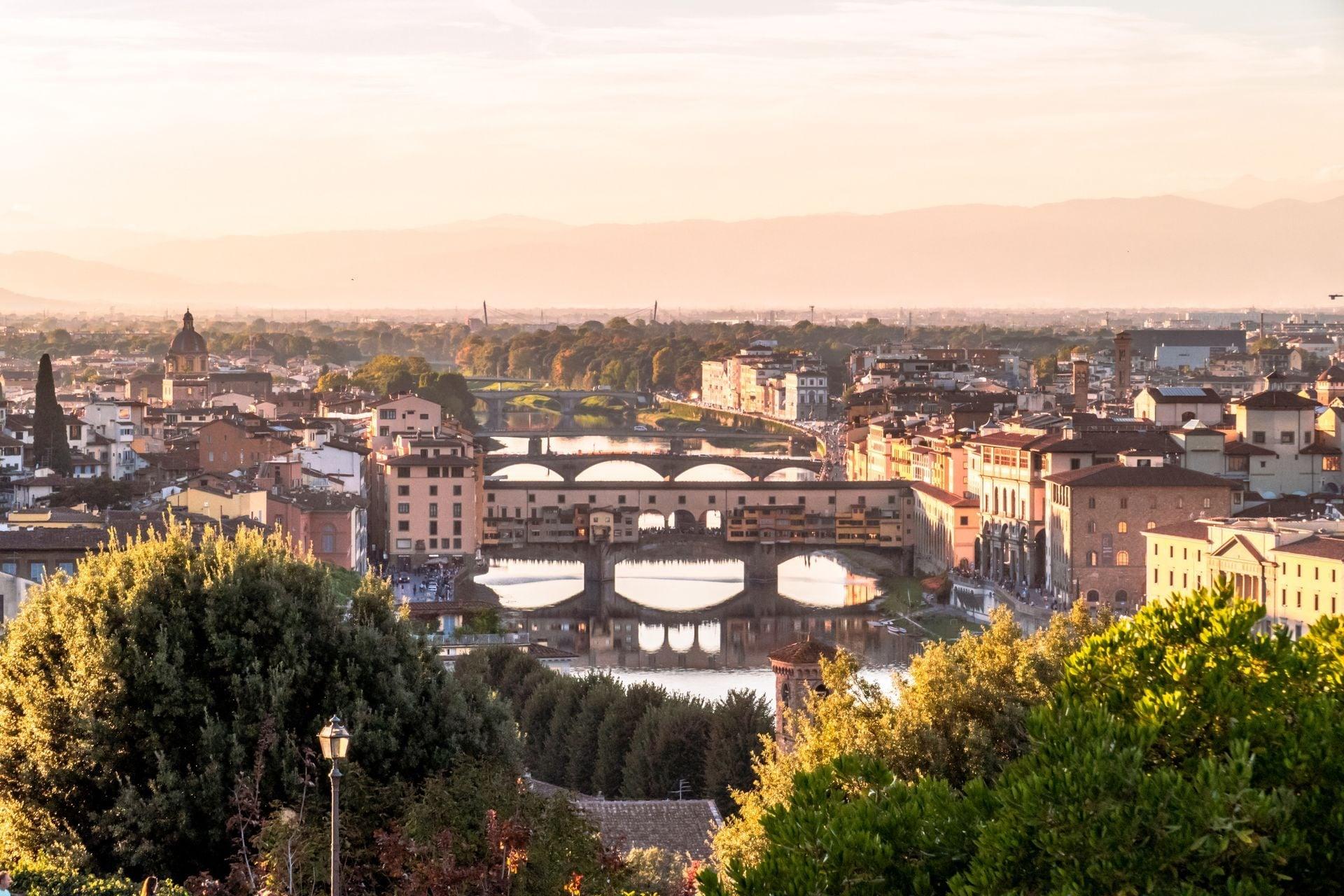
From the Ponte alle Grazie past San Niccolò's flood marks and the gate tower the city says was never cut down, up Poggi's ramps to the Rose Garden, Piazzale Michelangelo's view and the marble front of San Miniato al Monte.
Start · Ponte alle Grazie: The Whole Climb in View
DirectionsStops
- 1
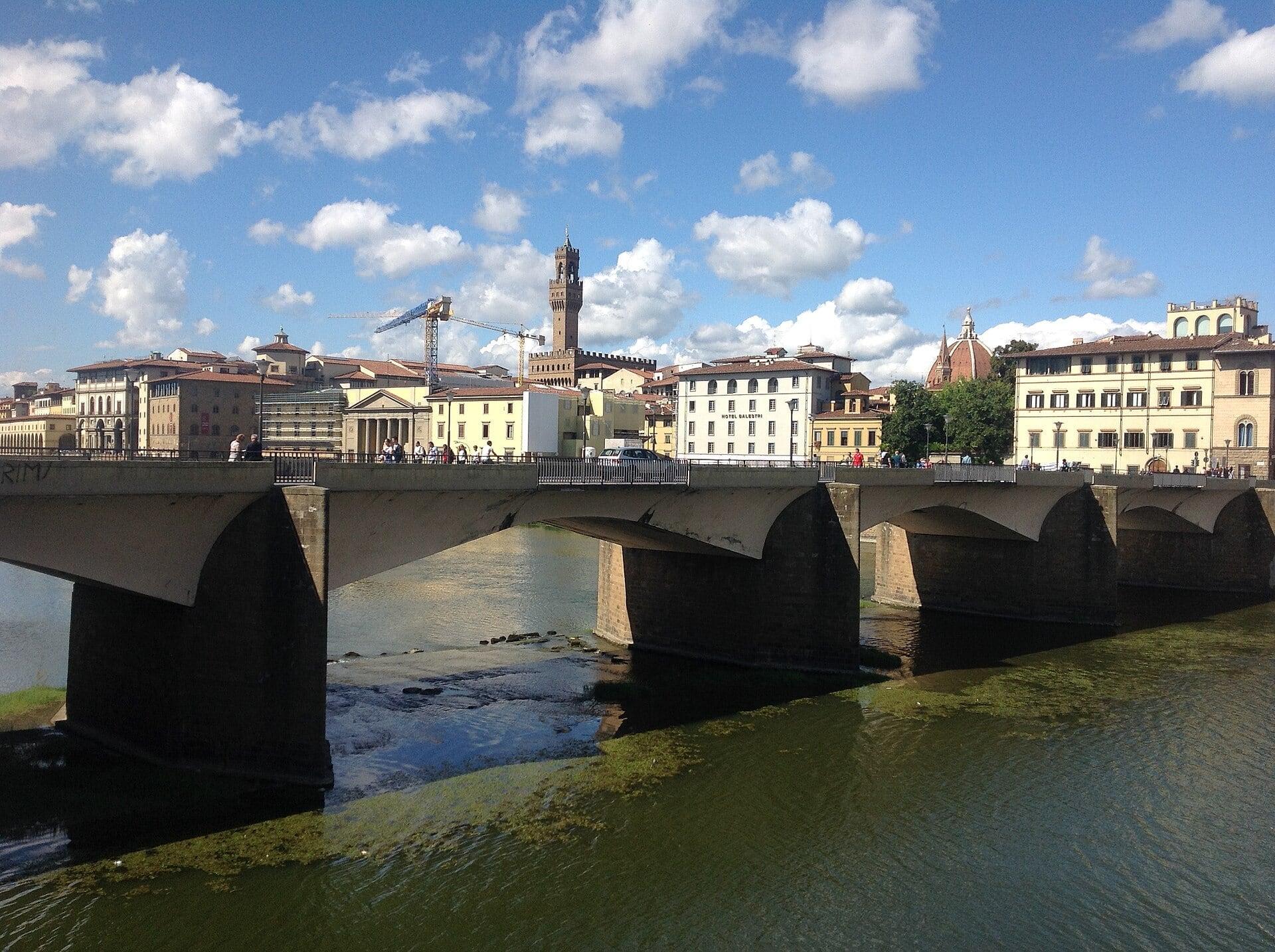
Ponte alle Grazie: The Whole Climb in View
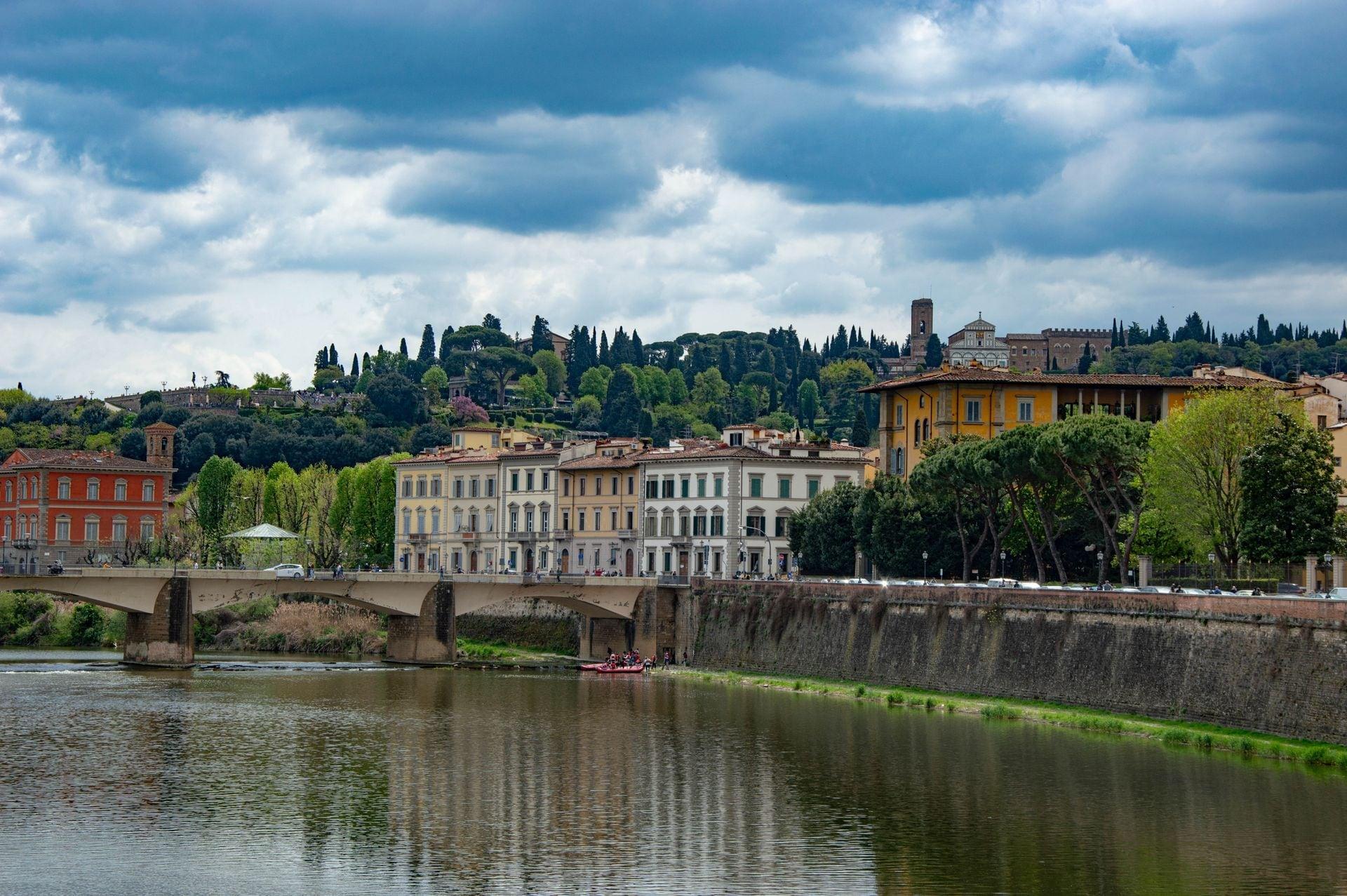
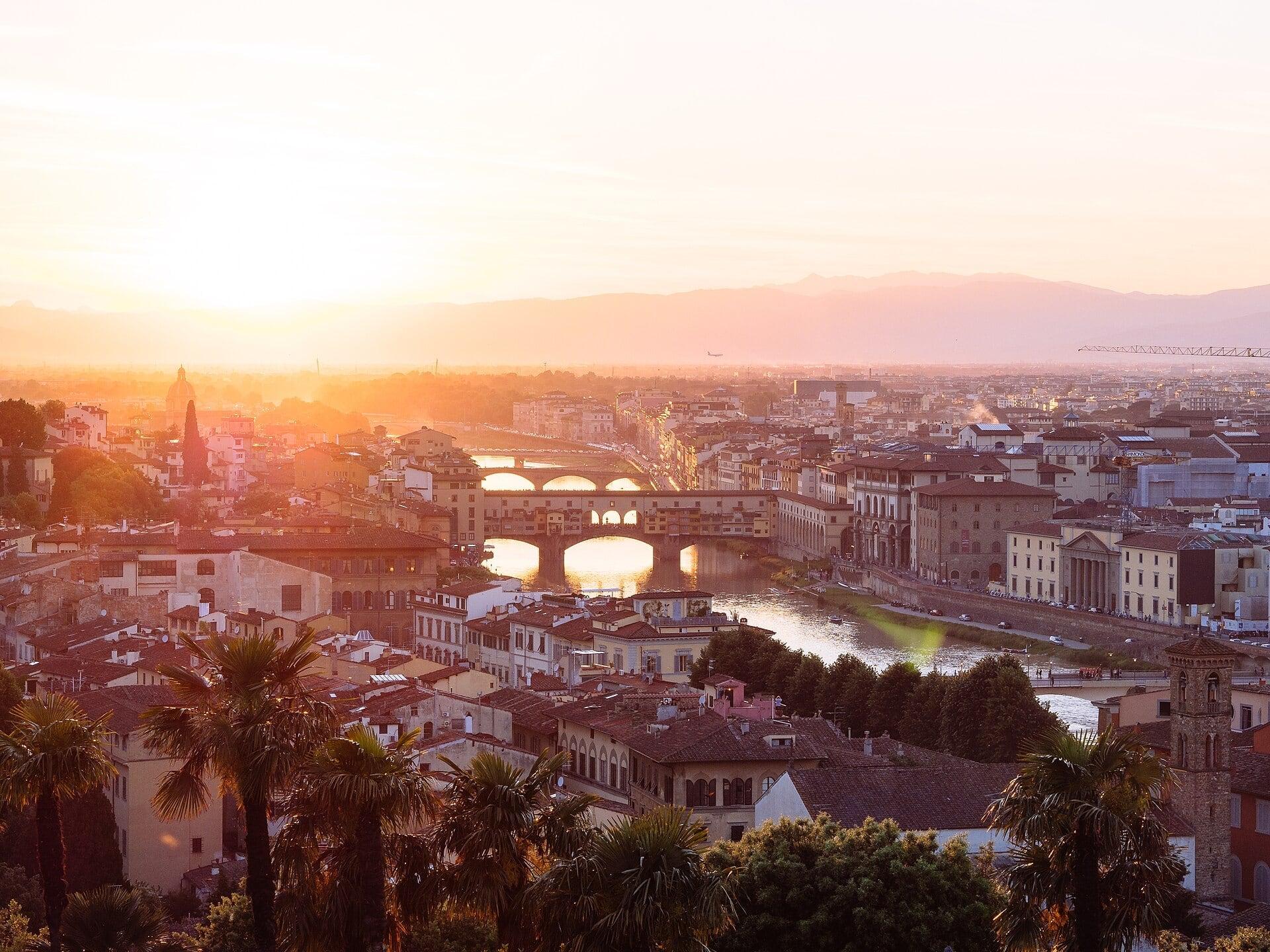
The walk's whole climb is in view upstream. A 1957 bridge on the site of a medieval one, once lined with chapels and a nuns' house, that the retreating German army blew up in August 1944.
- 2
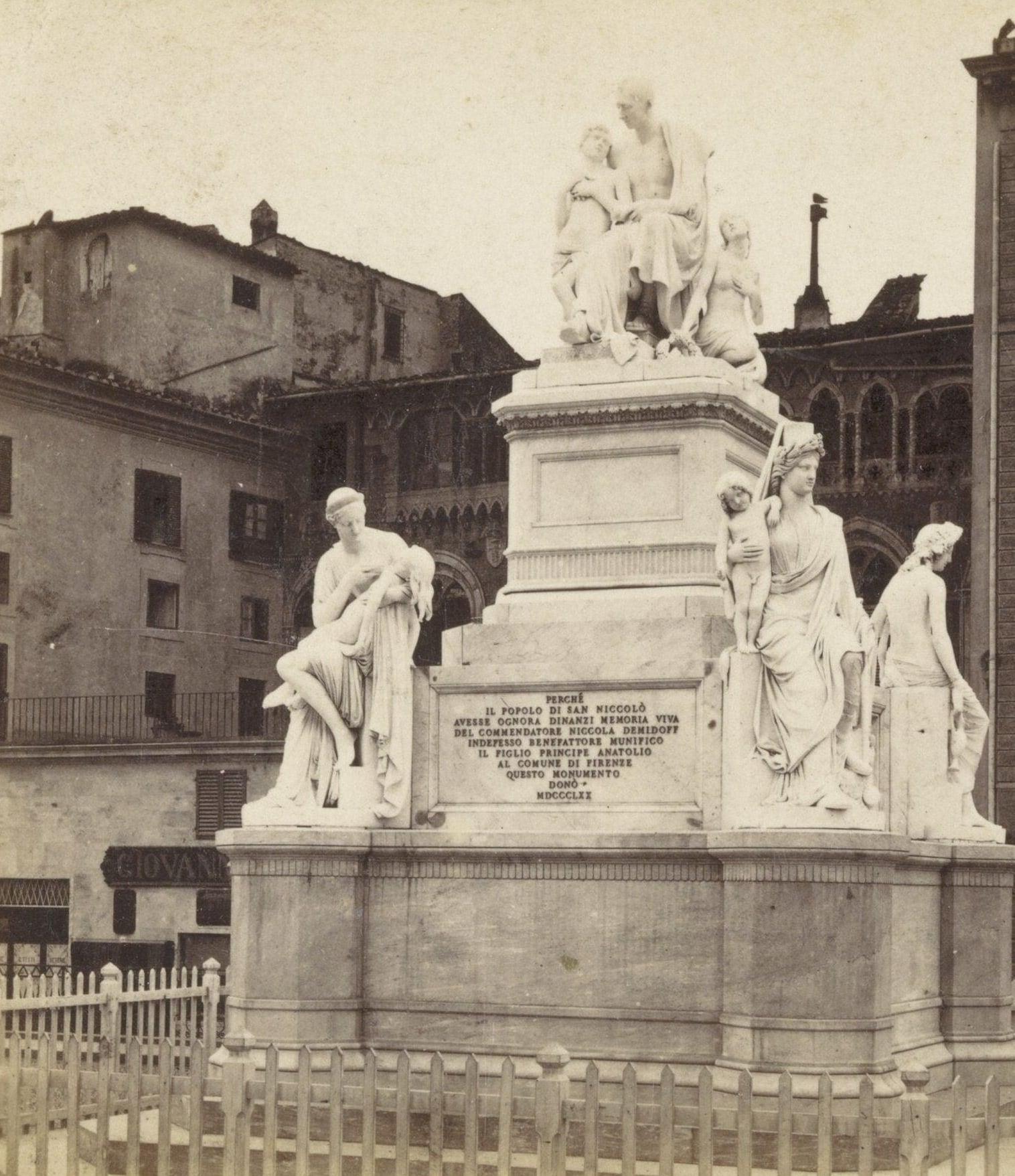
Piazza Demidoff: A Russian Fortune in Marble
A Russian benefactor's monument in a riverside garden. Begun by Lorenzo Bartolini in 1830 and finished by his pupil in 1871, with four virtues around its base.
- 3
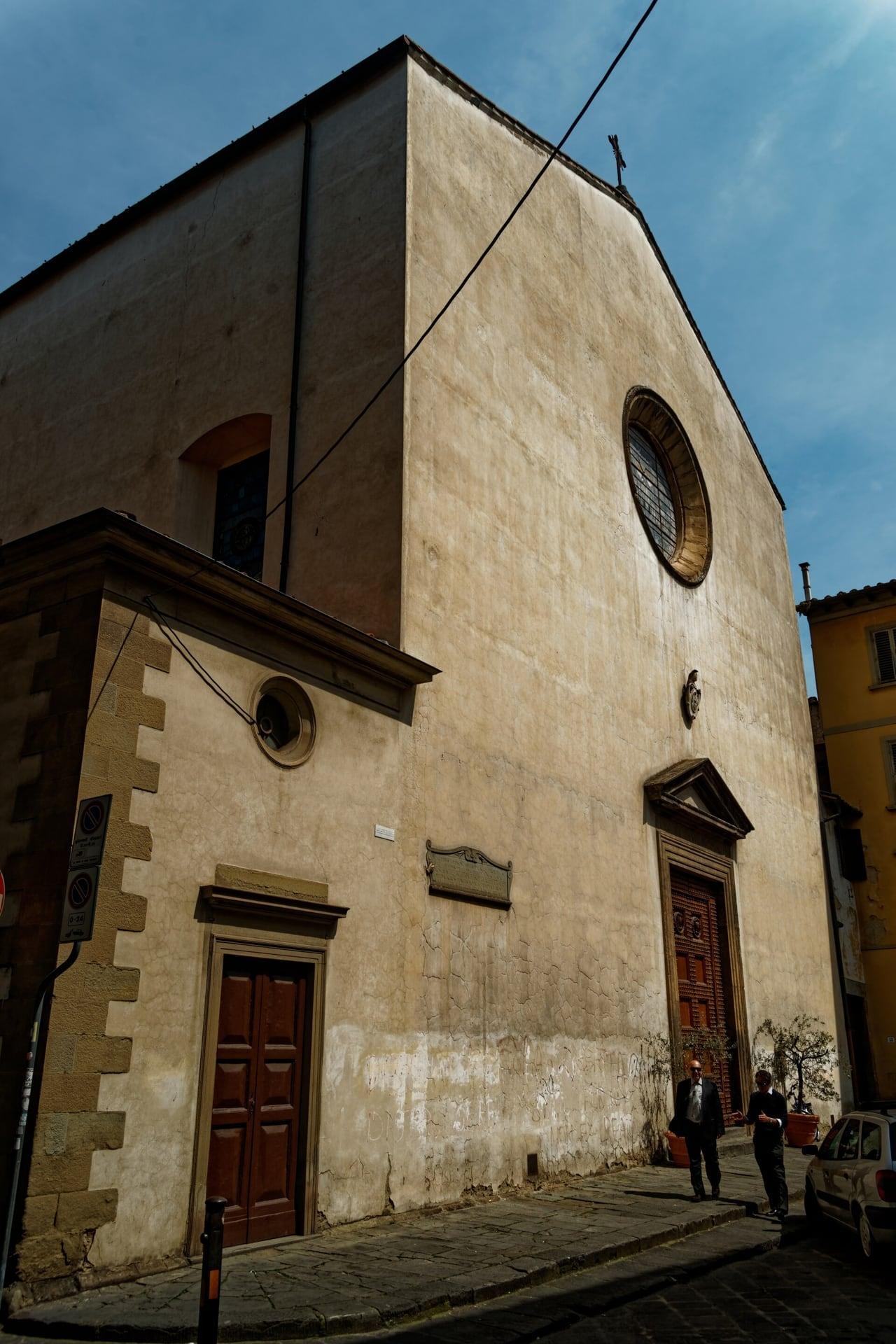
San Niccolò: Two Floods on One Wall
Two flood marks on the quarter's church front. A marble hand for the flood of 1557 and a plaque for 1966, higher still, on San Niccolò Oltrarno.
- 4
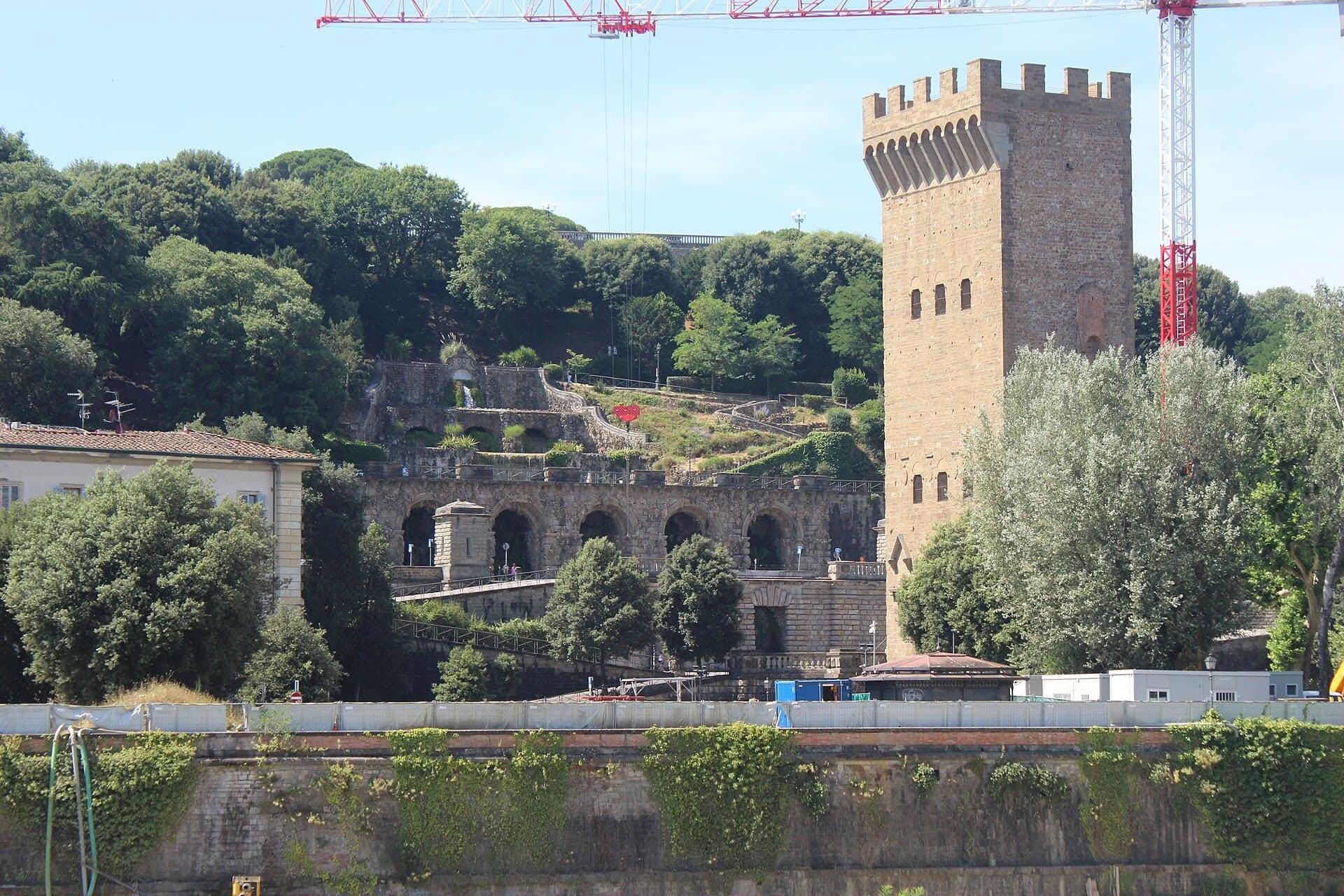
Porta San Niccolò: The Tower Never Cut Down
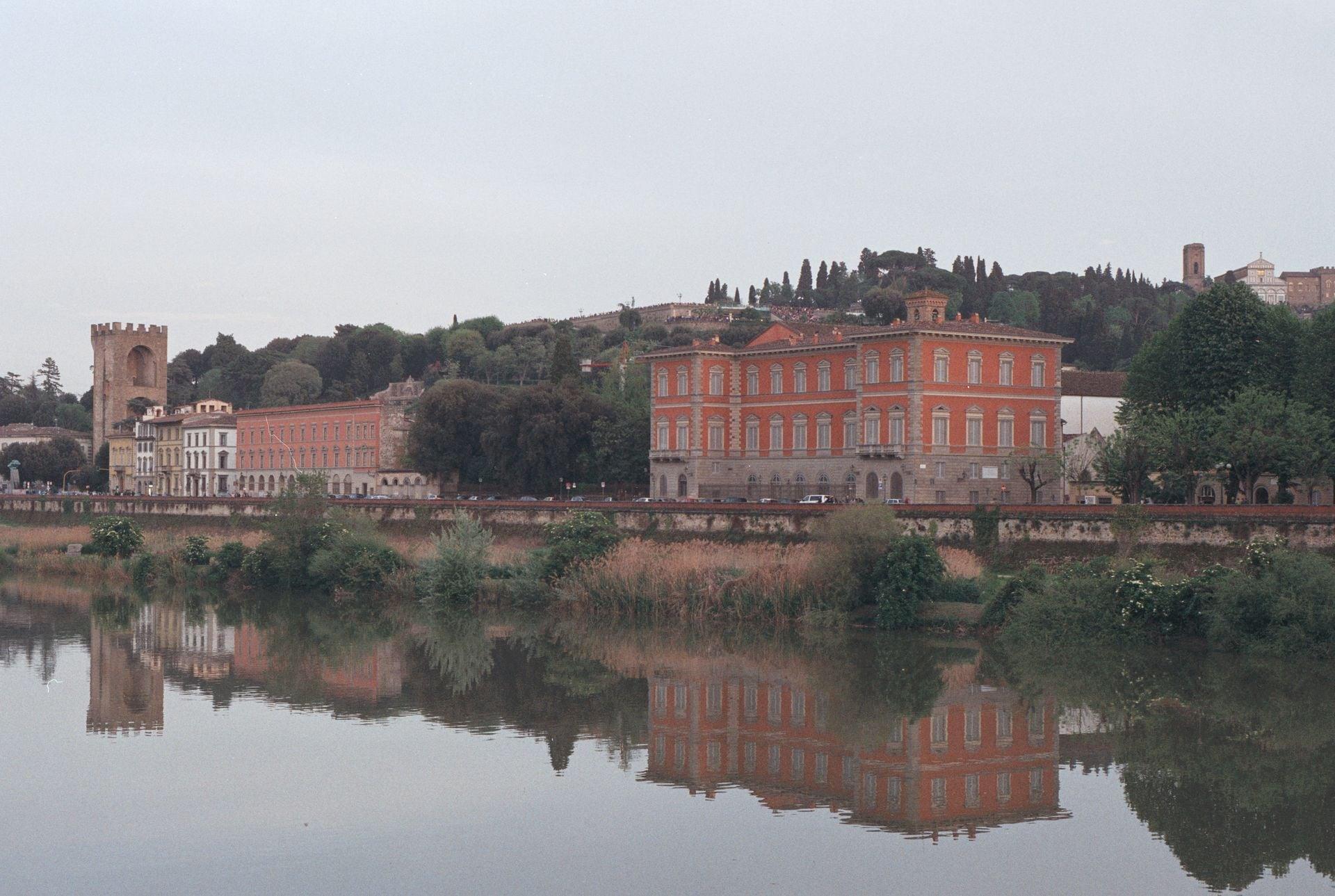
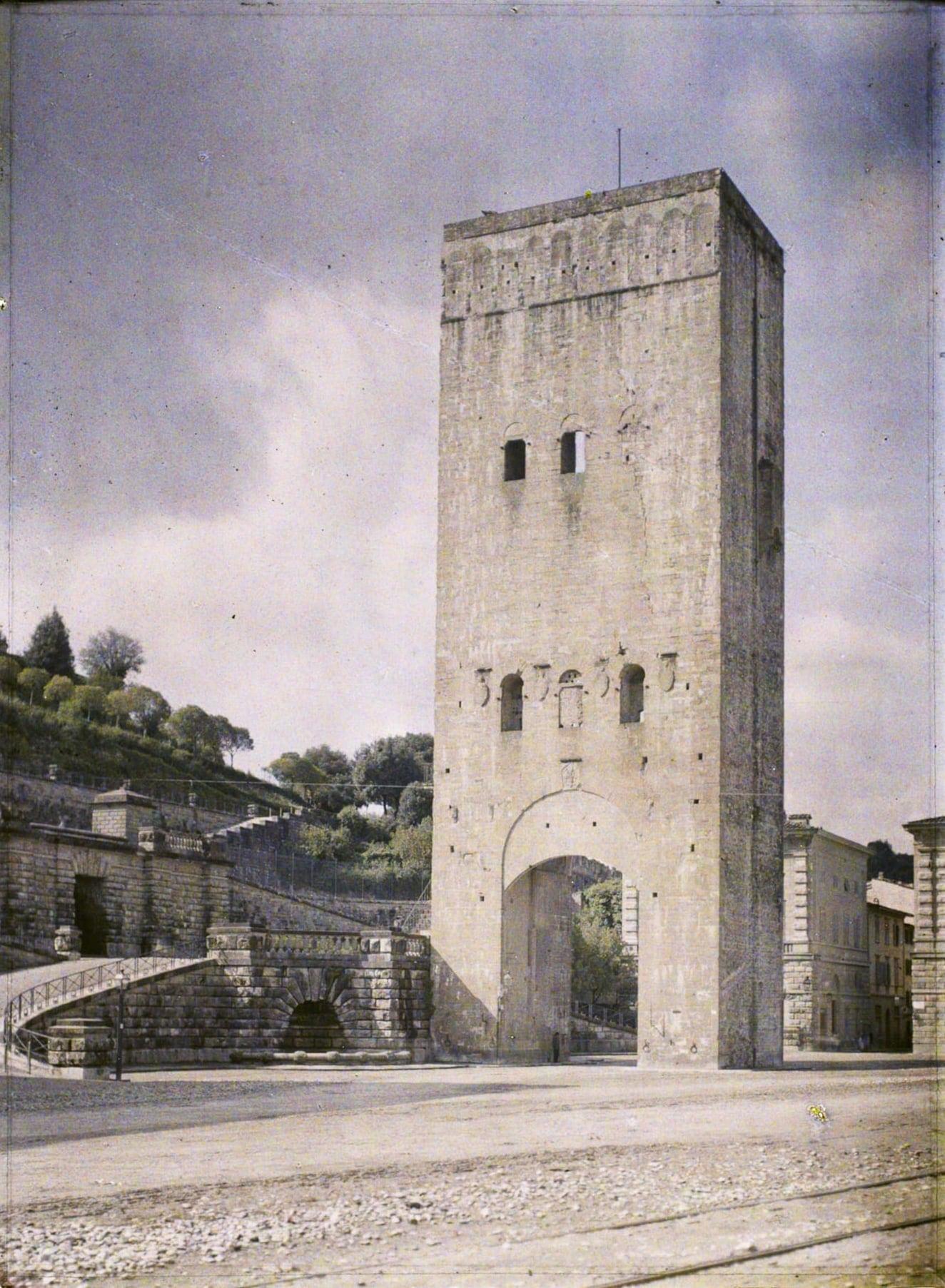
The gate tower the city says was never cut down. Built in 1324, about 35 meters tall, it kept its height when the others were lowered for cannon.
- 5
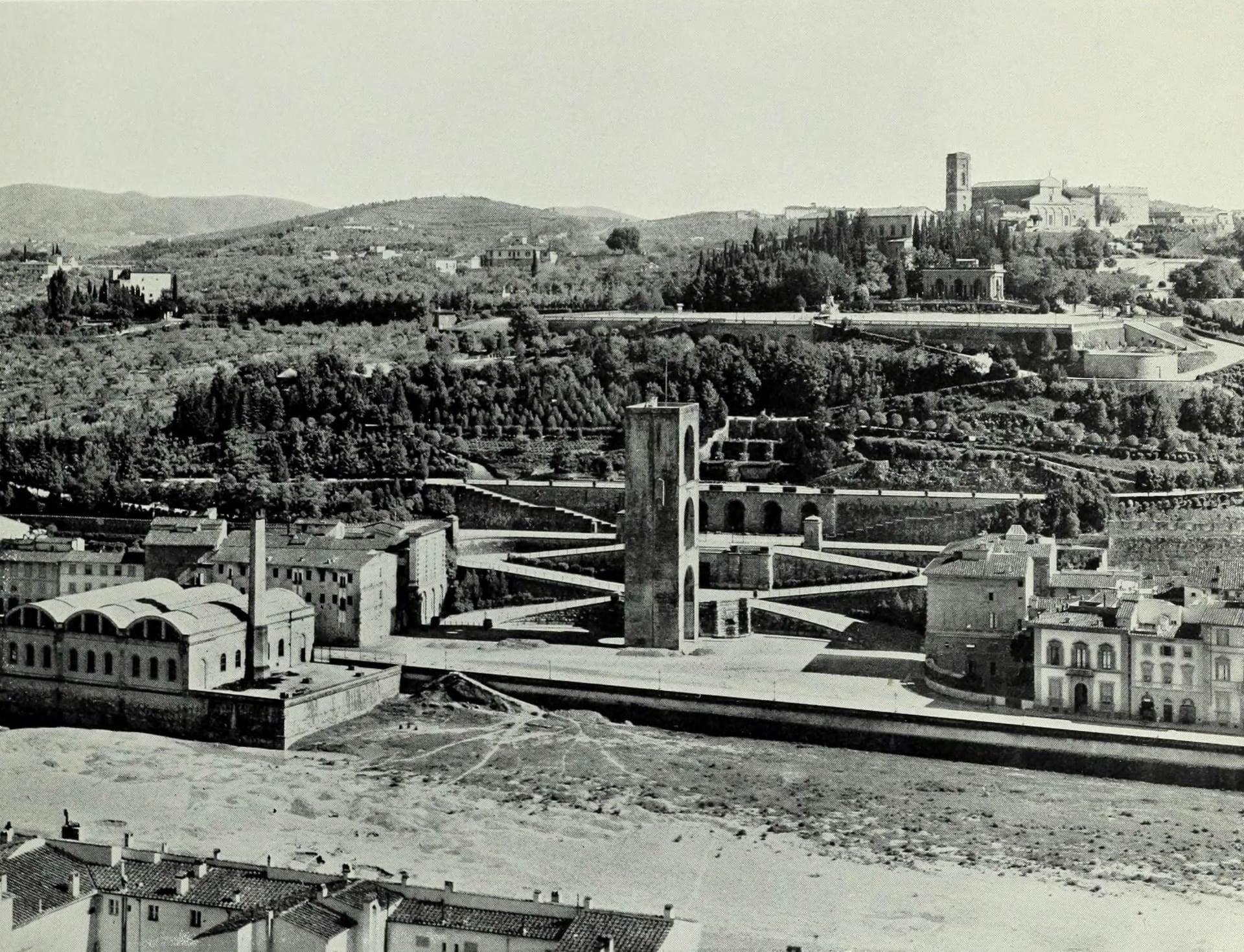
Rampe del Poggi: A Stage Set of Grottoes
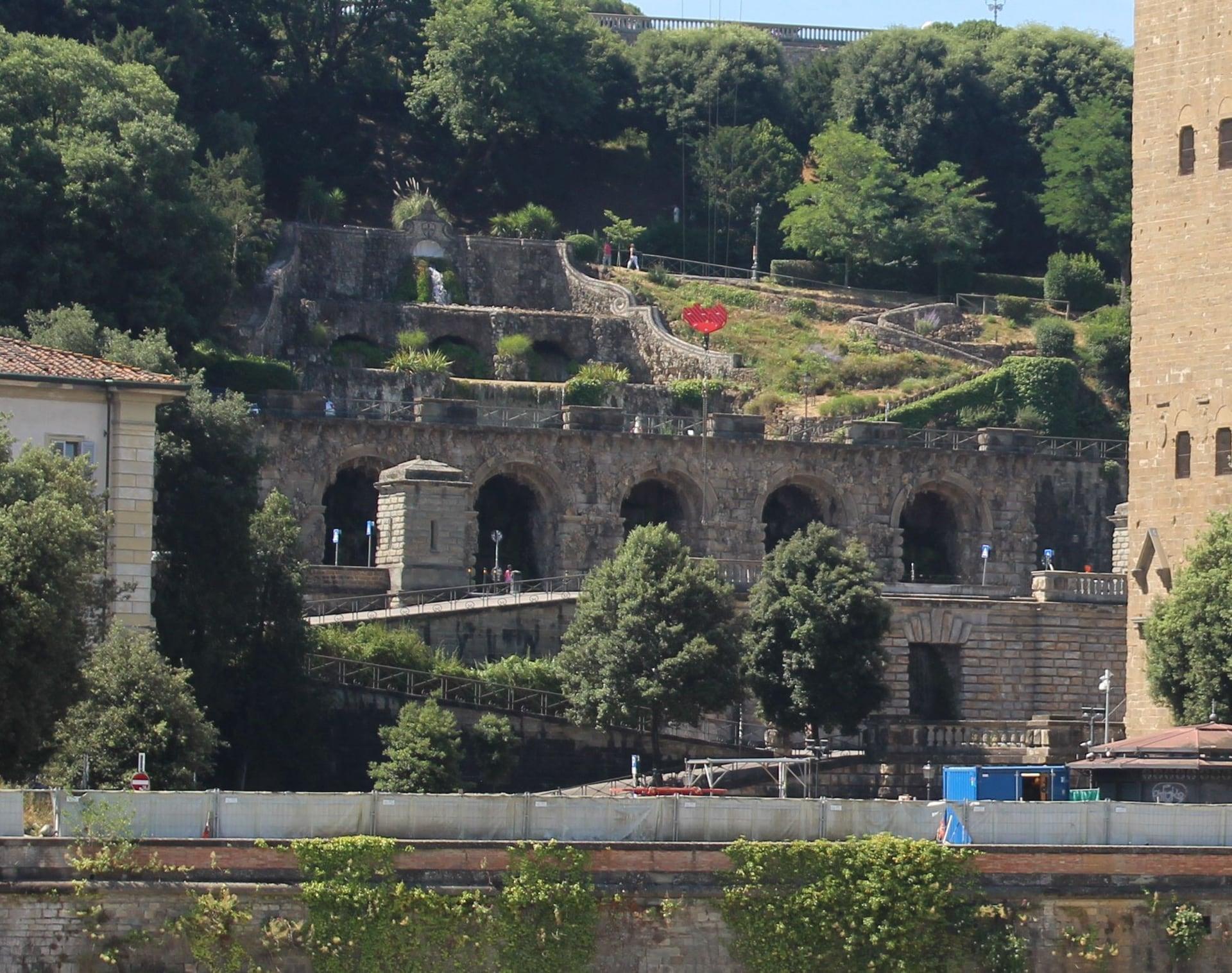
Poggi's ramps of grottoes and artificial cliffs. Built from 1872 to 1876, after the capital had left, and restored in 2018 and 2019.
- 6
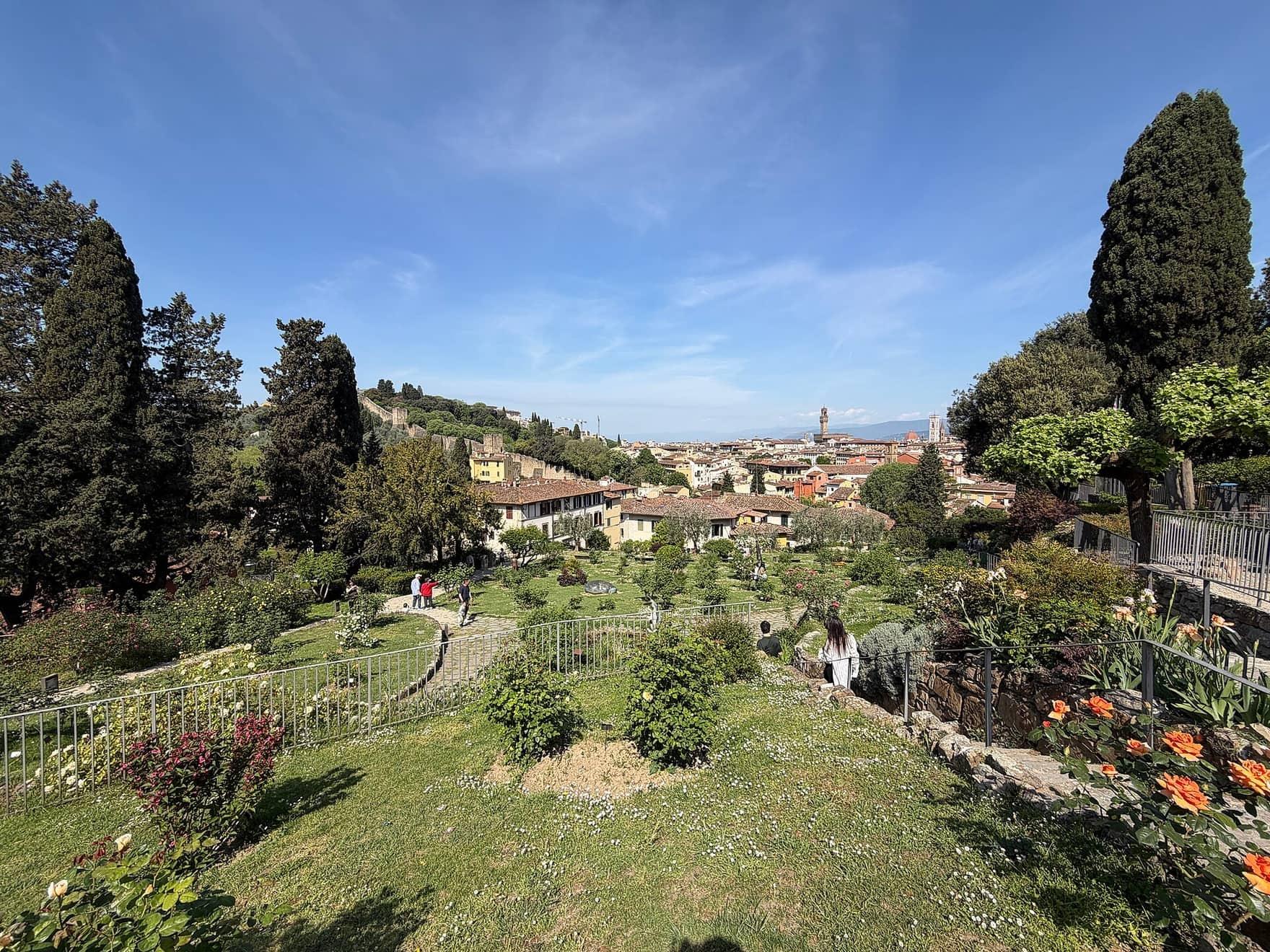
Giardino delle Rose: Roses on the Hillside
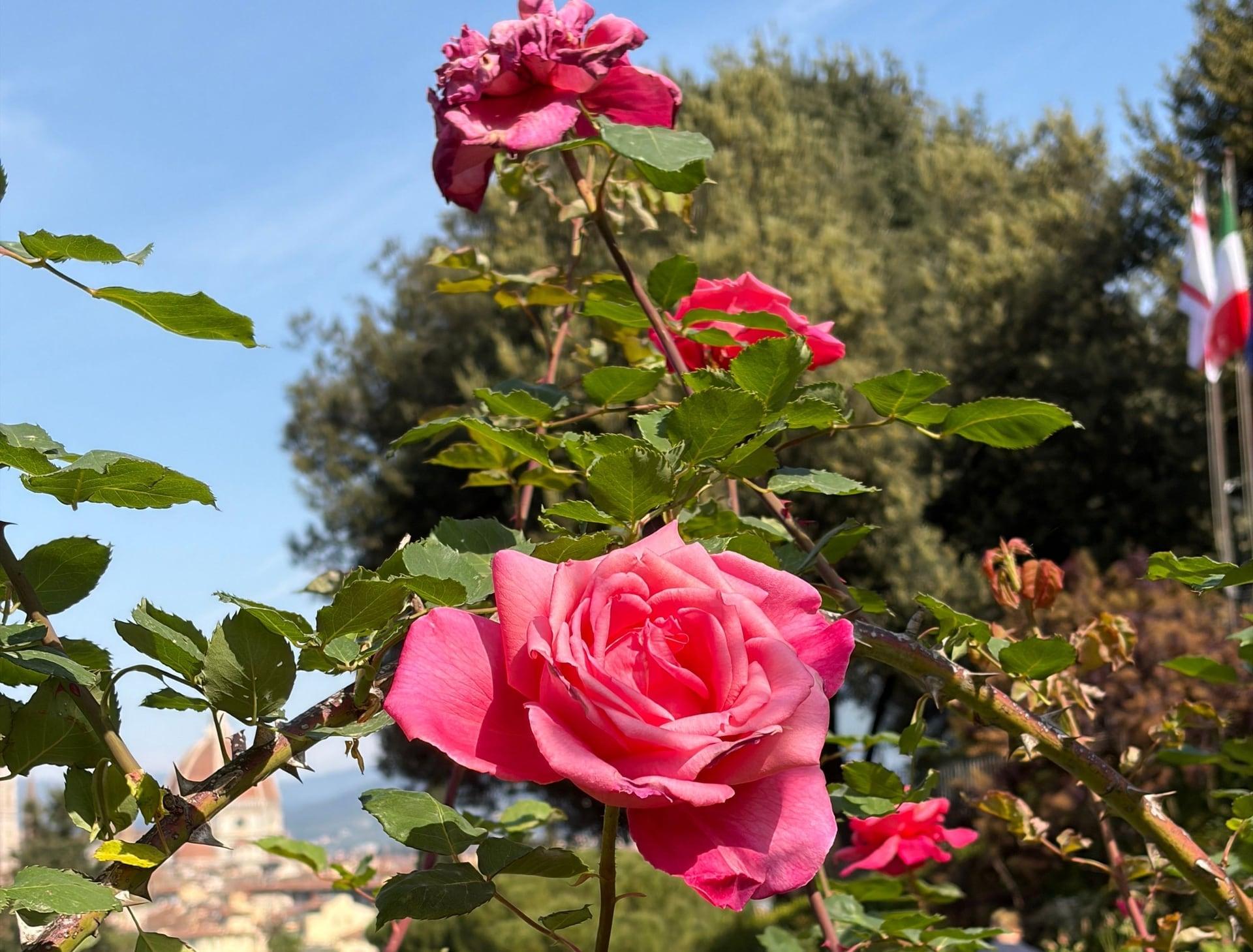
A free rose garden laid out on the hillside. Poggi's terraces of roses, with a Kyoto garden and Folon's bronzes; open daily, shorter hours in winter.
- 7
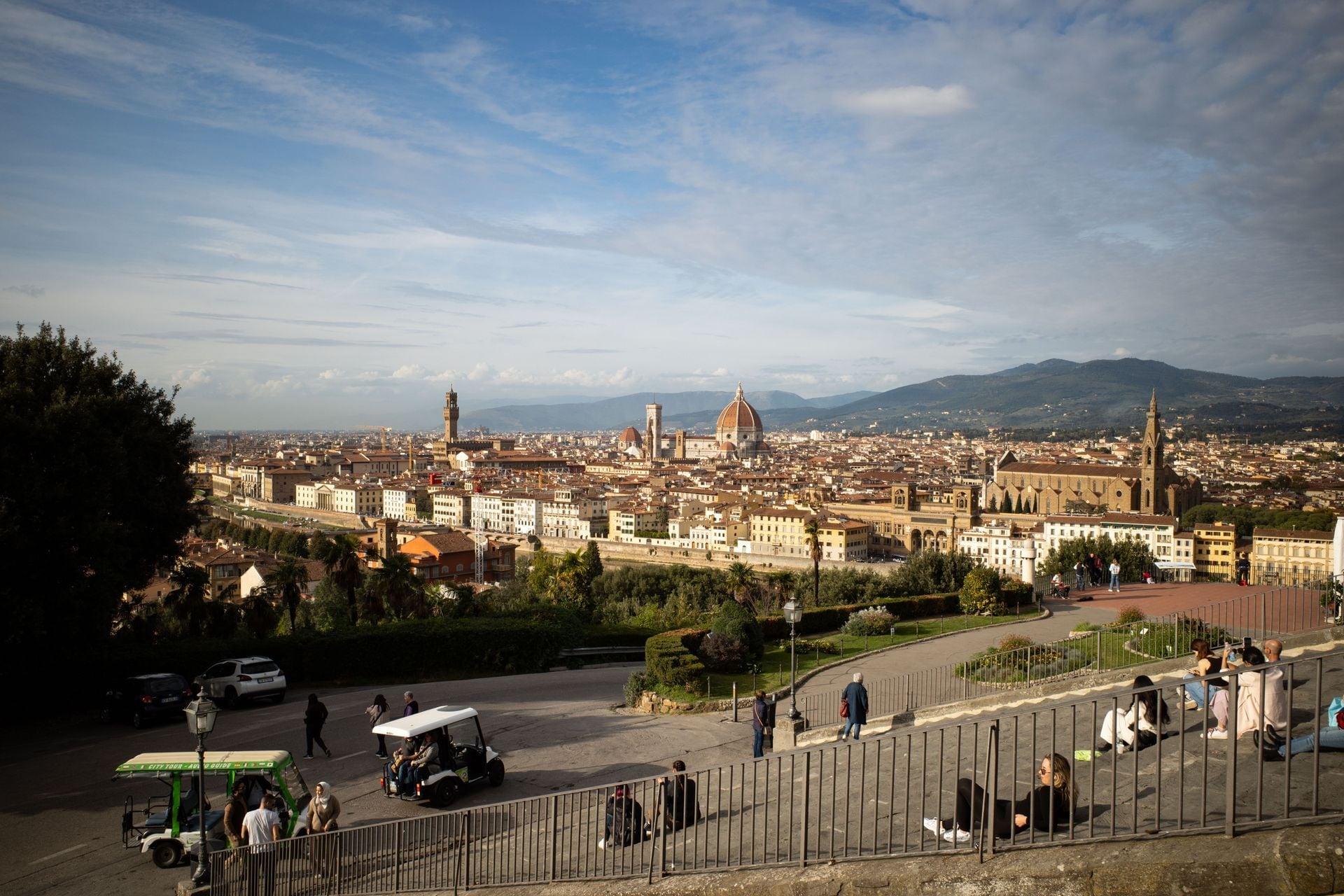
Piazzale Michelangelo: The Capital's Terrace
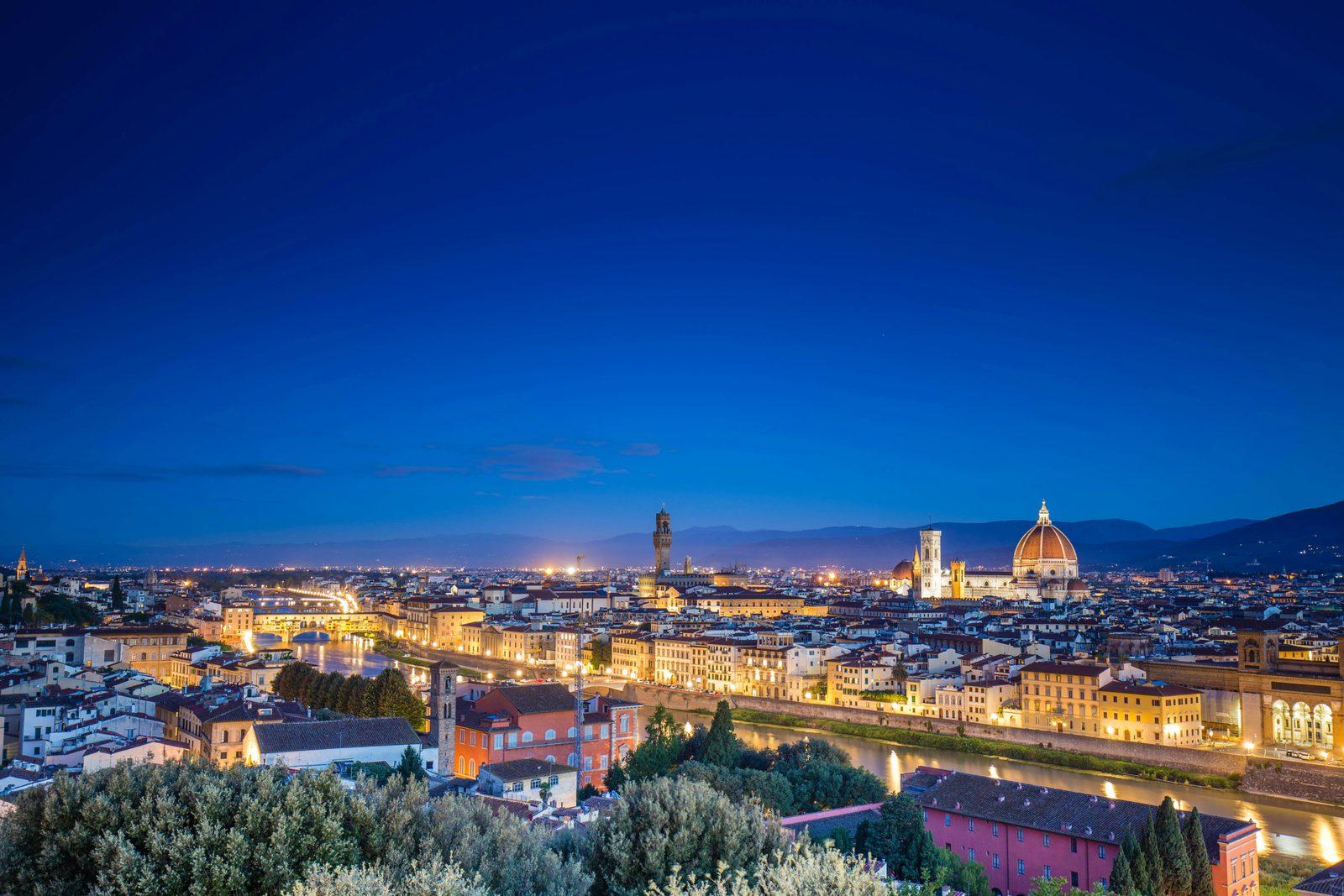
Florence's whole skyline from Poggi's terrace. Finished in 1875, with a bronze David cast in 1866 and a balustrade of cast iron painted as stone.
- 8
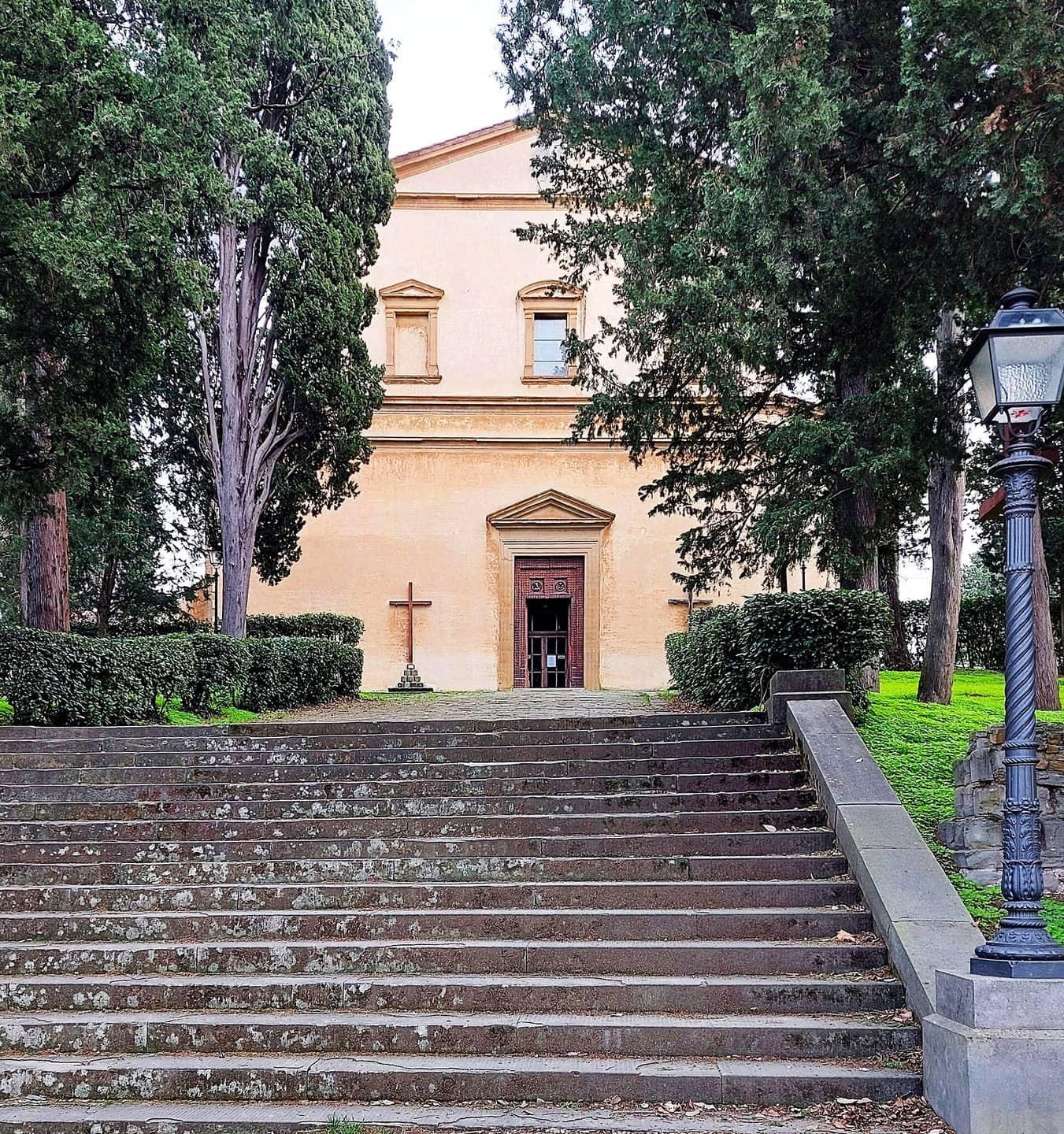
San Salvatore al Monte: The Plain Friars' Church
A plain friars' church built around 1500. San Salvatore al Monte, by il Cronaca, which Florentines say Michelangelo called his pretty country girl.
- 9
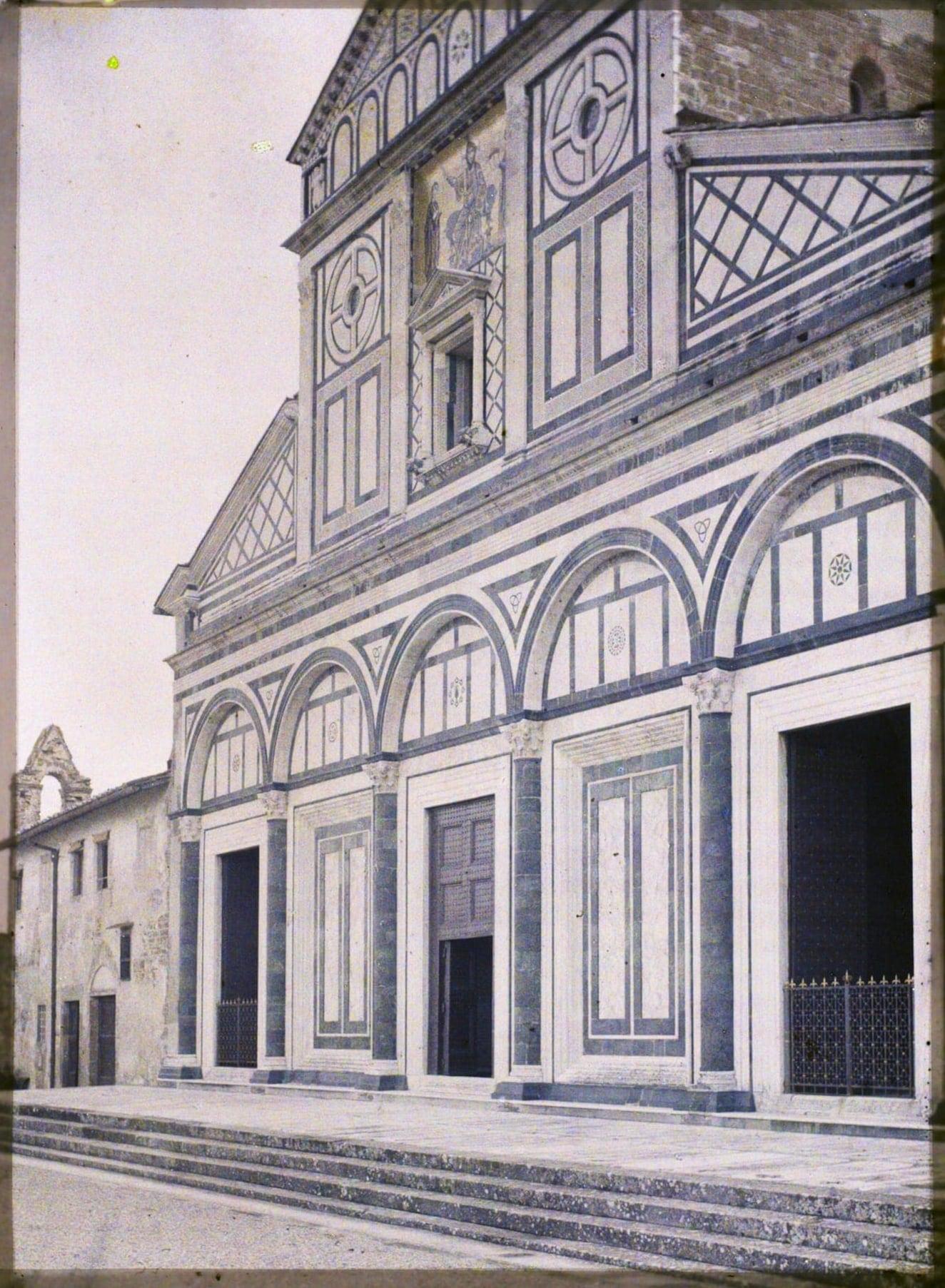
San Miniato al Monte: Marble, Monks and Vespers
White and green marble at the top of the hill. San Miniato, rebuilt from 1018, where the monks sing vespers in Gregorian chant every evening.
Details
Best Time to Visit
Afternoon into early evening. In summer, start about two hours before sunset to catch the light at the Piazzale; from November to January the light goes before 17:00 and vespers is at 18:30, so either finish at San Miniato after dark or come back for vespers. From November to February the Rose Garden shuts at 17:00, so start by about 15:30 if you want it open. San Miniato is open Monday to Saturday 9:30 to 13:00 and 15:30 to 19:00, Sunday 8:15 to 13:00 and 15:30 to 19:00, and is closed to visitors during services. Avoid rain: the ramps and stairs are slippery when wet. Checked 8 November 2026.
Pro Tips
- •Getting to the start: the walk begins near the south end of the Ponte alle Grazie, the next bridge upstream from the Ponte Vecchio, a short walk from Piazza Santa Croce, where our Santa Croce walk ends. Walking is simplest; the city buses that cross the bridge were not confirmed with the operator. Checked 8 November 2026.
- •Without stairs: ride Autolinee Toscane bus 12 (terminus 'Piazzale San Miniato') or 13 (terminus 'Piazzale Il David') up to the Piazzale and begin at stop 7. Stops 8 and 9 are still reached by steps: there is no verified step-free way to San Miniato's terrace. Station to Piazzale takes about 19 to 25 minutes on line 12 and about 25 to 36 on line 13 (winter timetable valid from 2 November 2026). Checked 8 November 2026.
- •The way home: walk back down to the Piazzale the way you came (5 to 10 minutes), crossing Viale Galileo only on the marked crossing at the foot of San Salvatore's stepped lane, and take line 13 from 'Piazzale Il David' (by the David; down by Porta Romana and San Frediano to Santa Maria Novella station) or line 12 from 'Piazzale San Miniato' (down by Viale Michelangiolo and Viale Mazzini to the station). In the winter timetable both run about every 10 to 20 minutes on weekday evenings, less often at weekends, with last departures after 23:00; check times in the Autolinee Toscane app. Do not board at 'Galileo San Miniato' at the foot of San Miniato's stairs: line 12 calls there only on its way up. From 5 November 2026 lines 12 and 13 avoid the closed Ponte Vespucci. Checked 8 November 2026.
- •Bus fare: an urban ticket is 2.00 EUR and valid 90 minutes in Florence; you can also tap a contactless bank card on board at the same price, tapping at every boarding (Autolinee Toscane). Checked 8 November 2026.
- •Giardino delle Rose (stop 6): free, open every day 9:00 to 17:00 from 1 November to 28 February, 9:00 to 18:00 in March and October, 9:00 to 19:00 in April, 9:00 to 20:00 from May to September (Comune di Firenze). Outside those hours, stop 6 plays at the upper gate. Checked 8 November 2026.
- •San Miniato al Monte (stop 9): free; Monday to Saturday 9:30 to 13:00 and 15:30 to 19:00, Sunday 8:15 to 13:00 and 15:30 to 19:00; not visitable during services. Weekday mass at 18:00 and Sunday mass at 17:30 are in Latin and Gregorian chant, and the monks sing vespers in Latin and Gregorian chant every day at 18:30. Inside: the marble floor of 1207 with its zodiac, Michelozzo's tabernacle, the Chapel of the Cardinal of Portugal (1461 to 1466) and Spinello Aretino's sacristy frescoes. Checked 8 November 2026.
- •Torre San Niccolò (stop 4): open only for guided climbs in summer (to 30 September), about 160 steps, booked ahead through MUS.E (musefirenze.it); price not confirmed. Checked 8 November 2026.
Safety & Precautions
- •Not step-free: the route climbs about 90 meters on ramps and more than 150 mapped steps, plus flights not counted (the top Rampe flight, San Salvatore's stepped lane and San Miniato's lower stairs). The first two Rampe flights have no handrail. Stone and cobbled steps are slippery when wet.
- •Crossings without lights: Lungarno Serristori on a zebra (between stops 1 and 2; buses 23 and C4) and Viale Galileo on a marked crossing on a bend (between stops 7 and 8; buses 12 and 13). Cars and buses do not always stop: wait until they do.
- •Viale Poggi, the one-way lane around the Piazzale, is crossed twice where no crossing is marked (between stops 4 and 5, and between stops 6 and 7) and walked for about 75 meters in all along its edge with no sidewalk (between stops 5 and 7). Keep to the edge, face the cars where you can, and cross straight where you can see both ways. Between stops 8 and 9 the quiet Via del Monte alle Croci is crossed twice with no marked crossing.
- •After dark: lighting on the upper Rampe flights was not confirmed, and whether the gate on San Miniato's stairs is locked at night was not confirmed. If the gate is shut, stop 9 plays from the gate, with the front in view up the stairs.
- •Piazzale Michelangelo is packed at sunset, with coaches and souvenir stalls: keep bags closed and in front of you there and on buses 12 and 13.
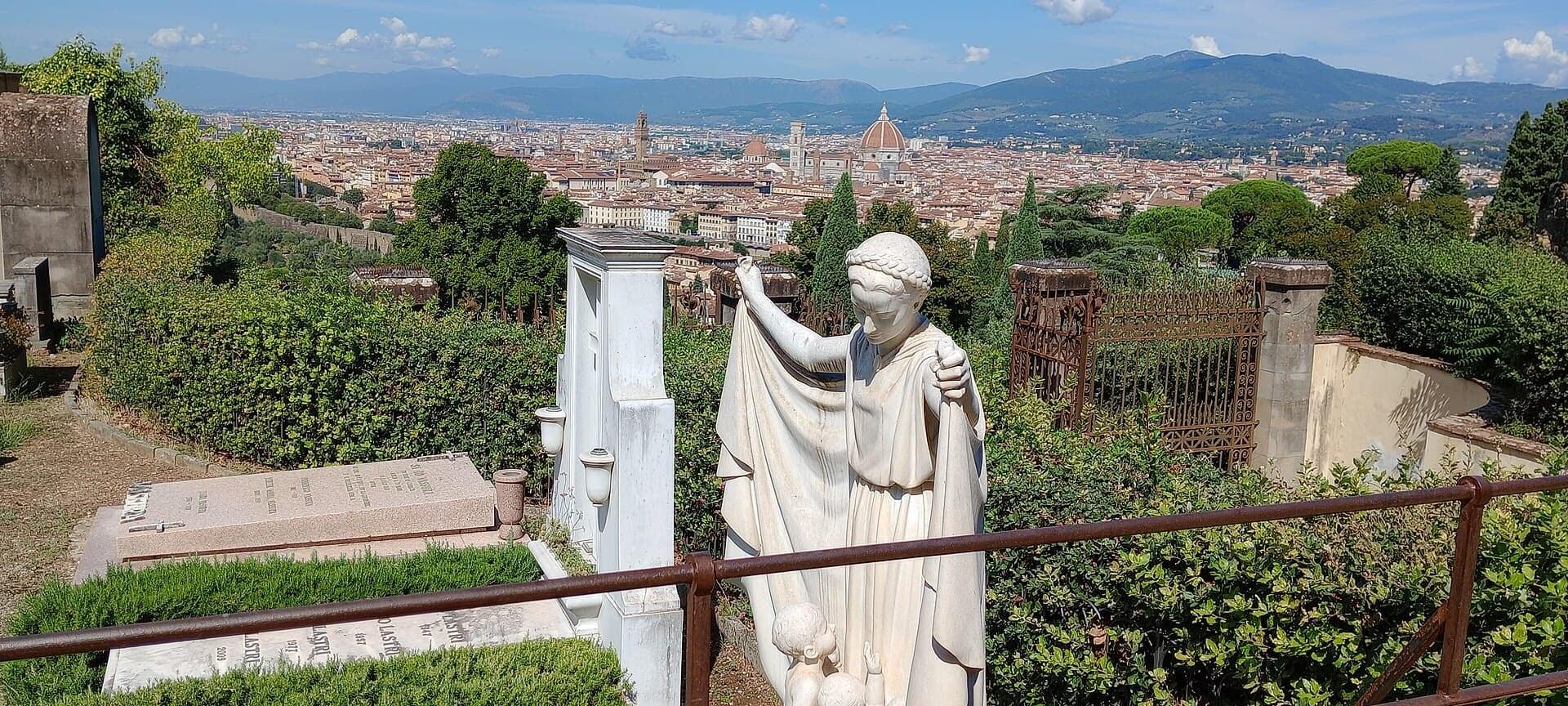
- •San Miniato is a working monastery church with a cemetery around it, and it is closed to visitors during services: keep your voice low on the terrace, and enter during mass or vespers only to take part.
- •Via di San Niccolò is a lived-in street with bars that fill in the evening; its sidewalks are narrow.
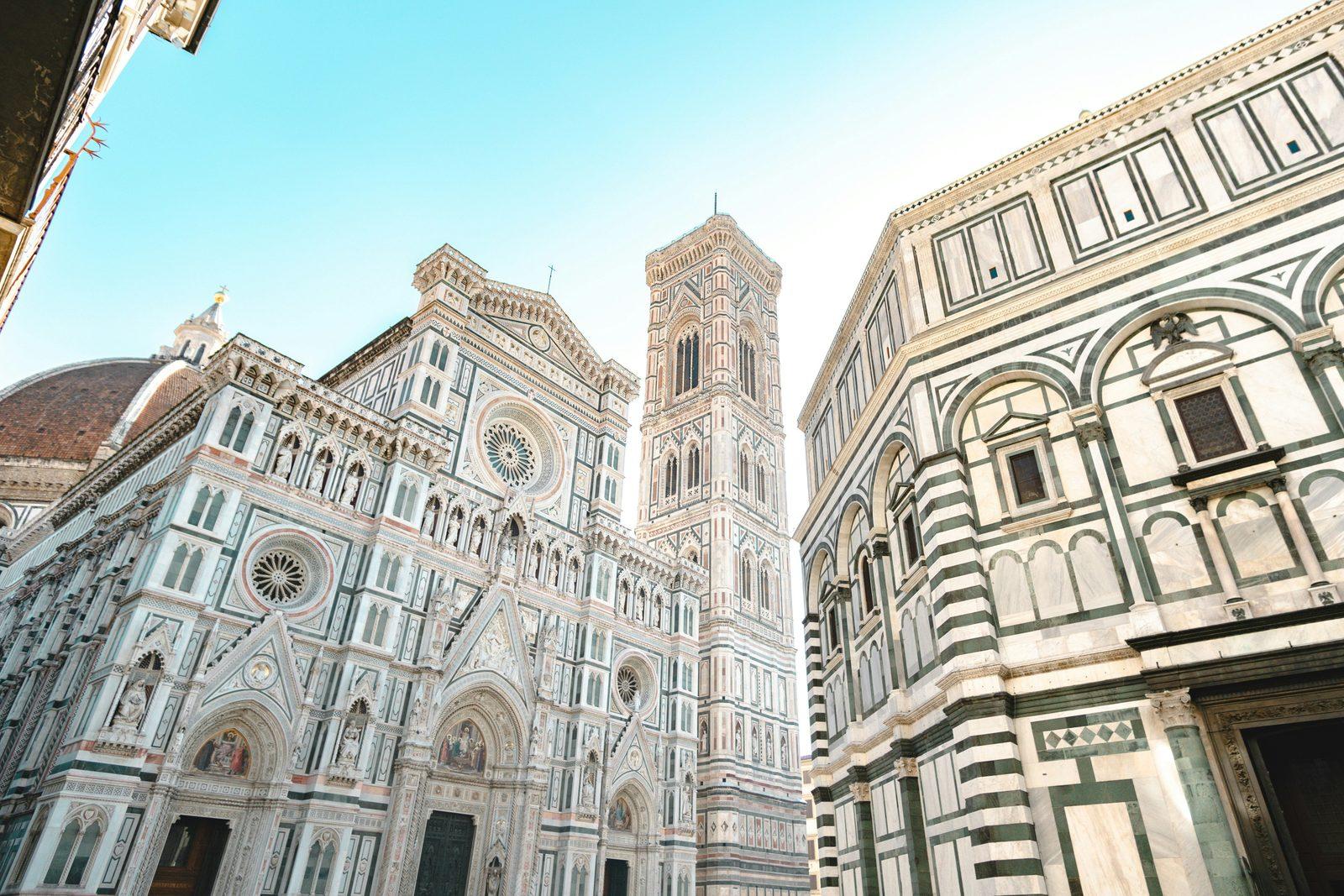
- •Giotto's bell tower, seen from the Piazzale, has been in scaffolding for its restoration since March 2026, due to last until about 2030 (Opera di Santa Maria del Fiore).
Travel advisory: Exercise Increased Caution (Level 2).
Gallery
Related Reading
Go deeper on what you'll see, hear, and walk through.
Overview
Florence Travel Guide: How Many Days, Getting Around, and What to Book
6 min
Overview
One Day in Florence: A Walkable Morning-to-Evening Itinerary
7 min
Thematic
Best Architecture Walking Tours in Florence (2026)
2 min
Thematic
How Money and Competition Built the Renaissance in Florence
9 min
Companion
Piazzale Michelangelo Walking Tour: The Capital's Terrace and San Miniato
5 min
Companion
The Oltrarno: Reading Florence's Working Half From Santo Spirito Onward
7 min
Read the walk
The full story of Piazzale Michelangelo and San Miniato: The Capital's Terrace, in words. Prefer to listen? Play it narrated, from home or on location.
Introduction
Florence, in the heart of Tuscany, was the capital of Italy for six years, from eighteen sixty-five to eighteen seventy-one. For the new capital the city pulled down its walls north of the river and laid out a boulevard over the hills south of it, with a terrace looking back at the whole city. This walk climbs to that terrace, and on to the marble church above it.
Three people come with us. Giuseppe Poggi, the architect of the boulevard, the ramps and the terrace. Michelangelo, who fortified the hill of San Miniato when the city was besieged. And Bishop Ildebrando, who began to rebuild the church at the top in ten eighteen.
The walk is nine stops over about one point eight kilometers, a little over a mile, and takes about seventy-five minutes. It climbs about ninety meters, on ramps and more than a hundred and fifty steps. Without stairs, ride bus twelve or thirteen up to the Piazzale and begin at stop seven; the last two stops are still up steps. Two busy roads are crossed on zebras without lights, and twice the route follows a lane with no sidewalk; each stop warns you first.
The walk begins on the Ponte alle Grazie and ends at San Miniato al Monte, where the monks sing vespers every evening at half past six. When you arrive at the Ponte alle Grazie, begin with stop one.
1. Ponte alle Grazie: The Whole Climb in View
Welcome to the Ponte alle Grazie, where this walk begins. Stop at the railing near the bridge's south end and look along the river. One way, the bridge lined with little houses and shops is the Ponte Vecchio. Turn to face the other way, upstream.
On the near bank a tall, square tower stands on its own. That is an old city gate, and stop four. Above it, a long balustrade runs along the green hilltop: the edge of Piazzale Michelangelo, stop seven. Most of the walk is in front of you, and it goes up.
The bridge under your feet is young. It opened on the twenty-fourth of February, nineteen fifty-seven. Its ancestor stood here from twelve thirty-seven, and the city's tourism office counts it as the third bridge built in Florence, after the Ponte Vecchio and the Ponte alla Carraia. Little houses and chapels grew along it, among them, from the thirteen hundreds, a shrine to Our Lady of Graces, the Madonna delle Grazie, which gave the bridge its name. A community of enclosed nuns lived on it too.
In the night of the third to the fourth of August, nineteen forty-four, the retreating German army blew up every bridge in Florence except the Ponte Vecchio. This one went with the rest. The next year the city held a competition for a new bridge, and a group of architects won it. What you stand on is their bridge.
The terrace up on the hill belongs to an earlier new start: the years when Florence made itself ready to be the capital of Italy.
Follow the route off the bridge and along the river. You cross a cycle lane, then the riverside road on a zebra with no lights. Cars and buses do not always stop, so wait until they do. Next is a riverside garden with a Russian family's monument.
2. Piazza Demidoff: A Russian Fortune in Marble
Walk on along the garden's railing until a white marble group under an iron and glass canopy stands in the middle of the lawn, and stop there.
This is Piazza Demidoff, a riverside garden, and the monument is to Nicola Demidoff, a Russian benefactor who died in eighteen twenty-eight. In eighteen thirty his sons commissioned it from the sculptor Lorenzo Bartolini. Bartolini worked on it until his death and left it unfinished. One of his pupils completed it in eighteen seventy-one, and it was given to the city. The canopy came later.
Look at the top first. Nicola sits there, embracing his young son, while a kneeling woman, Gratitude, offers her thanks.
Then look at the four figures around the base. Each is a virtue, and each tells you something about the family. One is Siberia, with a miner's hammer, holding a child: the Demidoff fortune came from mines. One is Mercy, holding up a dying boy and sheltering a girl under her cloak. One is Truth, revealed to art. And the fourth is the Muse of pleasures, in memory, says the museum in Prato that keeps Bartolini's model, of the many banquets the family gave.
So a fortune dug out of Siberia turned into charity and dinners in Florence, and then into marble on the bank of the Arno.
The child in Siberia's arms has had a hard time. In twenty eighteen vandals knocked off its head and smashed it, and in twenty twenty-one restorers began to rebuild it from a three-dimensional reconstruction.
Follow the route into the short lane beyond the garden. You cross one quiet street where no crossing is marked. Next is the church of San Niccolò.
3. San Niccolò: Two Floods on One Wall
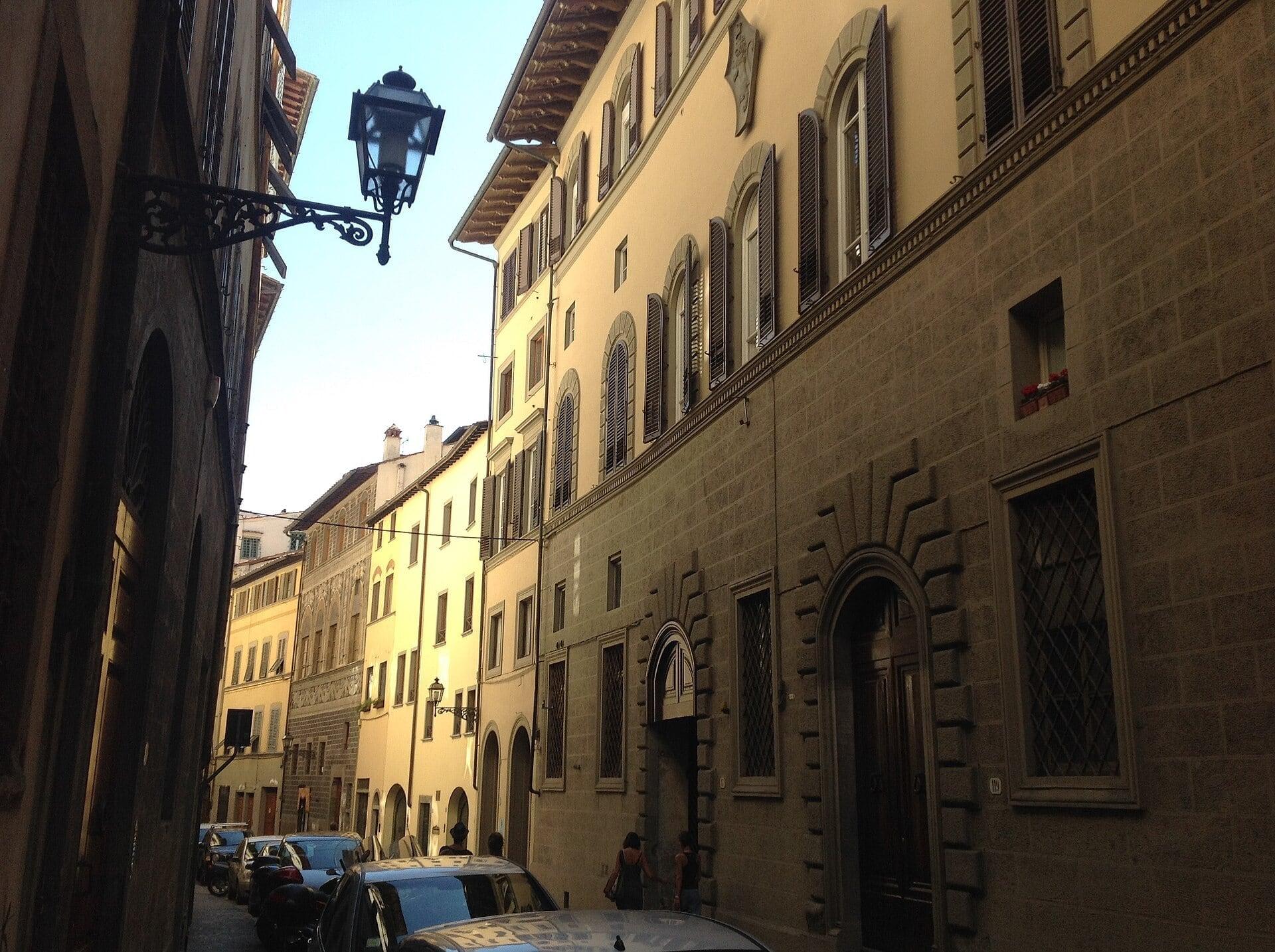
Walk on down the lane into Via di San Niccolò and stop in the small widening of the street in front of a plain church front with a round window over its door. You are close to it here; the street is narrow.
This is San Niccolò Oltrarno, the church that gives this quarter its name. Its story, as Italy's national heritage trust tells it, begins in the twelfth century, when monks from San Miniato, the church at the top of this walk, built it. It was destroyed in the fourteen hundreds and rebuilt, this time by the people of the quarter, and the round window and the main doorway were added in the fifteen hundreds.
Now find the smaller door in the front, and look higher than the top of it. There a carved stone frame holds a little marble hand, pointing. It marks where the Arno reached in the flood of the thirteenth of September, fifteen fifty-seven.
A little higher still is a small white plaque. It marks the fourth of November, nineteen sixty-six, when the Arno flooded Florence again. The river you walked beside came up into this street, and the second time it came higher than the first.
Two floods four centuries apart, measured on one wall, both above your head. Florence keeps marks like these on house fronts all over the city.
People live in this street, in the apartments above the doorways and the bars, so keep to the sidewalk and keep your voice down, especially in the evening.
Follow the route along Via di San Niccolò, a long street of tall houses with narrow sidewalks. Next is the old city gate at its end.
4. Porta San Niccolò: The Tower Never Cut Down
Walk on out of the street into the open square, to the foot of the ramps that climb the hill, and stop there. The tall tower standing alone in the square is Porta San Niccolò, one of the gates of the old city walls. It was built in thirteen twenty-four to guard this side of the…
Full narration for this stop unlocks with the tour.
5. Rampe del Poggi: A Stage Set of Grottoes
Climb the last steps onto the tree-lined promenade at the top, and stop on the promenade, away from the road. Turn around. The ramps and stairs you have just climbed fall away below you to the tower, and the river and the city open up over them. These are the Rampe del Poggi,…
Full narration for this stop unlocks with the tour.
6. Giardino delle Rose: Roses on the Hillside
Walk on along the edge of the lane to the garden's iron gate, where steps go down through it, and stop. This is the Giardino delle Rose, the city's rose garden. It is free and open every day of the year: in winter it shuts at five in the afternoon, in summer at eight. If the…
Full narration for this stop unlocks with the tour.
7. Piazzale Michelangelo: The Capital's Terrace
Walk on along the balustrade and stop where the whole city opens up below you. Find the big things first. The great dome is the cathedral, il Duomo. Beside it, a tall square tower wrapped in scaffolding is Giotto's bell tower. A little apart rises the slender tower of the…
Full narration for this stop unlocks with the tour.
8. San Salvatore al Monte: The Plain Friars' Church
Climb the stepped lane toward the plain stone church front at its head. Stop a few steps below the top of the lane, where the whole front fits in view. This is San Salvatore al Monte. It was built around fifteen hundred for Franciscan friars of the Observant branch, and in its…
Full narration for this stop unlocks with the tour.
9. San Miniato al Monte: Marble, Monks and Vespers
Climb the last stairs onto the terrace and stop facing the marble front. If the gate on the stairs is shut, stop there: the front is in view up the stairs. This is San Miniato al Monte, the end of our walk. Look at the front: white and green marble laid out in arches and…
Full narration for this stop unlocks with the tour.
- Firenze / Florence - Via di San Niccolò - View East on chiesa di San Niccolò Oltrarno — Txllxt TxllxT, CC BY-SA 4.0 · source
- Chiesa di San Salvatore al Monte - Firenze — Anna.Massini, CC BY-SA 4.0 · source
Images may be cropped or resized. Other photos via Unsplash and Pexels.