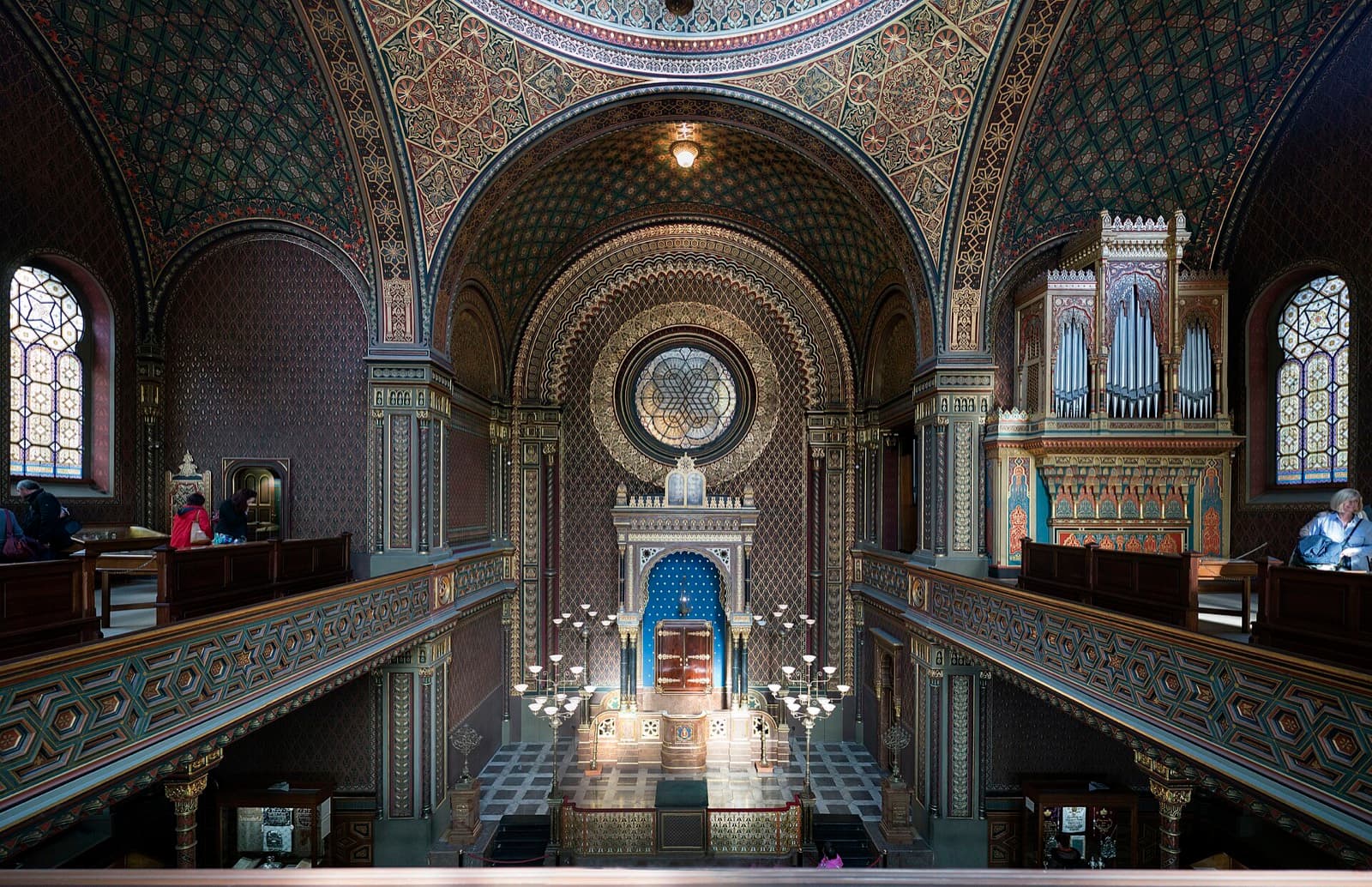
A sober cluster walk through Josefov, the former Jewish quarter of Prague, where the oldest synagogue in active use, a cemetery layered a dozen graves deep, and the handwritten names of the murdered all share the same small ground. Read eight centuries of confinement and survival at your own pace.
Start · The Old-New Synagogue
DirectionsStops
- 1
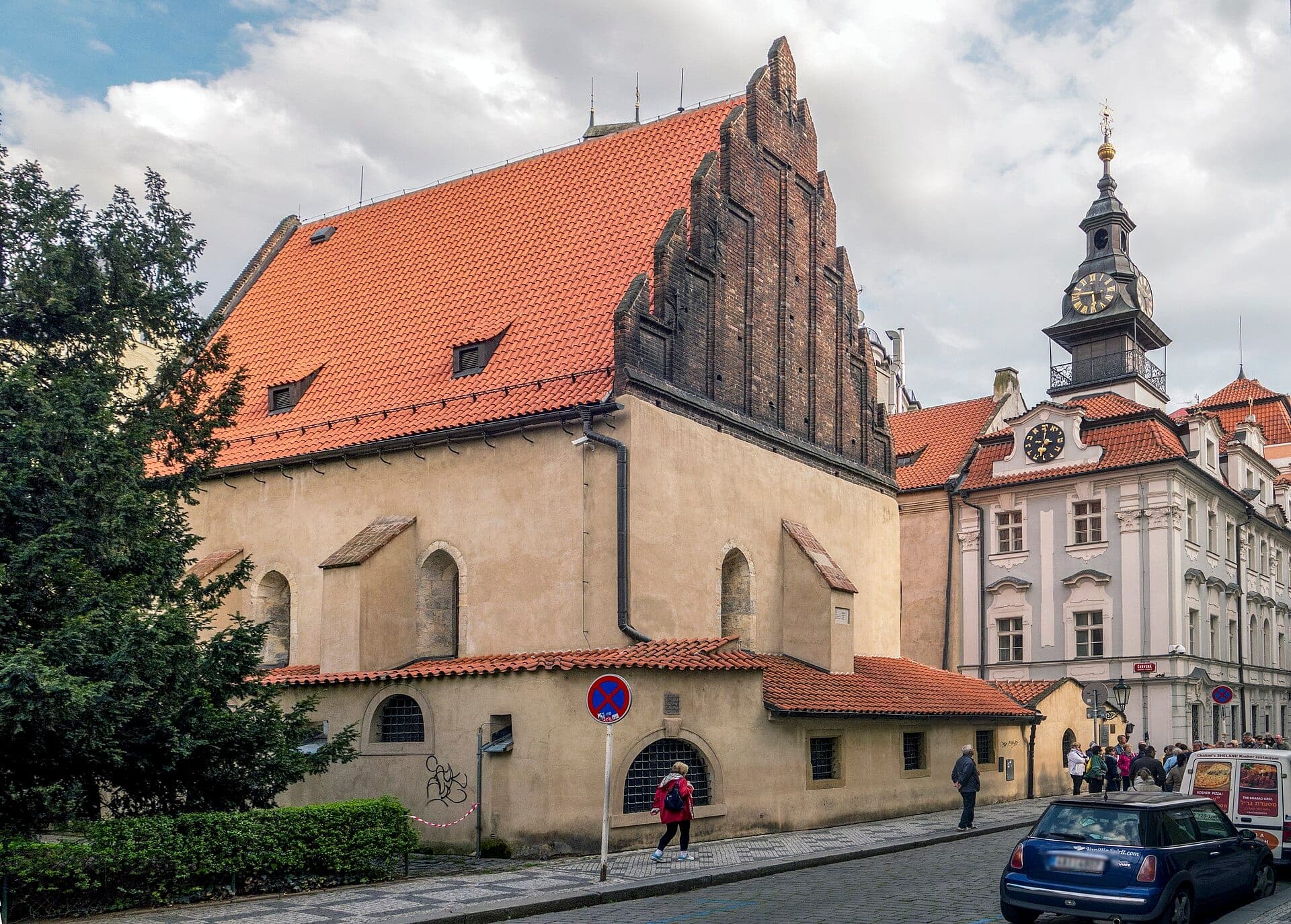
The Old-New Synagogue
Completed around the year twelve seventy, this double-nave Gothic hall is described as Europe's oldest active synagogue and remains in Orthodox use.
- 2
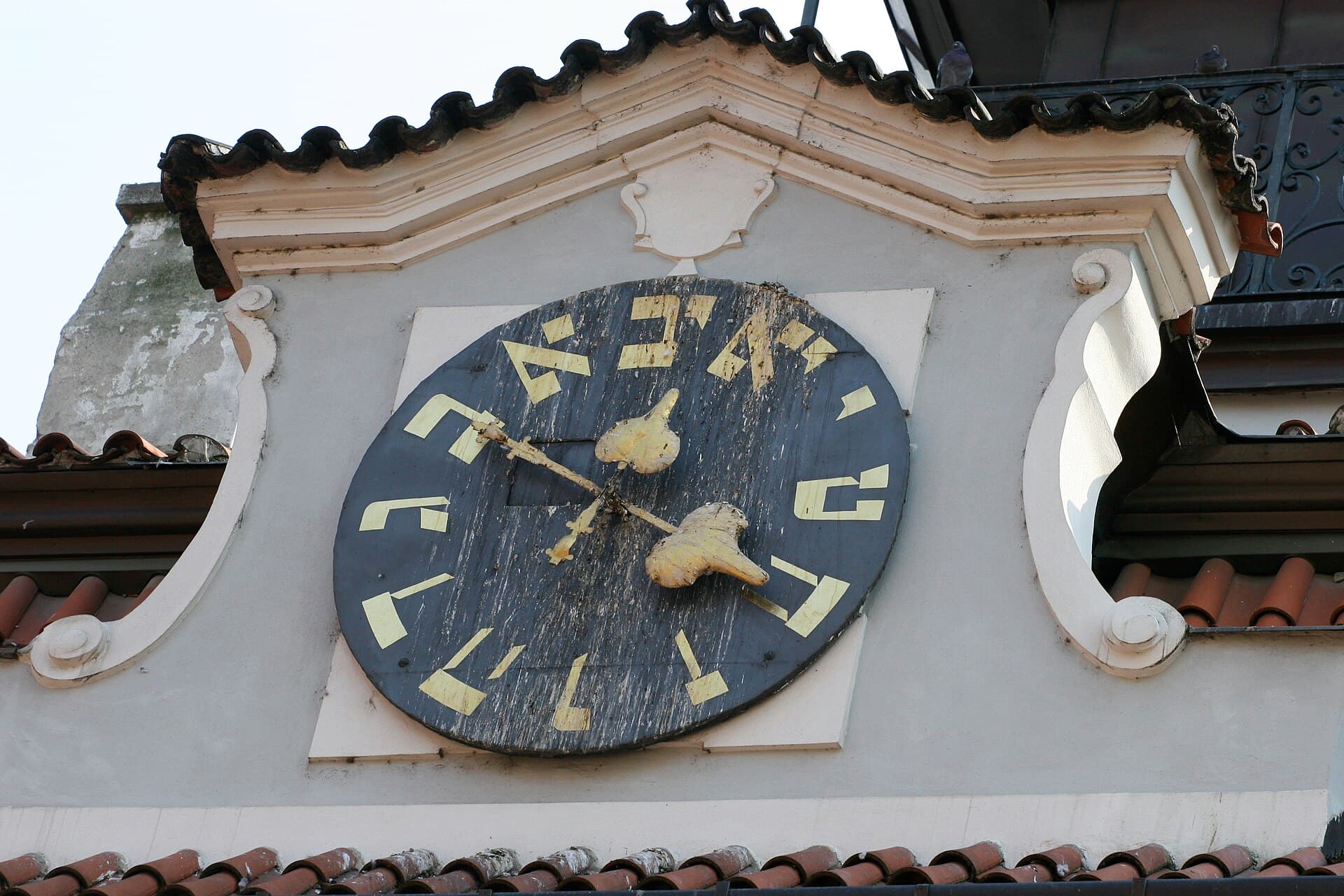
The Jewish Town Hall: The Backward Clock
Built beside the synagogue in fifteen eighty-six under mayor Mordechai Maisel, this was the community's civic seat, famous for a Hebrew clock whose hands run counter-clockwise.
- 3
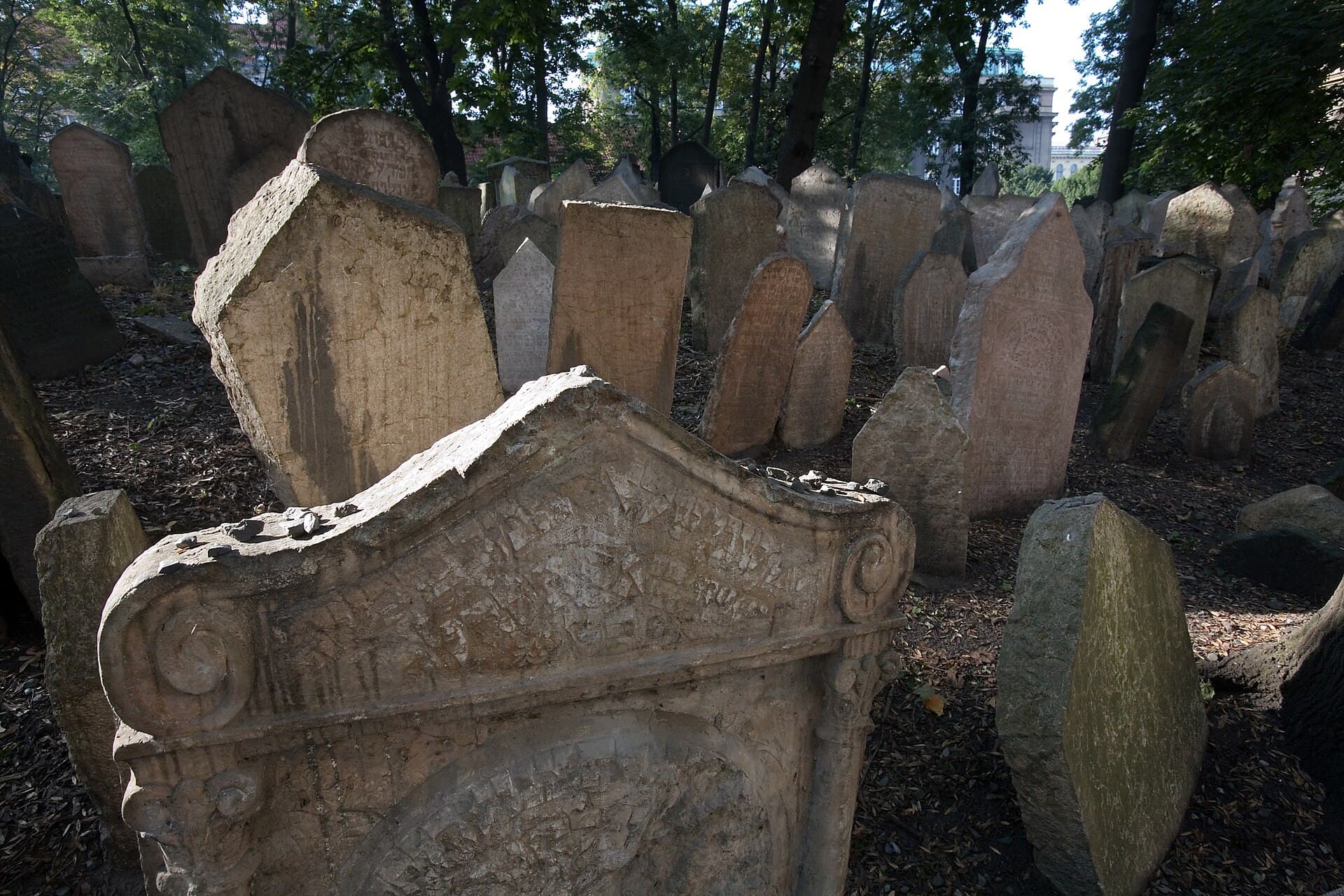
The Old Jewish Cemetery: A Dozen Layers Deep
In use from about fourteen thirty-nine until seventeen eighty-seven, this cemetery was forbidden to expand, so the community layered soil over graves until the burials stood as many as twelve deep.
- 4
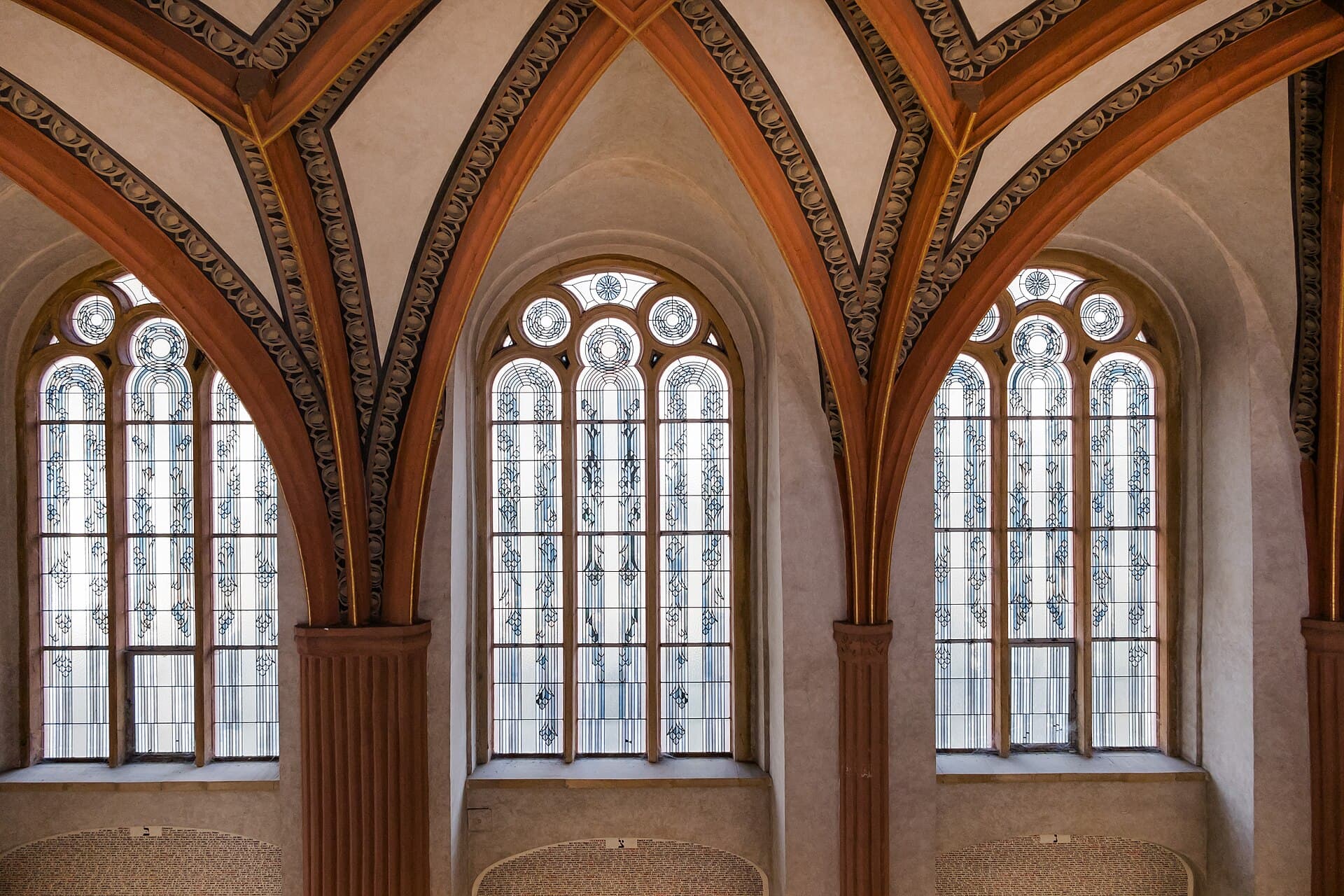
The Pinkas Synagogue: The Names on the Wall
A sixteenth-century synagogue whose walls now carry the handwritten names of seventy-seven thousand two hundred ninety-seven murdered Jews of Bohemia and Moravia, with children's drawings from the Terezin ghetto upstairs.
- 5
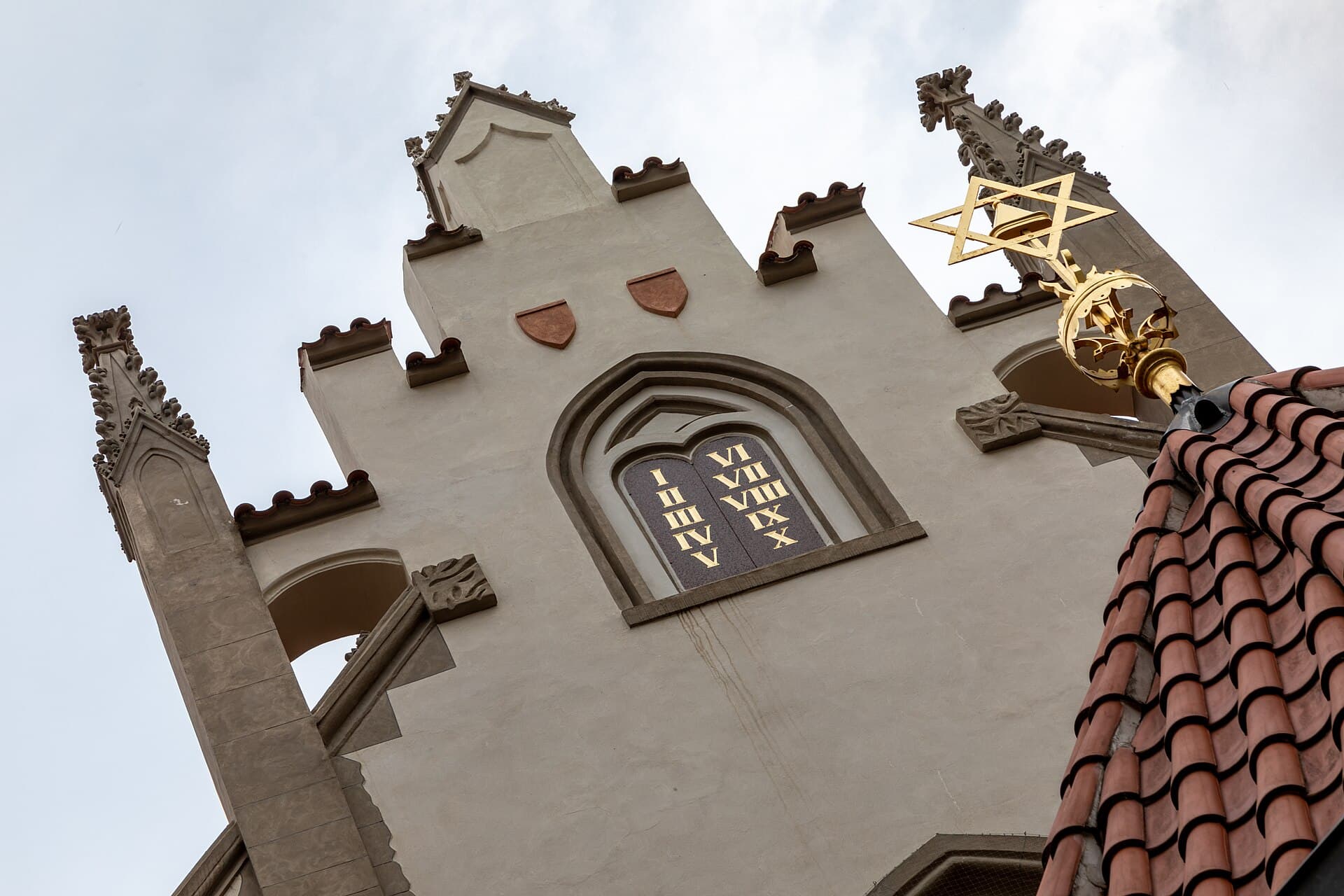
The Maisel Synagogue: The Golden Age of Mordechai Maisel
Completed in fifteen ninety-two as the private synagogue of mayor and imperial financier Mordechai Maisel, it now holds a museum exhibition on Jewish history in the Czech lands.
- 6
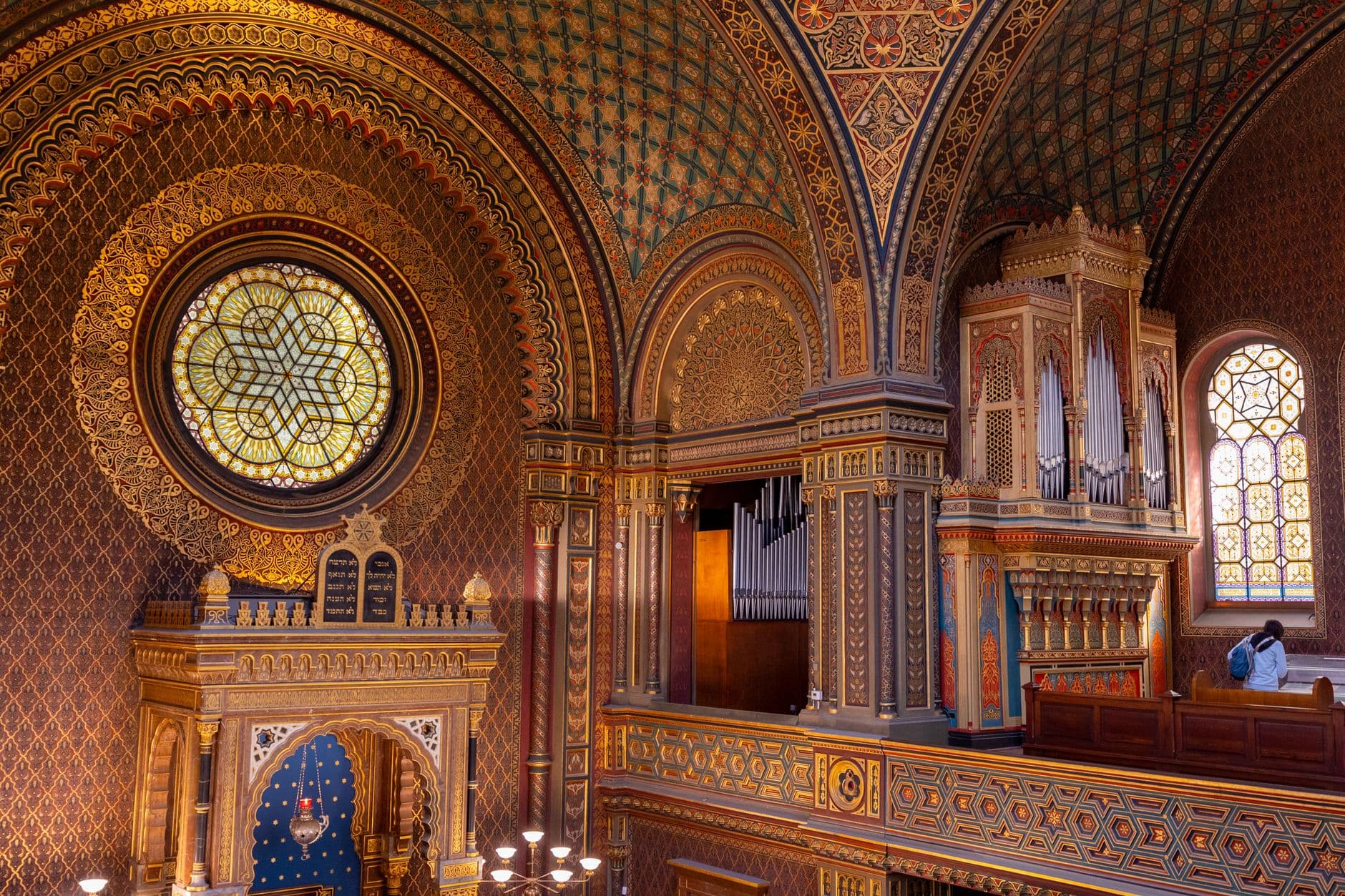
The Spanish Synagogue: The Emancipated Century
Completed in eighteen sixty-eight in Moorish Revival style on the site of the quarter's oldest synagogue, its gilded arabesque interior is among the most ornate in Prague.
- 7
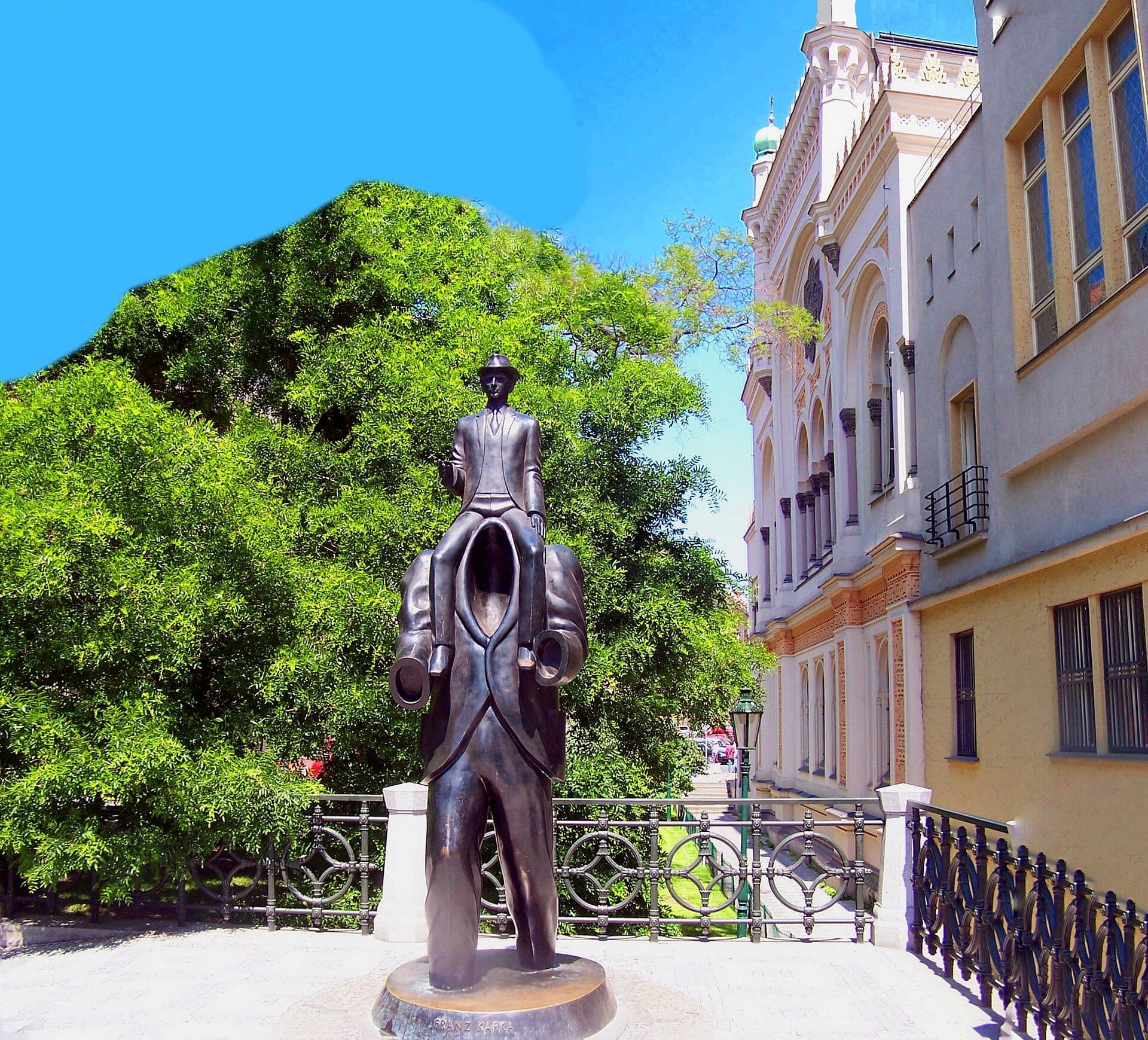
The Franz Kafka Monument: The Watched Demolition
A bronze by sculptor Jaroslav Rona, unveiled in December two thousand three, showing Kafka riding the shoulders of a hollow empty suit at the edge of the quarter he watched being cleared.
Details
Best Time to Visit
Late morning on a weekday, ideally soon after the Jewish Museum sites open, so you reach the cemetery and the Pinkas Synagogue before the midday crowds. Note that all of the Jewish Museum sites and the Old-New Synagogue are closed on Saturdays and on Jewish holidays, so plan for Sunday through Friday. Spring and autumn give the softest light in the narrow streets; the sober indoor stops feel most fitting when you are unhurried.
Pro Tips
- •The combined Jewish Museum 'Jewish Town' ticket, around six hundred Czech crowns, covers the Maisel, Pinkas, and Spanish synagogues plus the Old Jewish Cemetery, and stays valid for three days, so you need not rush all seven stops into one visit.
- •The Old-New Synagogue is a separately ticketed active synagogue; a combined museum-plus-Old-New ticket runs around eleven hundred crowns, while the Kafka statue outdoors is free.
- •The Jewish Town Hall is closed to the public, so treat it as an exterior stop and look up at its two clocks rather than trying to go inside.
- •Buy or reserve tickets ahead where you can, as queues at the cemetery entrance and the synagogues build quickly by midday.
- •Dress respectfully for the synagogues, and men should expect to cover their heads inside the Old-New Synagogue, where head coverings are usually provided.
- •Keep the sober stops for a calm moment: the cemetery and the Pinkas Synagogue reward a slow, quiet pace far more than a quick pass-through.
Safety & Precautions
- •Move quietly and respectfully at the Old Jewish Cemetery and inside the Pinkas Synagogue Shoah memorial: keep your voice low, stay on the paths, and remember these are a graveyard and a memorial to the murdered, not photo backdrops.
- •Watch for fast, nearly silent trams and the tram tracks and worn cobblestones underfoot; the lanes of Josefov open onto busy streets, so look both ways and wear sturdy shoes.
- •Guard against pickpockets in the crowded areas nearby, including the Old Town Square, Charles Bridge, and on packed trams; keep bags closed and in front of you.
- •Expect timed tickets, queues, and closures on Saturdays and Jewish holidays at the Jewish Museum sites and the Old-New Synagogue, and validate any tram or metro ticket you use to reach the quarter.
Travel advisory: Exercise Normal Precautions (Level 1).
Gallery
Related Reading
Go deeper on what you'll see, hear, and walk through.
Overview
Best Self-Guided Walking Tours in Prague (2026)
3 min
Overview
One Day in Prague: A Walkable Morning-to-Evening Itinerary
7 min
Overview
Prague Travel Guide: Days, Transport, Safety, and Budget
7 min
Thematic
Best History Walking Tours in Prague (2026)
2 min
Thematic
Prague's Layered City: The Coronation Route, Josefov, and a Modern Grammar
8 min
Companion
The Old Jewish Cemetery Reads Prague's Whole Confined Quarter
7 min
Deep dive
The Old-New Synagogue: Seven and a Half Centuries of Continuous Prayer
6 min
Read
What to Eat in Prague
6 min
Read the walk
The full story of Josefov Jewish Quarter: The Town Within the City, in words. Prefer to listen? Play it narrated, from home or on location.
Introduction
Between the Old Town Square and the river in Prague, in the Czech Republic, there was for roughly eight centuries a walled quarter that was a town within the city. It held one of the oldest Jewish communities in Europe, hemmed in and forbidden to grow. Because it could not spread outward, it buried its dead in layers until the graves stood a dozen deep. It gave the world the legend of the Golem. And it was twice nearly erased: first by a slum clearance that swept away the crooked lanes and left only the synagogues and the cemetery standing, and then by the Shoah, which murdered the community but, by a grim irony, spared the buildings the occupiers meant to keep as a museum of a people they intended to wipe out. This is a cluster walk of seven stops through that quarter, called Josefov. Expect to spend roughly two hours moving at your own pace, over a compact route of just over one kilometre, with the stops close together and easy to reach in any order you like. You will move from the medieval core outward through the centuries: the oldest synagogue and the Golem legend, a civic town hall with a backward clock, the layered cemetery, the memorial to the murdered, the golden age under Rudolf the Second, the ornate synagogue of a freer century, and finally the writer who watched his childhood quarter demolished around him. Take the sober stops slowly, and skip any you wish. When you arrive at the Old-New Synagogue, begin with stop one.
1. The Old-New Synagogue
You are standing before the Old-New Synagogue, in Czech the Staronova synagoga, and the word synagoga simply means synagogue. It was completed around the year twelve seventy, which makes it one of the earliest Gothic buildings in Prague, and Wikipedia describes it as Europe's oldest active synagogue. That word active matters. This is not a museum. It is still used for Orthodox Jewish worship, with the seating separated by gender, so if the doors are open and prayer is happening, this is a living house of faith and not a sight to be consumed. Look at the shape of it. Inside runs a double nave, two aisles under six vaulted bays, and the vaulting has an unusual five ribs rather than the usual four or six. The story told is that a sixth rib was deliberately avoided so the pattern would not read as a cross. Above you rises a steep brick gable, and on the outside an old ladder climbs toward the attic. That attic is the home of a legend. Local lore holds that the great sixteenth-century Rabbi Judah Loew ben Bezalel, known as the Maharal, shaped a figure of clay called the golem to protect the community, and that its remains still rest in the loft above. Hold that lightly, because it is folk tale and not history. The rabbi himself was real and you can find his grave nearby. But the golem is legend. When explorers went up into that attic in eighteen eighty-three, and again in August of twenty fourteen, they found no clay body and no trace of one. What is real is the stone around you, sheltering prayer for roughly seven and a half centuries.
2. The Jewish Town Hall: The Backward Clock
Beside the synagogue stands the Jewish Town Hall, in Czech the Zidovska radnice, where radnice means town hall. This was the civic heart of the quarter, the main meeting house of the local Jewish community, the place where its self-government did its business. It was built here in the year fifteen eighty-six under the sponsorship of the mayor, Mordechai Maisel, and it later gained a lighter Rococo face after renovations across the following century. Today it is closed to the public, still a community building, so this is a stop to read from the outside. Now look up at the clocks, because there are two of them and they tell a quiet story about who lived here. The upper tower carries an ordinary clock with Roman numerals, the kind you would find anywhere in Prague. But lower down is a second clock with Hebrew numerals, and its face begins with the letter aleph and its hands turn counter-clockwise. That is not a trick or a joke. Hebrew is read from right to left, so the clock simply keeps faith with the language of the community it served, and time here runs the way the words do. Stand a moment with that. In a quarter that was walled in and told where it could and could not go, here was a building that answered to its own council, kept its own records, and even measured the hours in its own script. The backward clock is the town within the city, quietly insisting on itself.
3. The Old Jewish Cemetery: A Dozen Layers Deep
This is the Old Jewish Cemetery, in Czech the Stary zidovsky hrbitov, where hrbitov means cemetery. It is one of the most important Jewish monuments in Prague, and one of the largest of its kind in Europe. It was in use from about the year fourteen thirty-nine, the date of the earliest surviving gravestone, until seventeen eighty-seven. Read those crowded, leaning stones as the record of a confinement. The community was refused permission, again and again, to expand this ground. But burial could not stop, and Jewish tradition does not disturb the dead. So they did the only thing left to them. They brought in soil and laid new graves above the old ones, layer upon layer. In places, as many as twelve layers of graves now exist, one generation resting atop another, which is why the earth here rises and the headstones crowd together so tightly. Roughly twelve thousand stones stand visible on the surface, above a far greater number of burials beneath. Among those buried here are two figures you have already met today. Rabbi Judah Loew, the Maharal, the real man behind the golem legend, who died in sixteen oh nine. And Mordechai Maisel, the mayor and benefactor whose name is written across this quarter, who died in sixteen oh one. Also here lie the scholar and historian David Gans and the book collector David Oppenheim. Please walk this ground quietly and keep to the paths. This is not a curiosity. It is a graveyard, densely and painfully full, held in place by a people who were denied even the room to bury their dead.
4. The Pinkas Synagogue: The Names on the Wall
This is the Pinkas Synagogue, in Czech the Pinkasova synagoga. A congregation of the Horowitz family traces back here to the fifteenth century, and the synagogue itself was completed in fifteen thirty-five. But that is not why you should stand here quietly. Since the nineteen…
Full narration for this stop unlocks with the tour.
5. The Maisel Synagogue: The Golden Age of Mordechai Maisel
Set slightly back from the street stands the Maisel Synagogue, in Czech the Maiselova synagoga, and it is the memorial to a golden age. You have heard the name Maisel all morning, on the town hall and in the cemetery. Here is where it began. Mordechai Maisel was a wealthy man,…
Full narration for this stop unlocks with the tour.
6. The Spanish Synagogue: The Emancipated Century
Now the mood lifts and the century changes. This is the Spanish Synagogue, in Czech the Spanelska synagoga, and it was completed in eighteen sixty-eight. It stands on the site of the Altschul, the Old School, which was presumably the oldest synagogue in the whole Prague Jewish…
Full narration for this stop unlocks with the tour.
7. The Franz Kafka Monument: The Watched Demolition
At the corner of Dusni and Vezenska streets, where ulice means street, stands the Franz Kafka Monument. It is a bronze by the Czech sculptor Jaroslav Rona, unveiled in December of two thousand three, and it is a strange and fitting way to end this walk. Look closely. A hollow,…
Full narration for this stop unlocks with the tour.