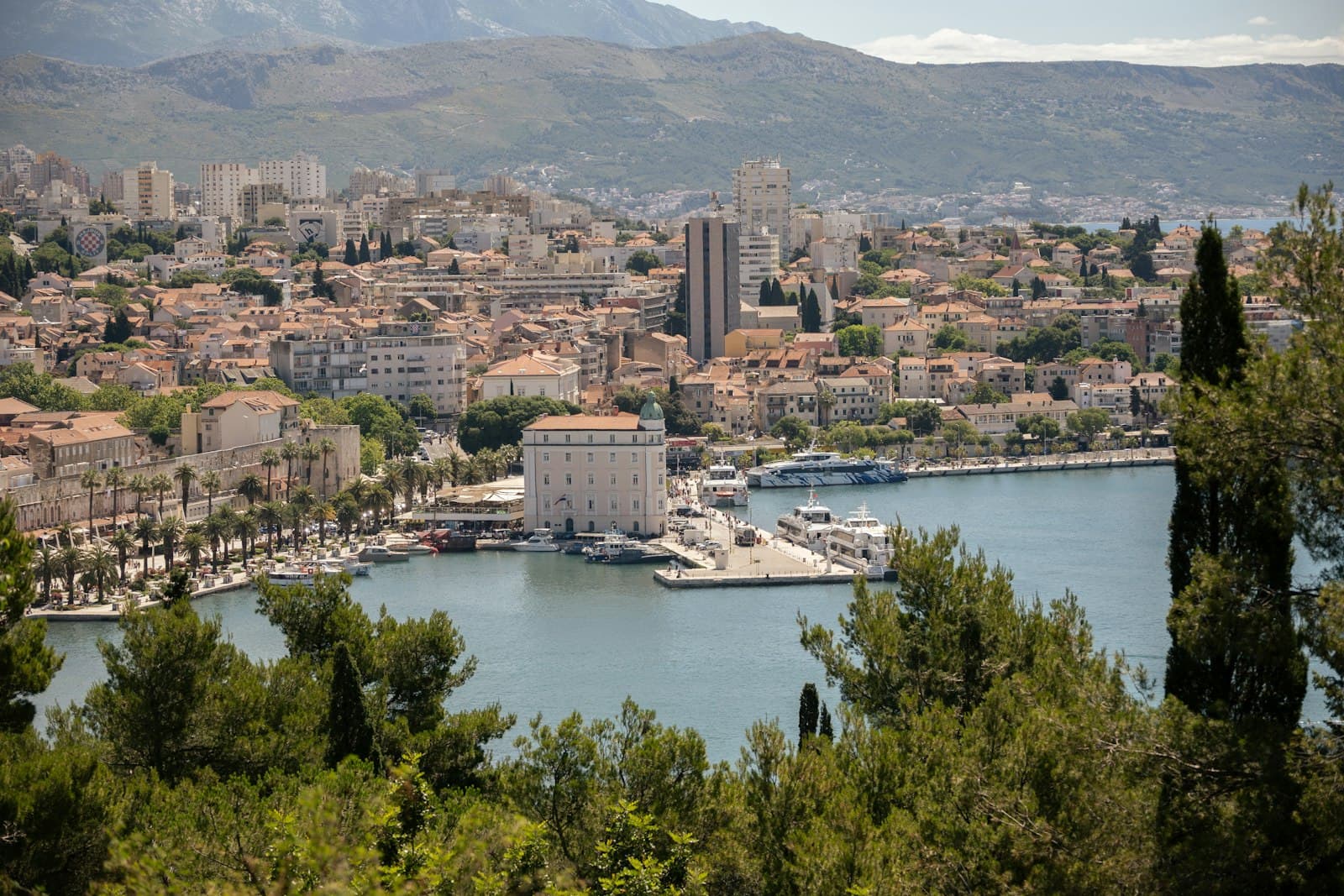
Everyone comes to Split for the emperor's marble palace. This walk turns its back on the marble and climbs the other Split: the fishermen's stone lanes and the green hill the city calls its lungs and its soul.
Start · The Riva: The City's Living Room by the Sea
DirectionsStops
- 1
The Riva: The City's Living Room by the Sea
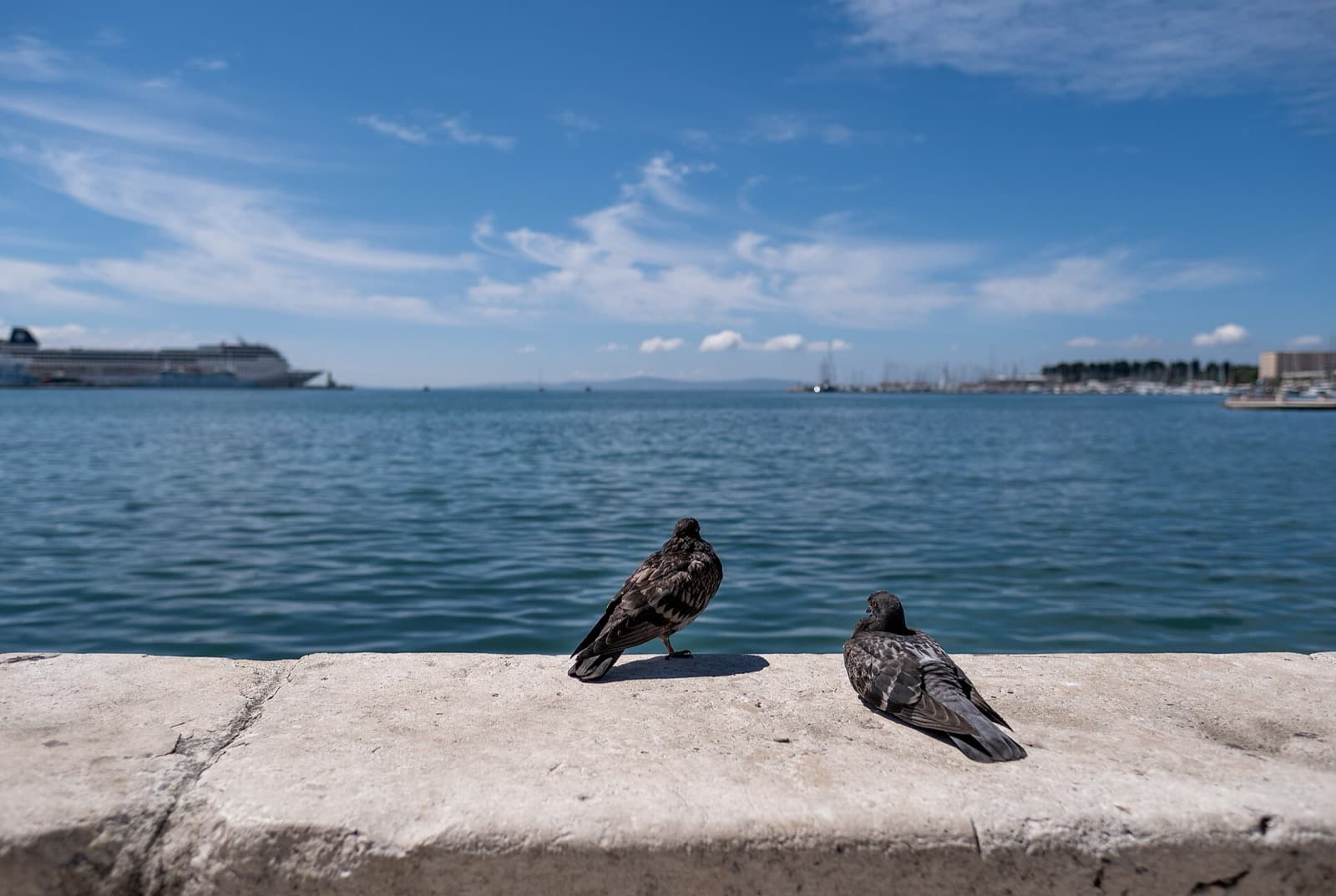
Split's palm-lined marble waterfront, running the length of the palace's sea-facing wall, where the whole town gathers in the evening.
- 2
The Prokurative: Split's Answer to Venice
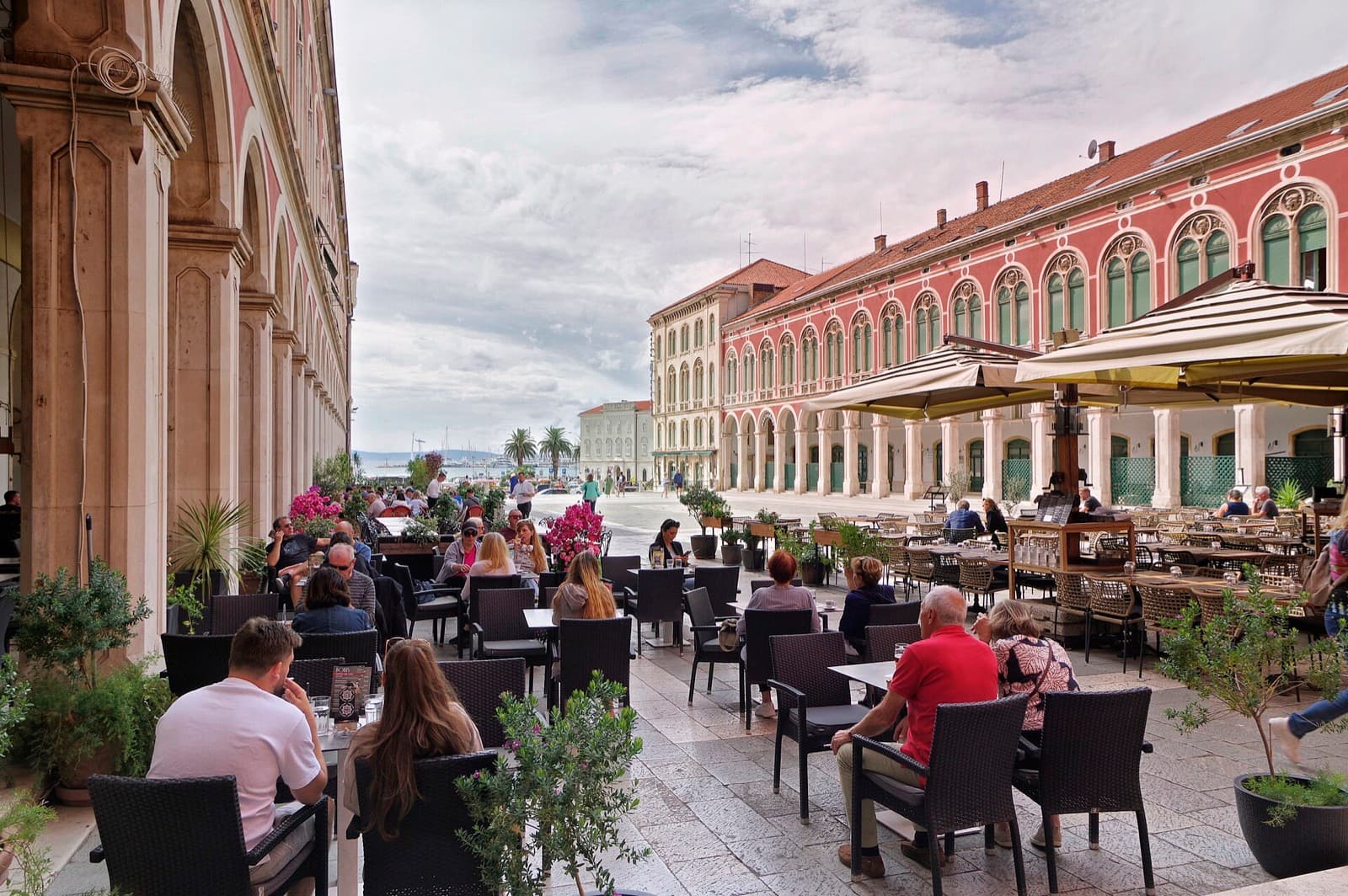
A grand three-sided neo-Renaissance square opening toward the sea, deliberately modeled on the buildings that ring St Mark's Square in Venice.
- 3
Veli Varos: The Quarter of Fishermen and Stone
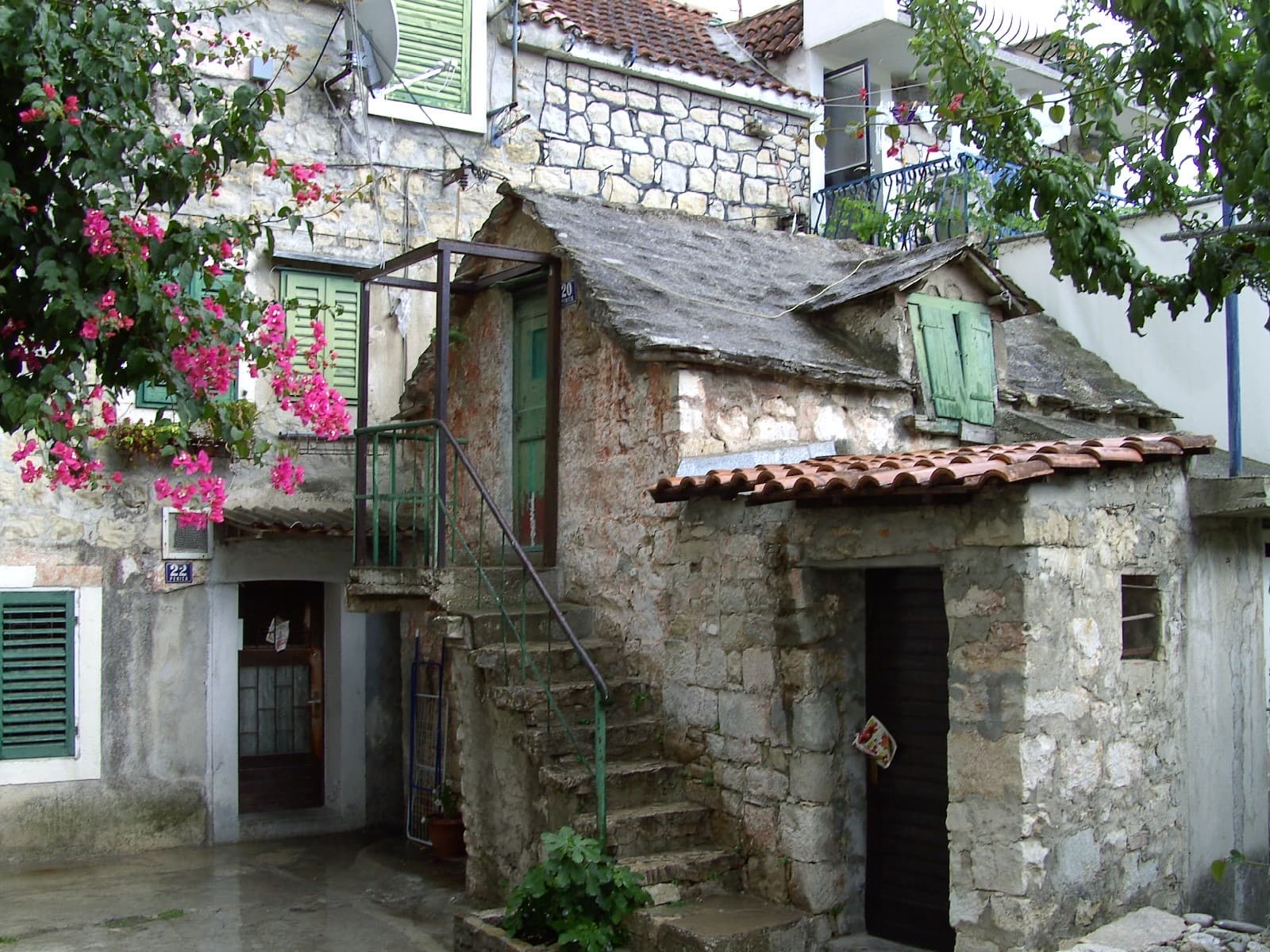
The historic hillside quarter of narrow stepped stone lanes where fishermen, stonemasons and laborers built their own small city west of the palace.
- 4
The Marjan Stairs and the Vidilica: First View Back
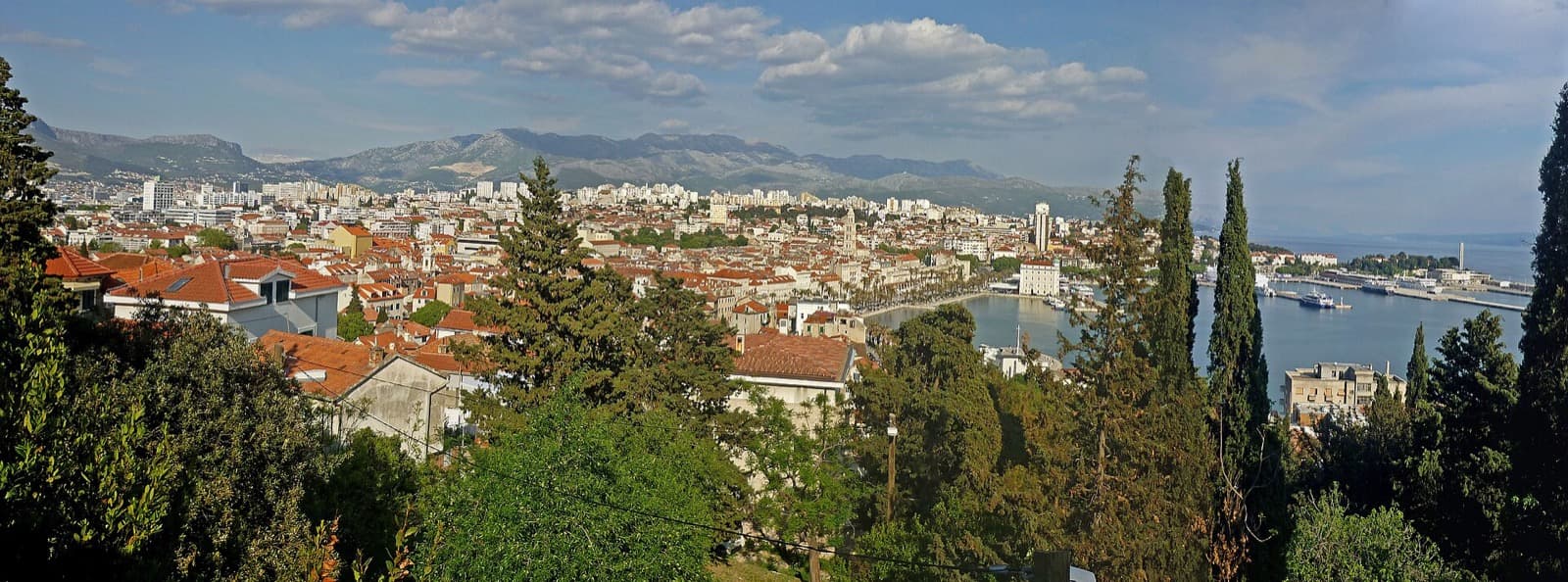
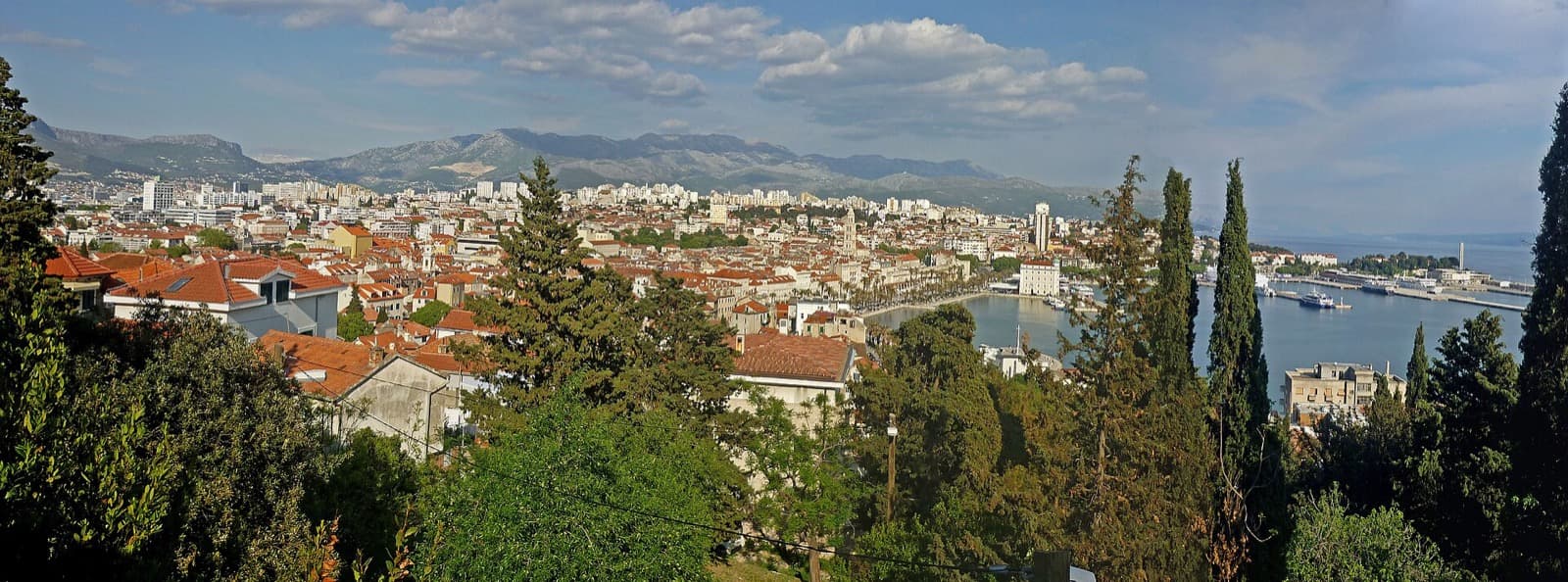
A stone stairway of some three hundred steps climbing to the first great viewpoint over the town, with the oldest Jewish cemetery in Croatia on the slope below.
- 5
The Hermit Churches of Marjan: Cut Into the Cliff
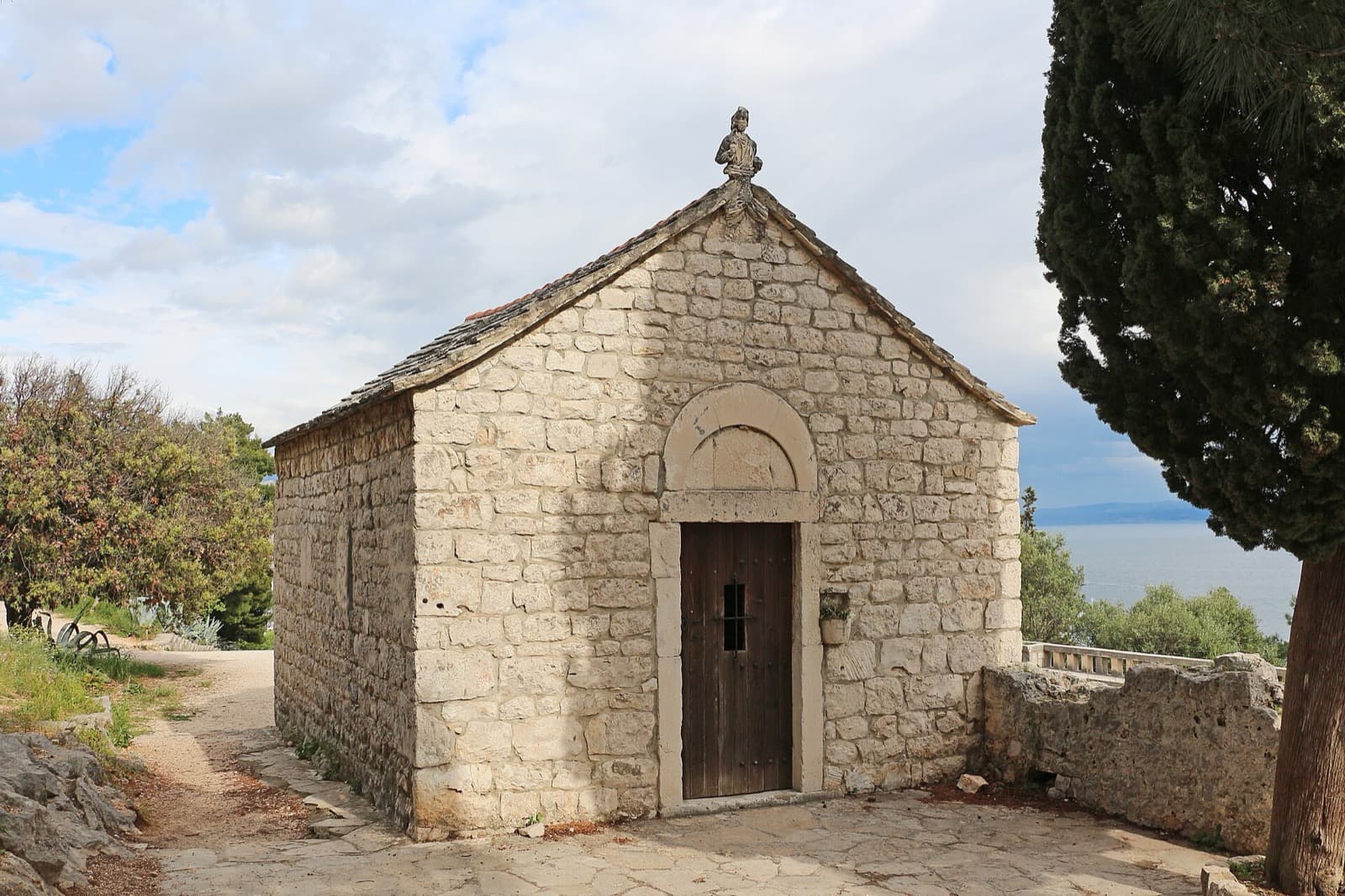
Small medieval churches set into the cliffs of Marjan, where hermit monks once lived in caves walled into the rock beside a Renaissance altar.
- 6
The Summit of Marjan: The Whole Coast Below You
The wooded summit of Marjan, called Telegrin, rising one hundred and seventy-eight metres with a sweeping panorama across the Adriatic to the islands.
- 7
The Southern Shore: Where Forest Meets the Sea
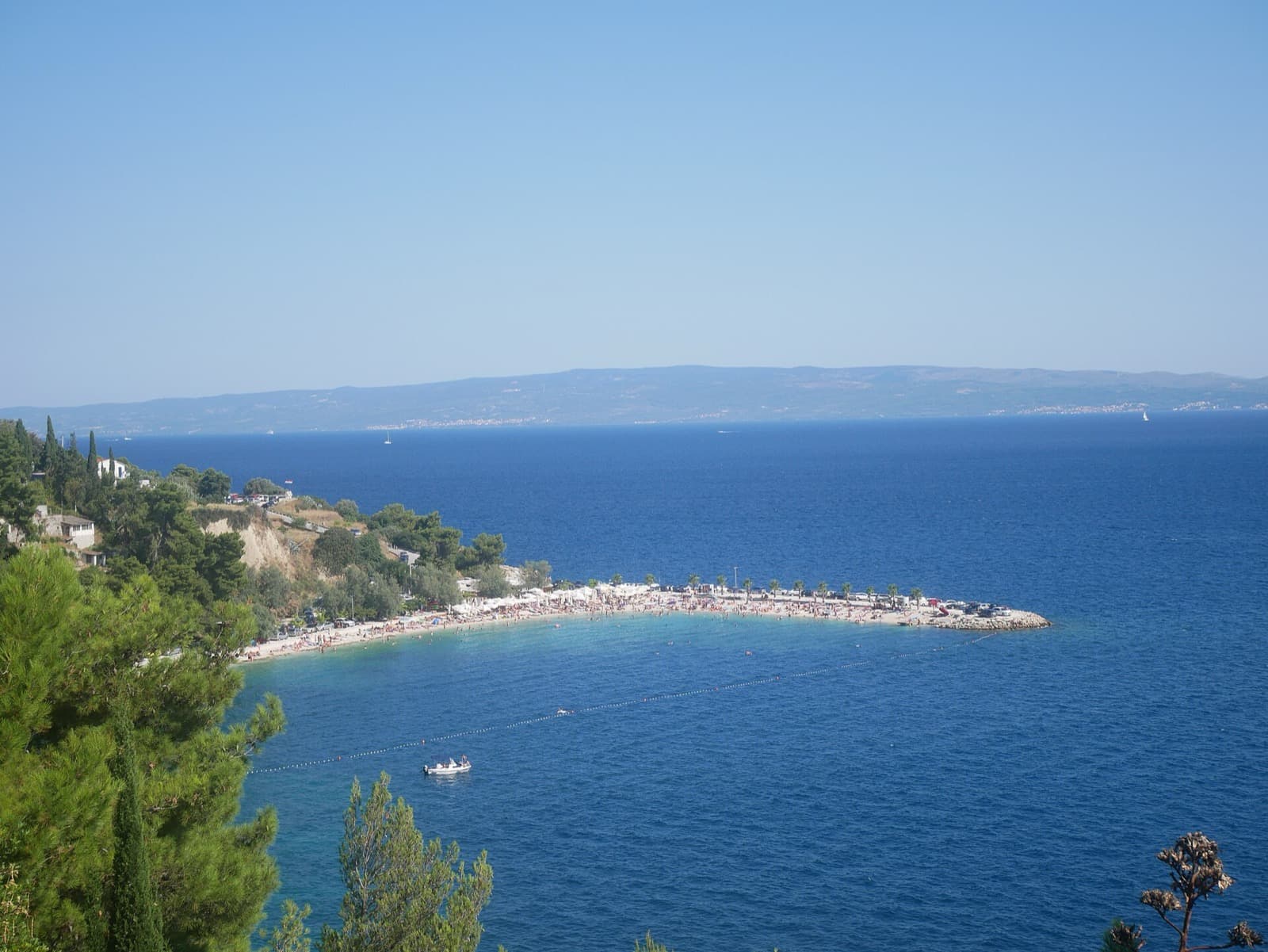
The quiet pine-shaded seaward edge of Marjan, where the forest of the park runs straight down to clear water and pebble coves.
Details
Best Time to Visit
Late afternoon into early evening. Start the climb once the fiercest midday sun has softened, reach the Marjan summit for the long golden light over the islands, and finish along the Riva as the whole town comes out for its evening stroll. In high summer, an early morning start is the cooler alternative for the uphill sections.
Pro Tips
- •This is a genuine uphill walk with roughly three hundred steps to the first viewpoint and more to the summit. Go at your own pace, rest on the low walls, and treat every stop as fully skippable.
- •Wear proper walking shoes with grip. The old town's polished limestone is slippery, and the Veli Varos lanes and Marjan paths are uneven stone and packed earth.
- •Carry water. There is little shade on the Riva and long stretches of the climb, and Dalmatian summers are hot and dry.
- •The hermit churches on Marjan are working places of worship. When they are open, keep your voice low and cover shoulders and knees.
- •Time your climb so you reach the Telegrin summit before sunset for the clearest island panorama, then descend while there is still light on the paths.
- •The stepped lanes of Veli Varos are a lived-in neighbourhood, not an exhibit. Move quietly, let residents pass, and keep out of private courtyards.
Safety & Precautions
- •Sun exposure is real on this route. The Riva, the open viewpoints, and much of the Marjan climb offer little shade, so use sun protection, a hat, and water, especially in summer.
- •Footing is the main hazard. Expect polished, slippery limestone in the old town, uneven medieval paving in Veli Varos, and many stone steps on the ascent and descent of Marjan. Take the stairs carefully.
- •The climb to the Marjan summit is strenuous. Know your own limits, pace yourself, and do not attempt it in the midday heat without ample water; turn back at any viewpoint if you have climbed far enough.
- •Working churches on Marjan and in Veli Varos require modest dress and quiet, and the surrounding old quarters are people's homes. Respect the calm of both.
Travel advisory: Exercise Normal Precautions (Level 1).
Gallery
Related Reading
Go deeper on what you'll see, hear, and walk through.
Overview
Best Self-Guided Walking Tours in Split (2026)
3 min
Overview
One Day in Split: A Walkable Morning-to-Evening Itinerary
7 min
Overview
Split Travel Guide: Days, Transport, Season, Safety, Budget
7 min
Thematic
Split: The City That Moved Into an Emperor's Palace
7 min
Companion
Marjan Summit: Why Split's Green Hill Is the Walk That Turns Its Back on the Palace
7 min
Deep dive
The Riva in Split: Why the Whole City Comes Down to the Water
6 min
Read
What to Eat in Split: A Local Dalmatian Food Guide
6 min
Read the walk
The full story of Varos and Marjan Hill: The Fishermen's Hill, in words. Prefer to listen? Play it narrated, from home or on location.
Introduction
Most of the world comes to Split, in Croatia, for a single thing: the marble palace of a Roman emperor. This walk does something different. It leaves the imperial core and climbs, trading the emperor's carved marble for pine, stone, and the working city that grew up beside him. Over about seven stops and roughly two and a half hours, across about six and a half kilometres with a real uphill stretch, you climb from the waterfront to a forested summit that opens the whole coast. This is an uphill walk, so go entirely at your own pace. Sit on a wall when you like. Skip a stop that doesn't call to you. Nobody is waiting on you here. You begin at sea level, on the palm-lined promenade that runs along the palace's southern wall, where the whole town gathers in the evening. From there you pass a grand seafront square that borrowed its grandeur from Venice, then climb into Veli Varos, the steep quarter of narrow stone lanes where fishermen and stonemasons once lived. Higher still, a long stone stairway lifts you to your first view back over the red roofs and the harbour. Then the town falls away entirely. You reach the little churches cut into the cliffs of Marjan hill, where hermits once lived in caves in the rock, and finally the summit itself, with its sweeping look across the Adriatic to the islands. The last stop returns you to the sea, but now on the far, quiet, forested side of the hill. When you arrive at the Riva, the seafront promenade below the palace's southern wall, begin with stop one.
1. The Riva: The City's Living Room by the Sea
Start here, at sea level, with the water on one side and a long wall of stone on the other. This is the Riva, and the word simply means the shore, the waterfront. It runs about two hundred and fifty metres along the southern, sea-facing wall of the palace, a broad marble promenade lined with palms. Look up at that wall, and you are looking at the back of a Roman emperor's retirement home, the side that once opened straight onto the Adriatic. But turn around, and you are standing on something much more recent. The Riva took its modern promenade form in the early nineteenth century, under French rule, in the years associated with Marshal Marmont, the French governor of these provinces under the emperor Napoleon. It has been remodelled many times since. What it is, above all, is the social heart of the city. People here call the Riva the city's living room, and in the evening you understand why. The whole town comes down to walk it, slowly, over coffee, greeting one another, watching the light go soft on the water. It is not a monument you look at. It is a place you join. So before you climb, take a moment at the edge of the sea. Everything from here is uphill, and everything from here trades this marble for something greener and quieter. But this is the known edge, the bright social front of Split, and it is worth standing in for a while before you leave it behind and turn toward the hill.
2. The Prokurative: Split's Answer to Venice
Just west of the waterfront you come to a square that looks, quite deliberately, like it was lifted from another city. This is the Prokurative, though its official name is Trg Republike, which means Republic Square. Trg is simply the word for square. Three sides of handsome arcaded buildings frame an open space, and the fourth side is left open to the sea. If it reminds you of Venice, that is exactly the point. It was built to imitate the Procuratie, the long arcaded buildings that ring St Mark's Square across the water in Venice. The man behind it was Antonio Bajamonti, who lived from eighteen twenty-two to eighteen ninety-one and served for many years as mayor of Split. The central building went up in eighteen fifty-nine, and for a time it housed a theatre, until fire destroyed it in eighteen eighty-two. The western wing followed in the mid-eighteen-sixties, and the eastern side was completed only later, in the early twentieth century. So this is not a single grand gesture but a square built in stages, across the nineteenth century and into the next. It filled a gap in the city left after Split's old fortifications were pulled down in the Napoleonic years. Notice what is happening on this walk already. You have left the ancient marble behind, and here is a borrowed elegance, a city dressing itself in the grandeur of a rival across the sea. Hold that thought, because the next turn takes you uphill into a Split that had no grandeur to borrow at all, the quarter of the people who actually worked the water and cut the stone.
3. Veli Varos: The Quarter of Fishermen and Stone
Now the climb really begins, into a maze of narrow stone lanes that stack up the slope. This is Veli Varos, and varos is the old word for a town quarter or suburb. This was the neighbourhood of the people the palace left out: fishermen, stonemasons, and farm laborers who came here seeking work and shelter, some fleeing Ottoman raids inland. They built small, tightly packed Dalmatian houses of pale stone, many of them dating to the seventeenth century, and laced them together with stepped alleys barely wide enough to pass. Look at how a traditional house here is arranged. The ground floor was for the courtyard, the animals, the wine cellar, and an outside stair climbed to the living rooms above. This is vernacular building, stone stacked by the hands that lived in it, with none of the imperial ambition down the hill. Tucked among these lanes is a small Romanesque church, called Saint Nicholas, known locally as Sveti Mikula. Its western doorway carries carvings from the twelfth century, including lionesses, and it names the citizen who endowed it: a man called Ivan, together with his wife Tiha. Their names are set in the stone of a working neighbourhood, not a palace. The heavy bell tower beside it was raised later, in the seventeenth century. Take these lanes slowly. They are lived in still, laundry strung between the houses, cats in the shade, so move quietly and let people pass. This is the fishermen's Split, the labor beneath the show, and it is the true beginning of the hill you are about to climb.
4. The Marjan Stairs and the Vidilica: First View Back
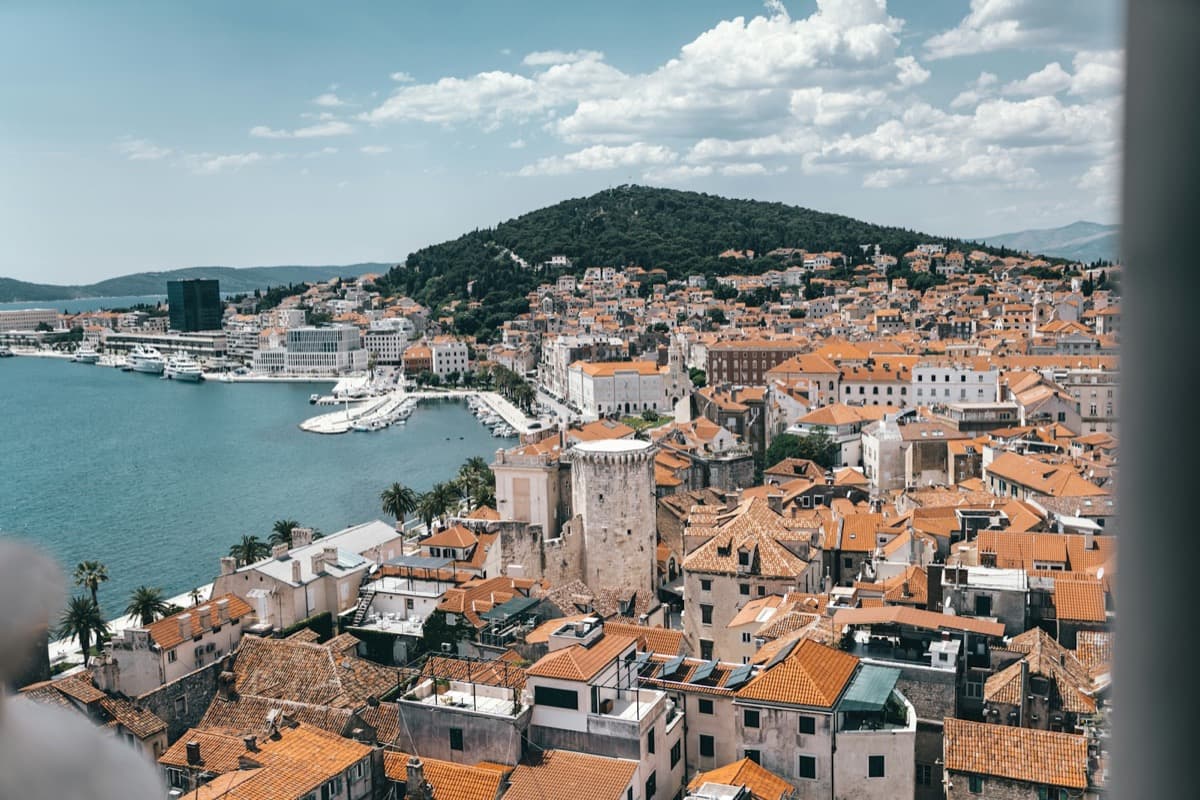
Here the town gives way to the hill. A stone stairway of about three hundred steps climbs from the edge of the old quarter up onto the eastern shoulder of Marjan, and at the top waits the Vidilica, which simply means the viewpoint, the first great lookout. Take these steps at…
Full narration for this stop unlocks with the tour.
5. The Hermit Churches of Marjan: Cut Into the Cliff
Higher on the hill, where the pine gives way to bare grey cliff, you come upon something you would never guess was here: small medieval churches built right into the rock. The one to find is the Church of Saint Jerome, known locally as Sveti Jere, standing on the southern slope…
Full narration for this stop unlocks with the tour.
6. The Summit of Marjan: The Whole Coast Below You
A final flight of steps lifts you to the top, and this is the climax of the whole climb. The summit is called Telegrin, and it stands one hundred and seventy-eight metres above the sea. All around you is forest. This is the green, wooded peninsula that Split calls its lungs,…
Full narration for this stop unlocks with the tour.
7. The Southern Shore: Where Forest Meets the Sea
The descent carries you back to where the walk began, the sea, but everything is different now. This is the far side of the hill, the quiet southern and western shore of Marjan, where the pine forest of the park runs right down to the water's edge. There are no crowds here, none…
Full narration for this stop unlocks with the tour.