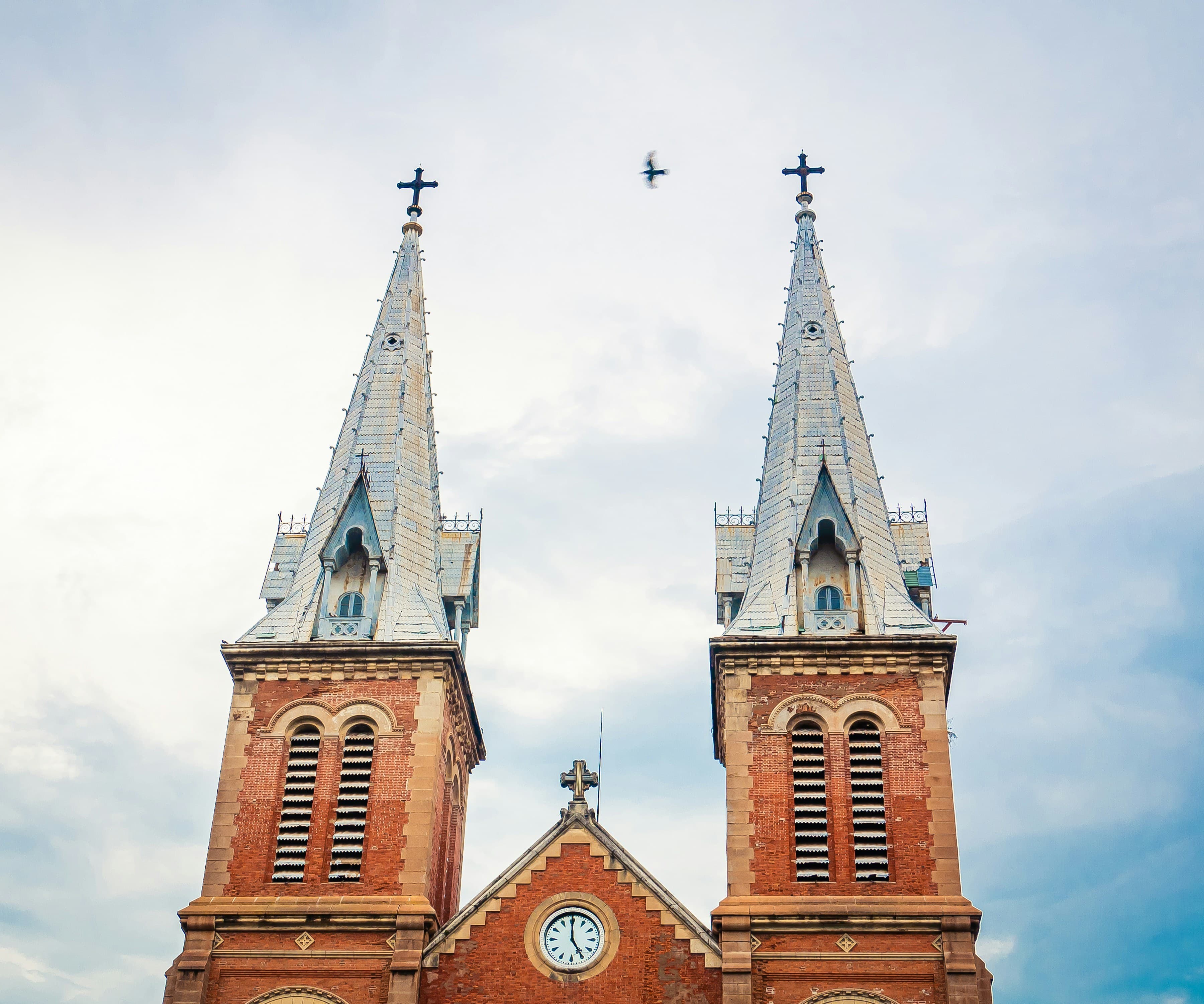
France built central Saigon to look like a European capital that would never leave. It left. The buildings stayed, and the city has been quietly repurposing them ever since. Eight stops from a pedestrian book lane to the river, past a cathedral under restoration, a post office most guides credit to the wrong architect, an opera house that spent twenty years as a parliament, and a 1960s apartment block that is now a tower of coffee shops.
Start · Duong Sach: The Lane the City Gave to Books
DirectionsStops
- 1
Duong Sach: The Lane the City Gave to Books
A hundred and forty four metre pedestrian lane of bookshops and cafes, opened in 2016 along the side of the post office compound.
- 2
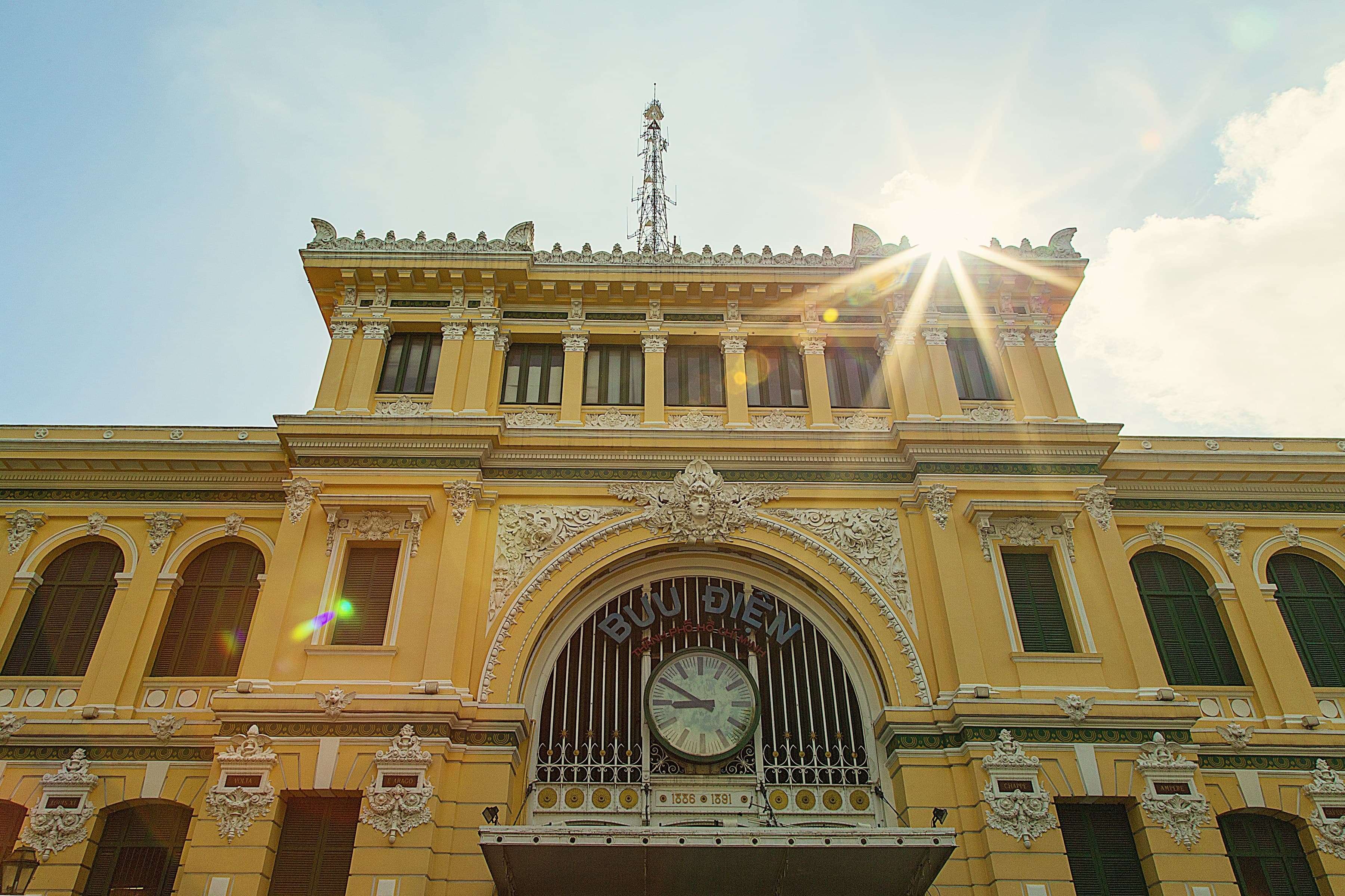
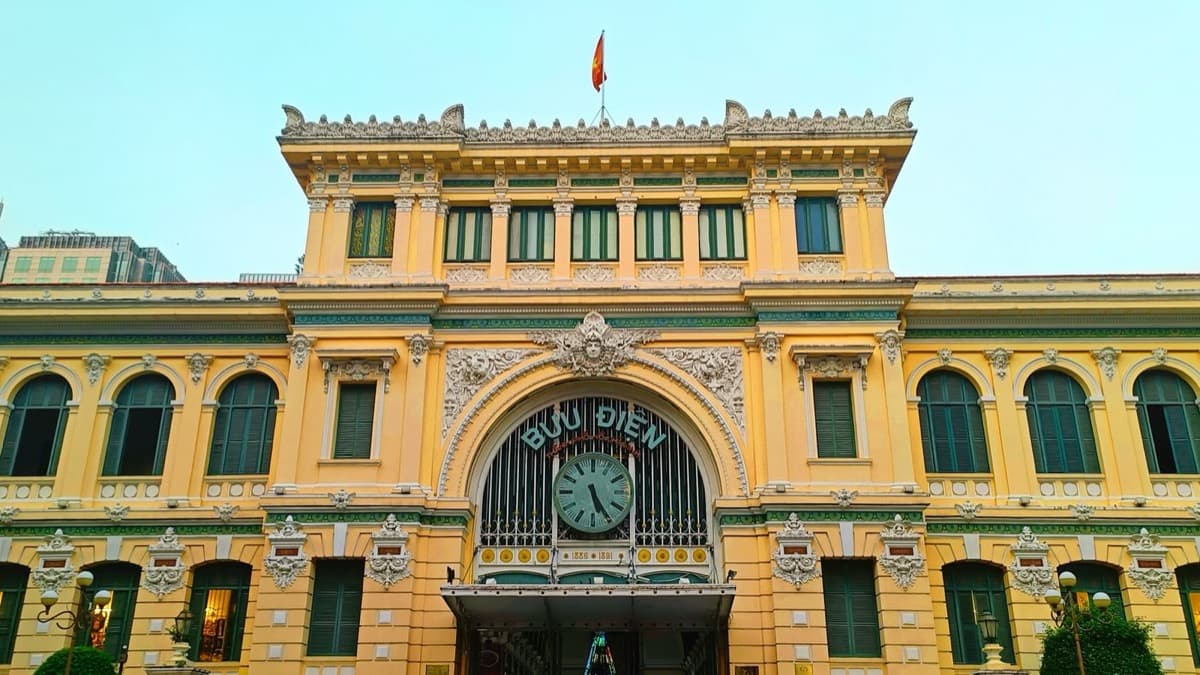
Saigon Central Post Office: The Eiffel Who Was Not There
An 1891 post office with a great iron framed vault, two painted wall maps and a persistent myth about who designed it.
- 3
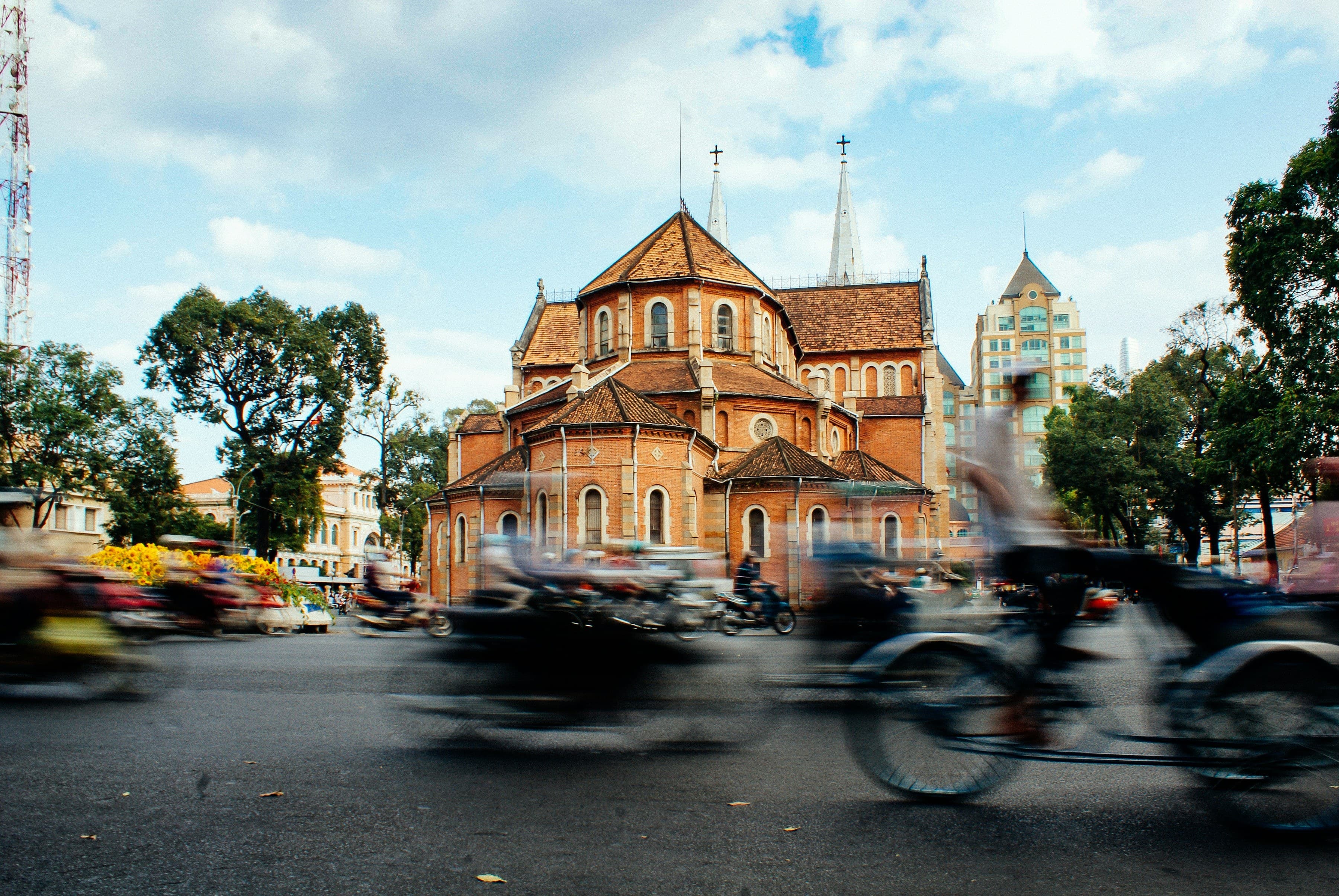
Saigon Notre-Dame: The Cathedral Under Restoration
A bare brick cathedral consecrated in 1880, whose spires came fifteen years later and whose restoration began in 2017.
- 4
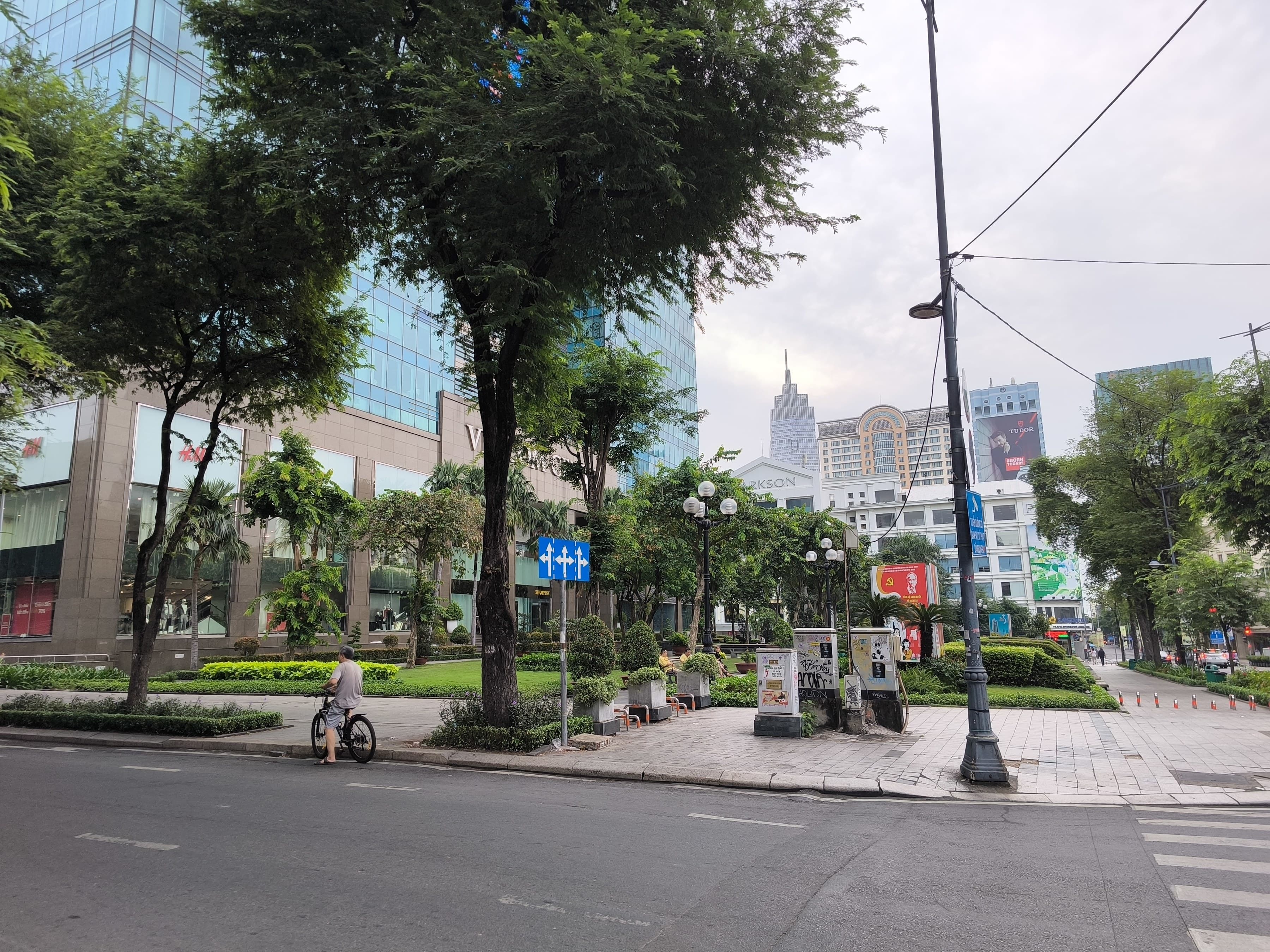
Dong Khoi: Four Names for One Street
Saigon's most fashionable street under three different governments, once rue Catinat, beside a park rebuilt on the roof of a shopping centre.
- 5
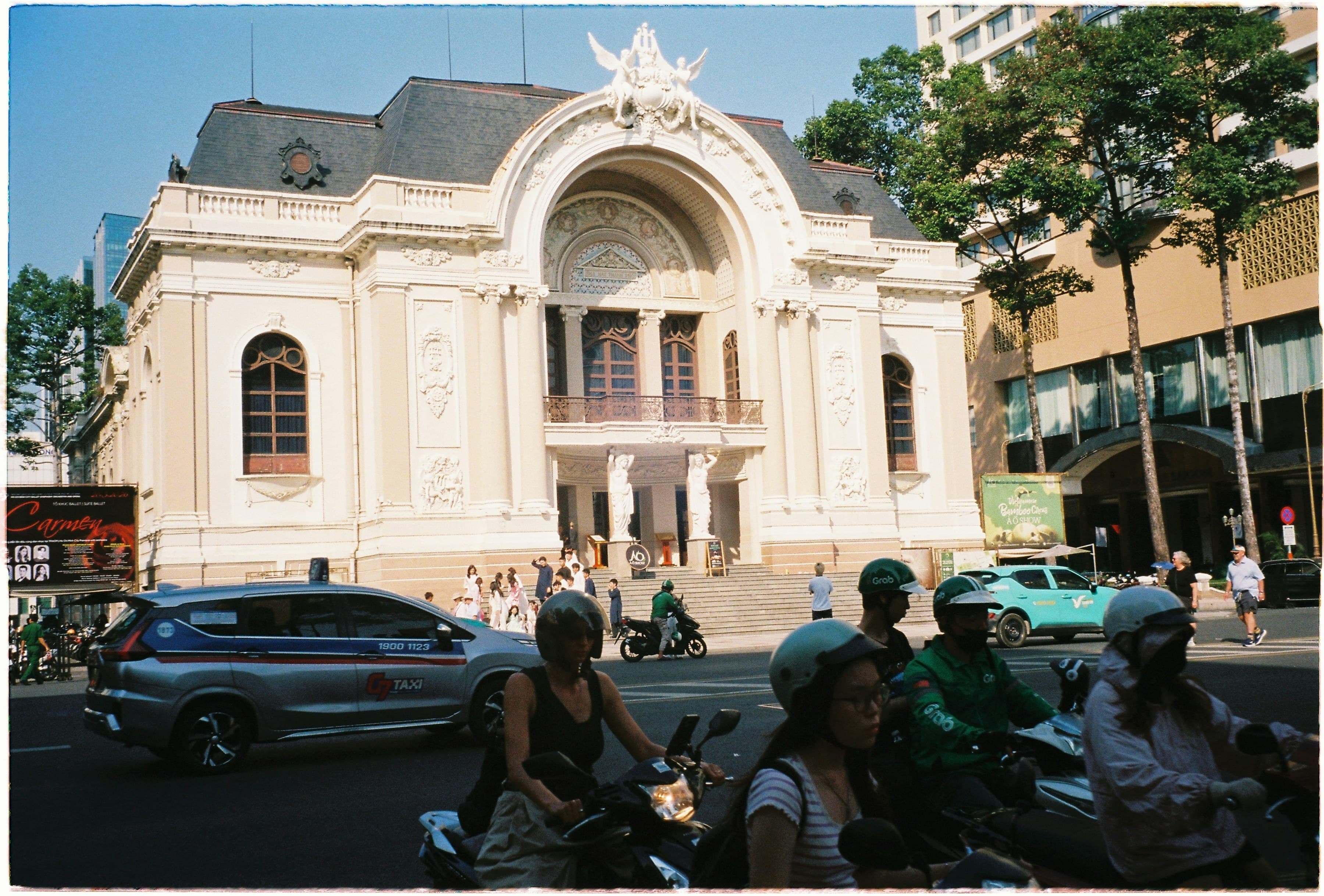
Lam Son Square: The Parliament That Went Back to Being an Opera House
A 1900 theatre modelled on the Paris opera that spent twenty years as a legislature, facing the hotel where the war correspondents drank.
- 6
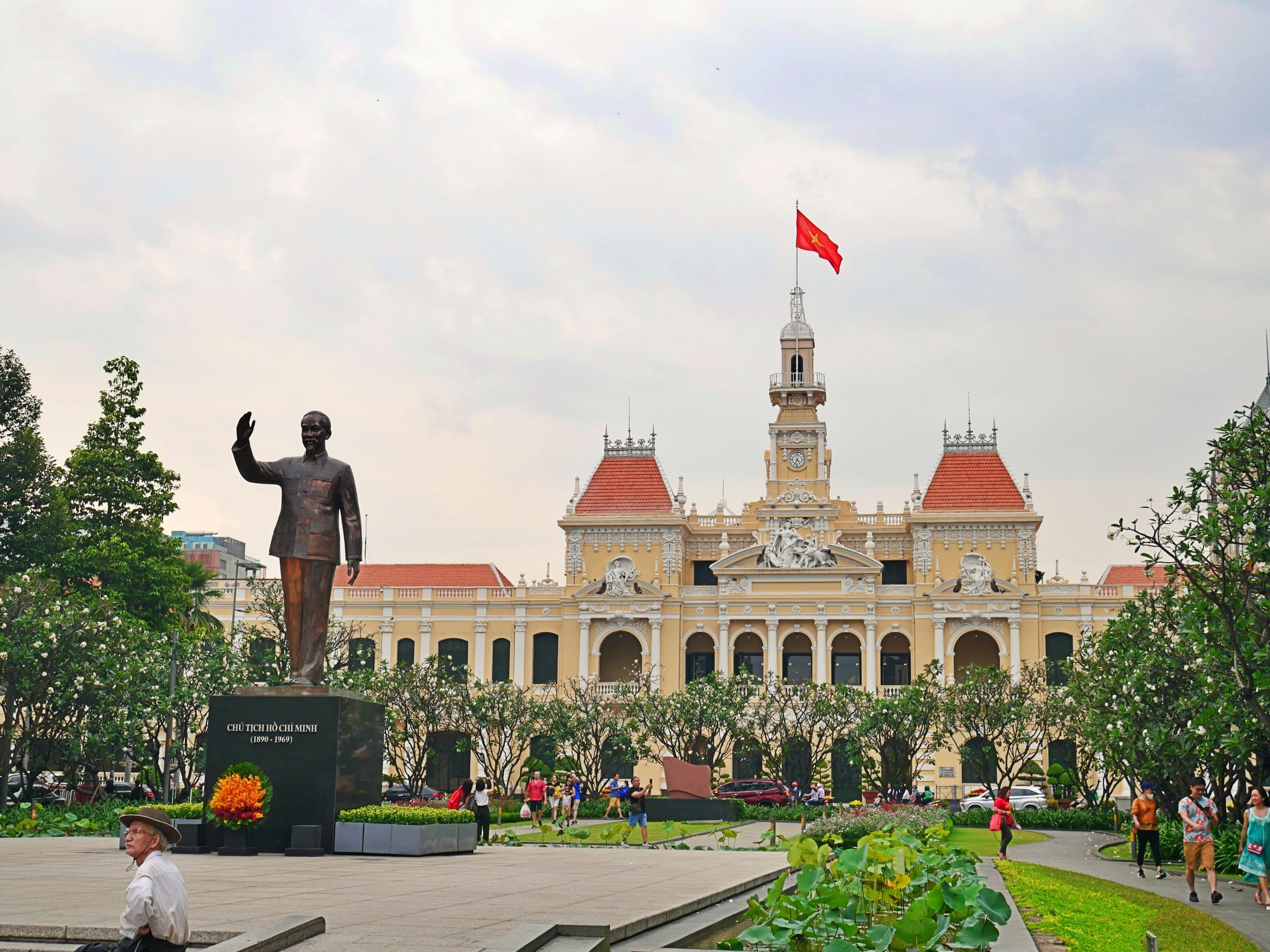
The Hotel de Ville: Still Running the City
A 1909 town hall that has never stopped being a town hall, seen up the boulevard with the Ho Chi Minh statue lined up in front of it.
- 7
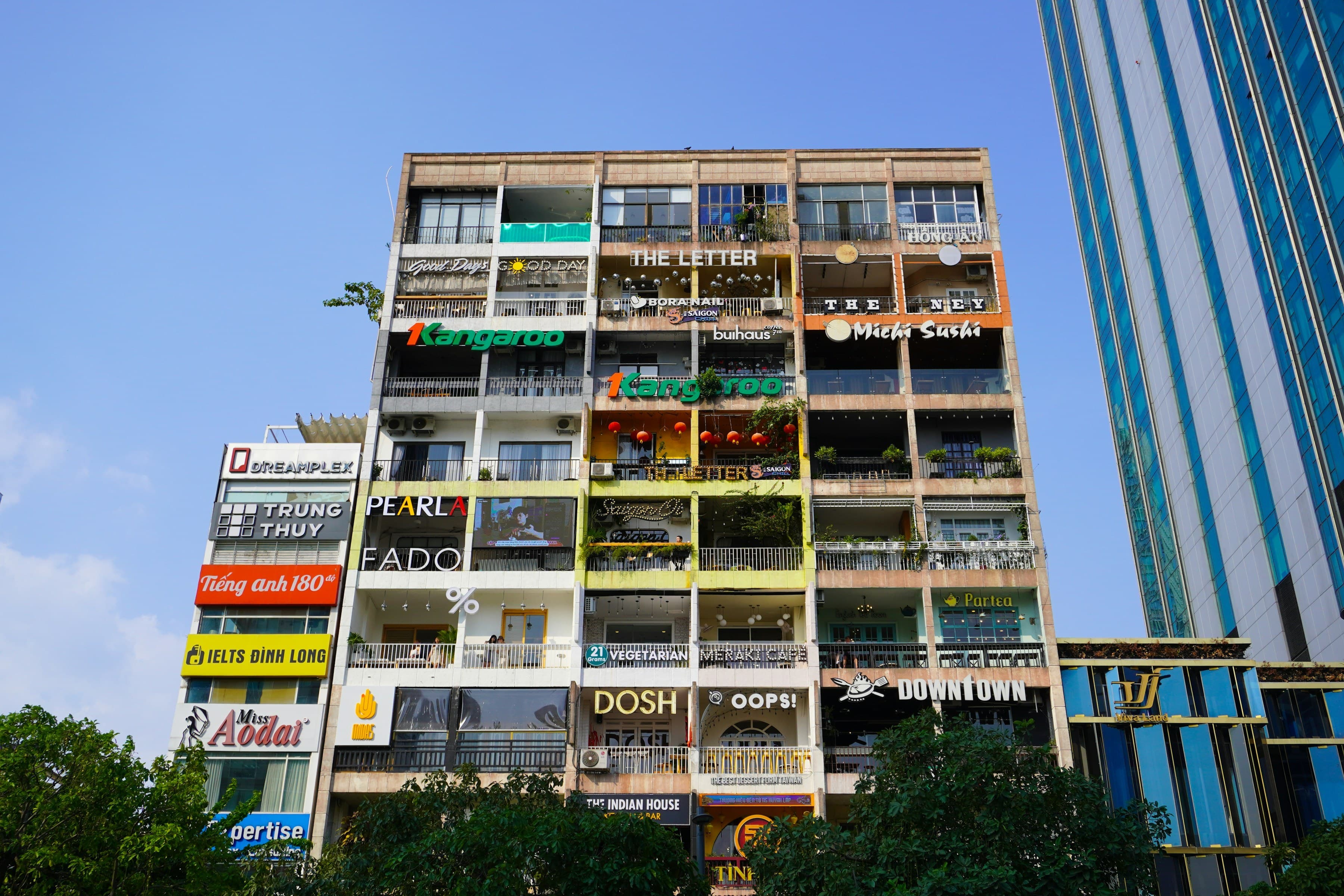
Nguyen Hue: The Boulevard That Was a Canal
A granite walking street laid over a canal dug in the 1790s, facing a 1960 apartment block that filled up with cafes.
- 8
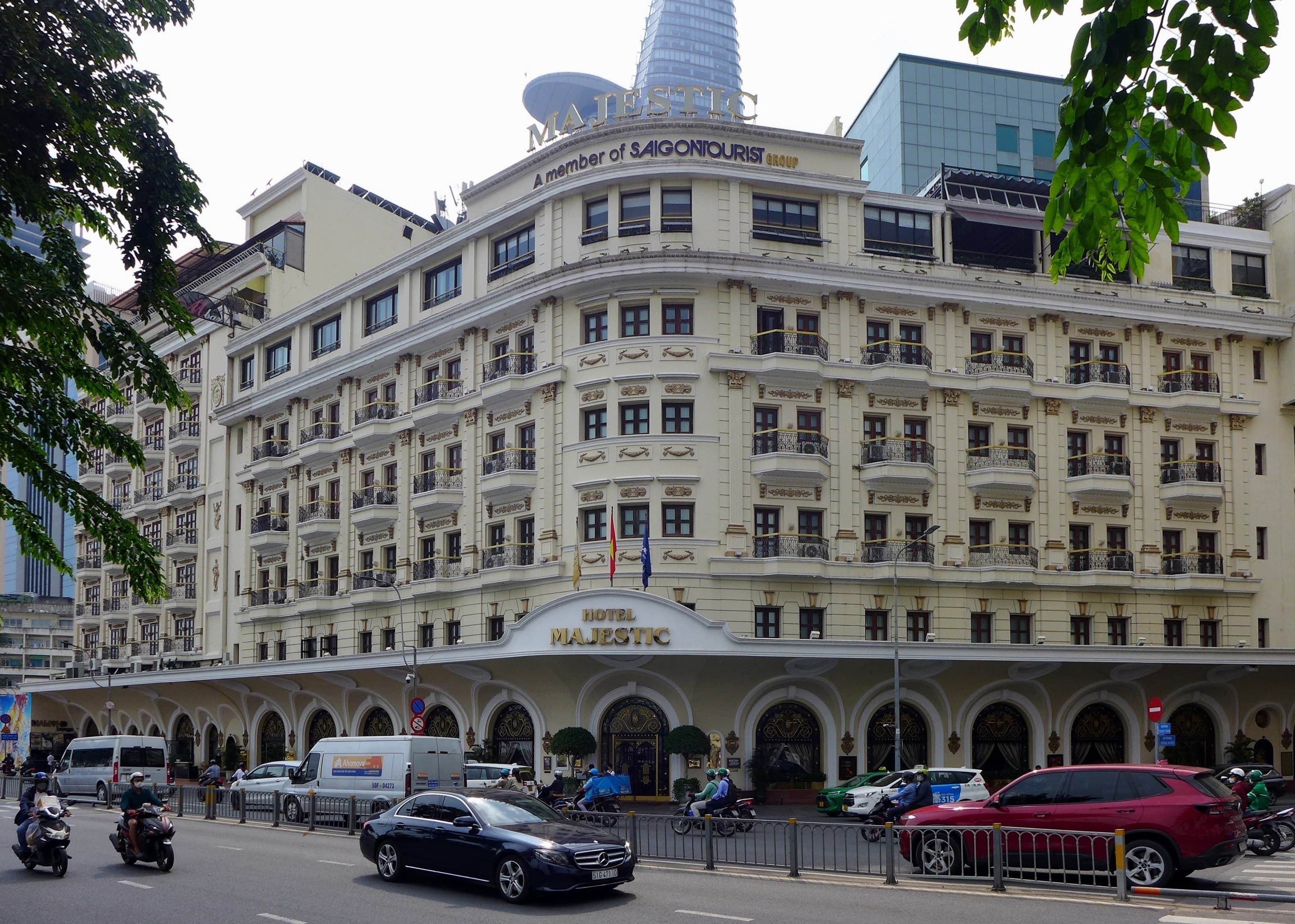
The Majestic and the River: Where the Quarter Ends
A 1925 hotel on the corner where the old rue Catinat met the water, and the quay where the river boats for Phnom Penh once tied up.
Details
Best Time to Visit
Walk it early. From about seven to ten in the morning the light is low on the brick, the pavements are still usable and the afternoon rain has not yet arrived. The second-best window is late afternoon, when the facades turn gold and Nguyen Hue fills with families, but in the wet season that is also when the rain tends to come. Avoid eleven until about two, when the sun is directly overhead, the humidity is heavy and there is very little shade on Dong Khoi. From May to November, keep a cafe in mind to duck into if a downpour arrives.
Pro Tips
- •The Central Post Office has no admission ticket: it is a working post office and you walk in during counter hours, reported as 7am to 7pm Monday to Friday, 7am to 6pm Saturday and 8am to 6pm Sunday. Treat the closing time as soft. Checked 17 September 2026.
- •Plan on seeing the cathedral from outside. A full restoration began in July 2017, the original completion target was publicly abandoned in December 2025 and no new date has been published, so interior access comes and goes with the works. The square and the exterior are open at all hours, and the parish publishes a Sunday mass in English. Checked 17 September 2026.
- •The City Hall is a working government headquarters and is not open to walk-in visitors. Free guided open days ran from 2023 by advance registration through the city tourism department and were suspended in January 2025, so check before counting on one. Checked 17 September 2026.
- •The Opera House lobby is generally accessible in daytime hours, reported as 9am to 4:30pm on weekdays and mornings at weekends, but there is no published guided-tour programme and the auditorium itself is realistically only open to ticket holders. The resident evening show is the reliable way inside. Checked 17 September 2026.
- •At the Cafe Apartment, 42 Nguyen Hue, entry is free and the cafes broadly run from about 8am to 10pm, each floor setting its own hours. The single lift charges a small fee, a few thousand dong, which most cafes credit against your order if you keep the ticket. The stairs cost nothing. Checked 17 September 2026.
- •People still live in the Cafe Apartment, around two dozen original households at the last count, so keep your voice down on the walkways and treat the landings as somebody's hallway rather than a lobby.
- •The Continental's lobby and its ground floor restaurant take walk-in visitors, so you can step inside without being a guest. The open terrace Graham Greene drank on has been glassed in and air conditioned. Checked 17 September 2026.
- •The central mall of Nguyen Hue is pedestrian at all times, but the two side carriageways carry traffic on weekdays. At launch in 2015, vehicles were barred from the whole street on Saturday and Sunday evenings, which is when it is at its best; confirm the current hours locally. Checked 17 September 2026.
- •Ben Thanh Market sits about five to seven hundred metres southwest of the middle of this walk and is deliberately not a stop, because reaching it adds a long unshaded leg. Go after you finish rather than breaking the route.
- •The Bach Dang promenade at the last stop was rebuilt in 2022 with very little shade and gets punishing in the middle of the day. River boats still leave from the wharf there if you want to carry on by water. Checked 17 September 2026.
Safety & Precautions
- •Two national travel advisories, the United Kingdom's last updated 26 June 2026 and Canada's last updated 9 September 2026, both describe bag snatching from passing motorbikes as a common risk to pedestrians in Vietnamese cities. Carry your bag on the side away from the road, and take your phone out only when you have stopped walking.
- •Both advisories describe road safety as poor, and Canada's notes that pedestrians are often among the casualties. Cross at a slow, steady, predictable pace and let riders flow around you. Stopping suddenly or darting back is what riders cannot anticipate.
- •Heat and humidity are the real hazard on this route, not distance. The walk is under two kilometres, but much of Dong Khoi has no shade and humidity runs near eighty percent in the wet season. Carry water, start in the shade of the book street at stop one, and duck into a cafe or the Continental's lobby when you need a break from the sun.
- •The rainy season runs May to November and September is one of the wettest months. Rain tends to arrive in the afternoon and evening as a heavy burst rather than all-day drizzle, so start early, carry a light poncho and plan a coffee stop you can duck into.
- •Several places on this walk are working institutions rather than attractions: a government headquarters, a post office, a cathedral under restoration and an occupied apartment block. Treat them accordingly and do not assume you can go in.
- •The last stop is across Ton Duc Thang, a busy main road along the river. Use the marked pedestrian crossing at the foot of Dong Khoi rather than crossing between cars.
Travel advisory: Exercise Normal Precautions (Level 1).
Gallery
Related Reading
Go deeper on what you'll see, hear, and walk through.
Overview
Best Self-Guided Walking Tours in Ho Chi Minh City (2026)
4 min
Overview
Ho Chi Minh City Travel Guide: How Many Days, Getting Around, When to Go (2026)
5 min
Overview
How to See Saigon: A City of Kept Frames
6 min
Overview
One Day in Ho Chi Minh City: A Walkable Saigon Itinerary (2026)
6 min
Thematic
What to Eat in Ho Chi Minh City: A Saigon Food Guide (2026)
5 min
Companion
Empire in Stone: How Saigon Kept the Buildings and Changed Their Meaning
9 min
Deep dive
The Eiffel Myth: Who Actually Built the Saigon Central Post Office
8 min
Read the walk
The full story of Saigon's French Quarter: The Empire Left, the Buildings Stayed, in words. Prefer to listen? Play it narrated, from home or on location.
Introduction
Ho Chi Minh City, in southern Vietnam. Most people here still call this part of it Saigon, and the quarter you are about to walk was laid out by people who were certain they would never leave.
From the eighteen sixties onward, France set about turning a river port into a European capital in the tropics. A cathedral of imported brick. A post office roofed with an iron framed vault. An opera house modelled on the one in Paris. A city hall with a belfry borrowed from northern France. A boulevard poured over a filled canal. All of it built to be read from the street, and all of it built to look permanent.
France left in the nineteen fifties. The buildings stayed. And here is the part the postcards skip: the city did not put them behind glass. It kept using them. The post office still sells stamps. The city hall is still where the city is run. The opera house spent twenty years as a parliament and then went back to being an opera house. An apartment block from the nineteen sixties filled up, floor by floor, with coffee shops.
Eight stops, about one point eight kilometres, around seventy five minutes at an unhurried pace. No group, no schedule, nobody waiting on you. Linger as long as you like at anything that holds you, and skip anything that does not.
1. Duong Sach: The Lane the City Gave to Books
Start here, under the trees, before the heat finds you.
This lane is Duong Sach, which means, simply, Book Street. It runs about a hundred and forty four metres from the cathedral grounds along the side of the post office compound, it is roughly eight metres wide, and along both sides of it sit around thirty small bookshops and stalls, with cafes folded in between them.
It is new. The city opened it on the ninth of January, twenty sixteen, and a city company runs it day to day. In its first ten years it sold something like six point seven million books, put more than seventy three thousand separate titles in front of people, and hosted over three thousand events. In twenty twenty two it won an international library award in a category called economic potential, which is a very dry name for what actually happened here. A city government looked at a short service street and decided it was worth more as a street of books.
The street's name has nothing to do with books. Nguyen Van Binh was the first Archbishop of Saigon, in that post from nineteen sixty until he died in nineteen ninety five. Thirty five years, one job, one city, through the war and the twenty years after it.
Hold on to that as you walk out of this lane, because most of the older buildings you are about to look at were put up by people who expected to stay, and did not. This lane is something the city made for itself, on its own terms, long after they had gone.
2. Saigon Central Post Office: The Eiffel Who Was Not There
Picture the hall inside, or step in and look up if it is open: a long iron framed vault on decorated columns, arched windows down both sides, the whole thing feeling far more like a railway station than a place that sells stamps.
That vault is what makes one very persistent wrong fact feel plausible. You will be told, by guides and by half the internet, that Gustave Eiffel designed this building. He did not. The French press of the time names the architect plainly while the work was going on. A Paris paper in eighteen eighty eight credits him with a superb post office, and an architectural review in eighteen ninety one, the year it was finished, calls him the distinguished chief architect of the colony and gives him the monument. His name was Marie Alfred Foulhoux, chief architect of French Cochinchina, and he died the following year.
So where did Eiffel come from? The historian Tim Doling traces the attribution to a briefing note circulated to tourism agencies by a city office in nineteen ninety. Decades of repetition later, it is what most visitors are told. And the annoying thing is that it is plausible, because Eiffel's firm really did work here, building railway viaducts and road bridges across the colony for nearly two decades. Just not this.
Two painted maps face each other on the side walls inside, one of Saigon and its surroundings dated eighteen ninety two, one of the telegraph lines of southern Vietnam and Cambodia dated nineteen thirty six. A large portrait of Ho Chi Minh closes the far end of the hall. And under all of it, at nearly forty counters, this is a working post office, not a museum with a gift desk.
3. Saigon Notre-Dame: The Cathedral Under Restoration
Turn round and face the cathedral. From here, at the top of the street, you get the whole front, both towers, squared up and about ninety metres away.
The first stone went down on the seventh of October, eighteen seventy seven. It was consecrated in eighteen eighty, less than three years later, and it cost two and a half million francs, paid by the colonial administration. Not by the congregation. By the government. That tells you whose project it was.
Now look at the towers, because they are two buildings in one. As consecrated in eighteen eighty, they were flat topped and stopped at about thirty six and a half metres. Blunt. The pointed spires were added fifteen years later, in eighteen ninety five, to a design by a different architect, and they took the towers to nearly fifty eight metres, and a little over sixty to the tips of the crosses. Six bronze bells hang inside them, close to twenty nine tonnes of metal.
The brick is the other thing people talk about, and honestly, nobody has settled it. The parish says it came from Toulouse. The archdiocese and the city government both say Marseille. The only stamped material on record from the building is roof tile, and some of that reads Marseille while other pieces were made right here in Saigon. What is not in doubt is that the brick was brought from France and laid bare, and after nearly a century and a half it still holds its colour.
A full restoration began in July twenty seventeen. New gilded crosses were raised onto the spires in March twenty twenty six, and at the end of twenty twenty five the priest leading the project said publicly that the original completion target could not be met.
4. Dong Khoi: Four Names for One Street
You are standing in a small public park, one of the few patches of green on this street, and it is not what it looks like. The street first. It has carried four names. Under the earliest French administration it was simply numbered. On the first of February, eighteen sixty…
Full narration for this stop unlocks with the tour.
5. Lam Son Square: The Parliament That Went Back to Being an Opera House
Two buildings, one square. The theatre is the one with the caryatids, two carved figures about four and a half metres tall flanking the entrance, and above them a relief of two winged figures with a lyre. It was begun in eighteen ninety eight and opened in nineteen hundred,…
Full narration for this stop unlocks with the tour.
6. The Hotel de Ville: Still Running the City
Turn to face up the boulevard, away from the river. From this spot the two things line up: the statue about fifty metres ahead of you, and behind it, closing the head of the boulevard, the building itself. It was built between eighteen ninety eight and nineteen oh nine as the…
Full narration for this stop unlocks with the tour.
7. Nguyen Hue: The Boulevard That Was a Canal
You are standing in the middle of a canal. Not a metaphor. A canal was cut along this line around seventeen ninety, on the orders of Nguyen Anh, to bring water traffic from the Saigon river up to the gate of his new citadel. The Vietnamese called it the Kinh Lon, the great…
Full narration for this stop unlocks with the tour.
8. The Majestic and the River: Where the Quarter Ends
This is the end of the street and the end of the story, and it is the right place to finish, because this is where the quarter behind you was pointed all along. The hotel on the corner behind you opened in nineteen twenty five, where rue Catinat met the river quay. Four storeys…
Full narration for this stop unlocks with the tour.
- Chi Lang Park, District 1 — 源義信, CC BY-SA 4.0 · source
- Hotel Majestic, Saigon — Bahnfrend, CC BY-SA 4.0 · source
Images may be cropped or resized. Other photos via Unsplash and Pexels.