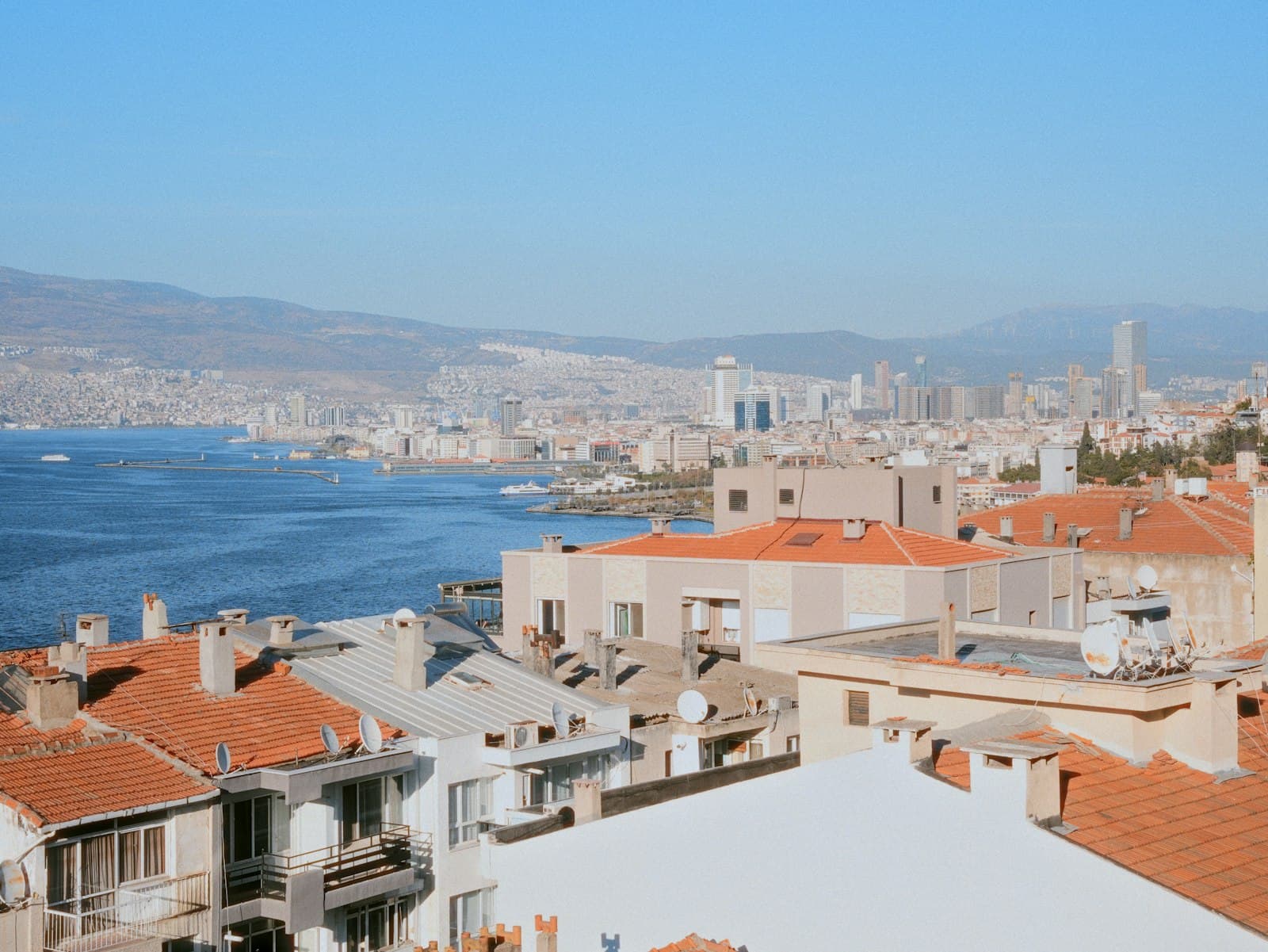
Walk one of the oldest cities on earth, ancient Smyrna, and hold its two selves together: the Ottoman city of bazaar, agora, and castle, and the modern city reborn along the sea after the great fire.
Start · Konak Square and the Clock Tower
DirectionsStops
- 1
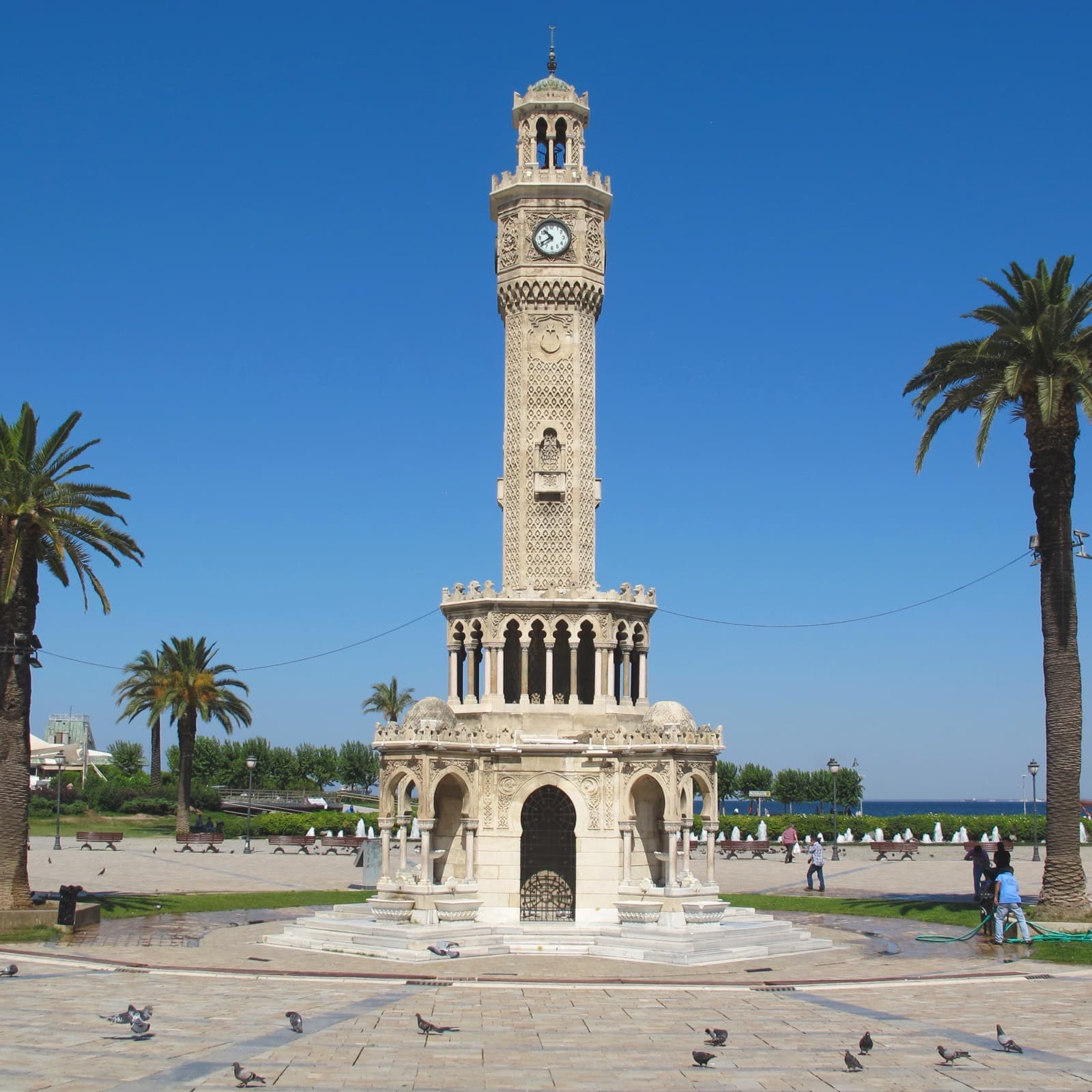
Konak Square and the Clock Tower
The waterfront civic heart of Izmir, gathered around the ornate marble Clock Tower that stands on the city's own emblem.
- 2
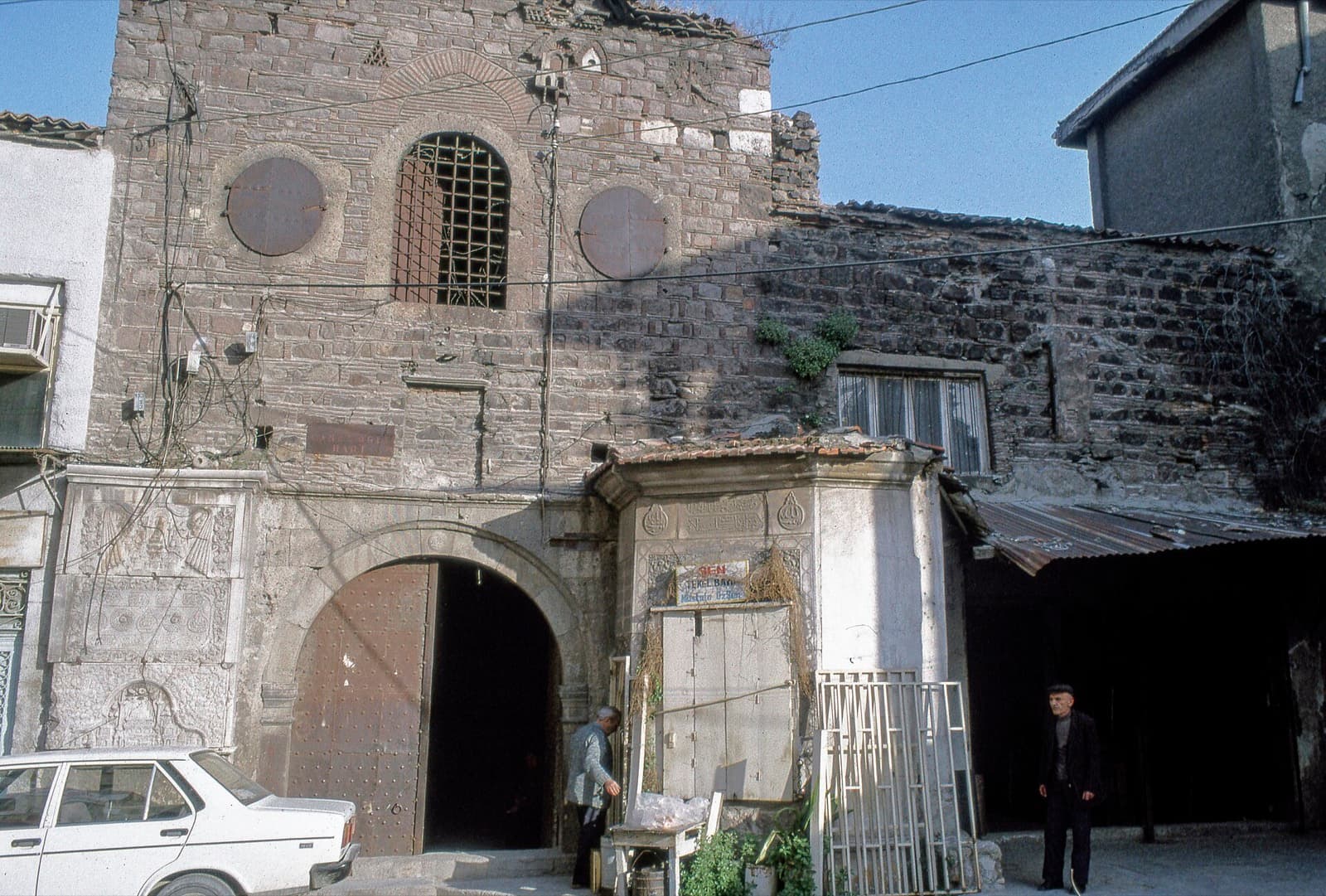
Kemeralti: The Great Bazaar of Old Smyrna
A dense labyrinth of covered lanes, workshops, and merchants' inns that grew along the curve of a harbour long since filled in.
- 3
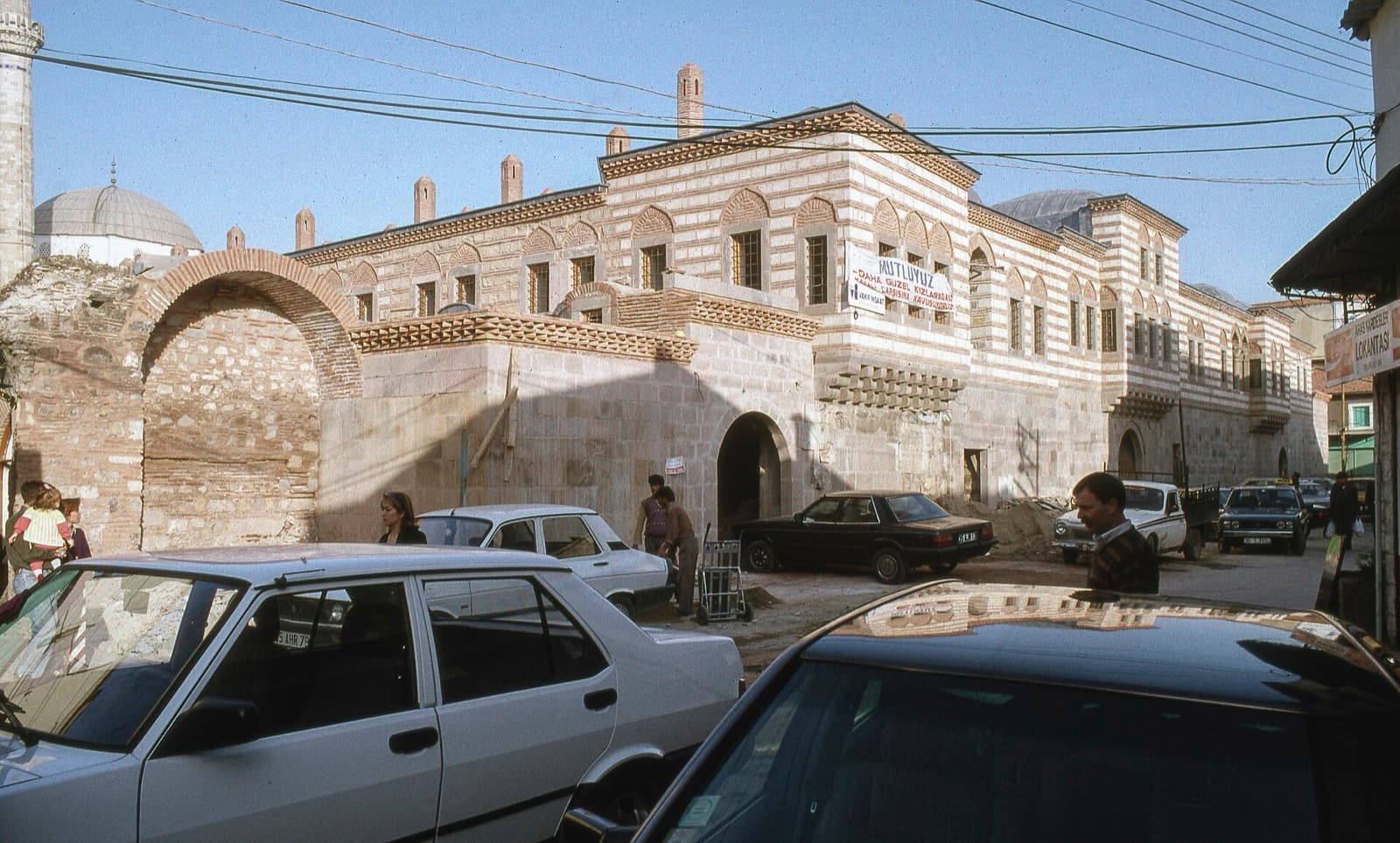
Kizlaragasi Han: The Merchants' Inn
The grand eighteenth-century caravanserai at the heart of the bazaar, restored and once again full of coppersmiths, jewellers, and tea houses.
- 4
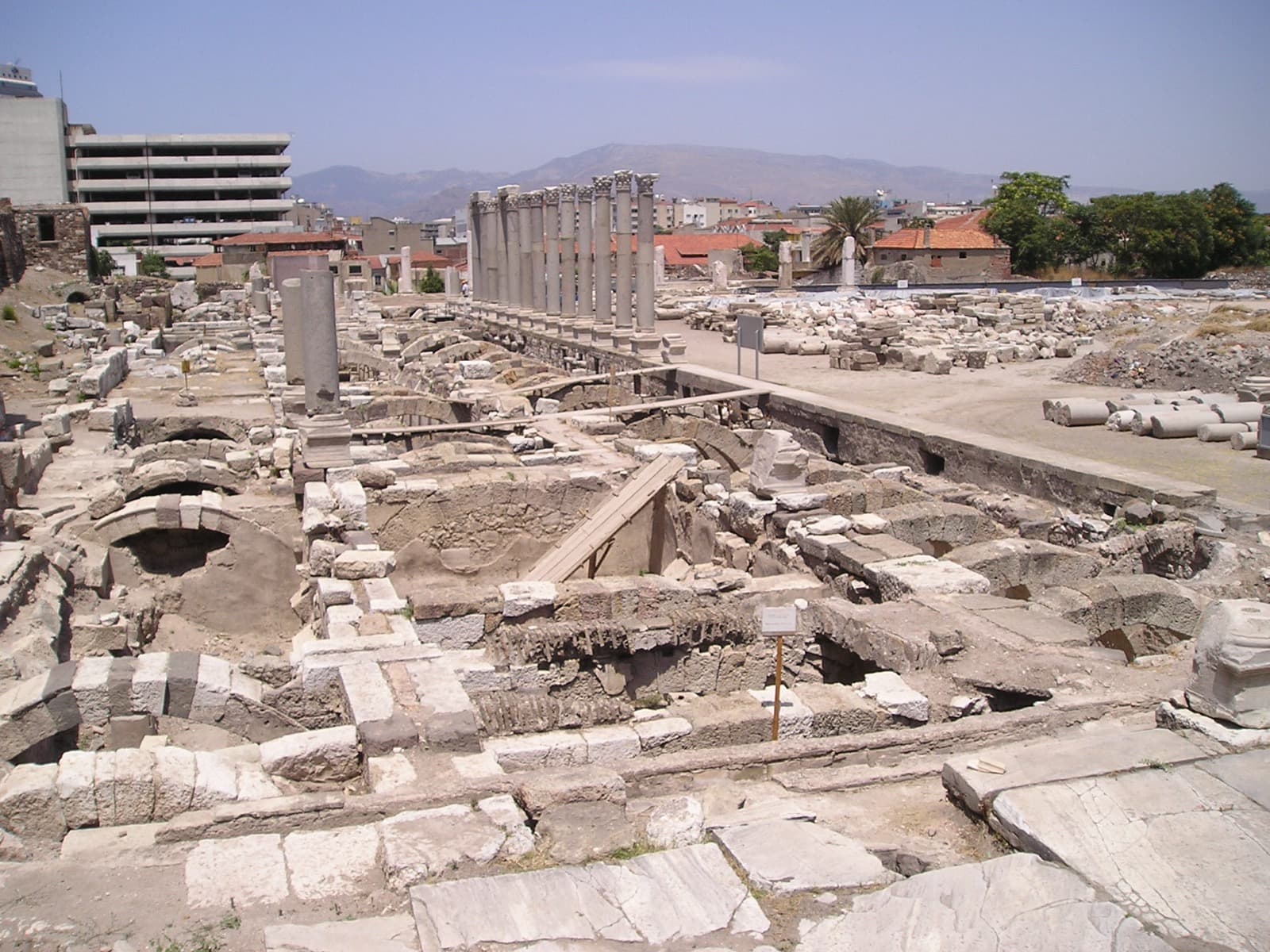
The Agora of Smyrna
The Roman-era civic and commercial heart of ancient Smyrna, rebuilt by imperial order after an earthquake and excavated since the nineteen thirties.
- 5
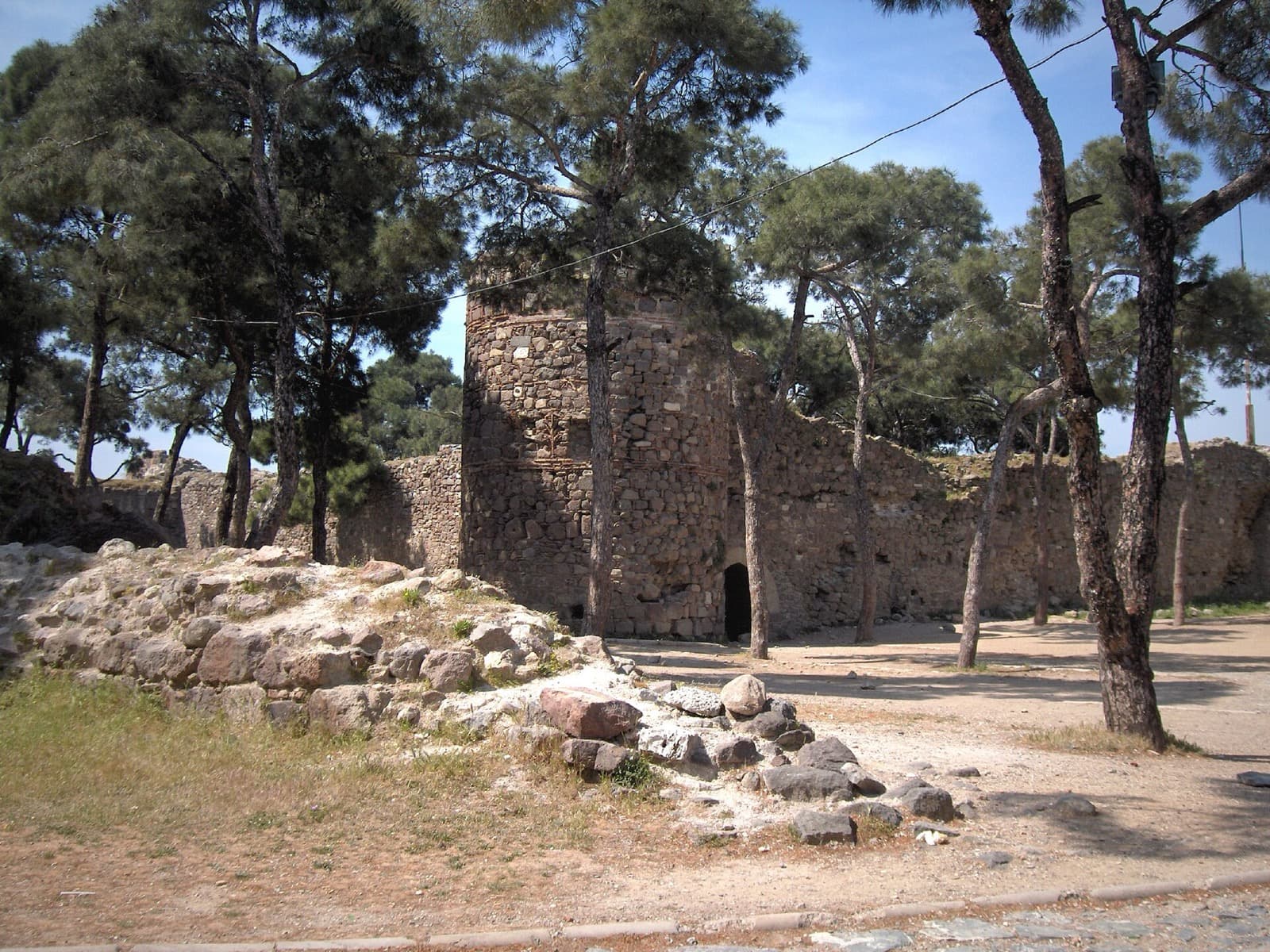
Kadifekale: The Velvet Castle on Mount Pagos
The hilltop fortress on the ancient acropolis of Smyrna, where both Izmirs, the ancient hill and the reborn city by the sea, come into view at once.
- 6
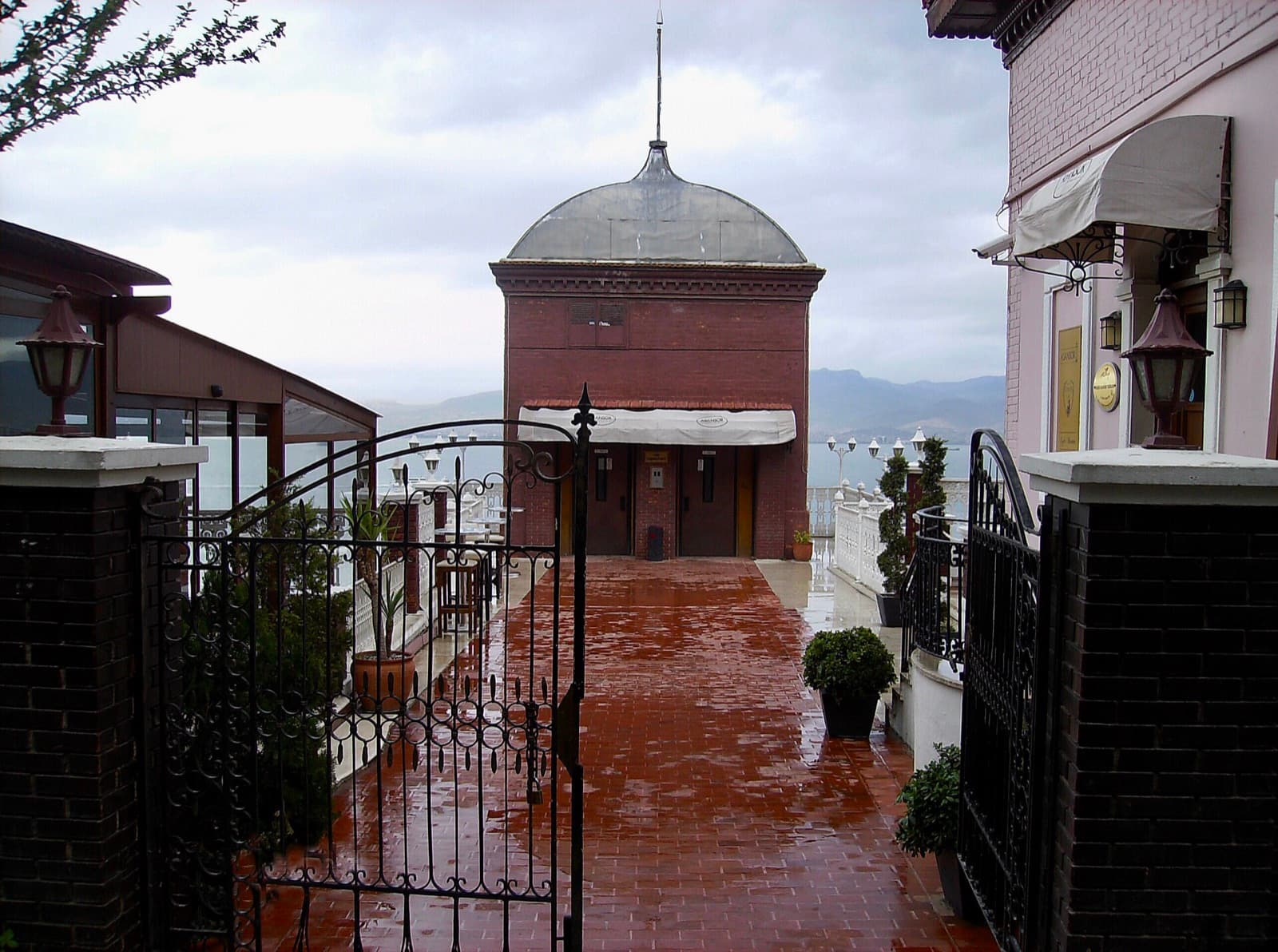
The Asansor and the Karatas Quarter
A historic public lift built in nineteen oh seven in the old Sephardic Jewish quarter, and a quiet place to remember the plural, pre-fire city.
- 7
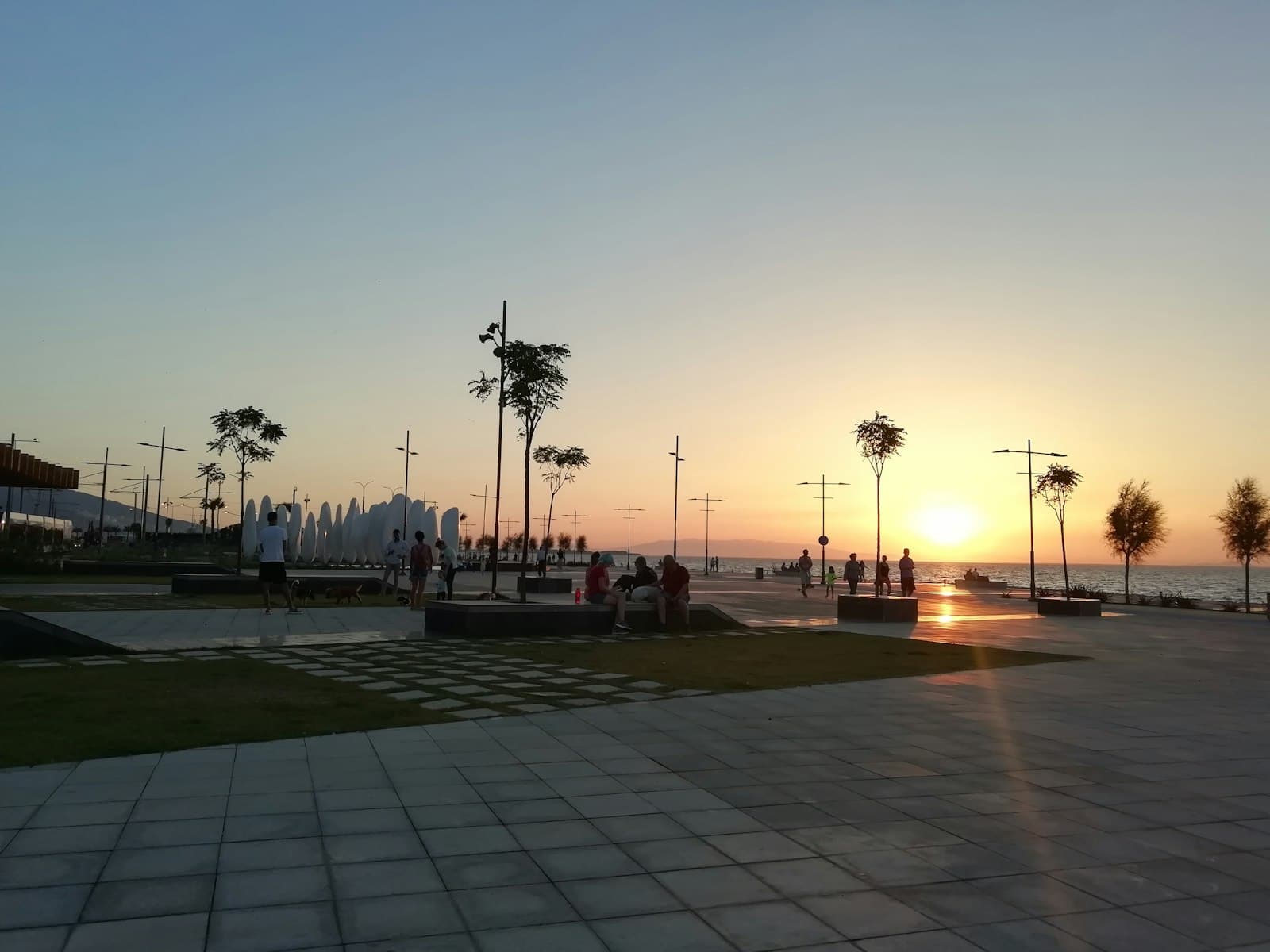
The Kordon: The City Reborn from the Sea
The long seafront promenade laid out as the face of the modern city after the great fire, where Izmir gathers by the water at the close of the walk.
Details
Best Time to Visit
Late spring and early autumn, roughly April into June or September into October, are kindest, with warm dry air and softer sun. In high summer start early or walk in the late afternoon toward evening, saving the Kordon for sunset, when Izmir gathers by the water. The hilltop castle and the exposed agora are hardest at midday, so aim the climb for morning or the cooler hours.
Pro Tips
- •Carry water at all times. Summers here are hot and dry, and there is little shade on the agora marble or the castle hill.
- •Wear sturdy shoes with grip. Kemeralti's lanes, the ancient paving of the agora, and the stepped climb to Kadifekale are all uneven.
- •Save the Kordon for the end of the day. The seafront promenade is where the city gathers at sunset, and it is the right note to close on.
- •Keep small change and a scarf handy. The Konak Mosque and other working mosques ask for modest dress and covered shoulders, and shoes come off at the door.
- •Confirm site tickets and hours at the gate. The Agora of Smyrna charges a small admission that can change, while Konak Square, Kemeralti, the Kizlaragasi Han, Kadifekale, and the Kordon are free.
- •Give the trades their space in Kemeralti and the Kizlaragasi Han. These are working craft quarters, so browse the coppersmiths and jewellers with respect and no rush.
Safety & Precautions
- •Working mosques, including the Konak Mosque, require modest dress, removed shoes, quiet voices, and avoiding prayer times; wait outside if a service is under way.
- •The Agora of Smyrna and the exposed Kadifekale hilltop offer strong sun and almost no shade, so bring water, a hat, and sun protection, especially in summer.
- •Footing is tricky on the uneven ancient paving of the agora, in the crowded bazaar lanes of Kemeralti, and above all on the steep stepped climb up Mount Pagos to Kadifekale.
- •In the dense crowds of Kemeralti keep your bag closed and in front of you, mind your belongings, and decline aggressive touts calmly rather than engaging.
Travel advisory: Exercise Increased Caution (Level 2).
Gallery
Related Reading
Go deeper on what you'll see, hear, and walk through.
Overview
Izmir Travel Guide: Days, Transport, Safety, and Budget
6 min
Overview
One Day in Izmir: A Walkable Route From the Clock Tower to the Kordon
7 min
Thematic
The Two Izmirs: Ancient Smyrna and the City Reborn from the Sea
7 min
Companion
The Kordon: Why Izmir Faces the Sea It Once Feared
6 min
Deep dive
Konak Clock Tower: Reading the Seam Between Two Izmirs
7 min
Read
What to Eat in Izmir: Boyoz, Gevrek, Kumru, and How to Order Them
6 min
Read the walk
The full story of Kemeralti Bazaar and the Kordon: The City Reborn from the Sea, in words. Prefer to listen? Play it narrated, from home or on location.
Introduction
Izmir, here in western Turkey, is one of the oldest continuously inhabited cities on earth. This is ancient Smyrna, older than Alexander, and yet it can feel strangely young, because most of it burned. In September of nineteen twenty-two, at the close of the Greco-Turkish war, a catastrophic fire consumed much of the old cosmopolitan port, and the Greek, Armenian, and Levantine communities that had made it a Mediterranean crossroads were gone within a year. The city that rose from the ashes turned to face the water. This walk asks you to hold both Izmirs at once, the ancient and Ottoman city of bazaar, agora, and castle, and the modern city reborn along the sea. It treats what was lost with care. There are seven stops. Give yourself around three hours of unhurried time and about seven kilometres of walking, though this is your walk, at your own pace, and every stop is short and skippable. You will move from the waterfront civic heart into a living bazaar built over a buried harbour, up to a Roman agora and a castle hill that is older than the successors of Alexander, then back down toward memory and the sea. Some of what you meet here is sober. A working mosque asks for quiet and modest dress. A hilltop asks for water and good shoes. And the promenade at the end asks only that you stand a while and look out over the gulf. When you arrive at Konak Square, by the Clock Tower, begin with stop one.
1. Konak Square and the Clock Tower
You are standing in the civic heart of Izmir, right where the city meets the gulf. In front of you rises the Clock Tower, in Turkish the Saat Kulesi, kulesi meaning tower. It is the emblem of the whole city, and it appears on the municipal seal. The tower went up quickly at the turn of the last century. Ground was broken on the first of September, nineteen hundred, it was finished the following August, and formally inaugurated on the first of September, nineteen oh one, to mark the twenty-fifth anniversary of the accession of Sultan Abdulhamid the Second. It was designed by a French-Levantine architect, Raymond Charles Pere. Look at its shape: an octagonal plan rising about twenty-five metres, four floors of marble and stone over an iron-and-lead skeleton, with four small fountains set around the base. The style is Ottoman with a Moorish-revival flourish, ornate and delicate against the open sky. Beside it stands a small tiled mosque, the Konak Camii, camii meaning mosque of, also called the shore mosque. It is a working place of worship, so if you step near it, keep your voice low, dress modestly, and give the faithful their space, especially around prayer times. This square is the right place to begin, because it faces the sea. The old city climbs behind you into bazaar and agora and castle. The modern city stretches ahead along the water. Between them, this ornate little tower has kept time through both, watching a port change into a promenade. Take a moment here before you turn inland.
2. Kemeralti: The Great Bazaar of Old Smyrna
Step into Kemeralti and the light changes. This is the great historic bazaar of Izmir, a labyrinth of covered lanes, workshops, courtyards, mosques, and hans, the old merchants' inns. The name Kemeralti means under the arches, and carsi, the word you will see everywhere, means covered market or bazaar. Here is the thing to hold as you wander: the shape of this maze is the memory of the sea. Kemeralti grew along the curve of the old inner harbour, a shallow bay that was slowly filled in and reclaimed, mostly between sixteen fifty and sixteen seventy. So when the lanes bend, they are tracing the line of a waterline that no longer exists. You are walking on a harbour. The oldest single street here was once known as the Street of the Mevlevis, after a lodge of the whirling dervishes, the Mevlevi order. Tucked among the lanes is the Hisar Camii, the Hisar Mosque, which dates to the fifteen nineties and is counted the oldest significant Ottoman landmark in the city, raised on the site of a former Genoese fort. By the early eighteen hundreds the shoreline had reached roughly its present form, and Konak Square, laid out in eighteen twenty-nine, marks the southern edge of all this. The great fire of nineteen twenty-two swept through here too, destroying hundreds of commercial buildings and leaving only about a dozen of the old hans partly standing. And yet Kemeralti remained, and remains, the living, working heart of the old city, loud with trade. Move gently through it, this is someone's workplace, and let the maze carry you.
3. Kizlaragasi Han: The Merchants' Inn
In the middle of the bazaar you come upon something grander than the lanes around it: the Kizlaragasi Han, a han being a caravanserai, or merchants' inn. It was built in seventeen forty-four, and its story reaches all the way to the imperial palace. It was commissioned by Haci Besir Aga, who held the office of the Kizlar Agasi, the chief eunuch of the imperial harem, one of the powerful African eunuchs of the Ottoman court. That a han in a provincial port bears the name of a palace official tells you how far Izmir's trade reached. It is a two-storey stone building set around a large central courtyard, some six hundred square metres of open court within a structure of roughly four thousand. The ground floor was for commerce and storage, the upper floor for lodging, with rooms and ovens and niches and wooden floors where traders slept between journeys. The Izmir Ministry of Culture and Tourism calls it the biggest and most glamorous of the city's hans, monumental in character, and it is the finest surviving Ottoman han in Izmir. Today it has been restored, and it lives again as a market. You will find coppersmiths hammering, jewellers, carpet sellers, and quiet tea houses under the arcades. Those coppersmith and jewellery trades are living heritage here, old crafts still practised in an old building. Stand in the courtyard a moment and let the sound of the trade rise around you, the way it has for nearly three centuries.
4. The Agora of Smyrna
Now you drop out of the Ottoman city and into a much older one. This is the Agora of Smyrna, the marketplace and civic centre of the ancient city, sitting in a hollow below the castle hill. An agora was the beating public space of a Greek and then Roman town, part market, part…
Full narration for this stop unlocks with the tour.
5. Kadifekale: The Velvet Castle on Mount Pagos
This is the climb that pulls the whole walk together. Kadifekale crowns Mount Pagos, about one hundred and eighty-six metres above the city, on the acropolis of ancient Smyrna. The name means Velvet Castle, kale being castle or fortress. The earliest walls here are attributed to…
Full narration for this stop unlocks with the tour.
6. The Asansor and the Karatas Quarter
Come down now to the water's edge, to the Karatas quarter, and to a landmark that is really a machine: the Asansor. The word comes from the French for elevator, and that is exactly what it is, a public lift built into the face of a steep cliff. It was raised in nineteen oh seven…
Full narration for this stop unlocks with the tour.
7. The Kordon: The City Reborn from the Sea
You end where the city chose to end, by the sea. This is the Kordon, the long seafront promenade that runs along the gulf for roughly three kilometres, the face of the modern city. And it is modern for a hard reason. Historians record that a great fire broke out in Smyrna on the…
Full narration for this stop unlocks with the tour.