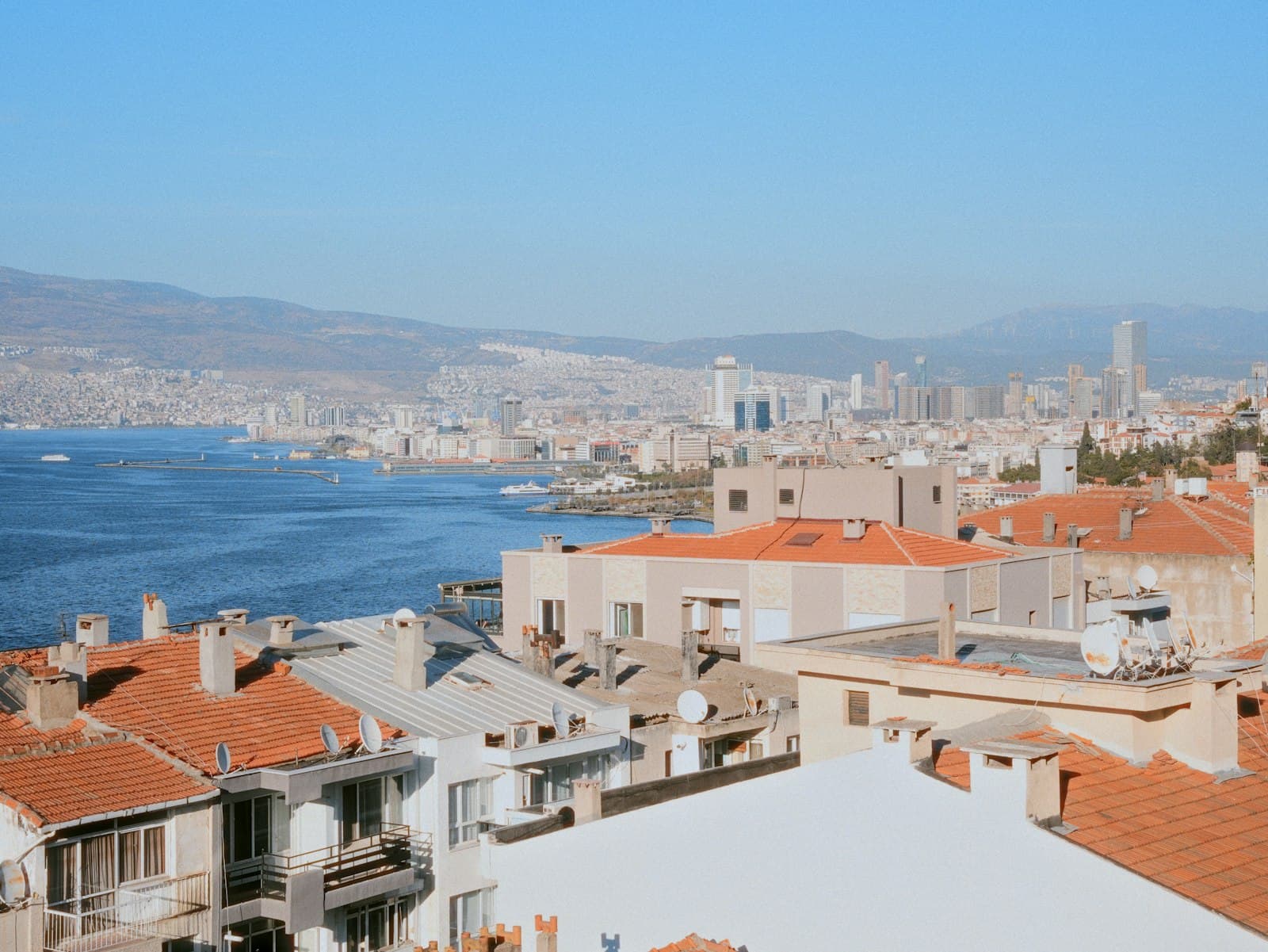
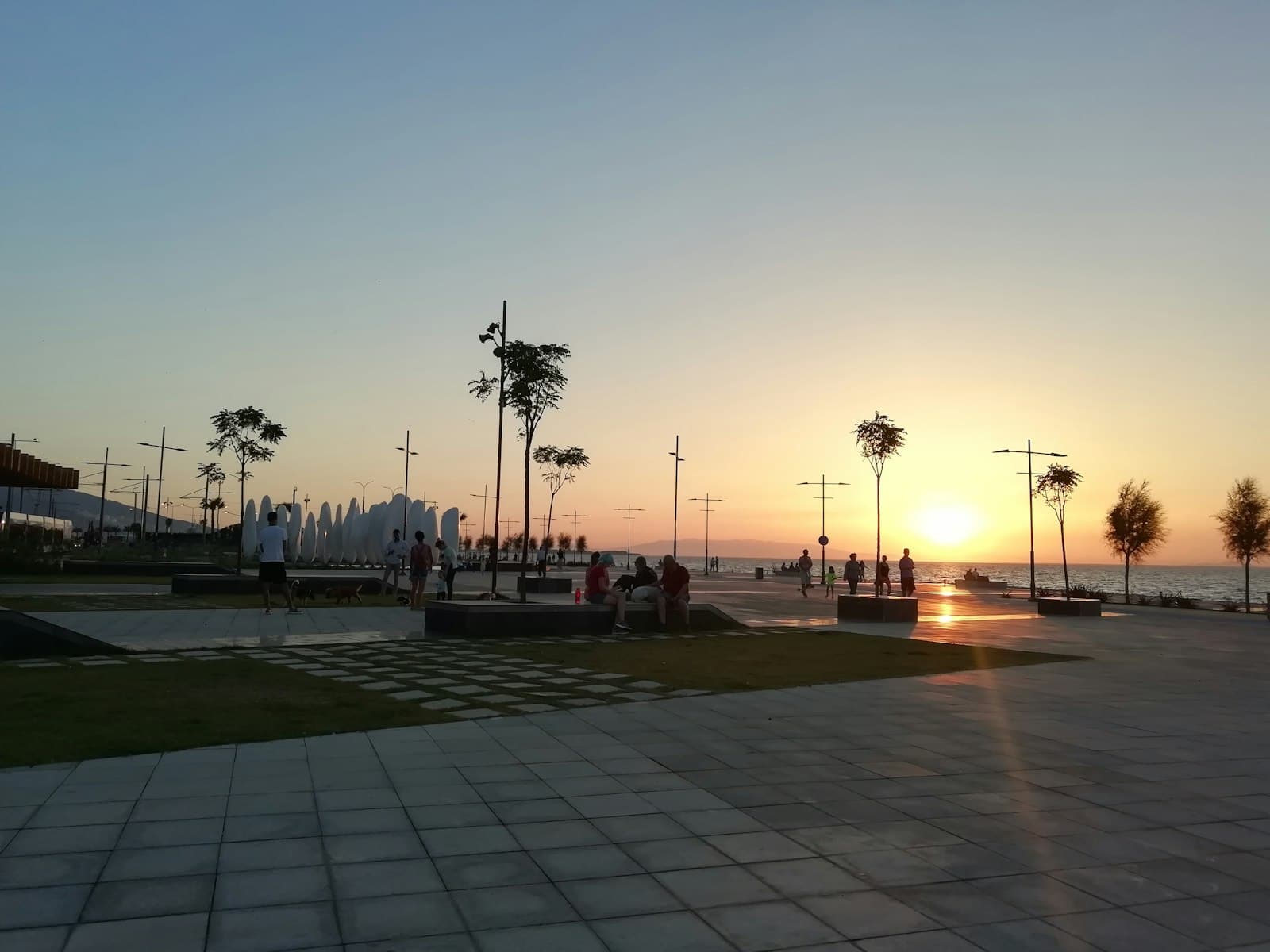
The Kordon promenade is the answer Izmir gave to a fire. Running along the Gulf of Izmir for roughly three kilometres, it is the deliberate face of a modern city that chose, after catastrophe, to turn and look at the water. To understand why a waterfront can carry that much weight, you have to walk the ground behind it first, from an Ottoman bazaar built over a buried harbour to a Roman agora and a castle hill older than the successors of Alexander. The Kordon is where all of that finally resolves, and it is the last stop on a seven-part walk through one of the oldest continuously inhabited cities on earth.
A promenade with a hard reason behind it
Most seafront promenades are pleasant by accident. This one is intentional, and the reason is painful. Historians record that a great fire broke out in Smyrna, as the city was then widely known, on the thirteenth of September, nineteen twenty-two, and burned until about the twenty-second. It came days after Turkish forces entered the city on the ninth of September, closing the Greco-Turkish war. The fire destroyed the Greek, the Armenian, and the Western European, or Levantine, quarters, while the Muslim and Jewish quarters were spared.
Tens of thousands of refugees crowded this very waterfront as the city burned behind them. How many people died is genuinely disputed, and accounts differ widely, with scholarly estimates ranging from around ten to fifteen thousand upward to far higher figures. The causes are disputed too. What is not in dispute is the aftermath. In nineteen twenty-three came the compulsory exchange of populations between Greece and Turkey, and the cosmopolitan Greek, Armenian, and Levantine life of the old port was gone within a year.
So the city that rebuilt did something quietly remarkable. Instead of turning its back on the site of the loss, it laid a long promenade along the edge of the gulf and made the sea its front door. Today the Kordon is where Izmir gathers: grass and horse carriages, families and evening walkers, the sun going down over the water. It is a place of loss and a place of renewal at the same time, and the honest thing is to hold both without resolving them.
Why you should not start here
Hear a stop from this walk
Kemeralti: The Great Bazaar of Old Smyrna
The Kordon works as an ending precisely because of what comes before it. If you arrived cold, you would see a nice waterfront. Walk the route first, and you see the argument.
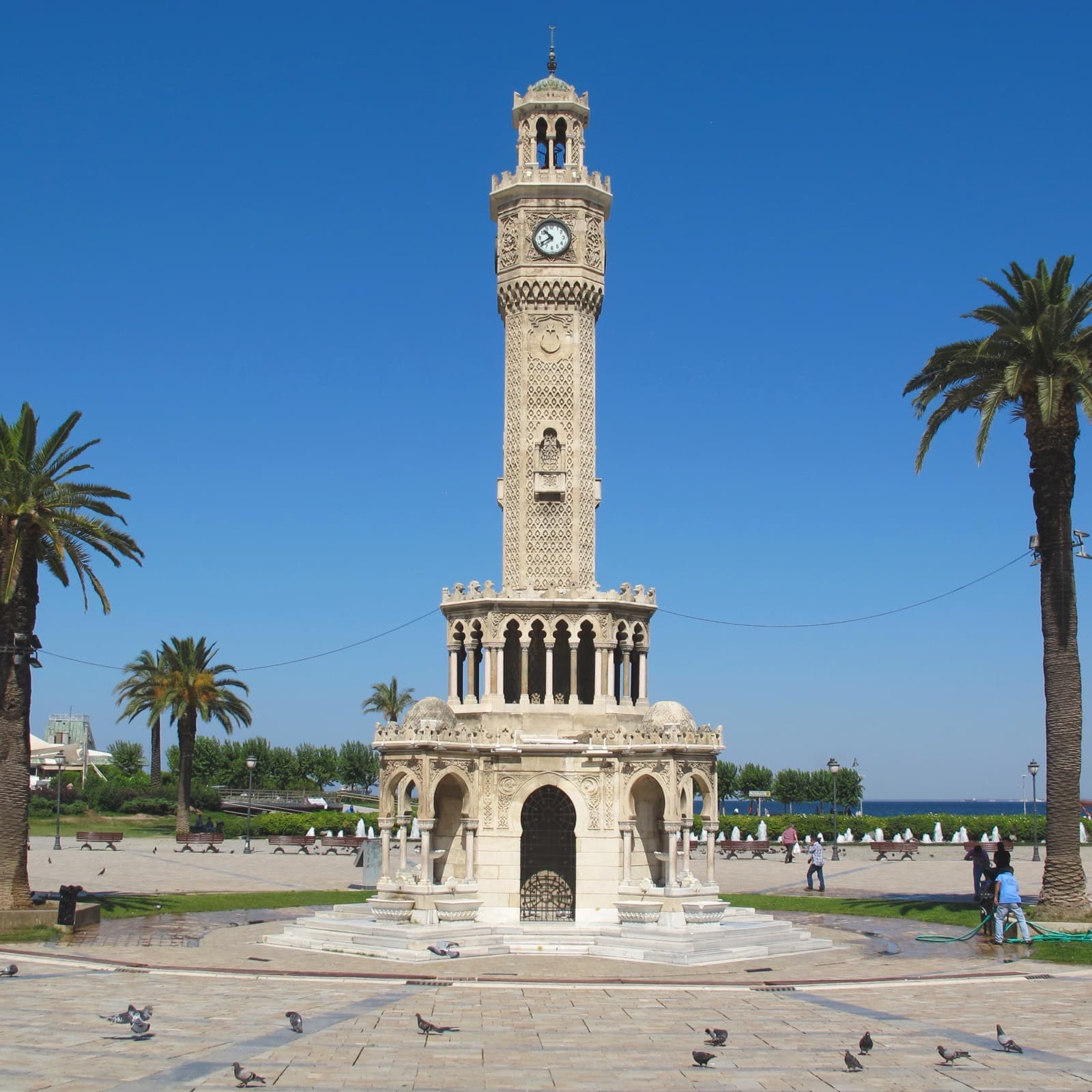
The walk begins two kilometres south, in Konak Square, where the ornate marble Clock Tower, the Saat Kulesi, stands on the city's own municipal seal. Ground was broken on the first of September, nineteen hundred, and the tower was inaugurated exactly a year later, on the first of September, nineteen oh one, to mark the twenty-fifth anniversary of the accession of Sultan Abdulhamid the Second. It was designed by the French-Levantine architect Raymond Charles Pere, an octagonal shaft rising about twenty-five metres. That square faces the sea. The old city climbs inland behind it. Between the two, the tower has kept time through both.
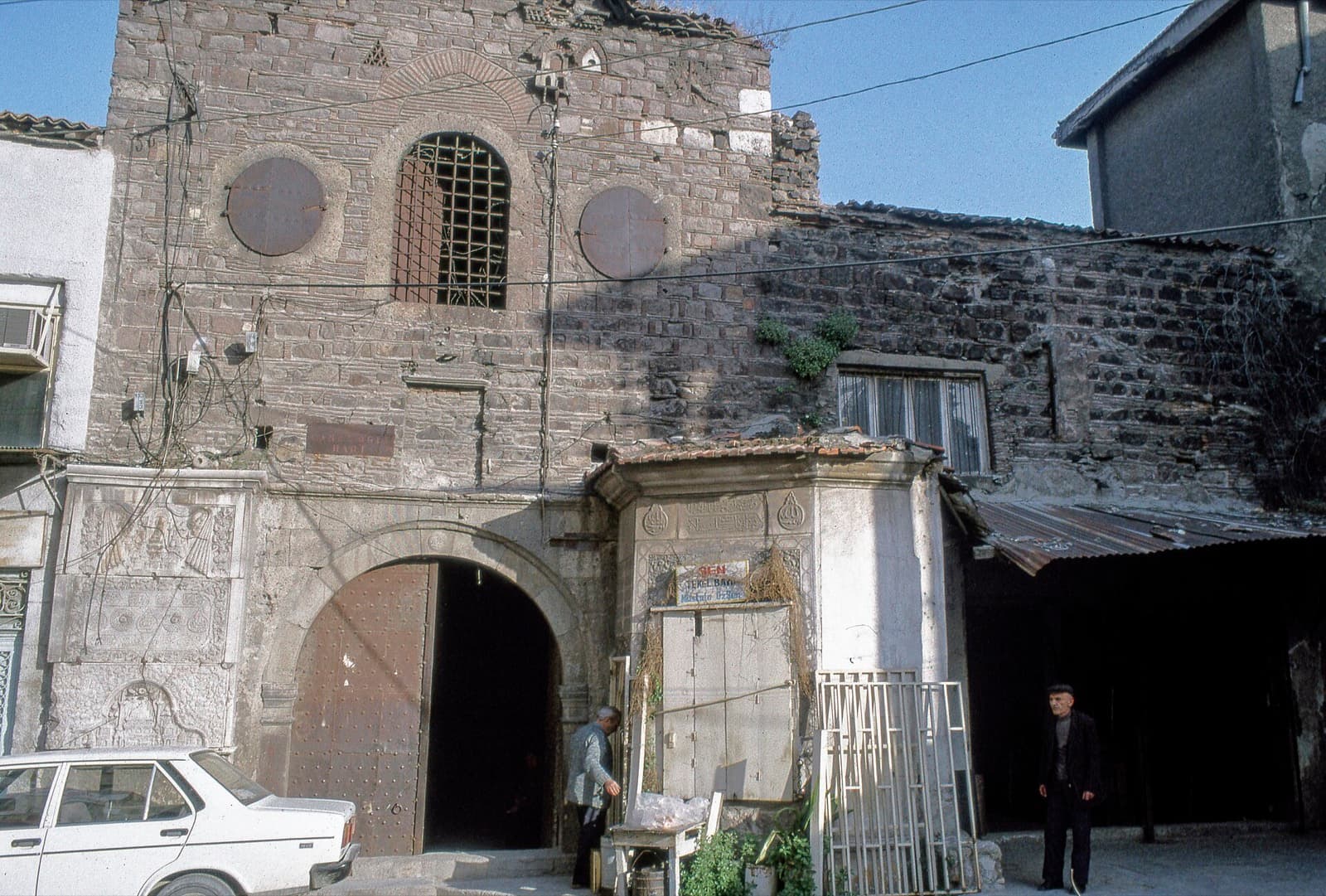
From there the route steps into Kemeralti, the great historic bazaar, whose name means "under the arches." The lanes bend for a reason that took me a moment to absorb: they trace the curve of an old inner harbour, a shallow bay filled in and reclaimed mostly between sixteen fifty and sixteen seventy. When you shop in Kemeralti, you are walking over a buried bay. Inside it sits the Hisar Mosque, dating to the fifteen nineties and counted the oldest significant Ottoman landmark in the city, raised on the site of a former Genoese fort.
Deeper in the maze stands the Kizlaragasi Han, a caravanserai, or merchants' inn, built in seventeen forty-four. It was commissioned by Haci Besir Aga, who held the office of the Kizlar Agasi, chief eunuch of the imperial harem. Its central courtyard alone spans roughly six hundred square metres inside a building of about four thousand, and after restoration it still houses coppersmiths and jewellers working under the arcades. That a provincial port's inn carries the name of a palace official tells you how far Izmir's trade once reached.
The city keeps getting older
Then the walk drops out of the Ottoman city into a much older one: the Agora of Smyrna, the marketplace and civic centre of the ancient town. First laid out in the fourth century B.C., it was brought down by an earthquake in the year one hundred and seventy-eight A.D. and rebuilt by order of the emperor Marcus Aurelius. What survives is largely that Roman rebuilding in marble, including the North Stoa basilica, the West Stoa with its Corinthian colonnade, and a gate named for Faustina, the wife of Marcus Aurelius. Archaeologists began digging here in nineteen thirty-three and have not stopped. The bazaar you just left is only the latest marketplace on this ground.
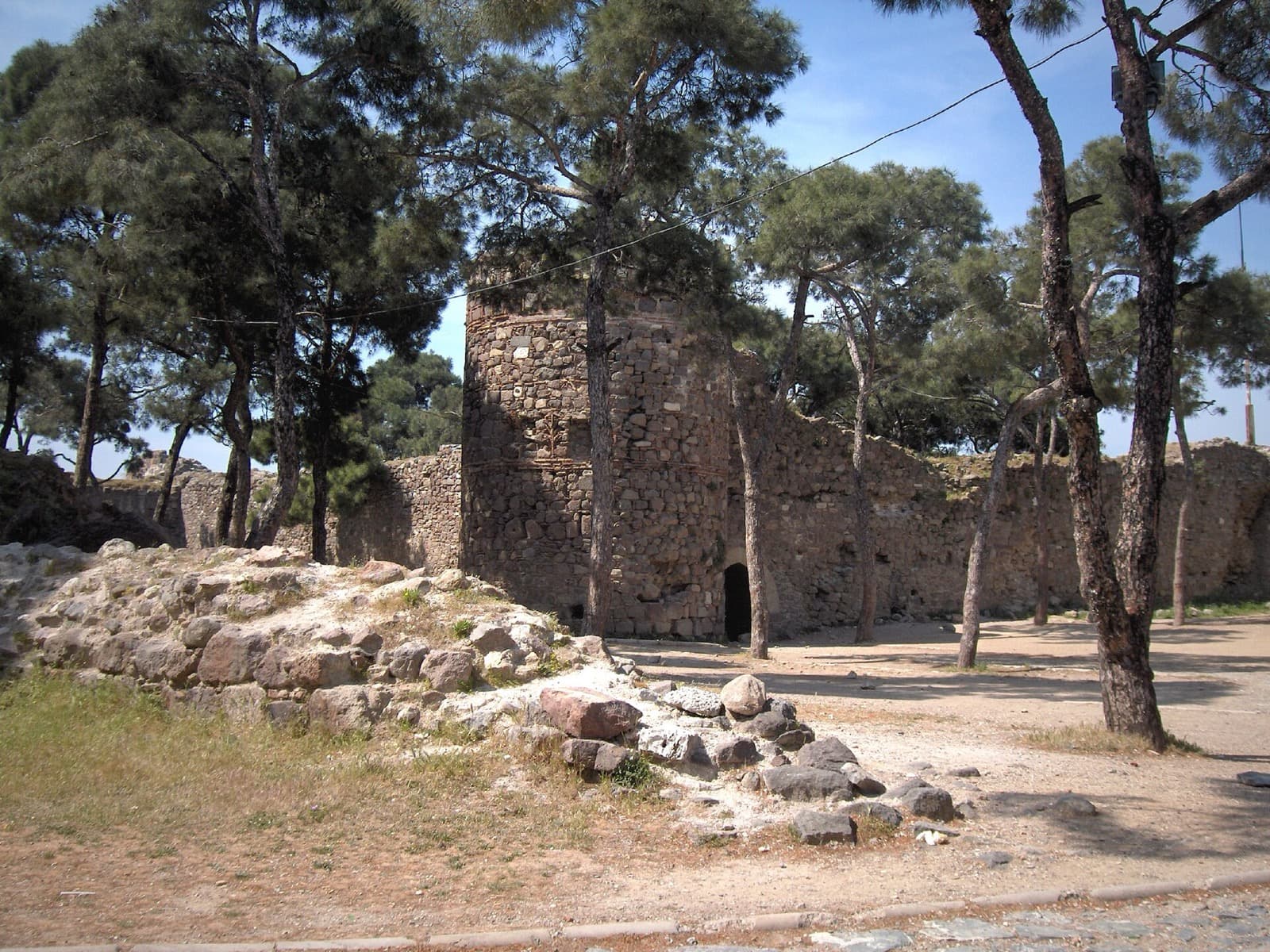
Above it all rises Kadifekale, the Velvet Castle, crowning Mount Pagos about one hundred and eighty-six metres over the city, on the acropolis of ancient Smyrna. Its earliest walls are attributed to Lysimachos, a general of Alexander the Great who became a king in the third century B.C., with Byzantine and Ottoman phases stacked on top. From the summit you can hold both Izmirs at once: the ancient hill under your feet, the reborn city spread below, the gulf waiting beyond.
The descent brings you to the Asansor, a public lift built into a cliff in nineteen oh seven by Nesim Levi Bayrakli in the historic Sephardic Jewish quarter of Karatas. The street below was later renamed for Dario Moreno, the Izmir-born singer who lived there in the nineteen forties. It is a quiet place to remember the plural, many-voiced city the fire ended.
Where the walk rests
Only after all of that does the Kordon make full sense. You have climbed a castle older than Alexander's heirs, crossed a Roman agora, and walked over a buried Ottoman harbour. The promenade is what the city built when the old world was gone. Stand at the railing, look out at the gulf, and let the walk rest there.
You can find the full route, its stops, and the audio guide through the Izmir walking tours hub, or start from the Izmir city page. Save the Kordon for sunset. It is the right note to close on, and it is when Izmir comes down to the water to gather.
Sources
- Burning of Smyrna, Wikipedia. Timeline of the September nineteen twenty-two fire, the quarters destroyed, and the disputed death-toll estimates.
- Izmir Clock Tower, Wikipedia. Construction dates, architect Raymond Charles Pere, the octagonal plan and height, and the tower's place on the municipal emblem.
- Agora of Smyrna, Wikipedia. The Marcus Aurelius rebuilding after the one hundred and seventy-eight A.D. earthquake and the nineteen thirty-three excavations.
- Kadifekale, Wikipedia. The Lysimachos-attributed walls on Mount Pagos and the layered Hellenistic, Byzantine, and Ottoman phases.
- Kordon, Lonely Planet. The seafront promenade along the Gulf of Izmir as the gathering place of the modern city.
Ready to experience it?
Kemeralti Bazaar and the Kordon: The City Reborn from the Sea
120 min · 7.2 km · challenging
More from Izmir
Explore more at your own pace.
Izmir Travel Guide: Days, Transport, Safety, and Budget
One Day in Izmir: A Walkable Route From the Clock Tower to the Kordon
The Two Izmirs: Ancient Smyrna and the City Reborn from the Sea
Konak Clock Tower: Reading the Seam Between Two Izmirs
The Blue Mosque: Reading the Ottoman Answer to Hagia Sophia